


site search
online catalog
FIRST ARMY CONTRACT SPENCER RIFLE: MICHIGAN CAVALRY BRIGADE AT GETTYSBURG

Hover to zoom


$8,950.00 SOLD
Quantity Available: None
Item Code: 2026-769
The story of Spencer rifle contracts, deliveries, and government payments for purchases is complicated. Laid out by Roy Marcot in his book on Spencer Rifles and Carbines and in a 1997 article in “Man at Arms” by Wiley Sword. They established the serial number range for Spencer’s delivered to the Michigan Cavalry Brigade. No serial numbers have turned up in regimental records in the National Archives as documented in quarterly returns. The numbers are in a very limited range because they are the first rifles manufactured and delivered under the first army contract.
This contract picked up at the end of a small contract to the Navy and included 1,200 Spencer rifles for the 5th Michigan Cavalry under Colonel Joseph Copeland. Copeland had campaigned vigorously for the repeating rifle to arm his men and received the first rifles shipped. The first five hundred were shipped in early December 1862 and issued at the end of the month. Sword has placed their serial numbers within the range of 1,000 to 1,550, allowing for the navy contract and various promotional and privately purchased arms. (Flayderman mentions only this first batch and a misprint starts it at “100” instead of “1000.”) A second lot of 500, with numbers in the 1,551 to 2,050 range were shipped to Copeland from mid-December 1862 to mid-January 1863. The final 200 Copeland Spencer rifles were drawn from a lot of 1,200 guns shipped starting in late January and beginning at serial number 2,051.
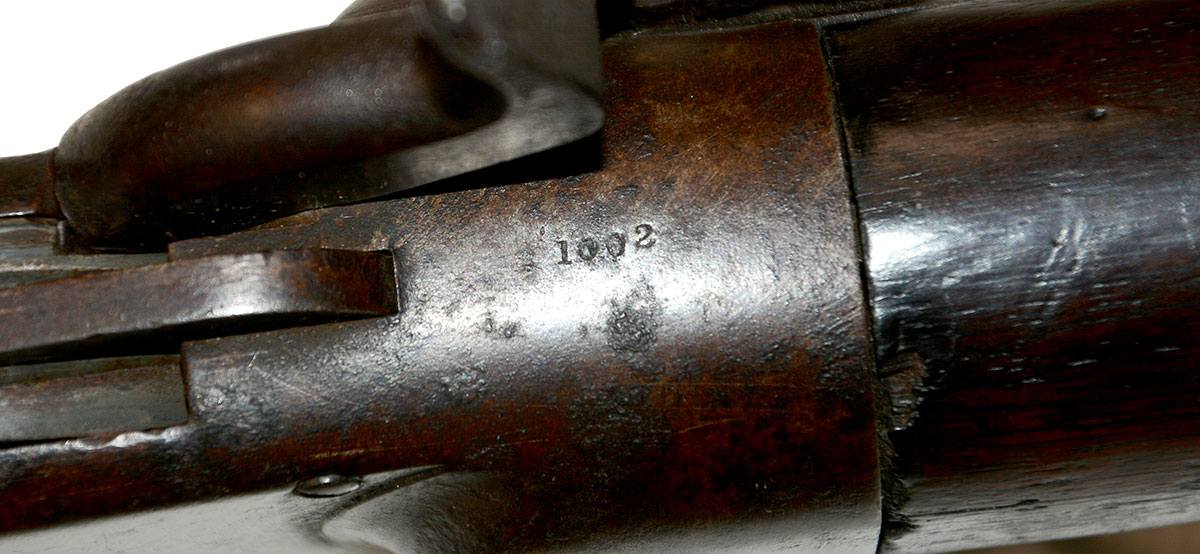
Our rifle is serial #1002 and thus falls within the first purchase lot sent to Copeland, who by then had been promoted to brigadier general and was commanding a brigade of the 5th, 6th, and 7th Michigan cavalry. Copeland had intended all of his rifles for the 5th Michigan, but losses in the regiment left him with about 300 extra rifles that he issued to the 6th Michigan Cavalry.
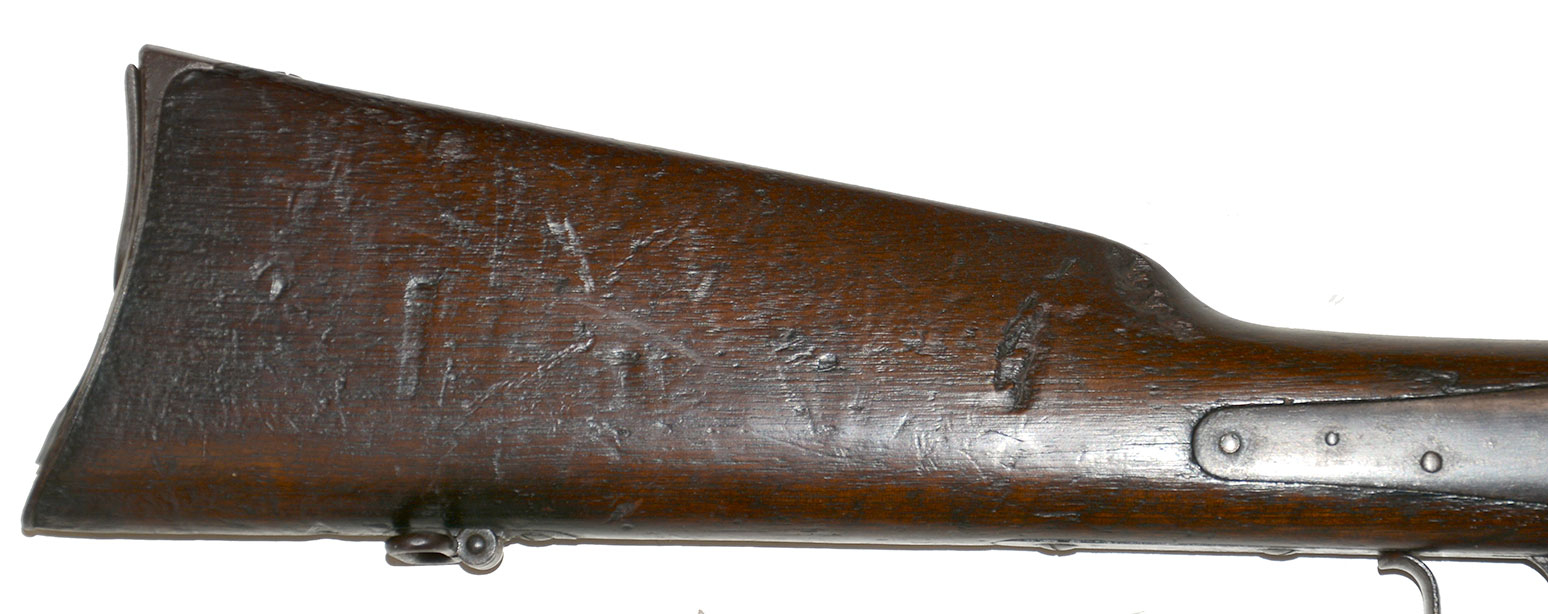
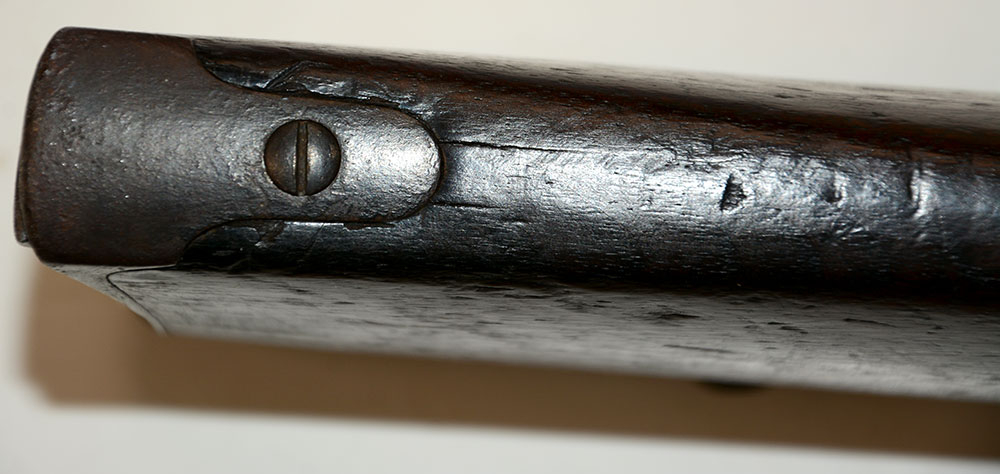
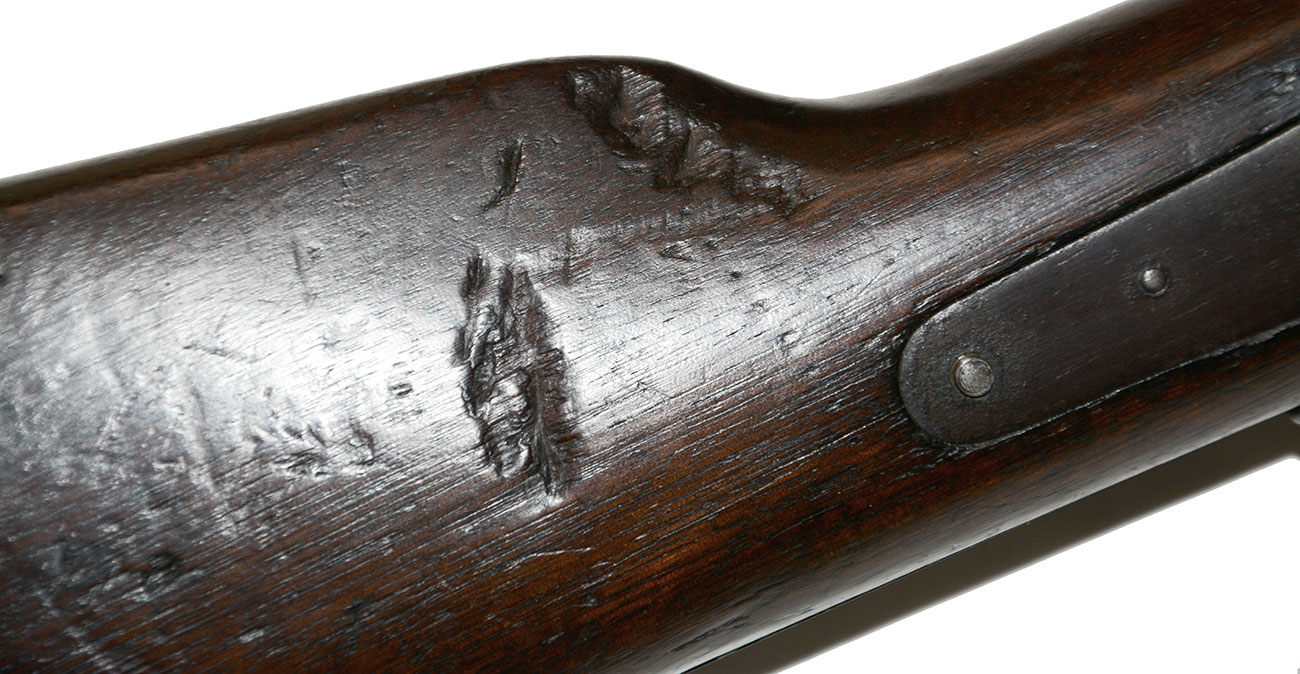
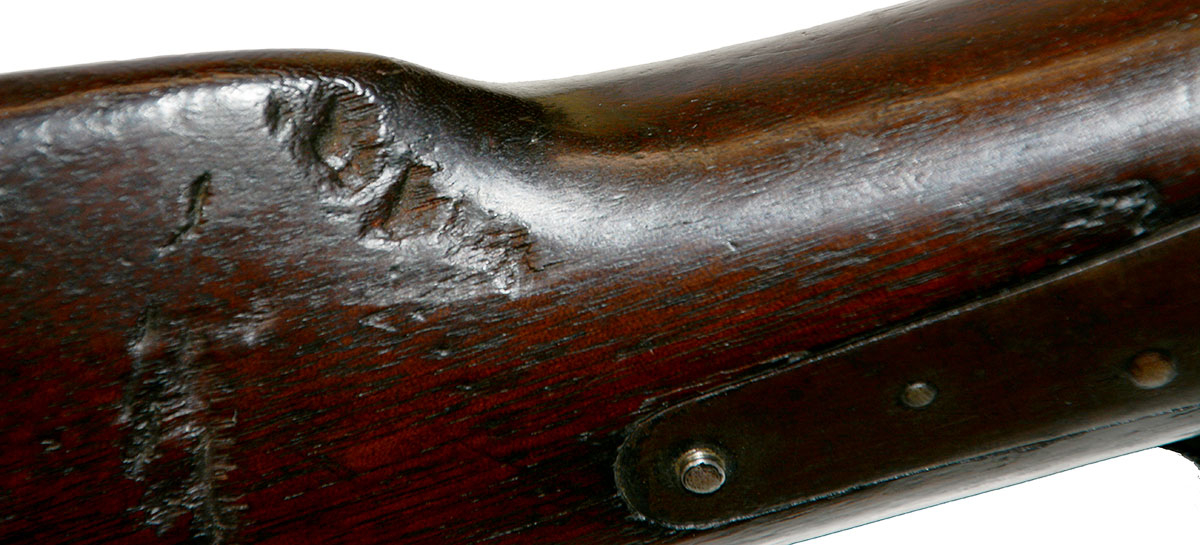
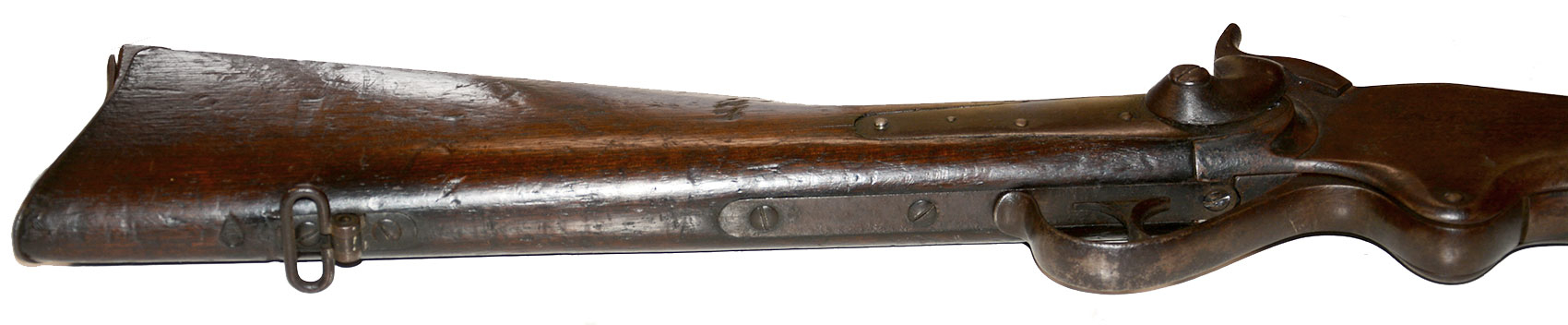
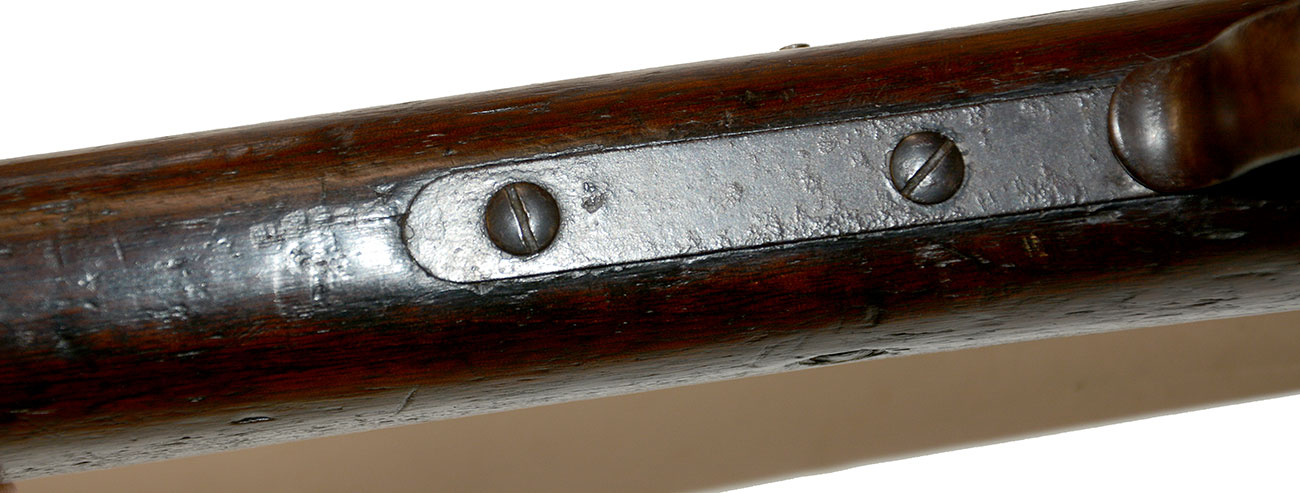
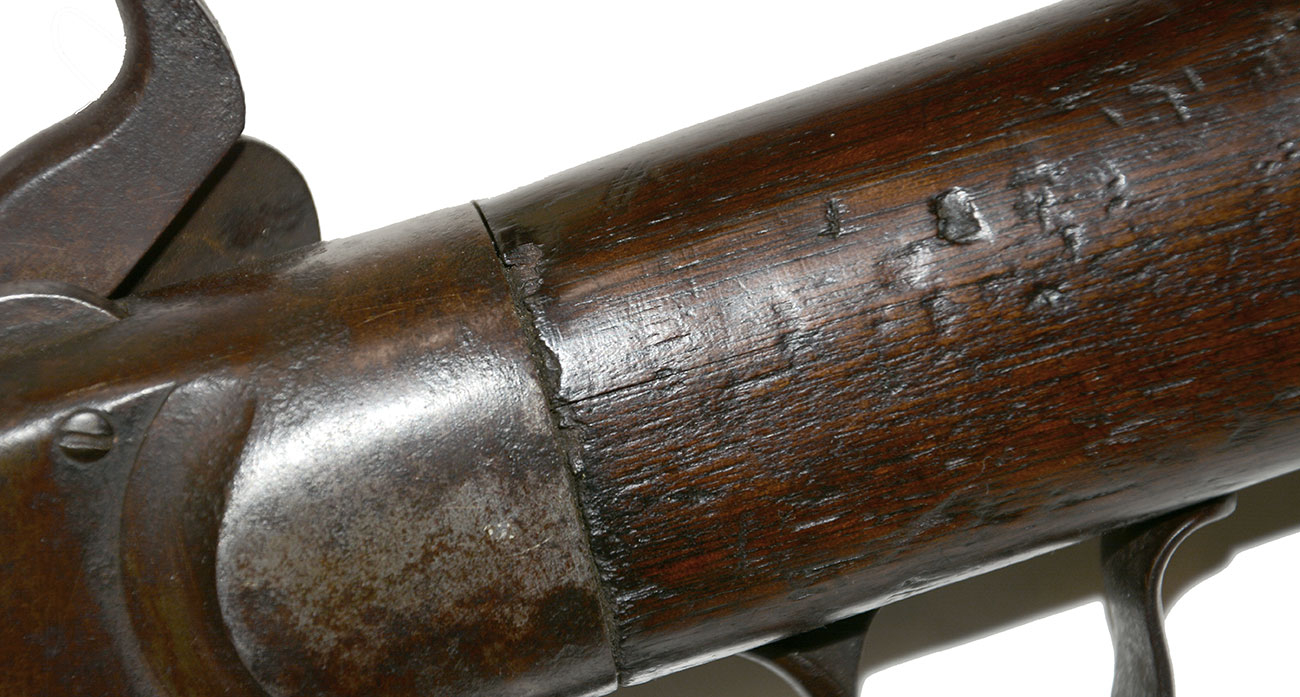
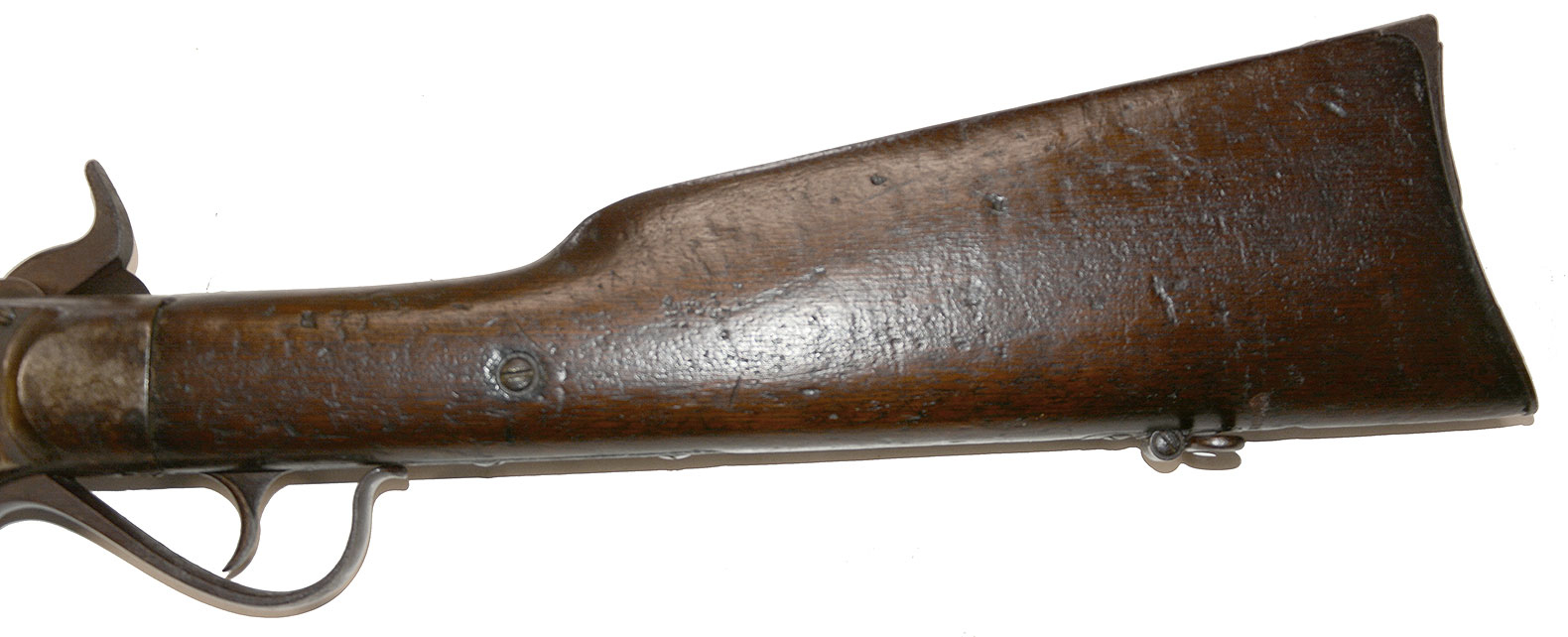
All of these early Spencer rifles saw hard service, but this one was well cared for. There are a few noticeable dents near the comb of the buttstock. The fore-stock is in very good condition with only normal wear and a few small scratches/dings. Overall, the wood has warm darker color with aged walnut wood grain showing through. There is a very minor typical Spencer short hairline crack extending forward, about an inch, from the butt-plate, along the line of the magazine tube. This was the weakest part of the rifle from removal of wood for the tube and hairlines like this are extremely common in Spencer firearms that have seen use. The wood to metal fit is tight all-around except the left side receiver junction, having a few very tiny flakes missing. The left side of the butt shows some surface wear through the center, as if the gun was laid down on that side when not in use. All very minor and period usage.
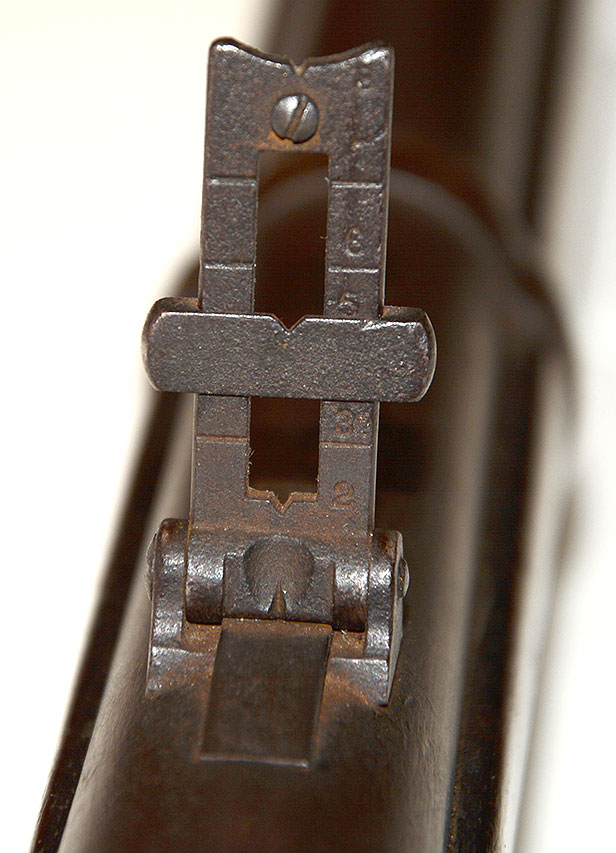
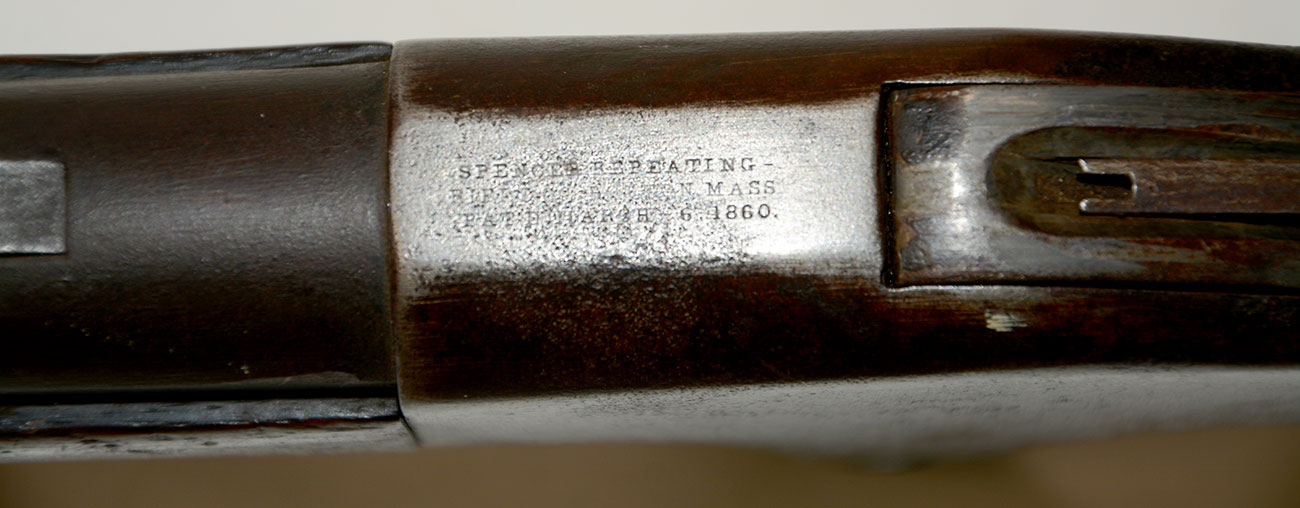
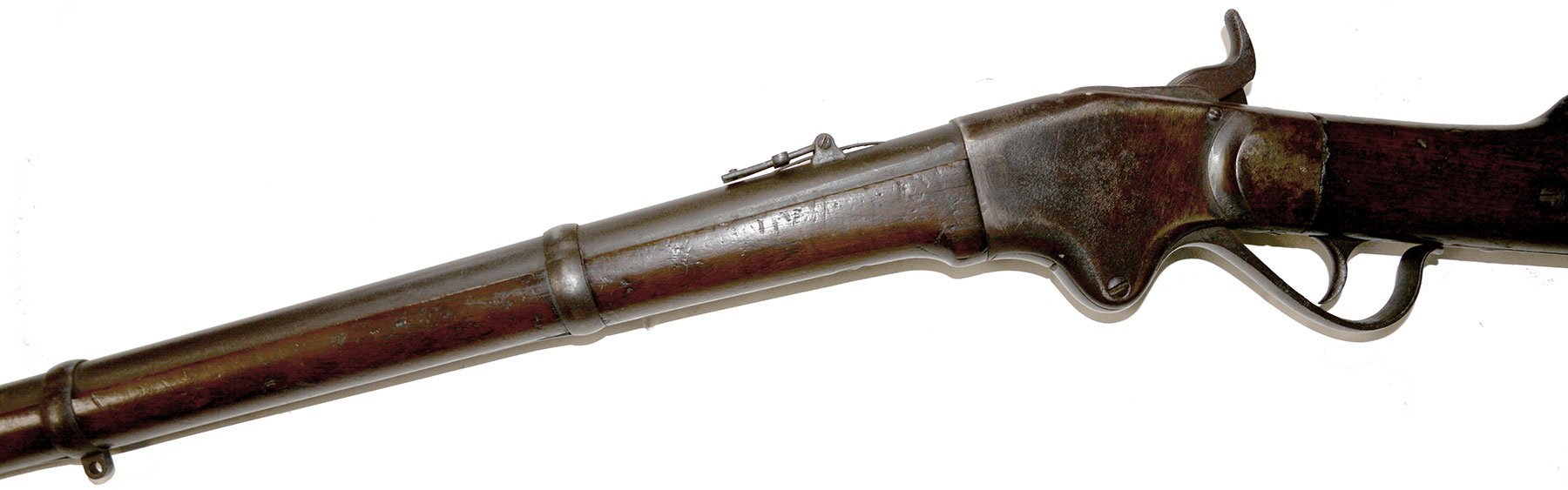
The barrel is smooth metal with undisturbed dark chocolate color. The receiver is mostly dark with a few lighter scattered greys on the high spots. Some very fine light corrosion on the left side of the receiver and top near the serial number. The receiver has a light "SPENCER REPEATING / RIFLE CO. BOSTON MASS / PAT'D MARCH 6, 1860" marking on the top. The breechblock and loading assembly, when lowered, show light grey colors. Sights, barrel bands, springs, sling swivels, and the magazine tube are all in place. The mechanics are very good and function properly. The bore shows a few small light corrosion patches but, very good rifling.
This would be a hard-to-find Spencer even without the connection to the Michigan cavalry brigade, which adds to its history and rarity. Copeland was disappointed not to lead the brigade in the Gettysburg Campaign. Expanded by the addition of the 1st Michigan cavalry and an artillery battery, it was placed under the command of the recently promoted George Custer, who took it into action at Hanover, Hunterstown and Gettysburg. On July 3 the brigade and its Spencer Rifles played a key role in halting Jeb Stuart’s attack behind the Union right. The rifles continued in service in the brigade during Lee’s retreat and subsequent campaigns until the Fall of 1864. At that time the last of guns are recorded in the 5th and 6th Michigan, having been replaced by carbines and lost by attrition. In Sword’s estimate, “due to the almost constant mounted active service and fighting, few of the original 1,000 issued Spencer rifles survived the war.” This is a rare survivor in very good, battle used, condition. [stp] [ph:L]
~~~~~~~~~~~~~~~~~~~~~~~~~~~~~~~~~~~
THIS ITEM, AS WITH ALL OTHER ITEMS AVAILABLE ON OUR WEB SITE,
MAY BE PURCHASED THROUGH OUR LAYAWAY PROGRAM.
CLICK HERE FOR OUR POLICIES AND TERMS.
THANK YOU!
Inquire About FIRST ARMY CONTRACT SPENCER RIFLE: MICHIGAN CAVALRY BRIGADE AT GETTYSBURG
Most Popular
Historical Firearms Stolen From The National Civil War Museum In Harrisburg, Pa »
Theft From Gravesite Of Gen. John Reynolds »
Selection Of Unframed Prints By Don Troiani »
Fine Condition Brass Infantry Bugle Insignia »
featured item
CIVIL WAR US NAVY LT. COMMANDER’S COAT AND BUCKLE OF ALEXANDER COLE RHIND - USS CONSTELLATION, USS CRUSADER, USS KEOKUK, FOUGHT CS BATTERIES AT DEEP BOTTOM, COMMANDED A “POWDER BOAT” AGAINST FT. FISHER, LATER REAR ADMIRAL
This is a very appealing regulation Civil War navy officer’s frock coat with interesting history. The coat is very dark blue, almost black, double-breasted with two rows of 9 US Navy officer’s button each down the front, two at the rear waist,… (1179-650). Learn More »
site search