


site search
online catalog
GETTYSBURG RECOVERED US CARTRIDGE BOX BELT PLATE BY W.H. SMITH, FROM THE ROSE FARM
Hover to zoom
$895.00 ON HOLD
Quantity Available: 1
Item Code: 2026-1836
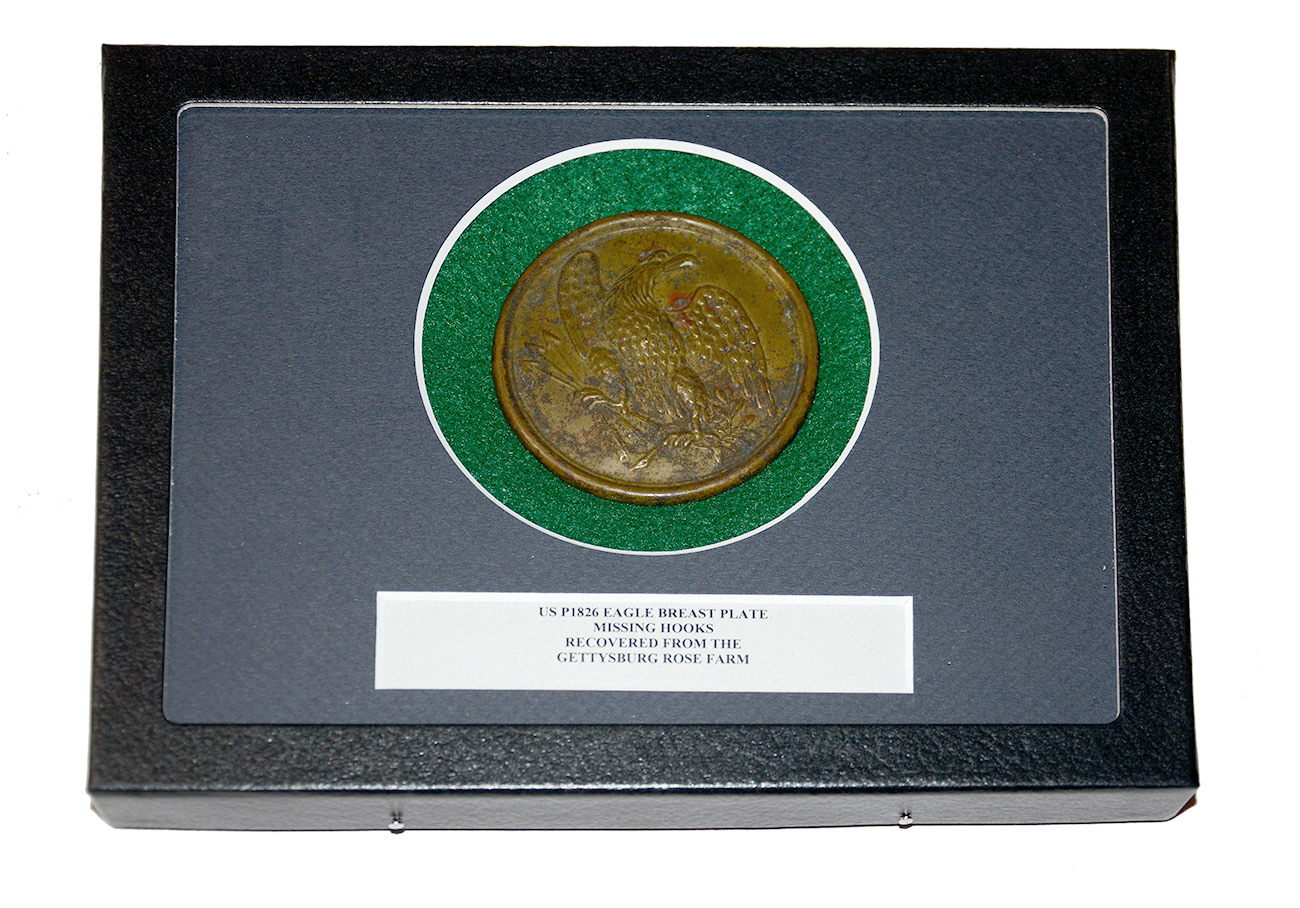
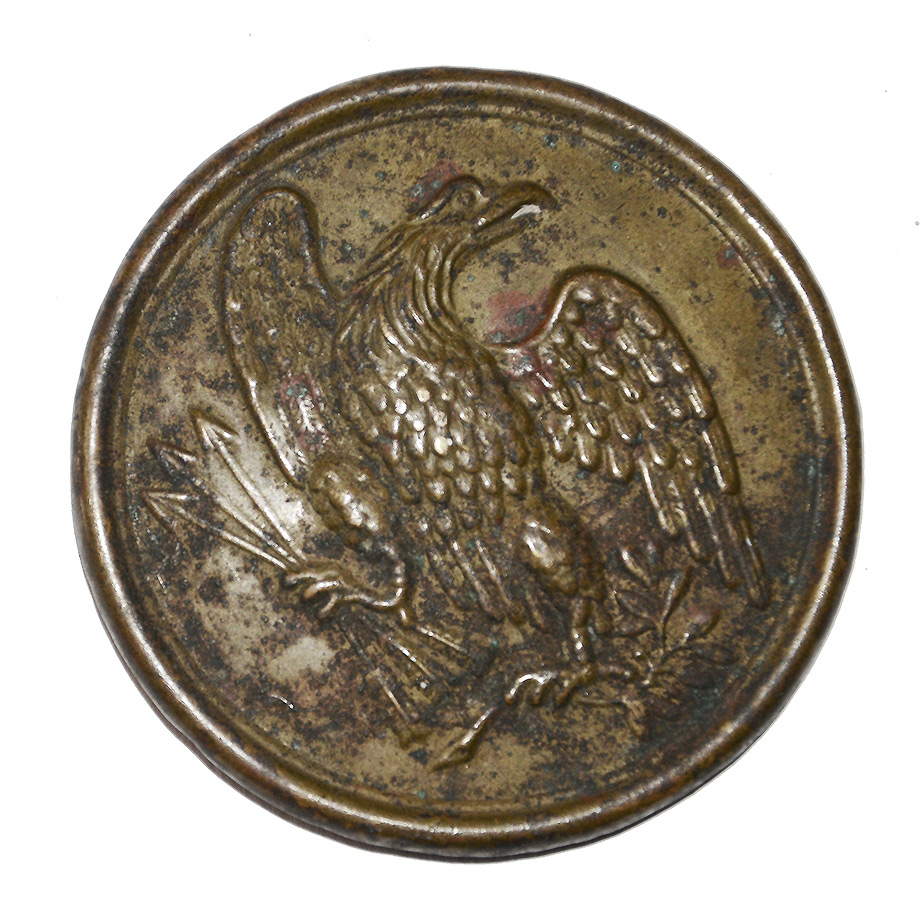
A regulation US round eagle cartridge box plate recovered many years ago on the Rose Farm here at Gettysburg, the scene of intense fighting on July 2. The face is very good, showing scattered age spots and some rubs along the raised surface of the rim, but no edge dings or dents and very sharp definition of the dynamic eagle with raised wings gazing back to the viewer’s right clasping arrows and olive branch.
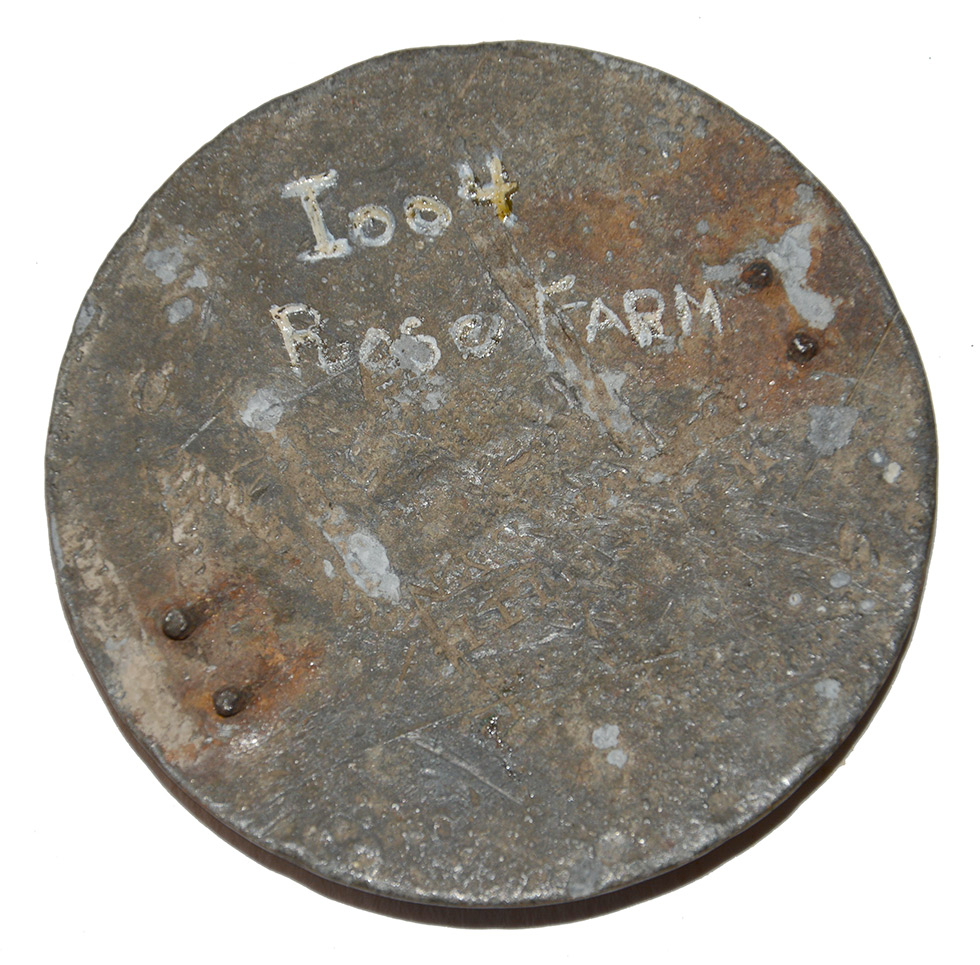
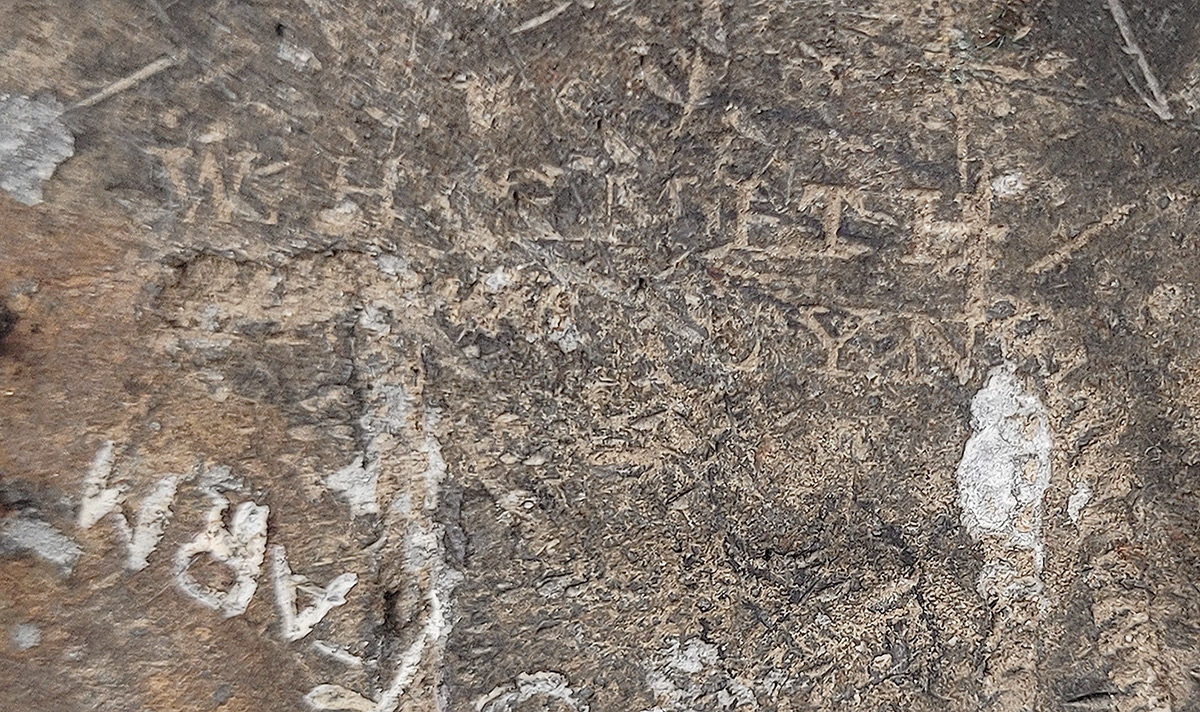
The reverse bears an old collector’s inventory number in white: “Ioo4” with “Rose Farm” just below. The iron wire loops rusted away above the level of the lead-solder filled back, leaving a few light brown stains. The lead solder fill itself is level with a some very shallow corrosion, some white spots and some dings and scratches, but still bears a “W.H. SMITH / BROOKLYM” maker’s stamp. This has some rubbing in the middle of the top line and dings on the left and center of the second line, but is unambiguous. Please see our photos.
Smith was a major supplier of these plates to the Union army. He worked at No. 44 State St. in South Brooklyn, advertising, “brass trimmings for all kinds of military equipments… warranted to stand US inspection.” He appears to have had large U.S. contracts both before and during the war, at least into Summer 1864, and also produced SNY plates for New York. See Bazelon’s additional note in the combined Volume 1 entry of his Directory, and see O’Donnell and Campbell Plate 528 for a similar Smith marked plate.
This pattern of plate for the infantry cartridge box sling was actually first adopted in 1826 with hooks on the reverse for the bayonet shoulder belt and made of stamped rolled brass for artillery and white metal for infantry. This was changed to brass for both services in 1831 and when the bayonet was moved to the waist belt around 1842 the plate was redesigned with two loops on the back for wear in a fixed position on the cartridge box sling and those with hooks limited to use on the sword shoulder belt by sergeants and by musicians carrying the M1840 series of swords. See O’Donnell and Campbell, American Military Belt Plates, pages 274 ff., for a thorough discussion of its development, production, variations, etc.
The Rose Farm will be very familiar to students of the battle from the remarkable series of photos taken on that portion of the field showing Confederate casualties gathered for burial. The area was the site of heavy back and forth fighting on the Union left on July 2 as Longstreet’s attack battered and then pushed back Union lines that Sickles had rashly advanced. Union forces were heavily engaged around Devils Den, the slopes of Little Round Top, the Wheatfield, the Rose Woods and the Peach Orchard before finally being hammered into a position from which further Confederate attacks could not budge them and the fighting shifted to the Union center the next day.
This has been nicely matted and labeled in a Riker mount on a green background, and is a great, dead-real Gettysburg relic lost by a Union infantryman in the terrible fighting of the second day of the war’s most famous battle. [sr] [ph:L]
~~~~~~~~~~~~~~~~~~~~~~~~~~~~~~~~~~~
THIS ITEM, AS WITH ALL OTHER ITEMS AVAILABLE ON OUR WEB SITE,
MAY BE PURCHASED THROUGH OUR LAYAWAY PROGRAM.
CLICK HERE FOR OUR POLICIES AND TERMS.
THANK YOU!
Inquire About GETTYSBURG RECOVERED US CARTRIDGE BOX BELT PLATE BY W.H. SMITH, FROM THE ROSE FARM
Most Popular
Historical Firearms Stolen From The National Civil War Museum In Harrisburg, Pa »
Theft From Gravesite Of Gen. John Reynolds »
Selection Of Unframed Prints By Don Troiani »
Fine Condition Brass Infantry Bugle Insignia »
Rare Identified 65Th Ny Sergeant’s Jacket, With Manscript Material: 1St U.s. Chasseurs »
featured item
RARE AMES MODEL 1847 SAPPERS & MINERS ARTILLERY MUSKETOON SWORD BAYONET-DATED 1847
These well-made sword bayonets were produced from 1847 through 1856 for the Springfield Model 1847 Sappers & Miners musketoon, of which only 830 total arms were manufactured. The bayonet is from the second contract of 300, as it does not have… (490-7261). Learn More »
site search