

site search
online catalog
1839 PATTERN CARTRIDGE BOX WITH DRAGOON EAGLE PLATE: POSSIBLE CONFEDERATE WAR SOUVENIR BROUGHT HOME BY BVT. BRIG. GEN. W.H. NOBLE 17th CT.
Hover to zoom
$895.00
Quantity Available: 1
Item Code: 1309-533
Shipping: Determined by Method & Location of buyer
To Order:
Call 717-334-0347,
Fax 717-334-5016, or E-mail
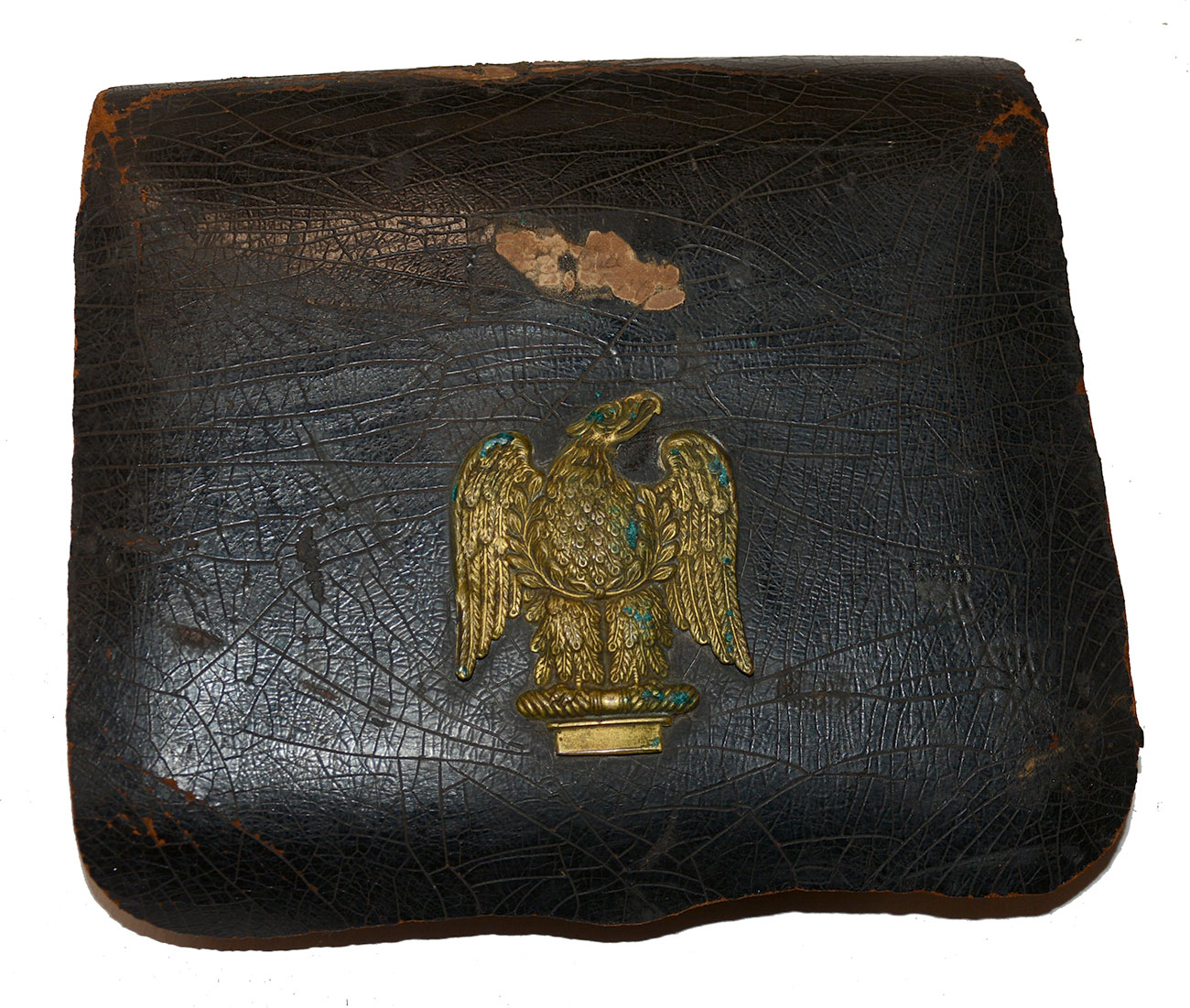
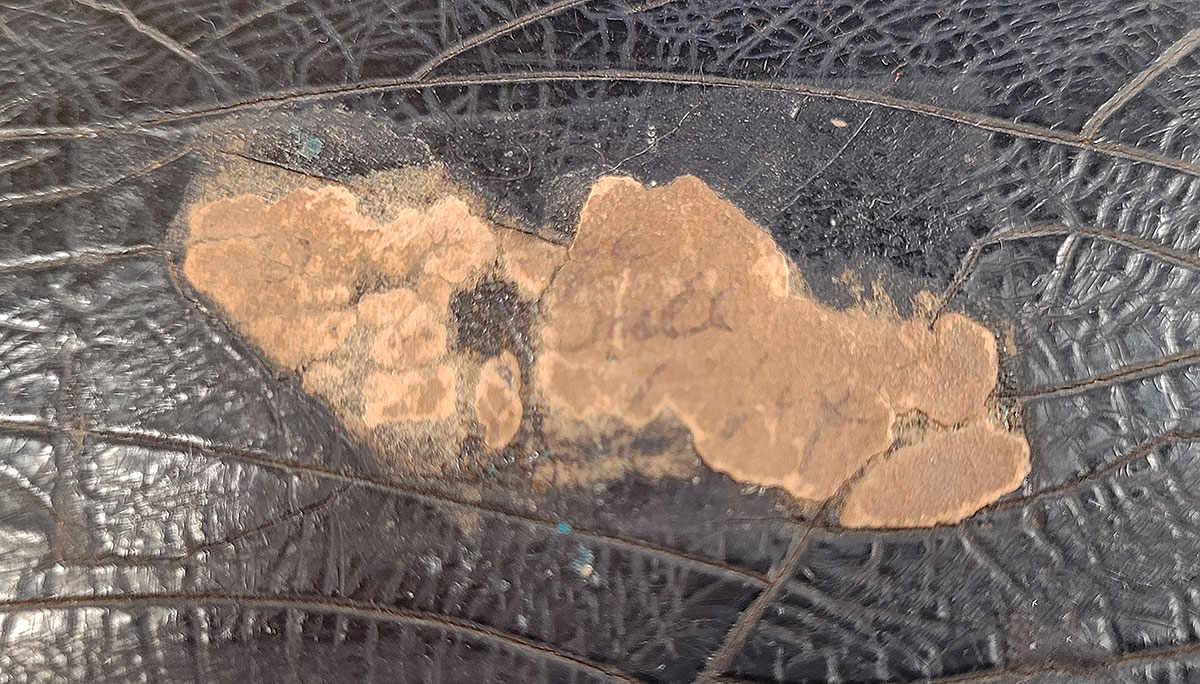
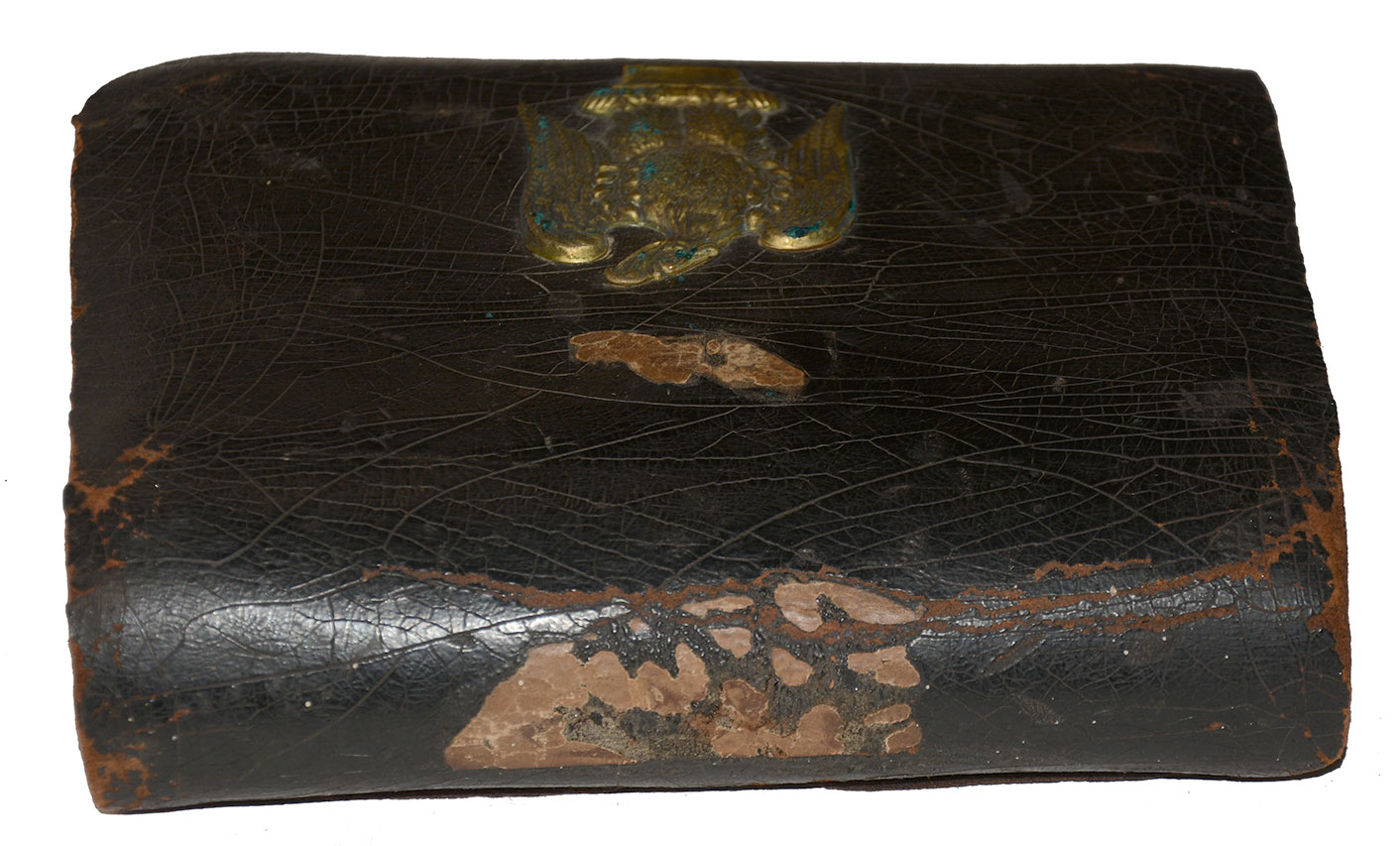
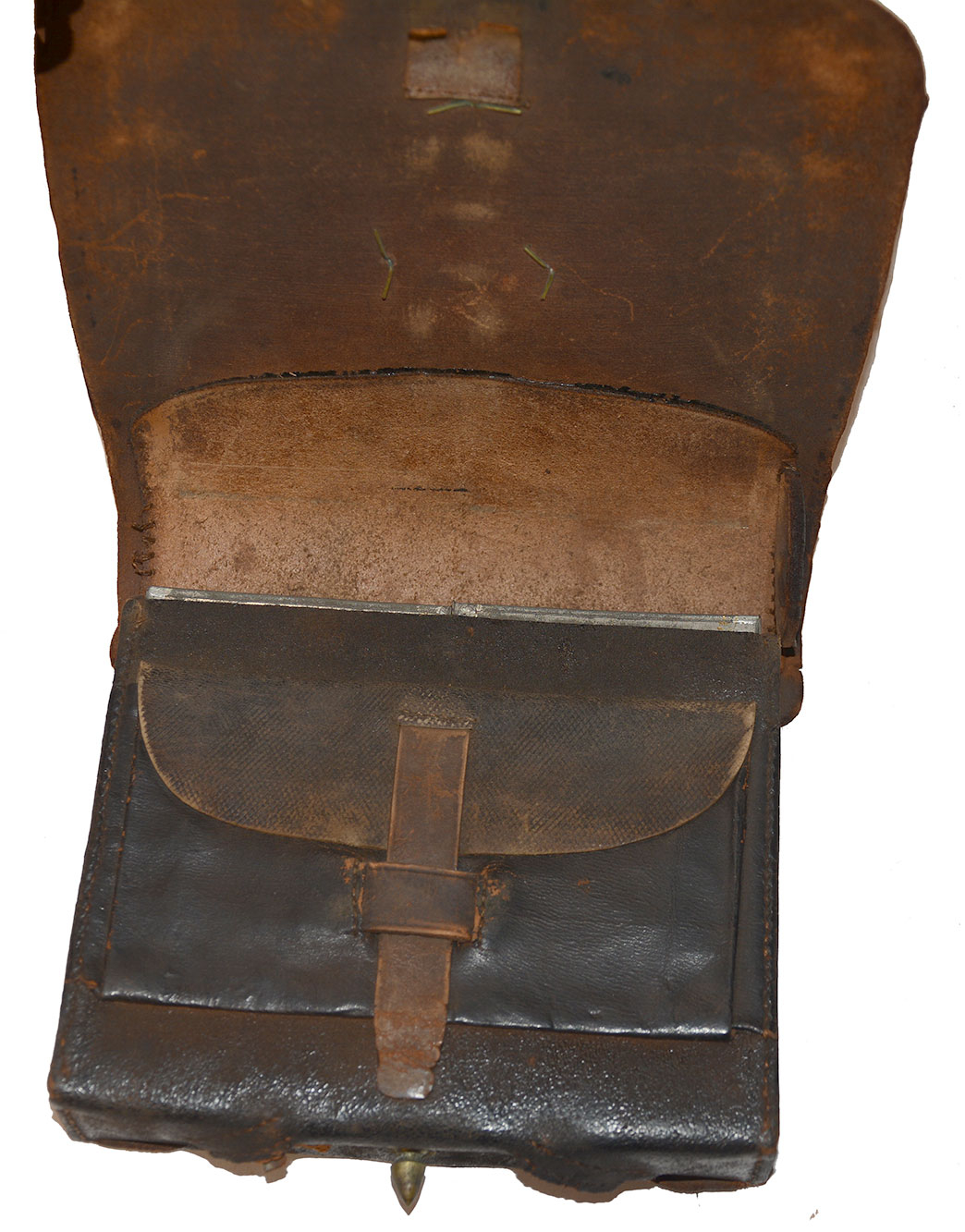
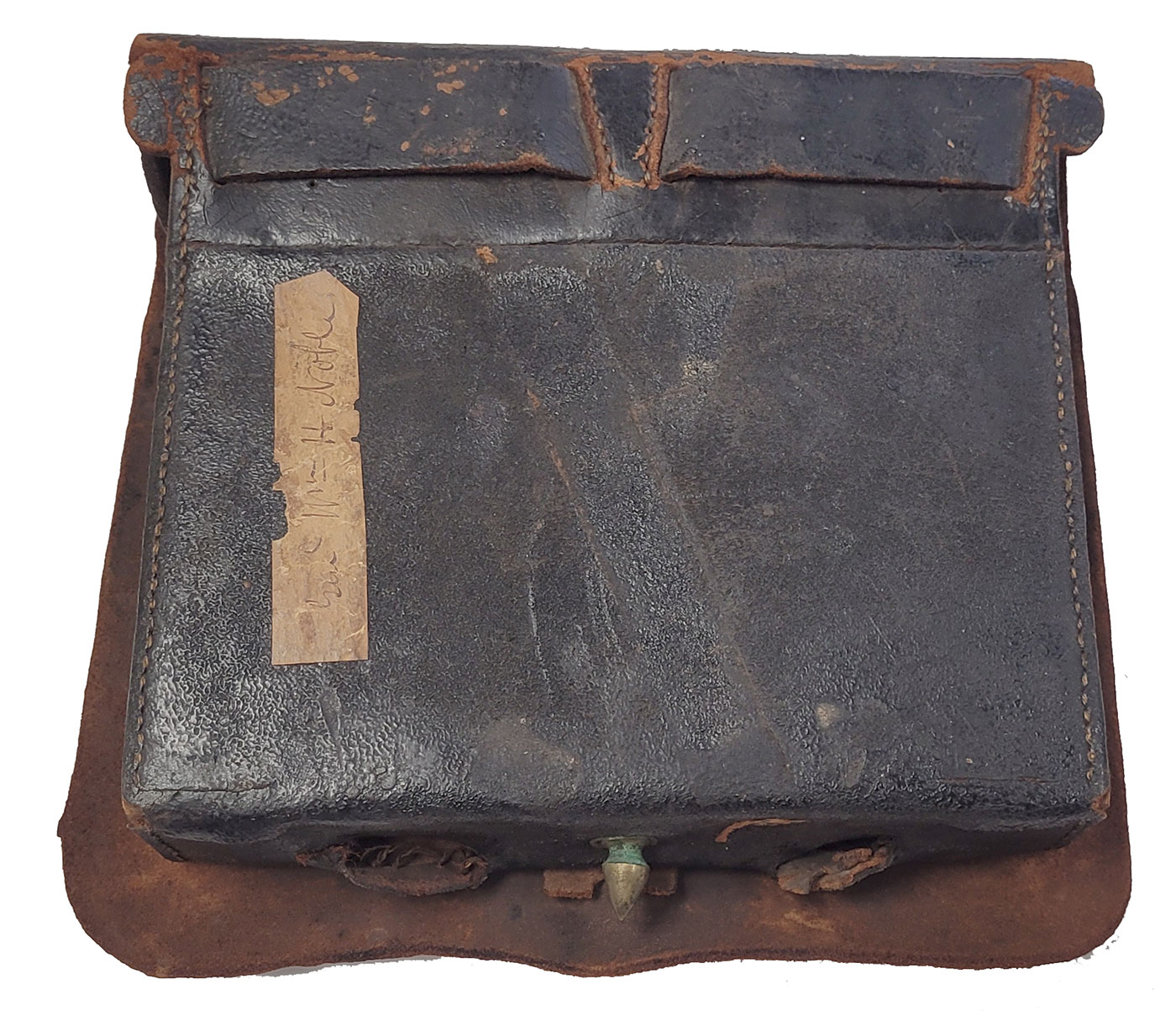
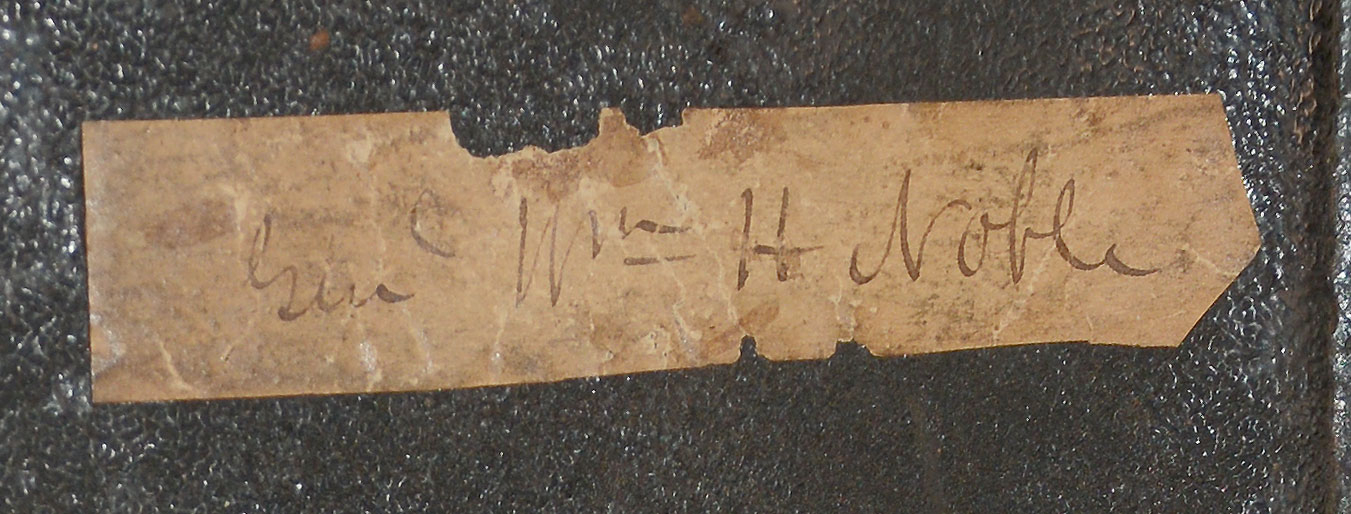
This is an 1839 pattern infantry cartridge box that was fitted with an 1833 dragoon style plate on its outer flap and seems very likely a prewar militia box used by a Confederate soldier and sent home as a war souvenir by the commander of the 17th Connecticut. It clearly saw use and was later on display in a G.A.R. hall or historical society: it bears portions of a brown-ink paper label on the outer flap that would have given its history, and another brown-ink label on the back reading, “Genl. Wm H. Noble,” certainly the donor or lender.
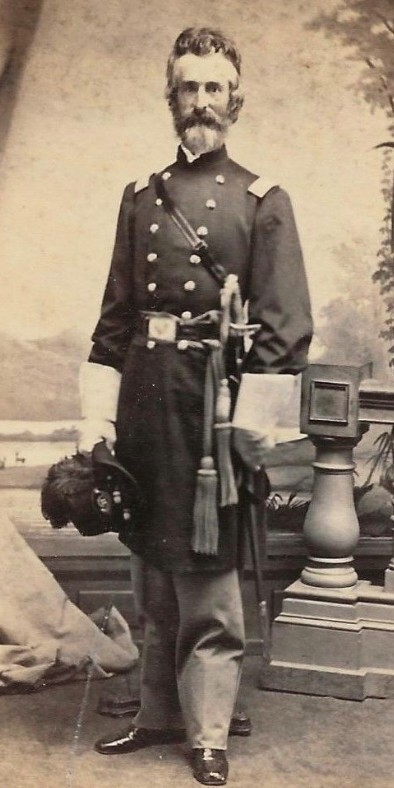
Noble was Colonel of 17th Connecticut from its formation in 1862 to its muster out in July 1865, was wounded at Chancellorsville, made it back to the regiment just as Gettysburg ended, commanded the regiment again thereafter in its service in the Department of the South in South Carolina, including the Siege of Ft. Wagner, and in Florida, where he was captured in December 1864 and earned the dubious distinction of being the highest ranking officer interned at Andersonville. Paroled April 8, 1865, he returned to the regiment, mustered out with it in July, and received a brevet to Brigadier General effective March 13, 1865, for “meritorious services.”
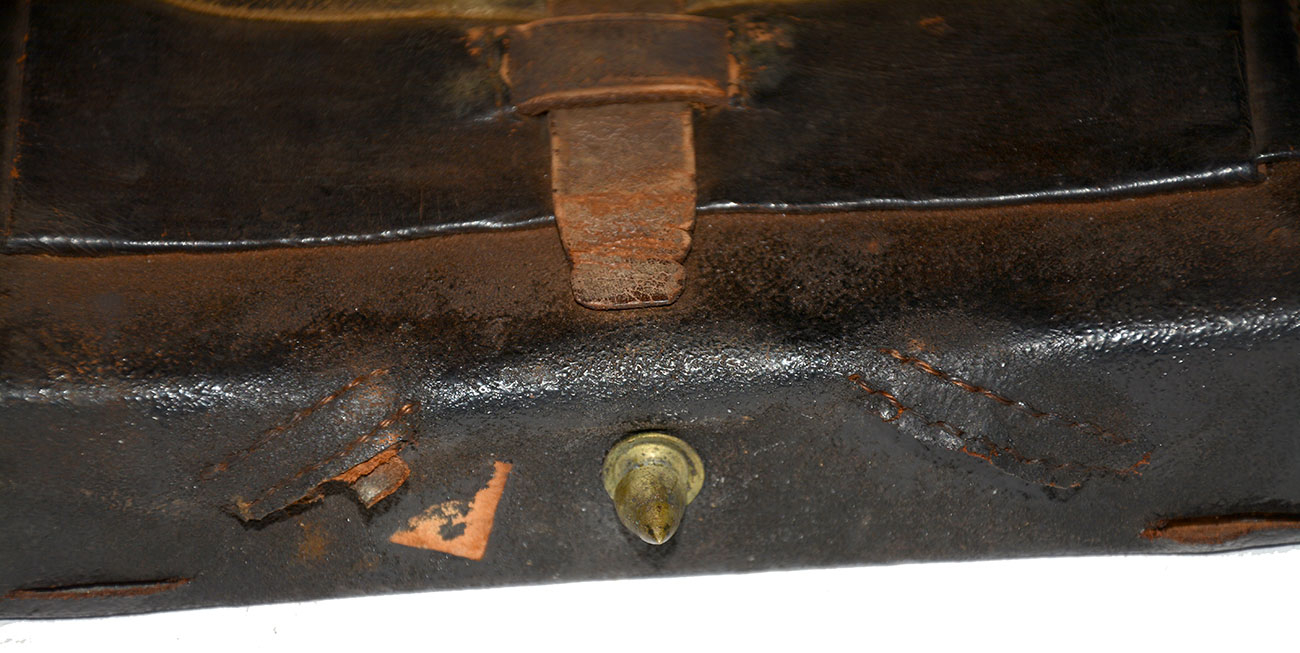
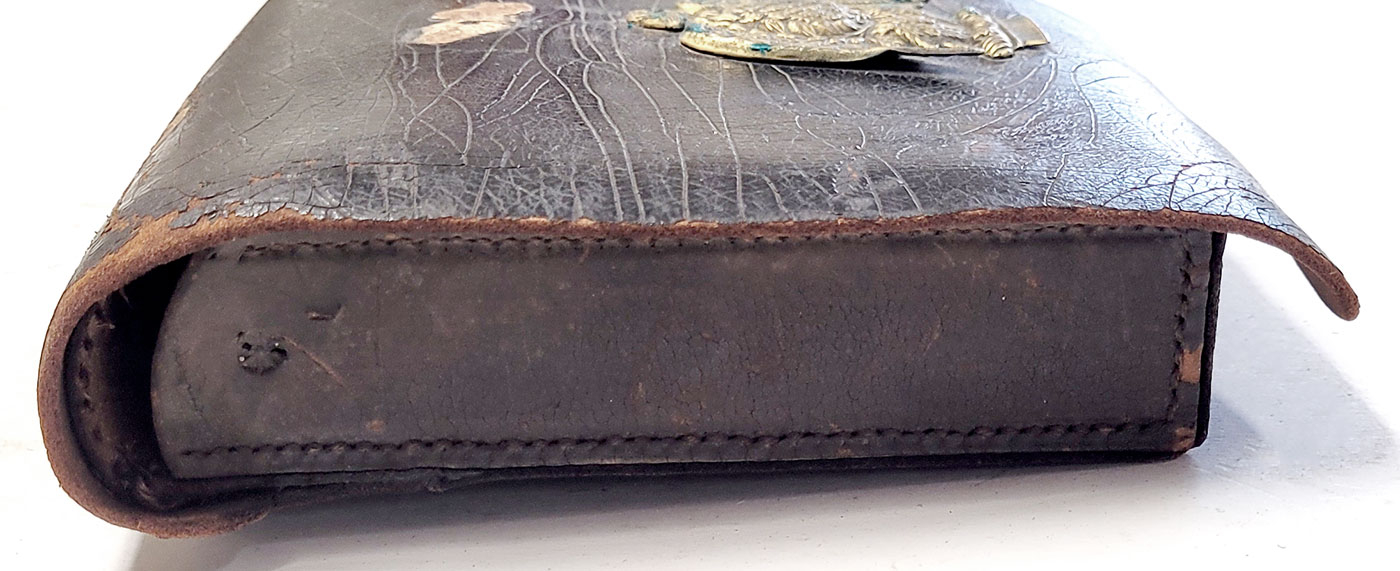
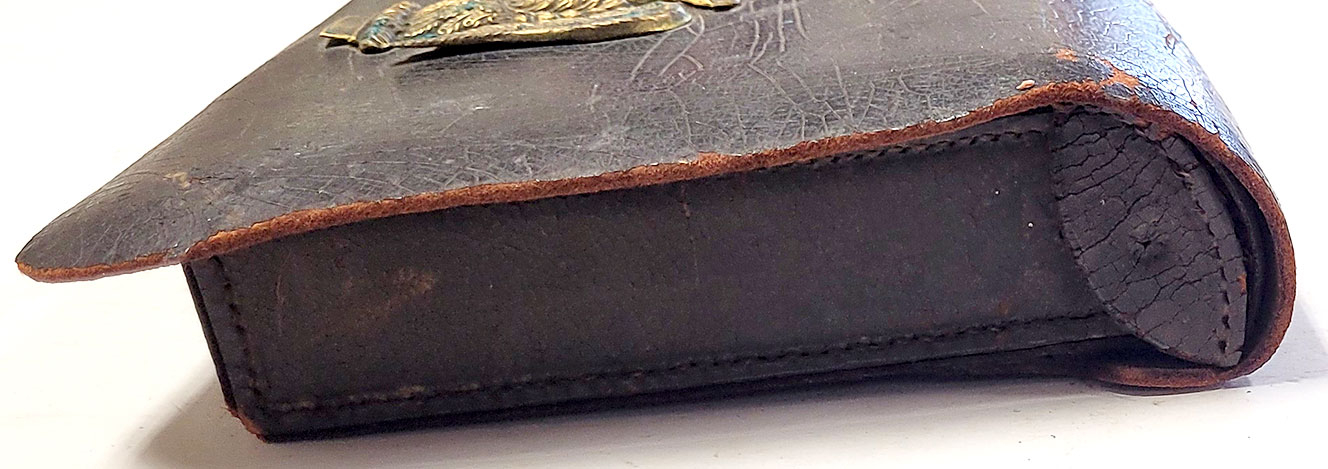
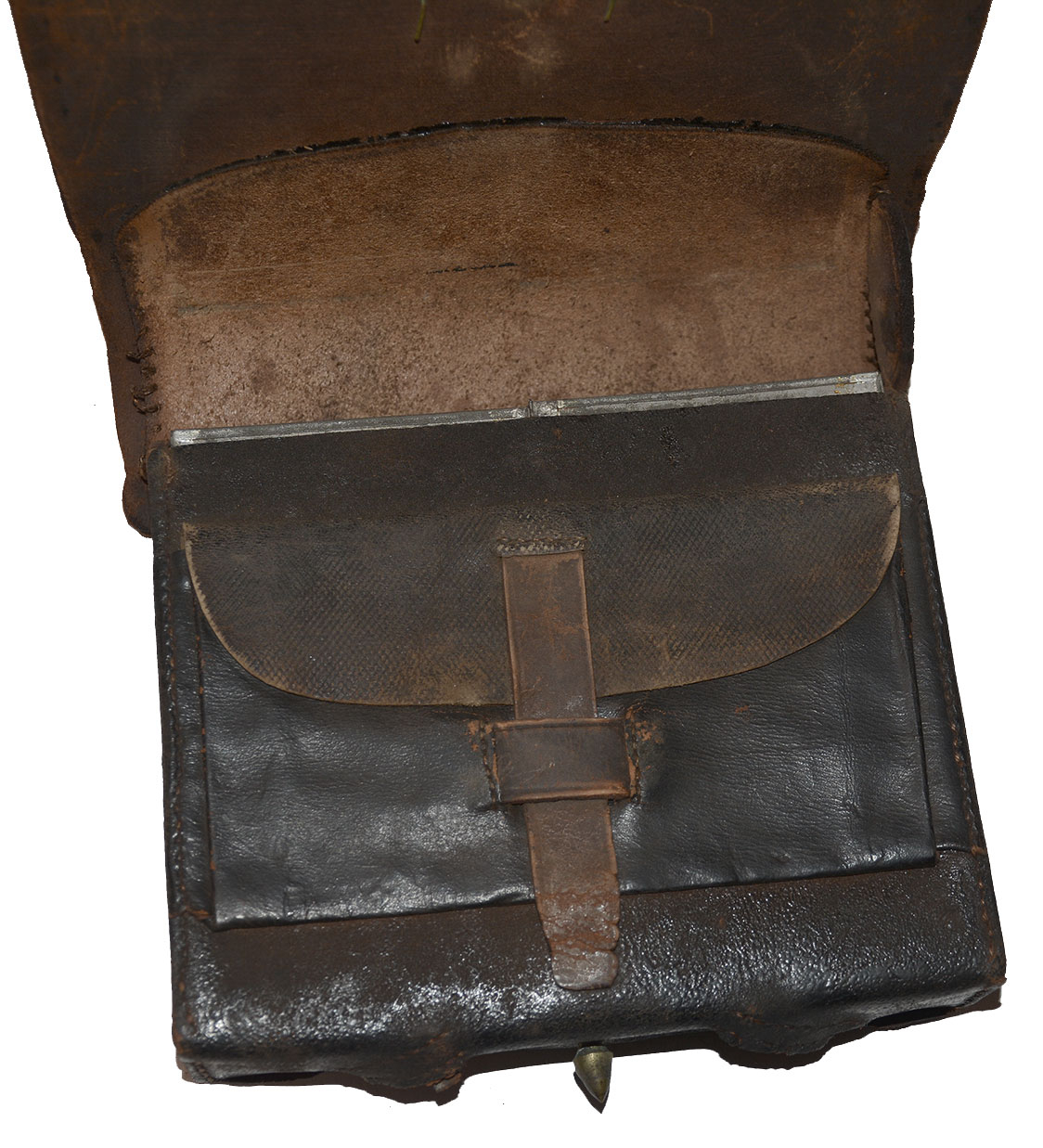
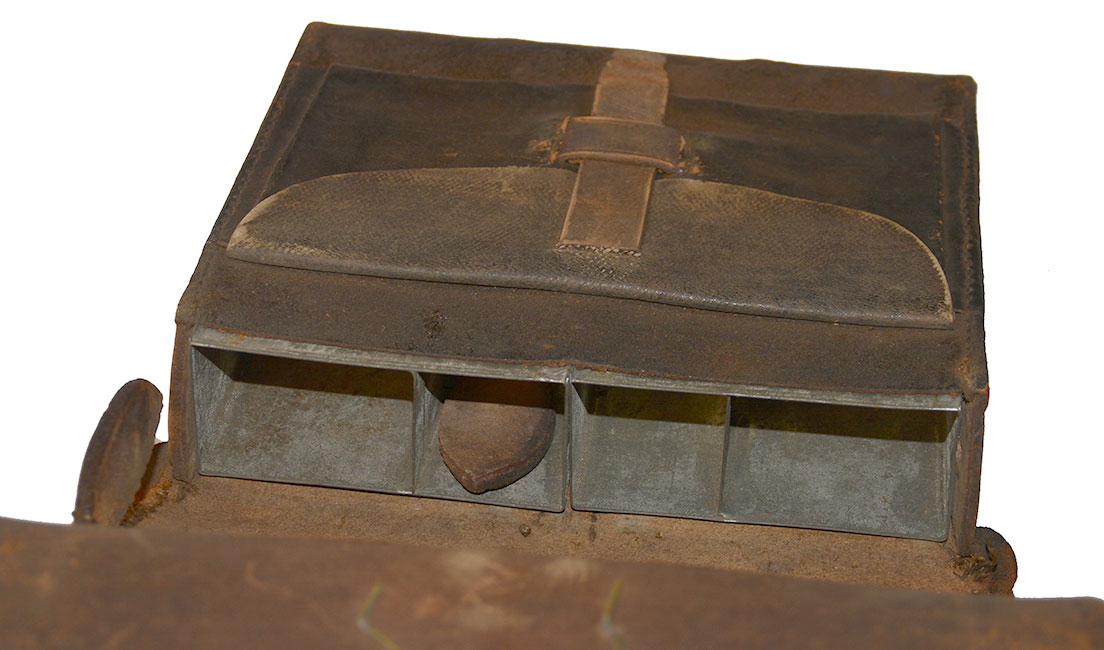
The box itself is a US 1839 Pattern infantry cartridge box, in solid condition with good seams, with both magazine tins inside, and standard construction, made of black leather, fitted for wear only on a shoulder sling. Outer and inner flaps are in place, though the inner flap is missing one side-ear. The implement pouch, with its own flap, tab and retaining loop is in place on the face of box. On the reverse both horizontal retaining loops for the shoulder sling are there, though the buckles for the sling on the bottom of the box have pulled out and are missing. The brass fastening stud is there. The latch tab is broken, but part of it seems to be in one of the magazine tins, which are good, and still have their dividers in the upper trays. The outer flap shows scratches and crazing to the surface, which seems to have been painted or enameled to keep it shiny, fairly common with a militia piece, which then dried out and shrank to some degree over time, producing cracks to the surface.
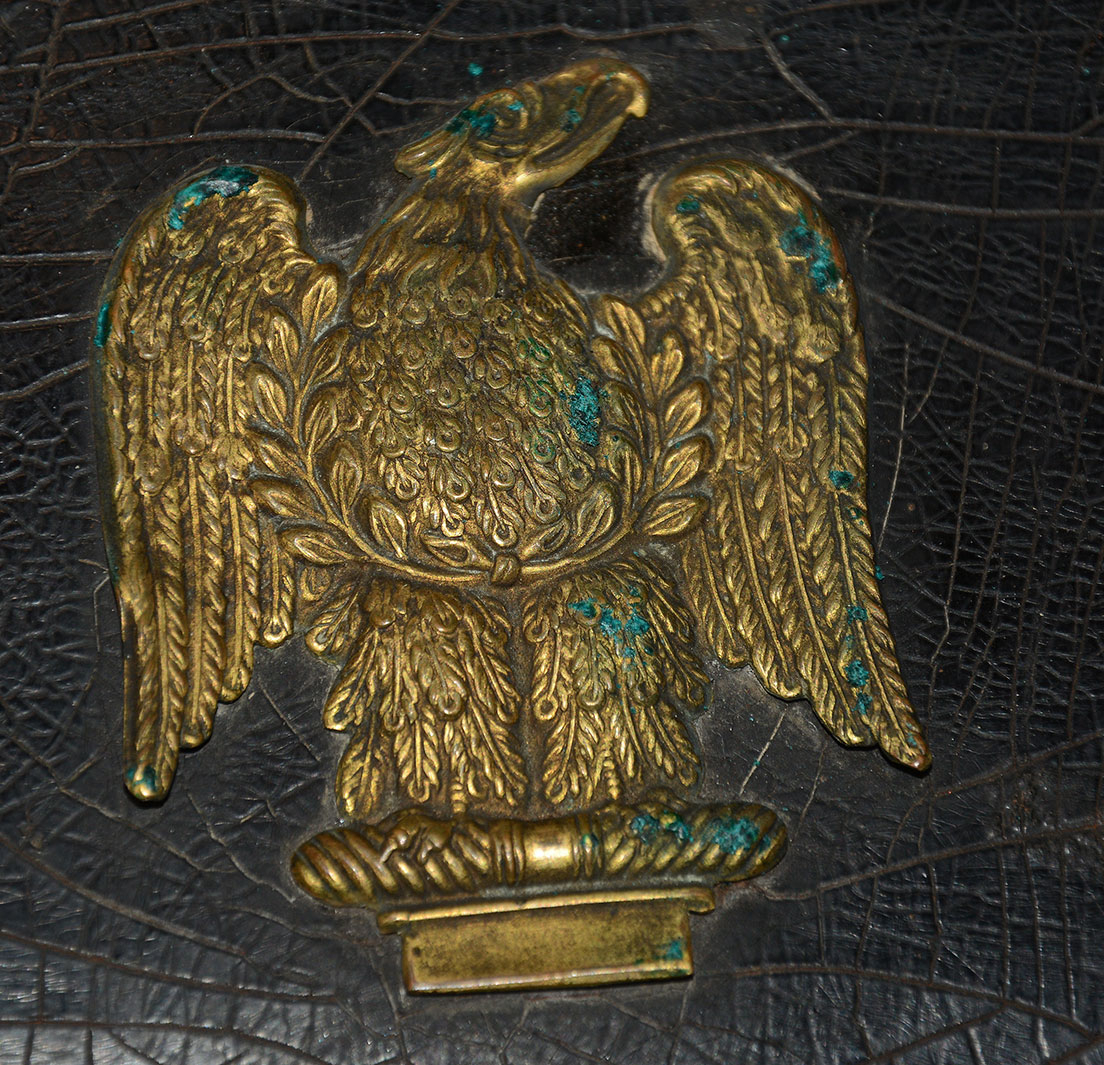
The plate is a US 1833 Pattern dragoon-style eagle plate, 2-3/4” tall, made of die-struck brass, showing good detail to the eagle’s features, its feathers, and the wreath on its chest, and attached by three pairs of brass wires. The plate shows some small bits of green verdigris, but has no dents, bends or cracks. After their adoption by the US Dragoons these Napoleonic eagles were worn also by American militia companies, who often had their own uniform regulations, well into the 1840s and 1850s. They were not, however, limited to mounted companies. Campbell and O’Donnell show an 1850s photograph of a US militia infantryman wearing one on his 1851 pattern shako on page 115 of their “American Military Headgear Insignia.”
If the box had been used before the war by Noble himself we would have expected that to be noted on the label on the outer flap and not merely by his name on the reverse, and he seems an unlikely militia infantryman in the 1840s or 1850s. Born in 1813, he had attended the Norwich Military Academy in Middletown, then Trinity College in Hartford, and lastly Yale, passing the bar to become a lawyer in 1836, all prior to the manufacture of the box. He also served in some civic offices- as county clerk and state’s attorney- and by the 1850s he was developing land he inherited in East Bridgeport. Connecticut had disbanded its “enrolled militia” in 1847 and we don’t find reference to any militia service by Noble in one of the volunteer companies. His appointment as Colonel of the 17th rather seems due to his social prominence and political influence. So, all in all, we think the box more likely to be a war souvenir.
Noble’s commission as Colonel was dated to July 22, 1862, and he mustered in with the regiment, largely from Fairfield County, on August 28.
Dyer’s Compendium offers the following detailed service record: Duty at Fort Marshall, Defences of Baltimore, till October, 1862. At Tennallytown, building Fort Kearney, October 15-November 3. March to Thoroughfare Gap and Chantilly November 3-12. Duty at Brook's Station, Va., December, 1862, to April, 1863. "Mud March" January 20-24, 1863. Chancellorsville Campaign April 27-May 6. Battle of Chancellorsville May 1-5. Gettysburg (Pa.) Campaign June 11-July 24. Battle of Gettysburg July 1-3. Hagerstown, Md., July 11-13. Moved to Folly Island, S.C., August 1-12. Siege operations on Morris Island, S.C., against Forts Wagner and Gregg, and against Fort Sumter and Charleston August 15-September 7. Capture of Forts Wagner and Gregg September 7. Moved to Folly Island, S. C., and duty there, operating against Charleston, S.C., till February, 1864. Expedition to John's and James Islands February 6-14. Ordered to Jacksonville, Fla., February 22, and duty there till April 15. Moved to St. Augustine, Fla., April 15-17, and duty there till June, 1865. Action at Welaka May 19, 1864 (Detachment). Expedition to Camp Milton May 31-June 3. Action at Milton June 2. Whitesville July 24. Companies "A," "C," "I" and "K" at Picolata, St. Johns River, July 18, 1864, to February, 1865. Companies "A," "E," "F," and "H" moved to Jacksonville July 22, 1864, and participated in Expedition to Baldwin July 23-28. Expedition to Enterprise September 28, 1864. Companies "C," "F" and "H" at Lake City, Fla., and "G" and "I" at Tallahatchie May and June, 1865. Regiment moved from St. Augustine to Jacksonville June 9, and duty there till July 7. Mustered out July 19, 1865.
Noble himself wrote a short history of the regiment and noted its principal engagements as Chancellorsville, Va., May 2, 1863; Gettysburg, Pa., July 1-4, 1863; Morris Island and Fort Wagner, Aug., 1863; Welaka and Saunders, Fla., May 19, 1864; Dunn's Lake, Fla., Feb. 5, 1865. Casualties at Chancellorsville totaled 120 and at Gettysburg 198. Their battle fatalities during their entire service were summarized as 5 officers and 48 men killed or wounded, though there would have been several times that who were wounded and survived and there were many more who succumbed to sickness and disease during their service. Noble returned to the practice of law when the war ended and was active in the G.A.R. He passed away in 1894. Some of his G.A.R. material and his wartime officer’s sword surfaced about 2010. [sr][ph:L]
~~~~~~~~~~~~~~~~~~~~~~~~~~~~~~~~~~~
THIS ITEM, AS WITH ALL OTHER ITEMS AVAILABLE ON OUR WEB SITE,
MAY BE PURCHASED THROUGH OUR LAYAWAY PROGRAM.
CLICK HERE FOR OUR POLICIES AND TERMS.
THANK YOU!
Inquire About 1839 PATTERN CARTRIDGE BOX WITH DRAGOON EAGLE PLATE: POSSIBLE CONFEDERATE WAR SOUVENIR BROUGHT HOME BY BVT. BRIG. GEN. W.H. NOBLE 17th CT.
Most Popular
Historical Firearms Stolen From The National Civil War Museum In Harrisburg, Pa »
Theft From Gravesite Of Gen. John Reynolds »
Selection Of Unframed Prints By Don Troiani »
Fine Condition Brass Infantry Bugle Insignia »
Rare Identified 65Th Ny Sergeant’s Jacket, With Manscript Material: 1St U.s. Chasseurs »
featured item
IMPORT MODEL 1850 CIVIL WAR FIELD & STAFF OFFICER’S SWORD ID’D TO COL. RICHARD M. CORWINE, MEMBER OF GENERAL FREMONT’S STAFF
Original Civil War Model 1850 Field & Staff officer’s sword in nice condition complete with its metal scabbard. Sword is unmarked and is no doubt an import item. It is identified by a presentation inscription to R. M. Corwine, Aide-de-camp to… (870-157). Learn More »
site search