


site search
online catalog
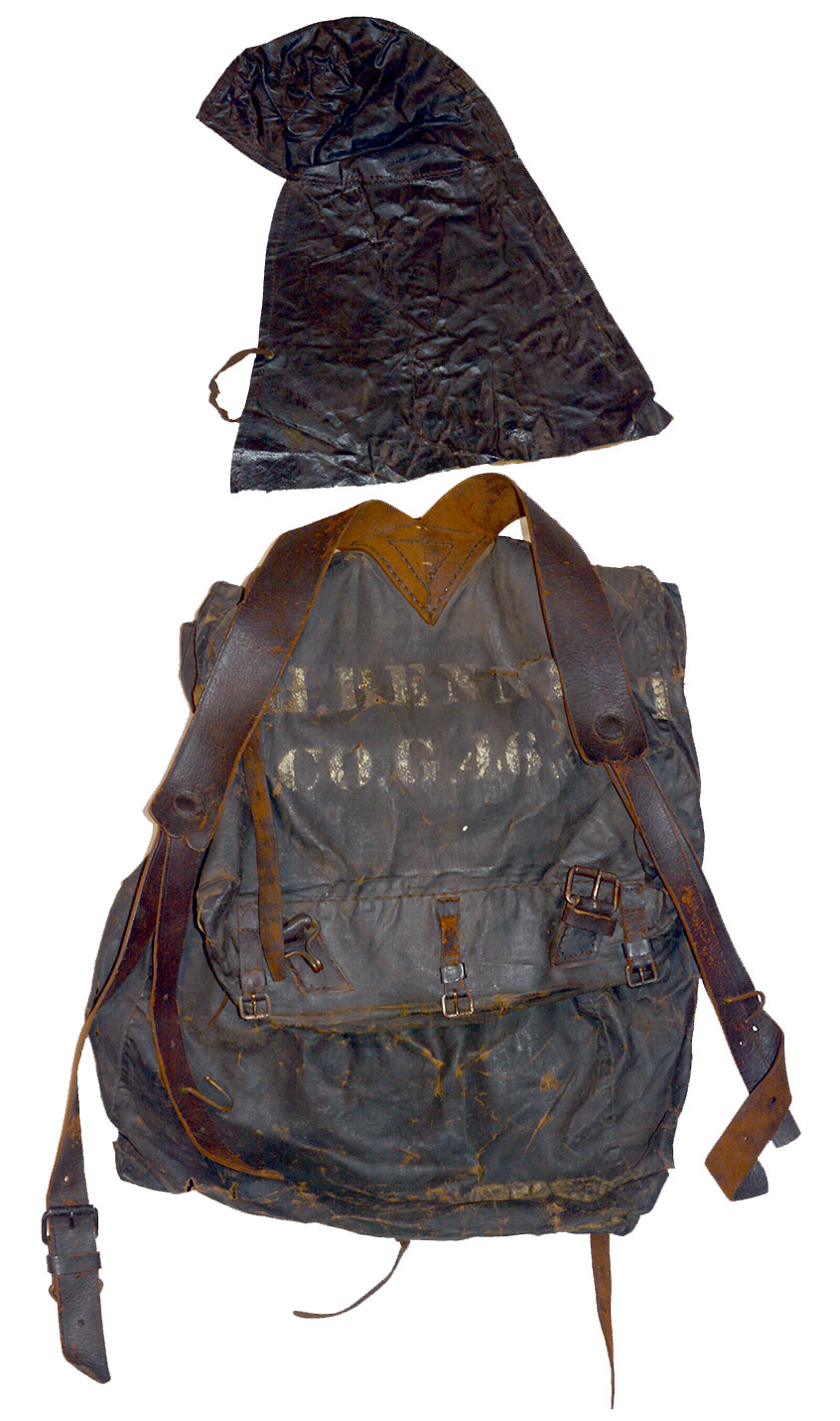
HAVELOCK STYLE RAIN COVER AND STENCILED KNAPSACK OF HENRY HARRISON BENNETT CO. G 46th MASS.
Hover to zoom
$3,500.00 ON HOLD
Quantity Available: 1
Item Code: 1268-1016
This scarce, soldier-stenciled knapsack and his even scarcer havelock-style rain cover with his initials in it were formerly in the respected collection of Steve Saathoff and lately in that of the Texas Civil War Museum. Both pieces are in very good condition and surfaced in late 2003 or early 2004 - a dealer’s letter to Saathoff dated February 2004 is in the file with them. They were later sold at the December 2014 auction of the Saathoff collection, passing directly or indirectly to the Texas CW Museum. The soldier, Henry Harrison Bennett, served in the 46th Massachusetts, a nine-month unit of 1862-63, and saw some action in Goldsboro Expedition from New Bern, NC, which entailed fighting at Kinston, Whitehall, and Goldsboro in December 1862, and perhaps some fighting at New Bern in March 1863 against Confederates under Pettigrew.
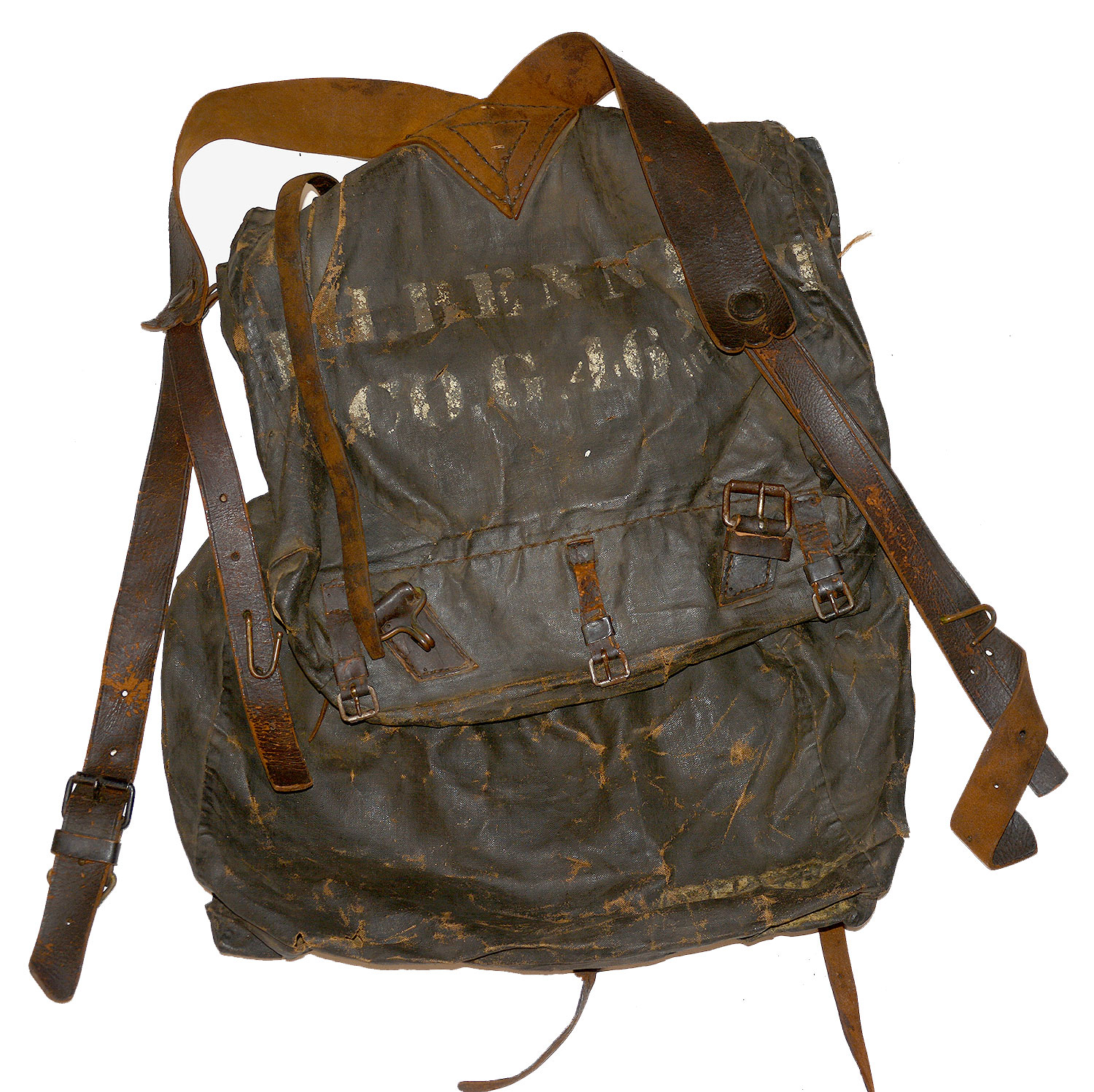
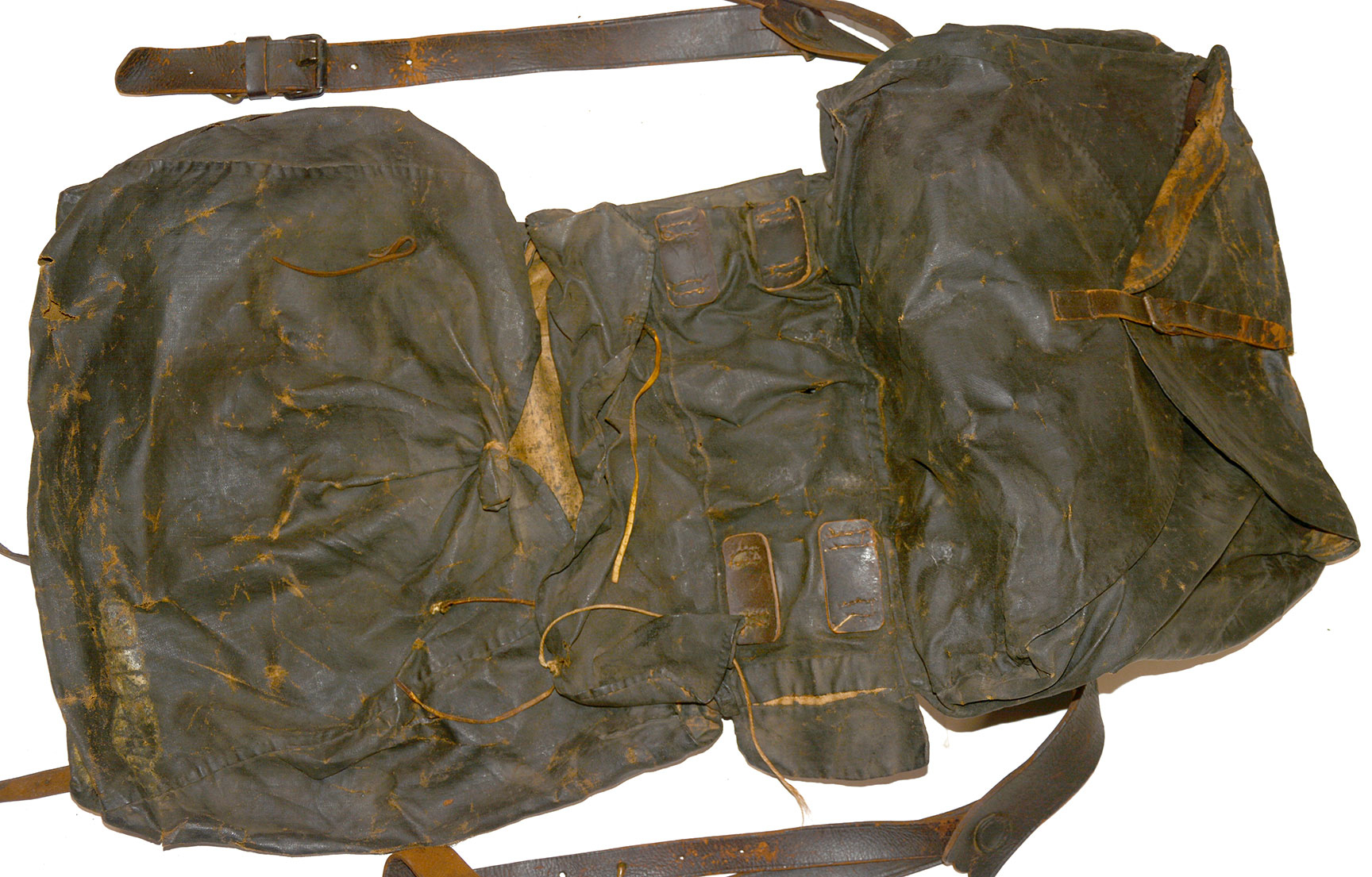
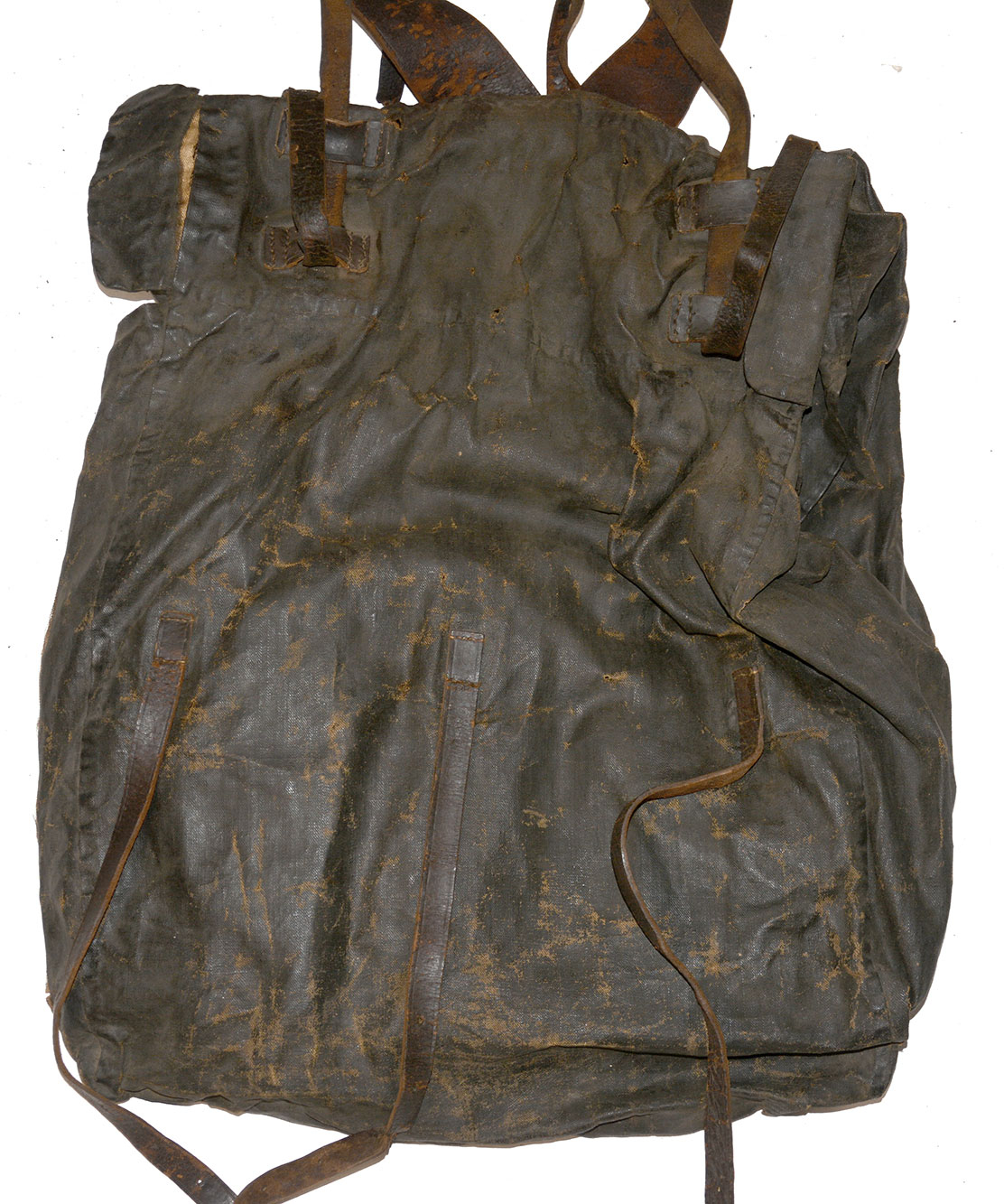
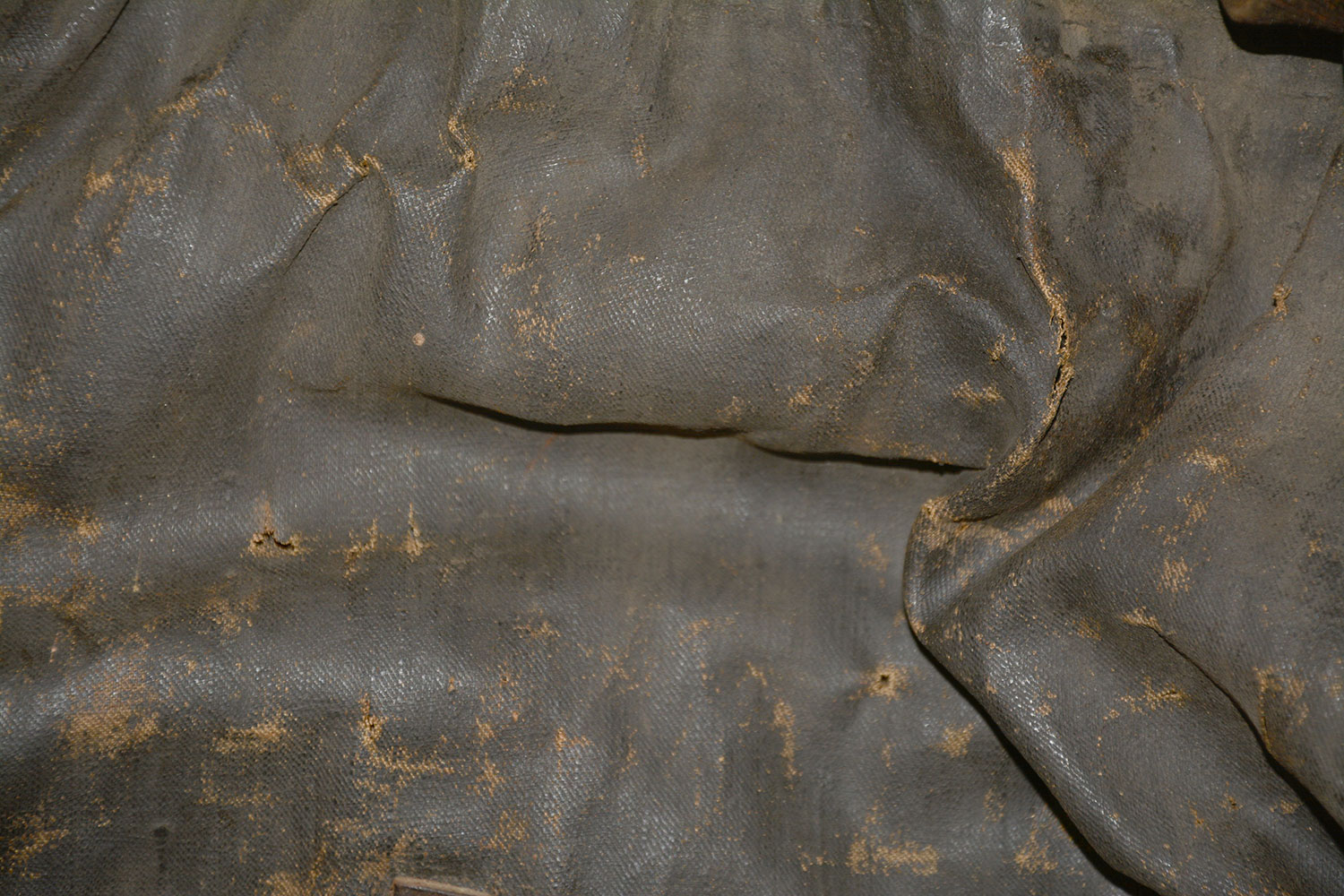
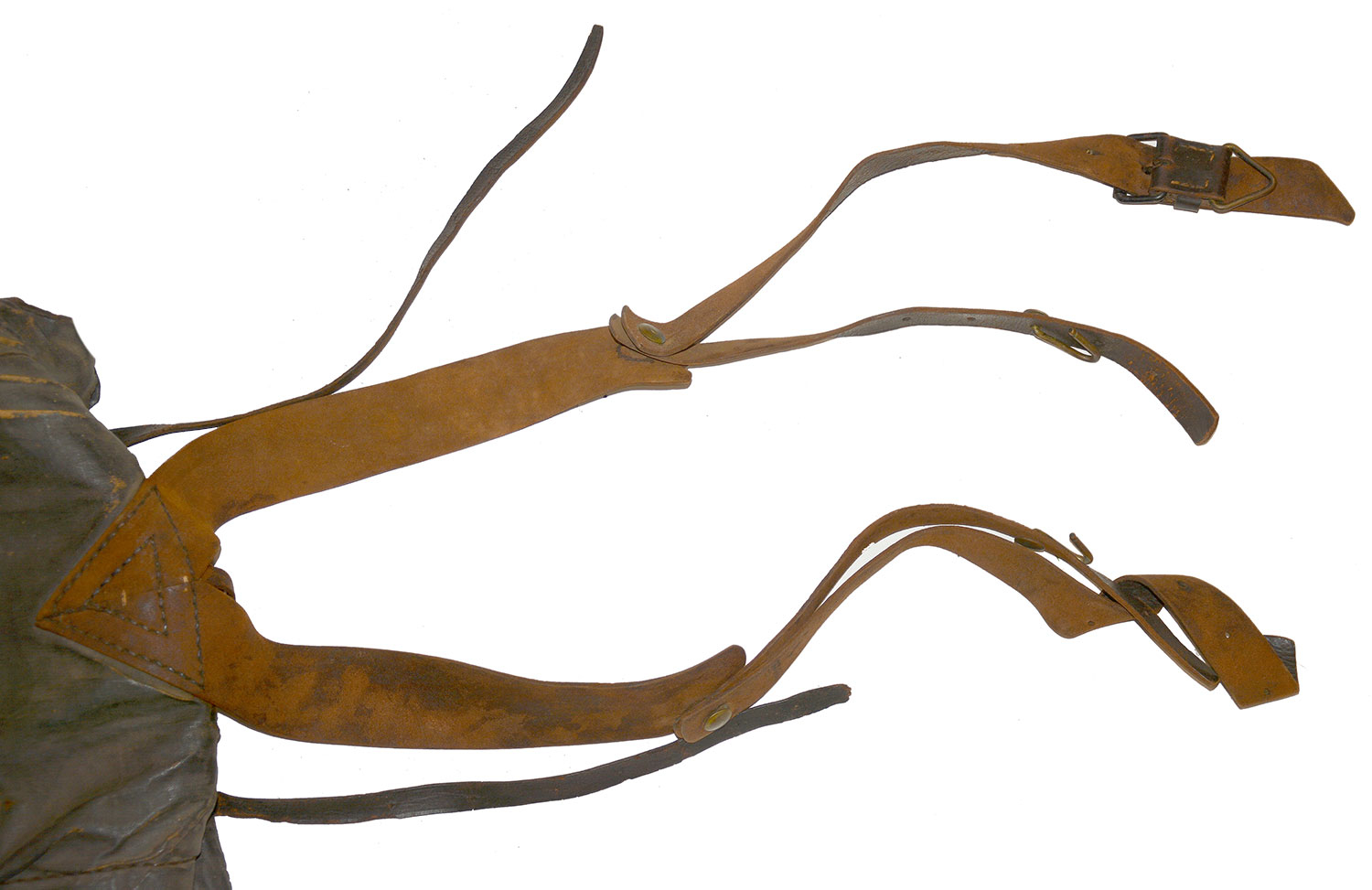
The knapsack is complete and in remarkably good condition for one actually issued and used, showing just some wear spots and few small holes. It is a standard, regulation, issue double-bag “soft-pack,” made of tarred canvas with leather shoulder and fastening straps, and retains also the two narrow straps with buckles that run through flat loops on the top of the pack and would secure the soldier’s blanket-roll or overcoat. These seldom survive. The narrow rawhide thongs to tie the bag or pocket portion of the pack are in place, as are the leather straps and buckles that close the four triangular flaps of the square portion that would rest against the soldier’s back. The three narrow fastening straps are in place on the outside of the pocket portion, as are the three small roller buckles for them on the bottom of the square portion of the pack. The shoulder straps are in place, with either side having the two lower extensions- one fitted with a J-hook to fit under the waist belt and better distribute the weight and the other fastening into a buckle at the soldier’s lower left, and on his right having a triangular loop that would connect with a doubled-wire hook on the right underside of the pack to make it easier to unsling.
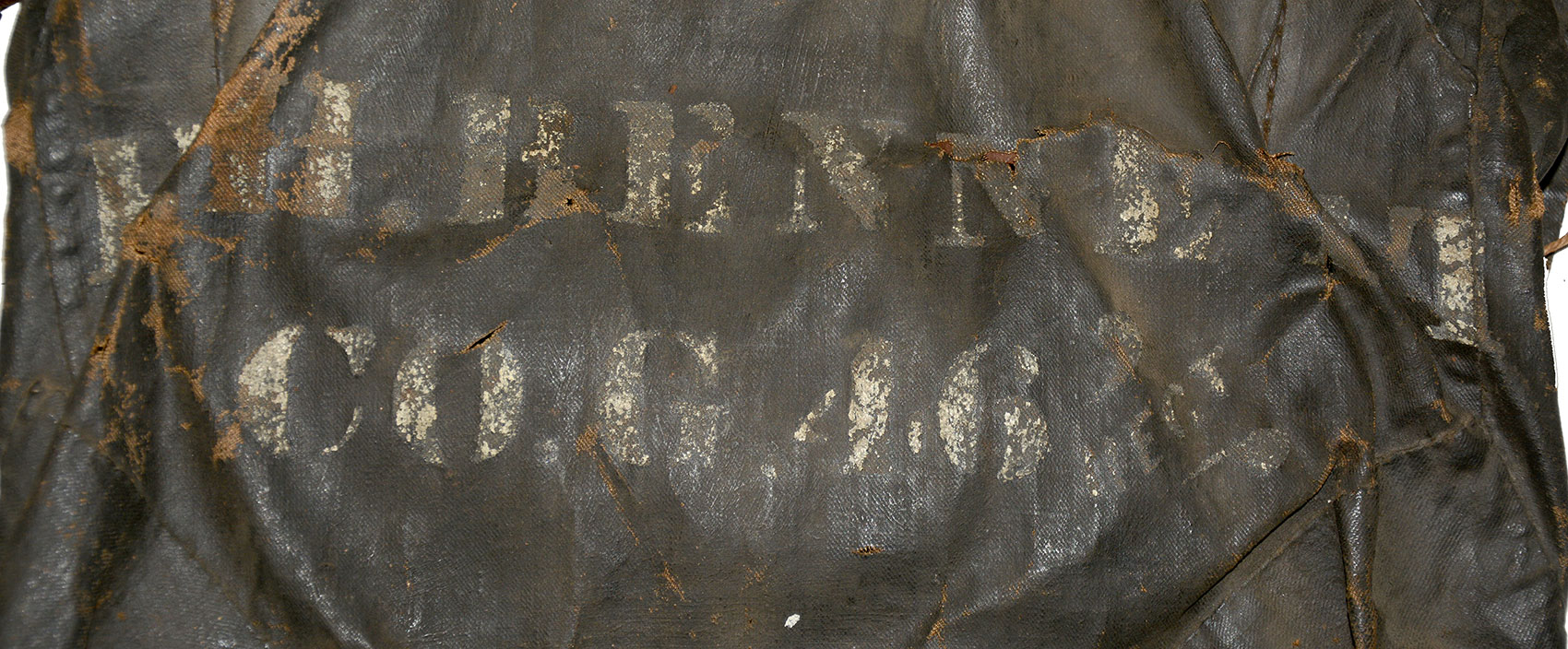
The stencil is on the side that would rest against the soldier’s back and shows some fading and wear to the white paint at the right and left edges, with some folds and wrinkles to the fabric, etc., but is legible and displays well, reading in letters 1-1/4” tall, "H. H. BENNETT / CO. G 46 REGT." with “REGT” in smaller sized capital letters set at angle between apostrophe-shaped flourishes above and below. This is a great example of an issued, field used, and personalized soldier’s knapsack. The vast majority of Civil War knapsacks out there come from unissued, surplus stores.
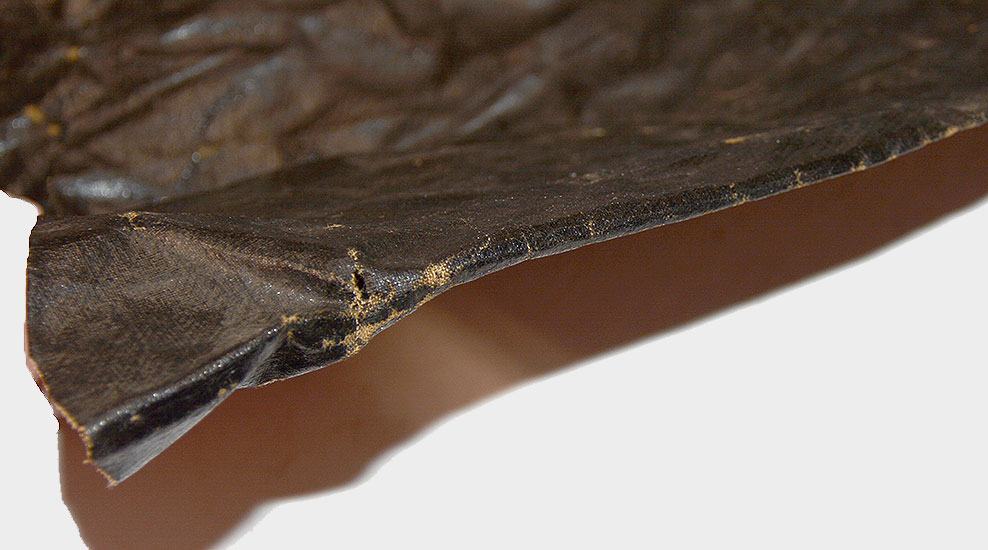
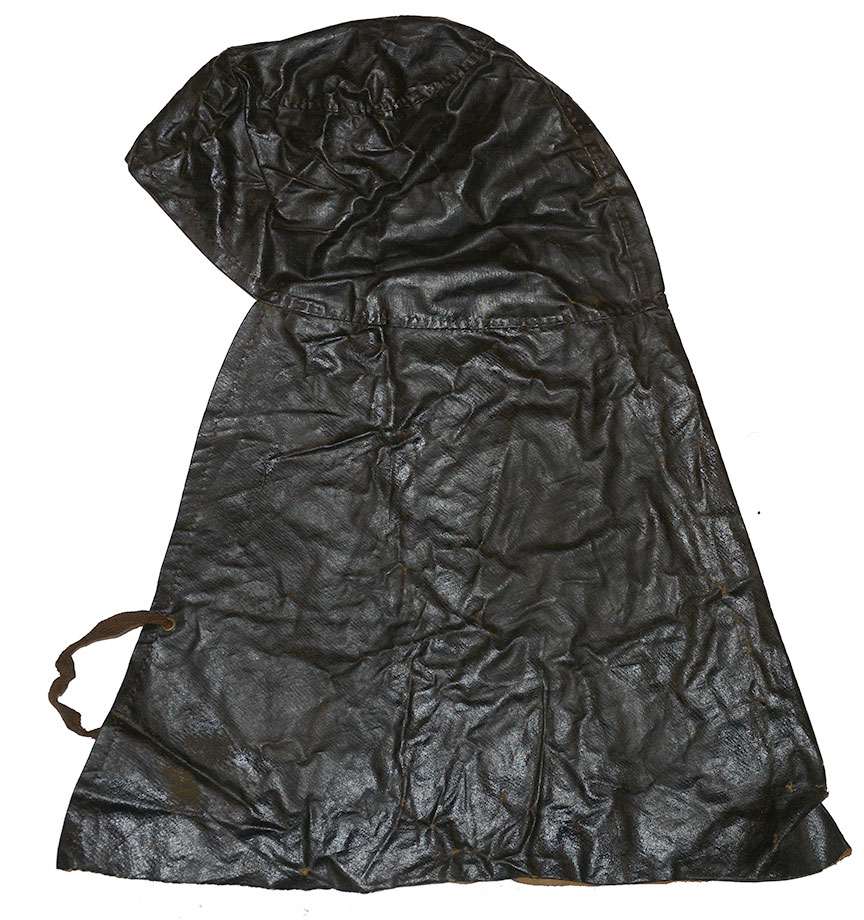
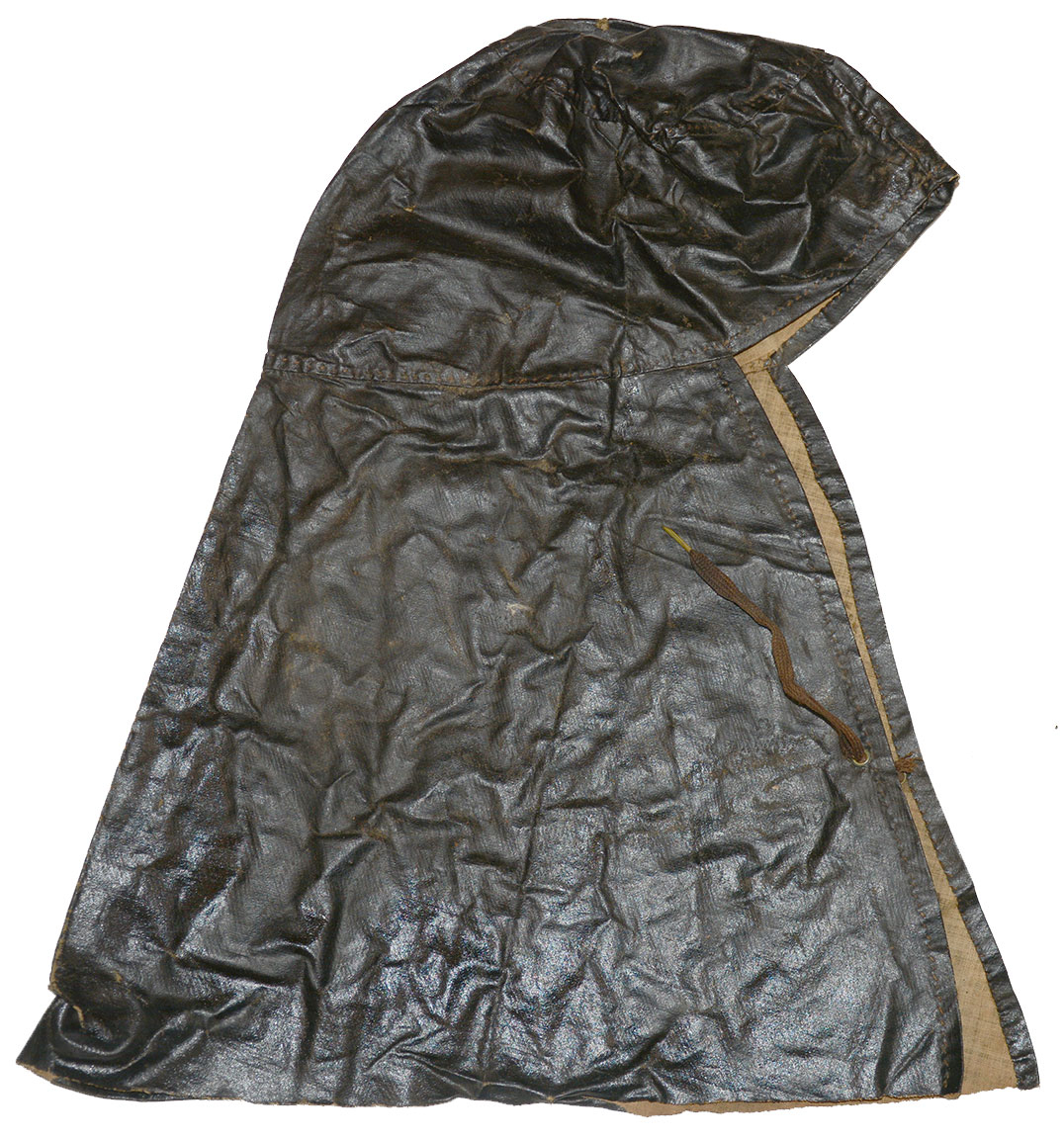
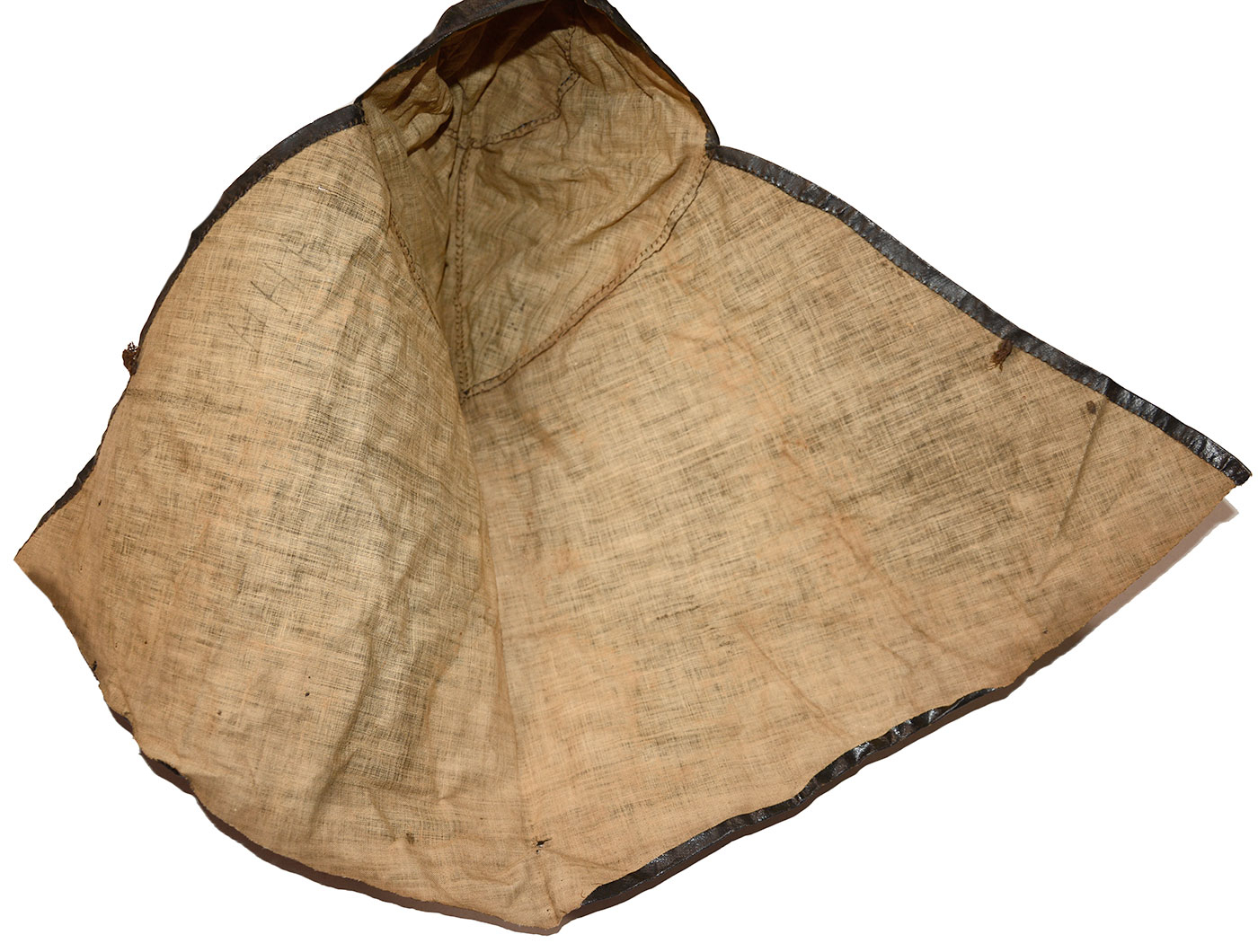
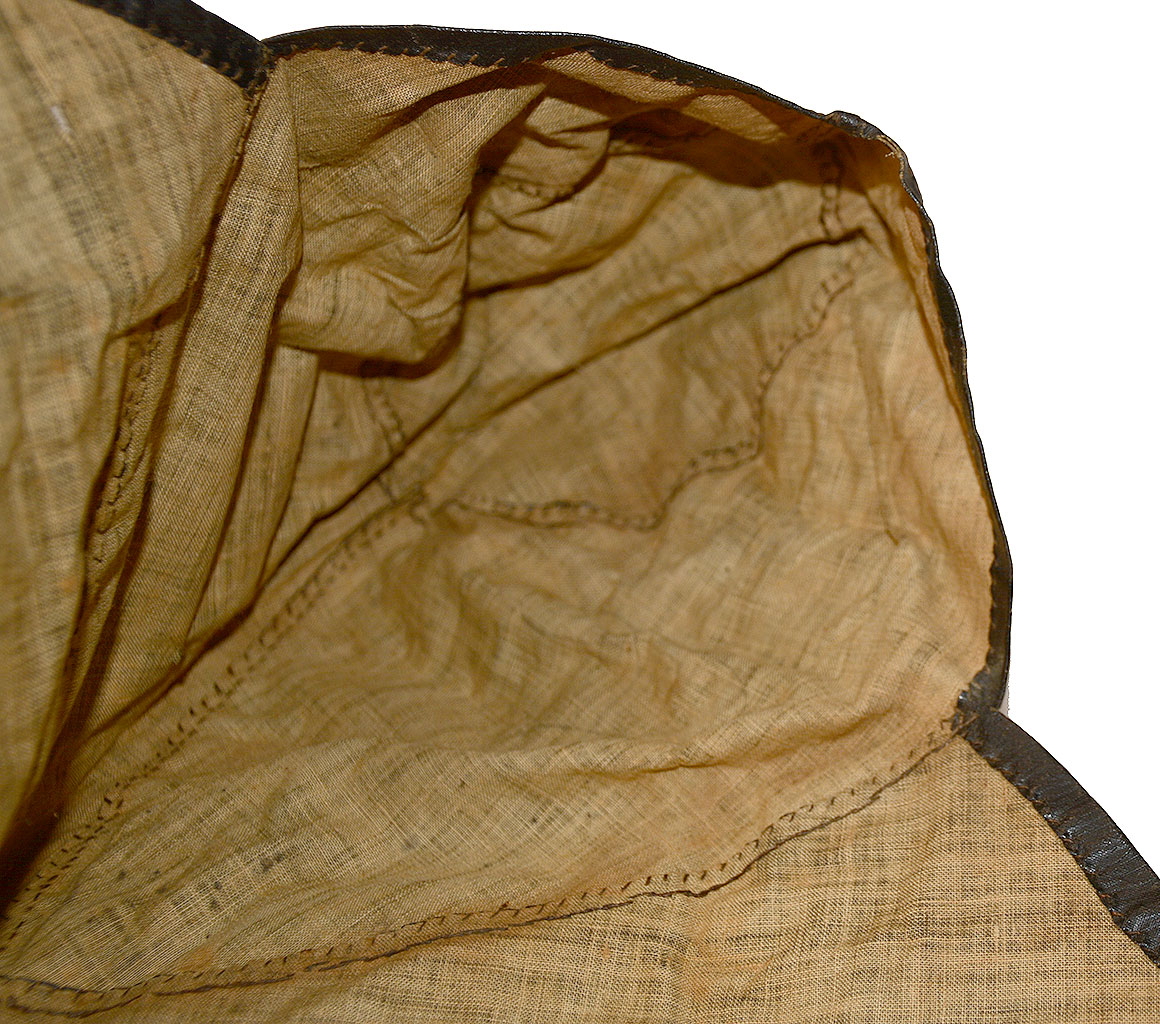
The cap cover is made of a thin rubberized fabric, probably linen, virtually identical to the example from the Troiani collection, worn also by a Massachusetts soldier, and illustrated in both Langellier and Loane’s book on US Army headgear and Woshner’s book on India-rubber and gutta-percha in the Civil War. It is made in the shape of a havelock, with flat top and sides running from about 3” at the front to 6” down the back seam so that it would fit over a kepi or forage cap (not the visor, just the cap body,) with a cape about 10” long at the rear and 11” at the front corners that would drape well down on either side of the cap visor, covering the back and shoulders, with each side of the opening fitted with a small metal grommet 4-3/4” from the lower front corner, in which is a short lace to tie it closed (one 5” and one 9”,) held by a knotted end inside.
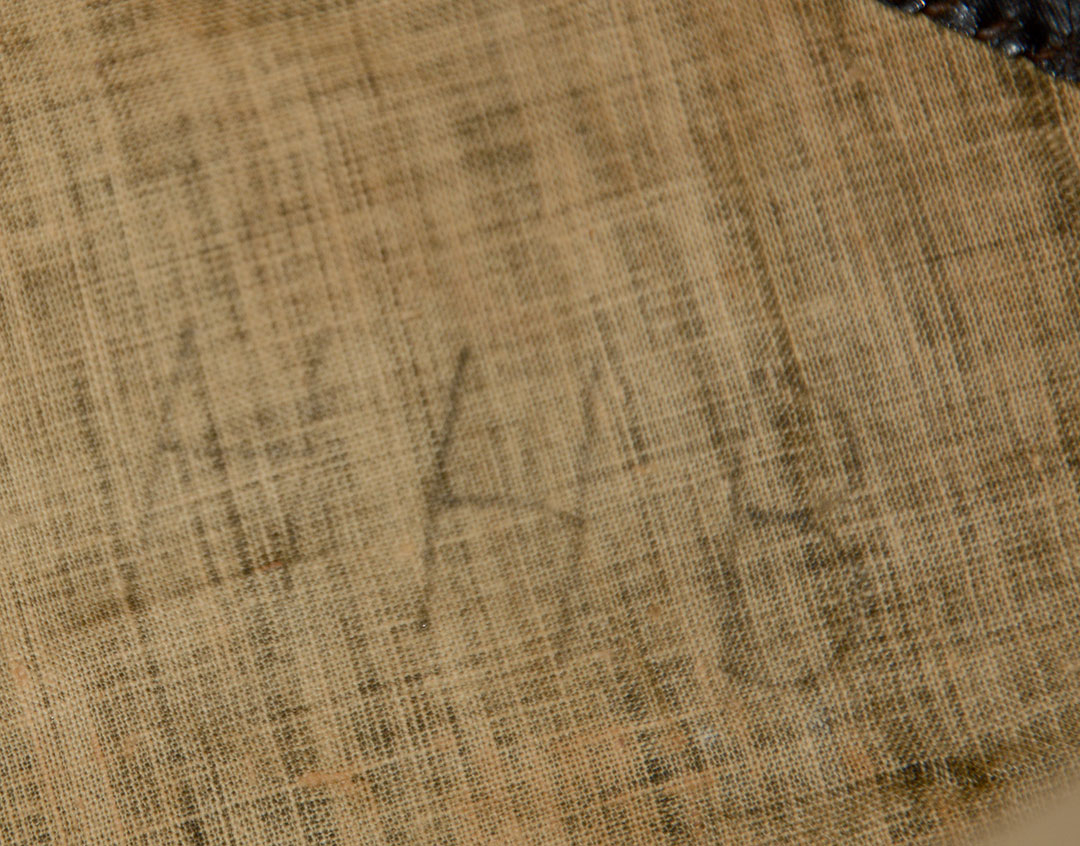
This is in excellent condition, with no holes or tears, the small grommets in place, the whole showing just some wrinkling, and the lace original to it. The edges are turned under ¼” and sewn down. The interior is untreated fabric and Bennett wrote his initials inside in thin, brown ink letters: “HHB.” See our photographs and refer to the books cited above for further information on these, cap covers of other forms, and the various waterproofing processes used. (This seems to be a thin rubber coating of the fabric, but we know gutta-percha was also used, as well as some other waterproofing compounds.)
Henry Harrison Bennett, born Nov. 22, 1840, was a shoemaker in Holland, Hampden County, MA, when he enlisted. The date when he “enrolled and joined for duty” is given as both Aug. 26 and Sept. 24, perhaps the first marking enrollment and the second, joining for duty, but he was officially mustered in as a private in Company G of the 46th Massachusetts at Camp Banks, Springfield, MA on October 15, 1862. The regiment had been raised largely in Hampden County in response to Lincoln’s Aug. 4, 1862, call for nine-months troops. It organized in September and October, mustered in from Sept. 24 to Oct. 22, left for Boston on Nov. 5 and reached New Bern, NC, on Nov. 15, where it joined Lee’s brigade in the Department of North Carolina.
Muster roll abstract cards in Bennett’s service file list him as present through March-April 1863. This puts him in the ranks for the December Goldsboro Expedition and the battles of Kinston, Whitehall, and Goldsboro, in which the regiment took part, but was lightly engaged, CWData reporting their loss as 1 killed and 4 wounded in the expedition. And, in March 1863 the regiment took part in the defense of New Bern against Confederate forces under Pettigrew. Late in the month six companies, including G, were sent to Plymouth to form part of the garrison until May 8.
In a May 14 statement on a certificate of disability, Bennett’s Captain reported him present and in good health through “the Goldsboro march,” but not very healthy thereafter and later taken sick with measles, leaving him unable to perform duty for about two months, also stating it was about 40 days of the preceding two months, which would put him out of action from mid-to-late March. The regimental surgeon backed it up and thought he would not be able to return to duty during the time left for the regiment and as a result he was discharged for disability at New Bern on June 17, 1863. (His younger brother Baxter had signed up, with their parents’ permission at the same time, but did not last that long, being discharged for disability on May 30. The regiment, or parts of it saw some fighting also at Gum Creek and Batchelder’s Creek, and on the way home volunteered for temporary emergency service in the Gettysburg Campaign, but got home in time to muster out on July 29.)
Bennett returned to Holland and the shoe business after his discharge. He married in 1864, apparently acquiring a young step-son in the process. He applied for a disability pension in 1886 and died in the town of Warren, Mass, on July 1, 1899.
These display well and are very scarce pieces of field gear- the cap cover in any condition, the knapsack actually issued, stenciled and used, and both nicely identified. [sr] [ph:L]
~~~~~~~~~~~~~~~~~~~~~~~~~~~~~~~~~~~
THIS ITEM, AS WITH ALL OTHER ITEMS AVAILABLE ON OUR WEB SITE,
MAY BE PURCHASED THROUGH OUR LAYAWAY PROGRAM.
CLICK HERE FOR OUR POLICIES AND TERMS.
THANK YOU!
Inquire About HAVELOCK STYLE RAIN COVER AND STENCILED KNAPSACK OF HENRY HARRISON BENNETT CO. G 46th MASS.
Most Popular
Historical Firearms Stolen From The National Civil War Museum In Harrisburg, Pa »
Theft From Gravesite Of Gen. John Reynolds »
Selection Of Unframed Prints By Don Troiani »
Fine Condition Brass Infantry Bugle Insignia »
featured item
A FINE EXAMPLE OF A CONFEDERATE INFANTRYMAN'S KEPI
This cap's crown, top and base band are made from a medium weight open weave woolen fabric which may be a blend of sorts. It certainly looks "home spun". The kepi gives indications of being a depot made item but may actually have been homemade as… (1268-037). Learn More »
site search
Upcoming Events
May 13 - 17: N-SSA Spring Nationals, Fort Shenandoah, Winchester, VA Learn More »