

site search
online catalog
CIVIL WAR FIELD GEAR OF BENJAMIN F. GOODWIN, 6th MAINE INFANTRY AND 1st MAINE VET. VOLUNTEERS
Hover to zoom



$4,950.00
Quantity Available: 1
Item Code: 2025-3676
Shipping: Determined by Method & Location of buyer
To Order:
Call 717-334-0347,
Fax 717-334-5016, or E-mail
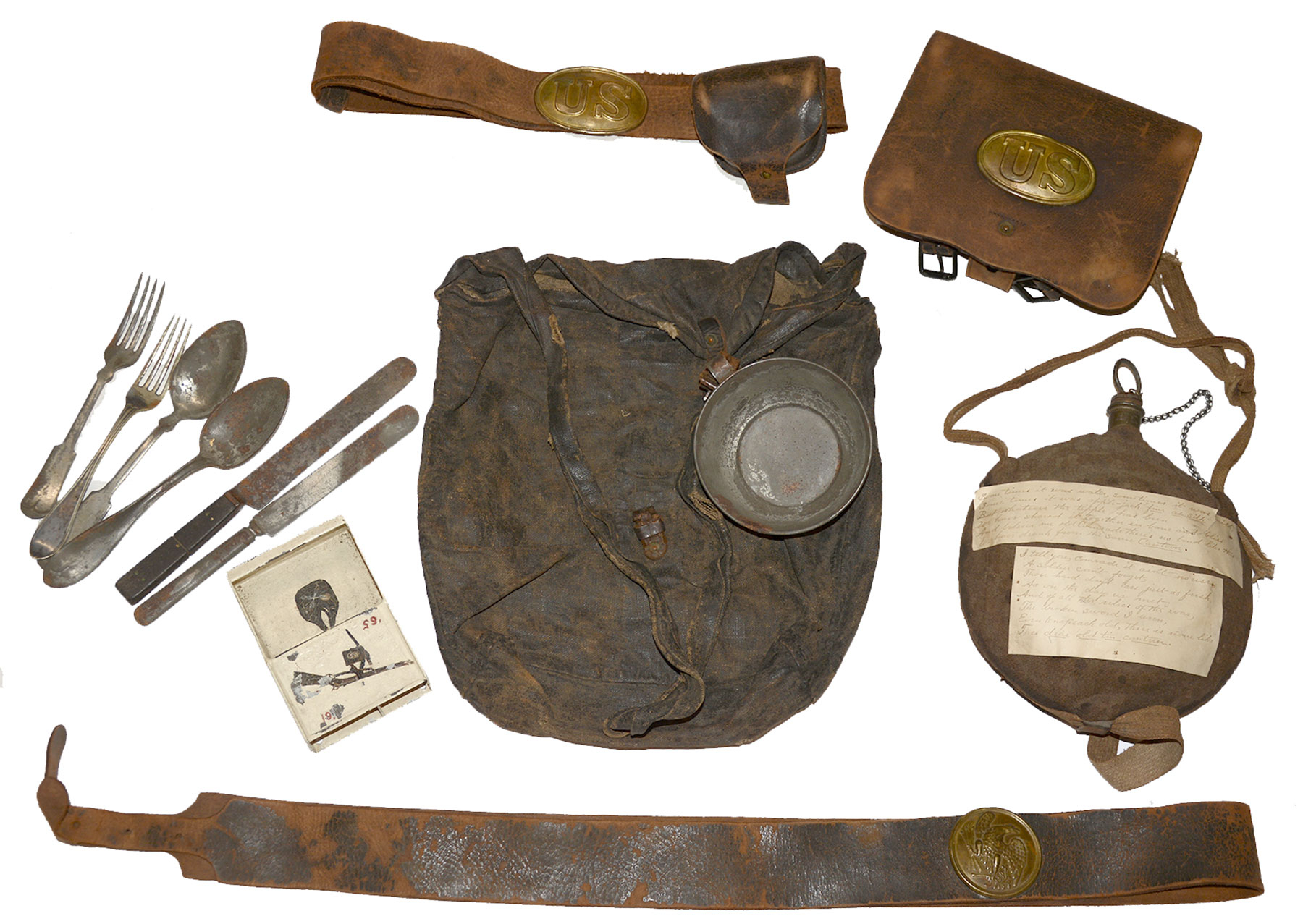
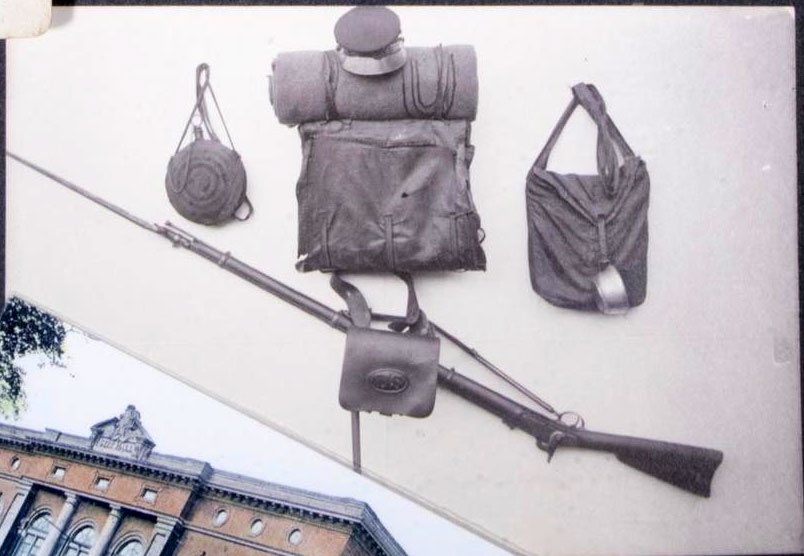
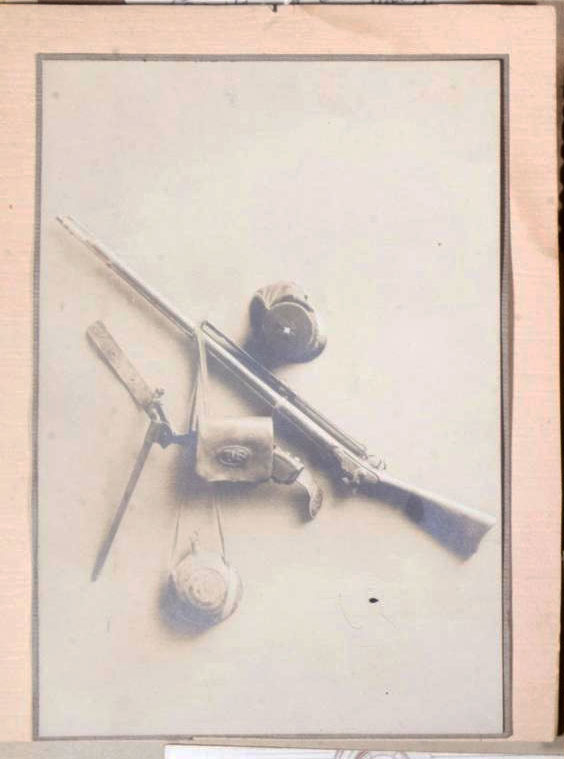
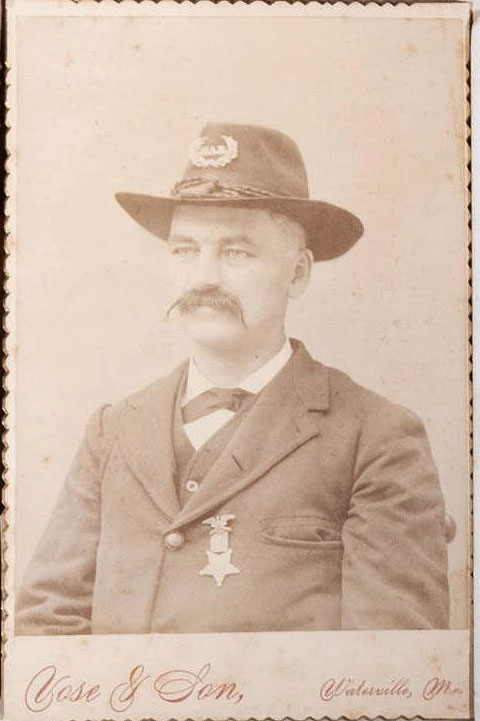
This group of Civil War soldier’s field gear was brought home by Maine veteran Benjamin Franklin Goodwin, who served in the 6th Corps in the Army of the Potomac and Army of the Shenandoah from 1862 through 1865. The material descended in the family until last year and includes his waistbelt with oval US belt plate and cap box, his cartridge box and sling, his canteen with his initials carved in the spout and a postwar poem pinned to it, his issue haversack with his mess cup tied held by the latch tab (and some eating utensils preserved with it,) and a folk-art, paint-decorated magazine tin with inscription. The family retained his rifle and some other items, but furnished copy photos that include one showing some of these items hanging on a wall and another with the aged veteran himself standing in front of them.
The group consists of the following:
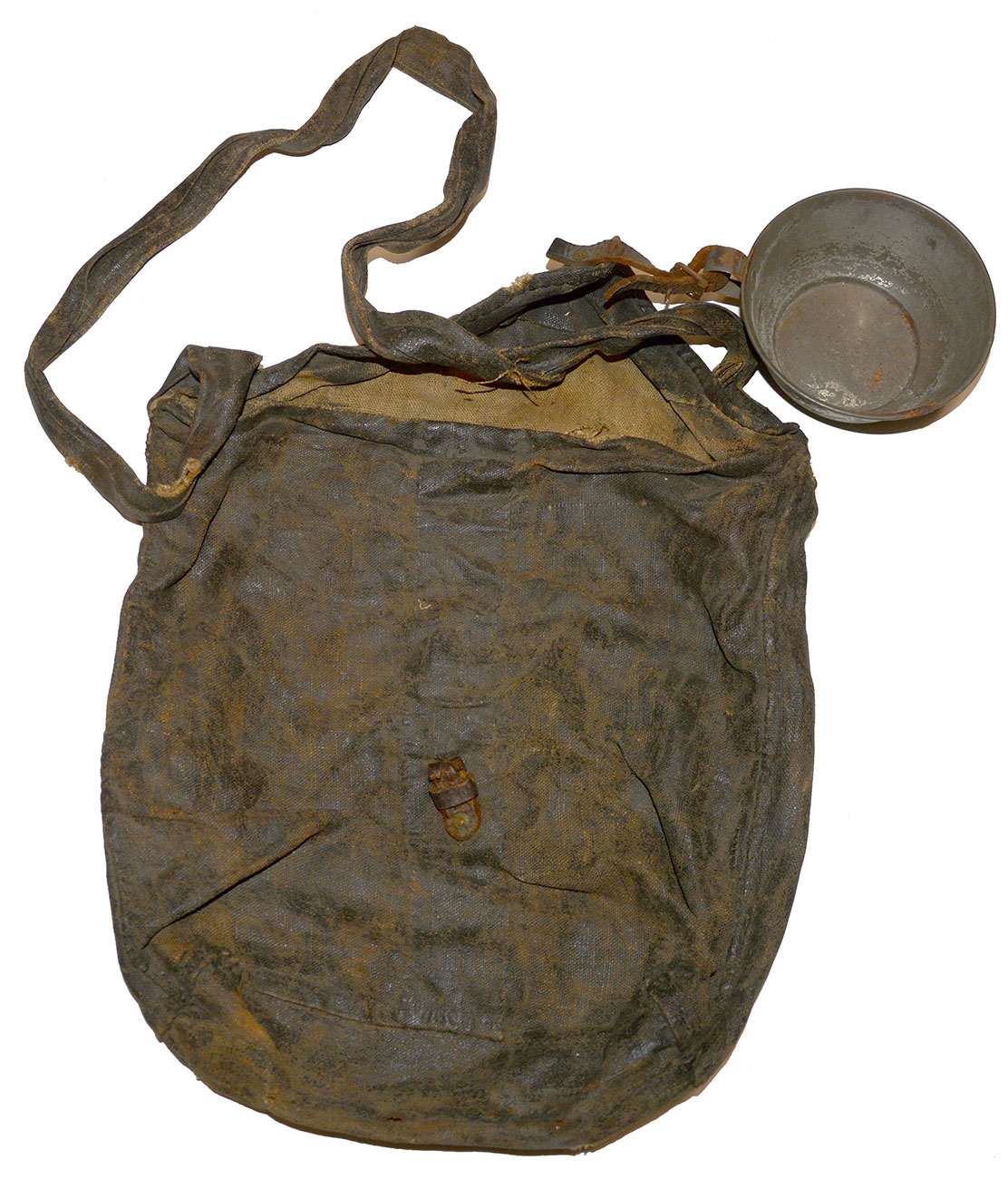
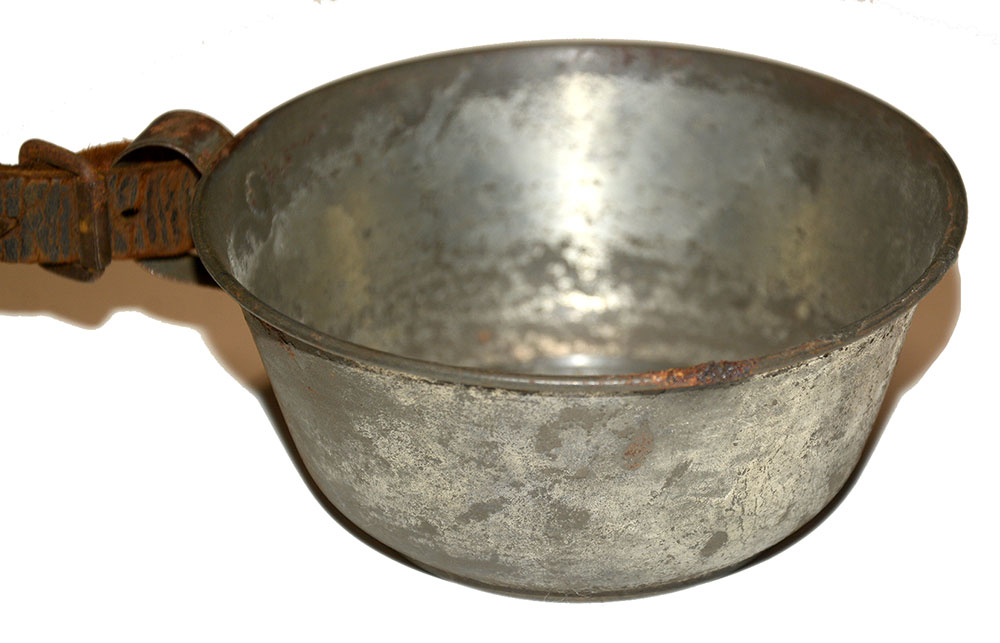
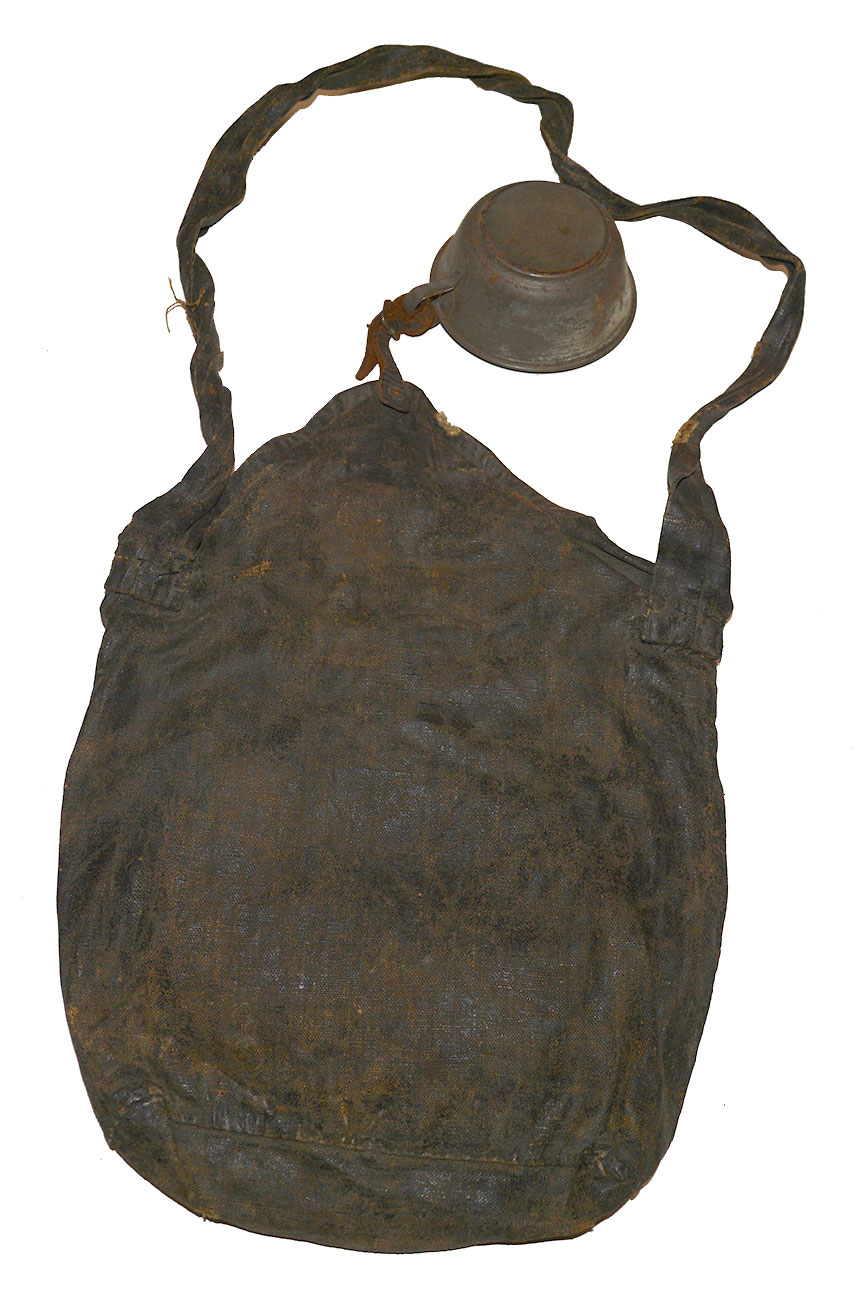
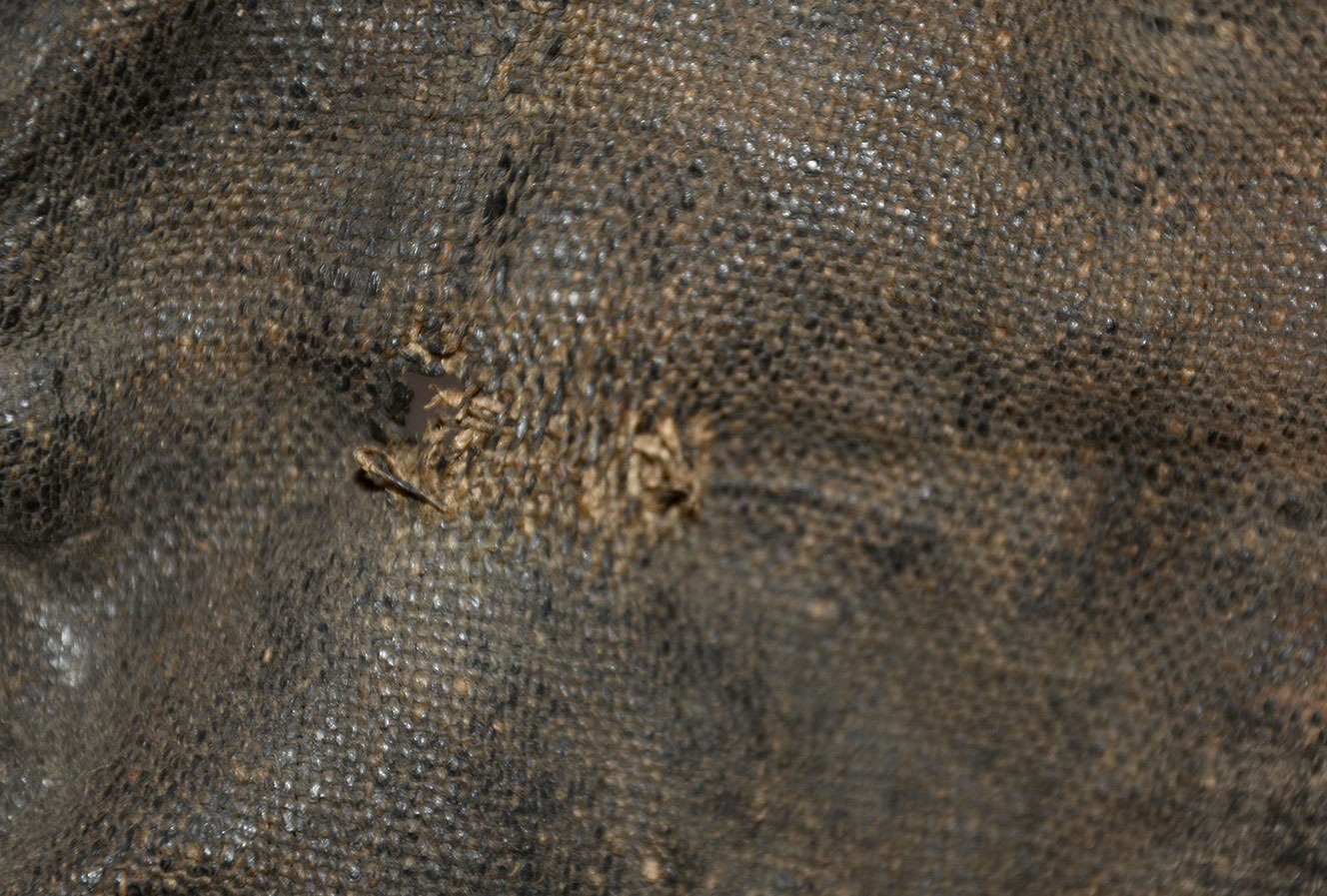
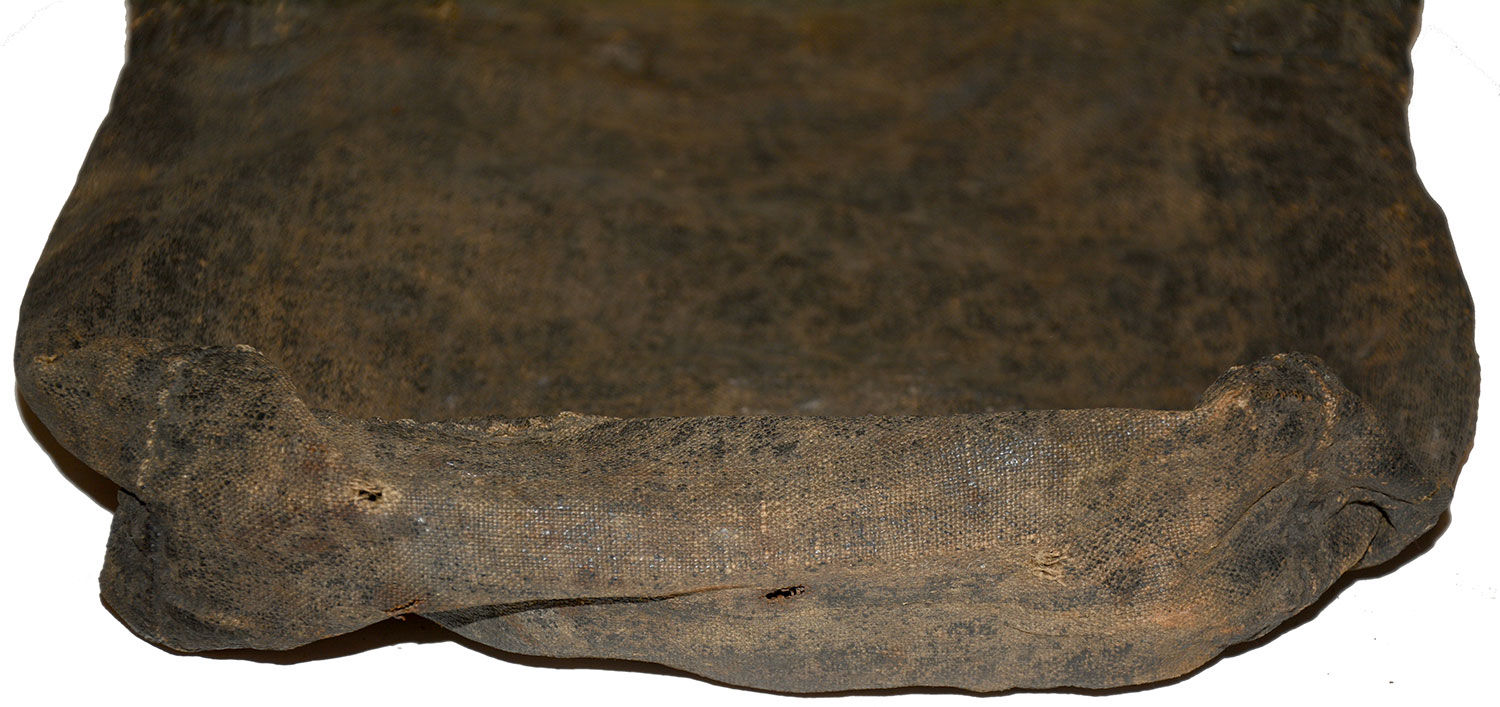
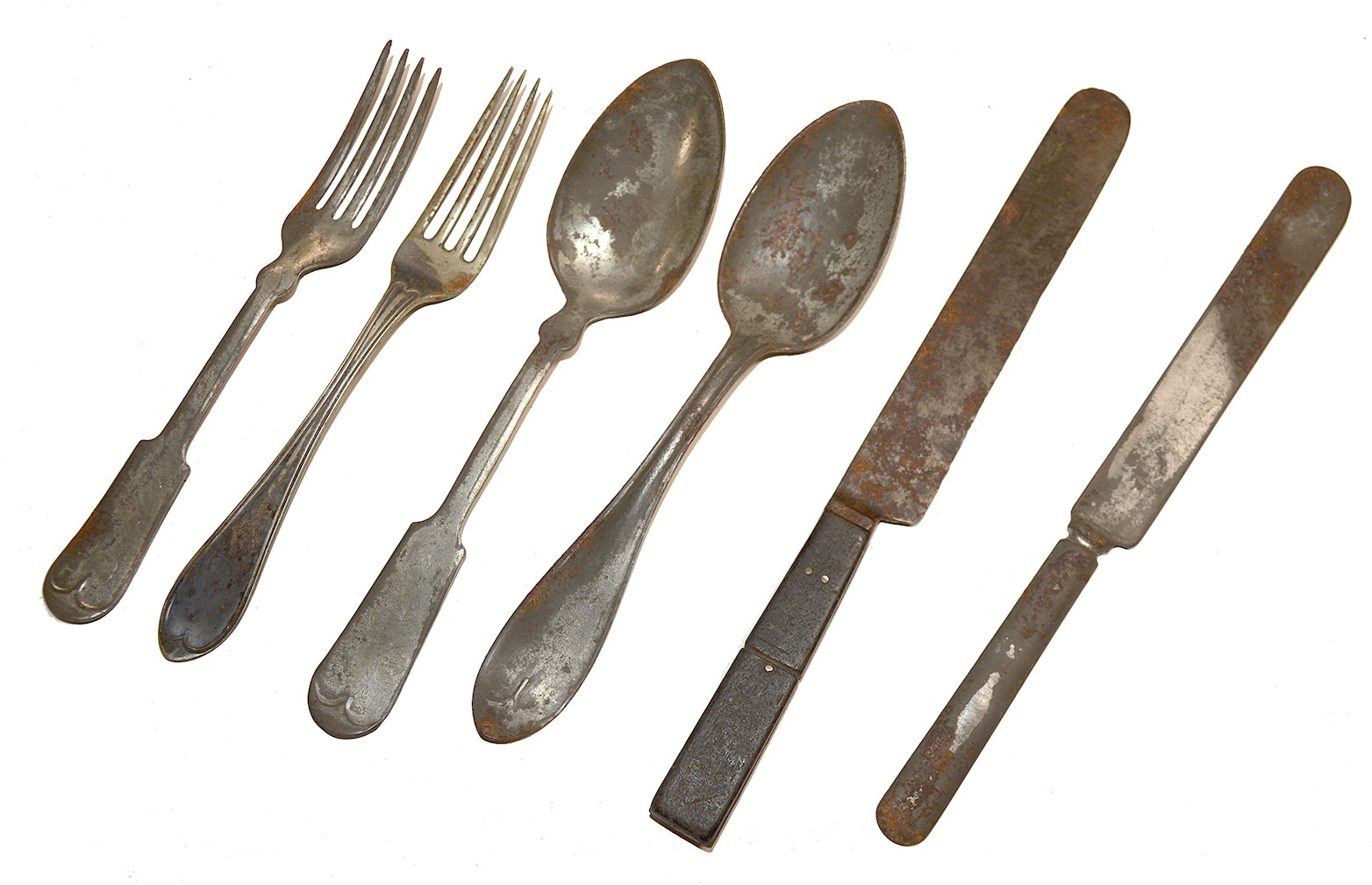
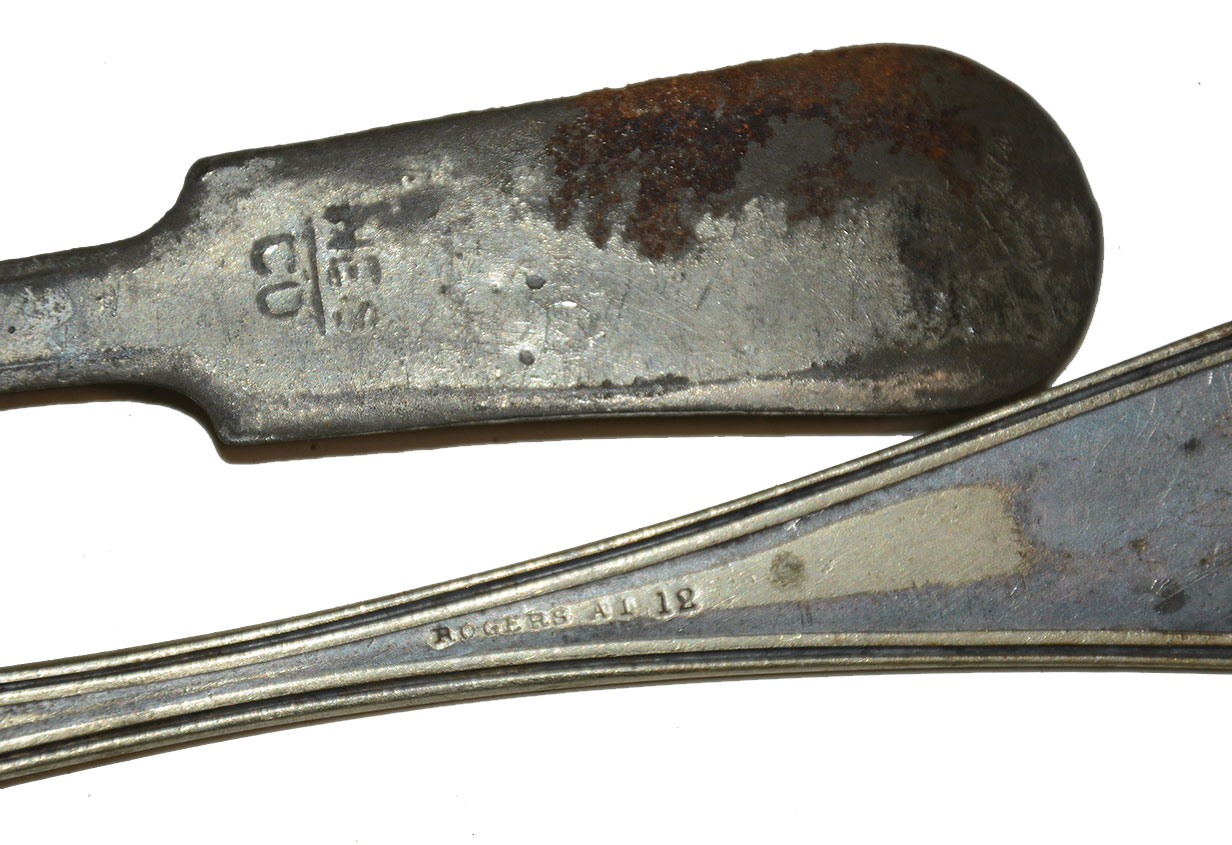
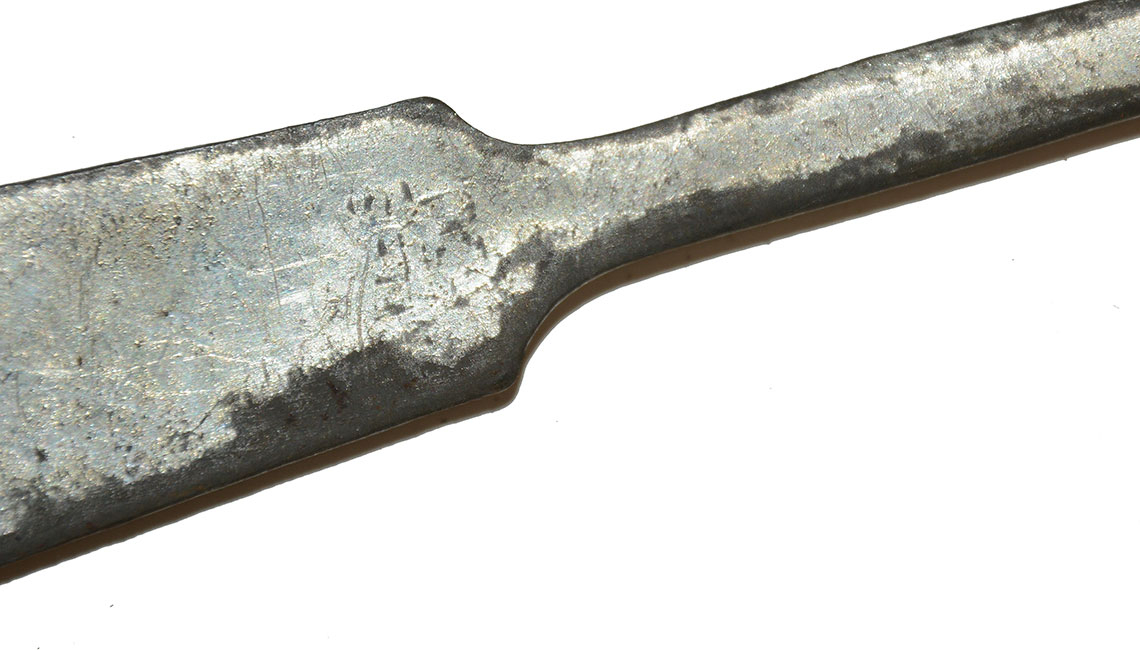
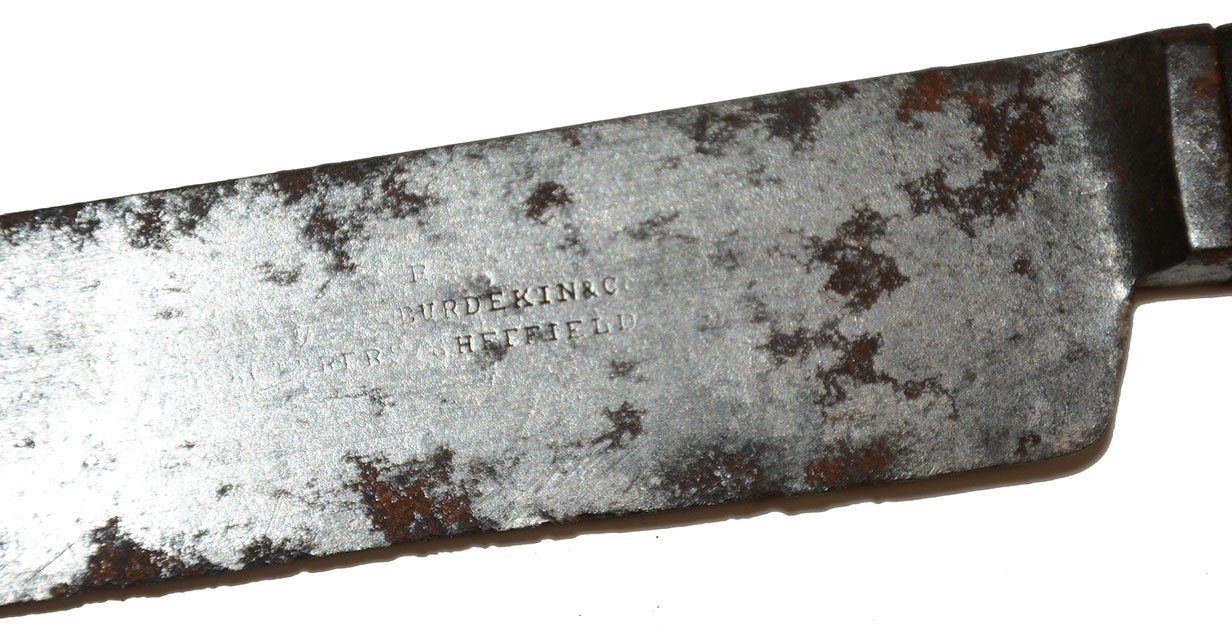
1) His regulation, government issue tarred canvas haversack with his mess cup hanging from its latch tab. The haversack shows wear to the tarred coating of the canvas, but no large holes or tears. The shoulder strap is attached at the rear corners and shows some wear along the edges and couple of loose threads and small holes, but is full length, with no breaks. The flap is likewise intact and in place. The latch tab is still attached to the flap but pulled the buckle out of the front of the bag and the tab and buckle were then looped through handle of his mess cup, which is a short, tinned iron cup with rolled edge and the handle, a short, wide loop rivetted in place. The cup retains much of its tin finish, though showing dark gray along the edge from use, and a couple of spots of light rust. The cup is one of many varieties supplied by states and recruiting services during the war. Two spoons, forks and knives were preserved by the family also and are “of the period,” but may have been added in by the family at some point, or even by the veteran, who clearly liked to display his relics and mementos. The haversack with this cup attached are visible hanging on the wall in the photo of the veteran with his memorabilia.
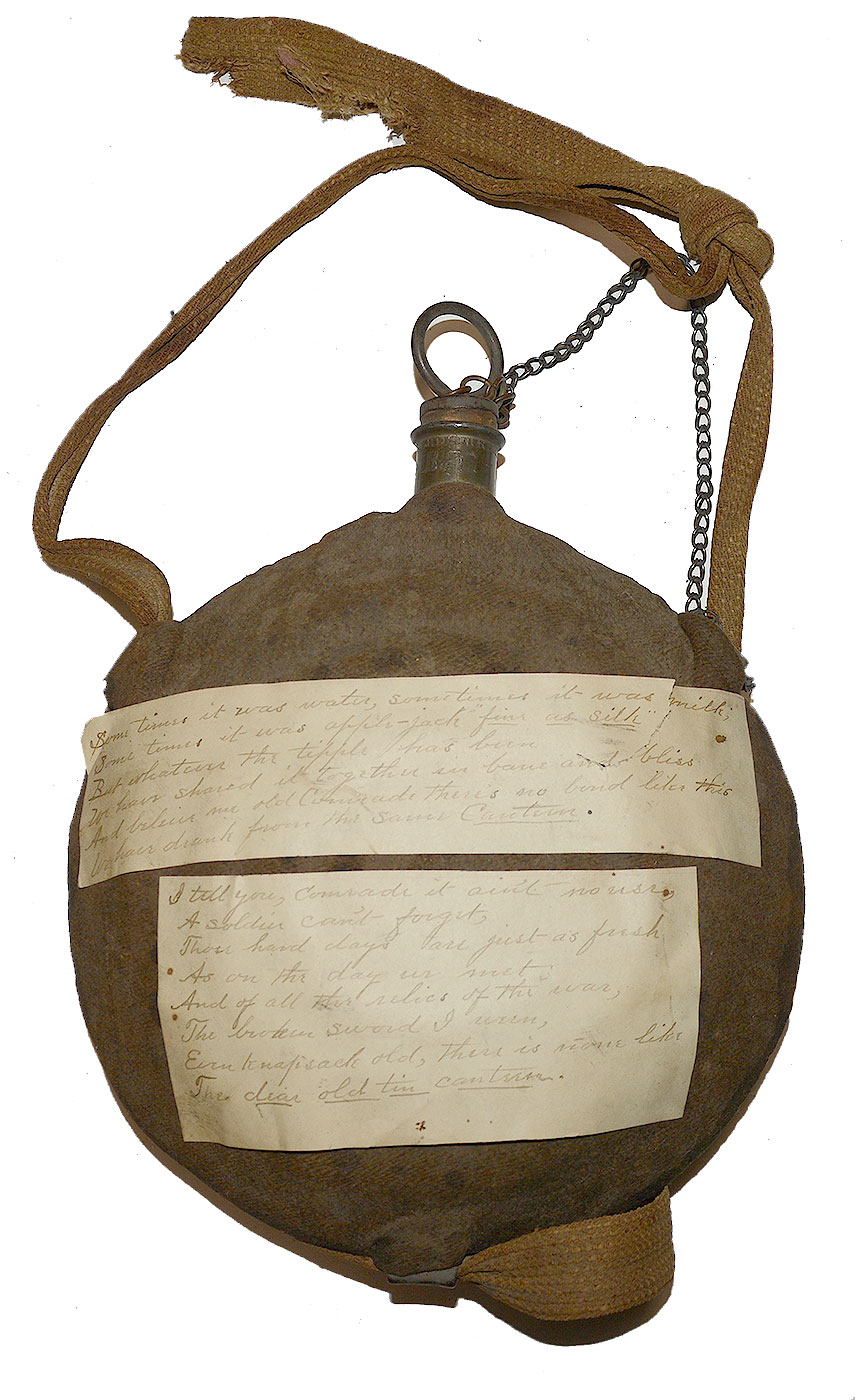
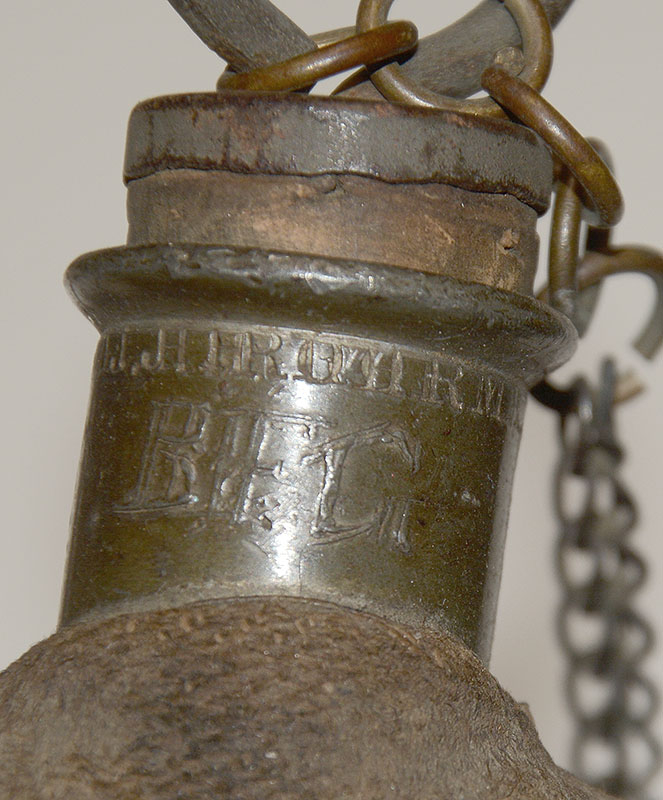
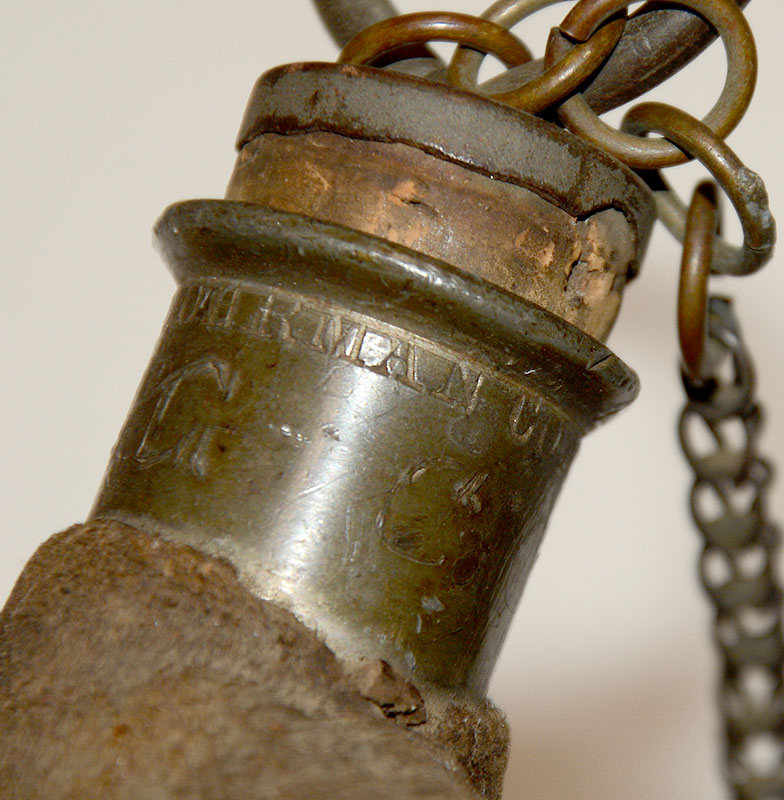
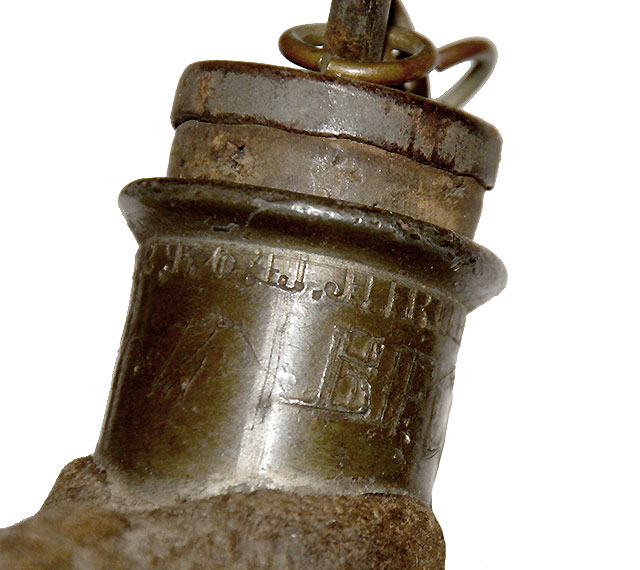
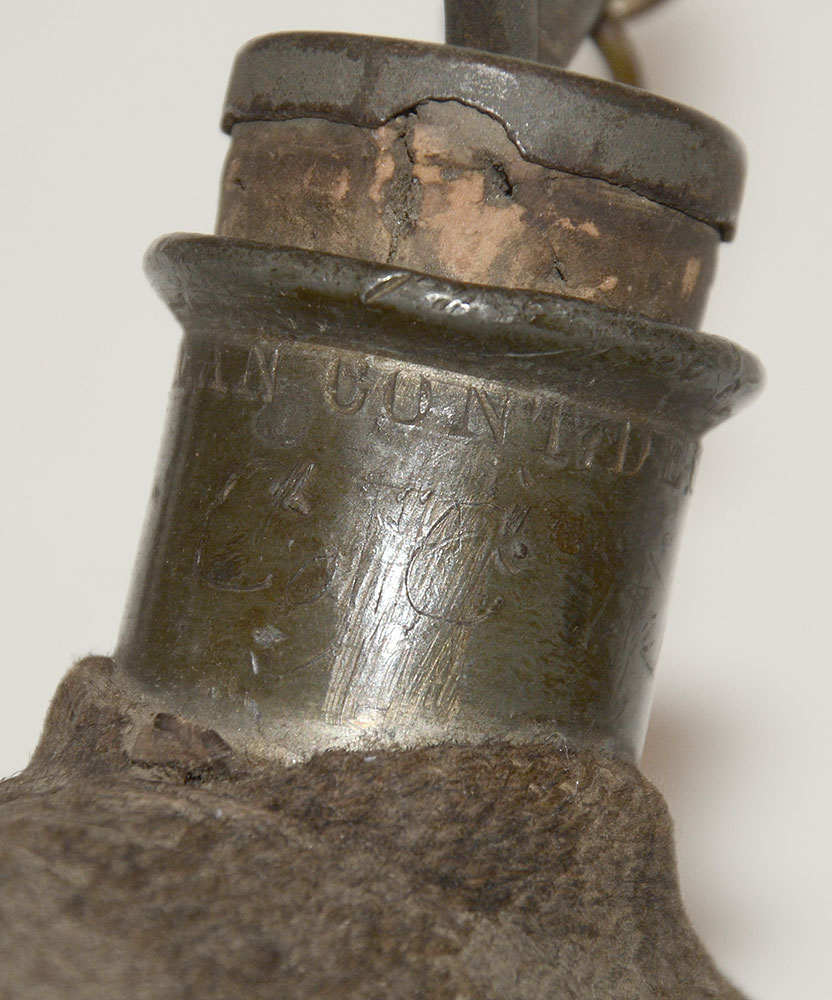
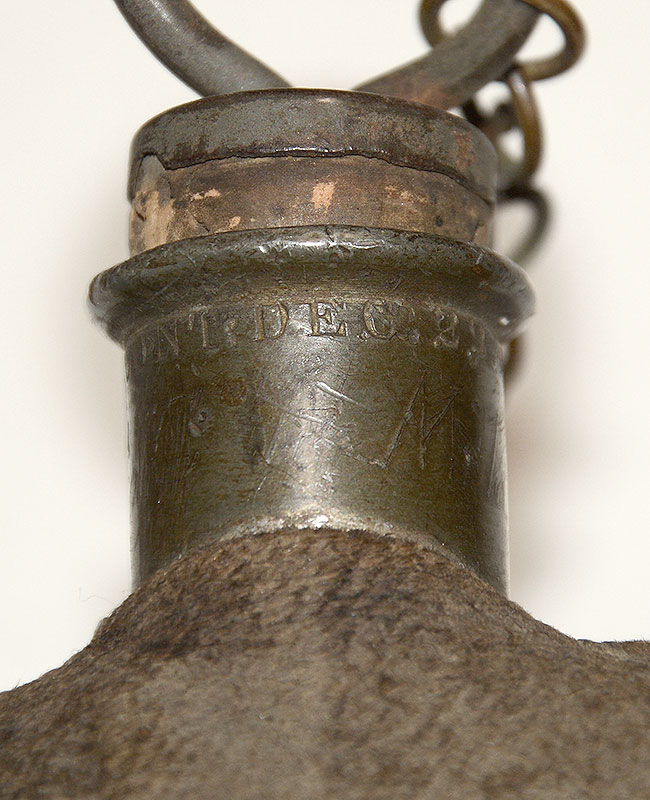
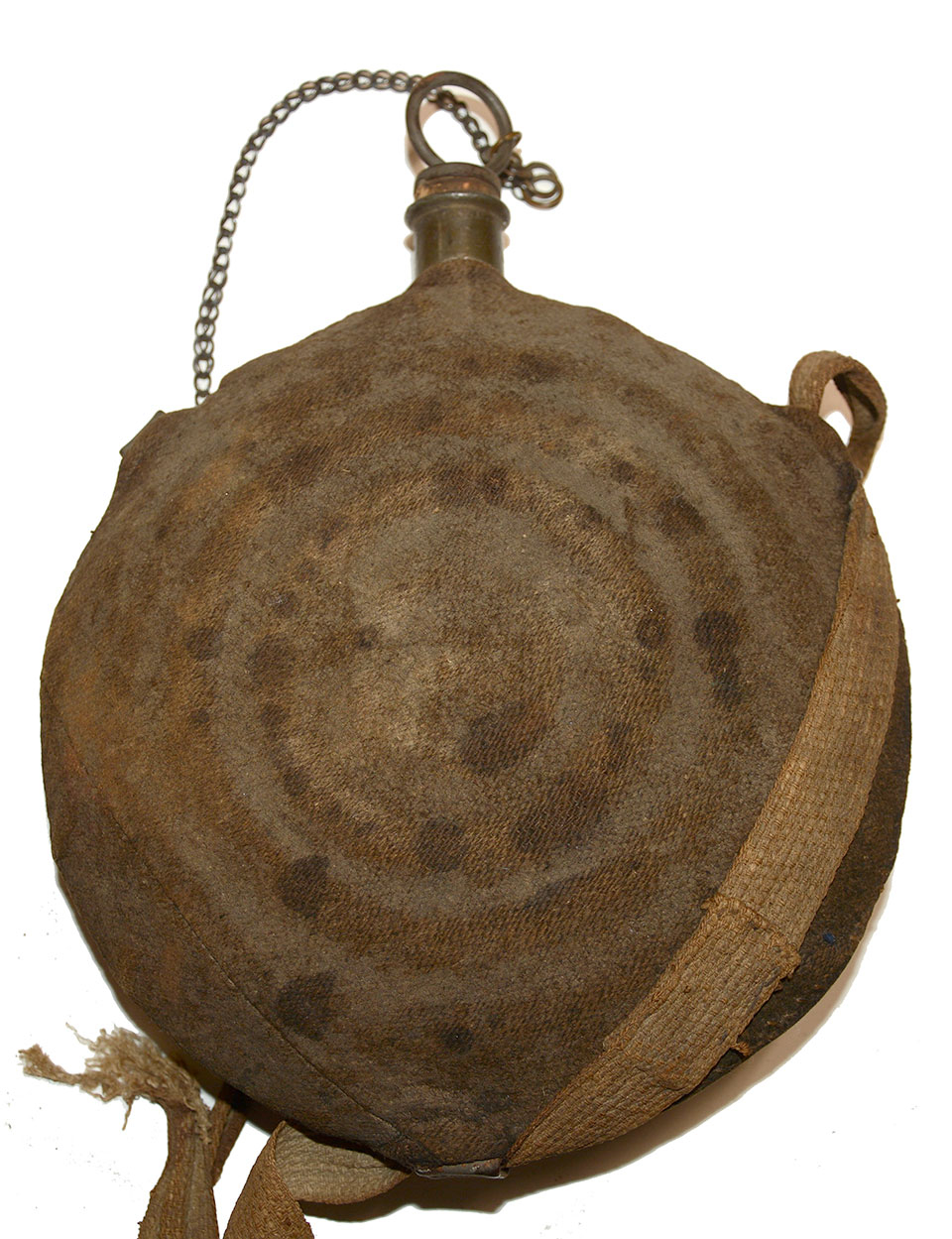
2) His regulation, issue bullseye canteen with cover, strap and stopper. This, too, is shown hanging on the wall with his other gear in the photo without him standing in front of it. The canteen is regulation issue and contractor marked by Rohrman on the spout, with the contract date. Goodwin deeply scratched in his initials “BFG” into the spout as well and there seems to be faint “C” and possibly “M” that may indicate he also put in his Company letter and Maine regimental affiliation. The cover is very good, complete, brown in colshowing stains from use, but no holes. The web strap is present, but was broken and knotted to repair it. The stopper is present and still attached by a small chain Goodwin used to replace the easily broken twine it would have been issued with.
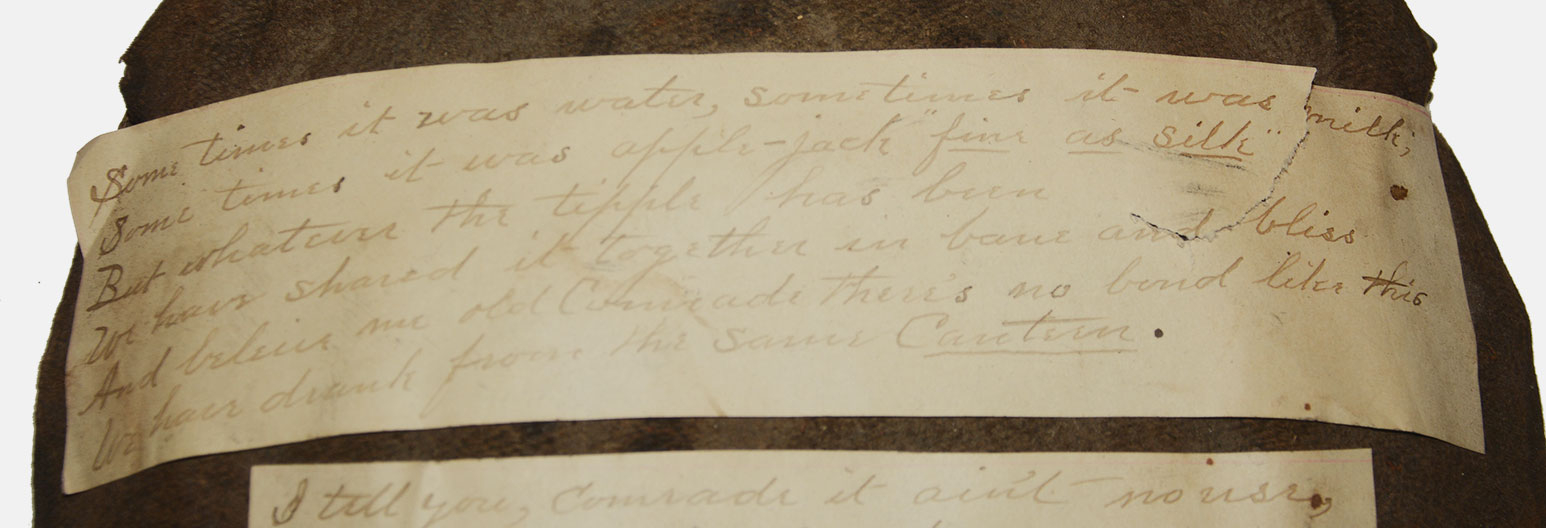
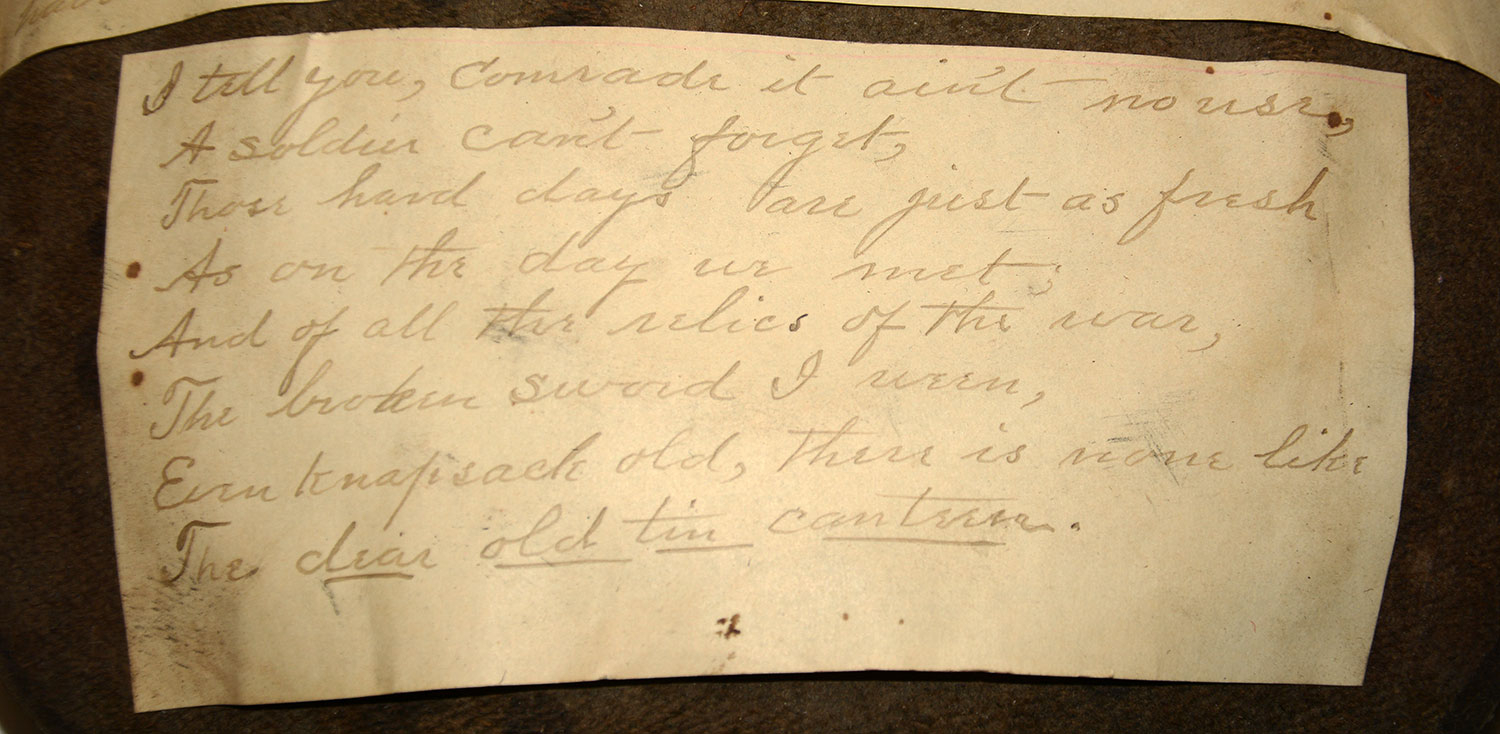
Not visible in the photo, probably on its reverse when it was taken or applied later, are two pieces of paper with brown ink poetic inscriptions. The first reads: “Sometimes it was water, sometimes it was milk; sometimes it was apple-jack “fine as silk,” but whatever the tipple has been we have shared it together in bane and bliss and believe me old comrade there’s no bond like this we have drank from this same canteen.” The second reads: “I tell you, comrade it ain’t no use, a soldier can’t forget, those hard days are just as fresh as on the day we met; and of all the relics of the war, the broken sword I ween, even knapsack old, there is none like the dear old tin canteen.” Needless to day, the phrase “we drank from the same canteen,” was a common expression among Civil War veterans expressing their lasting comradeship, forged by their wartime experiences.
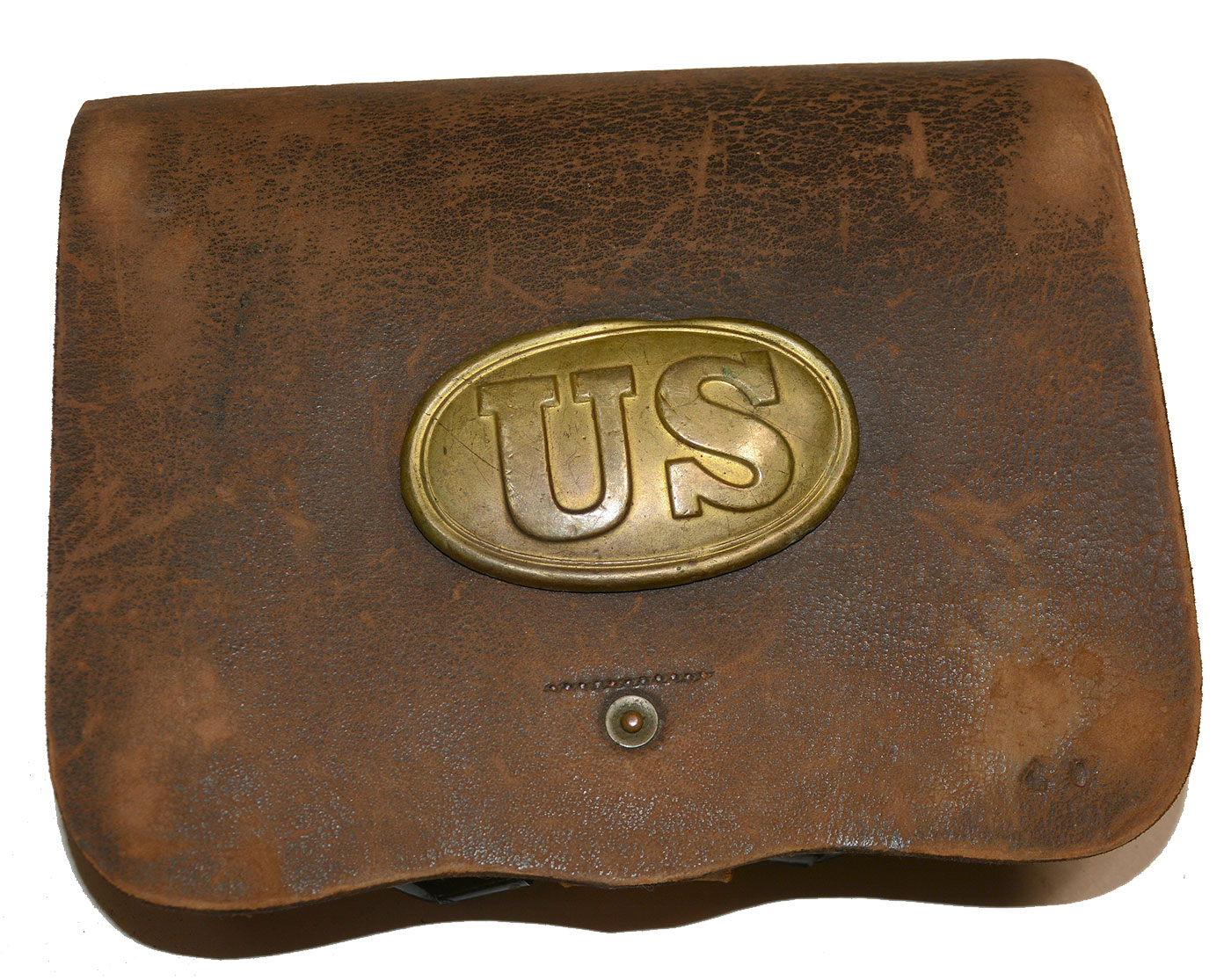
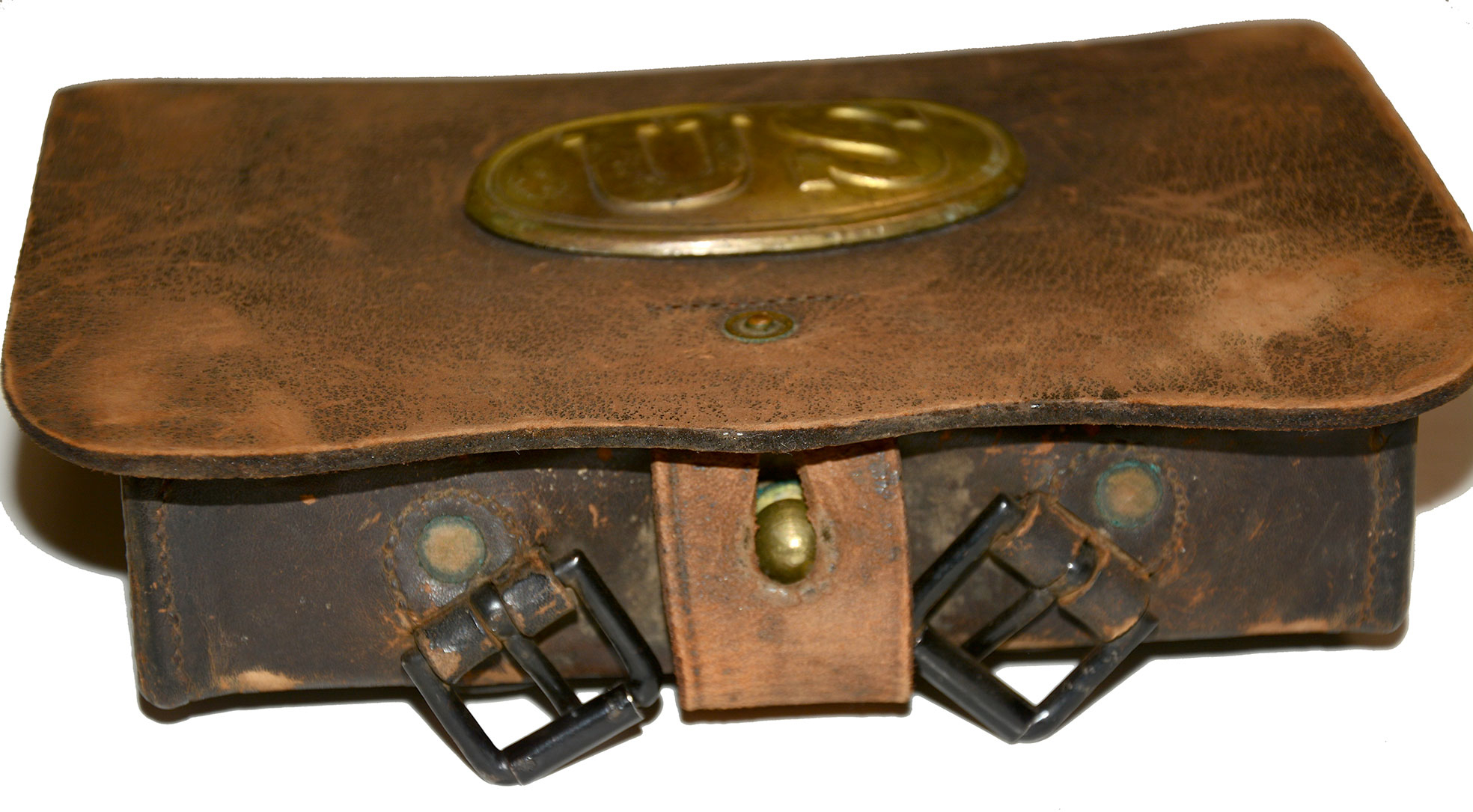
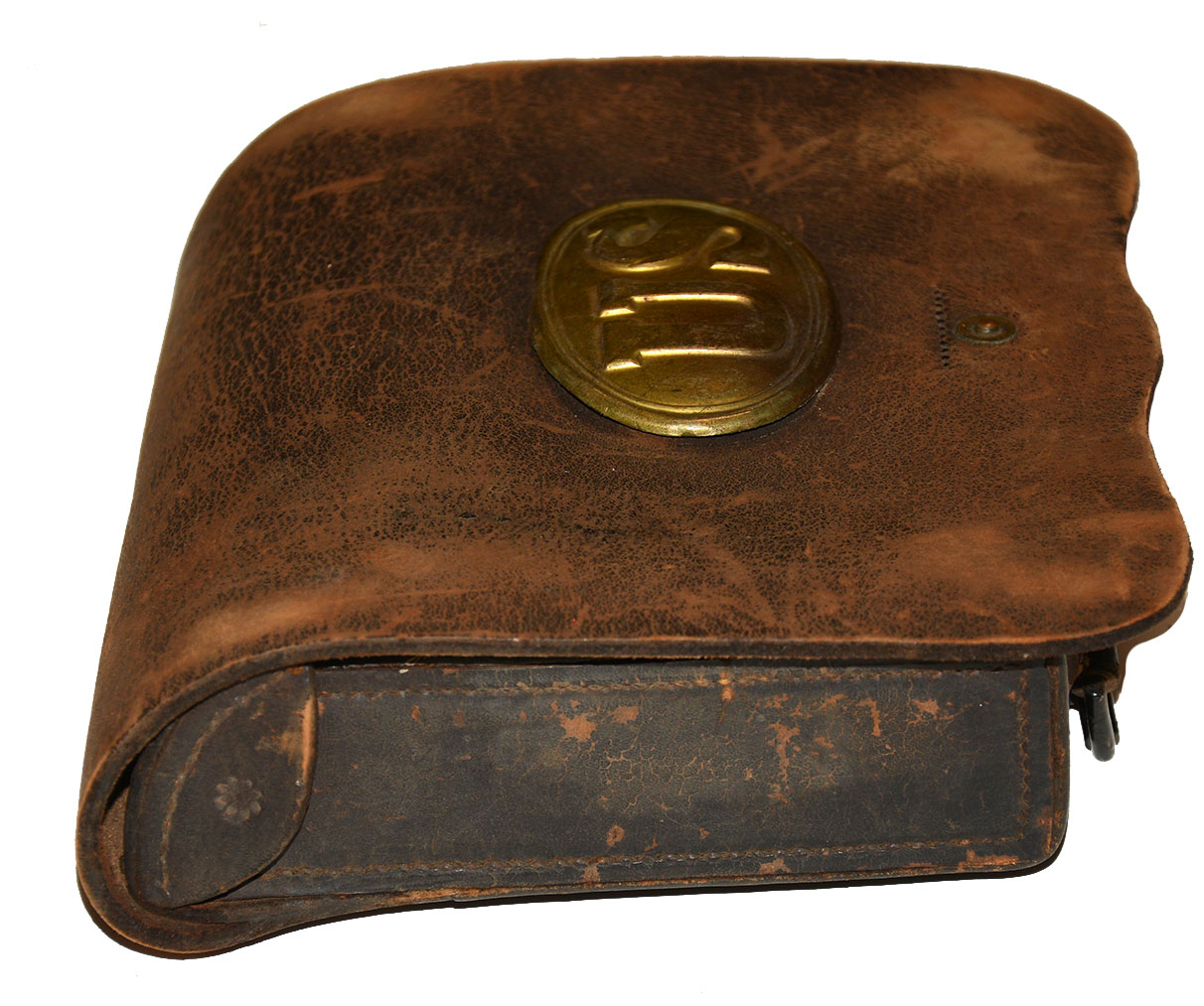
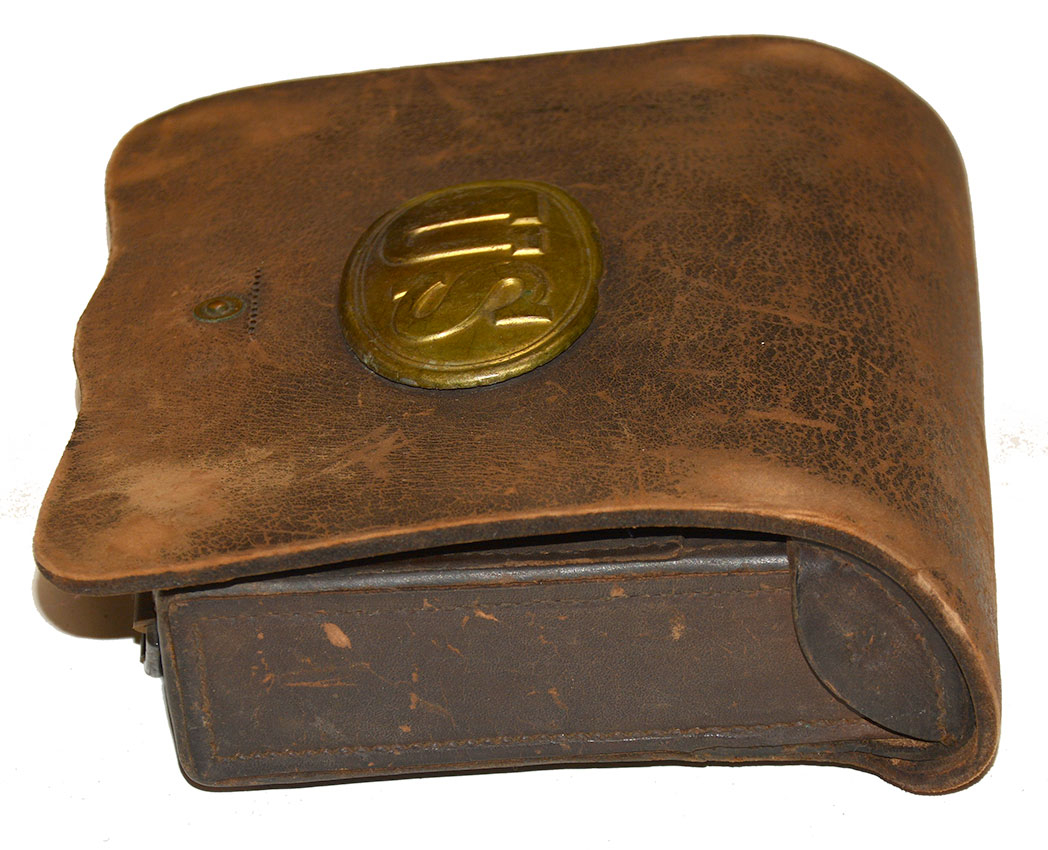
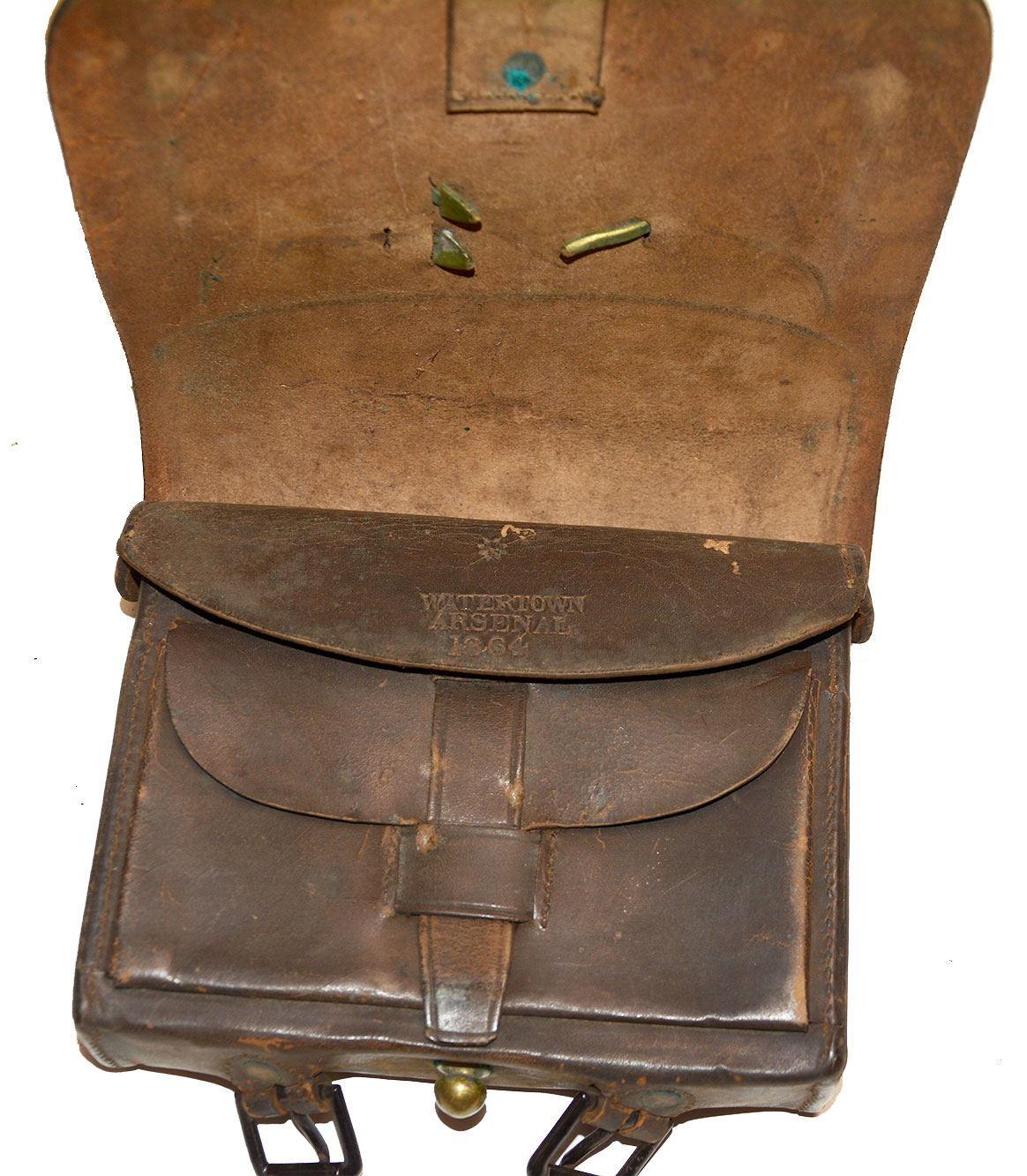
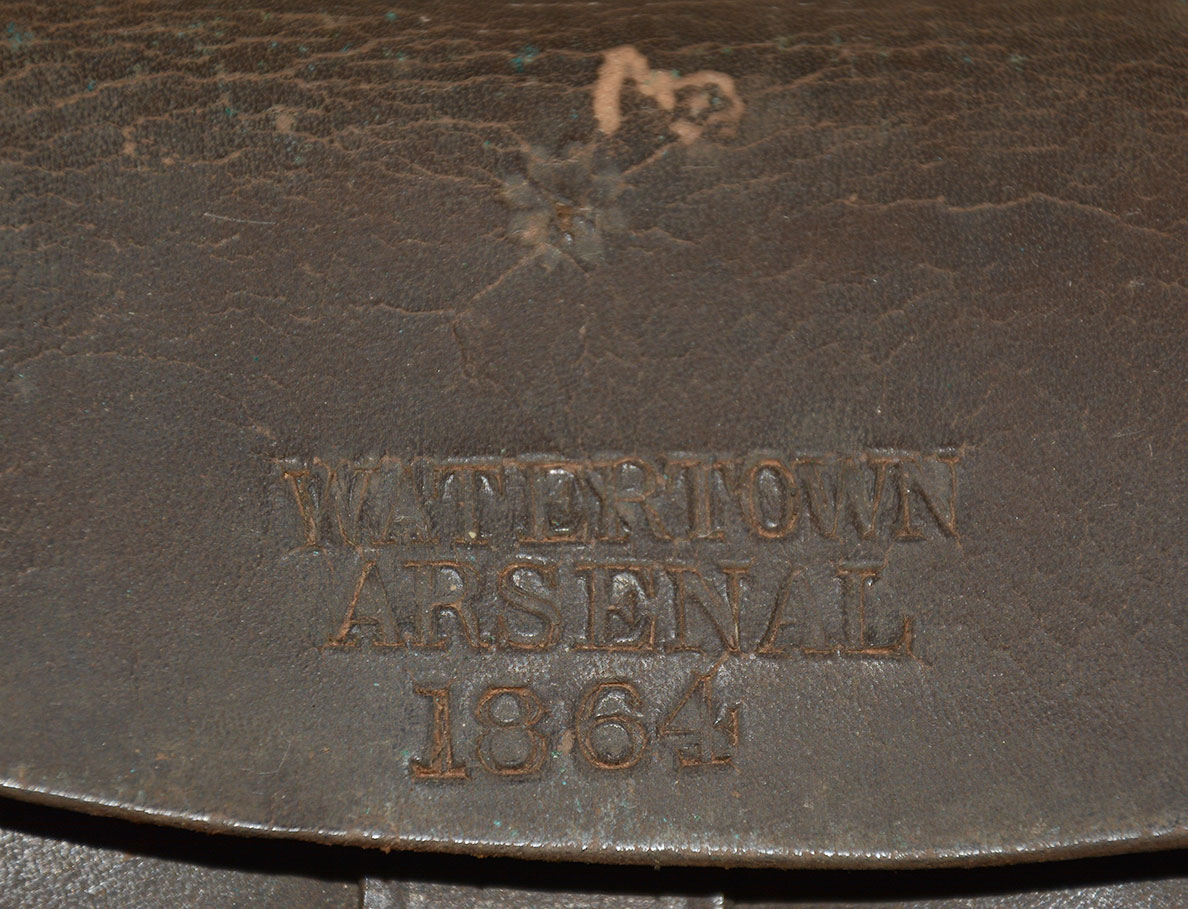
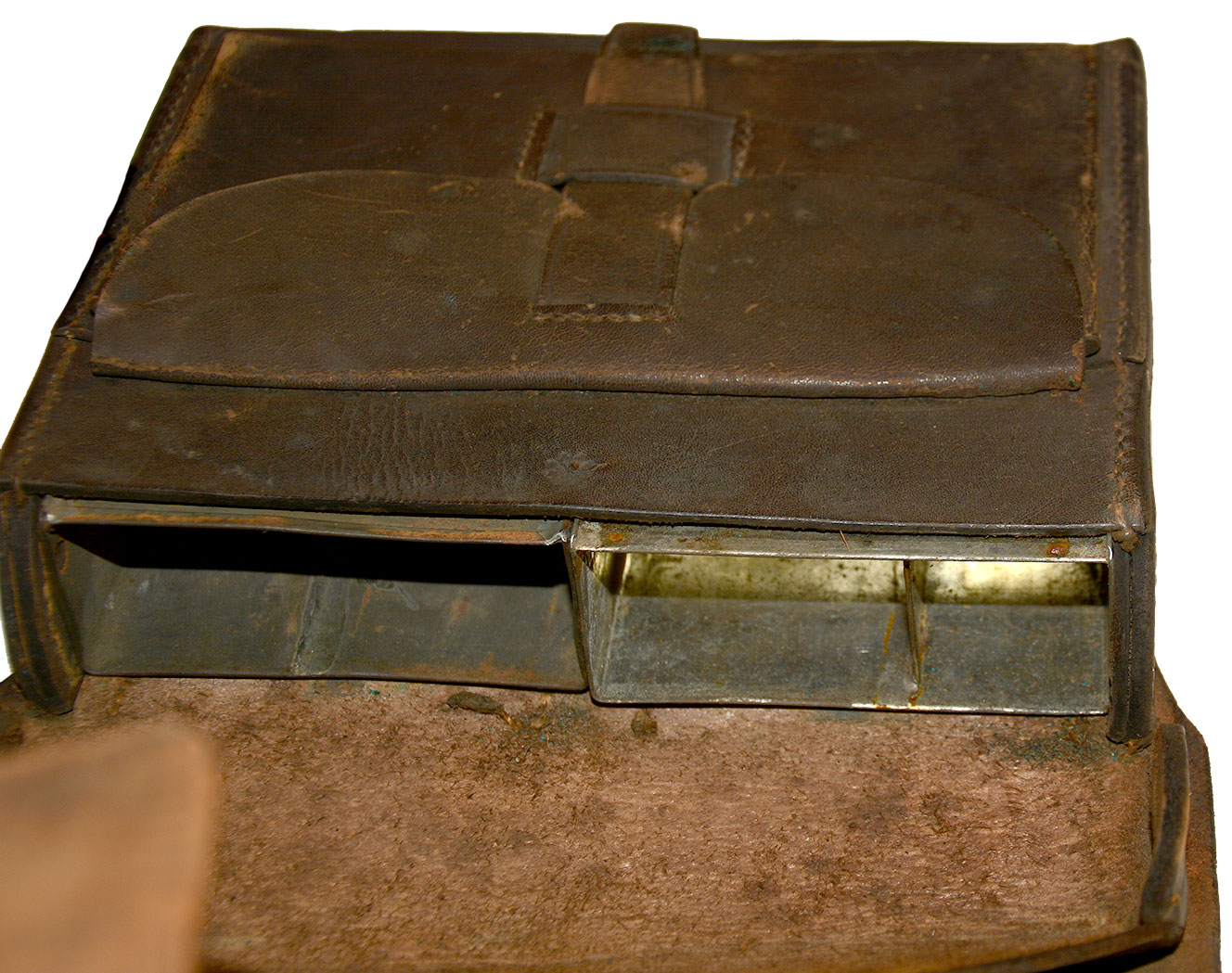
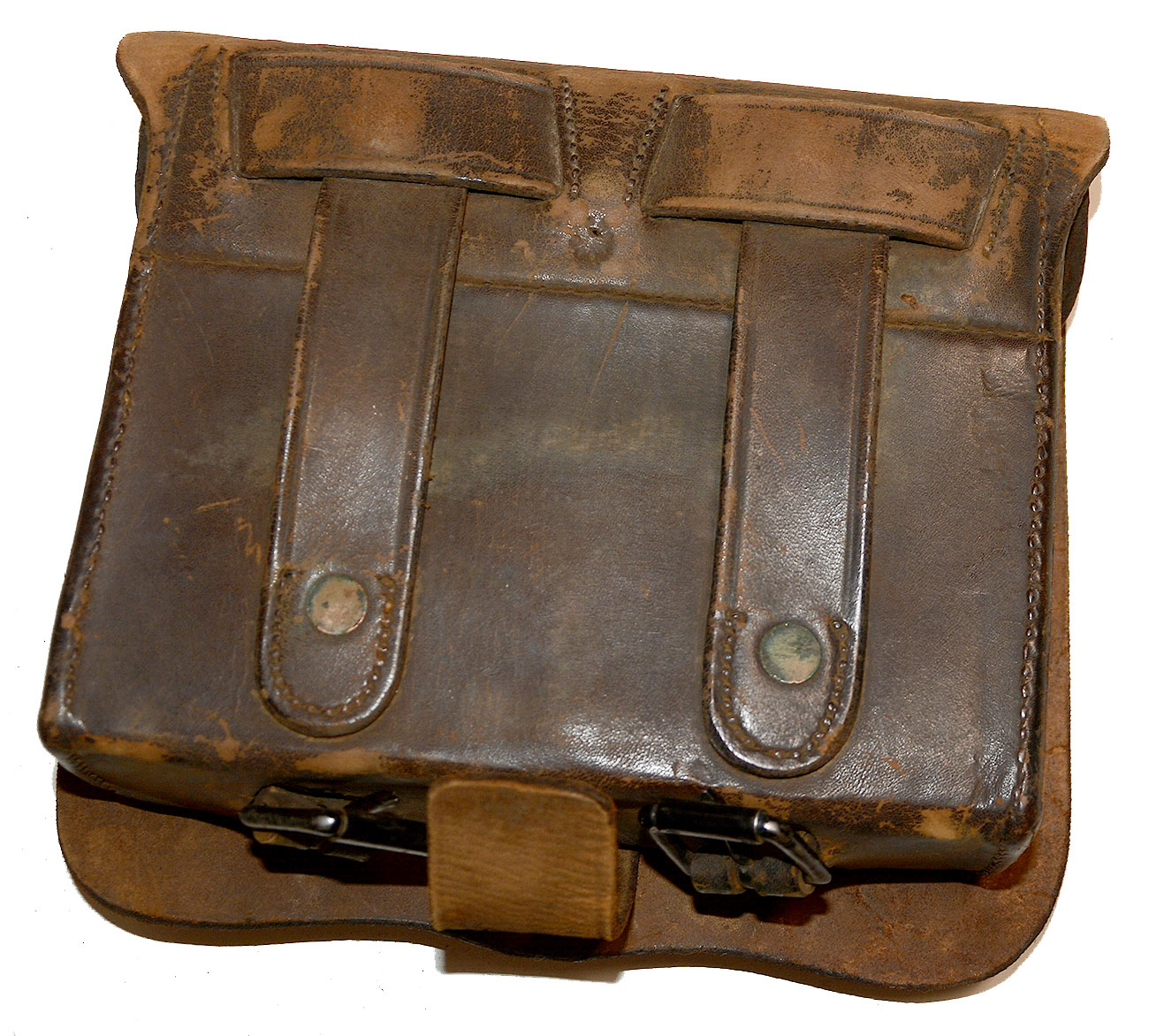
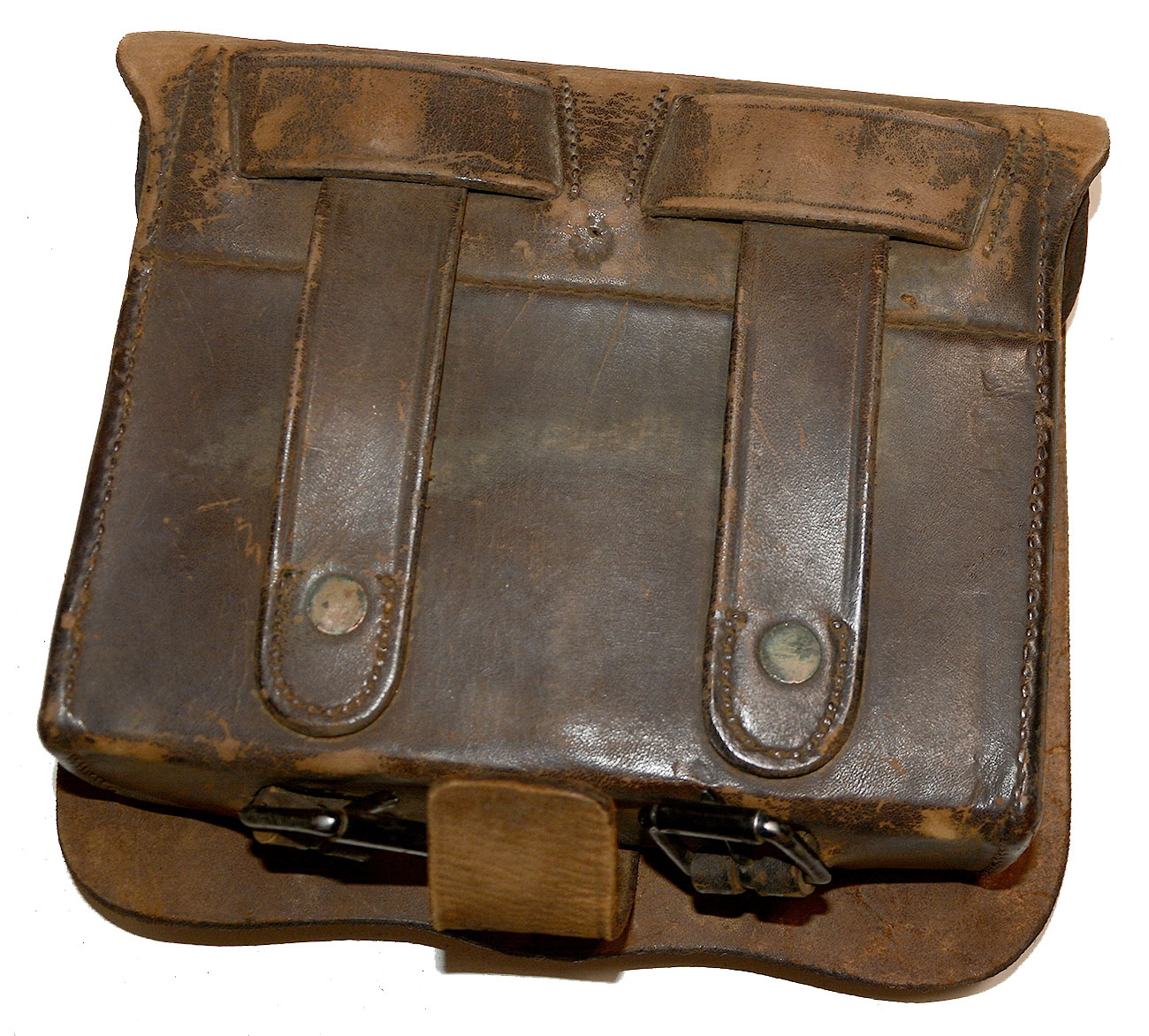
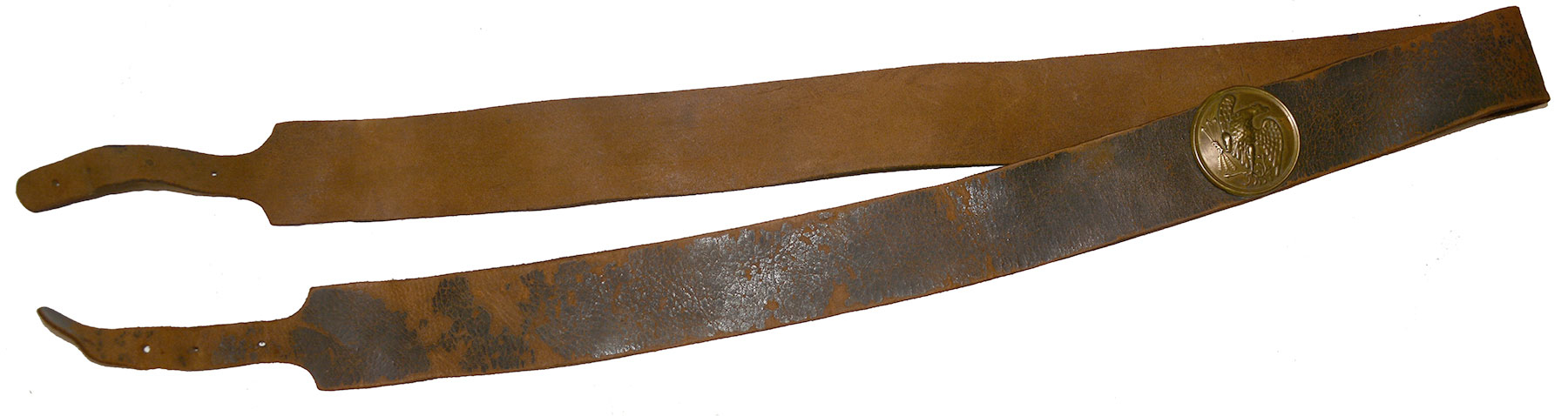
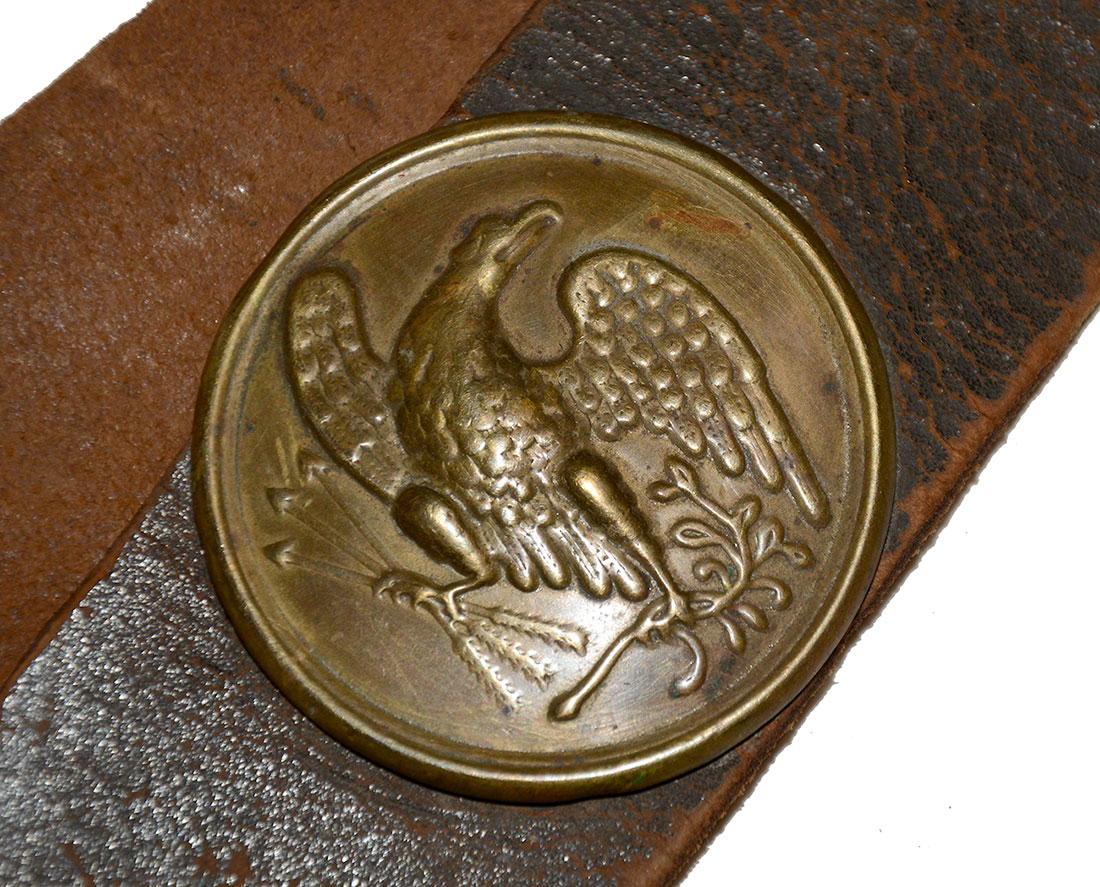
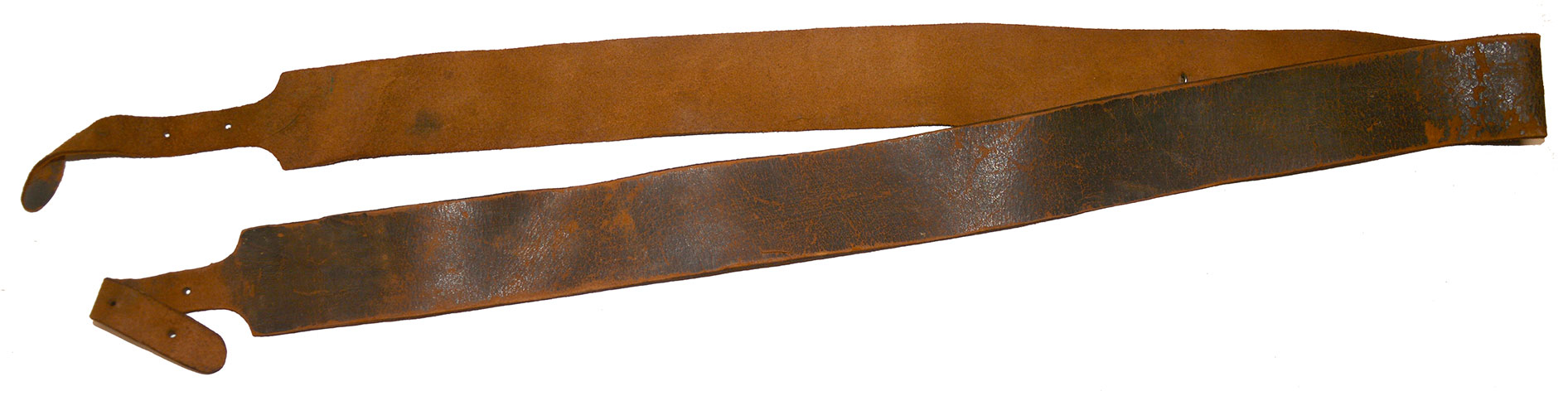
3) His cartridge box with sling and plates. The box and sling are in excellent condition with wear to the finish and oxidation toward brown, but solid and complete. The box is crisply marked “WATERTOWN / ARSENAL / 1864” on the inner flap. All buckles and loops are in place. The box plate is actually an arrow-back oval US belt plate rather than a cartridge box plate. Both magazine tins are present, one lacking the divider in the upper tray. The sling is complete, shows wear to the finish, but has its round, eagle breast plate in place. It was removed from the box at some point and we have left it off, though it could be buckled back in place. In the photograph of the equipment on the wall, it seems to be attached to the box.
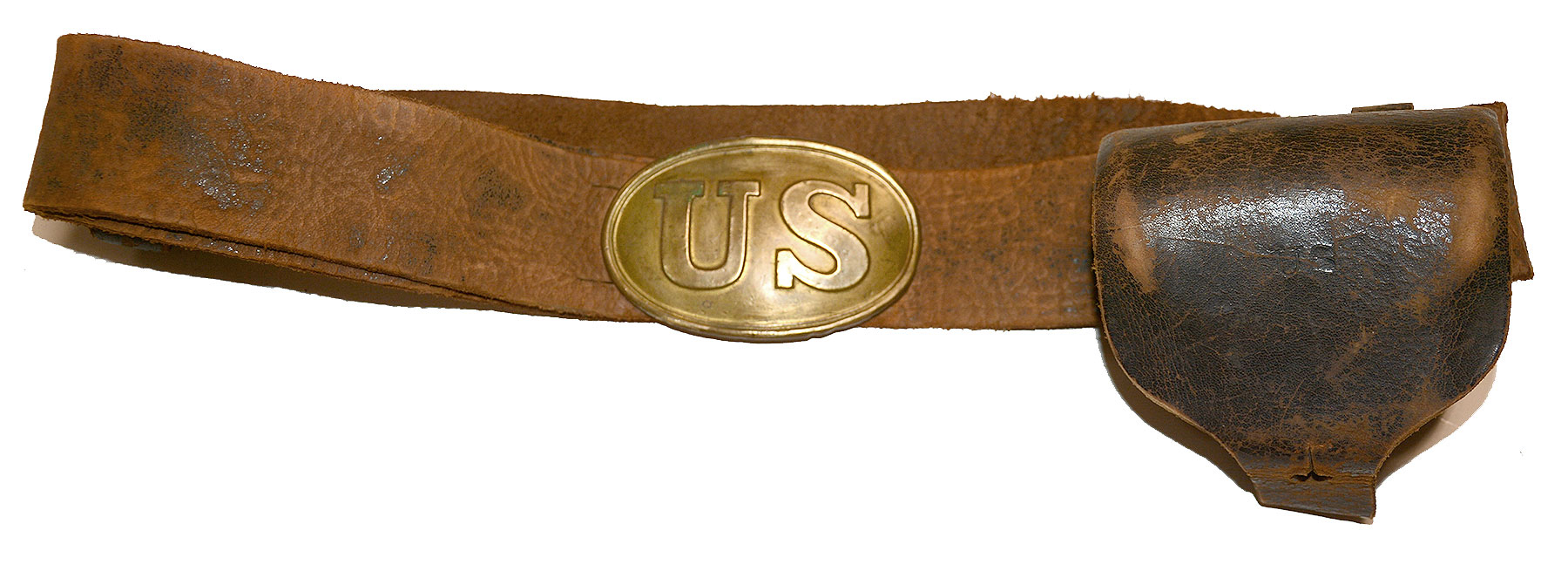
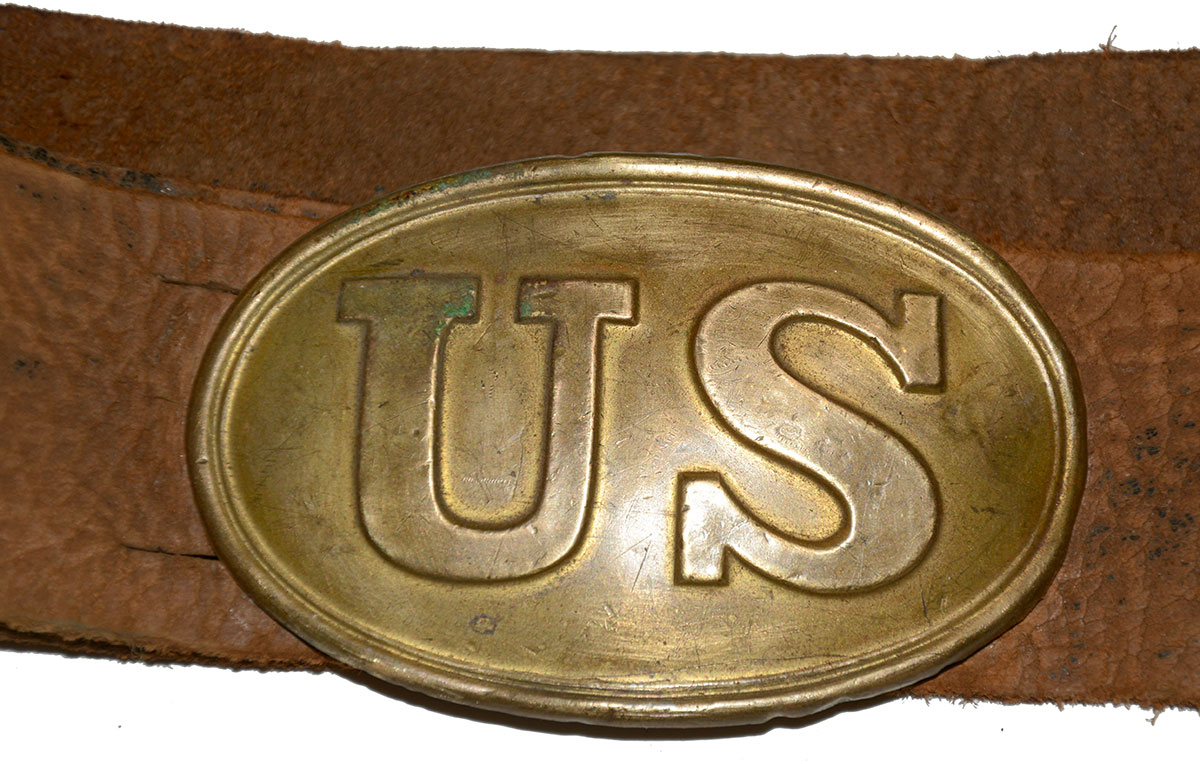
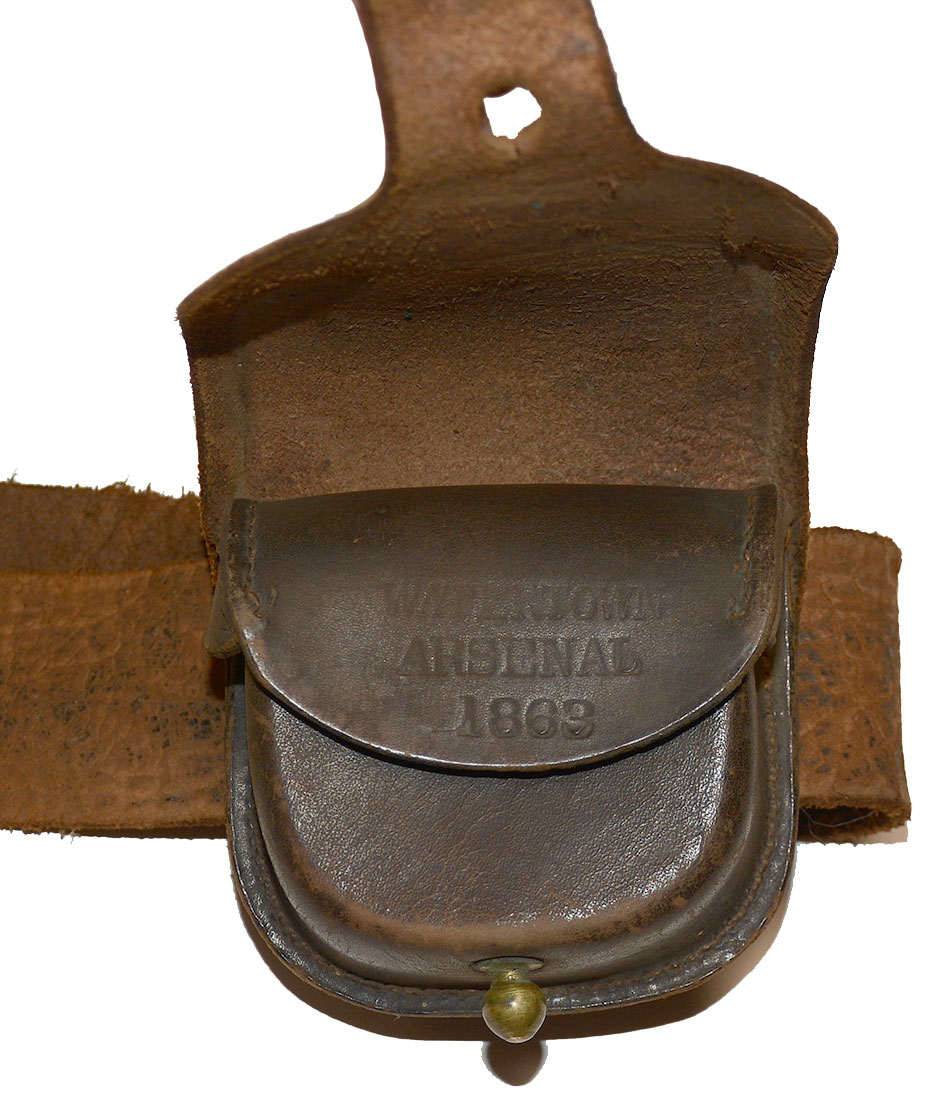
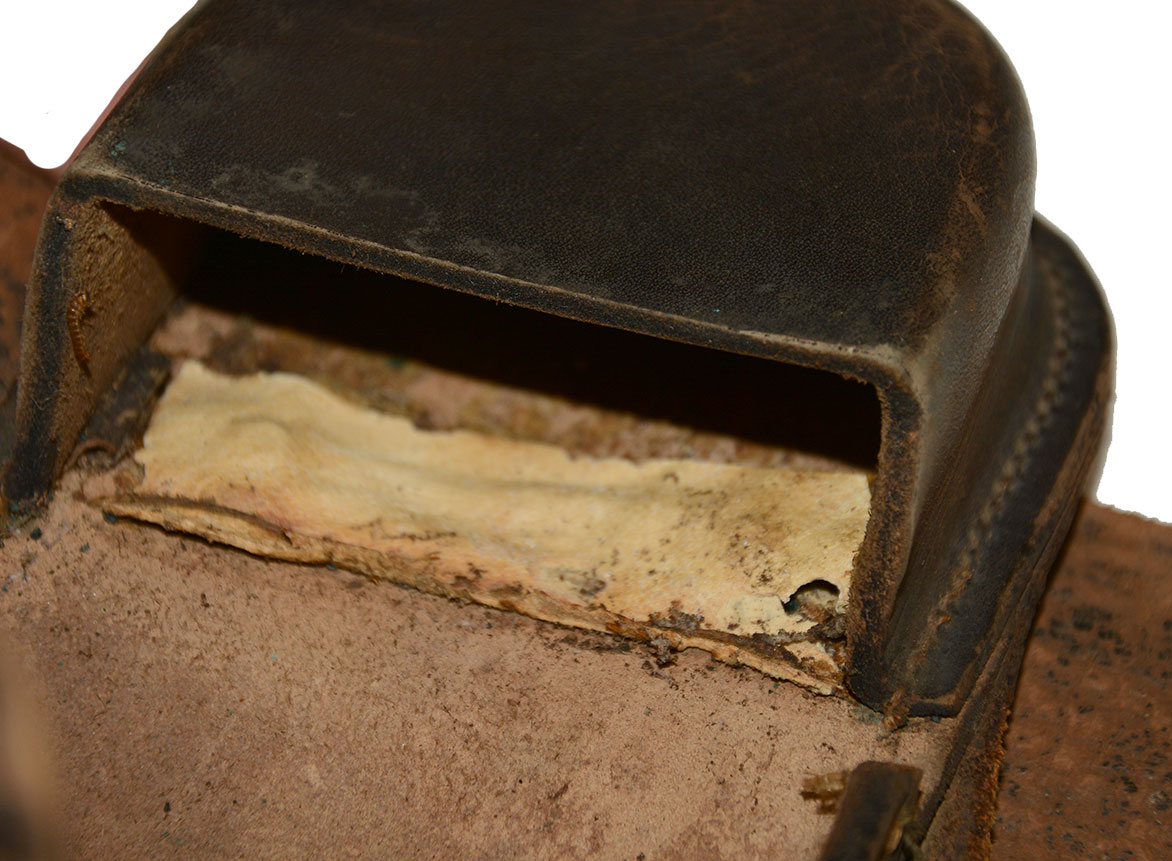
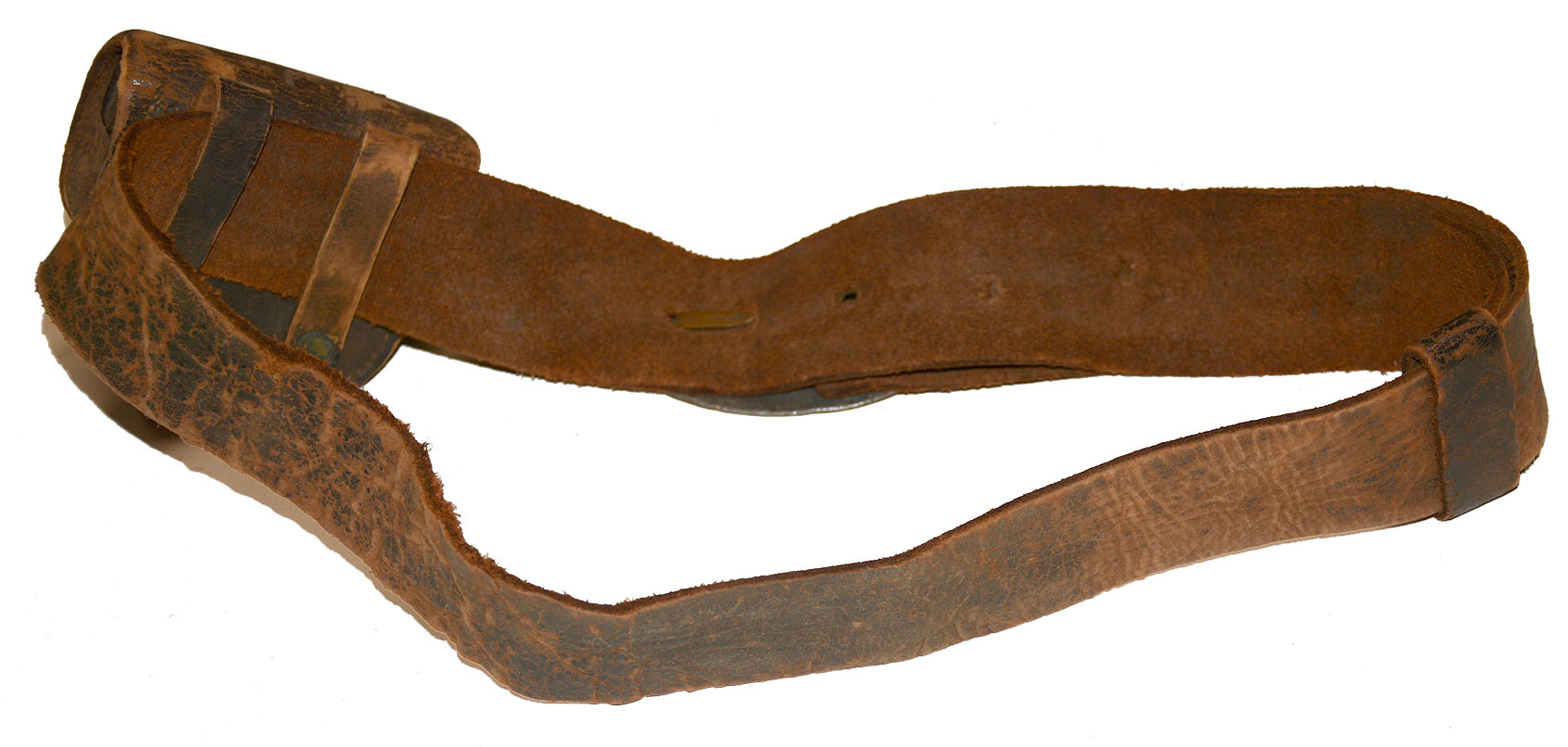
4) His waist belt and cap box. This is in good condition, solid, and with its oval US plate and early-style retaining loop (rather than flat C-clasp) in place, but having lost most of its finish. The cap box shows some wear to the finish on edges and points of flexing, but has its belt loops, both flaps, and side ears in place, and is sharply marked on the inner flap, “WATERTOWN / ARSENAL / 1862” with excellent color and finish to the concealed inner flap. The vent pick and fleece (to keep the percussion caps inside) are gone, but the narrow strip of sheepskin remains.
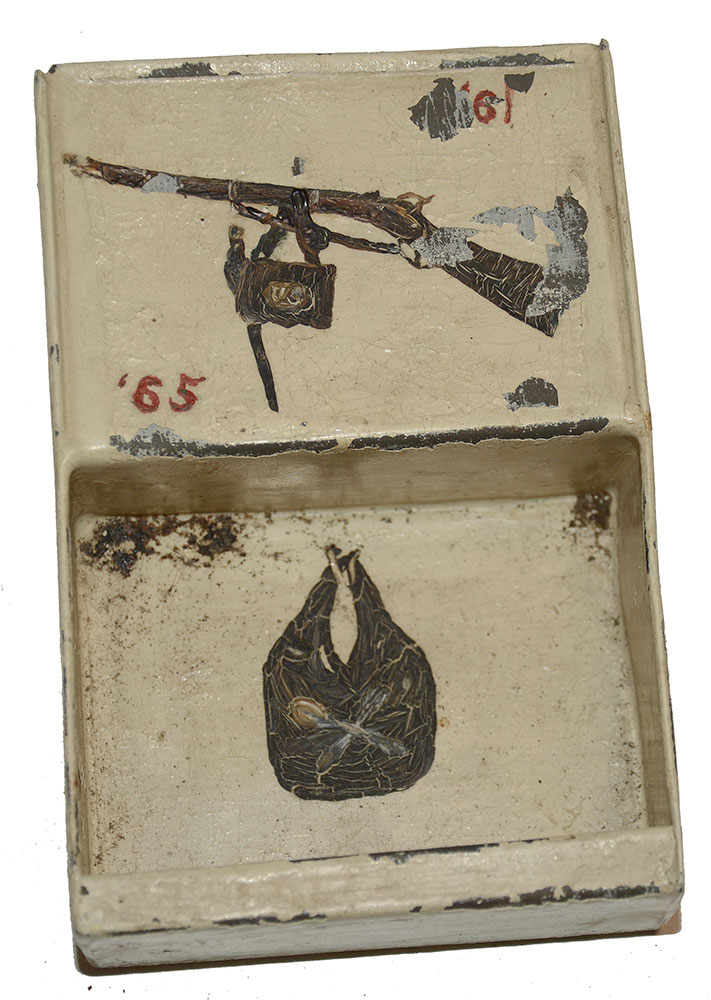
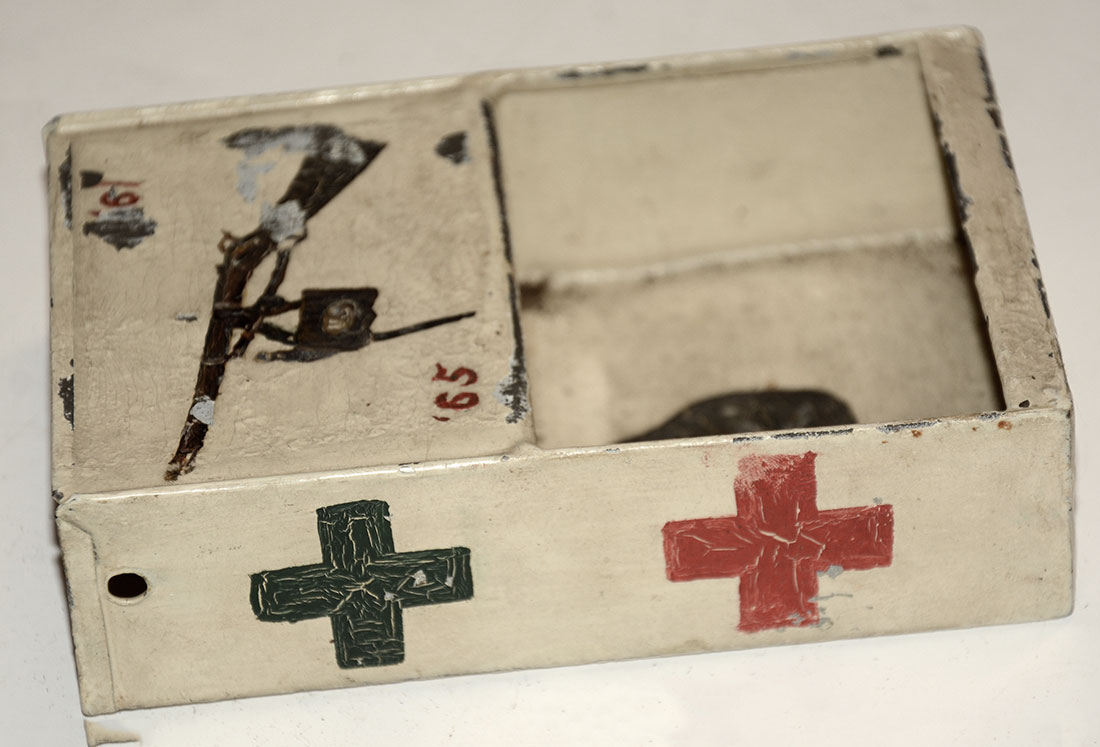
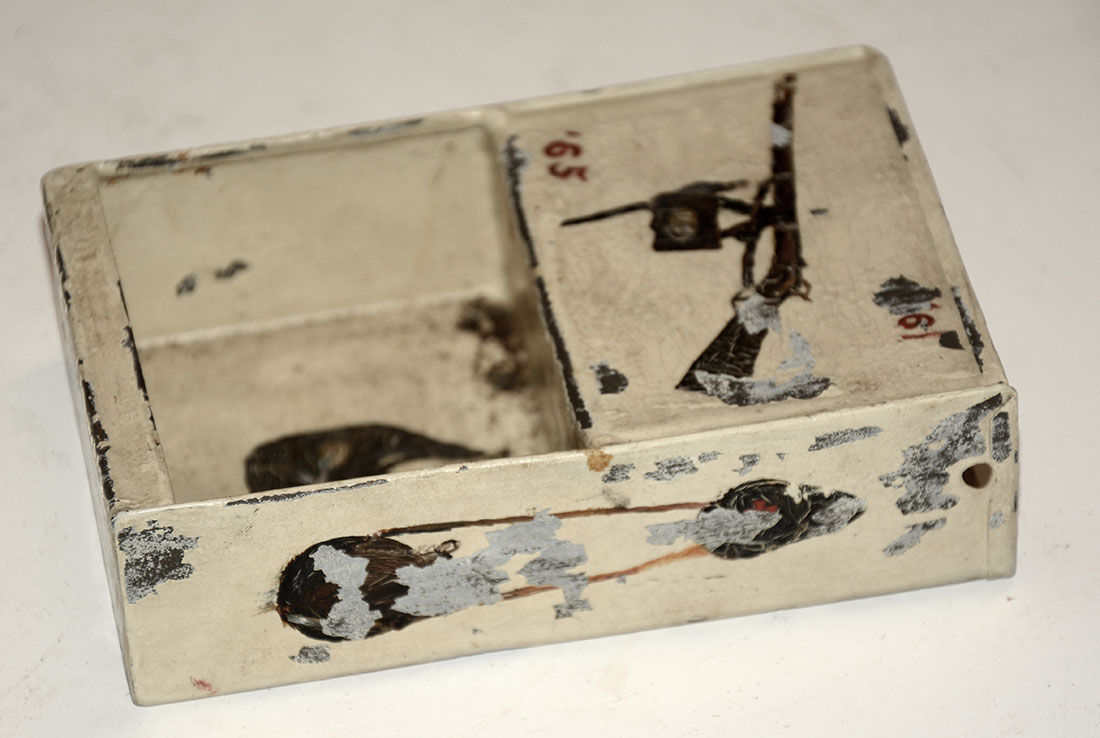
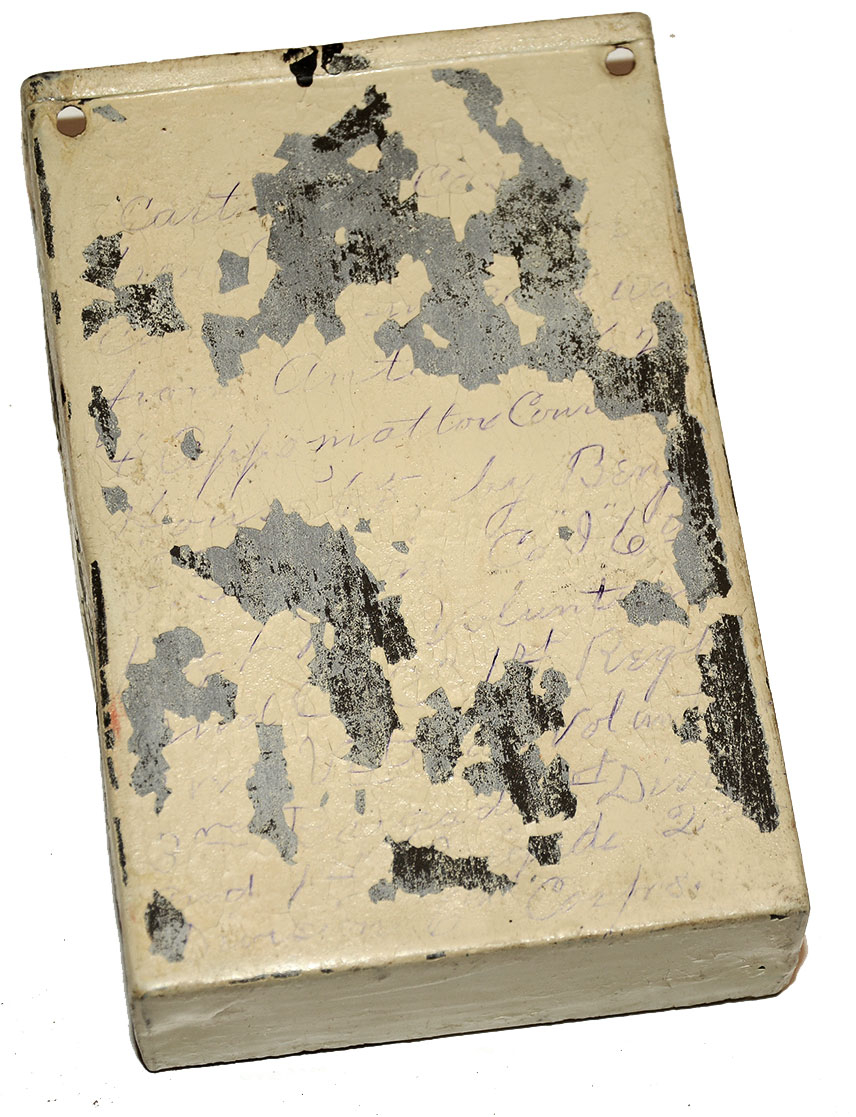
5) A paint decorated cartridge box magazine tin. The tin shows a now cream-colored paint with scattered flaking, on which was painted a musket with cartridge box hanging from it and the dates “’61” and “’65,” a haversack with spoon and fork crossed on it, and a suspended canteen with a soldier’s cap at top (on a peg from which the canteen hangs,) all of which, from the photos retained by the family, probably represent his own gear. The back is inscribed and partially legible: "Cartridge case carried from Antietam to Appomattox Courthouse, by Benjamin [Franklin Goodwin,] Co “I” 6th [Regt Me volunteers, and 1st Regt [Maine] Vet Volunteers…” followed by the division and corps affiliation. On one side of the tin he included red and blue renditions of the Greek Cross insignia of the 6th Corps, in which he had served throughout.
The soldier was Benjamin Franklin Goodwin, who enlisted in Co. I of the 6th Maine as a Private on 9/16/62 at Stetson, Maine. His obituary says he was slightly under 18 when he signed up, and a secondary source says he was born in 1846, but his birthdate as given in several records is 1844, the 1850 census lists him as 5 and the 1860 census lists him as 16, fitting the 1844 birthdate. The regiment had been mustered into service in July 1861, served first in the 4th Corps, but was in the 6th Corps when Goodwin reached it, and had seen action on the Peninsula at Lee's Mills, Williamsburg, Garnett's farm, and White Oak bridge, and at Antietam. Goodwin’s date of enlistment makes him technically a member of the regiment at the time of Antietam, but he could hardly have been present on the field on September 17. Perhaps signing up and joining them during the Antietam campaign was justification for the battle’s inclusion on his painted cartridge box tin.
The 6th Maine was lightly engaged at Fredericksburg in December, but in May 1863 fought over the same ground as Sedgwick stormed the heights in the attempt to divert Confederate attention and aid Hooker at upriver at Chancellorsville, with the regiment losing 22 killed and 68 wounded according to CWData. It escaped loss at Gettysburg, but in the Fall lost 16 officers and 123 men at Rappahannock Station, including 40 killed and 97 wounded according to CWData. With the rest of the 6th Corps, they saw their hardest fighting in Grant’s 1864 Overland Campaign, losing 125 officers and men at Spottsylvania according to “The Union Army,” being reduced in strength to merely 70 men by late June.
Those men in the regiment whose time had expired were mustered out 8/15/64 with reenlisted veterans and men with unexpired terms like Goodwin, along with similar men from the 5th Maine, were then officially transferred to the 7th Maine, itself just at battalion strength, and all were consolidated into a regiment designated the 7th Maine by the War Department on 8/21/64, but redesignated a month later, as of 9/20/64, as the 1st Maine Veteran Volunteers. The unit was serving in the 2nd Division of the 6th Corps in the Army of the Shenandoah at the time and was still officially under its old designation when it fought at Winchester on 9/19/64, losing 2 officers and men killed and 16 wounded, followed by Charlestown, with 1 killed, 20 wounded, and 3 missing, and Fisher’s Hill, where it lost 8 men killed, 1 officer mortally wounded, 58 men wounded, and 12 missing. With the return of the corps to the Army of the Potomac during the winter, it then saw action at Petersburg, where they took part in the main assault on the city in April, the fighting at Cedar Creek, and surrender at Appomattox, having lost just in killed or mortally wounded, 6 officers and 40 enlisted men during their brief service.
Goodwin mustered out June 16, 1865, returned to Stetson and later moved to Waterville where he worked in a mill and then become a letter-carrier for the post office. He was very active in veteran’s affairs and the G.A.R., taking part in the 1913 G.A.R. reunion at Gettysburg. He had married and raised a family. When he died in Waterville in 1920 his relics and mementos were preserved by the family until Fall 2025.
This is a firmly identified group of field gear brought home and treasured by a veteran who had seen a good deal of action. It displays very well, combining history and condition, along with rarity in the presence of the haversack, which was an essential piece of gear, but one which seldom survives. Please see our photos. [sr][ph:L]
Additional shipping charge may be necessary.
~~~~~~~~~~~~~~~~~~~~~~~~~~~~~~~~~~~
THIS ITEM, AS WITH ALL OTHER ITEMS AVAILABLE ON OUR WEB SITE,
MAY BE PURCHASED THROUGH OUR LAYAWAY PROGRAM.
CLICK HERE FOR OUR POLICIES AND TERMS.
THANK YOU!
Inquire About CIVIL WAR FIELD GEAR OF BENJAMIN F. GOODWIN, 6th MAINE INFANTRY AND 1st MAINE VET. VOLUNTEERS
Most Popular
Historical Firearms Stolen From The National Civil War Museum In Harrisburg, Pa »
Theft From Gravesite Of Gen. John Reynolds »
Selection Of Unframed Prints By Don Troiani »
Fine Condition Brass Infantry Bugle Insignia »
Rare Identified 65Th Ny Sergeant’s Jacket, With Manscript Material: 1St U.s. Chasseurs »
featured item
AN ASSEMBLAGE BOTH WAR AND POST WAR OF A GETTYSBURG "WOLVERINE” – WILLIAM H. DUNN, 5TH AND 10TH MICHIGAN CAVALRY
William H. Dunn of Ganges, Michigan served in both the 5th and 10th Michigan Cavalry during the Civil War. He enlisted on Aug. 14, 1862 in Co. "I" 5th Michigan Cavalry. At Gettysburg Dunn, a trooper in the famous charge lead by Custer, gallantly… (1268-779). Learn More »
site search