

site search
online catalog
PRESENTATION GRADE US MODEL 1850 FOOT OFFICER’S SWORD IDENTIFIED TO JONATHAN B. OVERMYER, 11TH PENNSYLVANIA INFANTRY
Hover to zoom


$8,950.00 SOLD
Quantity Available: None
Item Code: 2026-2144
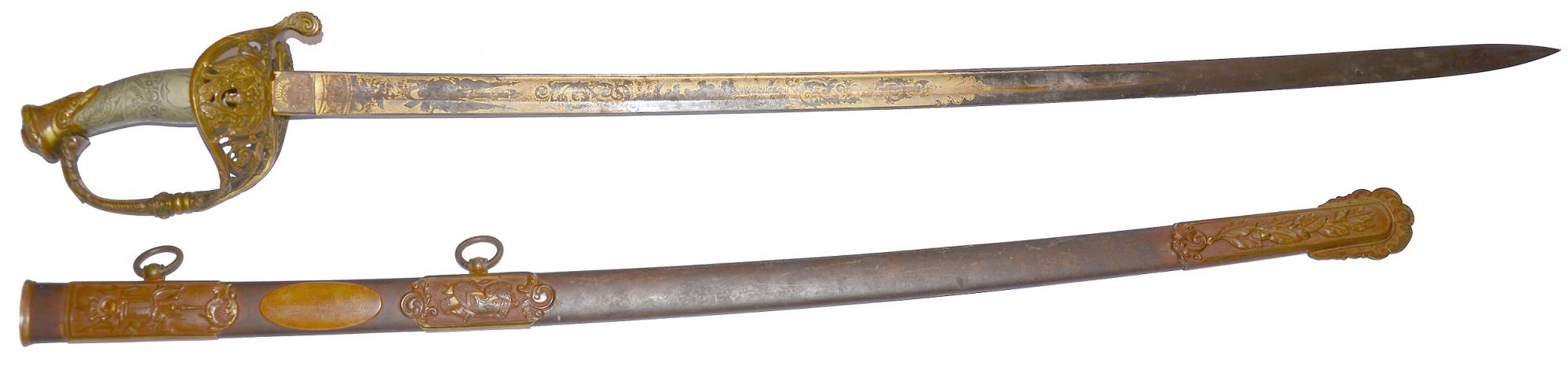
The drawn sword meas. approx. 39.25 inches with a blade that meas. approx. 33.00 inches. It has a stopped central fuller that meas. approx. 21.50 inches long and a narrow fuller above it that runs for approx. 14.50 inches long.
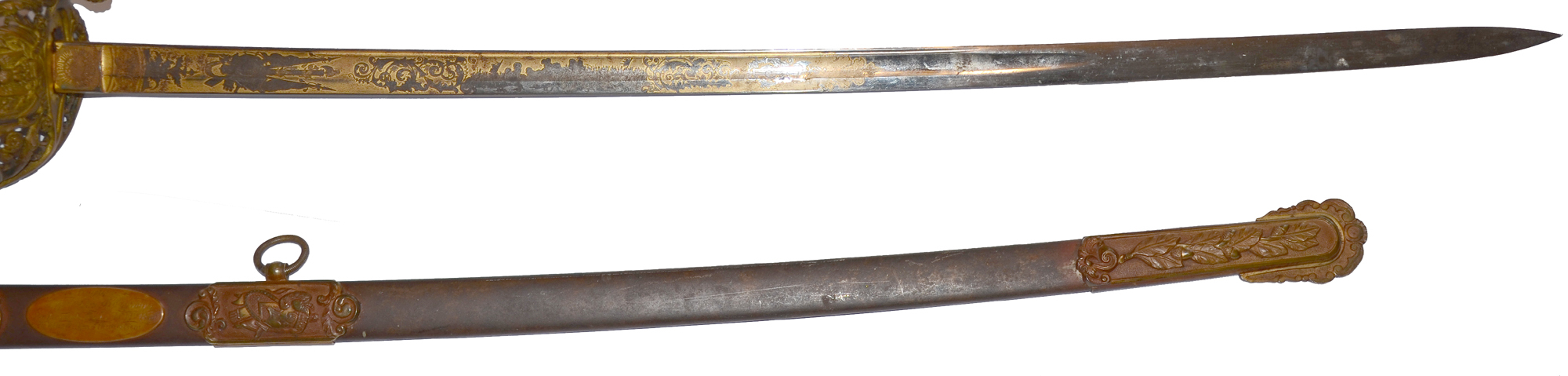
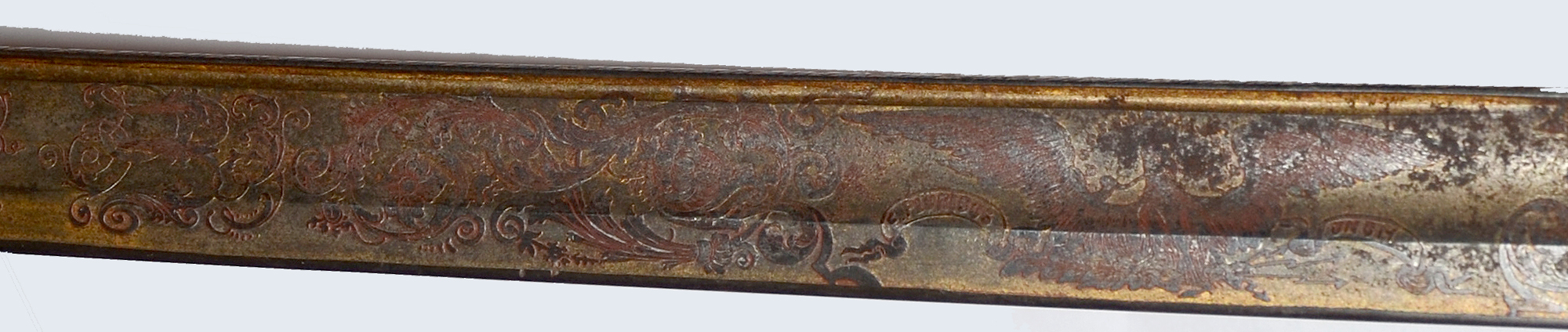
The surface of the blade is etched and gold washed. The blade is semi bright with light mottling. The gold washed areas are good but do show some wear and scattered surface rust and minor pitting. This is a little heavier on the reverse side and obscures some of the etching.
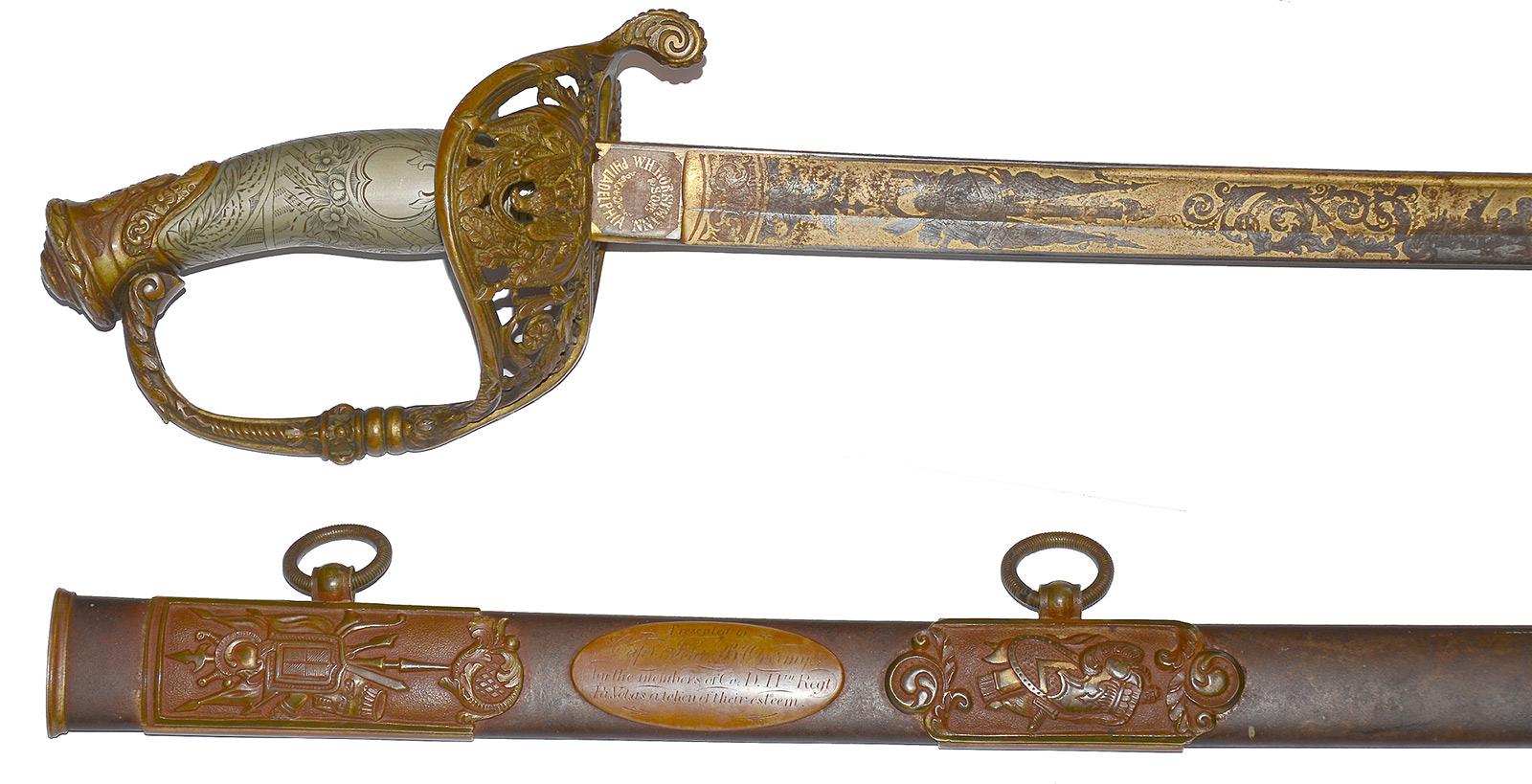
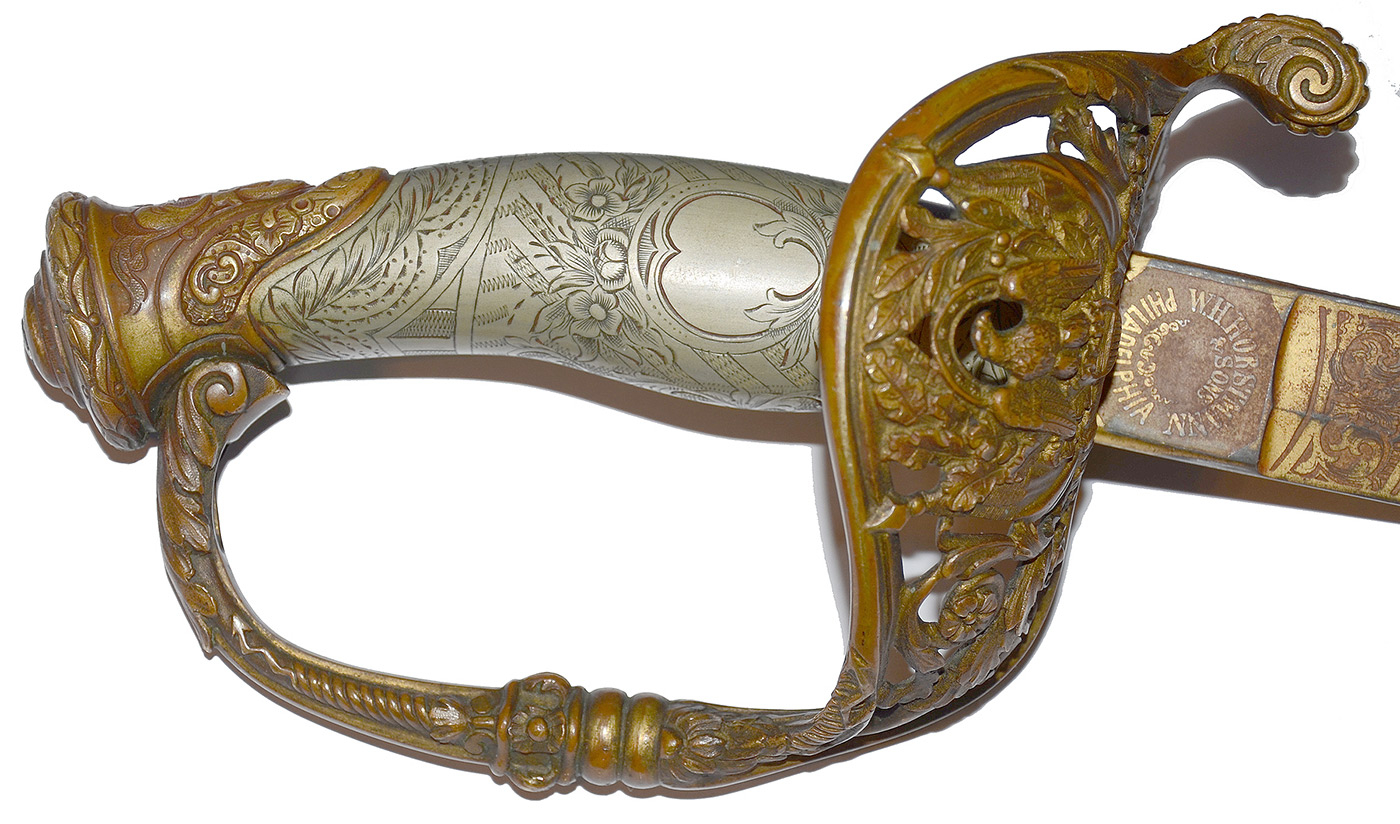
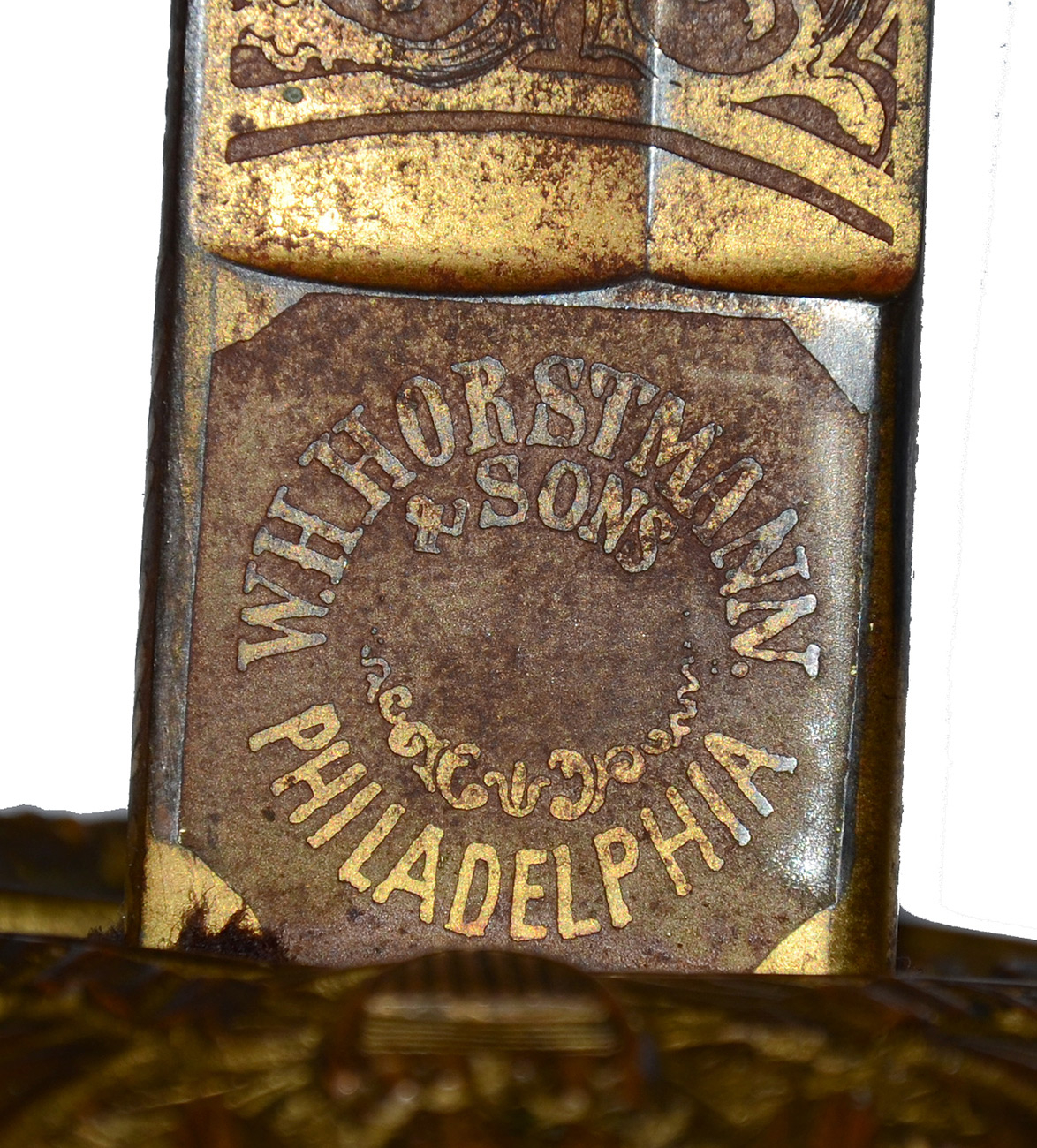
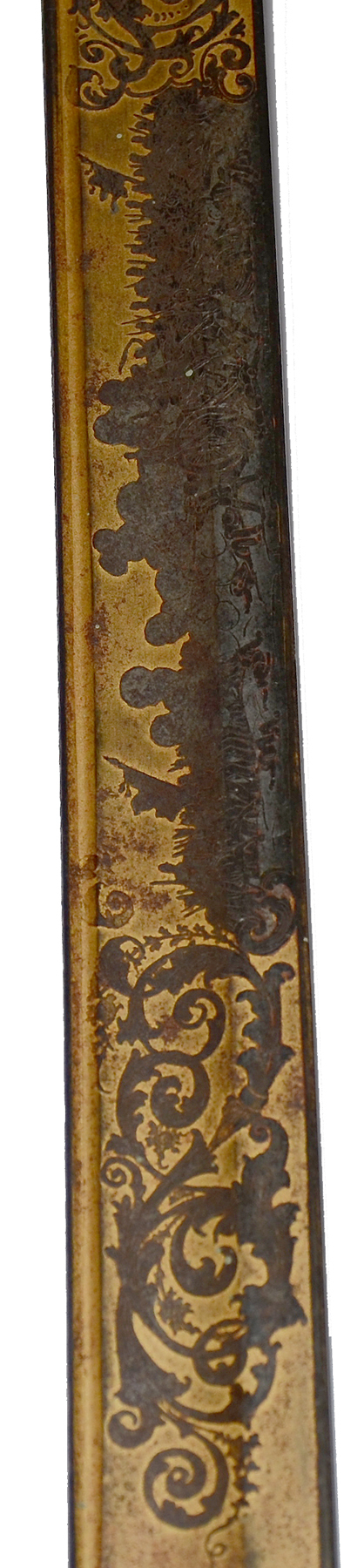
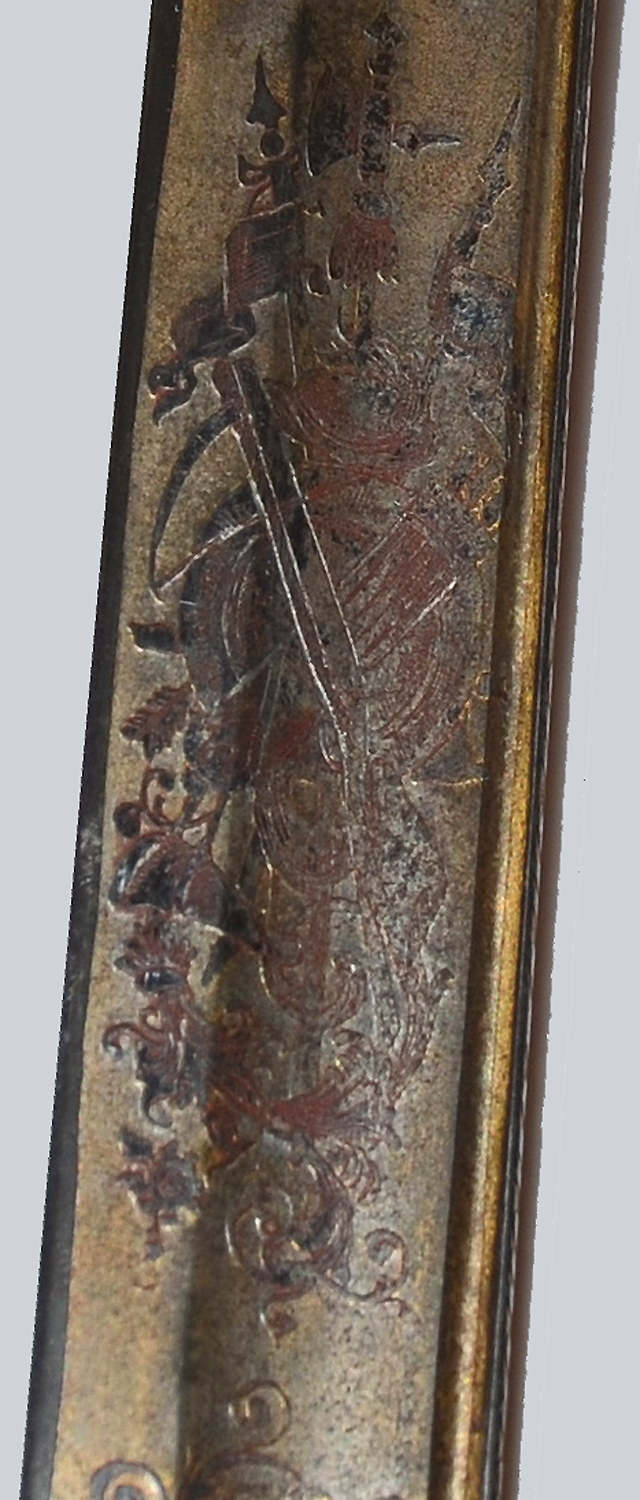
The obverse ricasso is etched with “W. H. HORSTMANN & SONS PHILDELPHIA” done in a circle. The gold washed etching on this side consist of a floral decoration surmounted by a panoply of flags followed by an area of scrollwork. At center of the scrollwork is battle scene showing two lines of opposing infantry with flags waving exchanging volleys. From the uniforms and headgear, it appears to be a War of 1812 or Mexican War scene.
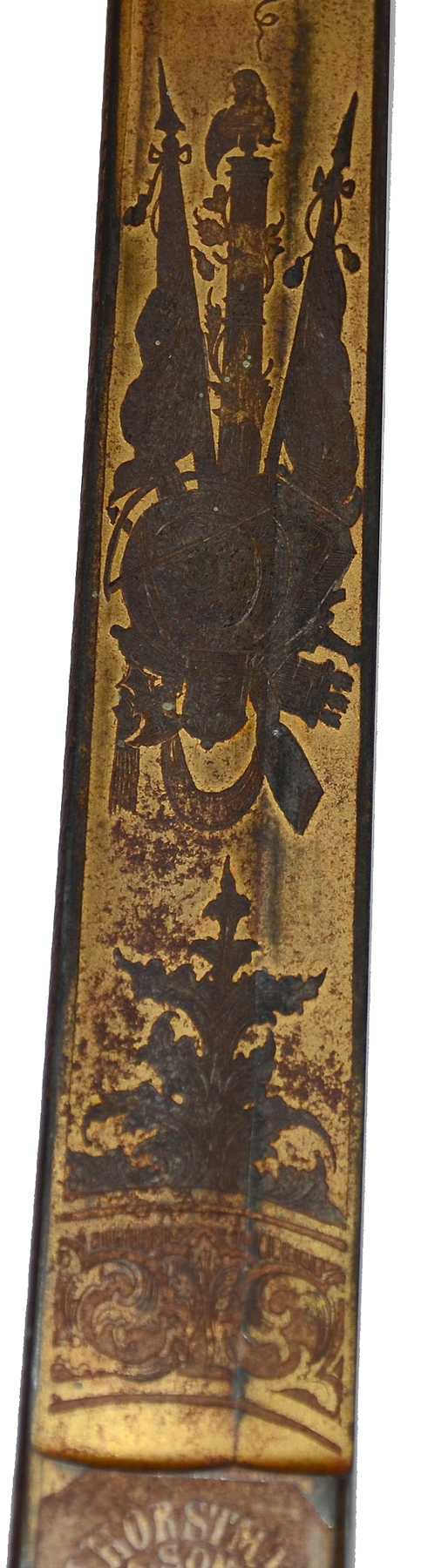
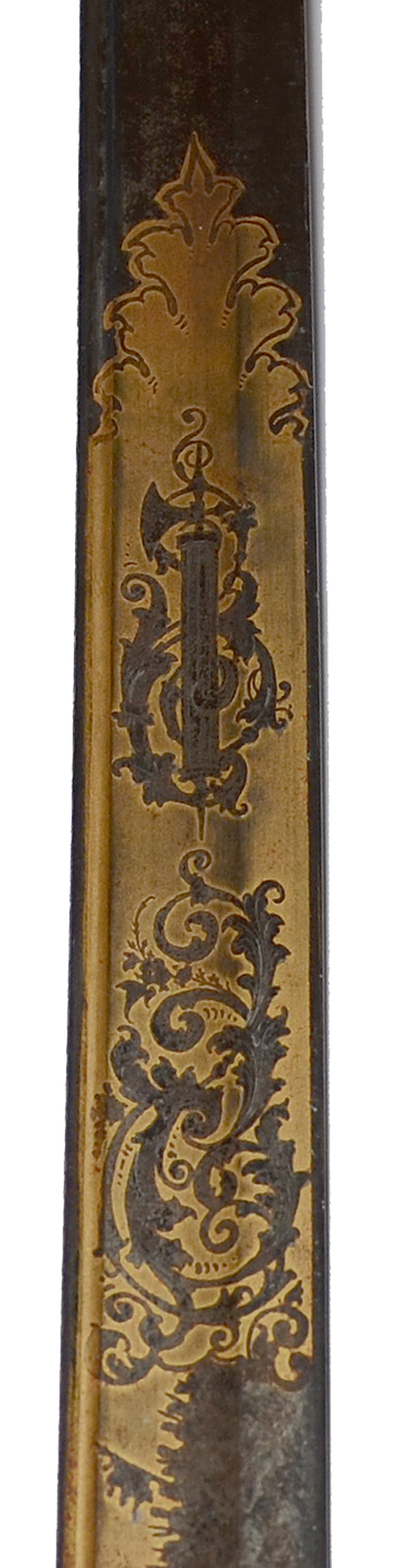
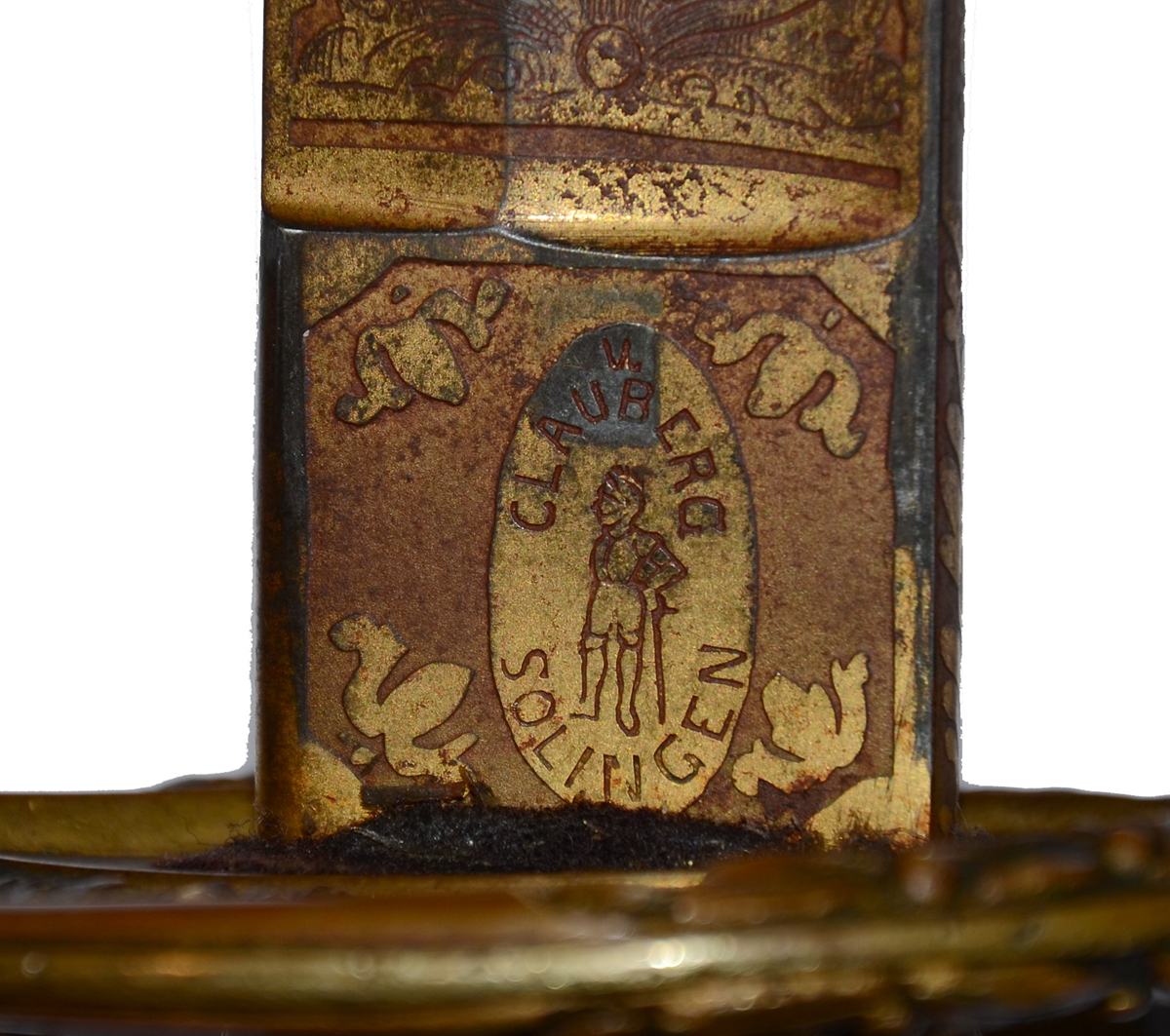
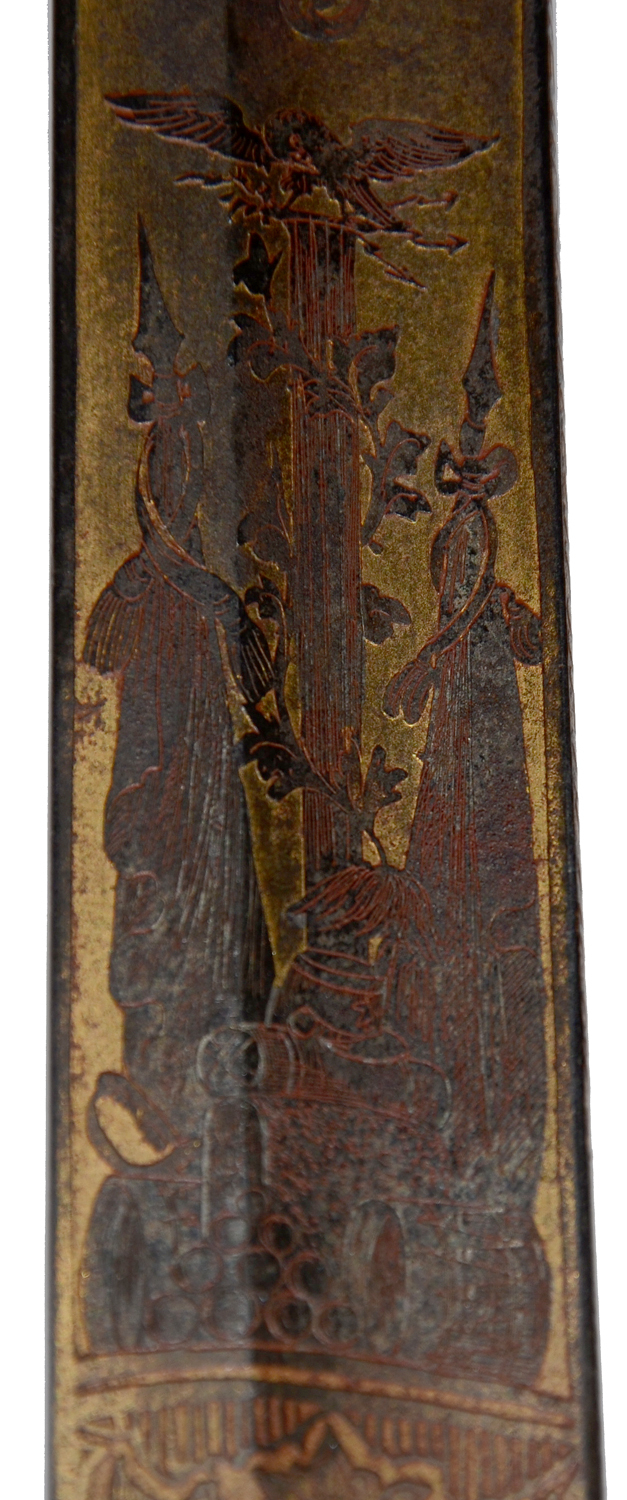
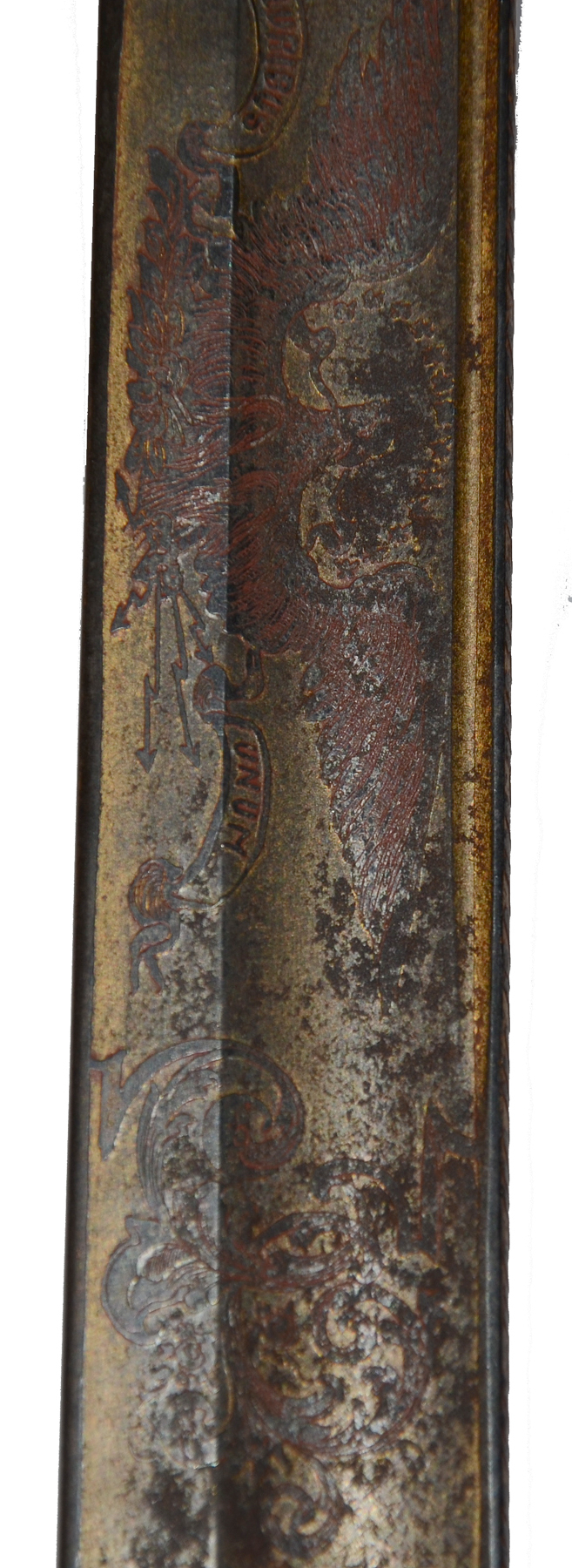
The reverse ricasso is marked “CLAUBERG SOLINGEN” surrounding the figure of a standing knight. Etching starts with a panoply of flags with an eagle resting on top of a fascine. Above this is an area of scrollwork interspersed with a spread-winged eagle and intertwined “US” surmounted by a stand of arms.
The blade spine is also gold washed and decorated with laurel leaves and marked “IRON PROOF.” True edge is free of nicks. Only a small bit of the leather washer remains at the base of the blade against the bottom of the guard.
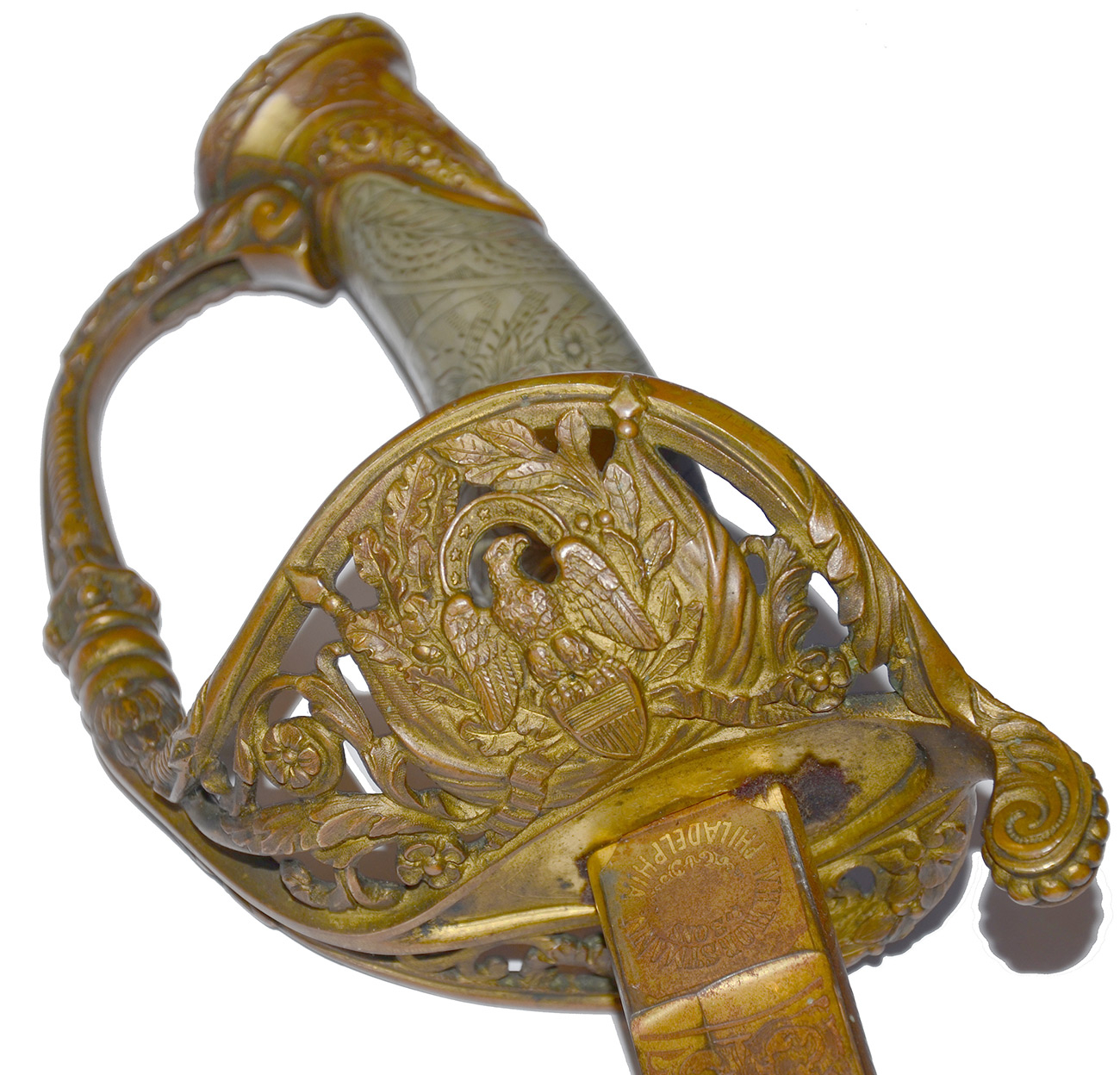
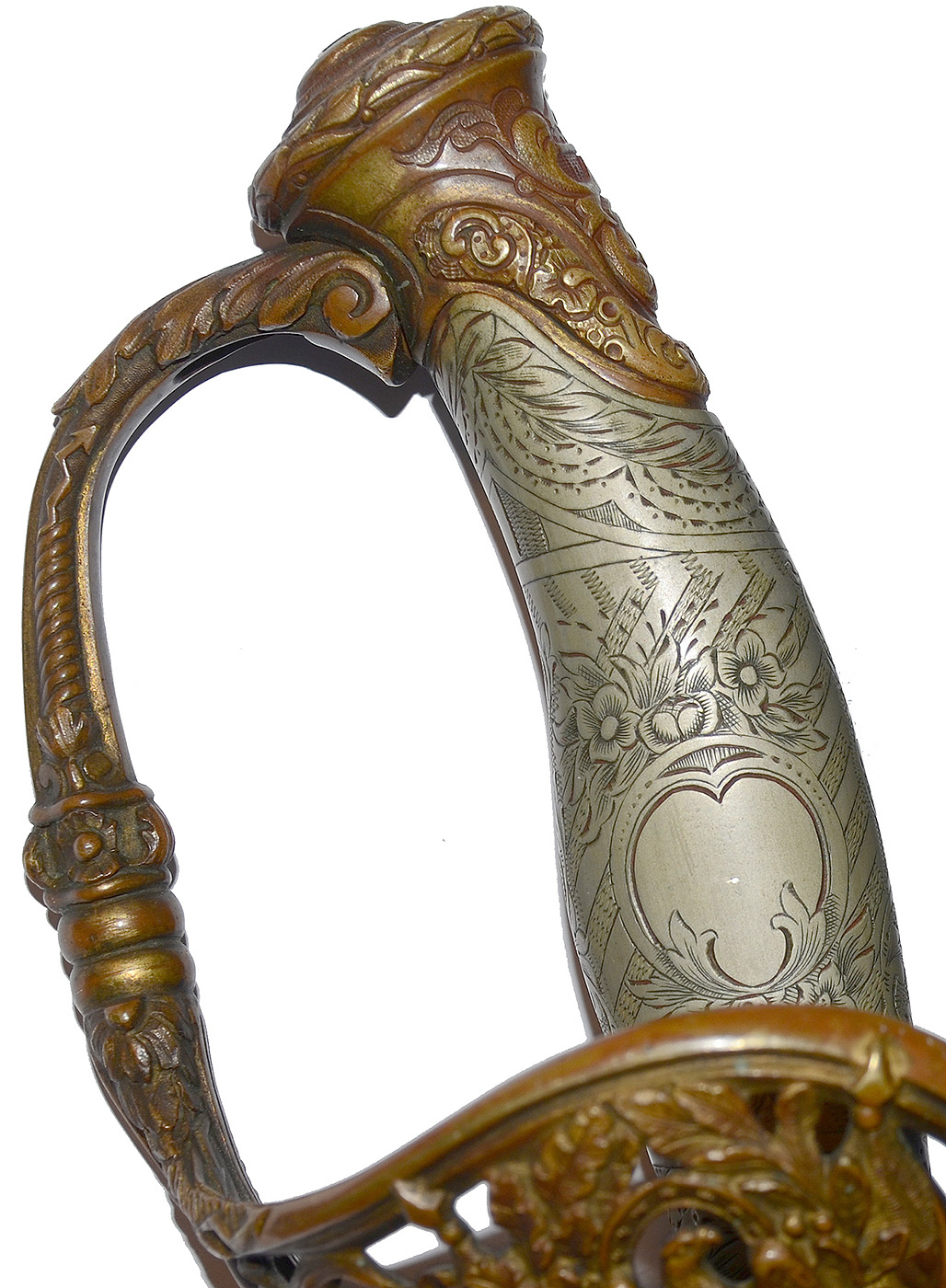
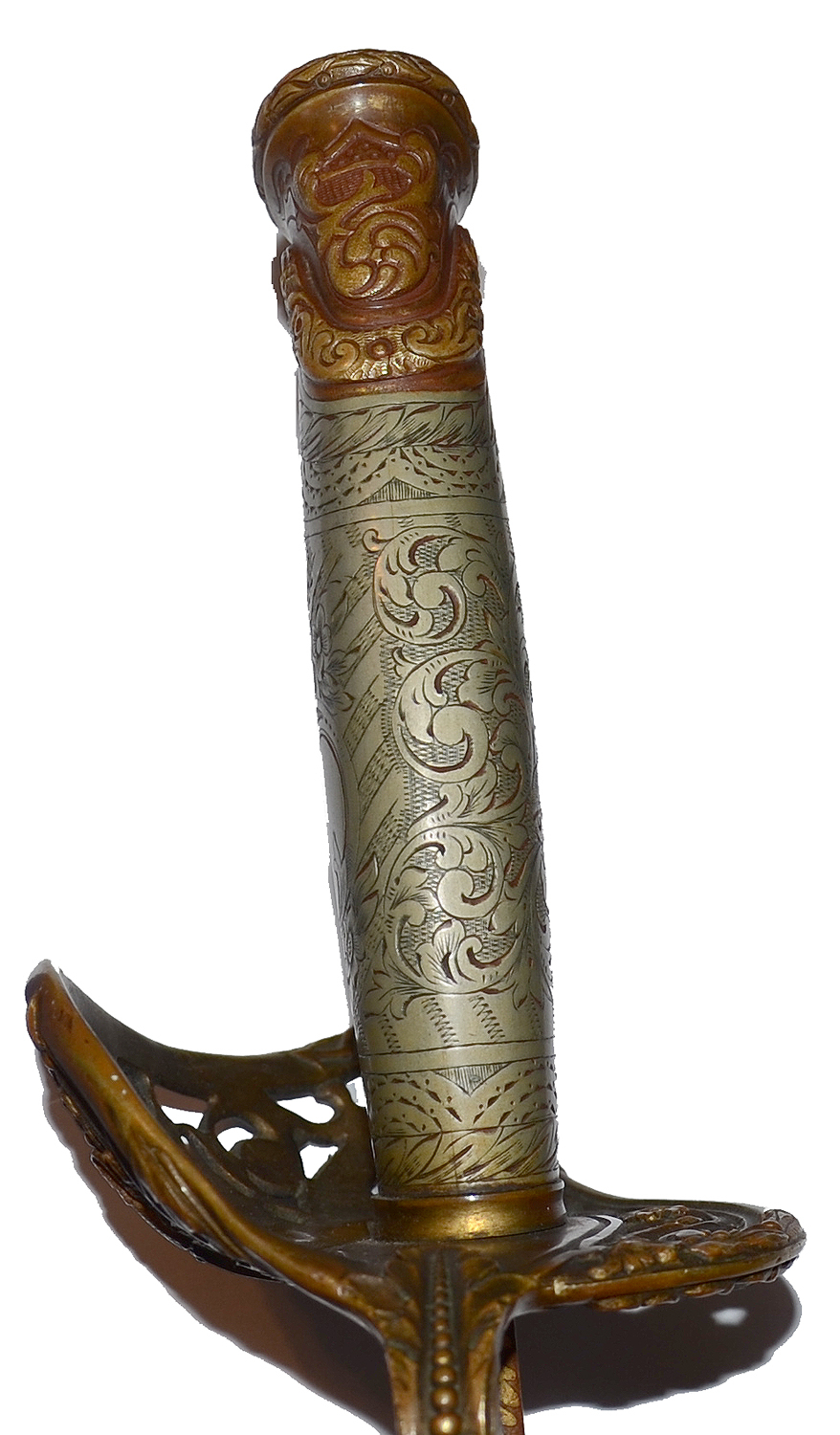
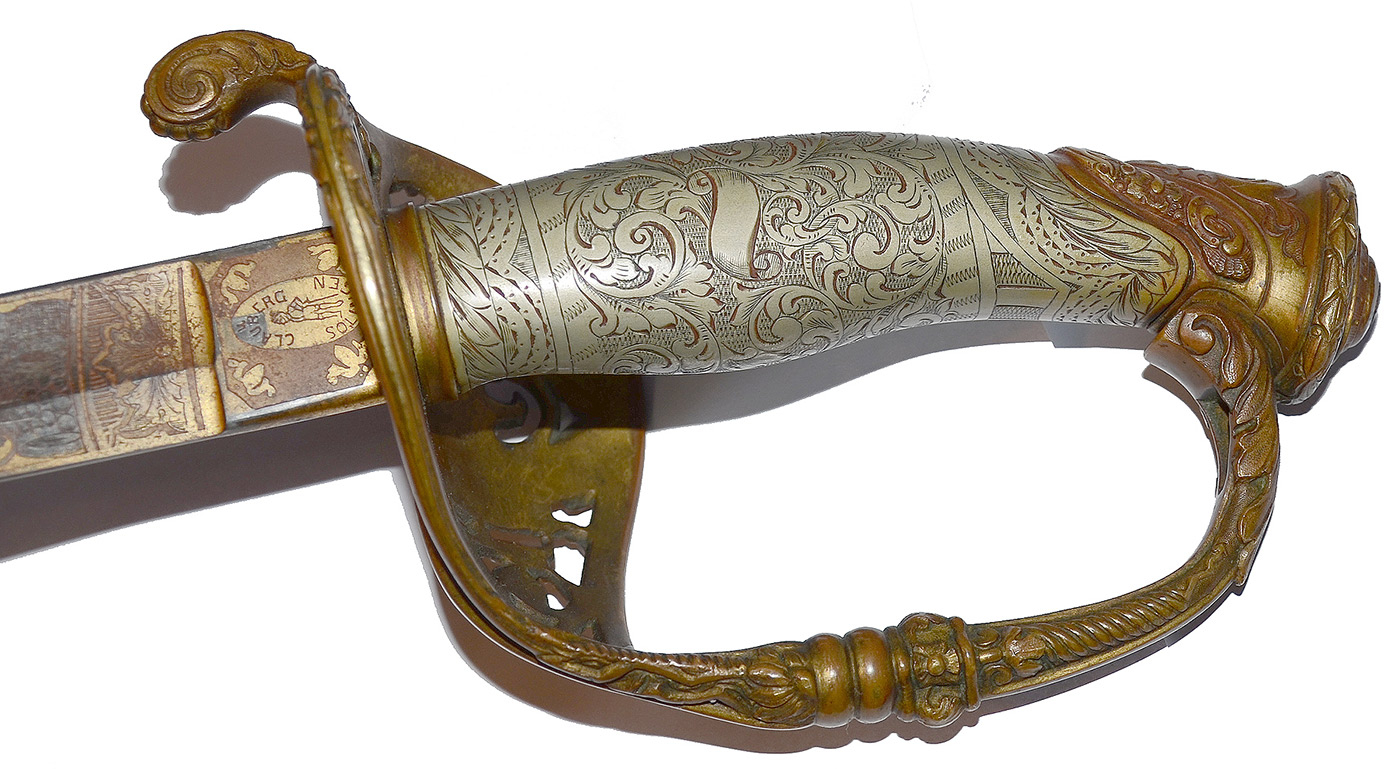
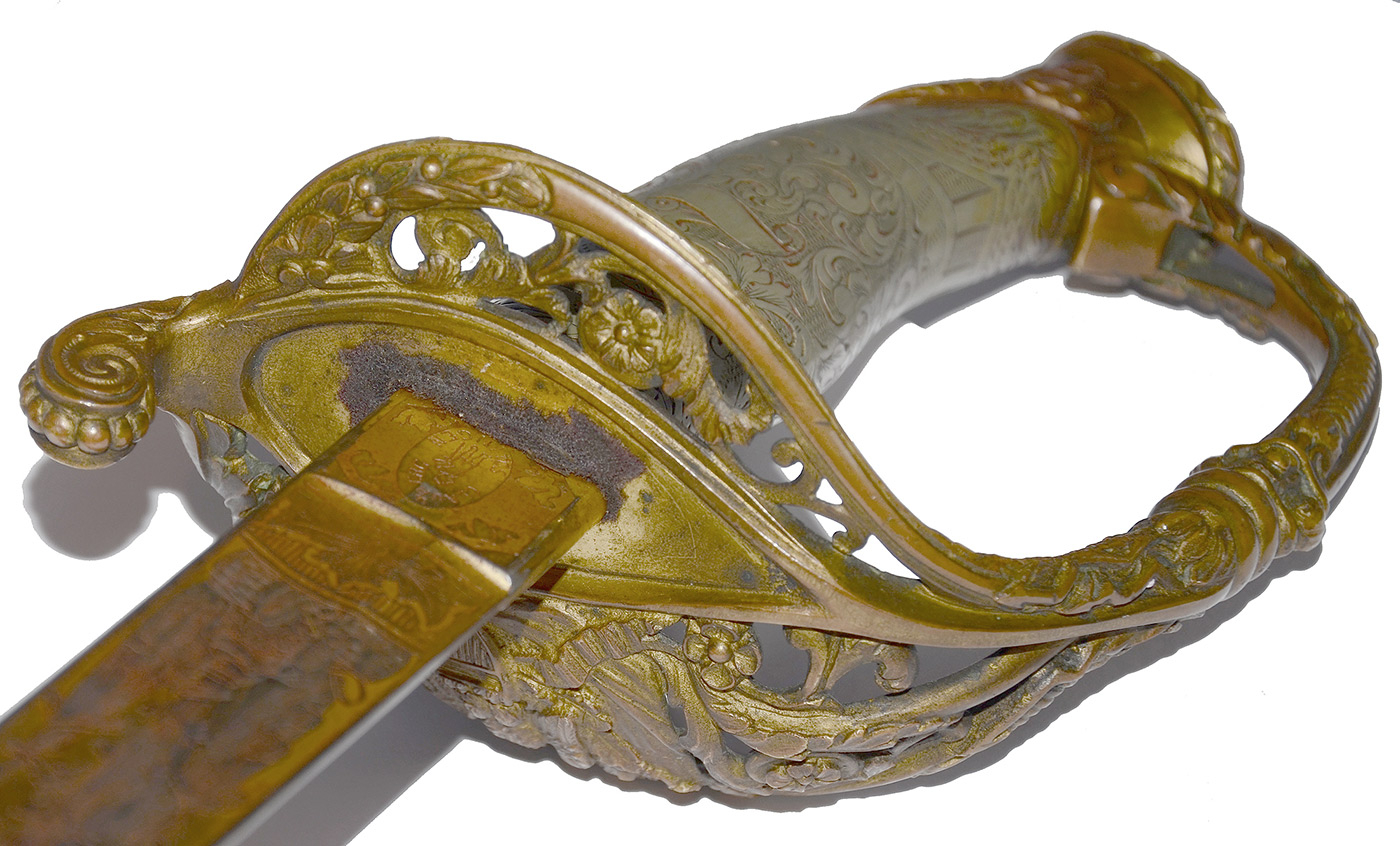
Hilt has a wonderful silver grip decorated with engraved scrollwork, ribands and laurel leaves. Engraving is strong and grip is clean. Brass pommel cap is very ornate with a tiered domed top and a laurel wreath base. The face is outlined with a heavy border of laurel with a patriotic shield at center enveloped in scrollwork. Brass knuckle bow is heavily decorated with linear decoration, scrolls and floral patterns and widens to a guard that forms a basket. The basket has cut foliate decoration and a laurel wreath medallion with a spread-winged eagle at center perched on a patriotic shield under an arch of 5-pointed stars. Hilt is tight.
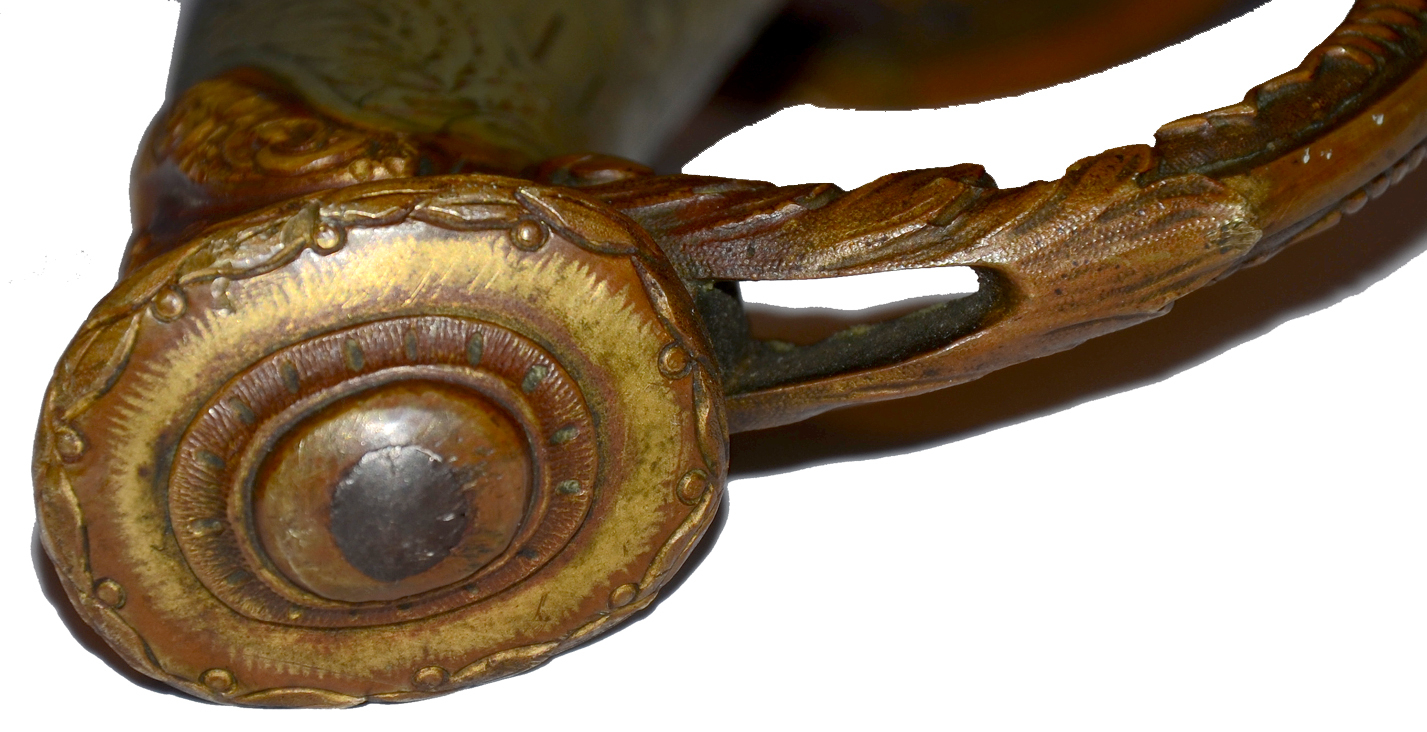
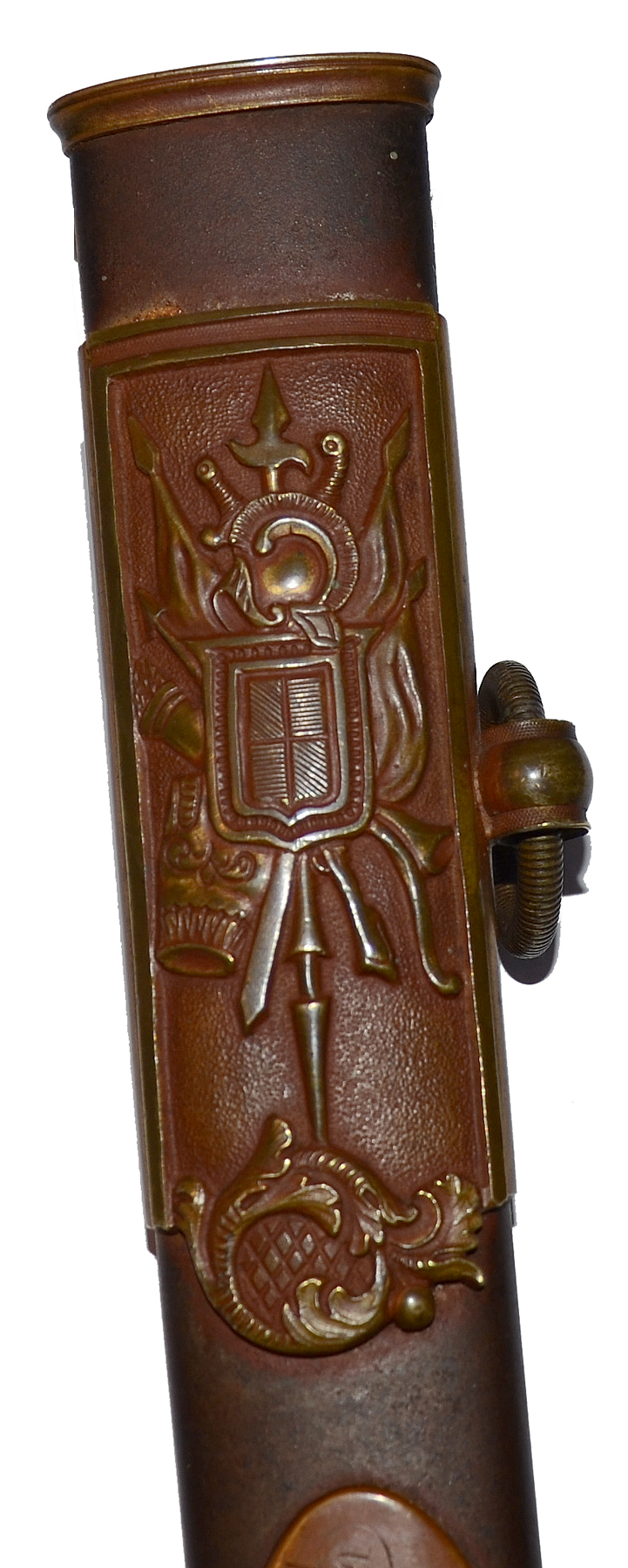
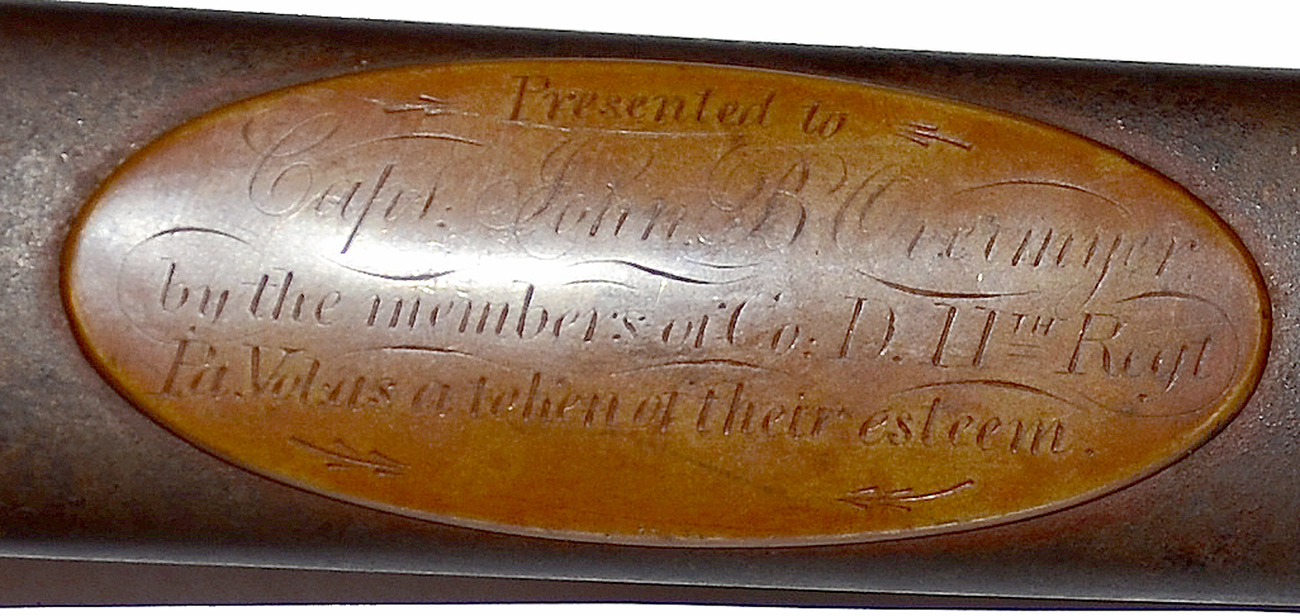
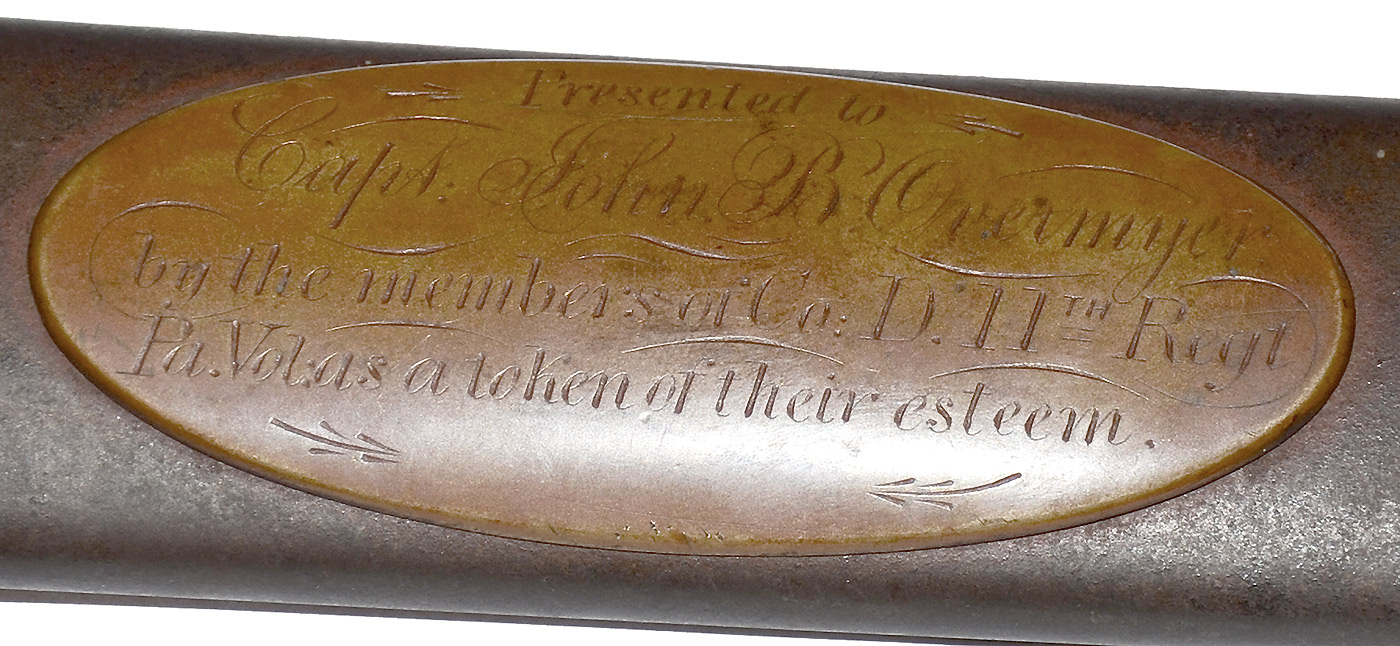
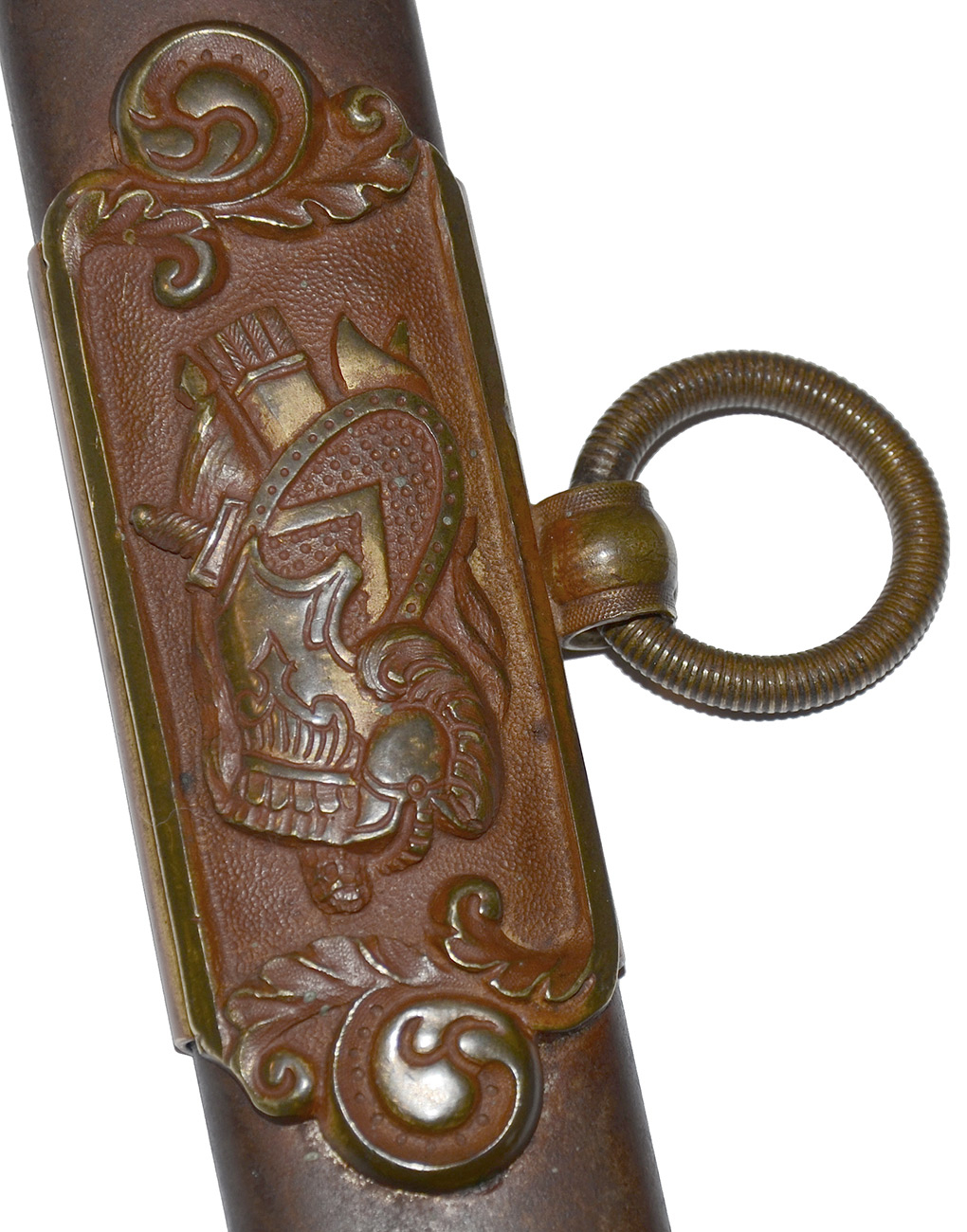
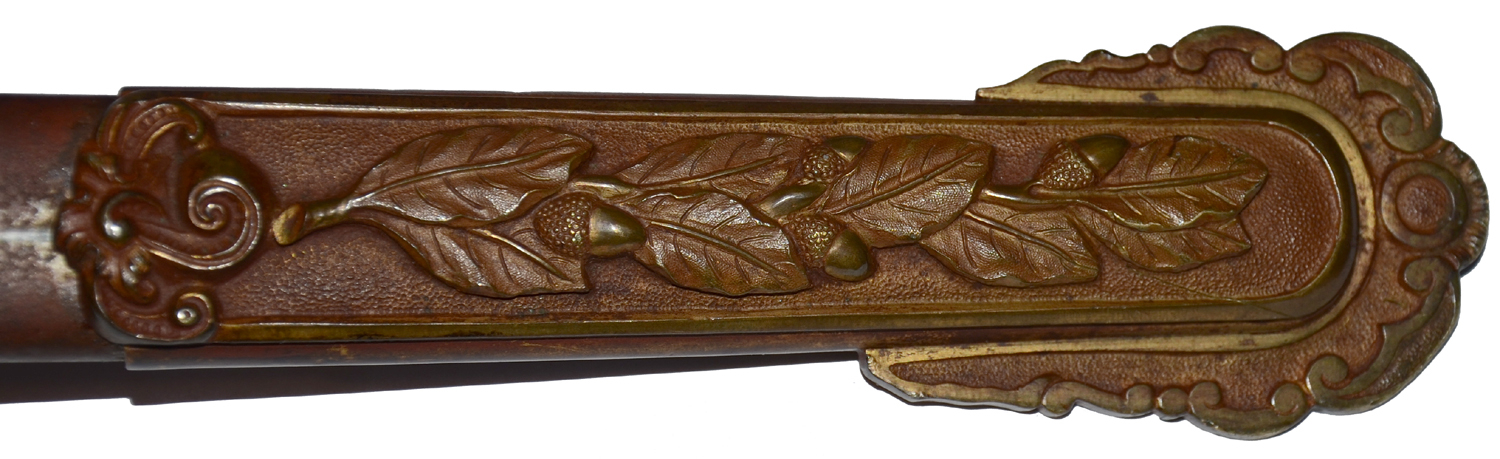
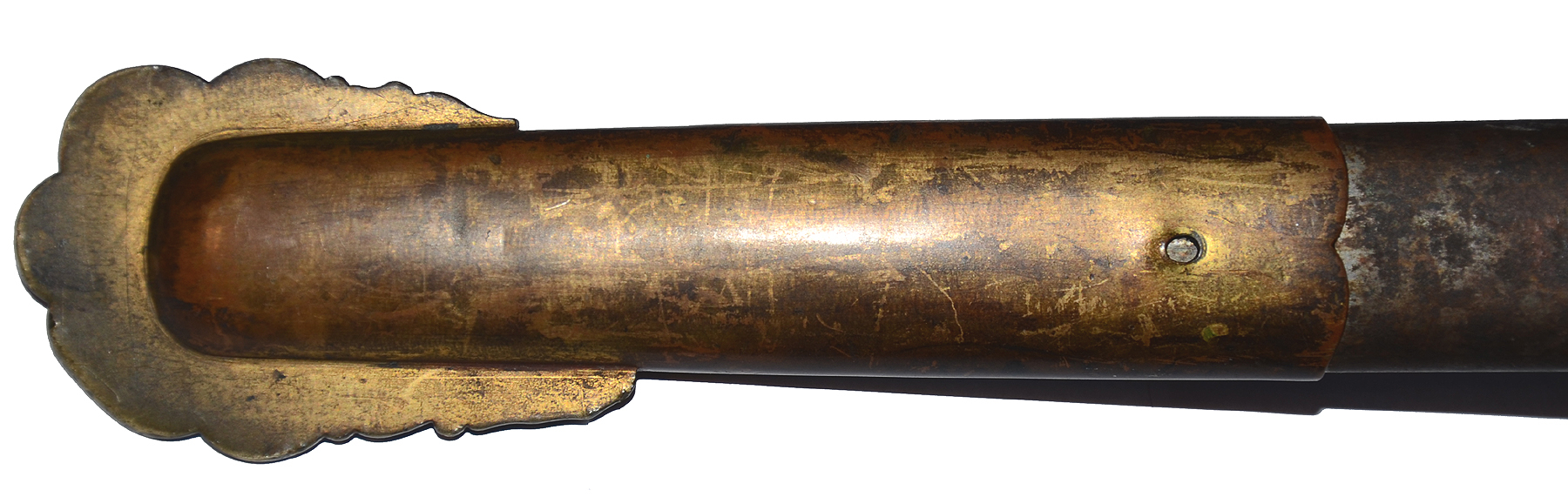
Metal scabbard is free of dents and has a heavy brass throat. The drag has a 5.00-inch-long raised stem of laurel leaves running down its length. Brass ring mounts are also heavily embellished. The upper mount has a raised decoration with a coat of arms that displays crossed spears, a shield divided into quadrants and a knight’s helmet. The lower mount has a raised decoration of an oval shield with chevron at center, cuirass, sword, axe and quiver of arrows. Both mounts have their rings. Reverse of mounts and drag are plain. All brass has a heavy patina. Between the two mounts is an engraved brass plaque that reads “PRESENTED TO CAPT. JOHN B. OVERMYER BY THE MEMBERS OF CO. D. 11TH REGT PA. VOL. AS A TOKEN OF THEIR ESTEEM.”
Jonathan Bower Overmyer (known later in life as John B. Overmeyer) was born in Lycoming County, Pennsylvania on June 29, 1842. He was residing in Jersey Shore, Pennsylvania when he enlisted as a Private in Company D, 11th Pennsylvania Infantry on October 4, 1861 and by January of 1862 he had been promoted to Sergeant.
The 11th Pennsylvania served in the 3rd Corps of Pope’s Army of Virginia and saw action on August 9, 1862 at Cedar Mountain where the regiment was lightly engaged. However, the end of August proved deadly, at Thoroughfare Gap and 2nd Bull Run the regiment lost 47 killed, 145 wound and 7 captured.
In early September the 11th Pennsylvania was reassigned to the 1st Corps of the Army of the Potomac and with that organization it fought through the battle of Antietam losing another 110 men. With all the losses in the regiment vacancies appeared in the ranks of the officers and worthy enlisted men received commissions. One of these was Sergeant Jonathan Overmyer who was appointed Captain on November 1, 1862. He led his Company through the battle of Fredericksburg in December where the 11th lost another 76 men.
In the spring of 1863, the regiment took part in the Chancellorsville Campaign but were lightly engaged.
At Gettysburg on July 1st, 1863 the 11th Pennsylvania fought northwest of town along Oak Ridge. They helped to repulse the attack of Iverson’s Confederate brigade before being outflanked and forced from their position. After retreating through town they took up positions in the Cemetery Hill area.
Due to casualties in the fighting on the 1st the 11th Pennsylvania’s Colonel was ordered to take command of the brigade. Command of the regiment devolved upon Captain Benjamin F. Haines. During the great bombardment on the 3rd Captain Haines was wounded and command of the regiment fell to Captain Overmyer who with the return of Colonel Coulter was relived on the 4th.
Captain Overmyer led his Company through winter quarters and into the 1864 campaign fighting at the Wilderness, Spotsylvania, North Anna, Totopotomoy, Bethesda Church, Cold Harbor and Petersburg.
On December 26, 1864 Overmyer was appointed Major and served in that capacity at Weldon Railroad and Hatcher’s Run. Then, on March 13, 1865 he received two brevet promotions, one to Lieutenant Colonel and another to Colonel.
In one of the closing battles of the war at Five Forks on April 1, 1865 Overmyer was wounded. The extent of his wound is not known nor is it known if he was present at Appomattox.
Overmyer was mustered out at Harrisburg on July 1, 1865.
In 1873 he moved with his wife and family to Chicago, Illinois where he served as President of the National Portrait Company. He was also a thirty-second degree Mason and a member of the Illinois Club.
He died of apoplexy in Chicago on January 27, 1903 and is buried there in Rosehill Cemetery. [AD][ph:L]
~~~~~~~~~~~~~~~~~~~~~~~~~~~~~~~~~~~
THIS ITEM, AS WITH ALL OTHER ITEMS AVAILABLE ON OUR WEB SITE,
MAY BE PURCHASED THROUGH OUR LAYAWAY PROGRAM.
CLICK HERE FOR OUR POLICIES AND TERMS.
THANK YOU!
Inquire About PRESENTATION GRADE US MODEL 1850 FOOT OFFICER’S SWORD IDENTIFIED TO JONATHAN B. OVERMYER, 11TH PENNSYLVANIA INFANTRY
Most Popular
Historical Firearms Stolen From The National Civil War Museum In Harrisburg, Pa »
Theft From Gravesite Of Gen. John Reynolds »
Selection Of Unframed Prints By Don Troiani »
Fine Condition Brass Infantry Bugle Insignia »
Rare Identified 65Th Ny Sergeant’s Jacket, With Manscript Material: 1St U.s. Chasseurs »
featured item
STENCIL ID’D CIVIL WAR ISSUE BLANKET WITH CORPS BADGES
This Civil War US issue blanket is in excellent condition, retains its original gray color to the body and the black color in the end stripes, along with its three-line open ended, chainstitched US near the middle that has shifted in color to a… (1273-60). Learn More »
site search