

site search
online catalog
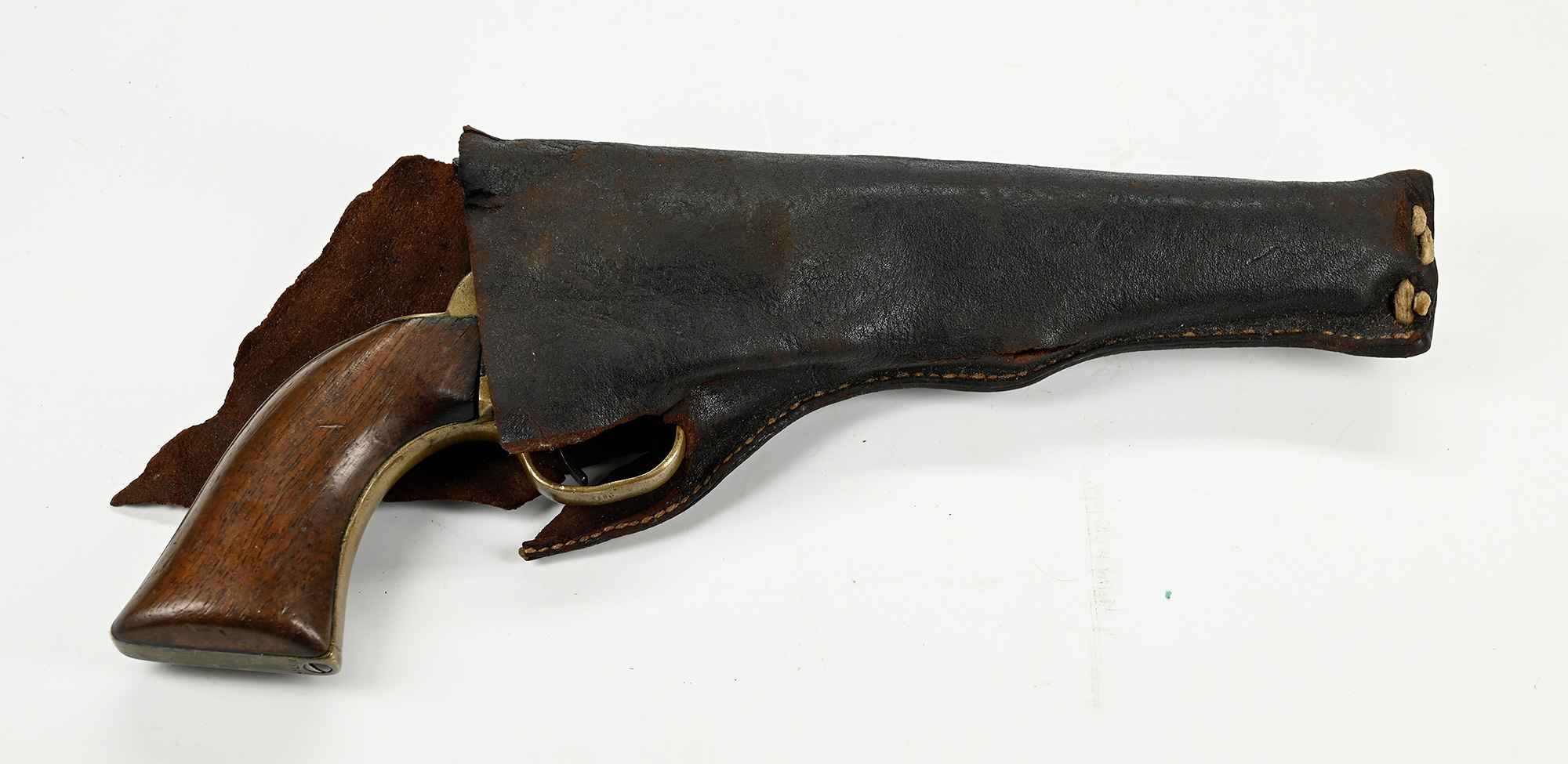
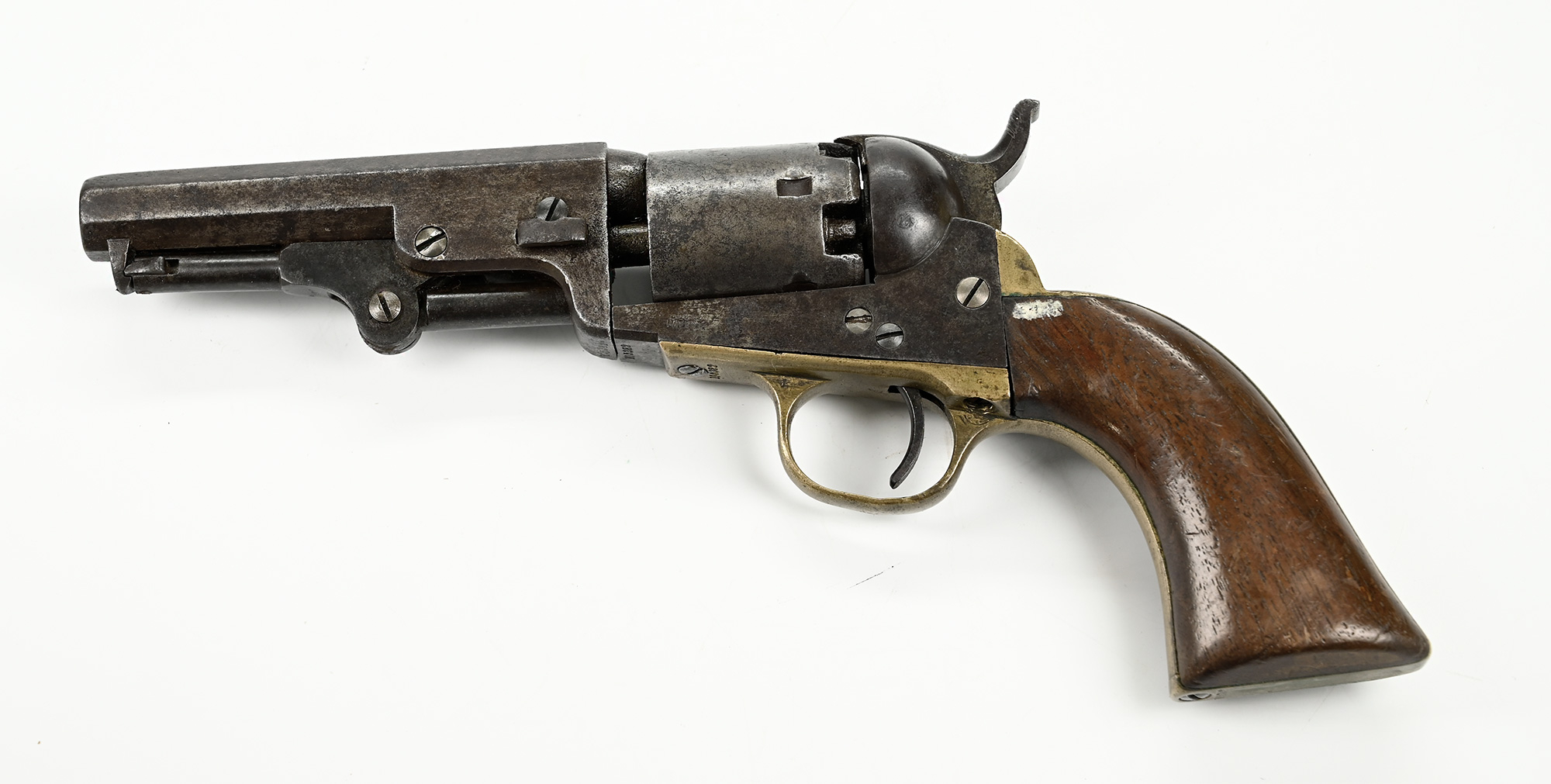
INSCRIBED COLT POCKET REVOLVER WITH HOLSTER OF CAPTAIN AND LIEUTENANT COLONEL ROBERT FAIR, 7th SOUTH CAROLINA
Hover to zoom
$4,500.00 SOLD
Quantity Available: None
Item Code: 766-1749
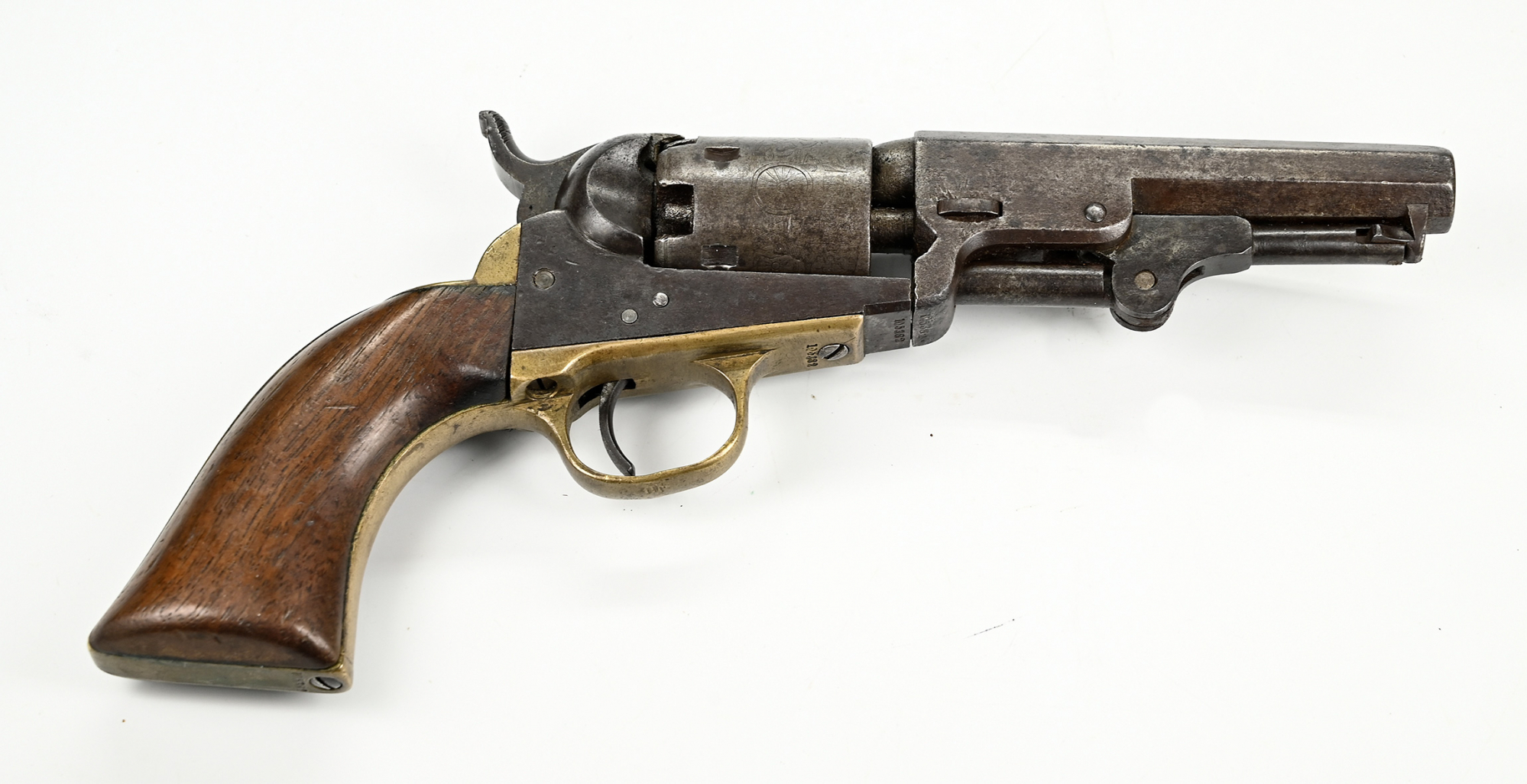
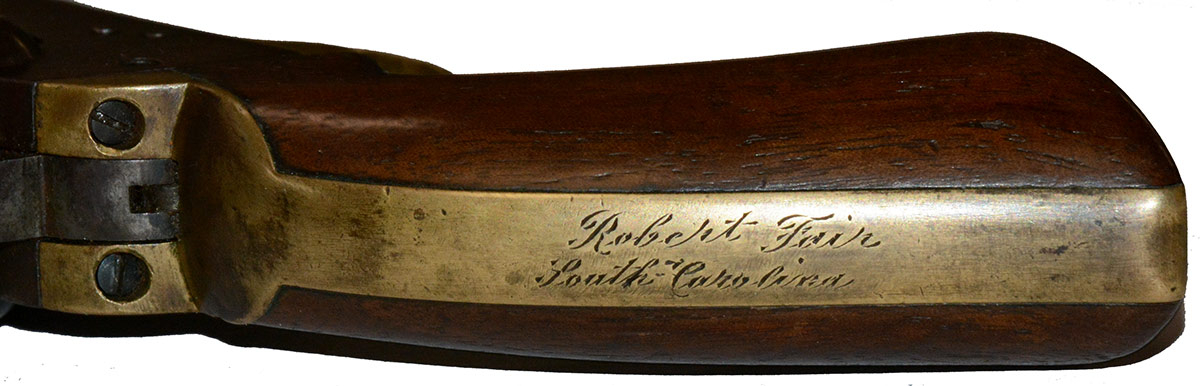
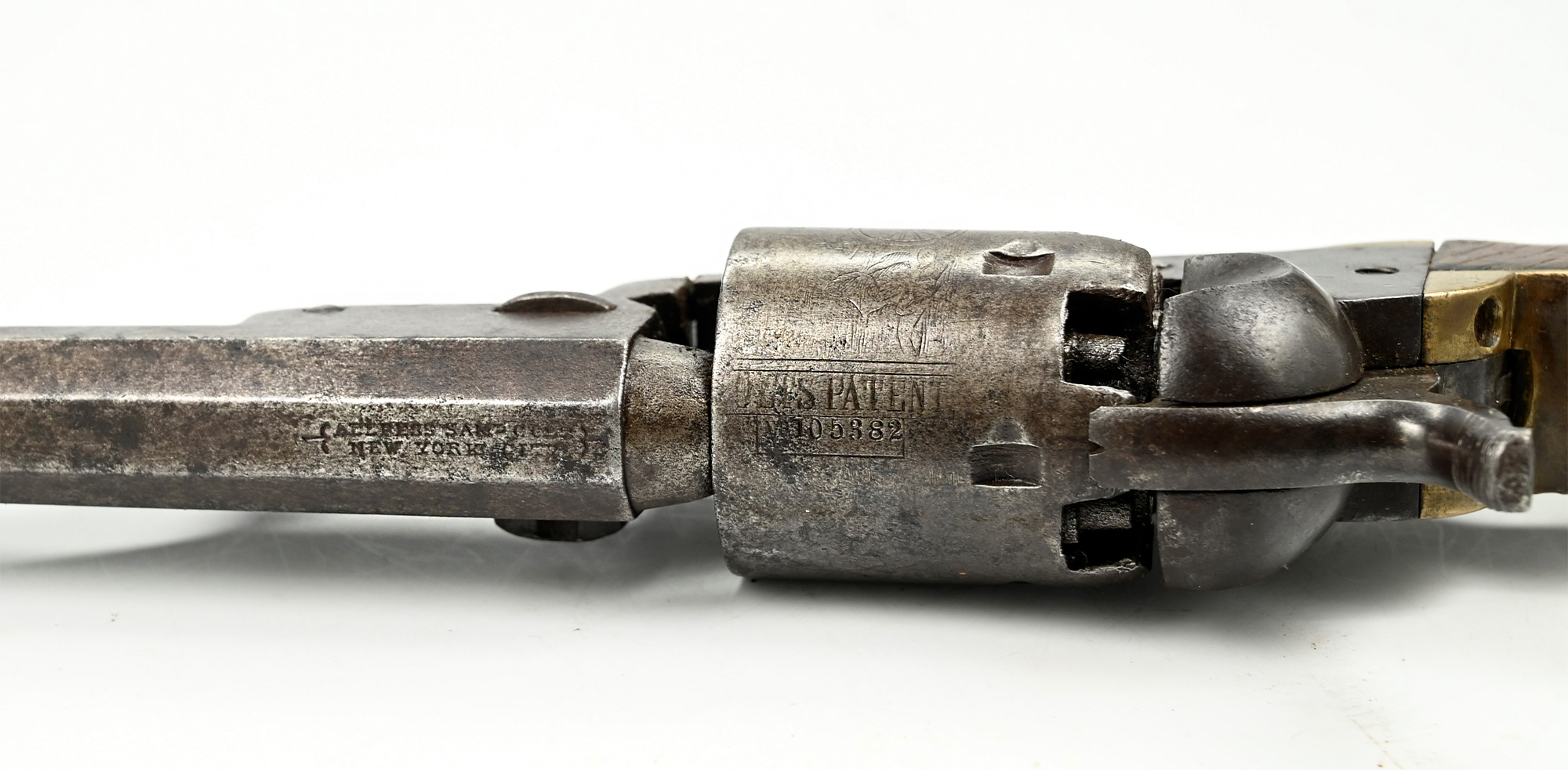
This very good condition .31 Colt pocket revolver comes with its original holster and bears a beautiful, absolutely period, script inscription on the backstrap reading, “Robert Fair / South Carolina,” a prominent Abbeville lawyer, state representative and later minister who served as a Captain and Lieutenant Colonel of the 7th South Carolina.
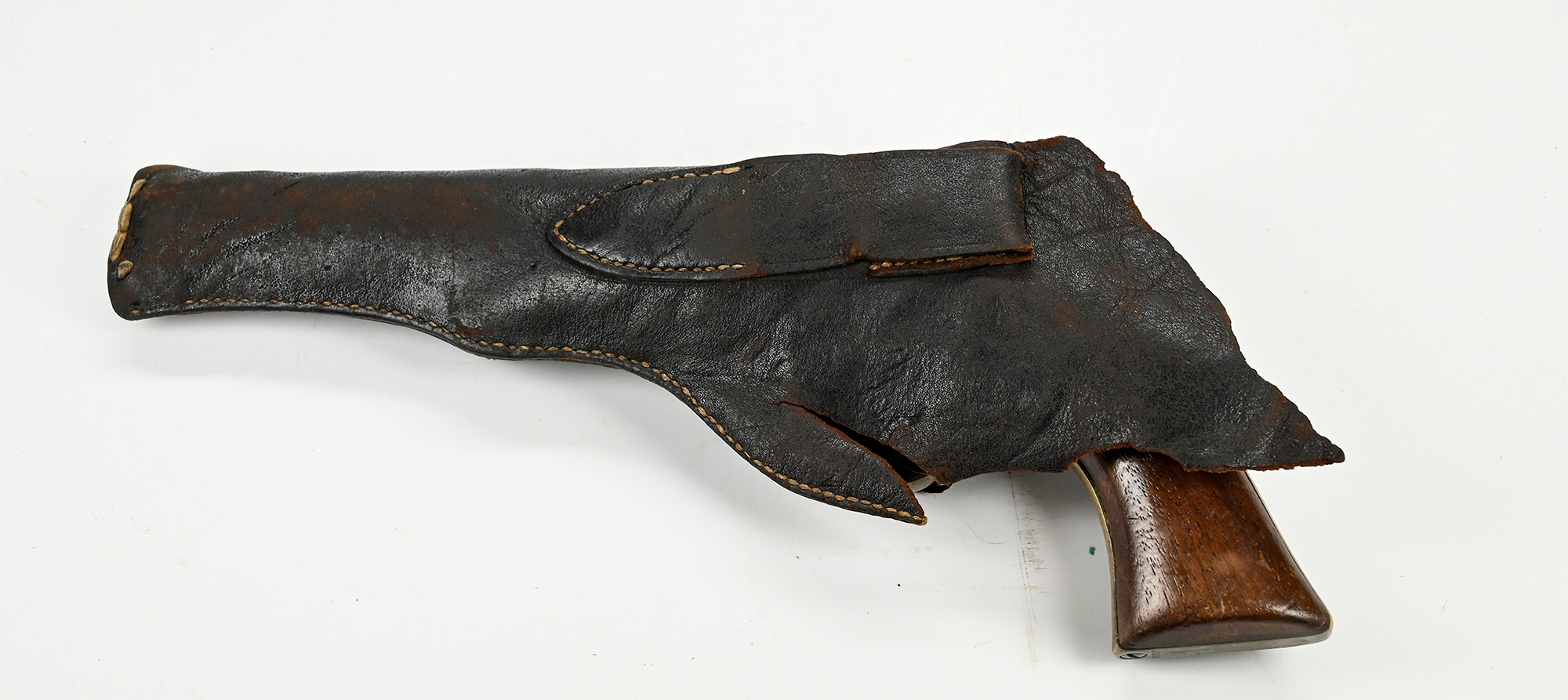
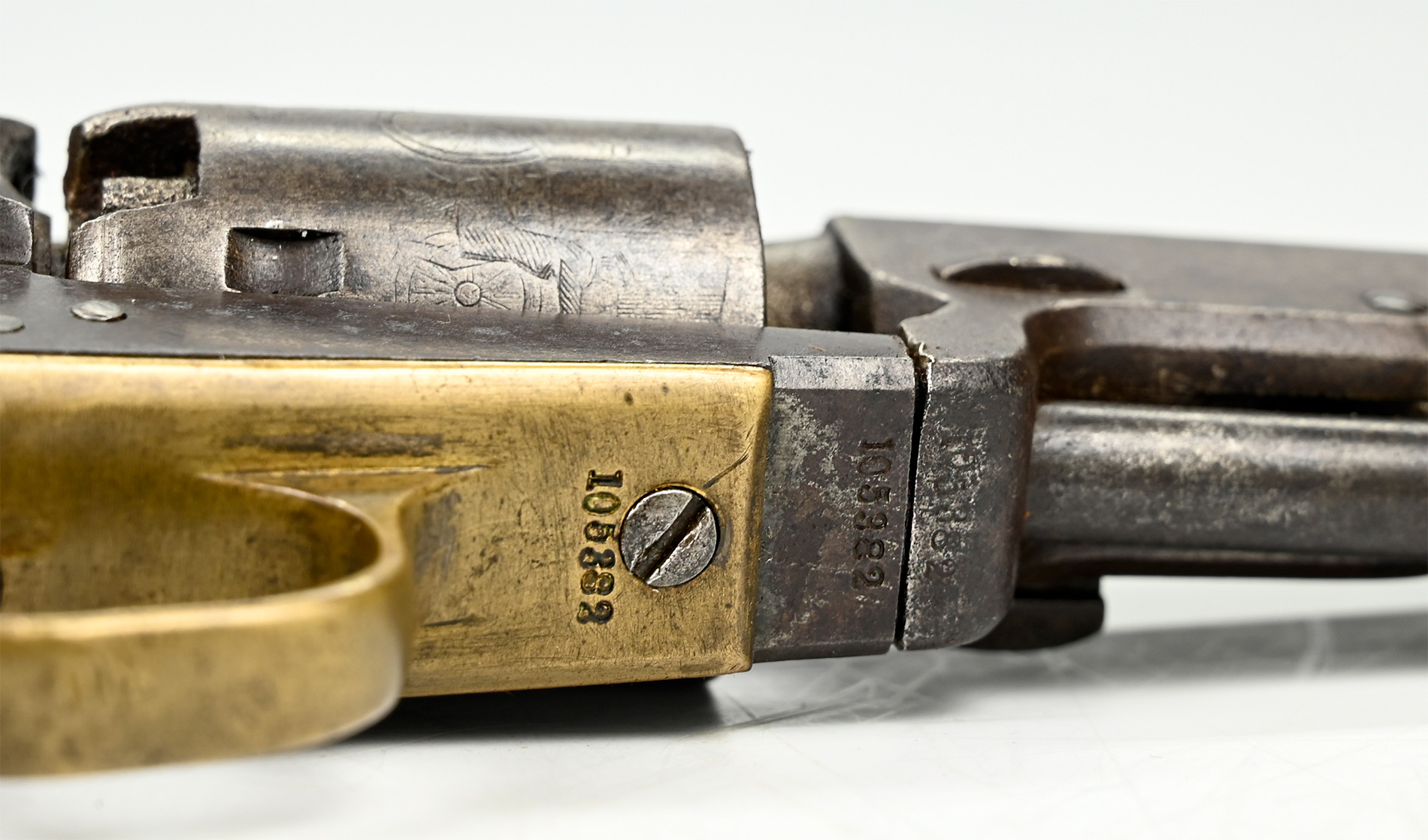
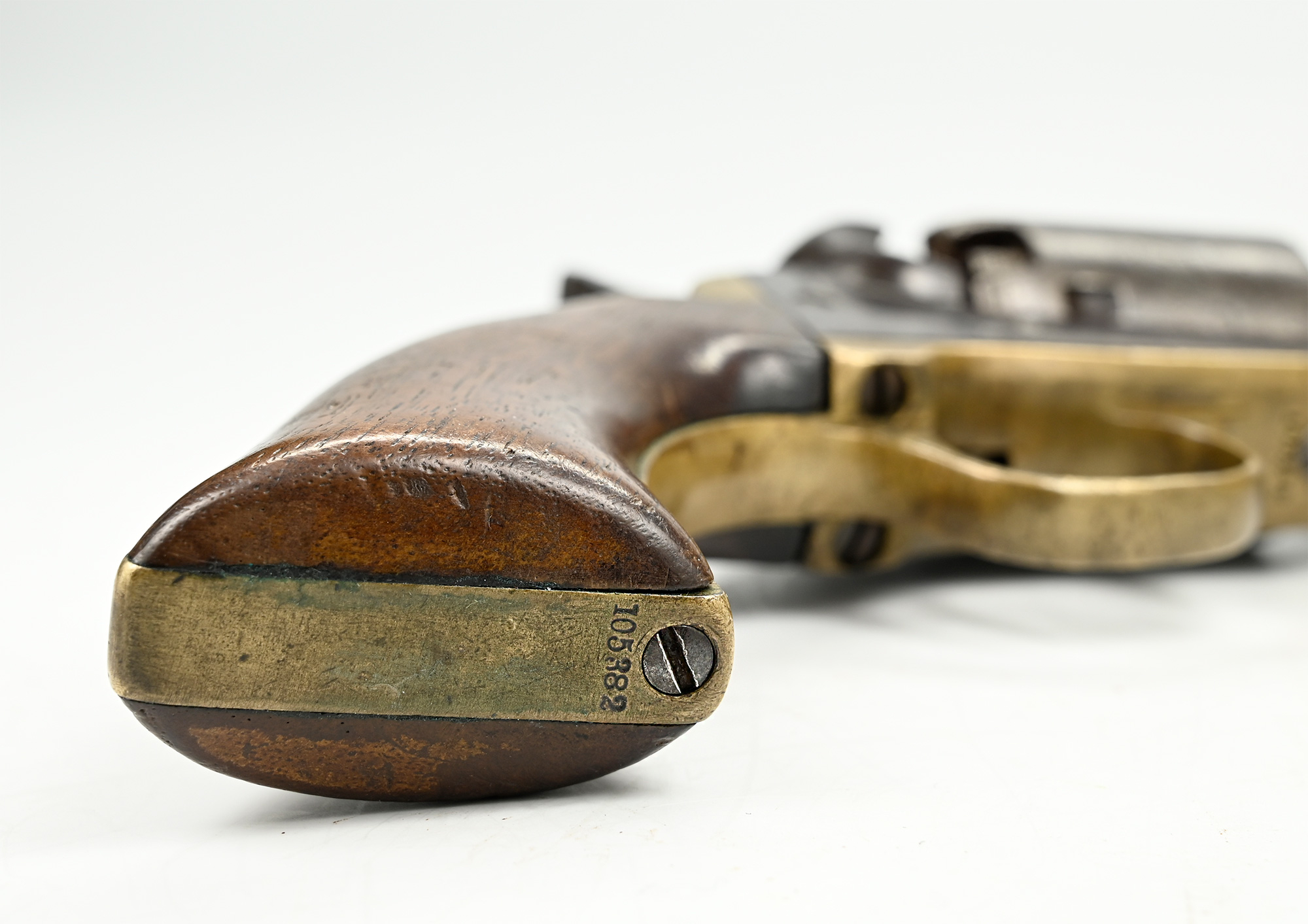
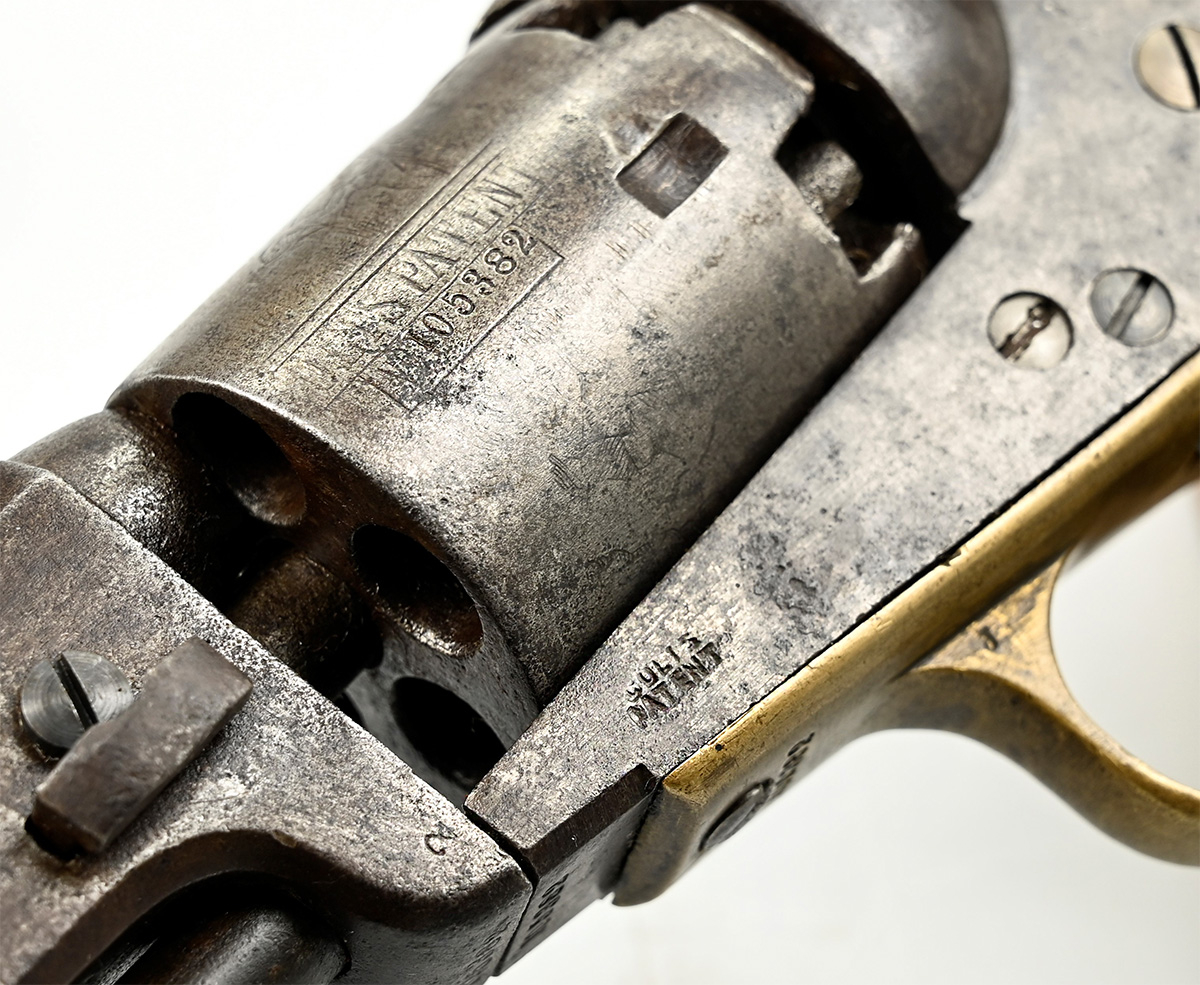
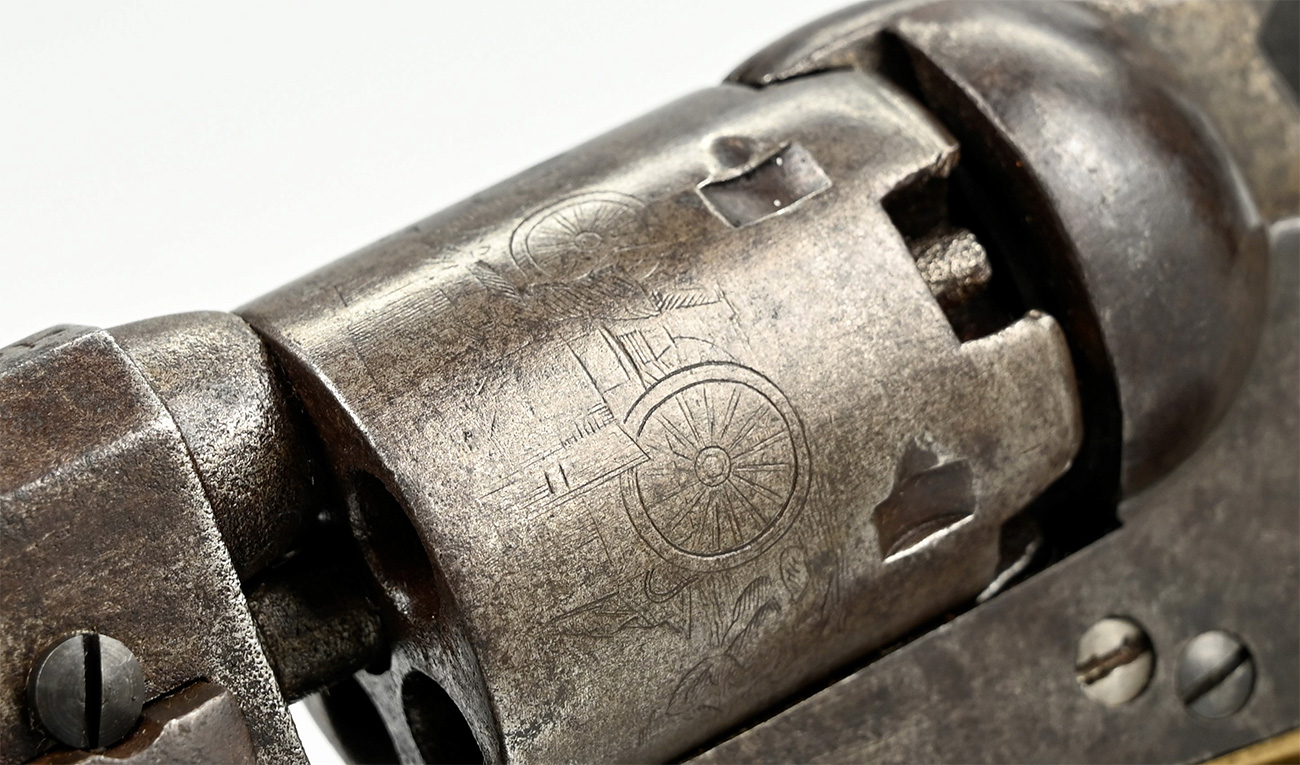
The revolver is all matching with serial number 105382, dating to 1855, with the two-line New York barrel address, correct for the serial number. These were immensely popular pistols and this one has a four-inch barrel, one of several lengths offered by Colt. The brass has a wonderful, untouched mustard patina showing just a trace of tarnished silver at top of the backstrap, indicating it saw some handling, but with excellent varnished grips that fit the frame tightly and only two or three very minute dings to the bottom of the butt and the upper left at the frame. The bottom of the triggerguard bow shows a couple of light dings also. The cylinder scene is visible and all markings are visible and sharp, including the cylinder Colt patent markings and matching serial number. The nipples are not battered down. The loading assembly shows a dark blue, as do the backstrap and wedge screws. The barrel shows thin blue turning plum and the frame shows the mottled grays, thin blues and browns of faded case colors, a bit stronger perhaps on the left than the right. The pistol shows it was carried but taken care of. The holster shows wear and damage. The belt loop is in place, but the full military style flap has tears along the edges, the toe plug was lost and the end simply sewn closed, and a small rectangle was cut out next to the seam to give more room for the triggerguard.
Fair (Robert Anderson Fair) was born in Abbeville, SC, in 1820, graduated Erskine College in 1842, passed the bar in Abbeville in 1843, and practiced law for the next 27 years. Abbeville was one of the foremost communities pushing secession upon the election of Lincoln in November 1860, holding a large community meeting at the site of the old powder house on November 22, thereafter known as Secession Hill, where they nominated delegates to the state’s secession convention, one of whom was Fair’s law partner, Thomas Thomson, who voted for and signed the Ordinance of Secession.
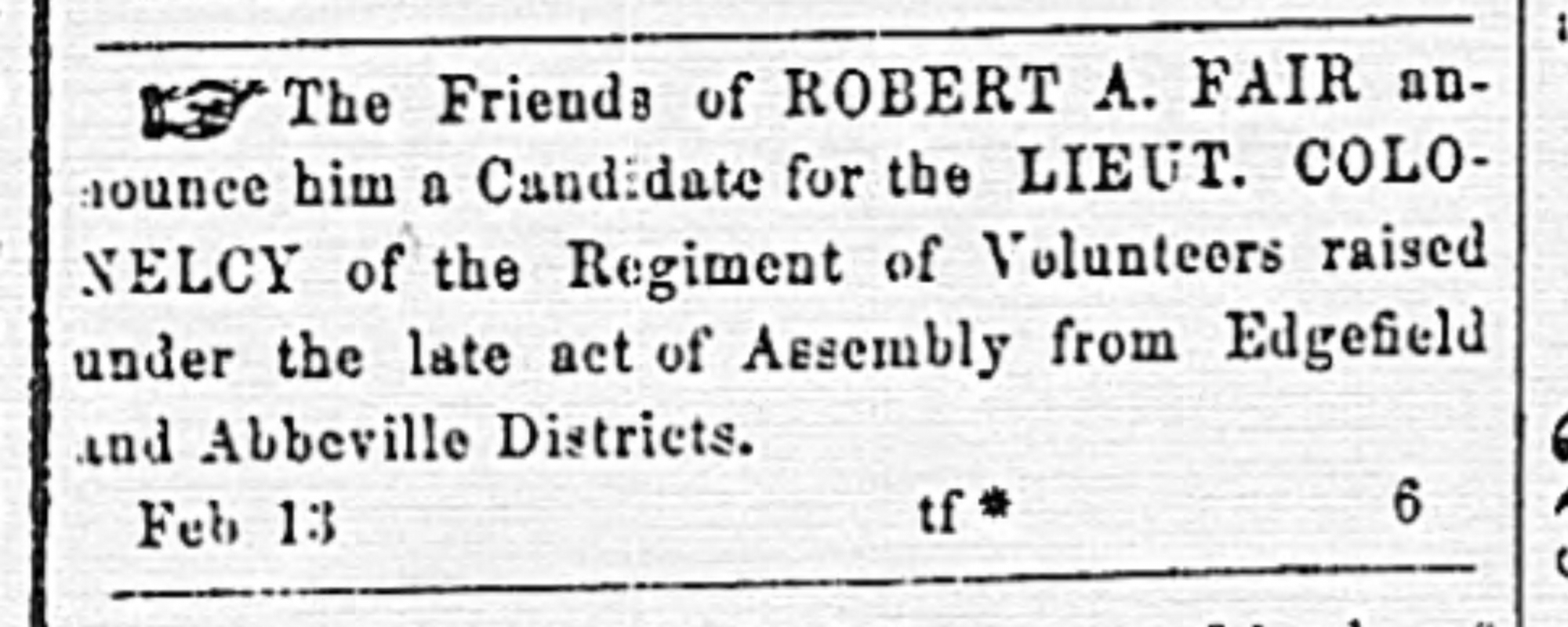
Fair, like his old law partner, was, or became, captain of an Abbeville militia company that was formally organized on 1/17/61 at McCaw’s Old Field, Monterey, in the Abbeville District. This company was then joined with other companies from Abbeville and Edgeville to form a regiment as directed by the state legislature and Fair canvassed for election as its Lieutenant Colonel, winning the post and being appointed to date February 23. His old company then passed to command of his former lieutenant and became Company D of the new regiment, designated the 7th South Carolina. The regiment was ordered on April 13 to rendezvous at Charleston, mustered into state service for one year on April 15, and companies began arriving at Charleston on April 17, the regiment establishing its headquarters as Camp Charleston or Camp Bacon (the Colonel) on Charleston’s Schutzenplatz or “German Shoothing Ground” at Rikersville. It moved to Camp Pickens (of Butler) in May, was mustered into Confederate service for one year on June 4 and ordered to Richmond, arriving on the night of June 7. Three days later it was ordered to Manassas Junction where it arrived on June 14 and made camp just south of McLean’s Ford on Bull Run. It was assigned to Bonham’s Brigade and sent to Centreville on June 22 and then posted at Fairfax Court House.
With McDowell’s advance, the regiment’s picket lines three miles above Fairfax Court House were fired upon on July 17 and the regiment was moved back to Centreville and then again to the area of McLean’s Ford on the morning of July 18 where they were ordered to entrench and during the day’s fighting as Union forces probed the Confederate line were subject to Union artillery fire, but suffered no casualties. There was some picket line firing over the next two days and on July 21 during the Battle of First Manassas proper they were again subject to artillery fire, once more without loss. When Union forces pulled back, they were ordered forward late in the day to take part in the pursuit to Centreville, where they gathered up abandoned Federal supplies and then pushed on to Vienna, making camp there on the morning of July 24. They remained in that area until mid-August, were posted at Flint Hill until mid-October, and then sent to Blackburn’s Ford.
At some point in December Fair was taken ill, as was Colonel Bacon, and received a leave of absence for thirty days, leaving camp January 2. It is not clear when or if he returned to the regiment, but he remained Lieutenant Colonel of the 7th until April 30, as shown by pay records and the effective date of Major E. Seibel’s promotion to Lieutenant Colonel of the regiment, which was later reported as taking place upon Fair’s resignation. In April the regiment was in the process of being reorganized for two more years of Confederate service, which was official on May 14. Seibel hoped to be re-elected in the new organization, but failed to do so and is listed in the rolls as “dropped.” This is the same notation in Fair’s service file, but Seibel makes clear in summarizing his own service that Fair had resigned for health reasons.
Fair returned to Abbeville and we find him serving as a state representative from 1862, serving on the Judiciary Committee, which seems appropriate. In 1865 he was involved in trying to set up a new civil government for the state and appears to have served in government and practiced law until 1870, when he gave up, becoming ordained as a Presbyterian minister in 1871, serving at the Aveleigh Presbyterian Church in Newberry for 12 years. He had been active in the Church prior to the war as well. An address to Abbeville Bible Society in July 1854 titled, “Our Slaves Should Have the Bible” caused something of a stir, resulting in its publication in September to clear things up, though we forbear positing it may have had anything to do with his acquisition of the pistol, apparently soon after. In any case, in the mid-1880s poor health again caused his retirement, but he lived until 1899, dying in Savannah at the house of a son, one of at least eight children.
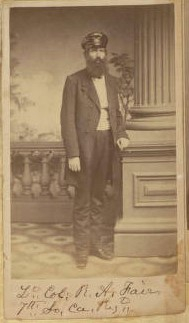
Dating to 1855, this revolver was certainly carried by Fair during his military service as Captain and Lieutenant Colonel. The original belt holster certainly speaks to field use and as a prominent member of Abbeville society and he may well have been active in the state’s antebellum militia also. We show a photograph of Fair now in the USC library, wearing civilian clothes and a military style wheel-cap with rain cover. [sr] [ph:m/L]
~~~~~~~~~~~~~~~~~~~~~~~~~~~~~~~~~~~
THIS ITEM, AS WITH ALL OTHER ITEMS AVAILABLE ON OUR WEB SITE,
MAY BE PURCHASED THROUGH OUR LAYAWAY PROGRAM.
CLICK HERE FOR OUR POLICIES AND TERMS.
THANK YOU!
Inquire About INSCRIBED COLT POCKET REVOLVER WITH HOLSTER OF CAPTAIN AND LIEUTENANT COLONEL ROBERT FAIR, 7th SOUTH CAROLINA
Most Popular
Historical Firearms Stolen From The National Civil War Museum In Harrisburg, Pa »
Theft From Gravesite Of Gen. John Reynolds »
Selection Of Unframed Prints By Don Troiani »
Fine Condition Brass Infantry Bugle Insignia »
Large English Bowie Knife With Sheath 1870’S – 1880’S »
Imported (Clauberg) Us Model 1860 Light Cavalry Officer's Saber »
featured item
DOUBLE CASED ¼ PLATE AMBROTYPES OF TWO MEMBERS BELIEVED TO BE OF THE ROME LIGHT GUARDS - COMPANY A, 8TH GEORGIA INFANTRY
These two fantastically clear images are housed together in a Union case that is also in excellent condition. Both sides show a beautiful scene of a lady riding a horse with a dog resting in front. Both subjects are unknown. The first image is of a… (846-517). Learn More »
site search