

site search
online catalog
IDENTIFIED ROBBINS AND LAWRENCE M1841 “MISSISSIPPI” RIFLE: W. JENKINS CO. I, 6th NORTH CAROLINA

Hover to zoom


$6,500.00 SOLD
Quantity Available: None
Item Code: G3943
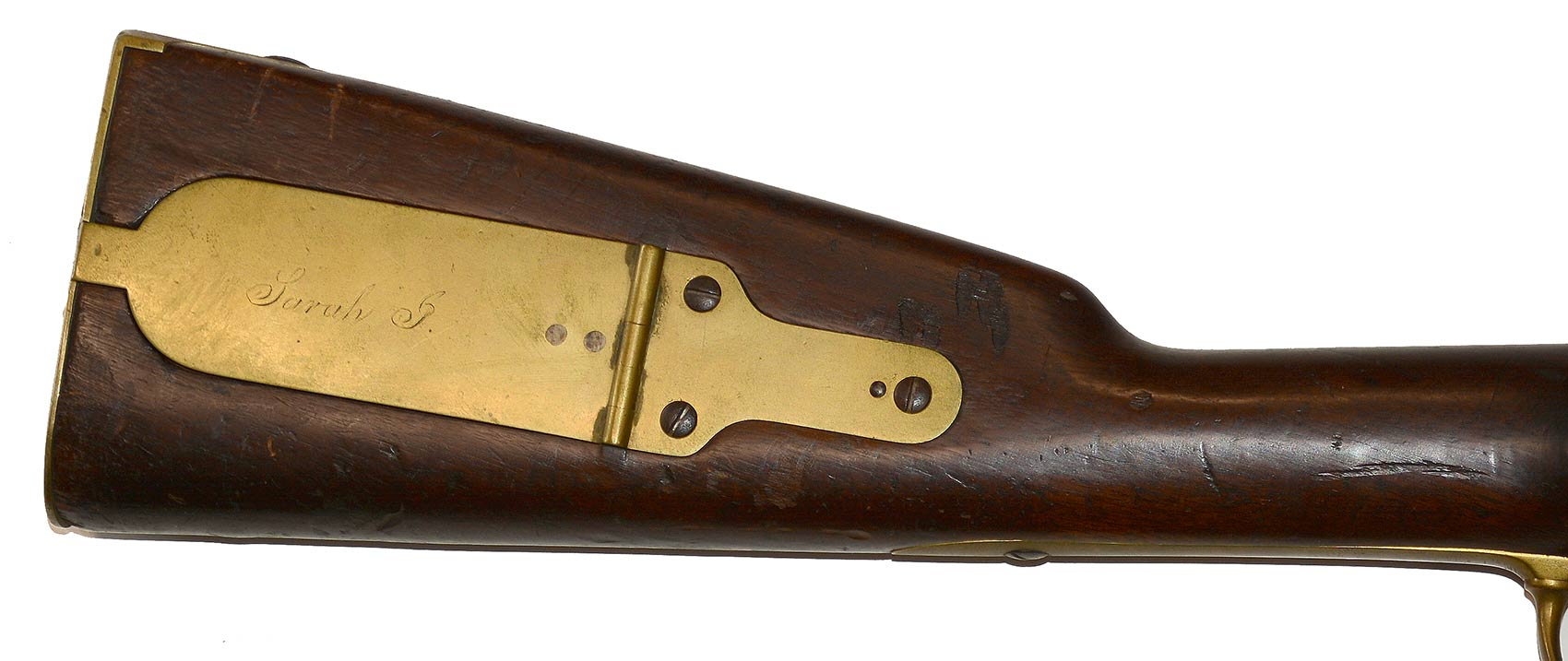
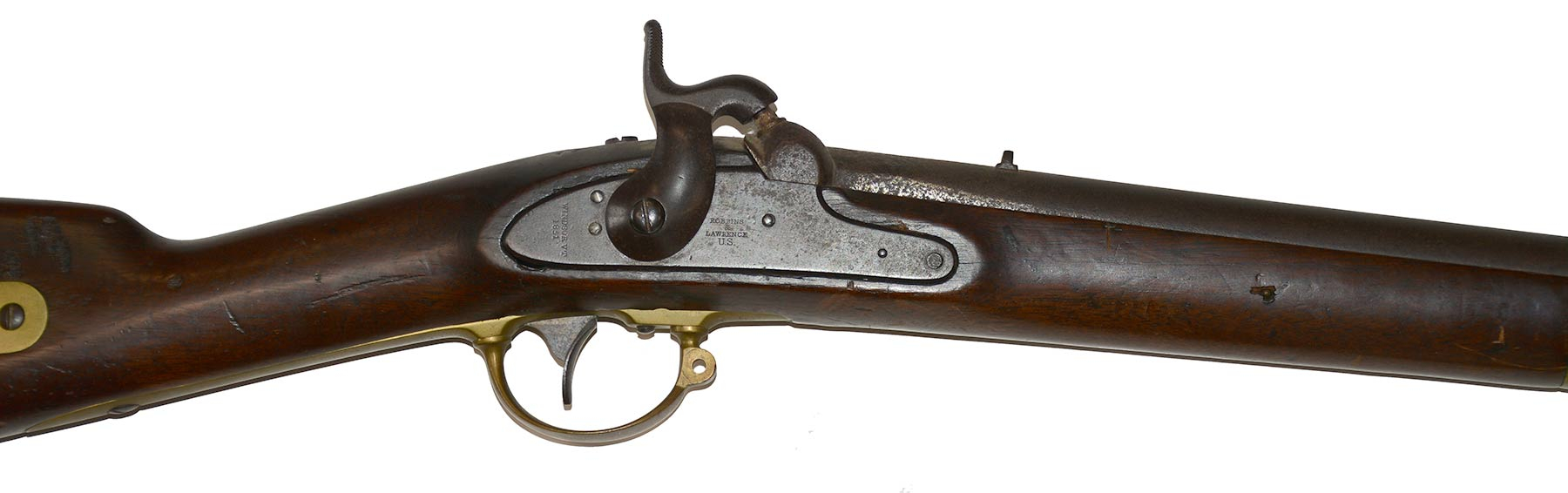
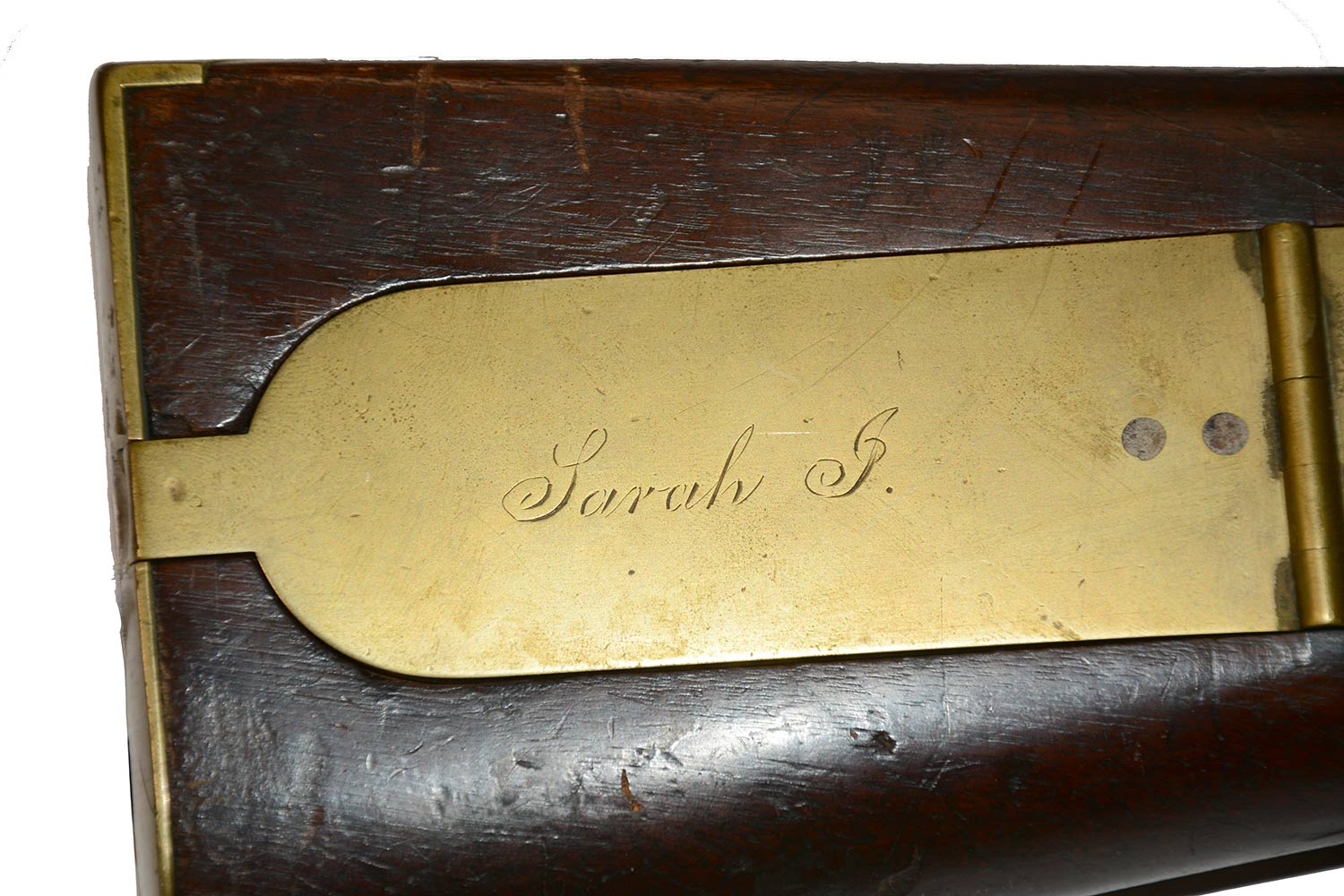
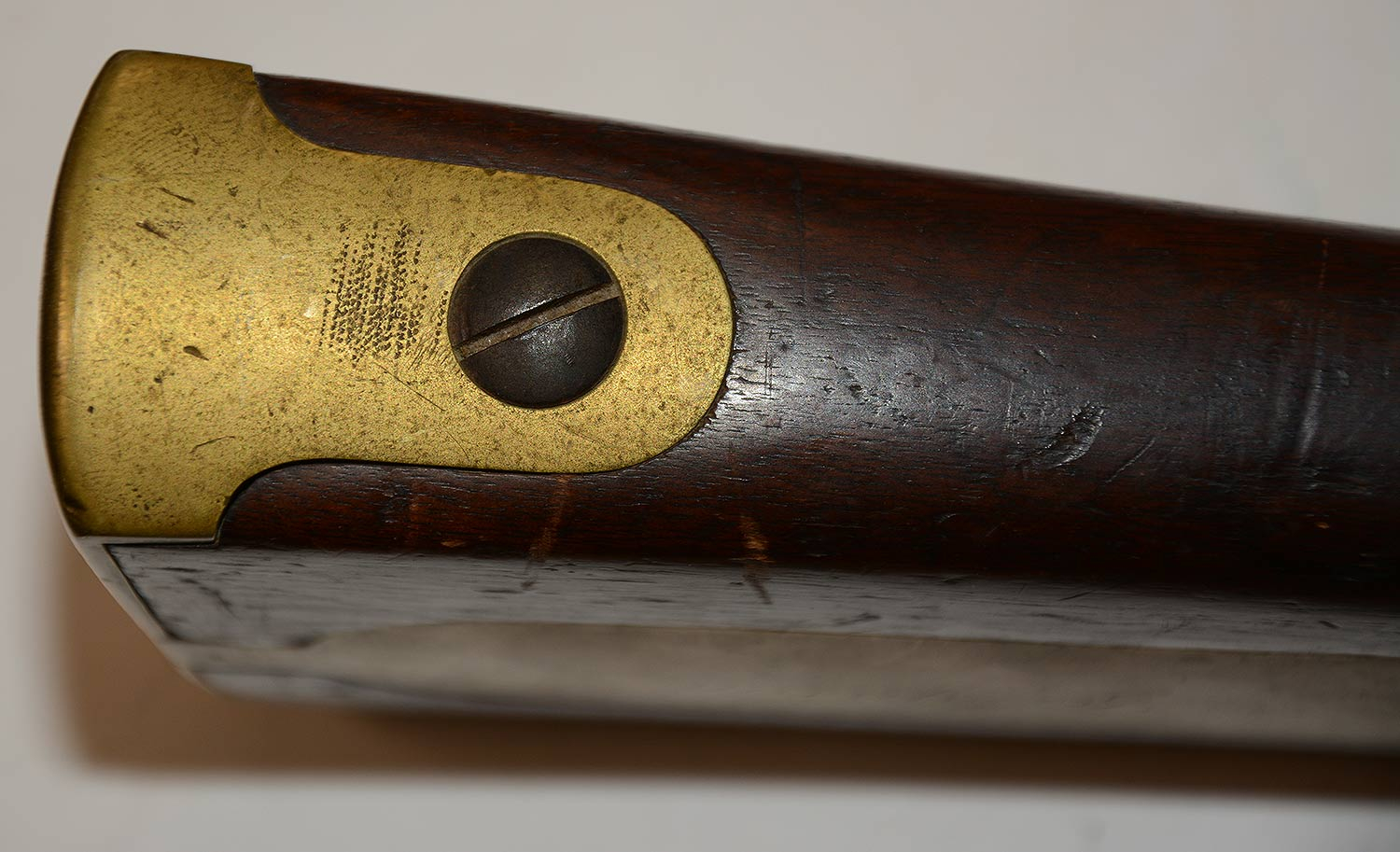
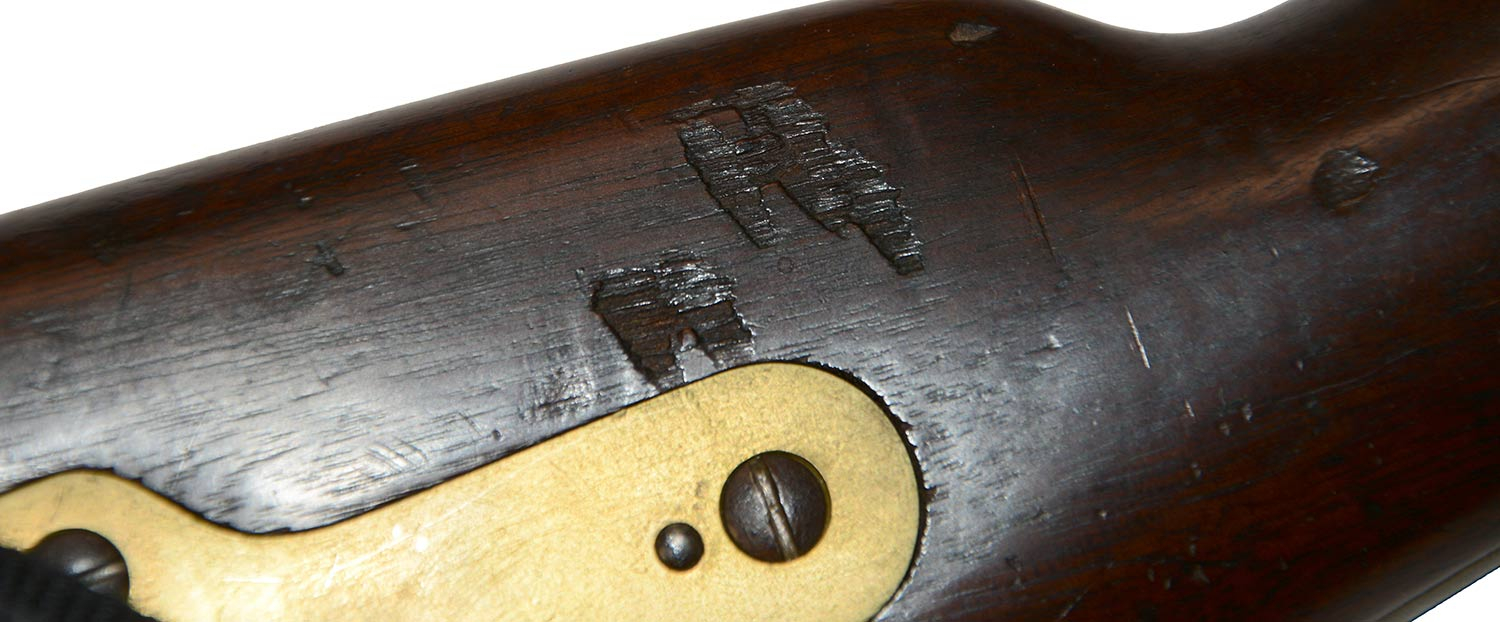
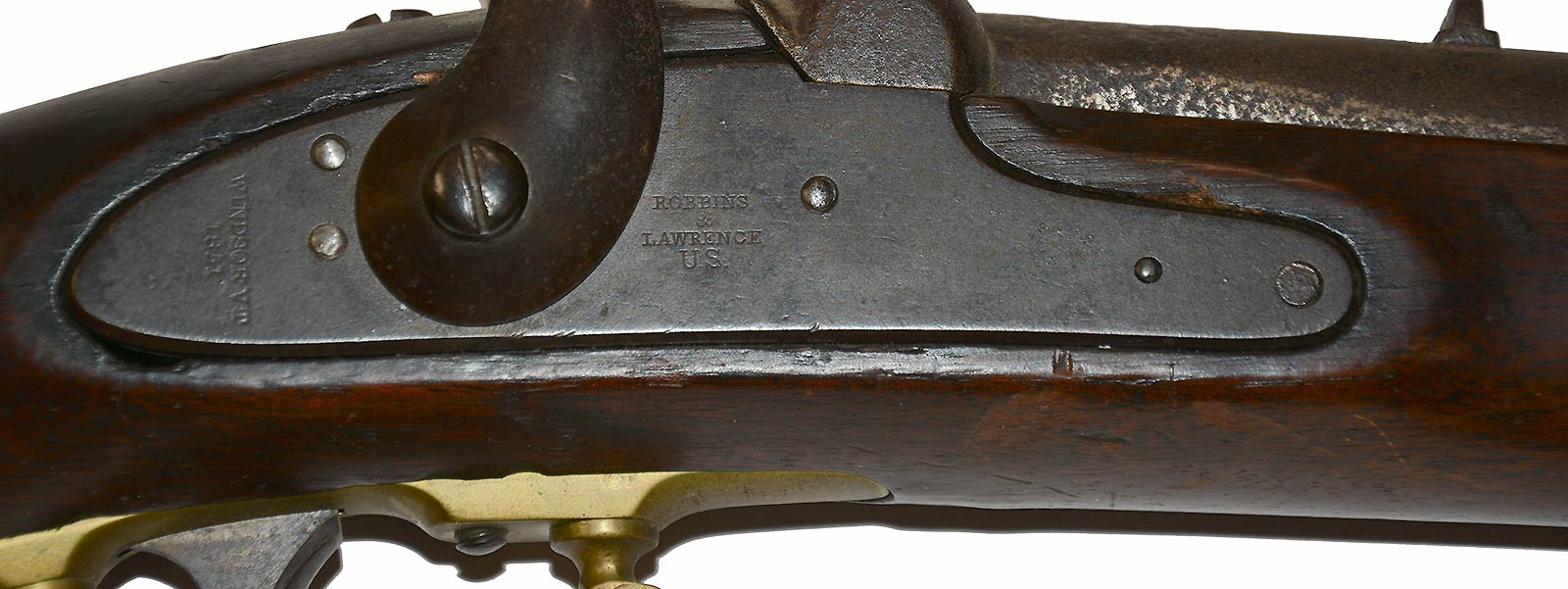
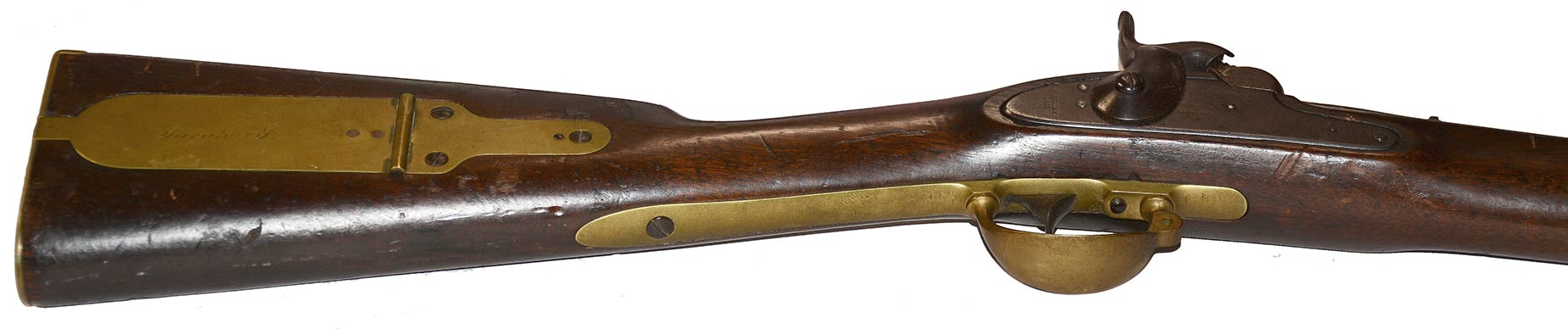
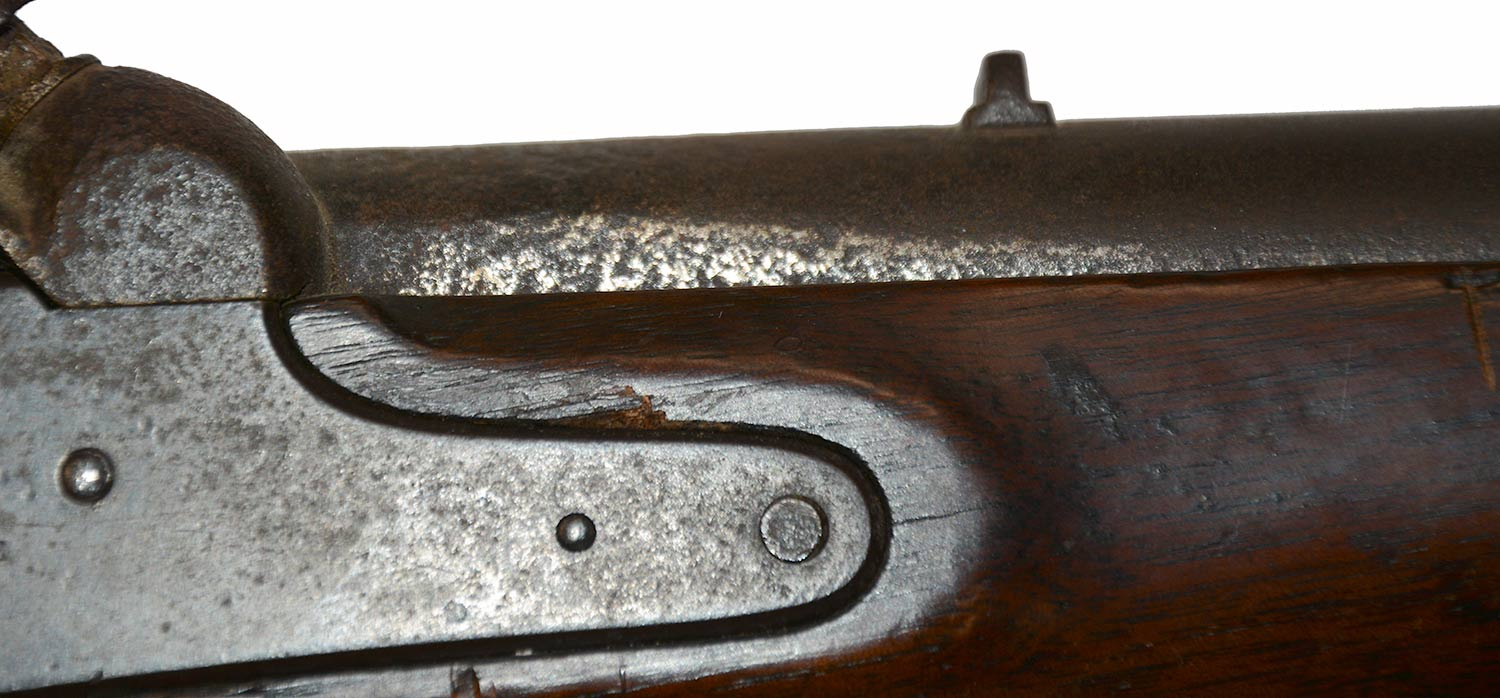
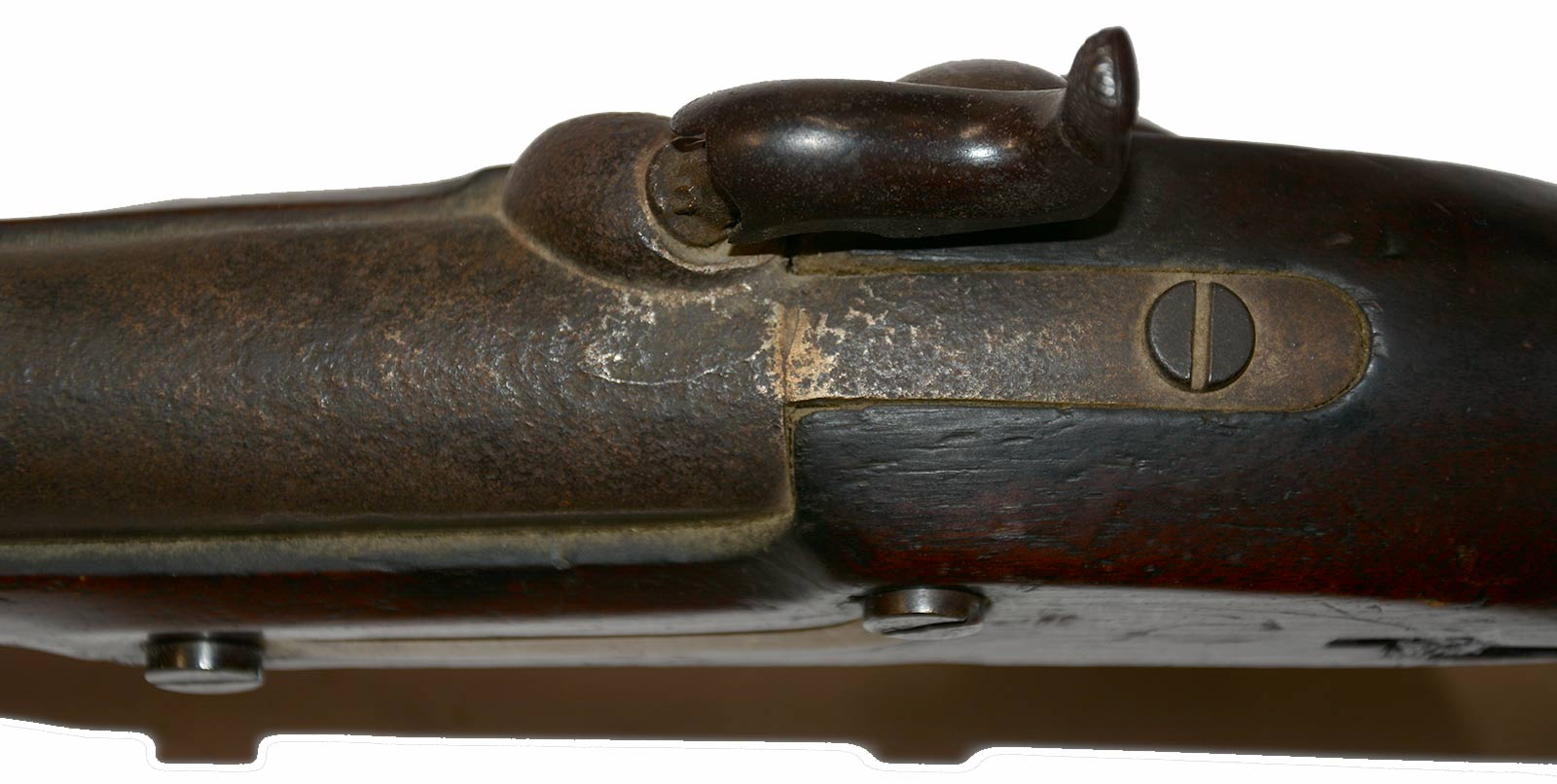
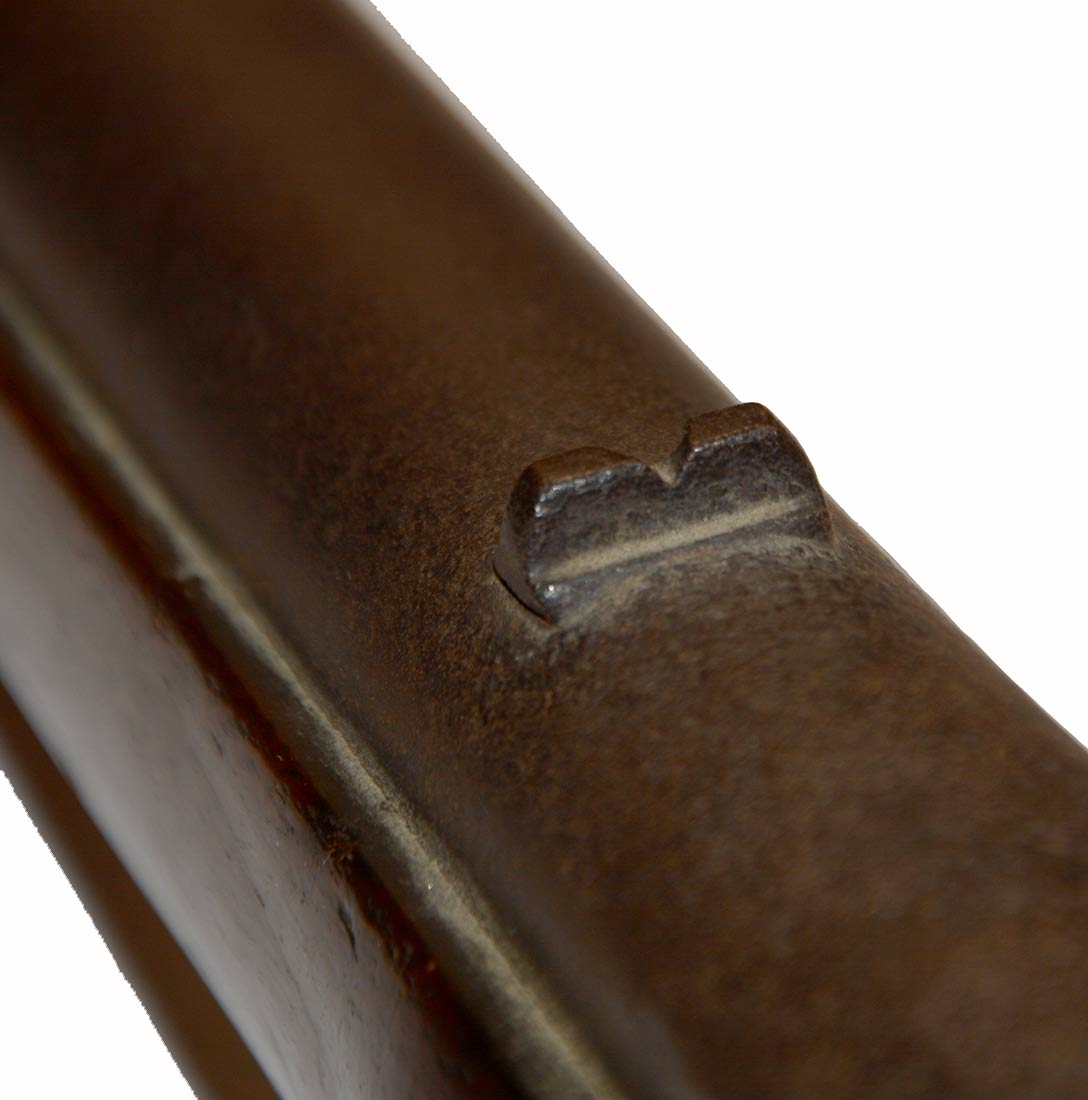
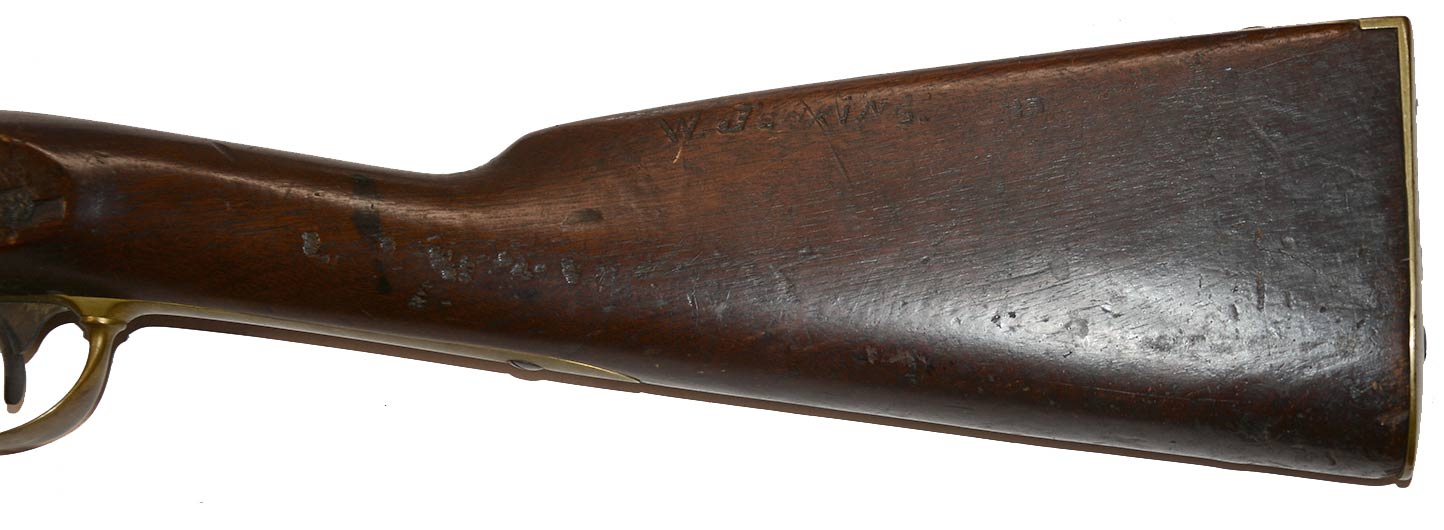
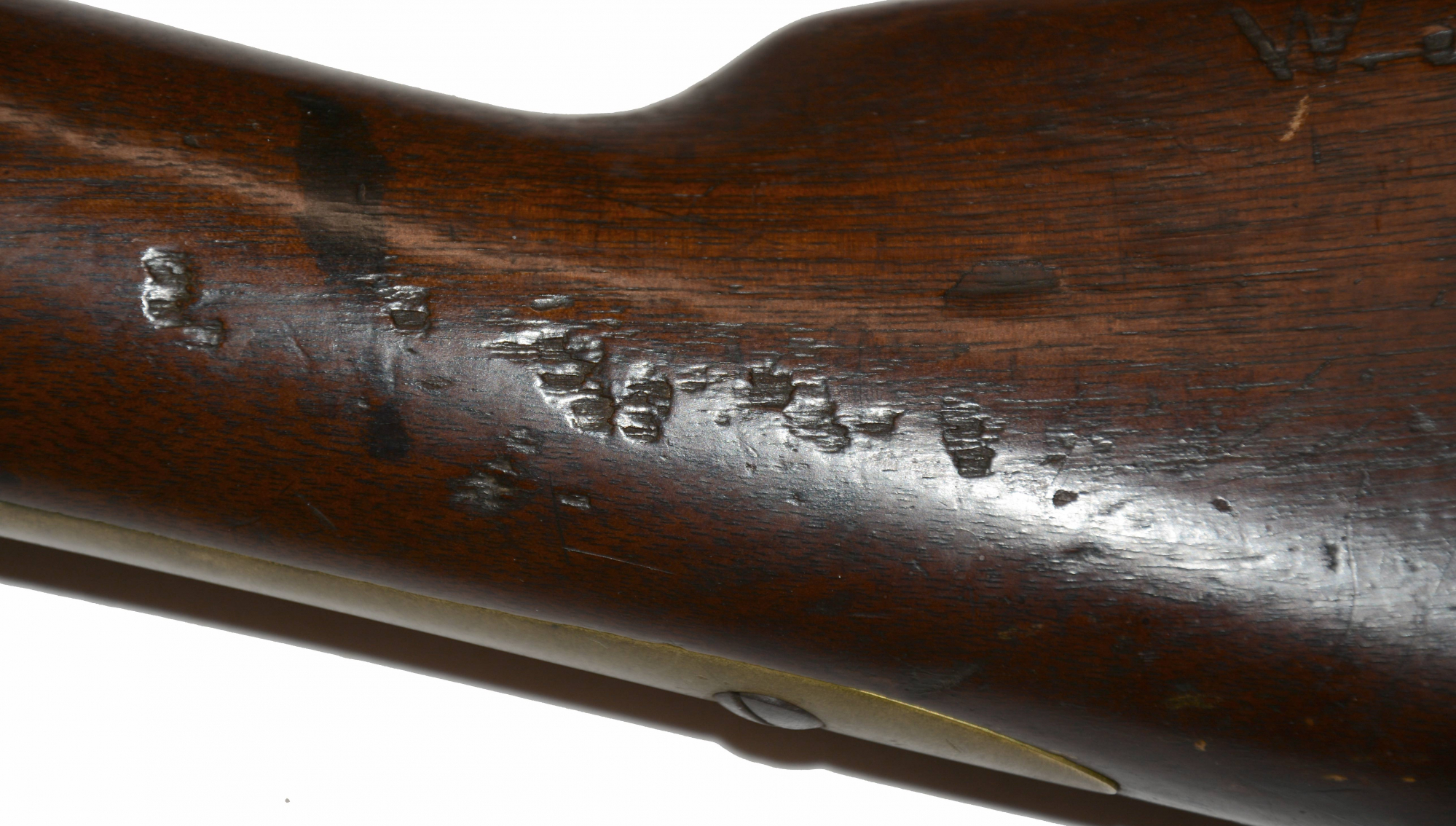
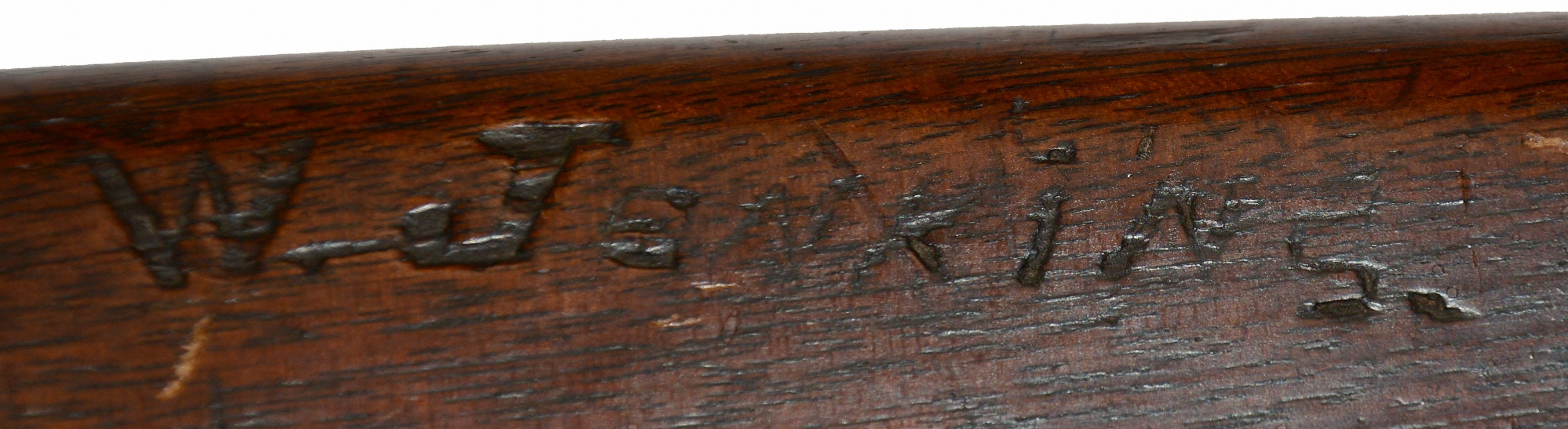
This Mississippi Rifle has characteristic signs of Confederate use that an experienced collector will recognize across the room, like the name carved in the buttstock and the breech pitted from imported British percussion caps. This one was produced by contractors Robbins and Lawrence in 1851 and remains in its original configuration with simple notched rear sight and no provision for a bayonet. With the exception of missing sling swivels, it is complete and all original. It shows typical pitting on the breech and bolster from imported British high-pressure percussion caps and a great bit of soldier’s stock carving reading “W. Jenkins,” who is identified by a previous owner as William Jenkins of the 6th NC, and a nicely engraved patchbox reading “Sarah J.,” who is unidentified, but likely a Jenkins relative.
The US Model 1841 Rifle needs no introduction. Interested parties should consult Moller’s extensive chapter on it, among other sources. Getting their “Mississippi” nickname from Mexican War service with Davis’s Mississippi Regiment, almost 93,000 were produced at the Harpers Ferry Armory and by a number of contractors from 1844 to 1855. They are attractive and effective arms, well-enough liked that many were altered and upgraded to put them on par with the 1855 series of arms by improving their long-range performance with better rear sights for new conical ball ammunition, and their short-range effectiveness with mounts for a bayonet, with some even altered to breechloaders. They were widely used in the Civil War in both upgraded and original configuration.
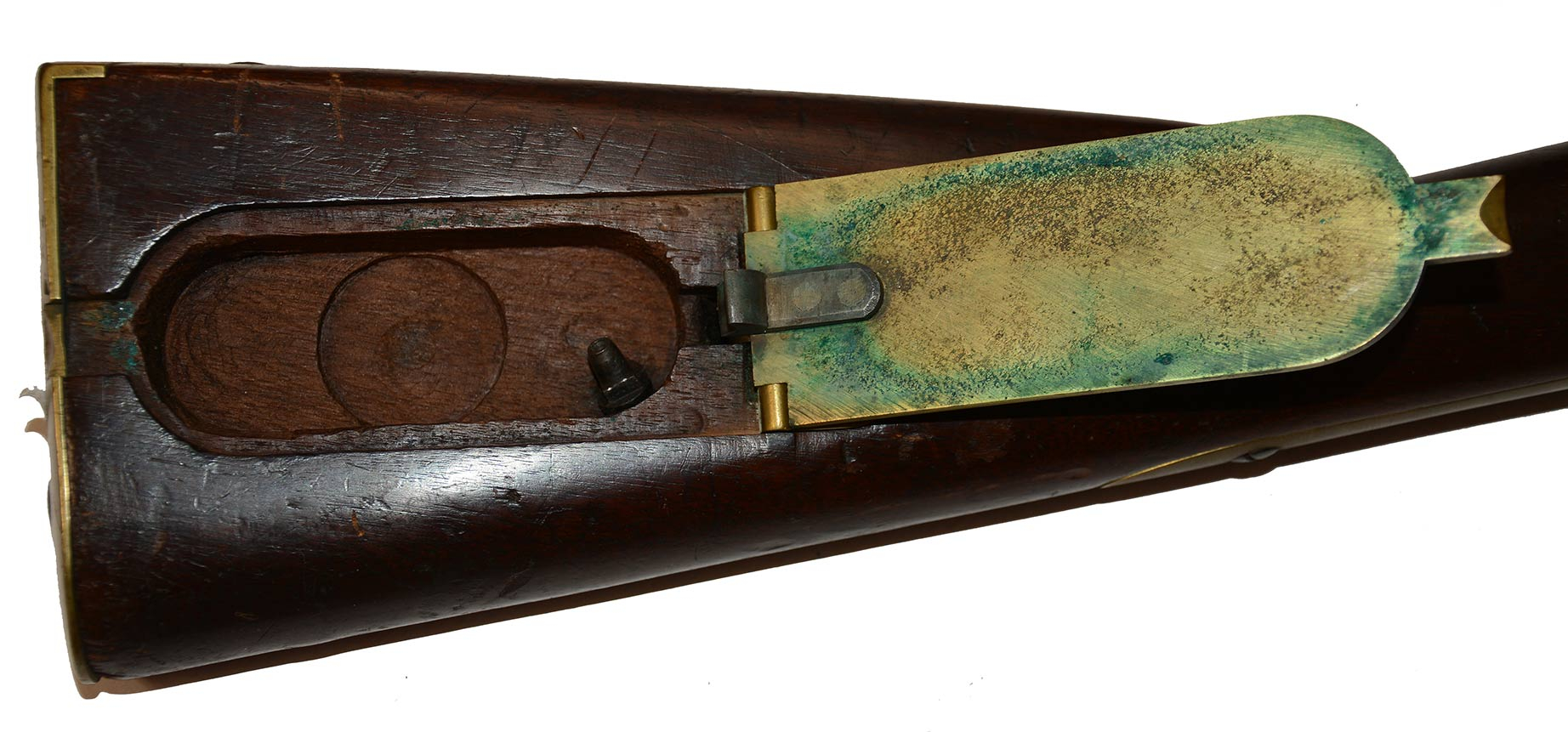
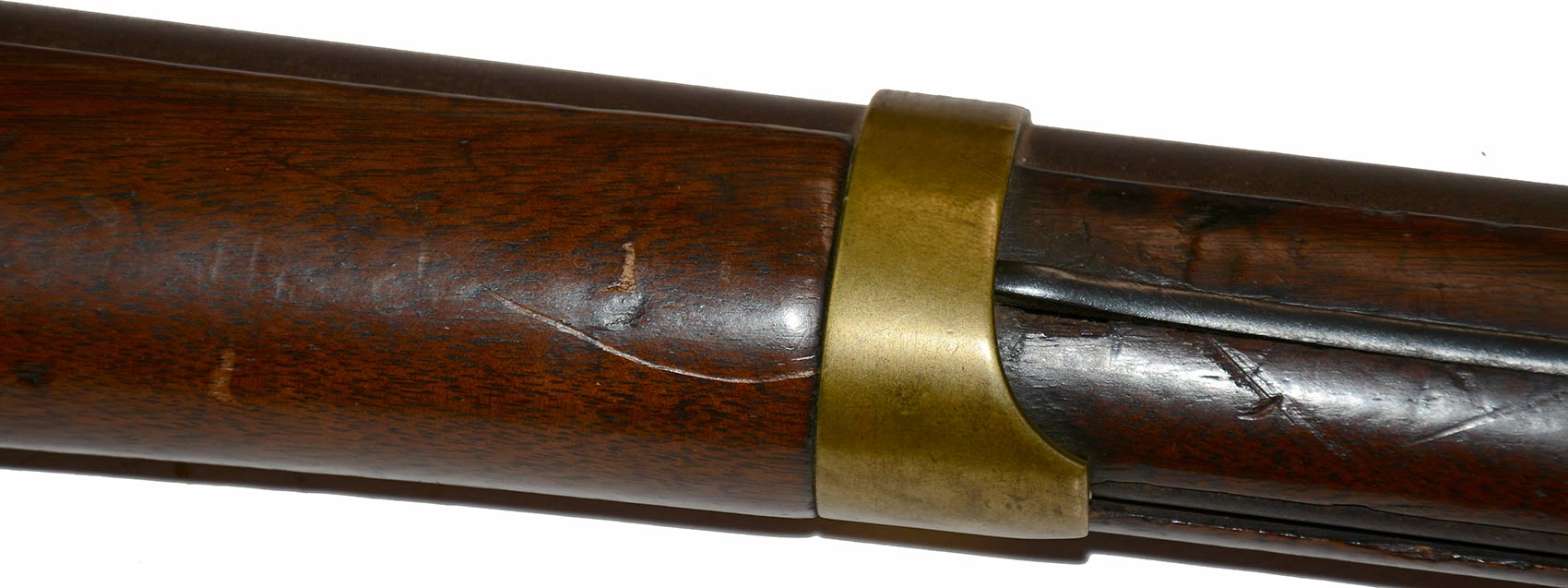
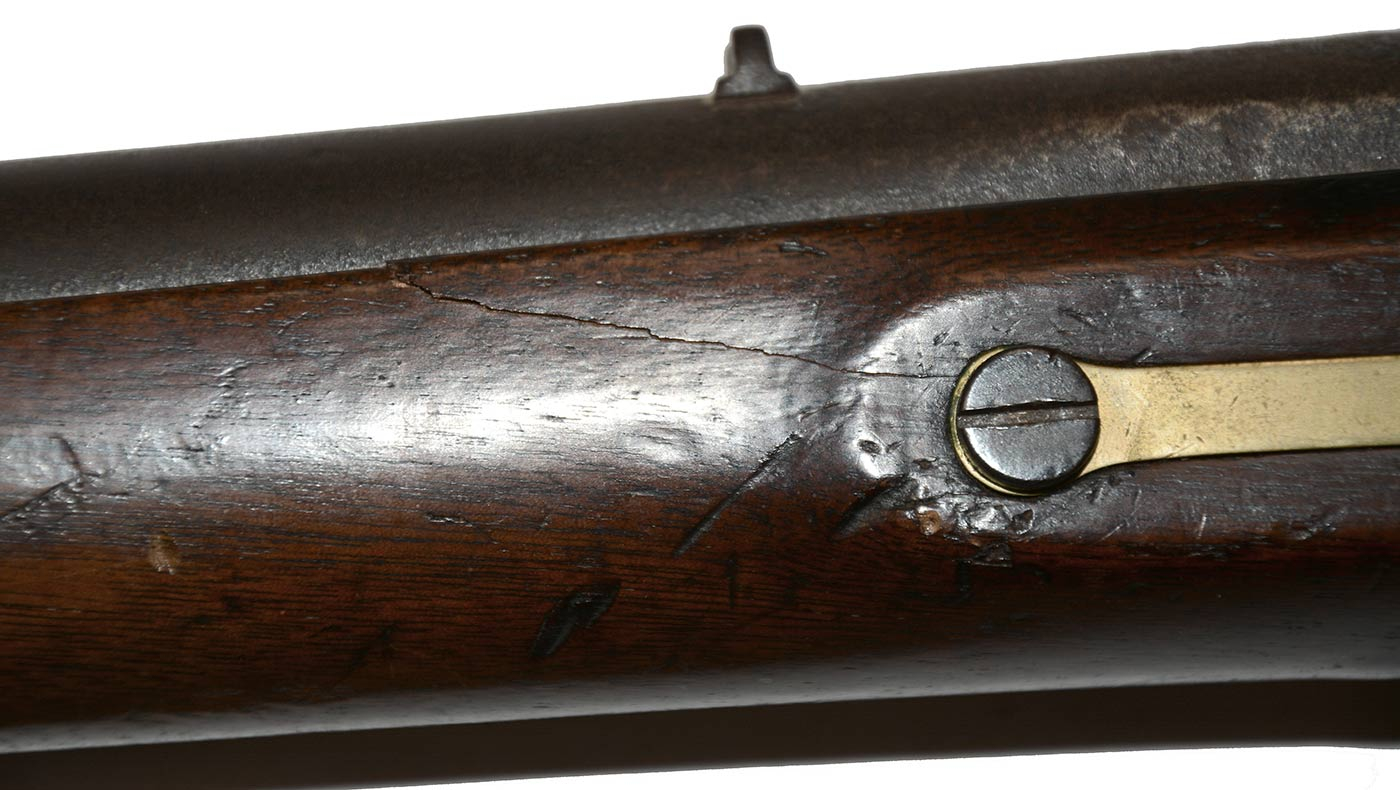
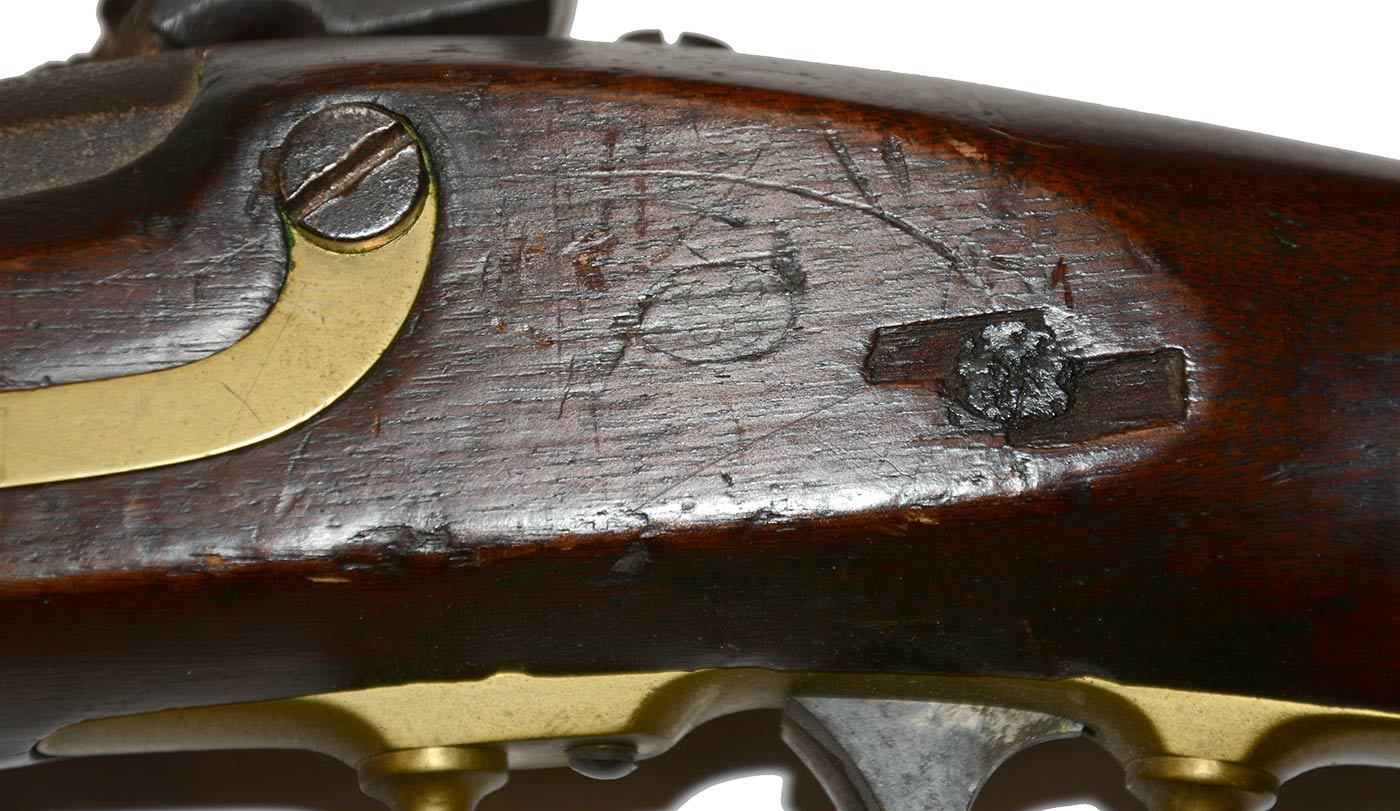
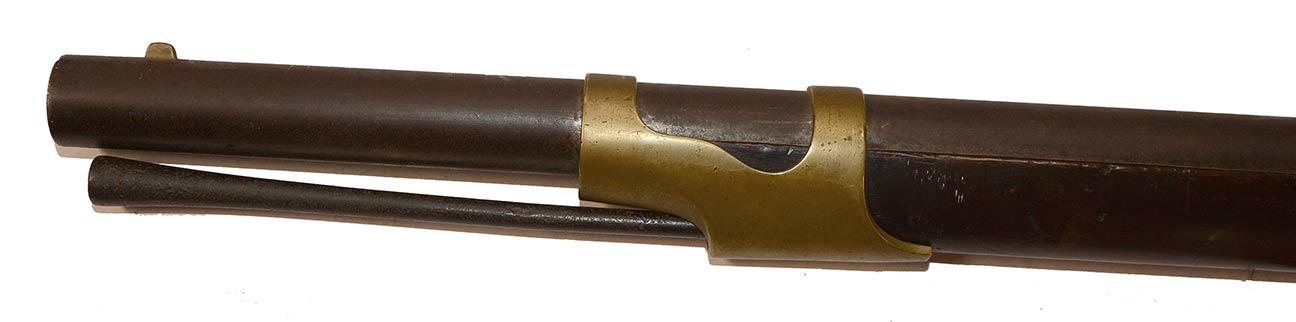
The barrel is full length, with front and rear sight, bands, springs, and rod correct and in place, but lacking the swivels. The lug for the swivel is in place on the triggerguard and missing from the top band. The mechanics are fine. The bore is clean, though dusty, but retains only traces of the rifling. The barrel has a uniform brown color, relatively smooth metal back to the rear sight, and showing pitting from there back over the front of the breechplug tang and the bolster. No markings are visible on the left breech. The nipple shows corrosion, but is not battered down. The pitting and corrosion on the breech are typical of southern used Civil War arms, not from lack of care, but from the use of imported British “high pressure” percussion caps that had recently been introduced to ensure ignition by producing a more intense spark. These were rather too powerful and eventually withdrawn from British use after complaints, but have left their traces in the pitted metal and burnt out wood around the breech of many Confederate arms. The lock and hammer are smooth metal, just a little shallow pitting on the nose of the hammer. They show some faded mottled blue, gray and brown from case hardening and the lock plate is clearly marked at rear “WINDSOR VT / 1851” and “ROBBINS/&/LAWRENCE/ U.S.” forward of the hammer. The lock, buttplate and patchbox screws are good, the latter showing muted blue. The brass has an even, mellow patina. The patchbox door is engraved in script, “Sarah J.”
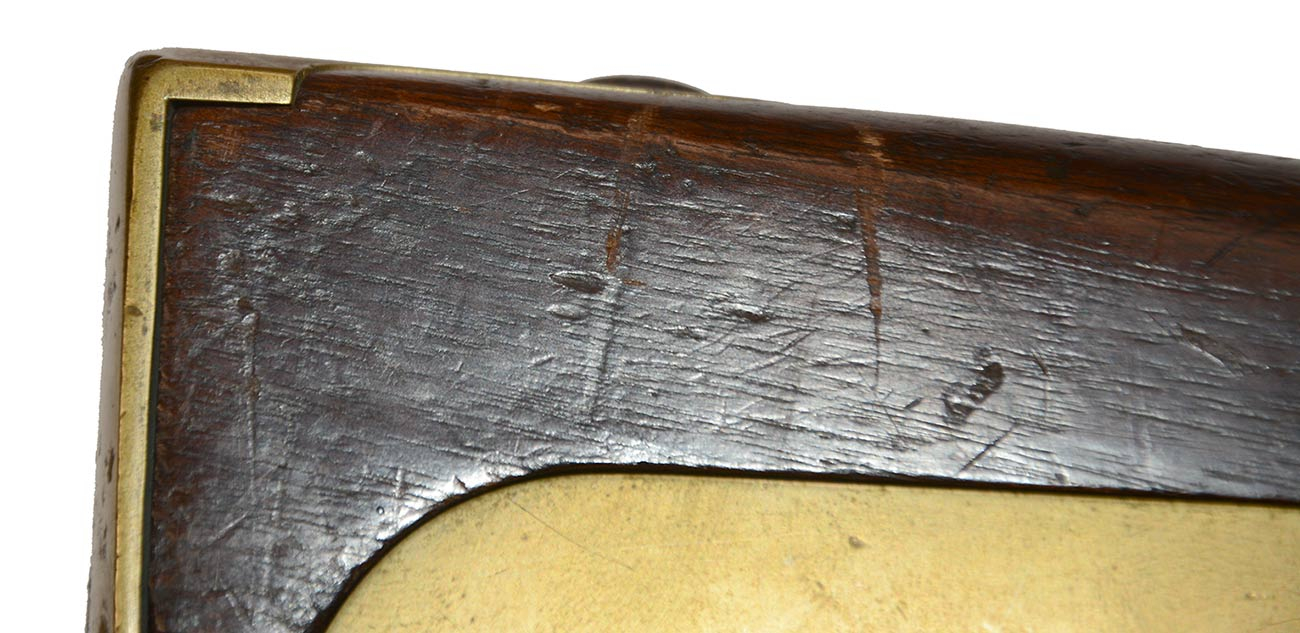
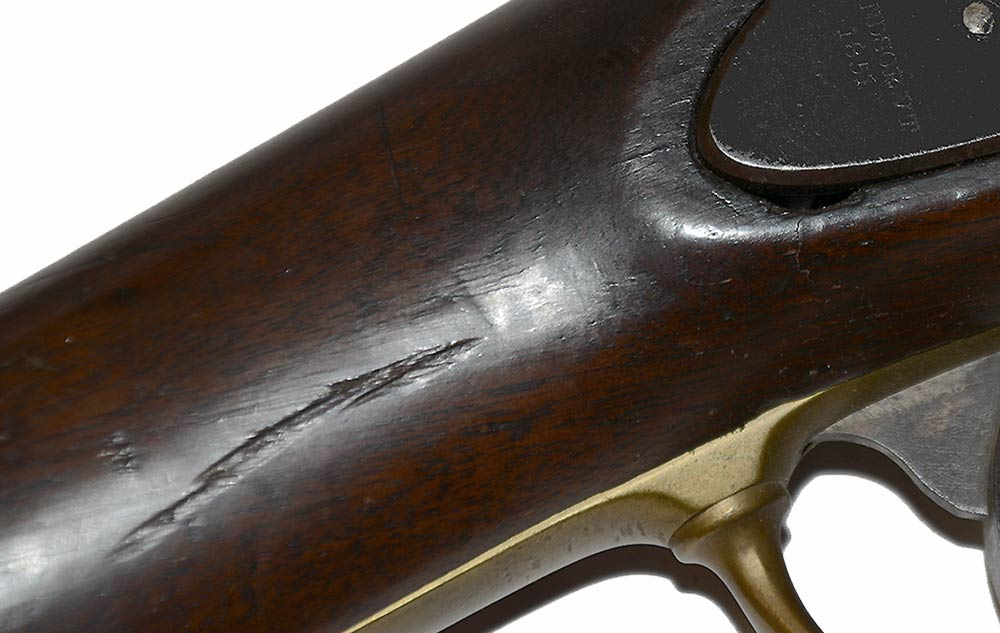
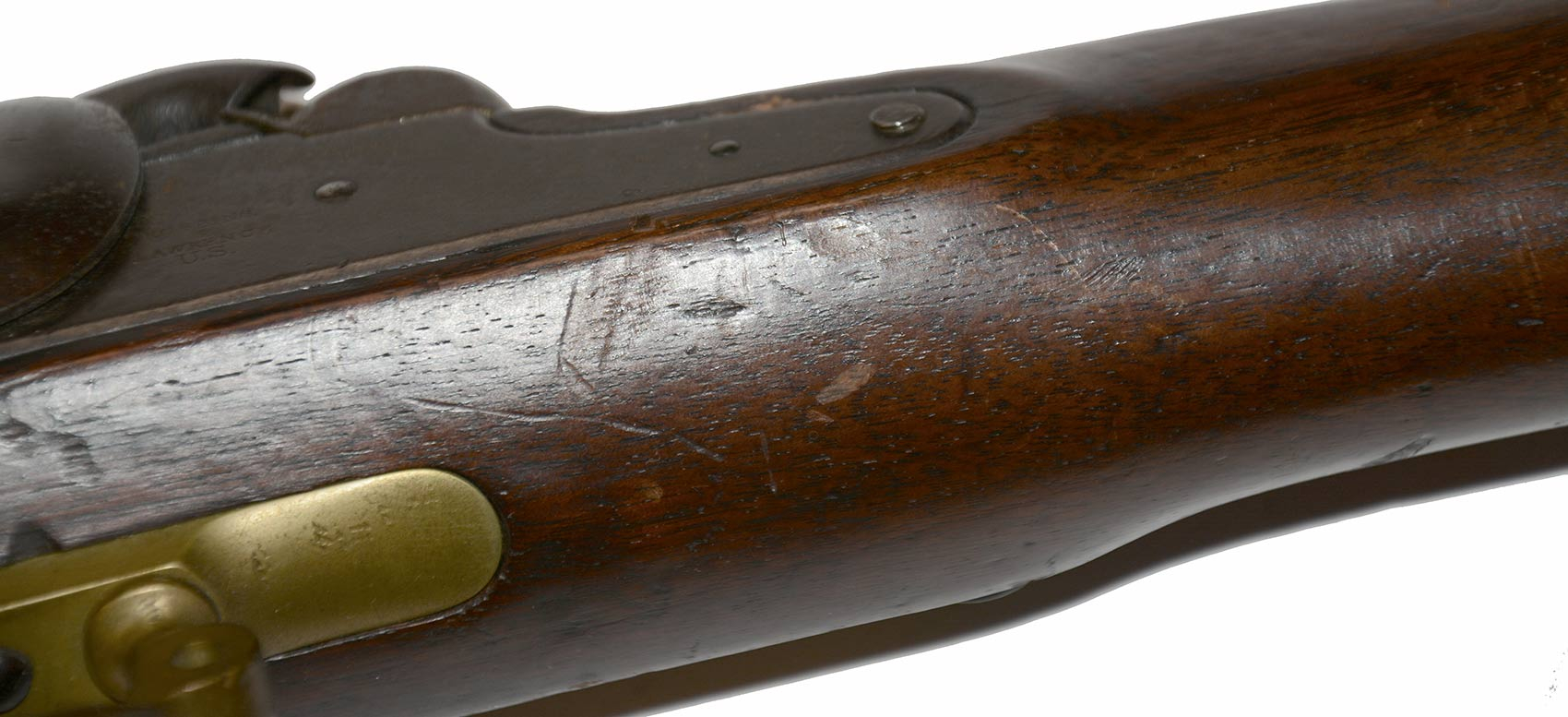
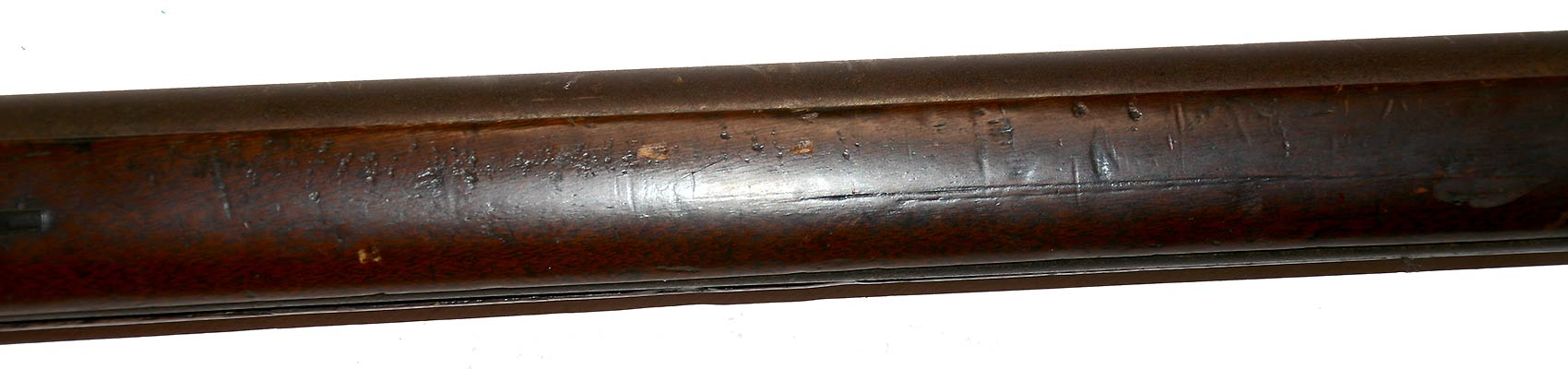
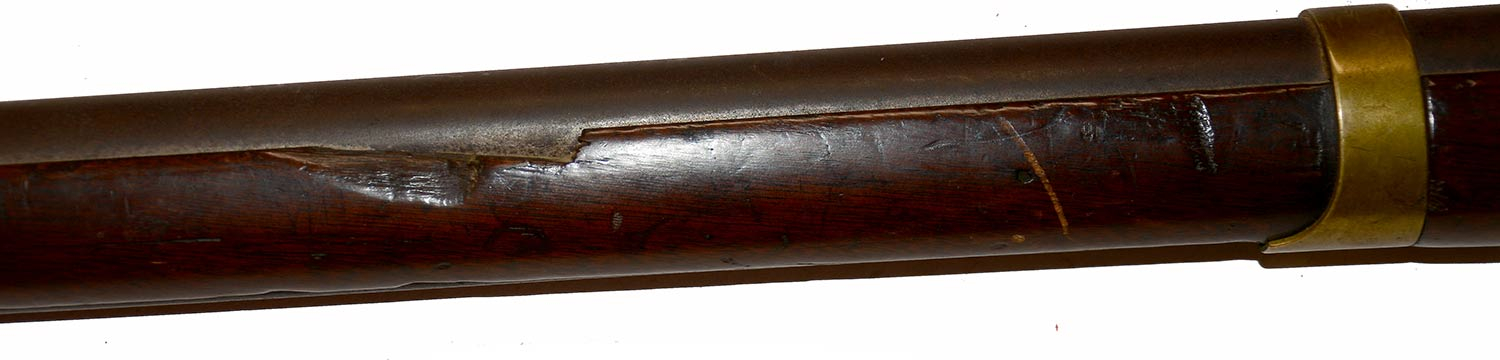
The wood to metal fit is tight. The wood has a nice, deep brown color. The right side of the forestock is good, with some minor dings. The lock apron is good at the front, with slight rounding at the rear and a small chip out along the bottom rear of the lock plate, but not affecting the apron edge. There are minor scratches on the right wrist and buttstock with two fingerprint-size abrasions above the tip of the patchbox. The ramrod channel has some minor chips and wear along the edges. The belly of the stock has minor dings. The left side of forestock has two adjoining chunks out along the barrel channel midway between the bands: old damage, judging from the color. The counterpane shows some rounding of the forward edges from handling, some scratches, and a shallow chip at lower rear with what looks like a small wood plug, but has the visible outline of an oval inspector’s cartouche. The left butt stock has some dings and pressure dents along the lower wrist. “W. JENKINS” is clearly carved along the upper left buttstock in large and small block letters.
William Jenkins of the 6th NC was William Alexander Jenkins (4/30/33 – 4/3/1919,) a tenant farmer in Wake County, NC, when he enlisted 5/28/1861 as a private in Company I (the “Cedar Fork Rifles”) of the 6th NC State Troops. He is noted as on detached service by order of Col. Fisher from June 15, 1861, but is present in the company again by August and makes Corporal March 19, 1862. He was captured in the Antietam Campaign at the Battle of South Mountain on Sept. 14 and paroled. He seems to have been exchanged not long after and made Sergeant Dec. 1, 1862, but became sick and spent almost two years in Richmond and Danville hospitals, with at least one brief leave to visit his mother, and was returned to duty in November 1864 and is listed again in April 1865 as paroled at Appomattox. He returned to farming and married after the war, raising several children, though we see no Sarah in the immediate family.
During his time with the regiment they fought at First Manassas, losing 23 killed, including Col. Fisher, and 50 wounded. In the Peninsula Campaign they fought at Seven Pines and suffered 115 casualties in the Seven Days Battles. They suffered another 147 casualties at Second Manassas and were present, though not heavily engaged, at South Mountain where Jenkins was captured, likely a bit of good luck since the regiment suffered heavily, with yet another 125 casualties, at Antietam just days later. Jenkins’ return to the ranks in November 1864 corresponds to the regiment’s return to the Richmond front from the Shenandoah, and in time for service at Hatcher’s Run, Ft. Stedman, Sailor’s Creek, Farmville, and at Appomattox, where just 181 officers and men remained in the ranks to surrender.
Robbins and Lawrence of Windsor, VT, were successors to the firm of Robbins, Kendall and Lawrence, which successfully executed a US February 1845 contract for 10,000 Model 1841 rifles, with deliveries from 1847 through 1849. Kendall sold his interest in 1847, and the two remaining partners undertook a second contract in January 1848, delivering 15,000 more M1841 rifles from 1848 through 1852. They delivered 5,600 rifles in calendar year 1851. Mississippi rifles went to southern states under the militia act, rather suspicious transfers to southern U.S. arsenals just before the war and, needless to say, by capture. This has a good look and wear fully appropriate to some active use during the war. [sr] [ph:L]
DISCLAIMER: All firearms are sold as collector's items only - we do not accept responsibility as to the shooting safety or reliability of any antique firearm. All firearms are described as accurately as possible, given the restraints of a catalog listing length. We want satisfied customers & often "under" describe the weapons. Any city or state regulations regarding owning antique firearms are the responsibility of the purchaser. All firearms are "mechanically perfect" unless noted, but again, are NOT warranted as safe to fire.
~~~~~~~~~~~~~~~~~~~~~~~~~~~~~~~~~~~
THIS ITEM, AS WITH ALL OTHER ITEMS AVAILABLE ON OUR WEB SITE,
MAY BE PURCHASED THROUGH OUR LAYAWAY PROGRAM.
CLICK HERE FOR OUR POLICIES AND TERMS.
THANK YOU
Inquire About IDENTIFIED ROBBINS AND LAWRENCE M1841 “MISSISSIPPI” RIFLE: W. JENKINS CO. I, 6th NORTH CAROLINA
Most Popular
Historical Firearms Stolen From The National Civil War Museum In Harrisburg, Pa »
Theft From Gravesite Of Gen. John Reynolds »
Selection Of Unframed Prints By Don Troiani »
Fine Condition Brass Infantry Bugle Insignia »
featured item
RARE 1/6 PLATE AMBROTYPE – LT. JOHN WHITEHEAD, 53rd VA, WIA AND CAPTURED DURING PICKETT’S CHARGE – EX-COCO COLLECTION
The 53rd Virginia Infantry Regiment participated in the Battle of Gettysburg as part of General Armistead's Brigade and played a famous role in Pickett's Charge on July 3, 1863, with some men advancing to the stone wall along the Angle before being… (1300-74). Learn More »
site search