

site search
online catalog
CONFEDERATE GENERAL THOMAS LANIER CLINGMAN: GENERAL’S SWORD BELT, REVOLVER, CS OFFICER’S PLATE, TACTICS BOOKS: EX-TEXAS CIVIL WAR MUSEUM
Hover to zoom
$6,500.00 SOLD
Quantity Available: None
Item Code: 1268-055
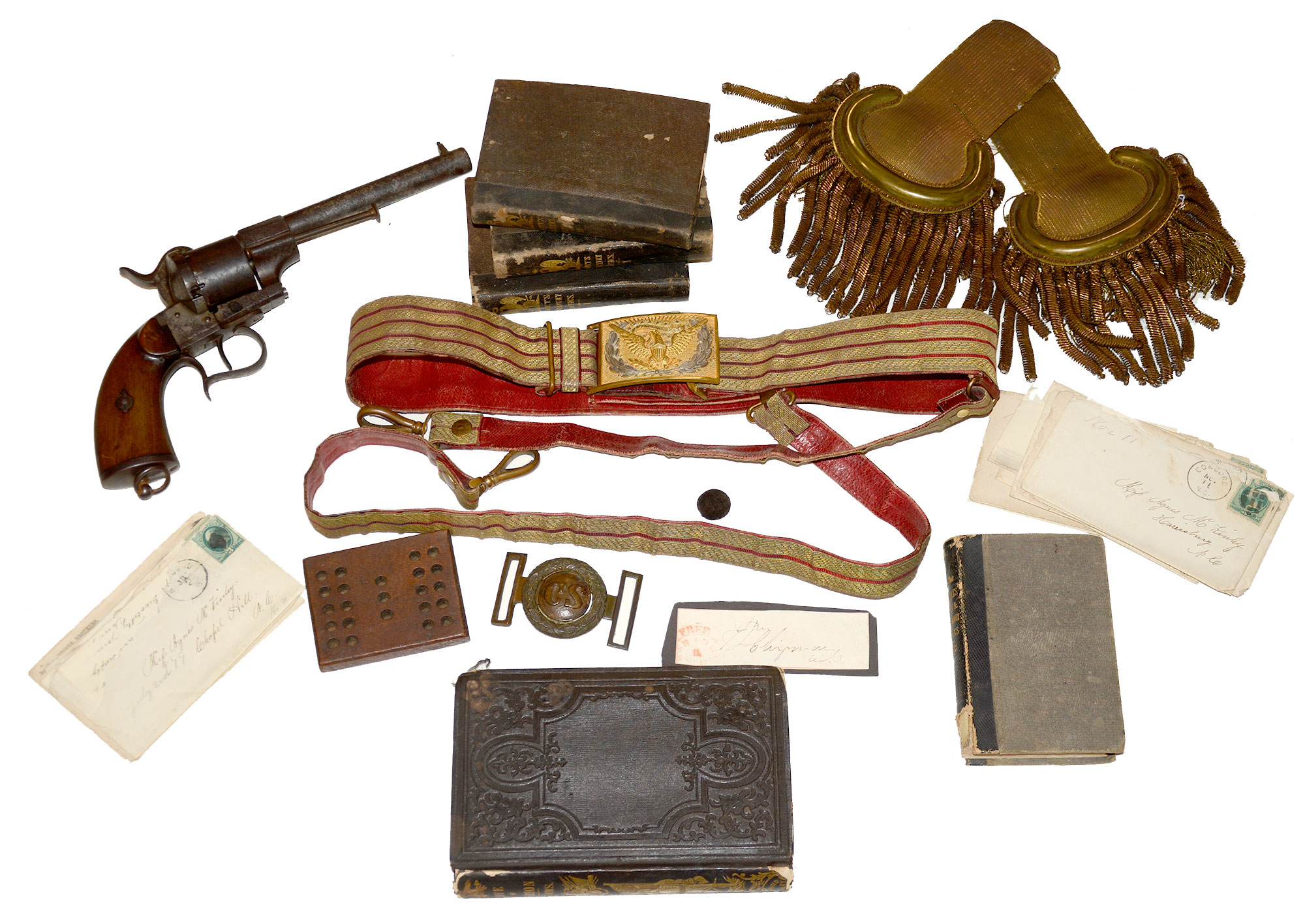
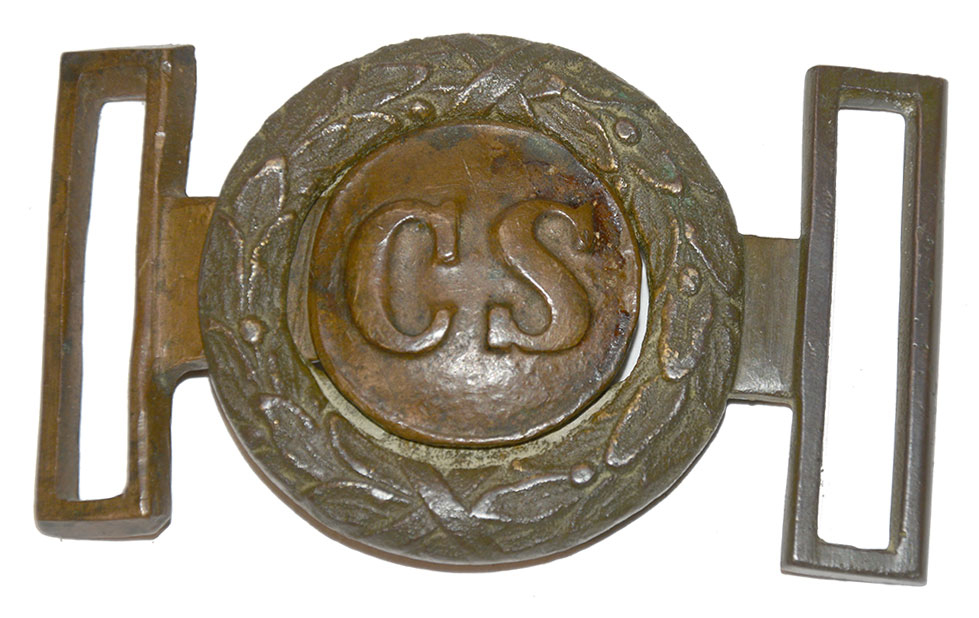
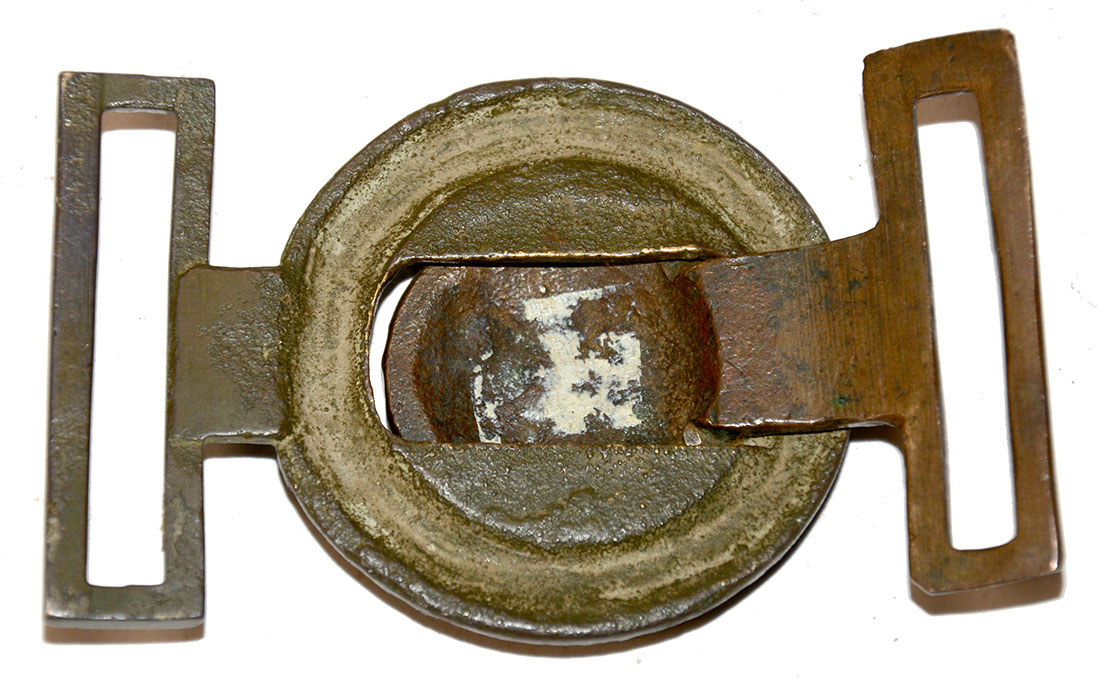
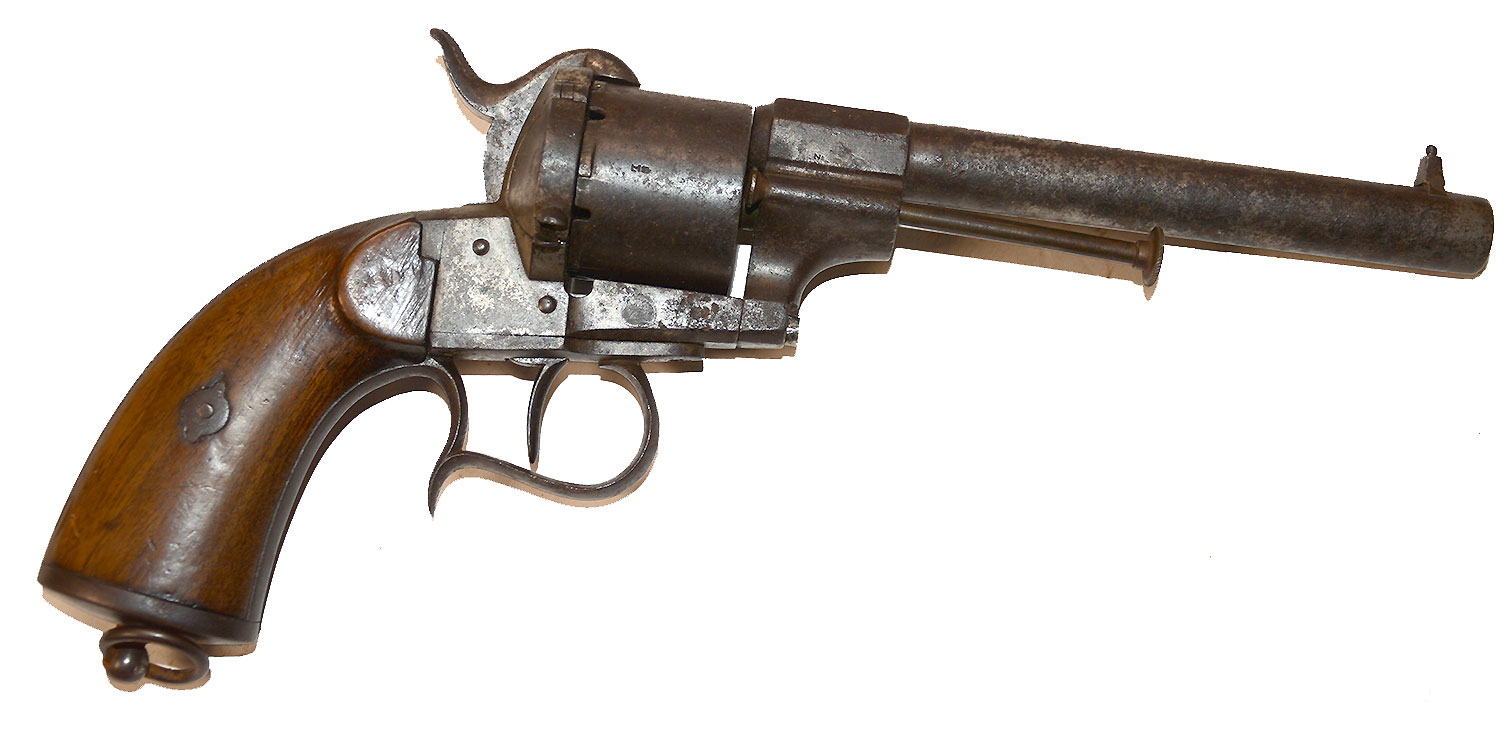
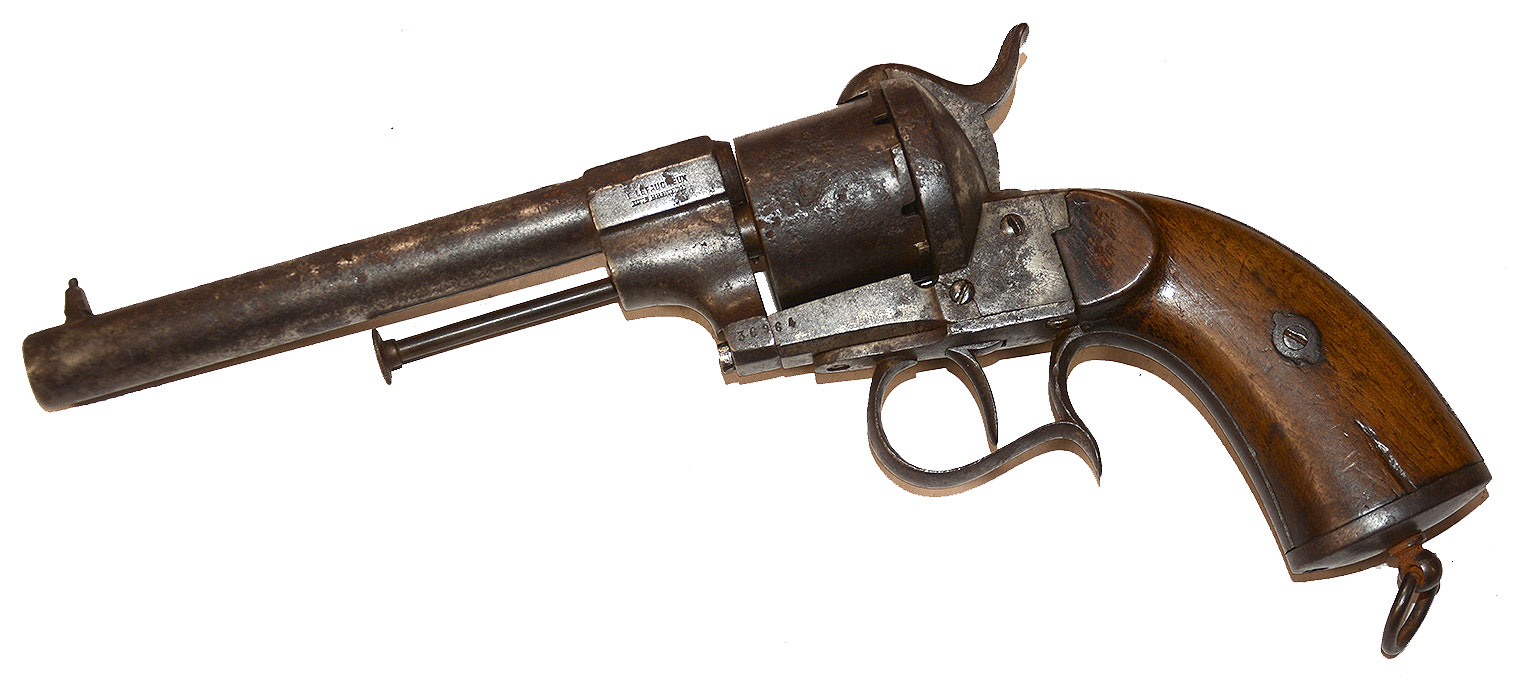
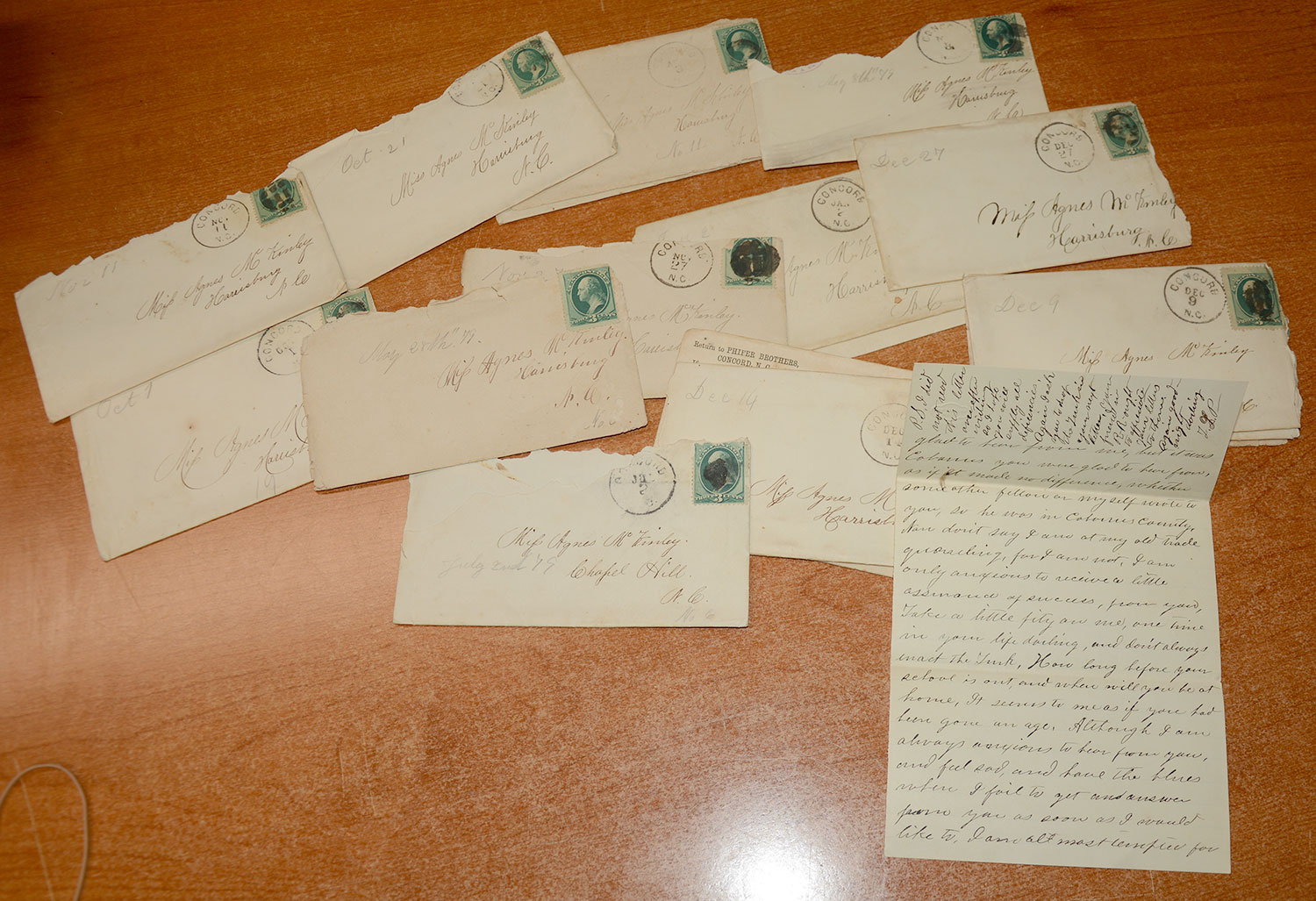
This grouping of material belonging to Confederate General Thomas Lanier Clingman (1812-1897) comes from the collections of the Texas Civil War Museum and includes a group of 17 postal covers, and part of a letter, from the General’s nephew, Thomas Lanier Puryear (1849-1928.) These were addressed to his future wife, Agnes McKinley of Chapel Hill, NC, and the letter is signed “Your Tom” and also “TLP.” They married in 1880 and had least one child, a daughter, who passed away in 1961. This rather indicates the material passed down in that branch of the family. Among other material, the group includes 5 books from General Clingman’s library, including 4 tactics manuals, all with his personal ink stamp in them, his two-piece interlocking CS officer’s sword belt plate, a General Officer’s sword belt, and his Lefaucheux pinfire revolver.
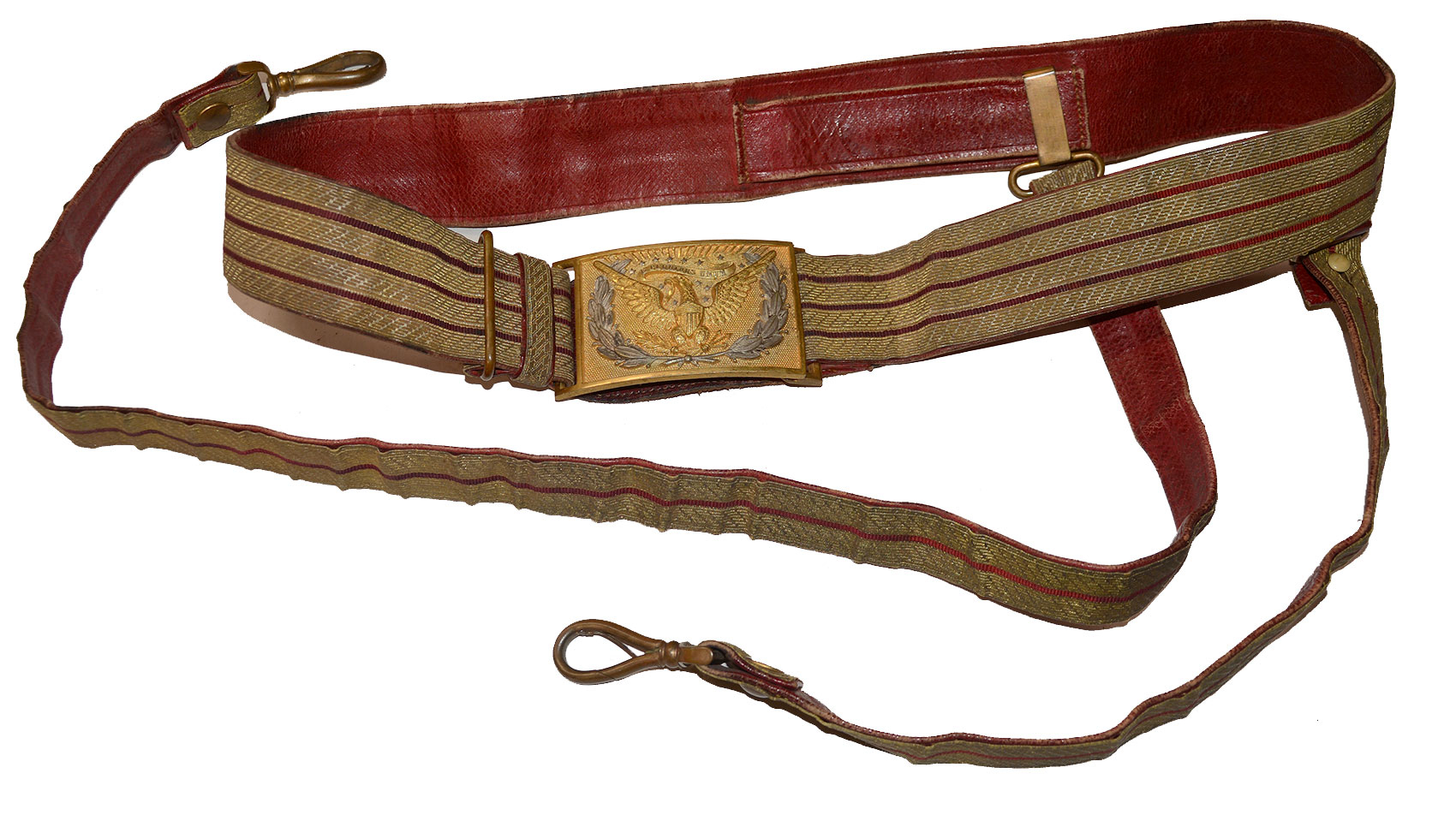
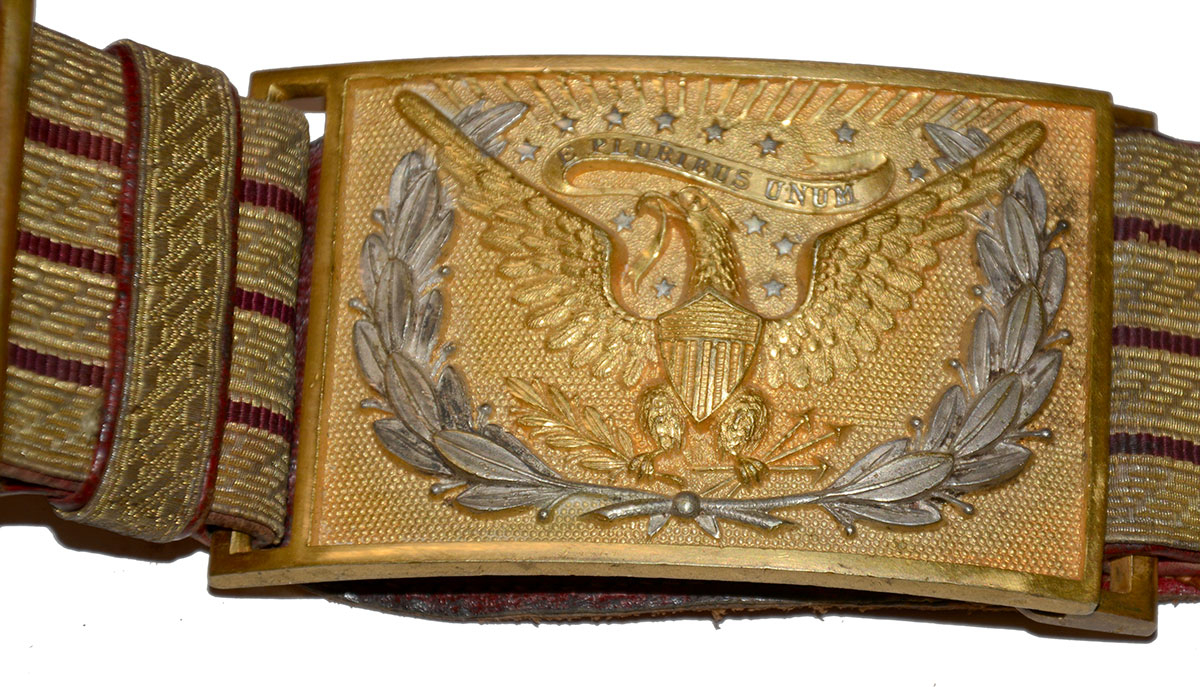
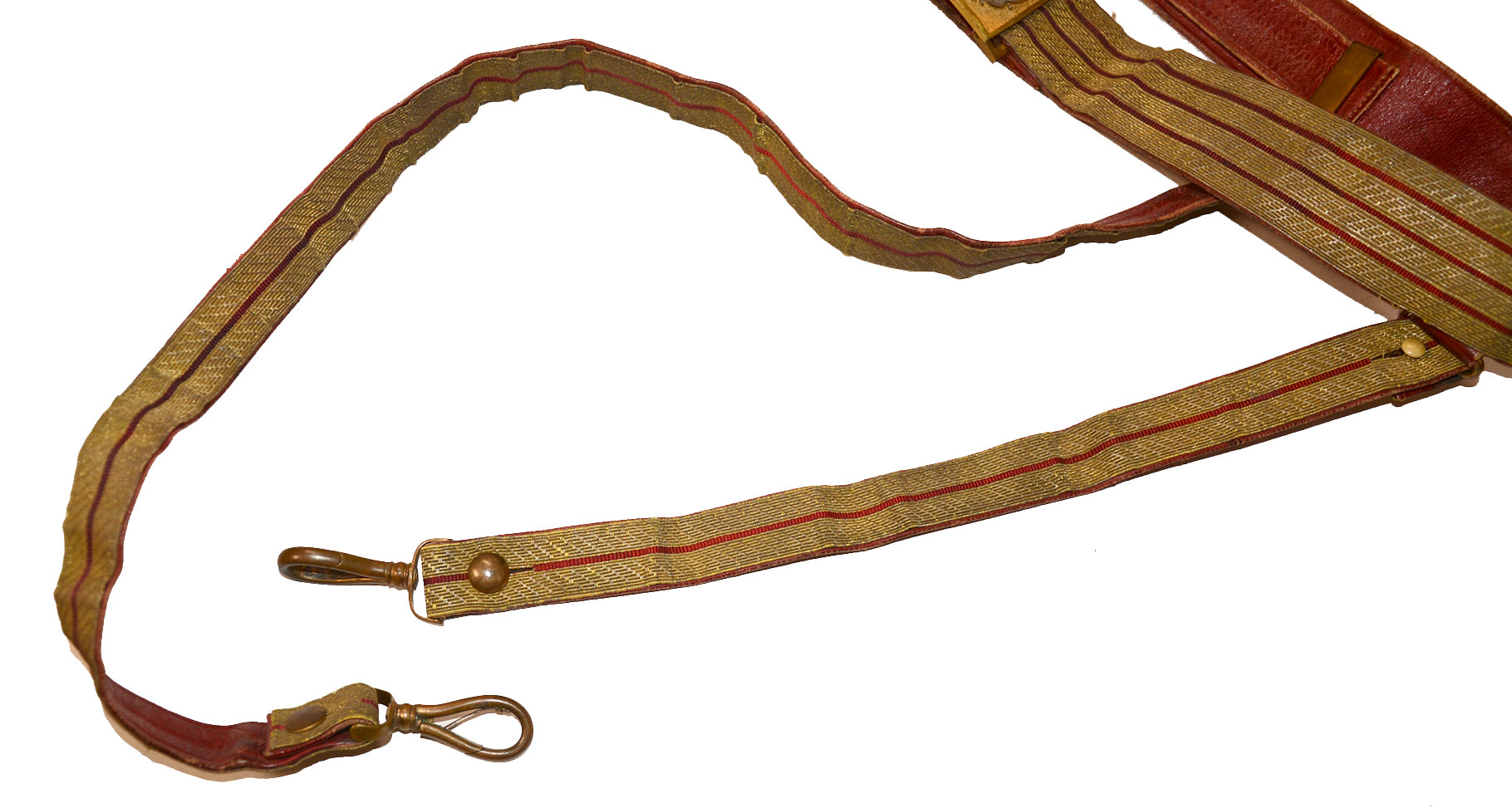
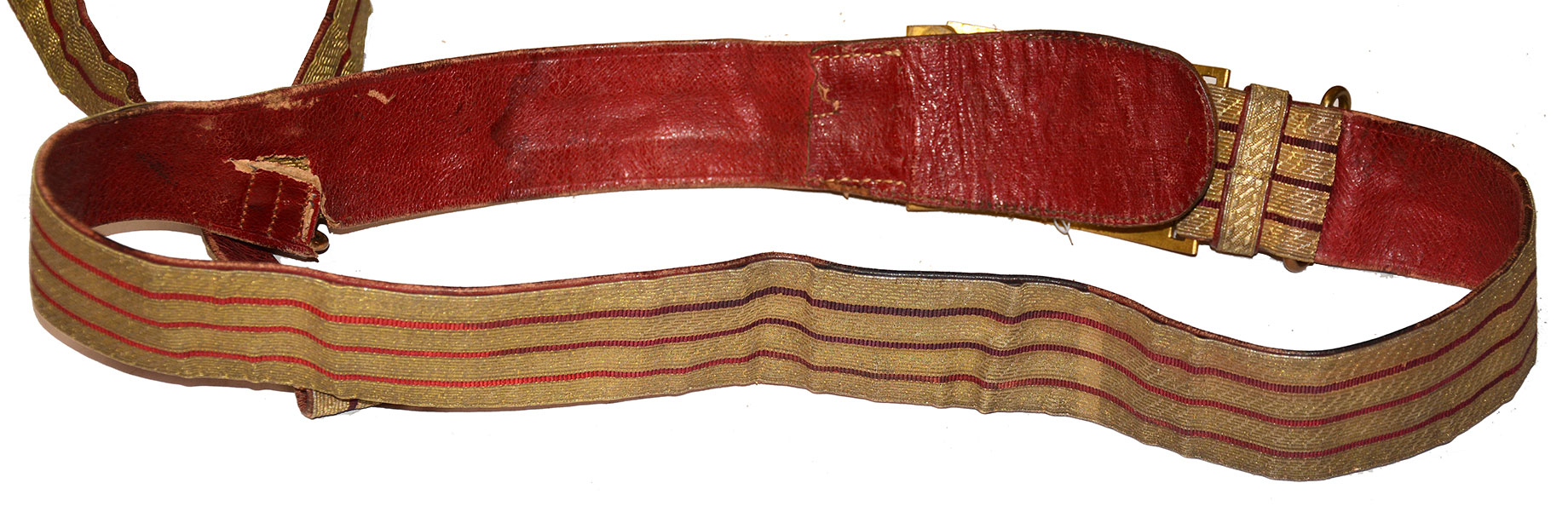
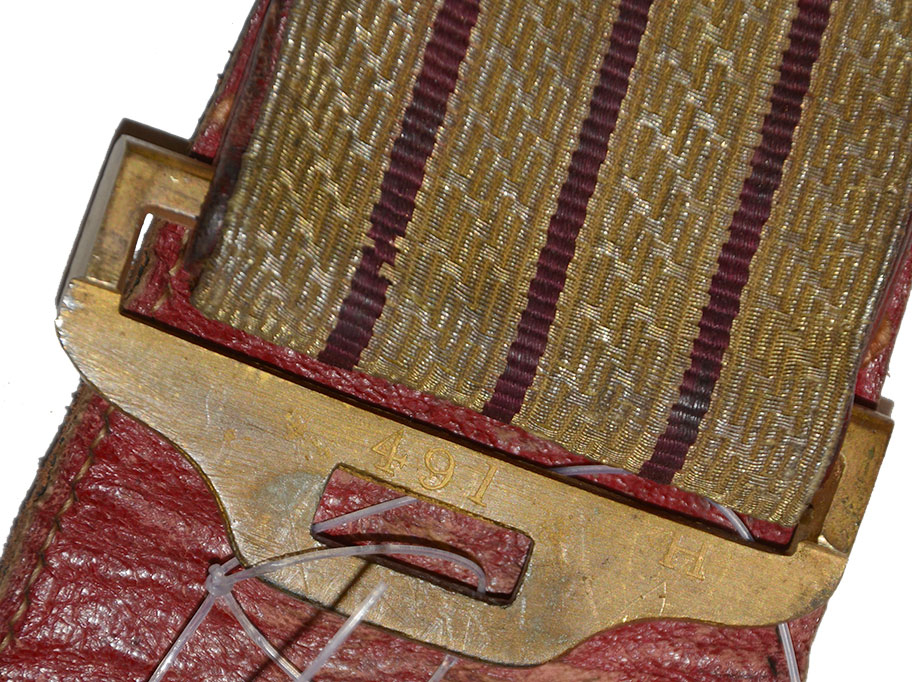
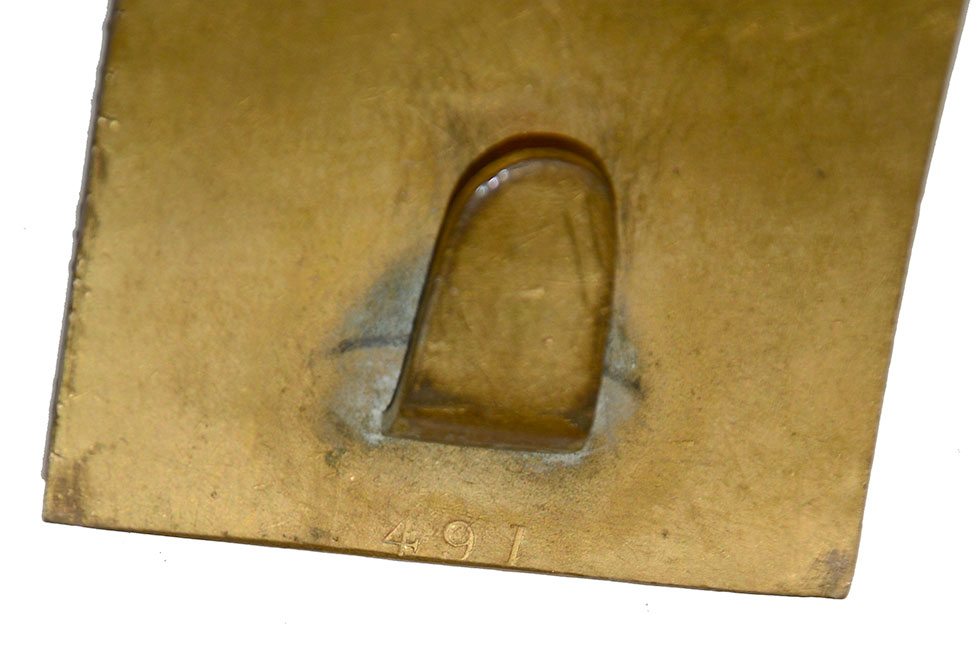
Clingman’s General Officer’s swordbelt is in excellent condition. The belt uses a high-grade US M1851 officer’s sword belt plate, something not unexampled in photos of Confederate officers, and follows US regulations in the use of red leather (described as ”Russia leather” in regulations,) and gold bullion embroidery, but is clearly a non-regulation state or militia piece, employing four rows of gold embroidery rather than three and uses applied gold bullion lace rather than embroidering directly in the leather body. Two narrow rows of gold bullion lace are also applied to the exterior the sword slings and single row to the tightening loop on the belt. The belt plate is a M1851 US eagle officer’s sword belt plate with very strong gilt finish remaining to the body of the plate and silver wash to the wreath. Slings are full length and solid, with snap hooks in place. The forward sling is fixed in place, sewn to the lower inside of the belt and partially detached. The rear sling is attached to a sliding brass belt loop sewn to a flat loop the inside of the back of the belt. One small gilt brass double-headed stud securing the top fold of that sling over a sliding belt loop is missing. The color overall is excellent.
His two-piece interlocking CS officer’s sword belt plate is in excellent condition, with an untouched mellow patina and no bends, cracks or breaks. It may date to his earliest Confederate military appointments, as an aide to Johnston at First Bull Run in July 1861, and election to Colonel of the 25th NC in August 1861, but just as well have been used on a belt intended for field service, rather than the full dress belt of a general, at any point in his military career.
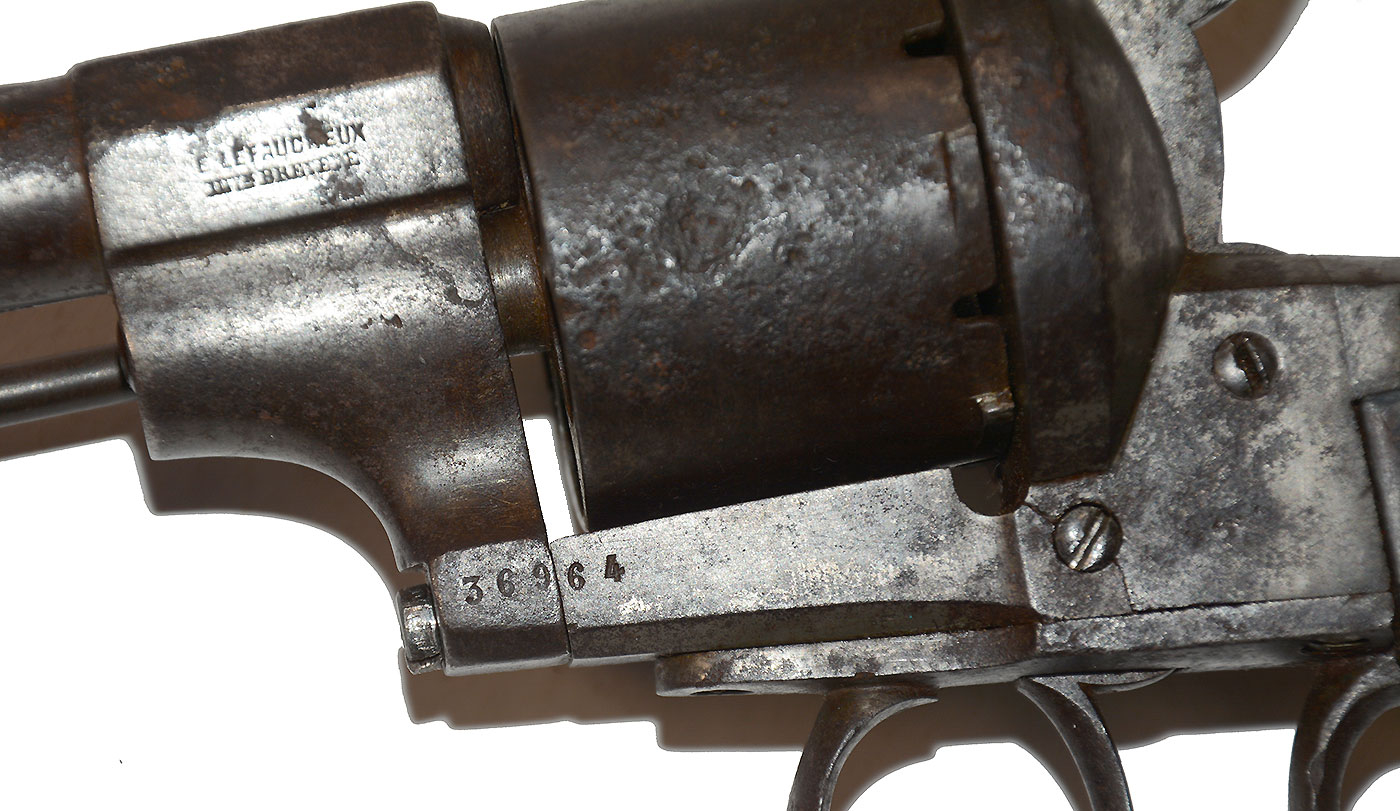
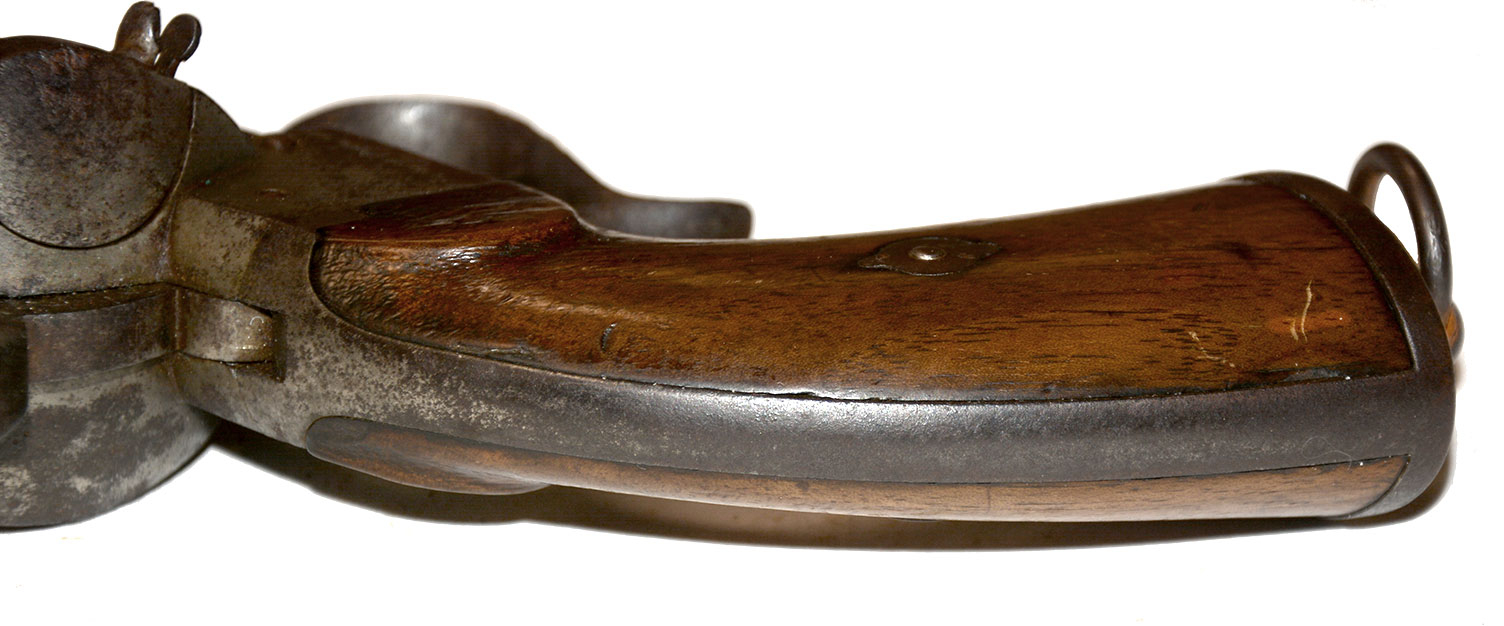
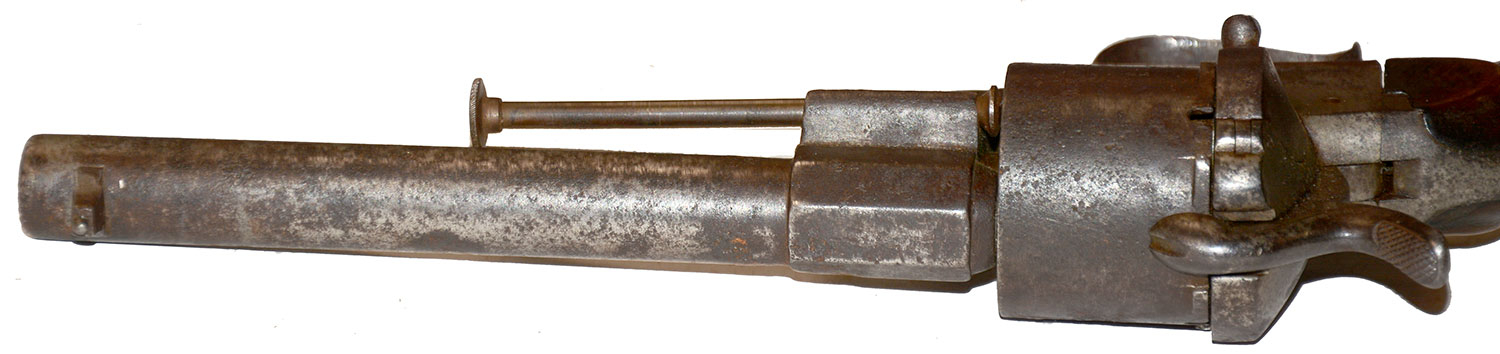
His Lefaucheux pinfire revolver is a six-shot M1854 made under license in Belgium, 12mm- a tad over .44 caliber, with a 6-1/4-inch barrel with front sight in place. The pistol is numbered 36964 on lower left frame overlapping the barrel assembly, “brevete” markings on the left breech of the barrel, and visible oval Liege and Crown/Z stamps on the cylinder. The mechanics are good. The loading gate is loose. The lanyard ring is in place on the buttcap. The wood grips have good color and fit, with one narrow, vertical ¾” gouge line on lower left from the buttcap up. Overall the pistol rates fair to good, with all original parts, legible markings, etc., but with barrel and frame showing as gray and brown with some shallow corrosion in spots on the barrel and one spot of deeper pitting on the cylinder, likely from lying on its side on a damp surface for an extended period. McAulay notes only about 1,600 of these recorded in the hands of Union cavalry in mid-1863, but Schwalm and Hoffman note U.S. wartime imports of about 12,000. There are no documented purchases by the Confederacy, but in using the earliest of the self-contained and waterproof cartridges, pinfire pistols made inroads in the prewar US firearms market with some being carried into early war service and higher-end commercial examples being used as gifts- the most notable example being a Lefaucheux presented to Stonewall Jackson. This is a military issue-grade piece, of course, but could represent a capture by troops under Clingman’s command.
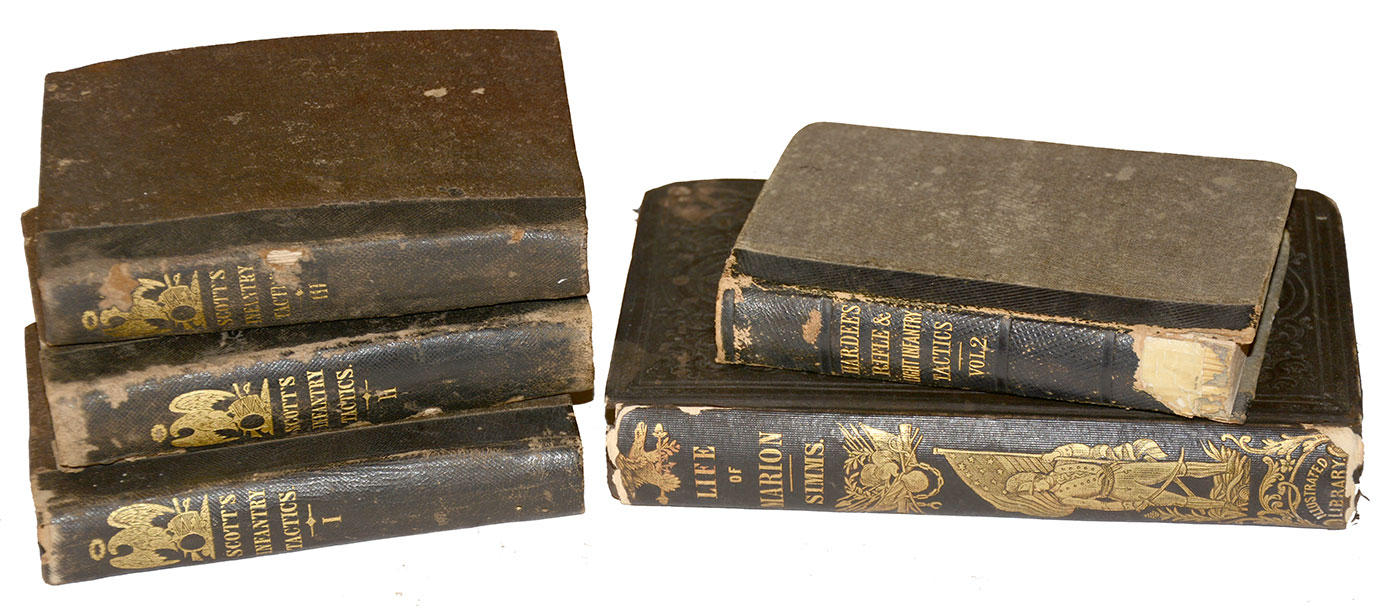
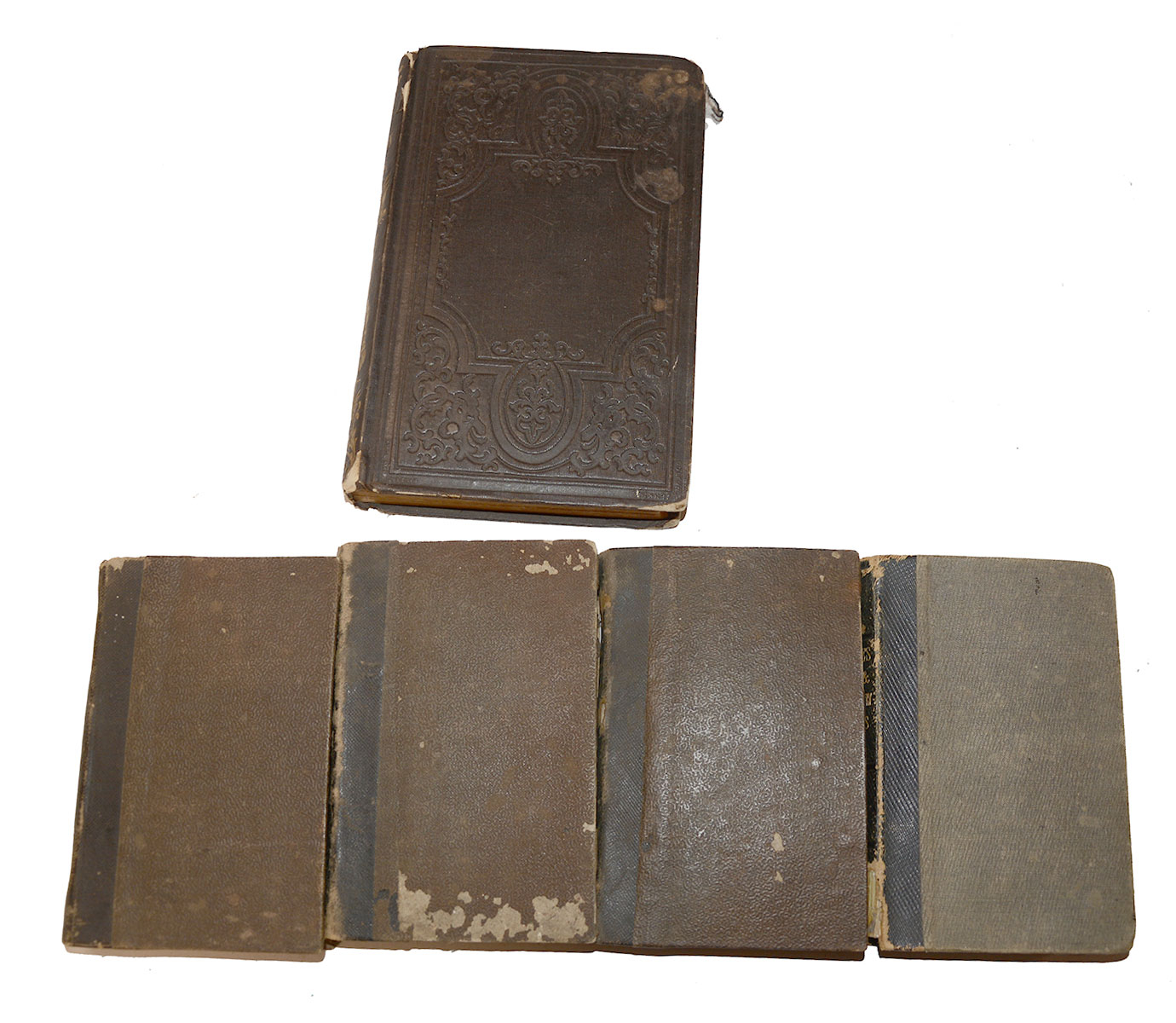
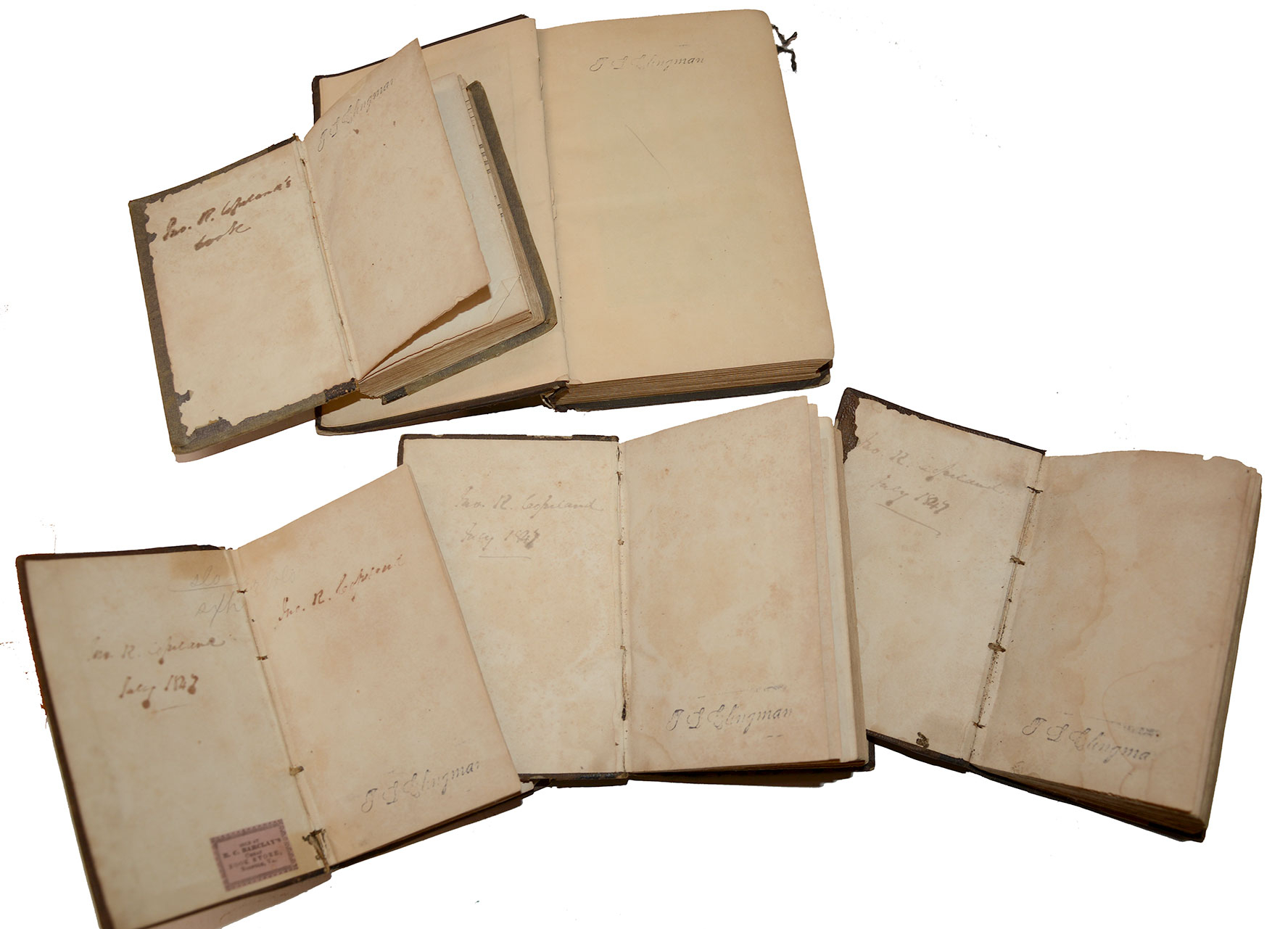
There are five books from Clingman’s library, all with his name stamp in them: an 1844 copy of Simms’s “Life of Marion,” a 3-volume set of Scott’s Infantry Tactics printed in 1847, and an 1856 printed Volume 2 of Hardee’s Rifle and Infantry Tactics. All are complete and in good condition, showing some age stains, etc. but no loose pages and the plates intact, with the Life of Marion and Hardee’s showing some losses on the spine. Clingman was playing catch-up in military service, his prewar life being mainly political, so it is no surprise that his personal library included some older military manuals, apparently borrowed from or given by others. In addition to Clingman’s name stamp, the volumes of Scott are ink inscribed: “Jno. R. Copeland / July 1847” with Volume 1 also bearing a small Norfolk, Va. bookstore label. The first owner might thus have been John R. Copeland of Nansemond County (1811-1892,) adjacent to Norfolk, who served as an officer in the Virginia militia, and became Colonel of the 59th VA Militia by the Civil War. How he and Clingman intersect is unclear, but there is a good chance they crossed paths in Richmond early in the war.
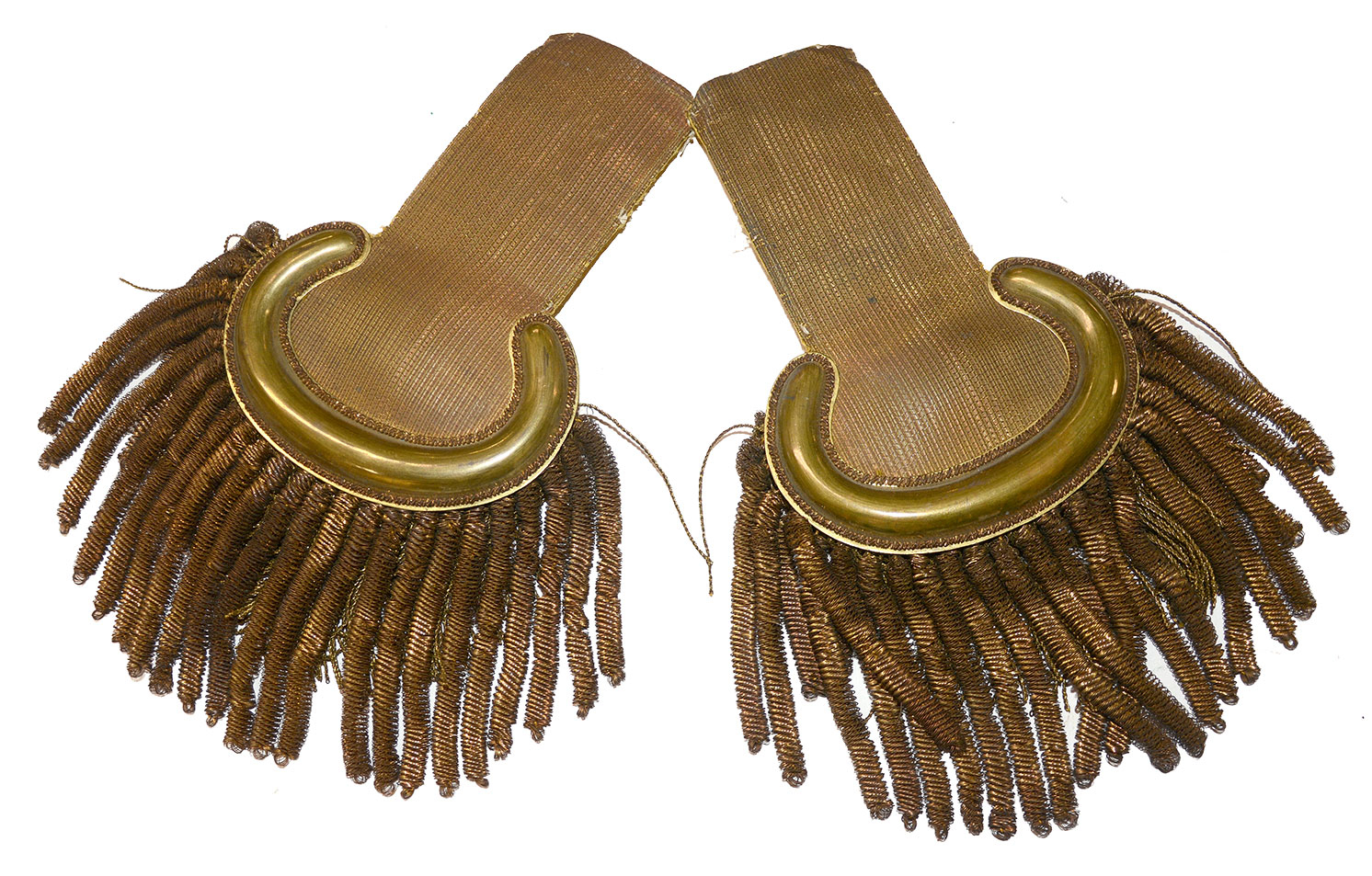
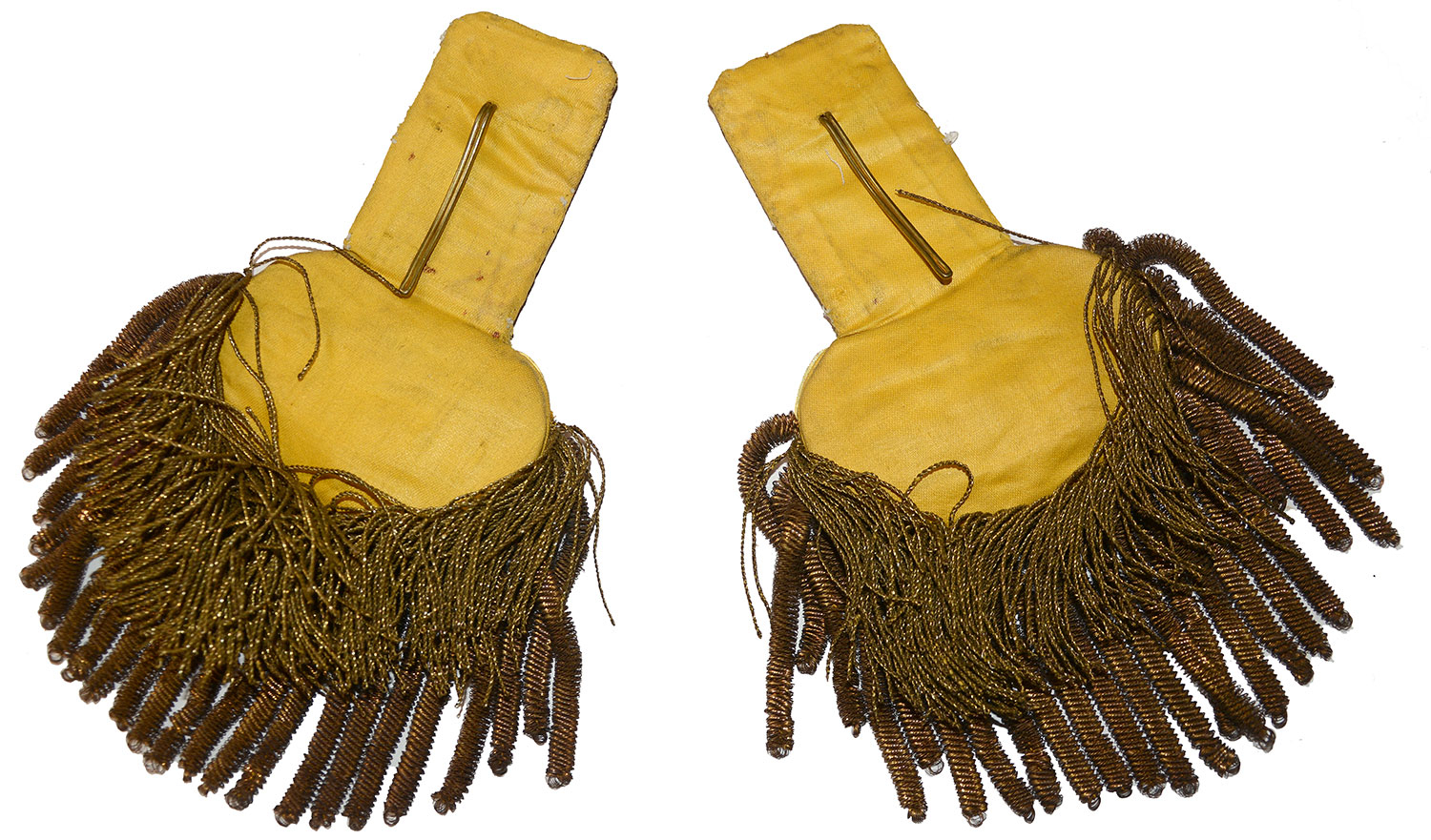
The group also includes a set of rather plain, prewar militia epaulets with 2-1/4” with gold bullion straps and brass crescents at the shoulder, lined with yellow silk on bottom and fitted with long, doubled brass wire fastening hooks. These have ¼” gold bullion coils with a row of finer gold strands behind them. The brass crescents were also given a line of narrow bullion over the thread securing them to the strap, around both their inner and outer edges. They are in very good condition, with a mellow patina to the gold coils and crescents that would have had a thin gilt finish. If Clingman was assembling a military outfit in 1861 in preparation for a commission, these may well have fit the bill, if only temporarily- they are more enlisted militia quality than officer’s quality.
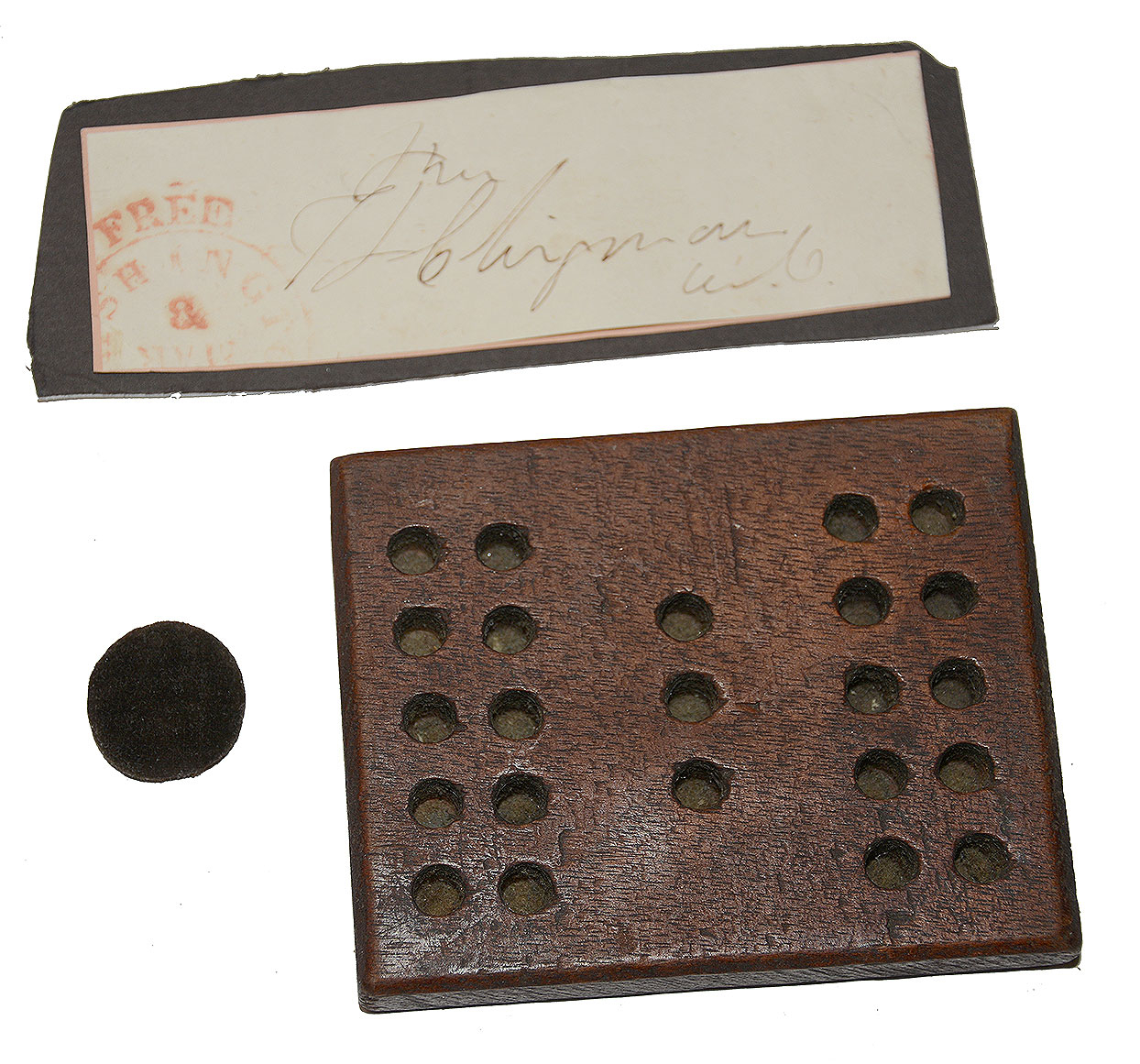
With these items a small peg counter for card game of some sort, using three holes in the middle and ten on either end, an E. & H.T. Anthony stereoview of Clingman in his Confederate general’s uniform, and a clipped free-frank envelope corner with Clingman’s signature. The first may be from Clingman’s camp gear. The stereoview and free-frank may have been added by the museum for their display. An index card from their file also notes a partial bayonet scabbard, whose connection is unclear and which we do not find, but if it shows up will be included.
Born at Huntsville, North Carolina, July 27, 1812, Thomas Lanier Clingman graduated from the University of North Carolina in 1832, studied law, was admitted to the bar in 1834, set up practice in Huntsville and later moved to Asheville. He quickly entered politics, being elected to the state House of Commons in 1835, the state senate in 1840, then to the US House of Representatives in 1843. He was not reelected in 1845, but won the seat back in 1849 and kept it through the next four elections, was Chairman of the House Foreign Affairs Committee in 1857-1858, only resigning from his House seat in 1858 to fill out the term of a NC senator until 1861 and then won election to that Senate seat as well, though he left the Senate in March 1861, becoming a commissioner from the state to the Confederate congress in May.
He had no military background, but served as an aide to Johnston at First Bull Run in July 1861, was elected Colonel of the 25th NC in August 1861, and in May 1862 was promoted to Brigadier General. He was given command of a brigade of North Carolina troops saw action at Goldsboro, NC, in late 1862, was assigned to Sullivan’s Island in Charleston Harbor in 1863, fighting at Battery Wagner and elsewhere, and was then moved into Virginia in 1864, seeing action at Drewry’s Bluff and Ware Bottom Church, bottling up Burnside in Bermuda Hundred, with further action at Cold Harbor, and the trenches of Petersburg, including the Weldon Railroad, where he was severely wounded, but recovered in time to serve with Johnston at the surrender at Bentonville.
After the war he was active in promoting the development of western North Carolina and was involved geological surveys and studies. His only forays into politics again were as delegate to the 1875 state constitutional convention and to the Democratic national convention of 1876. He passed away in 1897. [sr][ph:L]
~~~~~~~~~~~~~~~~~~~~~~~~~~~~~~~~~~~
THIS ITEM, AS WITH ALL OTHER ITEMS AVAILABLE ON OUR WEB SITE,
MAY BE PURCHASED THROUGH OUR LAYAWAY PROGRAM.
CLICK HERE FOR OUR POLICIES AND TERMS.
THANK YOU!
Inquire About CONFEDERATE GENERAL THOMAS LANIER CLINGMAN: GENERAL’S SWORD BELT, REVOLVER, CS OFFICER’S PLATE, TACTICS BOOKS: EX-TEXAS CIVIL WAR MUSEUM
Most Popular
Historical Firearms Stolen From The National Civil War Museum In Harrisburg, Pa »
Theft From Gravesite Of Gen. John Reynolds »
Selection Of Unframed Prints By Don Troiani »
Fine Condition Brass Infantry Bugle Insignia »
Rare Identified 65Th Ny Sergeant’s Jacket, With Manscript Material: 1St U.s. Chasseurs »
featured item
VERY FINE, VERY RARE .36 CALIBER, 6-CAVITY GANG MOLD FOR COLT M1851 NAVY REVOLVER
Measuring 13” long, this iron bullet mold casts six .36 caliber elongated pistol bullets. Turned wood handles and brass ferrules are fitted over the arms of the mold halves. The sprue cutter is attached to the top at the hinge pin and swings from… (1304-117). Learn More »
site search