

site search
online catalog
FINE OR NEAR EXCELLENT CONDITION INSCRIBED COLT 1849 POCKET REVOLVER OF LT. HORACE DESHLER 75th OHIO

Hover to zoom

$4,950.00 SOLD
Quantity Available: None
Item Code: 2025-3675
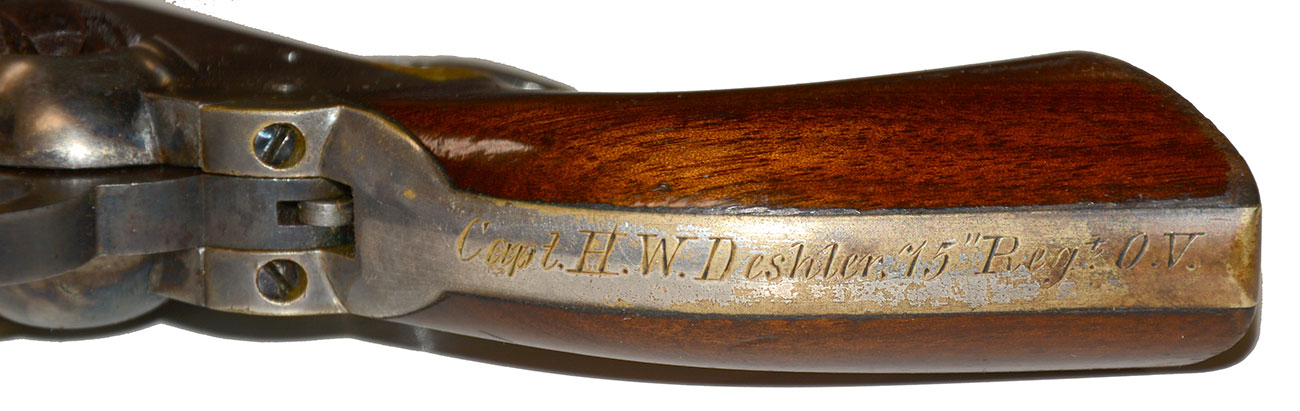
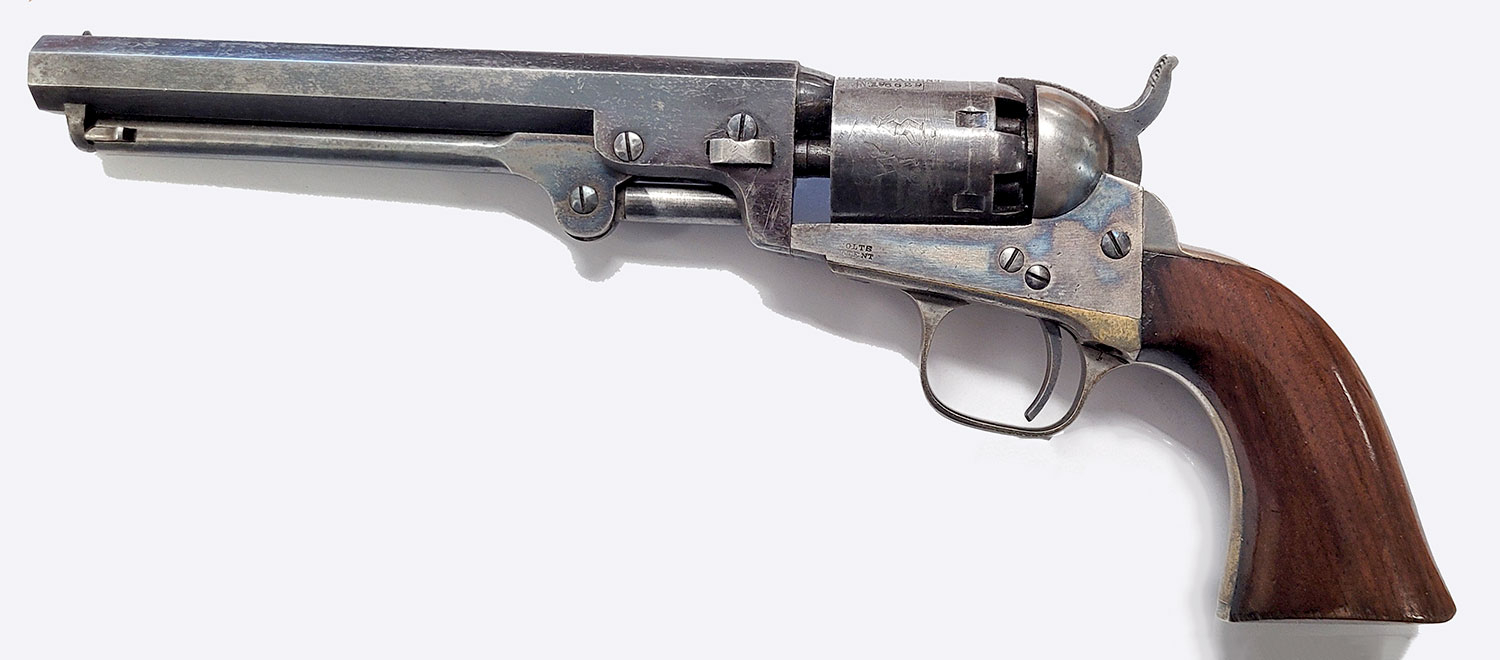
This Colt revolver offers an uncommon combination of condition and history. It comes with a factory letter dating its shipment from Colt in October 1861, bears an absolutely real, period, professional inscription on the backstrap reading, “Capt. H.W. Deshler. 15” Regt. O.V.” and rates near excellent for condition with something very close to 80 percent original finish, including blue, case colors and silver, along with sharp markings, good mechanics and good bore. These six-shot, .31 caliber revolvers were popular sidearms among officers, who purchased their own uniforms, weapons, and gear, being light weight, a consideration for officers serving on foot, and while not large caliber, adequate for personal defense if it came to close quarters, and at least provide some satisfaction in firing back at an enemy while supervising one’s own men on the firing line.
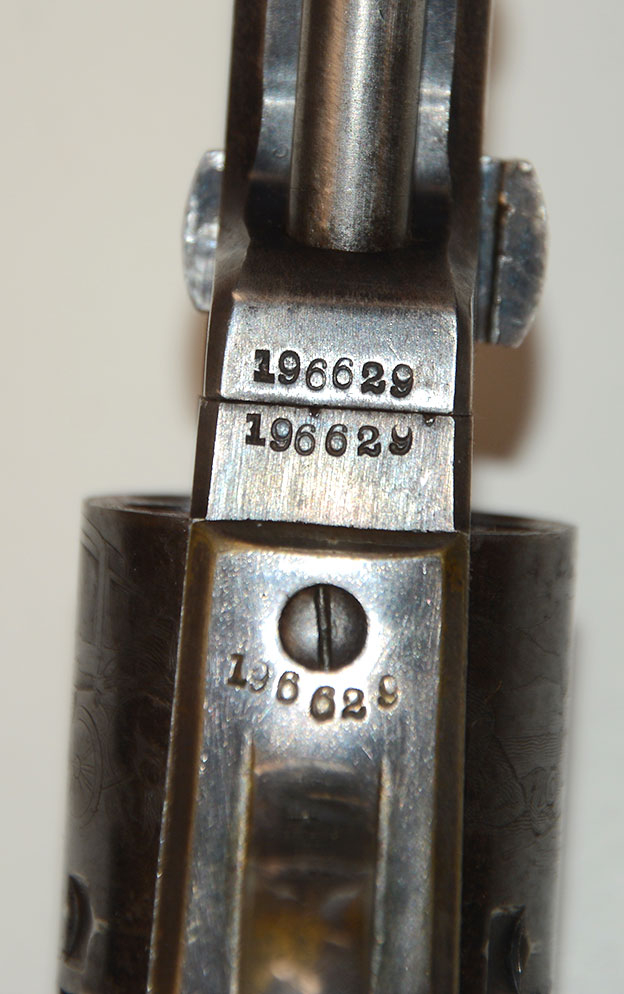
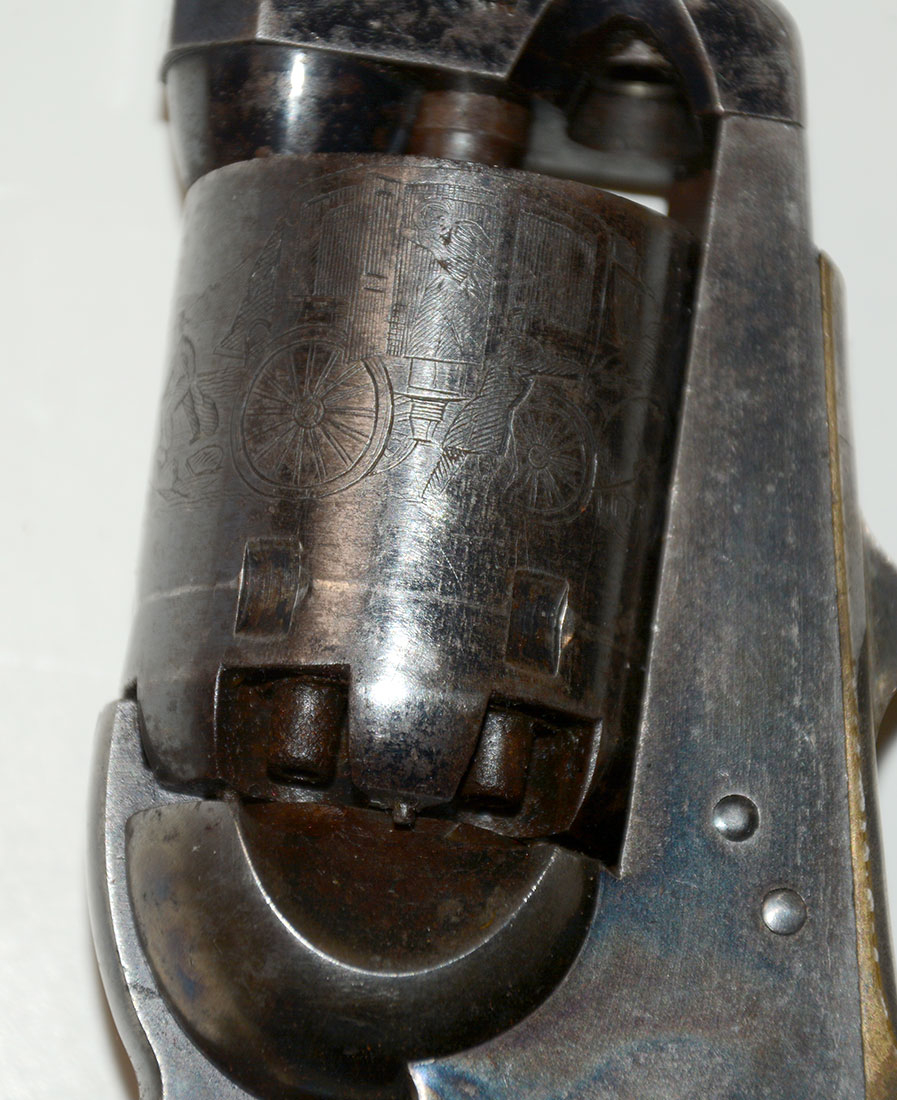
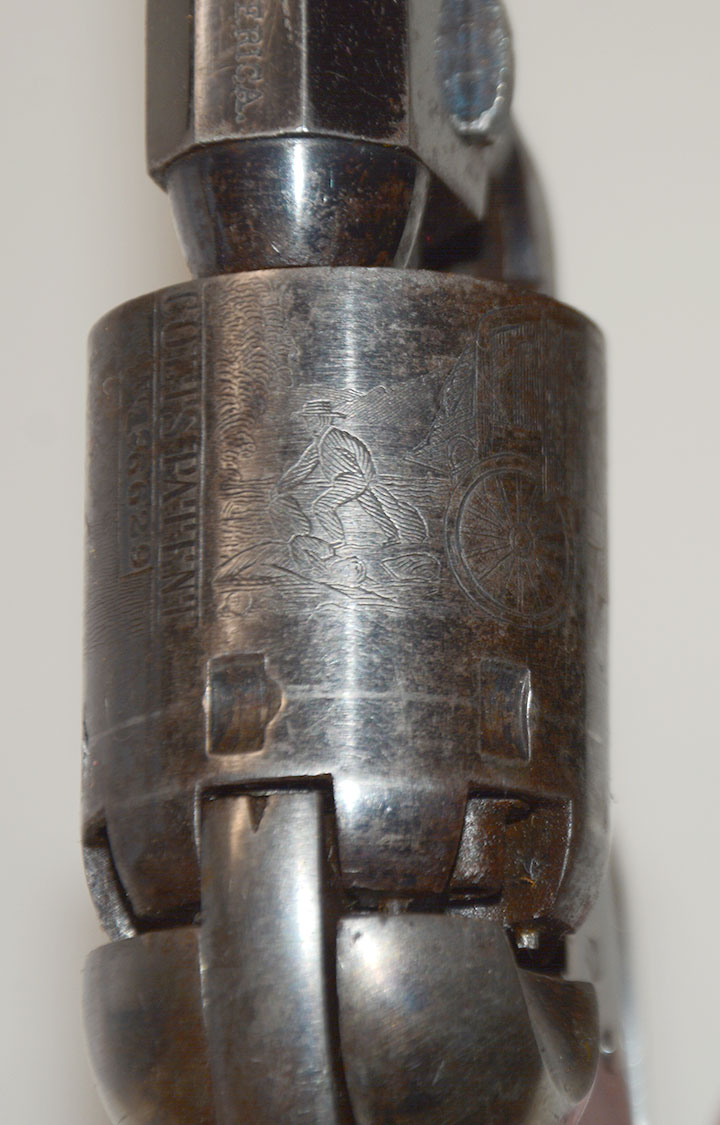
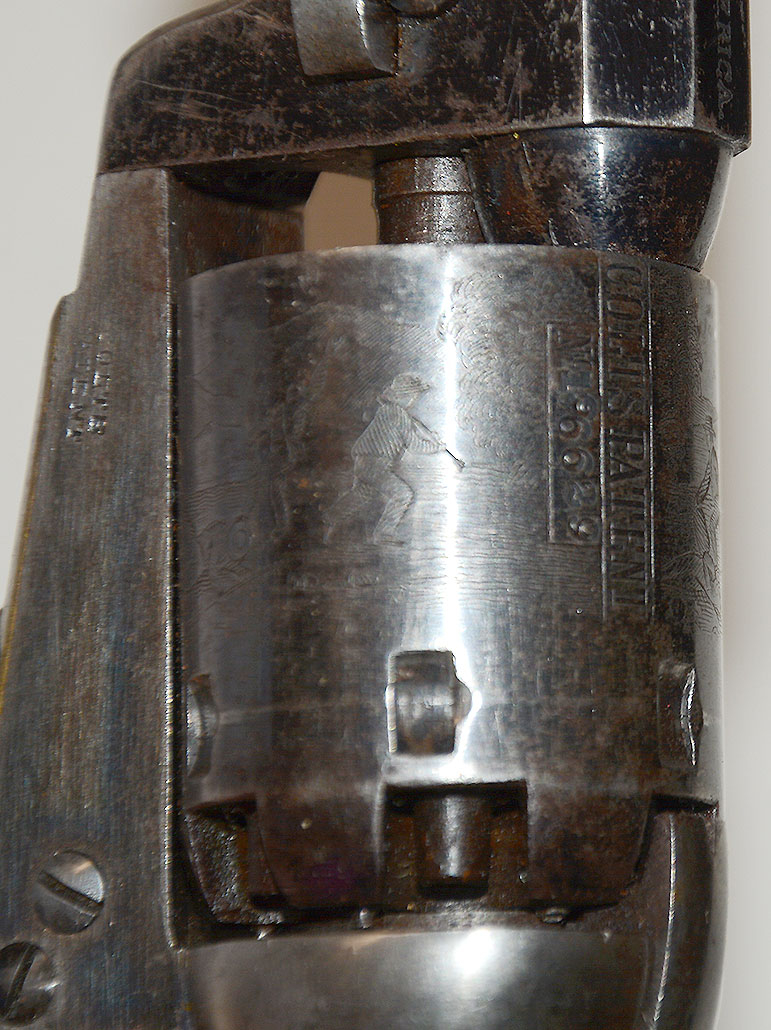
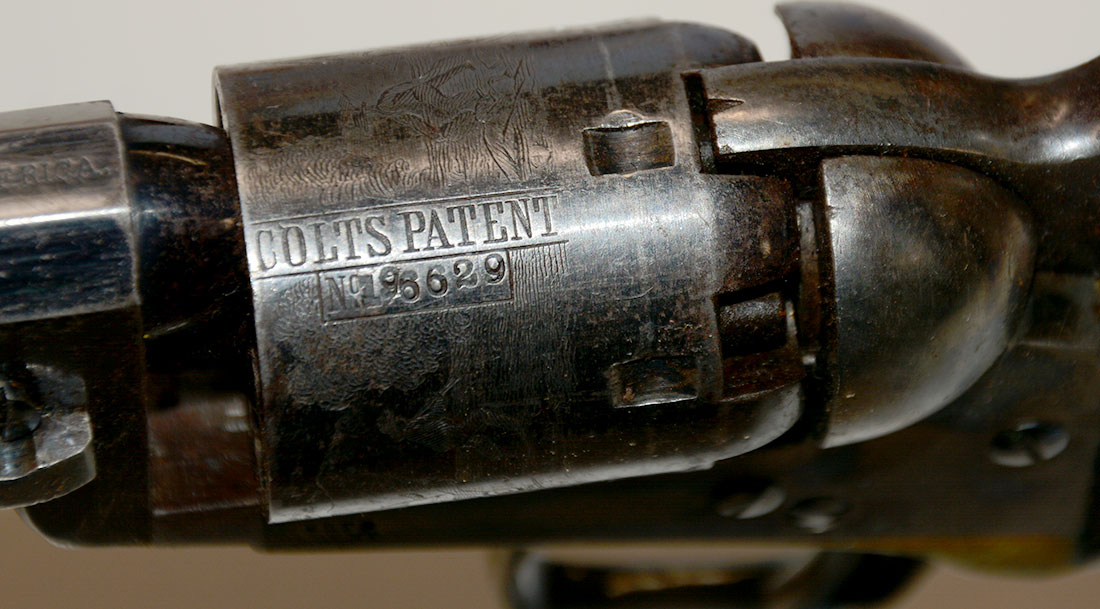
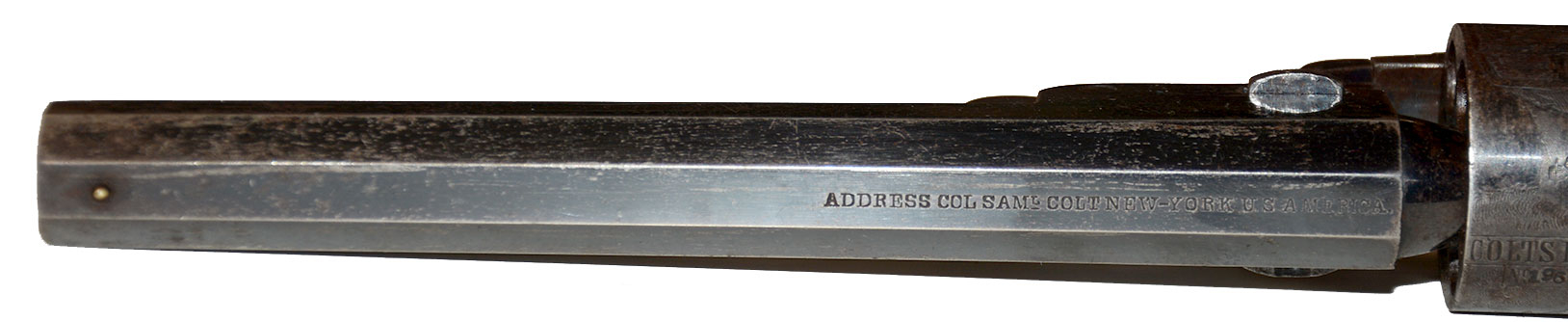
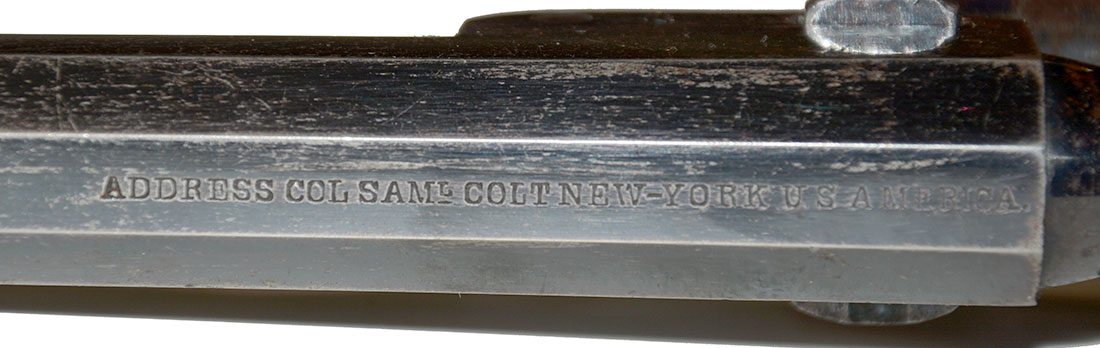
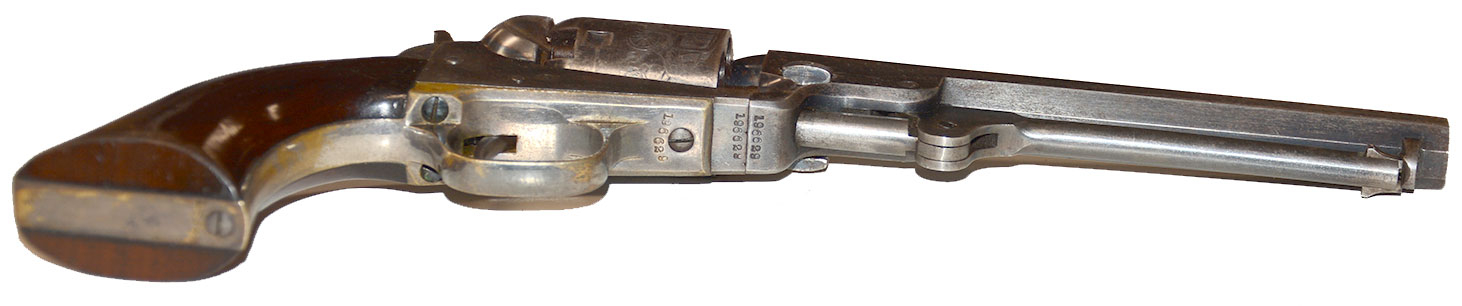
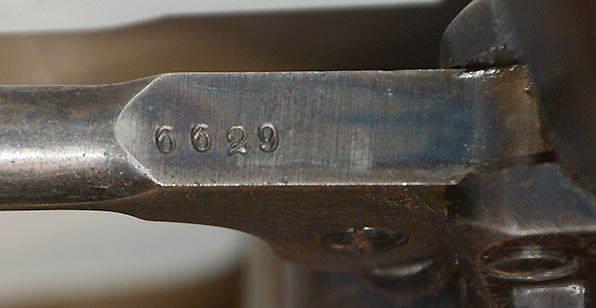
The pistol is a standard configuration with six-inch barrel, the most esthetically pleasing of the barrel lengths for the model, and is serial numbered 196629, crisply stamped and matching throughout. The barrel address is the one-line New York address, sharp and crisp: “ADDRESS COL SAML COLT NEW-YORK USA AMERICA.” The left frame is stamped “COLTS / PATENT” in smaller letters, just slightly light on the left edge. The cylinder “COLTS PATENT” marking and stamped serial number are sharp, as is the exceptionally sharp, roll-engraved stagecoach holdup cylinder scene in which a pistol-armed male passenger exits the coach to drive off several armed desperados, much to the relief of a distraught female passenger visible in the doorway of the coach behind him- a nice bit of self-referential illustration and advertisement. The mechanics and bore are good.
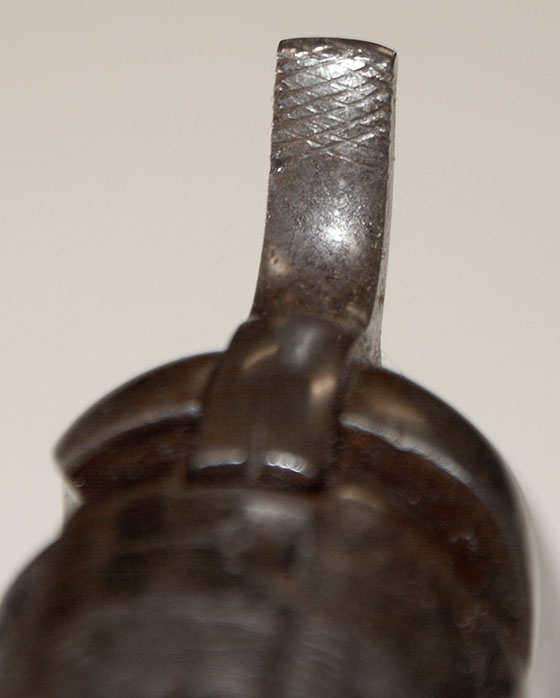
The barrel retains lots of original blue, showing some natural wear along the edges of the rectangular barrel and some on the flats toward the muzzle. The cylinder shows not only strong markings, but lots of color as well, some shading slightly toward plum. There is a slight drag line along the stops. The nipples show a slight bit of crustiness, but no battering. The loading assembly and frame show bright case colors- mottled blues, yellows and purples. Screw heads on the left frame show thin blue. Those on the backstrap have deep color. The color of the hammer is very good. The grips have a good color, finish, sharp edges and are unmarred. The backstrap shows significant remaining silver, at least 50 percent, extending up on the apron and onto the buttstrap, with some thinning and wear to it on the grip strap and triggerguard, but still very evident color. Please see our photographs.
In addition to the officer’s service records, the pistol comes with a 2020 Colt factory letter indicating it was one of 25 guns shipped to J.P. Moores Sons in New York City on Oct. 25, 1861. This fits very well with the inscription to Deshler as Captain, a rank he attained in December 1861 and giving him time to acquire it before the regiment left for Virginia in late January 1862 to serve in the Shenandoah against Jackson at McDowell, Cross Keys and elsewhere, followed by fighting in northern Viriginia at Cedar Mountain and Second Bull Run, with substantial casualties.
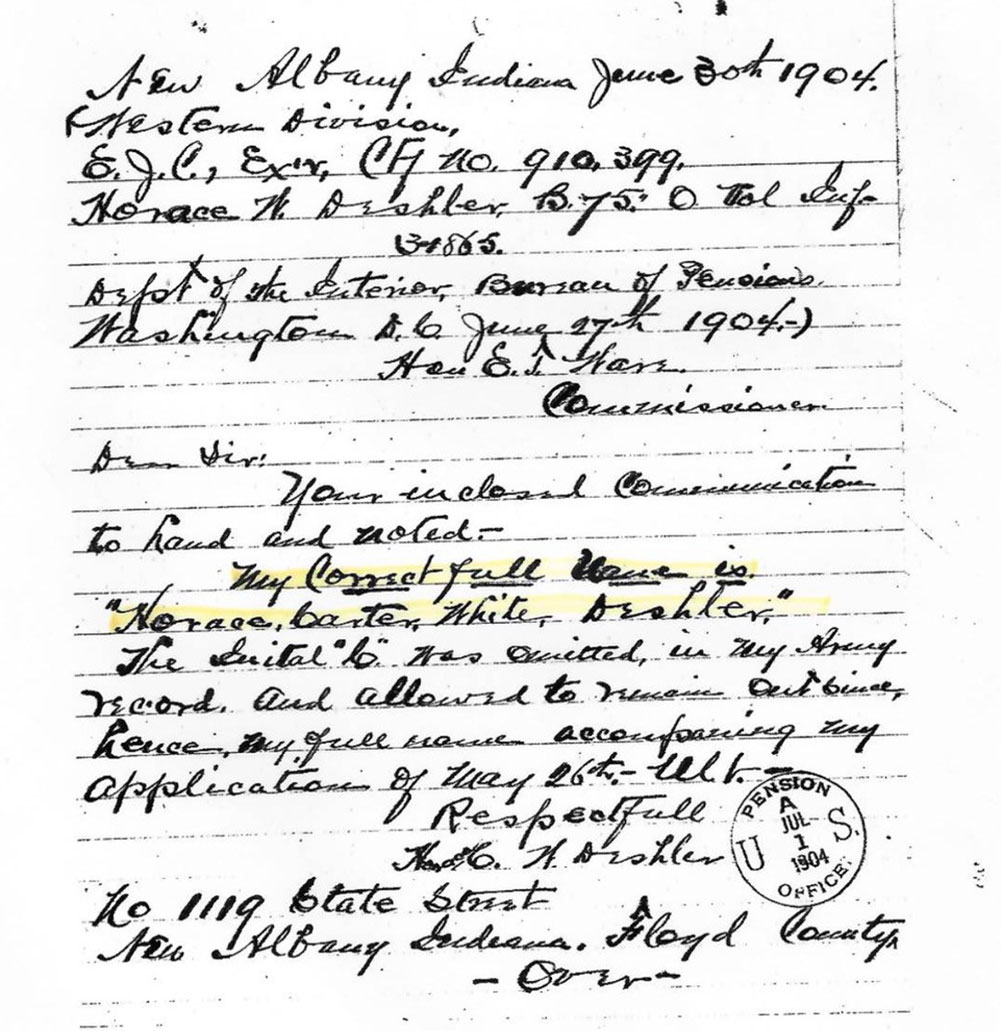
Born in Ohio in 1832, Deshler’s full name was Horace Clark White Deshler, but he dropped the “C” in his army records as he explains in a 1904 letter to the Bureau of Pensions, contained in his file. He shows up in the 1850 census as a farmer on a family farm in Athens County. Ohio, and in 1860 as a schoolteacher. He joined the army at the very beginning of the war and served as an officer in two Ohio regiments, first enlisting April 21, 1861, and being appointed 2nd Lieutenant of Co. B, 22nd Ohio, a three-month unit, on April 23. According to Dyer’s Compendium, the regiment was organized at Camp Jackson, Columbus, Ohio, in April and May, moved to Parkersburg, W. Va., May 30, thence to Burning Springs and Elizabethtown, and to Three Forks. It was attached to Cox's Brigade, District of the Kanawha, W. Va., and saw action in operations against guerrillas in Gilmer, Calhoun and Braxton Counties, served on railroad guard duty till August, and mustered out August 19, 1861.
Deshler re-enlisted almost immediately, joining the 75th Ohio, a three-year regiment, on Oct. 20, 1861. He was commissioned 2nd Lieutenant of Co. B as of Oct. 20, and then Captain as of December 14, 1861. During his time with the regiment, again following Dyer, they were officially organized at Camp McLain, Cincinnati, Ohio, November 7, 1861, to January 8, 1862. Left the state for Grafton, W. Va., January 28, 1862. Attached to Milroy's Command, Cheat Mountain, District West Virginia, to March, 1862. Milroy's Brigade, Dept. of the Mountains, to April, 1862. Schenck's Brigade, Dept. of the Mountains, to June, 1862. 2nd Brigade, 1st Division, 1st Corps, Army of Virginia, to September, 1862. 2nd Brigade, 1st Division, 11th Army Corps, Army of the Potomac, to July, 1863.
While Deshler was with them they saw the following service: March to Huttonville February 17-March 1, 1862. Expedition to Lost River Region April 1-12. Action at Monterey April 12. Battle of McDowell May 8 [with the loss of 87 men.] Retreat to Franklin May 10-12. Franklin May 29. Pursuit of Jackson to Shenandoah Valley. Strasburg and Staunton Road June 1-2. Mt. Jackson June 3. New Market June 4. Harrisonburg June 6. Battle of Cross Keys June 8. At Middletown till July 7, and at Sperryville till August 8. Reconnaissance to Madison Court House July 16-19. Battle of Cedar Mountain August 9. Pope's Campaign in Northern Virginia August 16-September 2. Freeman’s Ford August 22. Battle of Bull Run August 29-30 [with the loss of 22 killed and 93 wounded and the colors reportedly shot through more than 90 times.] Duty in the Defenses of Washington, D. C., till December. Expedition from Centreville to Bristoe Station and Warrenton Junction September 25-28. March to Fredericksburg, Va., December 10-15.
Bimonthly muster rolls show Deshler as present for most of this service and all the battles, being listed as present until September 24, when he was permitted to go to Washington for medical treatment, returning to the regiment after his release from treatment on Nov. 10 and that he was present for duty through December, but submitted his resignation on medical grounds in January and was discharged on a surgeon’s certificate of disability as of Jan. 12, 1863. By that reckoning, the only service he would have missed would have been the Sept. 25-28 expedition to Bristoe Station and Warrenton Junction.
Deshler became a Methodist minister after the war and according to a statement to pension bureau studied medicine for a time. He seems to have traveled, so he may have had some business interests. A 1906 obituary credits him with two trips to California via Panama. We find in him in the late 1880s in Topeka, KS, where he was a member of Lincoln Post #1 G.A.R., and in the 1890s he seems to have lived in Louisville, KY, for a time, later returning to Ohio where he was admitted to the National Soldier’s Home in Dayton in August 1906, where he died in November 1906. He was married twice- abandoned by his first wife, whom he accused of infidelity and maintained he was not the actual father of a son she bore, though he gave him his name and supported him. His second wife apparently pre-deceased him. He listed a number of maladies in statements to the pension bureau and the soldier’s home. A statement by a fellow soldier in his pension file stated that during the war he had been “one of the most active and physically perfect” men in the regiment, but that his health declined during the summer of 1862, which was period of active campaigning, and that he was permitted to ride a horse. He was injured in a fall of the horse late in the Fall of 1862, however, near Fredericksburg, which would be after his hospitalization in late September to mid-October, which made him decide to resign. He submitted his resignation to Gen. Sigel, commanding the 11th Corps, of copy of which is in the file, and he was officially discharged January 11, 1863.
This is a very strong example of one Colt’s most popular pistols with a great inscription and tight identification to an officer with some active service. Collectors often have to face the choice between condition and history. This offers both. [sr][ph:L]
~~~~~~~~~~~~~~~~~~~~~~~~~~~~~~~~~~~
THIS ITEM, AS WITH ALL OTHER ITEMS AVAILABLE ON OUR WEB SITE,
MAY BE PURCHASED THROUGH OUR LAYAWAY PROGRAM.
CLICK HERE FOR OUR POLICIES AND TERMS.
THANK YOU!
Inquire About FINE OR NEAR EXCELLENT CONDITION INSCRIBED COLT 1849 POCKET REVOLVER OF LT. HORACE DESHLER 75th OHIO
Most Popular
Historical Firearms Stolen From The National Civil War Museum In Harrisburg, Pa »
Theft From Gravesite Of Gen. John Reynolds »
Selection Of Unframed Prints By Don Troiani »
Fine Condition Brass Infantry Bugle Insignia »
Rare Identified 65Th Ny Sergeant’s Jacket, With Manscript Material: 1St U.s. Chasseurs »
featured item
THE BLOODY PILLOWCASE (AND MORE) OF CAPTAIN GOULD – MEDAL OF HONOR RECIPIENT; 5TH VERMONT INFANTRY
The principle and poignant artifact in this grouping is a plain linen "hospital issue" pillowcase stained with the blood of Congressional Medal of Honor winner Captain Charles Gould Company H 5th Vermont Infantry. This incident which occurred on… (1268-755). Learn More »
site search