


site search
online catalog
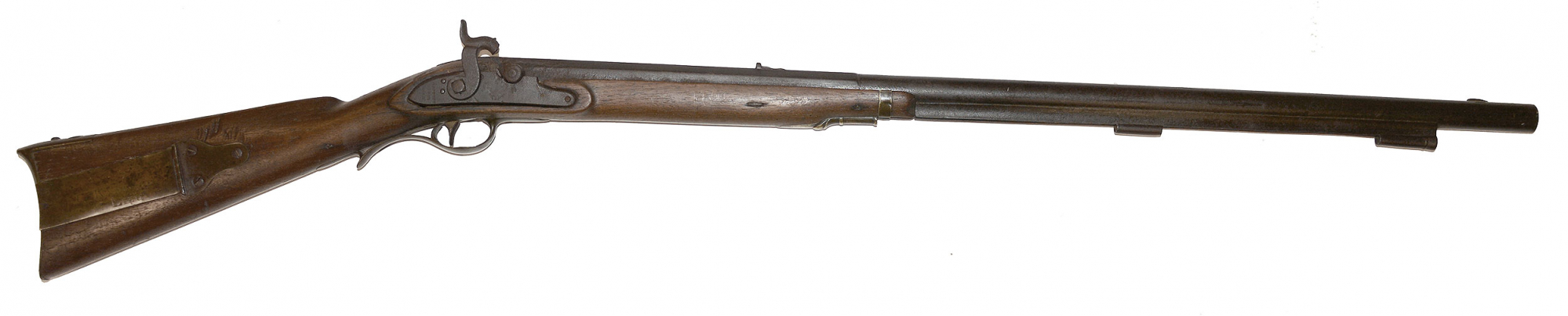
IDENTIFIED WAR OF 1812 PRODUCTION HARPER'S FERRY 1803 RIFLE
Hover to zoom






$2,995.00 SOLD
Quantity Available: None
Item Code: 801-136
The first U.S. regulation rifle, the Model 1803, was manufactured at Harpers Ferry Armory only. Early models were produced between 1803 and 1807, with production resuming in 1814. These half-stocked rifles are considered by some to be perhaps the most beautiful military arm ever manufactured. The Model 1803 flintlock rifle was manufactured in two production runs. The first group of approximately 4,000 guns were manufactured between 1803 and 1807. Production of the rifle was resumed in 1814 due to necessities created by the War of 1812.
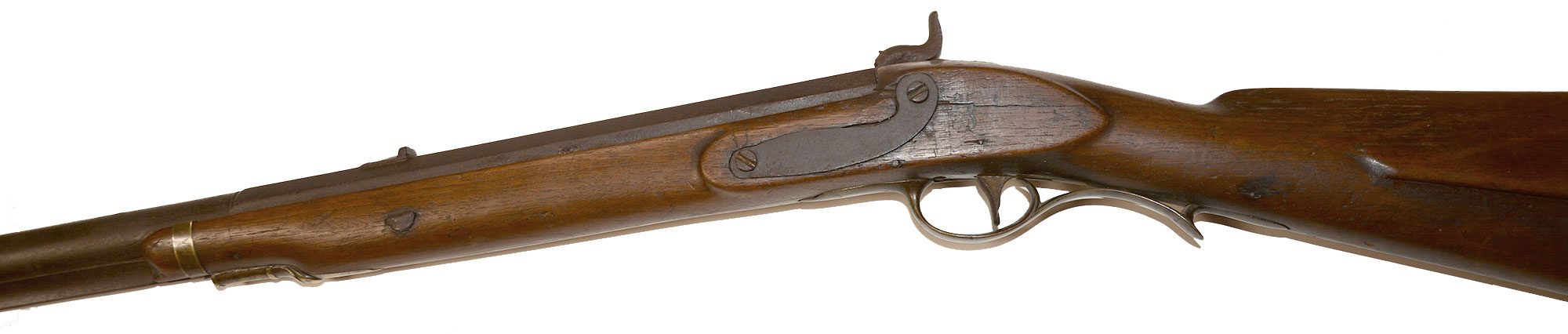
This is one of about 1600 made before the winter of the year 1814. And therefore, could well have been carried in the Niagara and New Orleans campaigns. These arms were reserved for issue to the regulars of the rifle regiments; please click on this link (Regiment of Riflemen - Wikipedia). Beginning in 1815, both stock and barrel were lengthened; the barrel to 36 inches. The barrel length on this weapon is 33 inches the original 1803 length. The barrel part round part octagonal has been converted from the original flint lock system to percussion by screwing in a round bolster. This barrel was once .54 caliber and rifled with 7 groove rifling, but it is now approximately .60 caliber and smooth bore. The vast majority of 1803/14 Harper's Ferry rifles are found bored out. Why? The 7-groove rifling in these arms was compatible only with .54 caliber round balls. Accordingly, the vast majority were reamed out for buck and ball; this was done after the introduction of the Minie bullet. So many are found in this configuration that Reilly in his wonderful book United States Martial Flintlocks, suggests they many may have been made this way; this conclusion is erroneous.
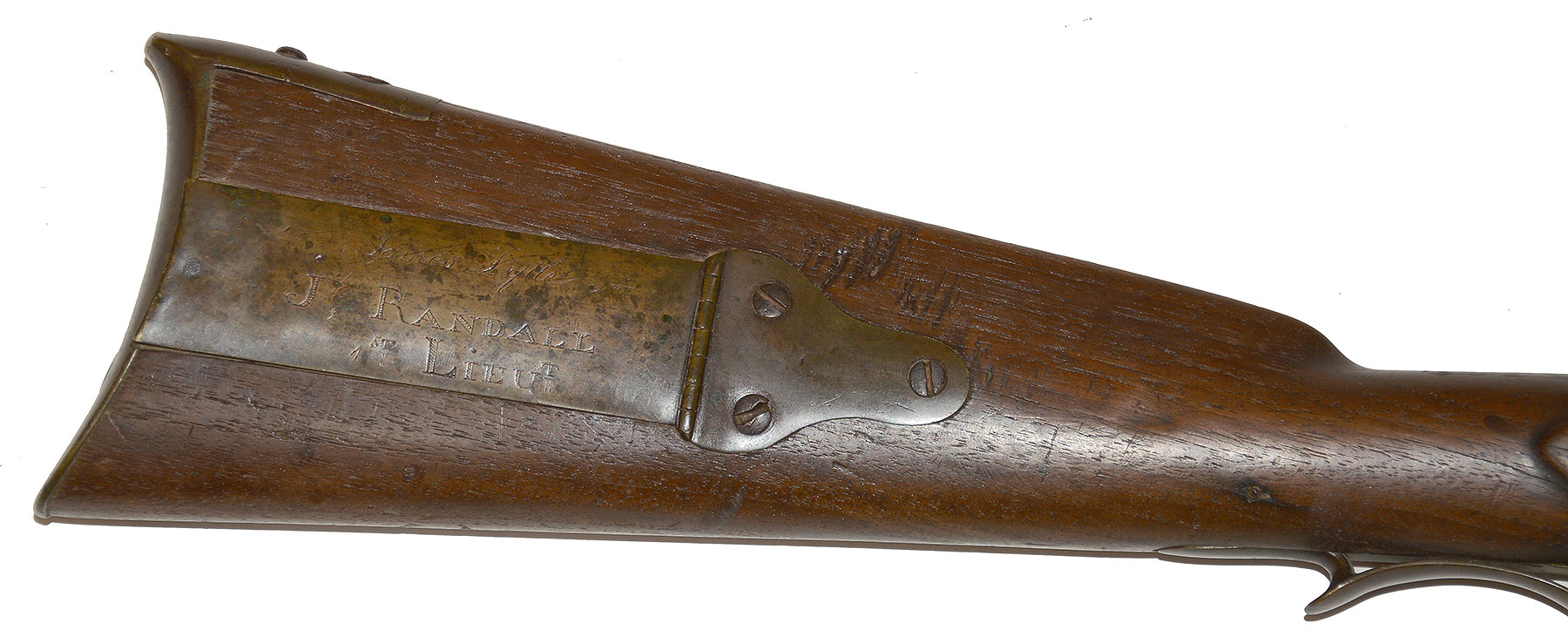
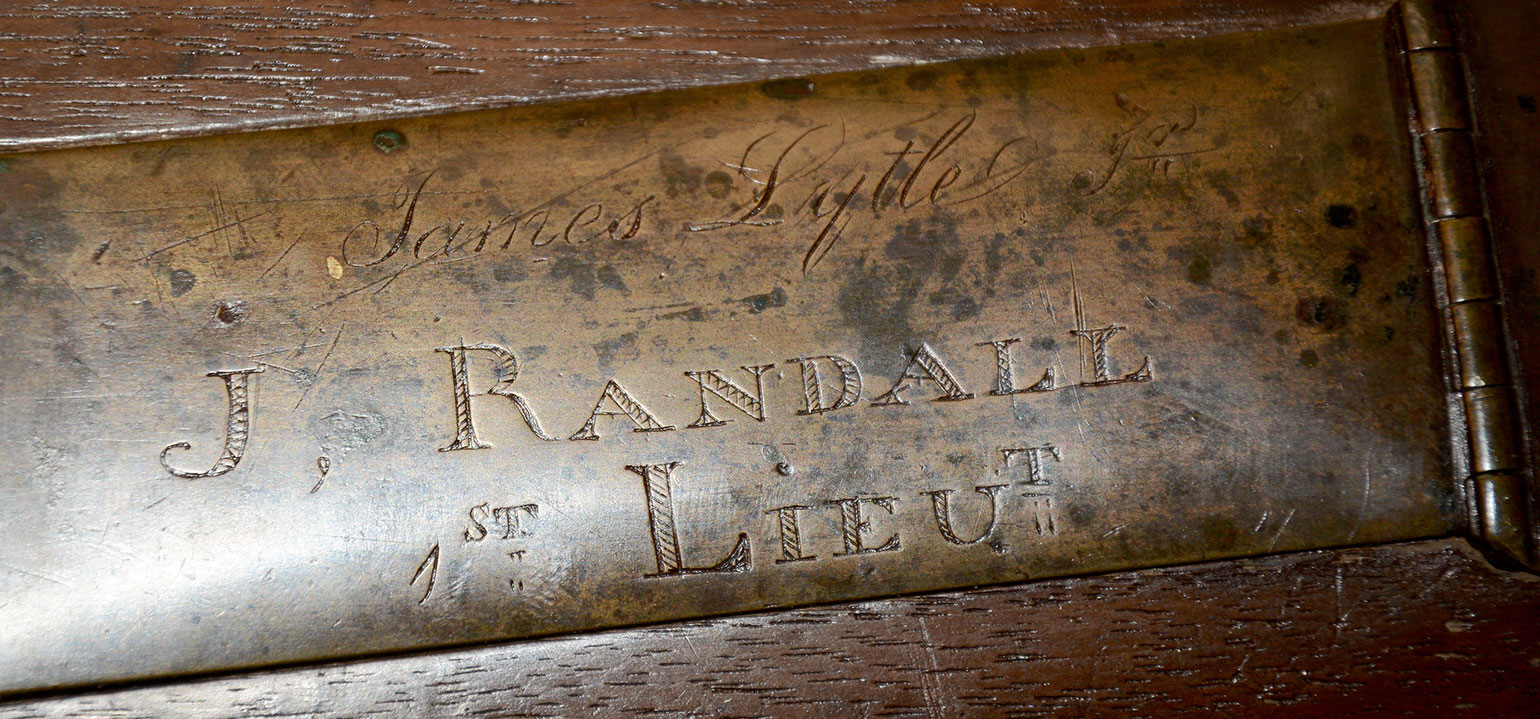
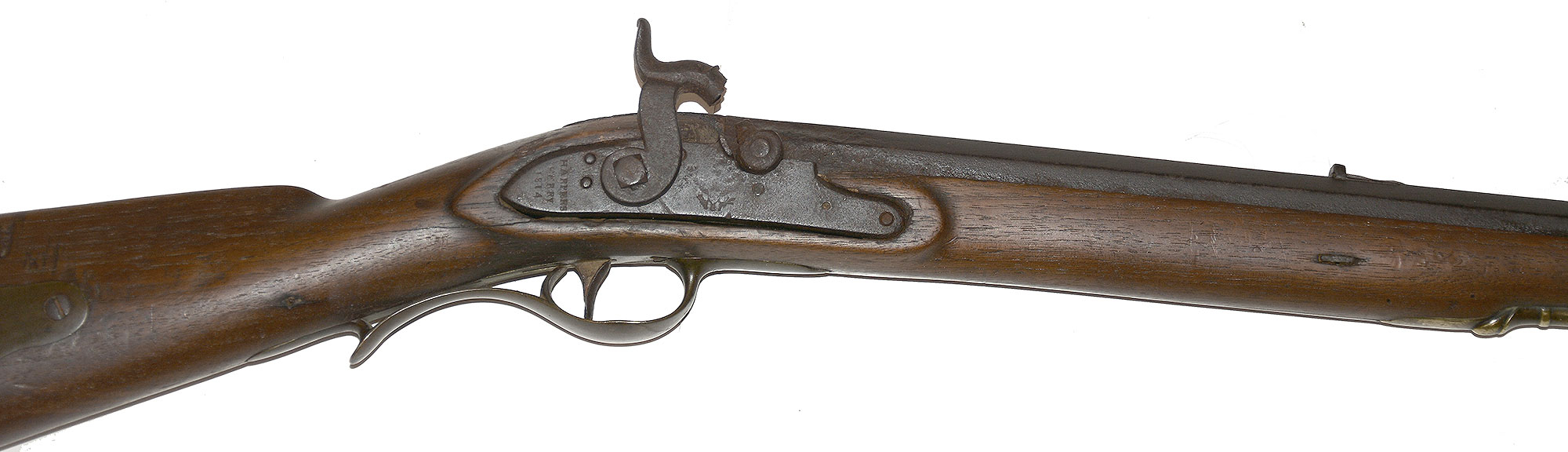
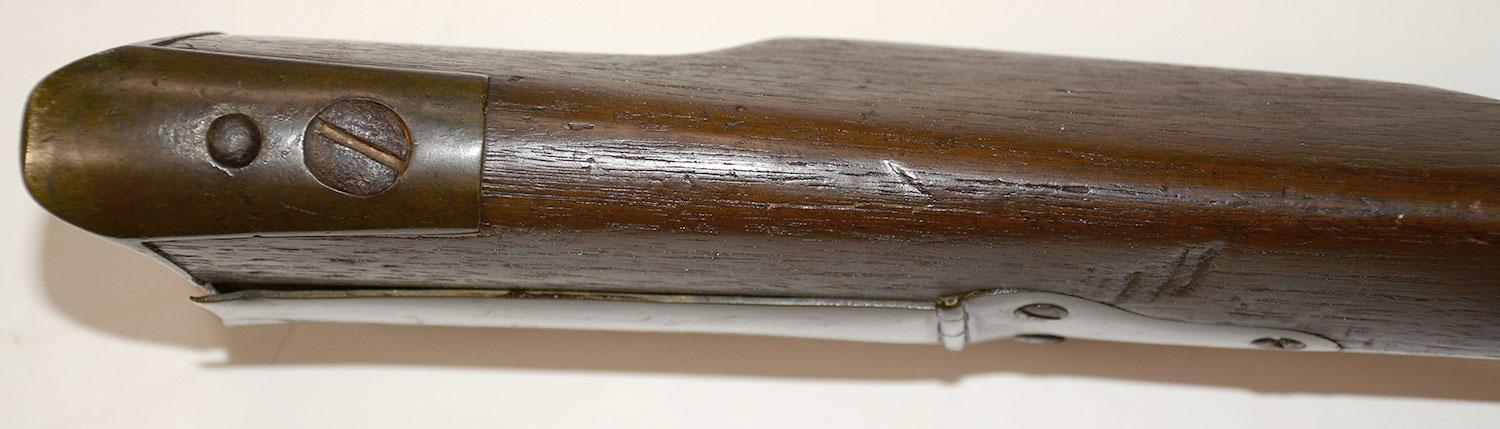
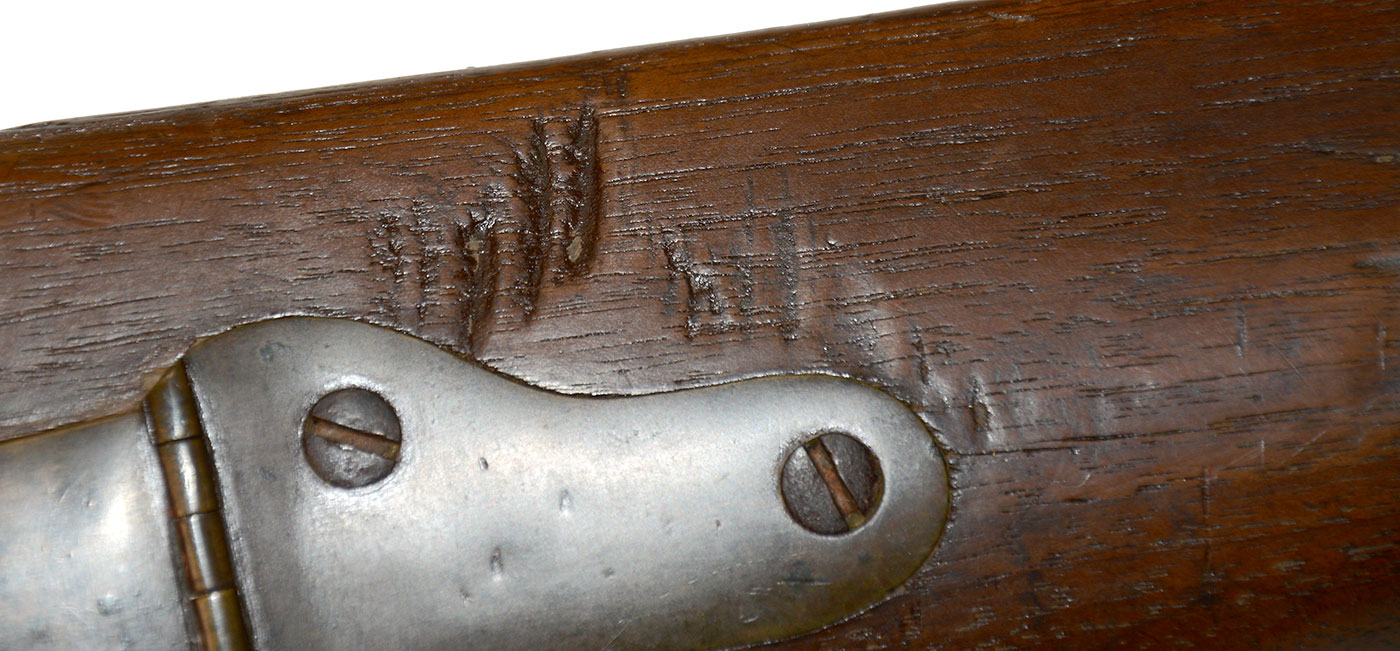
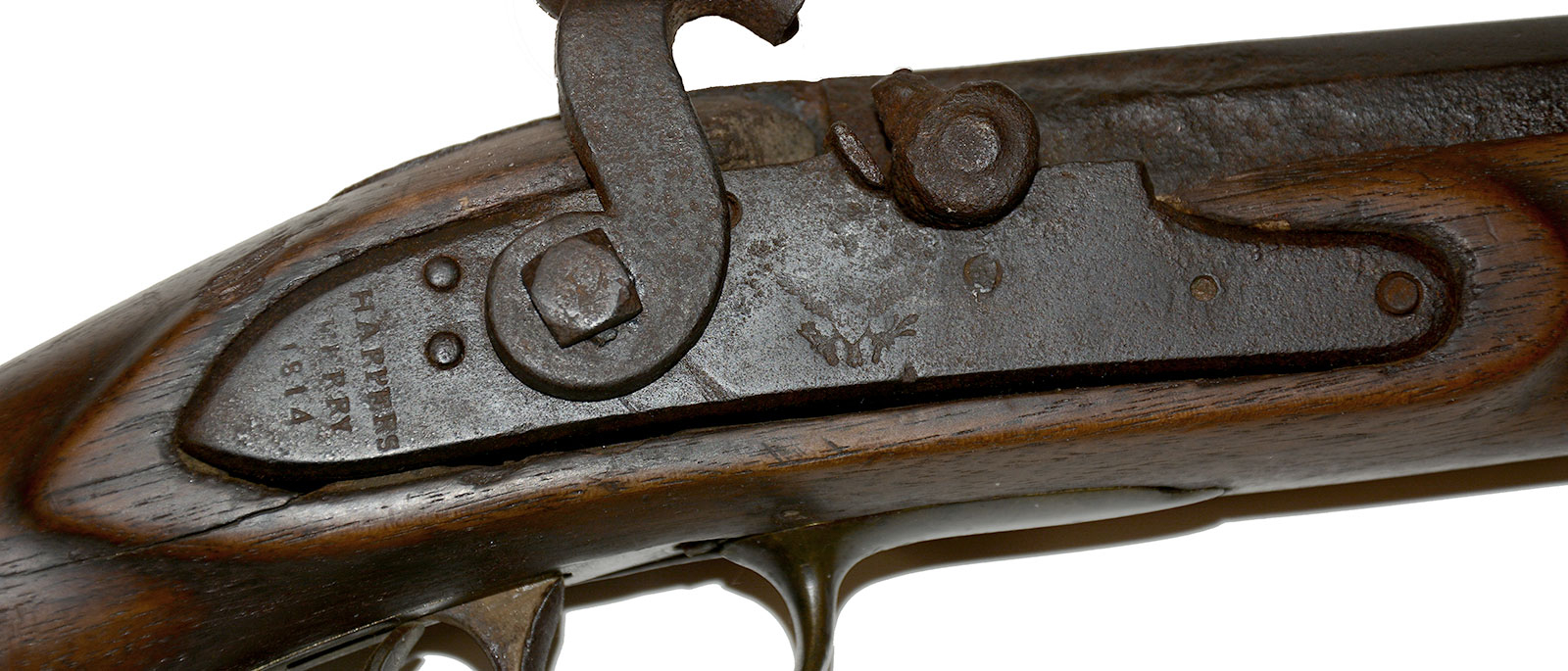
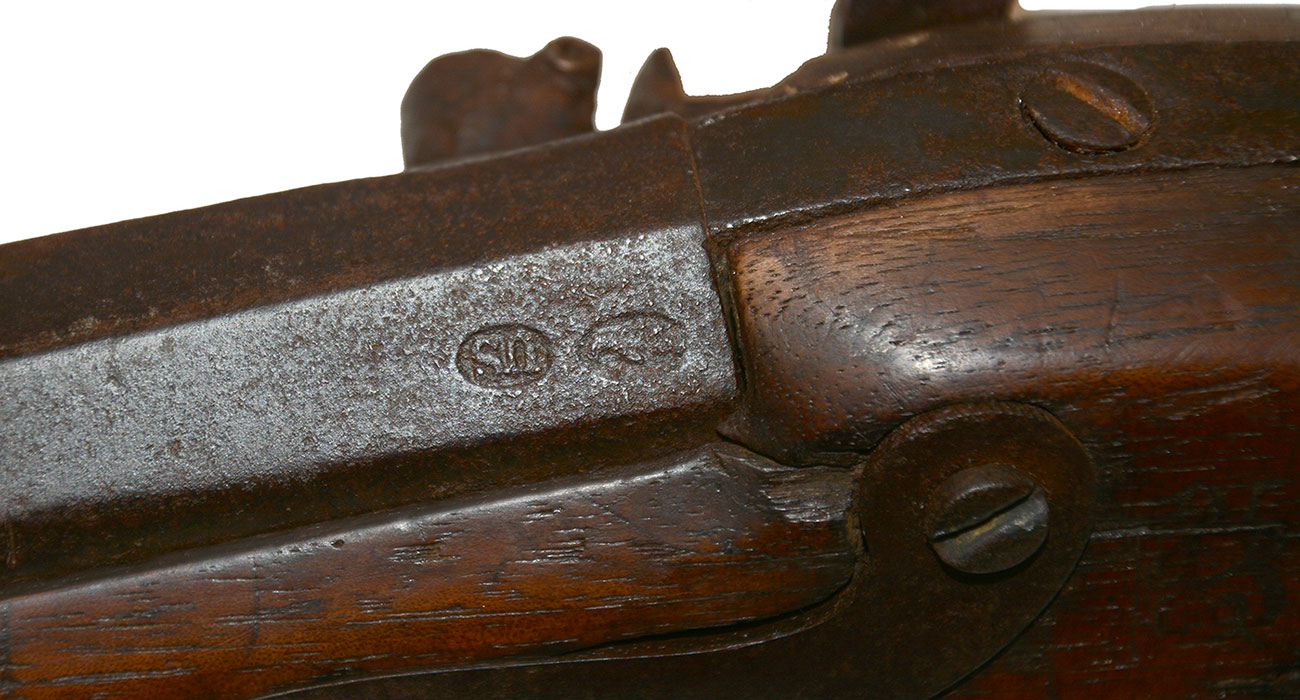
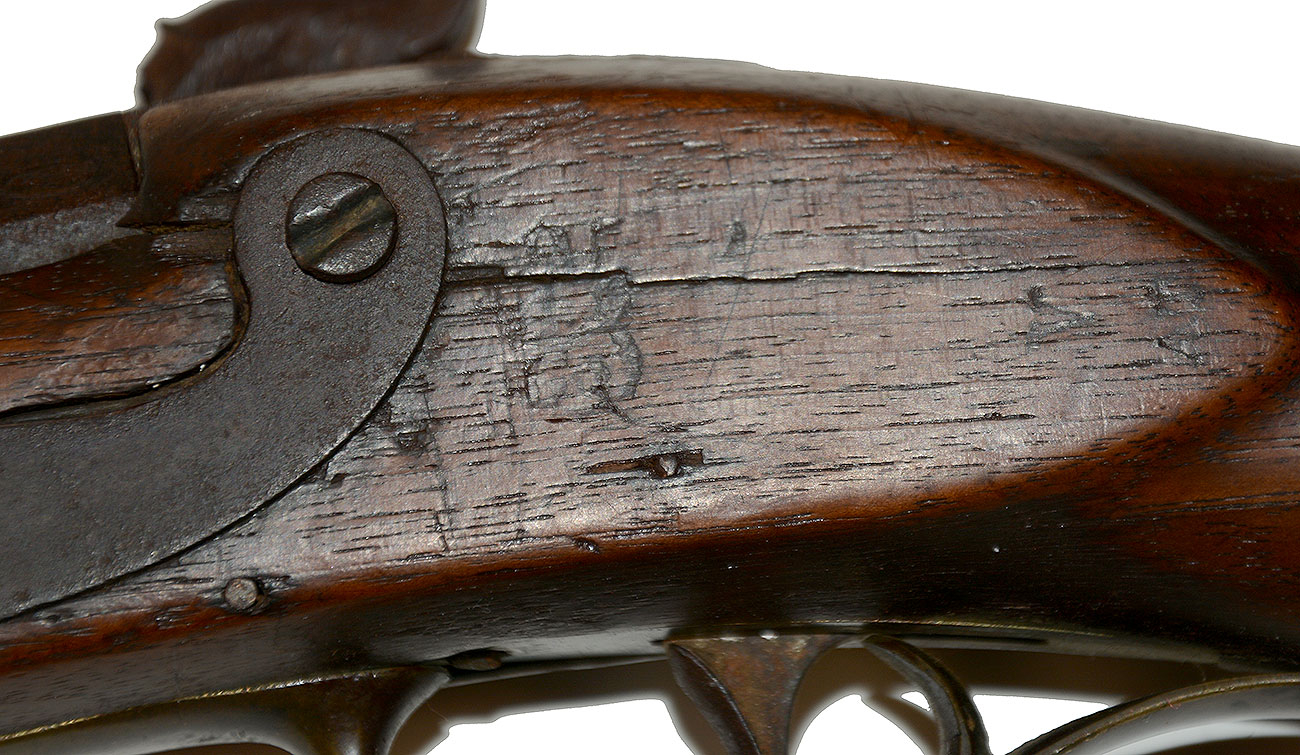
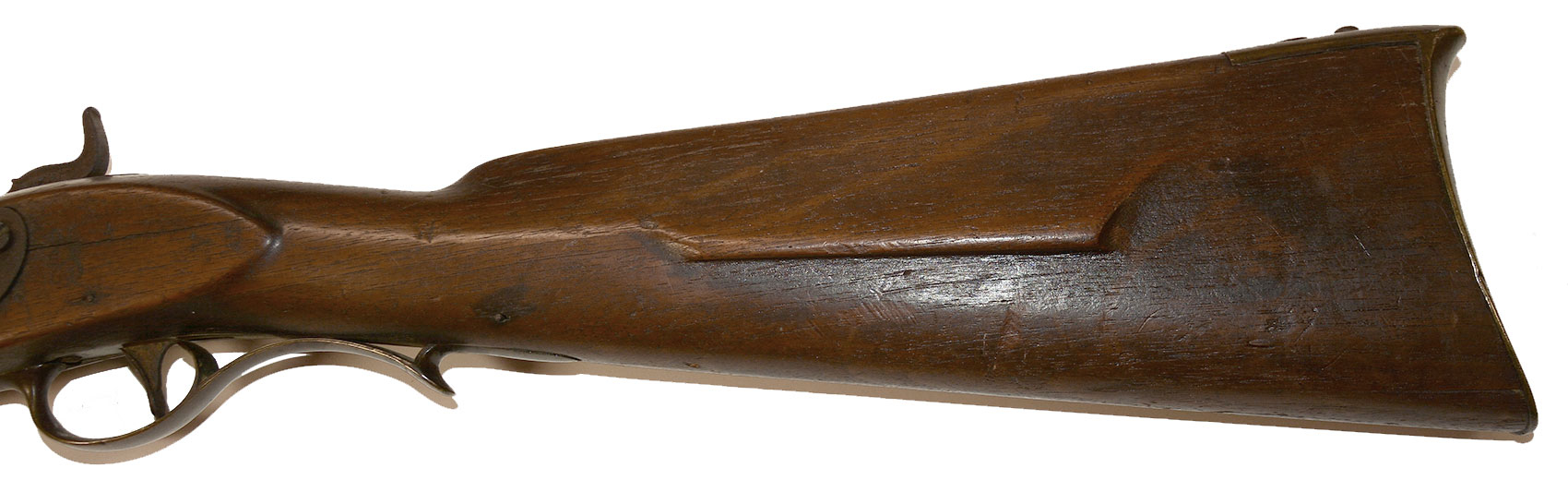
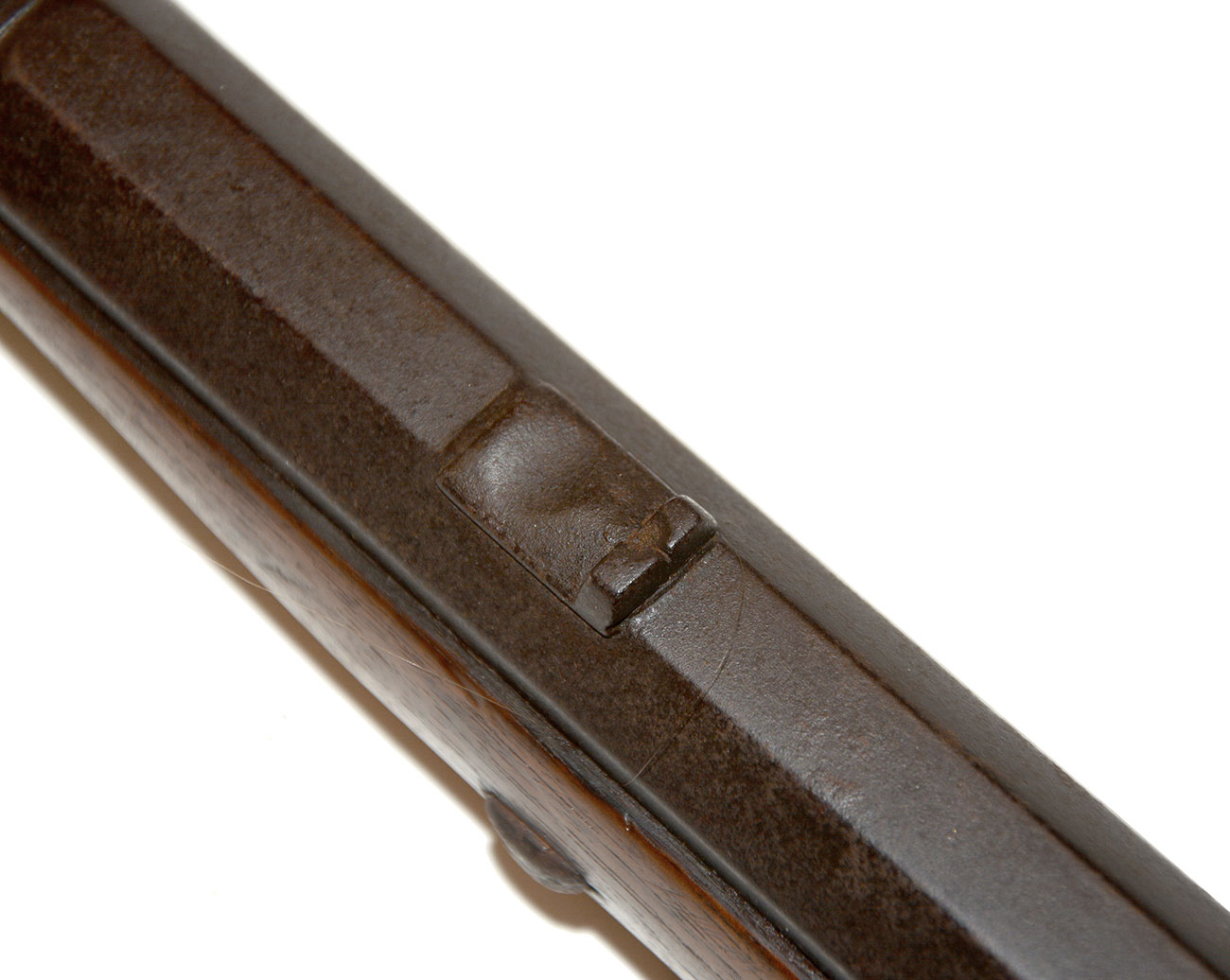
The "factory" rear sight is the open buckhorn type while the front sight is a brass blade. The oval proofs at the breech are an eagle head over "P" followed by "US". The patina is a deep brown with some heavy pitting at the breech and near the percussion tumbler. The iron "rib" running under the barrel holds 2 deeply patinated iron ramrod pipes with the rear pipe made of brass. The brass tipped iron rod is missing (This can be replaced with a US Mississippi ramrod). The barrel is held in place by a "key". The lock, originally flint and steel, now percussion is stamped "HARPER'S FERRY 1814" at the tail and ahead of the cock is an eagle with US barely visible on its breast. This eagle is the "Model 1814" eagle and is correct for early production. The lock and cock have a heavy deep brown patina compatible with the other iron components of the arm. The lock works fine. The side plate opposite the lock is iron which is not "factory" but absolutely period. All the mounts on the nice condition walnut stock are brass including the classic 1803 patch box. All the brass mounts have the identical deep rich plum-brown patina. Showing heavy period use there is notable "wood burn-out" between the lock and barrel tang but the general over all appearance of this "attic condition" firearm is wonderful. On the stock flat opposite the lock is the slightly distorted "US" inspector's mark as well as a "V". The door of the 2-piece patch box is beautifully and professionally period engraved, "J. Lytle Jr." over "J. RANDALL" over "1st LIEUT". Who are these men? This arm was in a highly respected collection for decades, The owner and consignor, an older gentleman, told us that the weapon was involved in the John Brown Insurrection of 1859. The weapon was indeed found in the vicinity of Harper's Ferry, West Virginia. That is all he recalled. A cursory internet search by this compiler produced no results, but this is an inconvenience not a tragedy. "Absence of evidence is not evidence of absence". It is a certainty, to my mind, that 1st Lieutenant J. Randall and possibly J. Lytle were members of the Virginia Militia. In 1859 there was a plethora of units called to arms. In order to confirm this one must physically look at the rolls of the Virginia Militia from 1814 to 1859.These reside in Richmond, Virginia. A project not in "the wheelhouse " of this compiler.
The John Brown Harper's Ferry connection aside this 1814 Model 1803 rifle is a great rarity and the connection to the War of 1812 of these pre-Treaty of Ghent arms make them highly sought after (Treaty of Ghent - Wikipedia). If left in original flint, found still rifled and in this condition the arm would bring $20,000. As it sits with its yet to be revealed history this would be a wonderfully addition to the most advanced US martial arms collector or historian. [pe][ph:L]
DISCLAIMER: All firearms are sold as collector's items only - we do not accept responsibility as to the shooting safety or reliability of any antique firearm. All firearms are described as accurately as possible, given the restraints of a catalog listing length. We want satisfied customers & often "under" describe the weapons. Any city or state regulations regarding owning antique firearms are the responsibility of the purchaser. All firearms are "mechanically perfect" unless noted, but again, are NOT warranted as safe to fire.
~~~~~~~~~~~~~~~~~~~~~~~~~~~~~~~~~~~
THIS ITEM, AS WITH ALL OTHER ITEMS AVAILABLE ON OUR WEB SITE,
MAY BE PURCHASED THROUGH OUR LAYAWAY PROGRAM.
CLICK HERE FOR OUR POLICIES AND TERMS.
THANK YOU
Inquire About IDENTIFIED WAR OF 1812 PRODUCTION HARPER'S FERRY 1803 RIFLE
Most Popular
Historical Firearms Stolen From The National Civil War Museum In Harrisburg, Pa »
Theft From Gravesite Of Gen. John Reynolds »
Selection Of Unframed Prints By Don Troiani »
Fine Condition Brass Infantry Bugle Insignia »
Rare Identified 65Th Ny Sergeant’s Jacket, With Manscript Material: 1St U.s. Chasseurs »
featured item
EXQUISITELY BEAUTIFUL LARGE 1862 DATED PORTRAIT OF AN UNKNOWN UNION LIEUTENANT COLONEL
This fantastic painting is oil on canvas and meas. approx. 35.00 x 39.00 inches framed. The subject is an unknown Union lieutenant colonel from the Philadelphia area. He wears a dark blue double-breasted frock coat with gold buttons and a white… (L15593). Learn More »
site search