
site search
online catalog
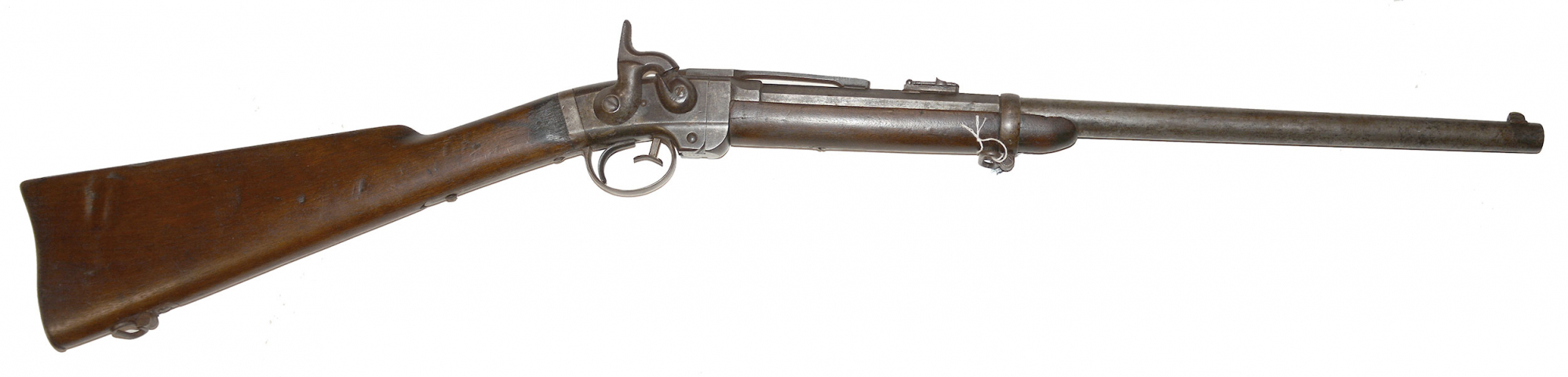
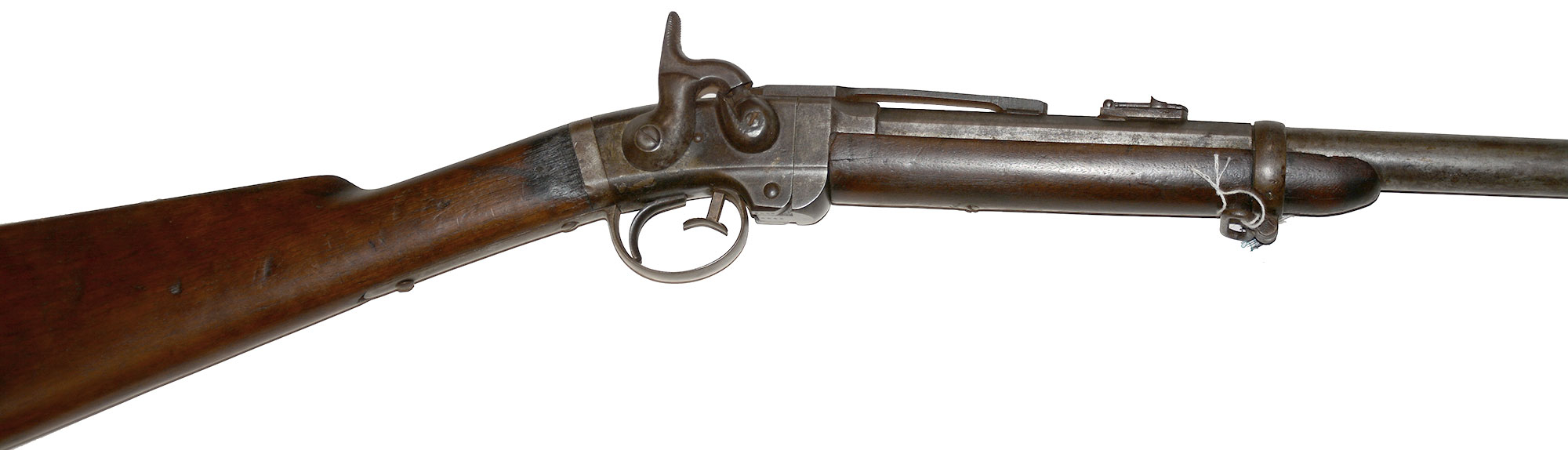
IDENTIFIED SMITH CARBINE OF THE FIRST VIRGINIA CAVALRY
Hover to zoom


$6,500.00 SOLD
Quantity Available: None
Item Code: 297-36
The 1st Virginia Cavalry (Union) was a hard fighting unit formed in 1861. This was before there was a state of West Virginia. It was raised in the summer of 1861 as the 1st Regiment Virginia Mounted Volunteers but soon was known as the 1st Regiment (West) Virginia Cavalry. Please follow this link (https://civilwarintheeast.com/us-regiments-batteries/west-virginia/1st-west-virginia-cavalry/). As you see their actions were particularly noteworthy at Gettysburg!
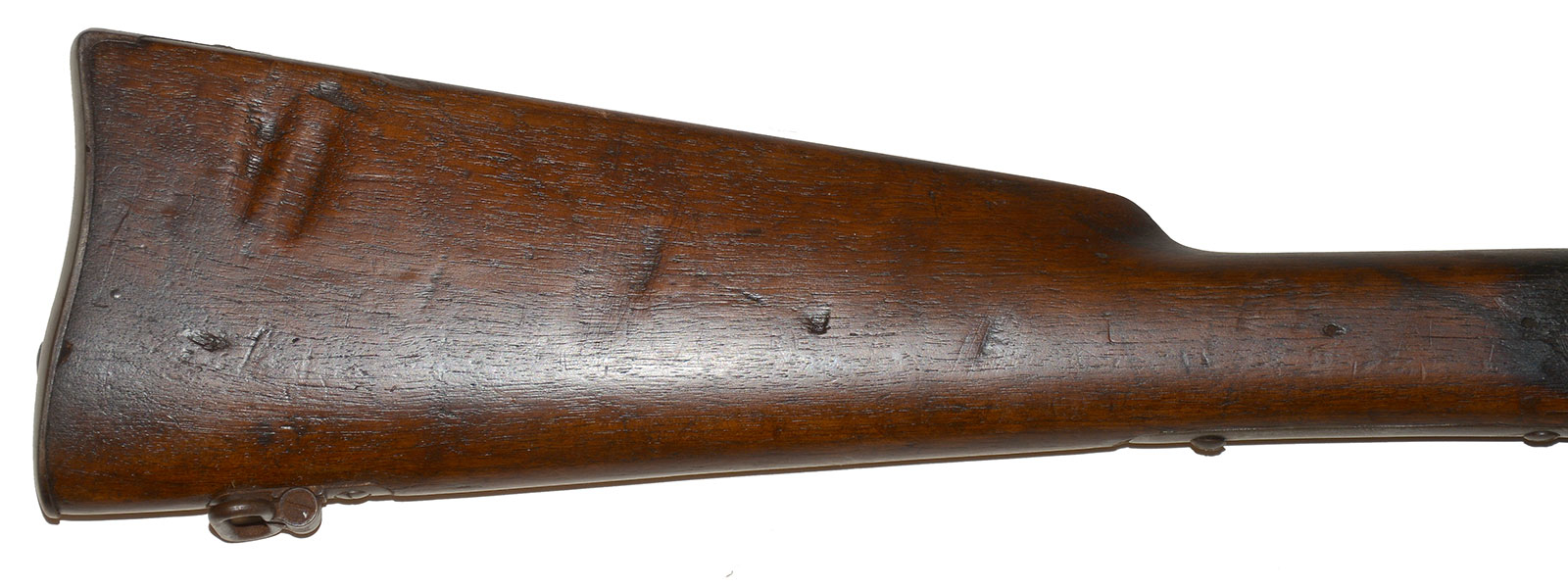
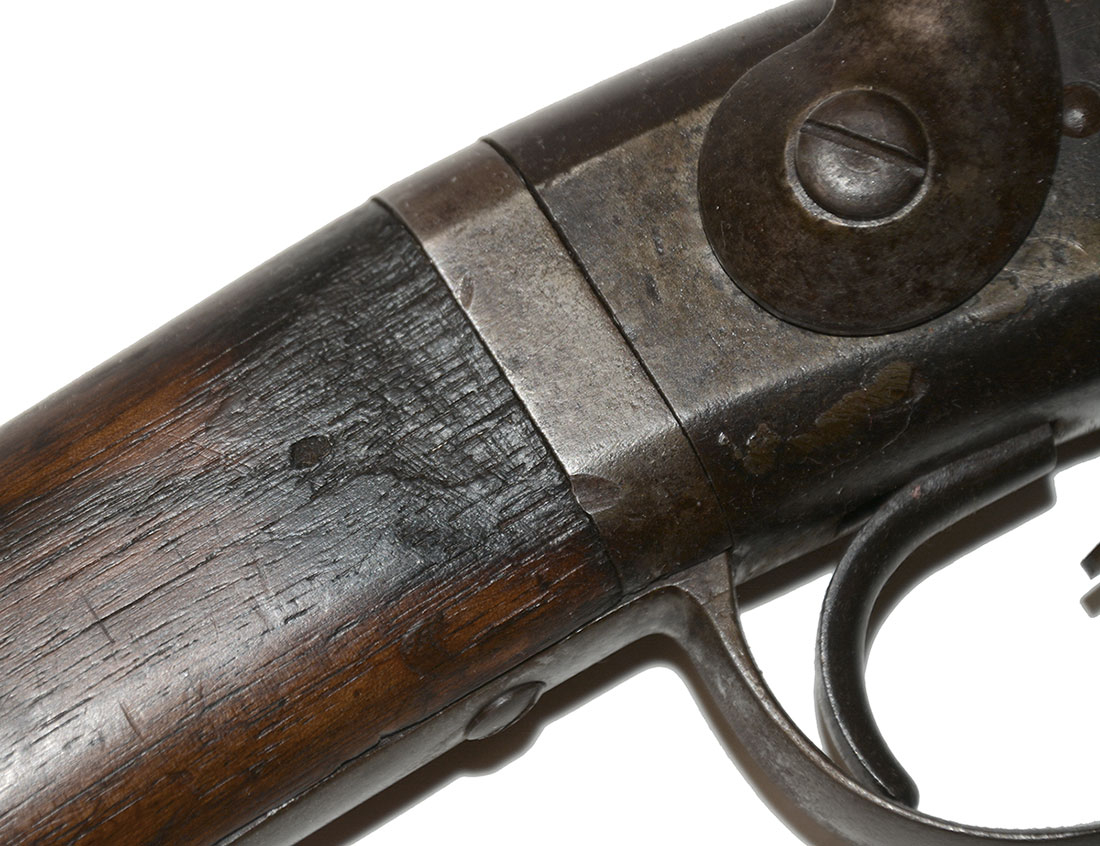
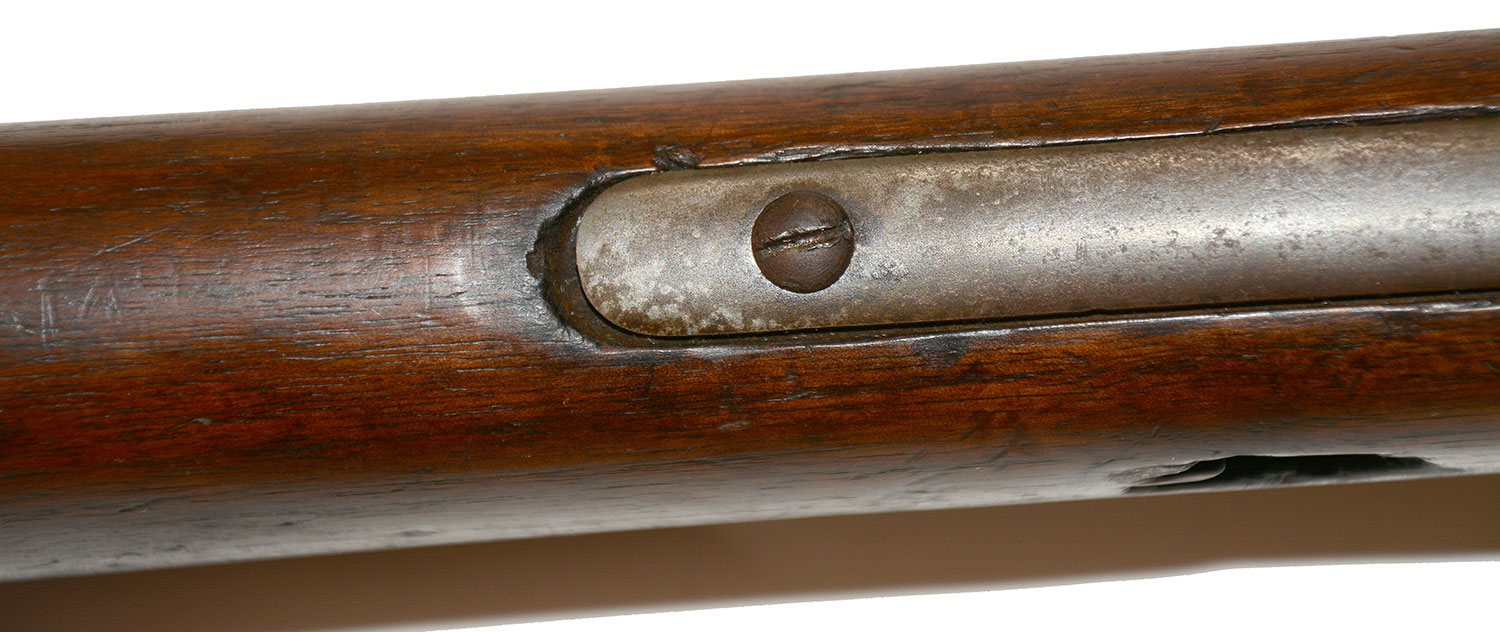
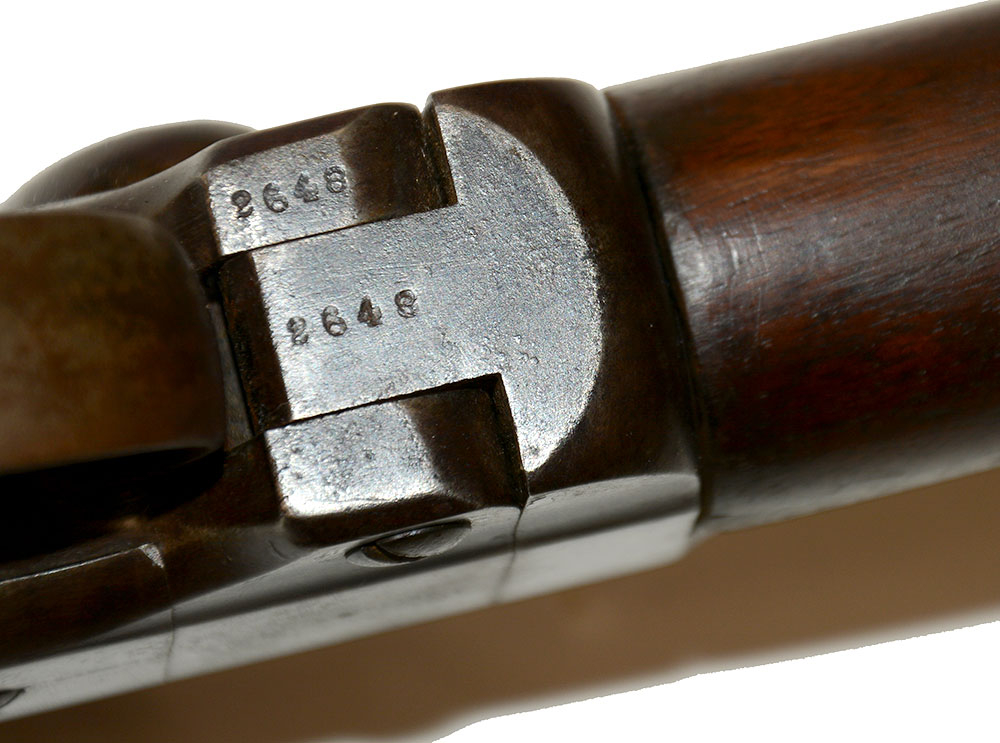
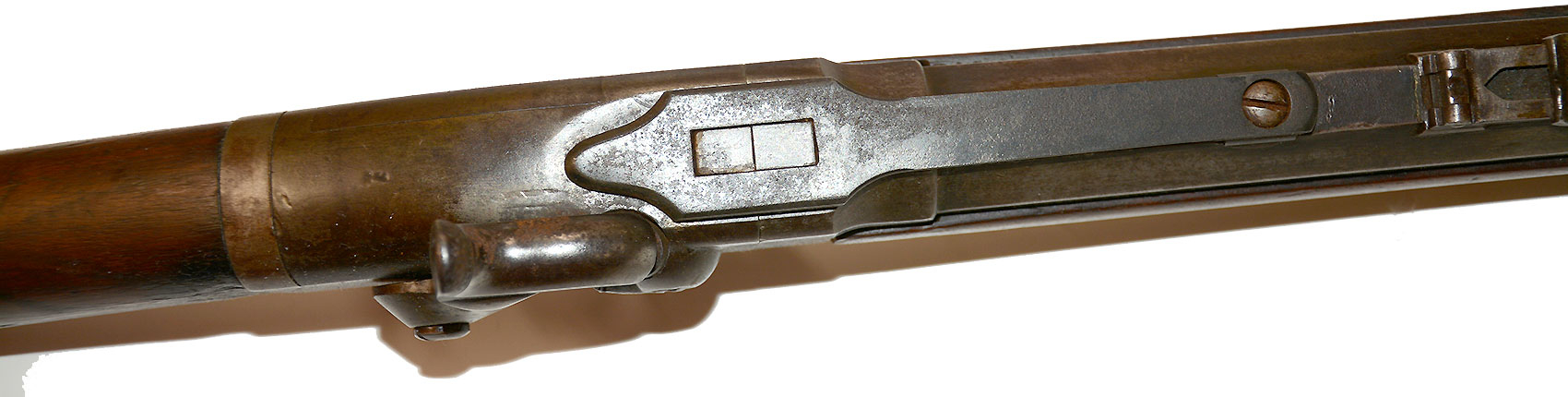
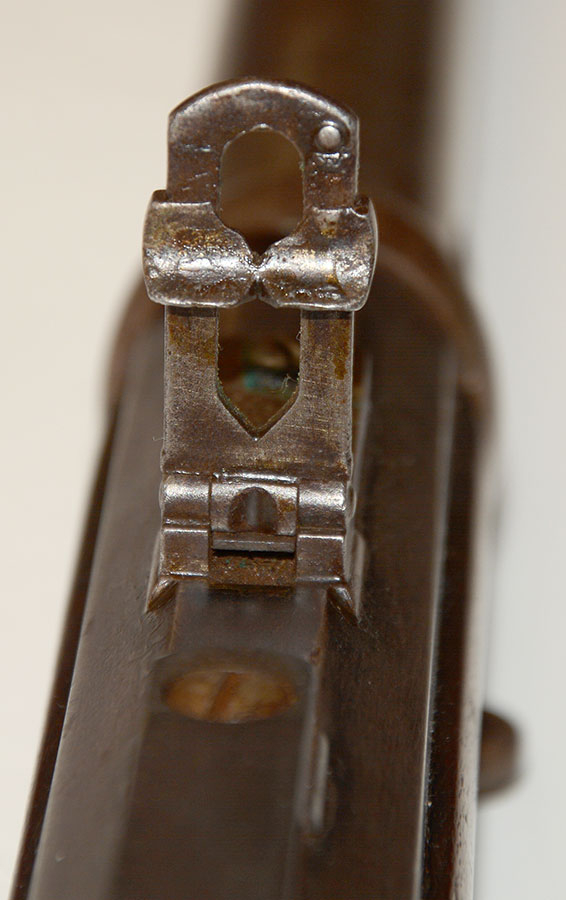
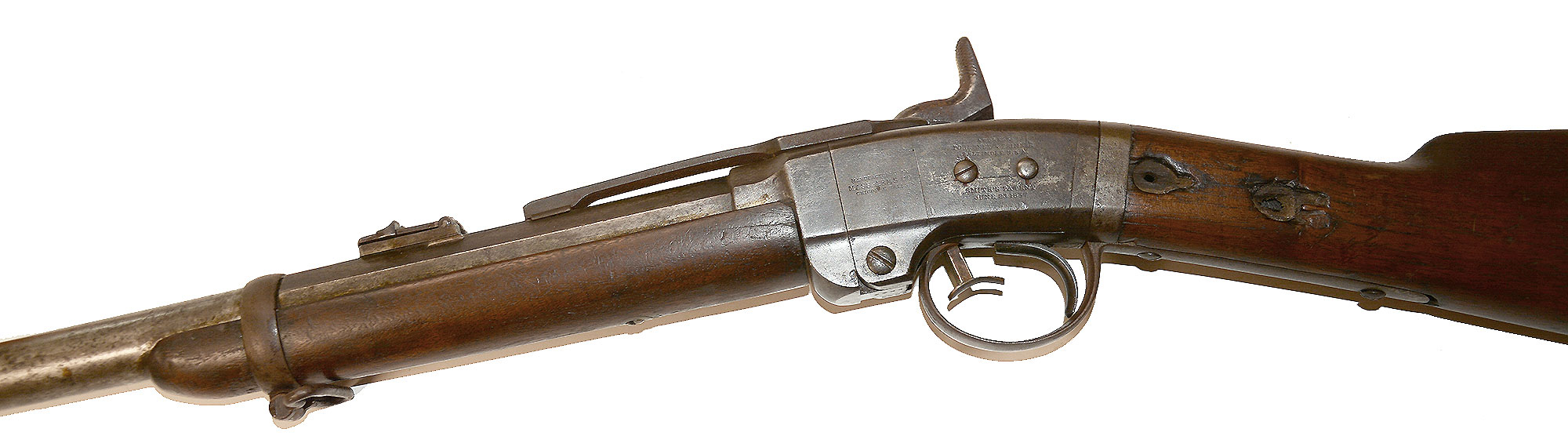
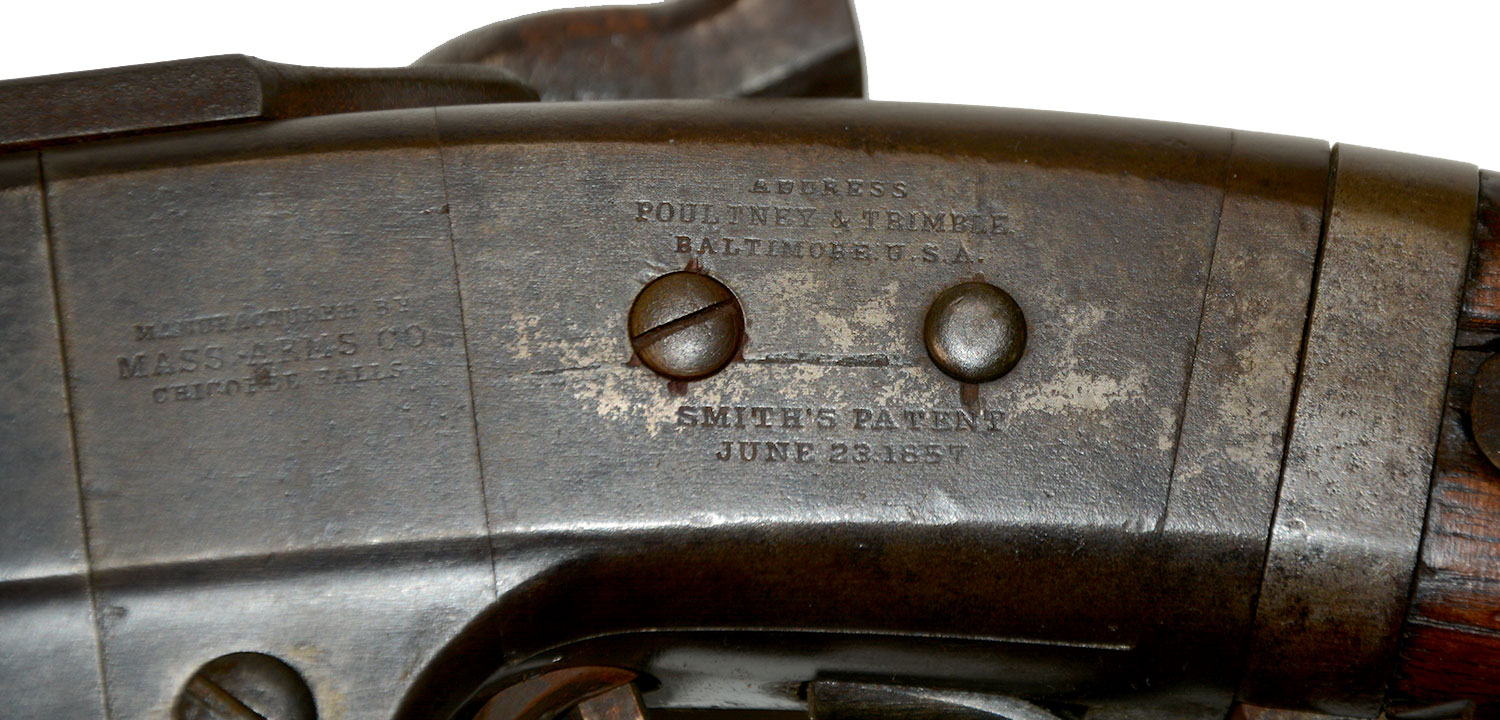
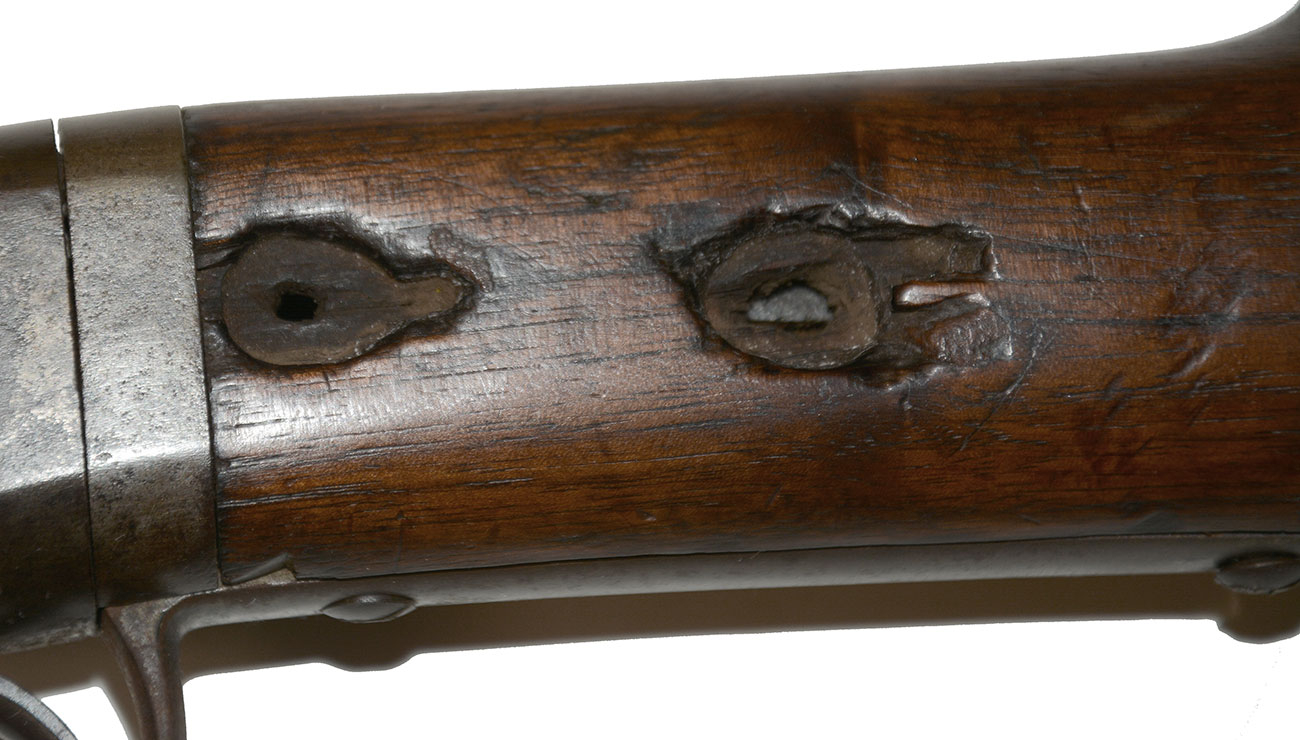
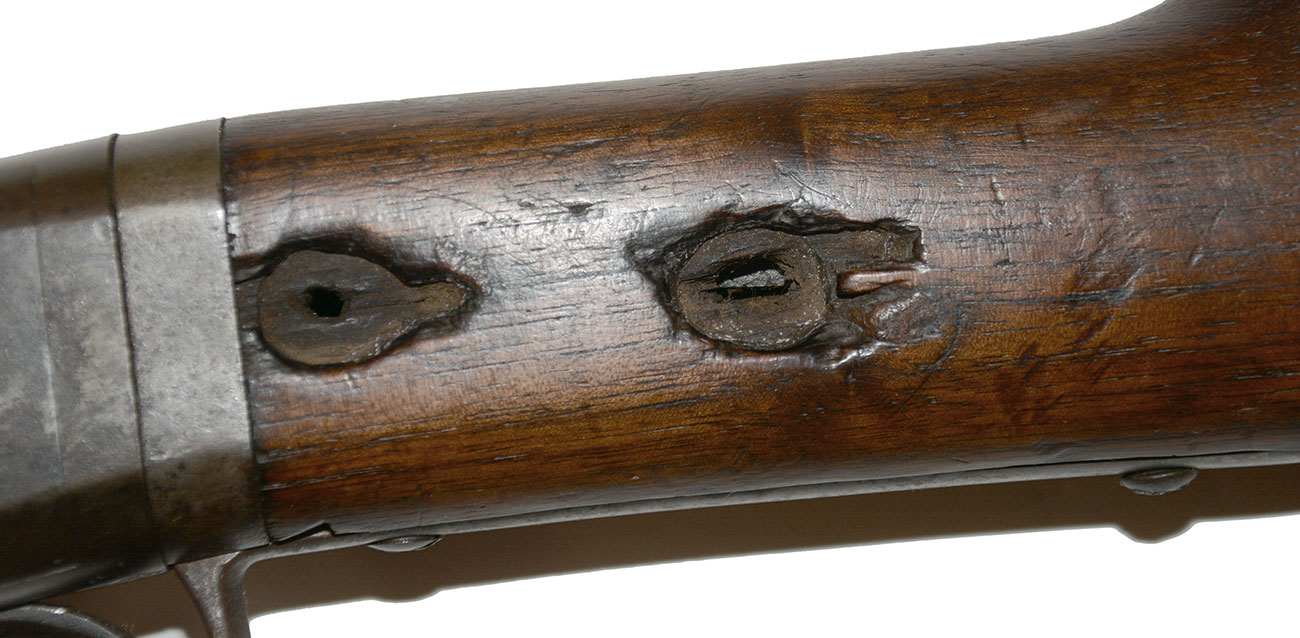
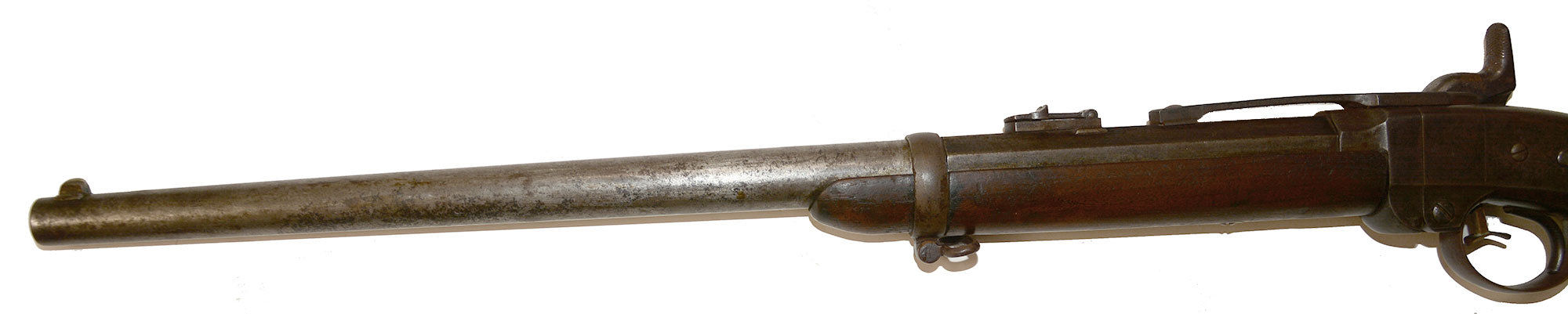
Offered here is an early war breech loading now recognized as a "Model 1861" Smith carbine. The Smith was among the top four cavalry carbines procured by the U.S. government and saw extensive service in the war. Patented by a New York physician in 1855 (with some additions in 1856 and 1857,) the .50 caliber carbine is hinged in the middle, exposing the breech for insertion of a rubber case or paper and foil cartridge pierced at the bottom for ignition by a standard percussion cap. Poultney and Trimble of Baltimore acted as agents on commission, selling the government some 31,002 from January 1862 to June 1865, with some others sold on the commercial market through military goods dealers such at Schuyler, Hartley and Graham. This carbine having sling swivels rather than a side mounted saddle bar and ring is erroneously called the "artillery model" but this is "gun show wisdom". The serial number which matches throughout the carbine is 2648 and dates the weapon to mid-1862 if not earlier. The frame on the left side is stamped "ADDRESS POULTNEY & TRIMBLE BALTIMORE, U.S.A." over: "SMITH’S PATENT JUNE 23, 1857". And at the front of the receiver in three lines: "MANUFACTURED BY MASS ARMS CO. CHICOPEE FALLS." The overall condition of the weapon is good showing honest period mounted field use with all the expected dings and bumps. There are no breaks or cracks but on the left side of the stock close to the frame are two 1/2 diameter blind holes that certainly supported a saddle ring bar which is now gone (this modification was certainly done by a Confederate after this gun was captured. This will become evident once you read the carbine owner's history that follows). The gun's metal is gray with little original finish remaining. The bore is dirty, but the rifling is very good. The front and rear sights are in place. The lock mechanism is perfect. Both factory sling swivels are intact.
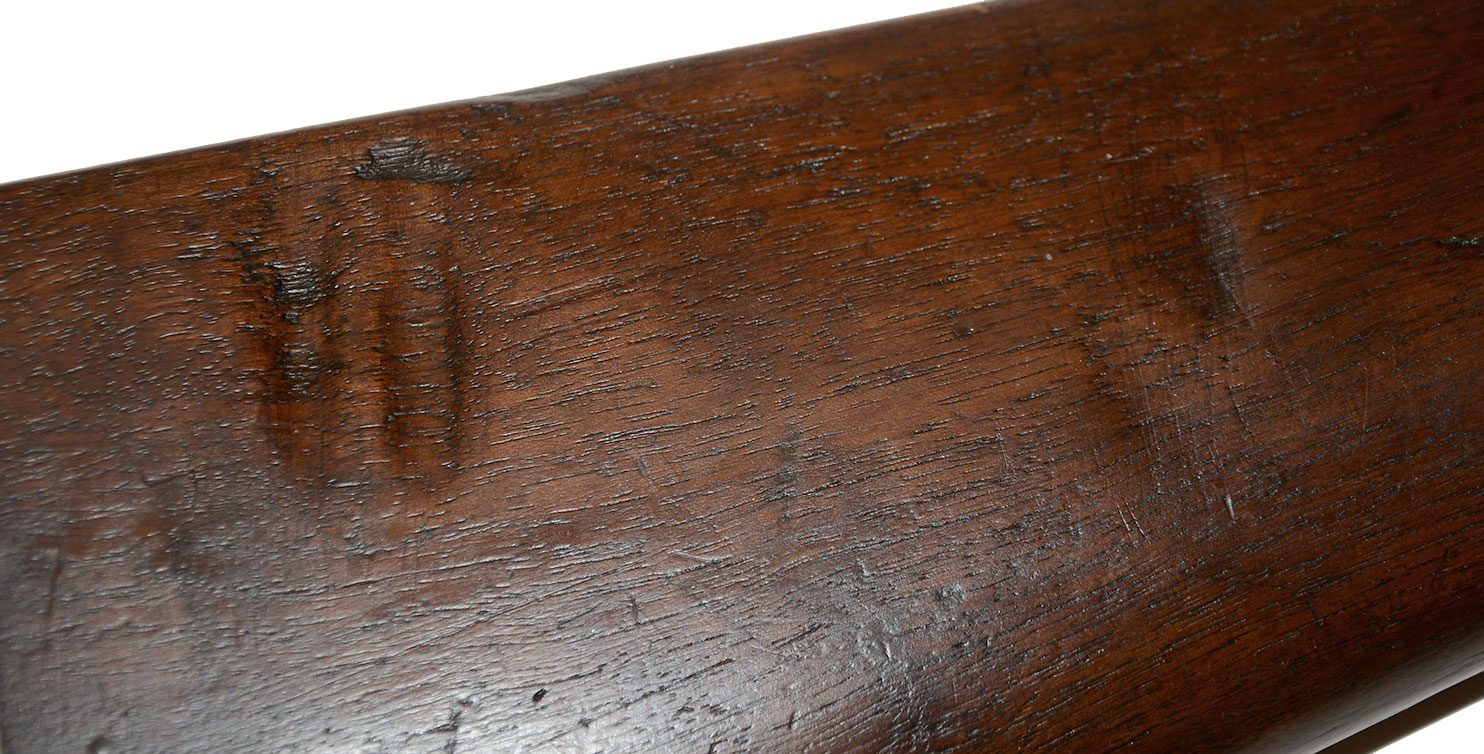
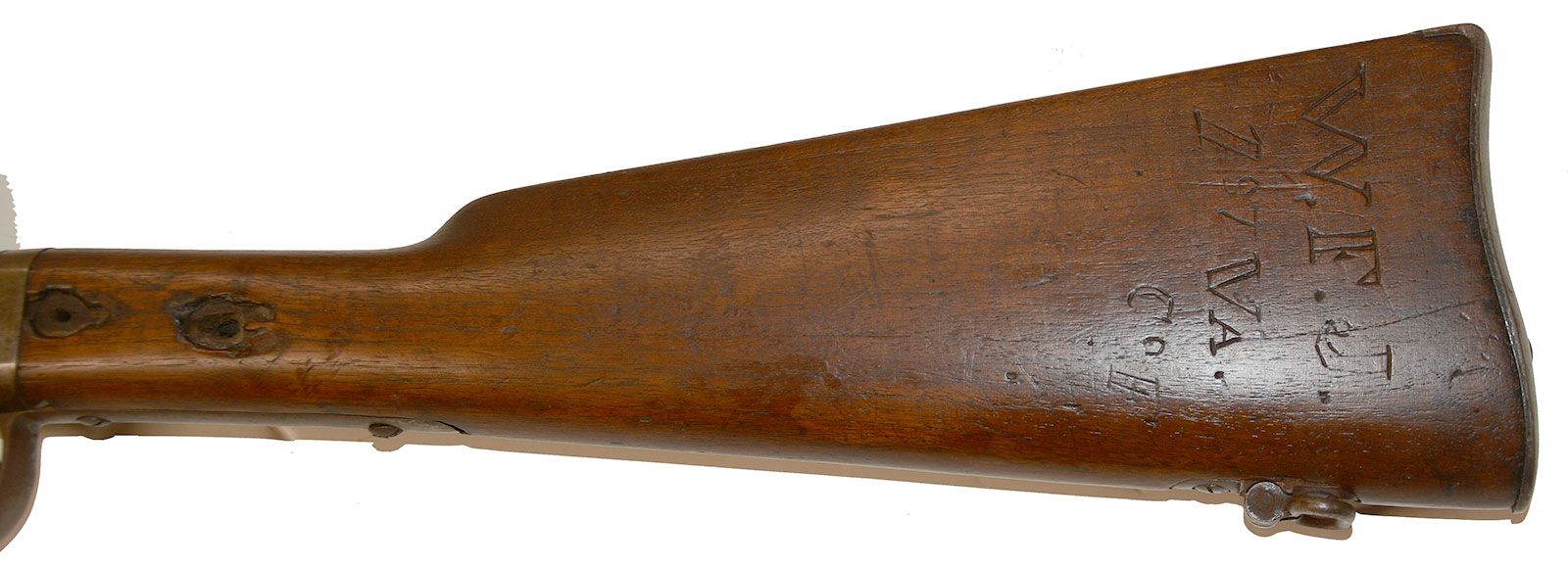
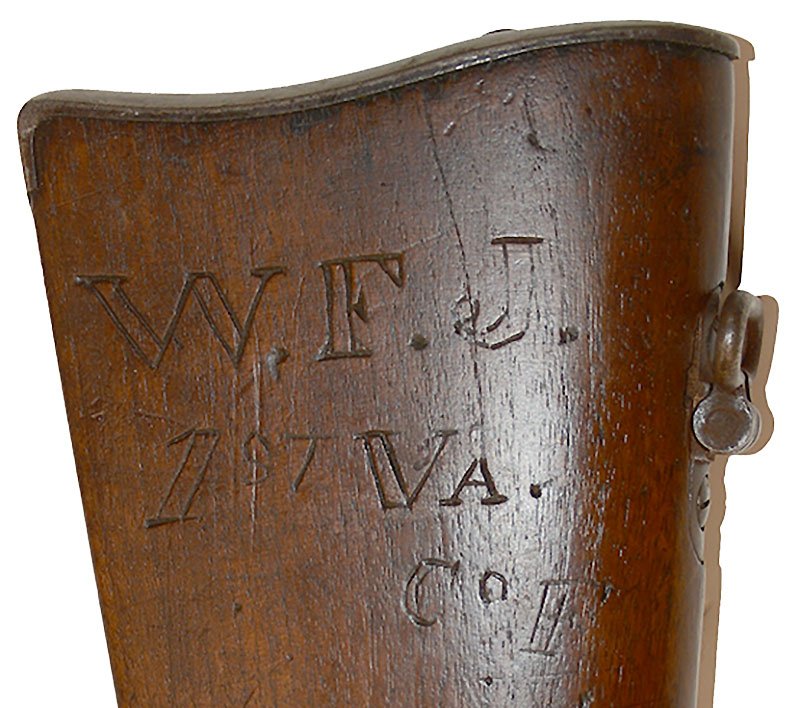
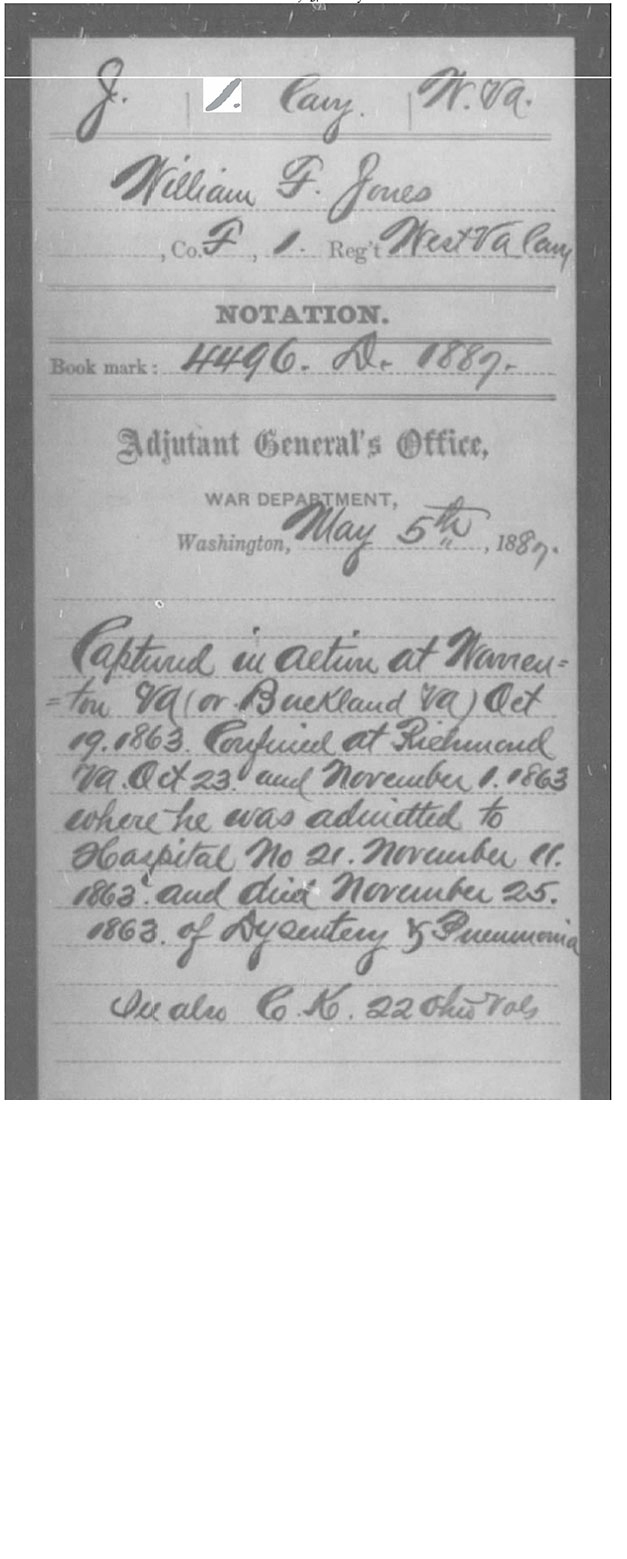
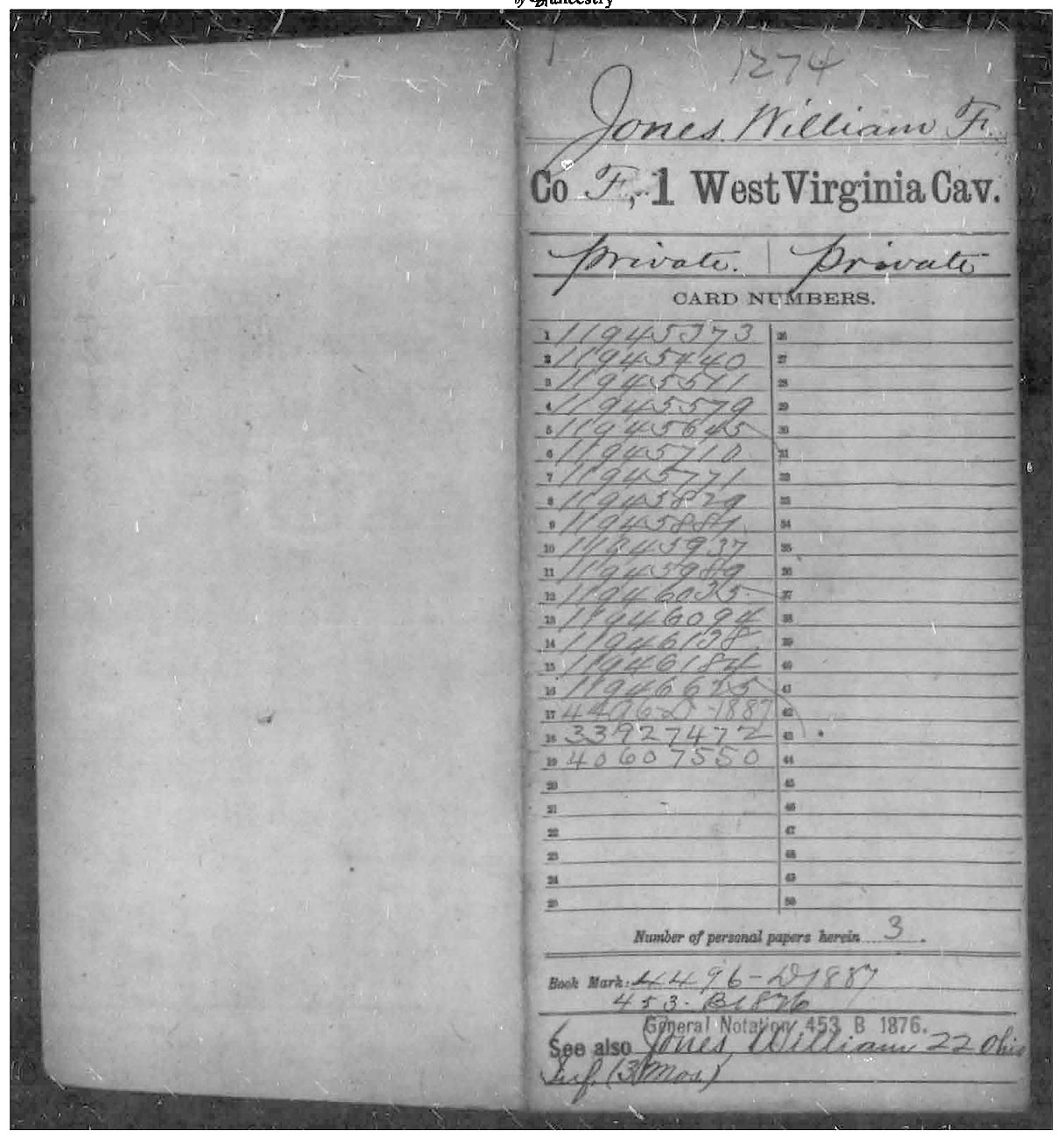
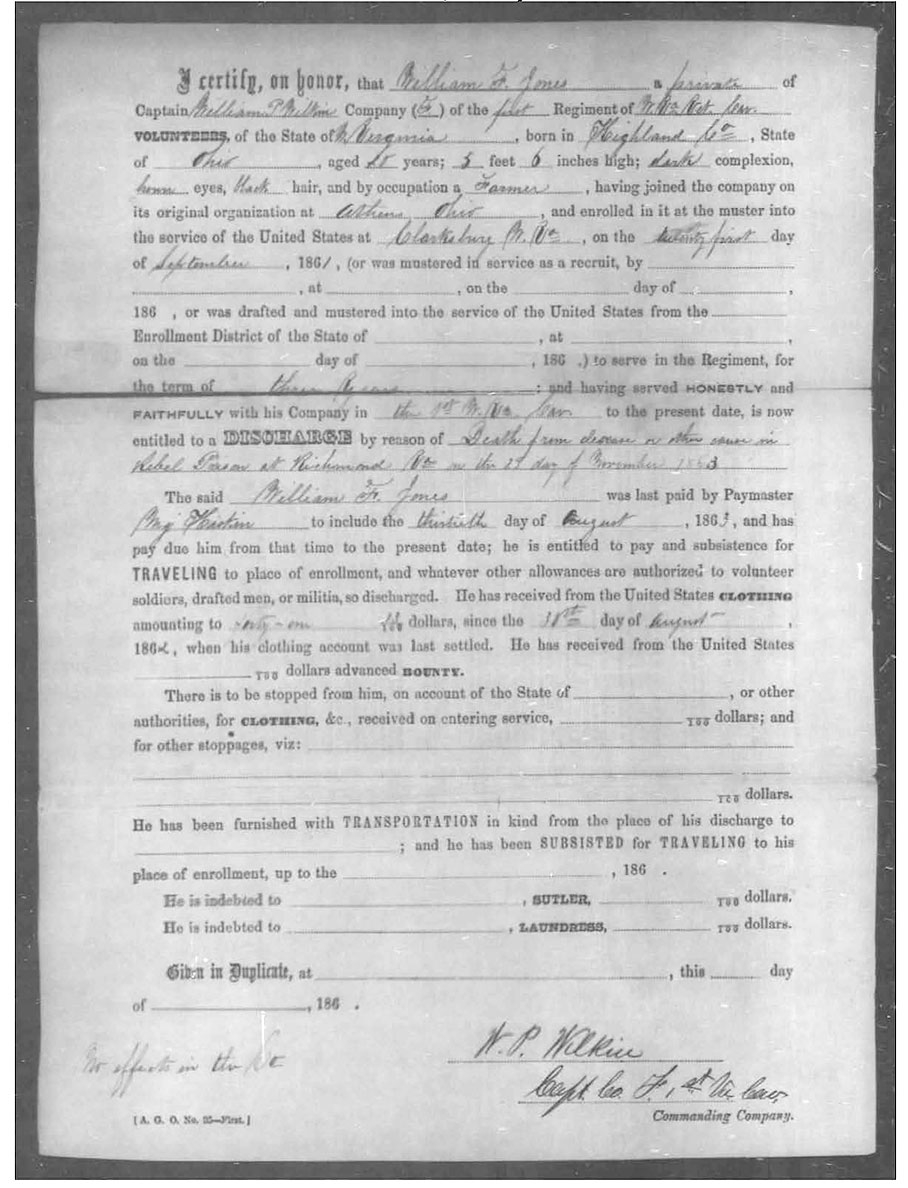
Very neatly carved on the left butt stock in approximately one-inch upright capital letters is: "W.F.J." over " 1st VA." over "Co F". This is William F. Jones of the First (West) Virginia Cavalry. Company F. The lad enlisted in the summer of 1861, and his history is that of the regiments until he was captured at the Battle of Buckland Mills Virginia October 19th, 1863. "Three months after the Gettysburg Campaign, the Army of the Potomac under Maj. Gen. George G. Meade and Robert E. Lee's Army of Northern Virginia maintained close contact with each other in Virginia as Meade moved north towards Centreville. After defeat at Bristoe Station five days earlier, Maj. Gen. J. E. B. Stuart’s cavalry shielded the withdrawal of Lee’s army south from the vicinity of Manassas toward the Rappahannock River. Union cavalry under Brig. Gen. Judson Kilpatrick pursued Stuart’s troopers along the Warrenton Turnpike west of Gainesville but were lured into an ambush near Chestnut Hill on October 19th. A division of Rebel cavalry under Maj. Gen. Fitzhugh Lee turned on the Yankee cavalrymen under Brig. Gen. George A. Custer as they rested near the turnpike. Lee's division suddenly attacked from the south, pushing Custer's troopers back across the Broad Run bridge and separating his brigade from the rest of Kilpatrick's command. The Federal troopers were scattered and chased five miles in an affair that came to be known as the “Buckland Races.” Most of the Federal casualties were captured during the retreat. Stuart termed the rout, his last victory over cavalry, “the most complete that any cavalry…suffered during this war.” Custer called the day “the most disastrous this division ever passed through.” Subsequent to his capture Jones died of pneumonia while a prisoner in Richmond, Virginia and was buried there (please see attachments relating to this). His carbine was certainly re-purposed by the Confederates and no doubt subsequently served a Rebel cavalryman well. A very historic weapon. [pe][ph:L]
DISCLAIMER: All firearms are sold as collector's items only - we do not accept responsibility as to the shooting safety or reliability of any antique firearm. All firearms are described as accurately as possible, given the restraints of a catalog listing length. We want satisfied customers & often "under" describe the weapons. Any city or state regulations regarding owning antique firearms are the responsibility of the purchaser. All firearms are "mechanically perfect" unless noted, but again, are NOT warranted as safe to fire!
~~~~~~~~~~~~~~~~~~~~~~~~~~~~~~~~~~~
THIS ITEM, AS WITH ALL OTHER ITEMS AVAILABLE ON OUR WEB SITE,
MAY BE PURCHASED THROUGH OUR LAYAWAY PROGRAM.
CLICK HERE FOR OUR POLICIES AND TERMS.
THANK YOU!
Inquire About IDENTIFIED SMITH CARBINE OF THE FIRST VIRGINIA CAVALRY
Most Popular
Historical Firearms Stolen From The National Civil War Museum In Harrisburg, Pa »
Theft From Gravesite Of Gen. John Reynolds »
Selection Of Unframed Prints By Don Troiani »
Fine Condition Brass Infantry Bugle Insignia »
featured item
THE MEDALS OF A CONFEDERATE GENERAL – BRIG GEN. ALLEN THOMAS, JR.
Offered are three medals that were worn proudly by Civil War Confederate Brigadier General Allen Thomas Jr. "Born in Howard County, Maryland, he was an 1850 graduate of the College of New Jersey. He studied law in Maryland and maintained a practice… (1289-32). Learn More »
site search