

site search
online catalog
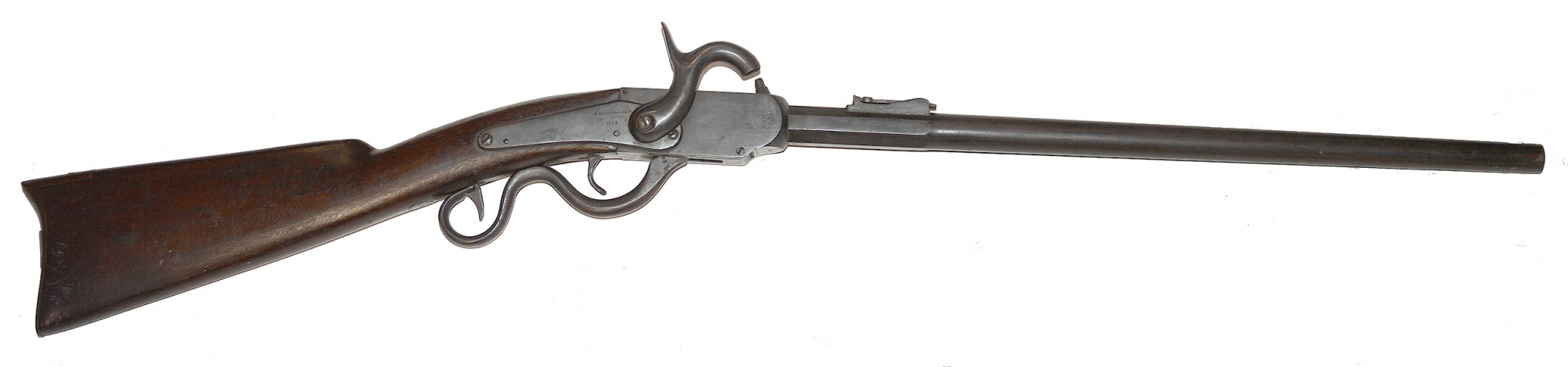
COSMOPOLITAN CARBINE SERIAL NUMBER ID’D TO JAMES E. PHIPPS, CO. E 5th ILLINOIS CAVALRY
Hover to zoom



$5,500.00 SOLD
Quantity Available: None
Item Code: 490-7642
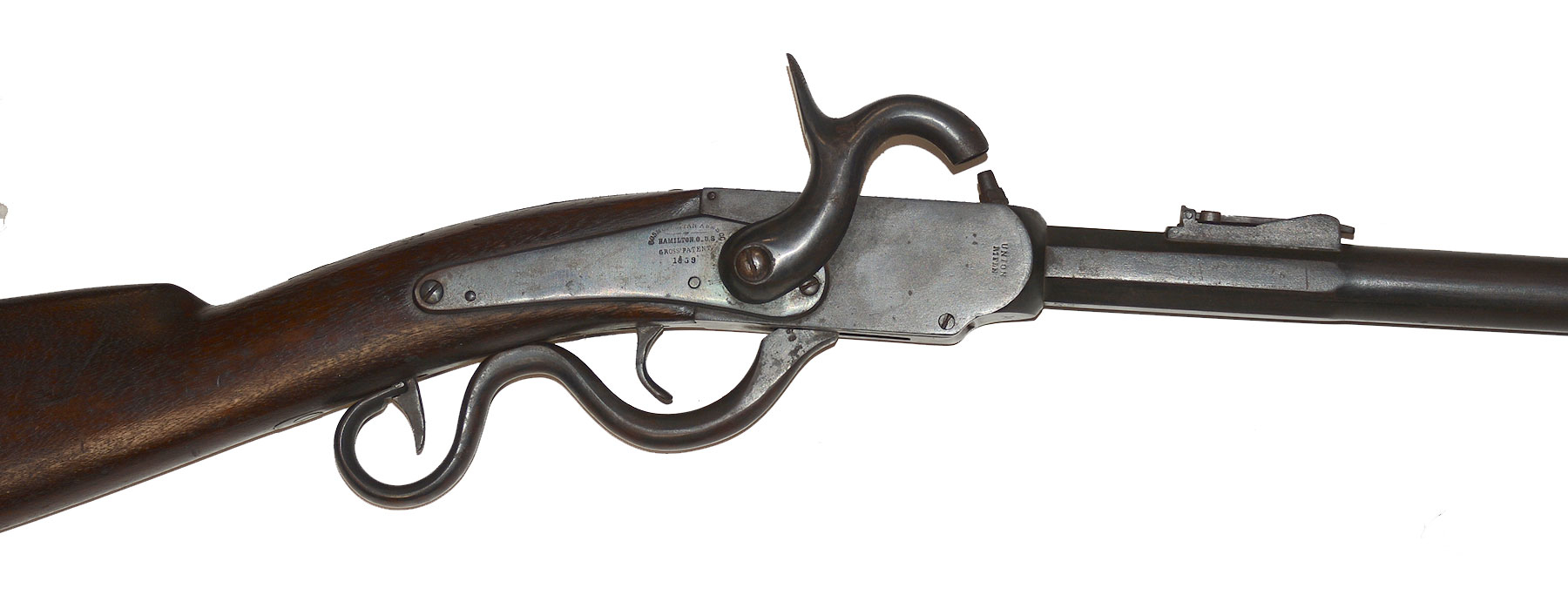
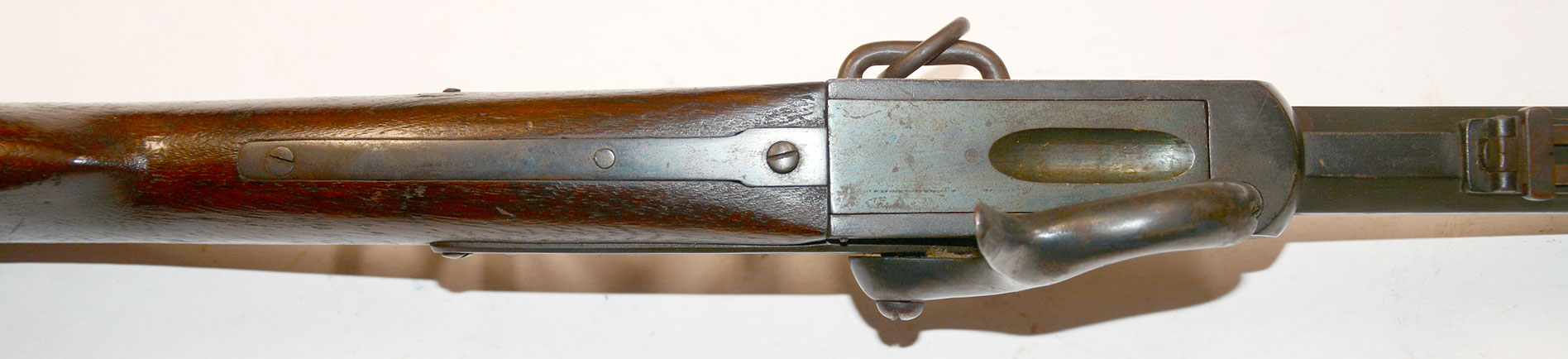
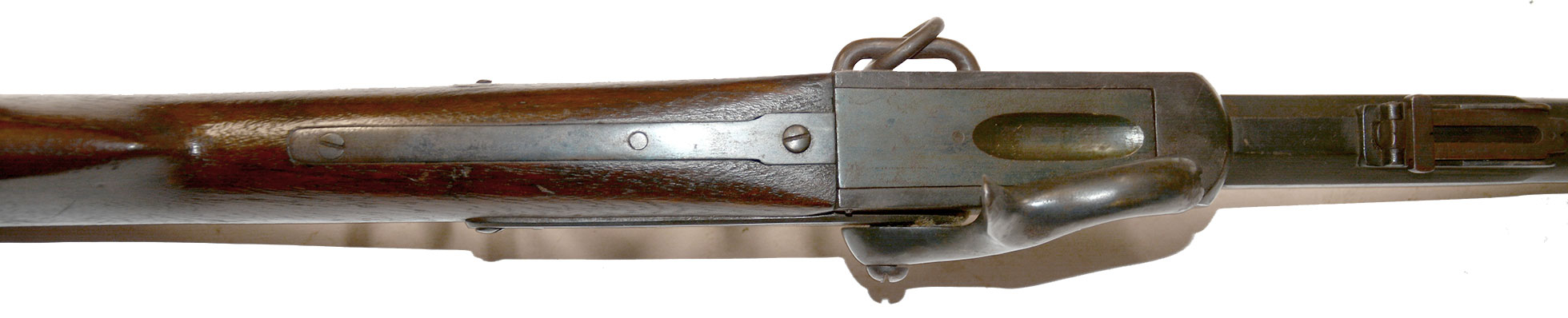
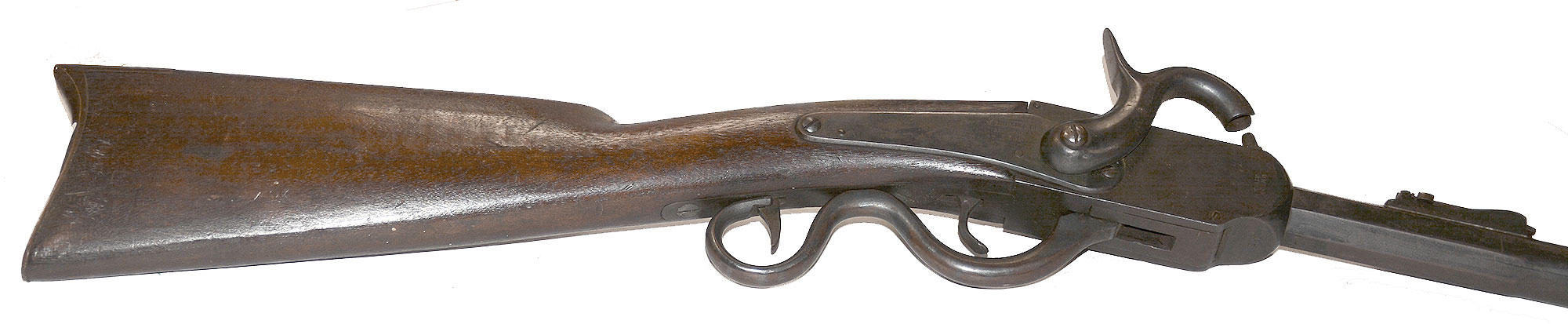
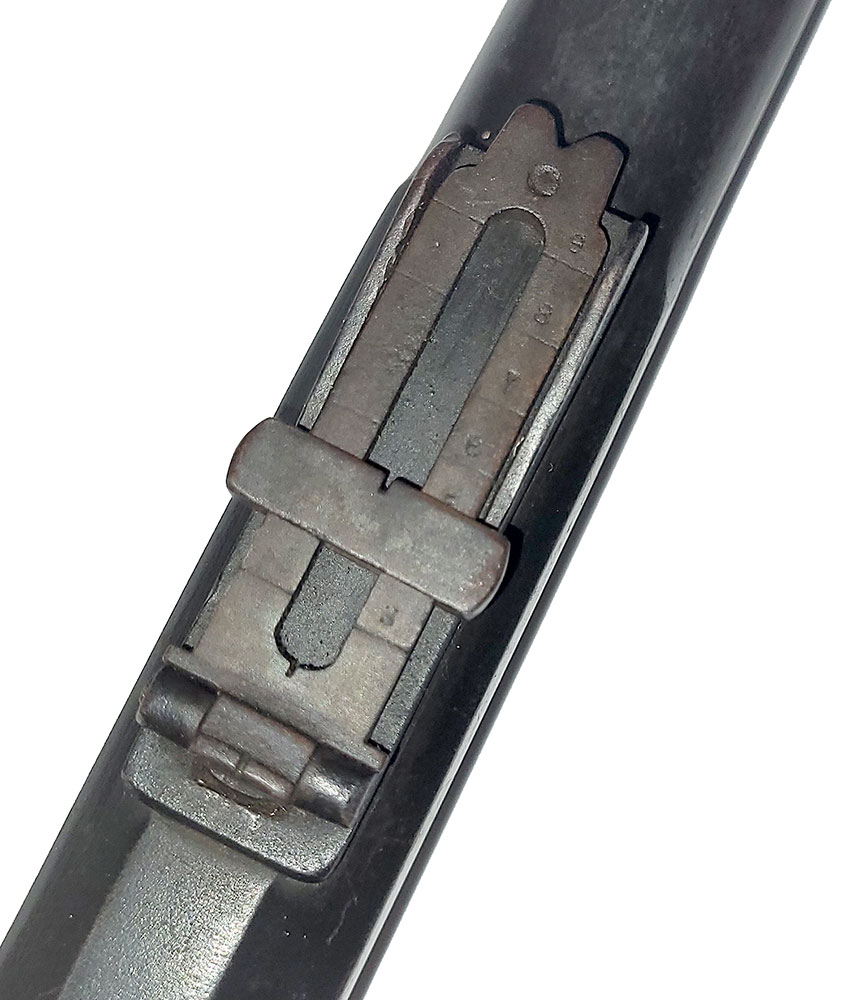
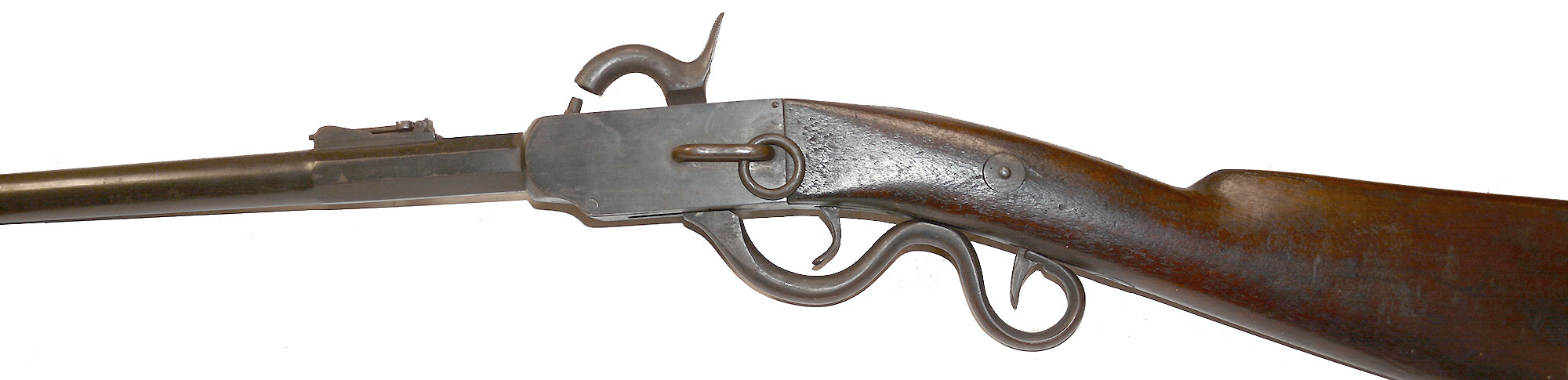
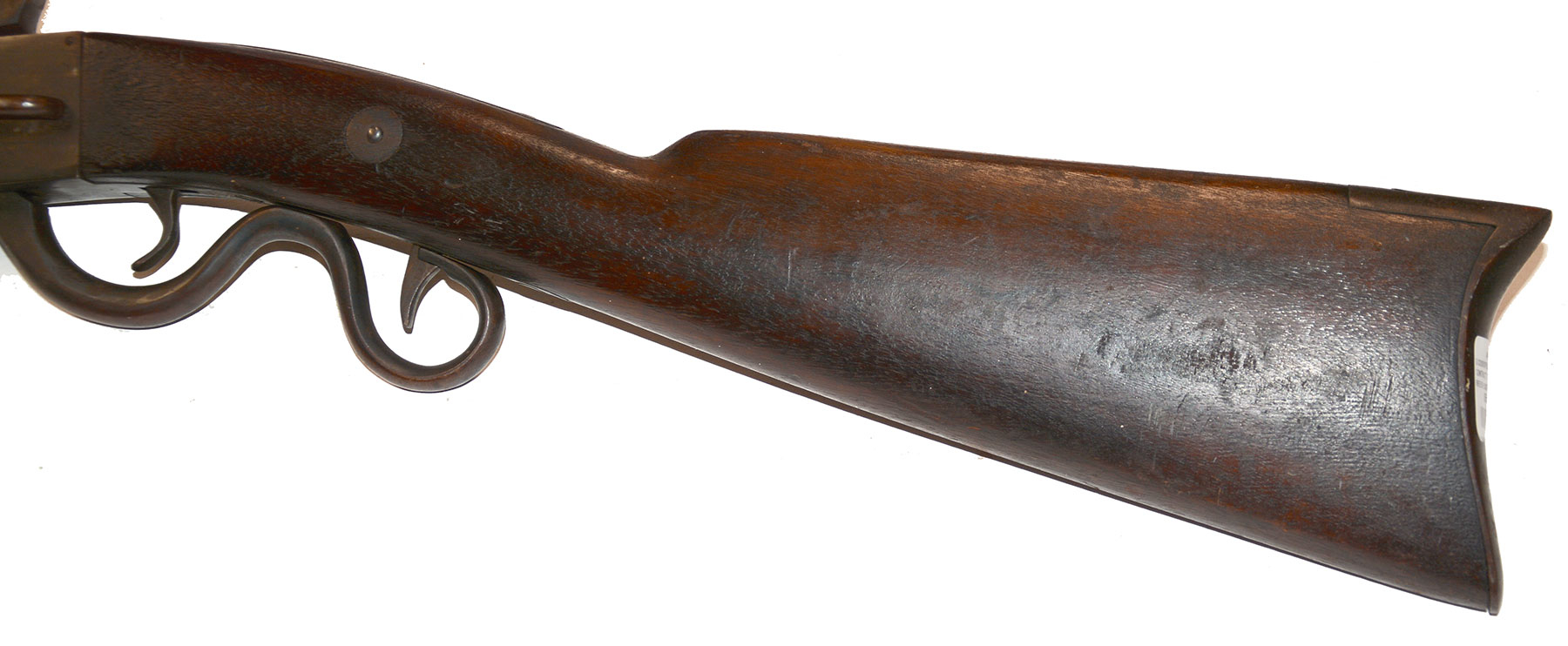
An identified and very good condition example of the single-shot, breechloading, percussion Cosmopolitan carbine. Patented by Henry Gross in 1859 these carbines were manufactured by the Cosmopolitan Arms Company of Hamilton, Ohio, owned by Gwyn and Campbell. A total of 1,140 of this military version were supplied to Illinois through a U.S. contract of December 1861 and were used to arm the 5th and 6th Illinois Cavalry. These are .52 caliber, use a 19” barrel with octagon breech, and have a folding rear sight graduated to 900 yards, with an additional notch on the top of the ladder, and are instantly recognizable by their serpentine hammers and triggerguard, the latter acting as a lever to drop the front of the breechblock for loading a combustible cartridge, ignited by a conventional percussion cap. These were delivered in two lots, on June 18 and July 2, 1862, with about a third of the carbines going to the 5th Illinois Cavalry and the remainder to the 6th Illinois Cavalry. Gwyn and Campbell went on to patent an improved breech mechanism for the carbine and produce another 8,000 or so in 1863 and 1864 that differ in details, have several sub-types, and are generally referred to as Gwyn and Campbells as distinct from these earlier Cosmopolitan carbines.
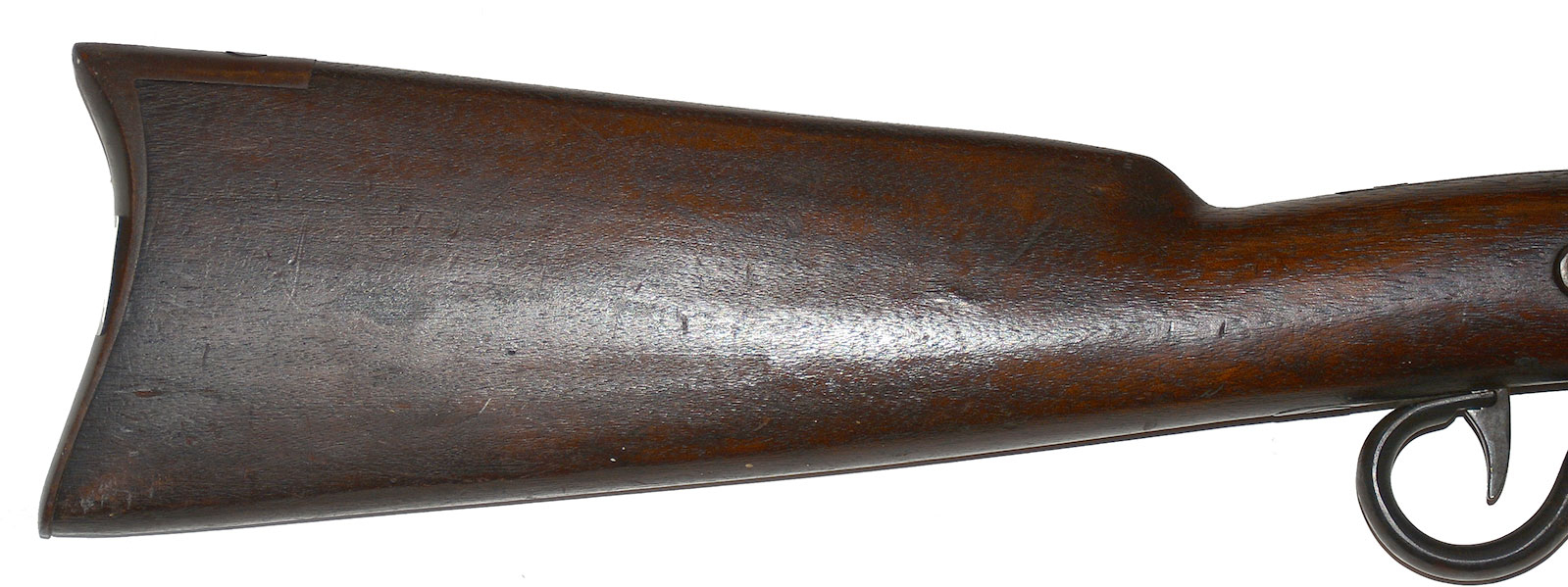
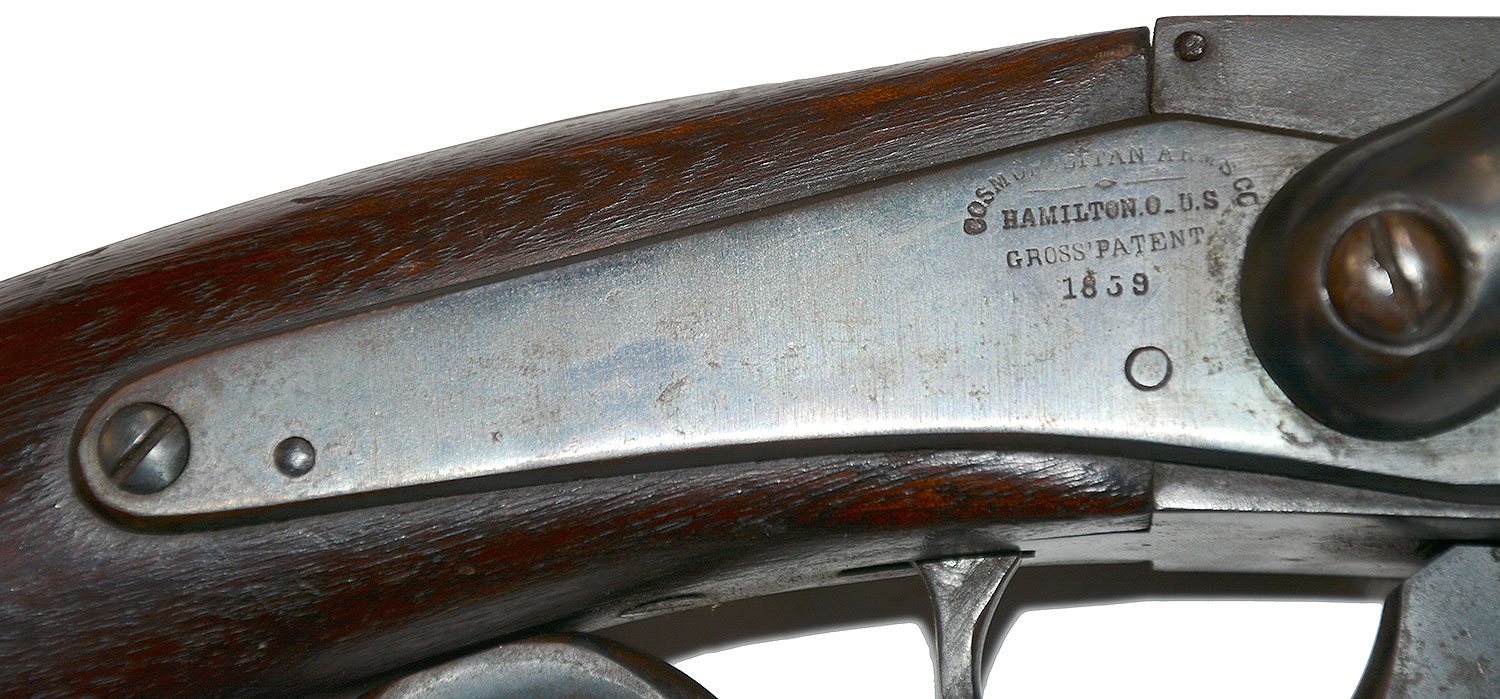
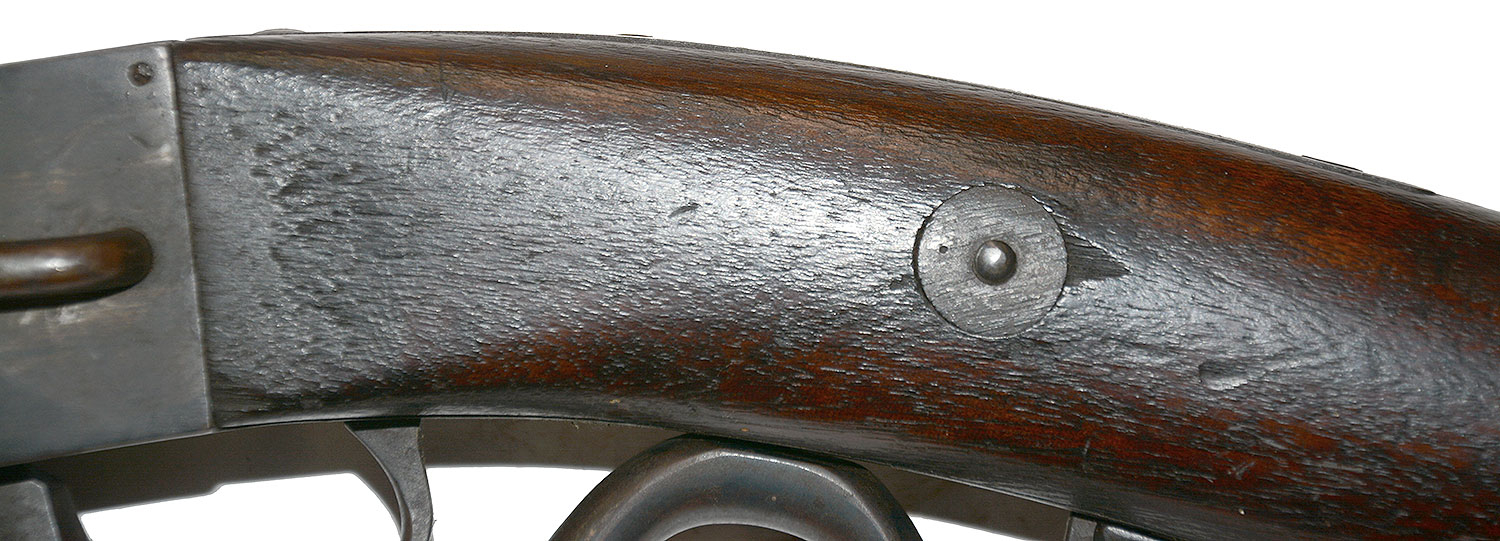
This one is in very good condition, complete with both sights and sling ring in place, showing smooth metal with a lot of muted blue on the barrel and breech, with rear sight in place, showing more brown on the ladder and slide. The wood to metal fit is tight. The wood has a pleasing dark brown tone and good surface with rather minor handing marks and dings, some abrasion on the left butt flat, not unexpected in a cavalry carbine with any use, and a small chip next to the washer on the left wrist. Please see our photos. The mechanics are good. The bore has good rifling though it could use scrub to get rid of some gunk. The markings are clear, showing just slight wear. The Iockplate is marked in four lines just to the rear of the hammer: COSMOPOLITAN ARMS CO. in a curved line over HAMILTON O. U.S. over GROSS' PATENT over 1859. The forward edge of the frame is also marked on the right side “UNION / RIFLE” in two vertical lines.
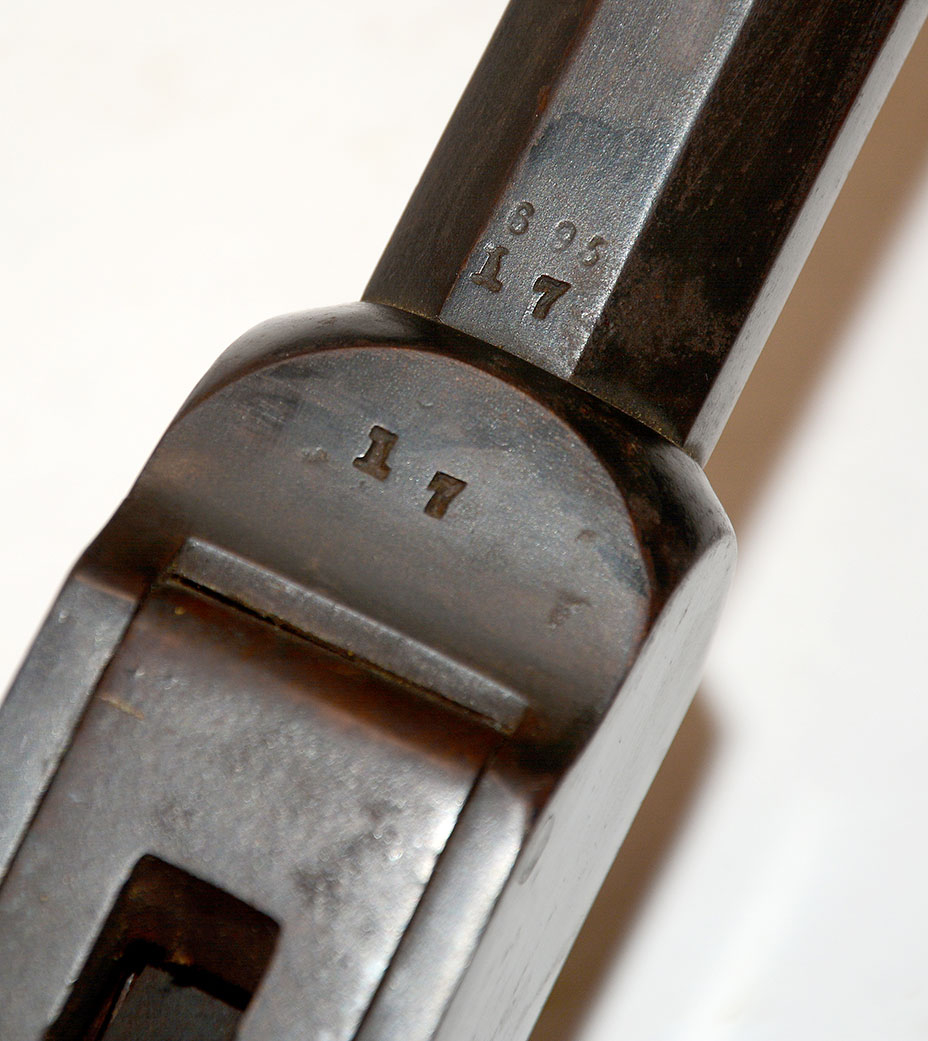
The carbine has an assembly number “17” stamped in several places and is serial numbered “695,” which places it in the first delivery of 840 carbines made on June 18, 1862, and also identifies it in the Order Books of Companies A to M of the 5th Illinois Cavalry as having been issued to James E. Phipps in a list of the “Number and Kind of Arms issued to Co. E 5th Illinois Cavalry by Capt. G.W. McConkey Comdg. Co.,” a copy of which is in the file accompanying the carbine.
Born in Illinois on 10/10/1845, James Elijah Phipps came from a large family and was just turning 18 when he joined the army in 1863. The 5th Illinois Cavalry had been organized and mustered into service in August 1861 and had served in the Vicksburg Campaign and elsewhere. Phipps seems to have been among a group of recruits who joined them in the field since he was formally enlisted 10/6/63 “near Black River, Mississippi,” and mustered in as a private in Co. E on 10/24/63 at “Hebron’s Plantation, Mississippi.” He was described as 5’7” tall, with gray eyes, brown hair, and a fair complexion, a farmer by occupation. He saw active service with the unit. He is listed as present on all bimonthly muster rolls, with the exception of the January-February 1864 roll that says he is, “Absent with expedition under Gen. Sherman,” which would refer to the Meridian Campaign of February 1864 in which the 5th Illinois took part, and he had only some very brief stays in the regimental hospital- for “Sun Pain,” “Intermittent Fever,” “Dysentery,” and “Neuralgia.” The longest stay, for Intermittent Fever from Oct. 1 to Oct. 6, 1864, was just five days. He was promoted to corporal in April 1865 and was listed as a sergeant on the company’s 10/27/65 muster out roll.
Phipps’s entry in the Order Book shows he was first issued a carbine with serial #1706. That number was then crossed out with carbine #695, this carbine, written above it, perhaps indicating that, as one of the older carbines in the regiment, it was thought more suitable for a new recruit, though it was clearly in good shape. In any case, Phipps was in the regiment in time to see a good deal of service. The record of the regiment in Dyer’s Compendium from the time Phipps joined it in October 1863 includes the following assignments: Winslow's Cavalry Brigade, 15th Army Corps to December, 1863. Winslow's Cavalry Brigade, 17th Army Corps, and District of Vicksburg, Miss., to January, 1865. 1st Brigade, Cavalry Division, District of West Tennessee to June, 1865. Departments of the Gulf and Texas to October, 1865.
Dyer also includes the following service for the regiment after Phipps joined it: Expedition to Canton October 14-20. Brownsville October 15. Canton Road, near Brownsville, October 15-16. Near Clinton and Vernon Cross Roads October 16. Bogue Chitto Creek October 17. Robinson's Mills, near Livingston, October 17. Livingston Road, near Clinton, October 18. Oak Ridge January 16, 1864. Meridian Campaign February 3-March 2. Champion's Hill February 4. Jackson February 5. Brandon February 7. Morton February 8. About Meridian February 9 to 13. Hillsboro February 10. Meridian February 13-14. Marion Station February 16. Clinton April 3. Expedition from Vicksburg to Yazoo City May 4-21 (Detachment). Benton May 7-9. Yazoo River May 29. Expedition from Vicksburg to Pearl River July 2-10. Jackson July 7. Expedition from Vicksburg to Deer Creek September 21-26. Expedition to Rodney and Fayette September 29-October 3 (Detachment). Port Gibson September 30. Expedition from Natchez to Woodville October 4-11 (Detachment). Woodville October 5-6 (Detachment). Operations in Issaqueena and Washington Counties October 24-31. Expedition from Vicksburg to Gaines' Landing, Ark., and Bayou Macon, La., November 6-8. Expedition from Vicksburg to Yazoo City November 23-December 4. Franklin Creek, Miss., December 21-22. Moved to Memphis, Tenn., January 24, 1865. Expedition through Southern Arkansas and Northern Louisiana January 26-February 13. At Memphis, Tenn., till June. Expedition into Northern Mississippi March 3-11. Moved to Alexandria, La., via Red River, July 1, thence march to Hempstead, Texas, August 12, arriving August 26, and duty there till October. Moved to Springfield, Ills., October 6-17. Mustered out October 27, 1865.
This is a strong example of a Cosmopolitan carbine with a good identification to a soldier with active service in the 5th Illinois Cavalry and perhaps even prior use in the regiment as well. Phipps, himself, survived to return to Illinois, resume farming, marry twice and father at least nine children. He passed away 12/31/1917 in Janesville, Illinois. [sr][ph:L]
DISCLAIMER: All firearms are sold as collector's items only - we do not accept responsibility as to the shooting safety or reliability of any antique firearm. All firearms are described as accurately as possible, given the restraints of a catalog listing length. We want satisfied customers & often "under" describe the weapons. Any city or state regulations regarding owning antique firearms are the responsibility of the purchaser. All firearms are "mechanically perfect" unless noted, but again, are NOT warranted as safe to fire!
~~~~~~~~~~~~~~~~~~~~~~~~~~~~~~~~~~~
THIS ITEM, AS WITH ALL OTHER ITEMS AVAILABLE ON OUR WEB SITE,
MAY BE PURCHASED THROUGH OUR LAYAWAY PROGRAM.
CLICK HERE FOR OUR POLICIES AND TERMS.
THANK YOU!
Inquire About COSMOPOLITAN CARBINE SERIAL NUMBER ID’D TO JAMES E. PHIPPS, CO. E 5th ILLINOIS CAVALRY
Most Popular
Historical Firearms Stolen From The National Civil War Museum In Harrisburg, Pa »
Theft From Gravesite Of Gen. John Reynolds »
Selection Of Unframed Prints By Don Troiani »
Fine Condition Brass Infantry Bugle Insignia »
Rare Identified 65Th Ny Sergeant’s Jacket, With Manscript Material: 1St U.s. Chasseurs »
featured item
MORTON’S BATTERY FLAG OF FORREST’S CAVALRY: EX-GUNTHER COLLECTION, CHICAGO HISTORICAL SOCIETY, & TEXAS CIVIL WAR MUSEUM
This is one of two wartime Confederate flags flown by Capt. John W. Morton consecutively as guidons for his battery or simultaneously with one likely as the battery flag and the other as a personal or designating flag while Morton served also as … (1286-621). Learn More »
site search