

site search
online catalog
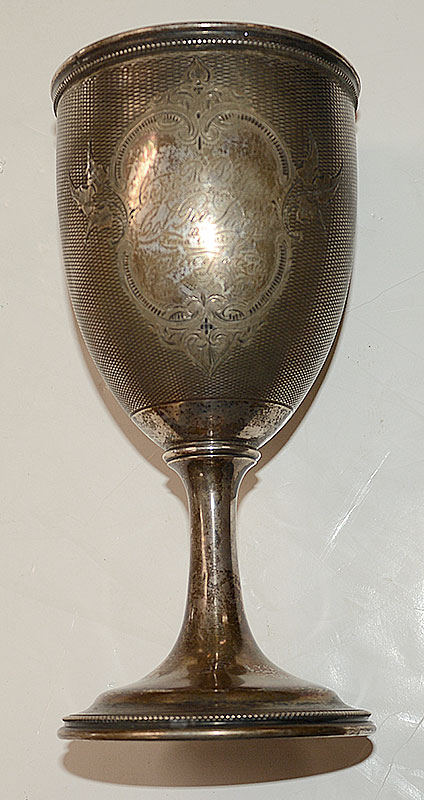
CIVIL WAR PRESENTATION SILVER GOBLET - 11th PENNSYLVANIA CAVALRY FEBRUARY 1864
Hover to zoom
$2,250.00
Quantity Available: 1
Item Code: 2026-475
Shipping: Determined by Method & Location of buyer
To Order:
Call 717-334-0347,
Fax 717-334-5016, or E-mail
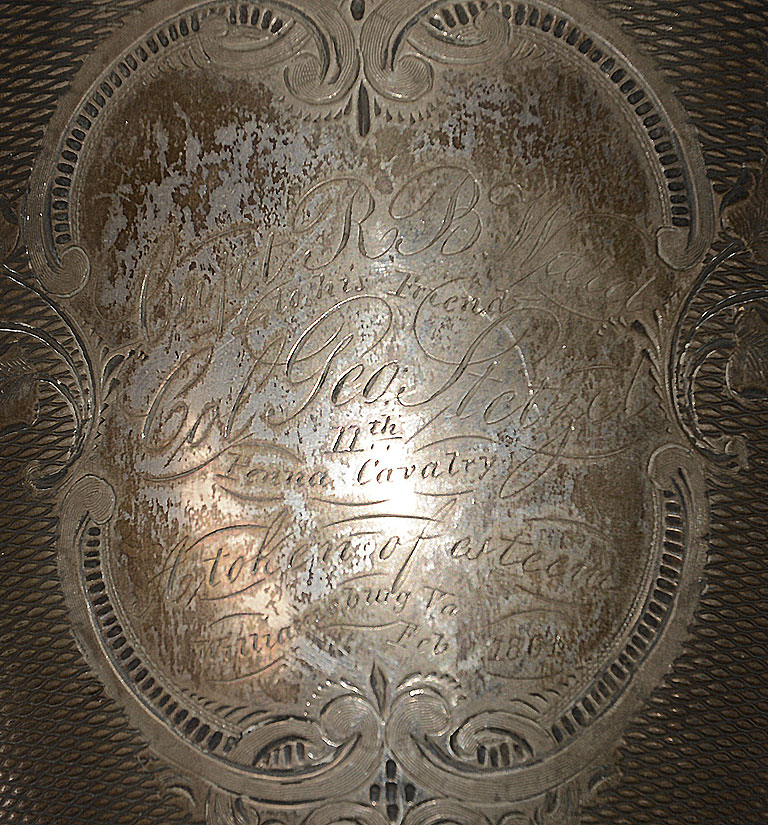
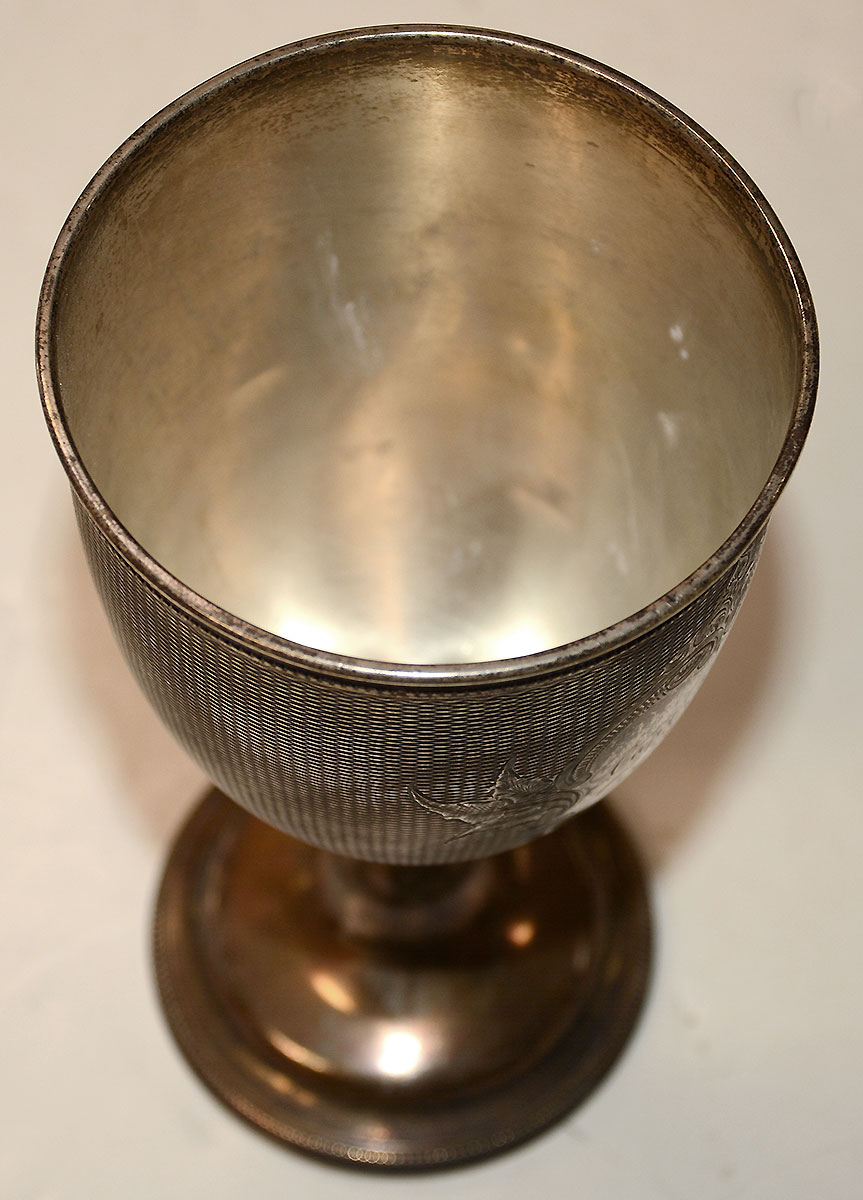
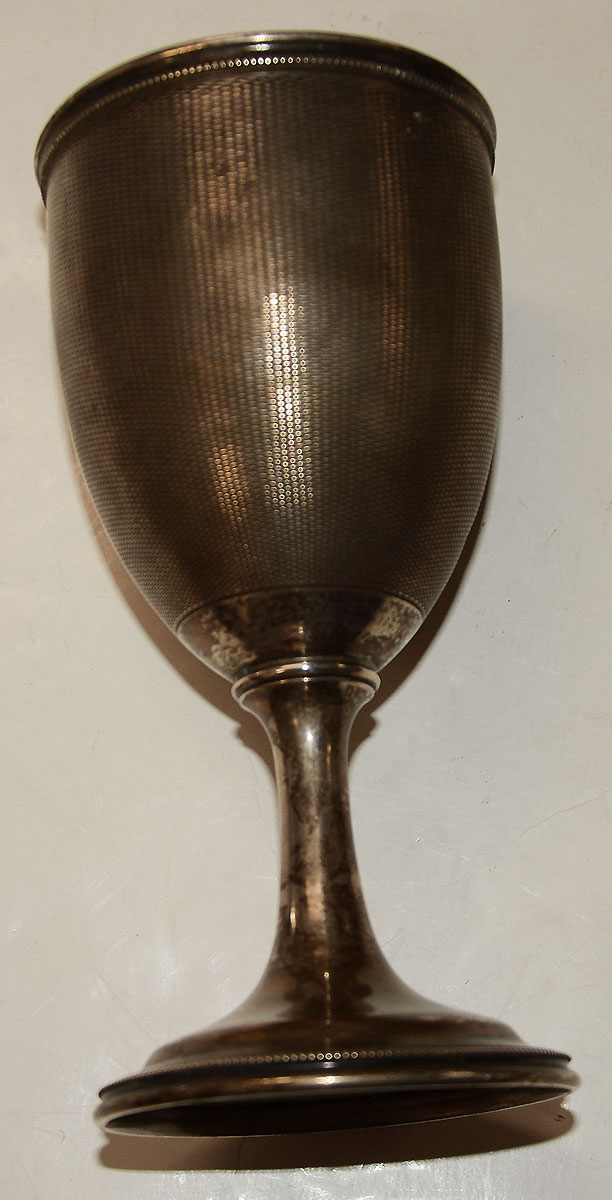
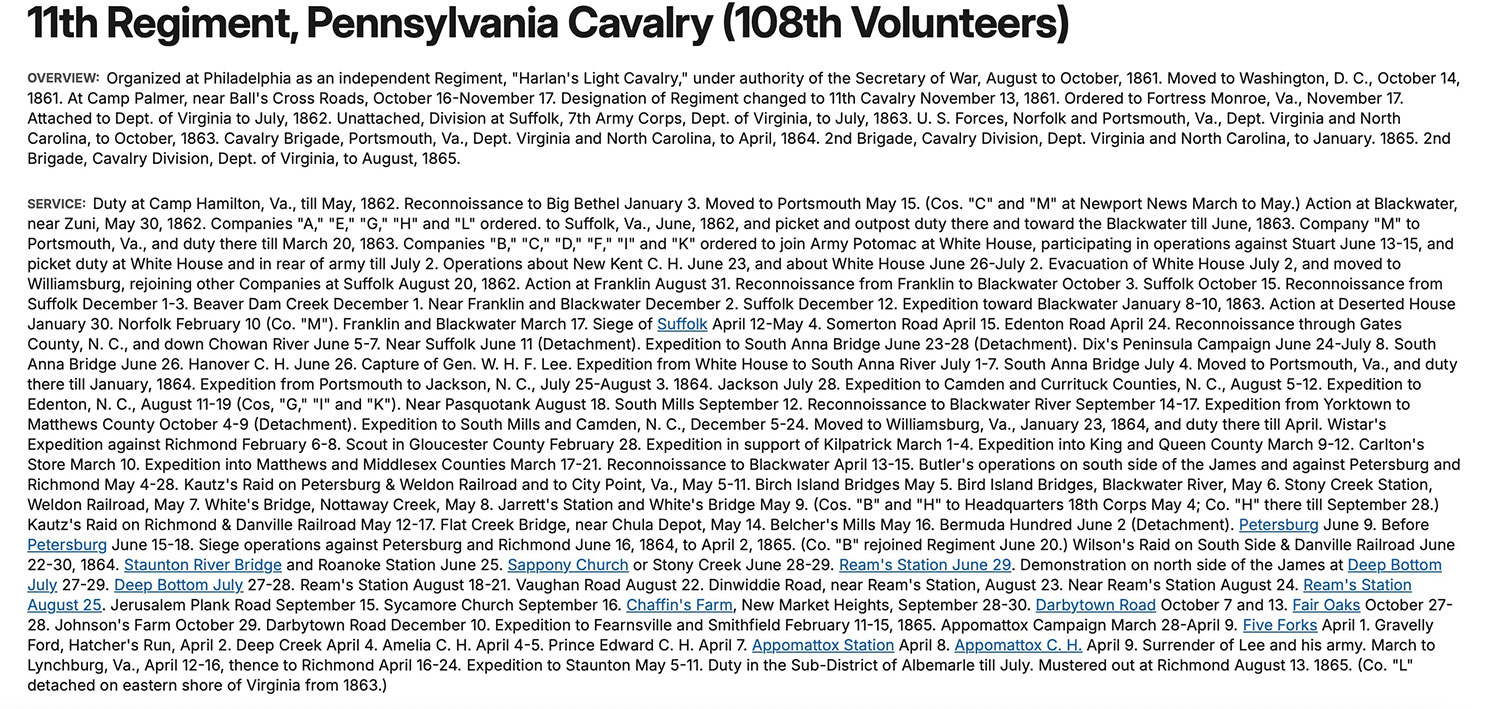
An elegant silver goblet presented by Captain R.B. Ward to Lieutenant Colonel Stetzel of the 11th PA Cavalry in February 1864 as, “A token of esteem.” Stetzel was a fighting officer in more than one respect. The regiment as very active in the Department of Virginia, Department of Virginia and North Carolina, and in the Army of the James, taking part in numerous raids and expeditions against Confederate rail and transportation lines, and frequently engaged in small unit actions as well as larger engagements, losing 11 officers and 108 enlisted men just in killed or mortally wounded in their service from October 1861 to August 1865- a high number for a cavalry unit. We show Dyer’s summary of their service.
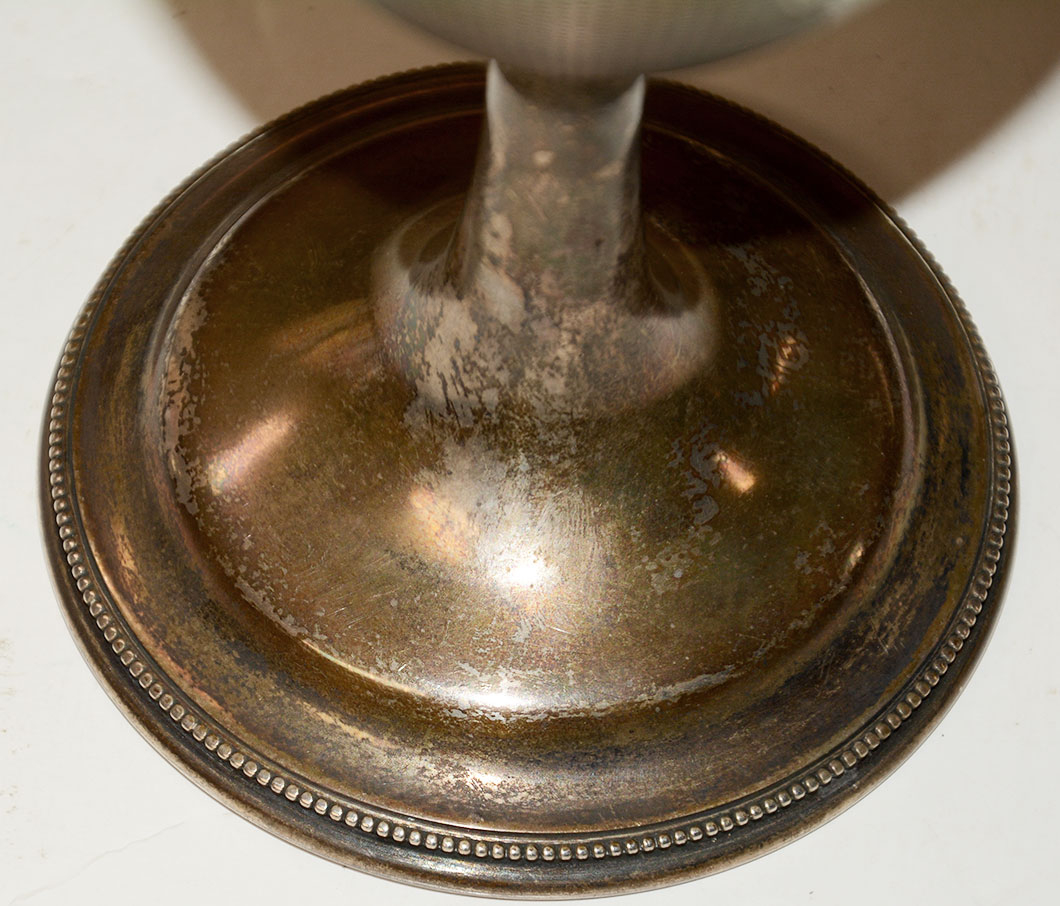
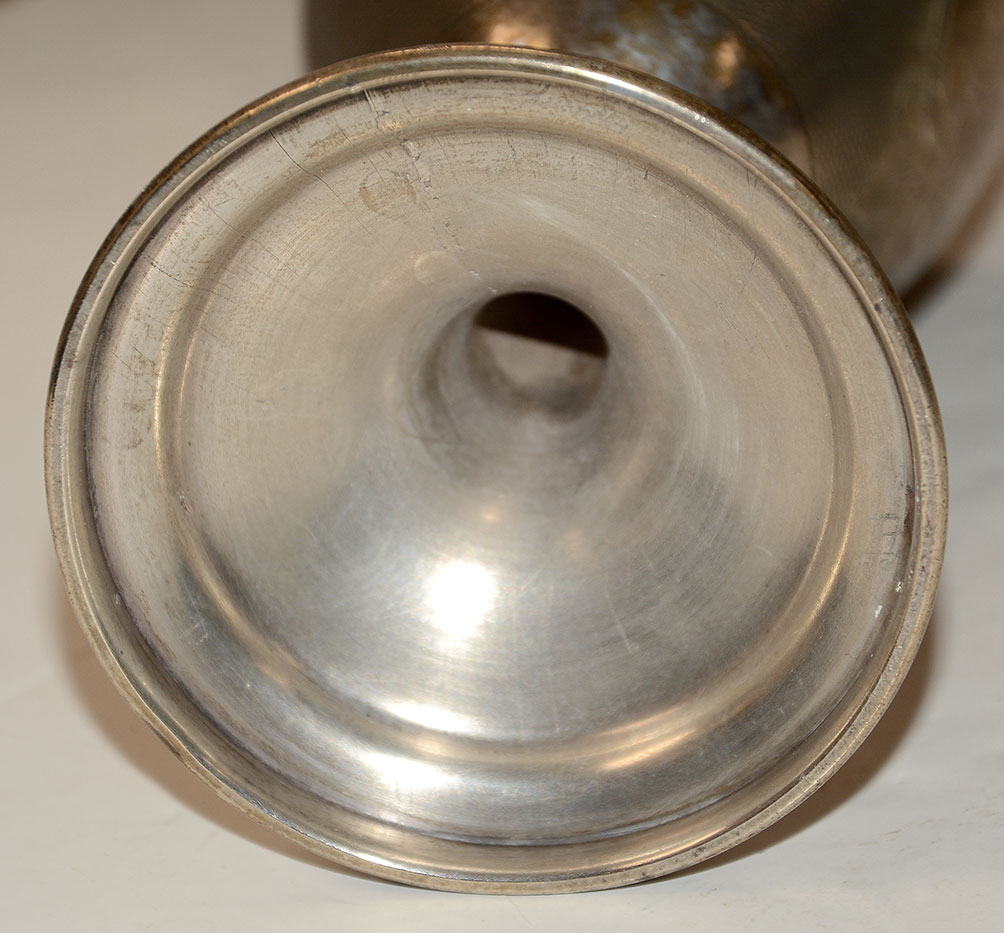
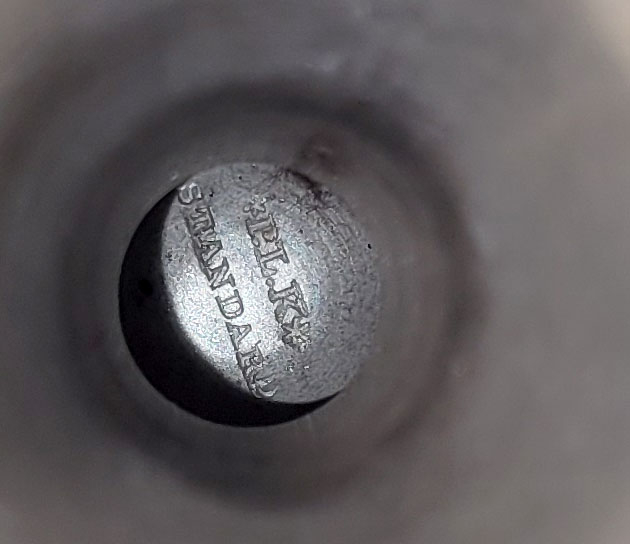
The goblet stands 7-1/4 inches tall. The maker’s mark is on the underside of the cup, visible through the base of the cup’s hollow stem, and reads: “*P.L.K.* / STANDARD,” indicating a coin silver (900/1000) product of Philadelphia silversmith Peter L. Krider. The goblet has beaded borders at the top and bottom edges and the cup is covered with a fine basket-weave pattern of engraving with a large figure-eight shield cartouche on one face, with foliate elements at top and sides, engraved in script and block letters, “Capt. R.B. Ward / to his Friend / Col. Geo. Stetzel / 11th / Penna. Cavalry/ A token of esteem / Williamsburg Va. / Feb 8 (?) 1864.” The cup has no dents or bends, just a little wear on the day of the month, making the “8” a bit uncertain. Records indicate the regiment was posted at Williamsburg from late January to early April 1864, a period in which Stetzel is listed on muster rolls as commanding the regiment, a duty he performed off and on for several months starting in late August 1863, with his name also appearing as author of at least two official reports of operations in which the regiment took part.
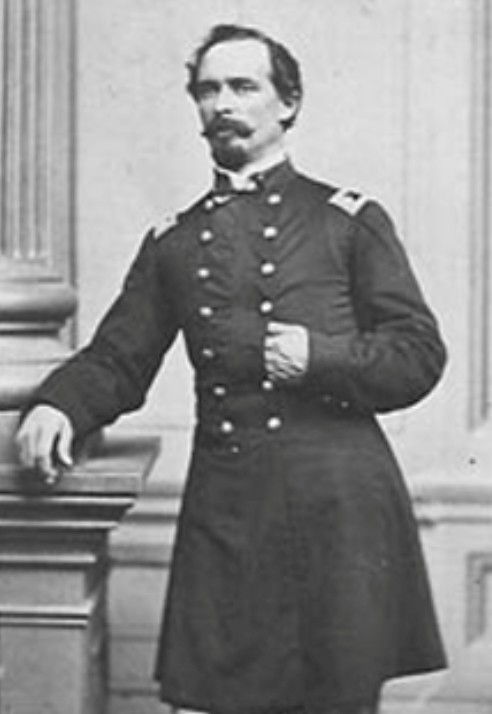
Ward and Stetzel were both from Franklin County, PA, and entered service in the 11th as Captains in the organization of the regiment in early October 1861. In the election of field officers, Stetzel was chosen senior Major and was commissioned and mustered at that rank effective 10/5/61. He was likely helped by prewar experience as an NCO in the regular army (mentioned in the regimental history) and may also be same George Stetzel who had served as a Lieutenant in the 2nd PA Volunteers, an early-war three-month unit, but records are unclear, made so in part by variant spellings of his last name. When the first Colonel was discharged in August 1862 Stetzel was in competition with Lt. Col. Spear for the post. Spear got it and Stetzel was moved up into his position, commissioned and mustered as Lieutenant Colonel as of 8/20/62. He served at that rank until resigning 9/18/64.
Combat with the Confederates was not the only fighting he saw. Relations with Spear were tense to say the least and came to a head April 1, 1863, with Spear placing him under arrest and courtmartialing him for violation of the 6th and 9th Articles of War and with “conduct to the prejudice of good order and military discipline.” What exactly was going on is unclear, but Stetzel apparently refused an order from Spear saying, among other things, “I won’t go…” and adding for good measure, ‘“I pulled you out of the mud, sir; the day will come when I’ll get even with you yet, God damn you,’ and raising his clenched fist, did say, ‘Do your dam’d best, sire; I wont go an inch for you, God damn you,’ or words to that effect…” Stetzel was sentenced to be cashiered from the service, but the sentence was mitigated by higher authorities on recommendation of intermediate officers to suspension of rank and pay for two months beginning June 18, 1863.
This left him present with the regiment, which must have galled Spear, particularly so when Stetzel ended up commanding the regiment off and on from August 22, 1863, just four days after his sentence ended, through June 1864. This put him in command, for instance, during a September 1863 reconnaissance to Black Water River, Va., and in a series of actions near Bermuda Hundred in May 1864, (with Spear in brigade command at the time) that resulted in destruction of Confederate rail lines and several fights, with the regiment suffering the loss of 1 officer and 6 men killed and 13 wounded.
Spear apparently indulged in tactics like ordering Stetzel to a reviewing stand rather than permitting him to ride with the regiment during a review and Kautz, commanding the cavalry division, finally tried to solve the situation by detailing Stetzel to command of the division’s dismount depot in late July 1864. At that point, Jubal Early intervened, burning Chambersburg, PA, on July 30 after its failure to pay a ransom, and along with it Stetzel’s home and property. Stetzel requested a 12-day leave on Aug. 7 to visit Chambersburg and see what had happened to his property. After his return he submitted his resignation on Sept. 18, “… for reasons already known to the Major General Comd. the Department.” the reasons certainly included both his financial and property losses, and his relations with Spear- he was still posted as commander of the Dismounted Camp of Kautz’s Division when he resigned.
This is an interesting gift to Stetzel, a fighting officer in more than one way, and one showing that despite his on-going quarrels with Spear that he was held in high regard by some elements of the regiment. His postwar career was not fortunate. With his home in Chambersburg destroyed, after being discharged he moved to Lancaster where he took over a ladies and children’s shoe store. This does not seem to have been successful. His advertisements cease in mid-1865. He then moved to Reading, where he died in 1868, suffering the final indignity of having the newspaper notice of his passing give his first name incorrectly.
This would make a great addition to an 11th Pennsylvania cavalry collection or display of officer’s camp gear, where a silver goblet might have served as a reminder of the comforts of home, as well as a little jab and reminder of Stetzel’s support within the regiment every time Col. Spear laid eyes on it. [sr][ph:L]
~~~~~~~~~~~~~~~~~~~~~~~~~~~~~~~~~~~
THIS ITEM, AS WITH ALL OTHER ITEMS AVAILABLE ON OUR WEB SITE,
MAY BE PURCHASED THROUGH OUR LAYAWAY PROGRAM.
CLICK HERE FOR OUR POLICIES AND TERMS.
THANK YOU!
Inquire About CIVIL WAR PRESENTATION SILVER GOBLET - 11th PENNSYLVANIA CAVALRY FEBRUARY 1864
Most Popular
Historical Firearms Stolen From The National Civil War Museum In Harrisburg, Pa »
Theft From Gravesite Of Gen. John Reynolds »
Selection Of Unframed Prints By Don Troiani »
Fine Condition Brass Infantry Bugle Insignia »
Rare Identified 65Th Ny Sergeant’s Jacket, With Manscript Material: 1St U.s. Chasseurs »
featured item
US MODEL 1842 HARPER’S FERRY MUSKET FROM GEORGE ROSENSTEEL’S CIVIL WAR NATIONAL MUSEUM IN GETTYSBURG
This US Model 1842 Harper’s Ferry Musket dated 1850 was once part of George Rosensteel’s Civil War National Museum located in Gettysburg, PA on the Taneytown Road. Later the museum incorporated the famous “Electric Map” invented by his son… (2025-3337). Learn More »
site search