

site search
online catalog
PROFUSELY CARVED 12th CONNECTICUT WOUNDED-IN-ACTION VETERAN’S CANE: EX-STONE HOUSE MUSEUM

Hover to zoom


$2,950.00
Quantity Available: 1
Item Code: 2026-1457
Shipping: Determined by Method & Location of buyer
To Order:
Call 717-334-0347,
Fax 717-334-5016, or E-mail
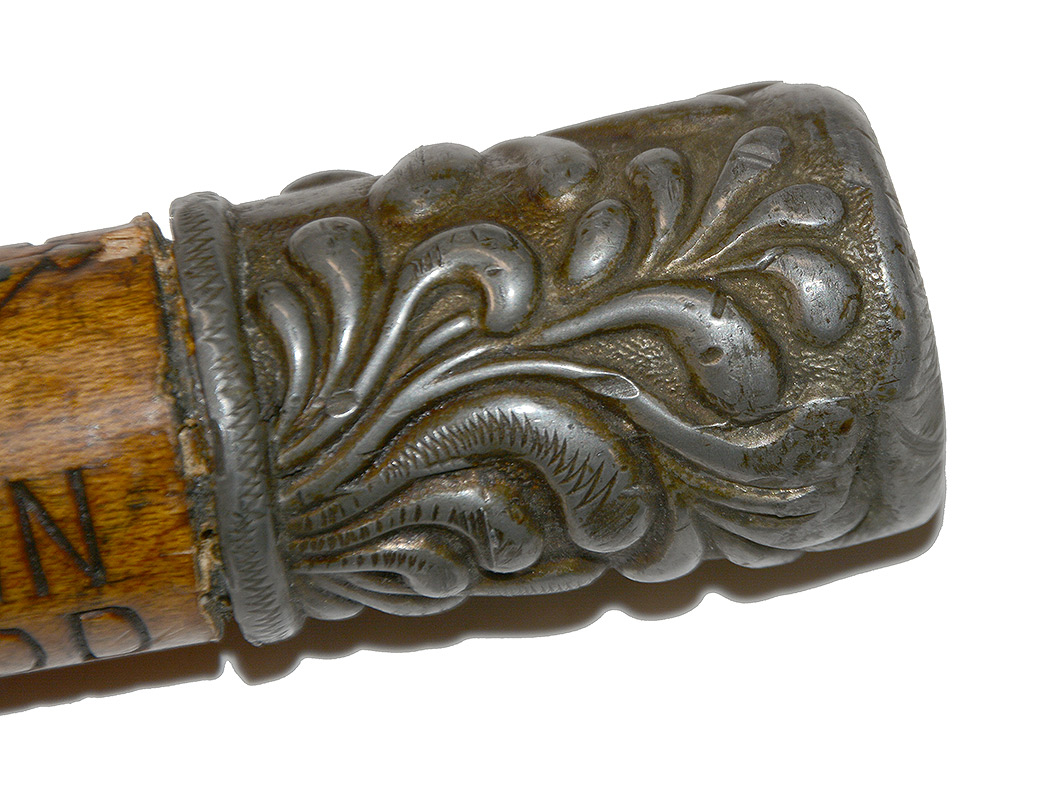
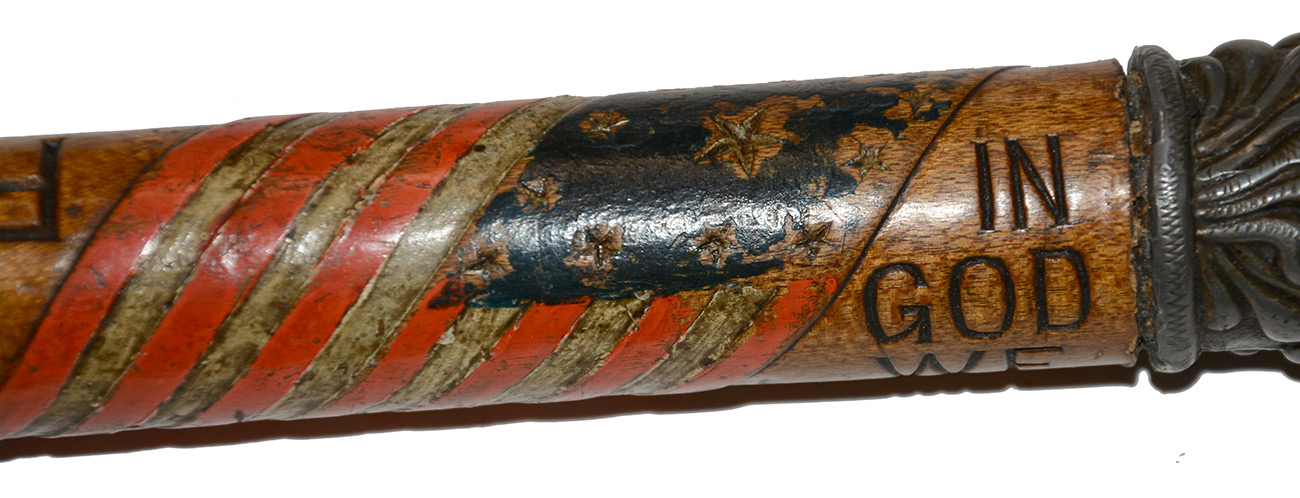
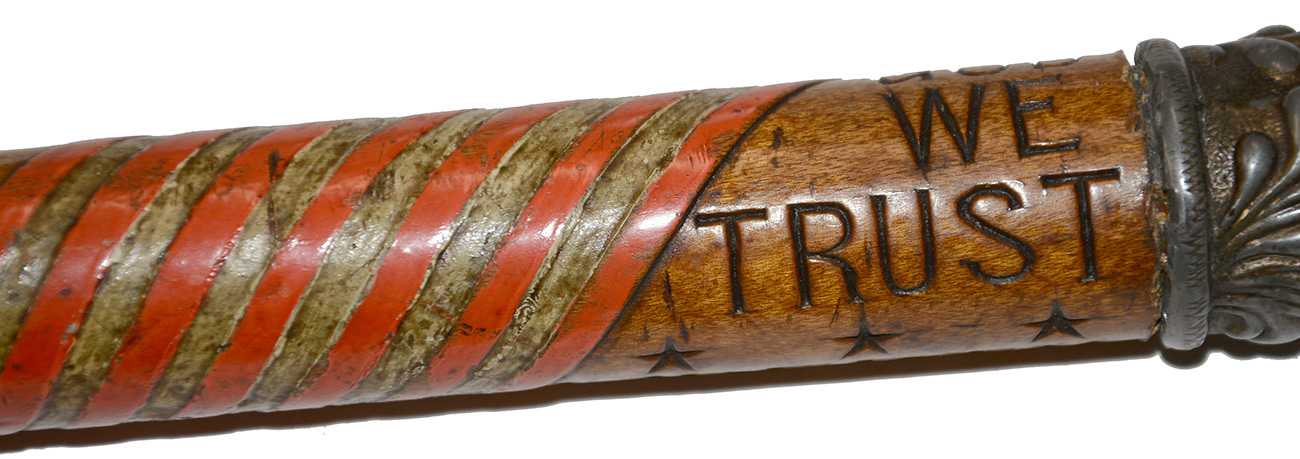
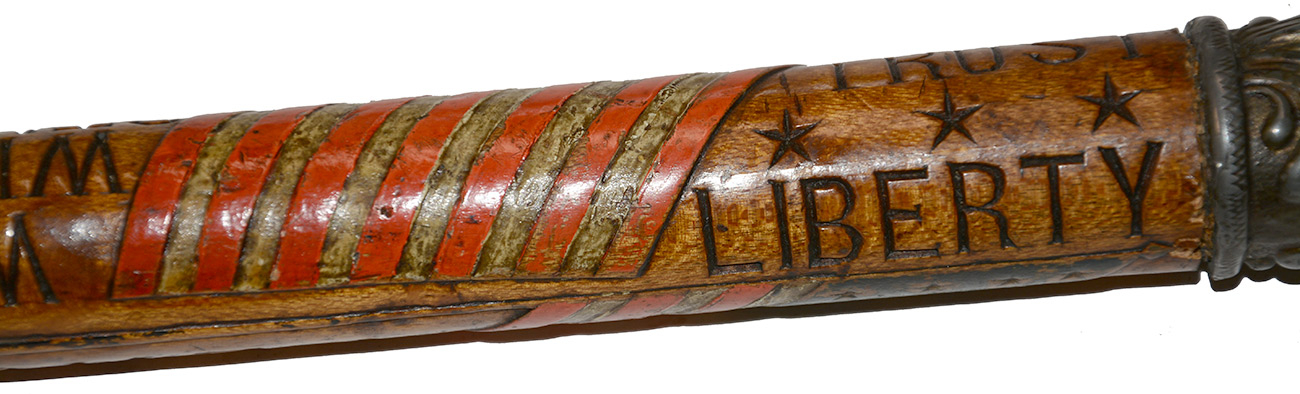
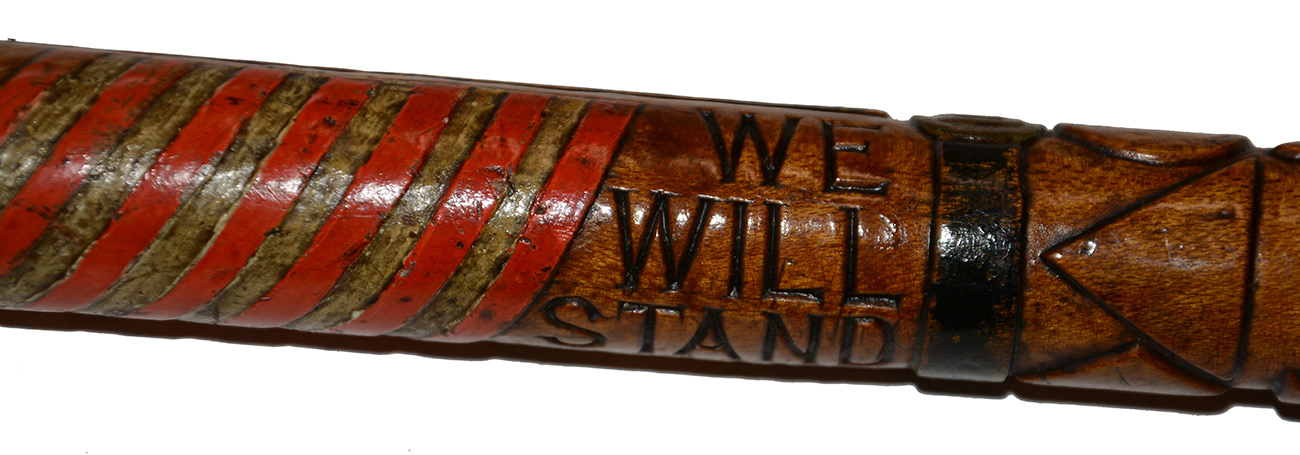
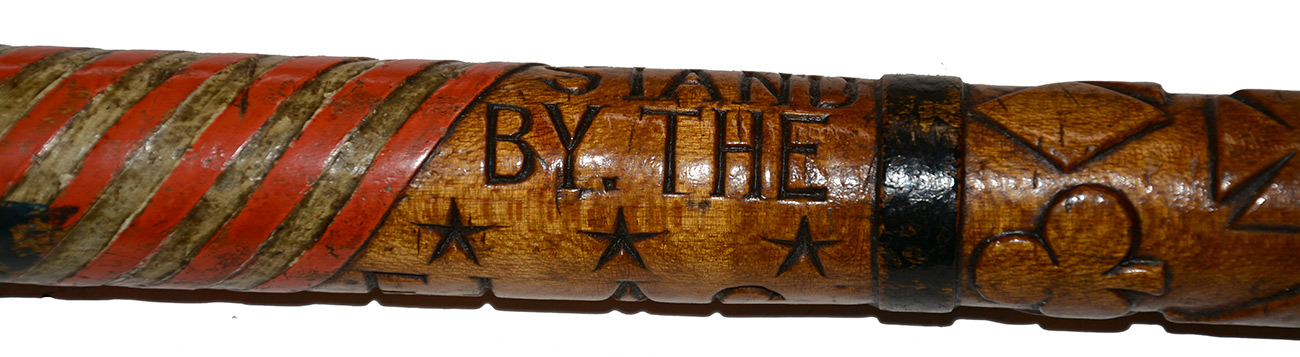
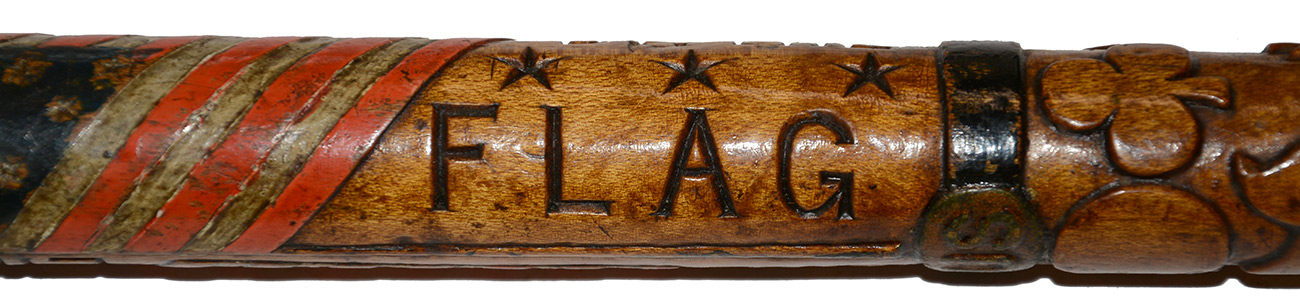
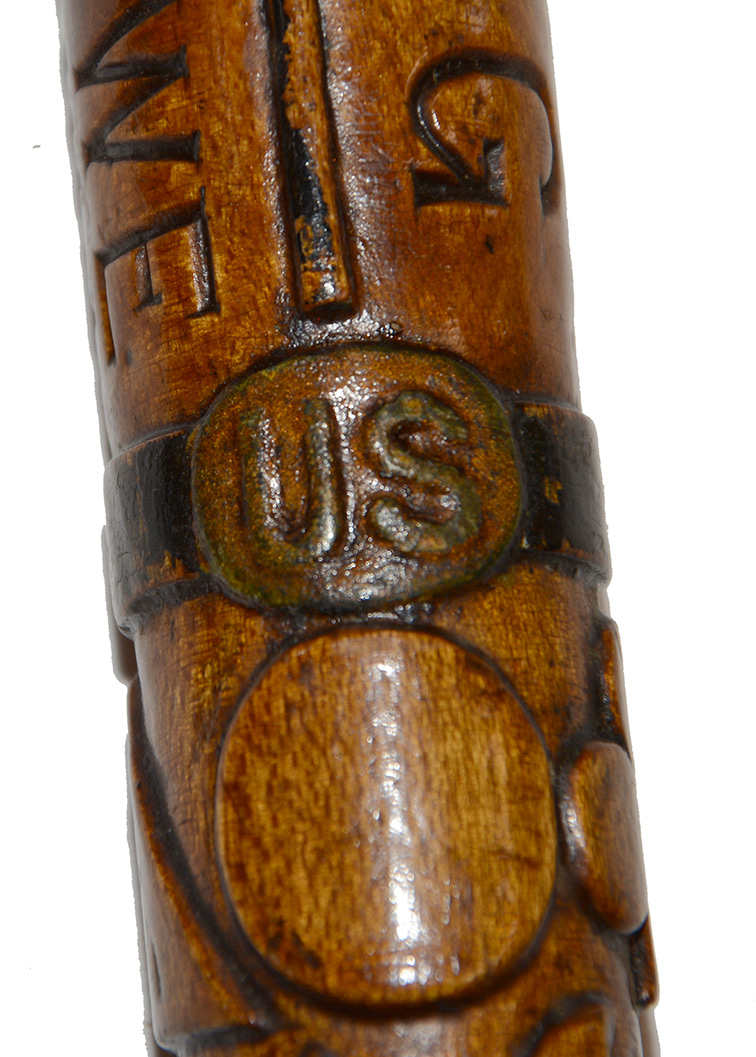
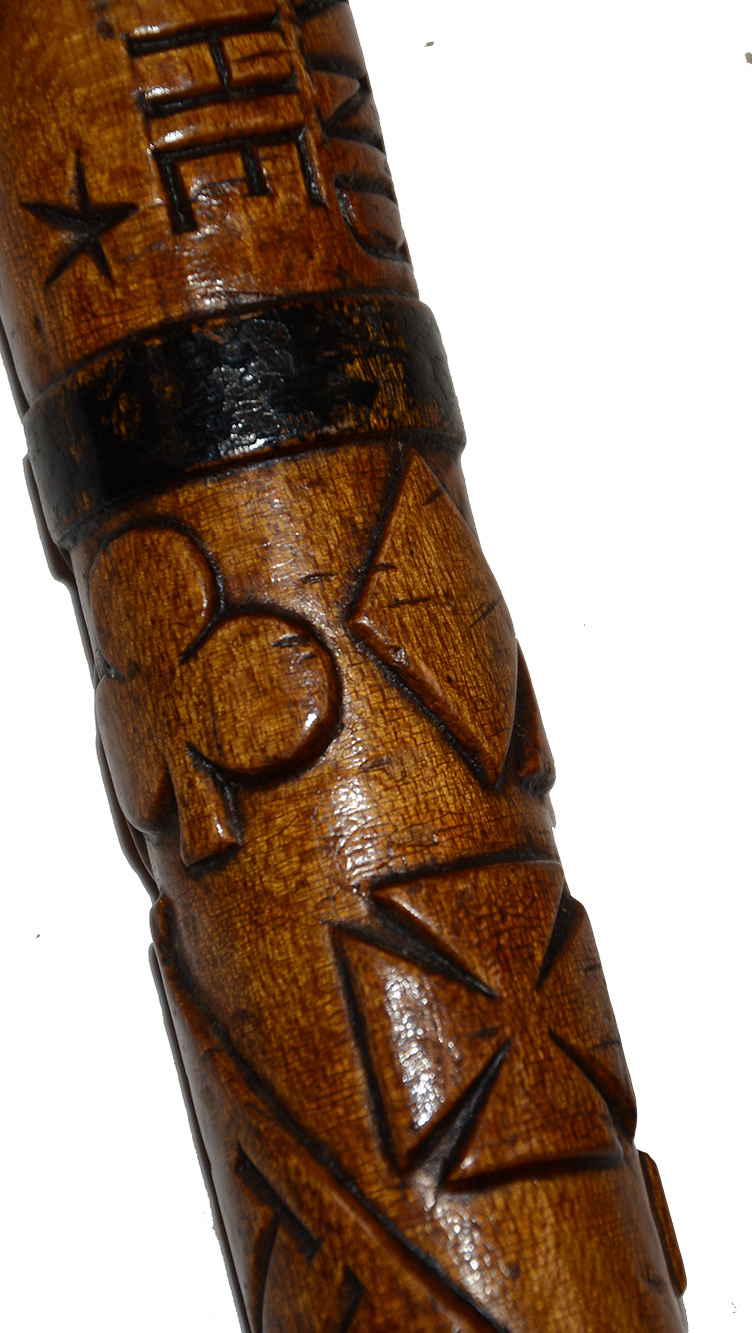
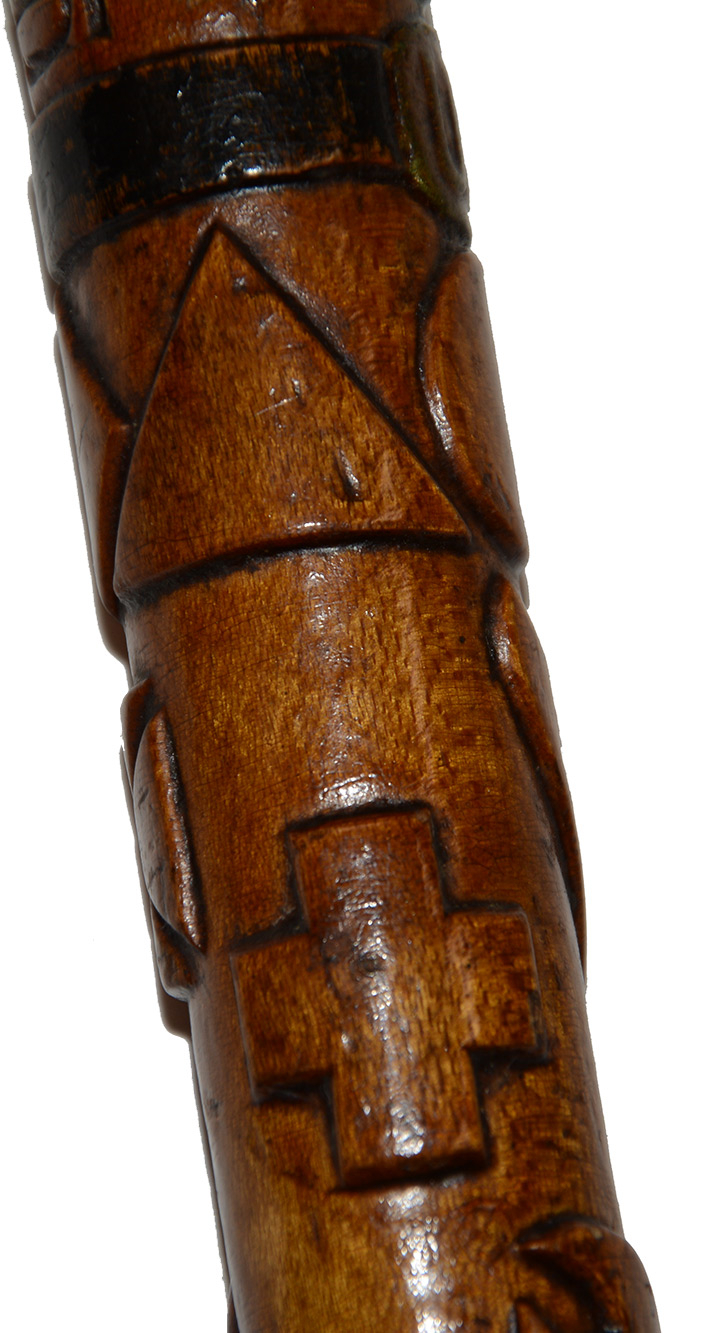
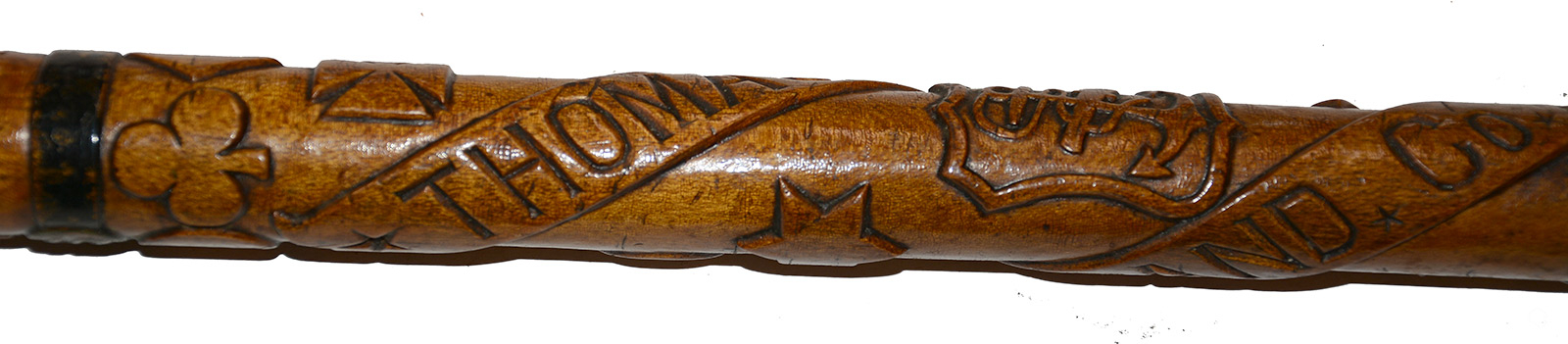
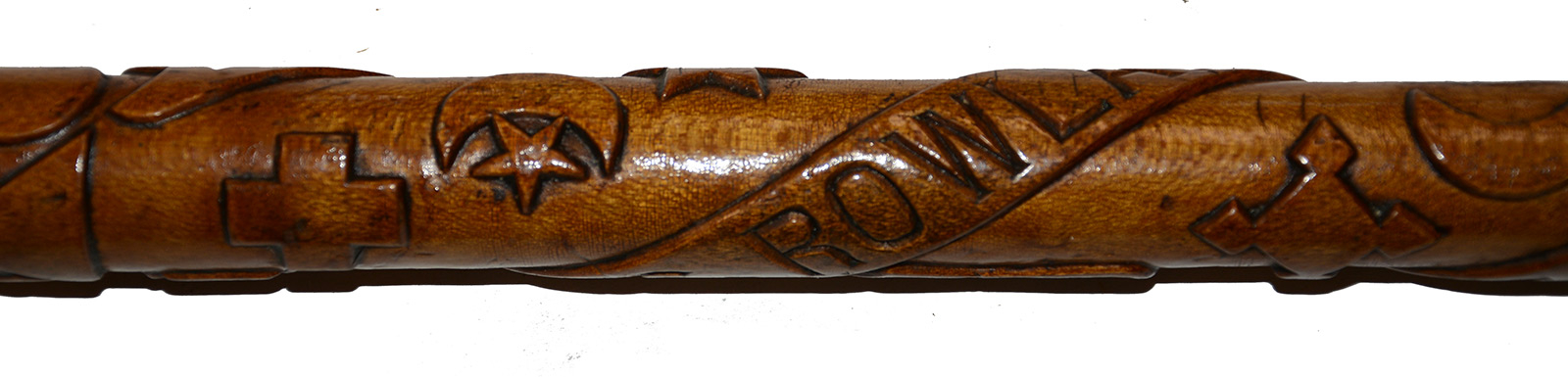
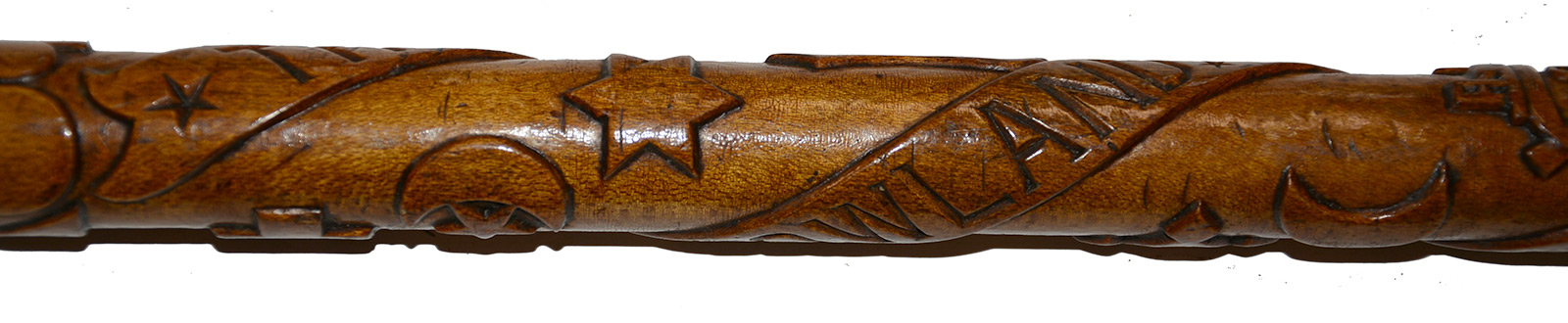
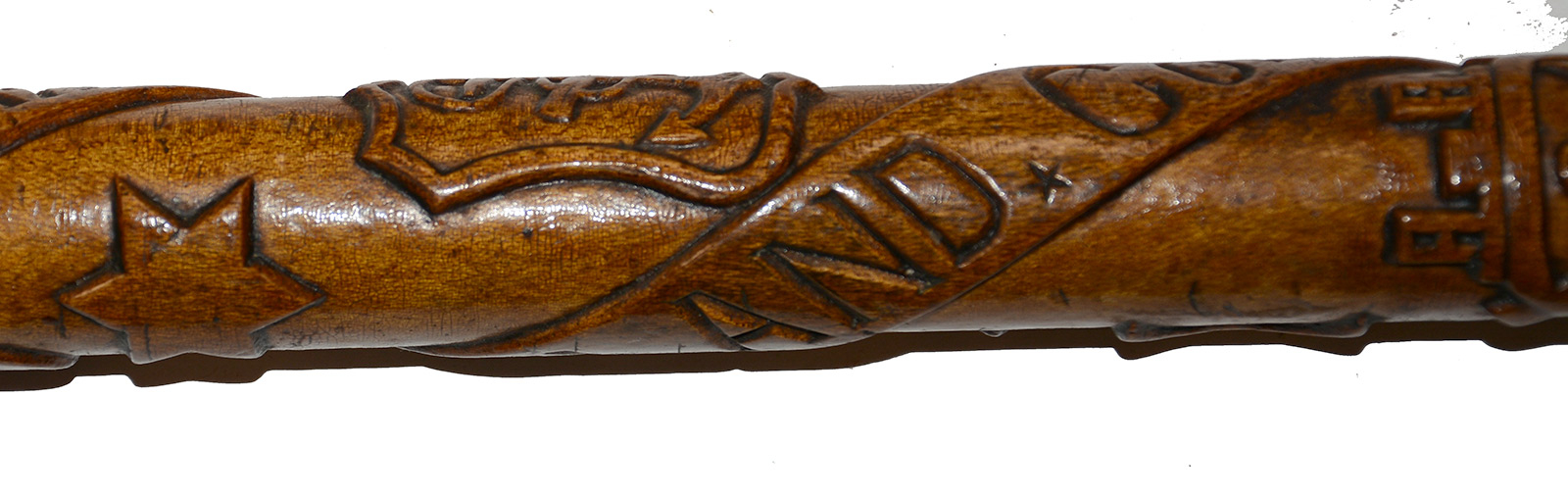
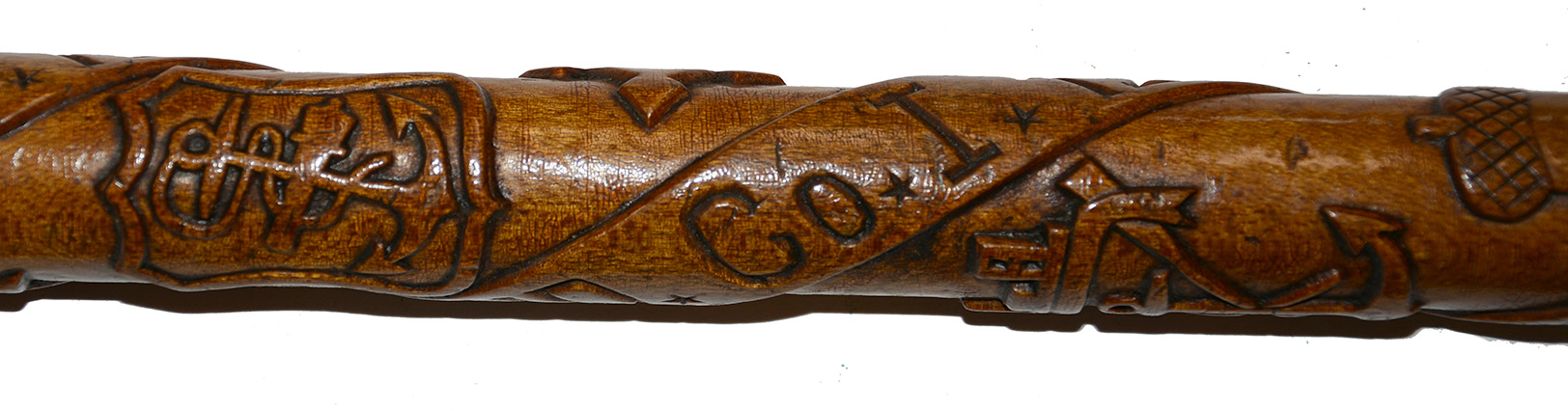
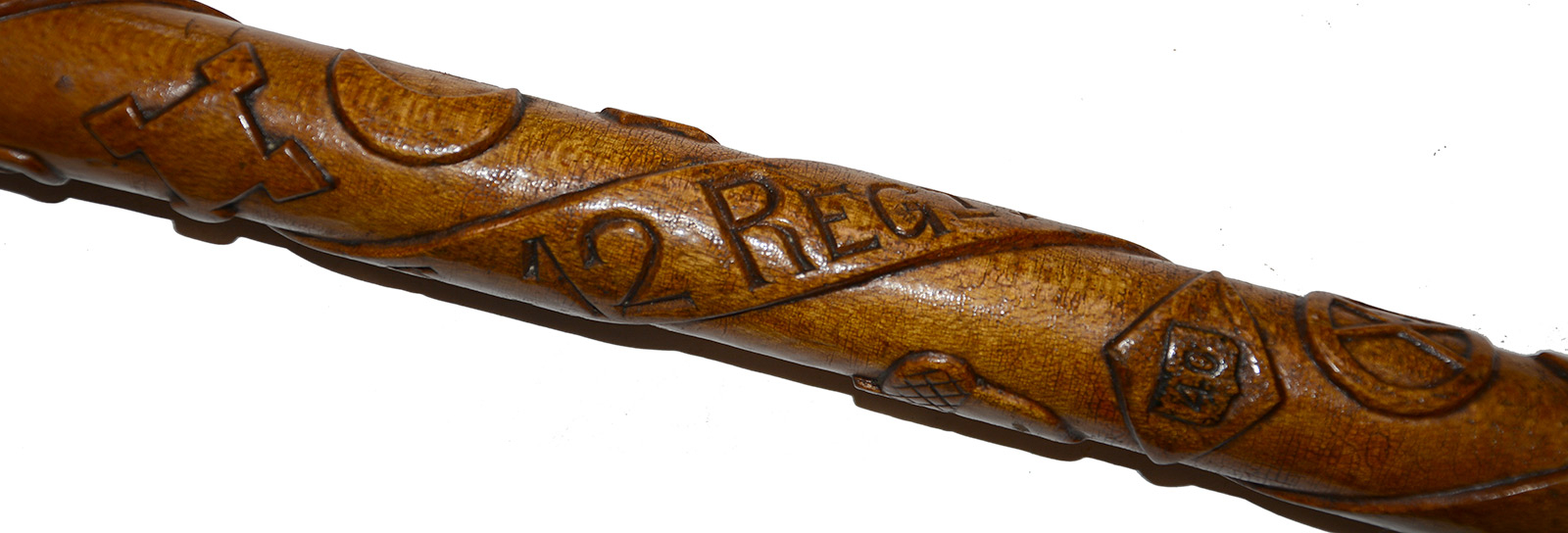
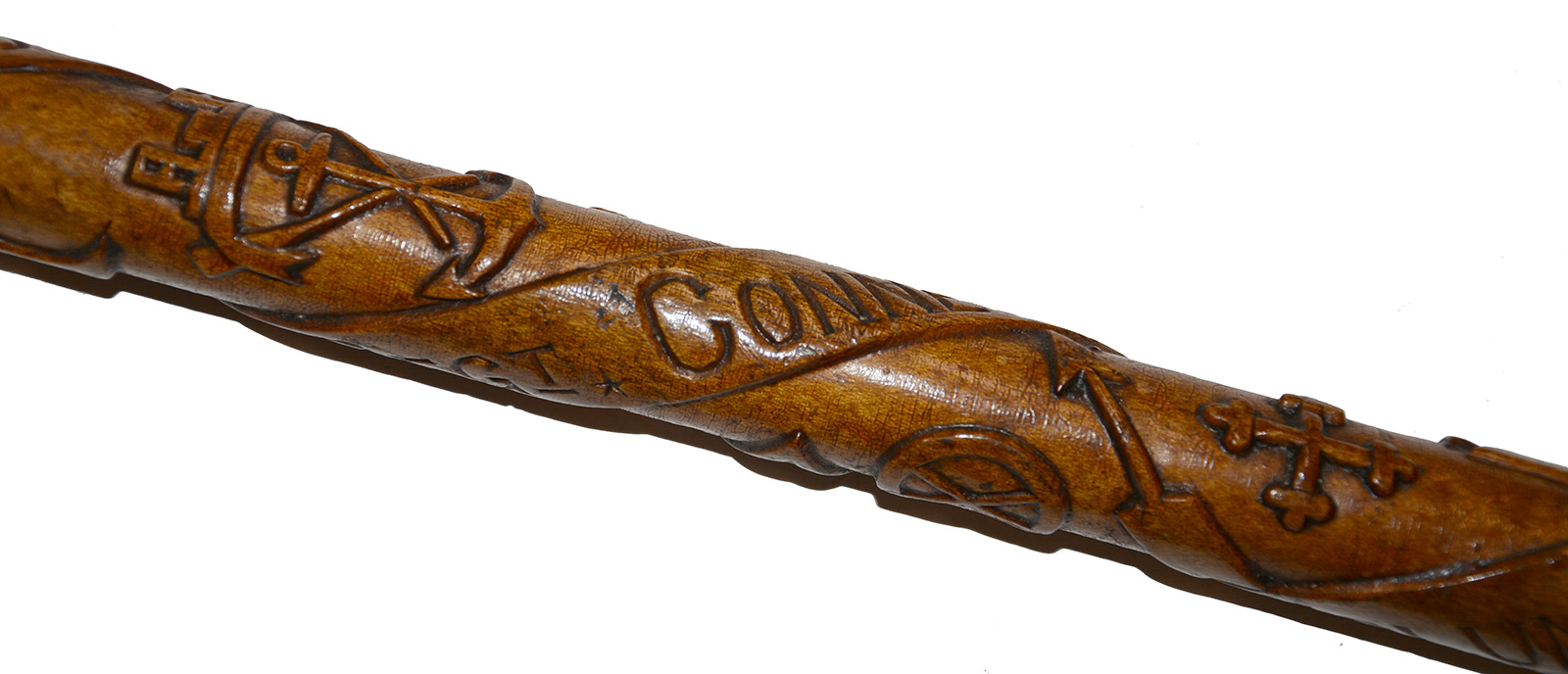
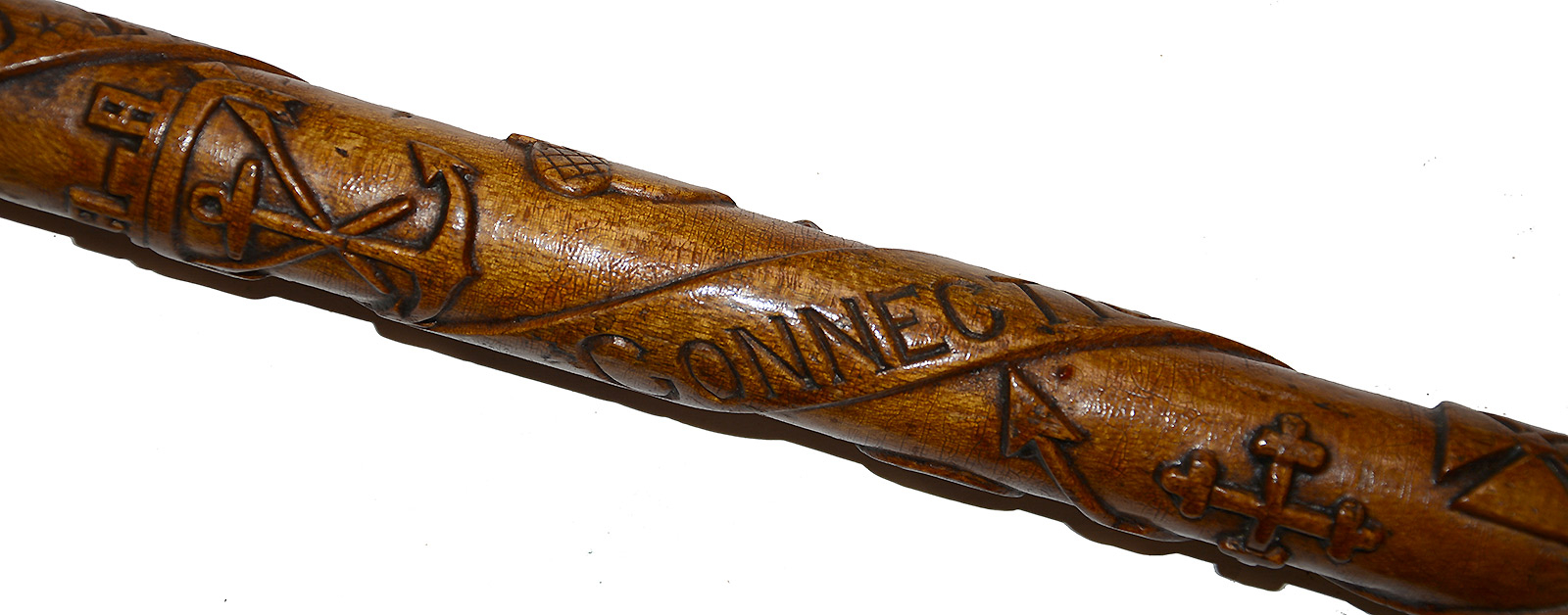
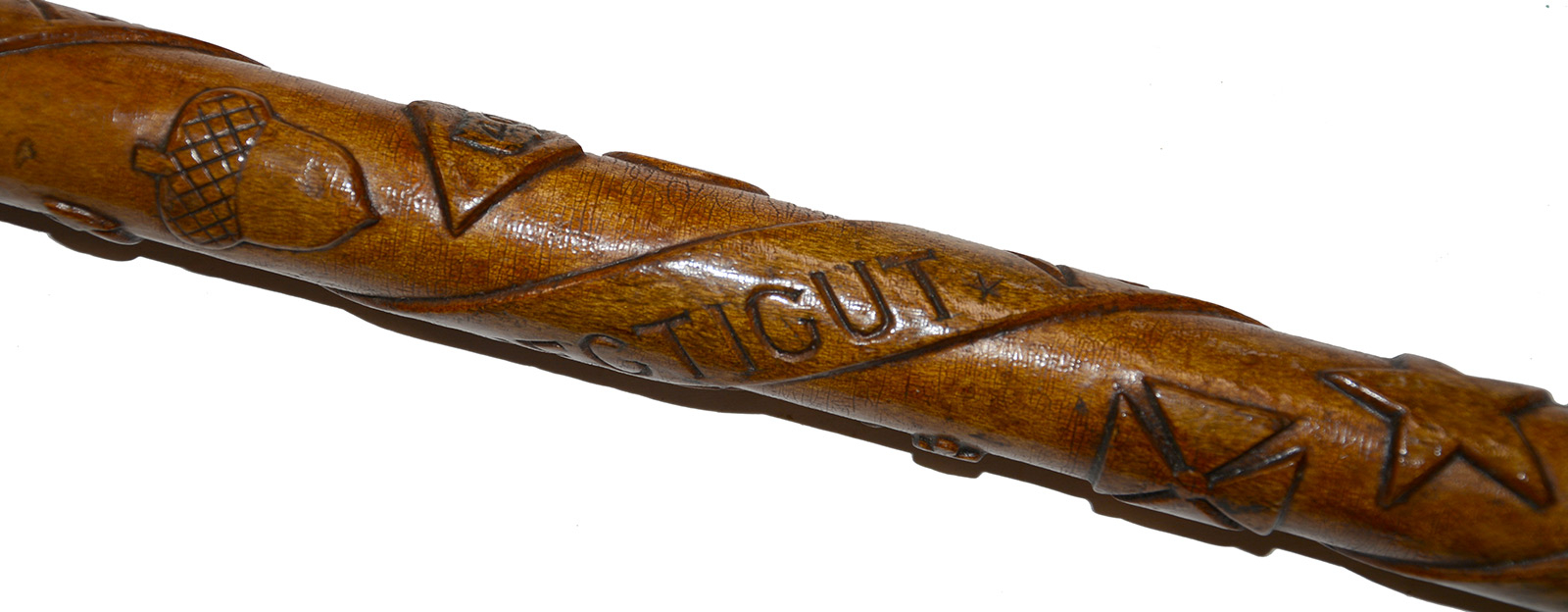
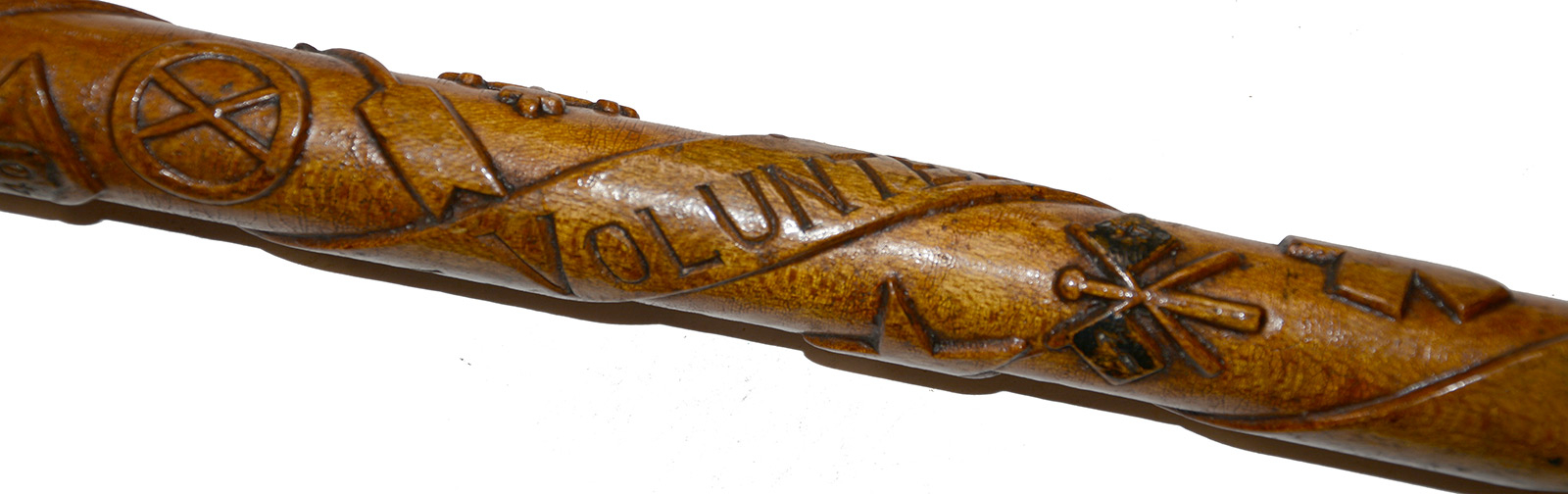
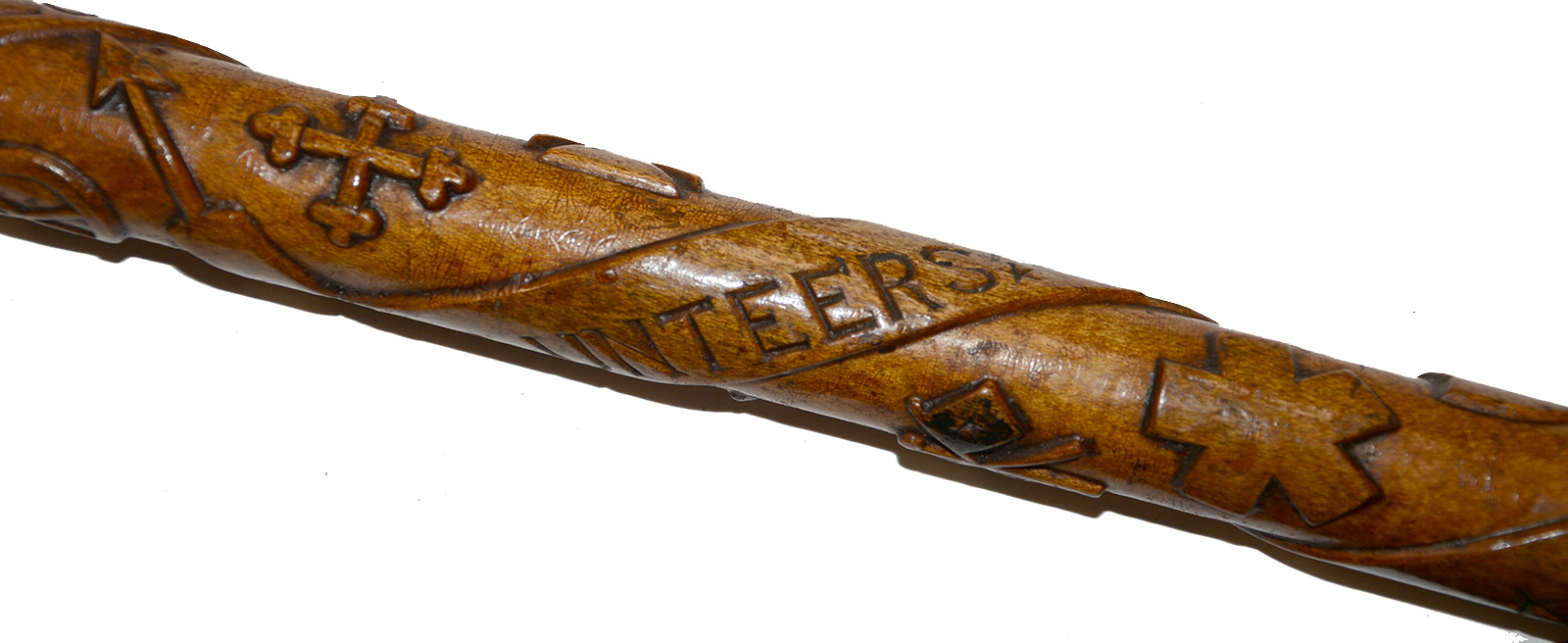
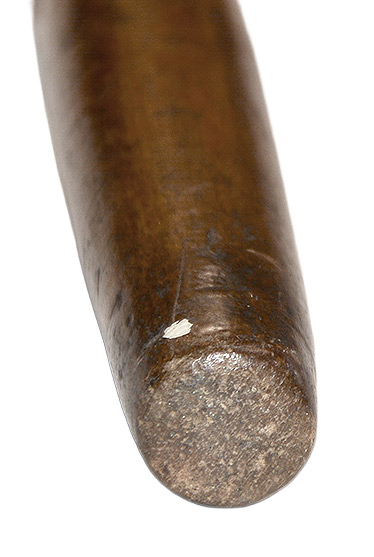
One of the best G.A.R. Civil War veterans’ canes we have offered- a great combination of history, art, eye-appeal and craftsmanship. Measuring 35-1/2 inches overall with a cast pewter foliate-decorated cap, this was professionally carved with the veteran’s name and unit carved in a band winding down around the shaft of the cane amid raised and incised motifs and mottos including a polychrome US flag at the top and a maze by raised-carved corps badges of the Union army like those displayed on the reverse of G.A.R. medals. This was formerly in the collection of the “Stone House Museum” in New York, acquired by them about 1979 from a local collector, which fits with the history of the owner, who was in the disabled veterans’ home in Bath, NY, when he died there in 1913. The cane is in excellent condition, with just some slight paint losses, no large chips or flakes and no cracks or damage to the wood. Please see our photos.
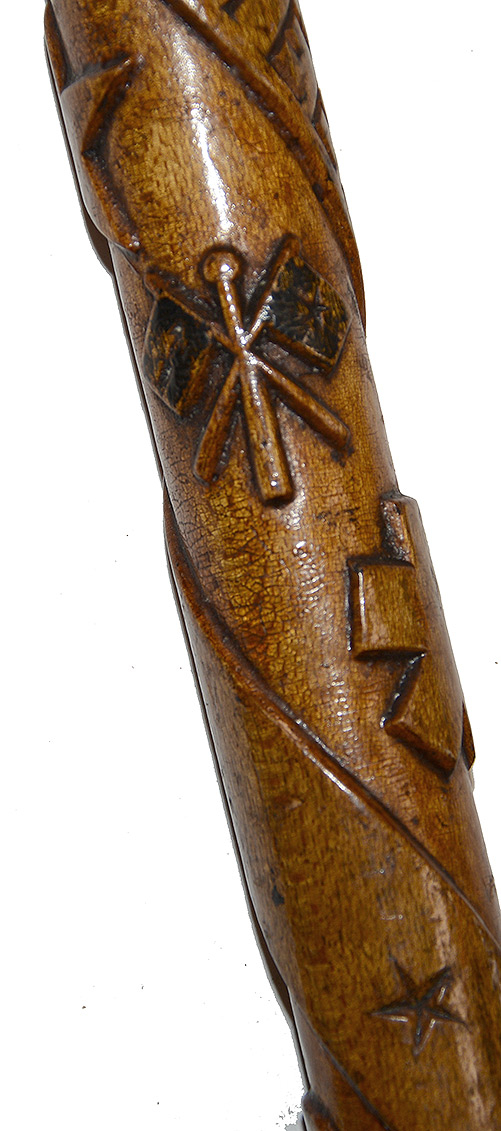
A red, white and blue painted US flag dominates the upper portion of the shaft with stars carved in the blue field. The flag wraps around the cane in a slight downward spiral, and flies from a flag pole rising up from an oval US buckle on a black painted belt that circles the shaft. In the uppermost angle created by the top edge of the flag is carved “IN GOD WE TRUST * * * LIBERTY.” In the lower angle between the bottom edge of the flag and narrow black band of US oval waist belt is, “WE WILL STAND BY THE * * * FLAG.” Both phrases are carved in incised block letters.
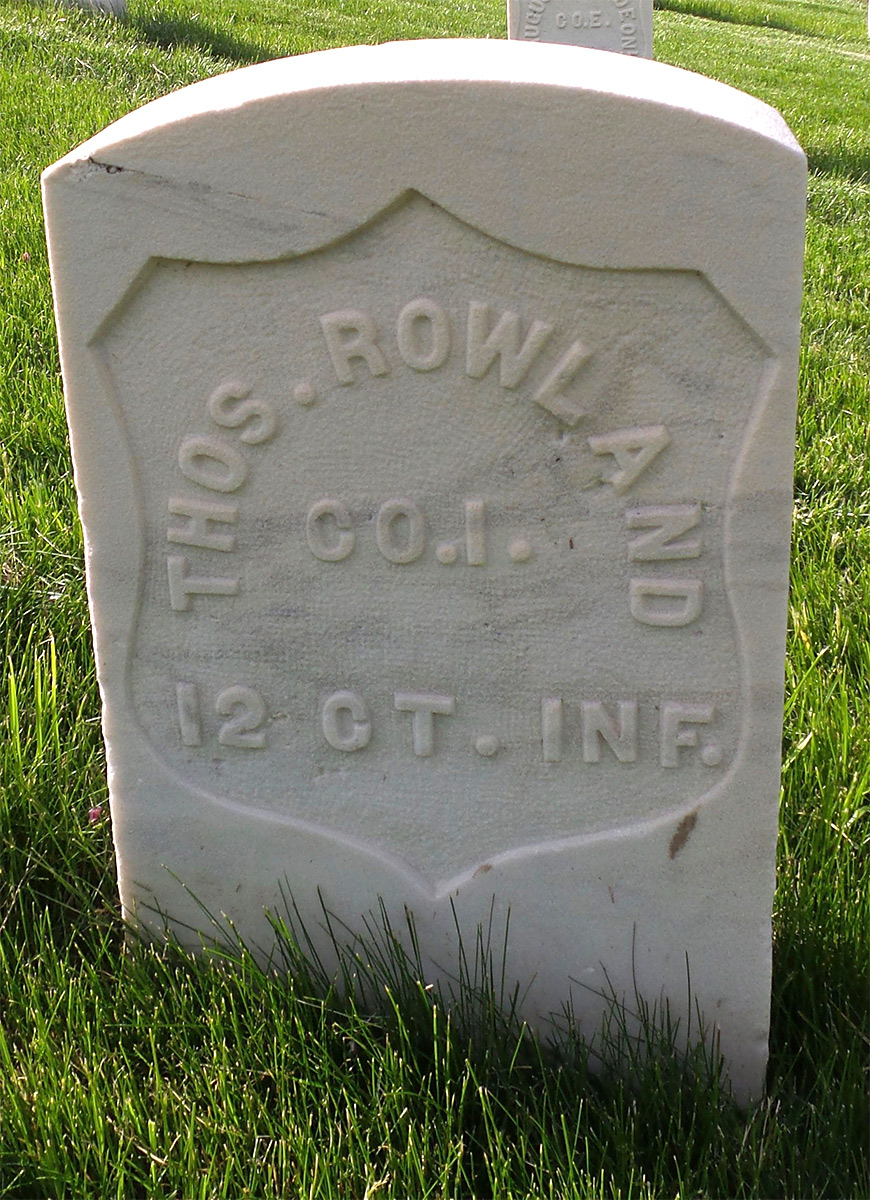
Winding down around the shaft from just below the miniature infantry waist belt is a band with incised border lines and the veteran’s name and unit in large and small incised capital letters reading: “THOMAS . ROWLAND . CO. I . 12 CONNECTICUT . VOLUNTEERS .” with small, star-shaped periods. This band winds through the raised-carved corps and branch of service insignia as found on the reverse of G.A.R. badges beginning with the circle of the 1st corps, trefoil of the 2nd Corps, diamond of the 3rd, etc., with elements like the crossed flags and torch of the Signal Corps, and even the crossed oars and anchor badge for the engineers and pontooniers.
We have not pulled Rowland’s detailed service file, but he enlisted 12/16/61 at Bridgeport, CT, as a private, mustering into the 12th Connecticut for three-years on 12/19/61 and was in the regiment for all of its active campaigning, which lasted through the Battle of Cedar Creek 10/19/64, where it lost 170 in killed, wounded and captured. When the regiment was consolidsated into a battalion he was officially transferring to the 12th CT Battalion 11/26/64 and was mustered out from that organization 12/19/64.
During his time with it, the regiment served in the Department of the Gulf and in the Army of the Shenandoah as part of the 19th Corps. He was wounded 7/13/63 at Donaldsonville, LA, which just after the fall of Port Hudson, where the regiment had suffered 108 killed and wounded in the course of 42-days under fire. Dyer gives their full service record as follows: Duty at Ship Island, Miss., till April 15, 1862. Operations against Fort St. Phillip and Jackson, Mississippi River, April 15-28. Occupation of New Orleans, La., May 1, the first regiment to land. Duty at Camp Parapet and Carrollton till October. Expedition to Lake Pontchartrain, Pass Manchac and up Techefuneta and Pearl rivers July 25-August 2. Skirmishes at Madisonville and near Covington July 27. Operations in District of La Fourche October 24-November 6. Occupation of Donaldsonville October 25. Action at Georgia Landing, near Labadieville, October 27. Duty in District of La Fourche till February, 1863. Expedition to Bayou Teche January 13-15. Action with steamer "Cotton" January 14. Moved to Brashear City February and duty there till March. Operations against Port Hudson March 7-27. Pattersonville March 28 (Detachment). Operations in Western Louisiana April 9-May 14. Teche Campaign April 11-20. Port Bisland, near Centreville, April 12-13. Irish Bend April 14. Opelousas April 20. Expedition to Alexandria and Simsport May 5-18. Near Cheyneyville May 18. Movement to Bayou Sara, thence to Port Hudson May 22-25. Siege of Port Hudson May 25-July 9. Assaults on Port Hudson May 27 and June 14. Surrender of Port Hudson July 9. Operations in Western Louisiana July to September, 1863. Sabine Pass (Texas) Expedition September 4-11. Teche Campaign October 3-November 30. Duty at New Iberia till January, 1864. Move to New Orleans and on veteran furlough till May. Duty at Carrollton till July. Moved to Fortress Monroe, Va., thence to Washington, D. C., July 5-13. Snicker's Gap expedition July 14-23. Sheridan's Shenandoah Valley Campaign, August to December. Battle of Opequan, Winchester, September 19. Fisher's Hill September 22. Battle of Cedar Creek October 19. Duty at Winchester, Newtown and Summit Point till April, 1865. Moved to Washington, D. C., April 21, and duty there till June. Grand Review May 23-24. Moved to Savannah, Ga., June 1-5 and duty there till August. Mustered out August 12, 1865.
Dyer lists their losses in killed or mortally wounded as 6 Officers and 65 Enlisted men killed. Those wounded in battle, like Rowland, likely numbered several times that.
Rowland apparently applied for a pension as early as May 1865. He shows up in records of some disabled veterans’ homes in the 1890s, including in Illinois and Wisconsin, being admitted and discharged at his request several times, and was at the home in Bath, NY, when he died in 1913 and was interred in the national cemetery there. He married at some point and listed his occupation simply as “laborer.” He initially filed for a pension in May 1865. His widow, Mae, seems to have filed for one in 1927.
This is a great-looking cane belonging to a veteran with an interesting history and lots of room for further research. [sr][ph:L]
~~~~~~~~~~~~~~~~~~~~~~~~~~~~~~~~~~~
THIS ITEM, AS WITH ALL OTHER ITEMS AVAILABLE ON OUR WEB SITE,
MAY BE PURCHASED THROUGH OUR LAYAWAY PROGRAM.
CLICK HERE FOR OUR POLICIES AND TERMS.
THANK YOU!
Inquire About PROFUSELY CARVED 12th CONNECTICUT WOUNDED-IN-ACTION VETERAN’S CANE: EX-STONE HOUSE MUSEUM
Most Popular
Historical Firearms Stolen From The National Civil War Museum In Harrisburg, Pa »
Theft From Gravesite Of Gen. John Reynolds »
Selection Of Unframed Prints By Don Troiani »
Fine Condition Brass Infantry Bugle Insignia »
Rare Identified 65Th Ny Sergeant’s Jacket, With Manscript Material: 1St U.s. Chasseurs »
featured item
WOUNDED AT GETTYSBURG! 1/6 PLATE AMBROTYPE OF PVT. AURELIUS JAMES DULA, 22ND NORTH CAROLINA
Sixth plate hand-gilt ambrotype. Leatherette case. Anonymous artist. North Carolina. Private Aurelius James “A.J.” Dula (1843 - 1913), a member of Company A (the "Caldwell Rough and Ready Boys”) of the 22nd North Carolina Infantry. A native… (846-577). Learn More »
site search