
site search
online catalog
1861-1862 UNIFORM COAT OF JOHN H. STALLMANN, CO. H 22 NYNG- “UNION GRAYS,” AKA “STRAWBERRY GRAYS” – 1862 SERVICE AT BALTIMORE AND HARPERS FERRY
Hover to zoom
$5,500.00 SOLD
Quantity Available: None
Item Code: 410-912
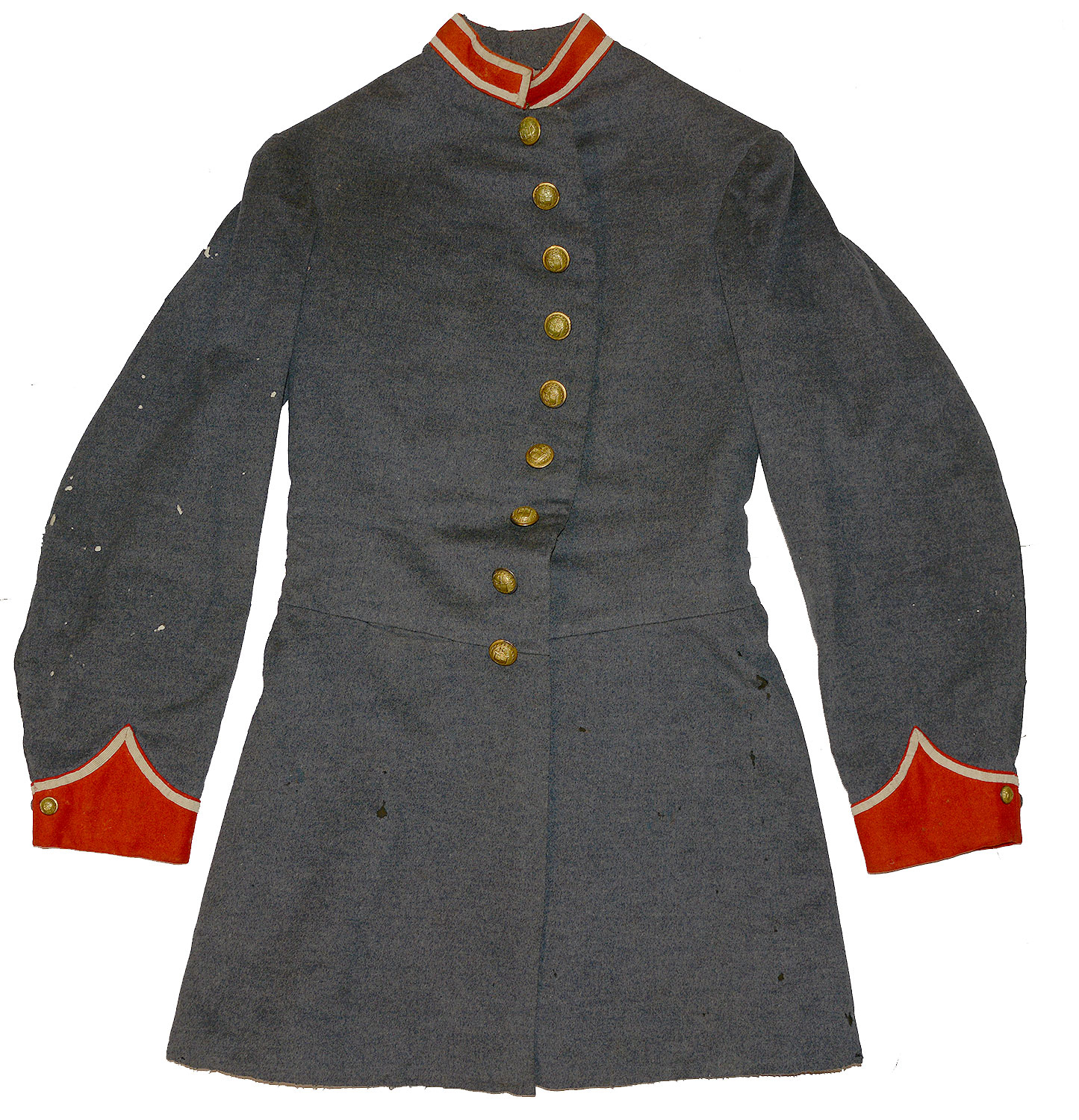
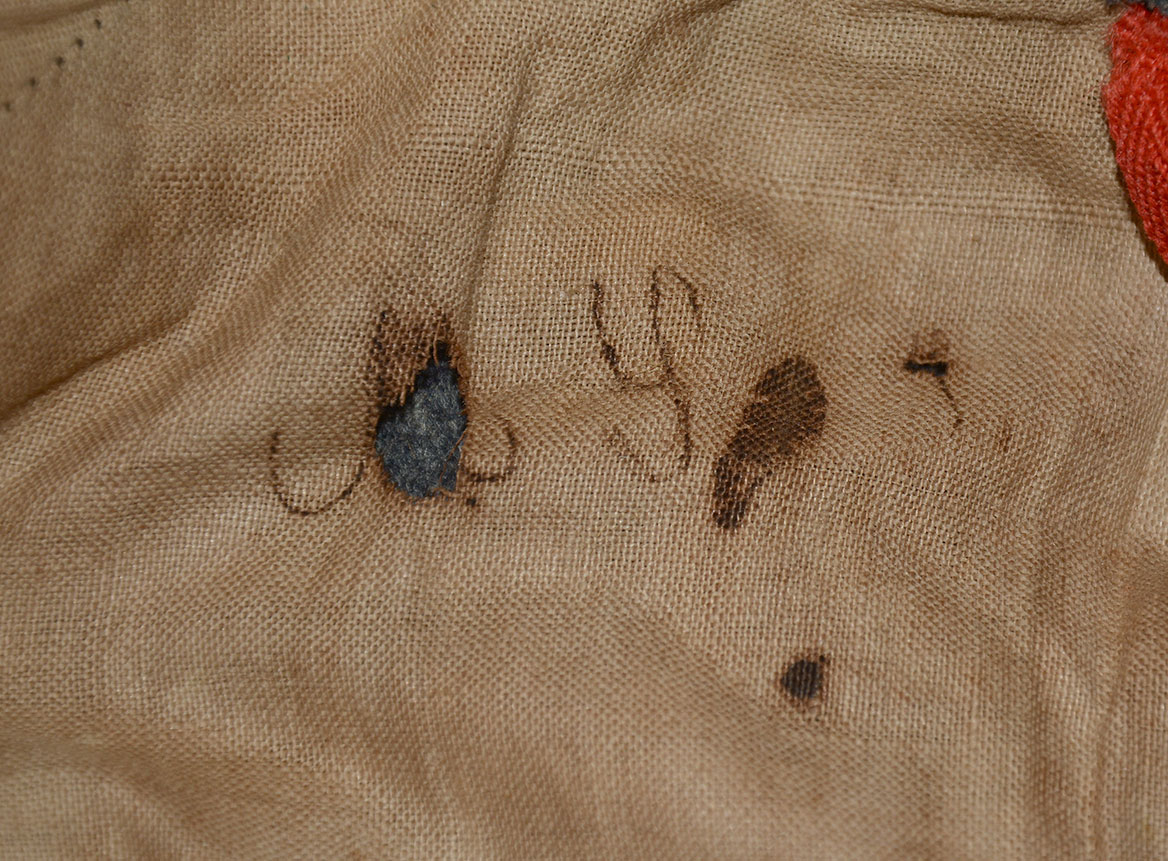
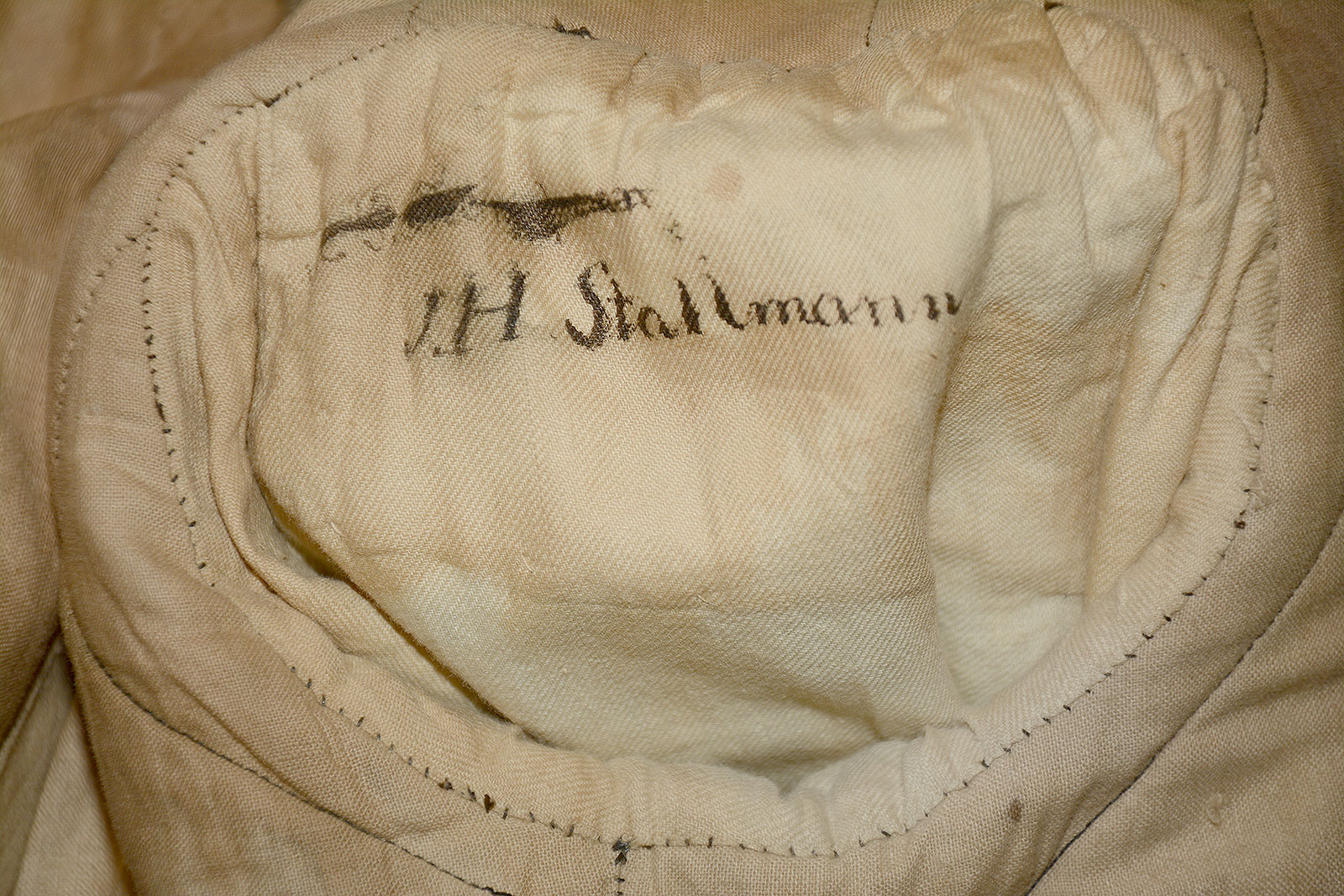
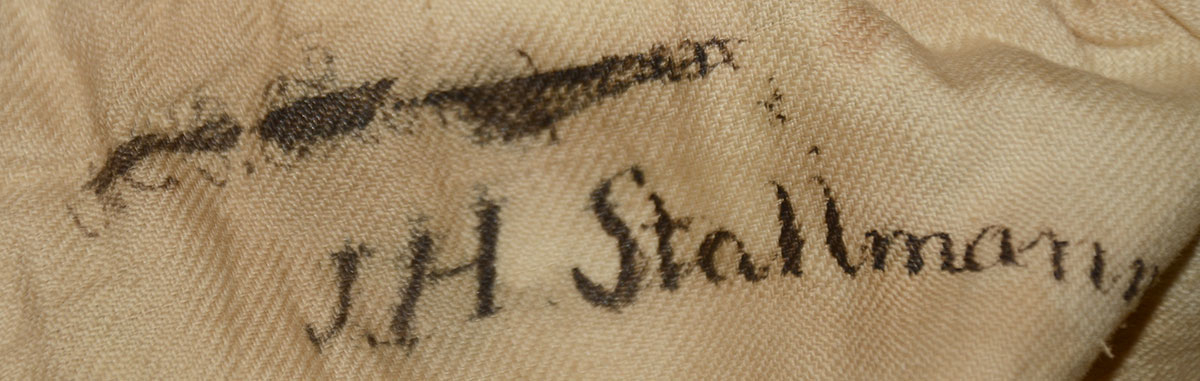
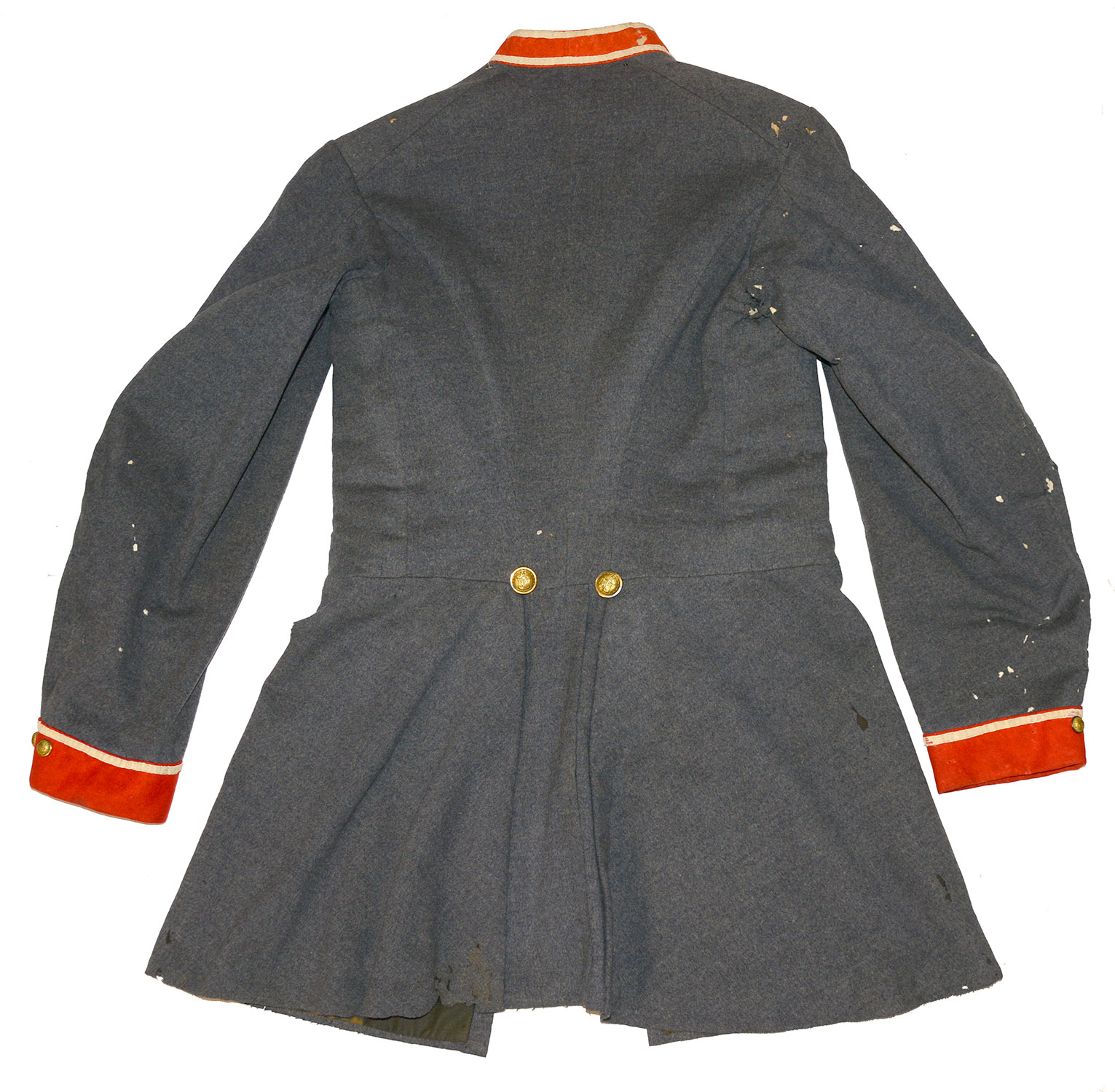
A very scarce example of the uniform coat adopted by the “Union Grays” of New York City in 1861 and worn by member of that regiment when they were called up for ninety days of active US service in late May 1862, and were posted to Baltimore and Harpers Ferry, barely escaping capture at the latter post, leaving for home shortly before its surrender to Confederate forces in the Antietam Campaign. In addition to being a pattern only worn by the regiment until late September 1862, the coat is identified in the shoulder of the left sleeve in old black ink with the name of one soldier crossed out and below it, in the same ink, the name “J.H. Stallmann,” who is listed both in the regimental history and on the company muster roll as taking part in that mid-1862 field service. For details on the unit, its service, and its uniforms see their 1895 regimental history, the Journal of the Company of Miliary Historians Vols. 1.1 and 33.3, and especially Jan Gordon’s article in North-South Trader’s Civil War, Vol. 34.3 (2009,) which shows a similar, unidentified, example on page 34.
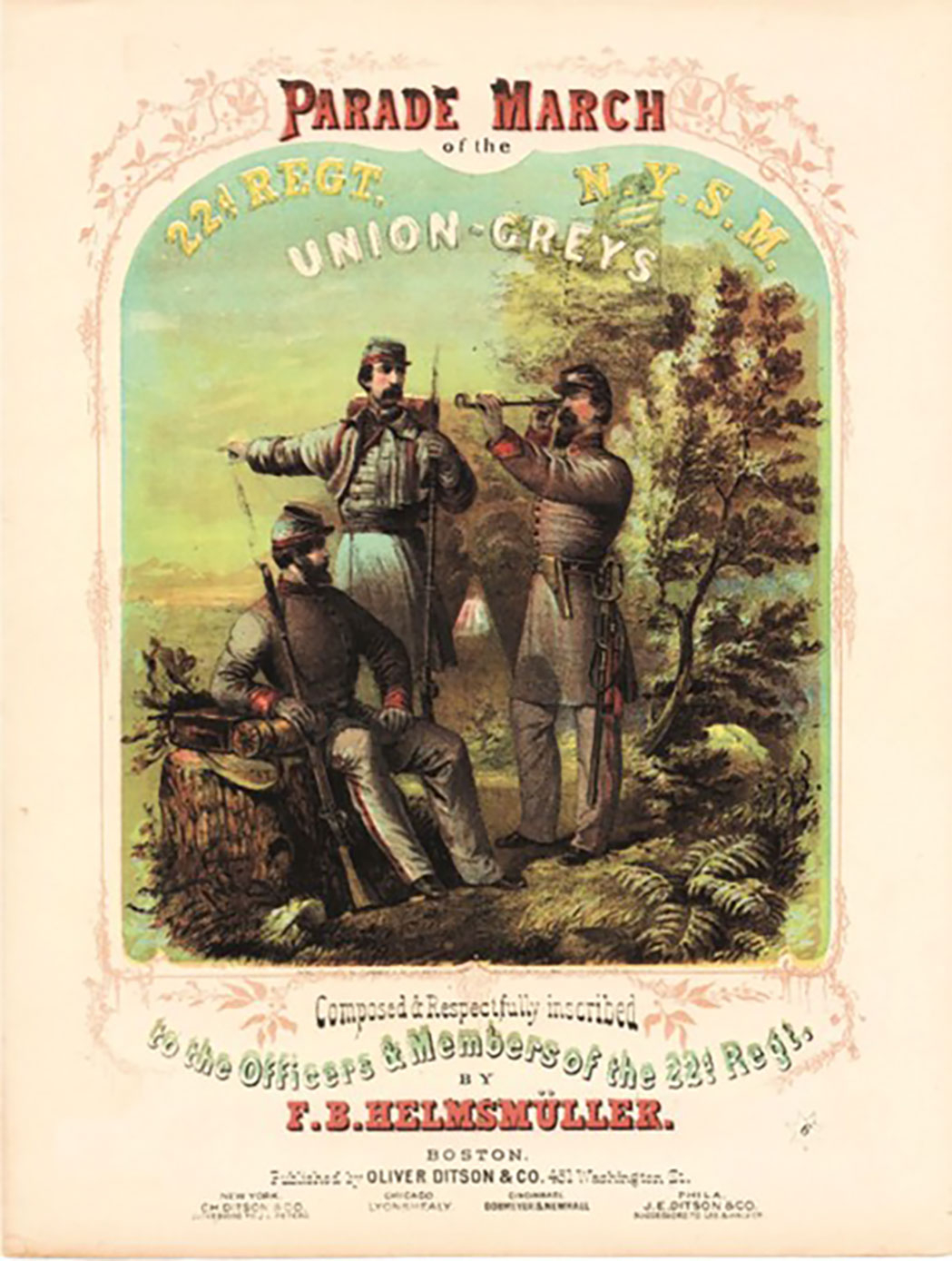
Privately raised and funded to act as a home guard in April 1861 after existing NY city militia regiments rushed south to defend Washington, the regiment incorporated some existing companies, but was largely new recruits. Officially organized May 13, 1861, with eight companies, as the “Union Grays” (or “Greys,”) though the red facings and white piping of their frock coats, caps and trousers gained them the nickname, “Strawberry Grays.” They finally joined the state’s militia system in August 1861, taking the official numerical designation as the 22nd Regiment NYNG, but retained their privately-purchased uniforms and arms- two-band Enfield rifles with sword bayonets.
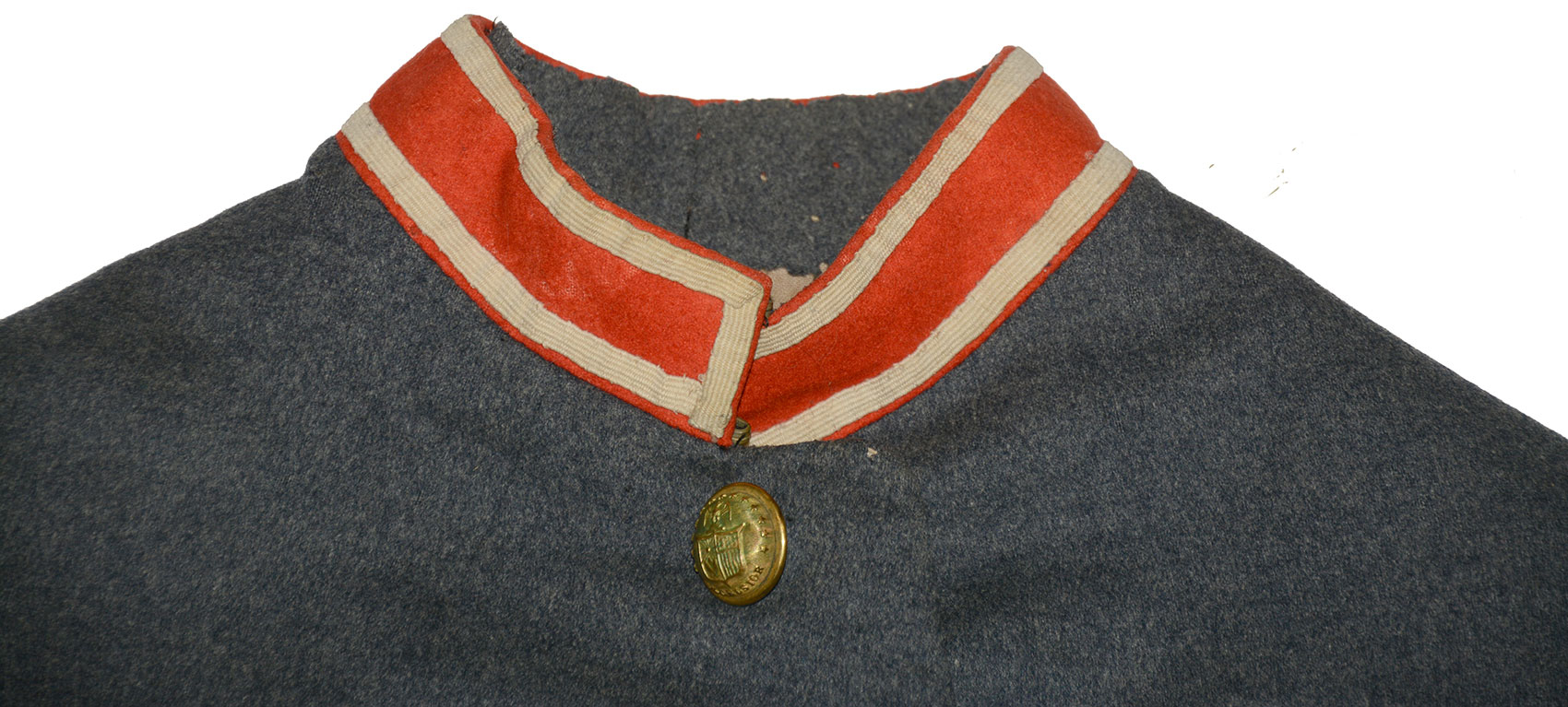
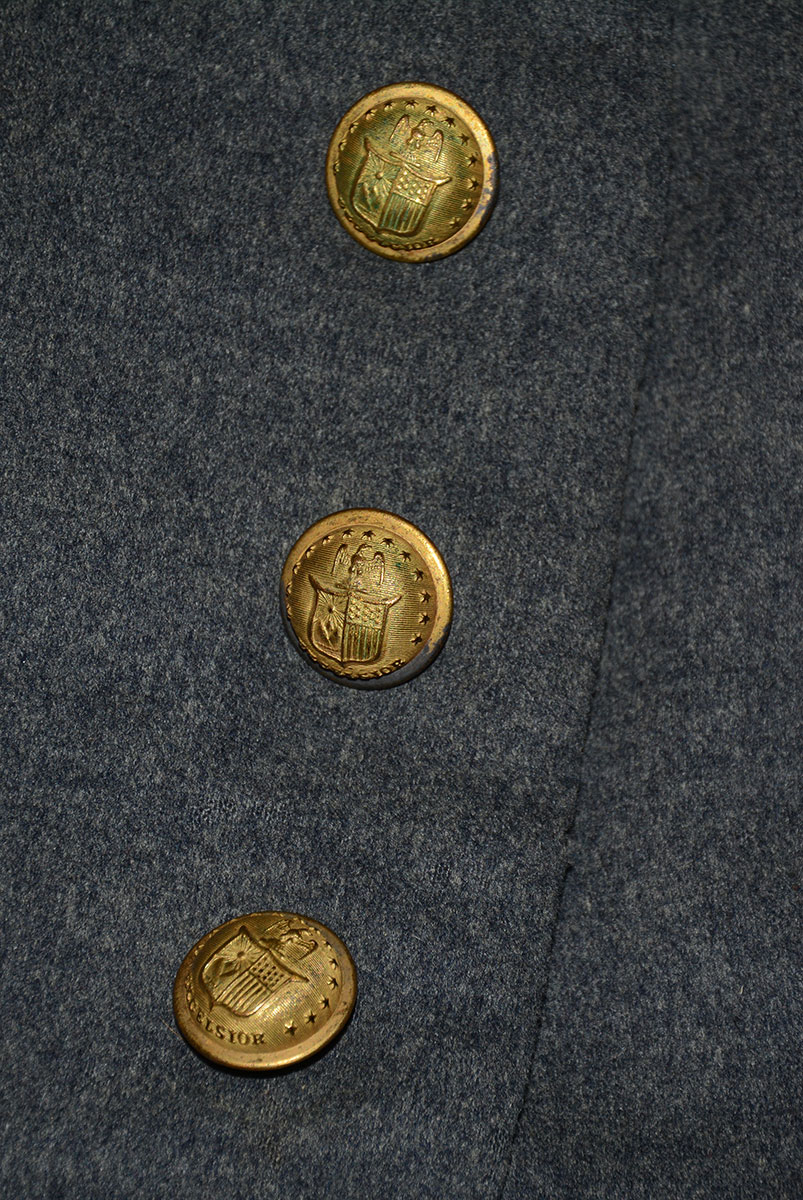
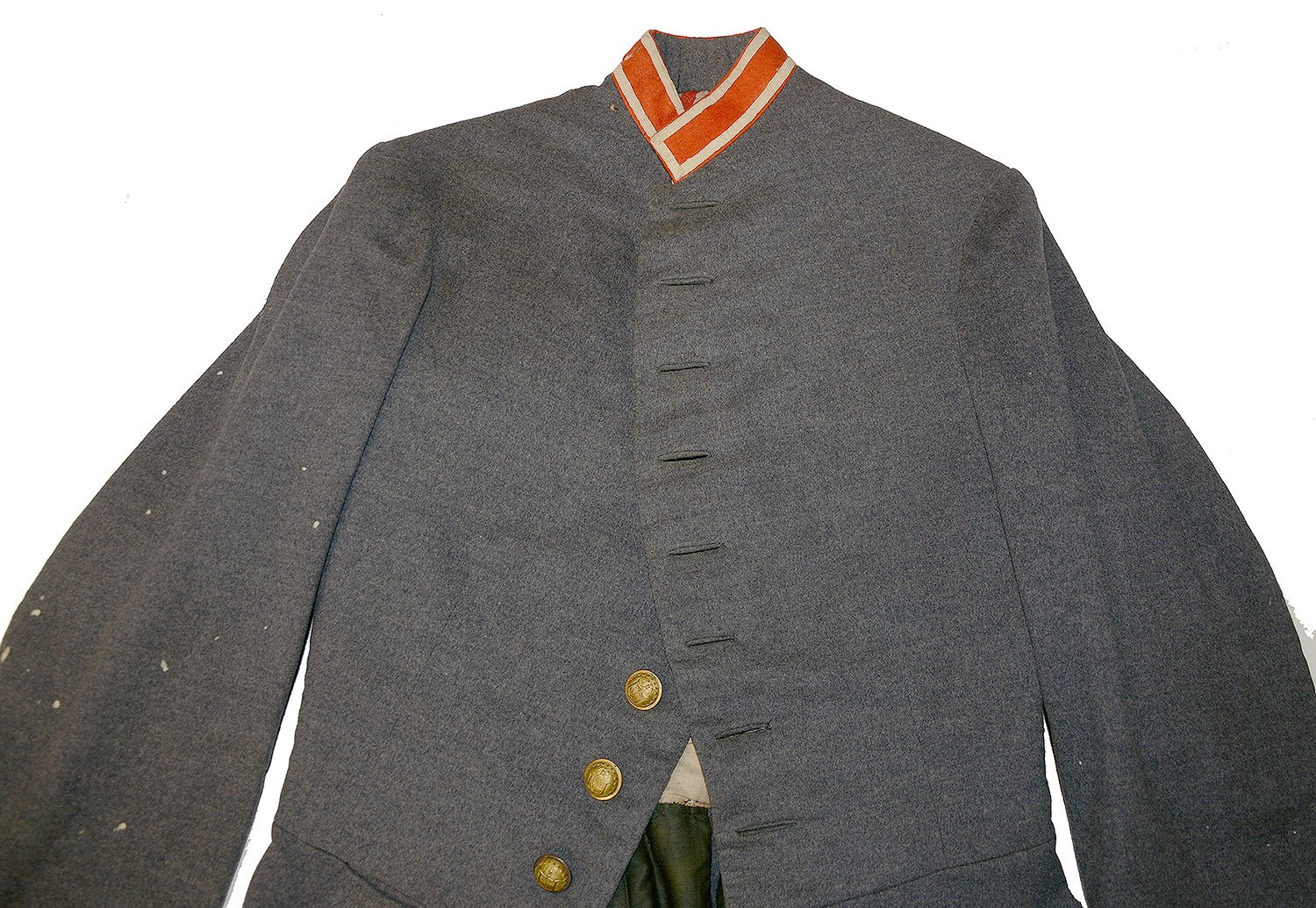
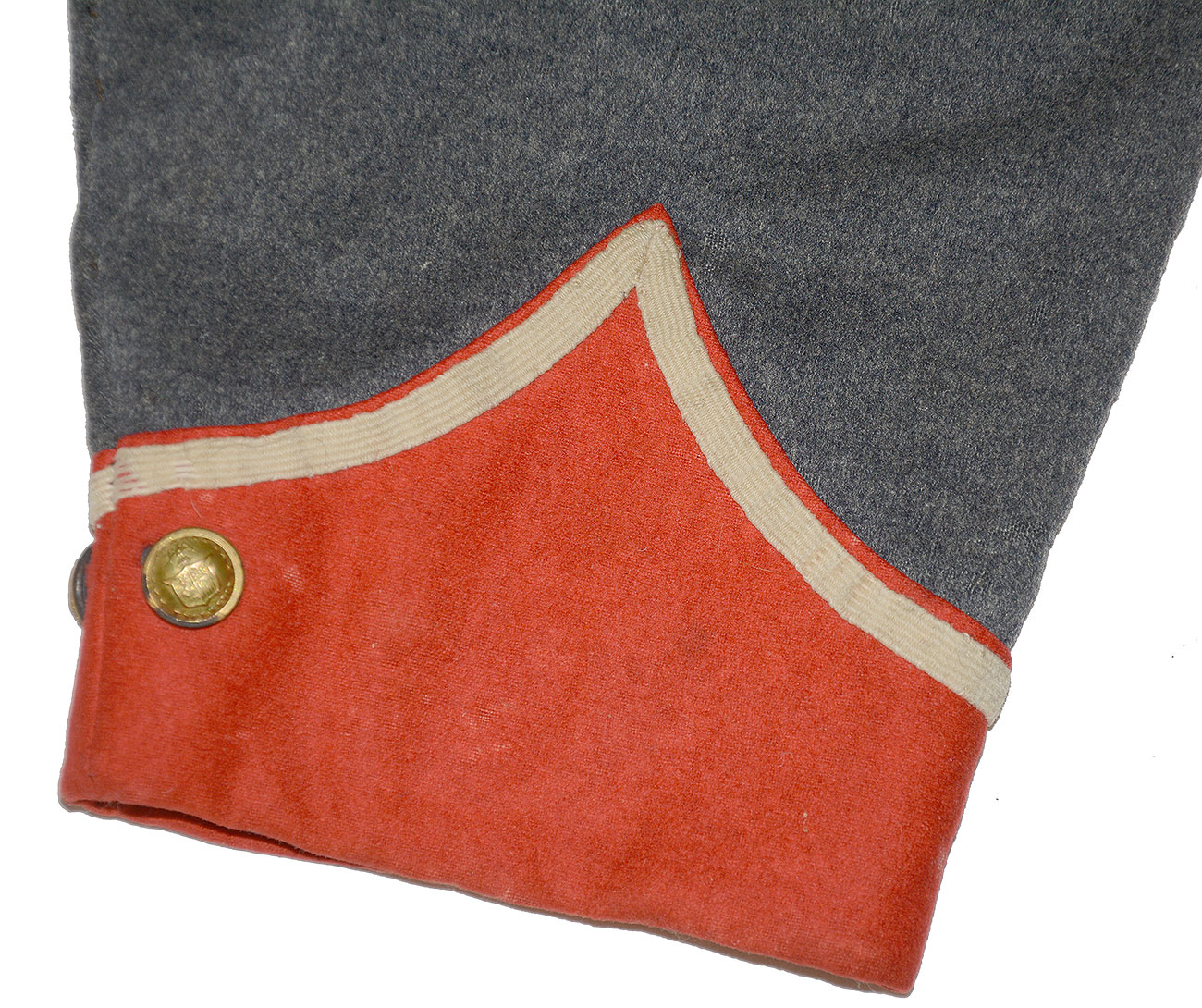
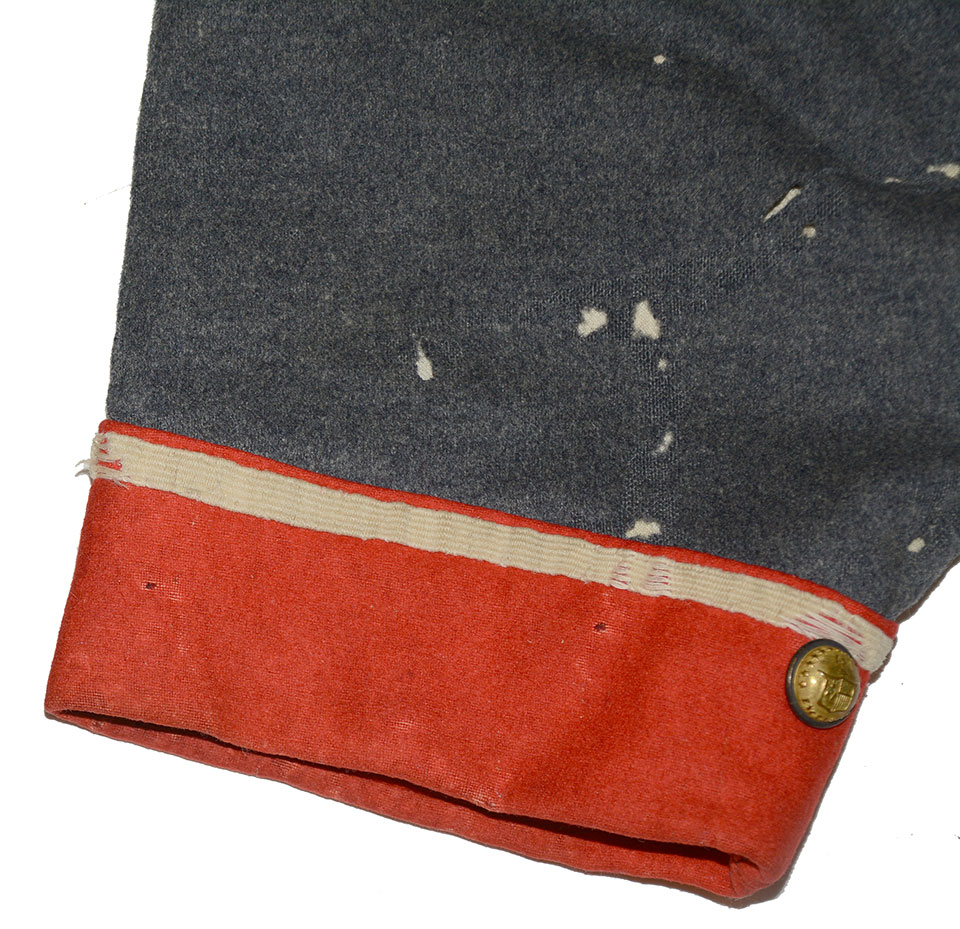
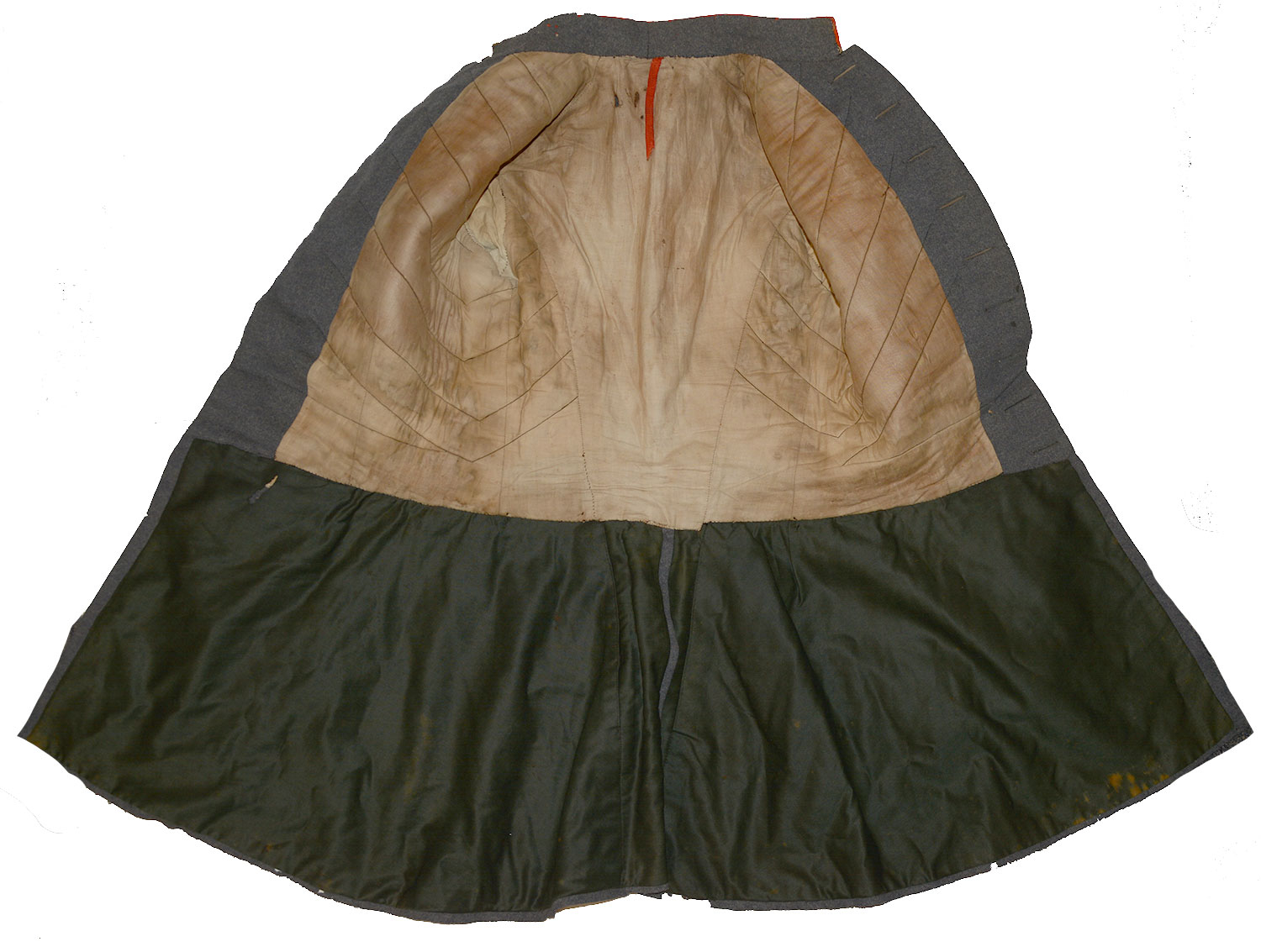
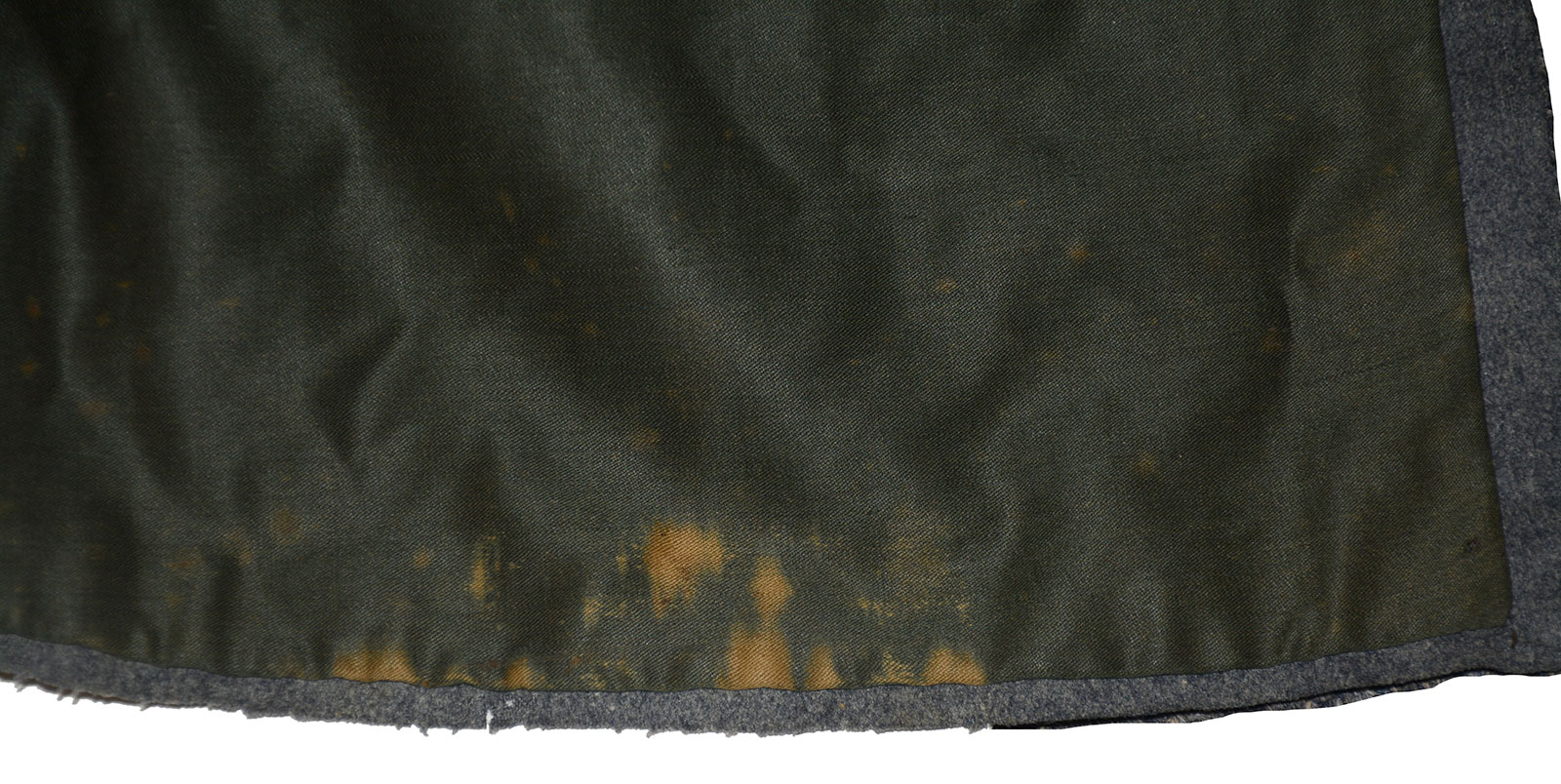
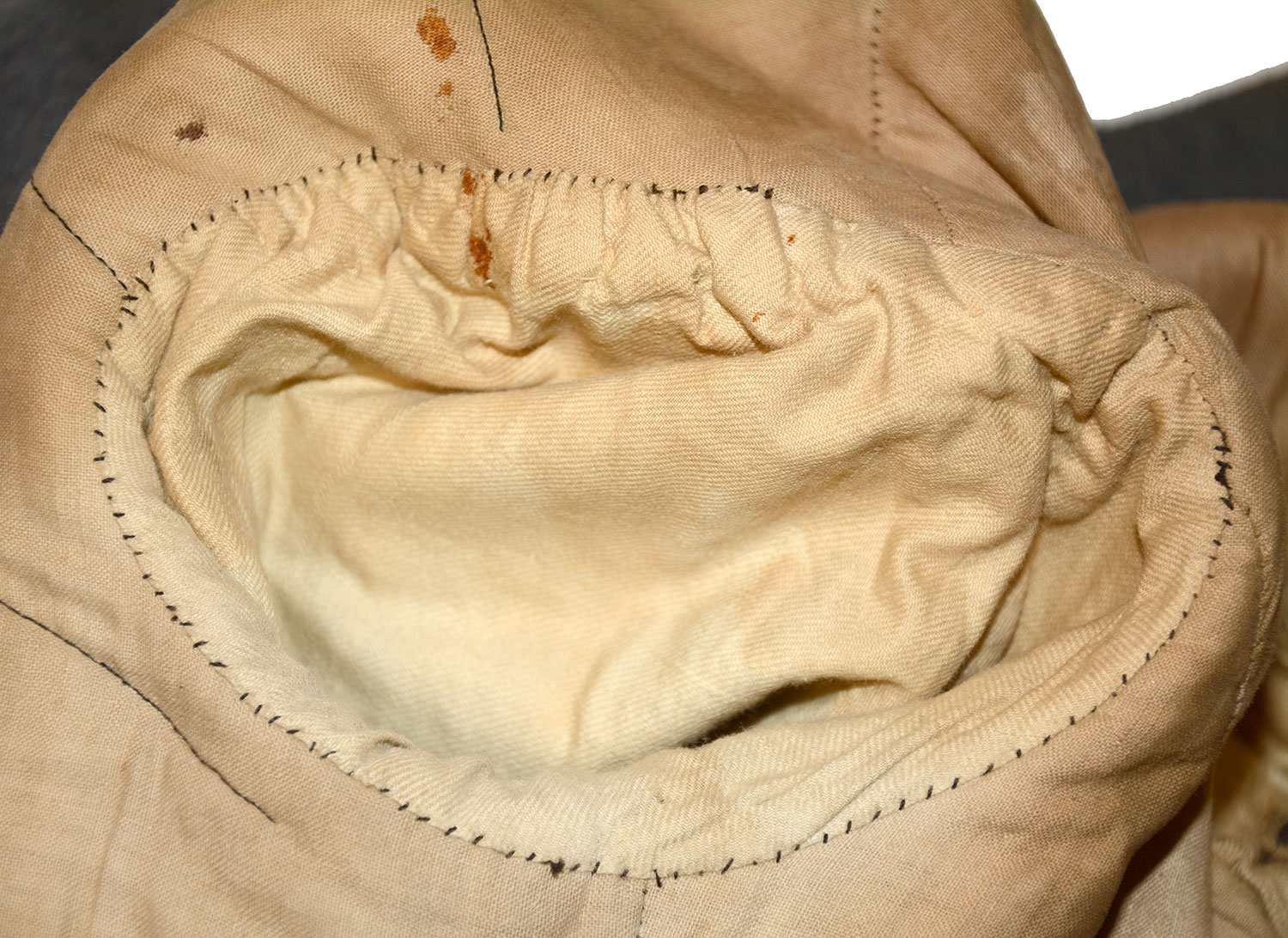
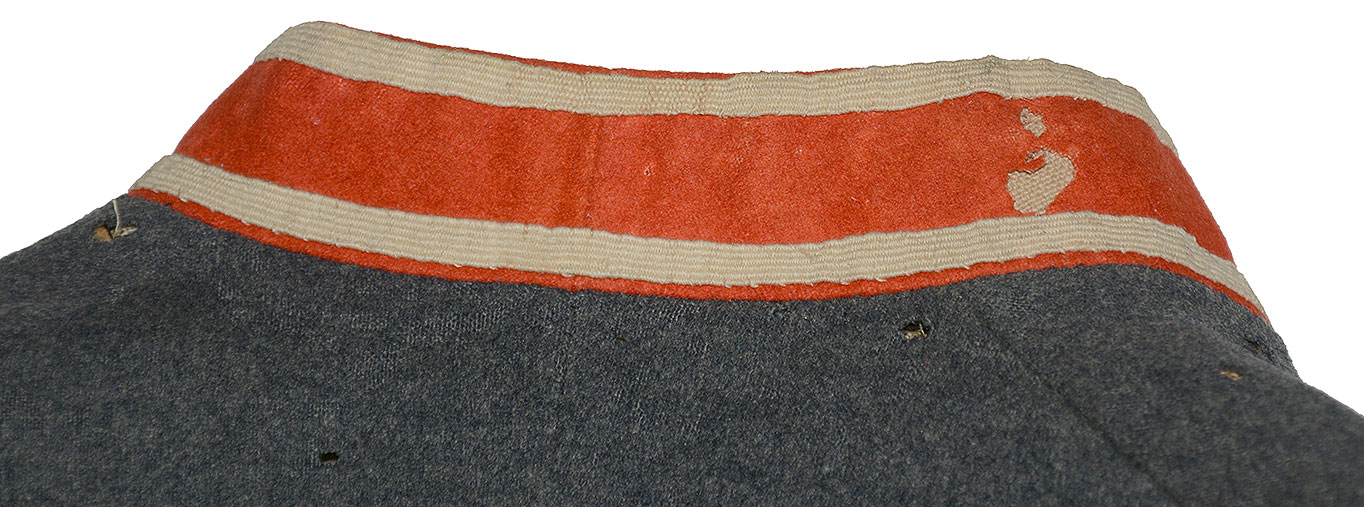
The coat follows the general lines of an enlisted US infantry frock coat, with standing collar about 1-1/4” tall at back center, a nine-button single breasted front, two small buttons on each cuff, though set horizontally, and two at the rear waist. All buttons are NY state seal. The collar is faced with red and piped with ¼” white tape along the top, bottom and front edge. It is secured at the front by two sets of hooks and eyes. The cuffs are non-functional, faced in red and piped in white along the upper edge, which rises to a 4” point. The two small cuff buttons are set on either side of the sleeve seam. The skirts are 13” long, measuring from the waist seam. The upper body is lined and quilted in white, the sleeves lined in white, and the skirts in a polished black material. The skirts have a rear vent. There is just one pocket- a small external watch or cap pocket set in the waist seam on the wearers right.
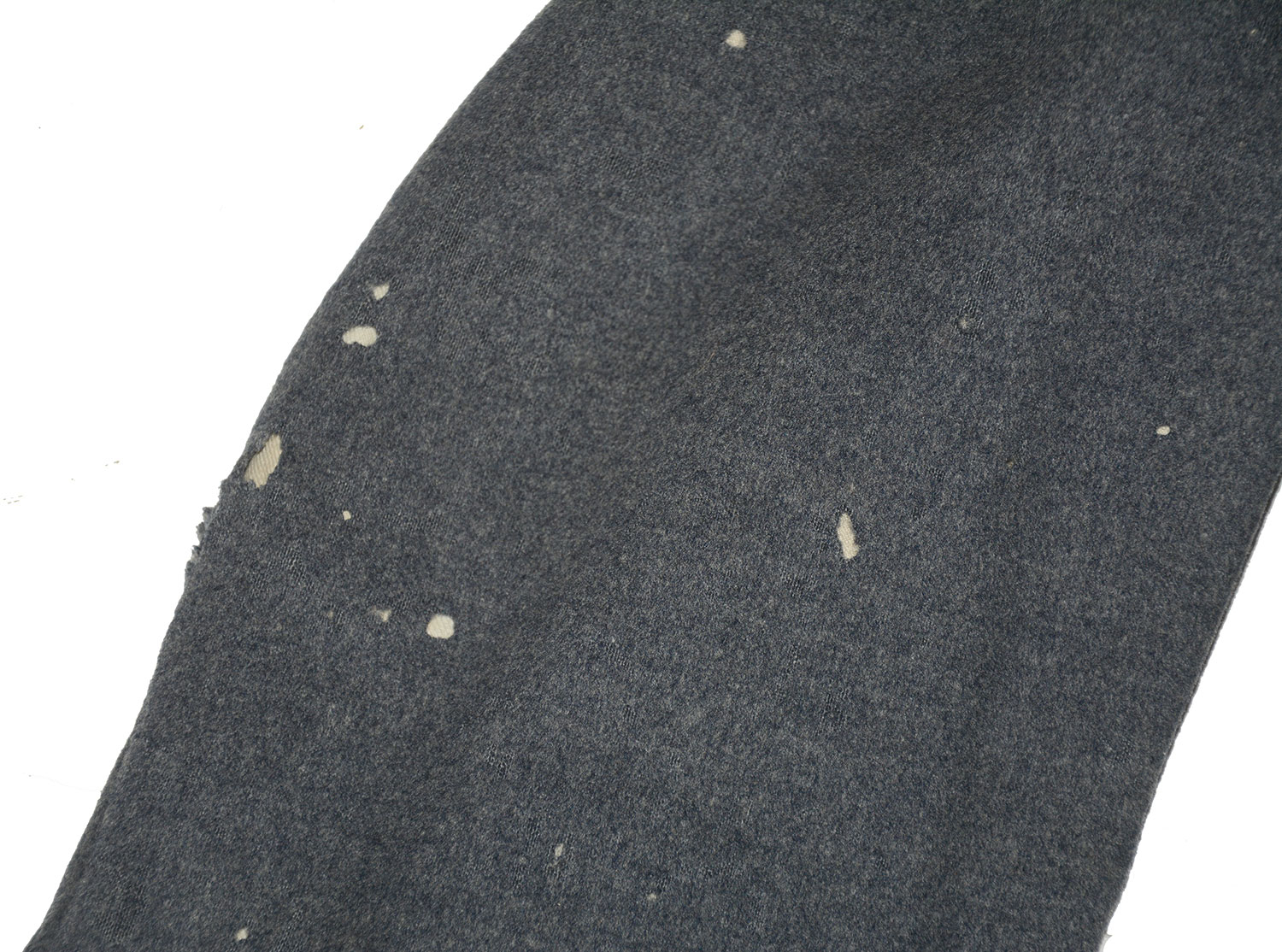
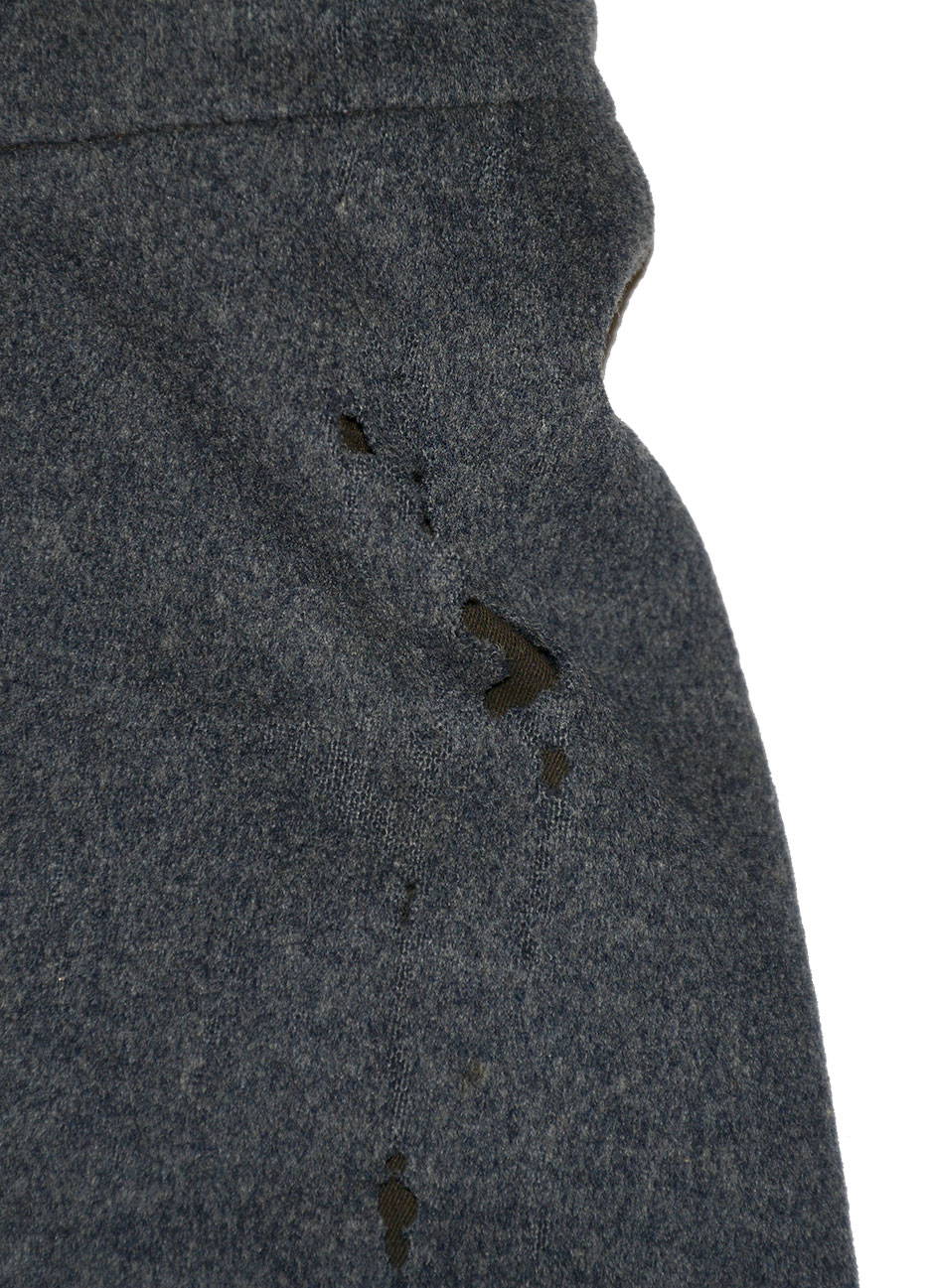
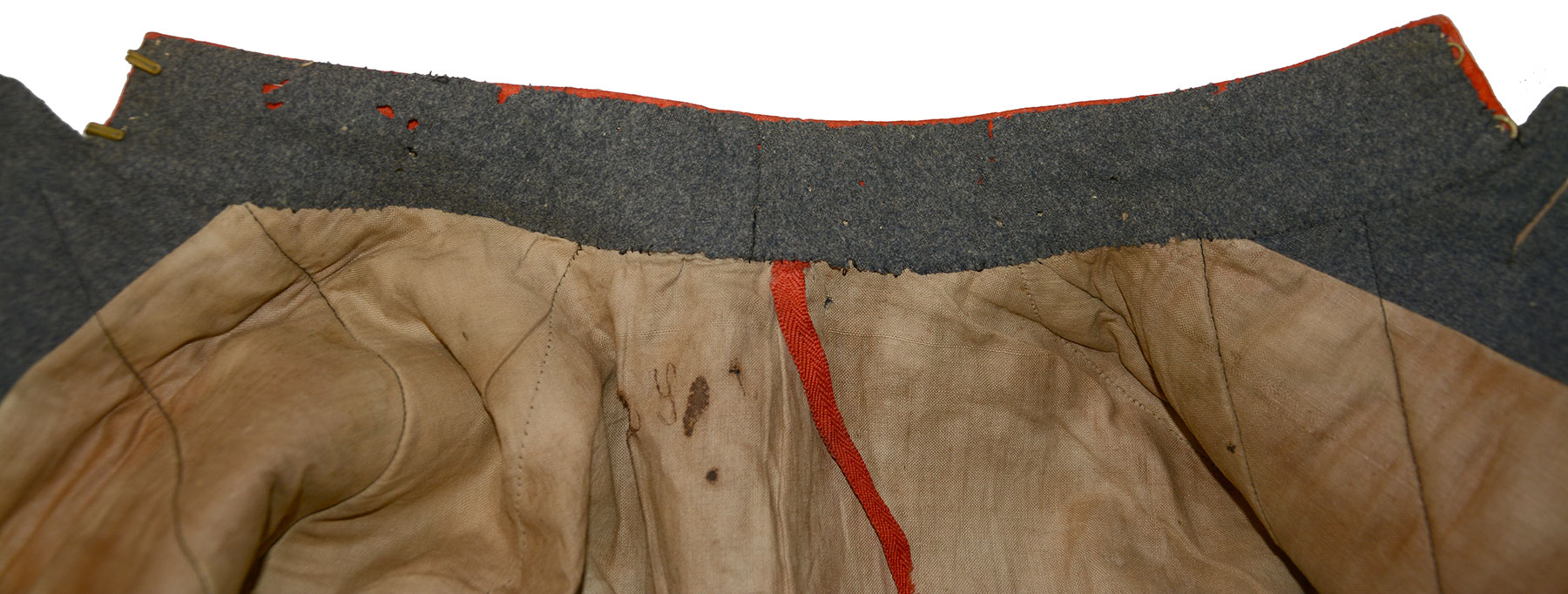
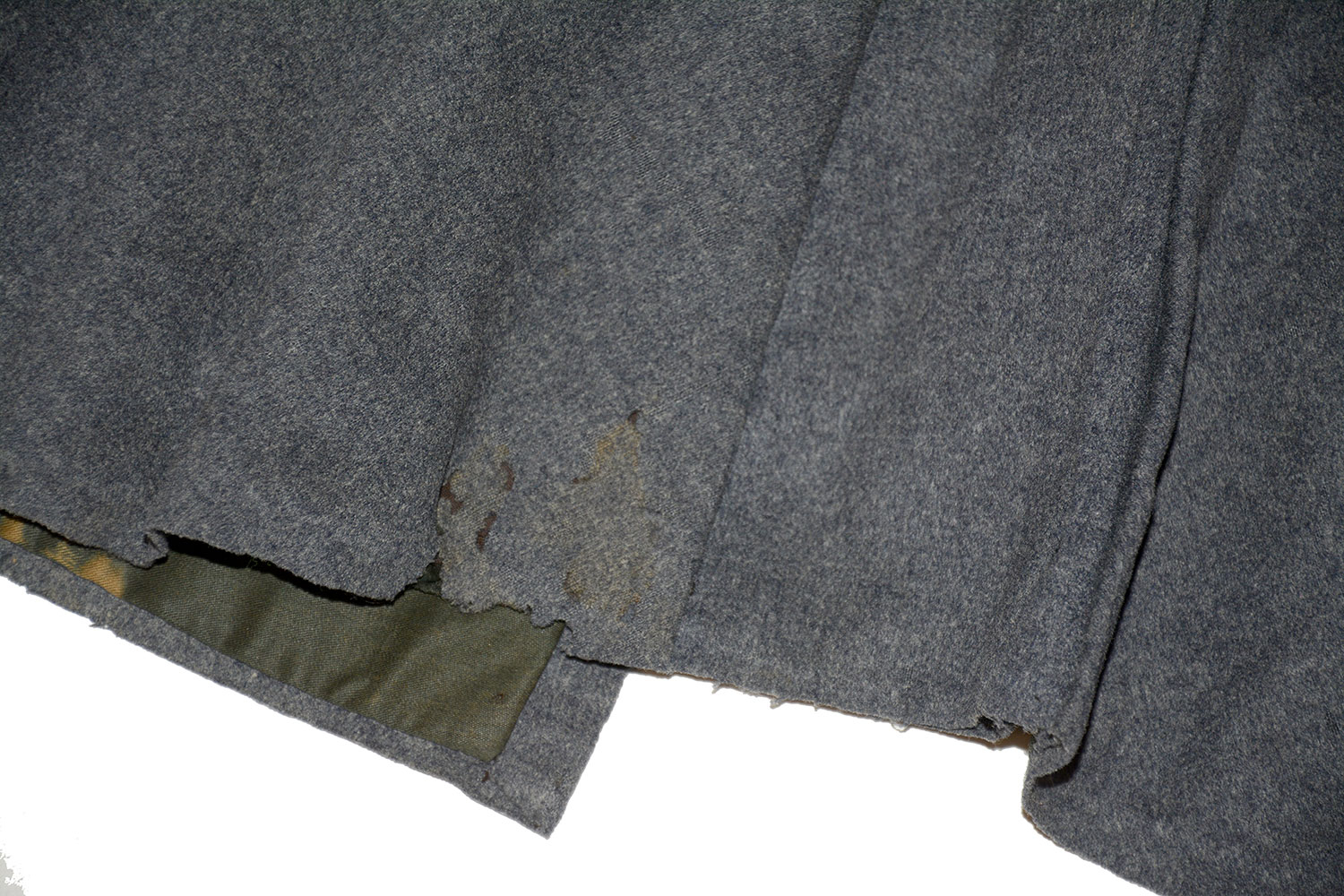
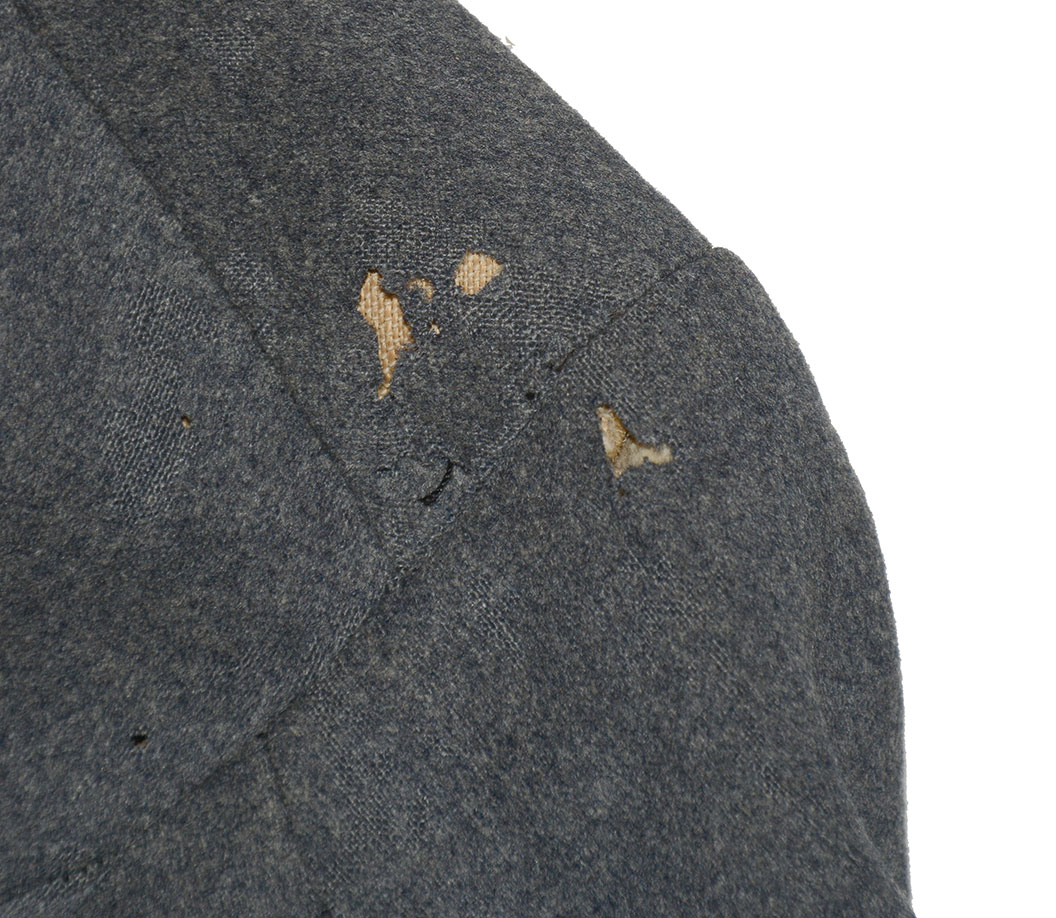
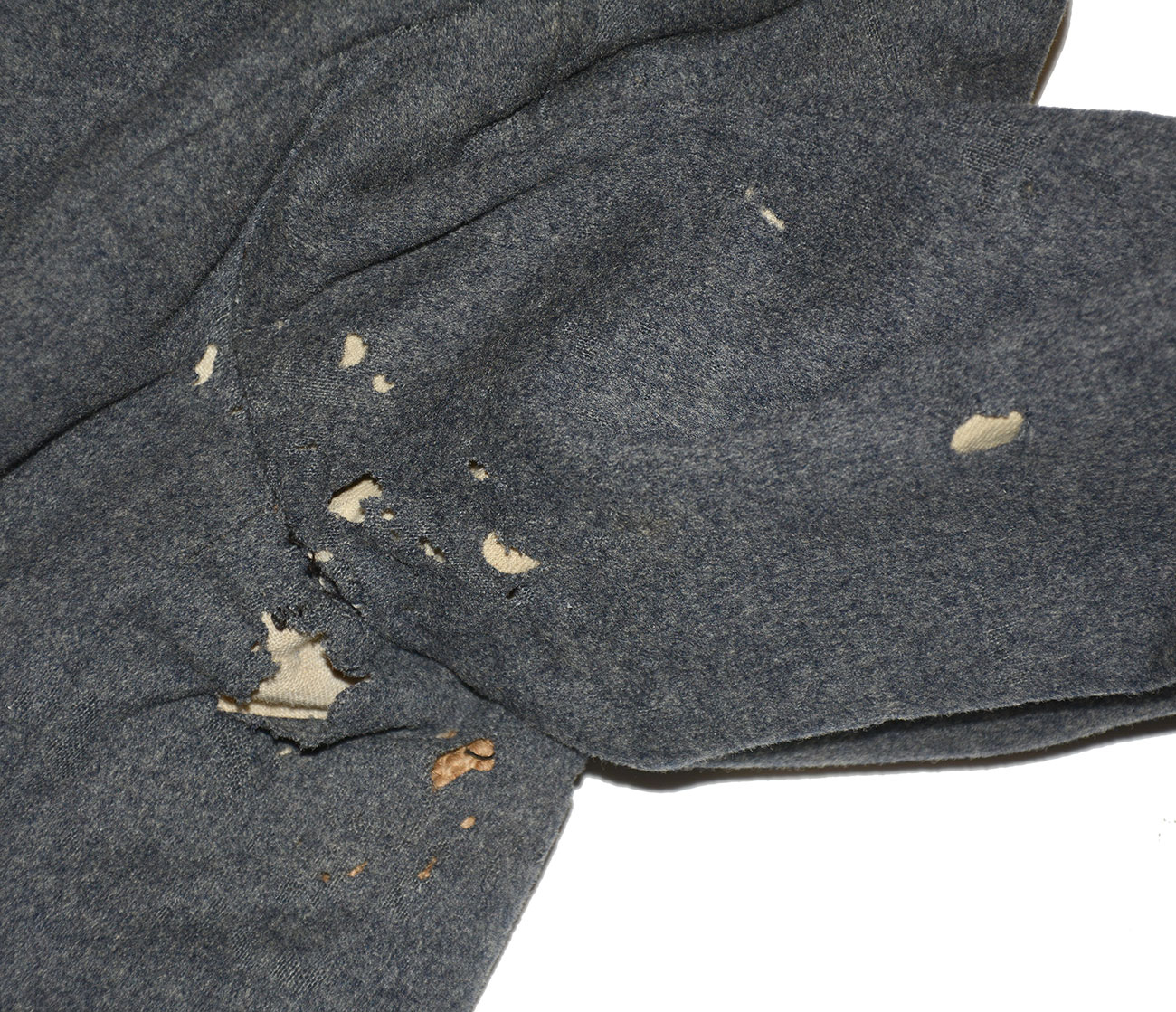
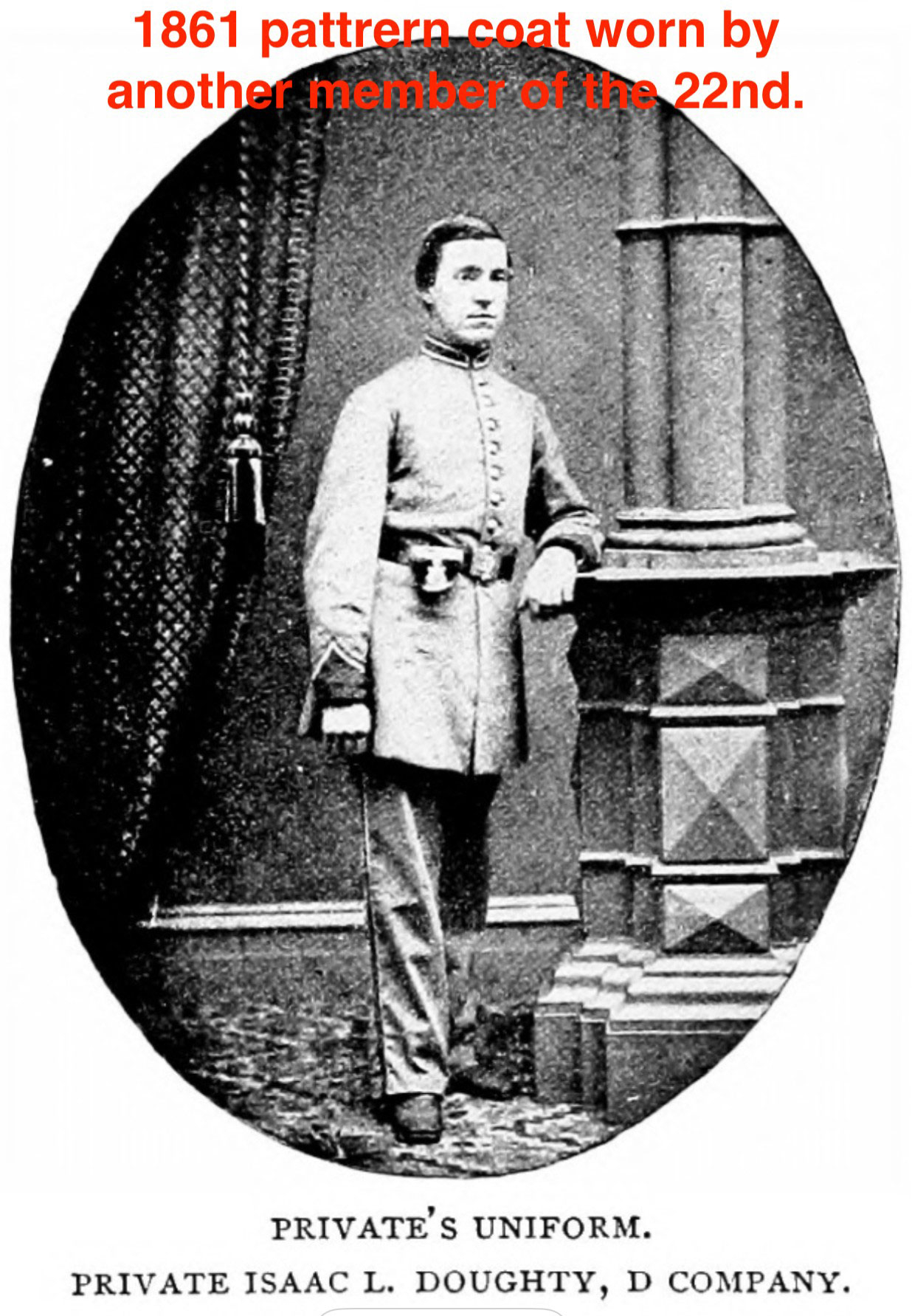
The colors are very good and the coat is solid. There is some moth damage on the back of the wearer’s right shoulder, right elbow and lower right sleeve, and a few scattered nips on the lower left. On the body of the coat the moth nips are mainly confined to the sklrts at left and right hip and some on the bottom edge. These are mainly pencil point or pencil eraser size, do not affect the integrity of the coat and are not terribly noticeable, mostly so only on the sleeve where the white sleeve lining shows. There is one line of small nips creating a hole about ¼” wide 1-1/4” long on the left hip that would be concealed by the sleeve. The interior of the coat is very good, showing only minor stains and wear. A red cloth hanging tab is still attached at one end inside the collar. Please see our photos. We include in the listing an image of member of the regiment wearing this 1861 pattern uniform.
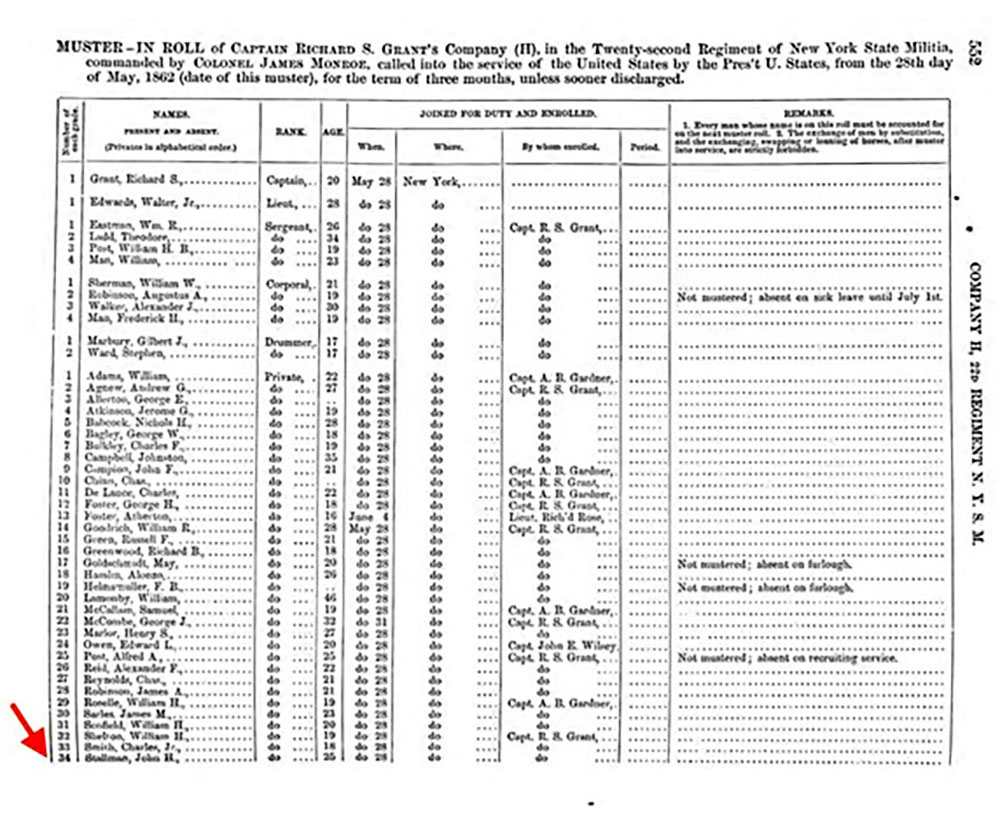
The coat is identified in the lining of the left shoulder with a name that that has been crossed out in black ink with the same ink used to write the name of a new owner below, in clear letters, “J.H. Stallmann.” Records for members of militia and national guard units are tough to find, unless the unit Federalized, which the 22nd New York National Guard did twice in the Civil War, and John H. Stallmann appears on the muster roll made out for Company H of the regiment for their 3-month call-up in 1862, listed as a private, age 25, who officially joined for duty and was enrolled by Capt. R.S. Grant, the company commander, May 28, 1862, along with most of the other members of the company. This was the regiment’s date of departure from the city, so he may actually have been a member of the company for some time, though that he had a coat with a former owner’s name in it indicates he may not have been an original member.
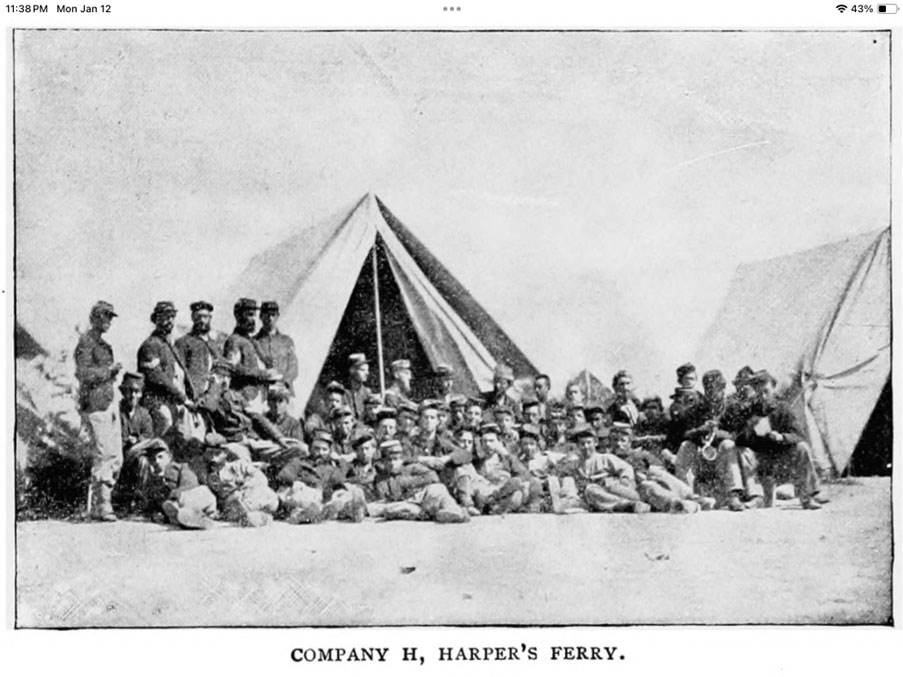
The order for the regiment’s mobilization came through on May 26 in the wake of General Banks’s poor showing in the Shenandoah against Jackson. The regiment assembled on the evening of May 28, and departed for Baltimore by way of Philadelphia, with Company H showing 59 officers and men. The regiment remained in Baltimore for some twenty days, officially mustering into US service on June 18, the date the muster rolls were signed, then departing by train for Harpers Ferry on the morning of June 20, which turned into a two-day trip, the delay occasioned by fears of Confederate attack. There they were brigaded with the 12th NYNG, the 87th Ohio, and two troops of Maryland Cavalry, drilling constantly and performing outpost duty, guard duty along the railroad, “frequently torn up by guerrillas” in the words of the regimental history, picket duty along roads, provost guard duty, and suffering occasional harassment by Confederates, with the experience of being literally under fire as Union artillery lobbed shells over their heads at enemy raiding parties. Their enlistment was officially to end August 28 and they were ordered to return to New York on August 24, but given increasing signs of trouble the regiment voted to extend its service for a week and did not depart until August 31, reaching New York on Sept. 2 and officially mustering out on Sept. 5. The garrison at Harpers Ferry was forced to surrender nine days later. Among those captured were members of the 12th NYNG, who had been scheduled to leave the day after the 22nd, but found the railroads had been cut.
The regiment’s service and discipline developed by extensive drill served them well. Before leaving Harpers Ferry members were sometimes involved in improving the drill of inexperienced volunteer regiments at the post and shortly after their return to New York City they were called upon to suppress disturbances among intoxicated recruits of “Spinola’s Empire Brigade,” camped in the city. In 1863 they were called up as Lee moved north, skirmished with Confederates at Harrisburg and Carlisle, took part in arduous marches in pursuit of Lee and the efforts to intercept him, with elements of the regiment who had not Federalized, taking part in putting down the draft riots in New York City.
As for Stallmann himself, a quick records search indicates he had been born in Bremen about 1837, emigrated to the U.S., and was naturalized as a citizen in January 1860. In later records he was listed as a drug broker in the 1870 census with a wife and two children, and as a wholesale druggist with wife and five children in the 1880 census, living in Brooklyn, where he died in February 1908. Whether, or how long, he remained in the regiment after its return from Harpers Ferry is unclear. A 1905 invalid pension application lists only service in the 22nd NYNG, but that would refer only to its Federal service and in his case would seem to refer only to their Baltimore/Harpers Ferry service since the regimental history does not list him among the men mobilizing for US service in 1863, though it is possible he remained a member and simply did not join that call-up. The regimental history notes members of the regiment who remained behind ended up taking part in putting down the New York City Draft Riots of early July 1863. In any case, the coat’s period of service is well defined- the regiment replaced its dress uniform with a short, blue, chasseur style jacket on Sept. 29, 1862, having determined the uniform of the “Strawberry Grays,” made them look perilously like Confederate artillery. [sr][ph:L]
~~~~~~~~~~~~~~~~~~~~~~~~~~~~~~~~~~~
THIS ITEM, AS WITH ALL OTHER ITEMS AVAILABLE ON OUR WEB SITE,
MAY BE PURCHASED THROUGH OUR LAYAWAY PROGRAM.
CLICK HERE FOR OUR POLICIES AND TERMS.
THANK YOU!
Inquire About 1861-1862 UNIFORM COAT OF JOHN H. STALLMANN, CO. H 22 NYNG- “UNION GRAYS,” AKA “STRAWBERRY GRAYS” – 1862 SERVICE AT BALTIMORE AND HARPERS FERRY
Most Popular
Historical Firearms Stolen From The National Civil War Museum In Harrisburg, Pa »
Theft From Gravesite Of Gen. John Reynolds »
Selection Of Unframed Prints By Don Troiani »
Fine Condition Brass Infantry Bugle Insignia »
Rare Identified 65Th Ny Sergeant’s Jacket, With Manscript Material: 1St U.s. Chasseurs »
featured item
UNITED CONFEDERATE VETERANS PAINT-DECORATED DRUM- C.S. NATIONAL FLAGS, SHIELD, LIBERTY CAP; MOUNTED WITH PHOTO OF DRUMMER; WITH DRUMSTICKS
The drum is a rod tension snare drum 12 inches tall and 16-1/2 inches in diameter. The rims, heads, and screw tightened snare are intact and in place, with the snare showing just two or three loose strands. The 8 tightening rods with screw adjusted… (2025-54). Learn More »
site search