

site search
online catalog
THE MILITARY EFFECTS AND MORE OF MAURICE LEYDEN, THIRD NEW YORK CAVALRY
Hover to zoom
$45,000.00
Quantity Available: 1
Item Code: 1268-777
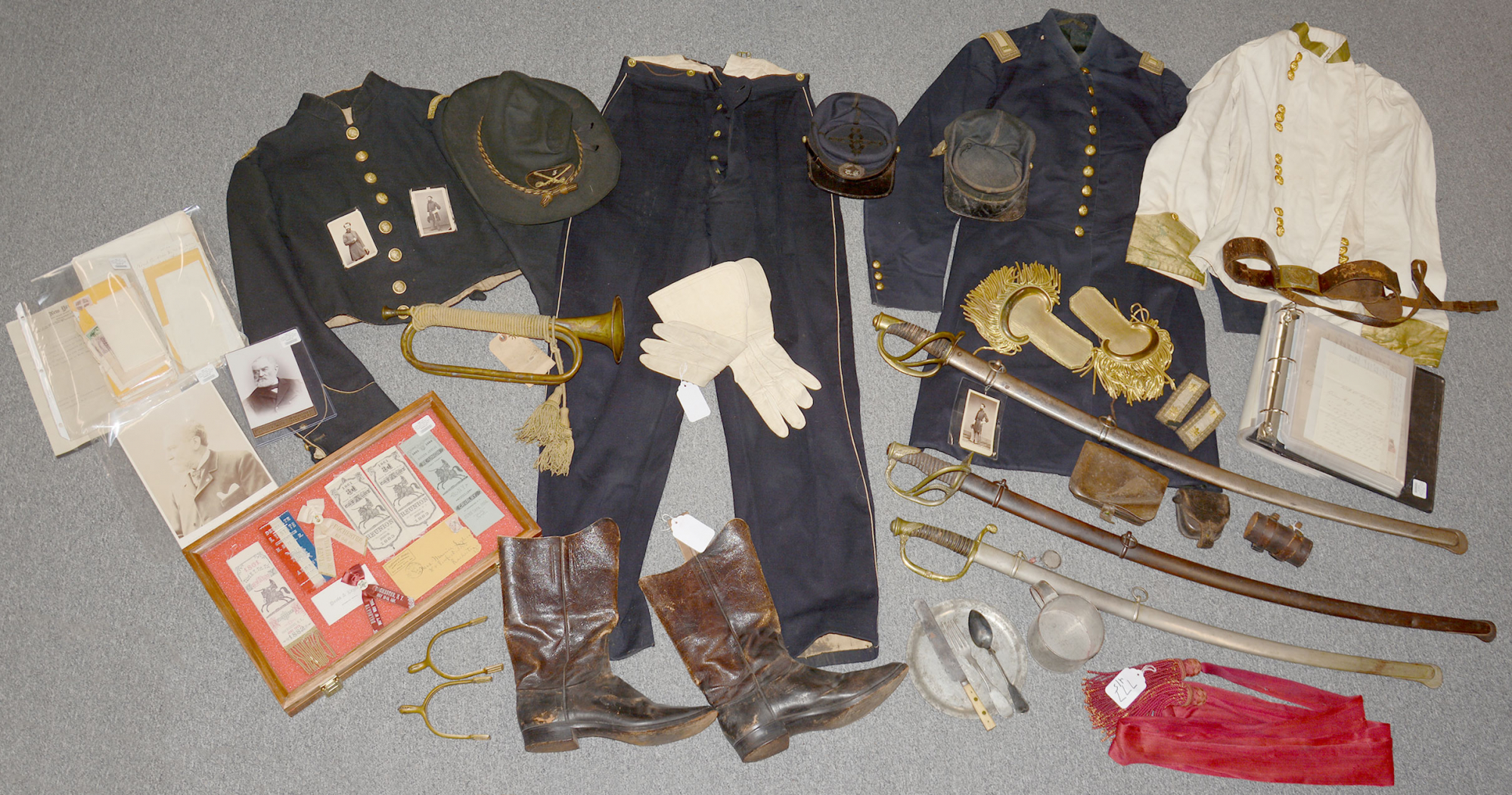
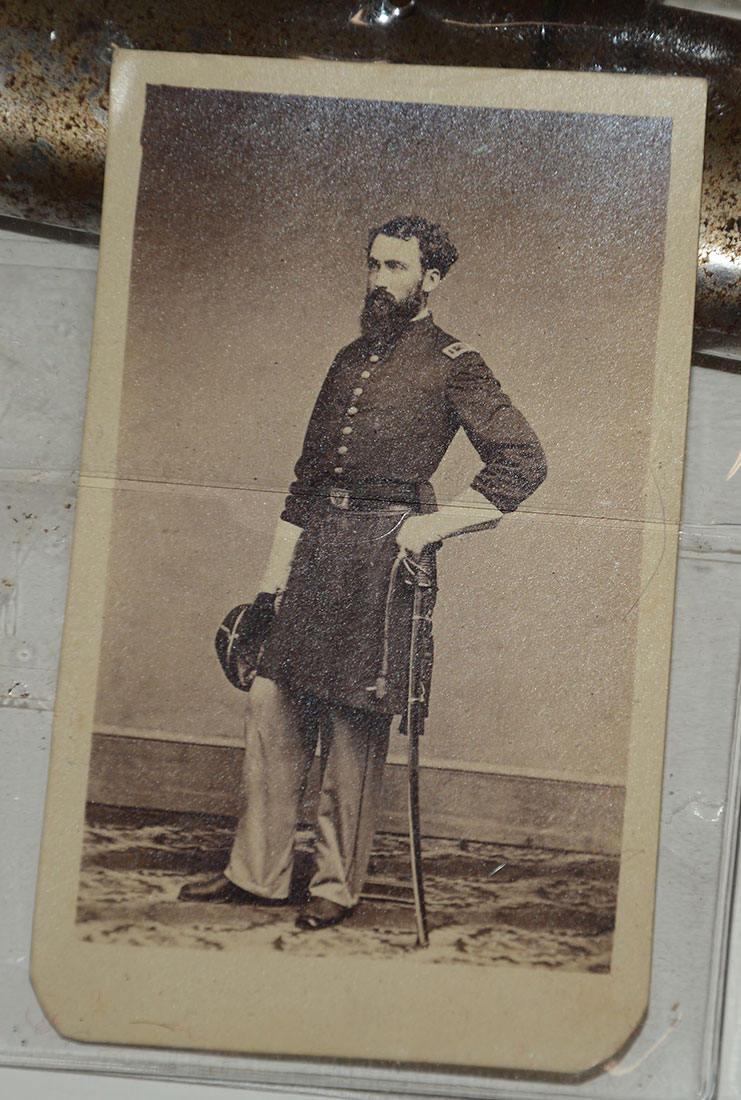
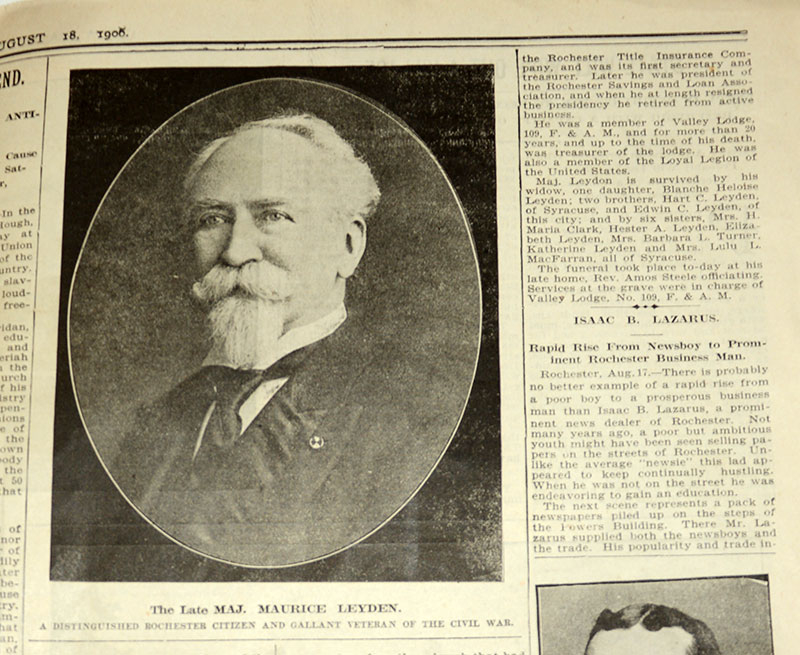
This grouping came directly from the Leyden family in 1998 and within a few months was in the Ray Richey collection. Maurice Leyden was 22 years of age when he enrolled at Syracuse in the military June 12, 1861. By July of 1861 he was a second lieutenant of Co. B Third New York Cavalry (aka Van Alan Cavalry). On June 12th, 1863, he was promoted to a 1st lieutenant. His service was that of the 3rd New York cavalry's. Please refer to this link (https://civilwarintheeast.com/us-regiments-batteries/new-york-regiments-and-batteries/3rd-new-york-cavalry/). Leyden was captured in action at Darbytown road near Richmond. This was the last advance by the Army of Northern Virginia north of the James River. The battle began successfully at dawn on October 7, 1864, as the combined Confederate assault overpowered the Union cavalry stationed on Darbytown Road. Two hours elapsed before the attack could continue, however, giving Union Gen. Alfred H. Terry time to redeploy his division to face the Confederate attack in the fields just north of there. The attack soon fell apart, and the remnants of the Confederate force withdrew west to their original defensive lines. Lee’s last advance north of the James River resulted in more than 1,000 Confederate casualties while the Federals suffered fewer than 500. Leyden was subsequently confined in three rebel prisons, Salisbury, Danville and Libby. On February 22, 1865, he was paroled and officially exchanged April 1, 1865. He was given a captain's commission in absentia December 22, 1864, retroactive to October 10, 1864. Leyden returned to the 3rd New York cavalry as a captain shortly after April 1, 1865. Within 3 months he transferred to Co, B 1st Mounted Rifles. The designation of the regiment was changed to the 4th Provisional Cavalry on September 6, 1865. On November 29, 1865, he mustered out with his company. In January 1866 he was brevetted a major of US volunteers. Please click on this link for more on this interesting soldier (Emerging Civil War). After the war he was also variously president of the American Dental Association, the Rochester Savings and Loan Association and the Davis & Leyden dental equipment manufacturing company, Monroe County Clerk, first secretary of the Rochester Title Insurance Company and supervisor of Rochester's 8th Ward and was active in the GAR and the 3rd NY Cavalry Association. He died in 1906.
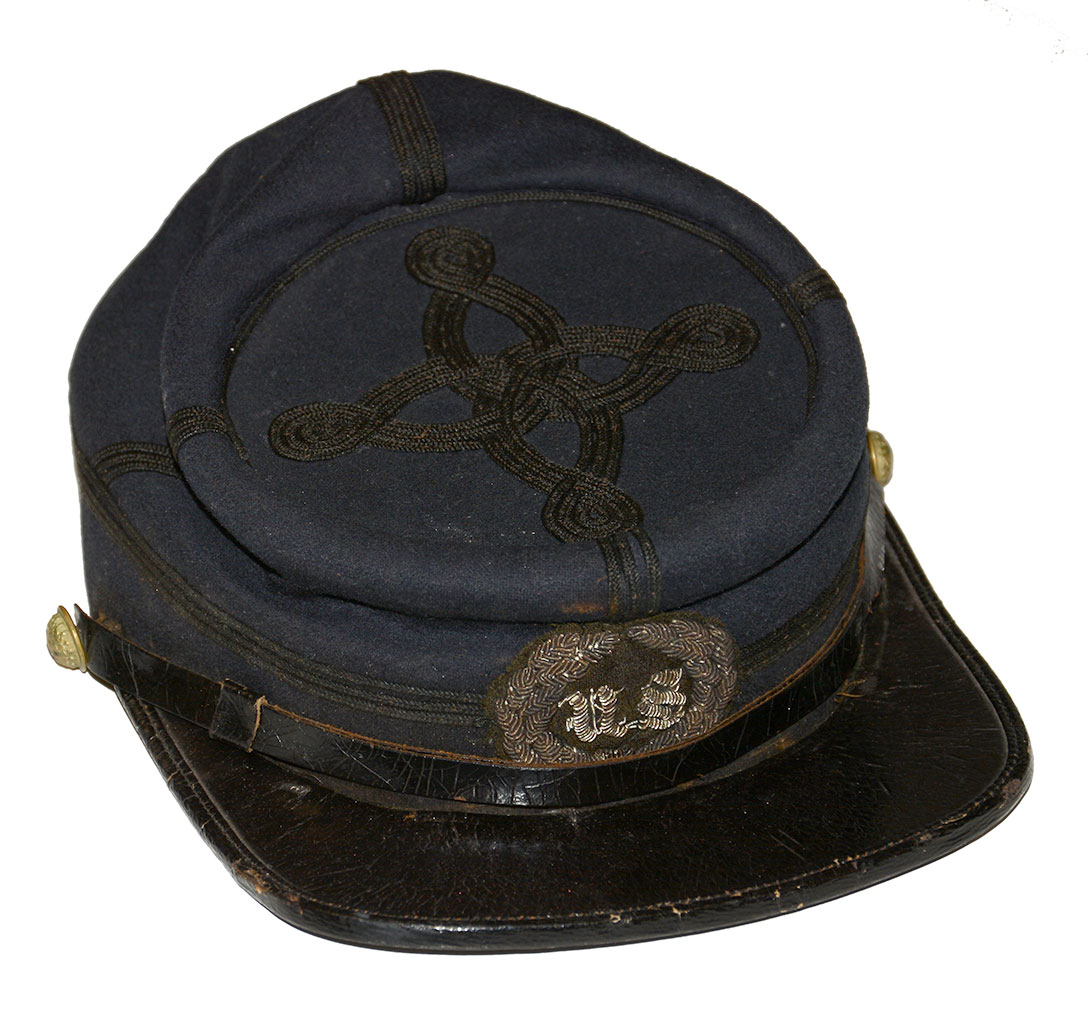
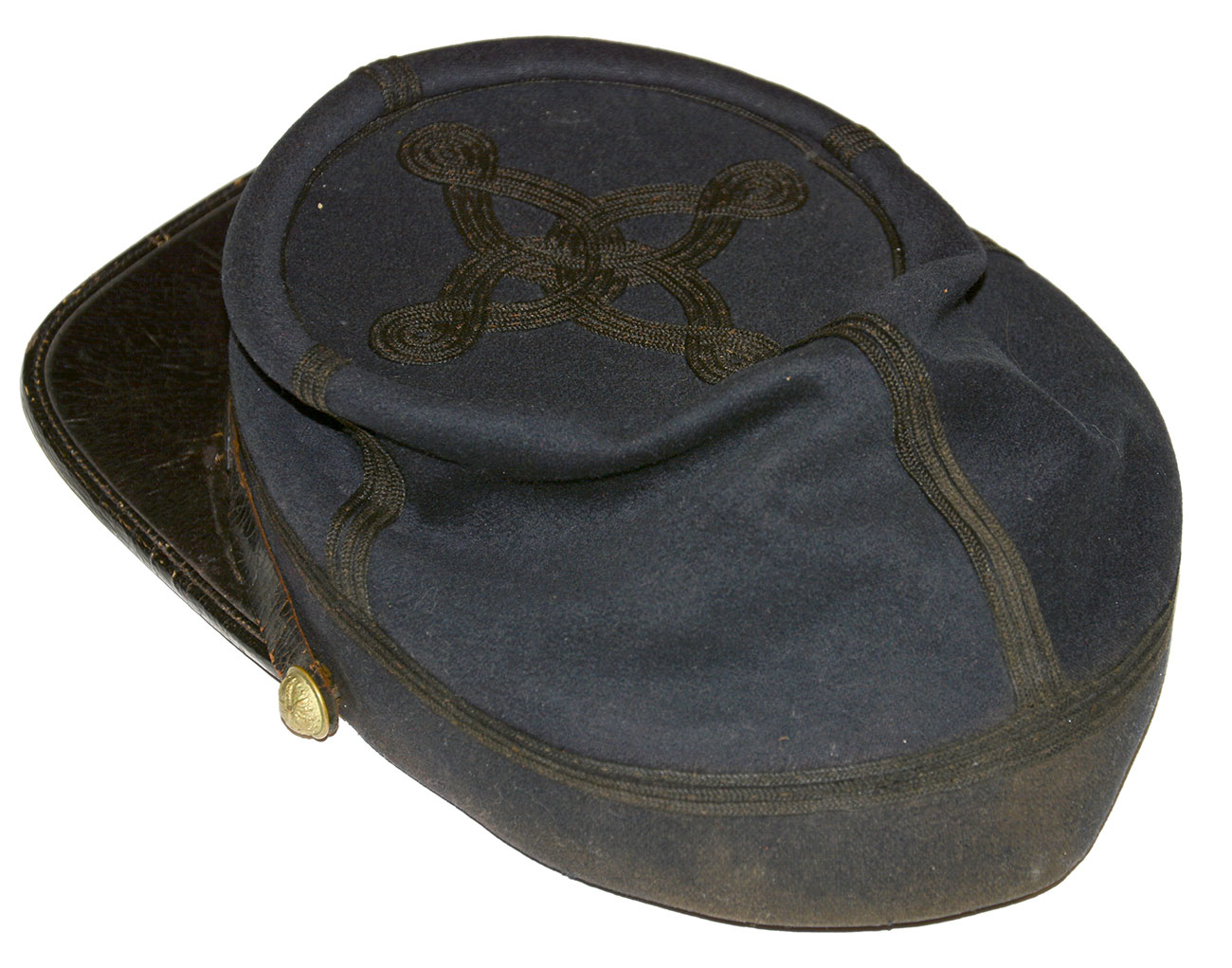
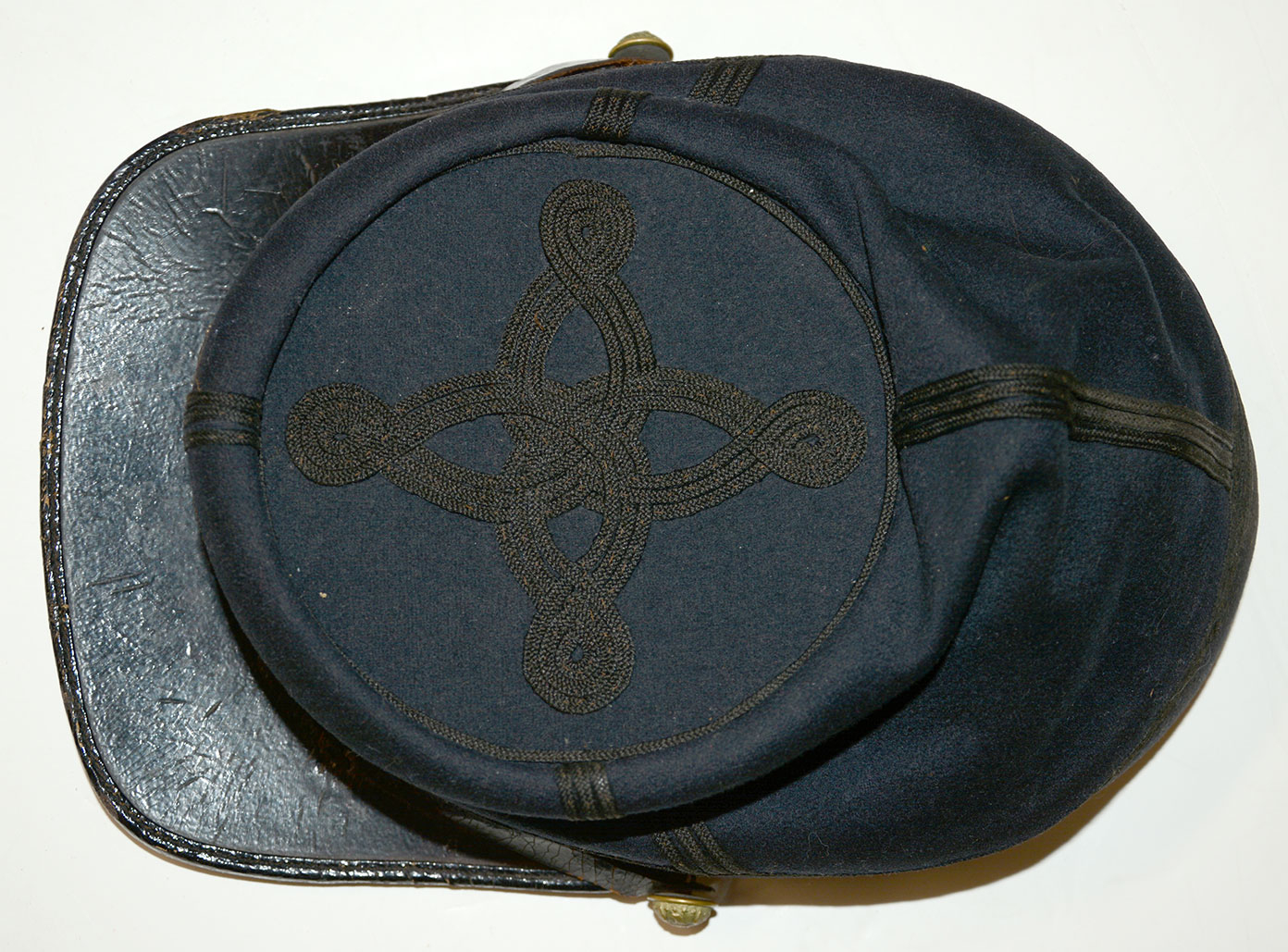
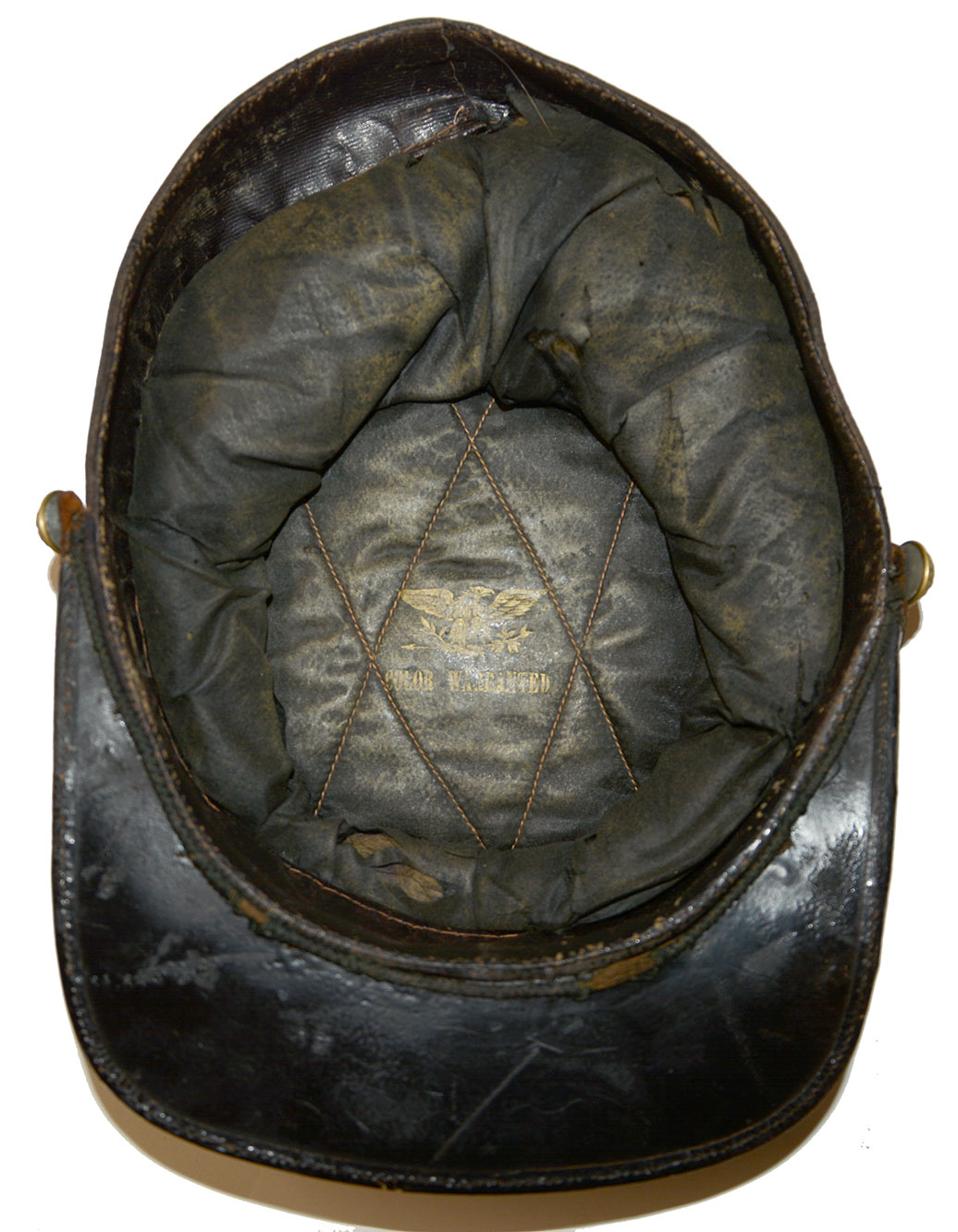
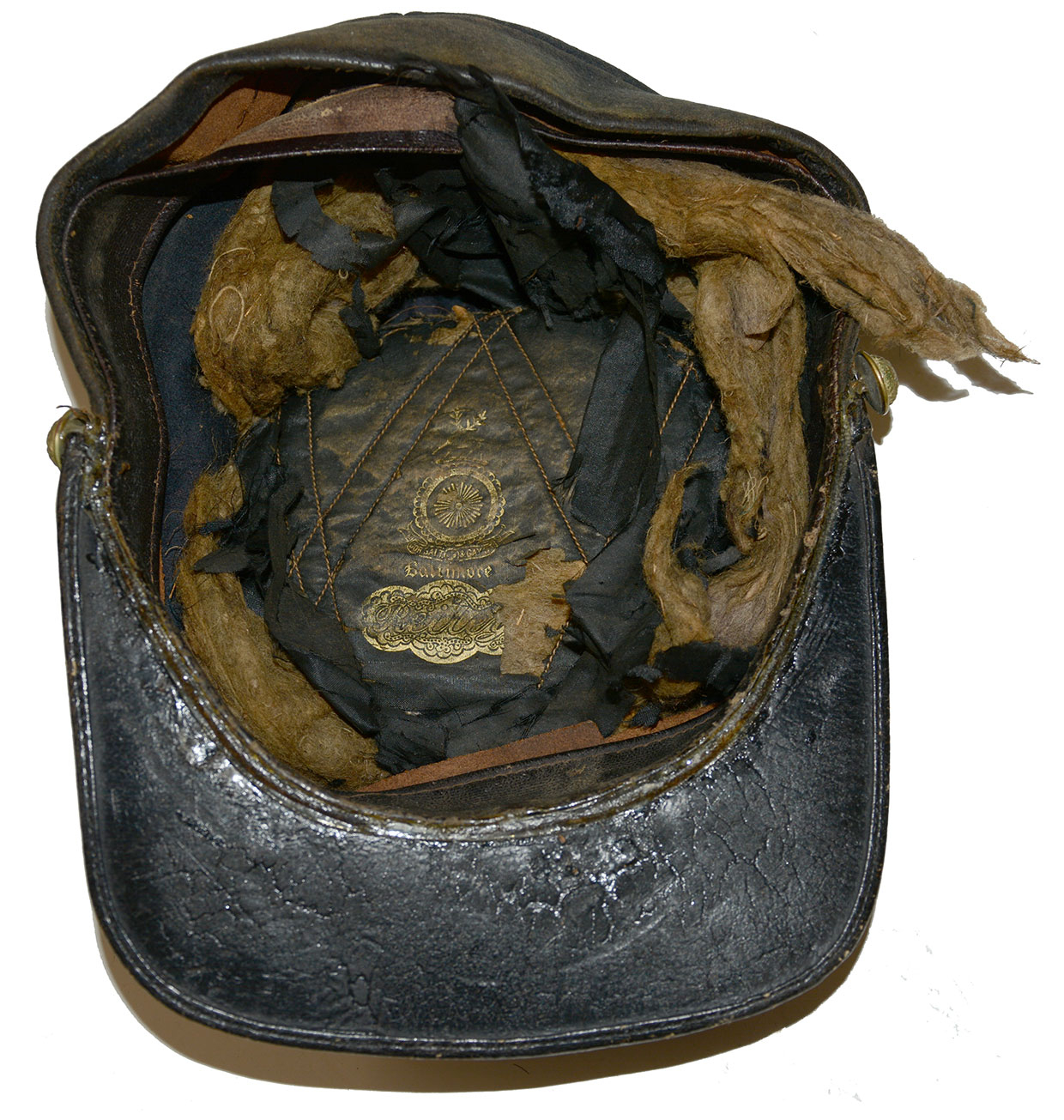
KEPI. His major's cap is in excellent condition. Known as a "chasseur style" officer’s kepi, defined by the inset crown and short sides popularized by the French light infantry. These were commercially made for private purchase, mostly by officers, who had to furnish all their own uniforms and gear. This shows the commonly encountered features of the pattern such as the flat visor with bound edge and a narrow, non-functional, chinstrap secured by two small size tin backed eagle officer buttons. The interior shows it to be a high-quality product with a green/black silk lining that is also quilted on the underside of the crown. The crown inside is gold embossed with a spread eagle over "COLOR WARRENTED". The interior beneath the lining is stuffed with raw cotton. This interior lining is 99% intact and shows staining from use. The black leather sweatband is complete and securely in place with a couple of open areas only. The exterior of the cap is trimmed with three rows of narrow 1/8-inch black wool braid running around the lower band of the cap, up all four sides an over the fold of the crown where it meets a single row running around the edge of the inset top. Within this circle is a quatrefoil of three braids. These corresponds to the U.S. regulations for sleeve braid on officer overcoats with three strands marking a major. Sewn to the 3-inch-high front is a 1 3/4 inch by 2-inch patch of black velvet which has embroidered into it a gold metallic bullion wreath. Within the wreath is embroidered in silver metallic letters "US". The exterior of the broadcloth navy blue cap is flawless. When commissioned a brevet major Leyden purchased this kepi.
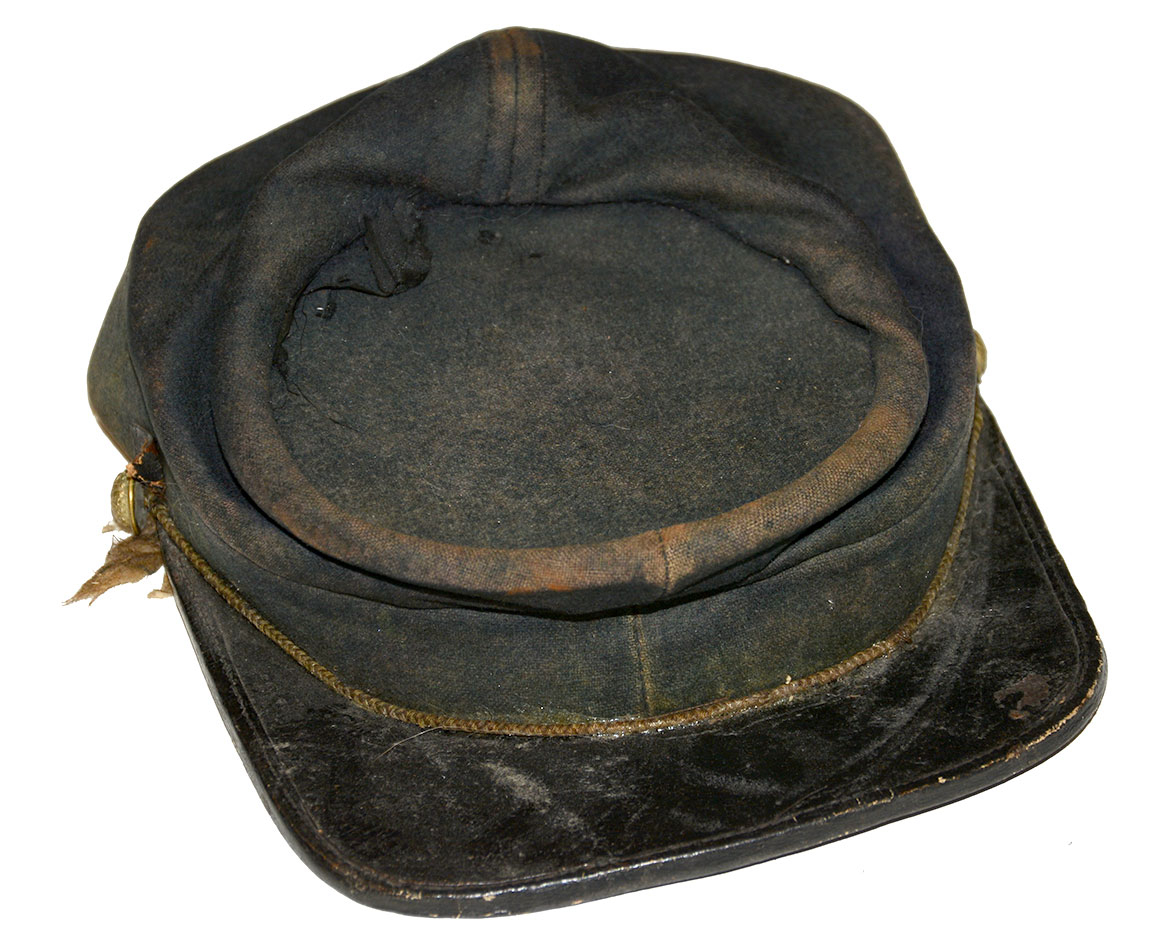
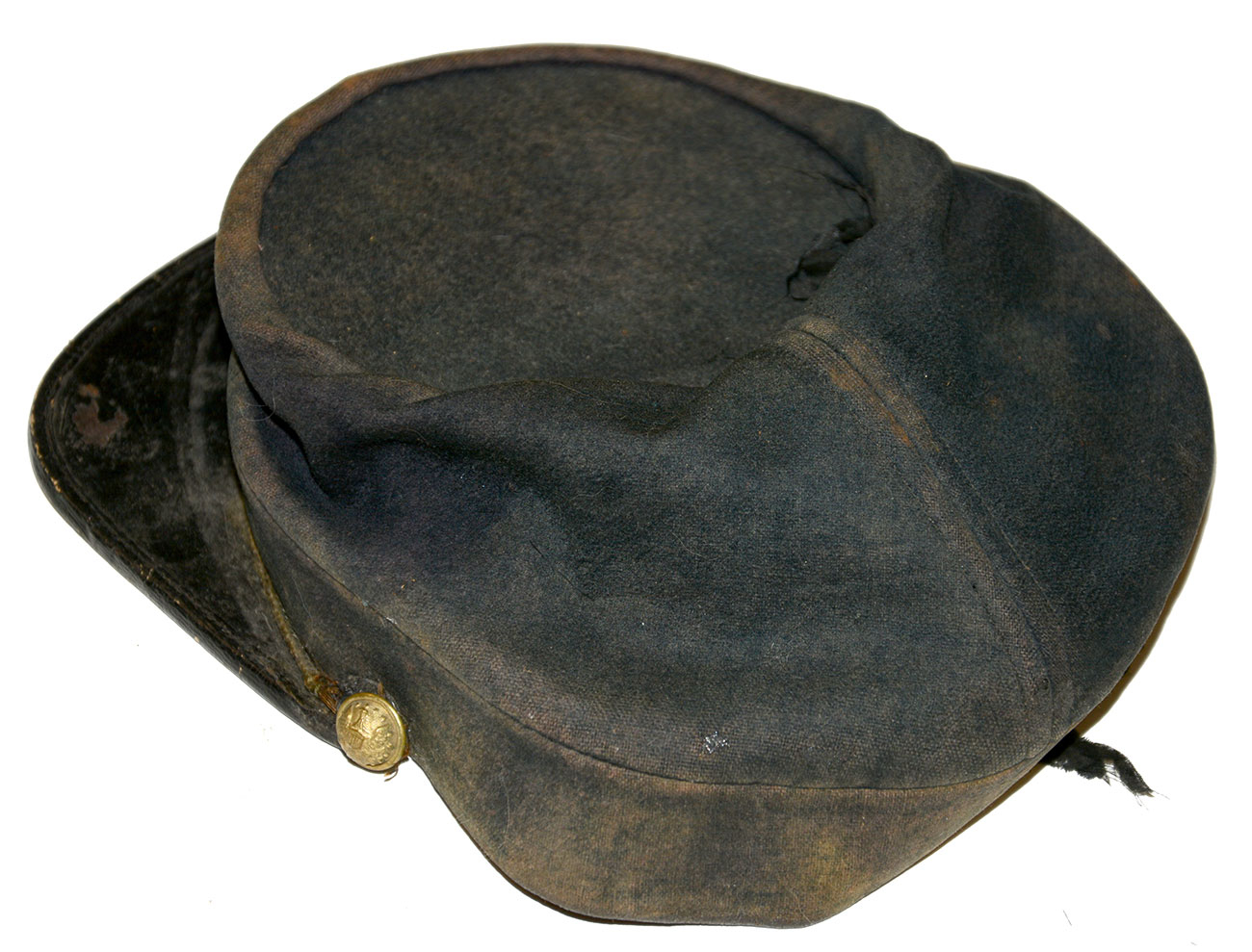
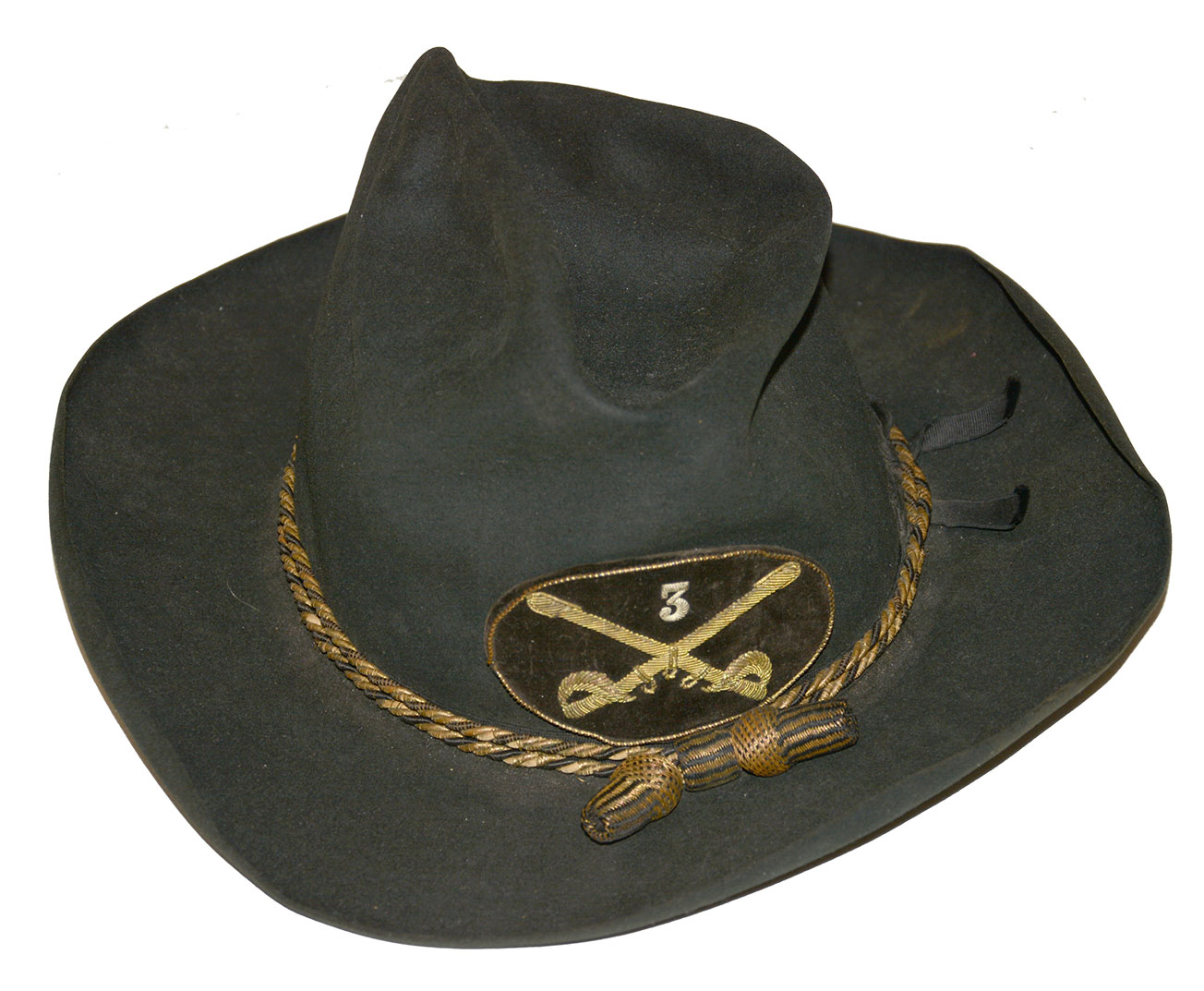
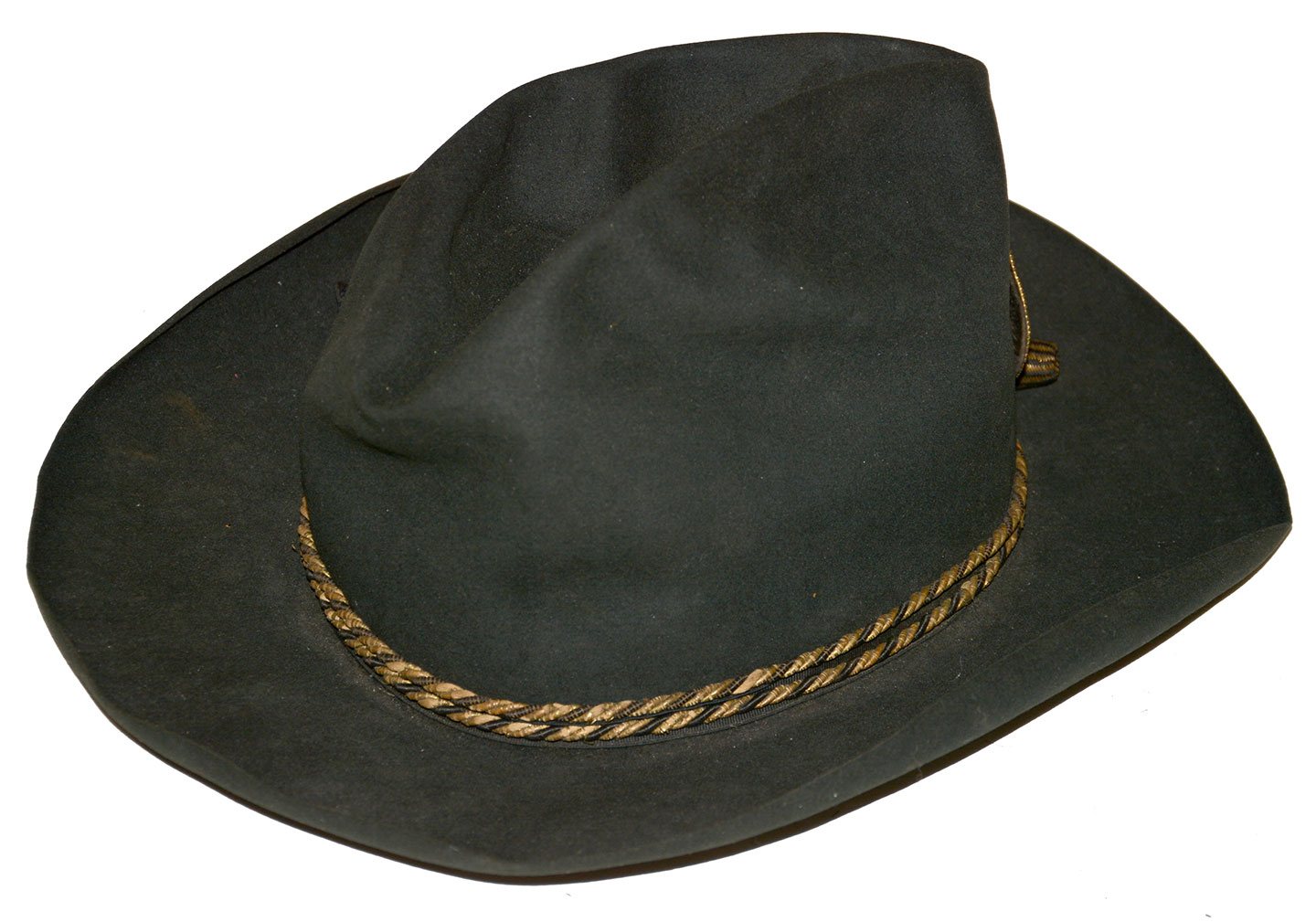
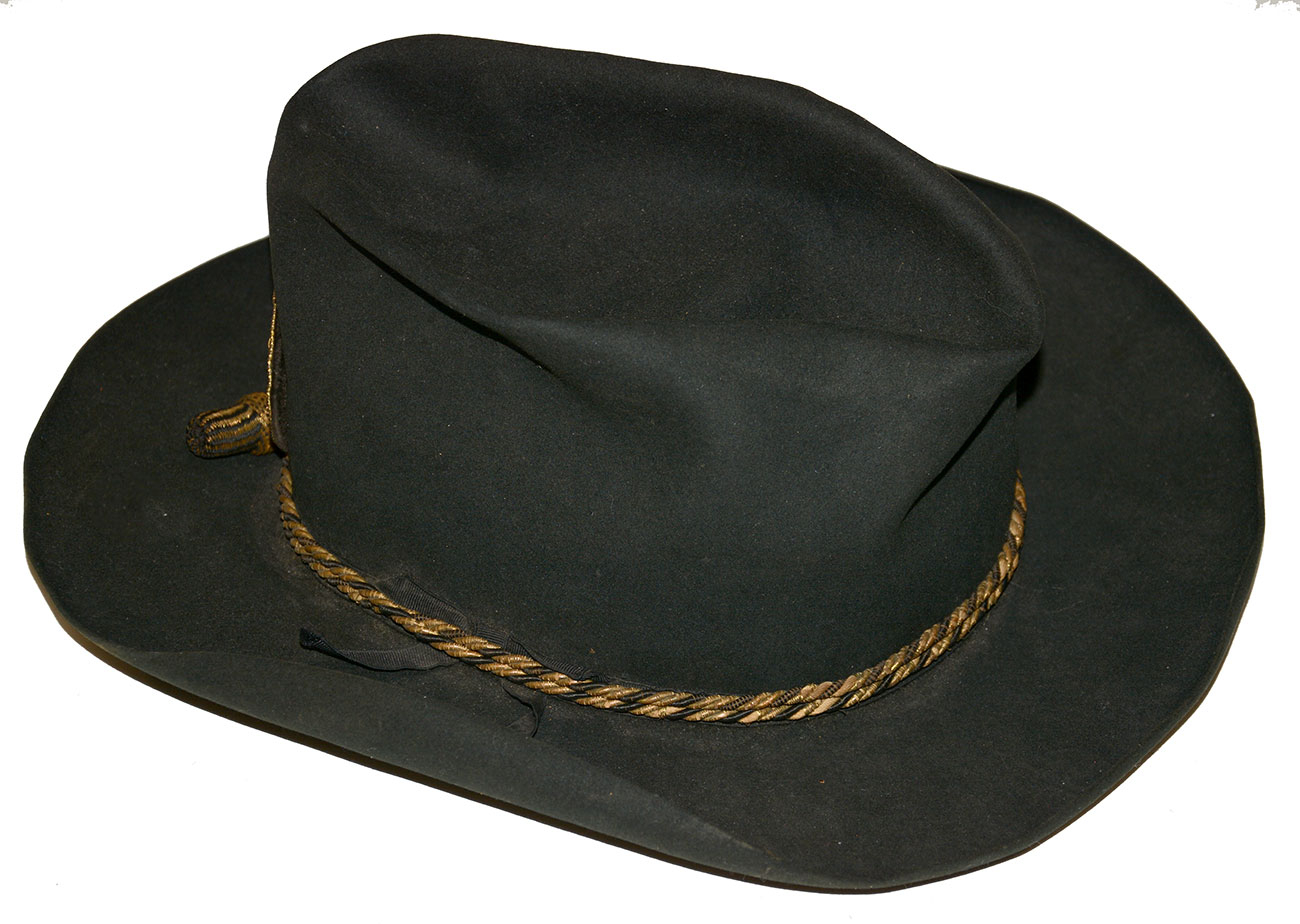
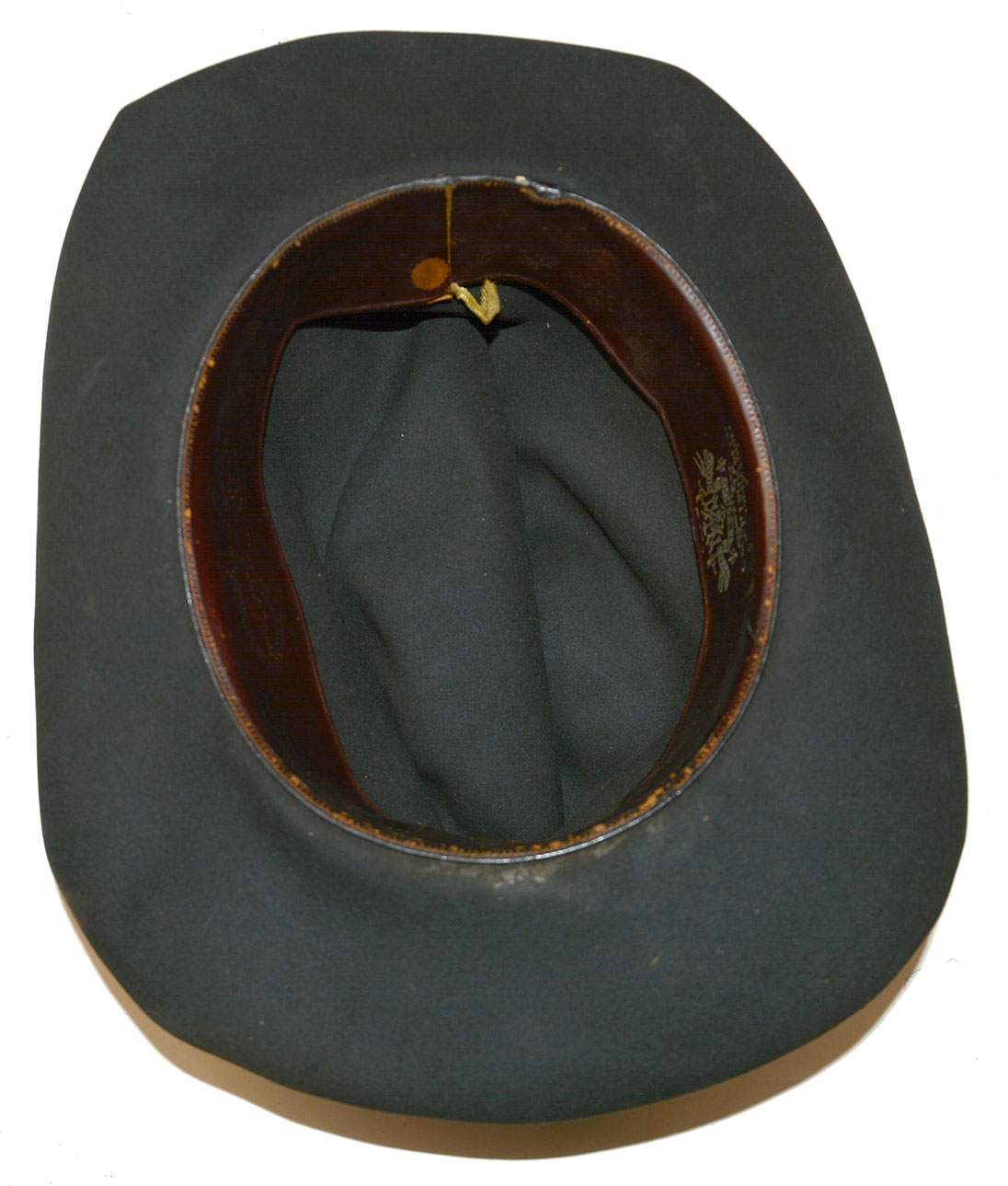
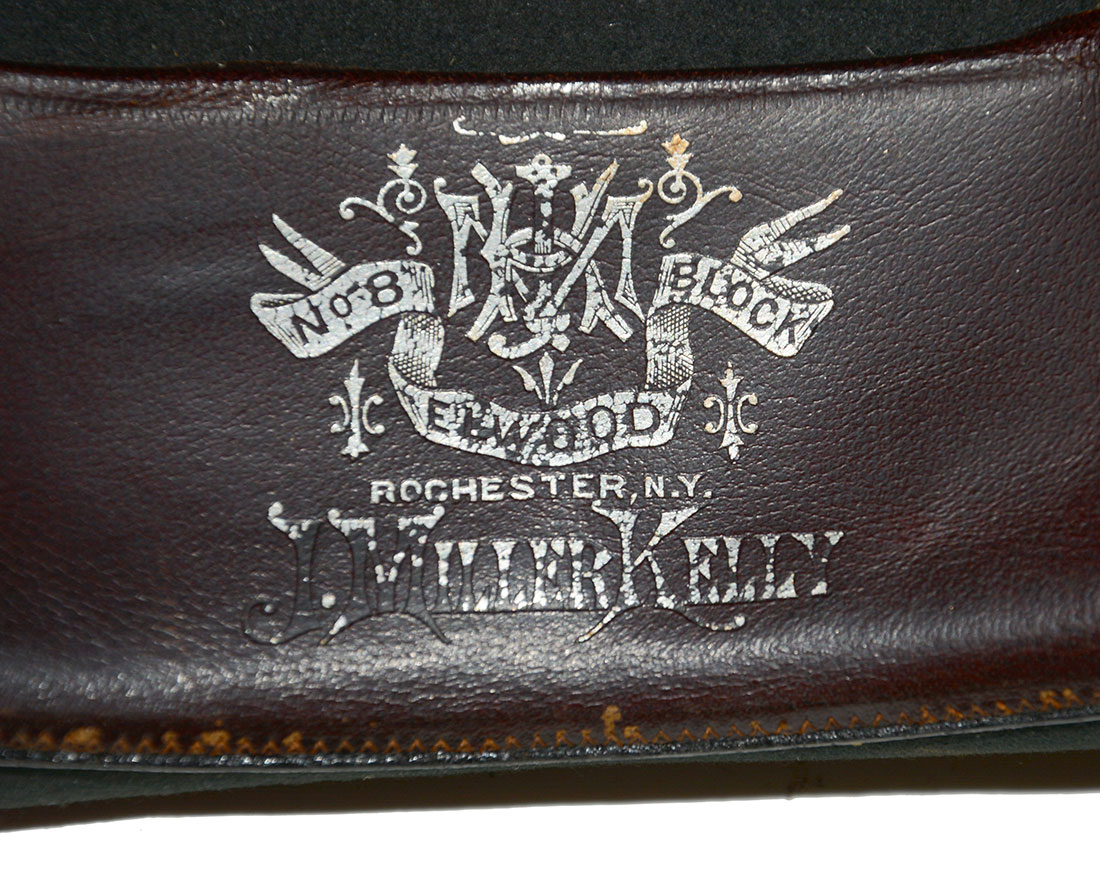
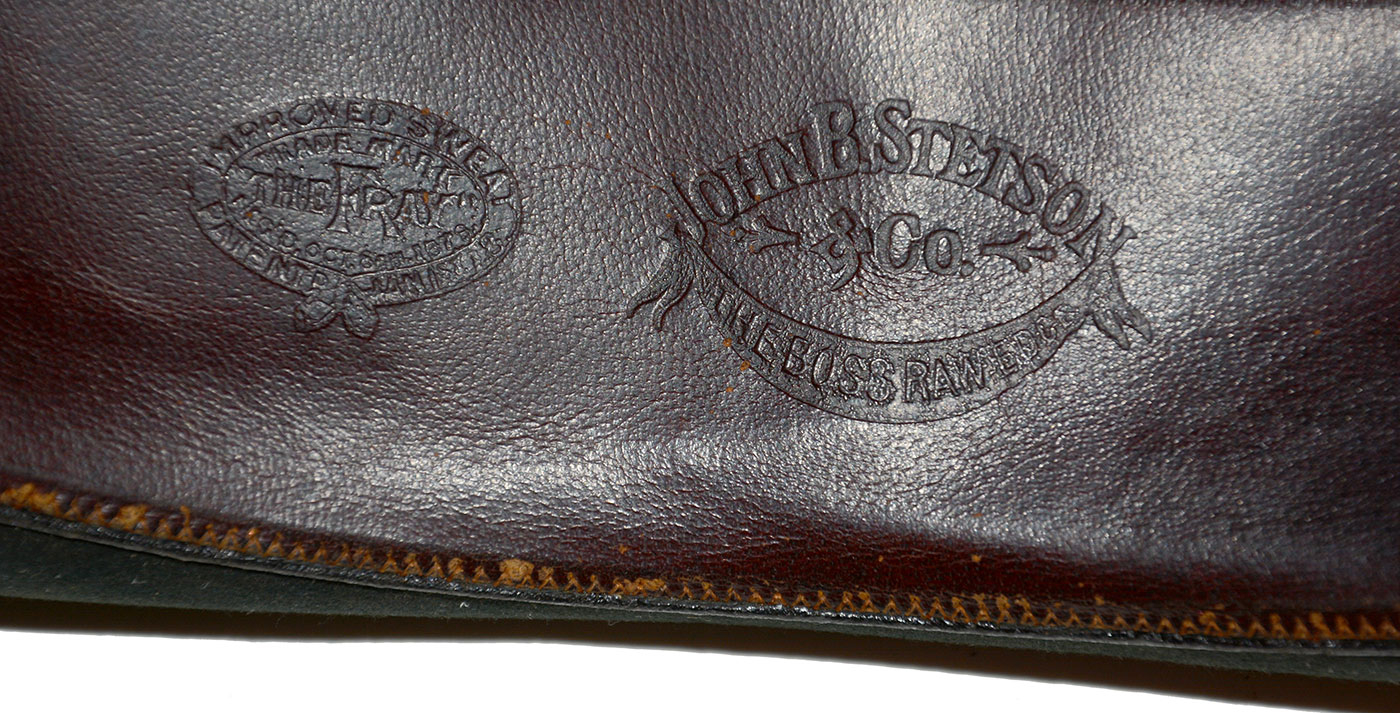
SLOUCH HAT. This hat dates about 1875. And was Leyden's GAR and 3rd New York Cavalry Association hat. It was actually made by "JOHN B. STETSON & Co." and marketed by "J. MILLER KELLY" of Rochester NY. The 2 1/2-inch-high leather sweatband is perfect, and the black felt exterior of this hat is flawless. On the front Leydon has affixed the badge from his service Civil War Model 1858 cavalry slouch hat. This black velvet badge measures 4 inches by 2 1/2 inches. In its center are gold embroidered cavalry sabers surmounted by a metallic false embroidered "3". Around the circumference is a gold metallic rope. The badge is perfect. Leyden also has utilized his original Civil War officer's cords to decorate this fine hat, and these are in excellent condition.
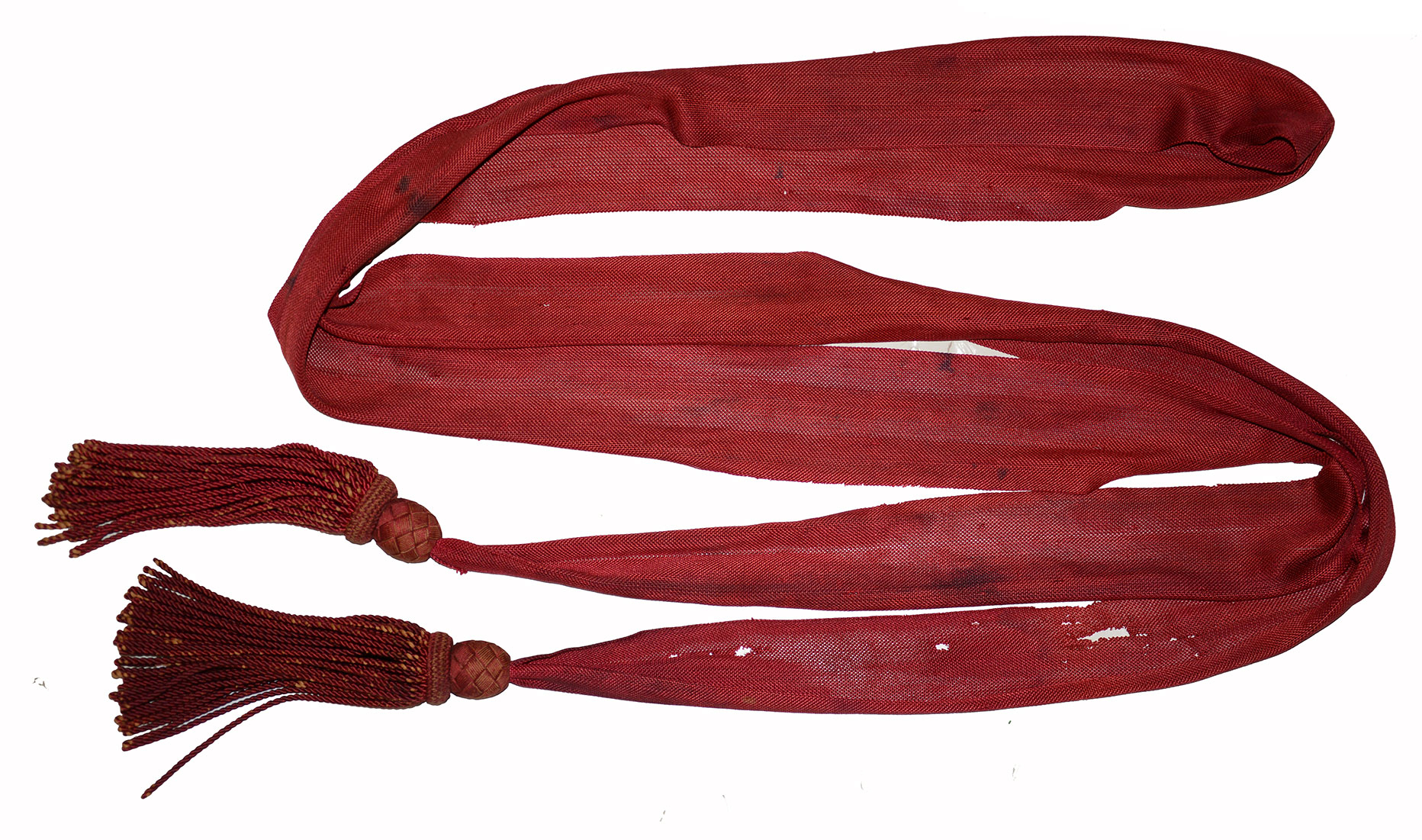
SASH. Although the regulations state that a yellow sash be worn by a cavalry officer this was more often than not never adhered to. Most cavalry officers universally wore the crimson sash. Leyden was no exception. In existing pictures, he is wearing this crimson sash. The tightly netted woolen/silk blend sash is about 120 inches long including the 8-inch tassel. It has some scattered tiny holes and minor color loss on the fringe but is otherwise in excellent condition.
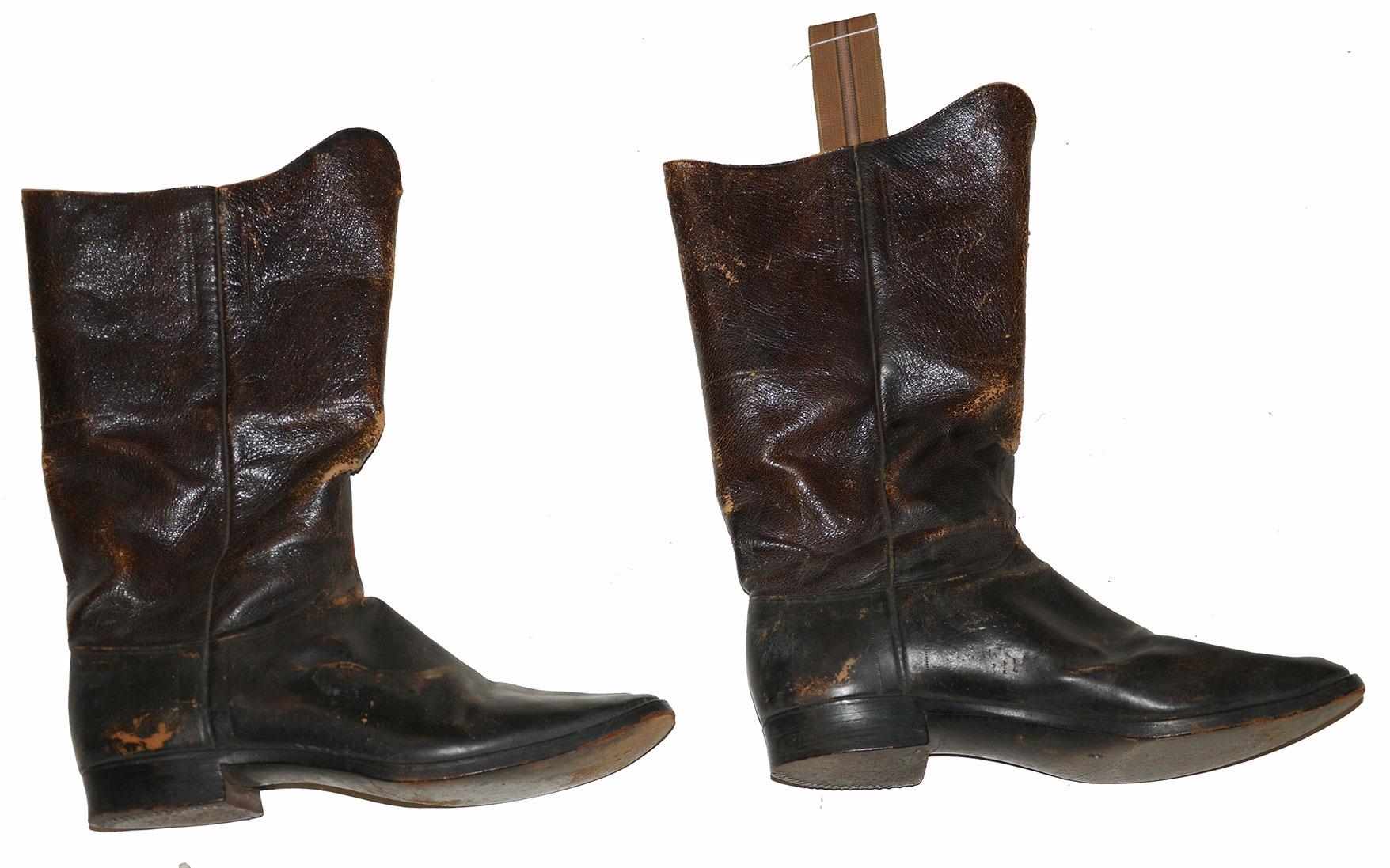
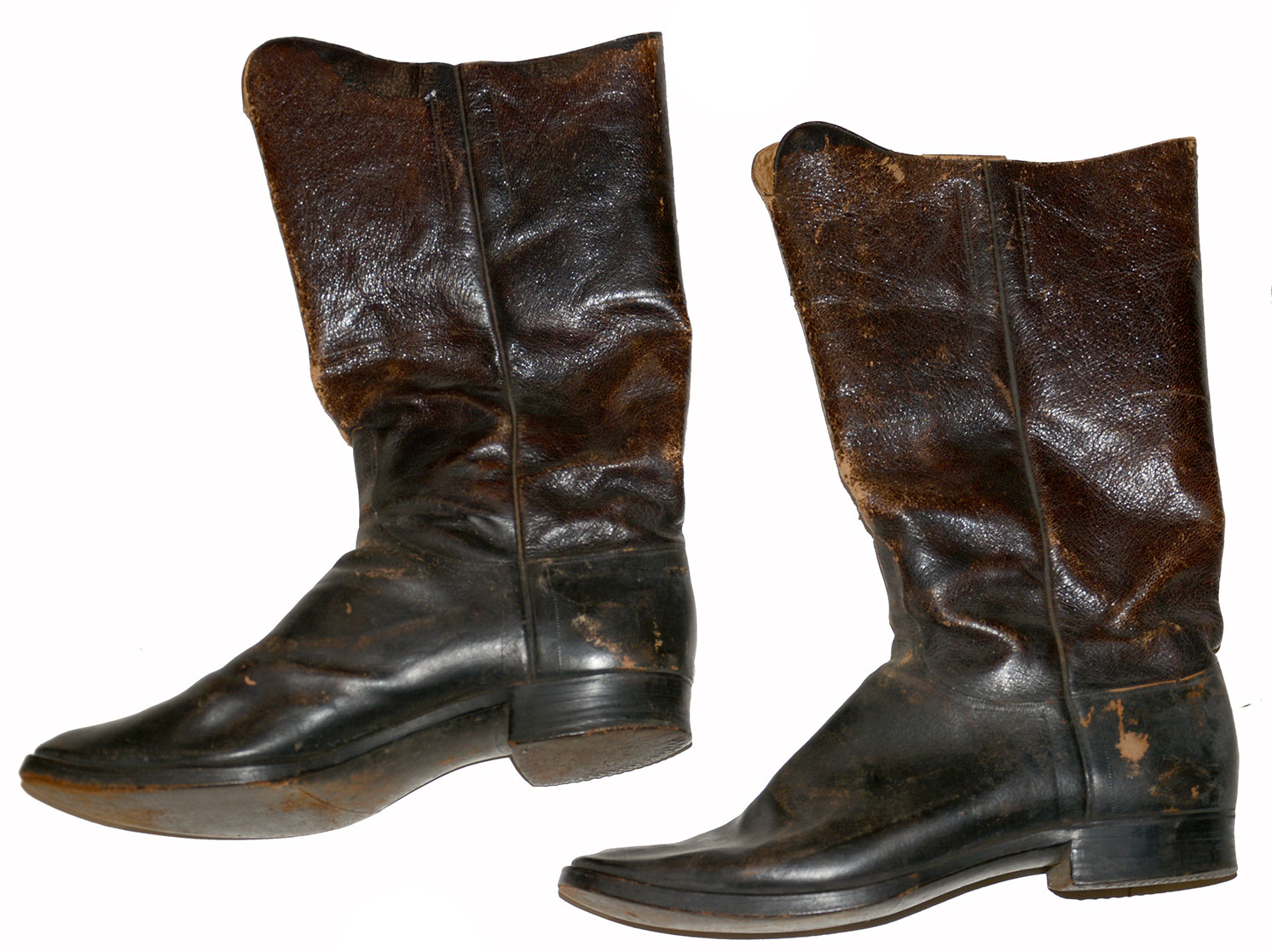
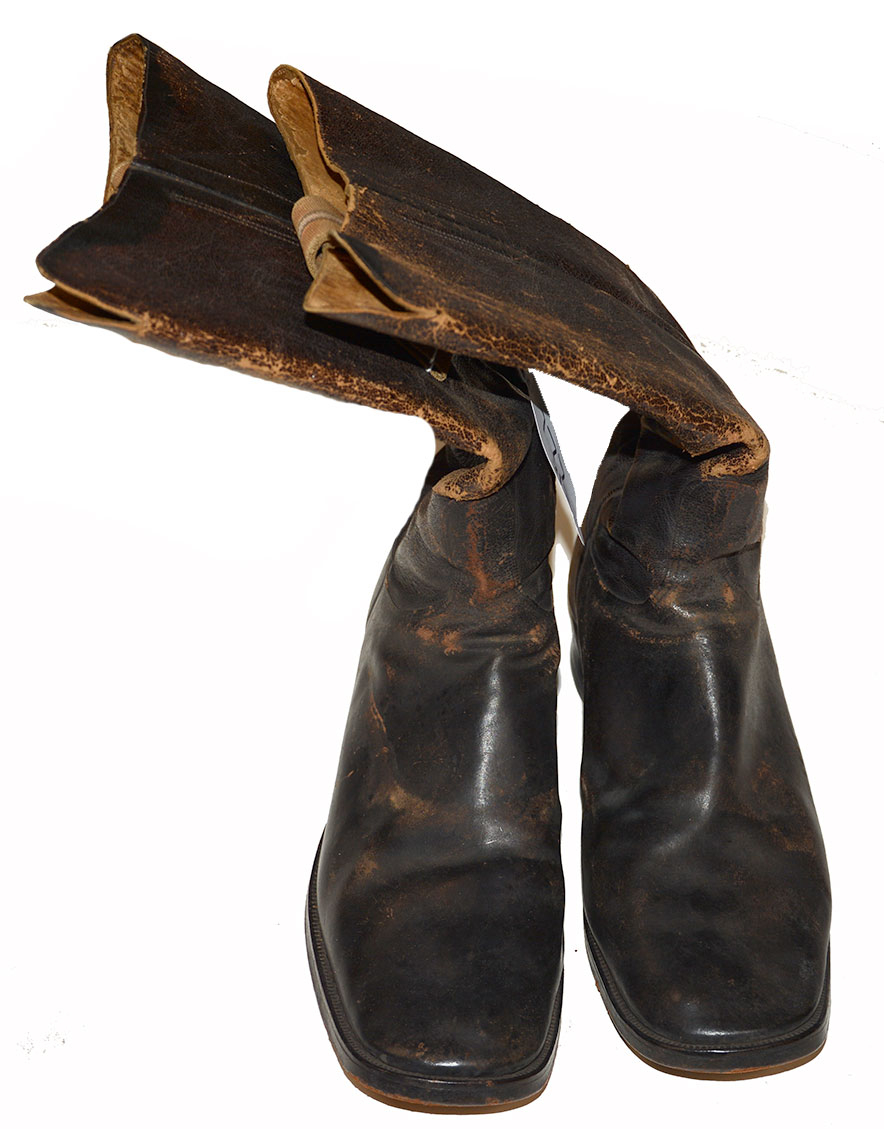
BOOTS. Very fine quality and condition with scattered scuffing. They are the higher "Wellington style" rising to 13 inches at the back and 14 at the front. These have soft leather uppers with heavy, thick leather lowers. They are round toed. 5 inches of the interiors of the tops are lined with soft tan leather. There are 2 1/2-inch-wide cloth pull tabs in each boot. These have stitched soles and iron nailed heels. There are many more nails on outer sides. They show use on the soles and heals. These custom-made boots, not to be confused with government issue footwear, are left and right and are Civil War. Right and left footwear is known from ancient times and by the time of our Civil War were common if not predominant. The size is about 10 1/2.
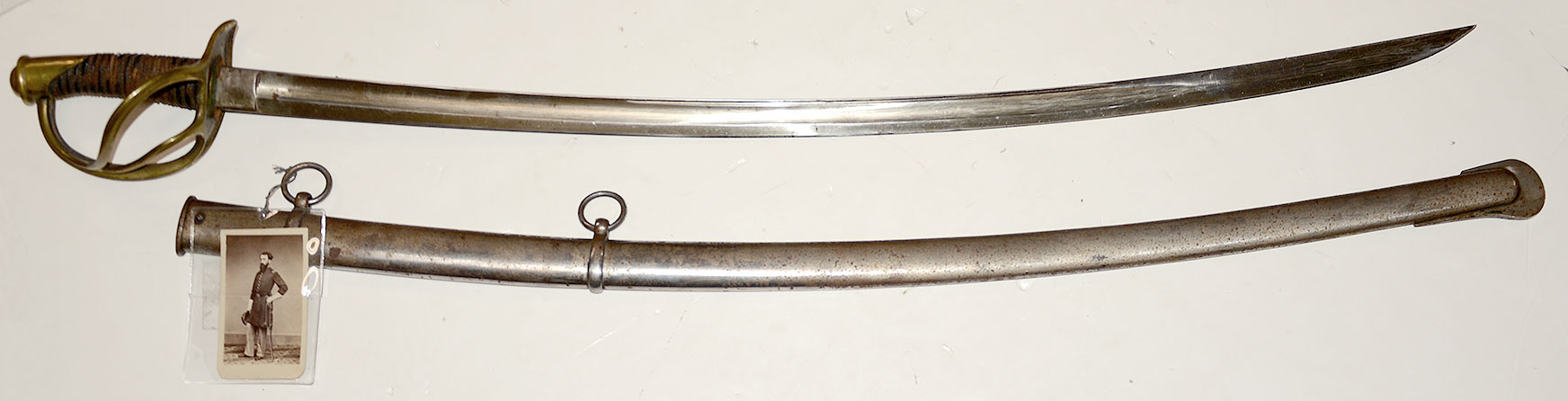
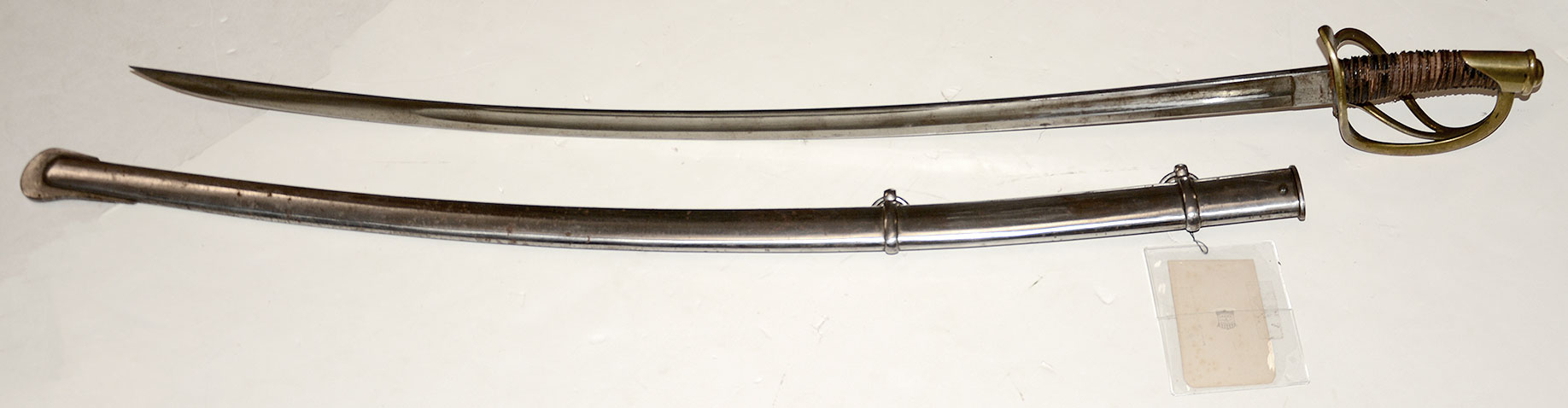
SWORDS. In the Leyden grouping are three swords. 1) A US Model 1840 cavalry sword which appears to be a German import. Leyden is photographed as a 1st lieutenant holding this sword. Known as the " Wristbreaker" to the Federal troopers who carried it, this four pound, eight-ounce edged weapon is an attractive piece with a 35½" curved blade that retains its original shiny bright luster. The pommel cap, of the Phrygian helmet design, bears no decoration or inspector's marks. The wooden walnut grips are wrapped with black leather and secured with 22-gauge, single twist brass. The leather shows wear from use and is 60% intact. The brass sword hilt, with its brass knuckle bow, quillon and two-branch guard, is fine and tight. The hilt bears a pleasing mellow bronze patina that has some areas of bright brass peeking through. Fitted to this saber is its original steel scabbard in very fine condition. The scabbard is mostly bright as made but has some surface rust which can be easily removed. The scabbard is complete with its two suspension rings.
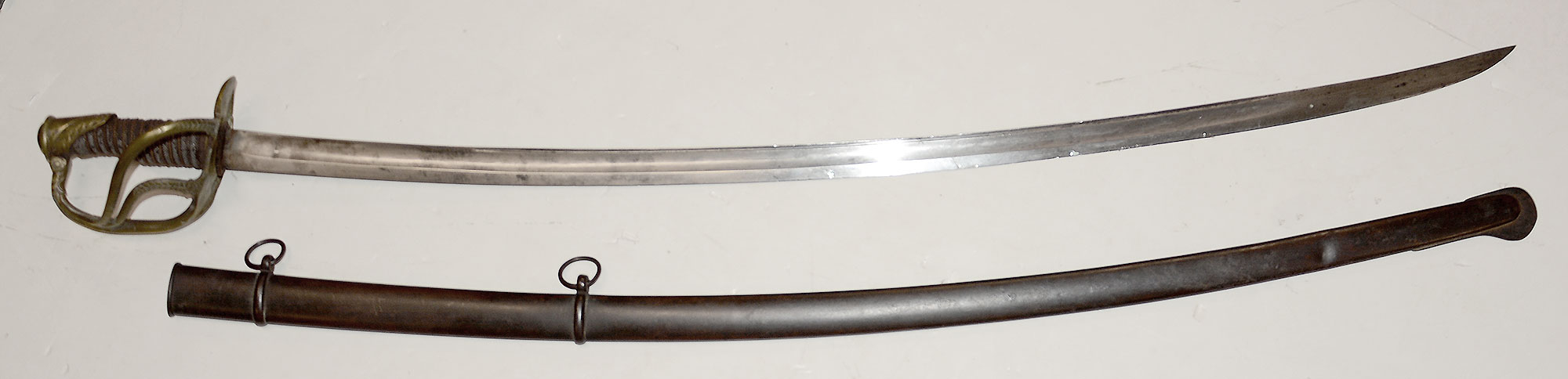
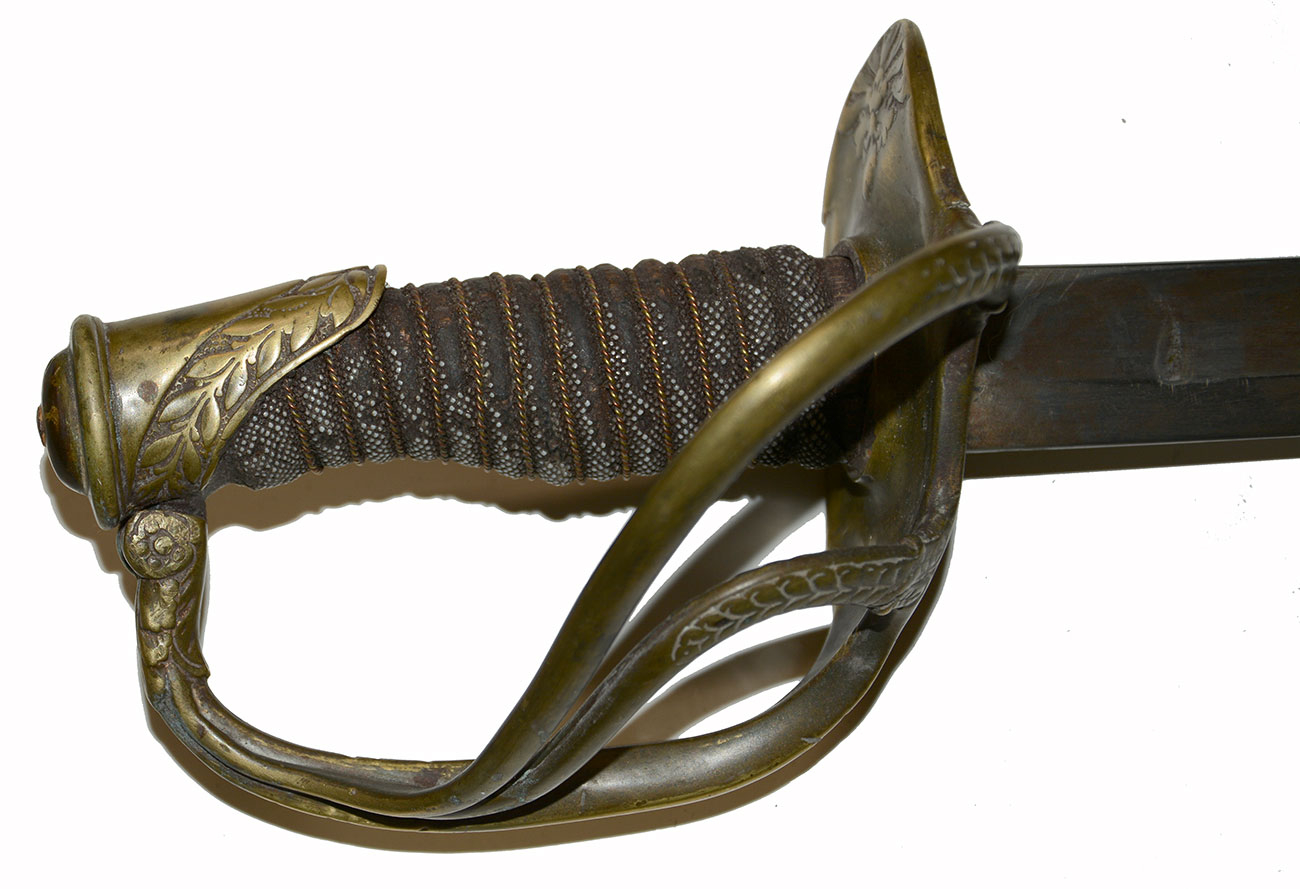
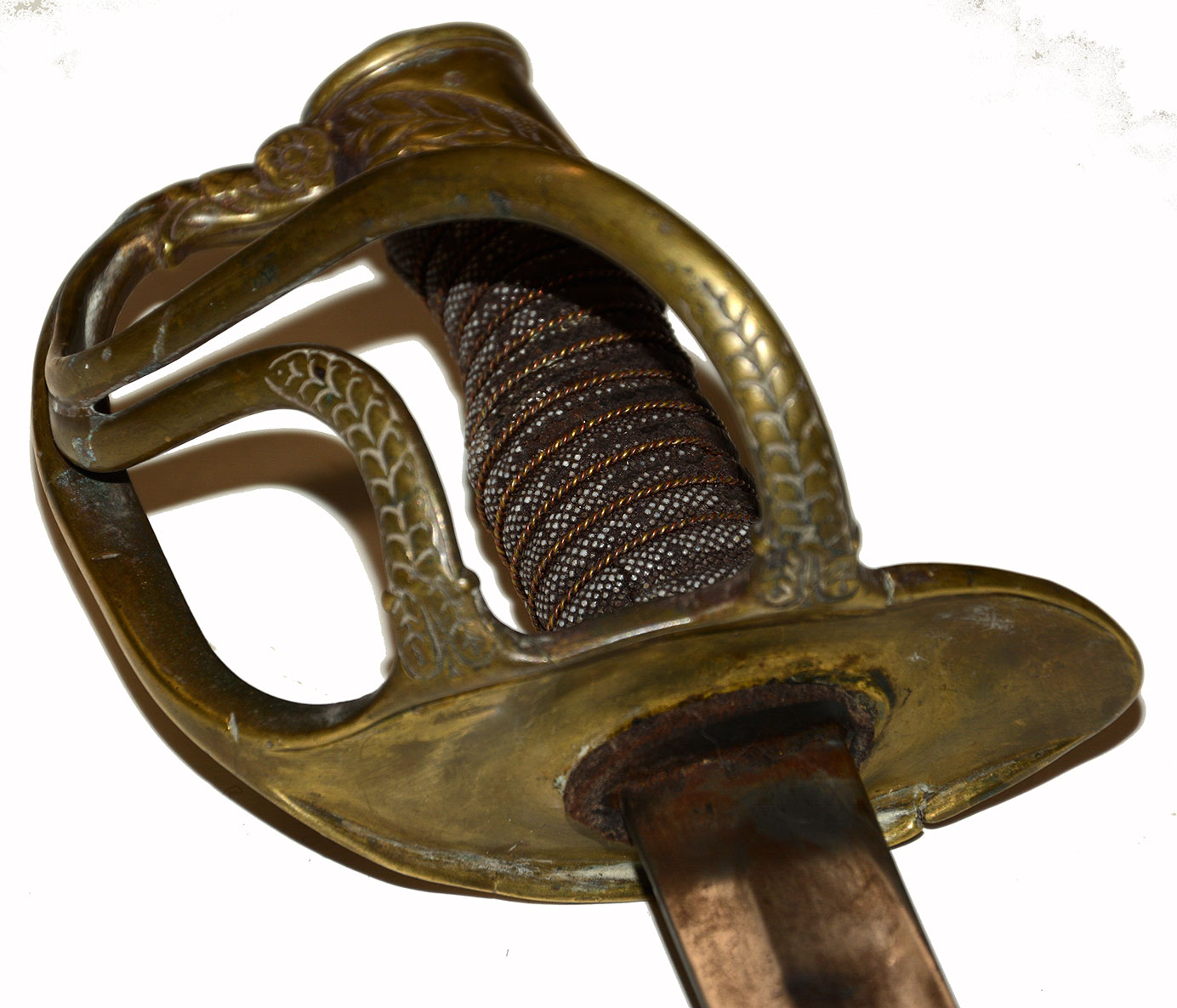
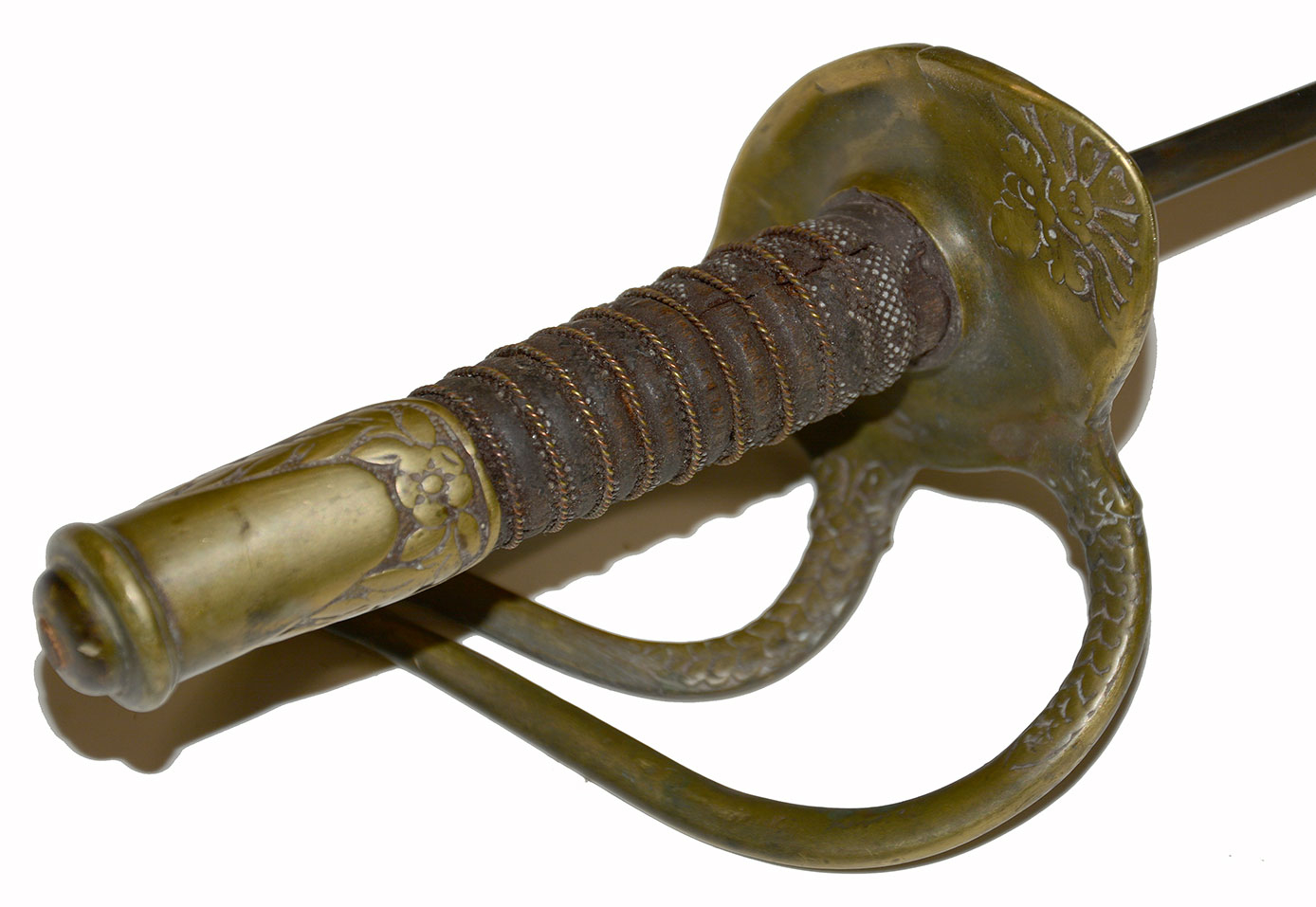
2) This sword is a French inspired imported officer's sword of the Modele 1822/31 type. These were copied by the US and called the Model 1840 cavalry officer's saber. Based on the condition there is little doubt Leyton carried this sword continually. The sword is of good quality with deeply cast floral motifs on the brass hilt, including leaves along the edge of the pommel cap, a geometric flower at the upper end of the knuckle bow with overlapping leaves below, and more floral and geometric elements at the ends of the branches where they meet the guard. The inside of the quillon shows a symmetrical geometric and floral knot. The hilt shows the effects of years in the saddle being rather out of shape and having a couple of small stress cracks. The sharkskin grip wrap is 75% in place, with nice deep gray color. The single strand twisted binding wire is in place and tight. The brass has a mellow patina. The un-embellished 37-inch blade is bright with surface grime only. The scabbard was blued, and this is now mixed with an age brown patina. It has the "spur and heal" dents one would expect to see on the lower 8 inches particularly on the inside. The sword is either French or German made. When removed from display at the Texas Civil War Museum it was discovered that the hilt and grips were loose; accordingly, the sword was put into the hands of a restorer to rectify that minor issue.
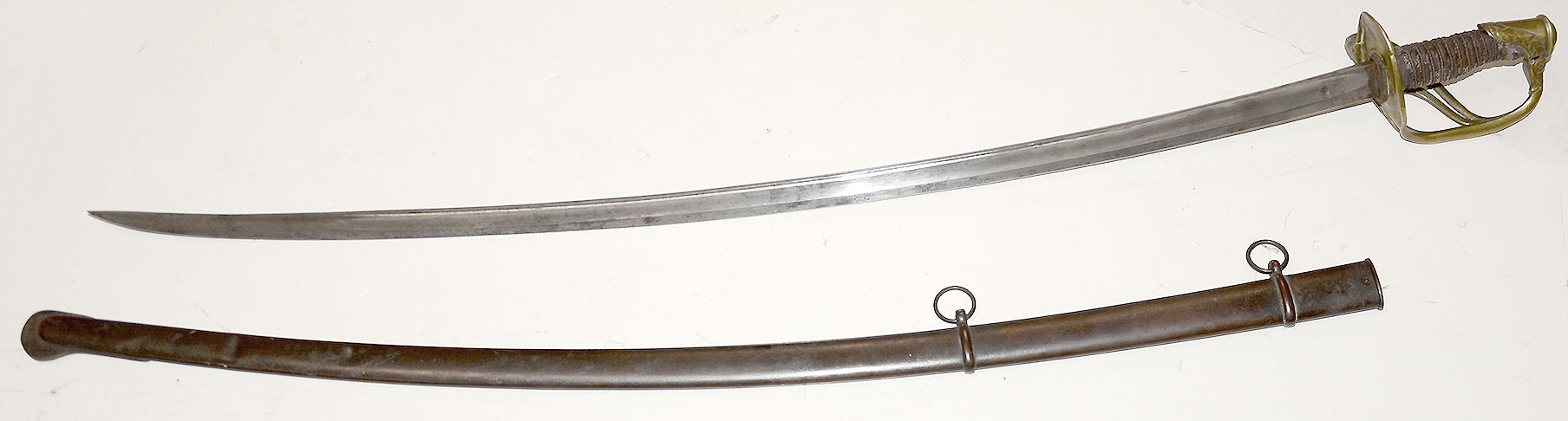
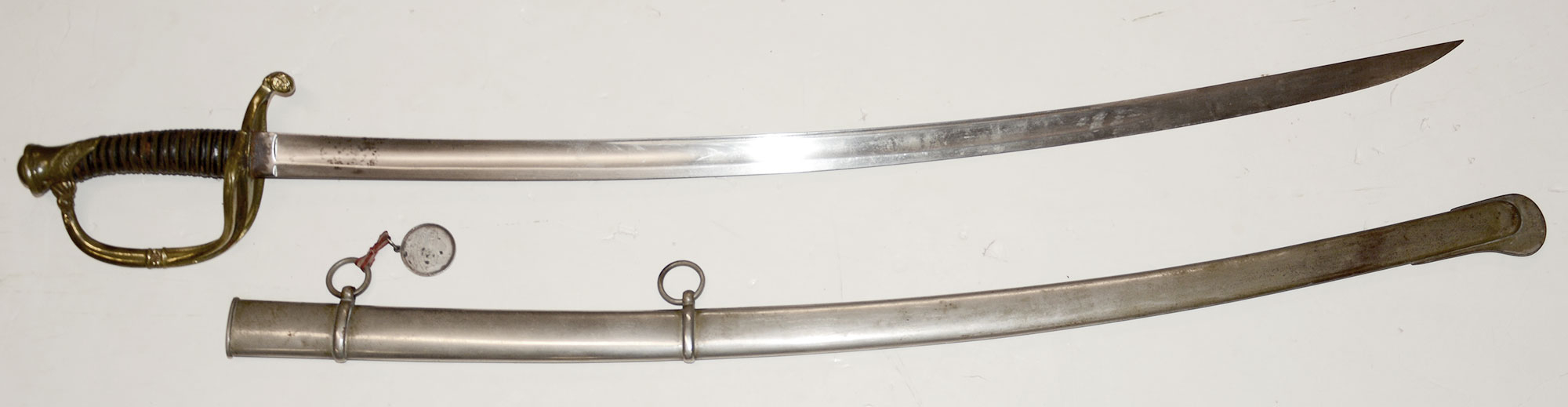
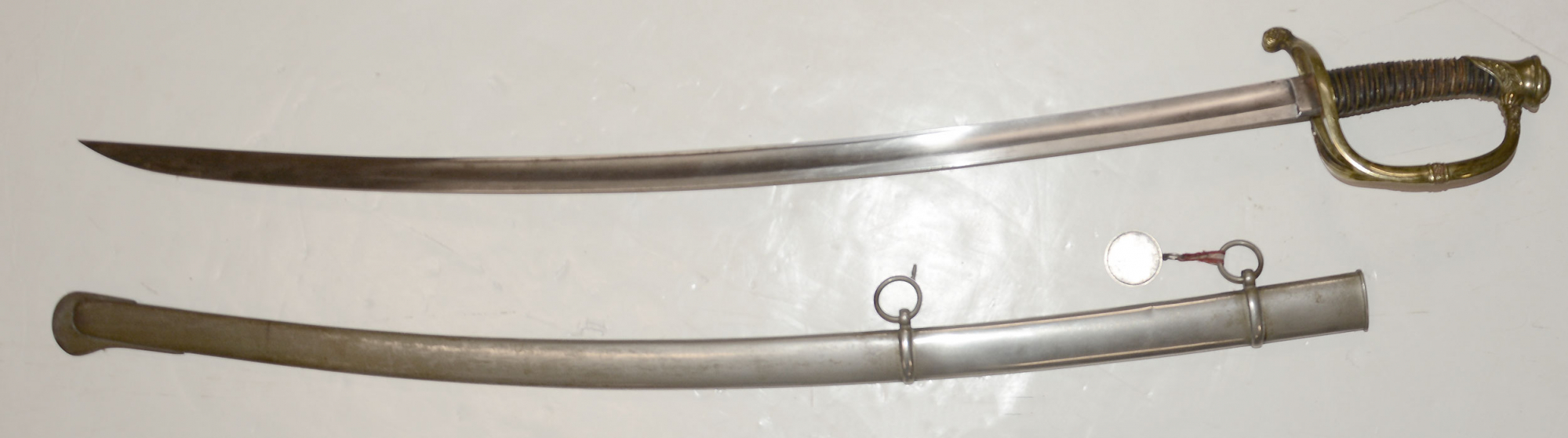
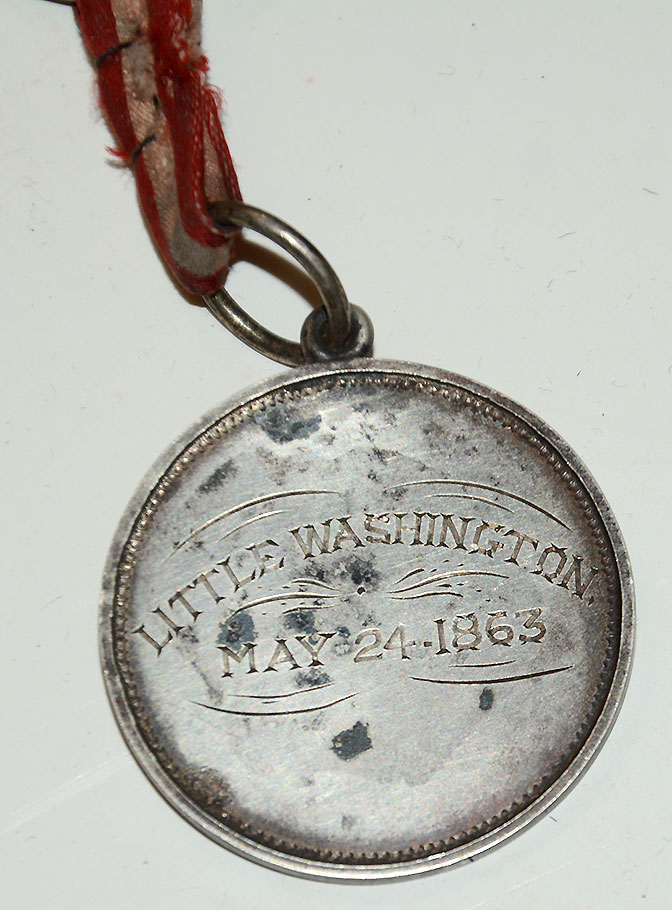
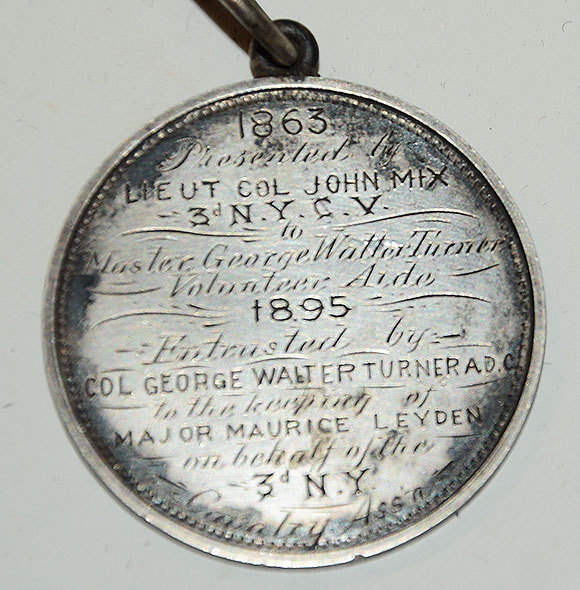
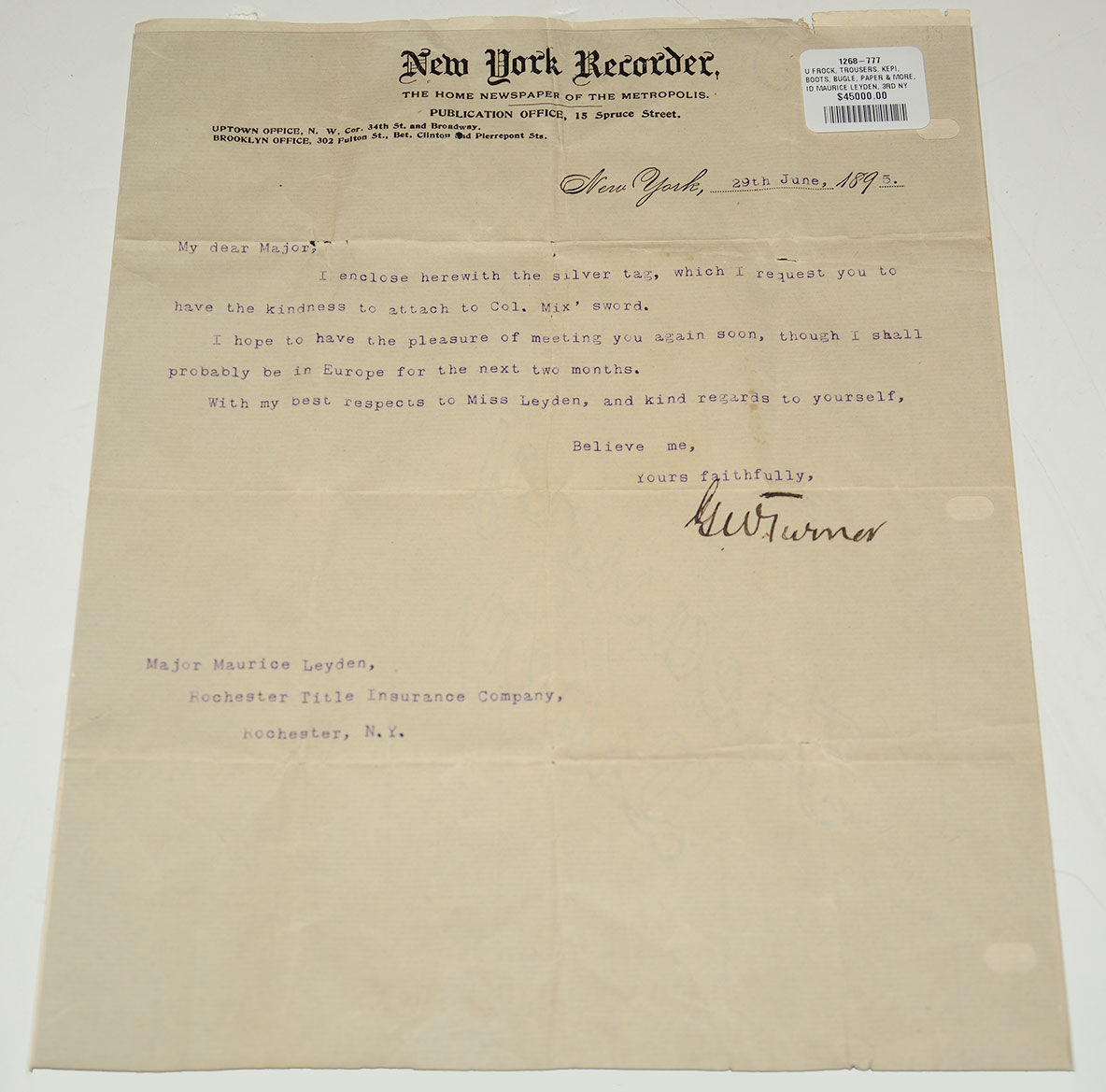
3) This sword has a fascinating story. It is a French made and based on the "Modele 1822/54 Sabre de Cavalerie" its inspiration was the Garde Royale Modele de 1821. This example was made for export just prior to or early into our Civil War. The sword hilt of the D guard type has a single small branch and is of superior quality with deeply cast floral motifs on the brass hilt, including leaves along the edge of the pommel cap, a geometric flower at the upper end of the knuckle bow with overlapping leaves below, and more floral and geometric elements at the ends of the branches where they meet the guard. The grips are brown leather and 75 % intact. The brass wire binding is two strands. The scabbard with 2 suspension rings has 90% of its original tinned finish and is without dents. The blade is excellent and is 30 inches in length. And the total length including hilt and scabbard is 37 inches. This is short for a cavalry sword and actually of little use to a mounted man, but this will soon be explained. This historically significant sword has a silver medallion attached to it and an 1895 document also accompanies it. The 29th of June 1895 document sent to "Major Maurice Leyden" of Rochester, NY by G.W. Turner reads: "My dear Major, I enclose herewith the silver tag, which I request you to have the kindness to attach to Col. Mix's sword. I hope to have the pleasure of meeting you soon, though I shall probably be in Europe for the next two months. With my best regards to Miss Leyden, and kind regards to yourself, Believe me, yours faithfully G.W. Turner." Affixed to the top ring mount of the scabbard by a red and white ribbon is a 1 1/4-inch sterling silver round thin medal that is professionally engraved on one side, "'LITTLE WASHINGTON" over "MAY 24th 1863" and on the obverse, "1863" over "Presented by LIEUT. COL. JOHN MIX 3d NYCV to Master George Walter Turner Volunteer Aide" This is above "1895" over "Entrusted by COL GEORGE WALTER TURNER ADC to the keeping of MAJOR MAURICE LEYDEN on behalf of the 3d N.Y. Cavalry Ass'n". For information on Lieutenant colonel John Mix Pre-Civil War soldier, Civil War officer and later Indian fighter please click on this link: Fiddler’s Green: John Mix | Regular Cavalry in the Civil War. The 3rd New York Cavalry Association was formed in Rochester, Monroe County, New York in June 1881. Maurice Leyden was the president of the Association and Samuel Chase Pierce, the Association's secretary. The person of Colonel George Walter Turner is more allusive. And as a young volunteer aide to Mix he has no record in the US Archives. But what is certain is that being referred to as " Master" he was certainly under military age at time of the presentation. The sword is fine enough and exotic enough to be perfect for presentation and it is not impossible that the sword was previously captured from a Confederate. The blade length makes sense when considering Turner's age (possibly as young as 15). And even though the letter accompanying the medallion says "Col. Mix's sword" this makes no sense due to the sword's length being incompatible for a horse soldier. It is of interest to note that just 6 days before this presentation the 3rd NY Cavalry was in combat at (Little) Washington, North Carolina. "On April 18, 1863, near Little Washington, North Carolina, detachments from Companies A and E, 3rd Regiment Cavalry, New York Volunteers captured a battle flag carried by the 7th Confederate Cavalry. Major General John Foster commended the men from the 3rd Cavalry, NY Volunteers in General Orders No. 68 dated April 29, 1863. The order states, in part, "The battle-flag of the Seventh Confederate (Claiborne) Cavalry, which was captured from the enemy in the gallant charge by a detachment of Companies A and E against superior numbers near Little Washington on the 18th day of April instant, is presented to the regiment as a distinguishing mark of the favor and appreciation in which the gallant services of this command are held." The Army of Northern Virginia battle flag... identified in museum records as the 7th Confederate Cavalry's flag received by the Bureau of Military Statistics by February 1864, most closely matches the third bunting issue...". This sword is fascinating and both it and aide Turner are worthy of greater research!
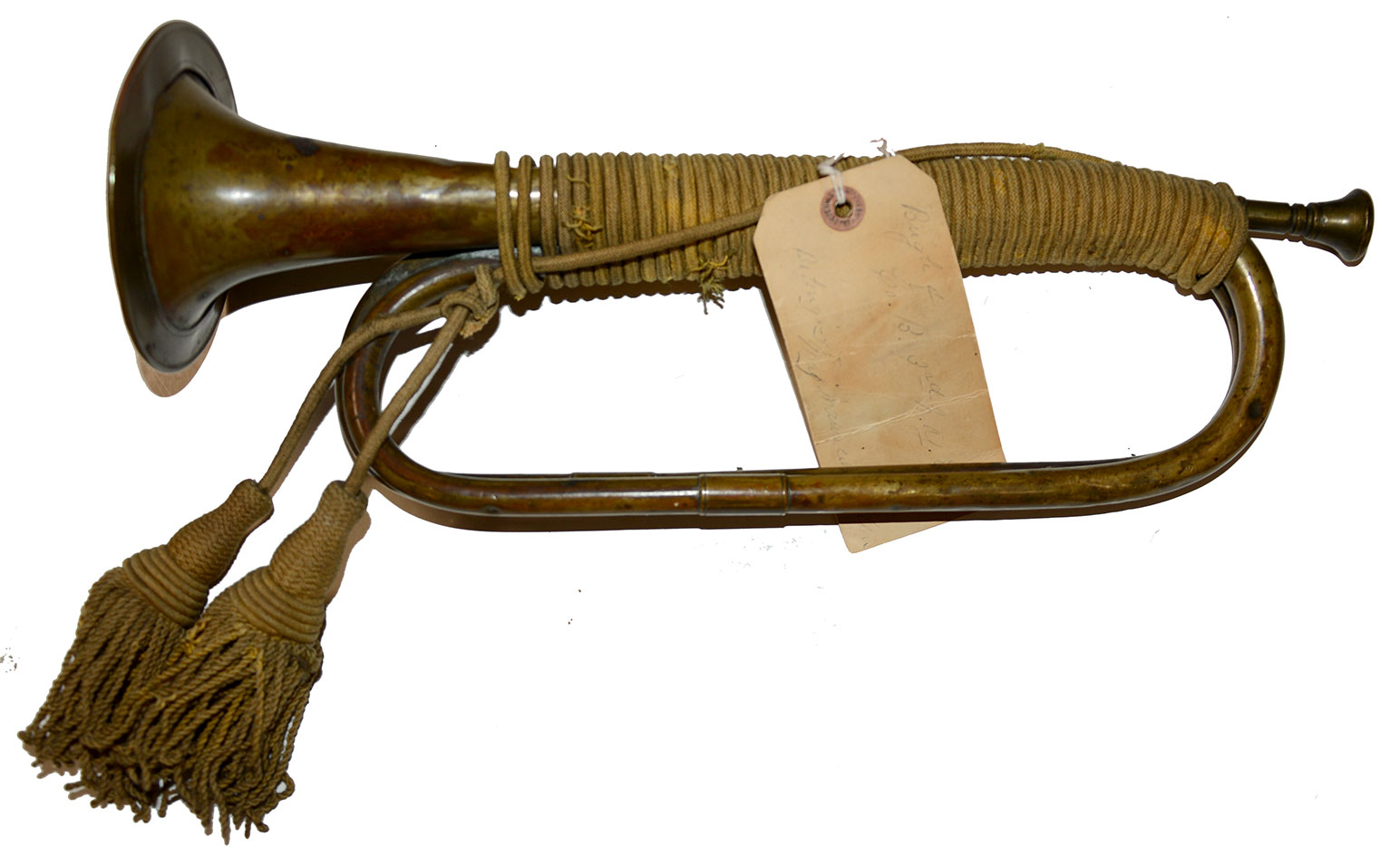
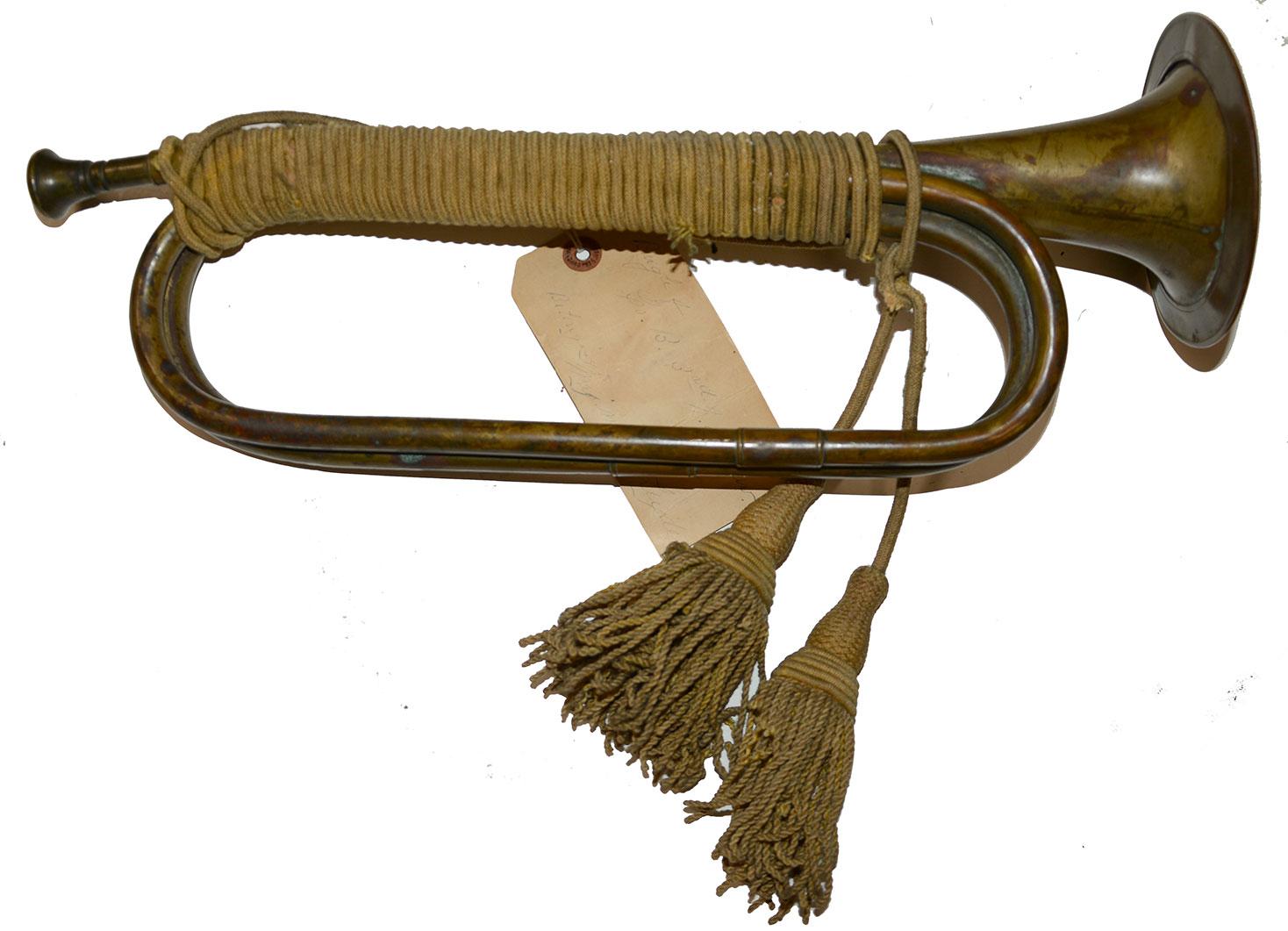
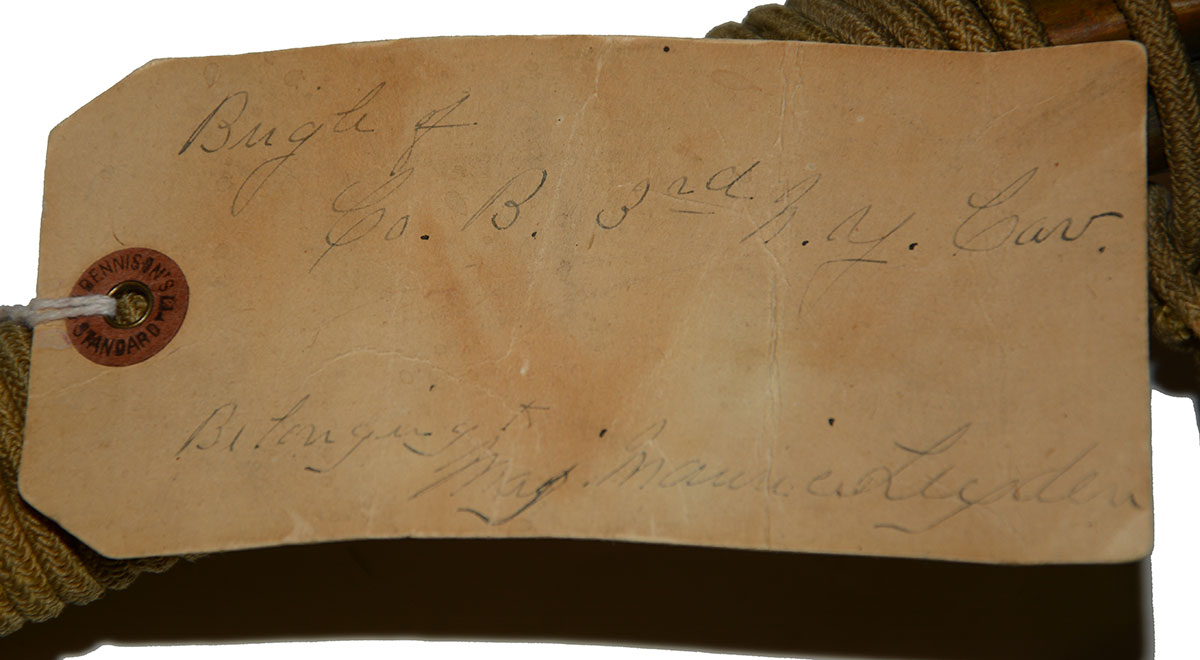
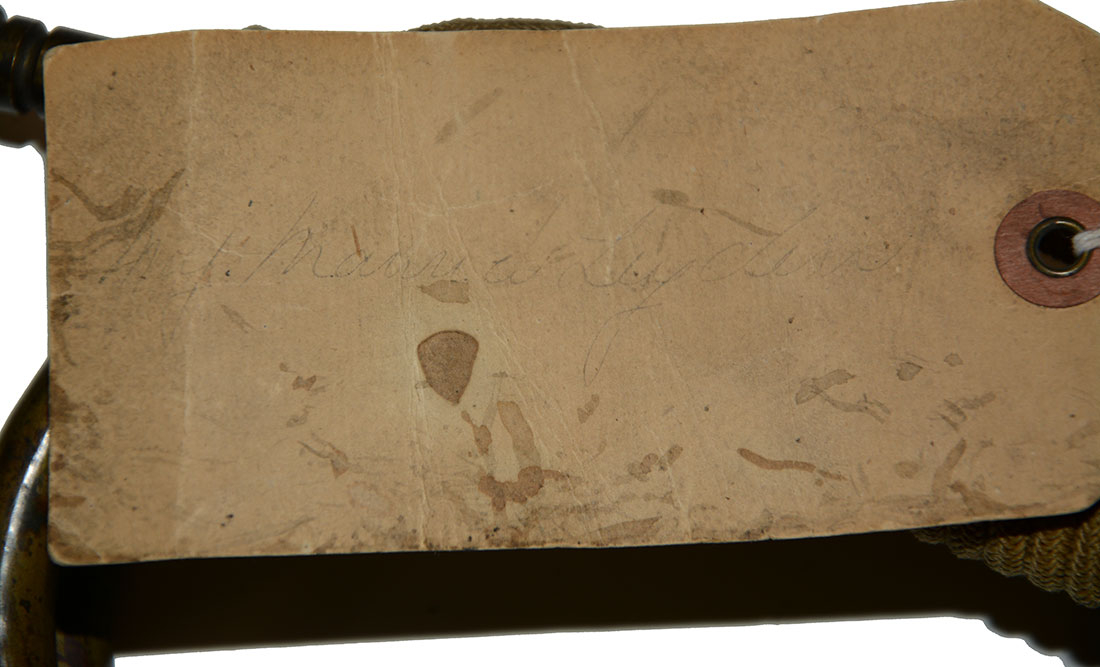
THE BUGLE. The distinction between bugles for mounted troops and bugles for others was not observed to any great degree during the war and we see this pattern carried by cavalry, artillery and infantry. Made of copper with brass garland and ferrules, double twist and lengthwise dovetail seam, and standing 16 inches tall, counting the mouthpiece. This example is unmarked but may be made for example by Klemm and Brother of Philadelphia. The firm had prewar and wartime U.S. contracts for bugles, trumpets, and fifes, and contracts for drum snares during the war as well. Contracts for bugles specifically included two 1856 contracts for a total of 50 and wartime contracts that included Jan. 7 and Oct. 20, 1864, for total of 1,300 bugles and another on Aug. 12 specifically for 350 copper bugles. This has a nice, aged patina to both the copper and brass. The solder holding the overlapping portions of the tube together is still perfect. The worsted yellow wool bugle cords with tassels are in place. They are dirty and faded but are in excellent condition. They follow the U.S. Army Regulations of 1861 and the revised regulations in 1863 and would probably measure about 8 feet unwrapped. A handwritten, circa 1890, tag reads: "Bugle of Co. B. 3rd N.Y. Cav. Belonging to Major Maurice Leyden."
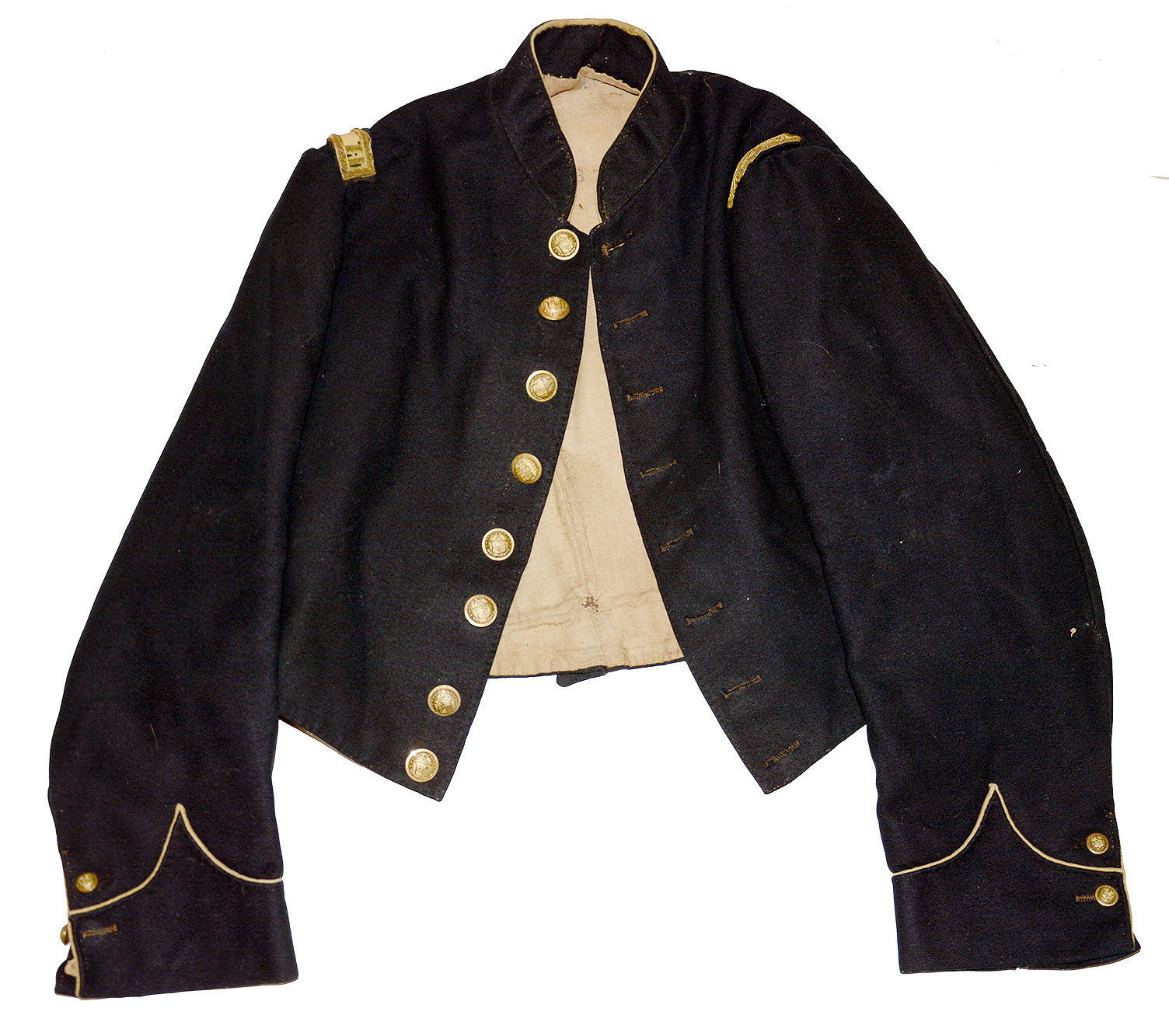
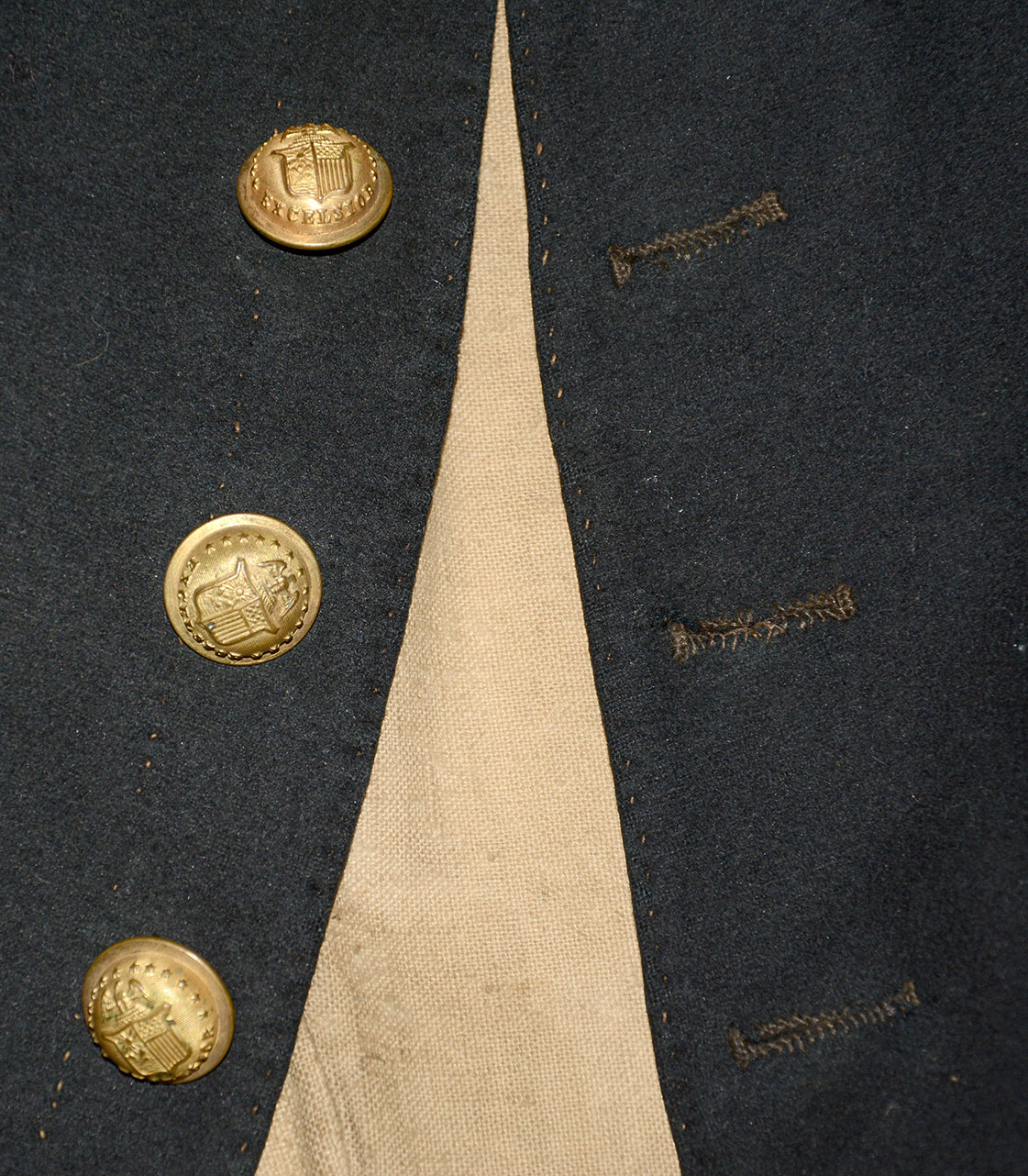
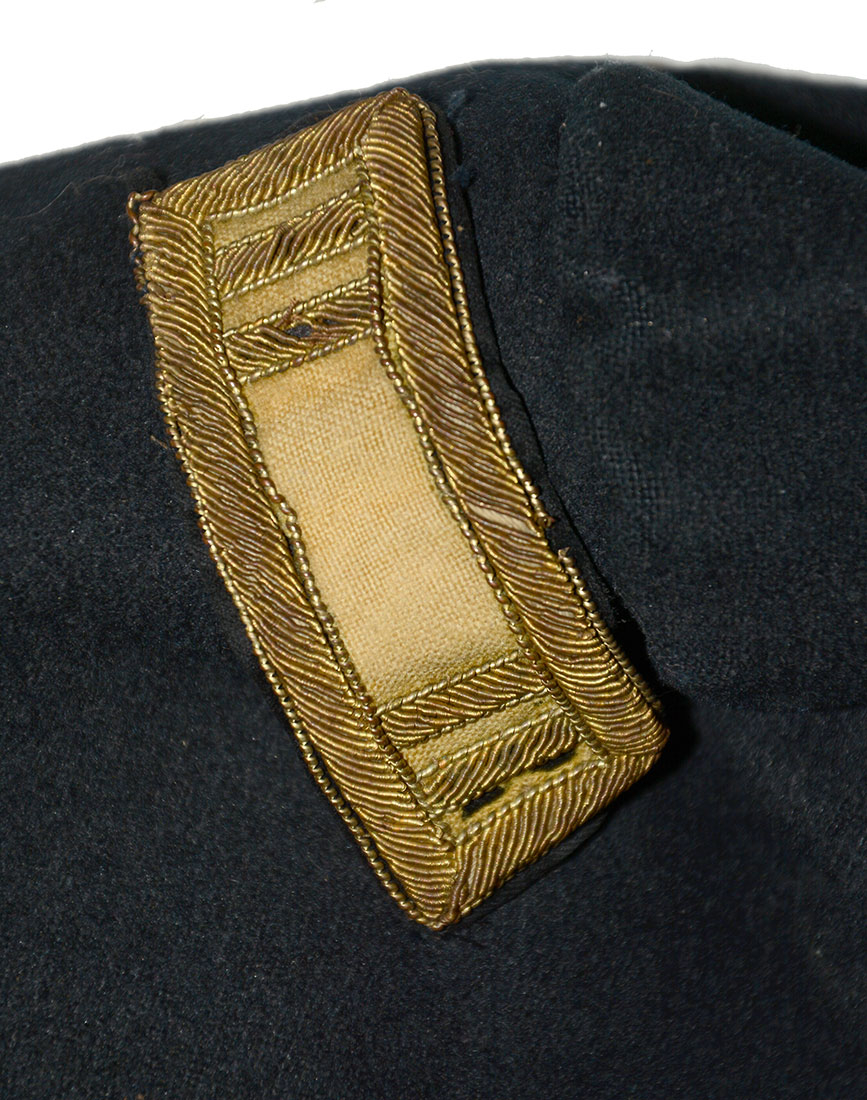
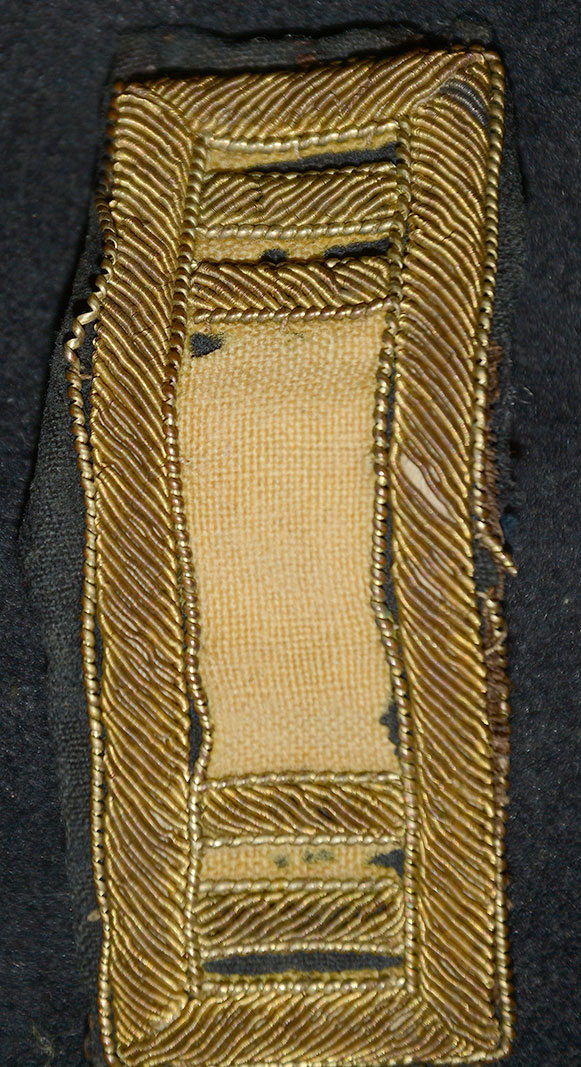
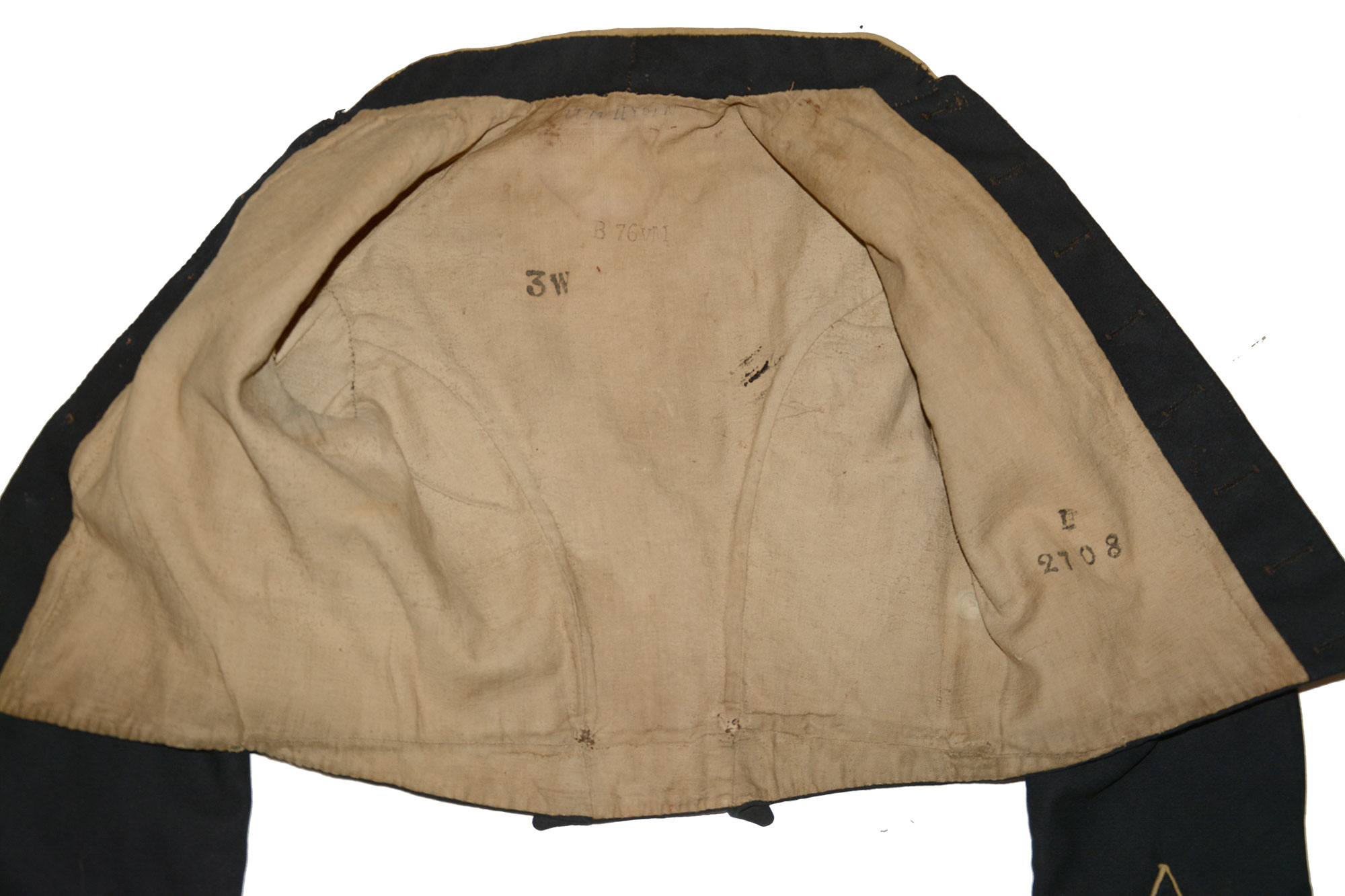
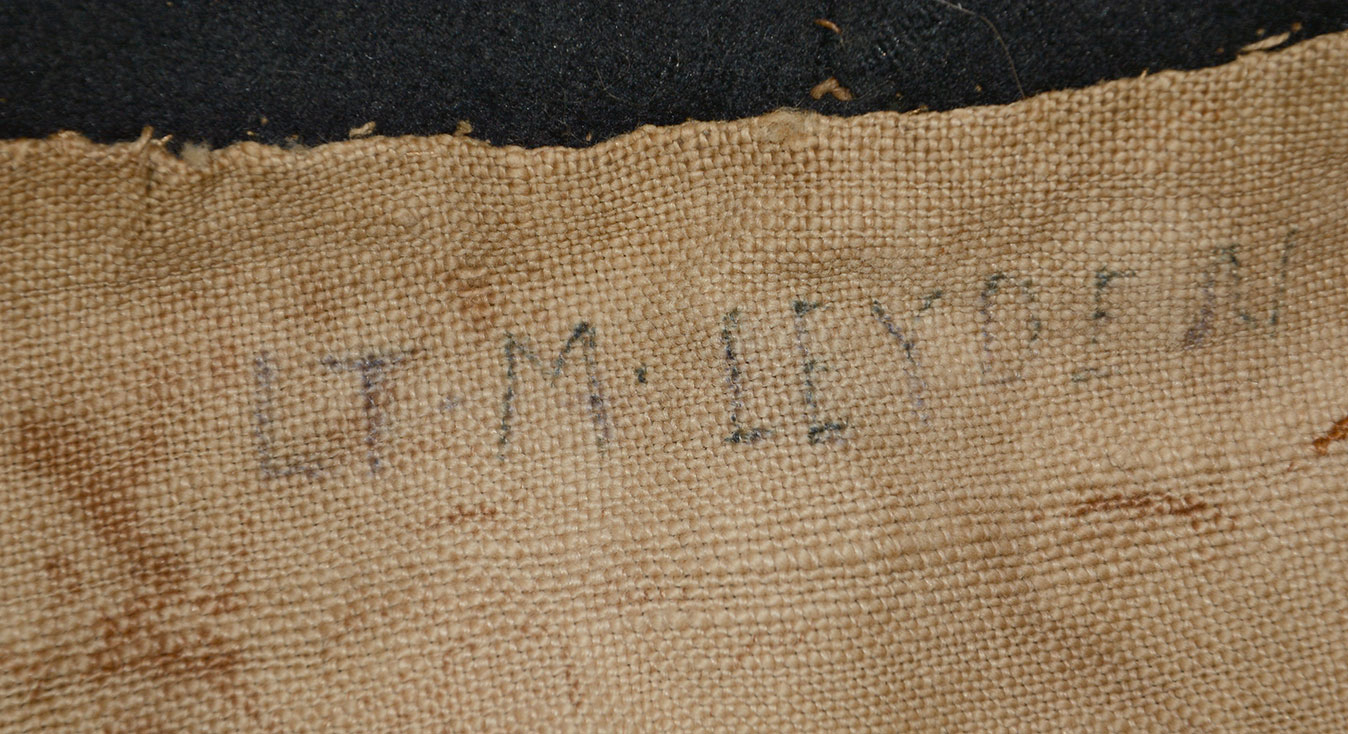
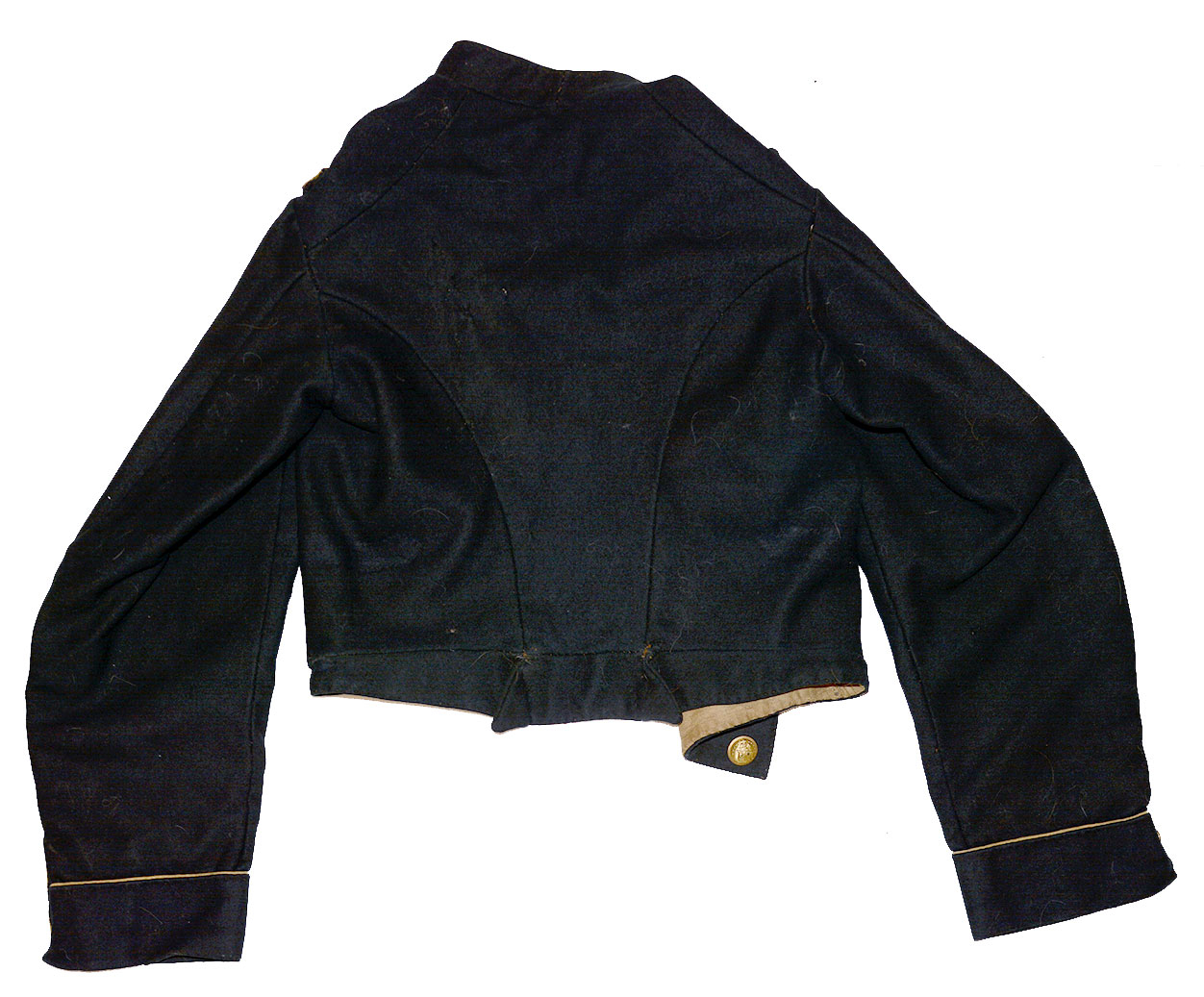
A UNIQUE SHELL JACKET. Probably made early in the war for issue to troopers of the 3rd New York Cavalry. All hand sewn this hip length navy blue kersey shell jacket is in near perfect condition on the exterior with minor insect nips. The 1 3/4-inch-high stand-up collar is piped with yellow in seam broadcloth that has faded to white. There is an iron hook and eye to facilitate closure. The front has 8 New York staff officer state seal "EXCELSIOR" buttons while the eight buttonholes are all hand whipstitched. The yellow piped working cuffs were designed with 2 button loops each side and have 2 cuff size New York staff officer state seal "EXCELSIOR" buttons. All buttons on the coat have matching Waterbury back marks and all are pre-1865. The sleeves balloons to 8 inches at the elbow and are 6 inches across at the cuff. The back of the jacket at the bottom has 2 half triangle shaped "pillows" that would ideally support a belt. There is also evidence of two 5 inch by 1 inch cloth strips on right and left running from the hip back these may have been there to prevent belt chaffing. The interior of the jacket is totally lined with a course unbleached muslin. Besides "LT. M. LEYDEN" inked in upright capital letters there are several stampings among them: "3W"; "B 76 VM" and "L 2708". These markings may be of European origin, and it is therefore possible this jacket is an import. The interior shows signs of wear but is in excellent condition. On each shoulder are sewn gold bullion embroidered on yellow velvet captain's straps, these measure 3 inches by 1 1/4 inches. One must conclude that this is Leyden's "undress" or field (battle) jacket that he drew from regimental stores and wore until war's end.
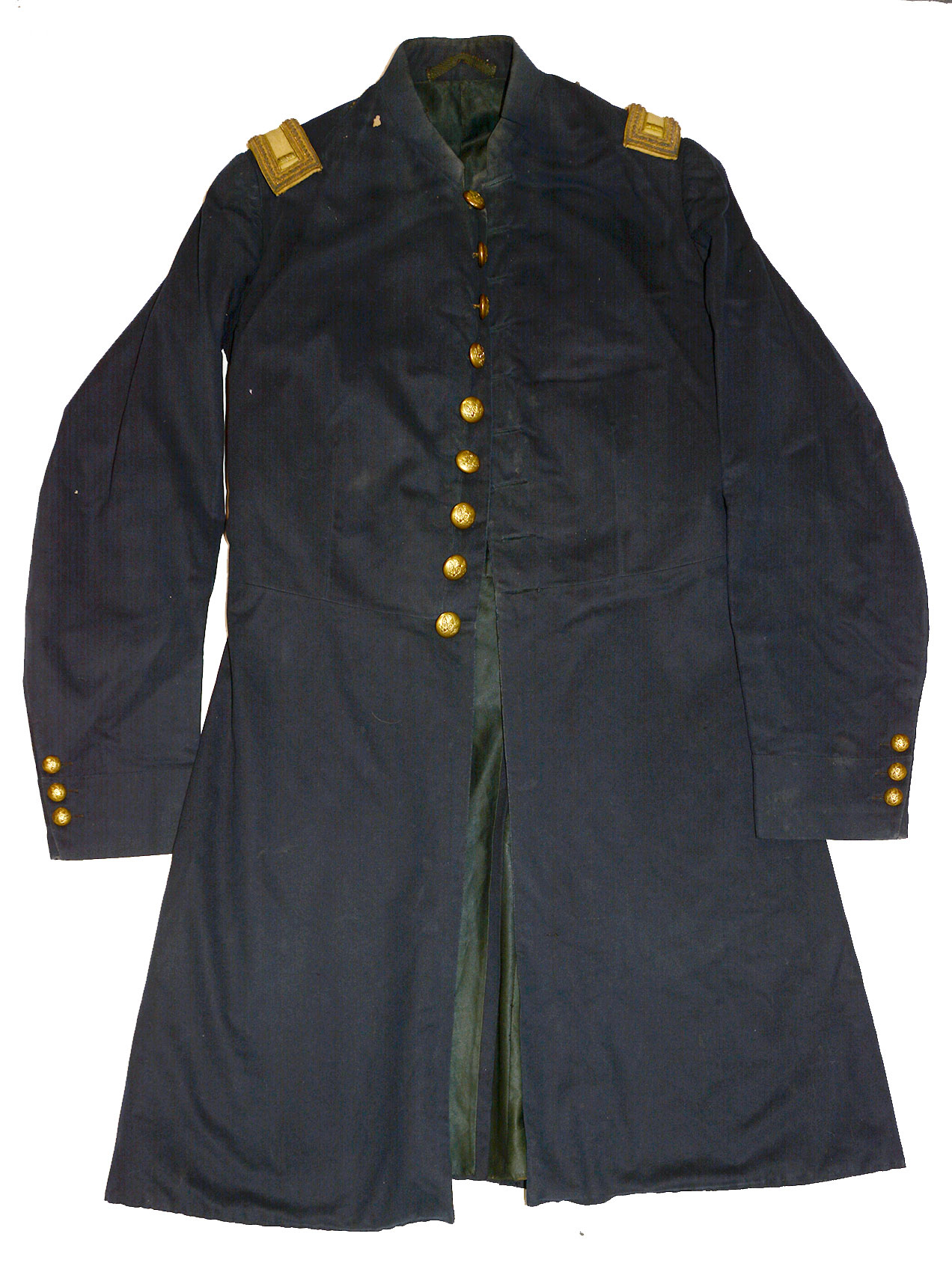
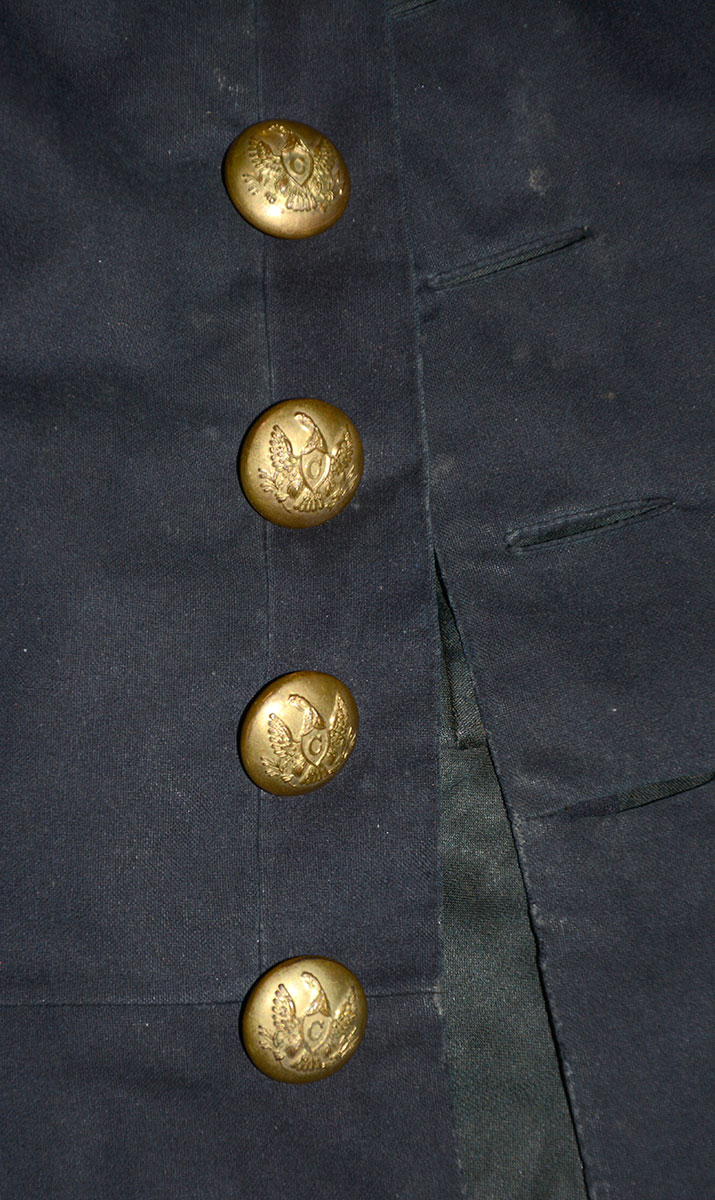
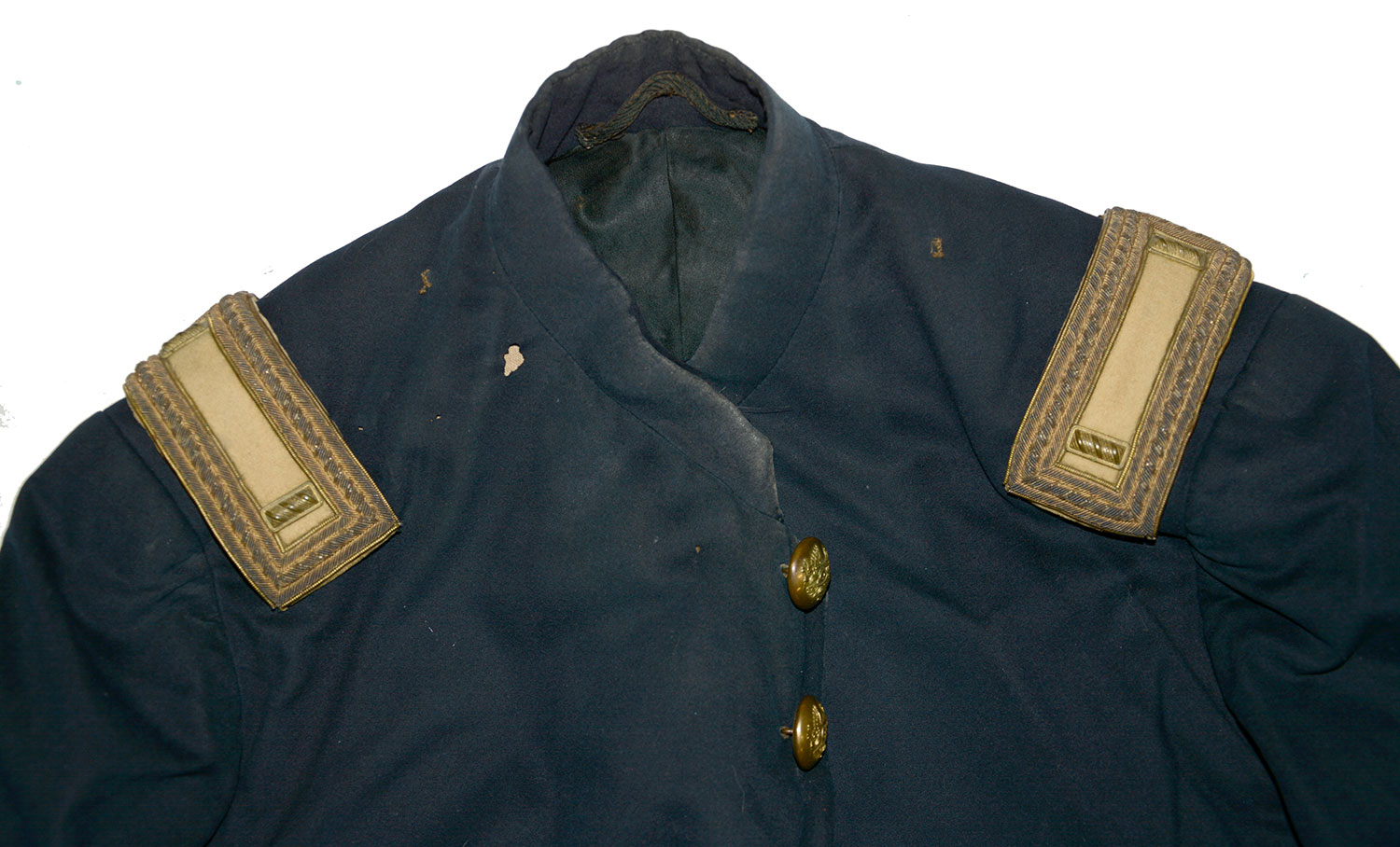
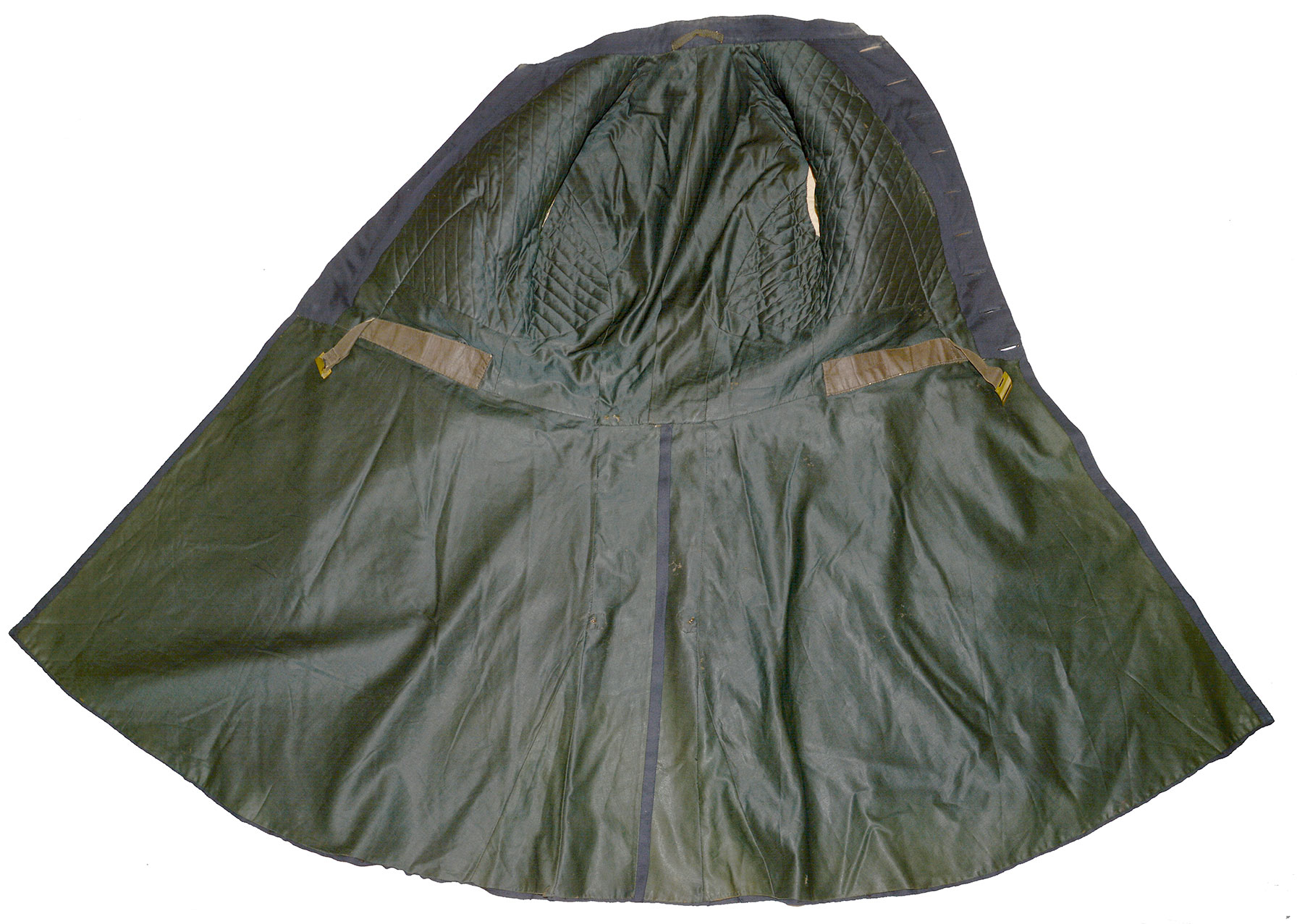
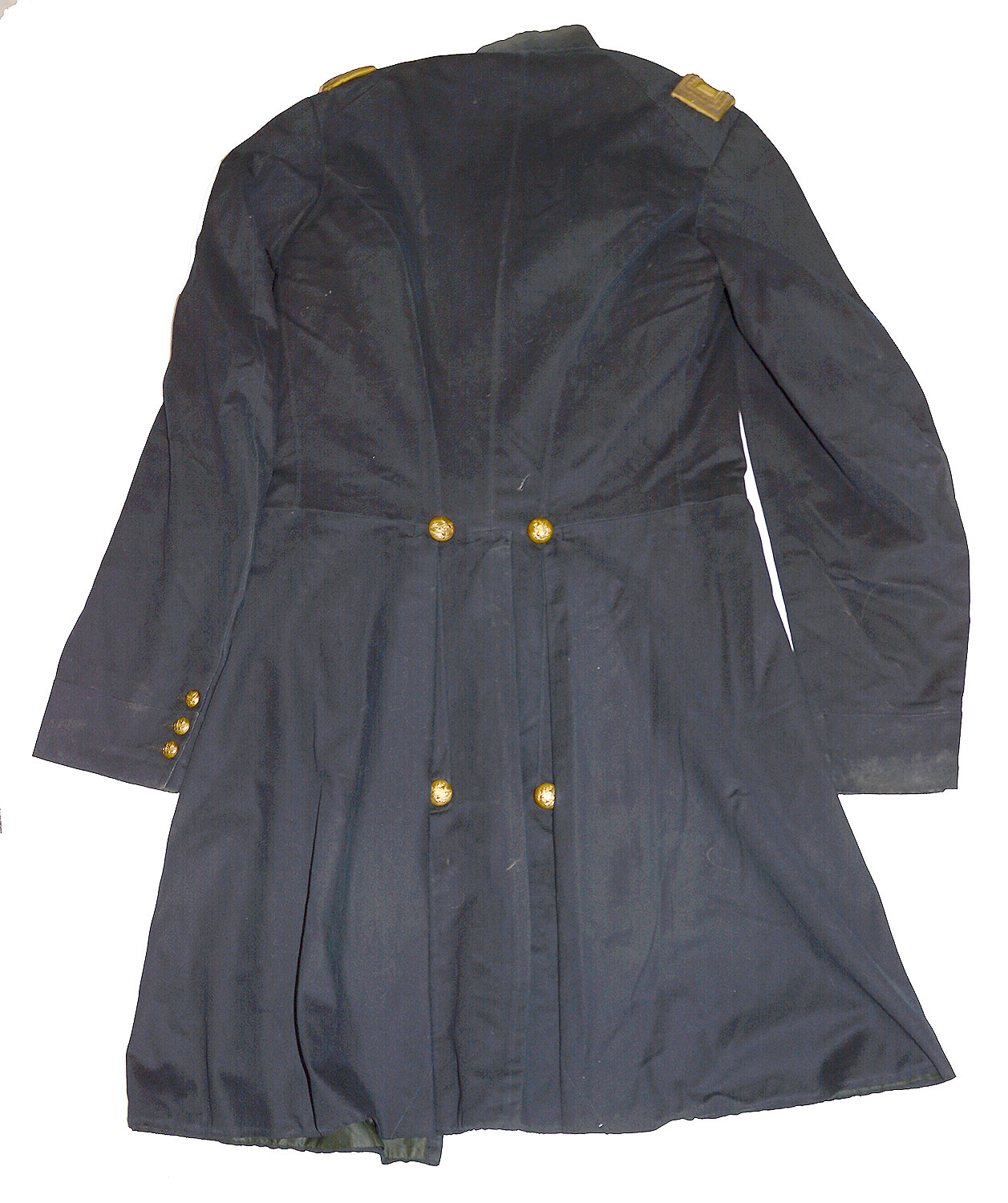
THE FROCK COAT. This Civil War U.S. cavalry officer's frock coat is a private purchase with a nine-button front, three-button cuffs, and four buttons on the rear waist. The inspiration for this jacket was a pattern adopted in 1858. The dark navy-blue frock has a single row of 9 (1 missing) eagle "C" officer quality buttons. The material used to tailor this frock is a wool broadcloth. The sleeves bulge to 8 1/4 inches at the elbow and are 5 inches at the functional 3 button cuff. The un-piped stand-up black velvet lined collar is 1 inch at the front and 1 1/2 inches high at the rear. The coat has a bottom that is raw cut or unbasted. There are 2 rear pockets lined in a brown colored polished cotton. The pocket flaps are decorated with 4 eagle C buttons. The exterior of the frock is excellent with a few moth nips. The interior of the frock is fully lined with a quilted green/black polished cotton. There is 1 interior breast pocket on the left lined with polished brown cotton. The sleeves are fully lined in off-white polished cotton. There is an interior cloth belt with brass buckles that is designed to create a snug stylish fit at the waist when fastened. The condition of the lining is excellent showing minor wear. Sewn tightly to the shoulders are two excellent cavalry 1st lieutenant's epaulettes. These are embroidered in metallic gold bullion with 3 exterior borders and 2 pipes or bars on a yellow velvet backing. They measure 2 inches by 5 inches. The coat shows moderate field wear and has few moth nips.
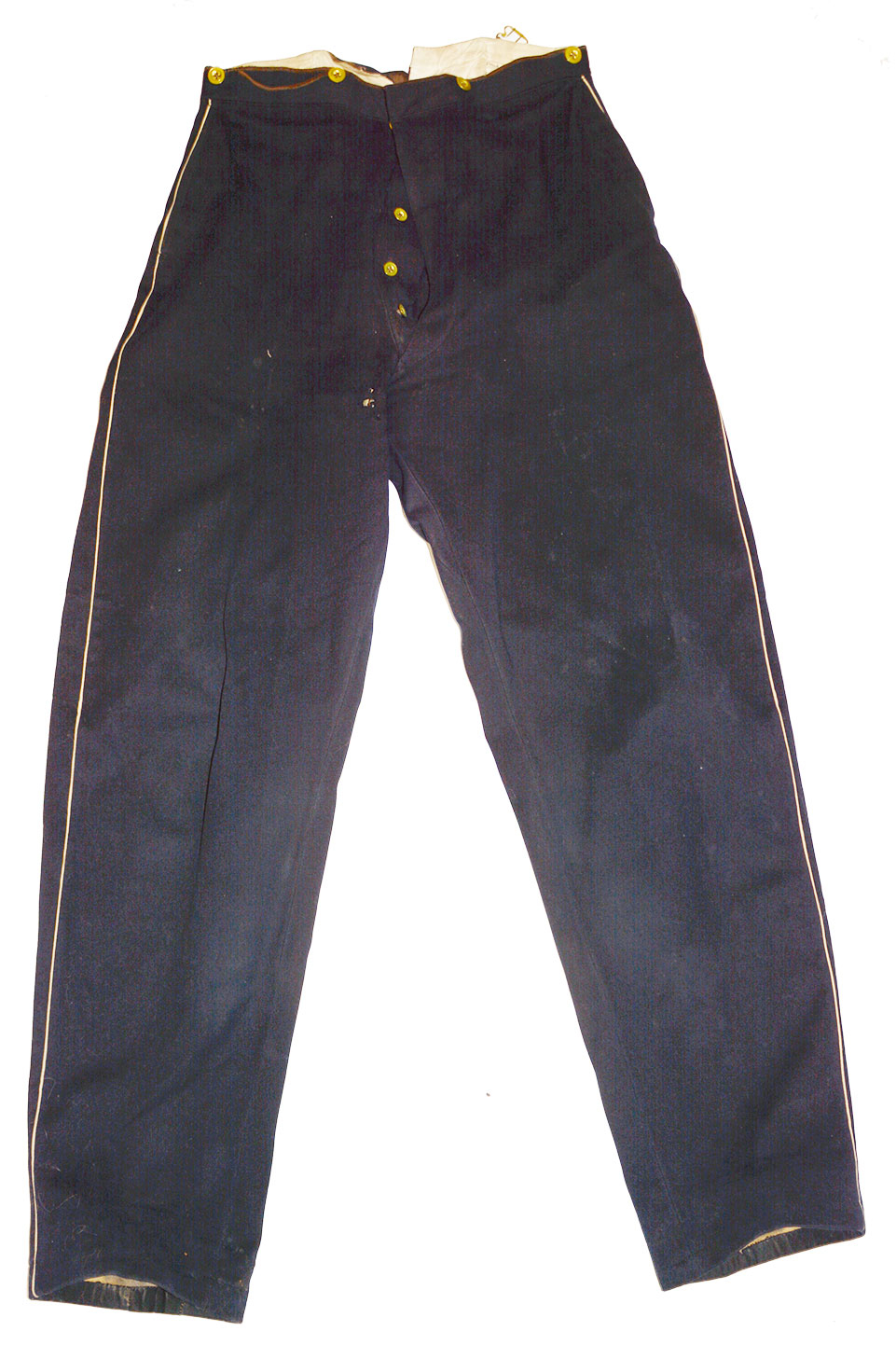
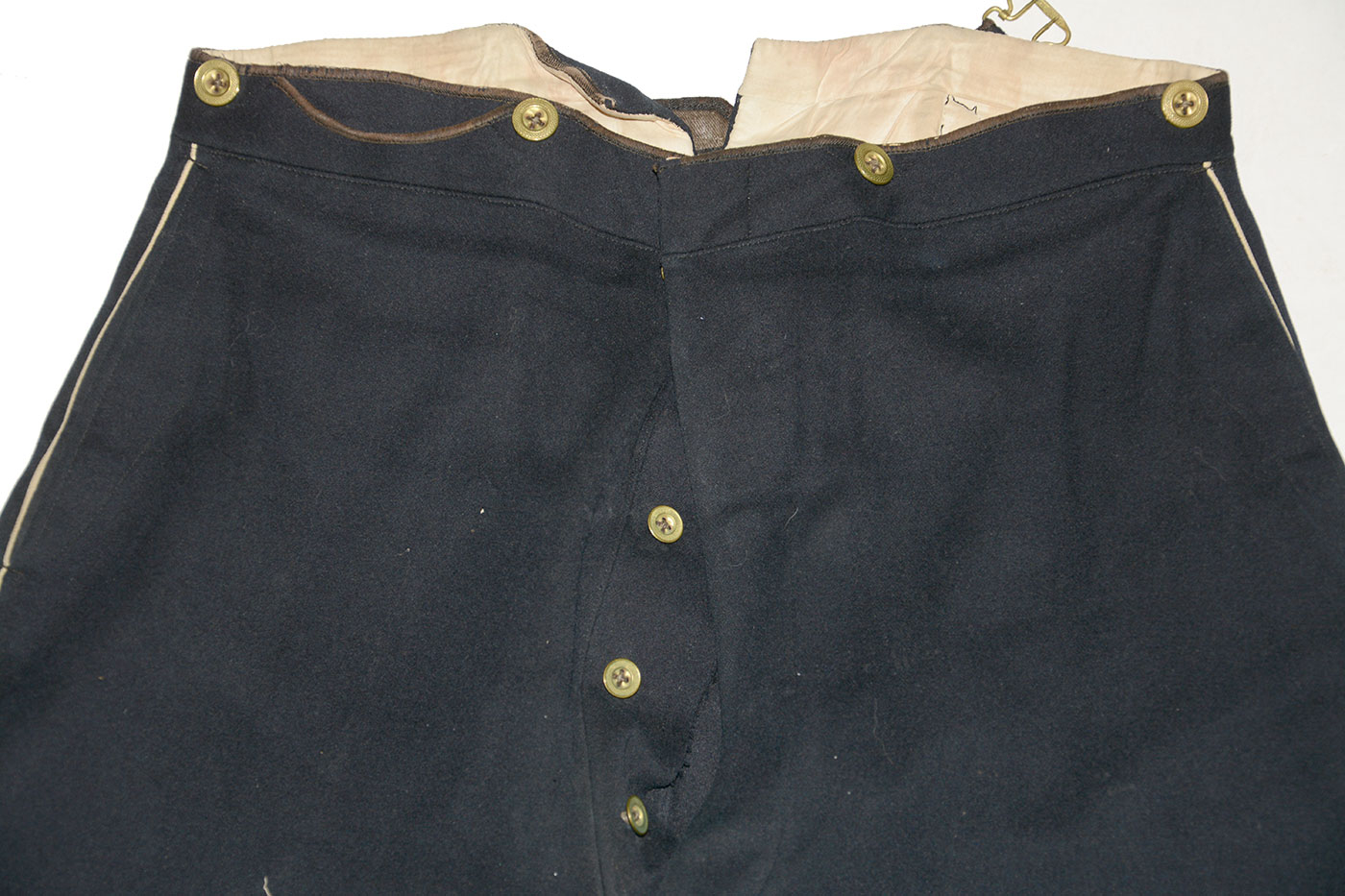
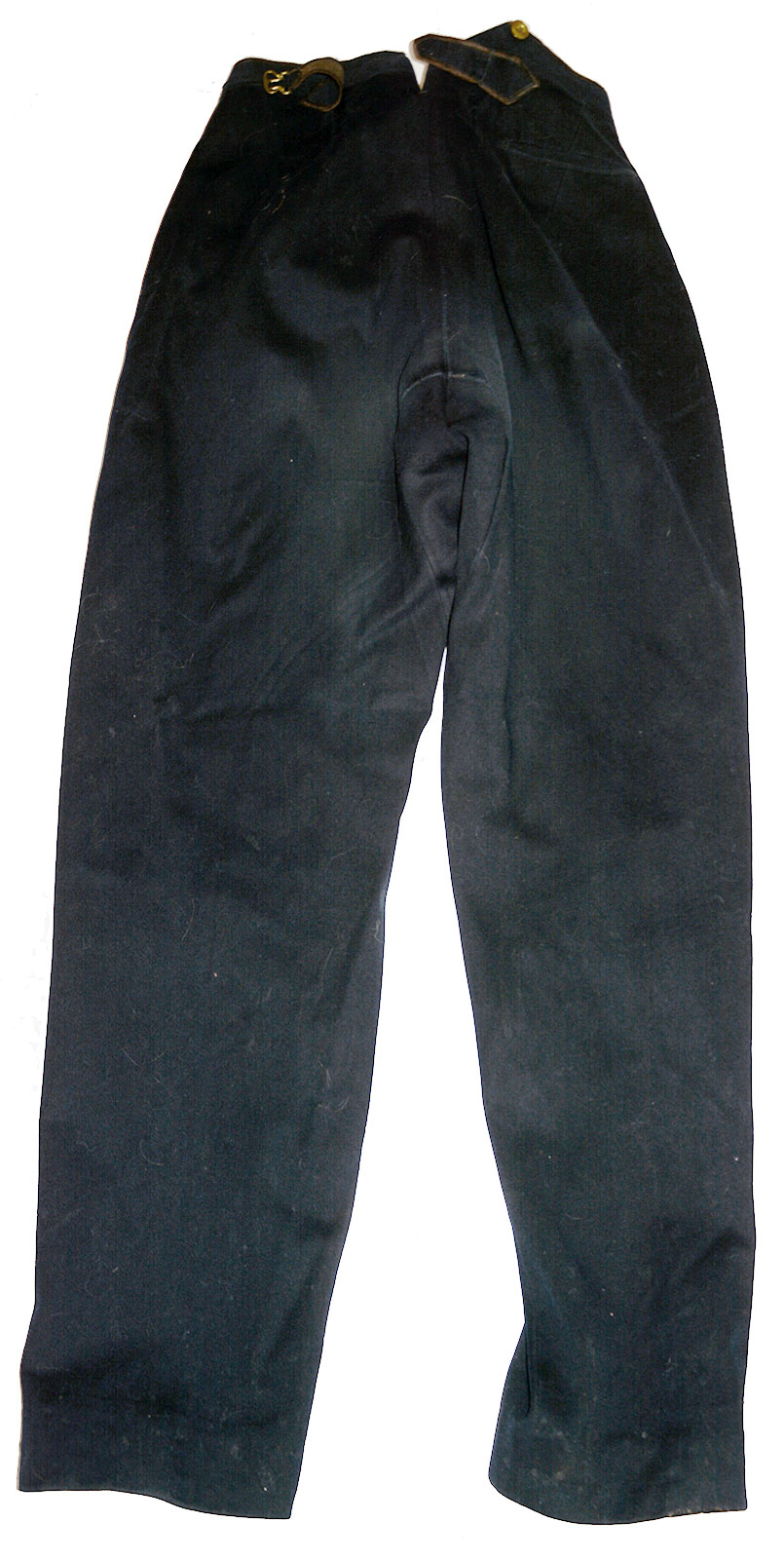
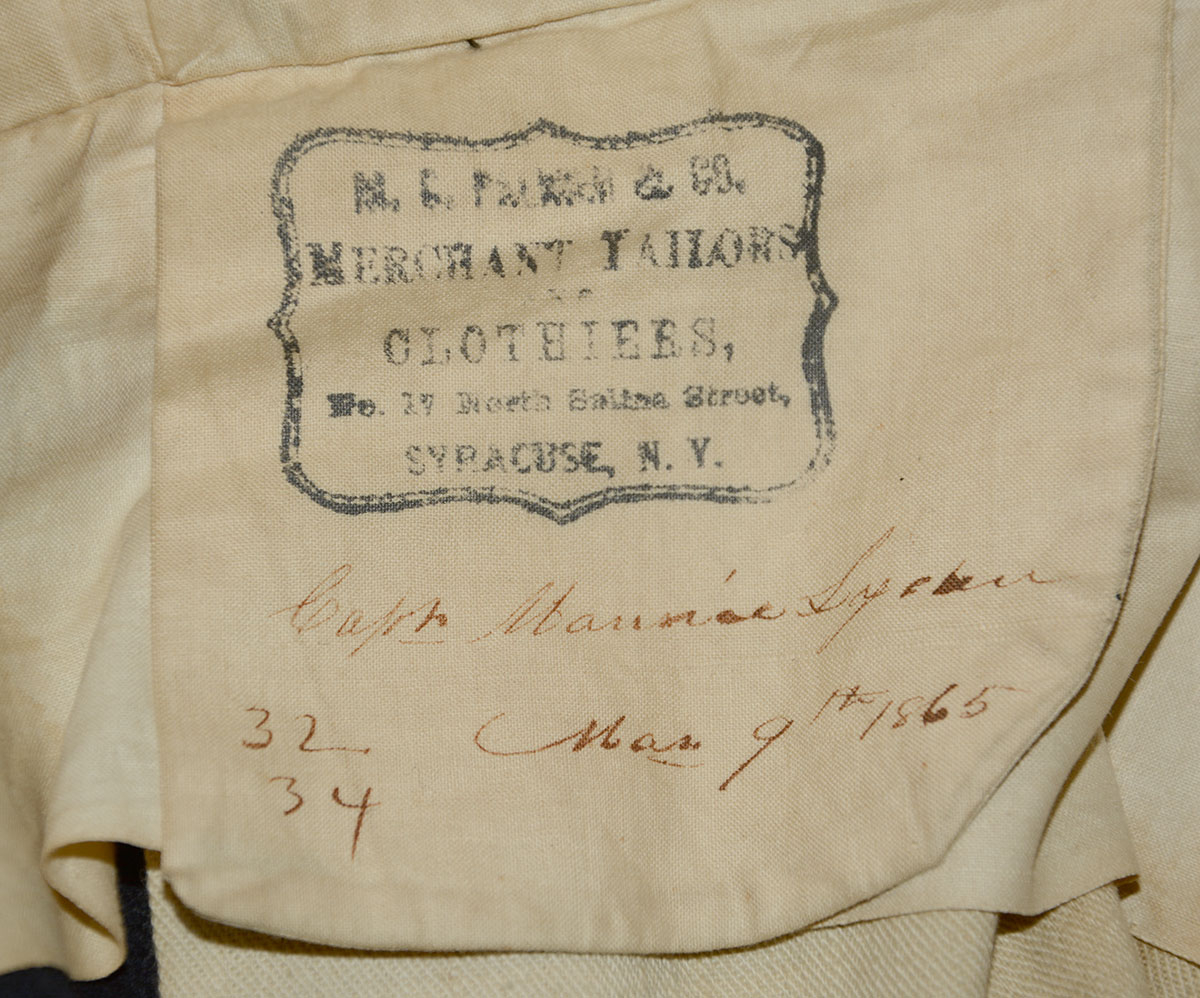
THE PANTS. The wool broadcloth trousers are dark blue with a narrow yellow (now white) 1/16-inch wool broadcloth cord running down and inset into center seam of both legs. Suspender, waistband, and fly buttons are brass, and are all in place. The waist is fitted with six brass suspender buttons. The waist is tightened by a small adjusting belt with a brass frame buckle at the rear. The waist is fastened by a single button on the waist band. The fly was fastened by 3 buttons all are present. The fly is lined with white glazed cotton. Two instep boot strap iron buttons were once present inside each side of the cuffs, but none remain on the left while the right retains both. The waist band is in lined in white glazed cotton lined, which extends down about 2 inches. There are 2 vertical hip pockets made of linen. There is a rear pocket on the right side. There is a linen lined watch pocket on the right hip. On the inside it is stamped: "M. G. ------ & Co." over "MERCHANT TAILORS" over "and" over "CLOTHIERS" over "Ne. 17 North Salina Street" over "SYRACUSE, N.Y." and below this is penned, "Capt. Maurice Leyden" over "Mar. 9th, 1865". Waist size is 32 while the leg is 34 inches long from the crotch to cuff. The condition of the pants is near perfect.
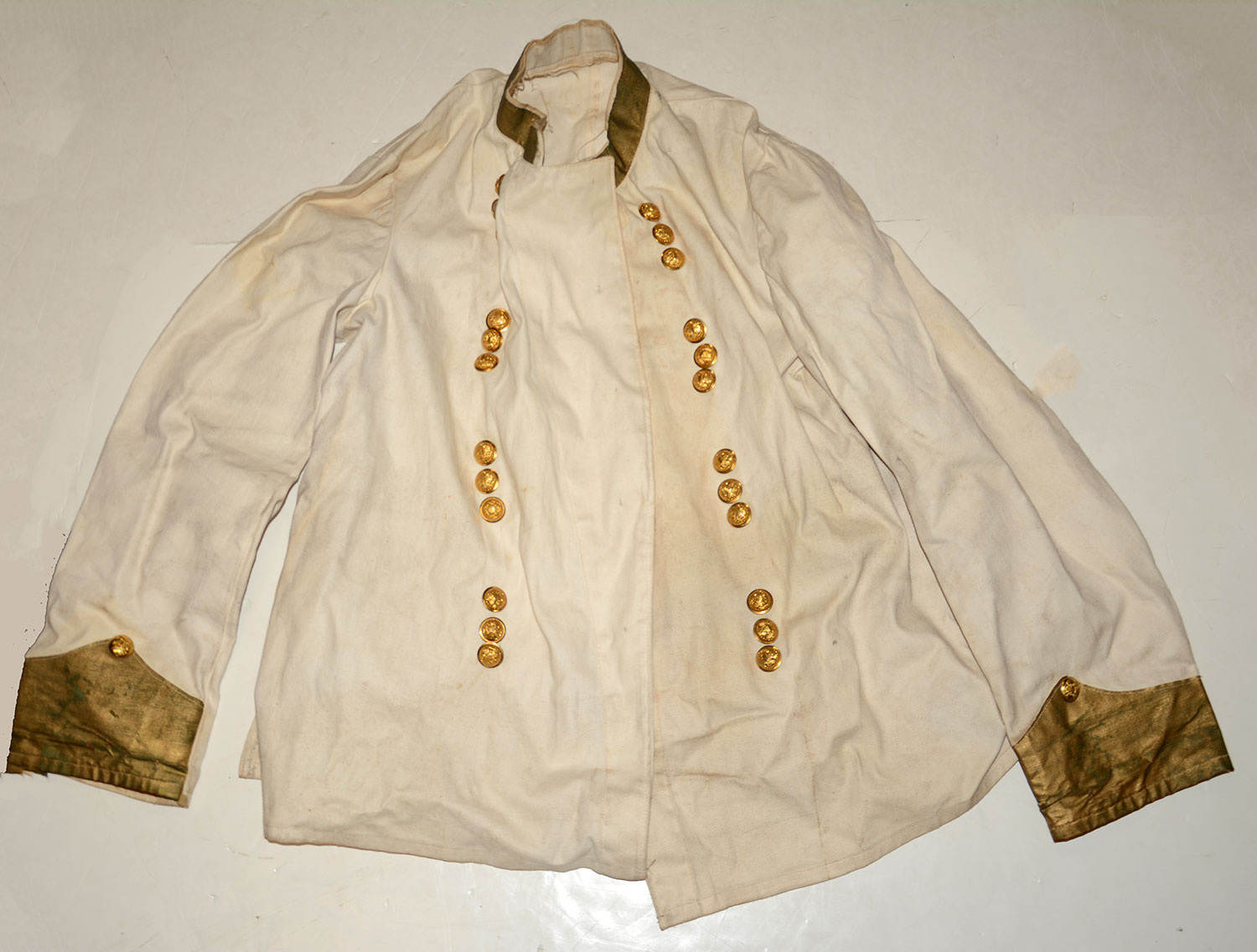
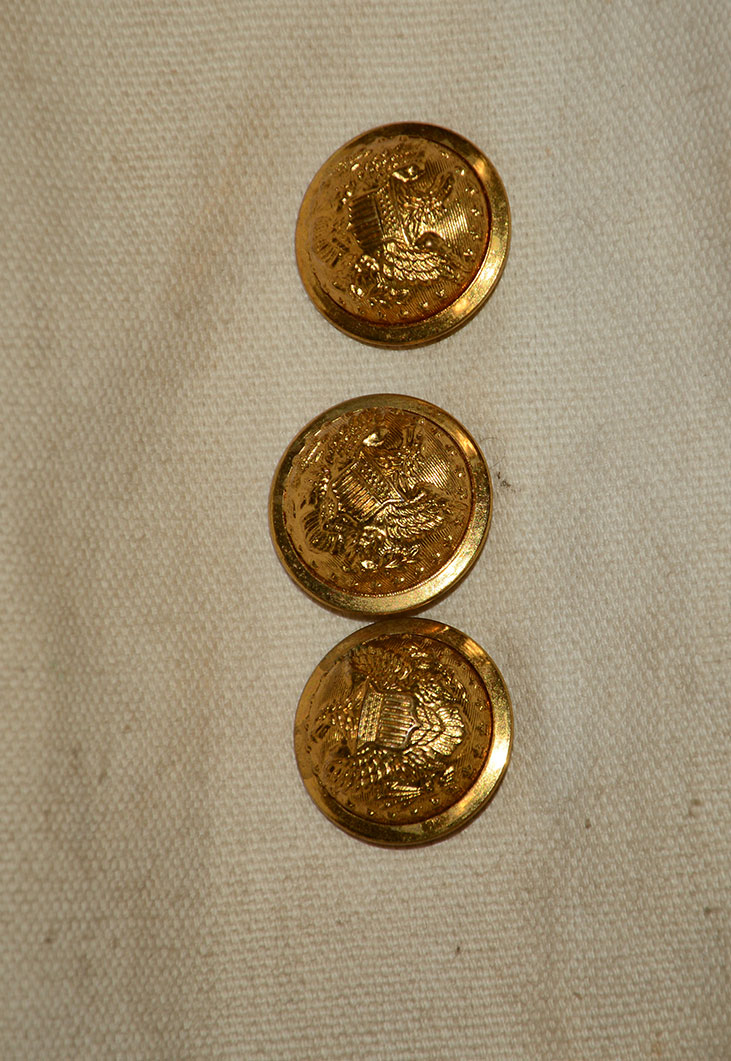
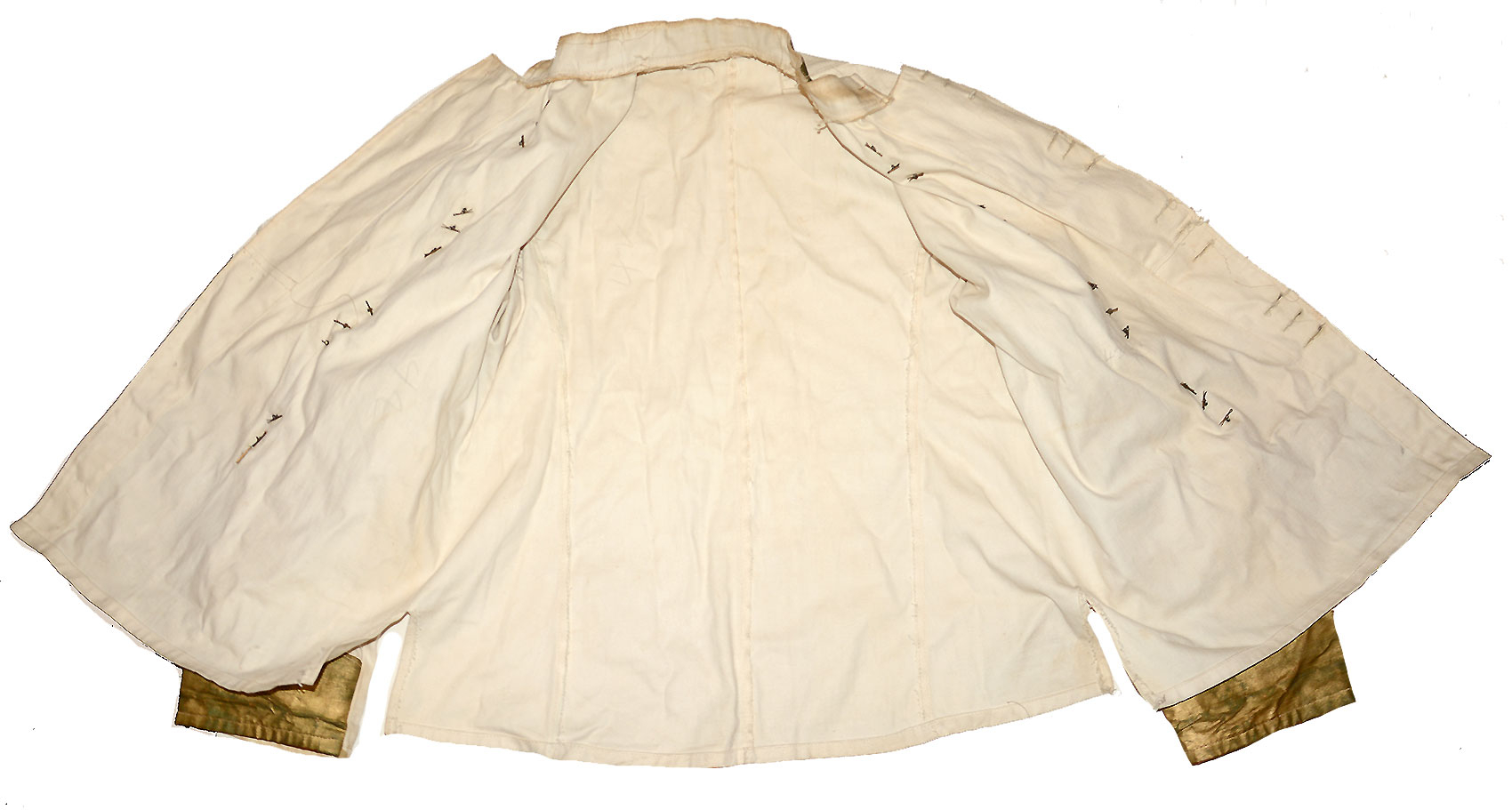
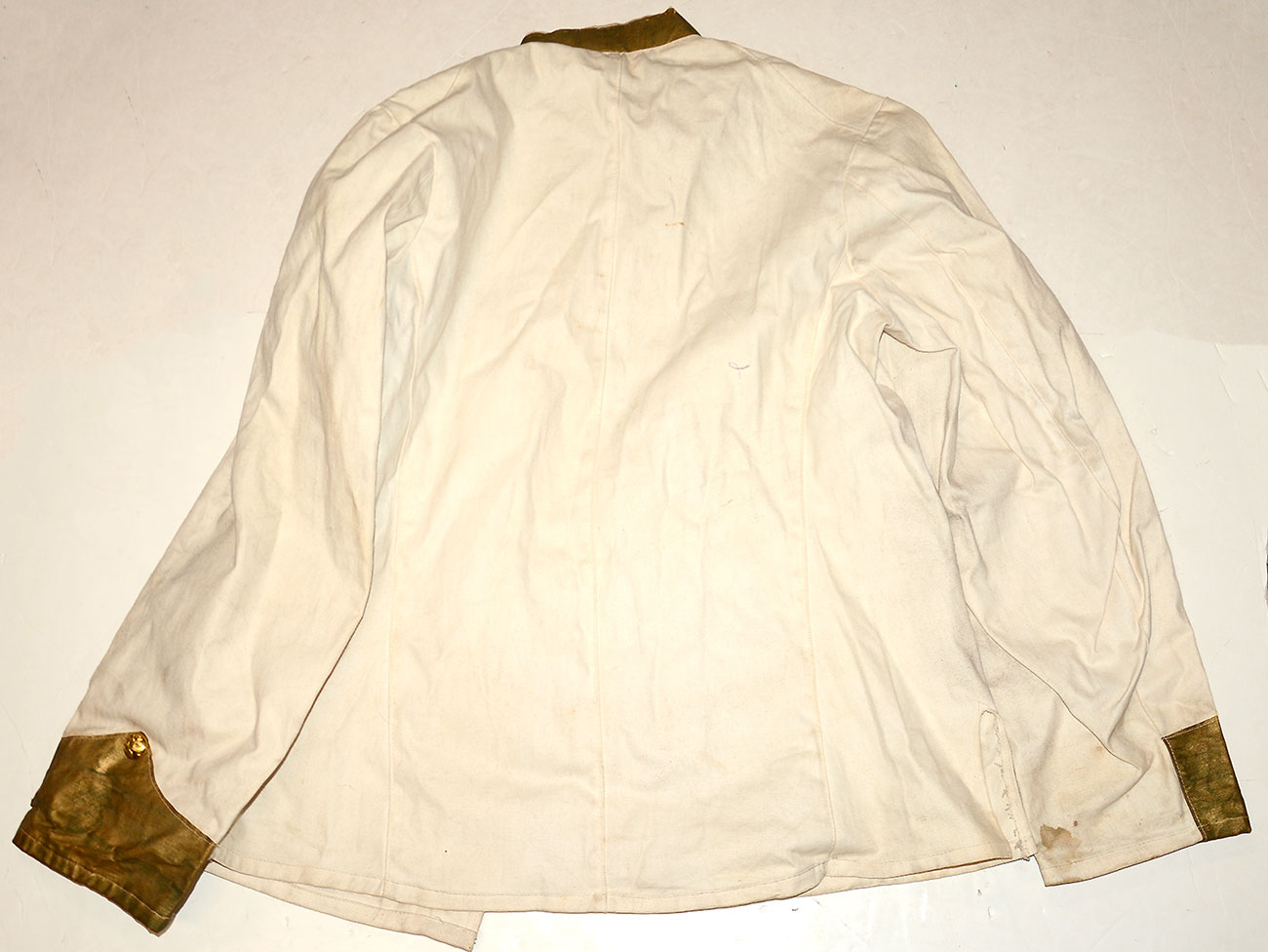
POST WAR SACK COAT. This unusual coat was probably tailored for Leyden when president of the 3rd New York Cavalry Association. Made of white duck it has 24 absolutely mint US eagle staff buttons in groups of threes on its double-breasted front. It is totally unlined and has a stand-up collar about 2 inches high that is faced with a gold-colored canvas strip. The cuffs have the same facing 5 inches high surmounted by an US eagle staff officer's button that, like all the others is tin backed. This must have been tropical inspired. The size is 42.
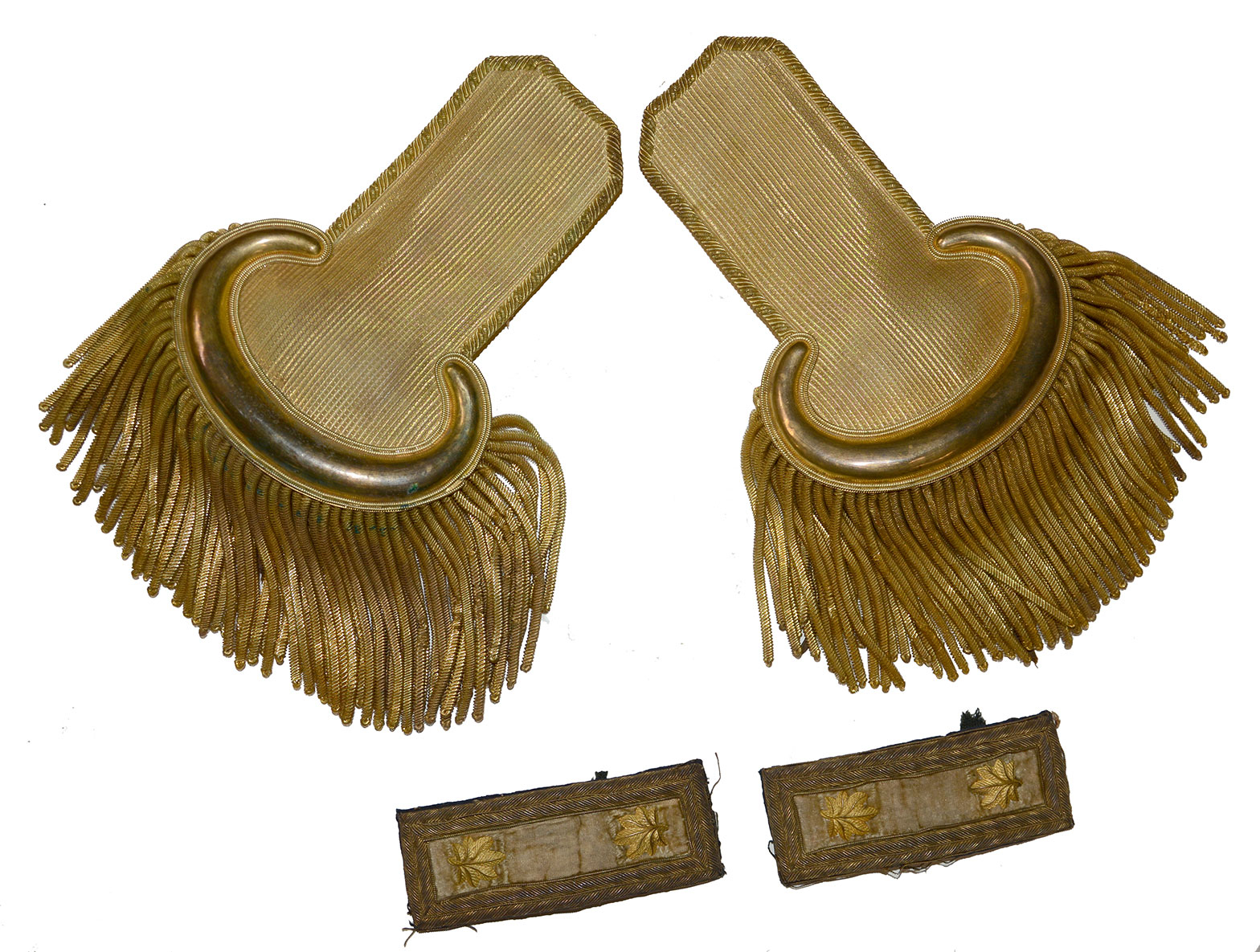
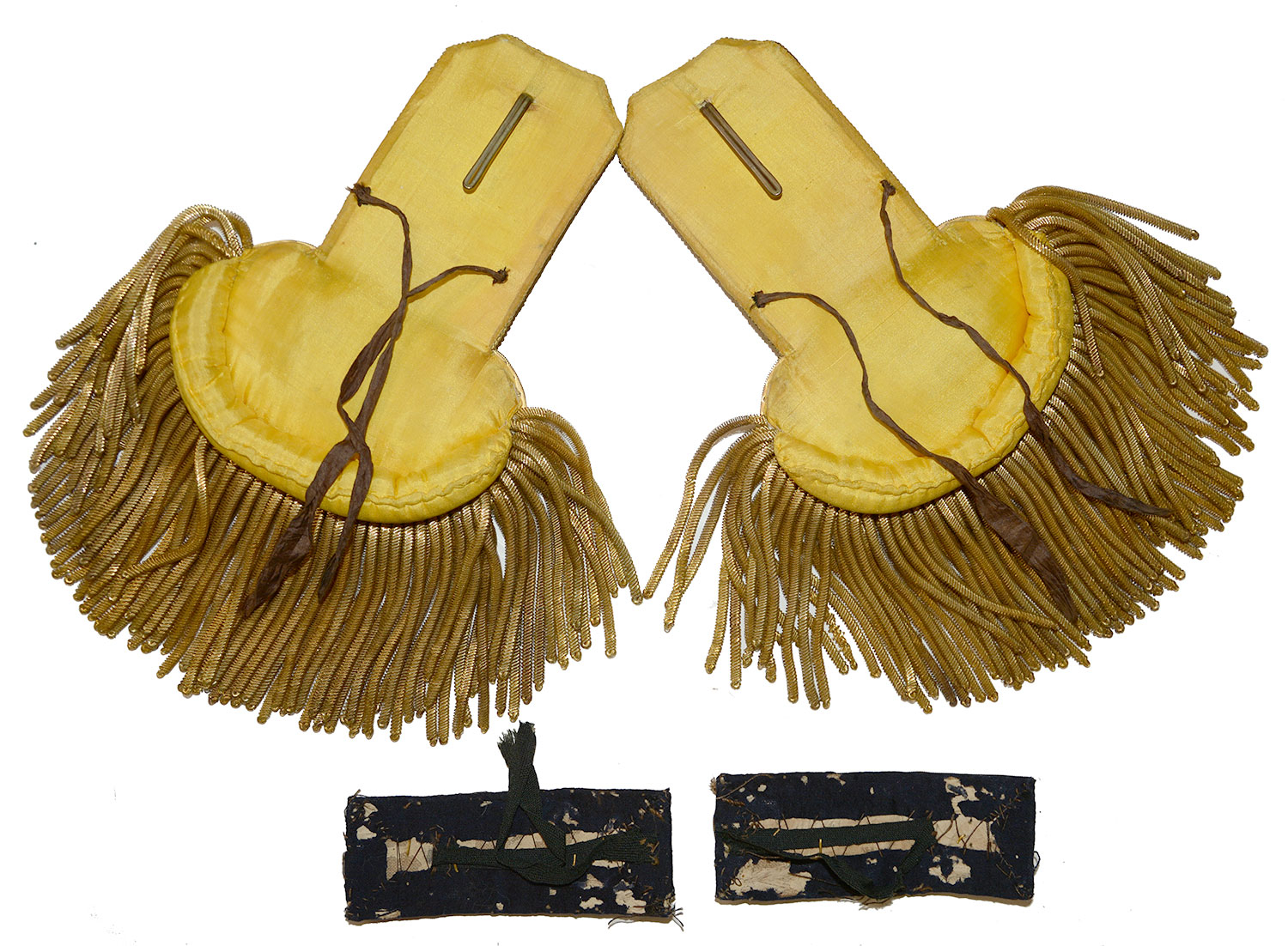
SHOULDER INSIGNIA. A pair of full-dress gold bullion fringed epaulettes backed with yellow silk. These are 2nd lieutenant's rank and are in excellent condition. 2) A pair of 4 1/2 by 1 3/4-inch major's shoulder boards. With double gold bullion boards and 2 false embroidered gilt metal oak leaves respectively. These sit on a yellow velvet field that is lightly worn and dirty.
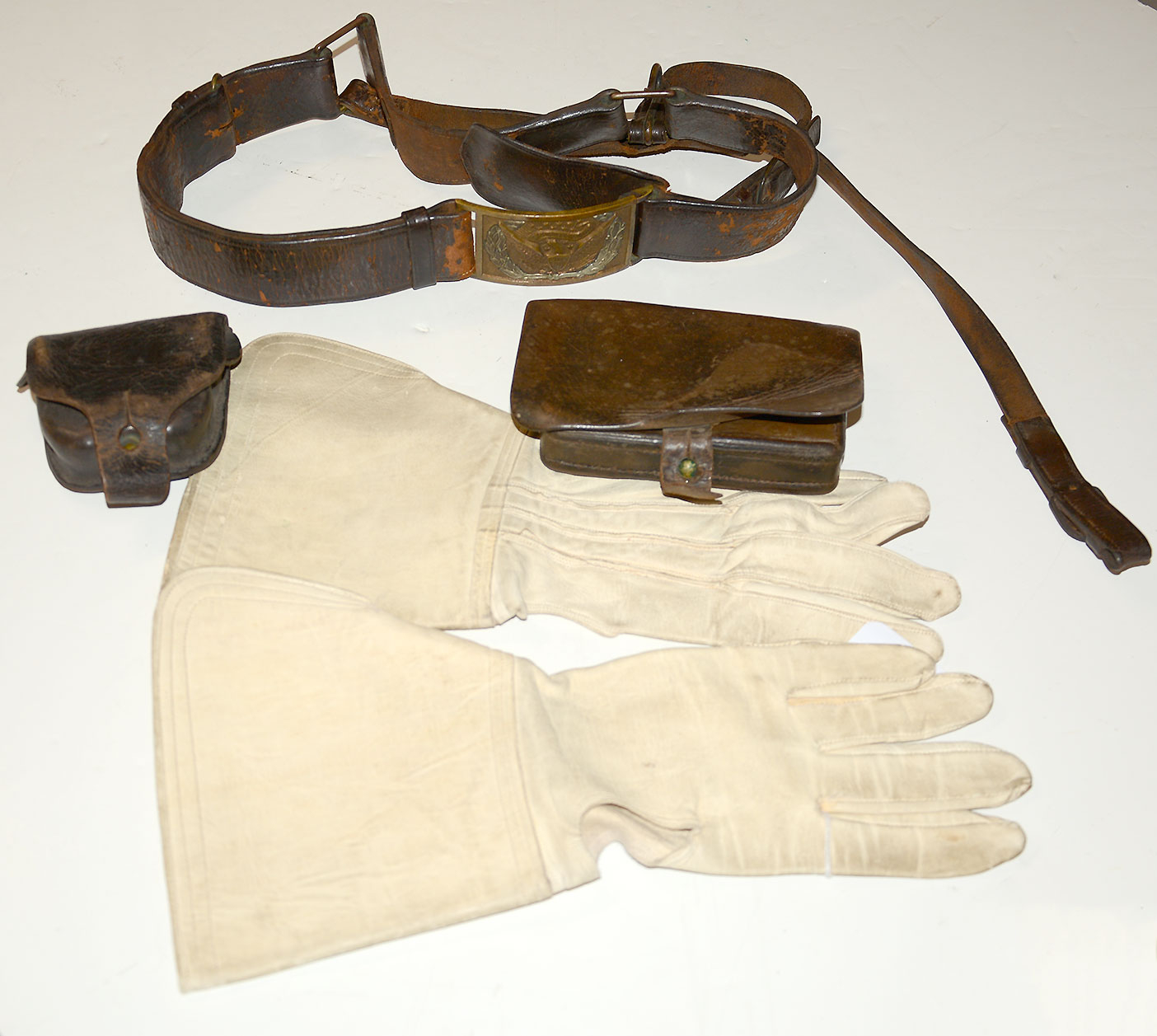
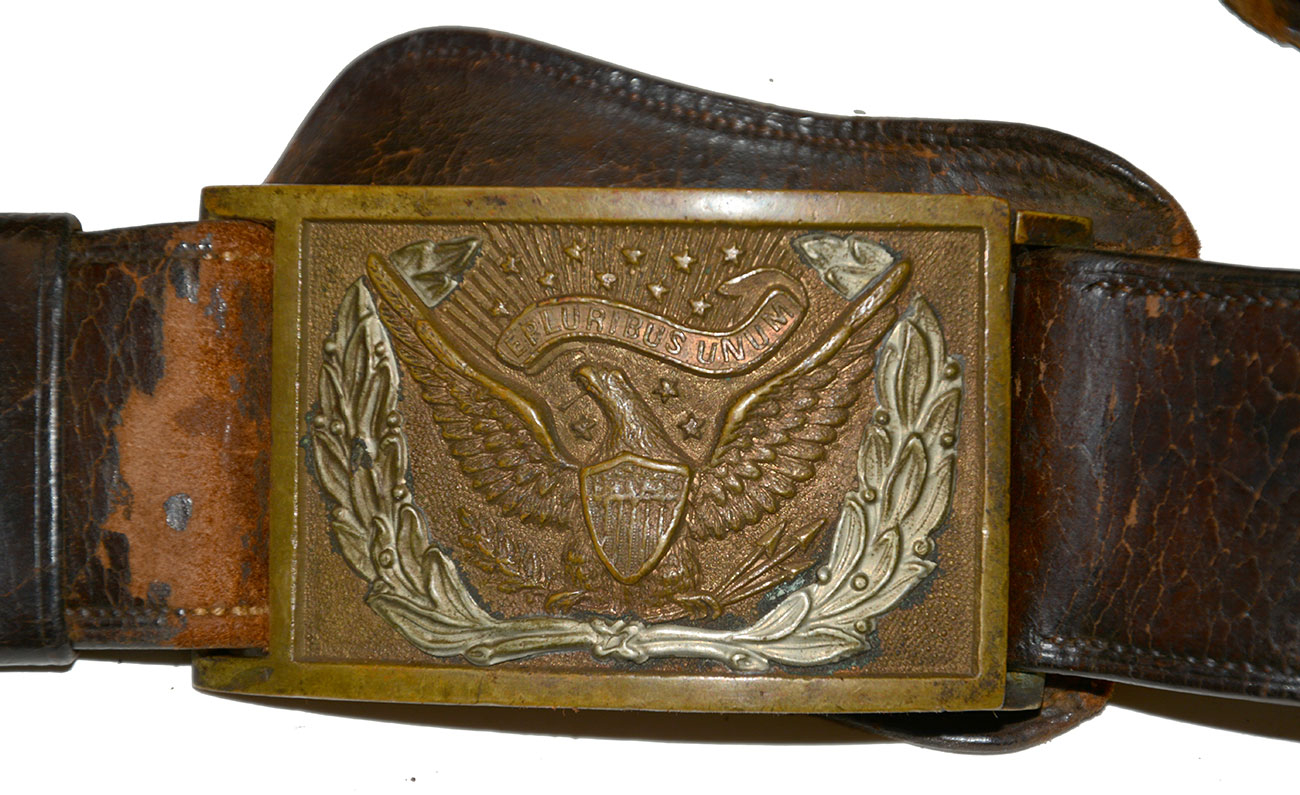
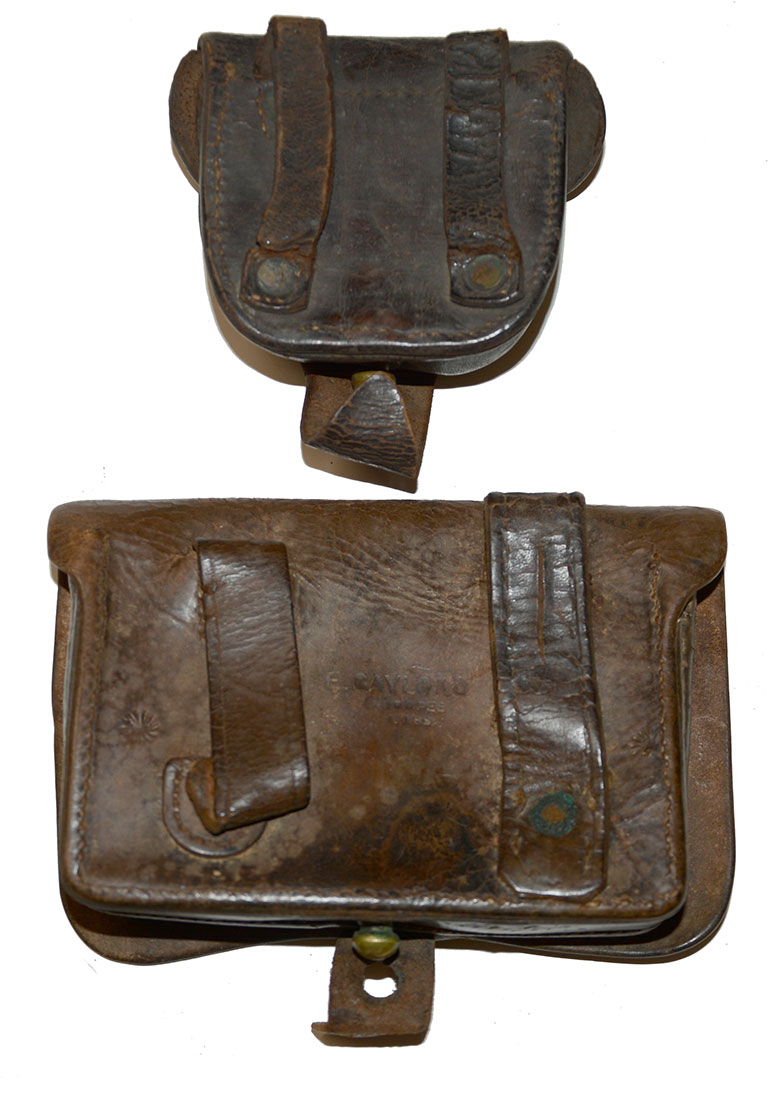
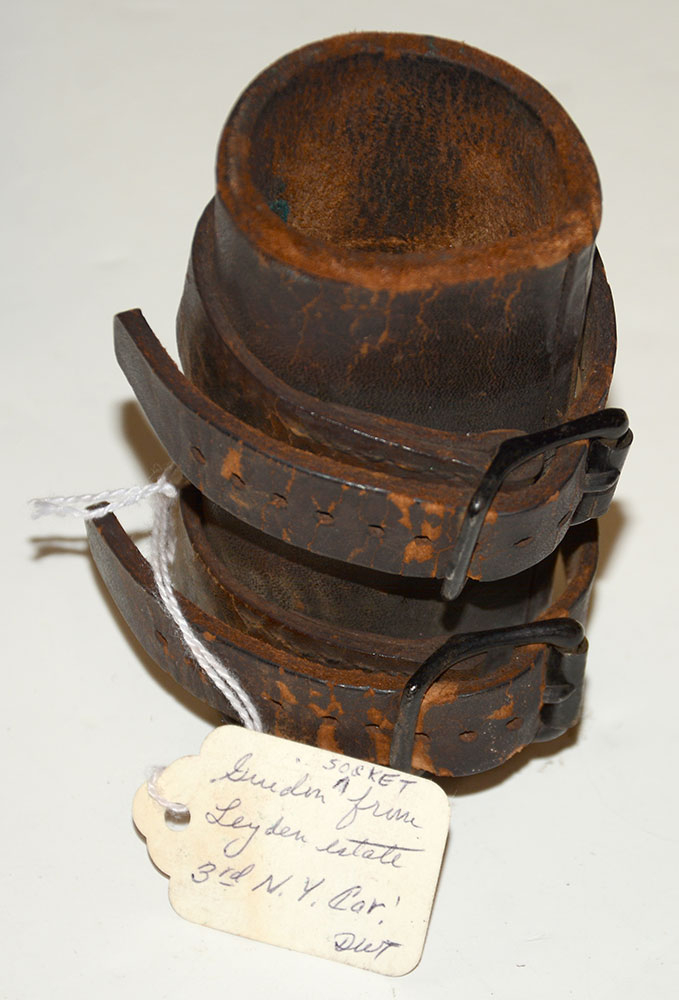
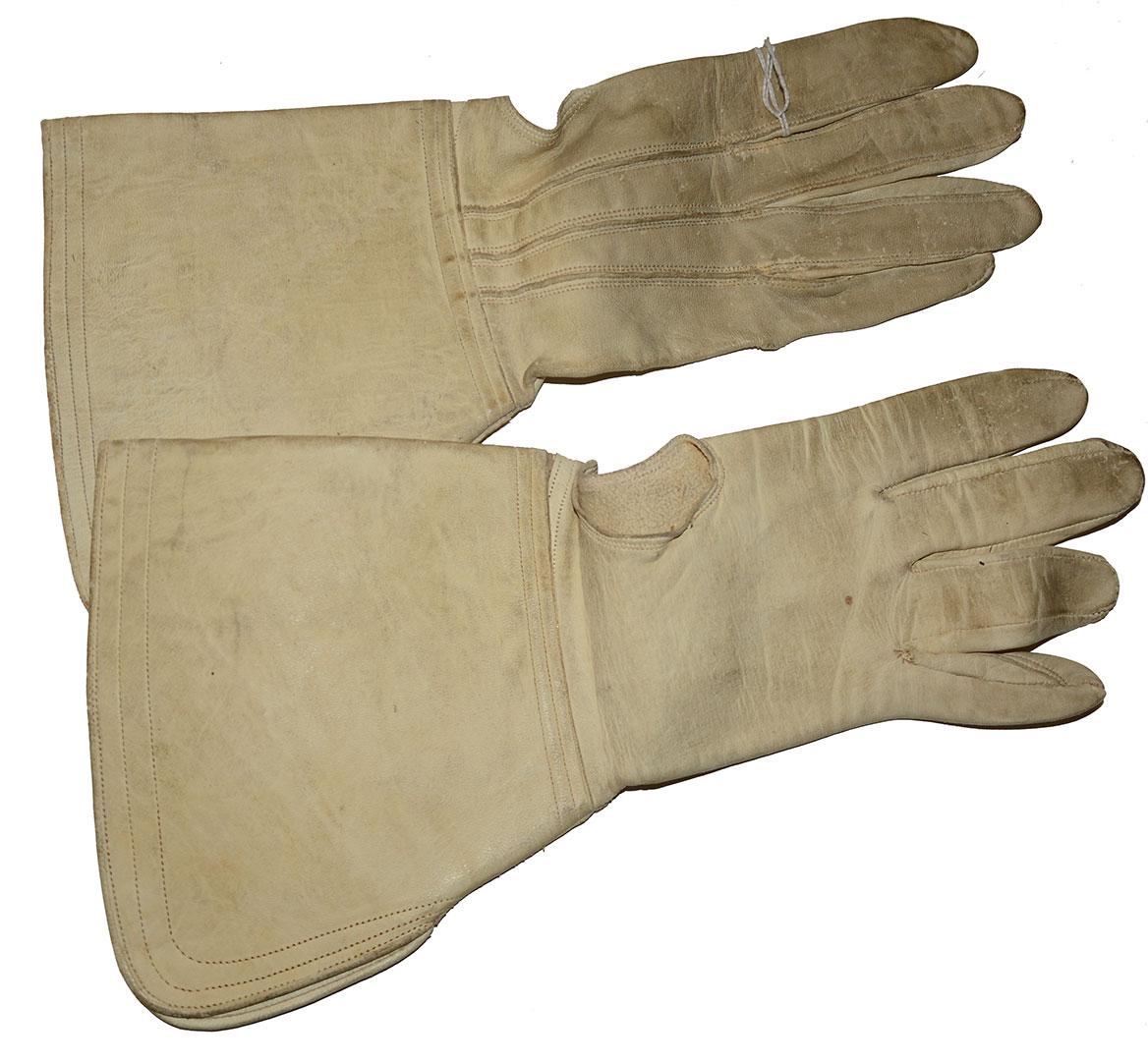
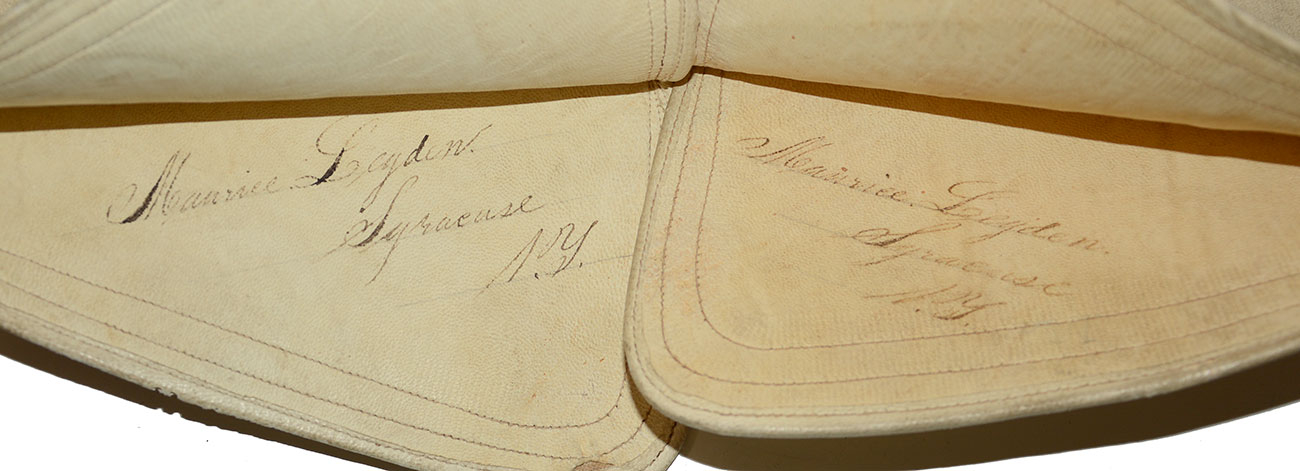
LEATHER GOODS. These include a belt and buckle, a cartridge box, a cap pouch and a pair of gloves. 1) The service belt is of the regulation style Model 1832 type for enlisted personnel of the heavy artillery with a Model 1851 rectangular eagle buckle which is seen after 1859 but in this case rather than blackened buff the belt is tanned brown leather. Also attached to the 2-brass rectangular supports designed for the Model 1832 artillery gladius are leather sword suspension straps and a brass hook to facilitate sword suspension. Evidently Leydon had this rig specially designed, or he had modified an existing heavy artillery belt. This is in fine complete condition, but the leather is flaking some and would benefit from treatment with "Blackrock" or a similar leather preservative. 2) A regulation cartridge pouch for revolver. This example is in fine used condition and measures 6 inches by 4 inches. It is stamped on the back "E. GAYLORD" over "CHICOPEE MASS.". 3) Regulation US percussion cap pouch. The condition matches the cartridge pouch, and it is fine with both rear belt loops in place. 4) A guidon or flag socket designed for attaching to the cavalry saddle stirrup. The condition is excellent with both straps intact. This is actually a very rare item. 5) Military gauntlets. Finding a pair of original war period gauntlets has always been challenging; this pair remain in overall good condition, with honest wear. The white gauntlets are made of a high grade of extremely soft and supple deer, goat or calfskin. Most of the construction mode utilized was a treadle, chain-stitching machine combined with hand-sewing, finishing work. Written in the cuff is " Maurice Leyden Syracuse N.Y." The cuffs 5 1/2 inches long are configured in the typical, Civil War period style. In both cases the thumbs have been removed.
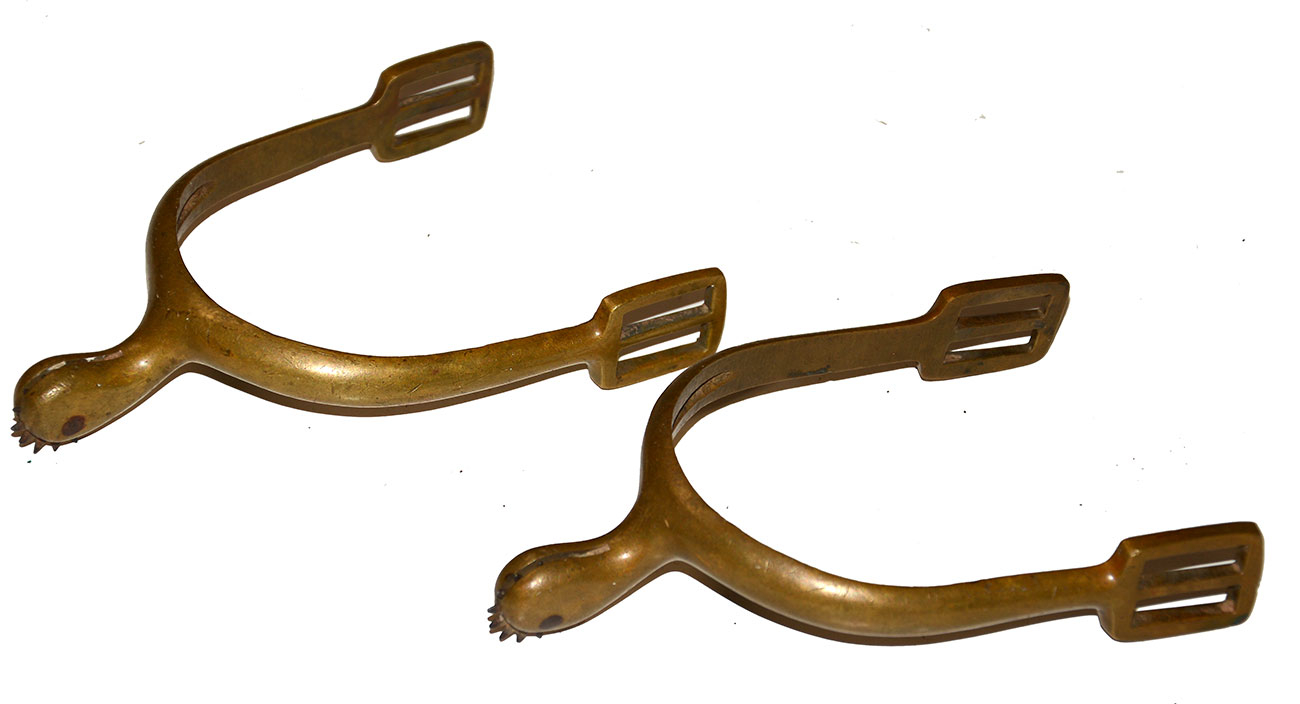
SPURS. A pair of Model 1859 cast brass cavalry spurs. The spurs are the large size (3½” across the boot opening) and are void of any visible markings. Each spur shank exhibits strap loop cutouts with squared inside corners, along with a 14-tooth iron rowel in excellent condition attached to each neck. Surfaces of both have a slight stipple finish inside and out and measure approximately 5¼” long.
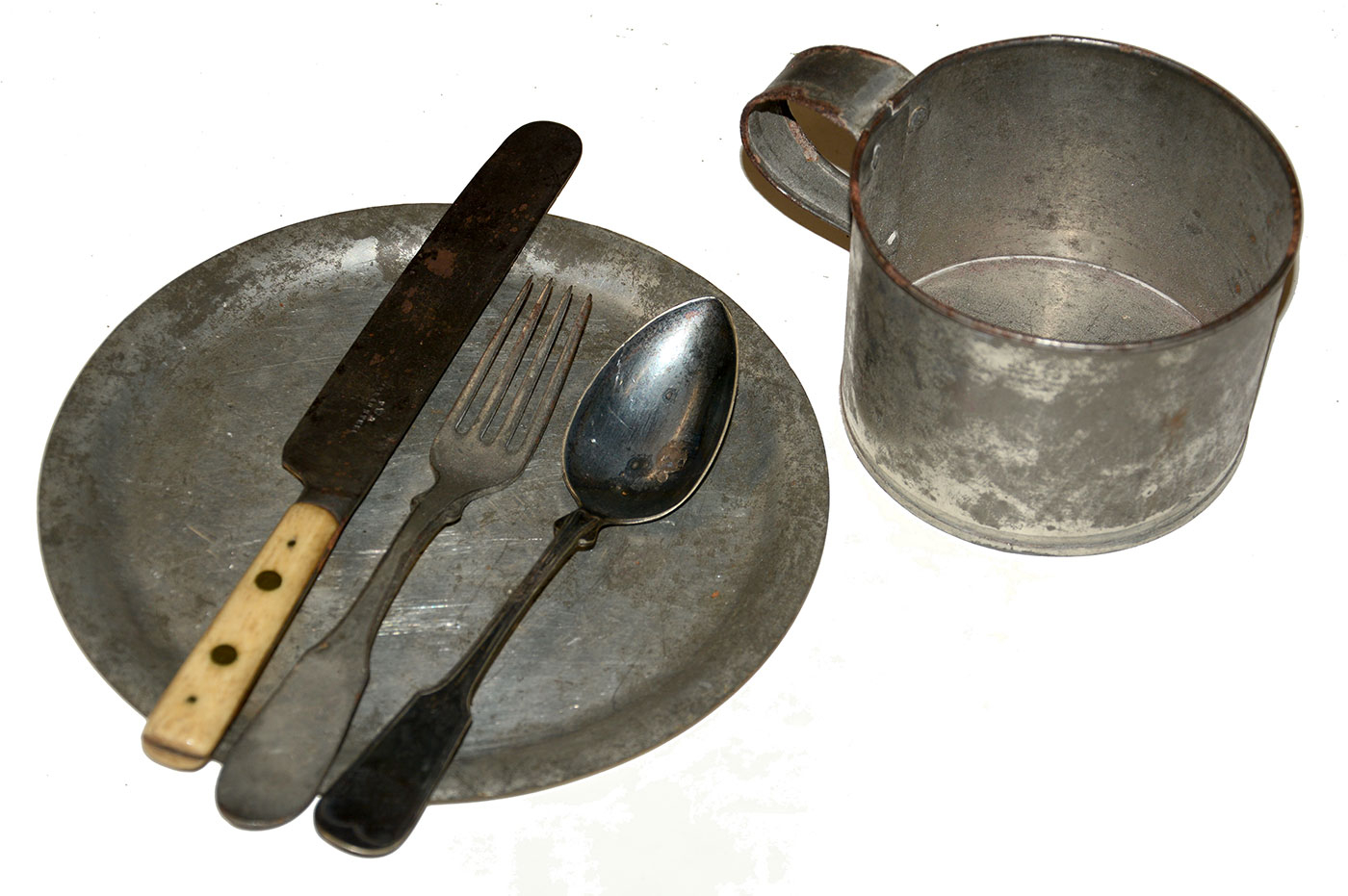
MESS SET. Mess gear was issued by the various recruiting services, first by the states and later by the federal government. Early in the war local suppliers were often sourced and you also had privately purchased mess gear, not just by officers, who had to supply their own, but by some individuals or militia units entering the volunteer service. The result is a wide variety of mess gear. Here are Leyden's 3-inch-tall tin drinking cup, 7 3/4-inch diameter tin plate, his fork and his bone handled English imported knife.
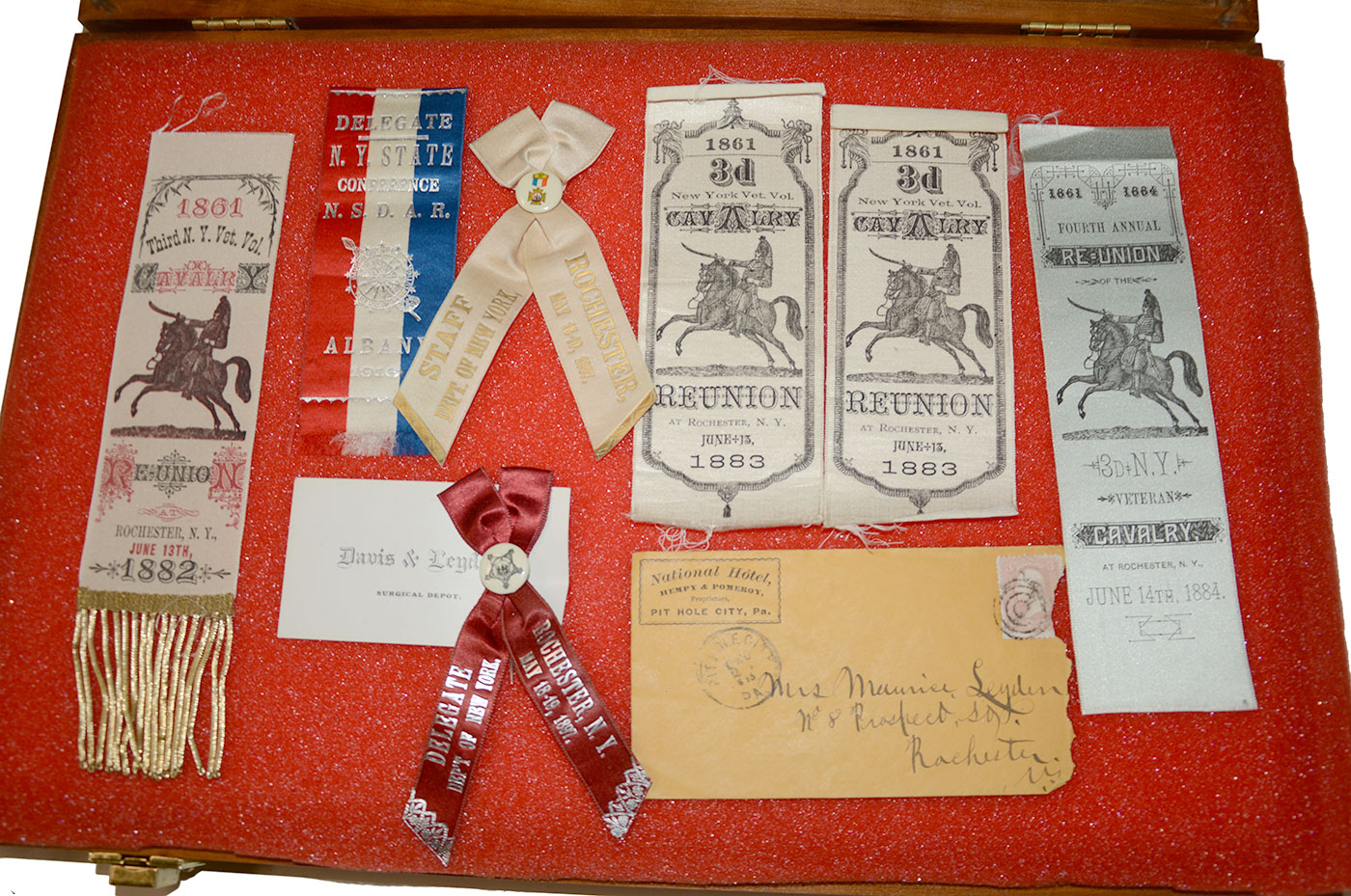
REUNION RIBBONS.
- 3rd NY Vet Vol Cavalry, Rochester, NY 1882
- Delegate NY State N.S.D.A.R. Albany, NY 1916 (Daughters of the American Revolution.)
- Delegate Dept. of NY, Rochester NY May 18-19 1897
- Staff - Dept. of NY, Rochester May 18-19 1897 (Woman’s Relief Corps)
- Two Identical Ribbons 3rd NY Vet Vol. Cavalry Reunion Rochester, NY June 13, 1883
- 3rd NY Vet Cavalry 4th Annual Reunion Rochester NY June 14, 1884
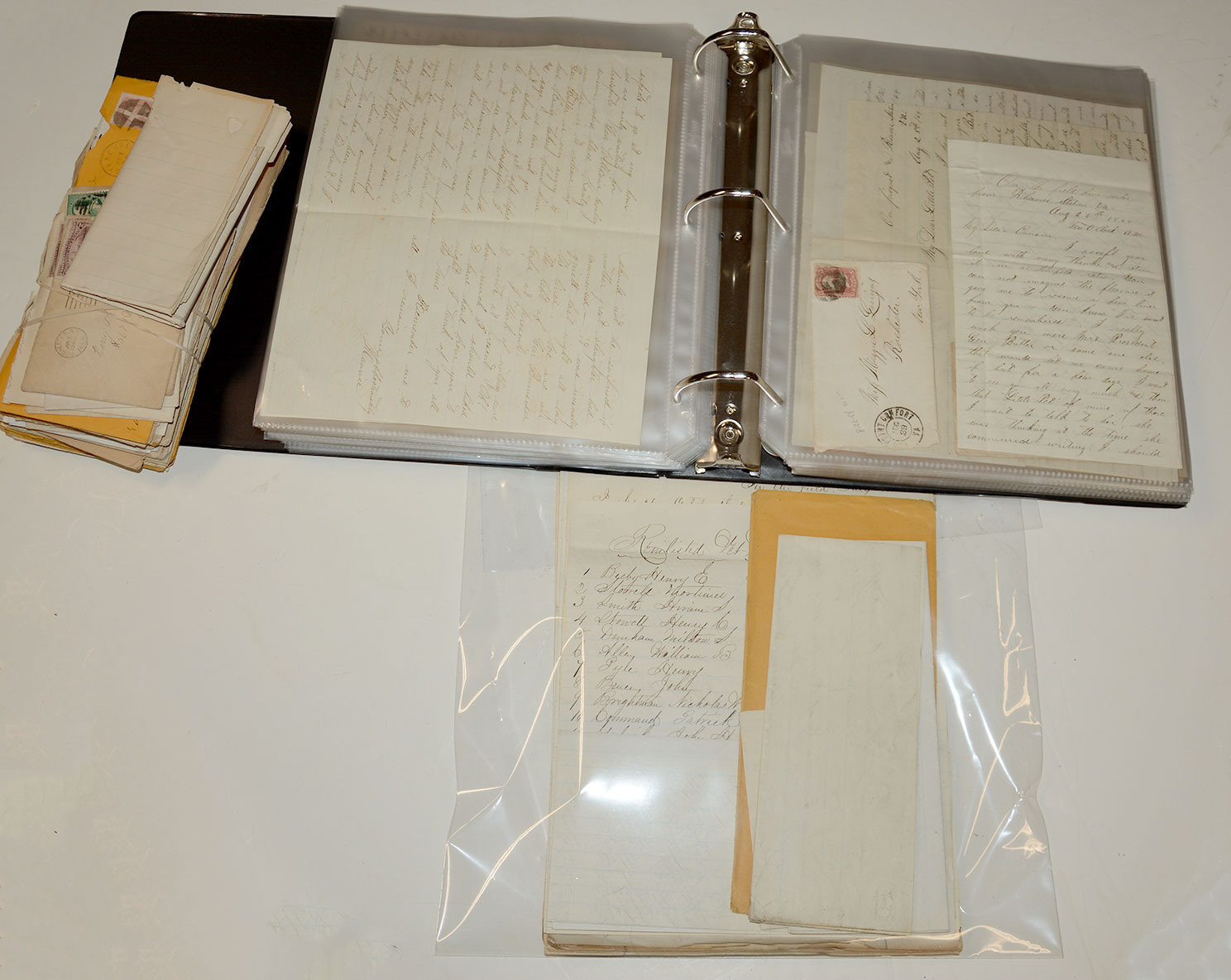
LETTERS & DOCUMENTS. Included with the group are letters written to Leyden’s sweetheart, Miss Maggie Garrigus of Rochester, NY. The letters are filled with his feelings towards her and occasionally some battle and camp life content. We estimate approx. 77 letters from 1861 through the end of his service. There is an unknown number of letters well after the war from family members and approx. 12 wartime documents. There are several nice sketches of him seated in a chair. In 1880 Capt. Leyden writes to Mrs. David E. Cronin, 21 pp., 8” x 12.5”, in pencil on lined paper. Leyden details his treatment in Confederate prisons. There are also several equipage documents. Overall a nice archive with his other items.
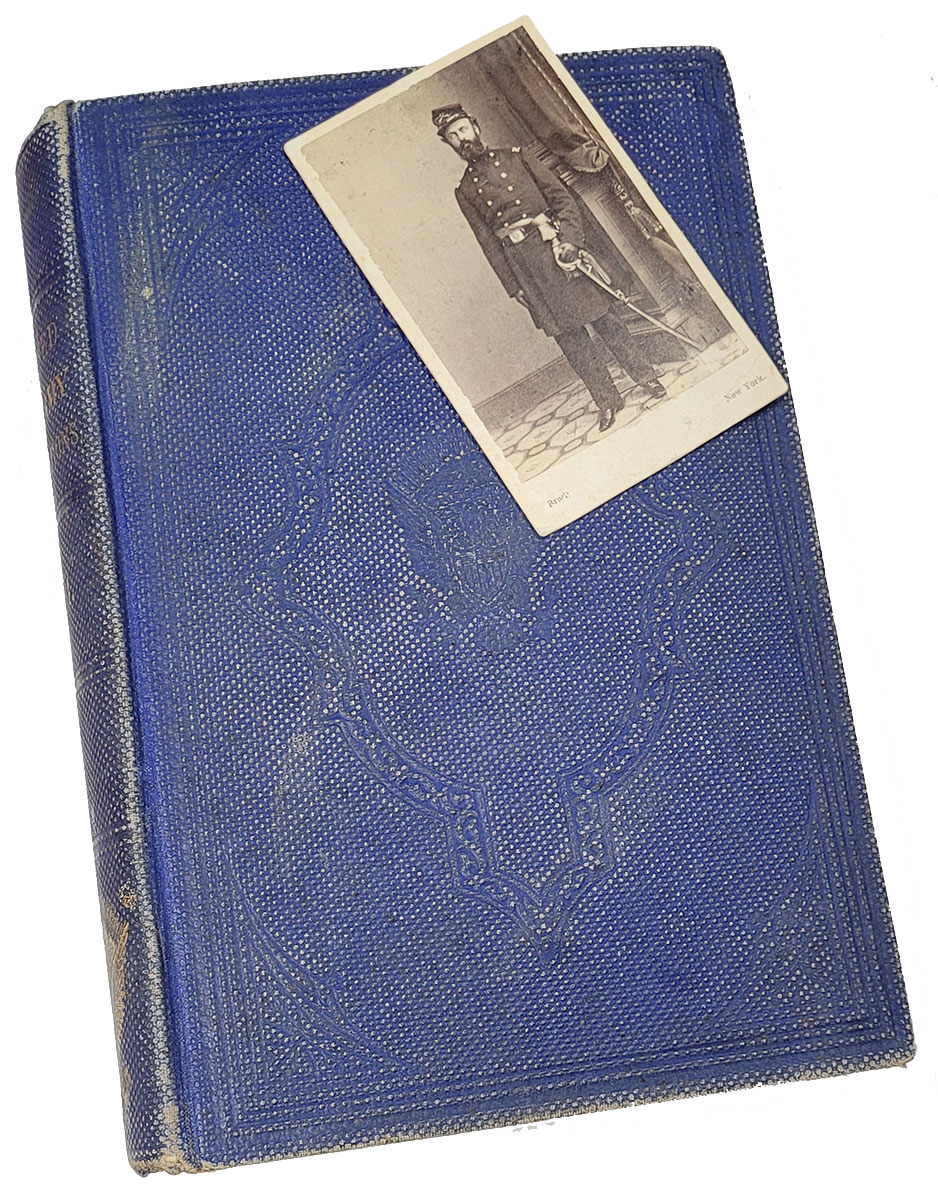
REVISED US ARMY REGULATIONS, 1861. Published 1861, J.B. Lippincott & Co. Publishers, Philadelphia. Blue cloth covered boards; 559 pp. including index. Inside front cover signed in ink, "Maurice Leyden / 2d Lieutenant / Company B 3rd New York Cavalry". Overall very fine condition. Some yellowing to pages; storage wear to covers.
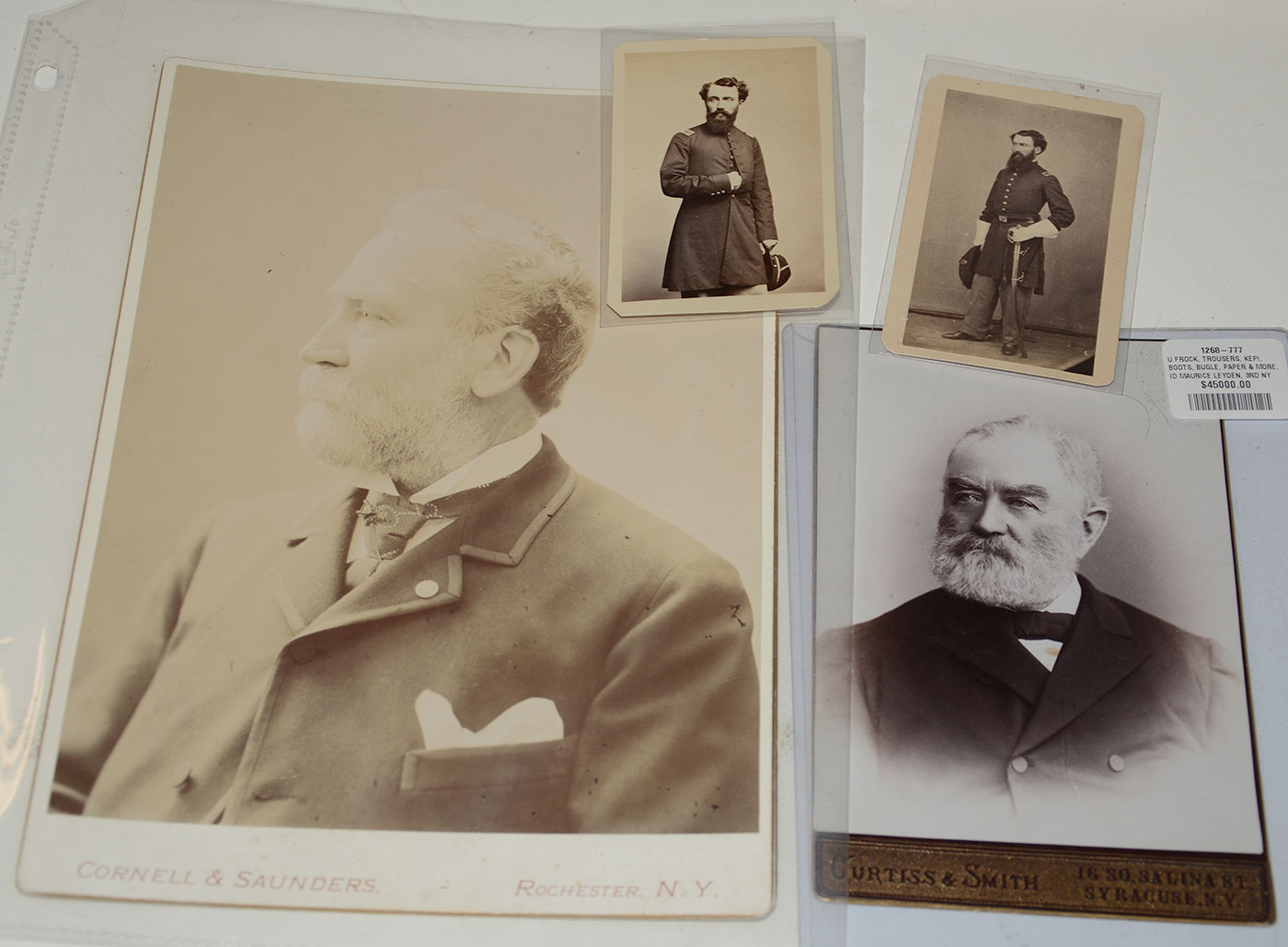
PHOTOGRAPHS. Three war time CDVs of Leyden, one post war cabinet card and one larger albumen. All in very fine condition. Five period photo albums containing numerous family photos.
This is a great group of items that lieutenant to major Maurice Leyden used through his military career, a career that stretched from 1861 to 1866. As a practically minded front-line combat officer, he utilized both his private purchased and government issued items to the full. These he made work for him during his service which included combat, capture and imprisonment. Proudly displayed at the Texas civil War Museum we now are delighted to offer this important cavalry ensemble. [pe/ss][ph:L]
Extra shipping charge required.
~~~~~~~~~~~~~~~~~~~~~~~~~~~~~~~~~~~
THIS ITEM, AS WITH ALL OTHER ITEMS AVAILABLE ON OUR WEB SITE,
MAY BE PURCHASED THROUGH OUR LAYAWAY PROGRAM.
CLICK HERE FOR OUR POLICIES AND TERMS.
THANK YOU!
Inquire About THE MILITARY EFFECTS AND MORE OF MAURICE LEYDEN, THIRD NEW YORK CAVALRY
Most Popular
Historical Firearms Stolen From The National Civil War Museum In Harrisburg, Pa »
Theft From Gravesite Of Gen. John Reynolds »
Selection Of Unframed Prints By Don Troiani »
Fine Condition Brass Infantry Bugle Insignia »
Rare Identified 65Th Ny Sergeant’s Jacket, With Manscript Material: 1St U.s. Chasseurs »
featured item
CLOSE TO REGULATION VIRGINIA CONFEDERATE CAPTAIN'S FROCK COAT
The coat is made of mid- gray wool, possibly imported from England. It has full-length skirts ending in the typical and desirable raw edge. The sleeves have an 8 1/2-inch billow at the elbow. The dark blue wool standing collar is 1-1/2 inches high… (1268-060). Learn More »
site search