

site search
online catalog
MUSEUM QUALITY VIRGINIA CONFEDERATE OFFICER’S CAP
Hover to zoom
$18,000.00
Quantity Available: 1
Item Code: 2026-2213
Shipping: Determined by Method & Location of buyer
To Order:
Call 717-334-0347,
Fax 717-334-5016, or E-mail
This important piece came into the hands of The Horse Soldier about 17 years ago and has resided in a single first-class collection until today. It originally came indirectly to us from a descendant of the soldier who wore it whose name was William H. Crisp of the Virginia's Dixie Artillery.
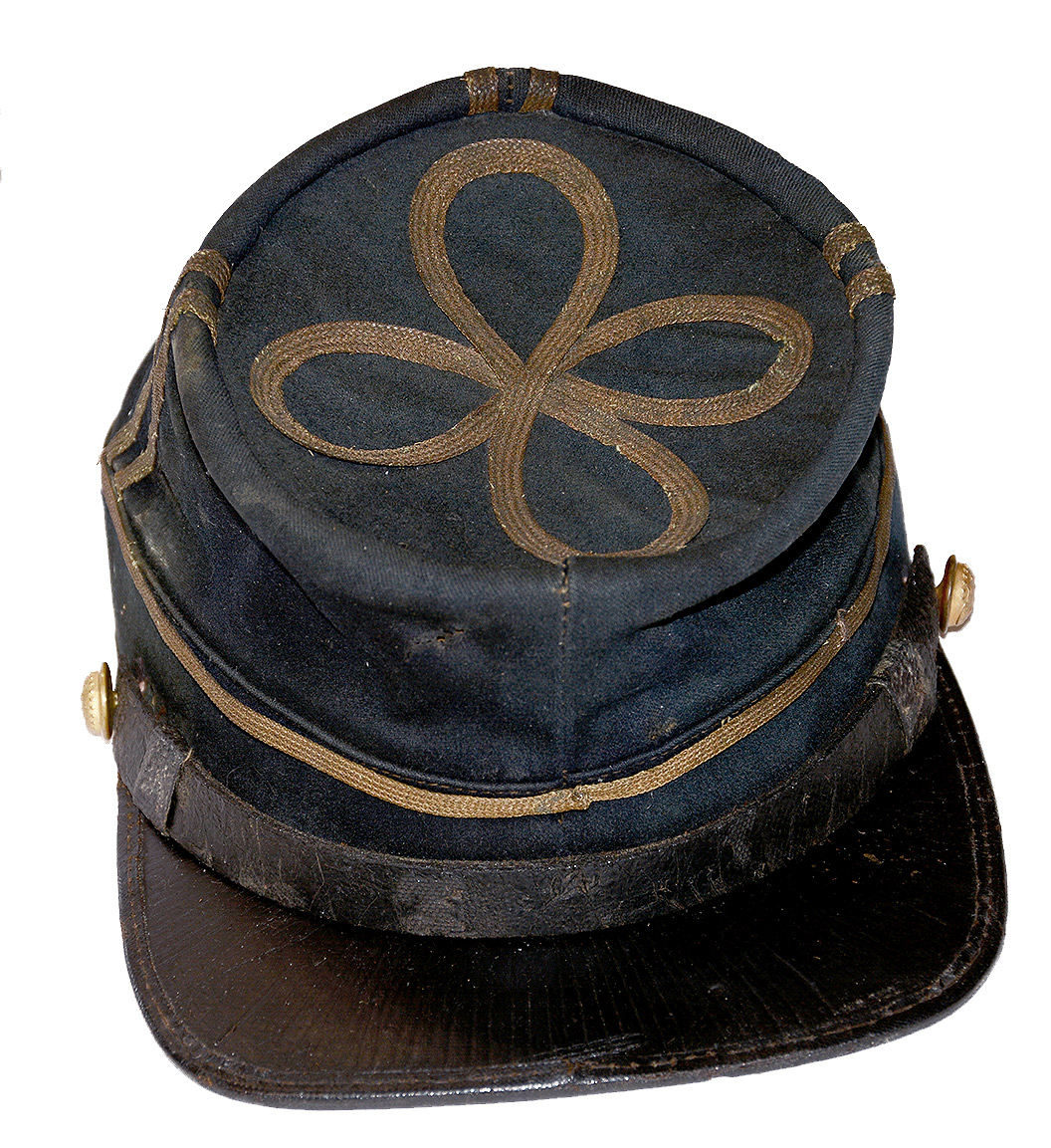
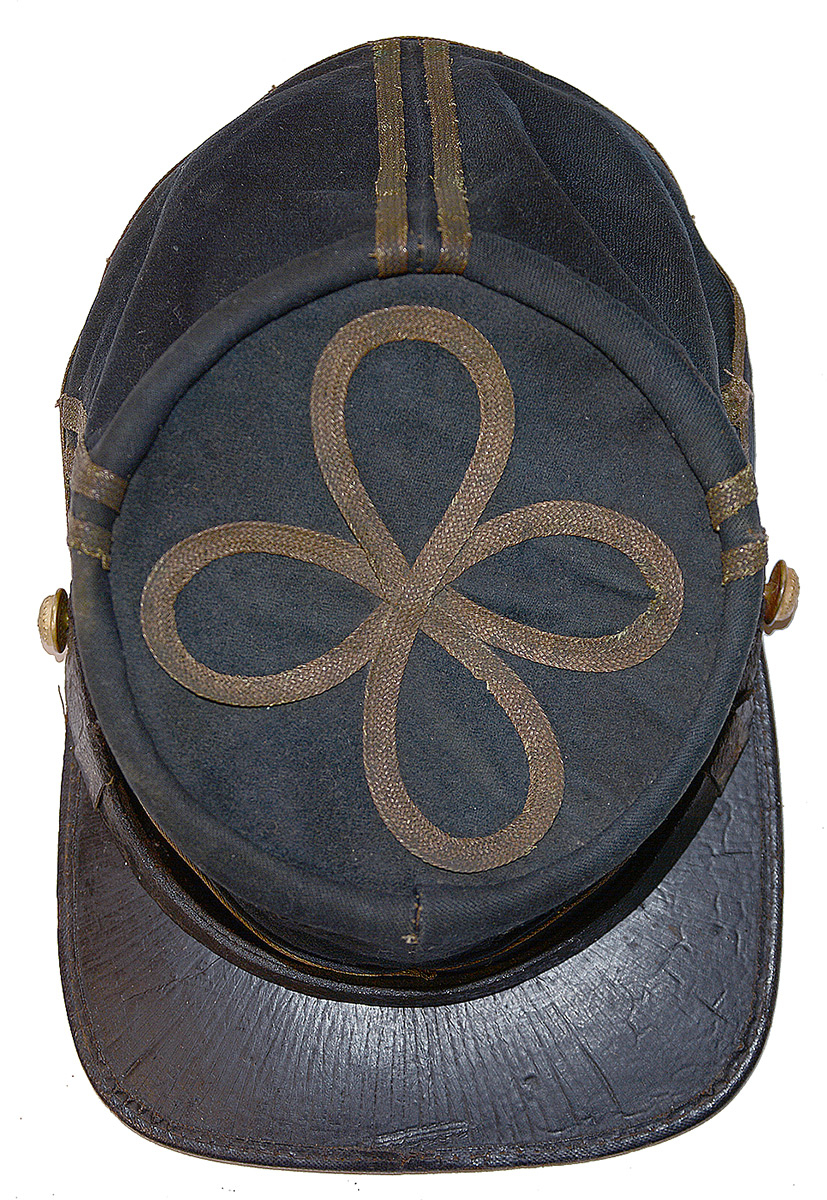
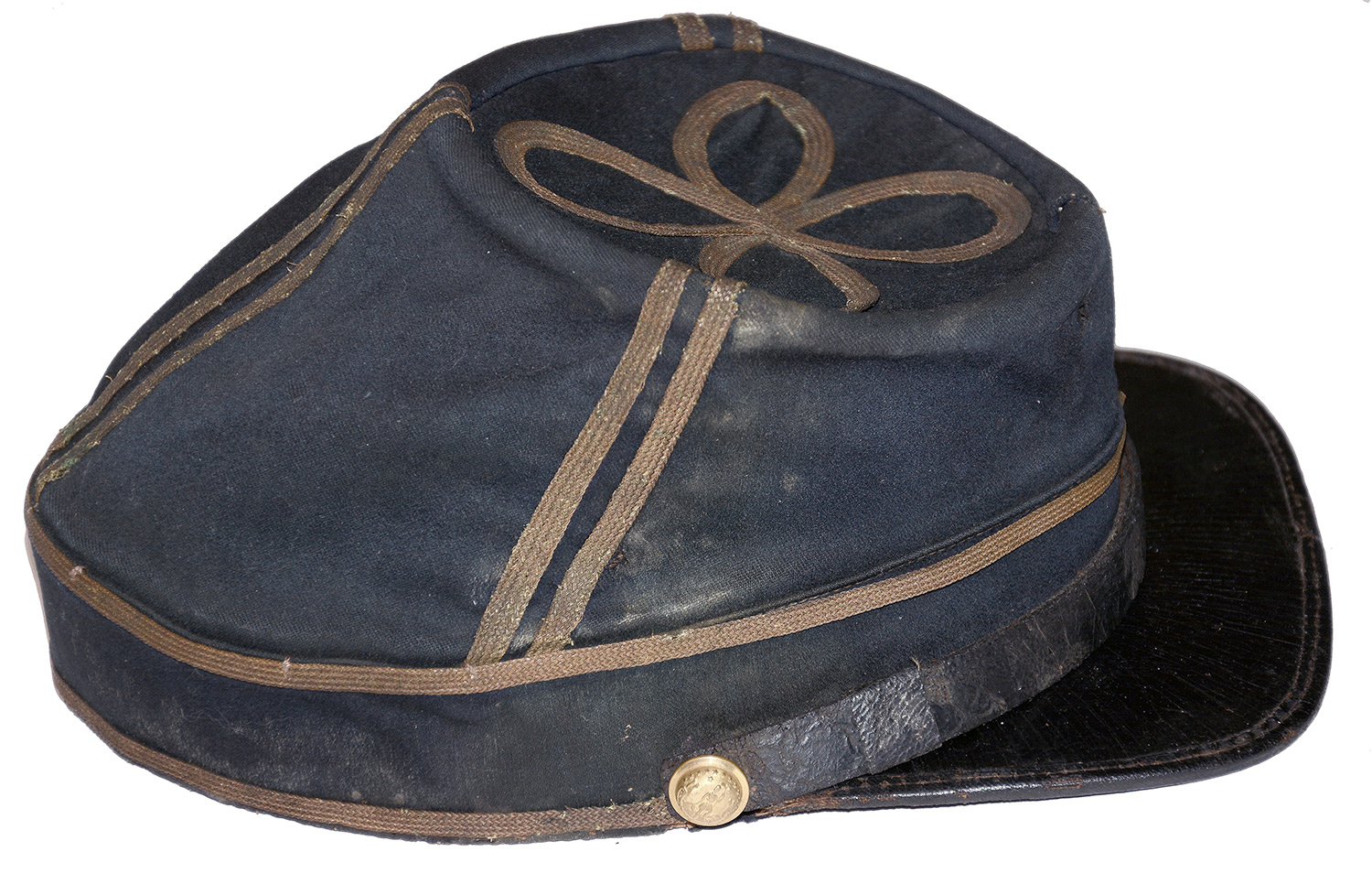
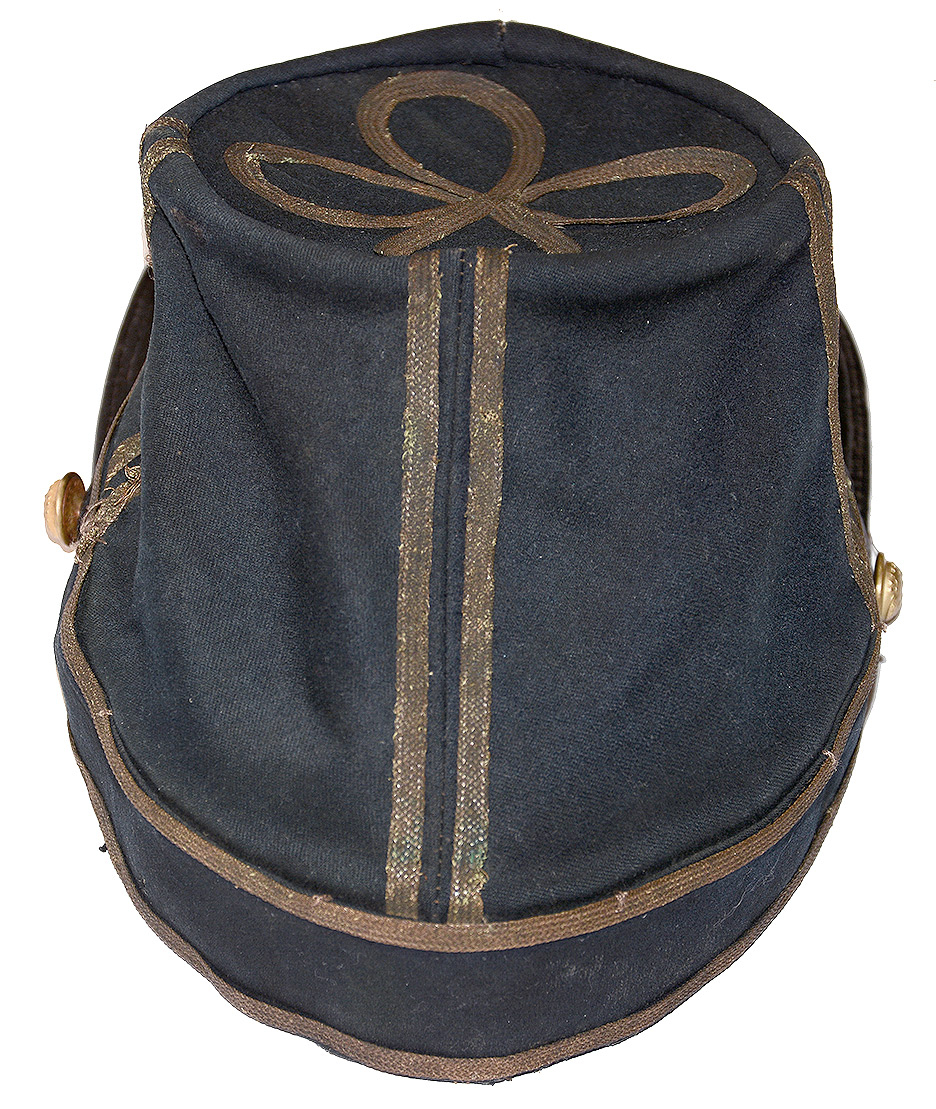
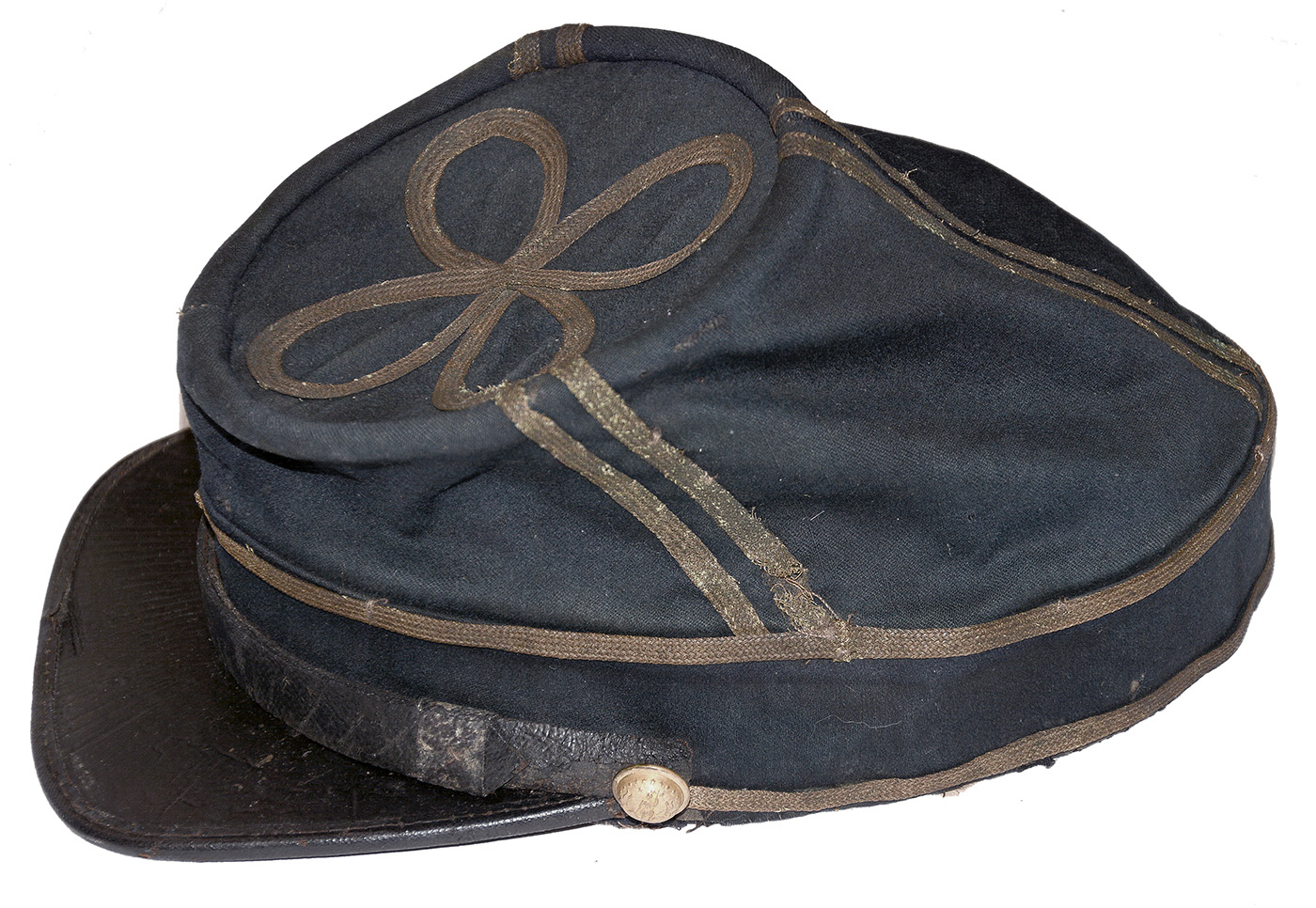
THE CAP: This is an early war Chasseur Style high crown kepi based on the Model of 1858. Originating in Virginia and made very early in the conflict it is the then accepted regulation color for both the Confederacy and the State of Virginia; that is, it is blue-black. Later in 1861 the ratified Confederate regulations allowed for the use of gray material but this was an expedient as a result of quality dye shortages; gray did soon become universally the norm. Never-the-less black or blue was the ideal for caps, particularly for staff officers, and was used, when available to the wars end. This cap rises to 3 1/2 inches in front and 6 inches up the back. It is both machine and hand sewn. The 1 3/4-inch-high separate base band, made of a middling quality broadcloth, on careful examination is a true black-blue while the separate crown section is more blue-black; the contrast now due to exposure is very subtle. The base band at top and bottom has flat fall gold braid with a principally metallic content. Running up the sides and rear of the cap is this same braid or tape but in pairs. On the top of the 4 1/2-inch diameter crown is this same metallic gold braid in a stylized but simple 4 loop "quatrefoil" design. This design, although rare, was used in the South during the war (Please see attached an ambrotype of a Georgia captain taken in 1862 with this exact pattern on his cap-compiler's collection.). The braid is all hand sewn in place and is 95% intact with a minor loss on the left side. The cap was made without vertical braid in the front because there was once a metallic stamped brass insignia of crossed cannons. Of this only a shallow impression and 4 tiny holes remain; its size was 2 inches by 1 1/2 inches.
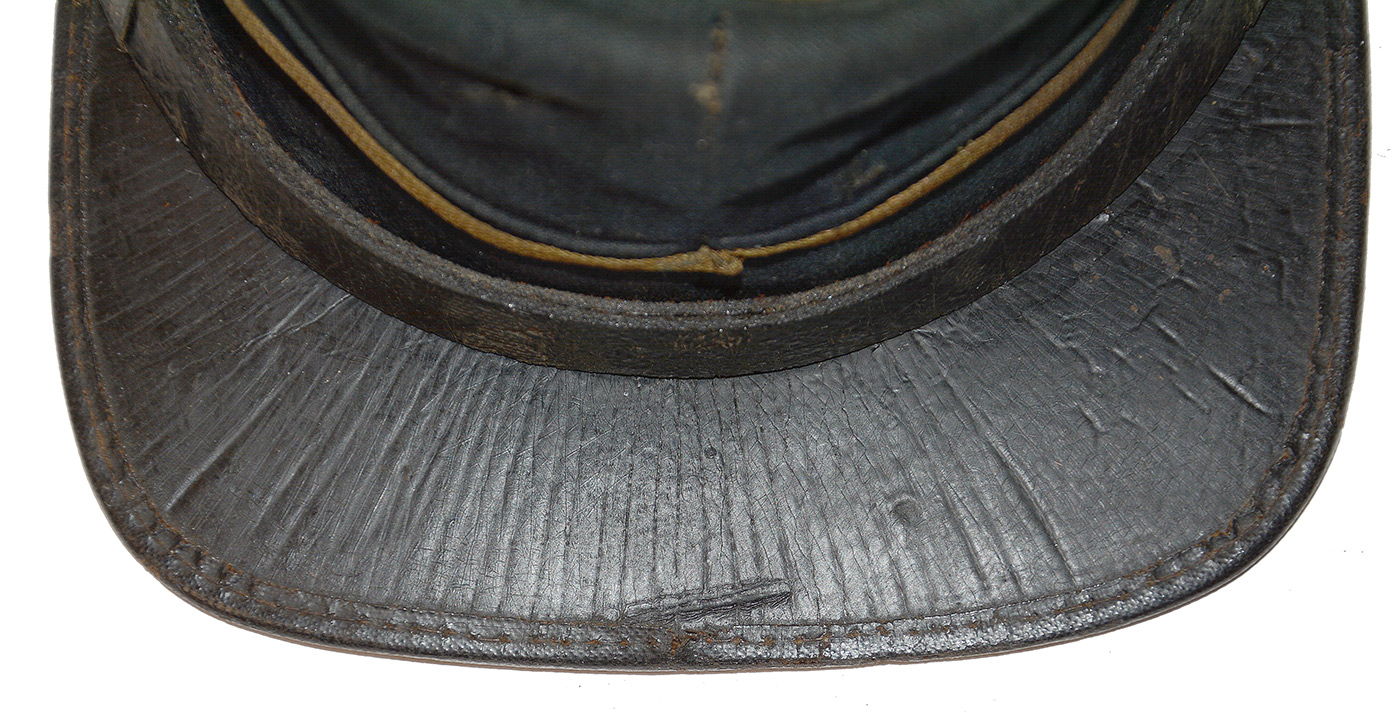
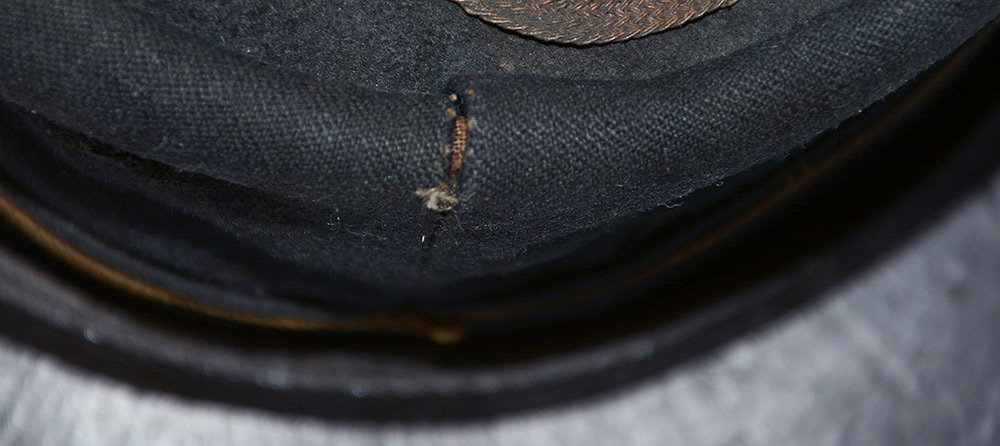
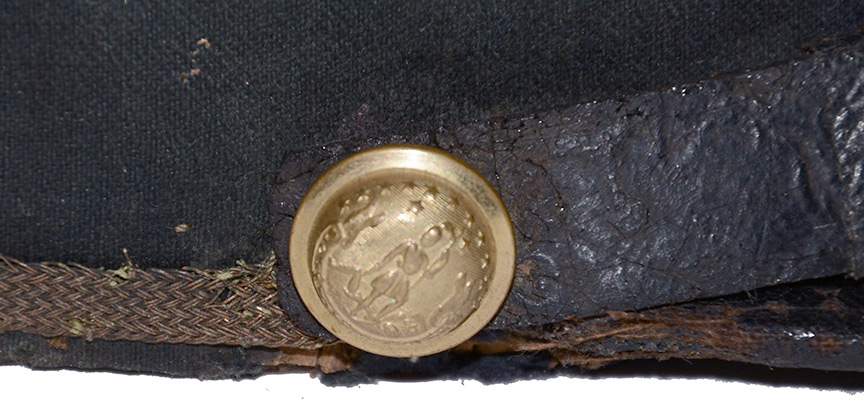
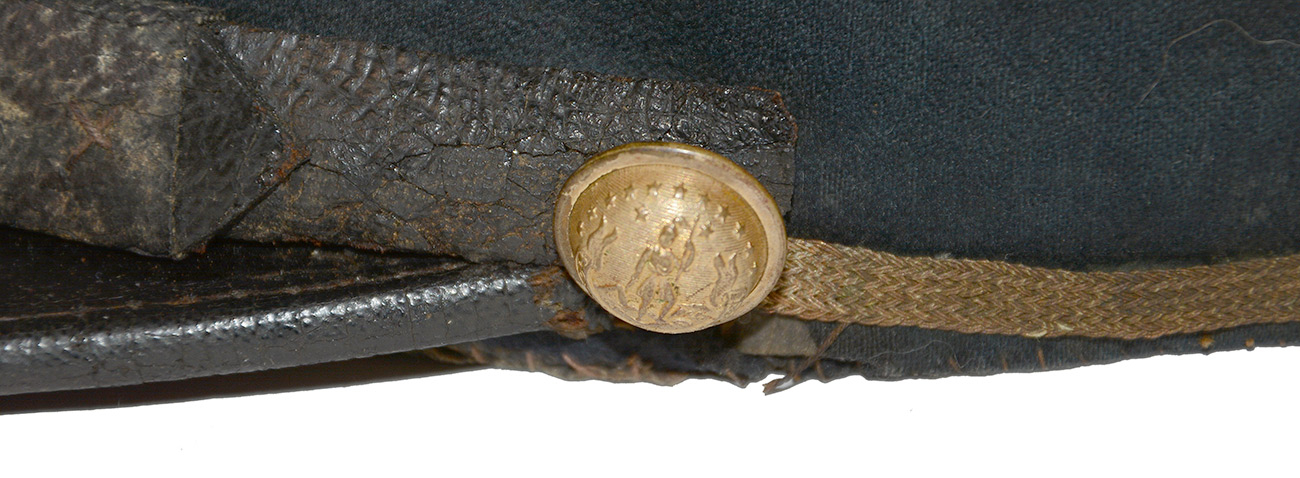
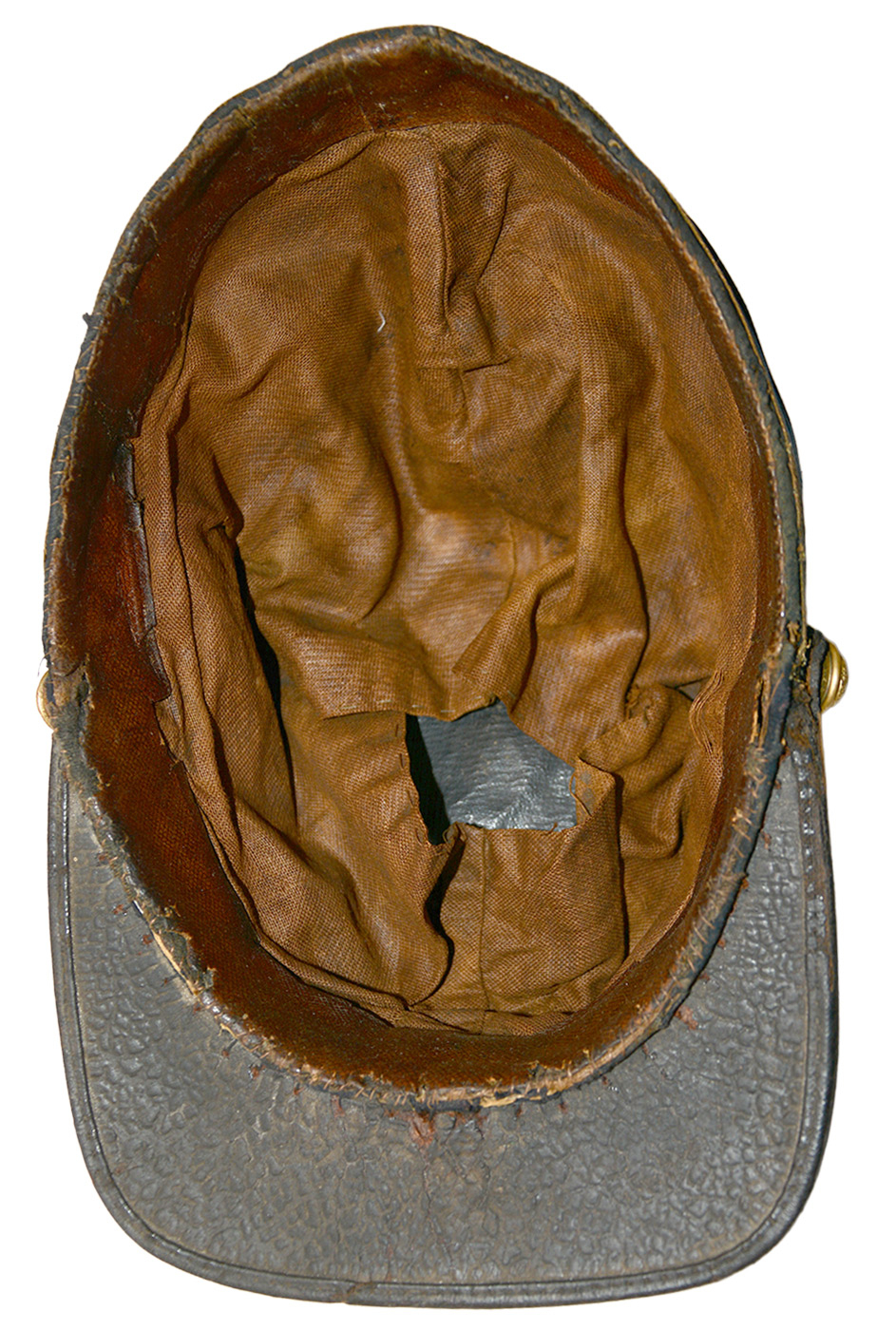
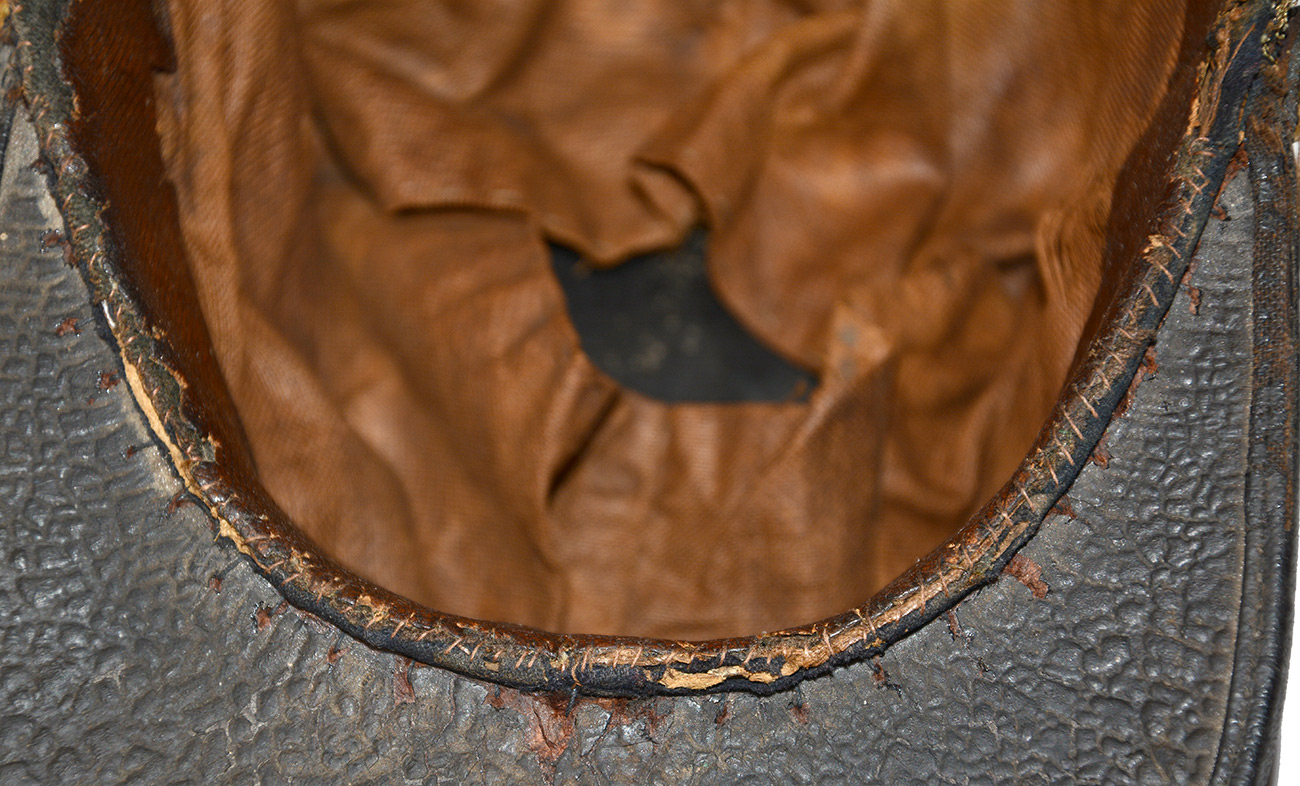
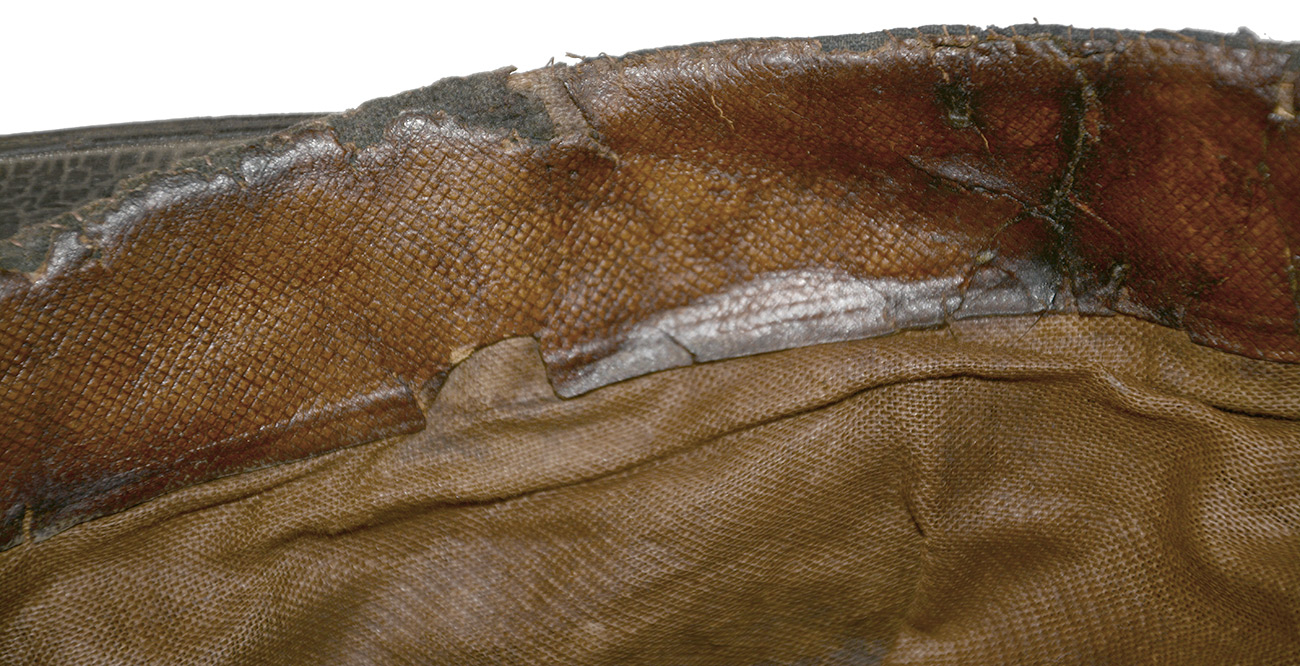
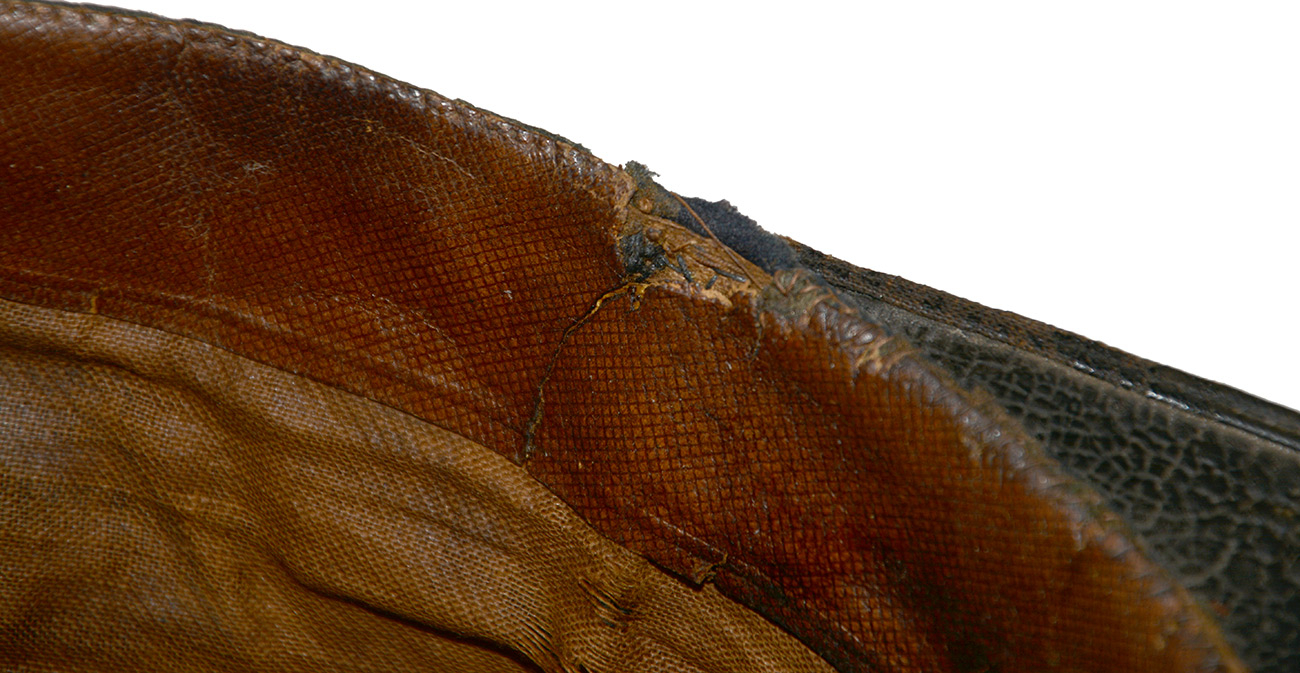
The peak or bill is 1 1/2 inches deep; it is Patent leather and bound with a hand sewn leather edging. The when the cap was still in the hands of the original family the visor was 2/3rds detached but was sewn back before it was sold. The same was true of the 2 Virginia State seal buttons (Tice 261A7), which are back marked "SCOVILL MF'G. CO. WATERBURY"; these are the original to this cap but were re-sewn by the Crisp family ancestor to prevent loss at the time of sale years ago. The cap's exterior shows not unsightly staining but is free of insect damage. The chinstrap is period civil war but was put on by our expert in house restorer; It is perfect and functional, and this is the only addition to this cap. The interior is excellent with the 1 1/2 inch sweat band hand whipped stitched into place and 95% intact. The leather is dry from age. A couple clean of tears have been stabilized, in back, by our restorer. The cap is lined with a cotton brown "bag" that was designed to be adjustable and other than the adjustment cord is 100% in place.
THE OWNER LIEUTENANT WILLIAM H. CRISP: Crisp was one of the founding members of Dixie Light Artillery also known as Captain W. H. Chapman's Company and Captain J. K. Booton's Company Virginia Light Artillery. His entry level was 1st Lieutenant "C" Company; this was late June 1861 and was at Luray, Page County, Virginia. Please click on this link (Dixie Artillery (Virginia). 1st Lieutenant Crisp served for approximately one year, but existing records show his last pay as May of 1862. Crisp was famous in the anti-bellum South. He was an entertainer and show business promoter whose residence was actually New Orleans. His wife was an equally famous lothario. Please view this link (Mr. W. H. Crisp, Lessee and manager of Crisp's gaiety, New Orleans; Savannah and Augusta, Georgia; Memphis and Nashville, Tennessee; Montgomery and Huntsville, Alabama; and manager of the Parodi grand Italian opera company. Mr. & Mrs. W. H. Cris | Library of Congress). Crisp his wife and son Charles Frederick Crisp (10th Virginia Infantry and later a US congressman) were in Virginia when the hostilities began; both father and his 16-year-old son joined the Confederate Virginia army. William H. Crisp at the expiration of his service, at the approximate age of 55, returned to show business in the Confederate South; a sort of Bob Hope. He died in Dallas Texas in 1874.
"William H. Crisp, widely known in his day. He was the father of Hon. Charles F. Crisp of Georgia, now one of the foremost candidates for the speakership of the national house of representatives. Charles F. Crisp is of English birth, and his parents were footlight favorites in the old country and this, years and years ago. His father was a tragedian of note in the zenith of his prosperity; his mother was a capable actress, and his sister was a sparkling soubrette. The family settled in one of the interior parishes of Louisiana back in the '60's and the old couple abandoned the stage for a while and conducted a hotel. From "Richard III" to Boniface in a country tavern was a big jump. Life grew irksome to the old man, and he longed to again trod the boards and receive the plaudits of the multitudes and the admiring gods in the gallery. The hotel was abandoned, a company was organized and the stars were Mr. and Mrs. Crisp and their accomplished daughter, who had been married and had separated from her husband. Eighteen years ago [ca. 1872] this winter, lovers of Shakespearean plays witnessed the performances given by the Crisp combination in Dallas, for the last time. The old man was taken sick, and, after lingering awhile, passed away at the old Crutchfield house, in this city. He was buried in the Akard street cemetery, and Hon. Charles Fred Tucker, then a young lawyer who had a slight acquaintance with the family in Louisiana, acted as one of the pallbearers.
Charles F. Crisp was then a young lawyer, just entering upon a promising career in Georgia, and the old tragedian and members of his family often referred to him with pride. Dallas Daily Times Herald, November 15, 1890
Undertaker Ed C. Smith, referring to the special from Waco, which says that the mother of the late ex-Speaker Charles F. Crisp is buried in that city, said: "The father of the late speaker died in Dallas in 1873, and was buried in the old city cemetery. Several years ago, Mr. Crisp wished to erect a monument over his father, but the grave had been so long neglected, that it could not be found, and it has not, to this day, been located. The elder Crisp's initials were W.H. He and his wife ran the Crisp Dramatic Company, and Charles F., who was then young, a youth, was an actor in the company. They played heavy pieces; Macbeth was one of them, I remember. While they were playing here, Mr. Crisp was taken sick. The company were stopping at the Crutchfield house, and Mr. Crisp occupied a room across the street over Connor & Walker's drug store, and it was in this room he died."
This is a great piece of Confederate headgear. It was worn by a true Southern Patriot and one of the first in Virginia to take up arms. The condition is far better than 99% of what we see offered for sale today. With it comes a three-page letter of positive examination by one of this country's foremost uniform experts and a COA from Wes Small of the Horse Soldier dated from 2010. Also, other earlier emails supporting the direct association to the Crisp family. [pe][ph:L]
~~~~~~~~~~~~~~~~~~~~~~~~~~~~~~~~~~~
THIS ITEM, AS WITH ALL OTHER ITEMS AVAILABLE ON OUR WEB SITE,
MAY BE PURCHASED THROUGH OUR LAYAWAY PROGRAM.
CLICK HERE FOR OUR POLICIES AND TERMS.
THANK YOU!
Inquire About MUSEUM QUALITY VIRGINIA CONFEDERATE OFFICER’S CAP
Most Popular
Historical Firearms Stolen From The National Civil War Museum In Harrisburg, Pa »
Theft From Gravesite Of Gen. John Reynolds »
Selection Of Unframed Prints By Don Troiani »
Fine Condition Brass Infantry Bugle Insignia »
Rare Identified 65Th Ny Sergeant’s Jacket, With Manscript Material: 1St U.s. Chasseurs »
featured item
RARE INSPECTOR MARKED REGULATION MODEL 1850 FOOT OFFICER’S SWORD BY AMES, ID’D TO 11TH US INFANTRY CAPTAIN & LATER BRIGADIER GENERAL JOHN W. AMES
This inspected regulation Model 1850 foot officer’s sword made by Ames. Overall the drawn sword meas. approx. 36.25” long from point to pommel. The blade itself measures 30.00” long with a 20.50” long stopped central fuller and a 15.50”… (2025-3342). Learn More »
site search