


site search
online catalog
C1800 BLACK SILK SHIRTWAIST BODICE & SKIRT
Hover to zoom

$275.00
Quantity Available: 1
Item Code: 1307-38
Shipping: Determined by Method & Location of buyer
To Order:
Call 717-334-0347,
Fax 717-334-5016, or E-mail
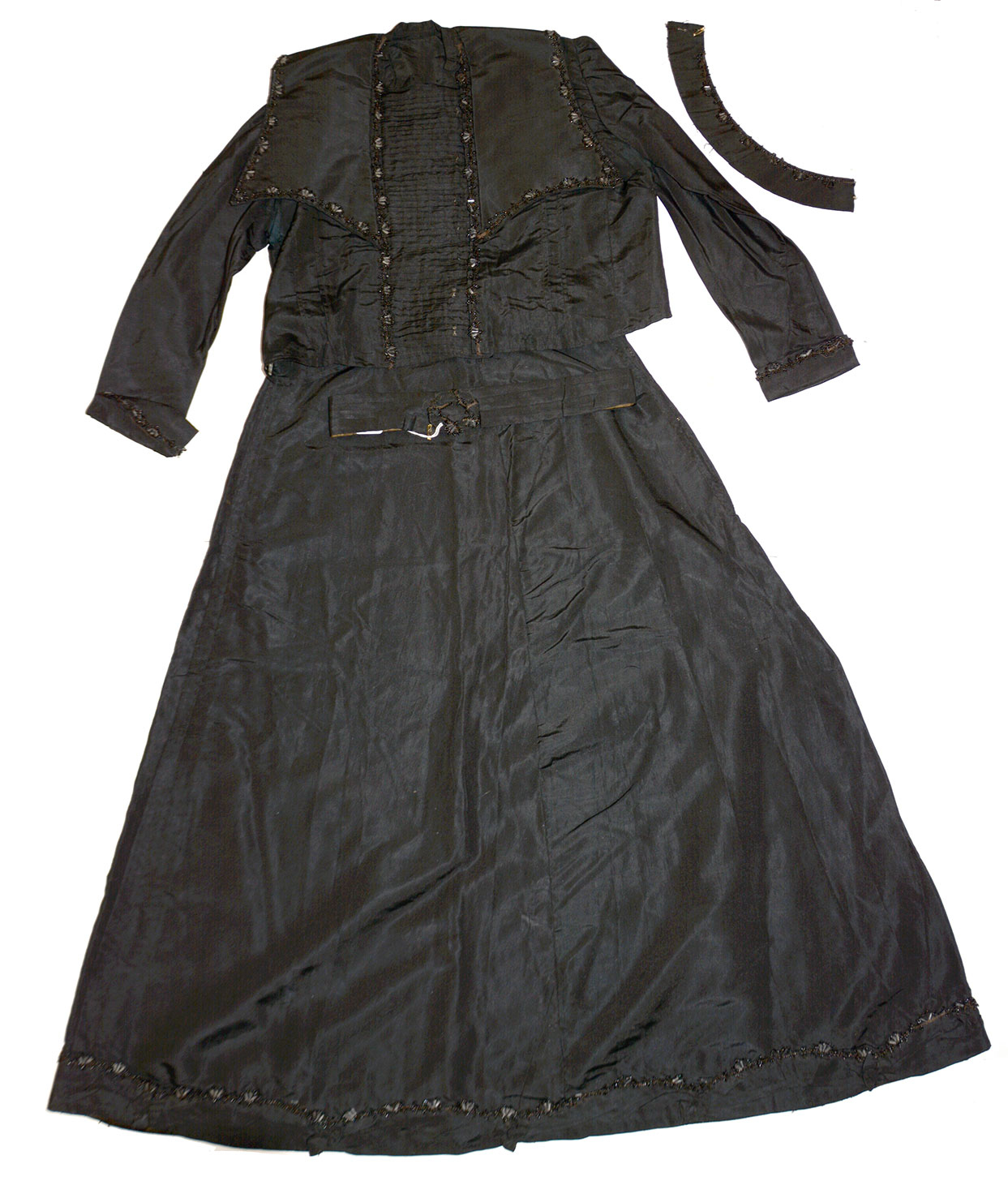
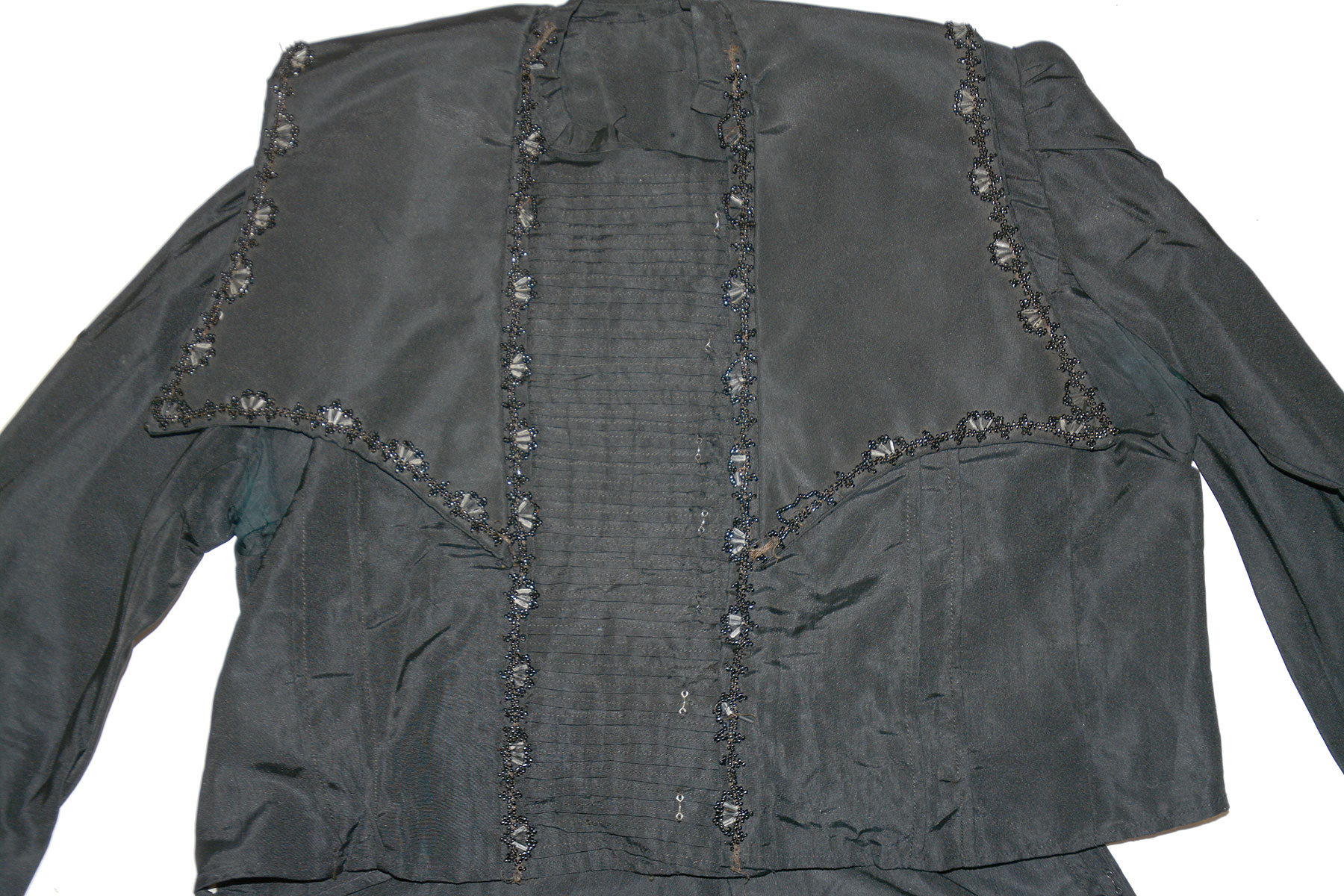
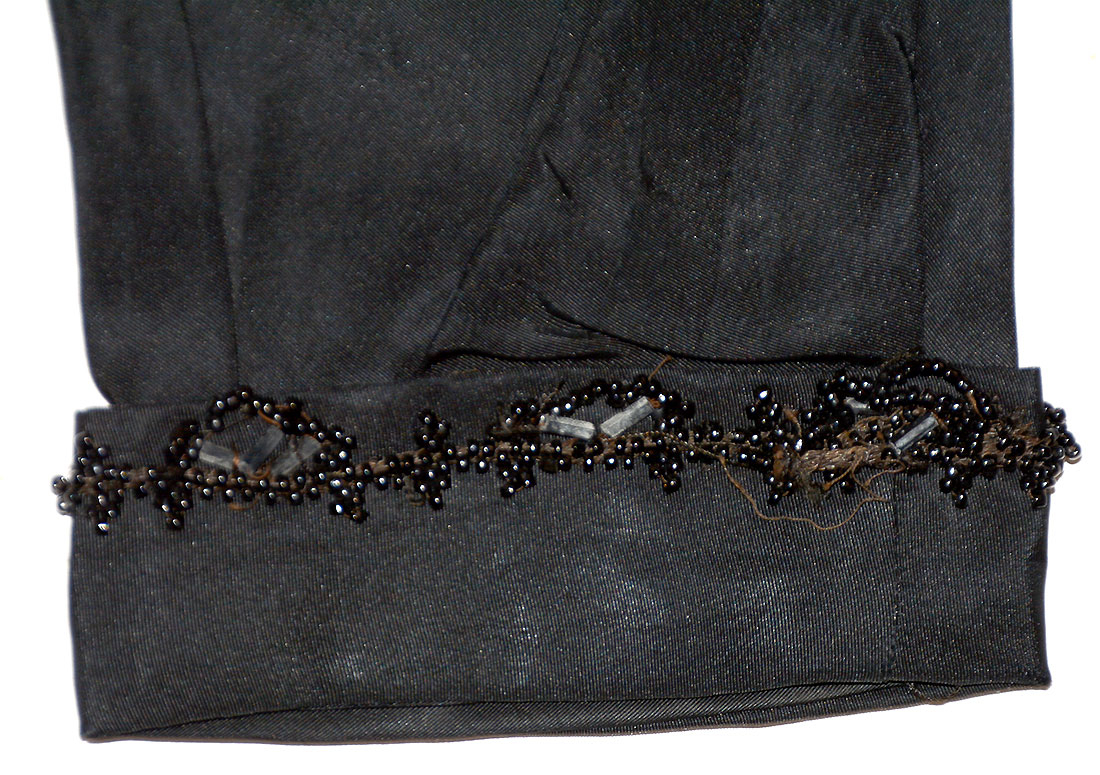
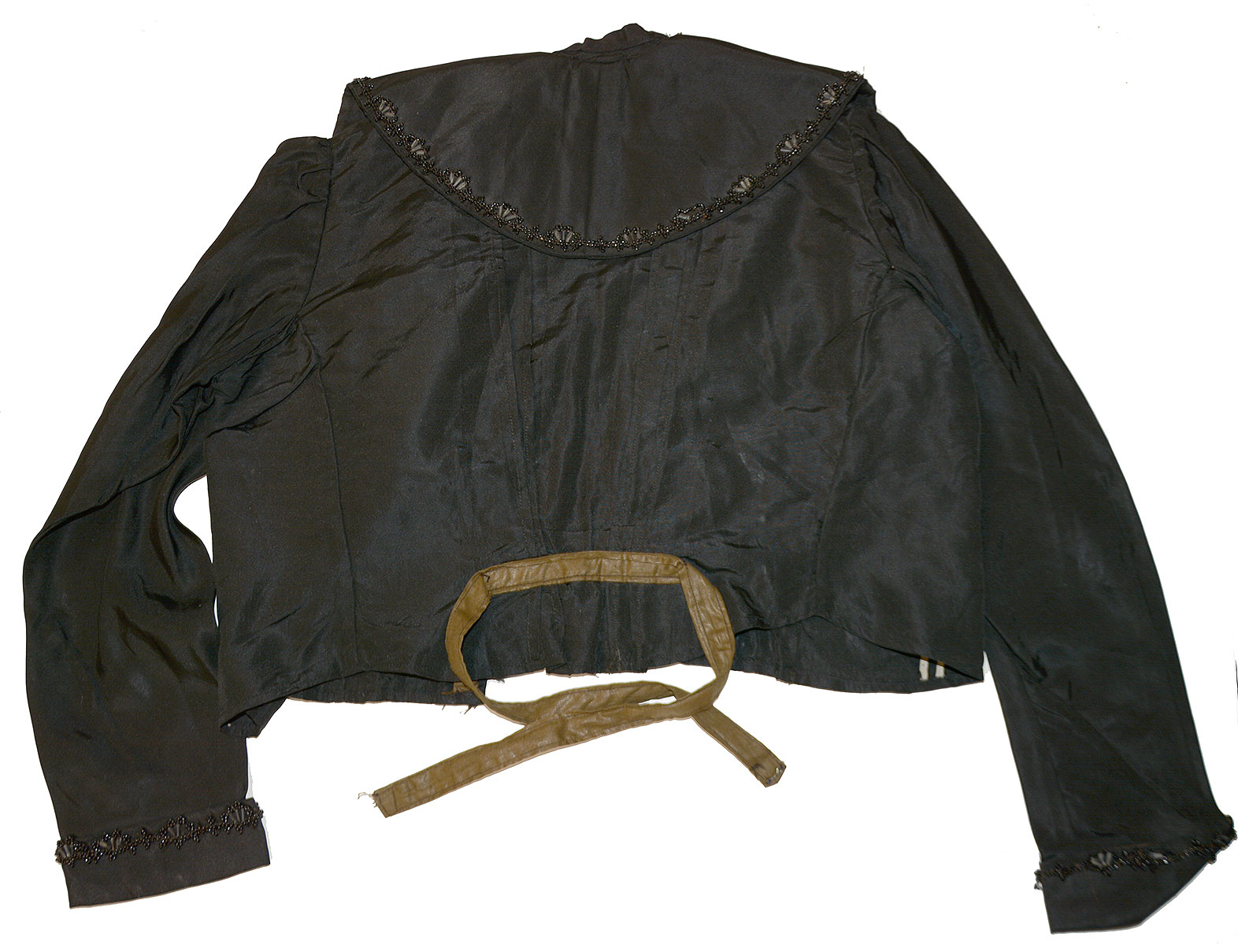
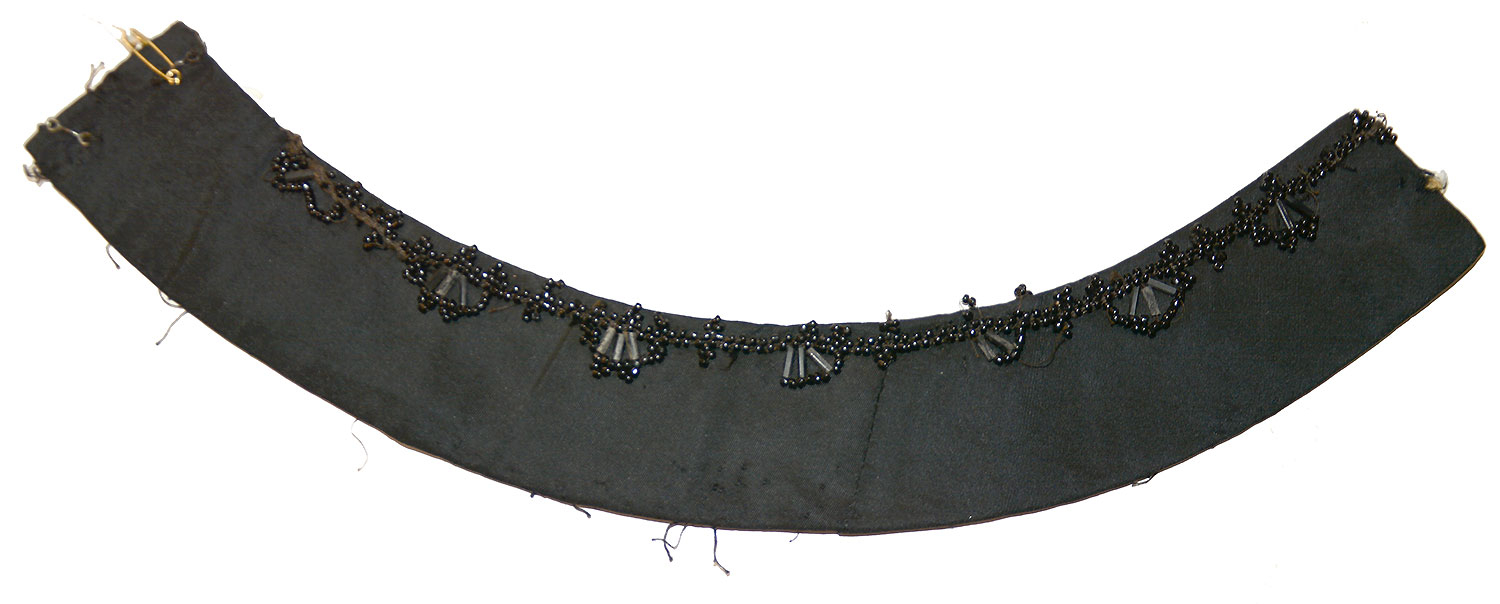
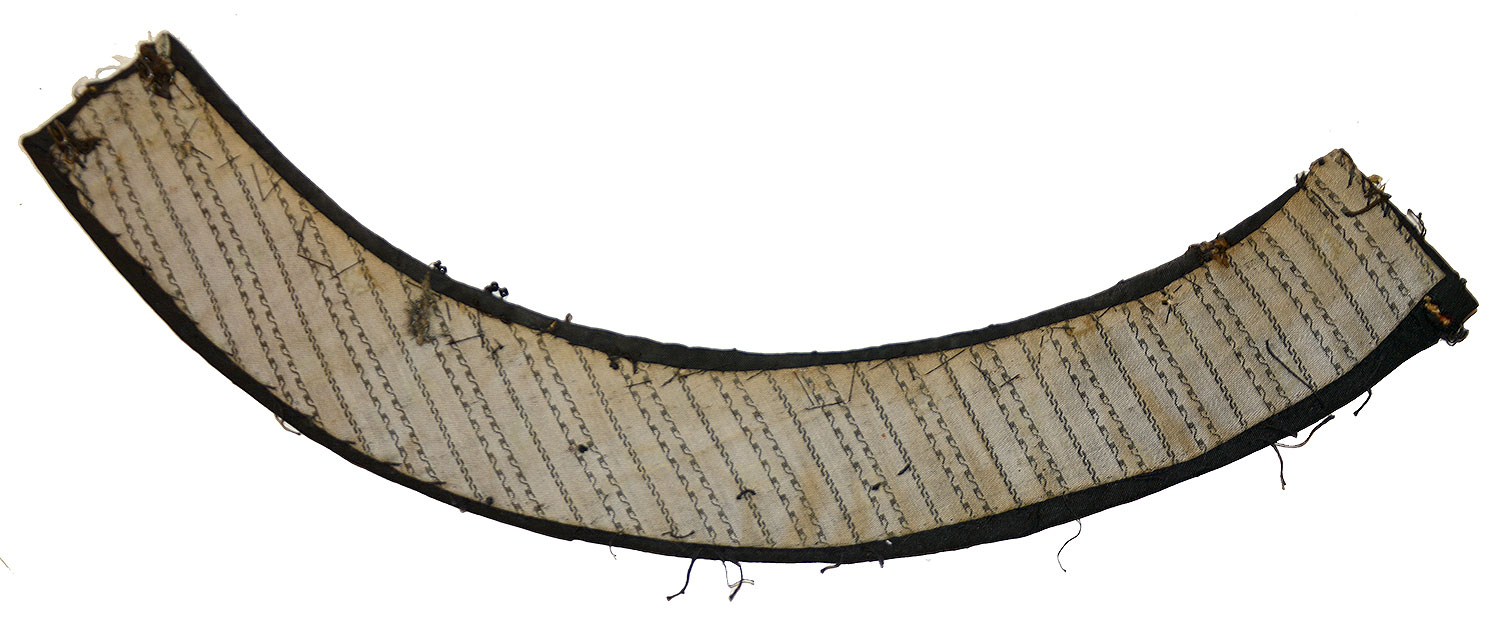
A black silk shirtwaist bodice and skirt, c.1900, from the Texas Civil War Museum. The bodice is styled with a blouson silhouette that is adjusted at the waist with a waist stay. The asymmetrical hook-and-eye opening frames a center panel of horizontally-pleated tucks. The large collar is round in the back with large squared lapels in the front. The long sleeves are puffed at the top and end in turned back cuffs. A trimming of round seed beads and rectangular bugle beads edges either side of the front panel, the collar and lapels, and the cuffs. A separate stiffened standing collar, also trimmed with the beadwork, has been unpicked from the bodice and could be reattached. The brown cotton waist stay is present.
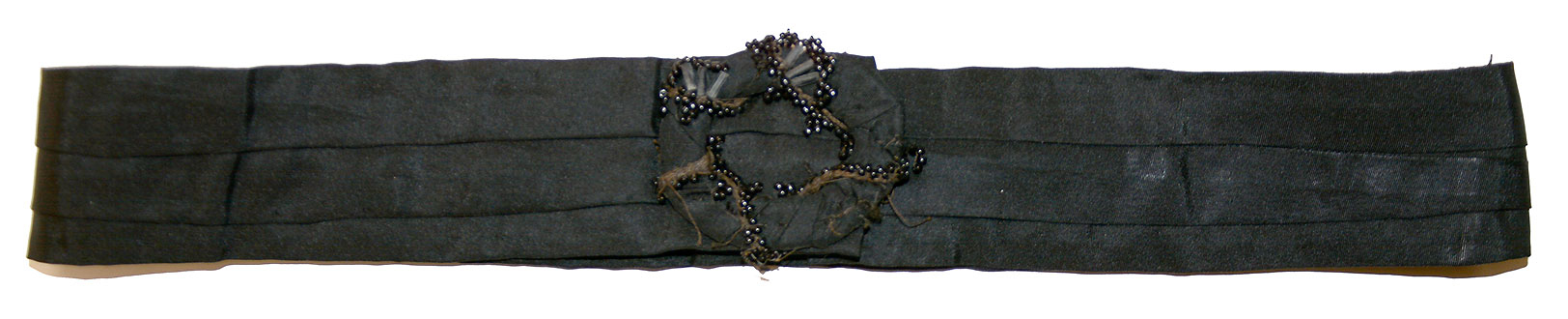
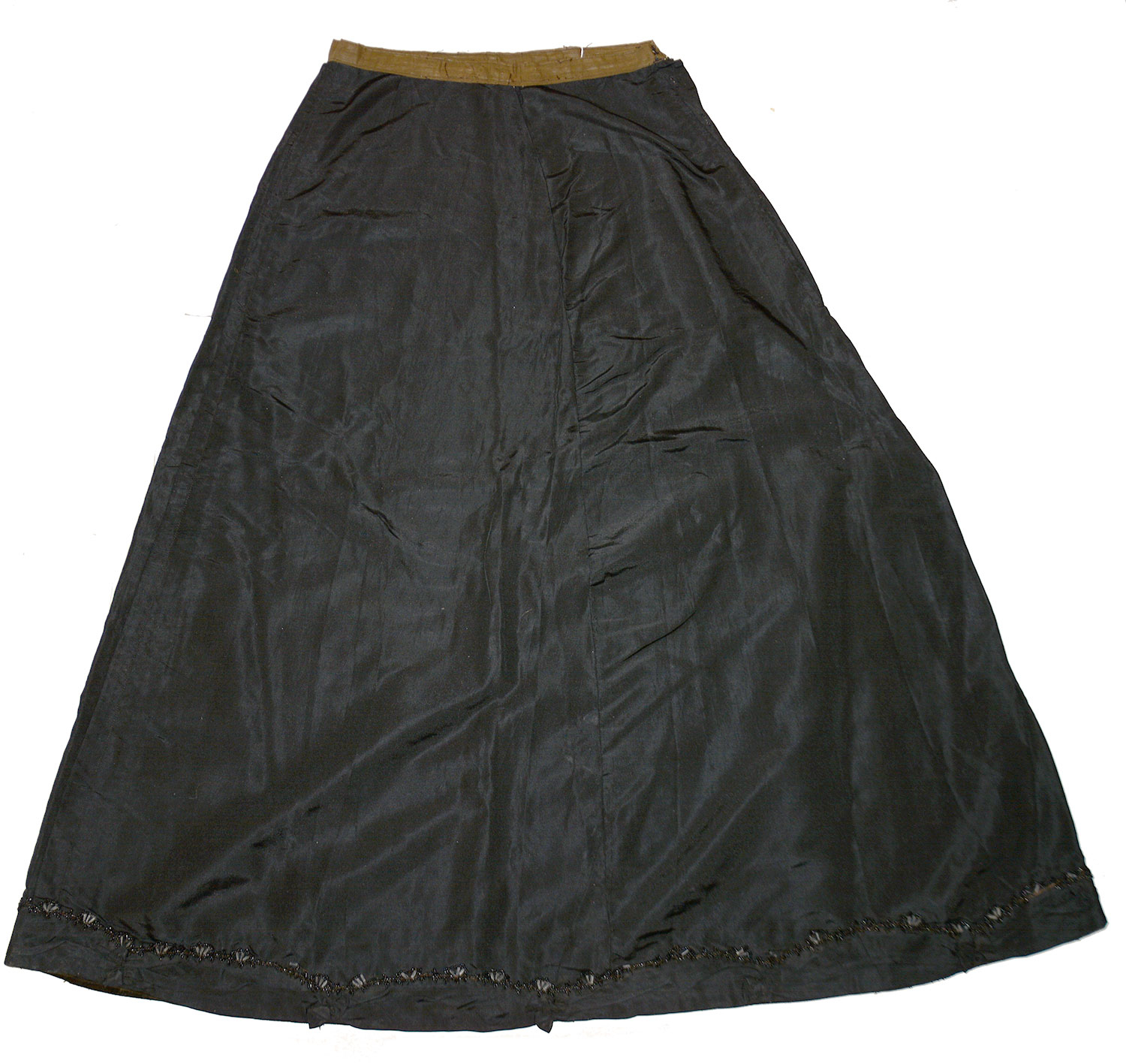
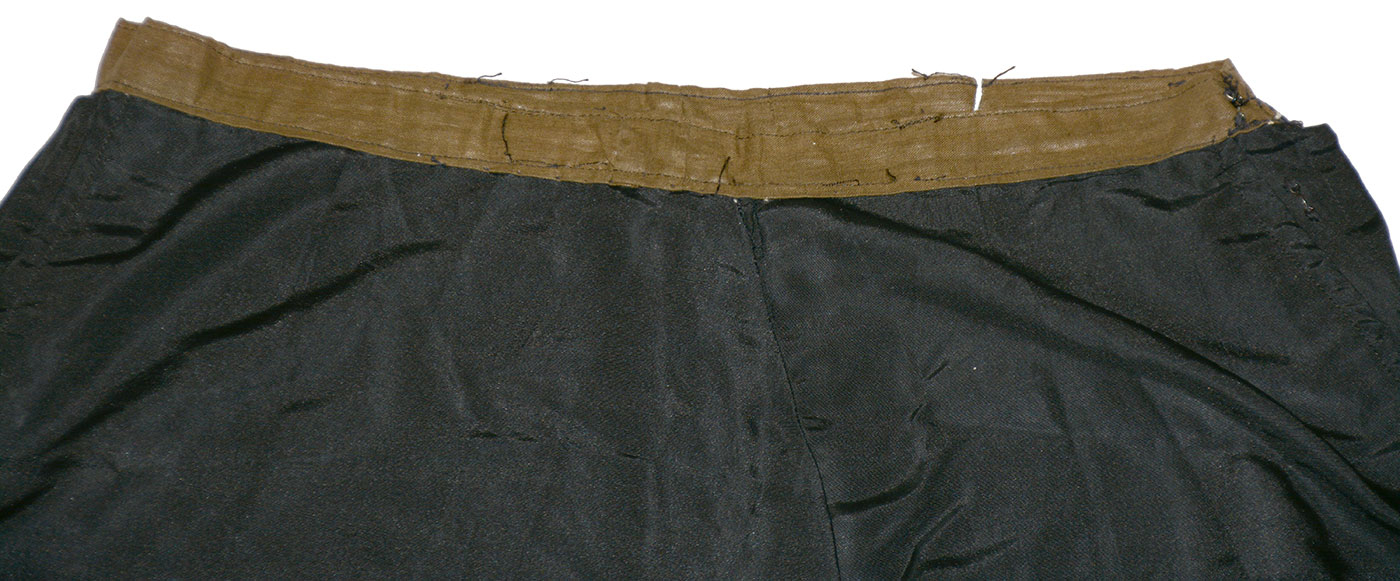
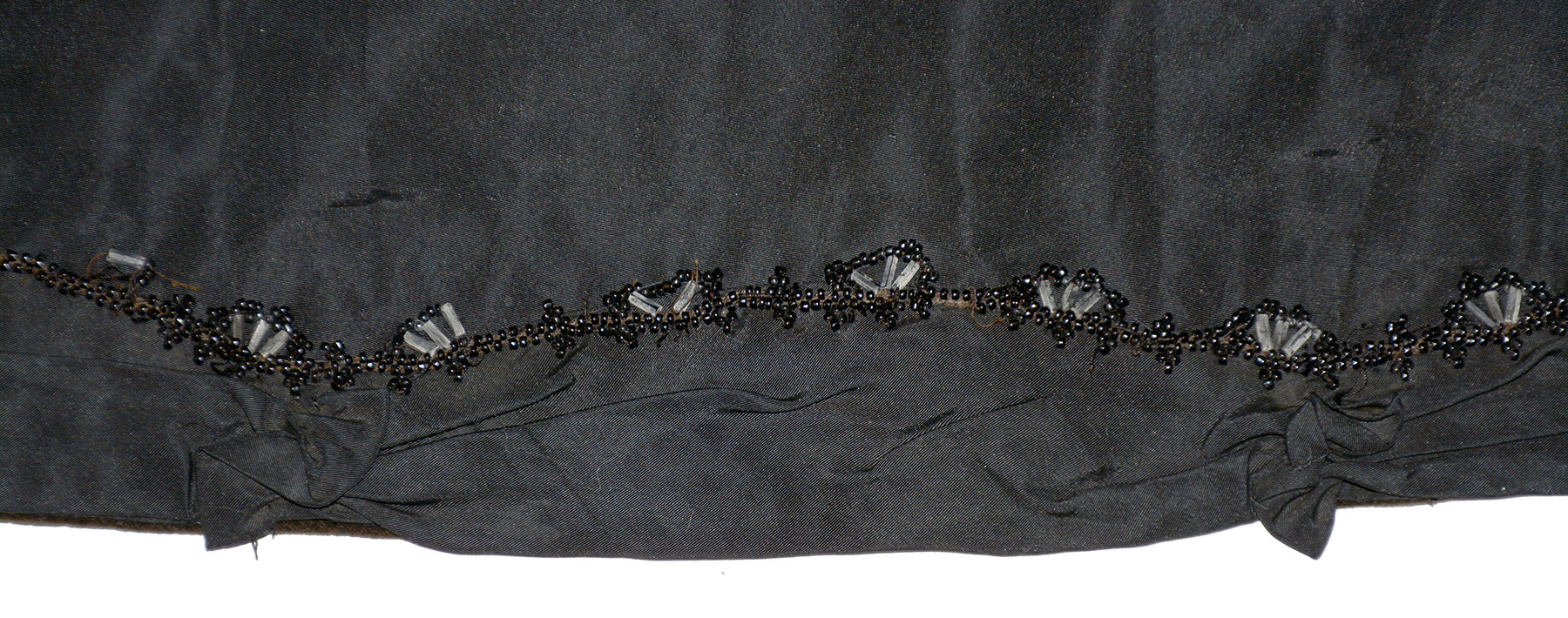
The gored skirt has a brown cotton waistband; a placket opening closes with several hooks-and-eyes. The bottom edge of the skirt a draped bias band of the silk taffeta, periodically folded into a shell motif. The same beaded trimming accentuates the top of the band. A separate silk belt is pleated lengthwise; an oval decorative buckle is covered in silk and beads. The belt closes with hooks-and-eyes.
Measurements: Bodice: Bust = 44", waist = maximum 40". Skirt: Waist = 28", length = 38". Belt = 29"
Condition: Good – Very Good. Silk taffeta is sturdy and lustrous. No visible rips or stains. Beading is intact. [cs][ph:L]
~~~~~~~~~~~~~~~~~~~~~~~~~~~~~~~~~~~
THIS ITEM, AS WITH ALL OTHER ITEMS AVAILABLE ON OUR WEB SITE,
MAY BE PURCHASED THROUGH OUR LAYAWAY PROGRAM.
CLICK HERE FOR OUR POLICIES AND TERMS.
THANK YOU!
Inquire About C1800 BLACK SILK SHIRTWAIST BODICE & SKIRT
Most Popular
Historical Firearms Stolen From The National Civil War Museum In Harrisburg, Pa »
Theft From Gravesite Of Gen. John Reynolds »
Selection Of Unframed Prints By Don Troiani »
Fine Condition Brass Infantry Bugle Insignia »
Rare Identified 65Th Ny Sergeant’s Jacket, With Manscript Material: 1St U.s. Chasseurs »
featured item
PENNSYLVANIA INFANTRY AND CAVALRY SOLDIERS’ ARCHIVE FROM THE WALLACE FAMILY: SOLDIER LETTERS, ARMED TINTYPE, RARE BLAKESLEE CARTRIDGE BOX FOR THE SPENCER, ETC.
This grouping contains 25 camp letters from eight Pennsylvania soldiers, along with miscellaneous covers, and minor post-war pension correspondence: Benjamin Wallace, Co. “D”, 11th PA Cavalry (15) David Wallace, Co. “A”, 165th PA Volunteers /… (2026-485). Learn More »
site search