


site search
online catalog
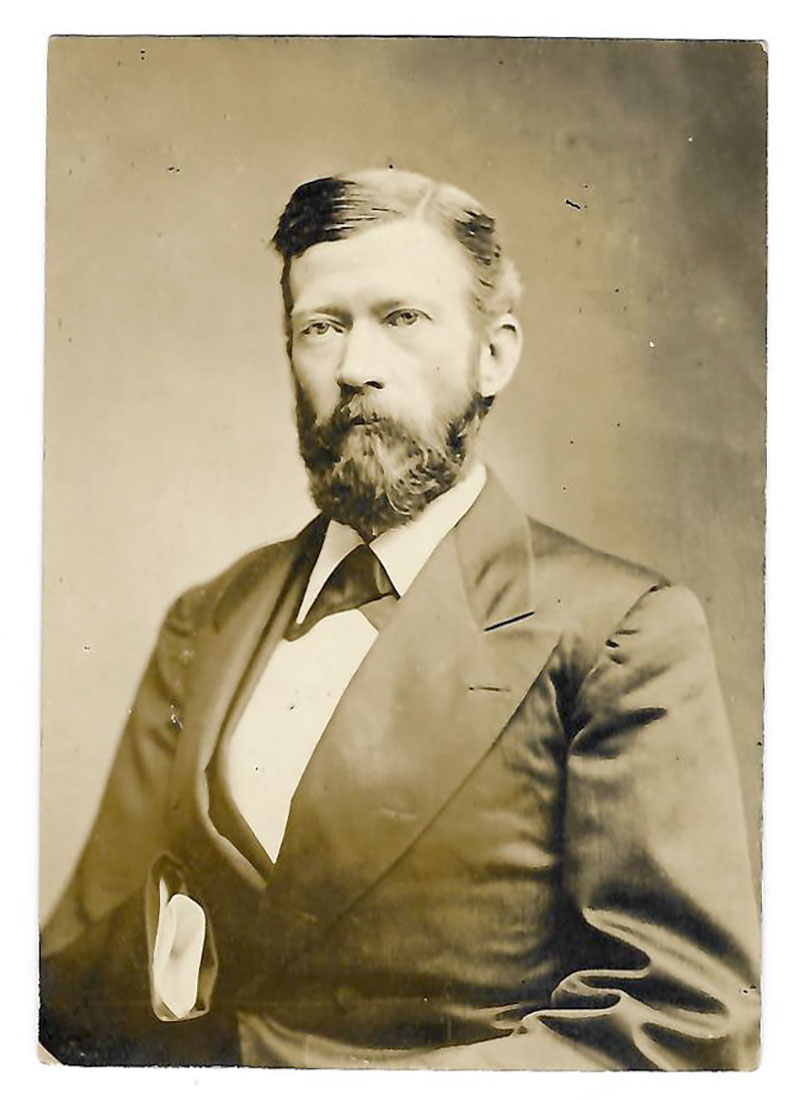
SILVER PRINT CIVILIAN VIEW OF CONFEDERATE GENERAL ROBERT DOAK LILLEY BY RICHMOND PHOTOGRAPHER, COOK & SONS
Hover to zoom
$75.00
Quantity Available: 1
Item Code: 1189-170
Shipping: Determined by Method & Location of buyer
To Order:
Call 717-334-0347,
Fax 717-334-5016, or E-mail
This image features a waist-up seated view of Robert Doak Lilley in civilian attire. The photograph measures approximately 4 by 6 inches.
Overall, the condition of this photograph is excellent. There are no chips, tears, or breaks to the image itself. The corners show minor wear.
Robert D. Lilley, born near Greenville, Virginia, came from a military family—his father was a militia colonel and inventor. After studying at Washington College, Lilley sold surveying instruments before joining the Confederate army in 1861 as captain of the Lee Rifles, which became part of the 25th Virginia Infantry. He fought in major battles, earning commendations at Cedar Mountain and the Second Battle of Bull Run, and led his regiment at Antietam. Rising through the ranks, he was promoted to major, then lieutenant colonel after Gettysburg, and briefly served as brigadier general. Lilley was wounded multiple times, lost an arm, and was captured but later rescued. He surrendered in 1865 and was paroled. After the war, he worked as a financial agent at Washington College (later Washington and Lee College). Lilley died in Richmond in 1886 and is buried in Staunton, Virginia.
This photograph is a lesser-known photograph type called a silver print, where silver halide is suspended in a gelatin emulsion. This emulsion coats the base and then a chemical wash is poured over the paper exposing the image. This image was produced from the original negative by the Cook Studio in Richmond sometime after 1880.
The Cook studio was owned by George S. Cook whose two sons, George LaGrange Cook and Heustis Cook, also worked as photographers. The father, George S. Cook, is famously known for taking the first combat images of ironclads firing on Ft. Moultrie in 1863. George S. was born in 1819 in Connecticut and moved south to Louisiana in 1839. From there, he moved several times (always remaining in the South), making money as a merchant and studying photography until he eventually wound up in Richmond in 1880, where he bought Anderson’s photography studio. This is where many of the original glass plate negatives came from to reproduce his photographs. The Cook studio also purchased other collections of negatives as well. [cla][ph:cla]
~~~~~~~~~~~~~~~~~~~~~~~~~~~~~~~~~~~
THIS ITEM, AS WITH ALL OTHER ITEMS AVAILABLE ON OUR WEB SITE,
MAY BE PURCHASED THROUGH OUR LAYAWAY PROGRAM.
CLICK HERE FOR OUR POLICIES AND TERMS.
THANK YOU!
Inquire About SILVER PRINT CIVILIAN VIEW OF CONFEDERATE GENERAL ROBERT DOAK LILLEY BY RICHMOND PHOTOGRAPHER, COOK & SONS
Most Popular
Historical Firearms Stolen From The National Civil War Museum In Harrisburg, Pa »
Theft From Gravesite Of Gen. John Reynolds »
Selection Of Unframed Prints By Don Troiani »
Fine Condition Brass Infantry Bugle Insignia »
Rare Identified 65Th Ny Sergeant’s Jacket, With Manscript Material: 1St U.s. Chasseurs »
featured item
RARE WAR OF 1812 SIMEON NORTH U.S. MODEL 1813 ARMY PISTOL
This is a very professional and very well done reconversion to flint of a very hard to find US military pistol, in strong condition, showing very good metal, sharp lock, proof and mating markings, and wood with generally good surface showing the… (431-69). Learn More »
site search