

site search
online catalog
RELIC CONDITION CONFEDERATE “KENANSVILLE” SABER BAYONET

Hover to zoom

$895.00 SOLD
Quantity Available: None
Item Code: 1309-200
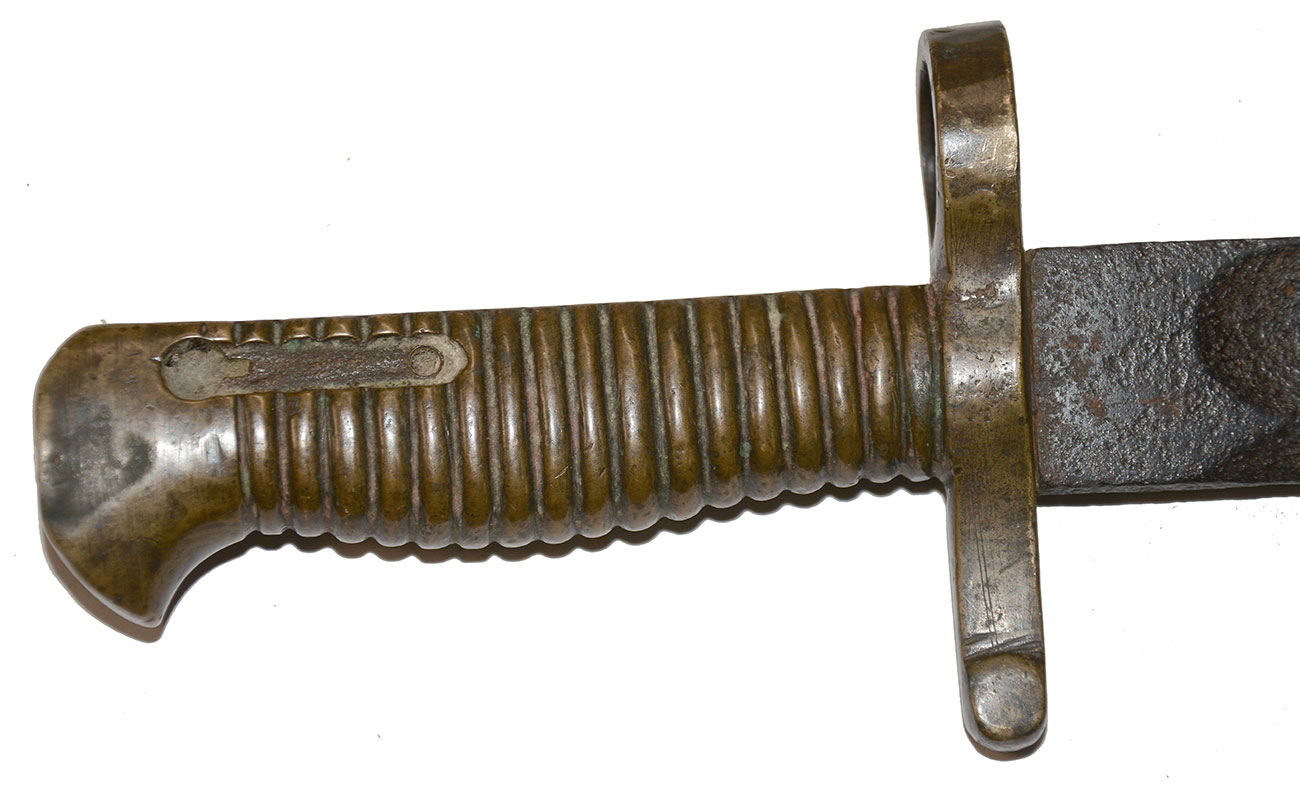
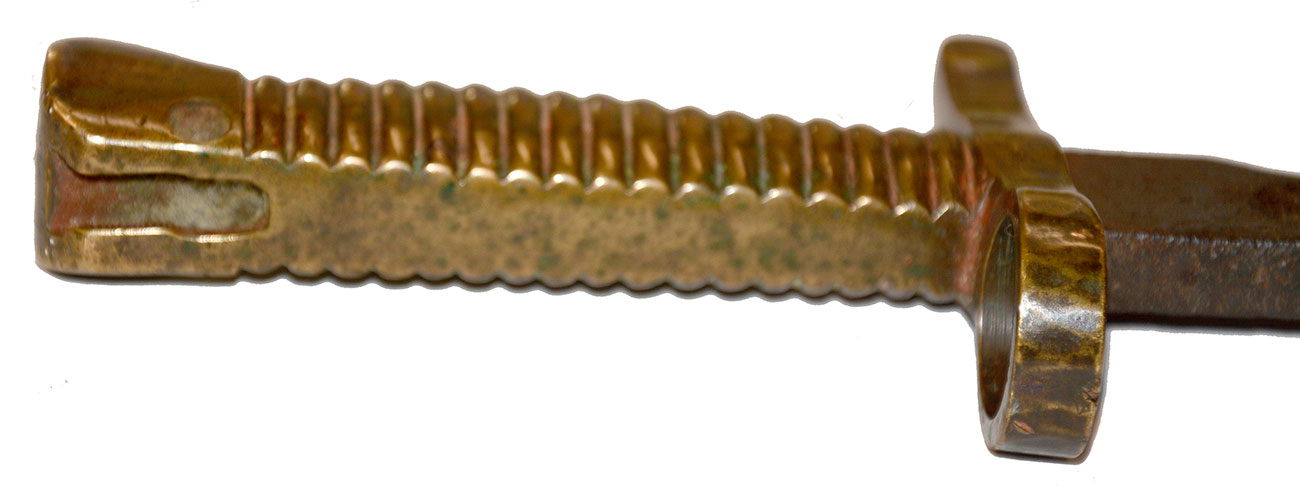
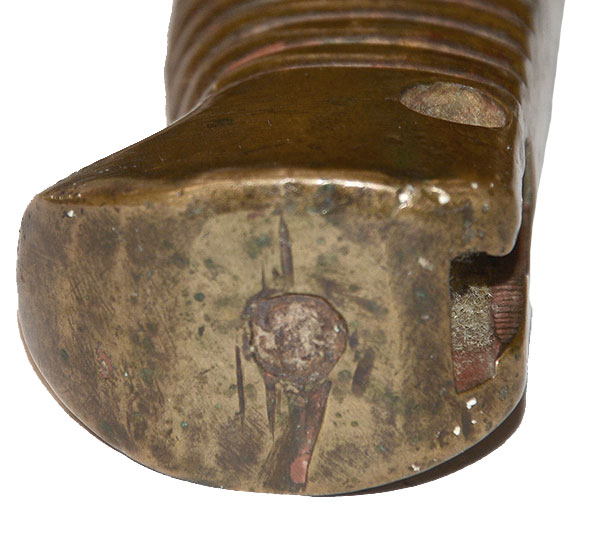
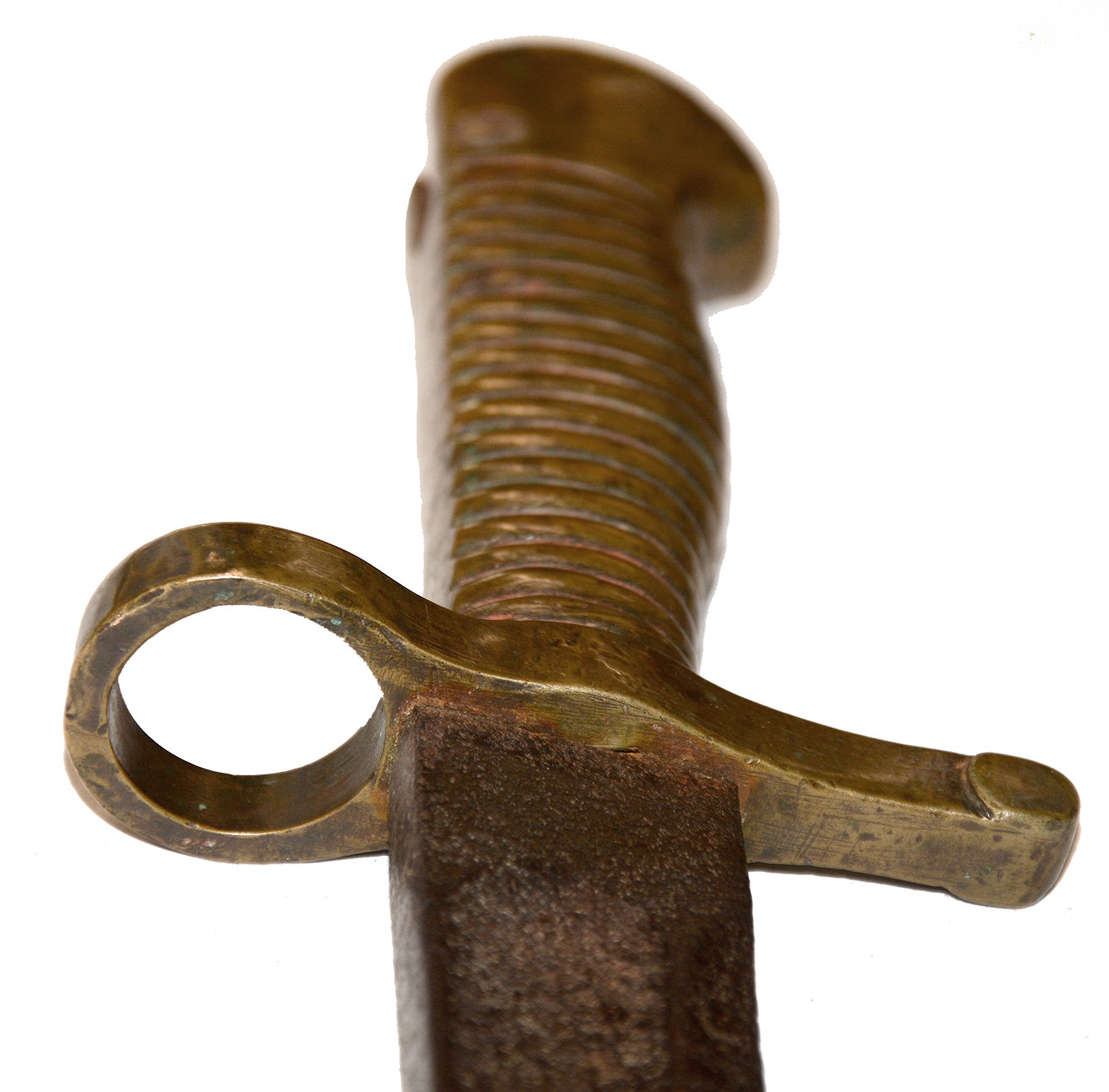
This rare edged weapon measures approximately 25 7/8” long overall with a 21 3/8” long unmarked yataghan blade having a stopped fuller. The cast brass hilt has a cross guard featuring a muzzle ring on top and small quillon on the bottom. This lower “arm” is somewhat crude and the raised dot decoration appears to be hand filed in. The grip has 17 raised ribs with a “bird’s head” pommel. The upper surface of the grip is flat with a short 1” deep key slot at the back. The locking spring and button are present and working. There are no visible stamps on the bayonet.
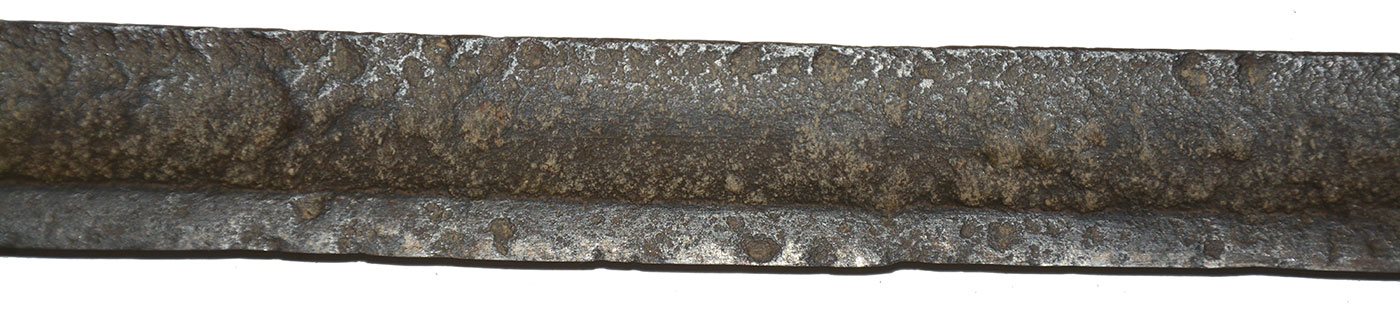
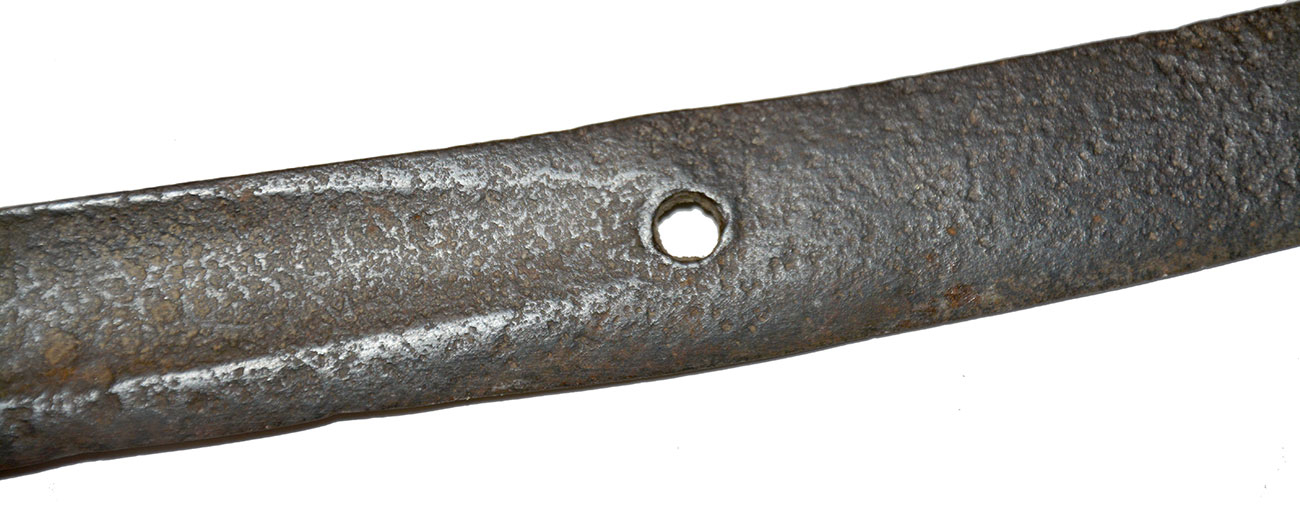
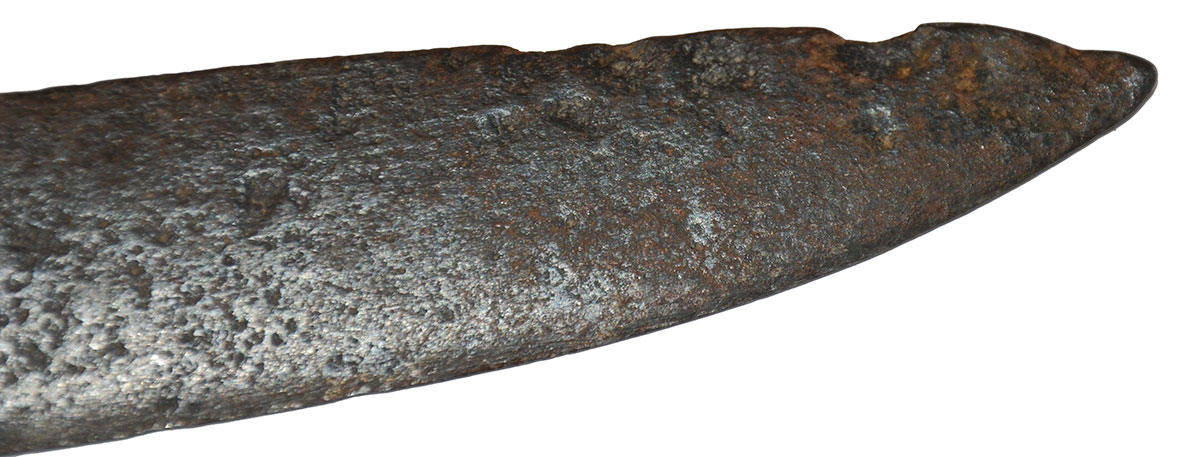
Condition is good considering the exposure to ground conditions. The blade is all dark brown and covered with areas of heavy pitting. The metal surface has smoothed out and has the appearance of being out of the ground for a long time. For some unknown reason, approximately 5 ¾” back from the blade tip, a hole was pierced through. The hole edges are raised and it appears to be heated and forged through with a punch, rather than drilled. A possible explanation could be a mounting on a relic board. The brass grip shows light wear to the “ribs” and numerous dings on the end of the pommel. The muzzle ring has several small dents around the outer surface, as if it was bent and straightened. The brass displays a fine mellow patina. The locking mechanism/ screw are all missing and seem to be intentionally removed. Recovery location is unknown.
Louis B. Froelich was born in Bavaria in 1817. By April or May of 1861, the Froelich family had found a new home in the Wilmington, NC area. After several business ventures, Froelich partnered with Hungarian immigrant Bela Estvan and by September of 1861 had established the Wilmington Sword Works. From their new premises the partners intended to produce a wide variety of edged weapons. In the fall of 1861, the company was renamed the Confederate States Arms Factory. By the end of the year, they received their first state contract to produce edged weapons for North Carolina troops. A yellow fever epidemic and a fire led Froelich move and rebuild in Kenansville, NC. Although plagued with adversity, Froelich managed to keep the factory operational and turning out arms and accouterments until March of 1865, when this region of North Carolina was occupied by Union forces. After the war Froelich changed occupations where he and his family established a successful business growing grapes and a variety of fruit and nut trees. Froelich died of tuberculosis on October 27, 1873. Despite his setbacks and two major fires, Froelich managed to keep his manufactory in business through most of the war and was likely the most successful of the Confederate edged weapons makers of the American Civil War. [stp] [ph:L]
~~~~~~~~~~~~~~~~~~~~~~~~~~~~~~~~~~~
THIS ITEM, AS WITH ALL OTHER ITEMS AVAILABLE ON OUR WEB SITE,
MAY BE PURCHASED THROUGH OUR LAYAWAY PROGRAM.
CLICK HERE FOR OUR POLICIES AND TERMS.
THANK YOU!
Inquire About RELIC CONDITION CONFEDERATE “KENANSVILLE” SABER BAYONET
Most Popular
Historical Firearms Stolen From The National Civil War Museum In Harrisburg, Pa »
Theft From Gravesite Of Gen. John Reynolds »
Selection Of Unframed Prints By Don Troiani »
Fine Condition Brass Infantry Bugle Insignia »
featured item
CONFEDERATE CAVALRY CAPTAIN’S FROCK COAT OF CAPT. EDWARD BIRD, “EFFINGHAM HUSSARS,” 2nd BATTALION AND 5th REGIMENT GEORGIA CAVALRY
This rare, identified, Confederate cavalry captain’s frock coat belonged to an officer who served from 1861 though 1865, rising from Captain to Colonel, with extensive action especially in Wheeler’s cavalry corps fighting against Sherman in the… (1179-232). Learn More »
site search