


site search
online catalog
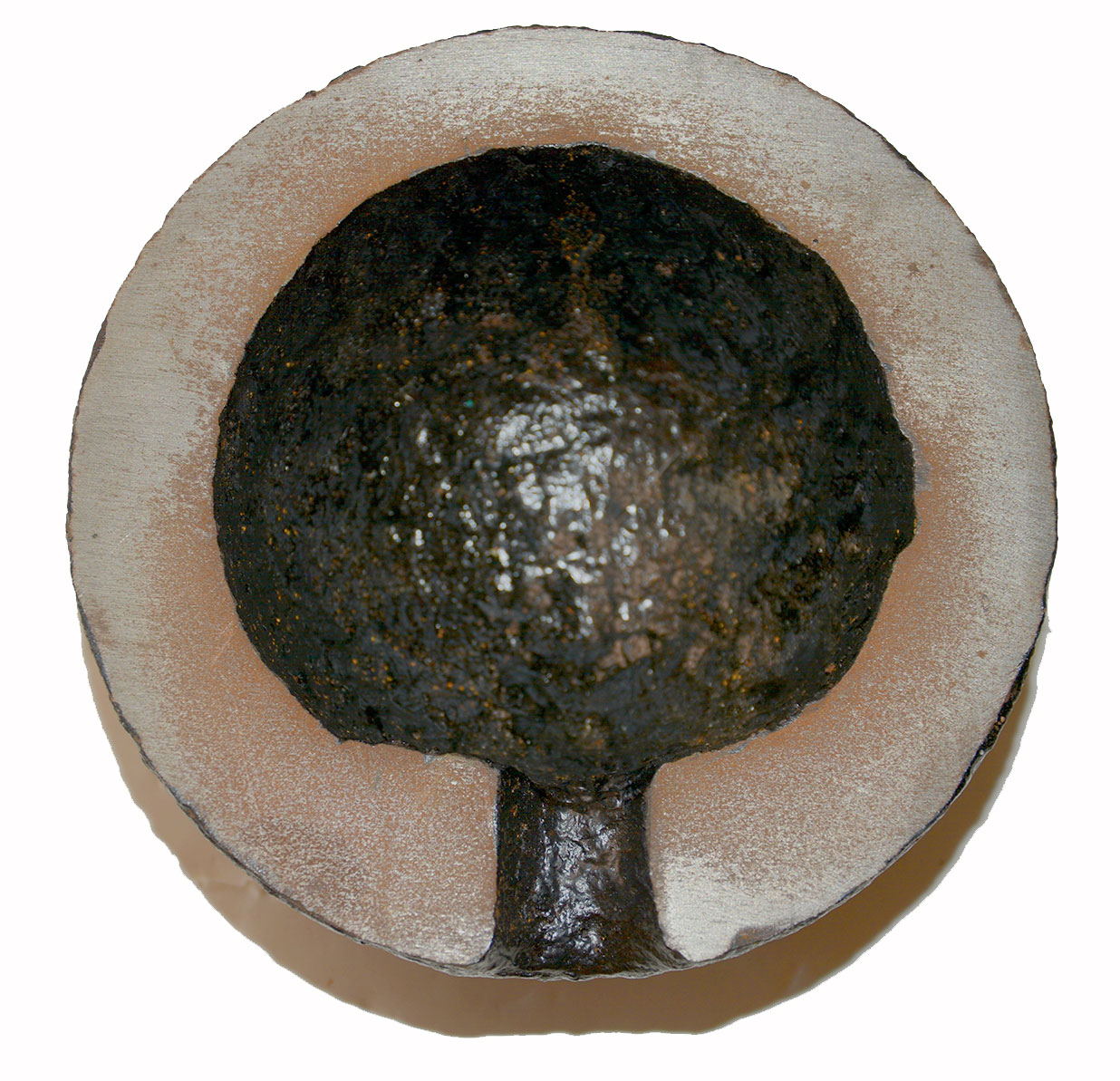
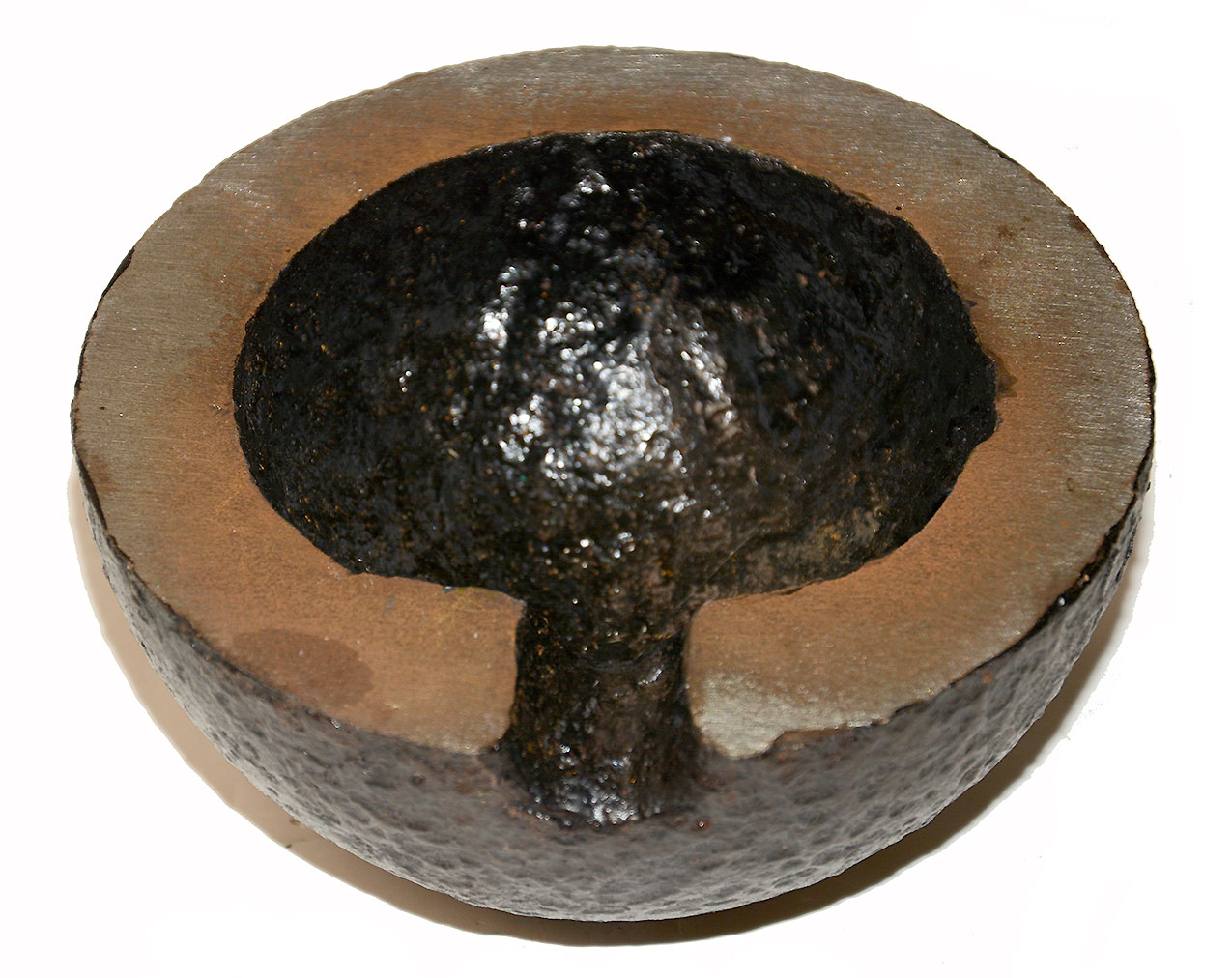
24-POUNDER COEHORN MORTAR SECTIONED SHELL
Hover to zoom
$250.00
Quantity Available: 1
Item Code: 844-212
Shipping: Determined by Method & Location of buyer
To Order:
Call 717-334-0347,
Fax 717-334-5016, or E-mail
A very good example of a 24-pounder shell with 7/8” fuze hole, sectioned to show the powder chamber and fuze opening. Dickey & George (1993) p.51 discuss these shells, noting that the smaller 7/8” diameter opening for the wood-adaptor paper time fuze such as this one has, indicates it is for Coehorn mortar rather than a 24-pounder cannon, the shells for which used a 1-3/4” opening for the fuze. They also distinguish between CS and US versions by the presence or absence of “ears,” notches near the top for use of tongs in loading by Confederate artillerymen. We don’t see signs of any on this one. They also note that the Federal version comes from only 1864-65 VA sites, first appearing at Spottsylvania (May 1864.)
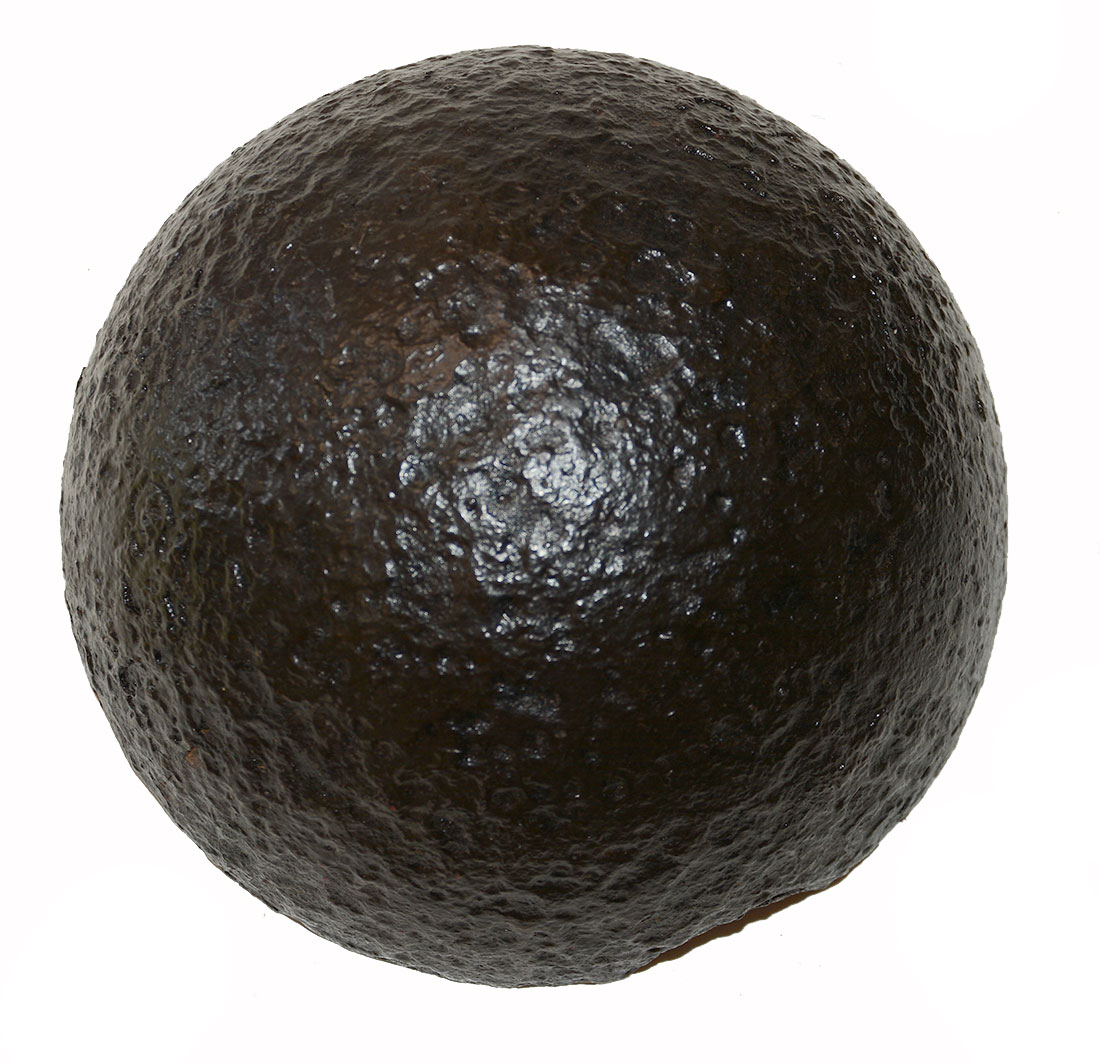
This exterior shows a fairly uniform shallow pitting and has been painted black to stabilize it and inhibit further corrosion. Coehorn mortars were intended to be rather mobile weapons that could be deployed for close work in lobbing high-trajectory shells into enemy field fortifications that became more common as the war progressed. [sr][ph:L]
~~~~~~~~~~~~~~~~~~~~~~~~~~~~~~~~~~~
THIS ITEM, AS WITH ALL OTHER ITEMS AVAILABLE ON OUR WEB SITE,
MAY BE PURCHASED THROUGH OUR LAYAWAY PROGRAM.
CLICK HERE FOR OUR POLICIES AND TERMS.
THANK YOU!
Inquire About 24-POUNDER COEHORN MORTAR SECTIONED SHELL
Most Popular
Historical Firearms Stolen From The National Civil War Museum In Harrisburg, Pa »
Theft From Gravesite Of Gen. John Reynolds »
Selection Of Unframed Prints By Don Troiani »
Fine Condition Brass Infantry Bugle Insignia »
Rare Identified 65Th Ny Sergeant’s Jacket, With Manscript Material: 1St U.s. Chasseurs »
featured item
SCARCE VIEW OF CONFEDERATE GENERAL THOMAS ROSSER FROM THE ALBUM OF R. CHANNING PRICE PRESENTED TO HIM BY JEB STUART
CDV is a full standing view of Thomas L. Rosser wearing a dark civilian frock coat with a white vest and dark cravat with matching white trousers. He holds his dark hat in his hand, just behind his waist. Rosser is posed in front of a painted… (846-497). Learn More »
site search