

site search
online catalog
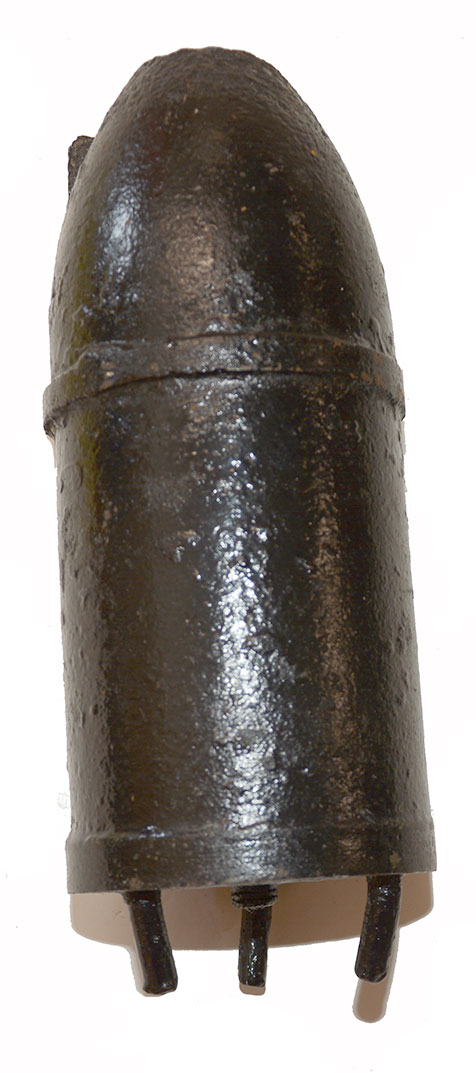
CS 3-INCH TENNESSEE PATTERN MULLANE SHELL
Hover to zoom
$425.00
Quantity Available: 1
Item Code: 2026-1292
Shipping: Determined by Method & Location of buyer
To Order:
Call 717-334-0347,
Fax 717-334-5016, or E-mail
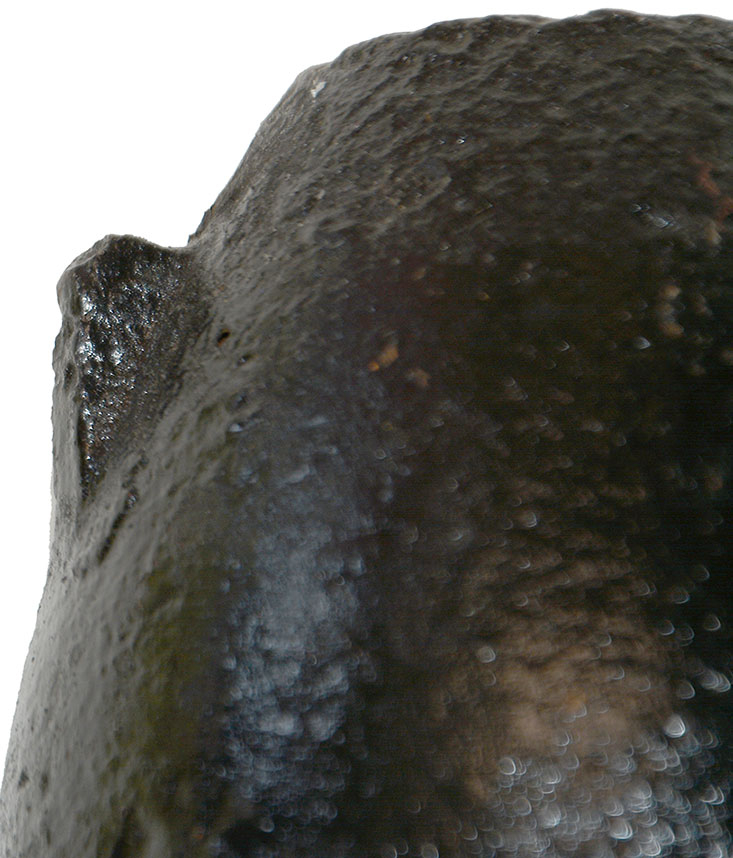
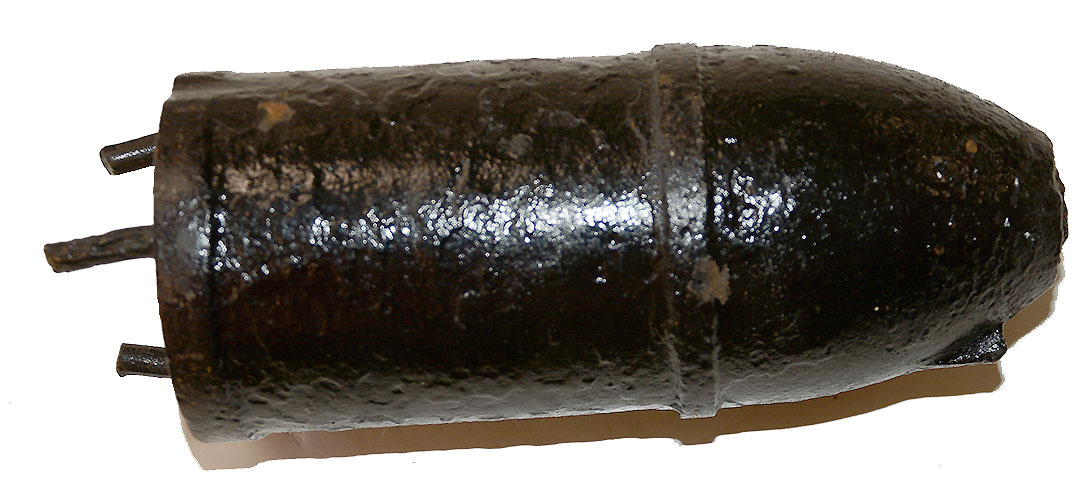
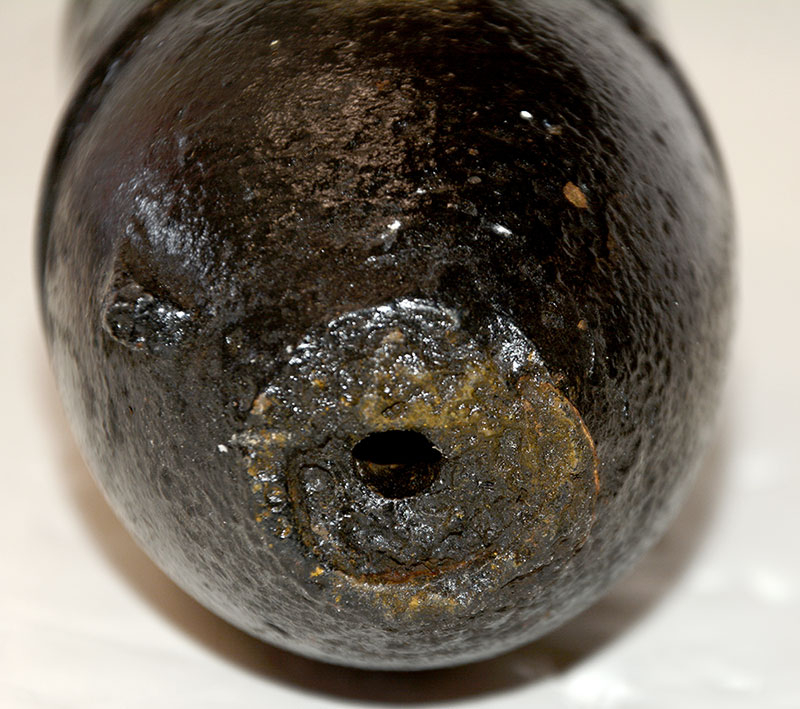
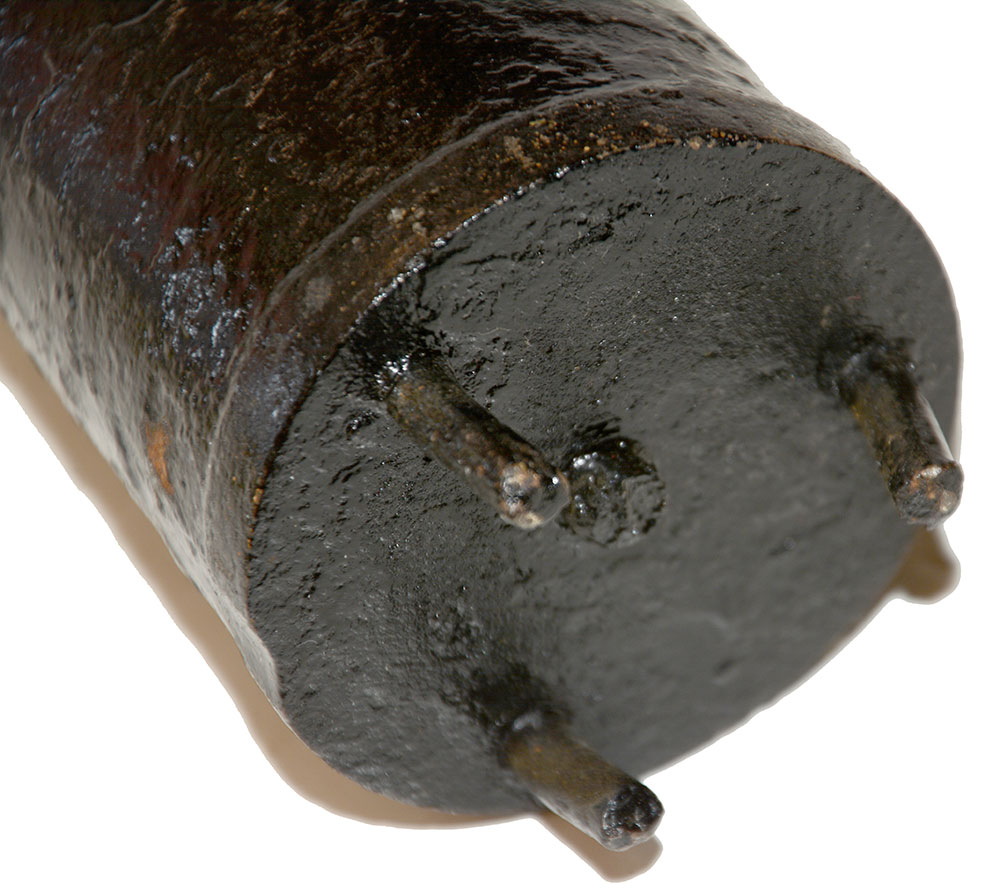
This is an excavated example of the Mullane shell for the 3-inch Ordnance Rifle that shows signs of being intentionally damaged before completion either to prevent it falling into Federal hands or being salvaged and used by Confederate forces. Versions of the Mullane, also known as the Tennessee shell, were in fact used in all theatres of the war through 1863 and into 1864. Their main feature is a separate cupped copper sabot attached to the base of the shell by a bolt and three rods extending from the bottom of the shell through holes in the sabot to cause the shell to rotate as the sabot expands and takes the rifling of the bore. To remedy the escape of gases through those holes in the sabot, the design was later reversed to use protrusions on the sabot to engage indentations on the bottom of the shell. Neither version seems to have been particularly successful. CS General E. Porter Alexander recalled the shell failed, “about three out of four times breaking its connection with the copper sabot, and it very frequently exploded in the gun; while of those which flew correctly, not one-fourth exploded at all.” Hardly a ringing endorsement. The result was that Read 3-inch rounds became the main projectile for CS 3-inch ordnance rifles.
In the final months of the war, however, the Mullane had a slight resurgence since its manufacture did not require a unified casting of the shell and sabot. This may date to that later period. The nose of the shell shows a flange on one side that would have been removed in final finishing. Further, the nose looks like it was intentionally broken across the fuze hole. Our best guess is that this comes from one of the Confederate arsenals and arms depots captured by US troops, where Confederate troops before pulling out tried to prevent usable weapons falling into Federal hands and Federal troops did their best to destroy or disable what they found to prevent it being salvaged and put into use against them. Sherman’s destruction of the arsenal at Milledgeville, GA, in November 1864 being a prime example of the latter, with arms meeting destruction by fire, by being dumped in the river, or perhaps both. [sr][ph:L]
~~~~~~~~~~~~~~~~~~~~~~~~~~~~~~~~~~~
THIS ITEM, AS WITH ALL OTHER ITEMS AVAILABLE ON OUR WEB SITE,
MAY BE PURCHASED THROUGH OUR LAYAWAY PROGRAM.
CLICK HERE FOR OUR POLICIES AND TERMS.
THANK YOU!
Inquire About CS 3-INCH TENNESSEE PATTERN MULLANE SHELL
Most Popular
Historical Firearms Stolen From The National Civil War Museum In Harrisburg, Pa »
Theft From Gravesite Of Gen. John Reynolds »
Selection Of Unframed Prints By Don Troiani »
Fine Condition Brass Infantry Bugle Insignia »
Rare Identified 65Th Ny Sergeant’s Jacket, With Manscript Material: 1St U.s. Chasseurs »
featured item
CLOSE TO REGULATION VIRGINIA CONFEDERATE CAPTAIN'S FROCK COAT
The coat is made of mid- gray wool, possibly imported from England. It has full-length skirts ending in the typical and desirable raw edge. The sleeves have an 8 1/2-inch billow at the elbow. The dark blue wool standing collar is 1-1/2 inches high… (1268-060). Learn More »
site search