
site search
online catalog
THE ULTIMATE BATTLE OF SHILOH RELIC
Hover to zoom
$4,750.00
Quantity Available: 1
Item Code: 1284-46
Shipping: Determined by Method & Location of buyer
To Order:
Call 717-334-0347,
Fax 717-334-5016, or E-mail
One of the many lasting impacts of the Battle of Shiloh was the death of Confederate General Albert Sidney Johnston the highest-ranking officer, on either side, killed during the war. Born in Kentucky in 1803, Johnston had already led an eventful military career by the time his adopted state of Texas seceded from the Union. He fought in the Black Hawk War, the Texas Revolution, the Mexican War and led the expedition against the Mormons in Utah. On December 21, 1860, Johnston took command of the Department of the Pacific, headquartered in California, but resigned his commission once Texas seceded from the Union. He attached himself to the Los Angeles Mounted Rifles and began the lengthy, dangerous journey across the desert, arriving in Richmond in September. Johnston’s longtime friend, Confederate president Jefferson Davis quickly promoted him to full general and appointed him commander of the Western Department. In February 1862, Union forces captured the critical fortifications of Fort Henry on the Tennessee River and Fort Donelson on the Cumberland River, undermining the stability of the Confederacy’s western defenses. Although not present during either battle, some historians fault Johnston for the losses through his poor judgment in selecting commanders for the forts and for inadequate oversight of their location and construction. Finding Nashville vulnerable Johnston moved his forces to Corinth, Mississippi. Here with General Beauregard, he planned to make a decisive blow against the invading Union armies. On April 6, Johnston attacked Union forces under General U.S. Grant near Pittsburg Landing, Tennessee. While personally leading an attack, Johnston was shot in the leg when he rode too far ahead of his troops. Initially, he thought the wound minor, possibly due to nerve damage suffered from an 1837 dueling wound, but in reality, the bullet had nicked an artery, and blood was pouring into his boot unseen by those around him. By the time the injury’s severity was realized, little could be done and Johnston bled to death within minutes. Johnston loss was a damaging blow to Confederate morale, particularly for the president, who held Johnston in immense personal and professional esteem. After the war, Davis wrote, “When Sidney Johnston fell, it was the turning point of our fate; for we had no other hand to take up his work in the West.” Modern historians continue to debate that assessment, however; Johnston’s death occurred before the extent of his command abilities were fully proven. After a temporary internment in New Orleans, Johnston’s remains were ultimately laid to rest in the Texas State Cemetery in Austin, with an elaborate tomb later constructed at the site.
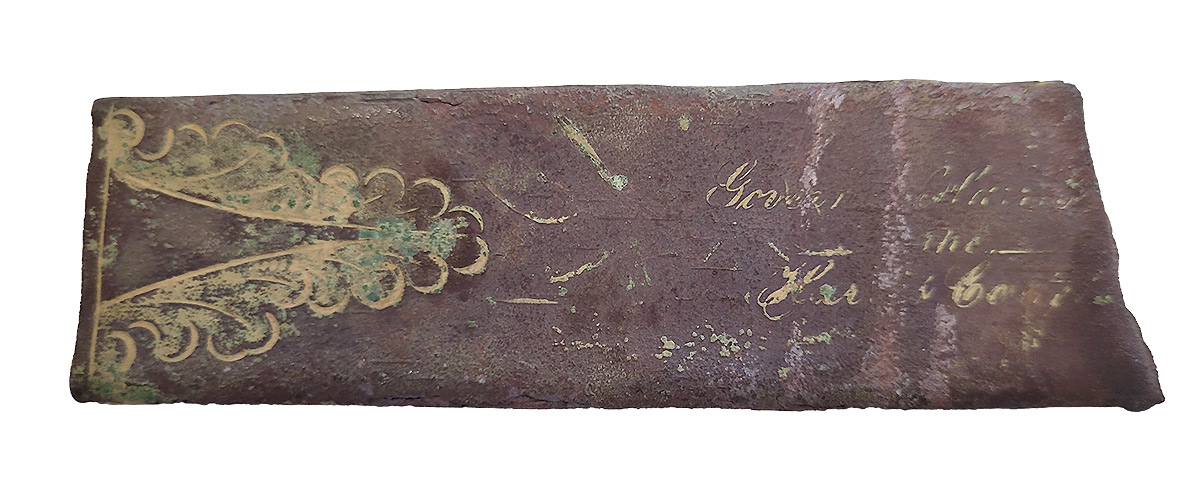
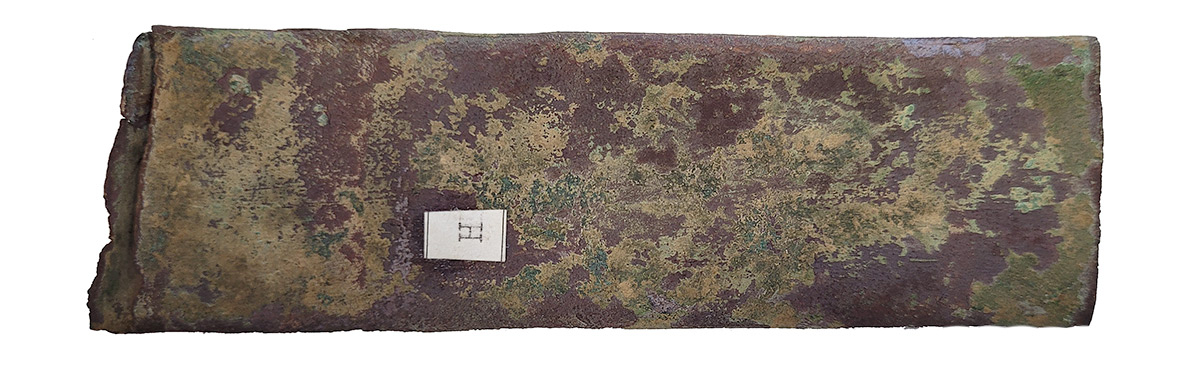
THE ARTIFACT AND ISHAM HARRIS: Found about a mile from the Shiloh Battlefield, on the Hamburg-Savannah Road, a portion of the sword scabbard of the man who held General Albert Sidney Johnston as he lay dying Isham G. Harris. Isham Harris was a volunteer aide to General Johnston when he was in command of the Confederate Army of Mississippi. At the opening of the Civil War, Isham G. Harris was Governor of the State of Tennessee. As Governor, he refused to respond to President Lincoln's call for troops but cast in his lot with General Johnston's army when it evacuated Nashville this was after the surrender of Fort Donelson. Thus, Harris became a member of Johnston's staff and was present in that capacity at the battle of Shiloh.
As mentioned above Johnston was struck by a ball just below his right knee, severing the popliteal artery and causing rapid bleeding.
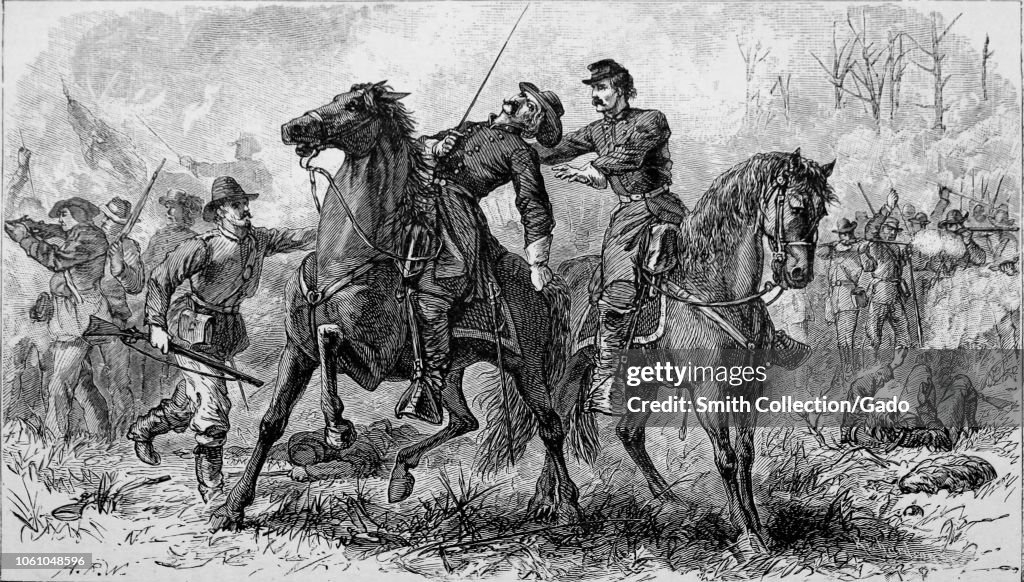
Tennessee Governor Isham G. Harris his only remaining aide, the others sent off on missions by Johnston including his doctor, discovered the general reeling in his saddle. Harris asked Johnston if he was wounded and to this Johnston replied: “Yes, and I fear seriously”. Harris, along with another staff officer, guided Johnston down to a protected ravine to remove him from the line of fire. They then eased him to the ground near a tree, attempting to locate the source of the wound. The bullet had clipped the femoral artery, and Johnston succumbed to blood loss within minutes. Other staff members quickly arrived to see General Johnston expire. William Preston asked Governor Harris to report the death to Beauregard at his headquarters. Harris went to mount his own horse and discovered it had bolted and was gone along with all his trappings including the sword he had unbuckled as an encumbrance in order to aid Johnston. Harris got on Fire-Eater Johnston's horse. "Preston then, turning to those remaining and said: "I will go forward and procure an ambulance. You gentlemen will carry the body as rapidly as you can to the rear." In 1896, Harris returned to the Shiloh Battlefield and identified the spot where he first realized Gen. Johnston was badly wounded, as well as the location of his death. When asked about the battle, Harris said: “The whole subject of Shiloh is a bitter memory which I do not allow myself to talk about or think about when I can help it.” Although Harris was replaced by Andrew Johnson, who was appointed the Union military governor of Tennessee, the Confederacy continued to recognize him as the state’s governor. In 1877, when the Tennessee legislature was again controlled by Democrats, Harris was elected to the U.S. Senate where he served until his death in 1897.
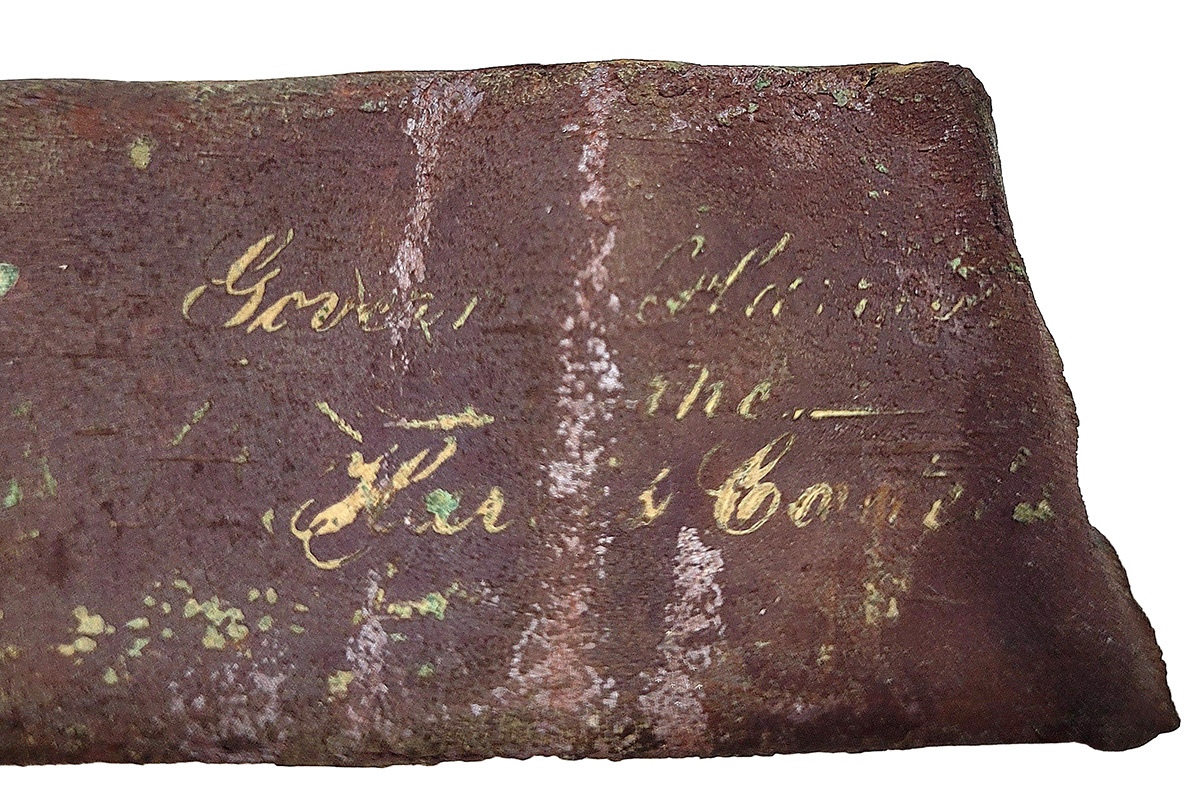
This excavated artifact, a small portion of what was once the "militia type" staff and field officer's sword of Governor Isham Harris was found off the Shiloh battlefield proper on the historically significant Hamburg-Savannah Road; this was about 10 years ago. Made of brass it measures 4 1/2 inches by just over 1 1/4 inches. This would be the upper portion of all brass scabbard that held a sword likely made by Ames of Chicopee, Massachusetts. The blade would have been double-edged and perhaps 32 inches long. The hilt had a cruciform guard, possibly with an ivory grip, and could have had a knight's head or eagle pommel. Beside floral designs engraved on the obverse of this scabbard portion is the ground worn but visible inscription: "Governor I Harris" over "by the" over "Harris Cartel". A cartel in this 19th century context means the party or parties share rather than compete over resources and effectively conspire to protect their collective interests. The capacity of their leaders to maintain this cartel of parties depends, however, on their ability to control their own. One must conclude that Harris's frightened horse shed the "trappings" that Harris had left behind on him to help his mortally wounded commander along the road. After 150 years this remarkable relic was discovered, it was sold to the highly respected dealer Rafael Eledge of Shiloh Relics who in turn sold it to the compiler. This unbelievable relic deserves a museum. [pe][ph:L]
~~~~~~~~~~~~~~~~~~~~~~~~~~~~~~~~~~~
THIS ITEM, AS WITH ALL OTHER ITEMS AVAILABLE ON OUR WEB SITE,
MAY BE PURCHASED THROUGH OUR LAYAWAY PROGRAM.
CLICK HERE FOR OUR POLICIES AND TERMS.
THANK YOU!
Inquire About THE ULTIMATE BATTLE OF SHILOH RELIC
Most Popular
Historical Firearms Stolen From The National Civil War Museum In Harrisburg, Pa »
Theft From Gravesite Of Gen. John Reynolds »
Selection Of Unframed Prints By Don Troiani »
Fine Condition Brass Infantry Bugle Insignia »
featured item
EXQUISITELY BEAUTIFUL LARGE 1862 DATED PORTRAIT OF AN UNKNOWN UNION LIEUTENANT COLONEL
This fantastic painting is oil on canvas and meas. approx. 35.00 x 39.00 inches framed. The subject is an unknown Union lieutenant colonel from the Philadelphia area. He wears a dark blue double-breasted frock coat with gold buttons and a white… (L15593). Learn More »
site search