

site search
online catalog
KENNESAW GEORGIA AREA BATTLEFIELD PICK-UPS FROM A GA CAVALRY VET’S FAMILY INCLUDING TWO CARBINES AND SOME OF HIS OWN WARTIME GEAR
Hover to zoom








$5,500.00 ON HOLD
Quantity Available: 1
Item Code: 2025-3629
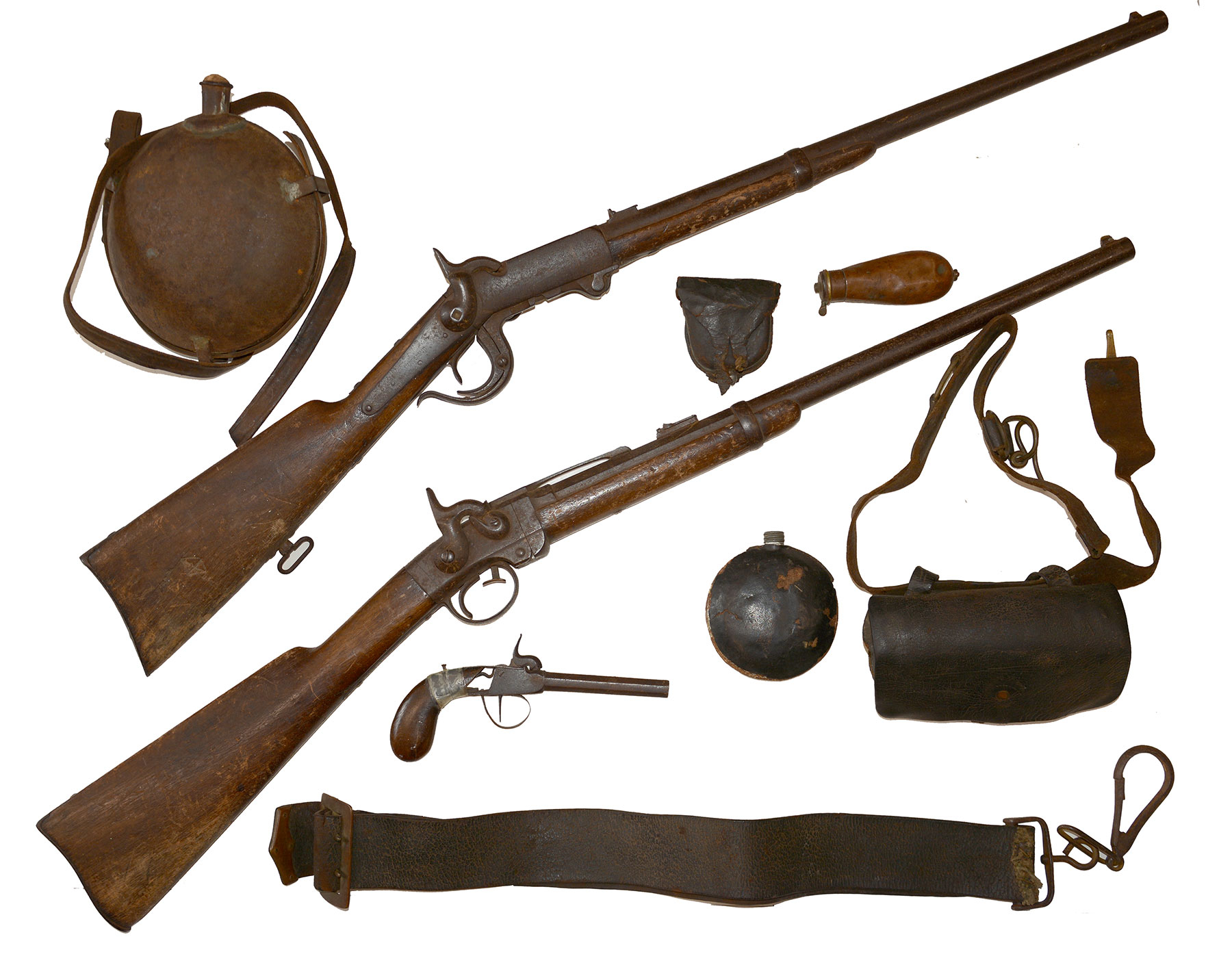
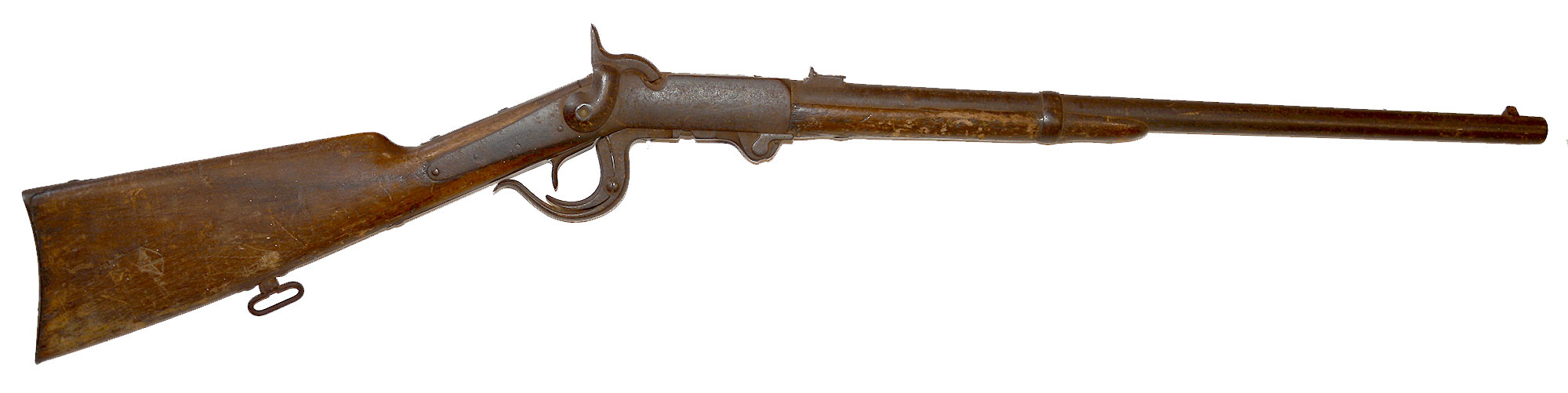
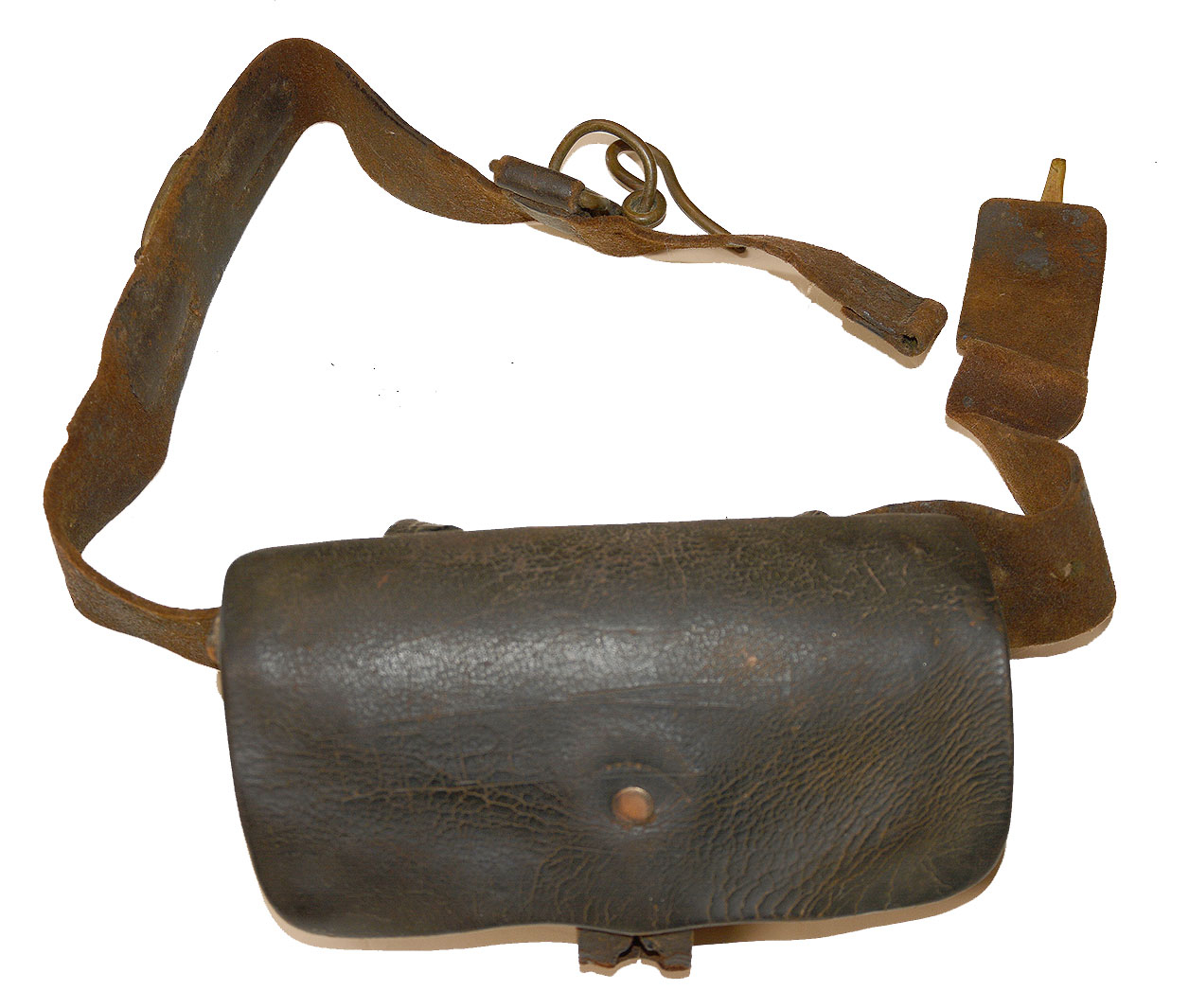
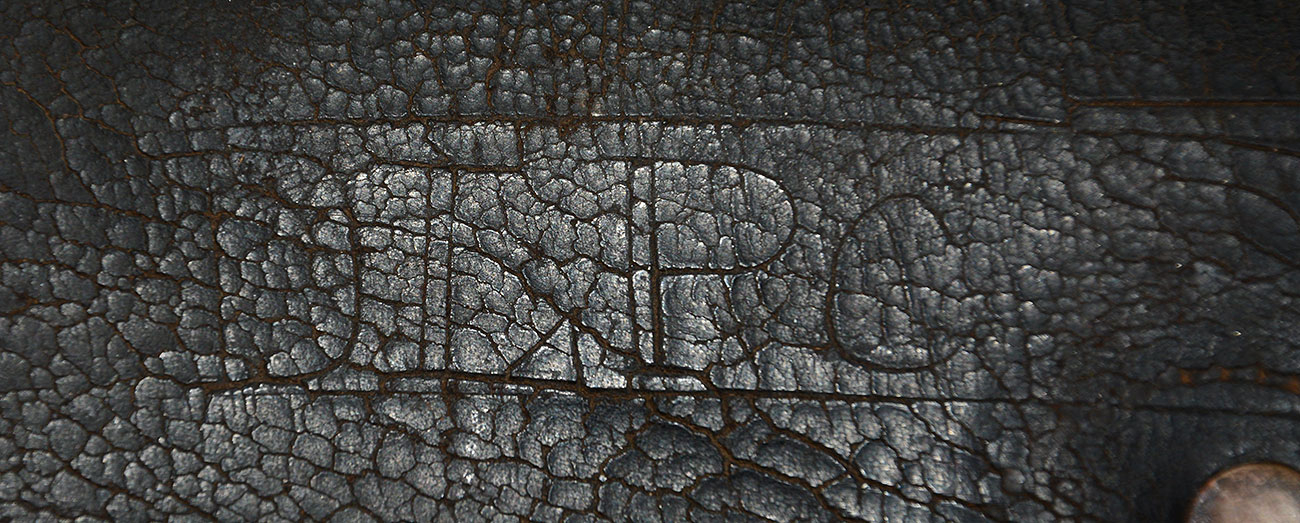
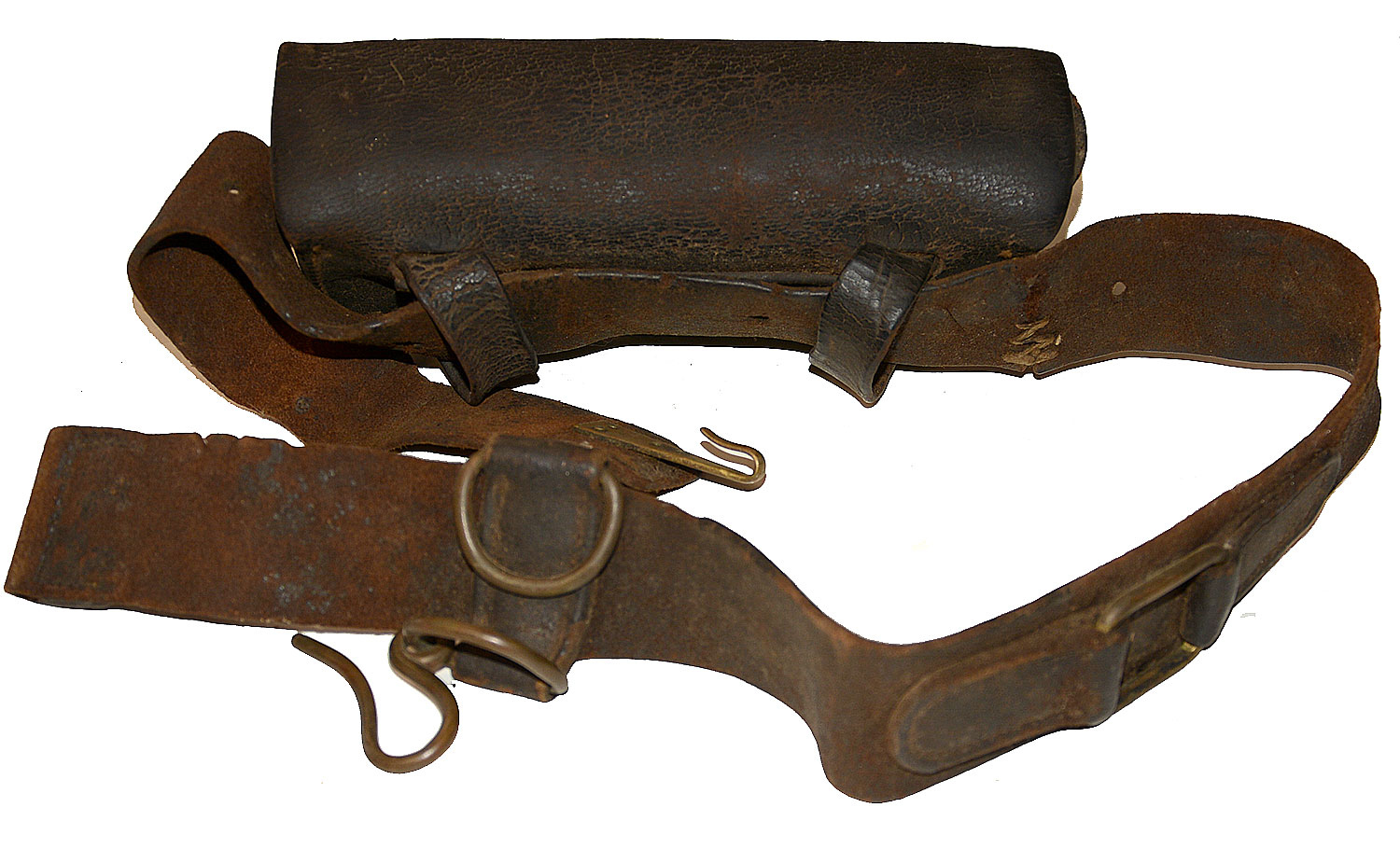
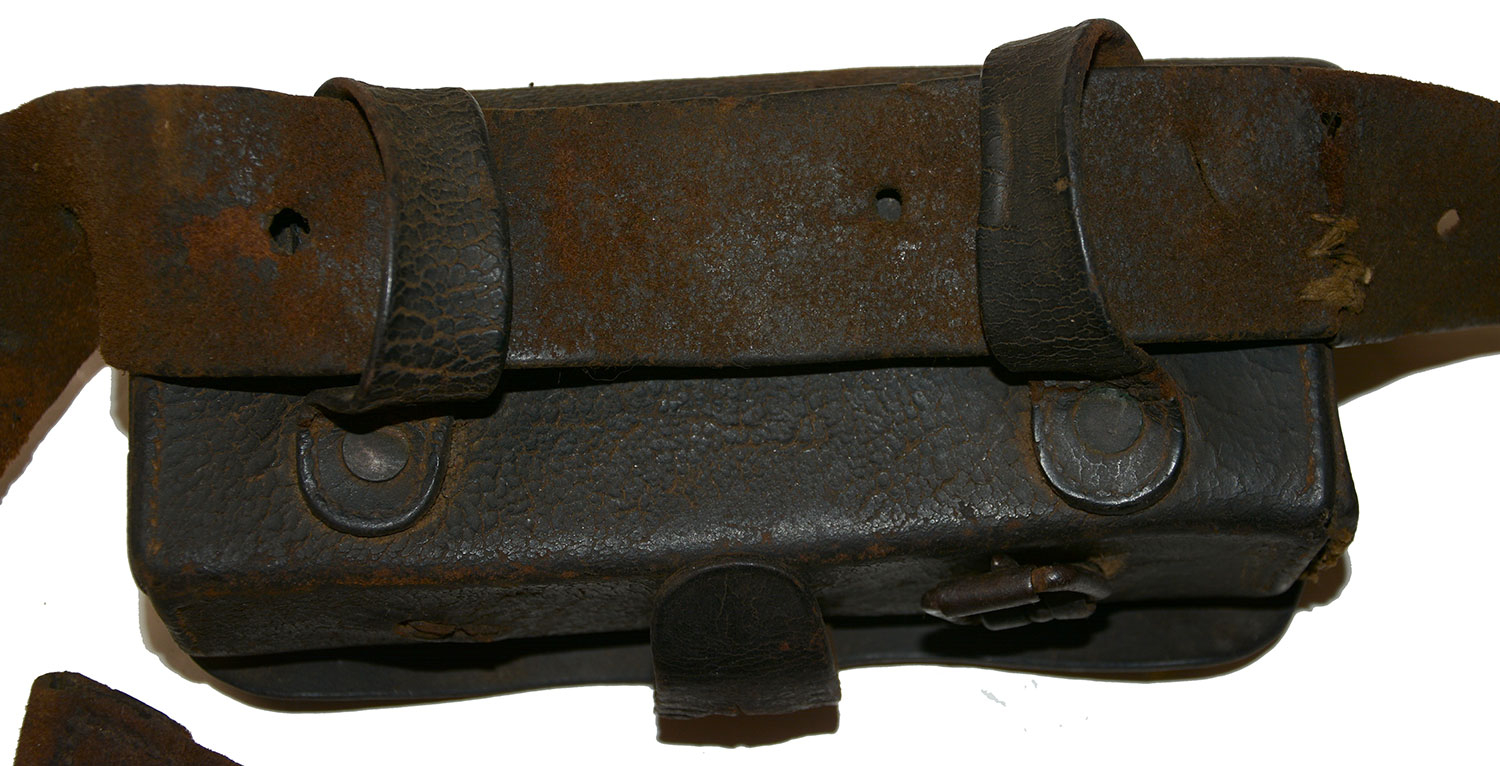
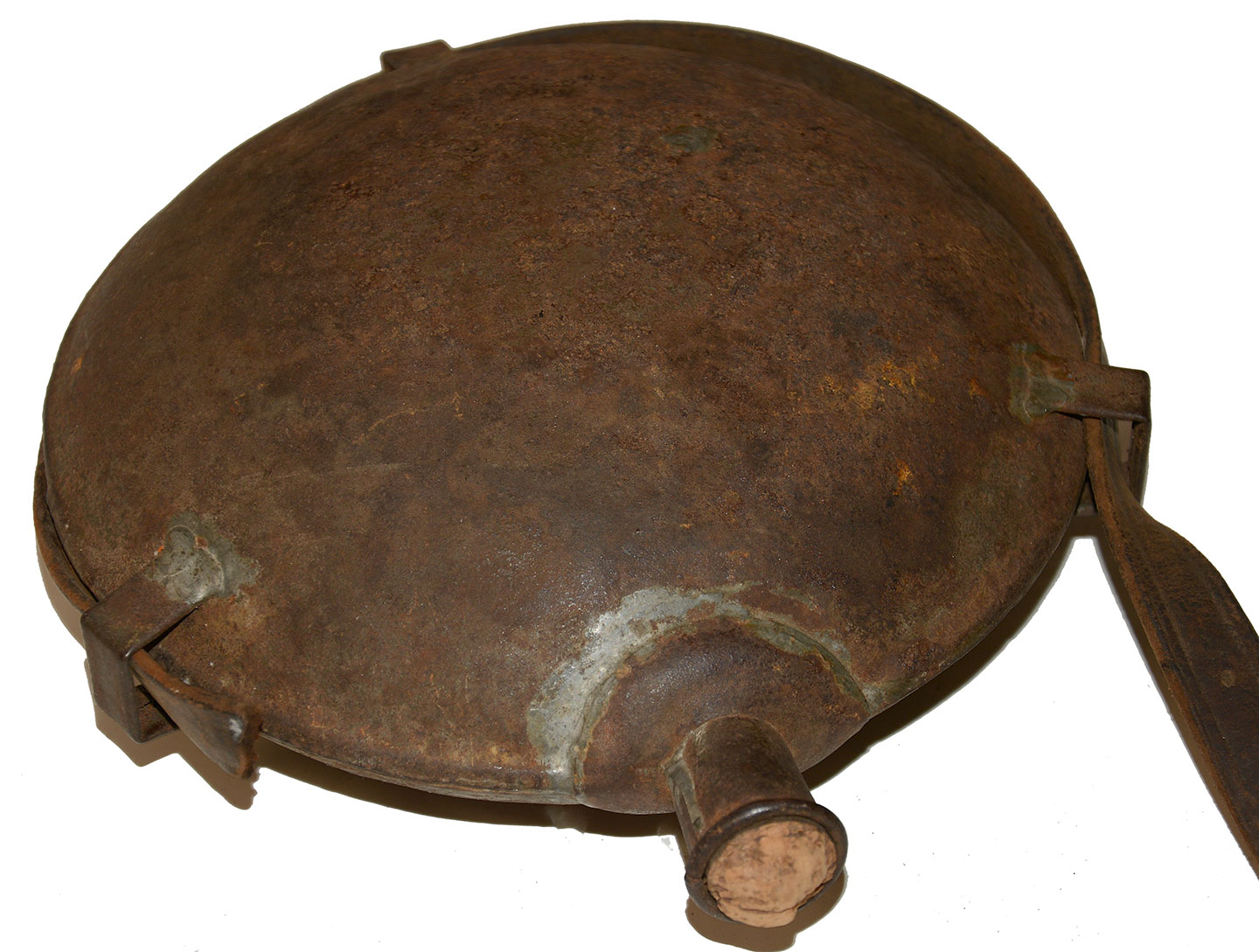
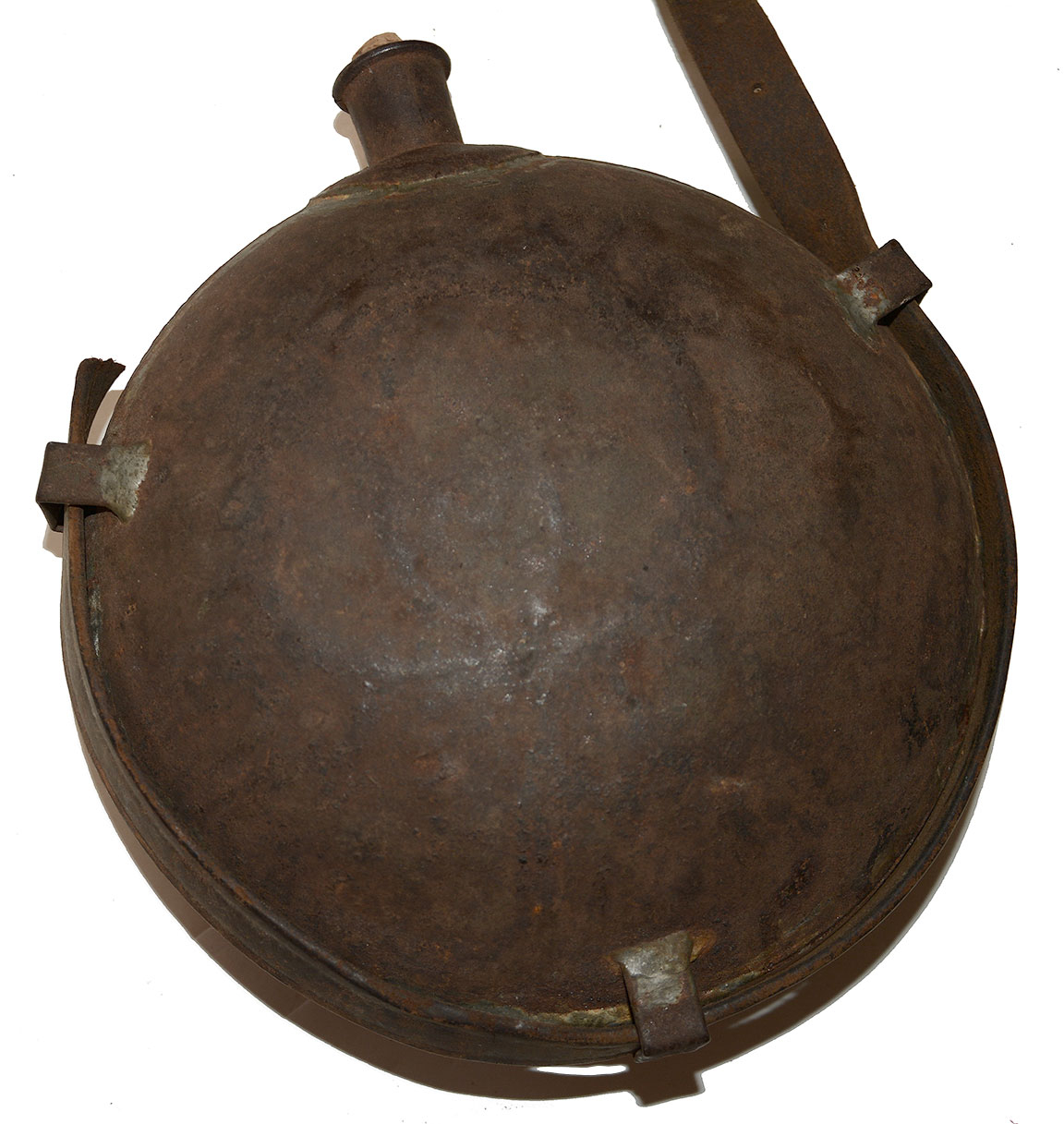
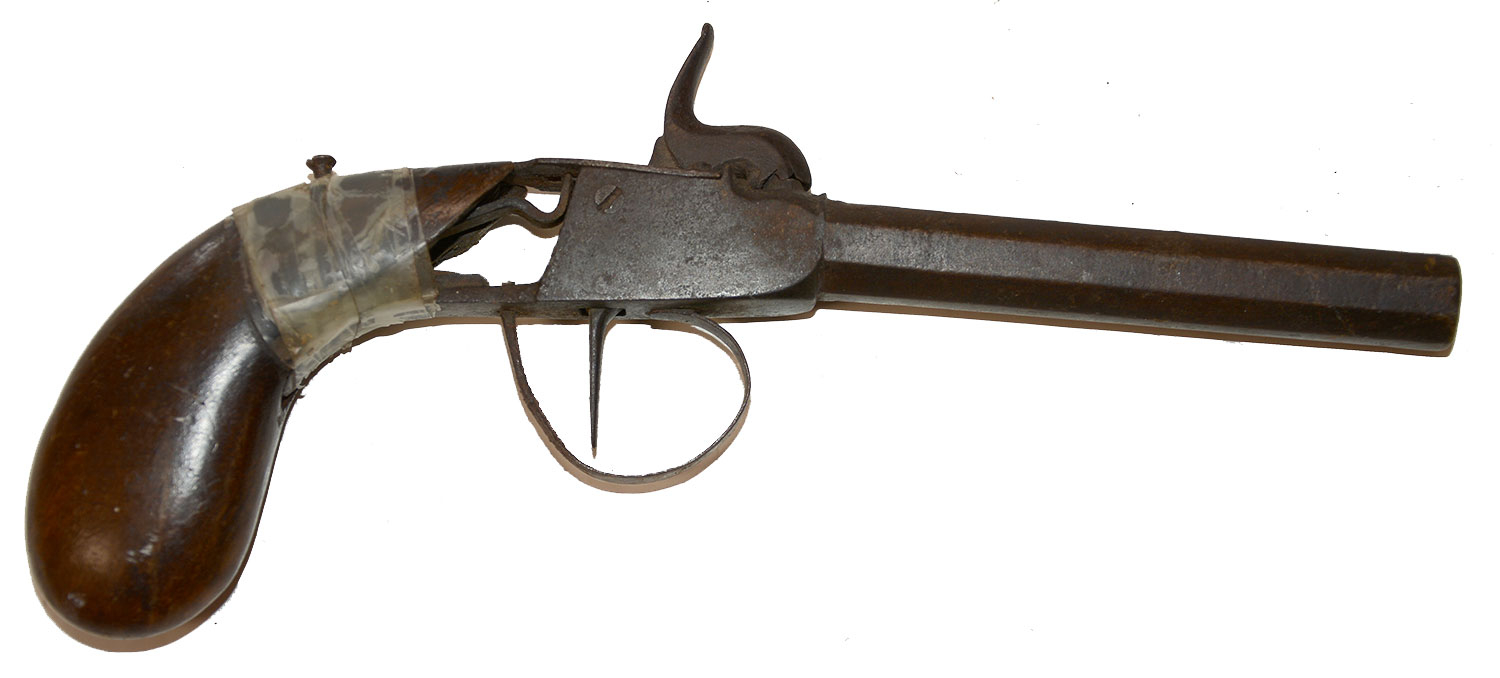
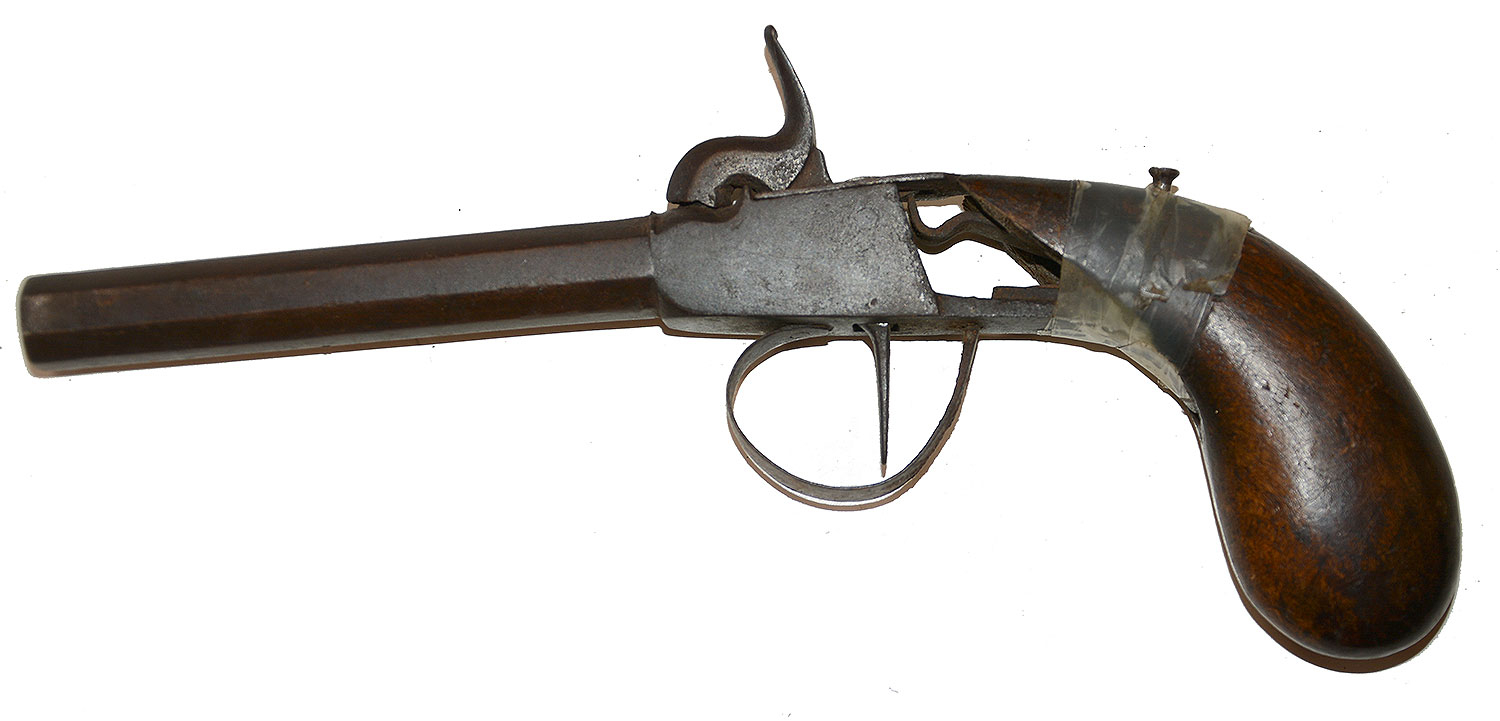
This group of ten items came to us by way of a Georgia collector from a great-grandson of a David L. Patrick, Co. E 2nd Georgia Cavalry. Patrick’s records are incomplete, like most CS records, but he served from February 1862 at least until his wounding at Waynesboro, GA, in December 1864, and perhaps beyond, with the unit reportedly seeing action according to a new regimental history in some 175 engagements, large and small, in the western theatre. Some of the material was likely scavenged from battlefields in the Kennesaw area where elements of the family later lived, but some, like a cavalry carbine cartridge box with his initials on it, still on a saber belt, was likely his, as were perhaps some of the other pieces. In any case, the material is generally in attic or barn-find condition, and in addition to the carbine box and belt, includes two cavalry carbines, a Smith and a Burnside, a Confederate cap box, a Yankee canteen with leather strap, and a carbine sling, along with a small civilian canteen, boot pistol and powder flask that might have been battlefield pick-ups, belonged to Patrick, or simply associated by the family with the other material.
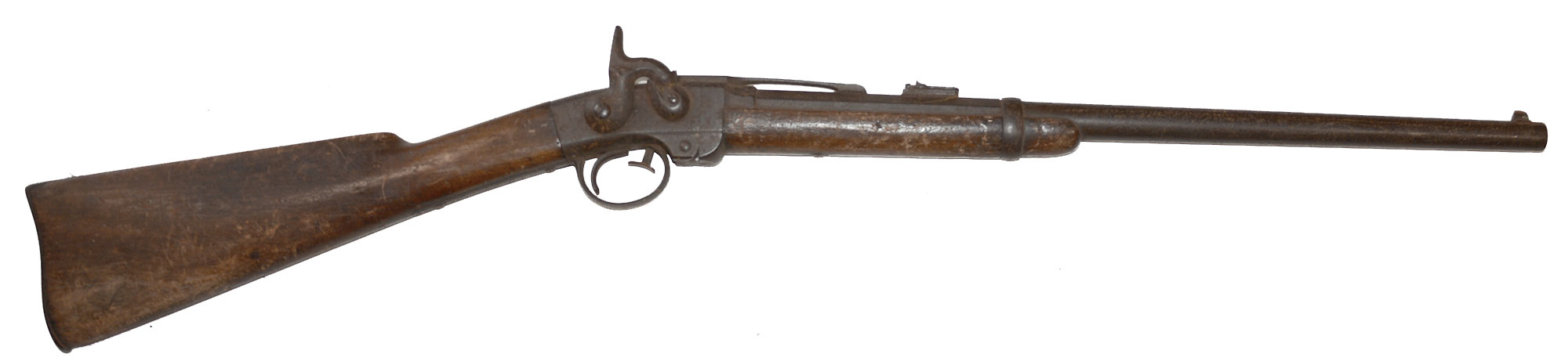
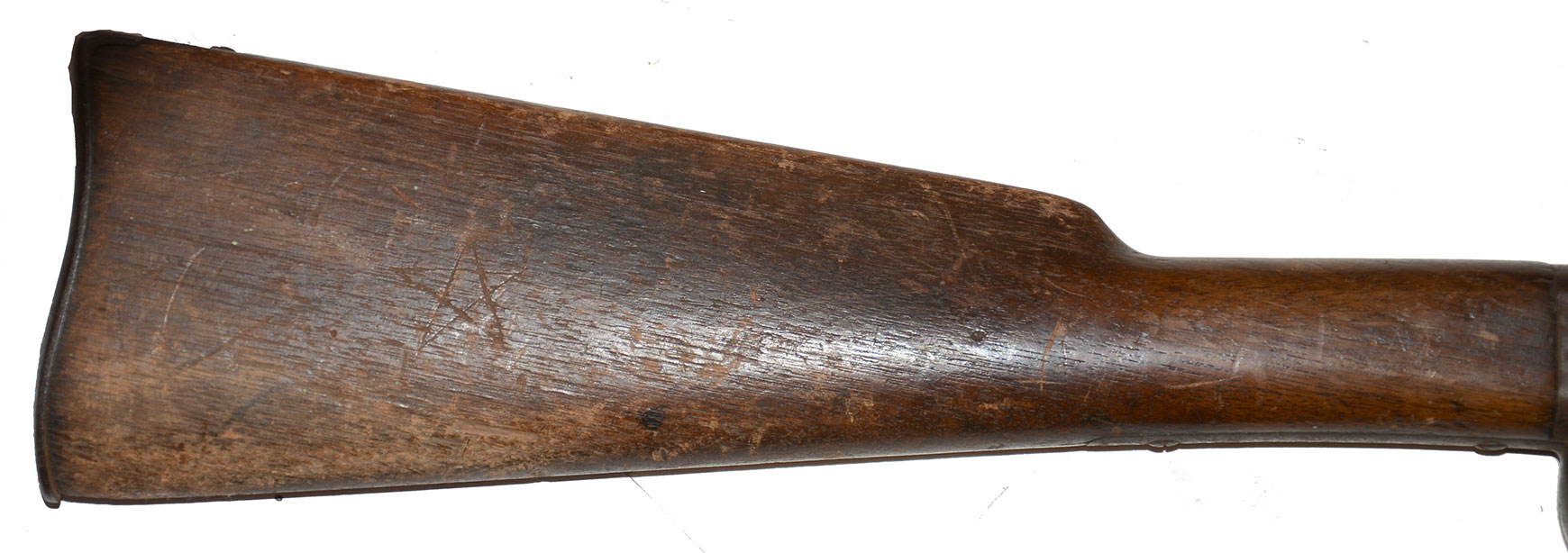
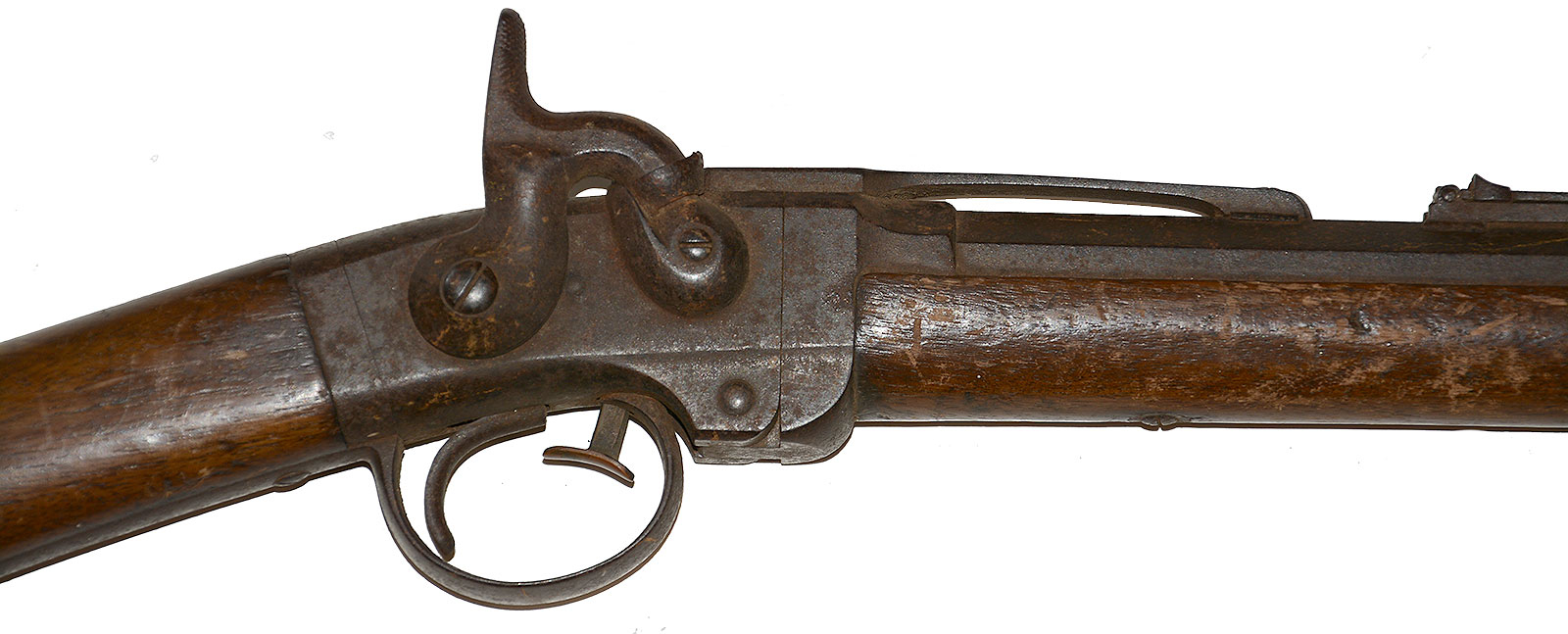
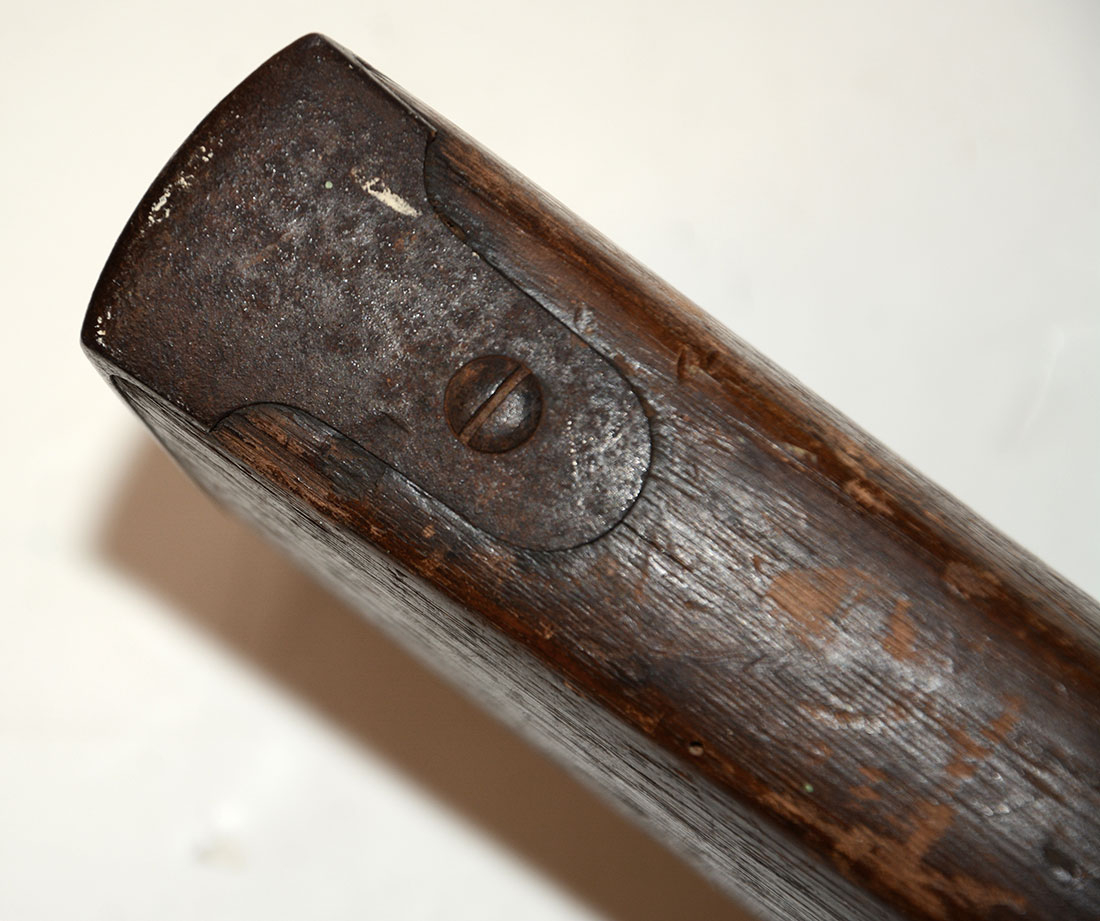
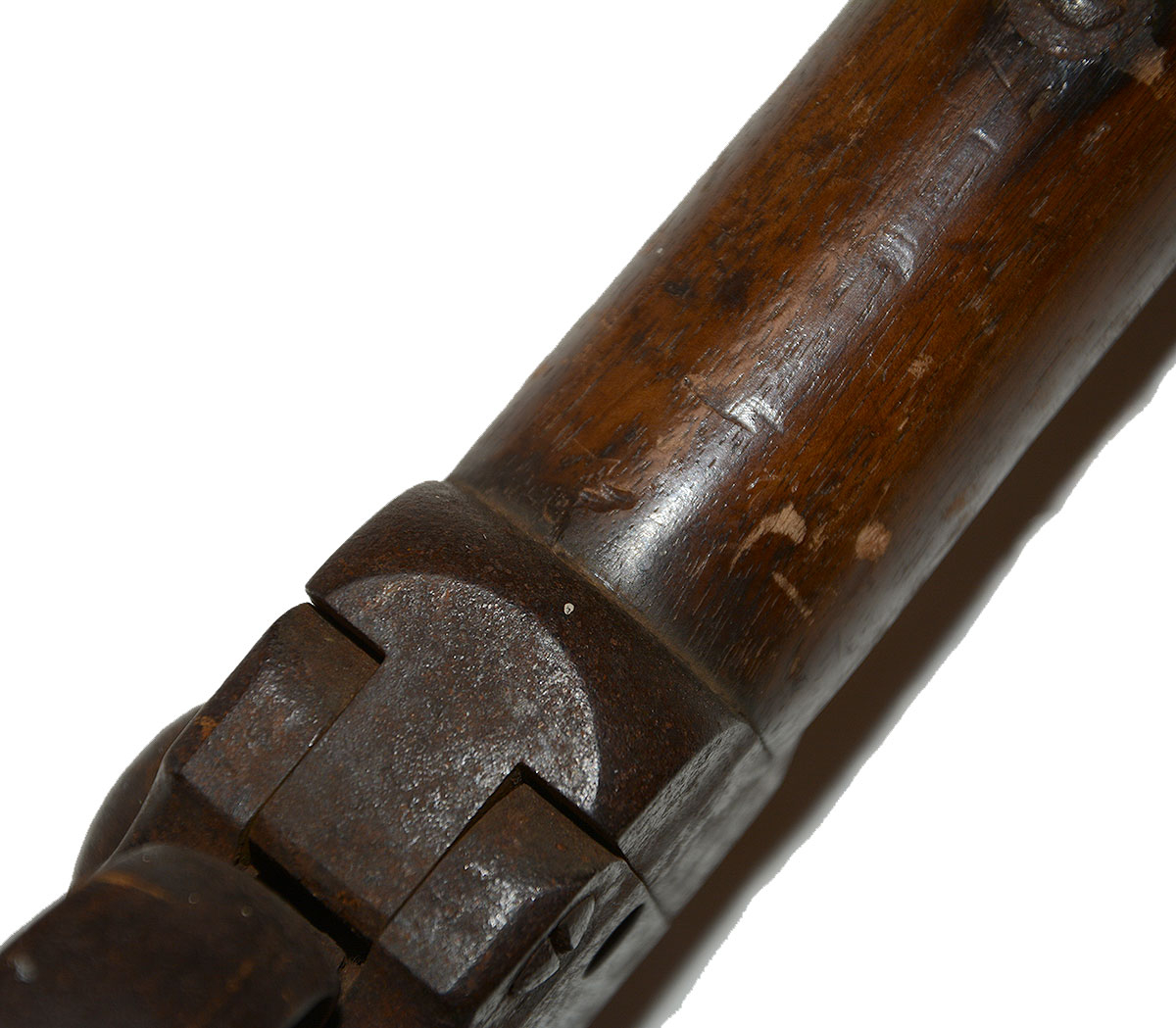
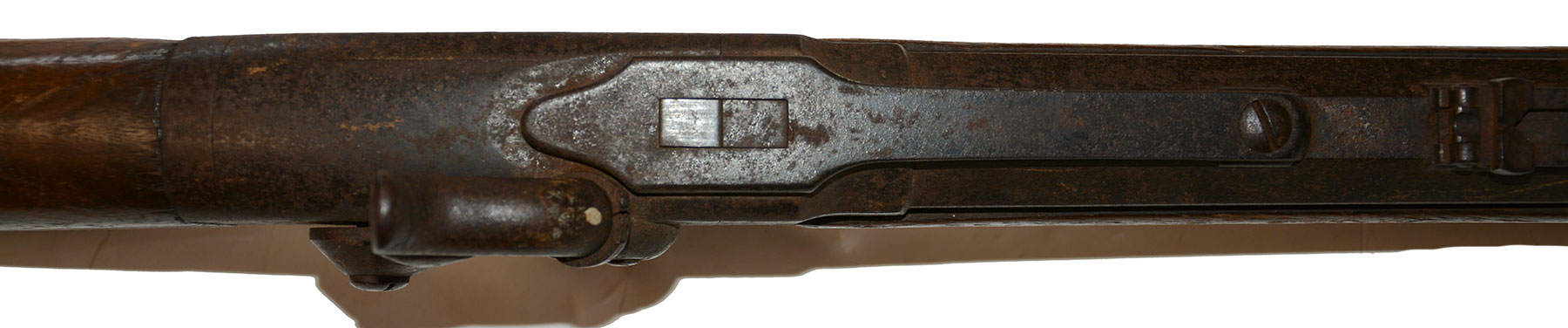
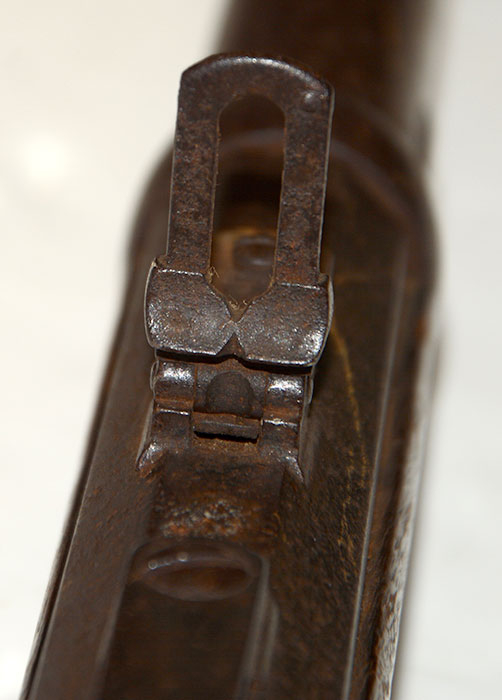
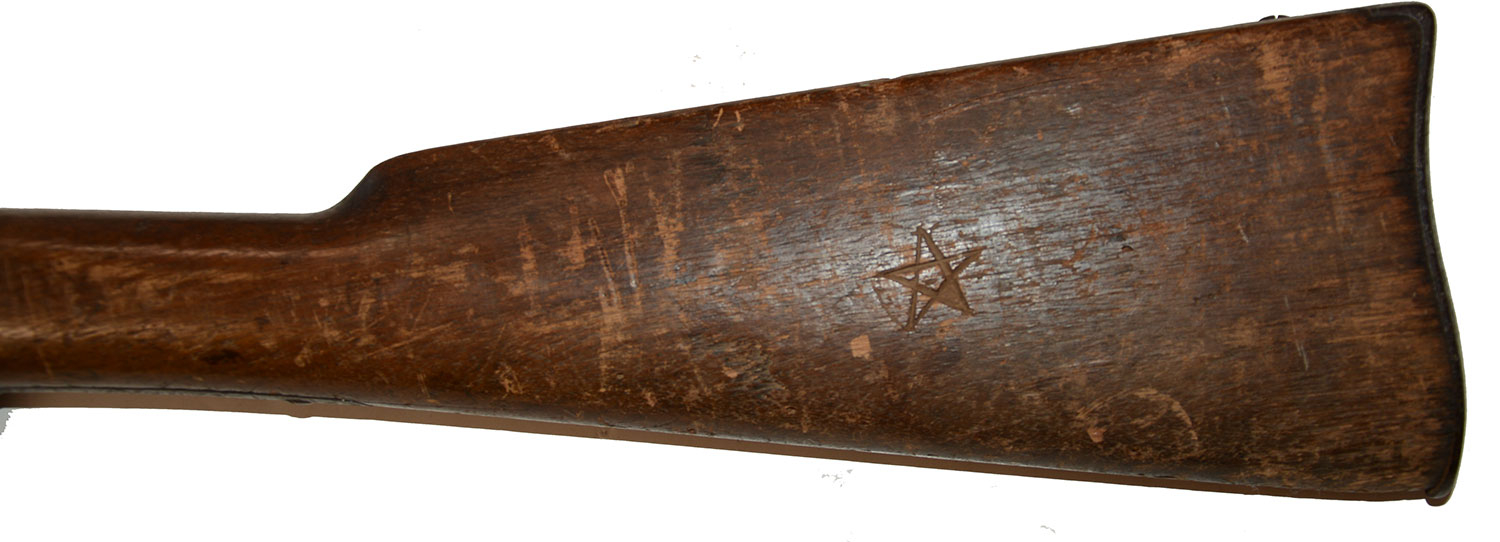
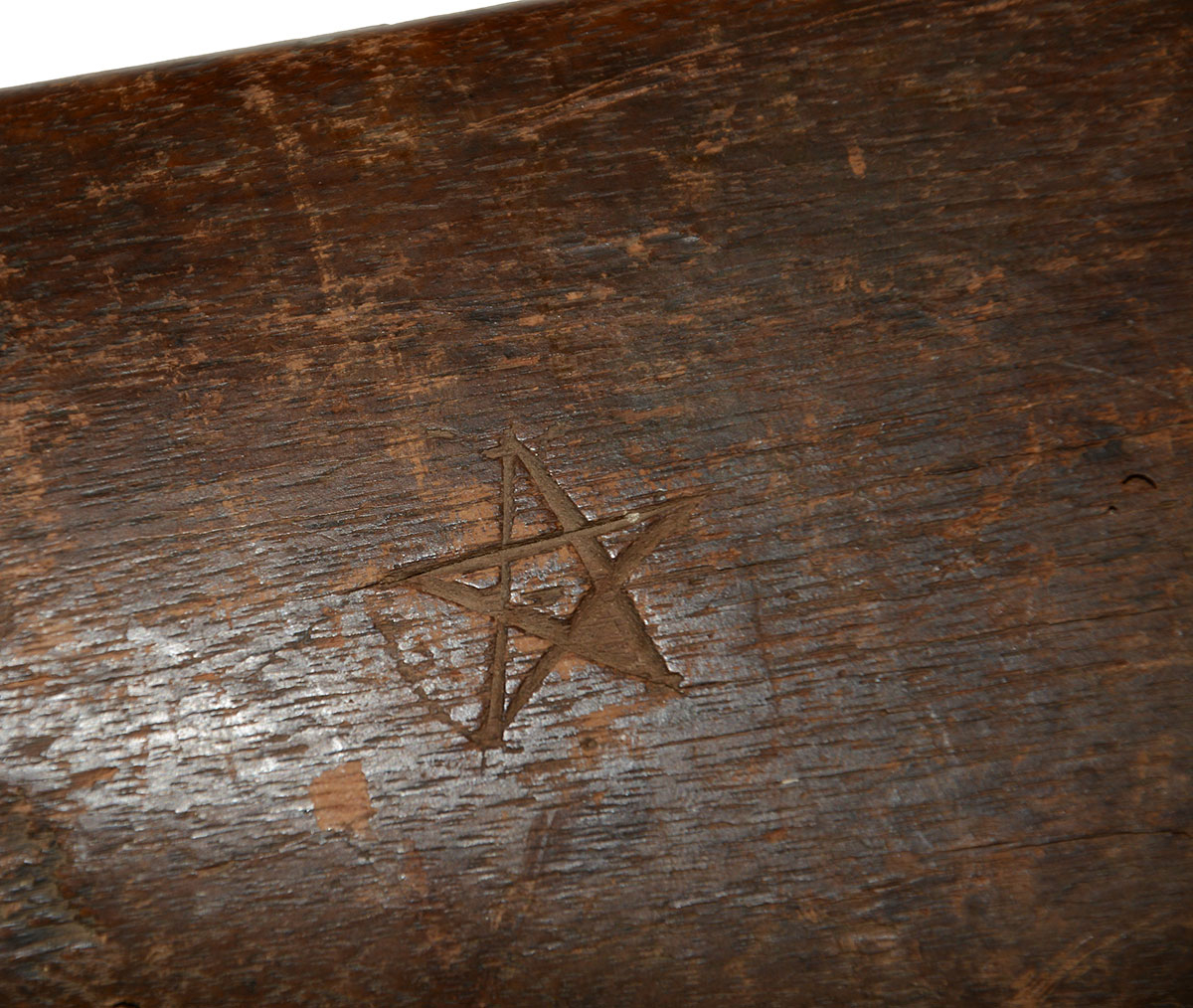
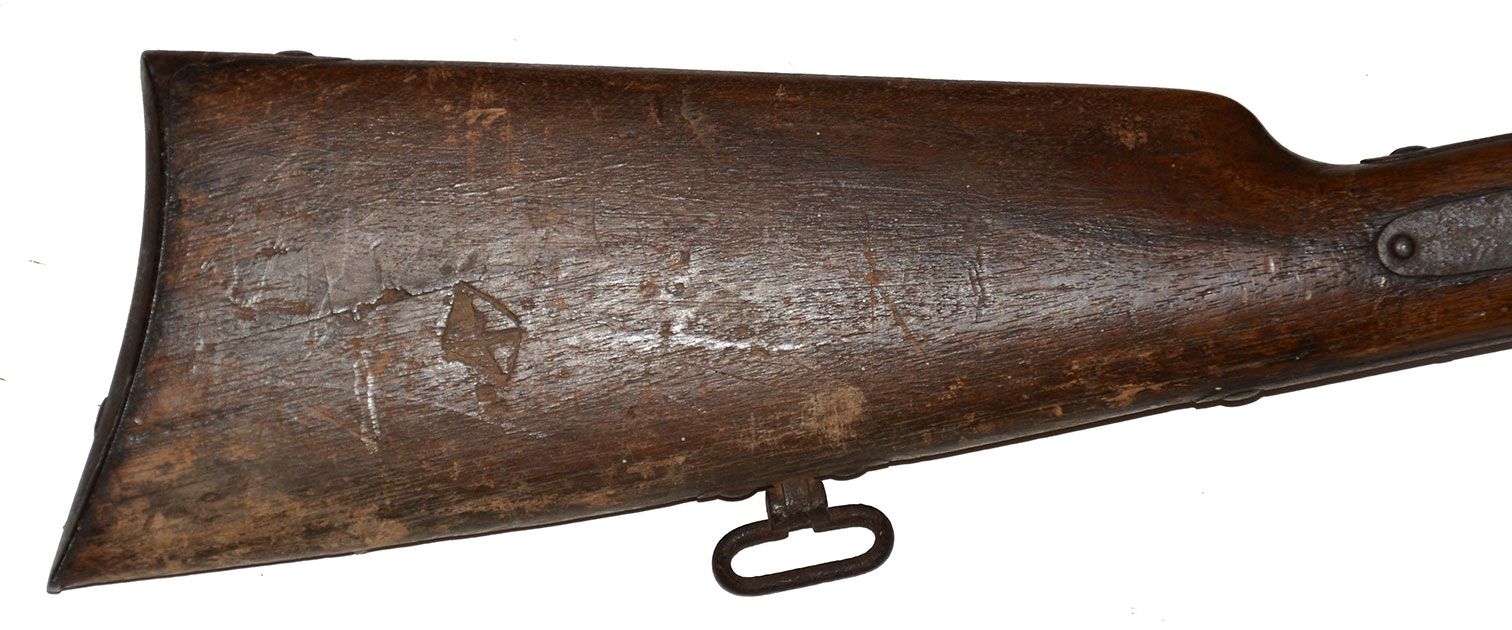
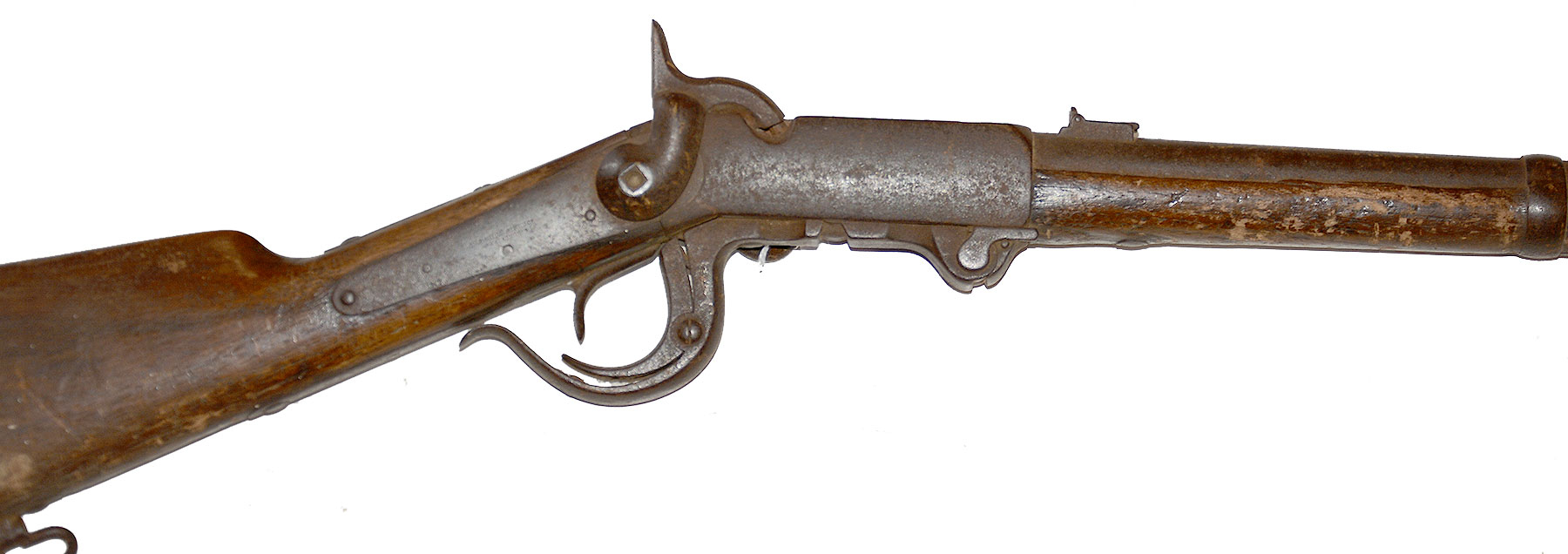
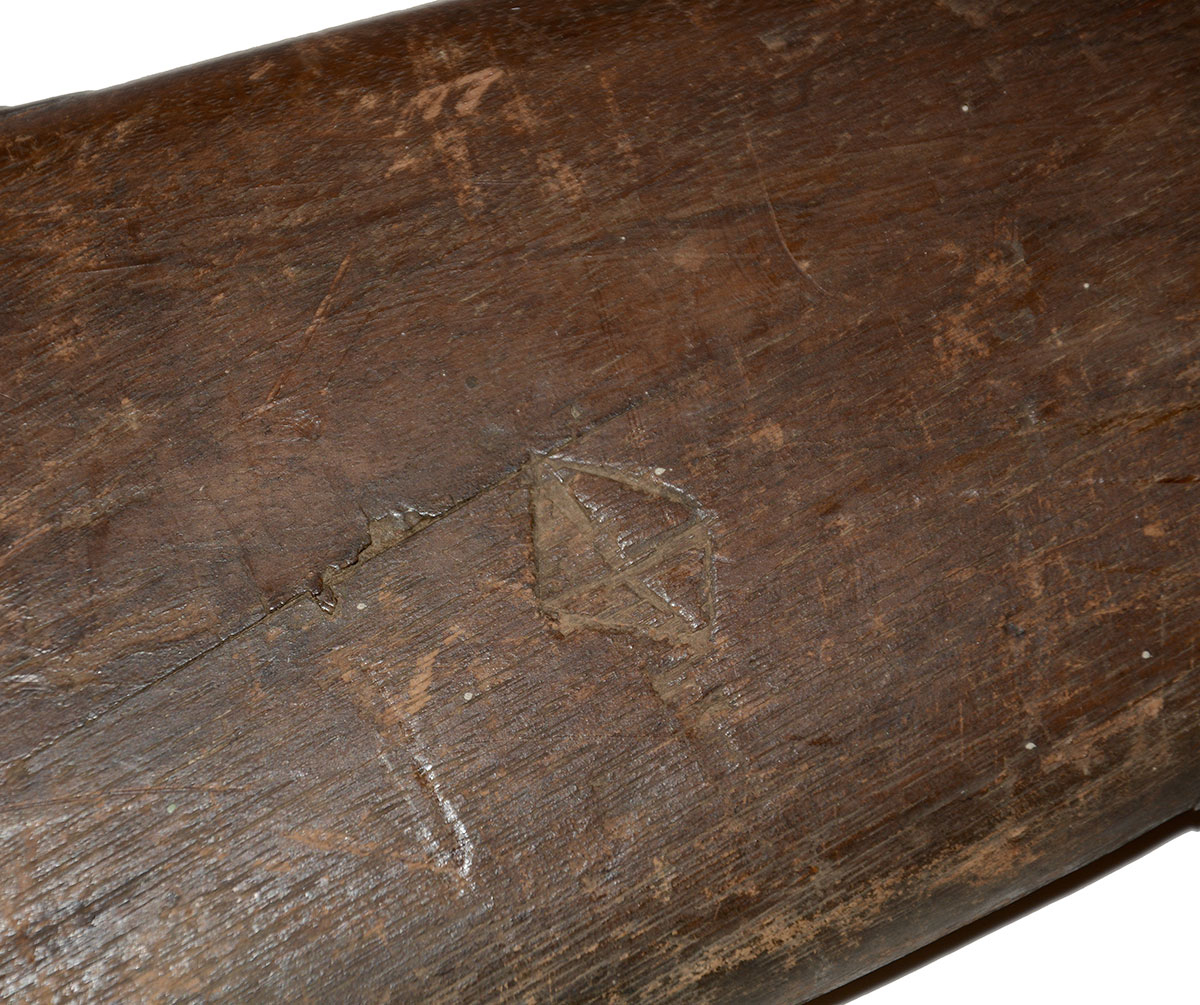
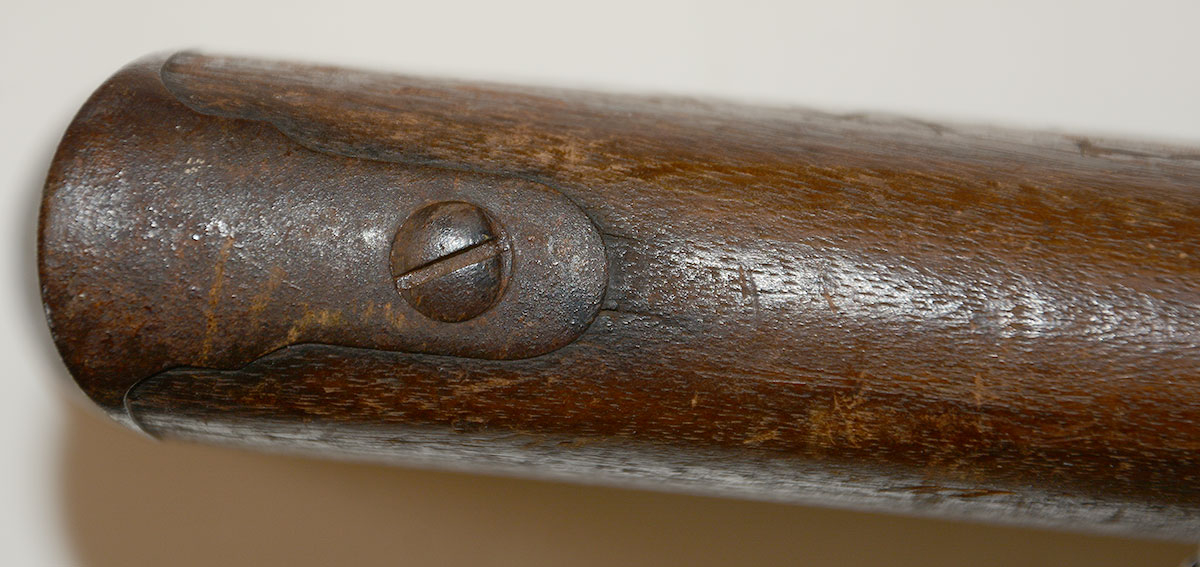
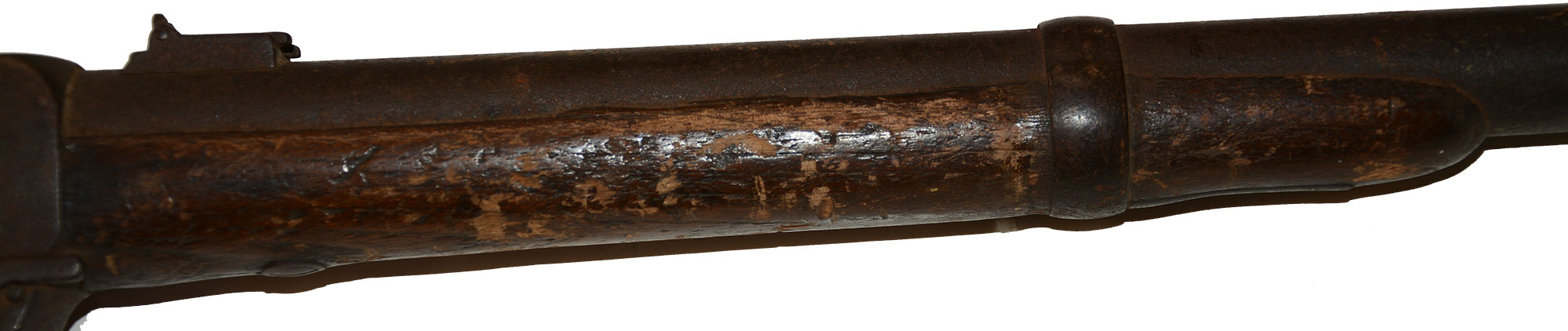
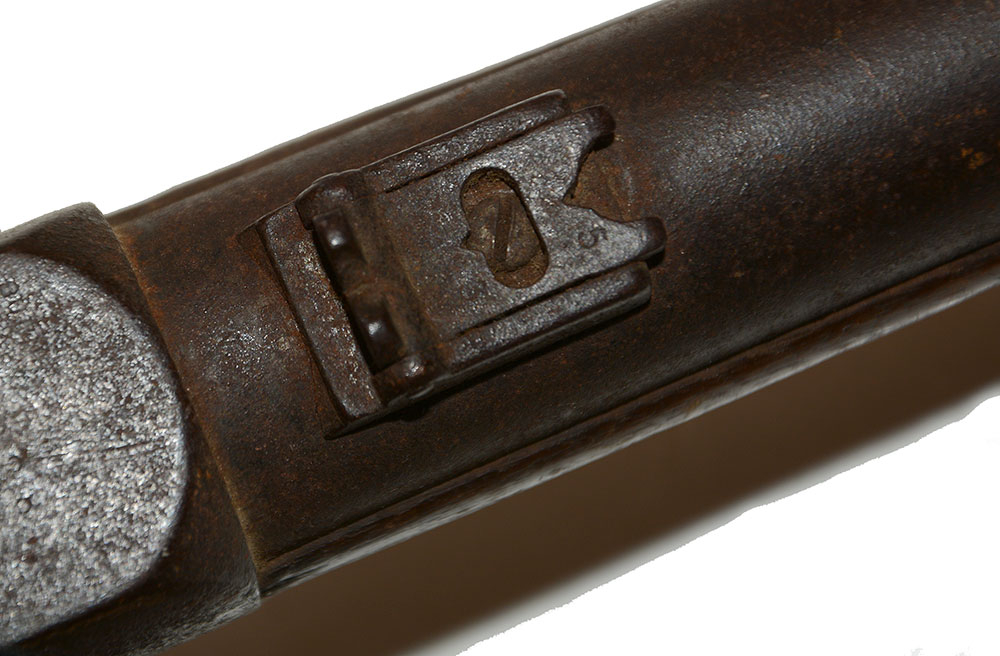
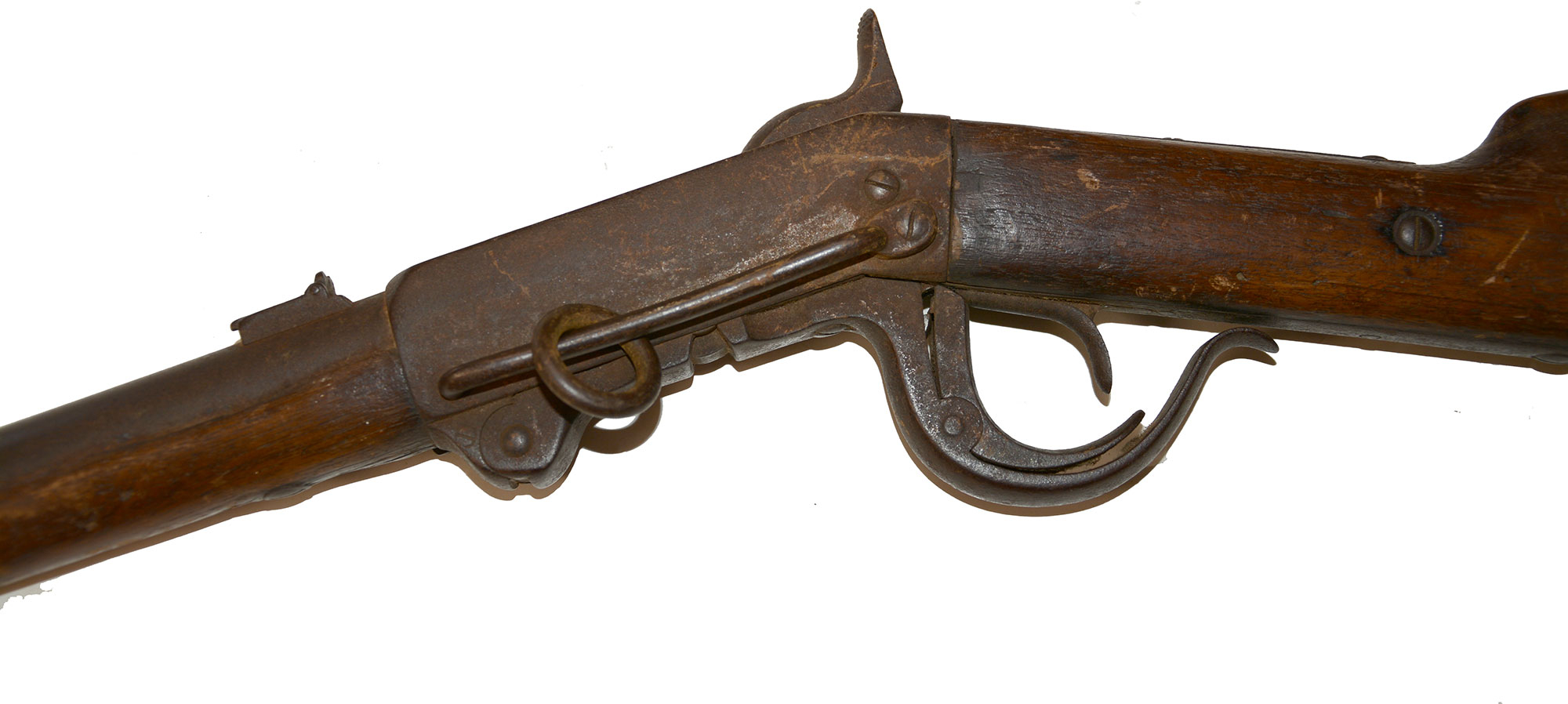
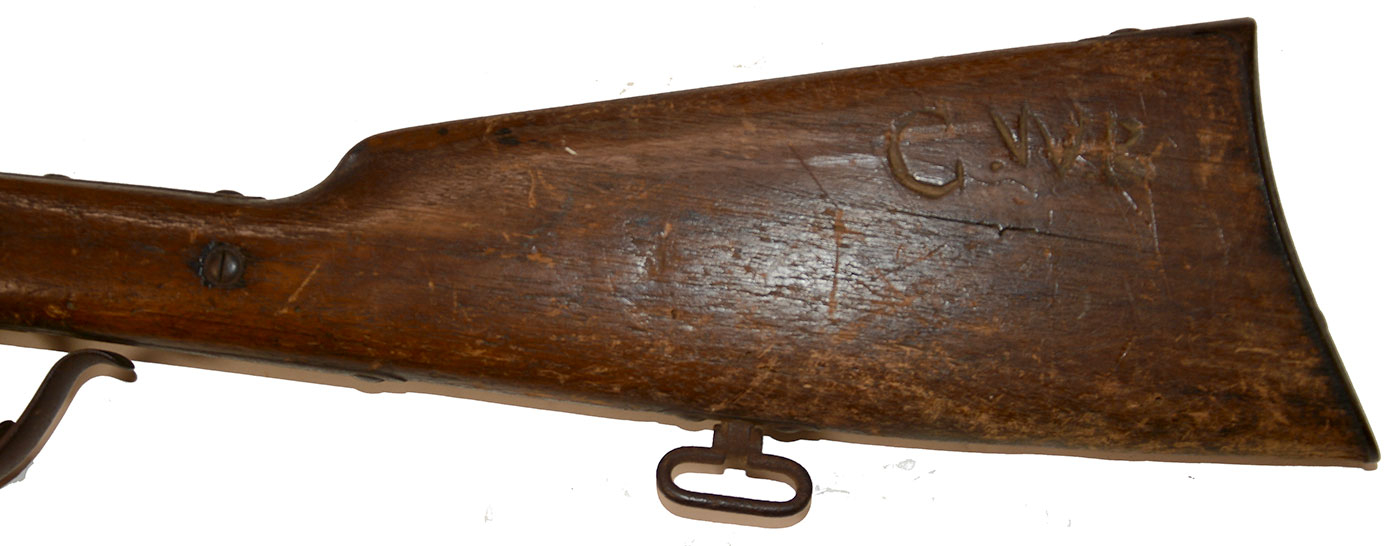
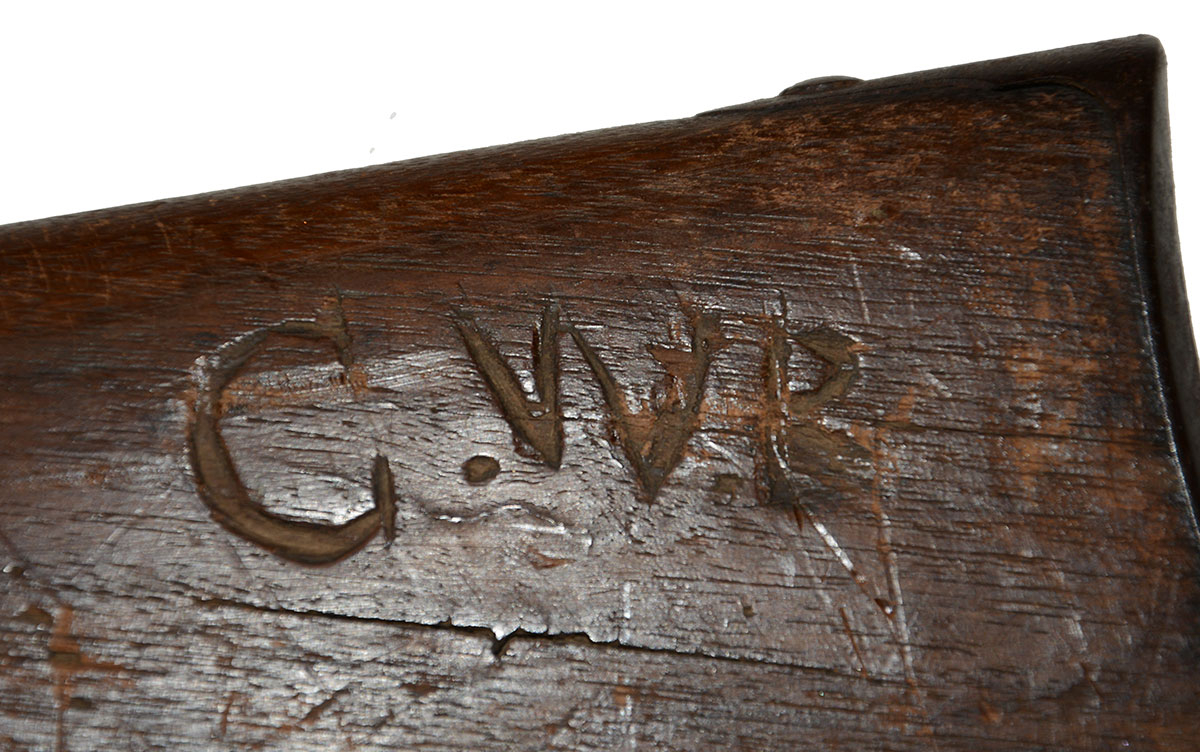
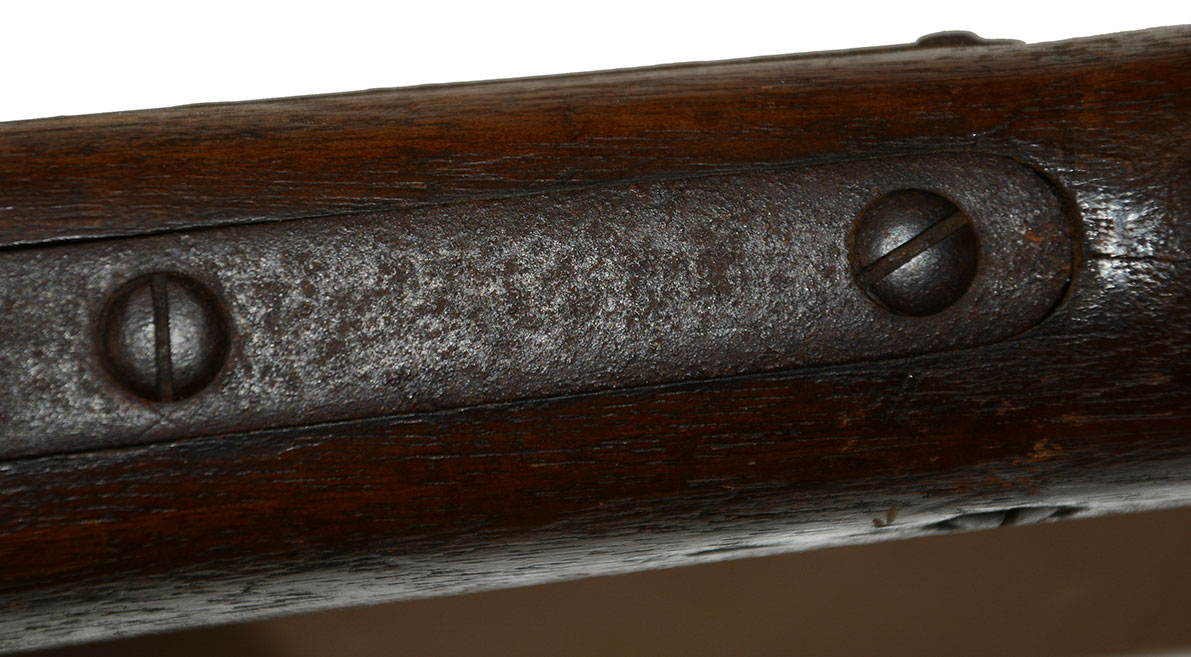
Both carbines are complete with bands, sights, etc., with exception of the side bar on the Smith and the hammer screw on the Burnside. They are mechanically okay, though the Burnside breechblock needs work, falling down when unlatched. They are untouched. The bores are dirty. The metal shows brown with surface rust and shallow pitting. The stocks have scratches and wear to the finish. Both show some personal wartime touches that were likely made a Confederate captor. The Smith has a five-pointed star lightly carved on both sides of the buttstock at about center. The Burnside has a small Confederate flag, partially chipped out, carved on the right butt stock and a “CWP” in large letters on the left, near the buttplate tang. Given the last initial, we assume this was a family member or relation, though we do not have a likely candidate to suggest. Please see our photos.
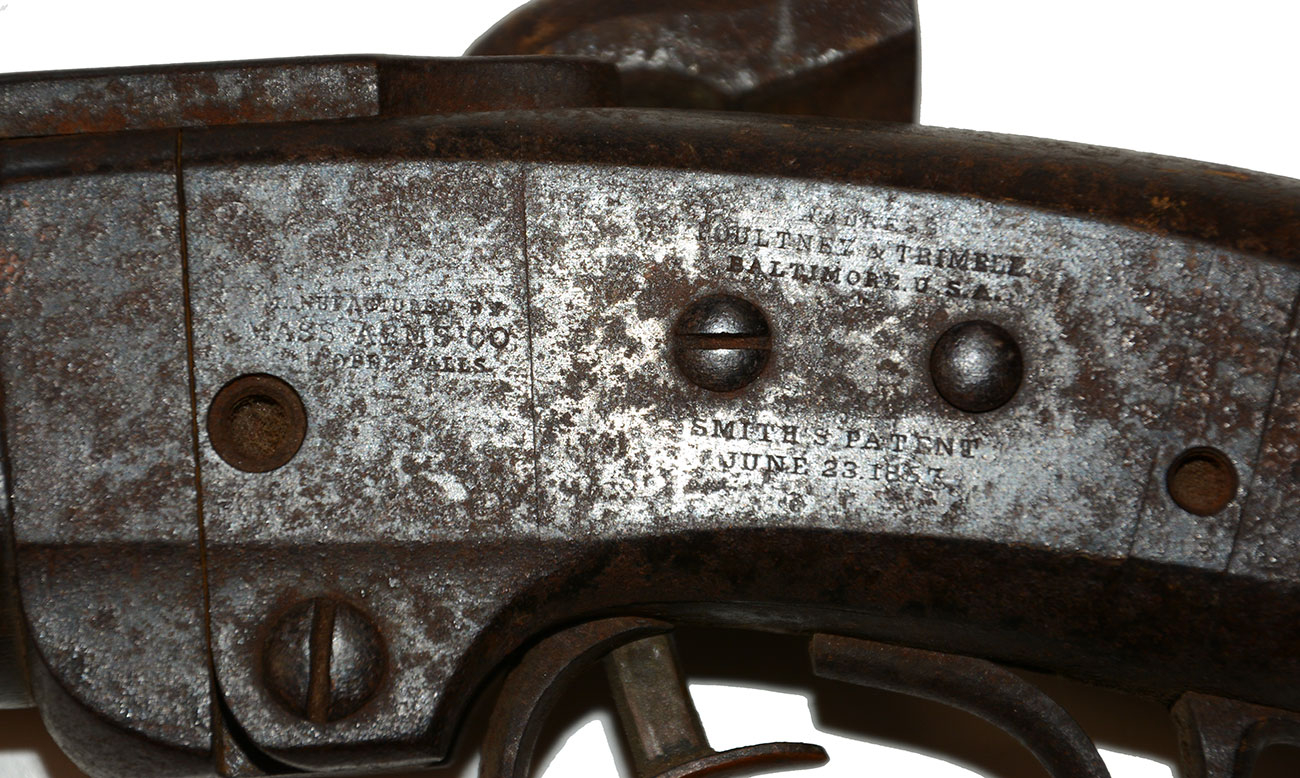
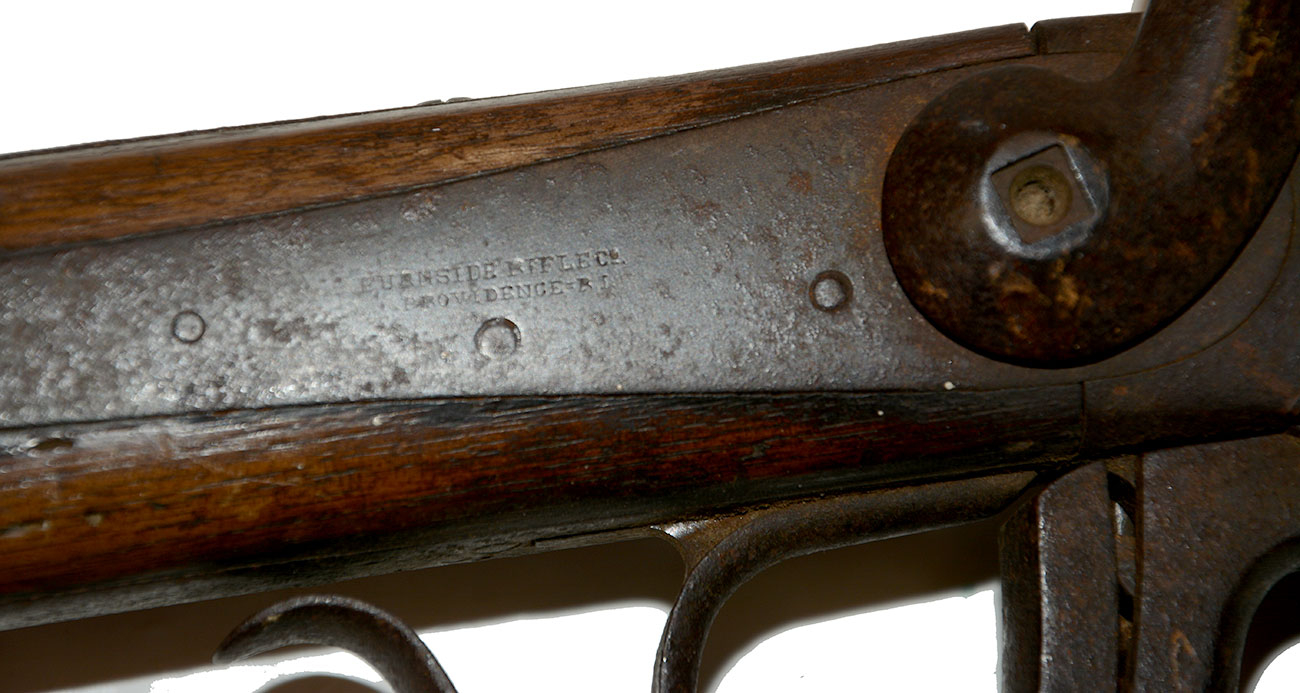
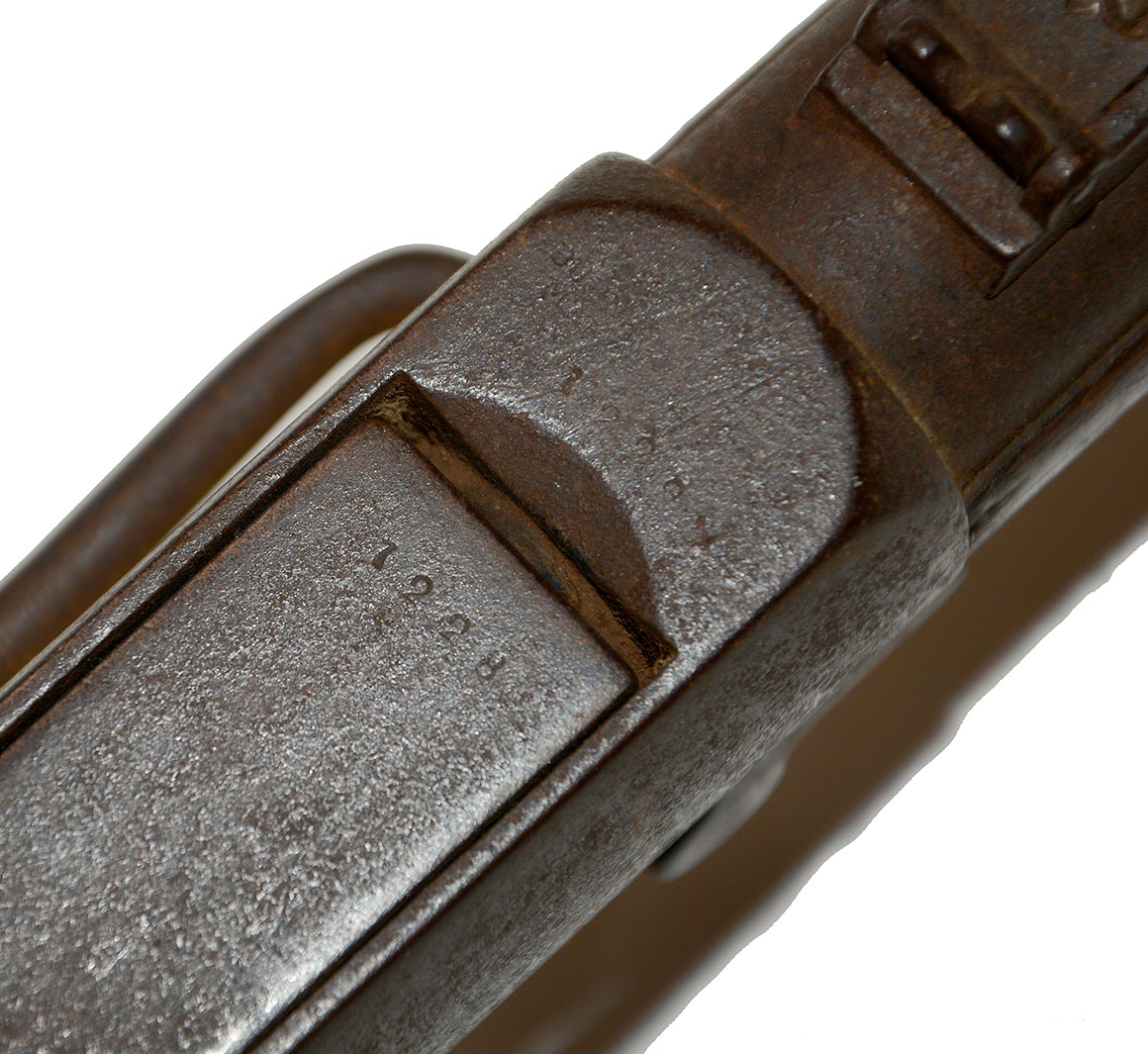
Both carbines have clear maker markings. The Burnside is clearly marked on the lockplate, “BURNSIDE RIFLE Co. / PROVIDENCE, R.I.” The serial number is visible on the breechblock and breech and seems to be 7228. The carbine is a Fourth Model, of which about 7,000 were made, and numbered from about 4100 up, the end of the Third Model. The first deliveries were made in October 1862, with 3,000 delivered by December, making January 1863 a likely date of manufacture, with 1,500 delivered that month. The Smith carbine is the 1863 pattern, set up for a conventional carbine sling, and clearly stamped on the left side of the receiver with a Mass. Arms Co. stamp horizontal at the front, and the Poultney and Trimble agents stamp and Smith patent stamp, also horizontal, to the rear. The Mass Arms company had made the 1861 Model Smith and continued its serial numbers with the M1863, starting about #11,230 and running up to about #21,750. The serial number on the hinge is too pitted to be certain about, but it looks like there may be a “7” and “8” on the left flange. If there was a “1,” before those numbers, or the “7” is actually a “1,” putting the carbine in 17000 or 18000 range, it would date to early 1864 since an estimated 5,000 of the Mass Arms 1863 pattern had been delivered by February 1864. (See McAulay and Spears.)
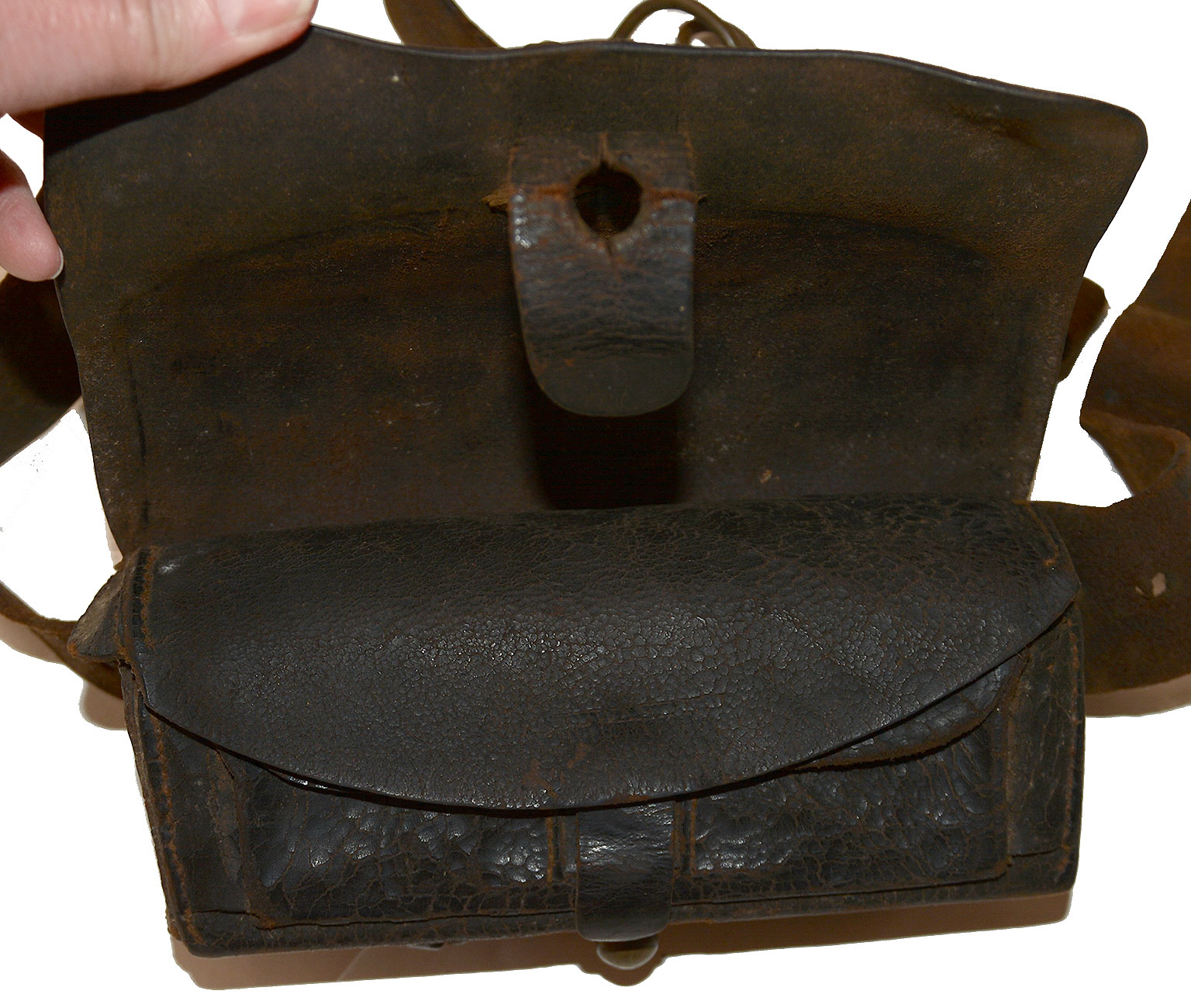
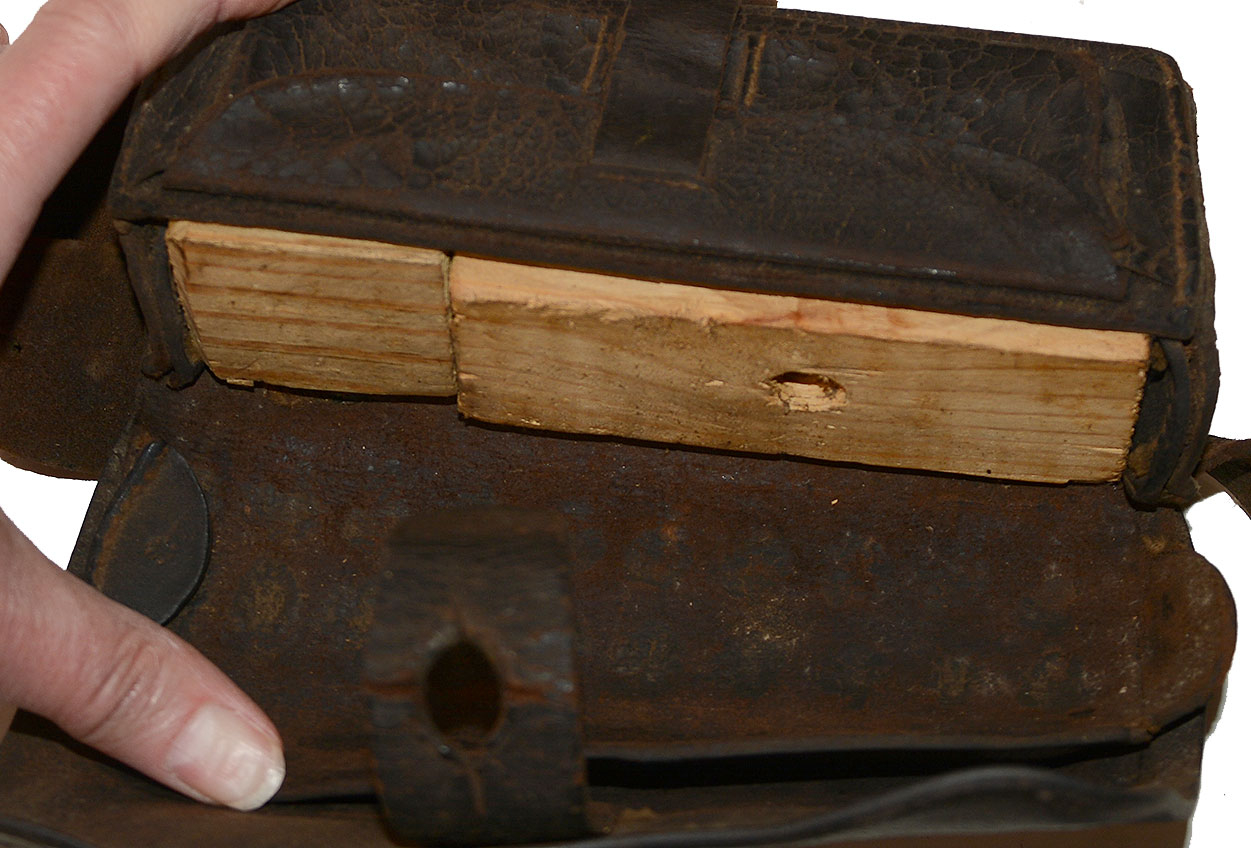
The carbine cartridge box is a standard US issue and in good condition. It lacks the wood cartridge block that would have told us which carbine it was intended for, though with the block removed it could have served for either, or another gun entirely. (There are two wood blocks in it, just to keep its shape.) The cavalry saber belt is a standard US issue enlisted belt with the D-rings and square ring in place, missing the slings and plate, but with the adjusting hook in place.
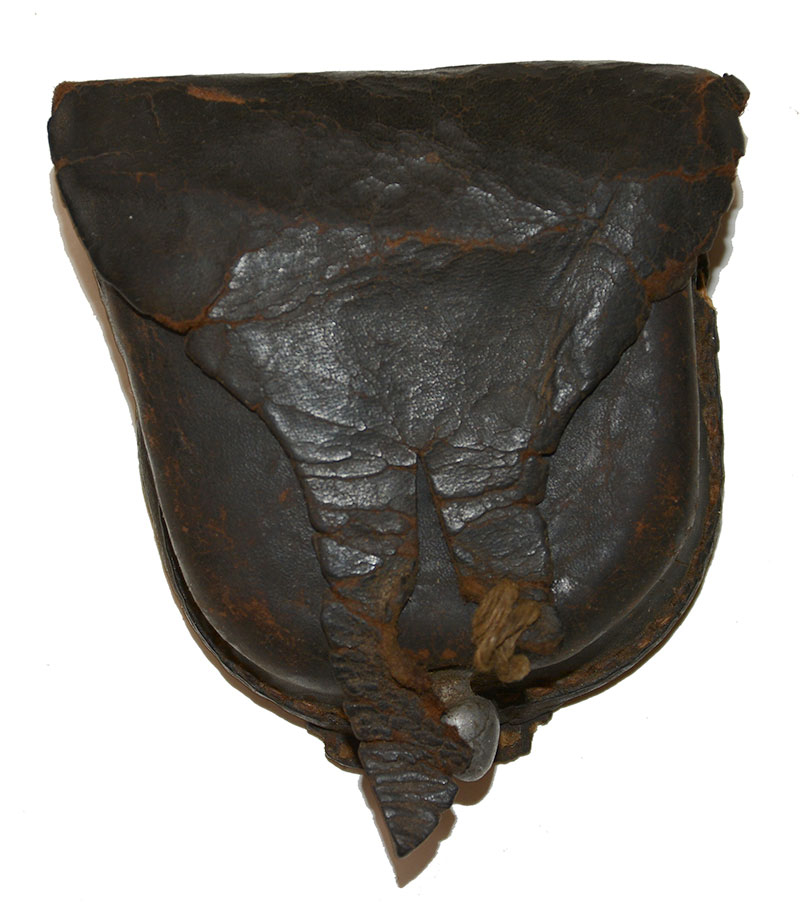
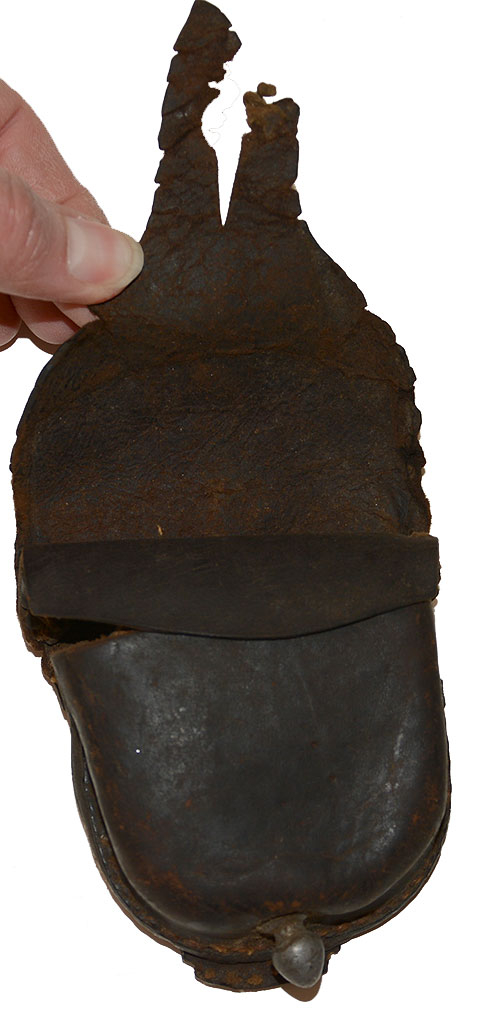
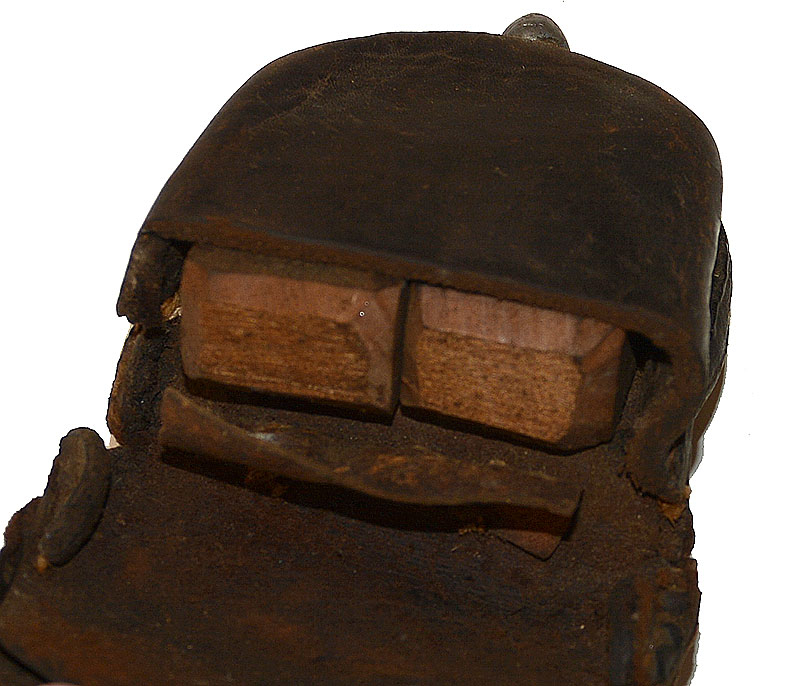
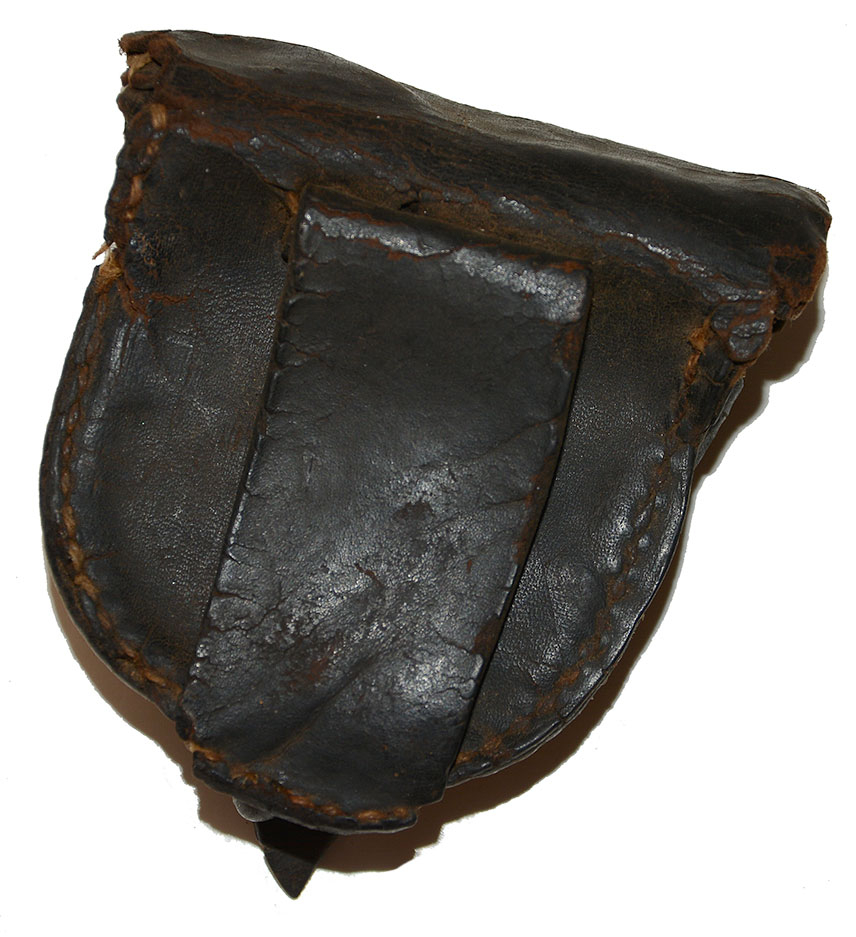
The cap box is a quintessential Confederate product, showing rather crude stitching, a lead/pewter finial, and a single wide belt loop. The outer flap has an integral latch tab that is broken off on one side of the fastening and a bit ragged at the end. It preserves its inner flap with one side ear in place, and the narrow strip of leather sewn inside the upper back that is the remnant of the sheepskin fleece used to keep the percussion caps from being jostled out if the box were left unlatched. The collector or the family put a simple wood block inside to keep its shape.
The carbine sling is a regulation US sling with the snap swivel, brass tip and two-prong buckle, with the spring inside the snap hook broken off, and showing some crude repairs where the roller of the sling swivel apparently pulled through the leather, and where a wedge-shaped section tore out below the buckle. It was also shortened slightly, by leaving the tip in place and cutting the belt at the other end and moving the buckle down, simply using the tongues of the buckle to hold it in place on that end as they do the belt tip.
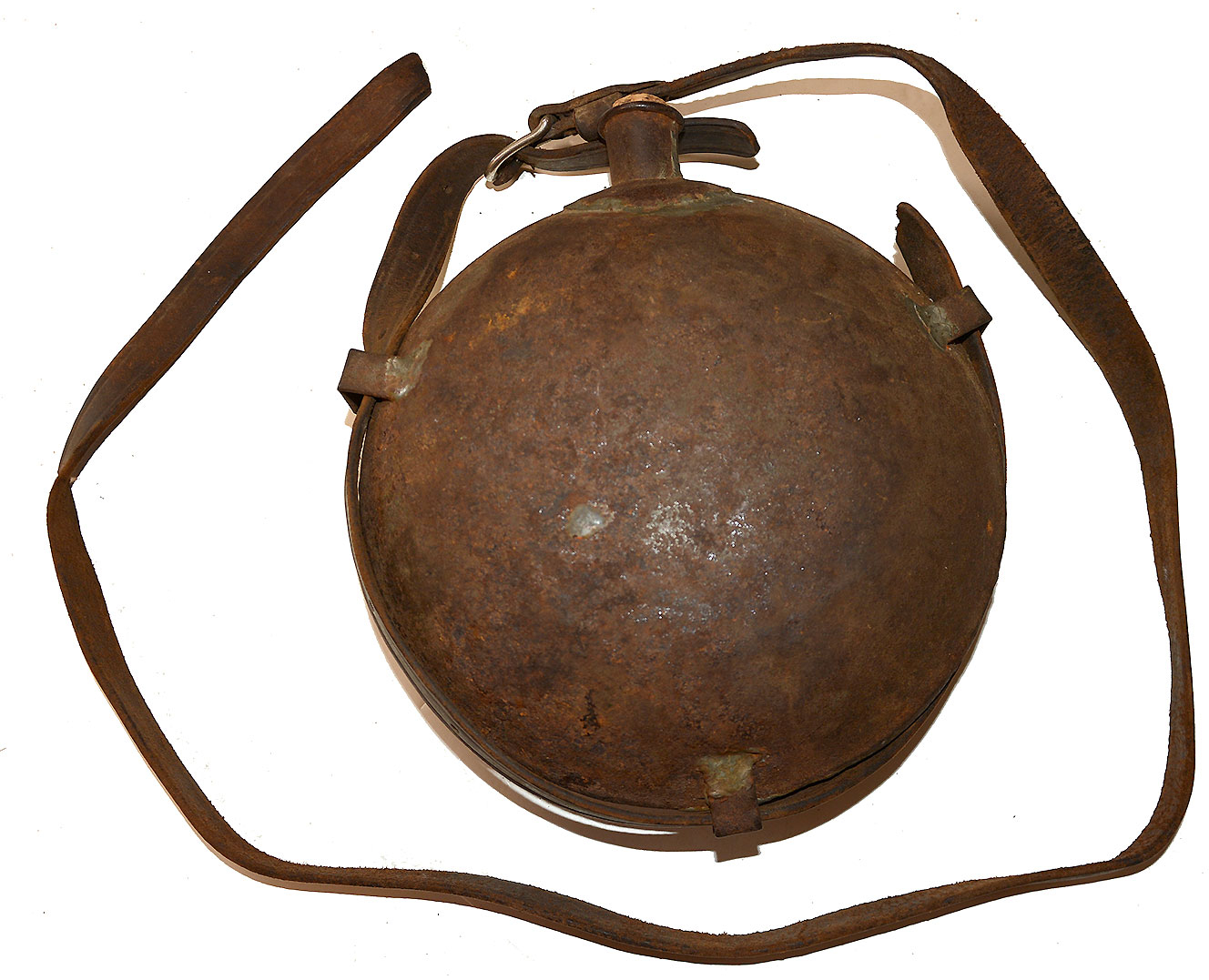
The canteen is a standard issue US smooth-sided M1858 with spout and brackets in place, and using a leather strap as a sling. It shows brown surface rust overall indicating it may have lain outside for some time, but like the other material may simply have lain neglected by the family for a couple of generations.
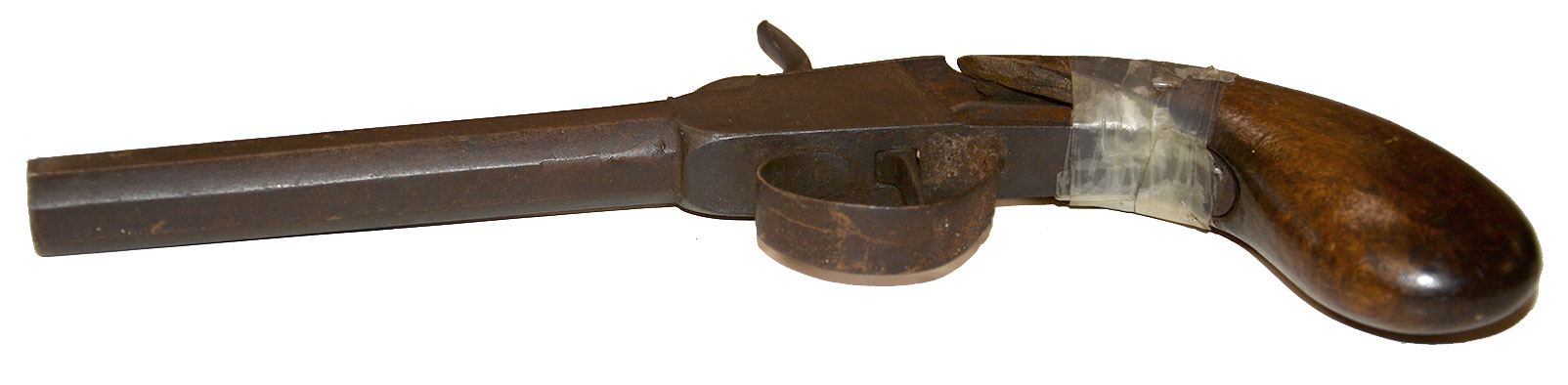
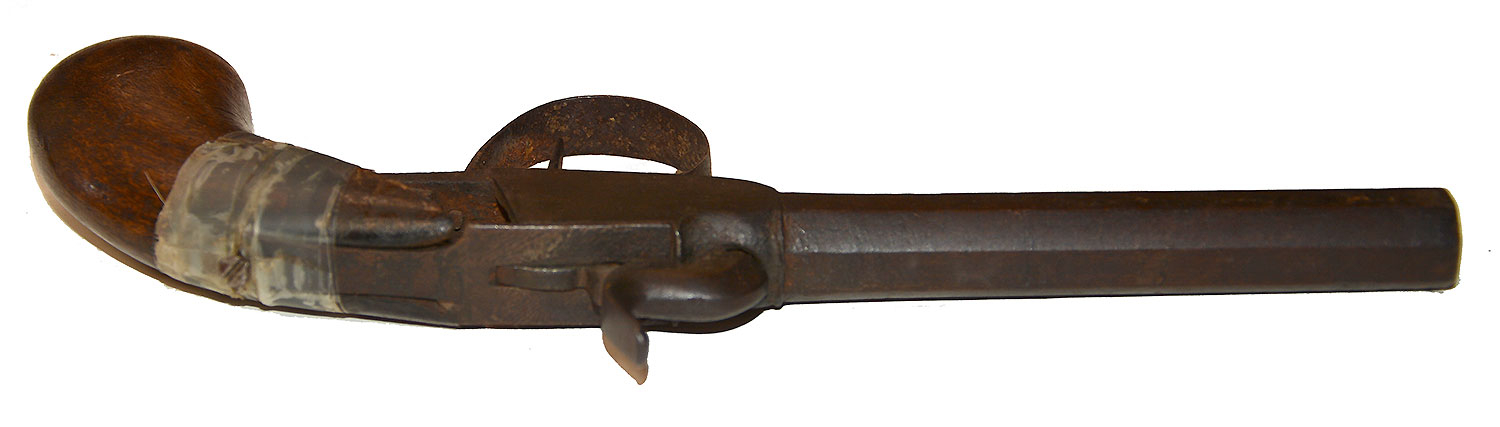
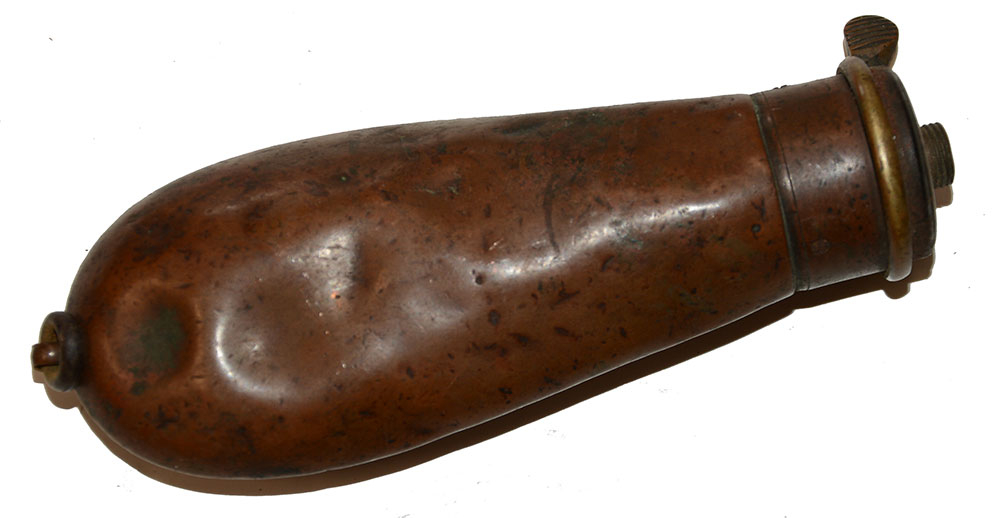
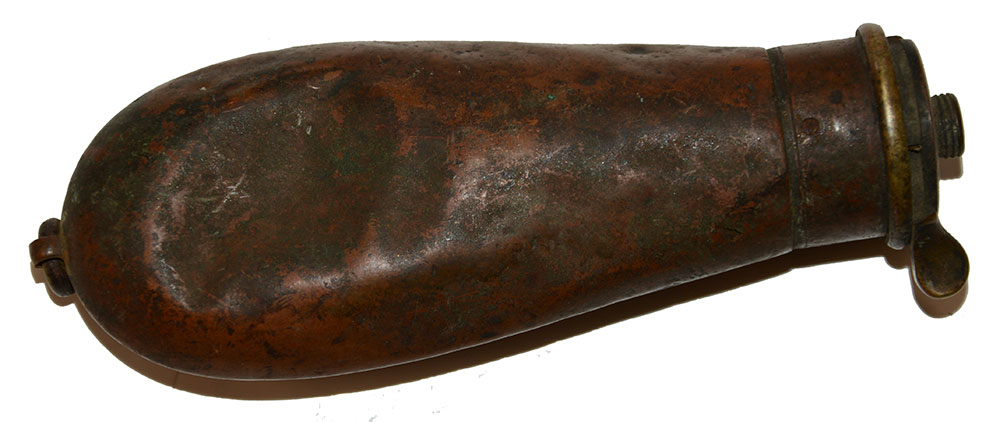
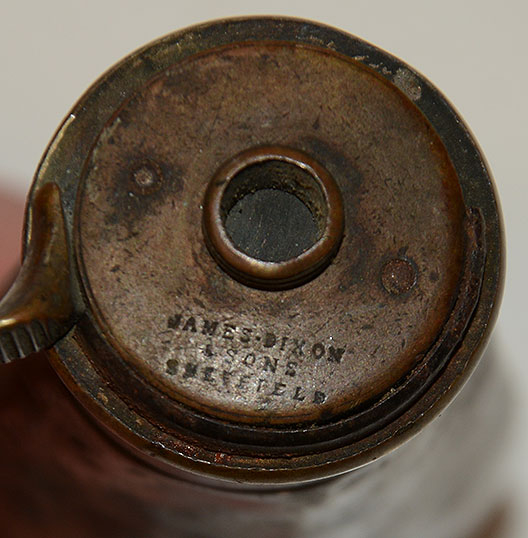
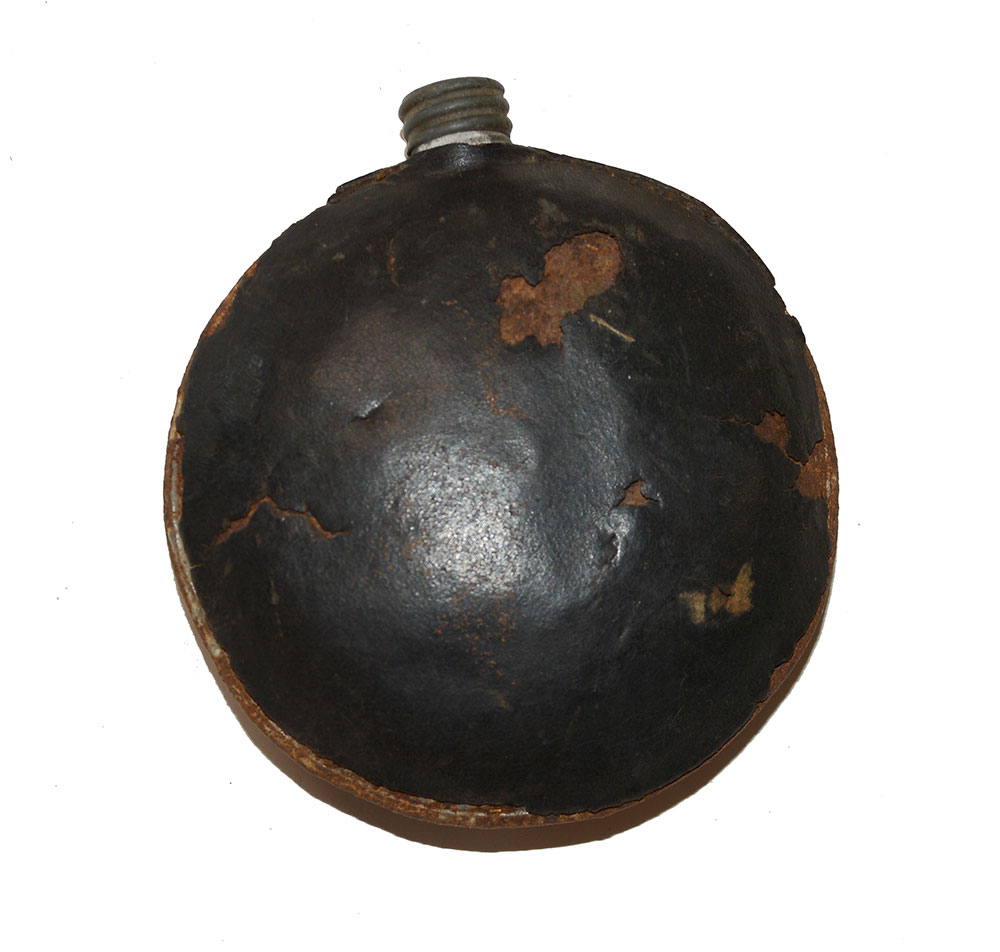
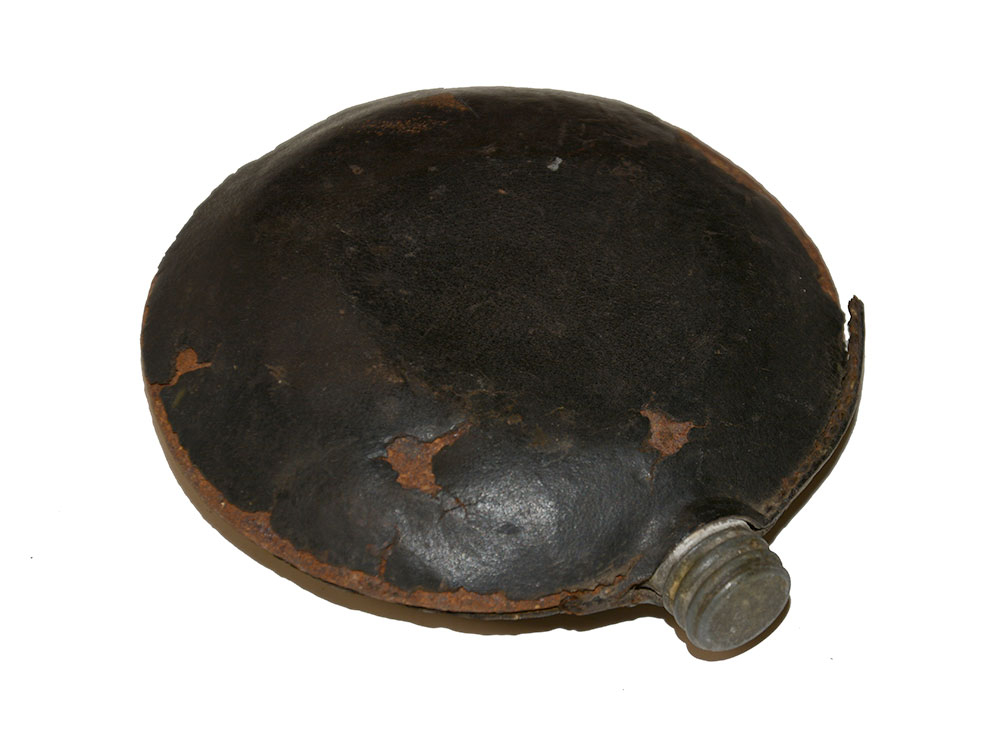
With these are three civilian pieces: a small, black-leather covered screw-top canteen or whiskey flask; a small octagon barrel single-shot boxlock percussion boot or pocket pistol; and a damaged brass powder flask marked James Dixon and Sons, Sheffield. These could be local pick-ups or family related. The leather covering of the canteen has some holes and has given way along the seams, showing rust to the tinned iron body. The pistol has breaks at the upper grips and sideplate, and was held together at that point by simply wrapping it in tape. The flask is dark, with dents to the copper body and is missing the spout, but the brass top is there with clear markings.
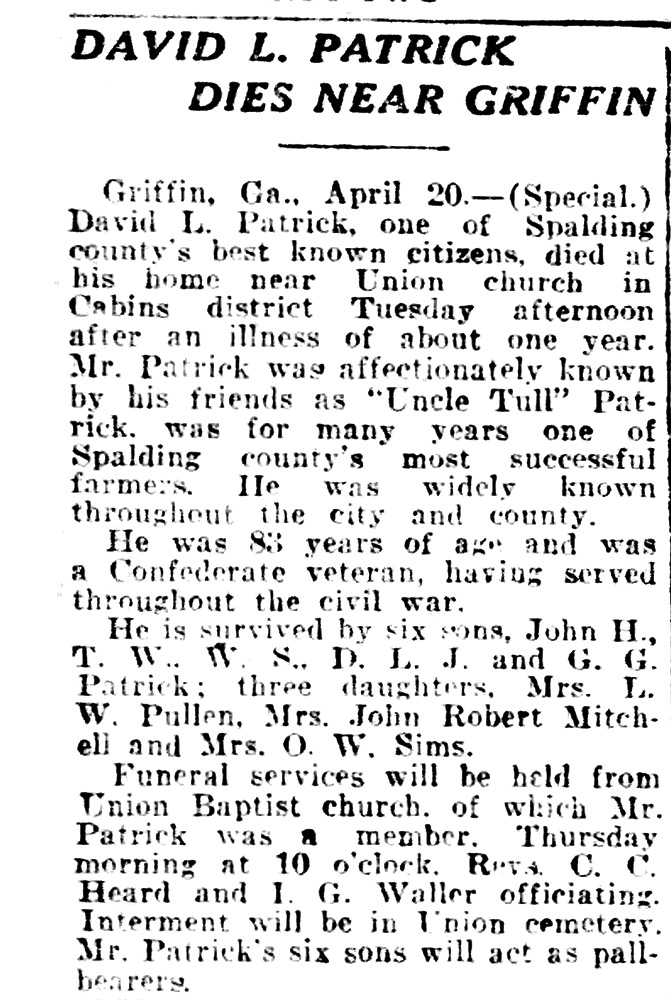
The Confederate veteran, David L. Patrick, was born Feb. 9, 1844, and enlisted as a private in the “Ben Milner Dragoons” of Spalding County, February 15, 1862, at age 17 and mustered into Confederate service on March 19 for “three years or the war” with the company becoming Company E of the 2nd Georgia Cavalry. A recently written regimental history of the unit, entitled “Cracker Cavaliers,” generally available and chronicling their service, says they took part in upwards of 175 engagements of various sorts in Kentucky, Tennessee, Alabama, Georgia, South Carolina, North Carolina- essentially all major western campaigns from the invasion of Kentucky to the Atlanta and Carolinas Campaigns, with one company also spending some time in Virginia. They served under notable Confederate cavalry commanders including Forrest and Wheeler.
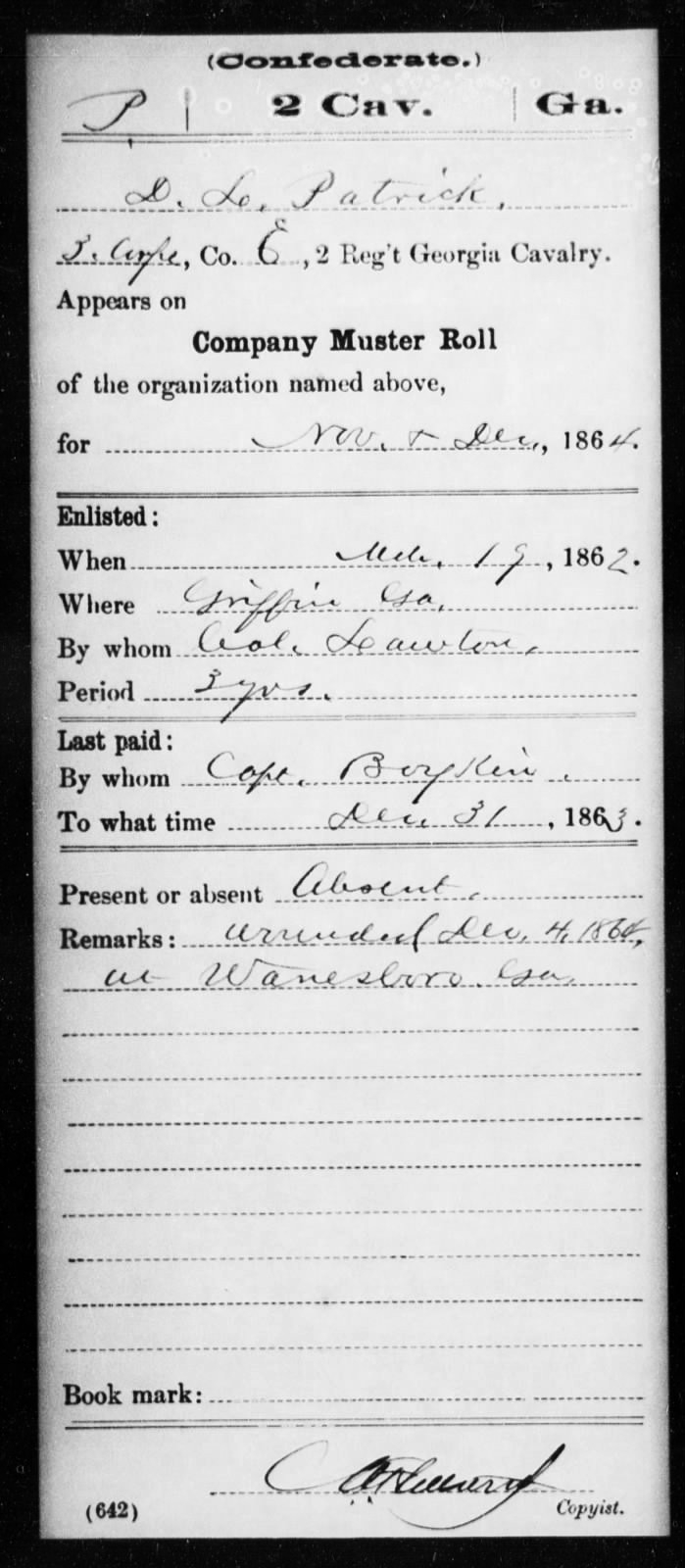
One of their earliest fights was the capture of Murfreesboro and its Union garrison while part of Nathan Bedford Forrest’s brigade, with Patrick’s Company E in particular being the assault company, and taking significant casualties, in attacking the town’s fortified courthouse. When the regiment surrendered on April 26, 1865, only 18 men remained in the ranks out of 1,693 who had been carried on its rosters. Patrick’s records indicate he brought his own horse and horse equipment into the service- typical of Confederate practice, though not Union. He was likely dependable and a good rider: he was detailed as courier from late February to mid-May 1863. The November-December 1864 company roll that lists his wounding at Waynesboro on Dec. 4, 1864, and has him “absent wounded,” also lists him as “3rd Corporal,” indicating a promotion at some earlier point. Waynesboro was one of many engagements with Union forces as Confederate cavalry sought to harass and impede Sherman’s approach to Savannah in the March to the Sea.
Patrick’s file contains no indication of further military service, but the records are incomplete and he may well have rejoined the company. In any case, after the fighting, he returned to Spalding County where he lived for the rest of his life in the “Cabins District.” Known locally as “Uncle Tull,” he was a successful farmer, married in 1866, and at his death in 1927 was survived by three daughters and six sons, one of whom had been named “General Gordon Patrick,” likely in tribute to CS General John B. Gordon. The branch of the family in which this material descended was reportedly in the Kennesaw area when the material passed to the hands of the collector.
We include printouts of his CMSR file. The regimental history of the unit is widely available and would certainly contain pertinent information. This is an interesting family archive connected with a very active Confederate cavalry regiment. [sr][ph:L]
~~~~~~~~~~~~~~~~~~~~~~~~~~~~~~~~~~~
THIS ITEM, AS WITH ALL OTHER ITEMS AVAILABLE ON OUR WEB SITE,
MAY BE PURCHASED THROUGH OUR LAYAWAY PROGRAM.
CLICK HERE FOR OUR POLICIES AND TERMS.
THANK YOU!
Inquire About KENNESAW GEORGIA AREA BATTLEFIELD PICK-UPS FROM A GA CAVALRY VET’S FAMILY INCLUDING TWO CARBINES AND SOME OF HIS OWN WARTIME GEAR
Most Popular
Historical Firearms Stolen From The National Civil War Museum In Harrisburg, Pa »
Theft From Gravesite Of Gen. John Reynolds »
Selection Of Unframed Prints By Don Troiani »
Fine Condition Brass Infantry Bugle Insignia »
featured item
MAGNIFICENT SET OF SILVER GAMECOCK HEAD SPURS PRESENTED BY THE OFFICERS OF THE FIRST DELAWARE TO MAJOR GENERAL W.H. FRENCH
Unique in our experience, these impressive silver spurs are cast and chased in the form of a fighting rooster or gamecock. Intricately worked feathers spread back on the sidebars from the neck of each spur as they might on a pair of their far more… (282-466). Learn More »
site search