


site search
online catalog
IN AN AMAZING STATE OF PRESERVATION, A FRENCH MODEL 1763 BAYONET
Hover to zoom
$795.00
Quantity Available: 1
Item Code: 1202-2307
Shipping: Determined by Method & Location of buyer
To Order:
Call 717-334-0347,
Fax 717-334-5016, or E-mail
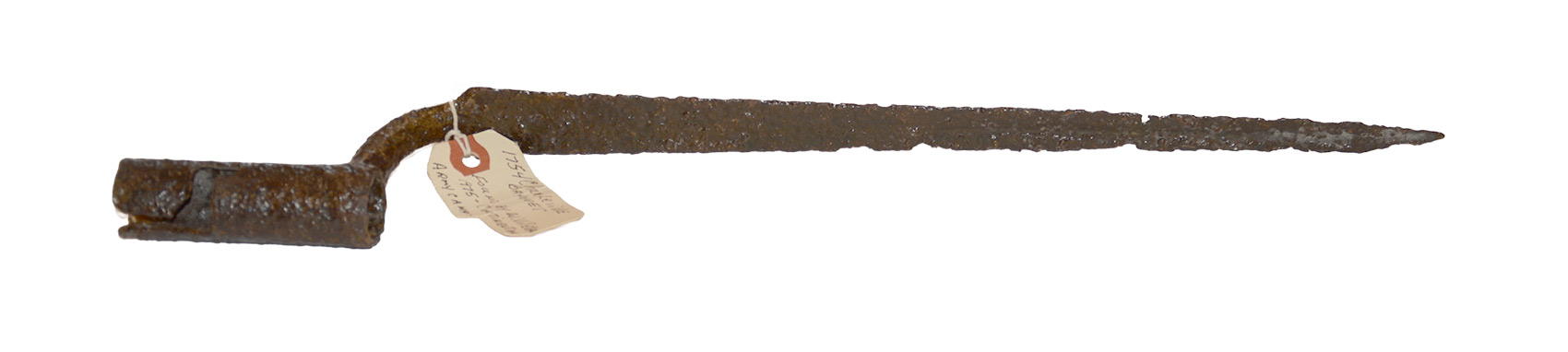
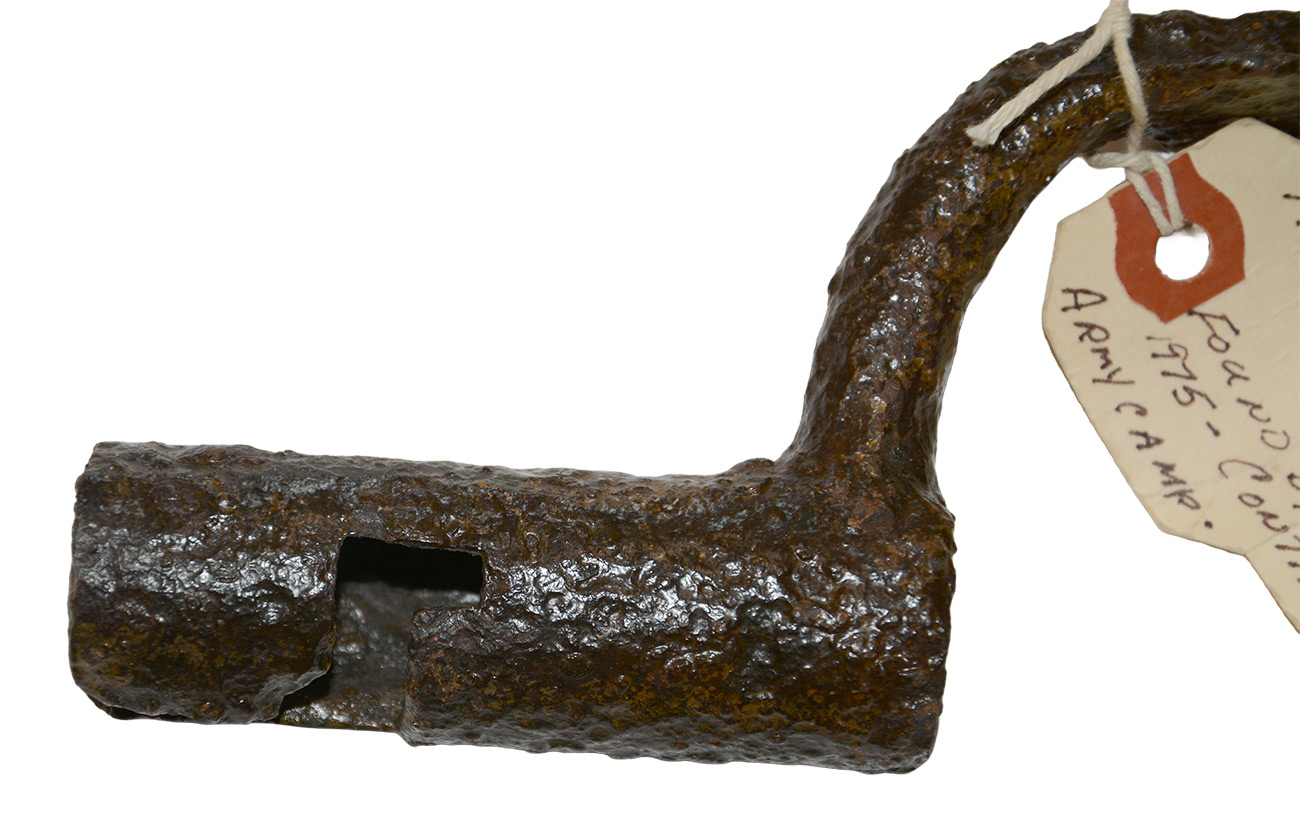
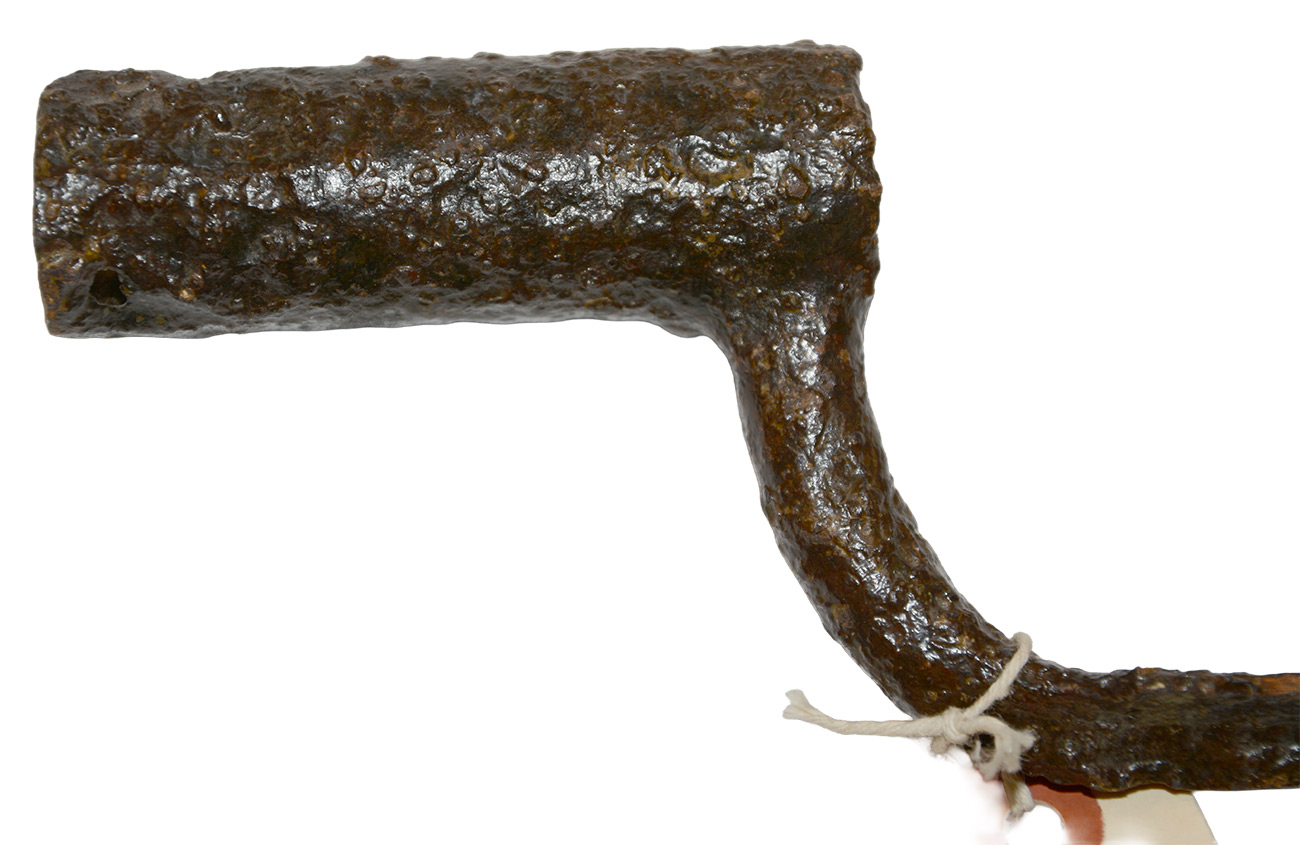
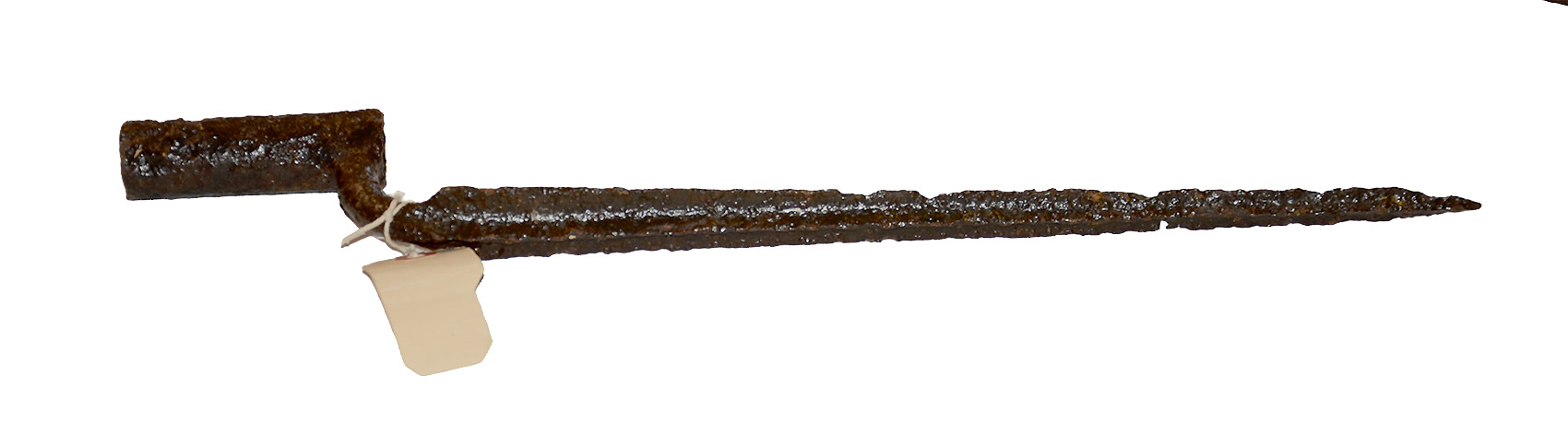
A 40 odd year-old tag states that this bayonet was excavated at a "CONTINENTAL ARMY CAMP..." in "1975". The tag further states that it is a "1754 CHARLEVILLE BAYONET". However, it is not a Model 1754 bayonet but rather a first Model 1763 bayonet which would have fitted a French musket that had the bayonet lug on the bottom of the barrel rather than the top like a Model 1754. The fact it has no locking ring indicates that it was made for such a musket prior to 1769 when the locking ring became universal. Accordingly, this would have been on a musket that was imported by the Colonists early on in the Rebellion; these "Charlevilles" when they do come up for sale are highly prized. The excavated bayonet is 90% intact; with the majority of losses appear as chipping on the edges of the 13 1/2-inch blade. The blade is 1 1/8th inch wide at the rear and a narrow 1/4-inch fuller runs back from the intact point 7 inches. The socket on this bayonet is 3 1/2 inches and has one small hole in it. The "neck" between the blade and socket is 2 inches long. The overall length is 18 inches. There is a coating of varnish over the entire bayonet. This excavated relic of our American Revolution, as an excavated example in this condition, is far rarer than a non-excavated example. [pe][ph:L]
~~~~~~~~~~~~~~~~~~~~~~~~~~~~~~~~~~~
THIS ITEM, AS WITH ALL OTHER ITEMS AVAILABLE ON OUR WEB SITE,
MAY BE PURCHASED THROUGH OUR LAYAWAY PROGRAM.
CLICK HERE FOR OUR POLICIES AND TERMS.
THANK YOU!
Inquire About IN AN AMAZING STATE OF PRESERVATION, A FRENCH MODEL 1763 BAYONET
Most Popular
Historical Firearms Stolen From The National Civil War Museum In Harrisburg, Pa »
Theft From Gravesite Of Gen. John Reynolds »
Selection Of Unframed Prints By Don Troiani »
Fine Condition Brass Infantry Bugle Insignia »
Rare Identified 65Th Ny Sergeant’s Jacket, With Manscript Material: 1St U.s. Chasseurs »
featured item
FINE ITALIAN SNAPHAUNCE BELT PISTOL CA. 1675
The snaphaunce is one of the earlier forms of flint and steel ignition and was introduced in the mid-16th century. It remained in use in Northern Italy into the mid-18th century giving it a particularly long period of use. Ornate pistols such as… (2026-657). Learn More »
site search