


site search
online catalog
Relics
Showing 101 to 110 out of 338
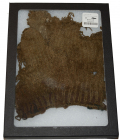
SCARCE INDIAN WAR SOLDIER’S MITTEN FROM FORT PEMBINA, ND
This comes from the excavations at Fort Pembina, occupied 1870-1895, where cold weather in winter months might well be a concern. The army began issuing mittens in 1873. Before that men were left to… (1052-620). Learn More »
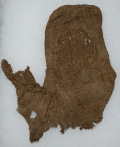
INDIAN WAR SOLDIER’S MITTEN FROM FORT PEMBINA, ND
This comes from the excavations at Fort Pembina, occupied 1870-1895, where cold weather in winter months might well be a concern. The army began issuing mittens in 1873. Before that men were left to… (1052-619). Learn More »

SPRINGFIELD 1838 DATED M1816 PERCUSSION CONVERSION MUSKET FROM THE YORK SPRINGS, PA., G.A.R. POST, WITH MILITARY RACK MARKINGS
A good example of a classic early Civil War musket: a Model 1816 converted from flintlock to percussion in the early 1850s to bring it up to par with the new, percussion M1842 muskets. These are .69… (1202-429). Learn More »
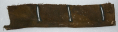
CIVIL WAR-INDIAN WAR UNIFORM LAPEL FROM FORT PEMBINA
This strip of cloth showing three buttonholes (and what seems to be part of a fourth) is the remnant of an army dress coat discarded after its useful days were done at Fort Pembina, a small frontier… (1052-610). Learn More »
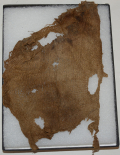
INDIAN WAR SOLDIER’S MITTEN PIECE FROM FORT PEMBINA, ND
This comes from the excavations at Fort Pembina, occupied 1870-1895, where cold weather in winter months might well be a concern. The army began issuing mittens in 1873. Before that men were left to… (1052-621). Learn More »
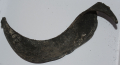
CIVIL WAR-INDIAN WAR FORAGE CAP VISOR
This is a well preserved leather visor from a forage cap recovered at Fort Pembina, ND, where it was preserved in remarkable condition by wet, anaerobic soil conditions. This is typical of the simple… (1052-485). Learn More »
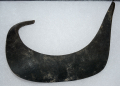
CIVIL WAR-INDIAN WAR FORAGE CAP VISOR
This is a well preserved leather visor from a forage cap recovered at Fort Pembina, ND, where it was preserved in remarkable condition by wet, anaerobic soil conditions. This is typical of the simple… (1052-482). Learn More »
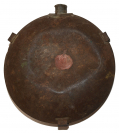
RELIC US CIVIL WAR CANTEEN: FROM YORK SPRINGS, PA, GAR POST #9
This regulation, smooth-sided canteen came from the York Springs G.A.R. post, is pretty clearly an early battlefield pick-up, and may well have a Gettysburg origin. It is untagged, however, with the… (2023-2674). Learn More »
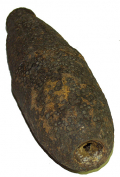
U.S. 3” SCHENKL PERCUSSION SHELL – EAST CAVALRY FIELD, GETTYSBURG - GEISELMAN COLLECTION
This Federal, intact 3” Schenkl percussion shell specimen is a wonderful artillery relic recovered from East Cavalry Field sometime after the Battle of Gettysburg. The percussion shell measures 9”… (2024-2389). Learn More »
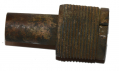
RELIC -- US NAVAL WATERCAP FUSE WITH BUSHING, DATED 1864
Excavated naval watercap fuse dated 1864 and in good condition. This fuse is made of brass with flange on top, with threaded portion and tapered body. A brass bushing is on this fuse to fit into… (2024-2327). Learn More »
Showing 101 to 110 out of 338
Most Popular
Historical Firearms Stolen From The National Civil War Museum In Harrisburg, Pa »
Theft From Gravesite Of Gen. John Reynolds »
Selection Of Unframed Prints By Don Troiani »
Fine Condition Brass Infantry Bugle Insignia »
Large English Bowie Knife With Sheath 1870’S – 1880’S »
Imported (Clauberg) Us Model 1860 Light Cavalry Officer's Saber »
featured item
A BEYOND RARE CS ARKANSAS FROCK COAT AND "BONNET DE POLICE"
Mr. Ray Richey, owner of the Texas Civil War Museum, purchased this uniform coat and hat directly from an Arkansas estate in 2003. Twenty-six years prior to this it was acquired from the Beneux Plantation in Mulberry, Arkansas. Positive… (1268-057). Learn More »
site search