


site search
online catalog
Relics
Showing 151 to 200 out of 321
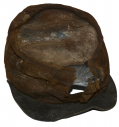
REGULAR ARMY CIVIL WAR ENLISTED KEPI WITH INDIAN WAR USE FROM FORT PEMBINA, NORTH DAKOTA
This Civil War enlisted man’s kepi comes from excavations at Fort Pembina, ND, conducted on private property with the owner’s permission. The fort was established in 1870 by troops of the 20th US… (1052-250). Learn More »
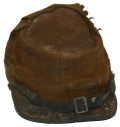
REGULAR ARMY CIVIL WAR ENLISTED KEPI WITH INDIAN WAR USE FROM FORT PEMBINA, NORTH DAKOTA
This Civil War enlisted man’s kepi comes from the excavations at Fort Pembina, ND, conducted on private property with the owner’s permission, and is in a remarkable state of preservation from the… (1052-252). Learn More »
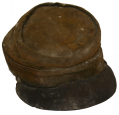
REGULAR ARMY MODEL 1872 KEPI FROM FORT PEMBINA, NORTH DAKOTA
This Model 1872 officer’s kepi comes from excavations at Fort Pembina, ND, conducted on private property with the owner’s permission. The fort was established in 1870 by troops of the 20th US… (1052-248). Learn More »
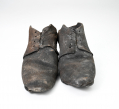
INDIAN WAR ARMY SHOES BY MUNDELL FROM FORT PEMBINA, ND
This pair of shoes is from the excavations at Fort Pembina, ND, and could be taken for attic or barn-finds, having been preserved by the wet, anaerobic soil conditions of the dig. They are solid, can… (1052-387). Learn More »
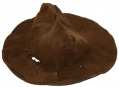
INDIAN WAR FIELD-USED CAMPAIGN HAT MADE FROM A CIVIL HARDEE HAT
This is a real field-used example of an Indian War US Army campaign hat made from a Civil War M1858 issue dress hat (the “Hardee” or “Jeff Davis” hat) that comes from the excavations at Fort… (1052-245). Learn More »
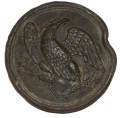
CIVIL WAR NCO SWORD CROSSBELT PLATE FROM FREDERICKSBURG
This pattern of belt plate was first adopted in 1826 with hooks on the reverse for the bayonet shoulder belt and made of stamped rolled brass for artillery and white metal for infantry. This was… (490-5799). Learn More »
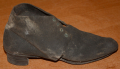
US INSPECTED ARMY SHOE FROM FORT PEMBINA, ND
This soldier’s shoe bears a partially visible stamp inside reading “INSPECTOR / NEW YORK,” indicating it is government issue and appears to be one of the experimental patterns of footwear tried… (1052-386A). Learn More »
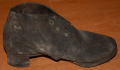
ARMY SHOE FROM FORT PEMBINA, ND
This soldier’s shoe is very similar to another found in the Fort Pembina excavations that has a partially visible US inspector’s mark and in construction differs only in having four sets of lace… (1052-386B). Learn More »
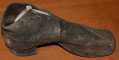
RARE MARKED CIVIL WAR ARMY ISSUE SHOE
Civil War army-issue shoes were among the most essential things issued to a soldier and about the rarest of Civil War items to survive despite being made literally in the millions. They were cheaply… (1052-596). Learn More »
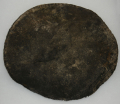
KEPI OR DRESS HAT STIFFENER FROM FORT PEMBINA
This comes from the excavations at Fort Pembina, ND, a small frontier army post in operation from 1870 to 1895, and seems to be the stiffener from inside the top of a kepi or dress hat. It is leather,… (1052-435). Learn More »
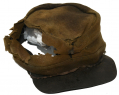
REGULAR ARMY CIVIL WAR ENLISTED KEPI WITH INDIAN WAR USE FROM FORT PEMBINA, NORTH DAKOTA
This Civil War enlisted man’s kepi comes from the excavations at Fort Pembina, ND, conducted on private property with the owner’s permission. The fort was established in 1870 by troops of the 20th… (1052-247). Learn More »
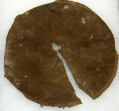
KEPI CROWN FROM AN INDIAN WARS US ARMY FRONTIER FORT
This crown from a soldier’s kepi comes from excavations at Fort Pembina, ND, and shows a small hole at center, from which extends a tear to one edge, with some edge wear and stains. The color has… (1052-432). Learn More »
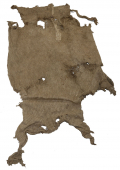
PIECE OF PRIVATE PURCHASE SOLDIER’S HIGH RIBBED KNIT SHIRT FORT PEMBINA, NORTH DAKOTA
Excavations at Fort Pembina in anaerobic soil conditions have yielded a number of expected and rare finds giving a glimpse of the material culture of a small US army frontier post during the Indian… (1052-1111). Learn More »
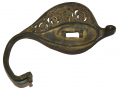
EXCAVATED HILT FOR A M1850 FOOT OFFICER SWORD
This is the cast and chased brass counterguard and knucklebow from a regulation US 1850 pattern foot officer’s sword, the standard sword carried in the Civil War by infantry lieutenants and… (490-6773). Learn More »
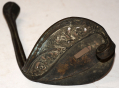
EXCAVATED HILT FOR A M1850 FOOT OFFICER SWORD
This is an excavated brass counterguard and knucklebow from a regulation US 1850 pattern foot officer’s sword, the standard sword carried in the Civil War by infantry lieutenants and captains, as… (490-6775). Learn More »
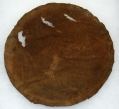
KEPI CROWN FROM FORT PEMBINA, NORTH DAKOTA
This crown from a soldier’s kepi comes from excavations at Fort Pembina, ND, and shows three oval holes and one small slit, with some edge wear and stains. The color has shifted from blue to brown,… (1052-430). Learn More »
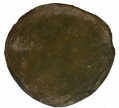
KEPI CROWN FROM FORT PEMBINA, NORTH DAKOTA
This crown from a soldier’s kepi comes from excavations at Fort Pembina, ND, and is in remarkably good condition, showing just one short tear, with no fabric missing, a good edge, and traces of blue… (1052-442). Learn More »
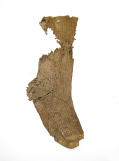
INDIAN WAR SOLDIER’S SOCK FROM FORT PEMBINA, ND
This comes from the excavations at Fort Pembina, ND, and appears to be the 1877 pattern army sock, which was medium gray in color, had white toes, and the weave of the heel running parallel with the… (1052-592). Learn More »
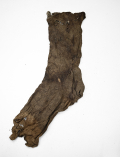
CIVIL WAR - INDIAN WAR SOCK FROM FORT PEMBINA, ND
This comes from the excavations at Fort Pembina, ND, a fort established in 1870 and in operation into the 1890s. The dig was conducted on private property with the owner’s permission and has yielded… (1052-581). Learn More »
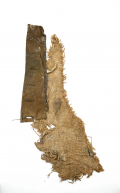
CIVIL WAR UNIFORM DRESS COAT LAPEL FROM FORT PEMBINA
These section of lapel and coat lining from a Civil War US army dress coat was discarded by a soldier at Fort Pembina, ND, where it was recently recovered from excavations in wet, anaerobic soil that… (1052-567). Learn More »
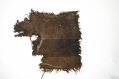
PIECE OF ARMY BLANKET FROM FORT PEMBINA, NORTH DAKOTA
This piece of a U.S. Army blanket comes from the excavations at Fort Pembina, ND, where wet, anaerobic soil conditions produced not only leather gear, but cloth in amazingly good condition. This shows… (1052-607). Learn More »
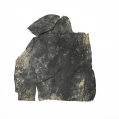
SCARCE CIVIL WAR PONCHO OR “GUM BLANKET” FRAGMENT
Civil War period ponchos and rubber blankets are extremely scarce despite being widely used and valued by troops in the field. They were so useful at home as to be used up by veterans and their… (1052-628). Learn More »
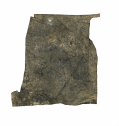
SCARCE CIVIL WAR INDIA RUBBER BLANKET OR PONCHO FRAGMENT
Excavated portion of a Civil War poncho or rubber blanket. This is a rough rectangle, preserving one edge with its binding intact and one of the brass grommets, with its diamond/square shaped… (1052-570). Learn More »
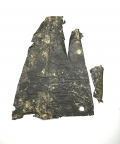
SCARCE CIVIL WAR INDIA RUBBER BLANKET OR PONCHO FRAGMENT
Excavated portion of a Civil War poncho or rubber blanket. This comes from the excavations at Fort Pembina in North Dakota, an army post garrisoned from 1870 to 1895. They were supplied at first with… (1052-568). Learn More »
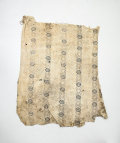
PIECE OF PRIVATE PURCHASE SOLDIER’S SHIRT FORT PEMBINA, NORTH DAKOTA
Army issue shirts had little going for them in comfort and less in style. This is a fragment of a privately purchased shirt from the excavations at Fort Pembina, ND, garrisoned from 1870 to 1895. This… (1052-606). Learn More »
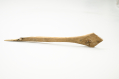
CARVED WOOD FROM FORT PEMBINA
At least one other similarly shaped piece of wood has come from the excavations at Fort Pembina, near the Red River in North Dakota. At first sight we guessed it was a wood arrow carved as for use as… (1052-637). Learn More »
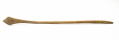
CARVED WOOD FROM FORT PEMBINA
Excavated at Fort Pembina, near the Red River in North Dakota, this tapered wood cylinder is most likely a buoy or float from a fishing net, having grooves cut at either end for tying in place. Army… (1052-636). Learn More »
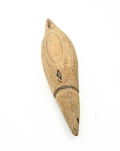
FISHING NET FLOAT OR BUOY FROM FORT PEMBINA
Excavated at Fort Pembina, near the Red River in North Dakota, this tapered wood cylinder is most likely a buoy or float from a fishing net, having grooves cut at either end for tying in place. Army… (1052-638). Learn More »
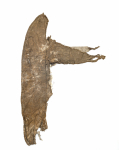
MODEL 1872 FATIGUE BLOUSE FRAGMENT: FORT PEMBINA
This appears to be the rollover collar and portion of the chest from a M1872 fatigue blouse. This was pleated nine-button blouse piped on the collar and cuff, made in lined and unlined versions, with… (1052-598). Learn More »
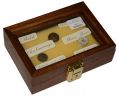
ATTRACTIVE WOOD CASE WITH RELICS FROM SHILOH, STONES RIVER, & CHICKAMAUGA
Here is a wood display case 6.75” x 5” with fine brown tone. Inside are three relics; one each from Shiloh, Chickamauga, and Stones River. At top is a fine Confederate Staff Officer’s button… (1235-59). Learn More »
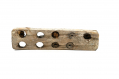
DRILLED WOOD BLOCK FROM FORT PEMBINA
This comes from the excavations at Fort Pembina, ND, conducted on private property with the owner’s permission, and is in a remarkable state of preservation from the wet, anaerobic conditions of the… (1052-635). Learn More »
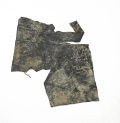
SCARCE CIVIL WAR PONCHO OR “GUM BLANKET” FRAGMENT
Civil War period ponchos and rubber blankets are extremely scarce despite being widely used and valued by troops in the field. They were so useful at home as to be used up by veterans and their… (1052-630). Learn More »
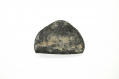
KEPI OR DRESS HAT STIFFENER FROM FORT PEMBINA
This leather disk seems to be the stiffener from inside the top of a hat, either a kepi or dress hat. It is circular and folded over on one side, black in color with gray and white stains, and comes… (1052-476). Learn More »
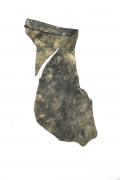
SCARCE CIVIL WAR PONCHO OR “GUM BLANKET” FRAGMENT
This scarce fragment comes from either a poncho or blanket (often referred to as “rubberized,” “gum,” or “painted” blankets.) The significant difference being the presence of slit for the… (1052-627). Learn More »
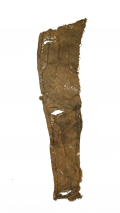
CIVIL WAR-INDIAN WAR UNIFORM COAT LAPEL FROM FORT PEMBINA
This strip of cloth shows three buttonholes indicating it is from the lapel of a coat and the spacing suggests it is from an army fatigue blouse. This comes from excavations at Fort Pembina, a small… (1052-614). Learn More »
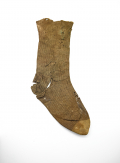
INDIAN WAR SOLDIER’S SOCK FROM FORT PEMBINA, ND
This appears to be the 1877 pattern army sock, which was medium gray in color, had white toes, and the weave of the heel running parallel with the leg and nearly at a right angle to the foot. We show… (1052-594). Learn More »
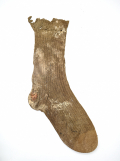
INDIAN WAR SOLDIER’S SOCK FROM FORT PEMBINA, ND
This comes from the excavations at Fort Pembina, ND, and appears to be the 1877 pattern army sock, which was medium gray in color, had white toes, and the weave of the heel running parallel with the… (1052-593). Learn More »
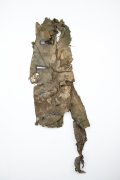
CIVIL WAR-INDIAN WAR UNIFORM COAT LAPEL FROM FORT PEMBINA
This strip of cloth with four closely spaced button holes is likely the remnant of an army dress coat discarded after its useful days were done at Fort Pembina, a small frontier garrison in North… (1052-613). Learn More »
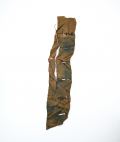
CIVIL WAR-INDIAN WAR UNIFORM LAPEL FROM FORT PEMBINA
This strip of cloth showing six buttonholes is likely the remnant of an army dress coat discarded after its useful days were done at Fort Pembina, a small frontier garrison in North Dakota, where wet,… (1052-612). Learn More »
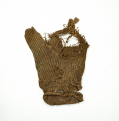
SCARCE INDIAN WAR SOLDIER’S MITTEN FROM FORT PEMBINA, ND
This comes from the excavations at Fort Pembina, occupied 1870-1895, where cold weather in winter months might well be a concern. The army began issuing mittens in 1873. Before that men were left to… (1052-585). Learn More »
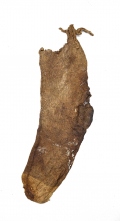
INDIAN WAR SOLDIER’S SOCK FROM FORT PEMBINA, ND
This comes from the excavations at Fort Pembina, ND, and appears to be the 1877 pattern army sock, which was medium gray in color, had white toes, and the weave of the heel running parallel with the… (1052-583). Learn More »
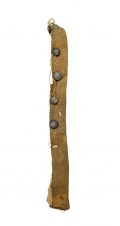
CIVIL WAR-INDIAN WAR UNIFORM COAT LAPEL FROM FORT PEMBINA
This lapel comes from a US army coat discarded by a soldier at Fort Pembina, ND, and still has five enlisted, general service eagle buttons in place. This comes from excavations in wet, anaerobic soil… (1052-565). Learn More »
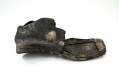
SCARCE CIVIL WAR ARMY ISSUE SHOE, A.K.A. BROGAN OR BOOTTEE
This Civil War issue shoe is missing the vamp, but shows illustrates the typical construction of an issue brogan. This comes from a U.S. Army Indian War post established in 1870, a period in which the… (1052-542). Learn More »
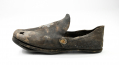
SCARCE CIVIL WAR ARMY ISSUE BROGAN ALTERED TO A BARRACKS SHOE AT FORT PEMBINA
This Civil War army-issue shoe is in very good condition though excavated and easy to take for a barn or attic find. This was recovered at Fort Pembina, ND, a US army post established in 1870, where… (1052-287). Learn More »
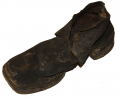
US ISSUE MODEL 1872 SHOE, MAKER MARKED, POSSIBLY BY JOHN MUNDELL OF PHILADELPHIA
This army-issue was excavated at Fort Pembina, ND, established in 1870 and in operation to 1895. It was found on private property, with the owner’s permission, and is in good condition, a result of… (1052-492). Learn More »
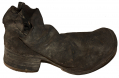
EARLY INDIAN WAR ALTERED BARRACKS OR CAMP SHOE
This is an unusual Indian War soldier’s camp or barracks shoe from Fort Pembina, ND, a small U.S. army post from 1870 to 1895. The heel portion of the quarters was cut away, either to salvage the… (1052-288). Learn More »
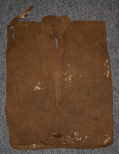
CIVIL WAR ERA WORKSHIRT/SMOCK MADE FROM ALTERED SHIRT FORT PEMBINA
This is a simple shirt altered by a soldier at a frontier US Army fort for wear as smock to shield his uniform while on a work or fatigue detail and comes from excavations at Fort Pembina, North… (1052-649). Learn More »
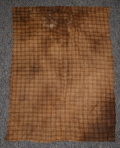
CIVIL WAR ERA WORKSHIRT/SMOCK MADE FROM ALTERED SHIRT FORT PEMBINA
This is a simple shirt altered by a soldier at a frontier US Army fort for wear as smock to shield his uniform while on a work or fatigue detail and comes from excavations at Fort Pembina, North… (1052-648). Learn More »
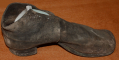
RARE MARKED CIVIL WAR ARMY ISSUE SHOE
Civil War army-issue shoes were among the most essential things issued to a soldier and about the rarest of Civil War items to survive despite being made literally in the millions. They were cheaply… (1052-286). Learn More »
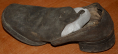
SCARCE INDIAN WAR US ARMY 1872 PATTERN SHOE ALTERED TO CAMP OR BARRACKS SHOE
New pattern shoes and boots were introduced in the U.S. Army in 1872 and in use until the 1880s with a minor change in 1876 to a longer tongue. These shoes improved upon Civil War issue patterns… (1052-286). Learn More »
Showing 151 to 200 out of 321
Most Popular
Historical Firearms Stolen From The National Civil War Museum In Harrisburg, Pa »
Theft From Gravesite Of Gen. John Reynolds »
Selection Of Unframed Prints By Don Troiani »
Fine Condition Brass Infantry Bugle Insignia »
featured item
INSCRIBED CIVIL WAR BOWIE OF ANDREW E. BENSON CO. D, 123rd NYV, TWO BUTTONS, G.A.R. VETERAN’S ID BADGE, CELLULOID PIN AND BOOK BY FELLOW VETERAN R.C. BULL
A nice grouping from a veteran of the 123rd New York, which served from September 1862 to June 1865, seeing action in the eastern and western theatres of war in the 12th/20th Army Corps. The group consists of his bowie knife, typical of those… (534-40). Learn More »
site search