


site search
online catalog
Relics
Showing 141 to 145 out of 314
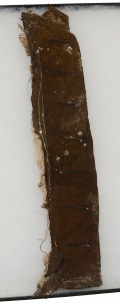
US ARMY DRESS COAT LAPEL FROM FORT PEMBINA, ND
This coat lapel comes from the left side of US army dress coat discarded by a soldier at Fort Pembina, ND, and was excavated in wet, anaerobic soil that has preserved leather and cloth in remarkable… (1052-589). Learn More »
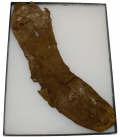
SOLDIER’S SOCK FROM FORT PEMBINA, ND
This comes from the excavations at Fort Pembina, ND, and appears to be the 1877 pattern army sock, which was medium gray in color, had white toes, and the weave of the heel running parallel with the… (1052-582). Learn More »
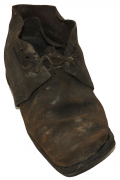
SCARCE CIVIL WAR ARMY ISSUE SHOE MADE AND MARKED BY CIVIL WAR CONTRACTOR JOHN MUNDELL OF PHILADELPHIA
This is a typical, though very scarce, Civil War issue army shoe made by a known contractor and marked by him on the inside of the ankle: “J. MUNDELL.” Mundell was born in Ireland in 1829, reached… (1052-298). Learn More »
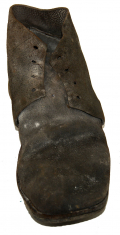
SCARCE CIVIL WAR ARMY ISSUE SHOE, A.K.A. BROGAN OR BOOTTEE
This Civil War US army issue shoe is typical wartime construction, using rough-side out black leather with reinforcing heel piece or “counter” sewn inside, four pairs of holes for a leather lace… (1052-285). Learn More »
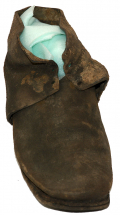
SCARCE CIVIL WAR ARMY ISSUE SHOE, A.K.A. BROGAN OR BOOTTEE
This Civil War US army issue shoe is typical wartime construction, using rough-side out black leather with reinforcing heel piece or “counter” sewn inside, four pairs of holes for a leather lace… (1052-300). Learn More »
Showing 141 to 145 out of 314
Most Popular
Historical Firearms Stolen From The National Civil War Museum In Harrisburg, Pa »
Theft From Gravesite Of Gen. John Reynolds »
Selection Of Unframed Prints By Don Troiani »
Fine Condition Brass Infantry Bugle Insignia »
featured item
A RARE SURVIVOR: EARLY-WAR CONFEDERATE MARKED BRITISH P53 ARTILLERY CARBINE #1500 WITH A TENNESSEE PROVENANCE
British artillery carbines were used by both Confederate cavalry and infantry: in October 1862 Jeb Stuart wanted to exchange rifles carried by some his troopers for “Enfield carbines (artillery) in the hands of our infantry.” This is one of just… (846-571). Learn More »
site search