

site search
online catalog
RARE CONFEDERATE SECOND NATIONAL / NAVAL ENSIGN
Hover to zoom


$55,000.00
Quantity Available: 1
Item Code: 1268-661
Shipping: Determined by Method & Location of buyer
To Order:
Call 717-334-0347,
Fax 717-334-5016, or E-mail
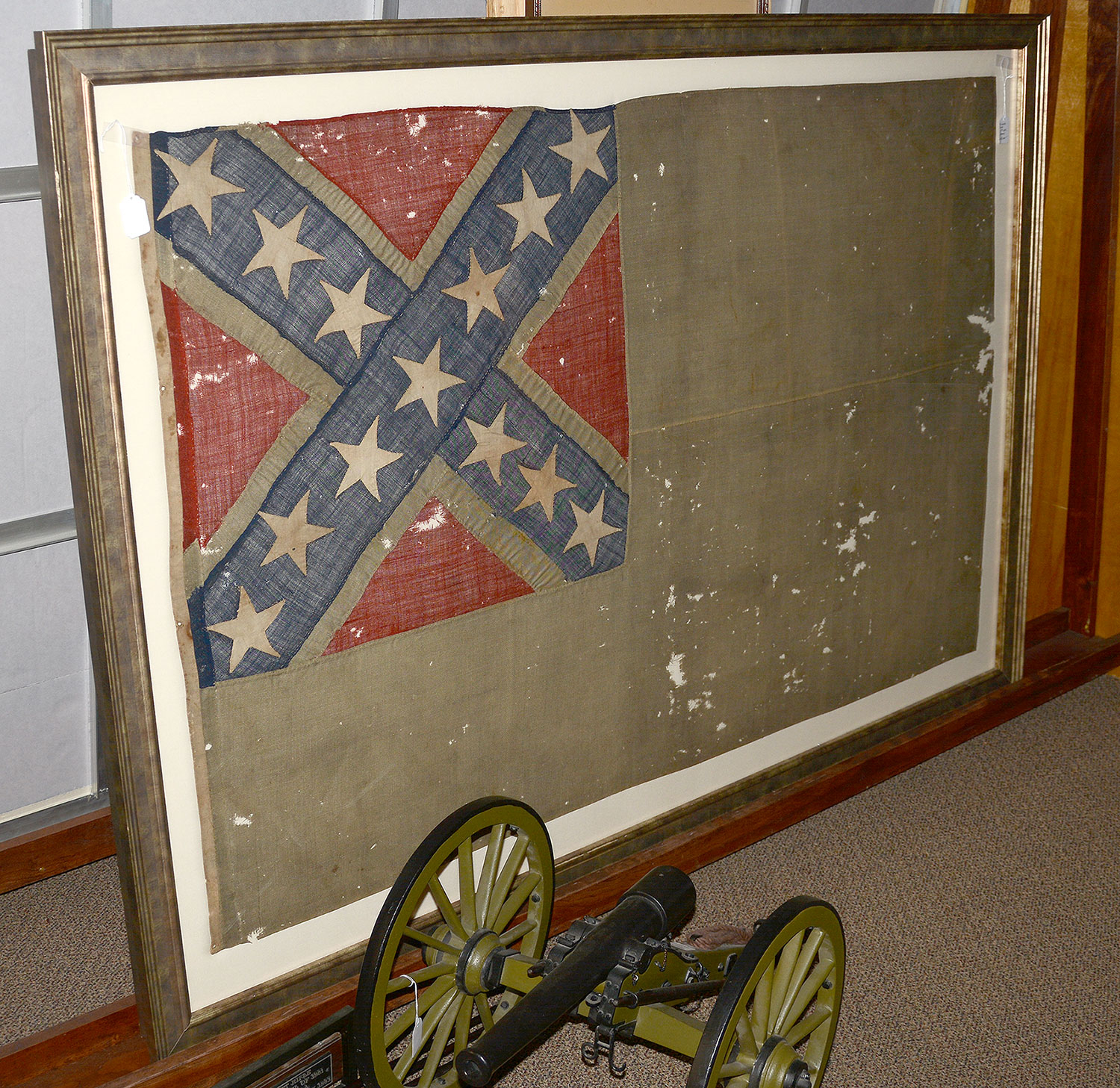
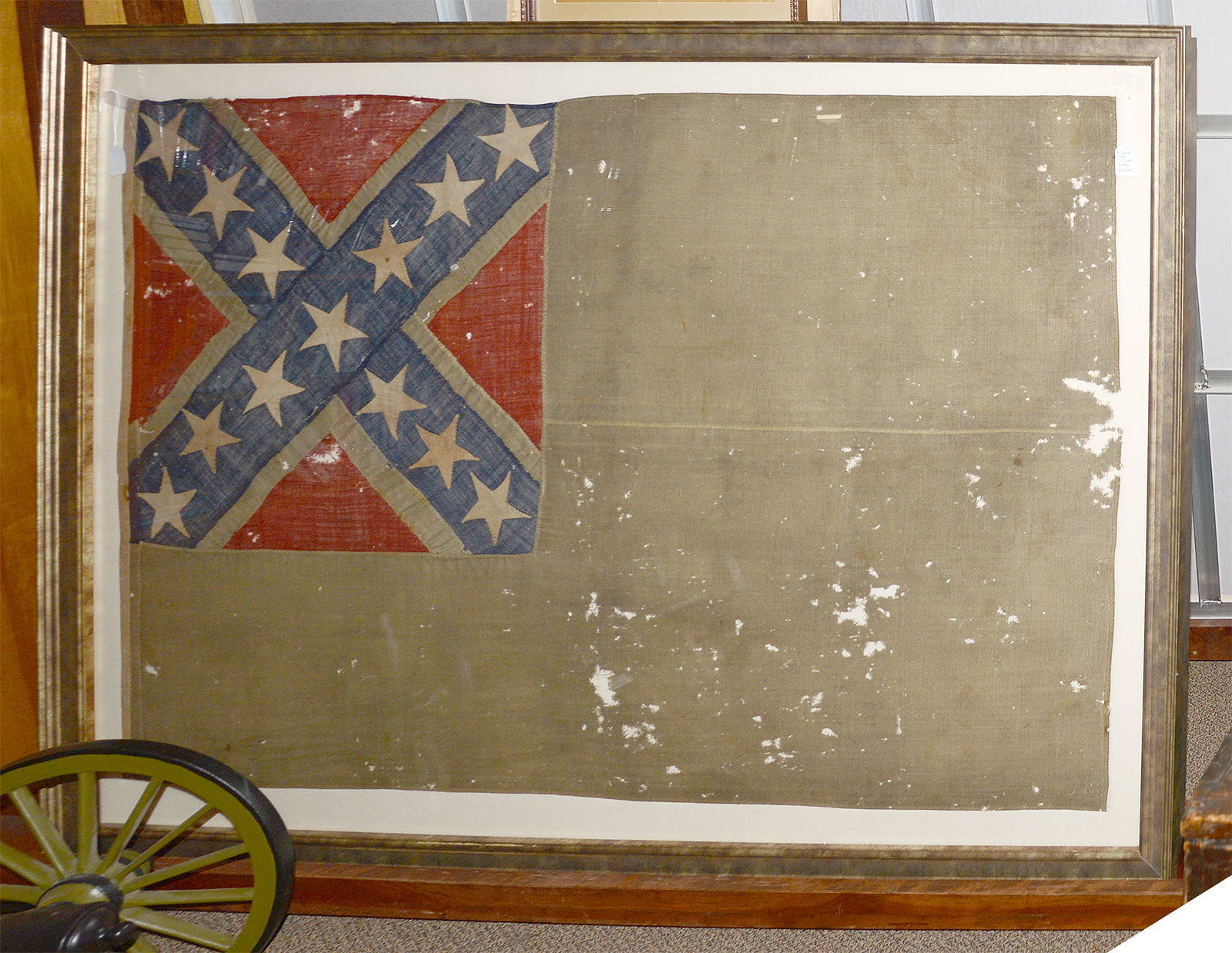
This Second National pattern Confederate flag precisely fits the dimensions for a Confederate Naval Ensign laid out by CS Secretary of the Navy Stephen Mallory on May 26, 1863, which specify a width-to-length ration of 1:1.5 where the official ratio for the flag of the Confederate States of America as laid out by the Confederate Congress on May 1, 1863, was 1:2. This comes from the collections of the Texas Civil War Museum, whose staff postulated brown staining on the fly was the result of smoke from coal-fired boilers on a steam-powered vessel.
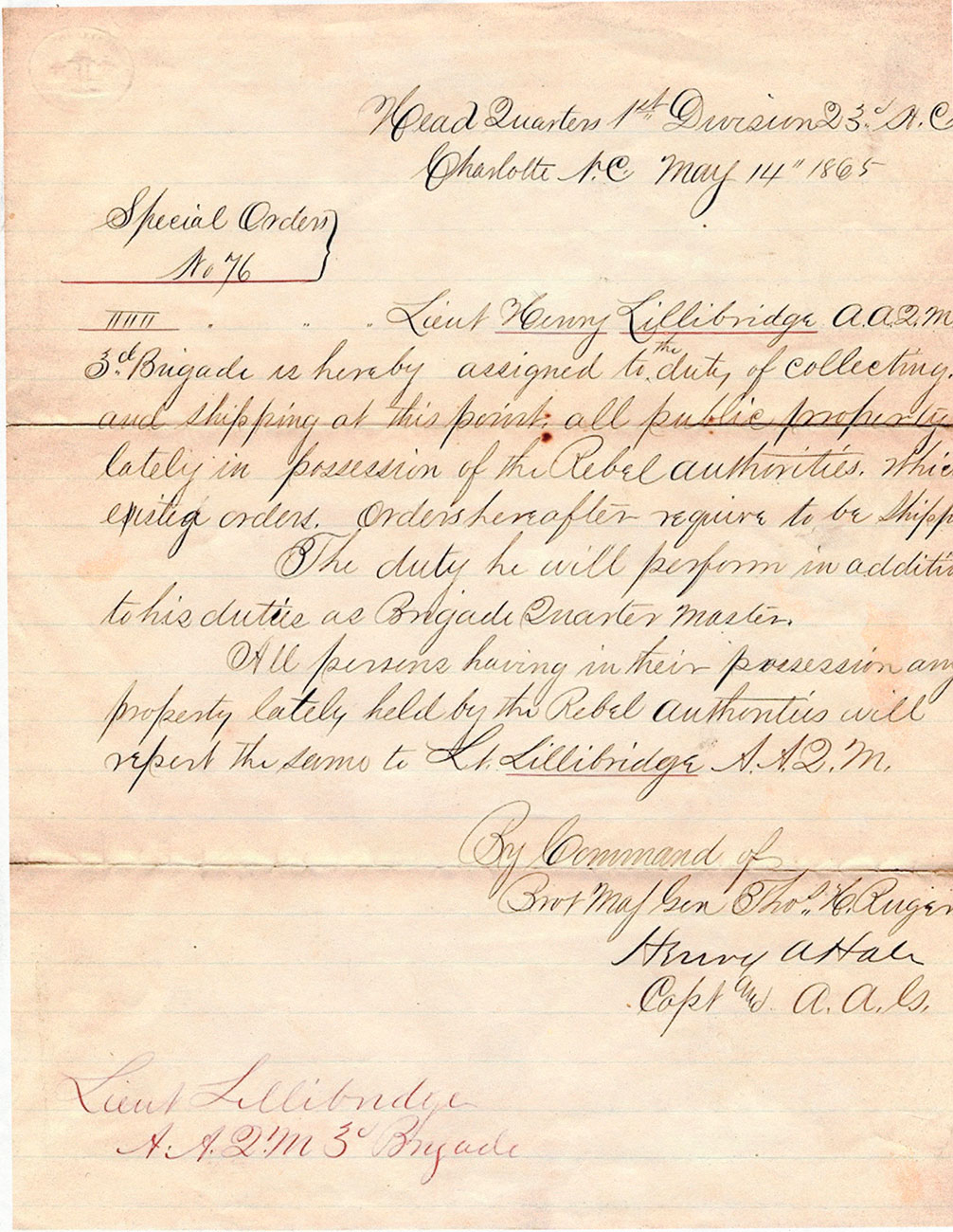
The flag was brought home by Lt. Henry C. Lillibridge of Ohio and obtained by the museum from Lillibridge’s great-great-grandaughter. Lillibridge served as Quartermaster of the 159th and the 178th Ohio, and from December 30, 1864, was assigned to duty as Brigade Quartermaster of the 3rd Brigade, 1st Division, 23rd Army Corps. While on duty in that position in Charlotte, NC, on May 14, 1865, he received Special Orders No. 76, , signed by Gen. T.H. Ruger, putting him in charge of collecting and shipping, “all public property lately in possession of the Rebel authorities which existing orders (&) orders hereafter require to be shipped. . . .” and ordering that, “All persons having in their possession any property lately held by Rebel authorities will report the same to Lt. Lillibridge . . .” There is a good chance he acquired the flag at that time, though his family knew only that he had always possessed it and kept it in, “a red metal box under his bed.”
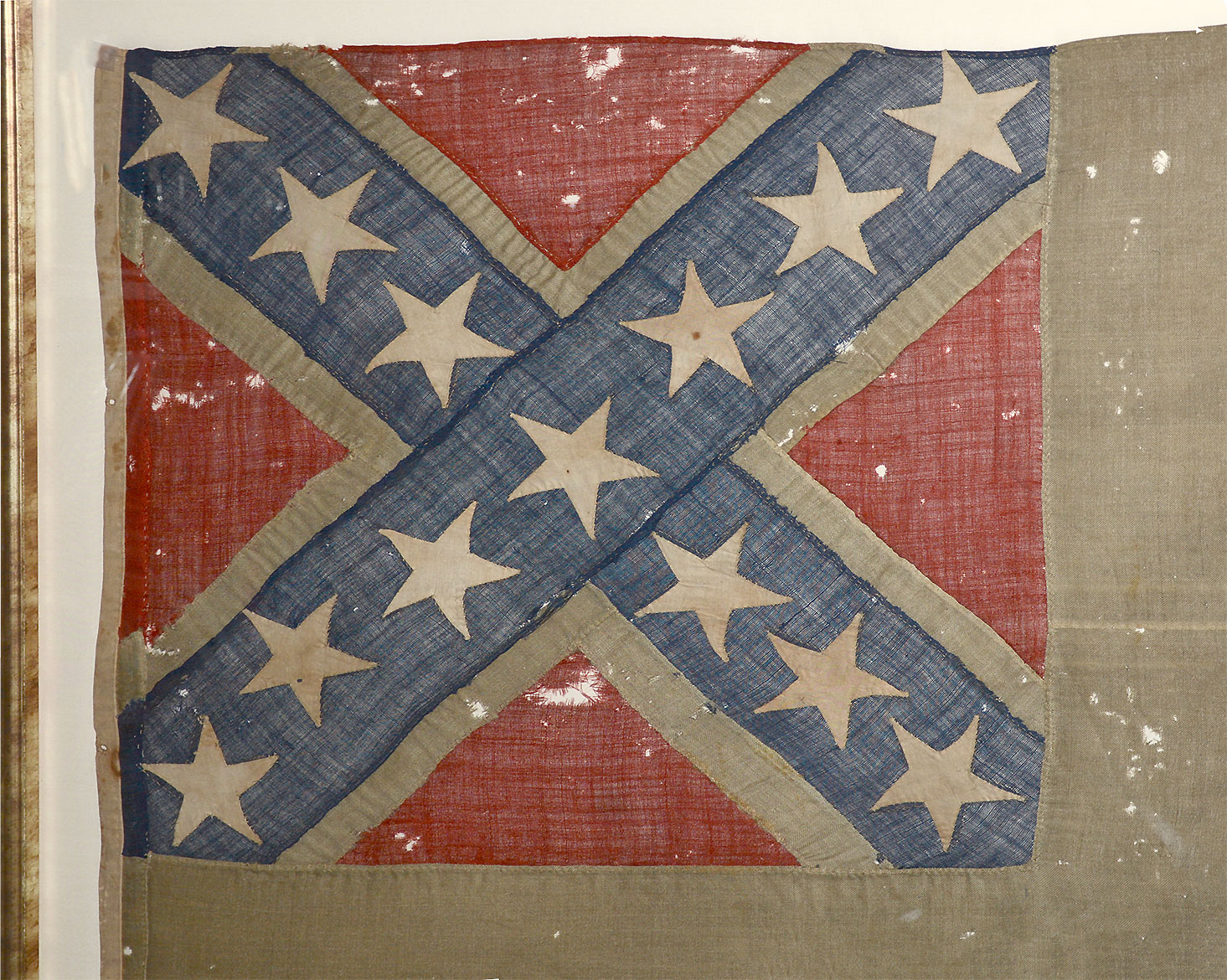
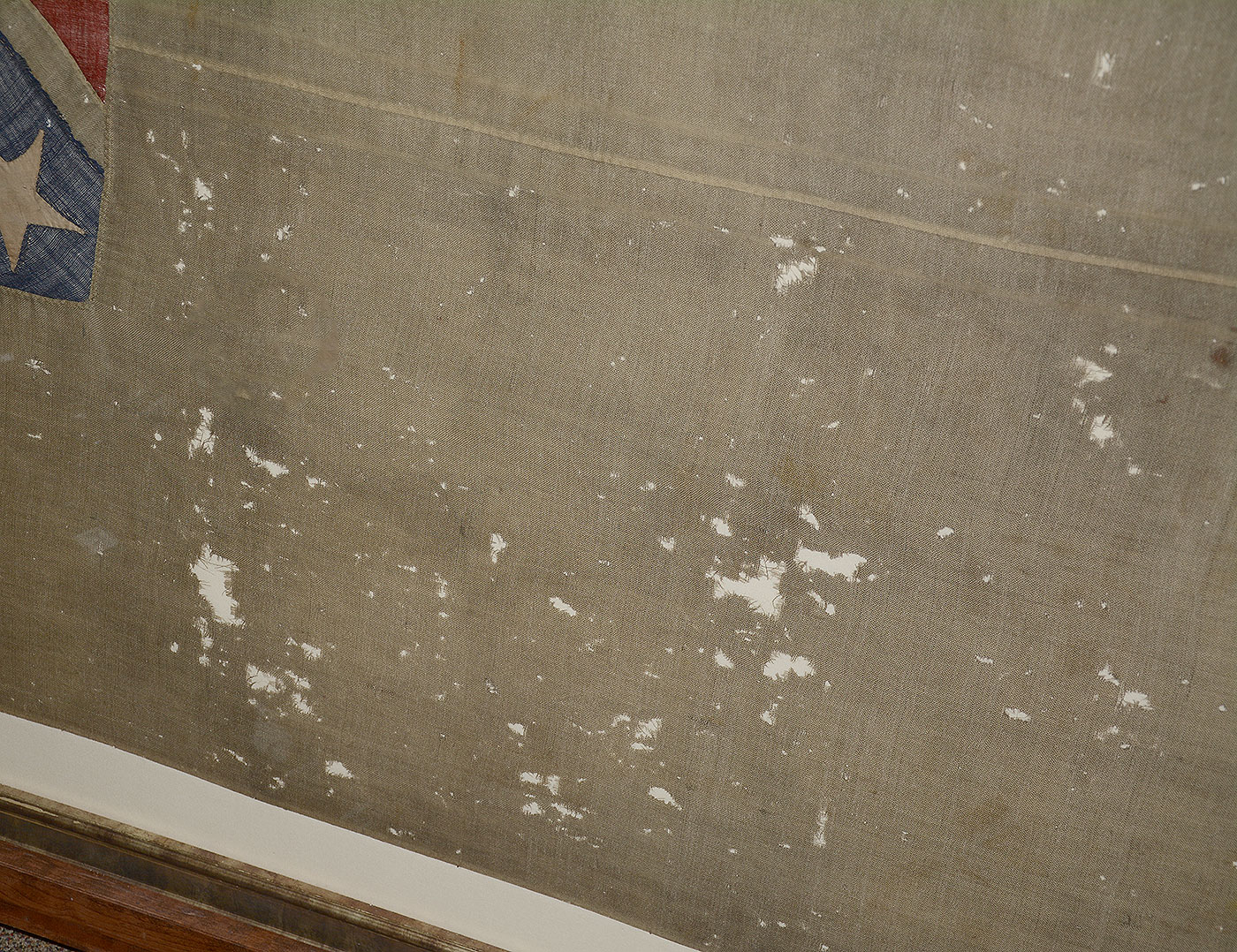
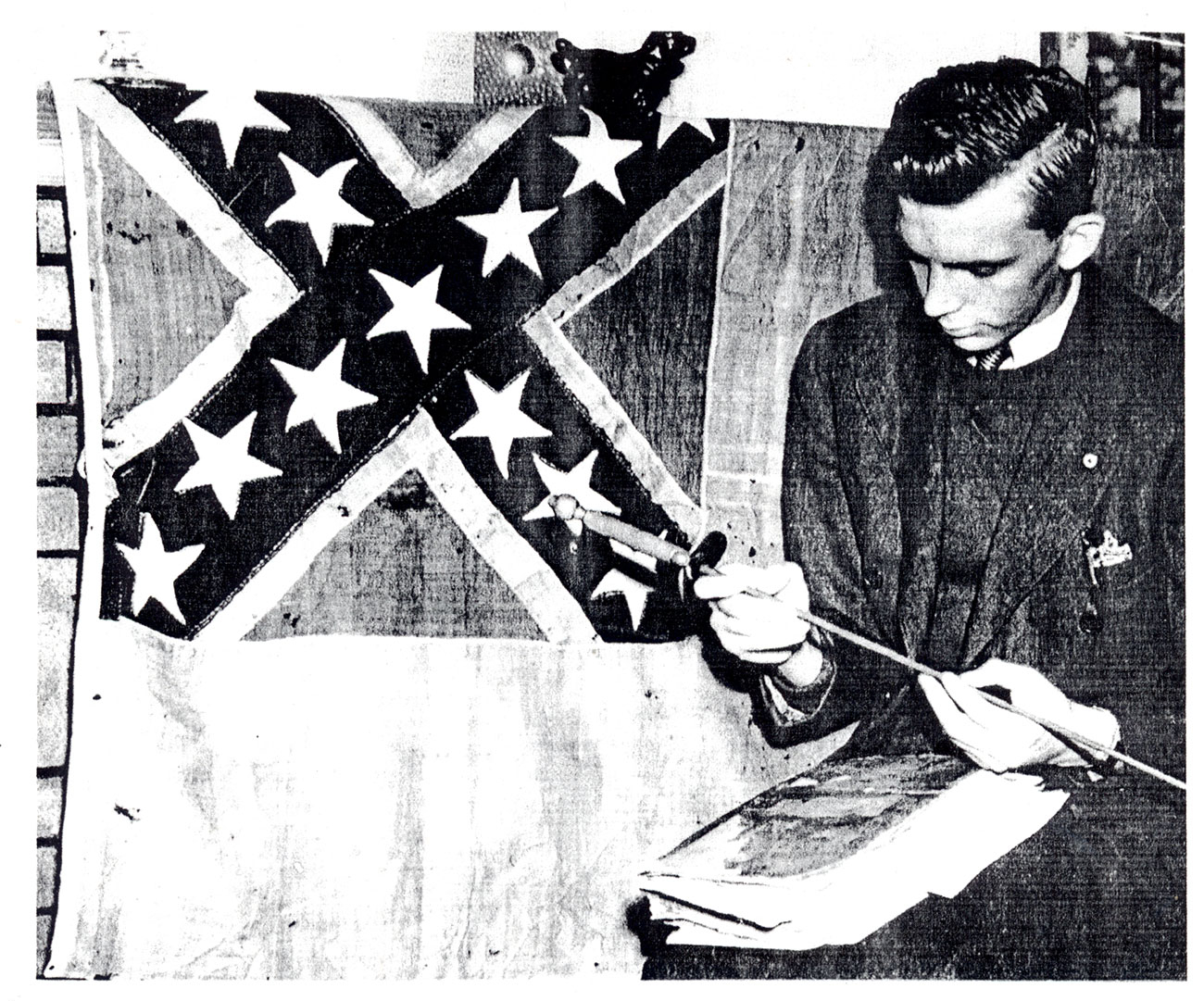
The flag is accompanied by copies of that order, 2011 email correspondence with a representative of the family, and also a five-page, positive, analysis report by respected textile conservator Fonda Thomsen, made prior the flag’s archival mounting and framing for display at the museum. The flag is completely original and in very good condition, showing use, but with only slightly muted colors to the canton, some soiling and stains to the fly, and scattered holes from use and storage, mostly in the lower right quarter. It displays very well and has been mounted on a white backing. Please see our photos. We also note the file includes a copy of a ca. 1940s-50s photo of the officer’s great-grandson with the flag.
The flag is made of red, white and blue wool bunting and is handsewn throughout. Fonda Thomsen measured it as 37-1/2” by 60” when she first examined it. After flattening and mounting it measures closer to 39” on the leading edge and 59-1/2” on the fly. The canton measures 24-1/2” by 25” with the blue cross arms 6” and 5-1/4” wide and the white border (“fimbration”) varying 1” to 1-5/8” in width and the stars 4” to 4-1/2” point to point. The frame is 47” tall by 68” wide.
Thomsen’s full analysis is available to interested buyers. We excerpt the most pertinent sections below:
“After a thorough examination of the materials and construction of this flag, as well as a comparison of these materials with previous examinations of documented period flags, it is my opinion, as a Textile Conservator, that the materials in and construction of this flag are consistent with flags used during the Civil War period with the following qualifications: The flag has some unusual characteristics. Twenty-one inch wide bunting is known to have existed but is not commonly found during that time. Generally if the fly is constructed of seamed loom widths of fabric, the horizontal seam extends across the bottom of the canton into the fly. On this flag the bottom of the canton is 7" below the seam. Since the cotton 3 ply S thread was found only on the horizontal seam in the fly, it would suggest the fly fabric came from a previously constructed flag. Everything else on the flag is sewn with 2 ply S linen thread. The hem along the top of the entire flag would also support that theory. Normally a selvage edge would be found at the top and bottom of the fly to keep the flag more flexible. But, since the fly fabric was too wide to accommodate the height of the canton, a hem had to be put in place.
There is no question that the materials are from the Civil War era. The method of construction would support a western theater manufacture where centrally manufactured issue flags were not readily available. The sewing techniques are more primitive than centrally manufactured flags. The flags would more likely be manufactured from existing flags as the materials may not be as readily available.”
On the flag’s condition, she notes:
“The flag is intact as originally constructed with no alterations or additions. The fabrics are lightly soiled throughout as evidenced by the lighter color of the horizontal seam in the fly.
The top and bottom grommets have evidence of wear and staining from what appears to be use.
The fly has a 7" x 3" area around the fly end of the horizontal seam that consists of three sections of missing fabric. The hem is broken and part of the center seam is missing in this area. There are two other areas of major holes in the lower section of the fly between the canton end and the fly end. The major holes are surrounded by numerous smaller (less than 1/2") holes. (see photos 1 & 2). There are additional smaller holes throughout the fly and the red quadrants of the canton. The blue cross and white fimbration have the least amount of small holes. The end of the fimbration, on the top side of the lower leading edge arm of the cross, is separated from the binding and strip of fabric. The bottom edge of the fimbration has separated from the cross fabric for a distance of 4". It appears that this damage was caused by the flag catching on something and tearing the fabric and some of the stitching loose.
The area on the leading edge binding between the top and next grommet has areas of light brown staining. There is also some similar staining around some of the holes toward the fly end and in small areas throughout the flag.
The flag has three fold lines extending horizontally across the fly from a period of prolonged folding.”
Thompson felt that a possible western theatre origin for the flag might tie in with Lillibridge’s service in 178th Ohio from 9/26/64 to 6/29/65, which spent its first three months in the western theatre, and we note that Confederate Second National flags were often reduced from the official length to avoid confusion of the white field with a flag of truce, but there seems to have been little opportunity for the regiment or Lillibridge himself to end up with one, before their January-through-June 1865 service in the east. The regiment was at Fort Fisher, Morehead City, and New Bern, all coastal areas, making a naval connection for the flag possible, and she seems not to have known of the May 1865 order to Lillibridge as Brigade Quartermaster to collect Confederate material in the hands of the brigade, indicating it may have been taken by someone in another regiment.
In any case, the flag’s line of descent from Lillibridge (1835-1911) is clear from information provided by the family, the only ambiguity in the family history being their statement that Lillibridge gave the flag to a grandson, where it seems rather that his daughter gave it to her grandson, who is shown in a photograph in the file seated in front of it, and who passed it to his daughter, from whom the museum obtained it. It is a bit of irony that the flag seems to have made its way to the Texas museum because of a more recent United Daughters of the Confederacy connection in the family, but that it owes its preservation to a Union officer from Ohio. This a very strong, visually compelling, completely original, well preserved, and conserved wartime Confederate flag. [sr][ph:L]
Special shipping arrangements required.
~~~~~~~~~~~~~~~~~~~~~~~~~~~~~~~~~~~
THIS ITEM, AS WITH ALL OTHER ITEMS AVAILABLE ON OUR WEB SITE,
MAY BE PURCHASED THROUGH OUR LAYAWAY PROGRAM.
CLICK HERE FOR OUR POLICIES AND TERMS.
THANK YOU!
Inquire About RARE CONFEDERATE SECOND NATIONAL / NAVAL ENSIGN
Most Popular
Historical Firearms Stolen From The National Civil War Museum In Harrisburg, Pa »
Theft From Gravesite Of Gen. John Reynolds »
Selection Of Unframed Prints By Don Troiani »
Fine Condition Brass Infantry Bugle Insignia »
Rare Identified 65Th Ny Sergeant’s Jacket, With Manscript Material: 1St U.s. Chasseurs »
featured item
VERY RARE 1834 ENGINEER AND MEDICAL STAFF SWORD BY HENRY BOKER, BELONGING TO BREVET BRIGADIER GENERAL JOHN HENDRICKSON, WHO LOST A LEG AT FREDERICKSBURG, 83rd NEW YORK VOLS (9th NYSM) AND 13th V.R.C.
New patterns of swords for the U.S. army were developed from 1832 to 1834. This elegant smallsword pattern (variously called by collectors the 1832 or 1834 pattern) was designated for officers of Engineers and Medical Staff (and Pay Department as… (870-325). Learn More »
site search