


site search
online catalog
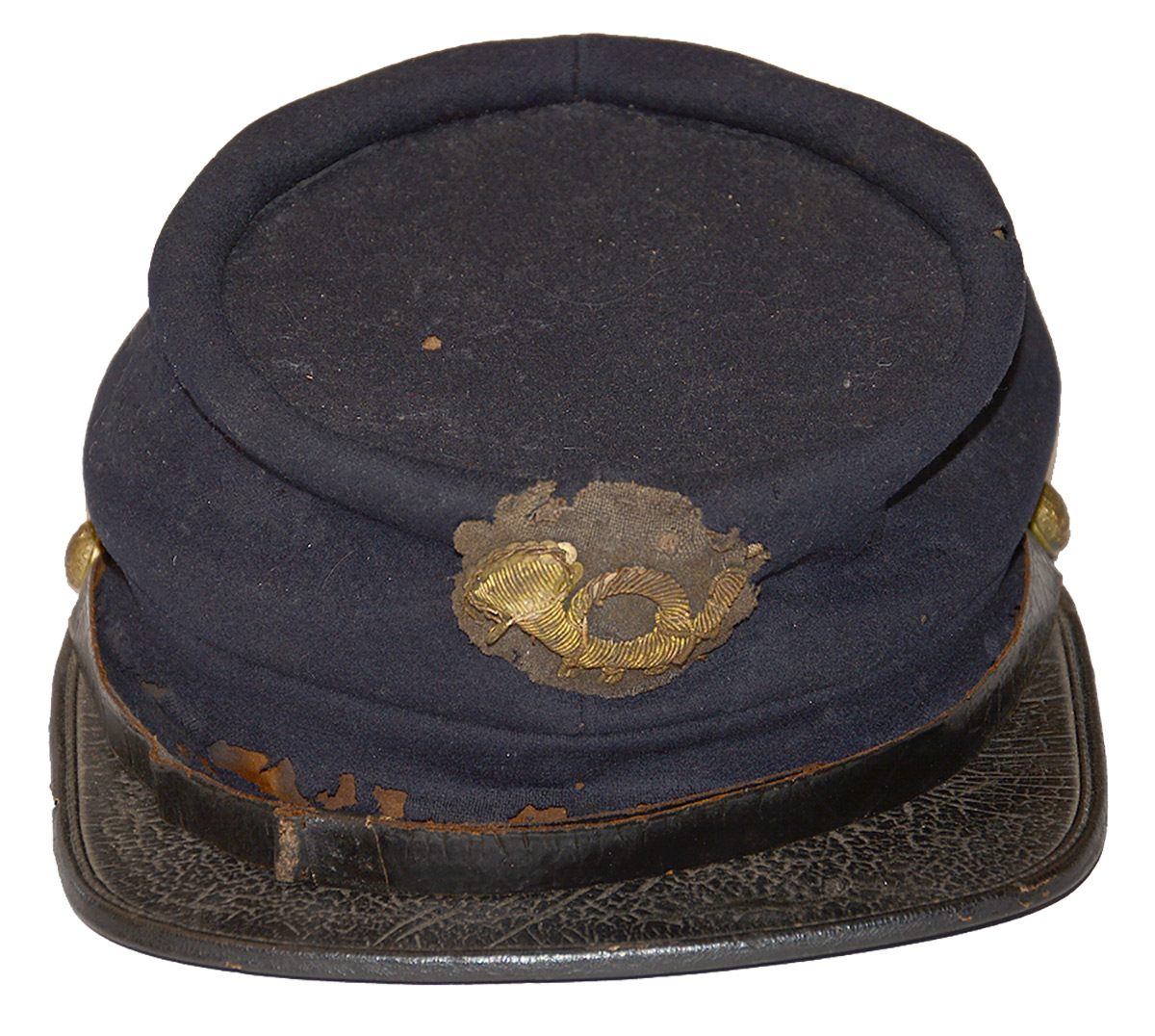
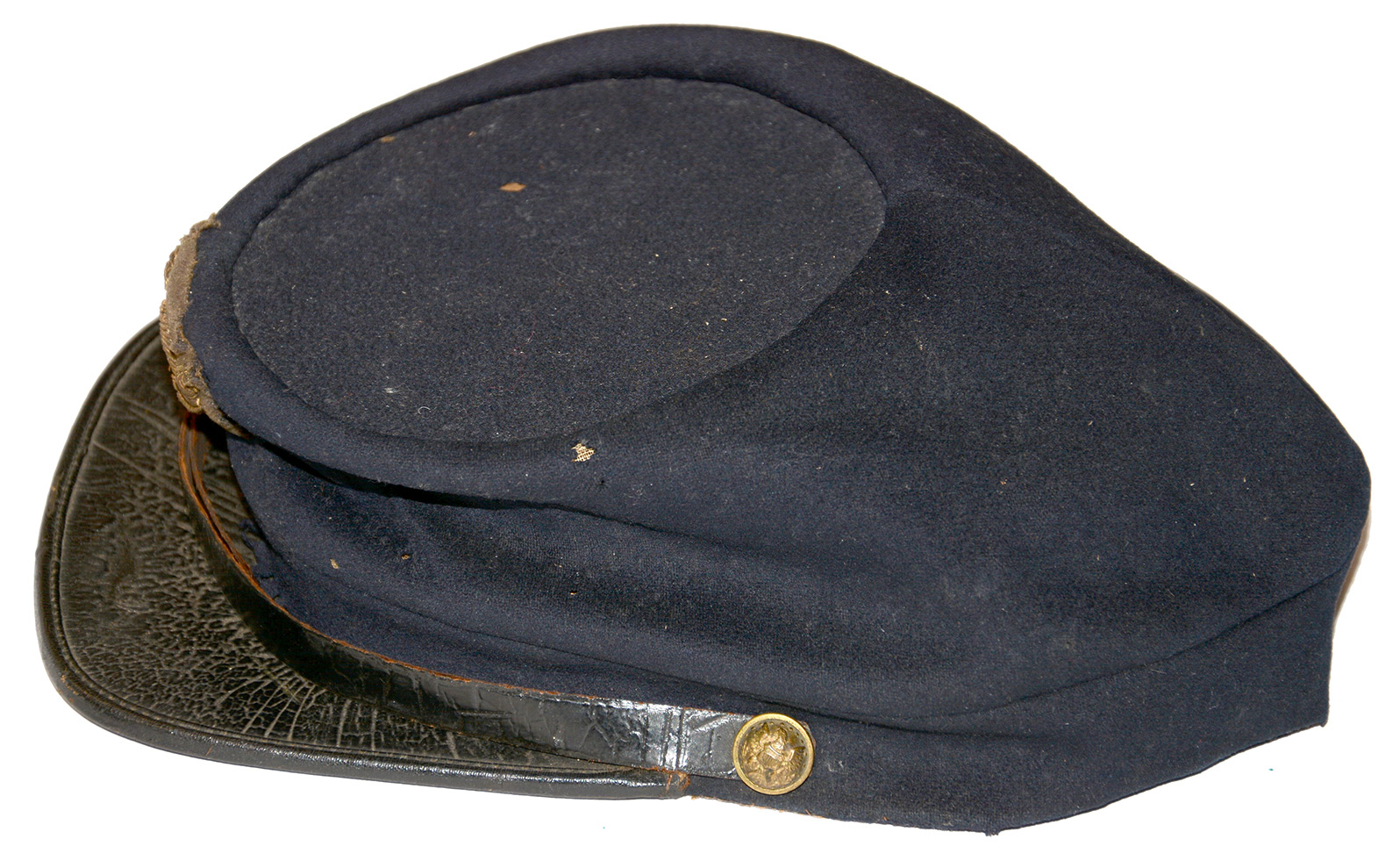
CIVIL WAR OFFICER’S KEPI WITH ORIGINAL INFANTRY INSIGNIA
Hover to zoom
$2,950.00
Quantity Available: 1
Item Code: 1316-01
Shipping: Determined by Method & Location of buyer
To Order:
Call 717-334-0347,
Fax 717-334-5016, or E-mail
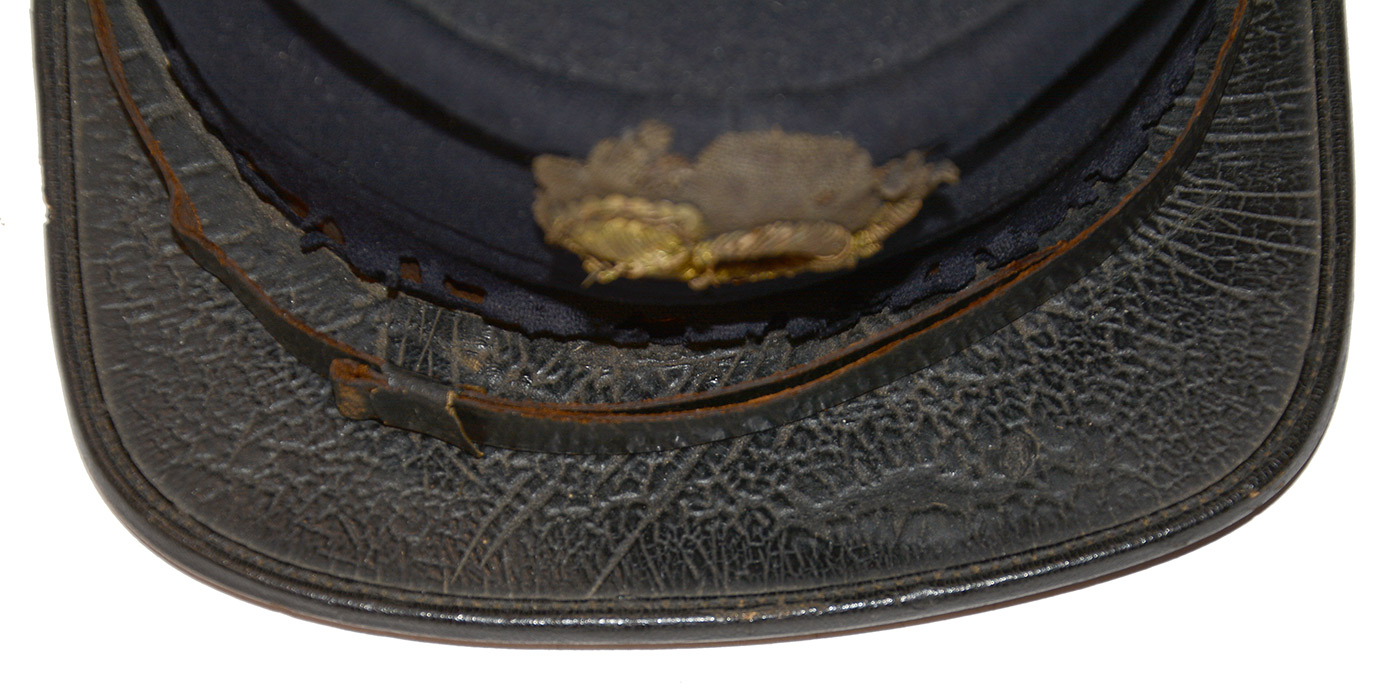
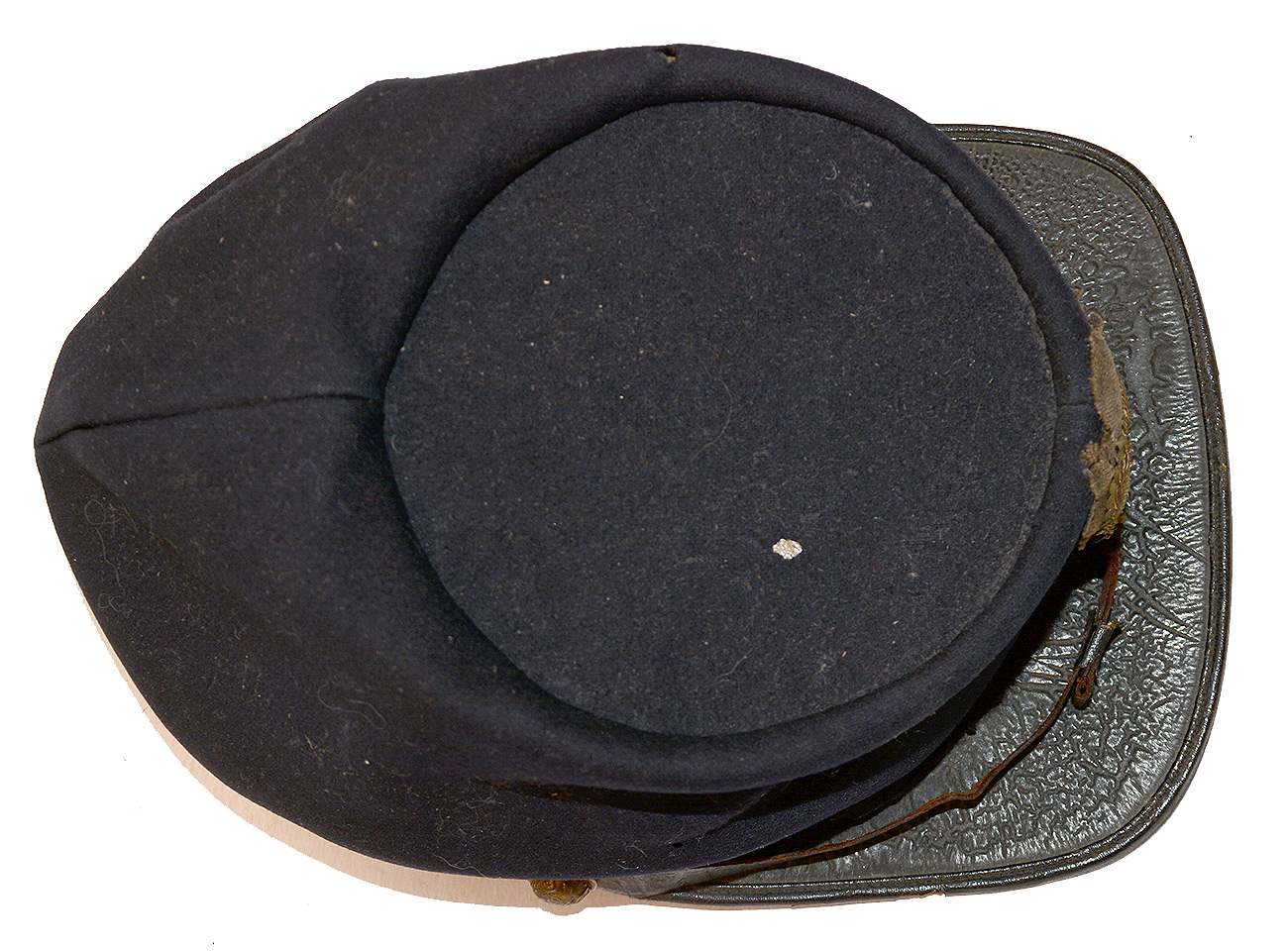
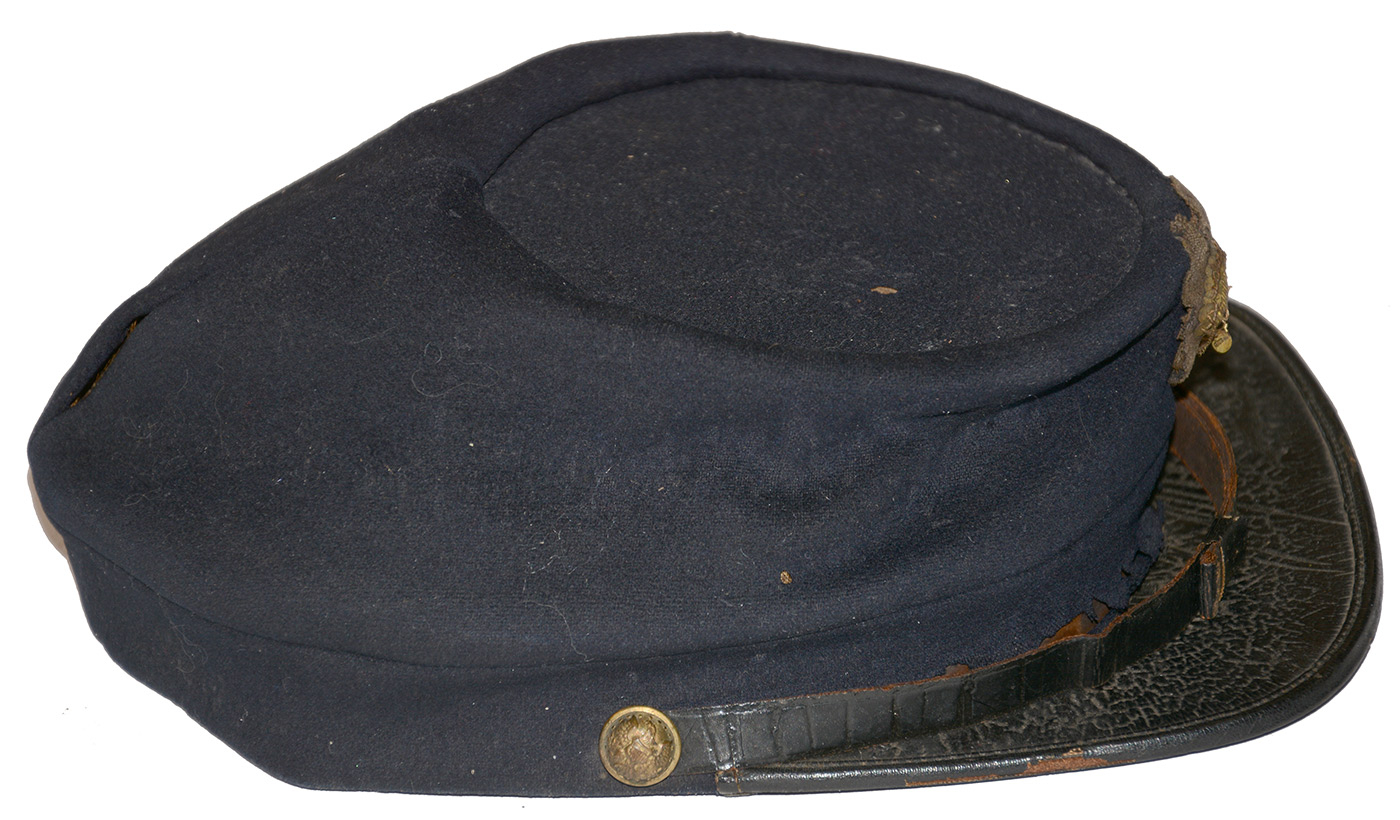
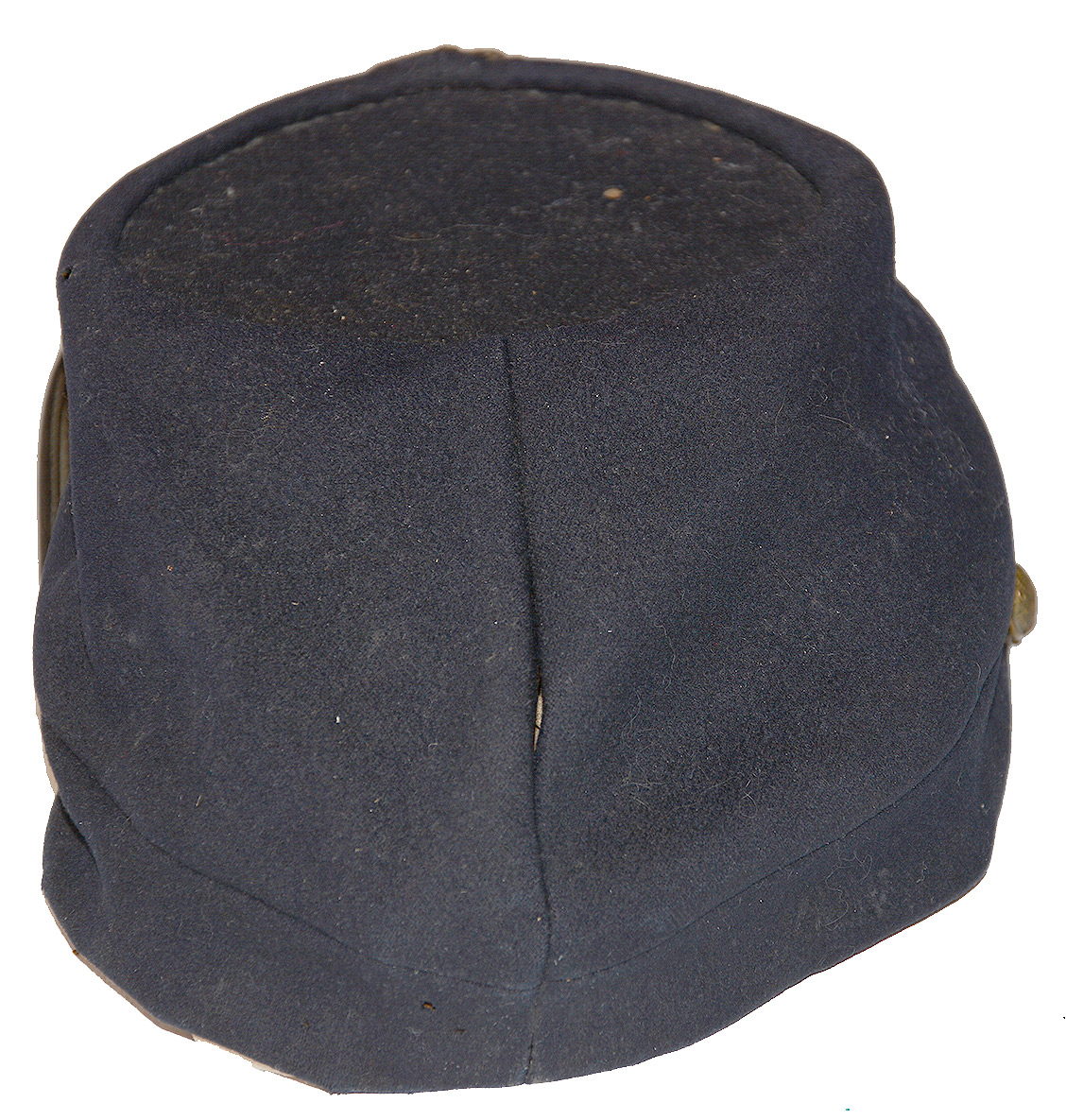
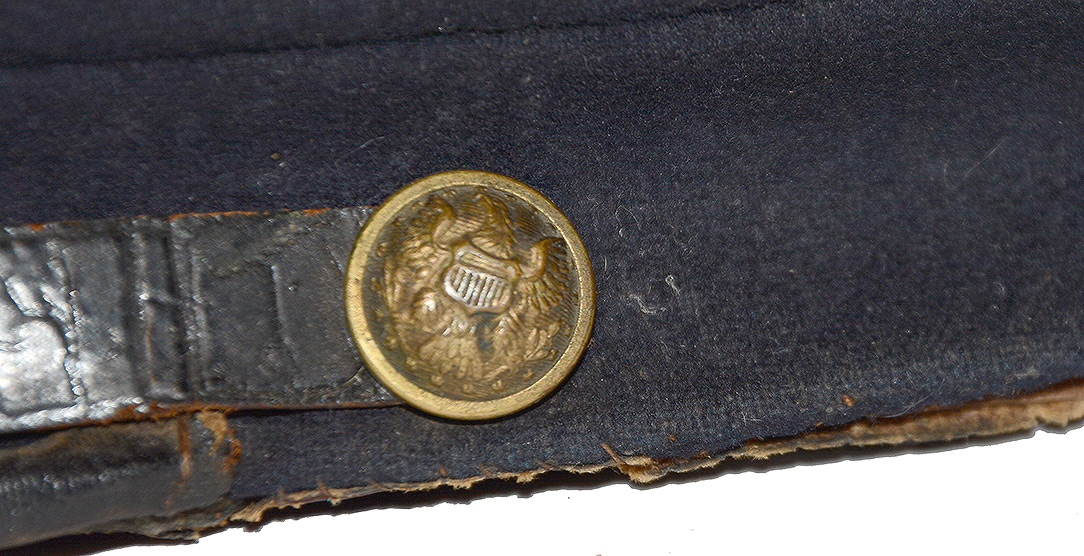
This is a good condition Civil War chasseur-style officer’s kepi, defined by the inset crown and short sides popularized by French light infantry- hence the “chasseur” designation. These were commercially made for private purchase, mostly by officers, who had to furnish all their own uniforms and gear, and this one shows commonly encountered features of this nattier and trimmer pattern, as distinct from more baggy forage cap styles, such as the low crown with inset top, and short, flat visor with bound edge, along with the standard chinstrap secured by two small side buttons. The cap has a 1” tall band around its base, with the front rising about 2-3/4” from the upper surface of the visor and a 5-1/2” long seam from the bottom center at the rear to the top. The chinstrap is thin, black leather, ¼” wide, with one end looped to hold a sliding buckle, now missing, and the other end fitted with a sewn loop to act as a keeper, that has become unstitched from that end and now runs freely along the strap. The side buttons are small size, general staff pattern.
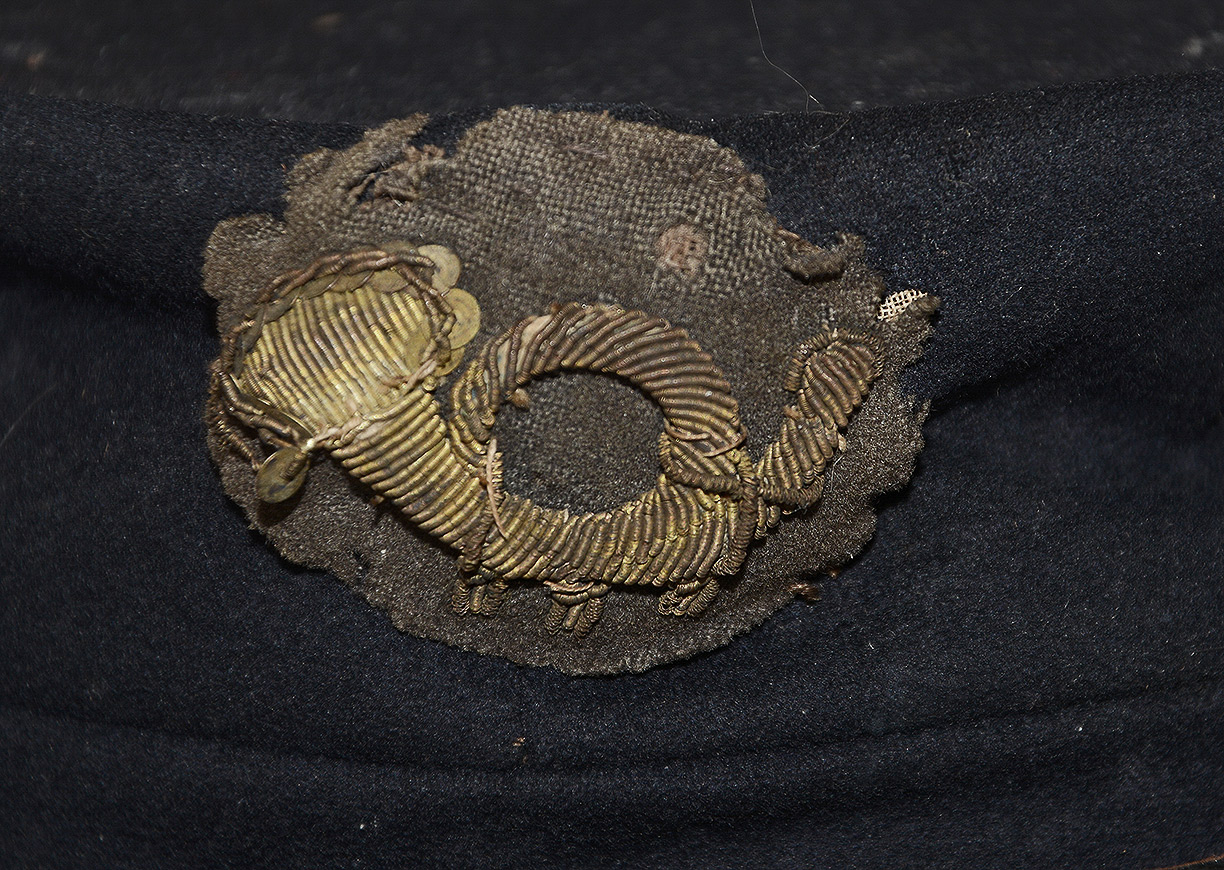
This has a small size gold bullion embroidered infantry officer’s hunting horn insignia sewn to the upper front. The horn itself is about 1-3/4” wide and 1” tall, embroidered in gold bullion thread forming the horn and bugle cords, with small gold sequins ornamenting the bell. This is on a black patch about 2” wide and 1-1/2” tall that was certainly black velvet, but has lost its nap. It has oxidized slightly to a charcoal color, and has some short edge losses, but is still securely in place. The gold has largely oxidized to a dark color on the center and right of the horn, but the bell, on the left, shows some brighter, though still muted, gilt. There is no sign of a regimental numeral having been fixed inside the loop.
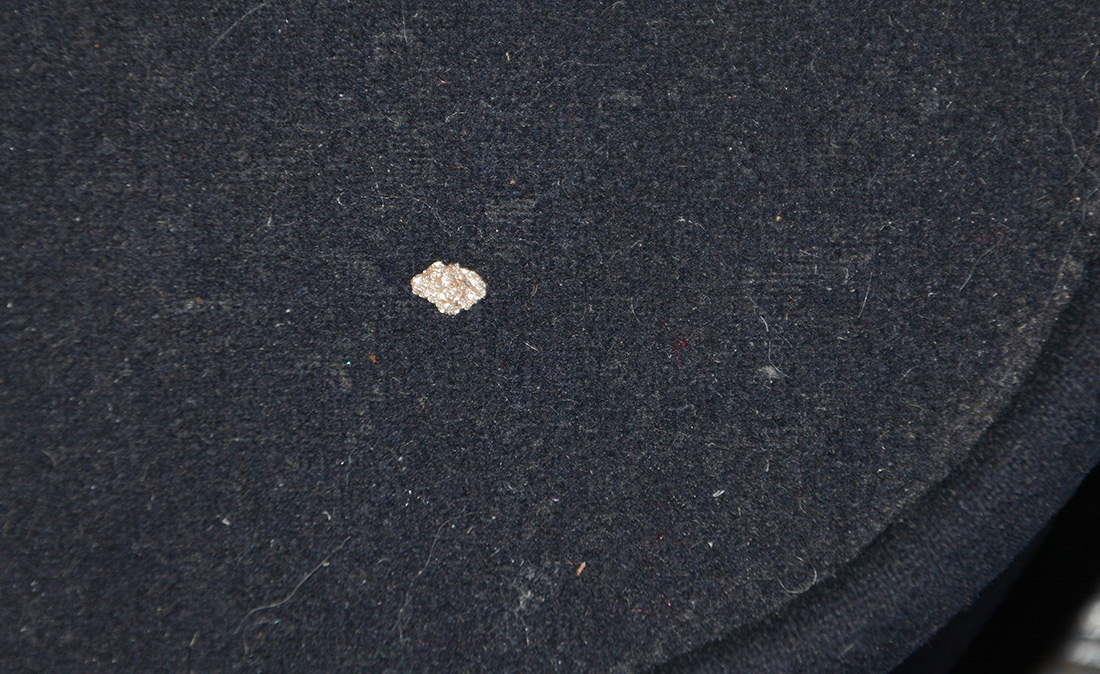
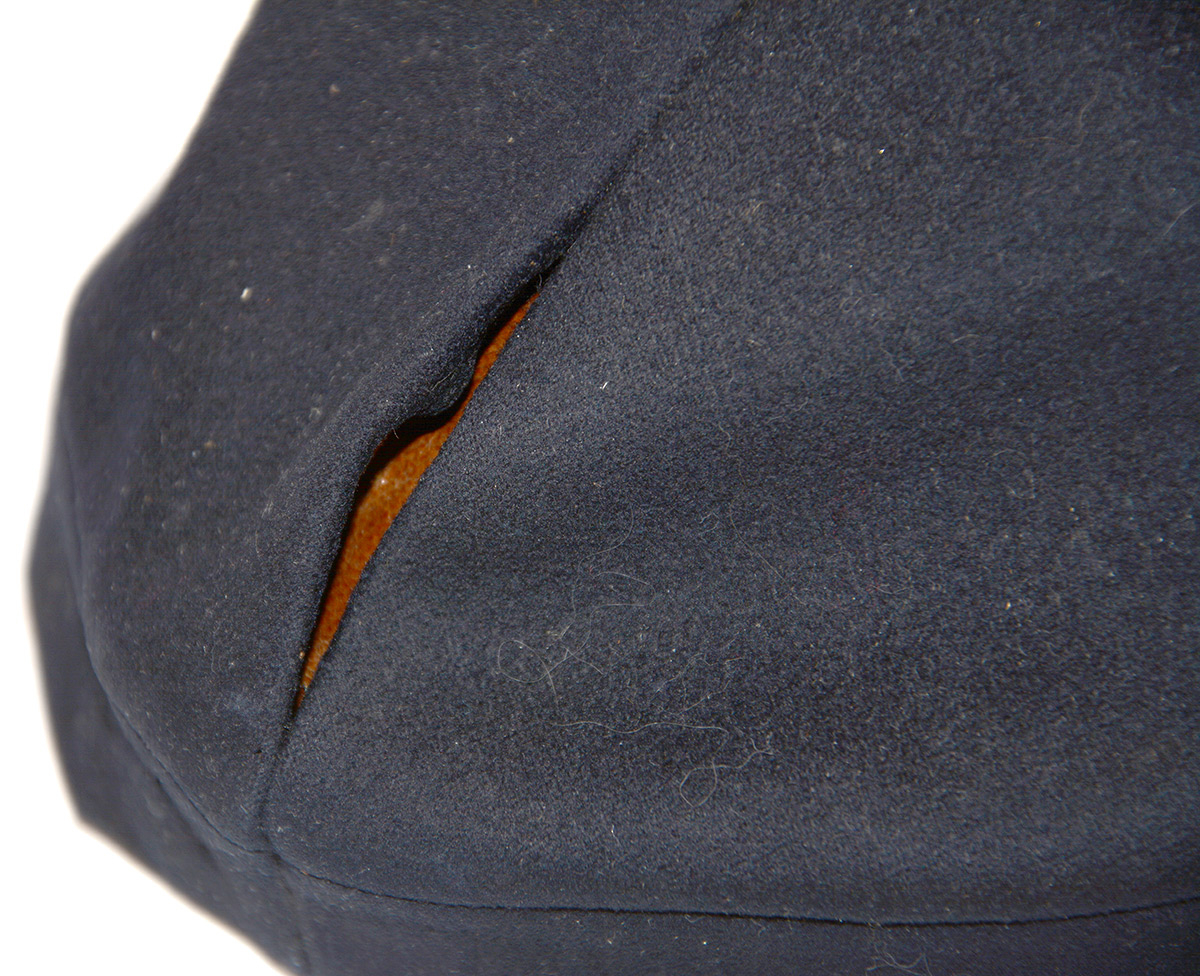
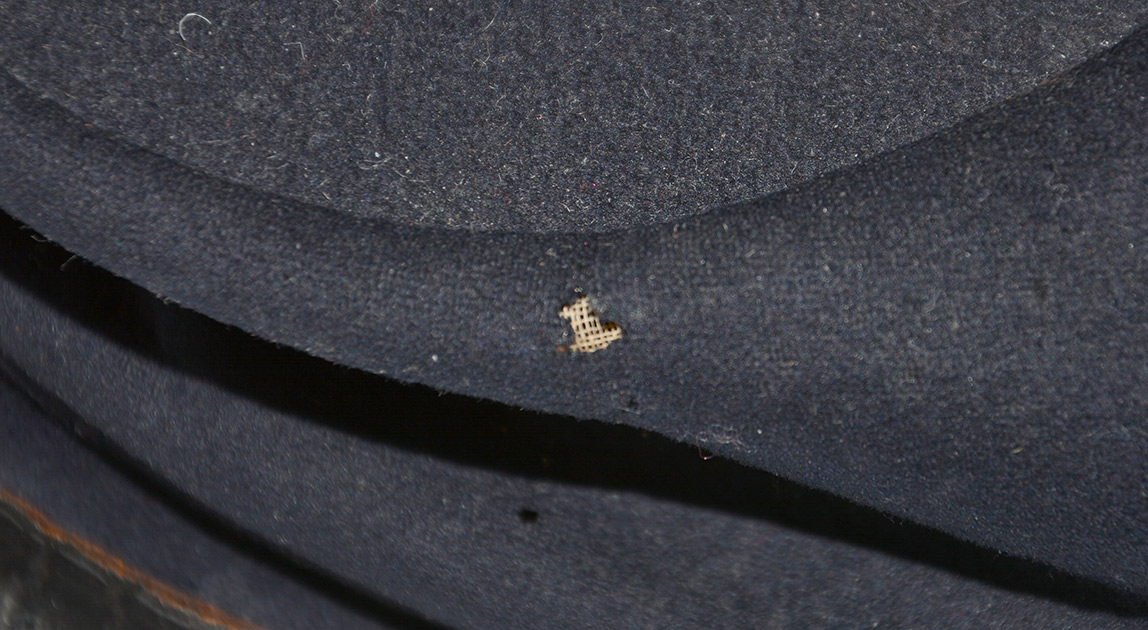
The dark blue color is very good and the cap is solid, though the back seam has a 2” section missing the stitching. There are two unobtrusive pencil-point moth nips at the bottom left rear and 1/8” moth nip on the top, about 1-1/2” from the wearer’s left edge and the same distance from the front. This shows some light brown color from the stiffener of the top underneath, but could be colored or backed, but it not very bothersome either. There is some greater, but concealed mothing to the fabric along the bottom front edge of cap behind the chinstrap, but this is not visible unless you pull the chinstrap out of place.
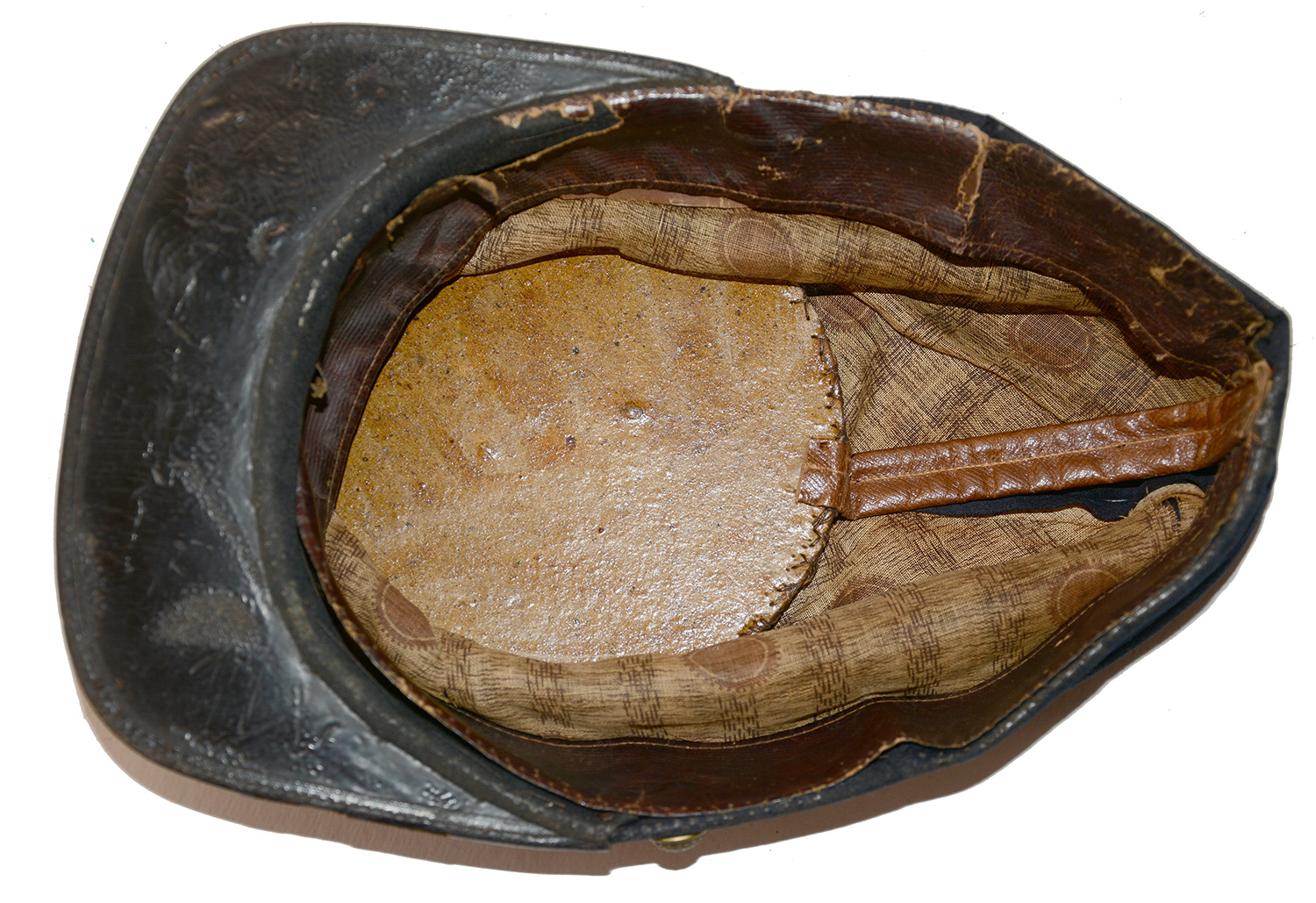
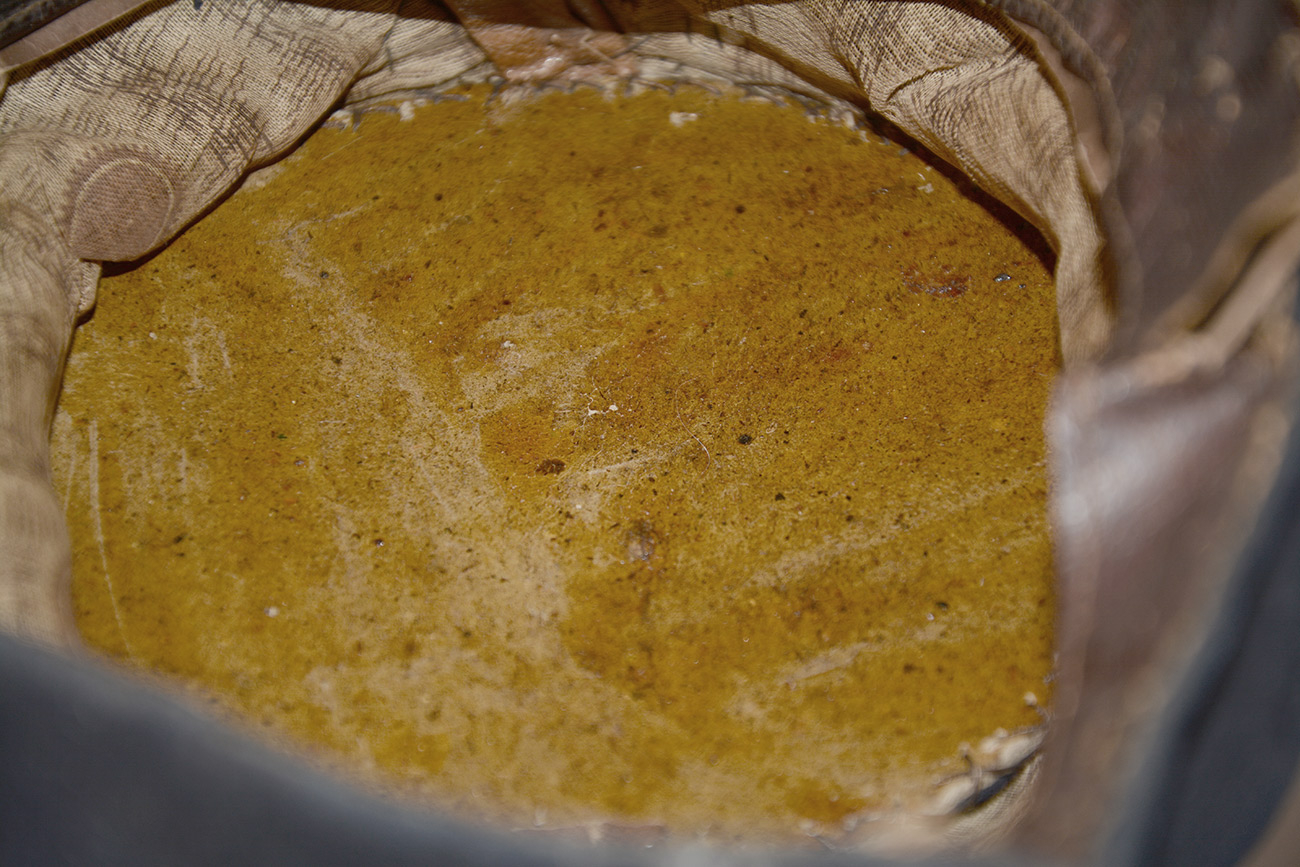
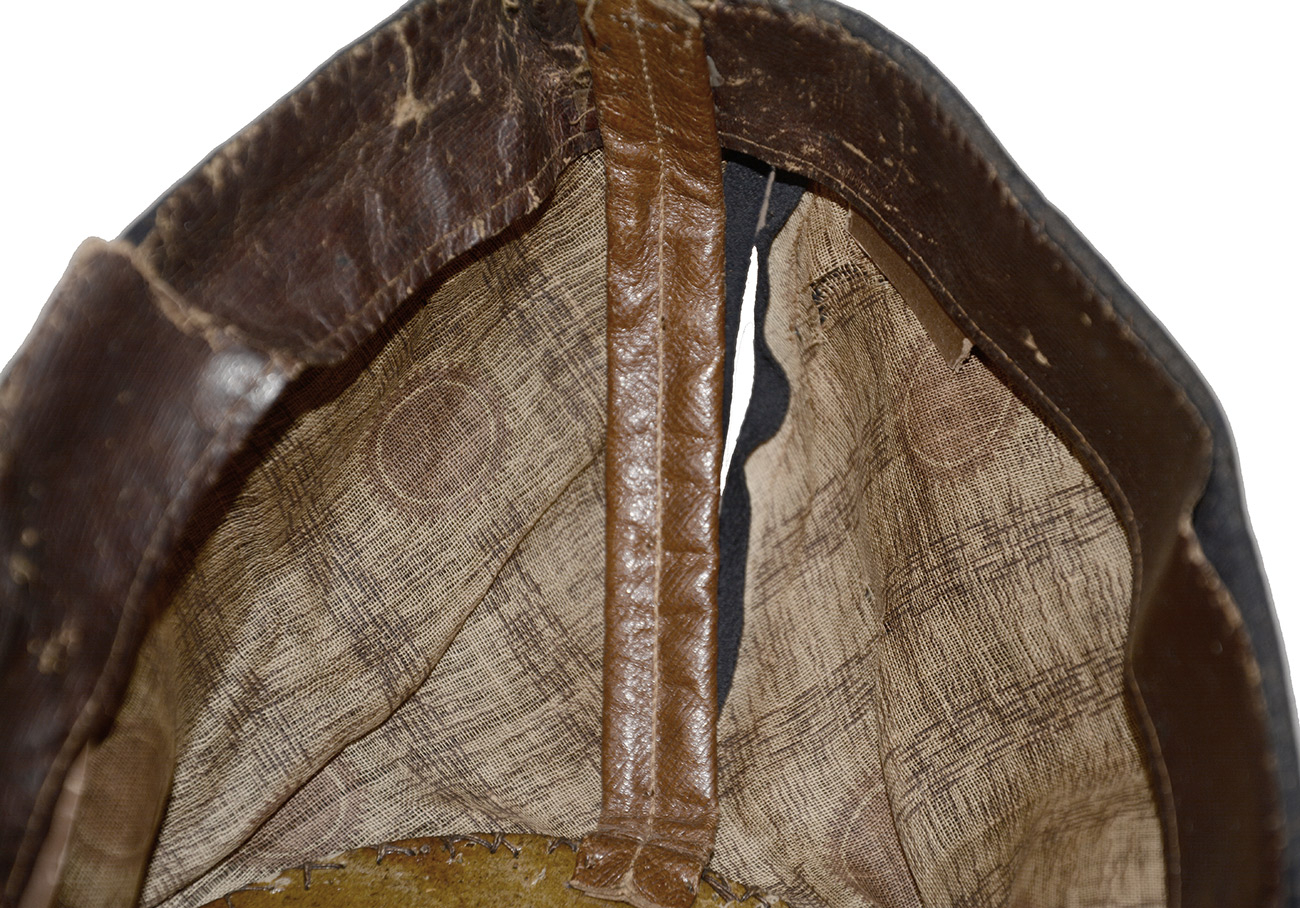
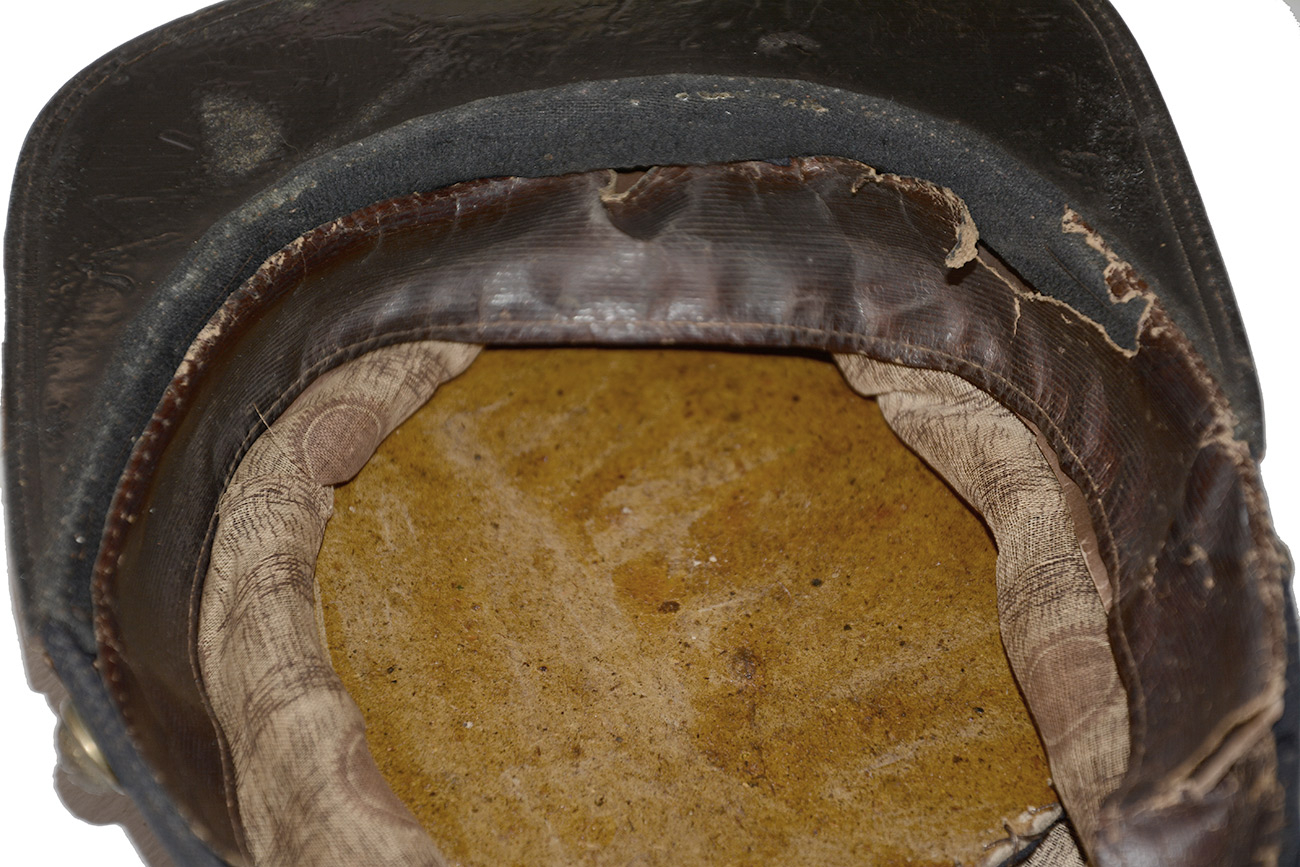
A 1-3/8 wide sweatband, reddish-brown in color and certainly Morocco originally, is in place inside the cap, with a leather stiffener behind it, thought it shows some losses, over the wearer’s right eye for instance, and has become detached along the lower front edge. A doubled leather strip runs from the base of the cap at center rear, under the rear seam, and is sewn to the back edge of the round stiffener of the top of the cap, and shorter such strip runs down from its center front. These were certainly to hold up the top and retain its shape. The sides of the interior are lined with a printed fabric. All of this was likely concealed by a lining, likely black silk, now missing, but provides some interesting information on the construction of the cap and does not show when displayed. [sr] [ph:L]
~~~~~~~~~~~~~~~~~~~~~~~~~~~~~~~~~~~
THIS ITEM, AS WITH ALL OTHER ITEMS AVAILABLE ON OUR WEB SITE,
MAY BE PURCHASED THROUGH OUR LAYAWAY PROGRAM.
CLICK HERE FOR OUR POLICIES AND TERMS.
THANK YOU!
Inquire About CIVIL WAR OFFICER’S KEPI WITH ORIGINAL INFANTRY INSIGNIA
Most Popular
Historical Firearms Stolen From The National Civil War Museum In Harrisburg, Pa »
Theft From Gravesite Of Gen. John Reynolds »
Selection Of Unframed Prints By Don Troiani »
Fine Condition Brass Infantry Bugle Insignia »
Rare Identified 65Th Ny Sergeant’s Jacket, With Manscript Material: 1St U.s. Chasseurs »
featured item
AUGUST, 1862 CONFEDERATE DISCHARGE – PVT. JOHN MCCOLLUM, 3rd ARKANSAS – EX COCO-COLLECTION
This scarce subtype of document served as a record of the honorable discharge of Pvt. John McCollum of Company F, 3rd Arkansas Infantry. He enlisted on September 17th, 1861 for a term of 1 year, and his discharge is dated August 15th, 1862 and he… (1300-85). Learn More »
site search