
site search
online catalog
ATOMIC BOMB TEST GROUP – OPERATION CROSSROADS BOOKS, 1946 NAVY TEST COVER FROM USS BLUE RIDGE, AND JOINT TASK FORCE SEVEN ENIWETOK ATOLL LIGHTER
Hover to zoom
$300.00
Quantity Available: 1
Item Code: 1202-2263
Shipping: Determined by Method & Location of buyer
To Order:
Call 717-334-0347,
Fax 717-334-5016, or E-mail
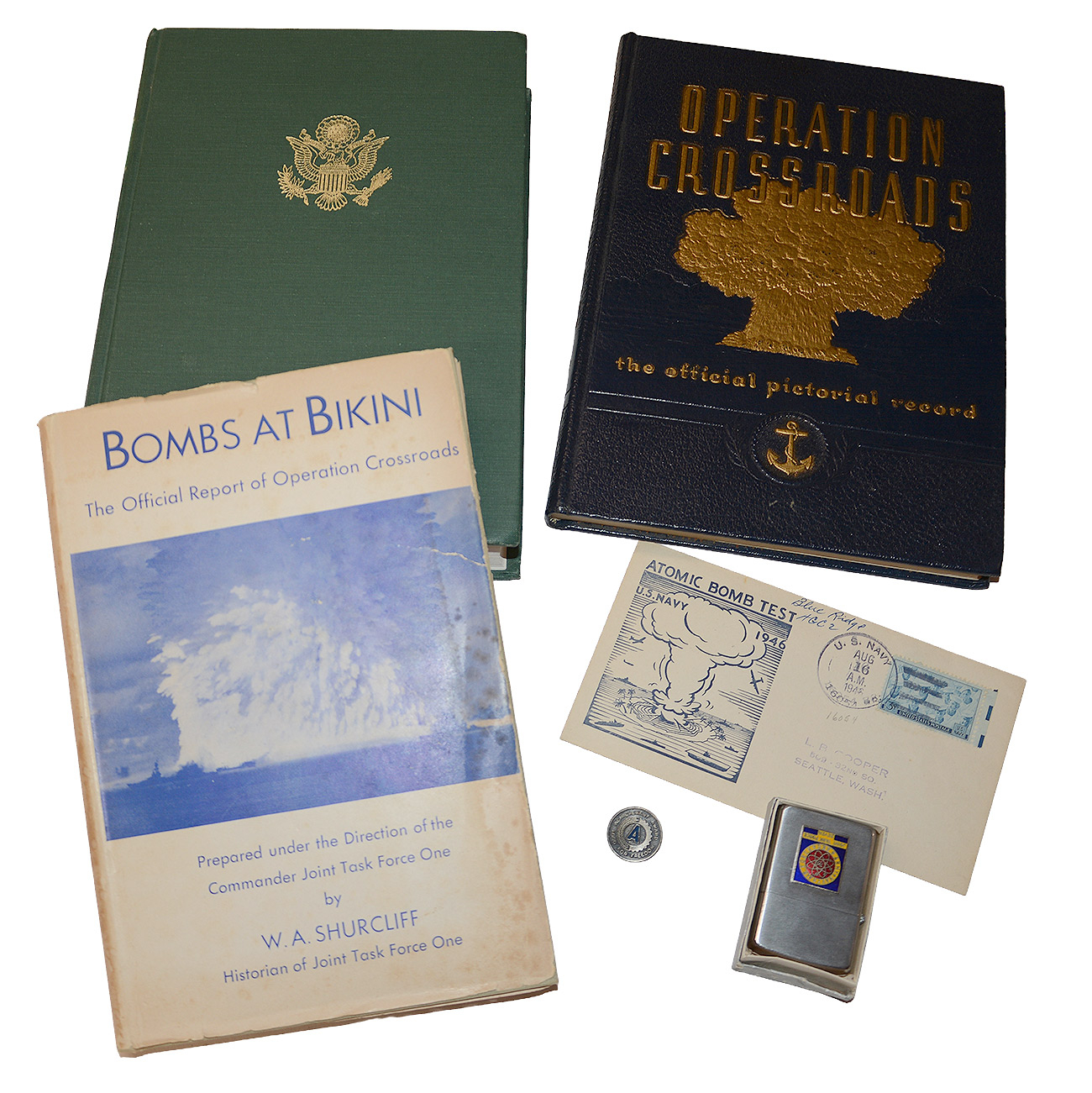
This group covers America’s first postwar atomic bomb tests in the Pacific. It includes the two official Operation Crossroads books, a 1946 Navy test cover posted from a ship that was at Bikini, and a 1950s Joint Task Force Seven lighter from the Eniwetok test site.
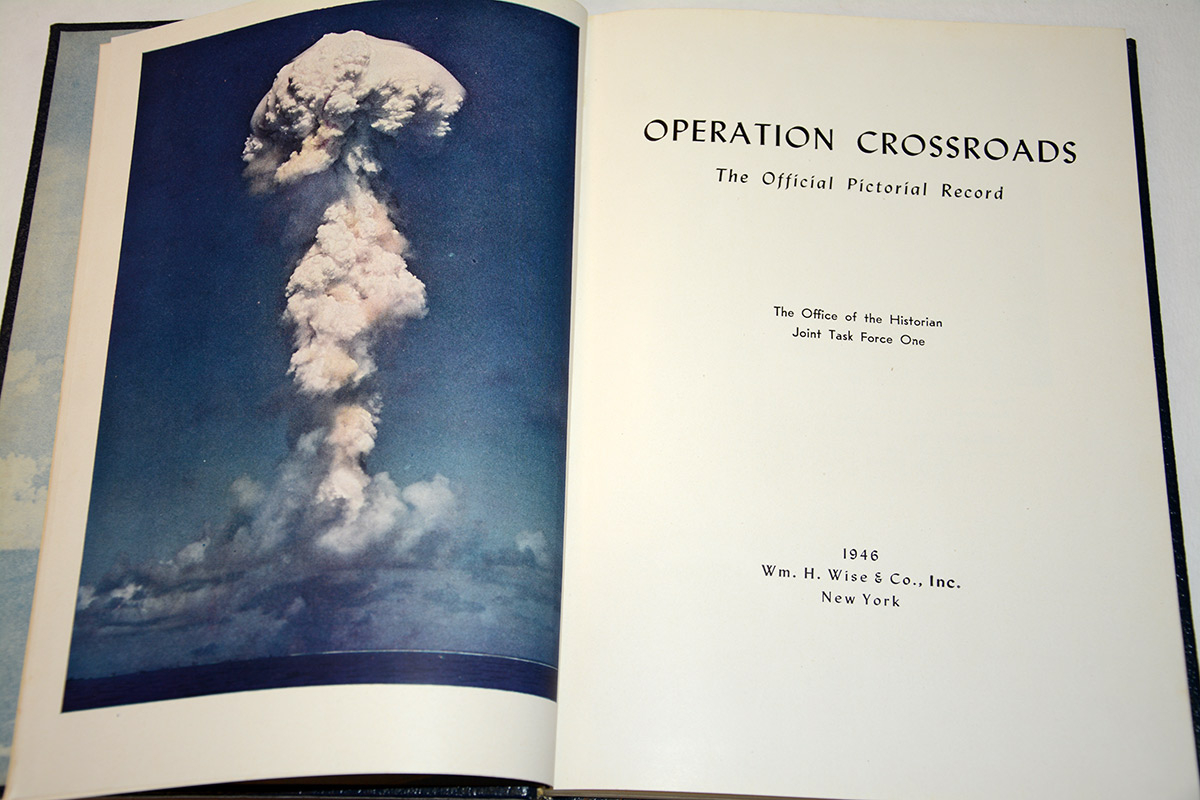
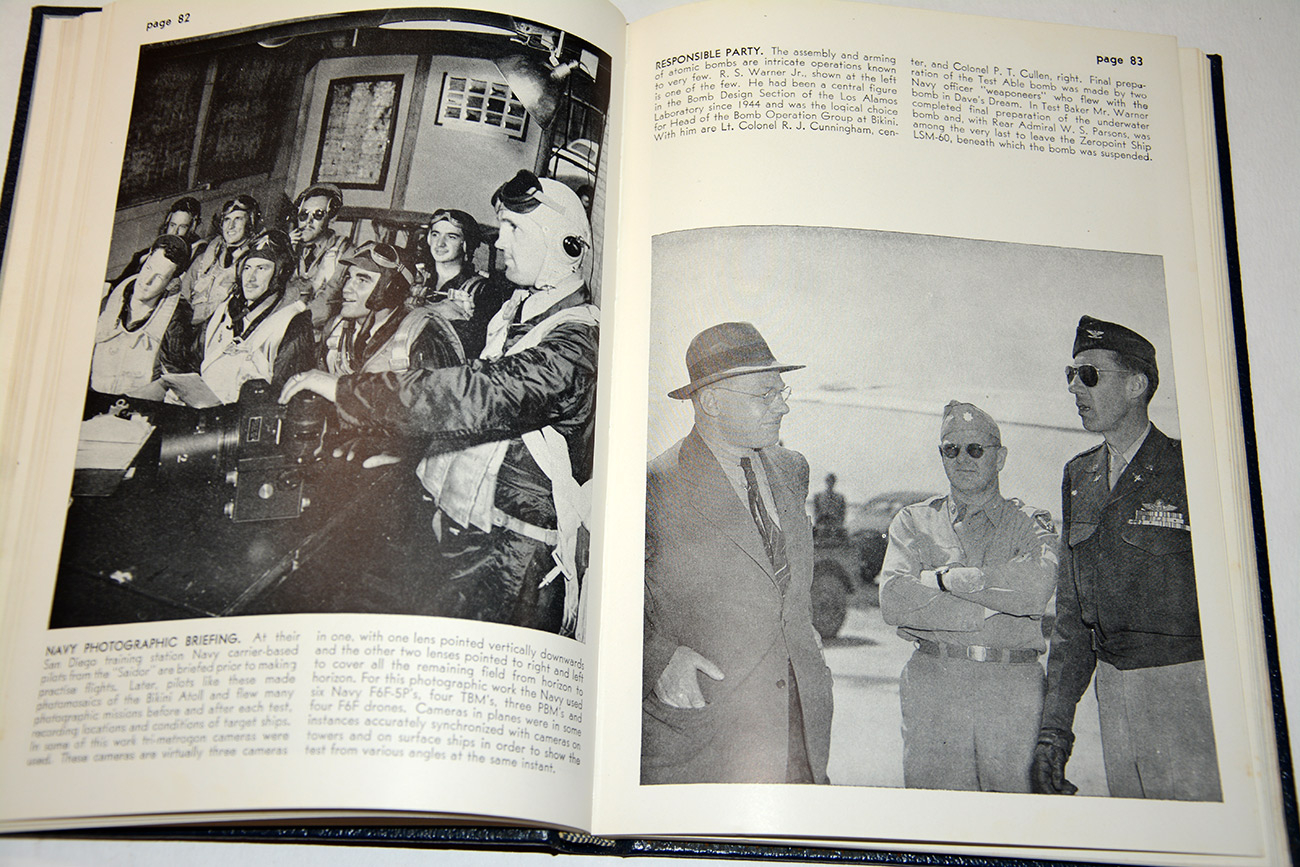
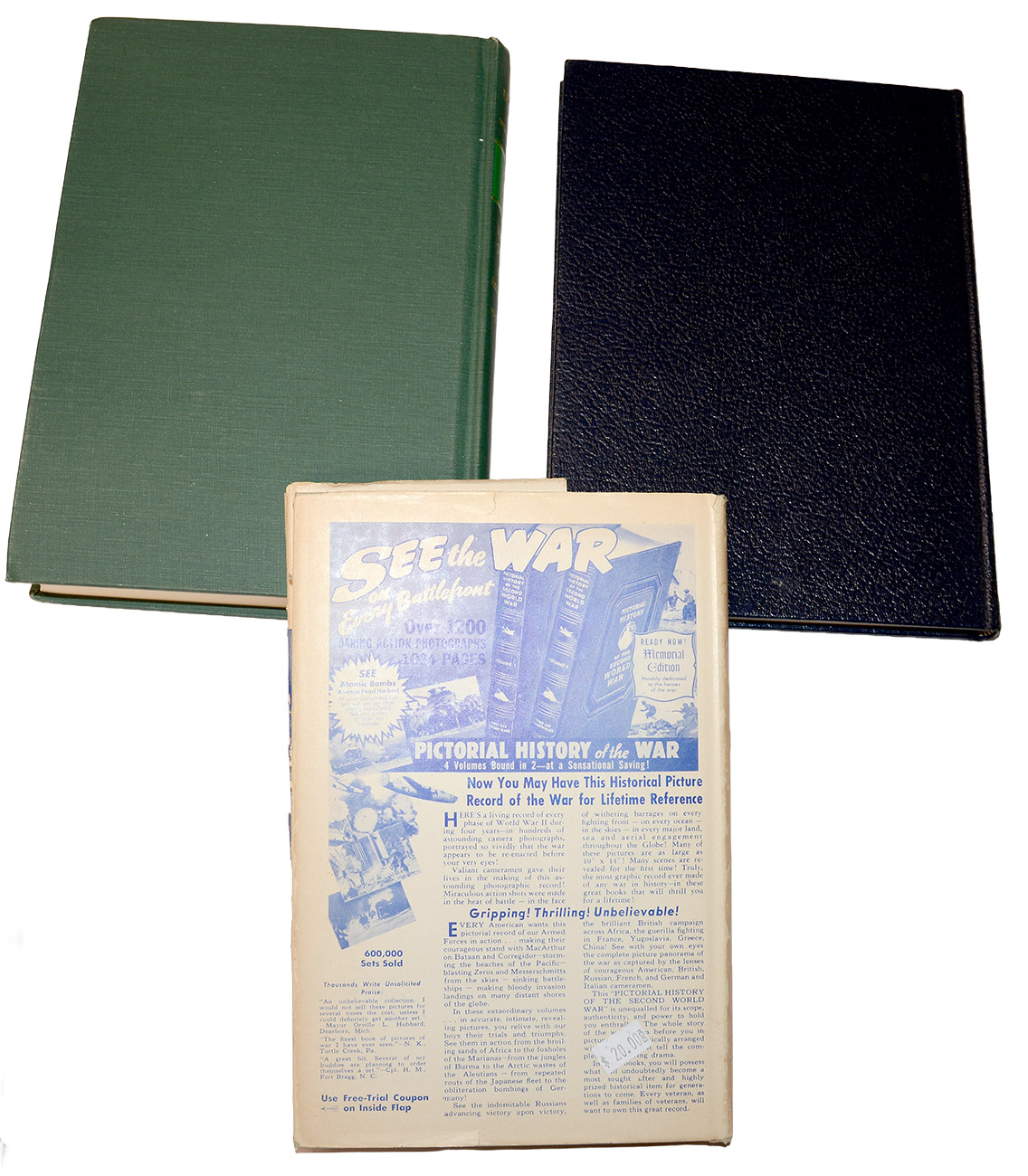
Operation Crossroads: The Official Pictorial Record. Published in 1946 by Wm. H. Wise & Co., New York, for the Office of the Historian, Joint Task Force One. This is the large-format photographic record of the tests, bound in black leatherette with the gold mushroom cloud and Navy anchor embossed on the cover.
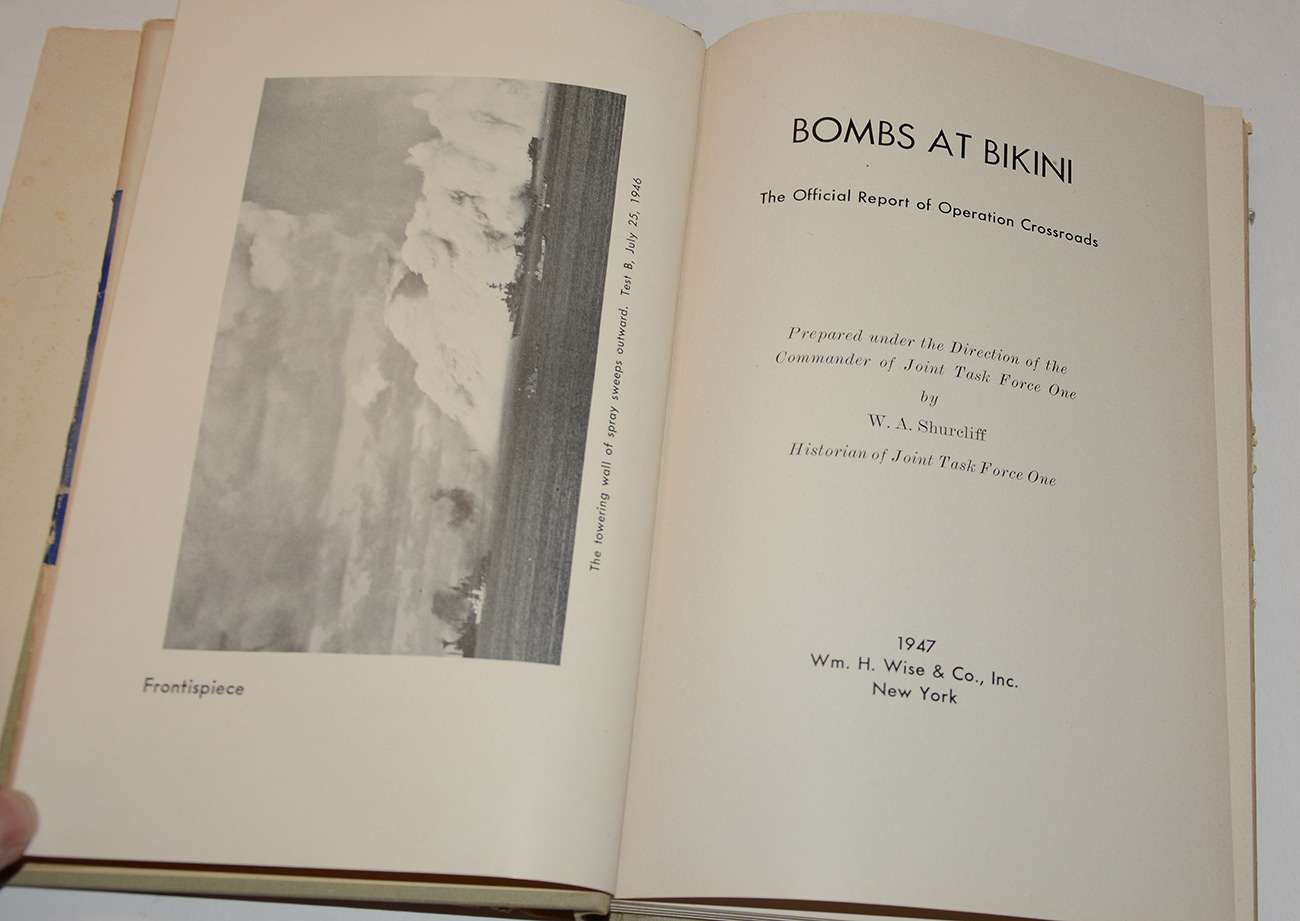
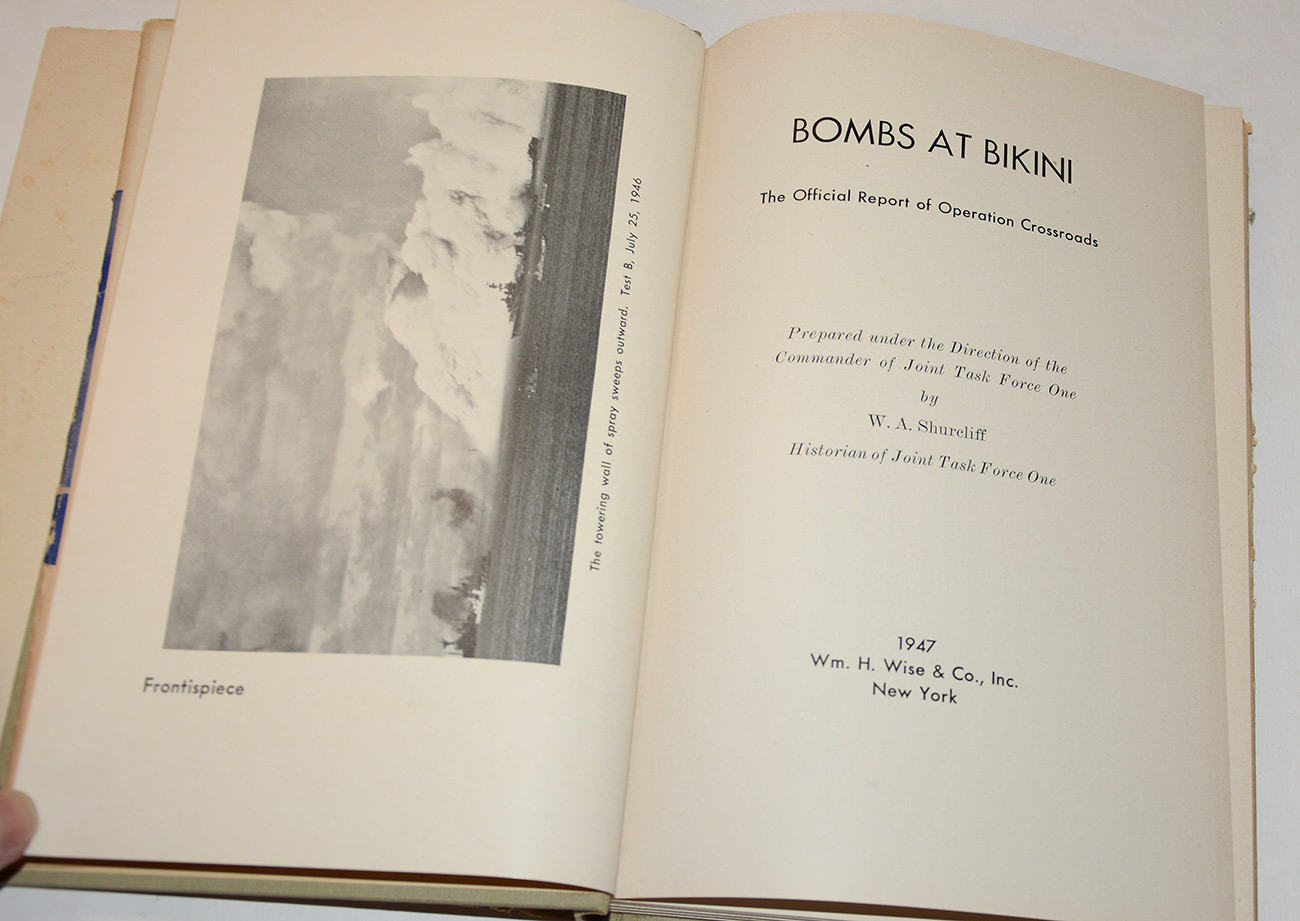
Bombs at Bikini: The Official Report of Operation Crossroads. By W. A. Shurcliff, Historian of Joint Task Force One, published by Wm. H. Wise & Co., 1947. It’s in its original printed dust jacket.
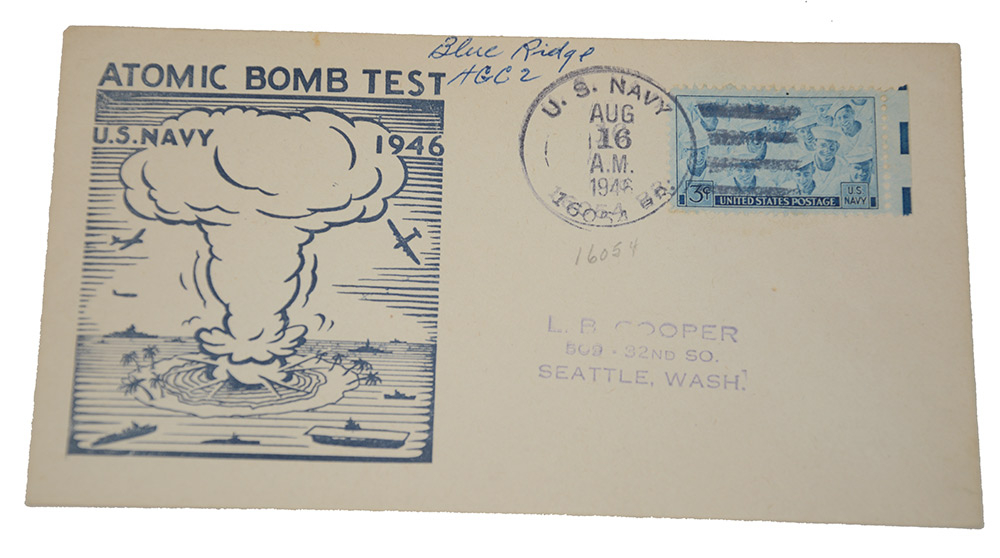
“Atomic Bomb Test – U.S. Navy 1946” cover. The cachet is printed in dark blue. It shows a mushroom cloud rising from an island ringed with palm trees, with battleships, an aircraft carrier and a submarine on the water and aircraft circling overhead. The envelope carries the 3-cent U.S. Navy stamp issued in 1945 to honor the Navy’s service in WWII, cancelled with a “U.S. Navy” postmark dated 16 August 1946, A.M., and numbered 16054. Navy postmarks of this period often left out the ship’s name, so the sender wrote “Blue Ridge AGC 2” in ink beside it and noted the postmark number “16054” below. The cover is addressed by purple rubber stamp to L. B. Cooper, 509 32nd So., Seattle, Washington. Rubber-stamped addresses like this are typical of naval cover collectors, who mailed stamped envelopes to ships to have them cancelled aboard. USS Blue Ridge (AGC-2), an amphibious force flagship, sailed from San Francisco on 12 June 1946 carrying observers to Bikini. She arrived on 29 June, stayed through both atomic tests, left Bikini on 30 July and returned to San Francisco on 15 August, the day before this postmark. No letter is
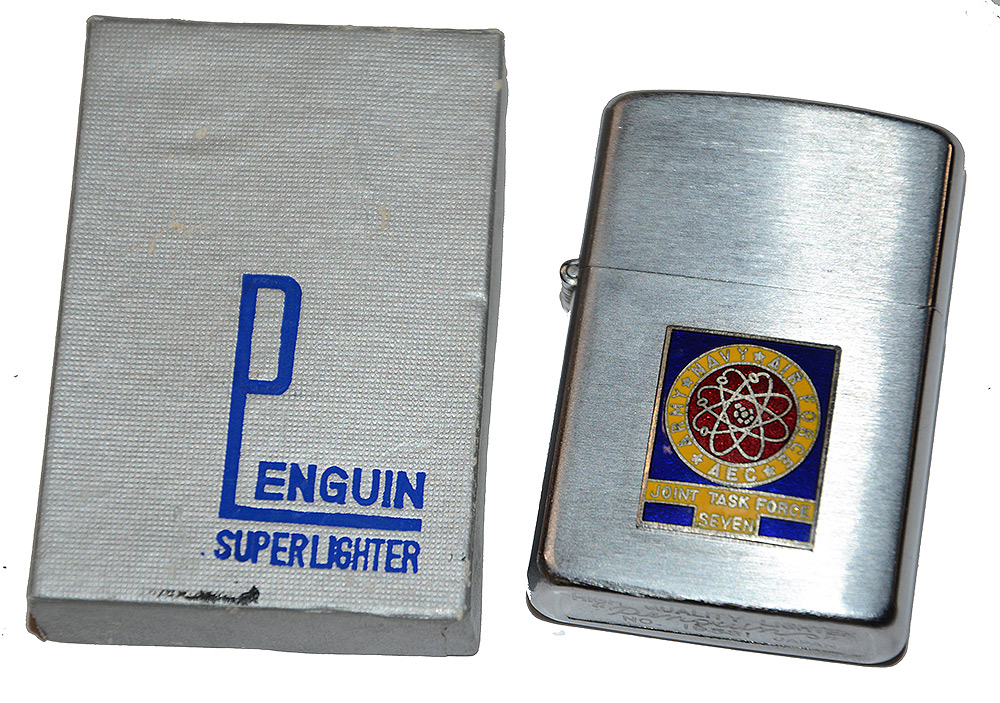
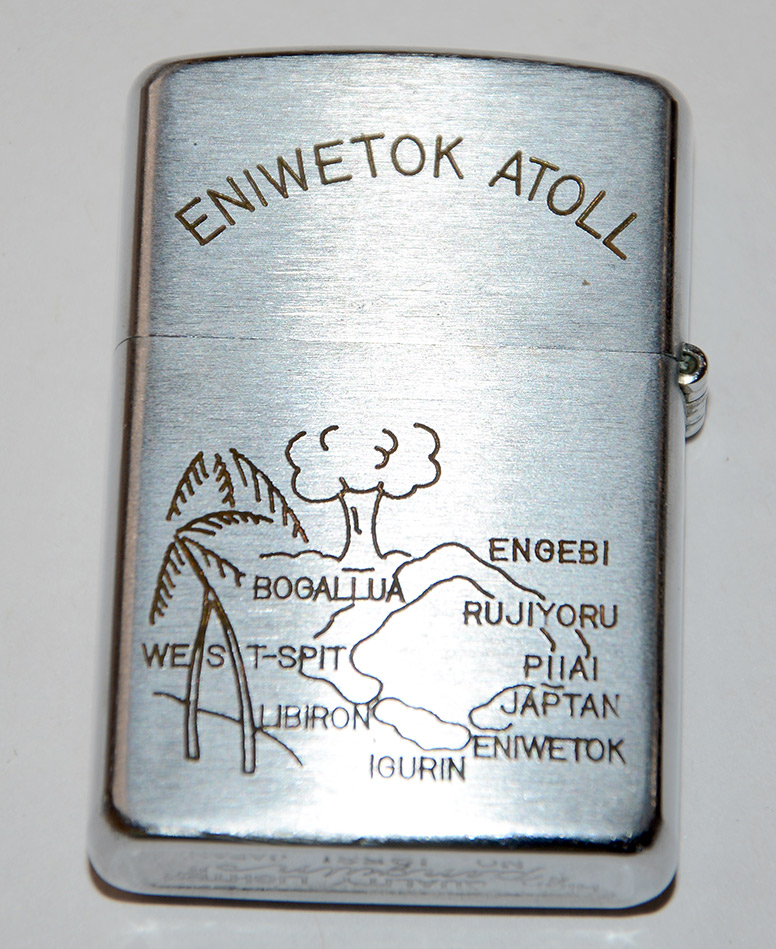
Joint Task Force Seven lighter. A brushed-steel pocket lighter by Penguin of Japan, in its original box. One side carries an enameled Joint Task Force Seven badge: an atom on a red field, ringed by “Army, Navy, Air Force, AEC.” The other side is engraved “Eniwetok Atoll,” with a palm tree, a mushroom cloud and a map of the atoll’s islands, including Engebi, Japtan and Eniwetok. The base is marked “High-Quality Lighter ‘Penguin’ No. 19531 Japan.” JTF-7 ran the U.S. nuclear tests at Eniwetok and Bikini from 1948 into the 1950s. Lighters like this were made in Japan as souvenirs for the men who served there.
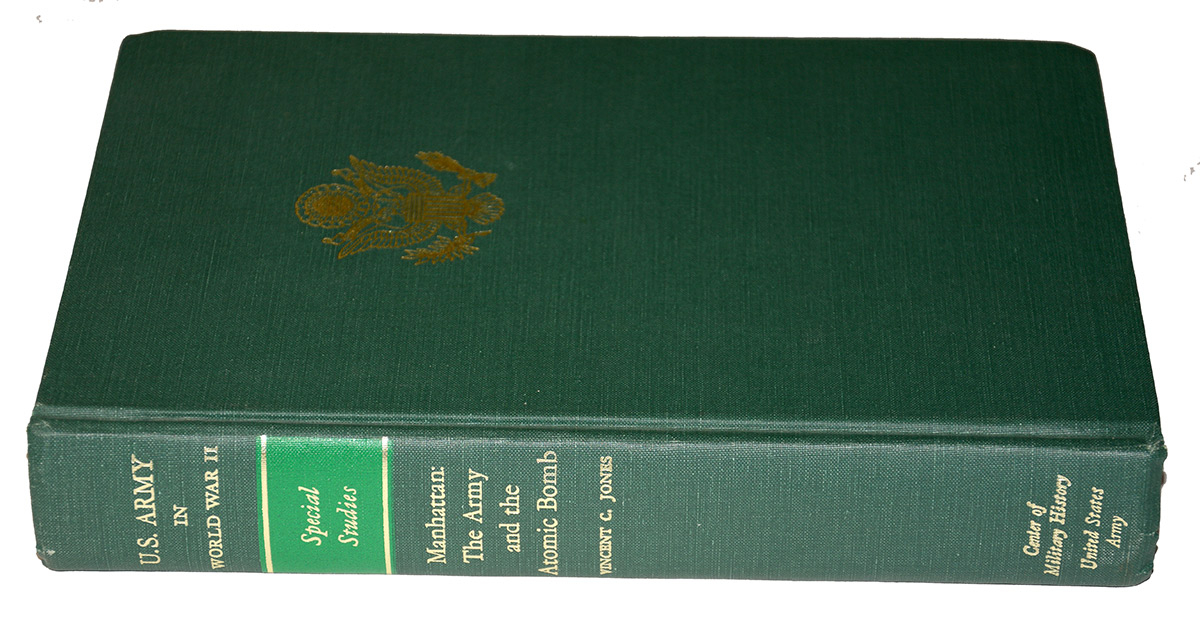
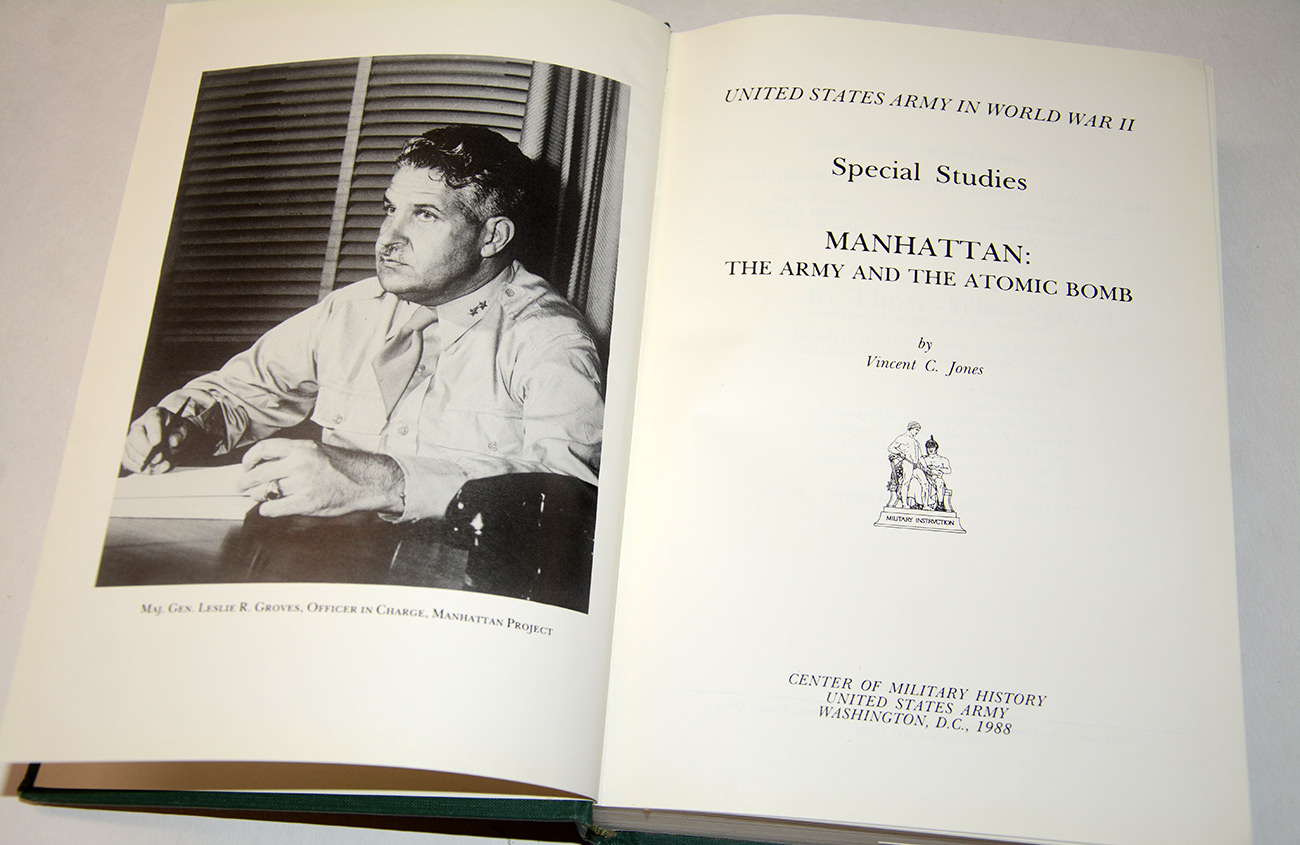
Manhattan: The Army and the Atomic Bomb. By Vincent C. Jones, in the Army’s official U.S. Army in World War II: Special Studies series. Published by the Center of Military History, Washington, D.C., 1988 printing (first printed 1985). It’s the standard official history of the Manhattan Project, in green cloth with the gilt eagle.
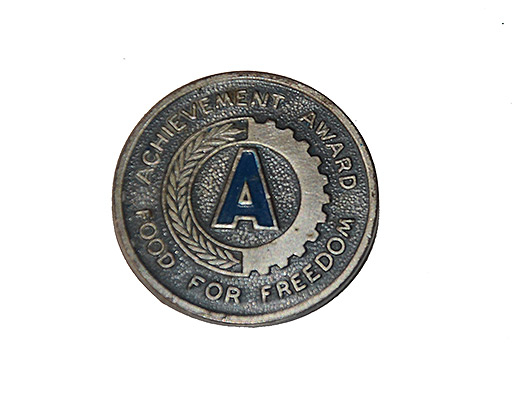
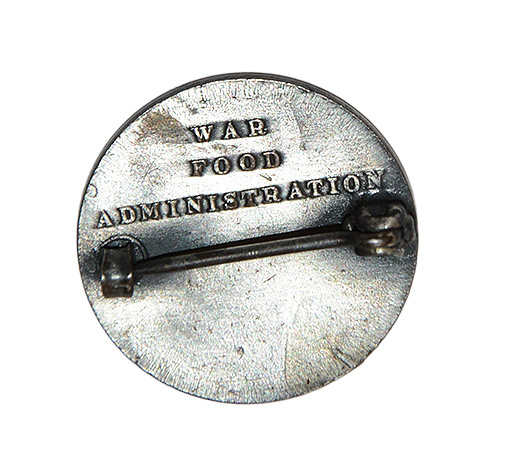
Also included: a WWII War Food Administration “Achievement Award – Food for Freedom” lapel pin with a blue enamel “A.” It’s marked “War Food Administration” on the back. This pin was present with the group upon acquisition and will be included in this sale.
Operation Crossroads was the first test of atomic bombs after the war. Joint Task Force One detonated two weapons at Bikini Atoll in July 1946 against a fleet of more than 90 target ships: Able, an airburst on 1 July, and Baker, an underwater shot on 25 July. More than 40,000 servicemen took part.
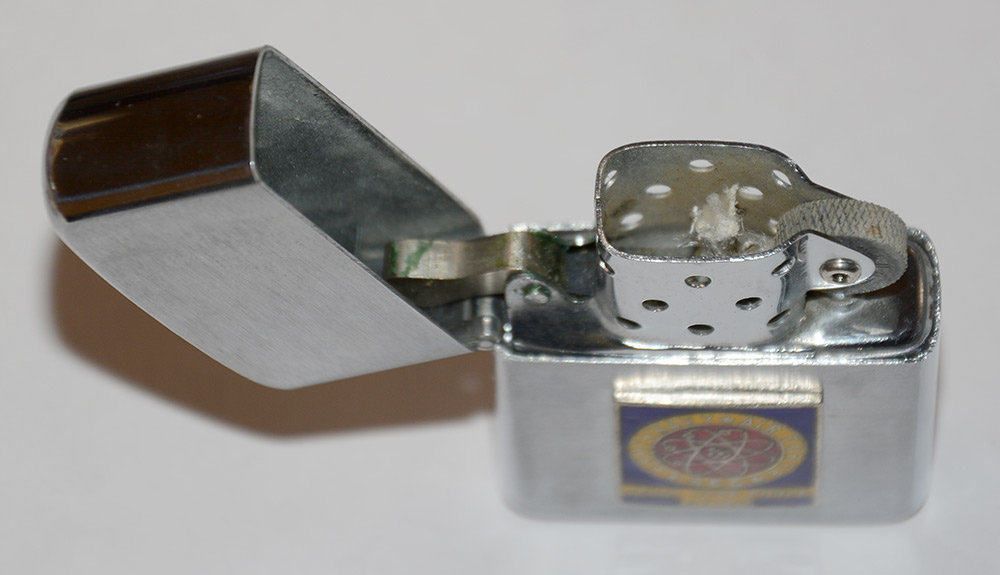
The Crossroads pictorial is in very good condition, with light wear to the cover and corners. The Bombs at Bikini dust jacket is soiled and water-stained, with chipping and tears along the edges and spine. The cover is clean, with a crisp cachet and postmark. The lighter is in excellent condition, with bright enamel. The lighter’s wick is pristine and its striker intact, demonstrating that this lighter was never once fired. Its box shows light soiling and a small mark on the front, including one end torn out but present. The Manhattan volume is in very good condition. The pin has an even patina and pronounced lettering and detail. This whole grouping is an incredible collection of Atomic Era memorabilia and would make a fine addition to any Cold War collection. [gh][ph:L]
~~~~~~~~~~~~~~~~~~~~~~~~~~~~~~~~~~~
THIS ITEM, AS WITH ALL OTHER ITEMS AVAILABLE ON OUR WEB SITE,
MAY BE PURCHASED THROUGH OUR LAYAWAY PROGRAM.
CLICK HERE FOR OUR POLICIES AND TERMS.
THANK YOU!
Inquire About ATOMIC BOMB TEST GROUP – OPERATION CROSSROADS BOOKS, 1946 NAVY TEST COVER FROM USS BLUE RIDGE, AND JOINT TASK FORCE SEVEN ENIWETOK ATOLL LIGHTER
Most Popular
Historical Firearms Stolen From The National Civil War Museum In Harrisburg, Pa »
Theft From Gravesite Of Gen. John Reynolds »
Selection Of Unframed Prints By Don Troiani »
Fine Condition Brass Infantry Bugle Insignia »
Rare Identified 65Th Ny Sergeant’s Jacket, With Manscript Material: 1St U.s. Chasseurs »
featured item
IDENTIFIED US M1855 TYPE-1 SPRINGFIELD MUSKET: ALBERT WADHAMS CO. I, 11th CONNECTICUT: WOUNDED IN ACTION AT COLD HARBOR
A scarce 1858-dated, regimentally marked and soldier-identified Type-1, Version-1, M1855 Springfield Rifle Musket. For the history and details of this pattern see Moller and, especially, Willyard, “US Model 1855 Series Small Arms.” The M1855 was… (2026-2163). Learn More »
site search