

site search
online catalog
WORLD WAR 2 PROPELLER BLADE FROM B-24 "LIBERATOR" BOMBER CRASH SITE IN ENGLAND
Hover to zoom
$7,500.00
Quantity Available: 1
Item Code: 1202-1164
Shipping: Determined by Method & Location of buyer
To Order:
Call 717-334-0347,
Fax 717-334-5016, or E-mail
Offered here is a single propeller blade from a World War Two B-24 bomber from the 392nd Bomb Group that crashed on March 25, 1945. The crash occurred when two B-24s collided in the clouds while forming up for a mission to bomb a target in Hitzocker, Germany.
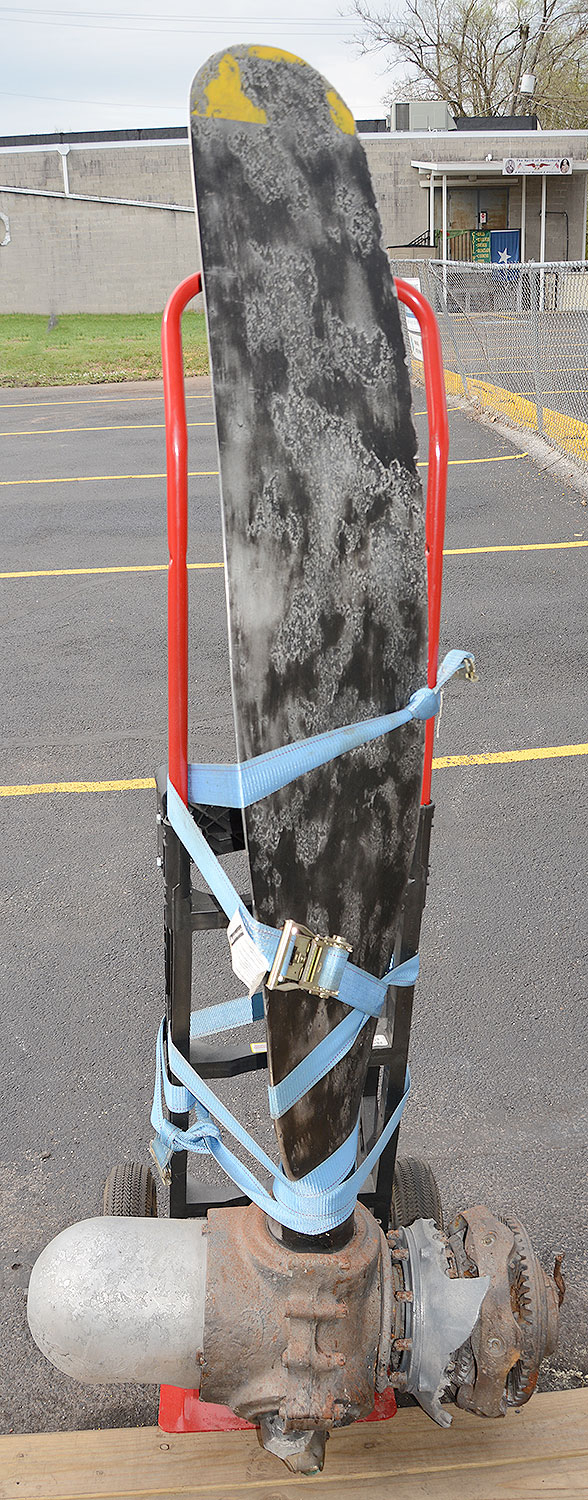
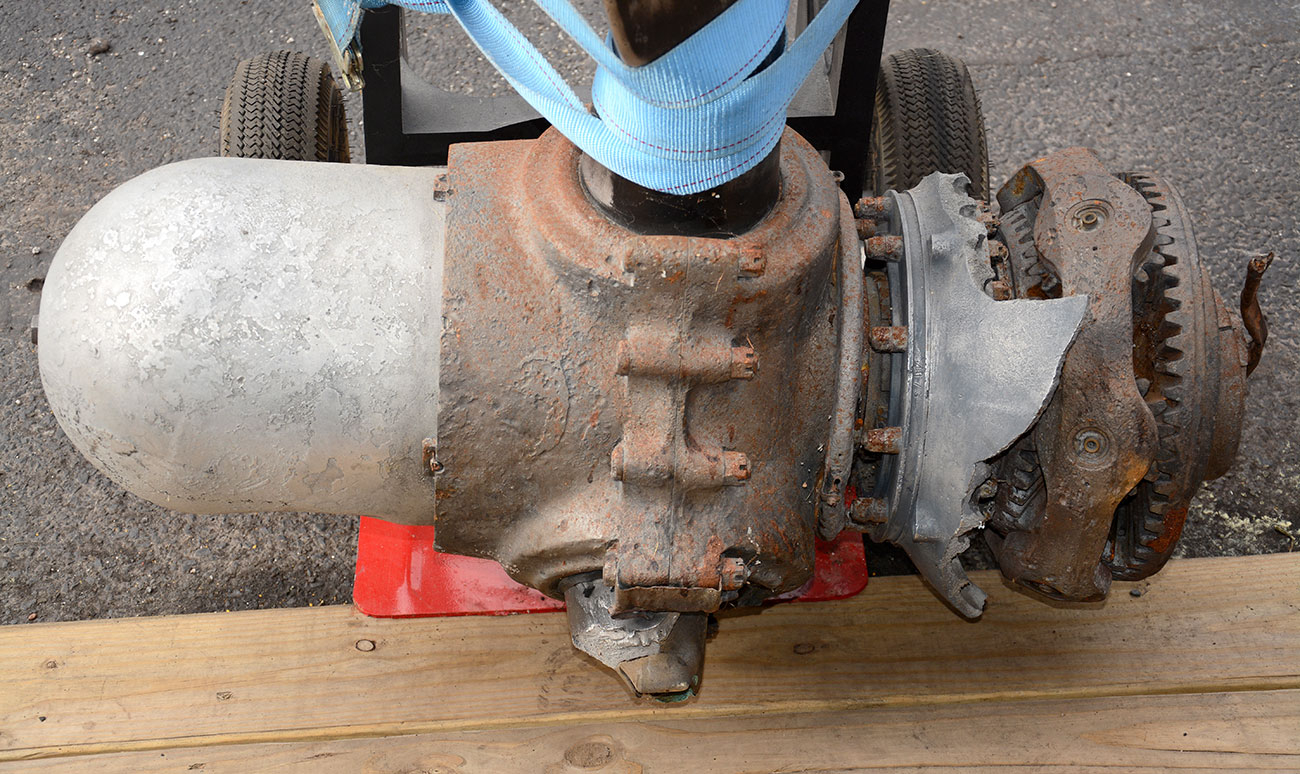
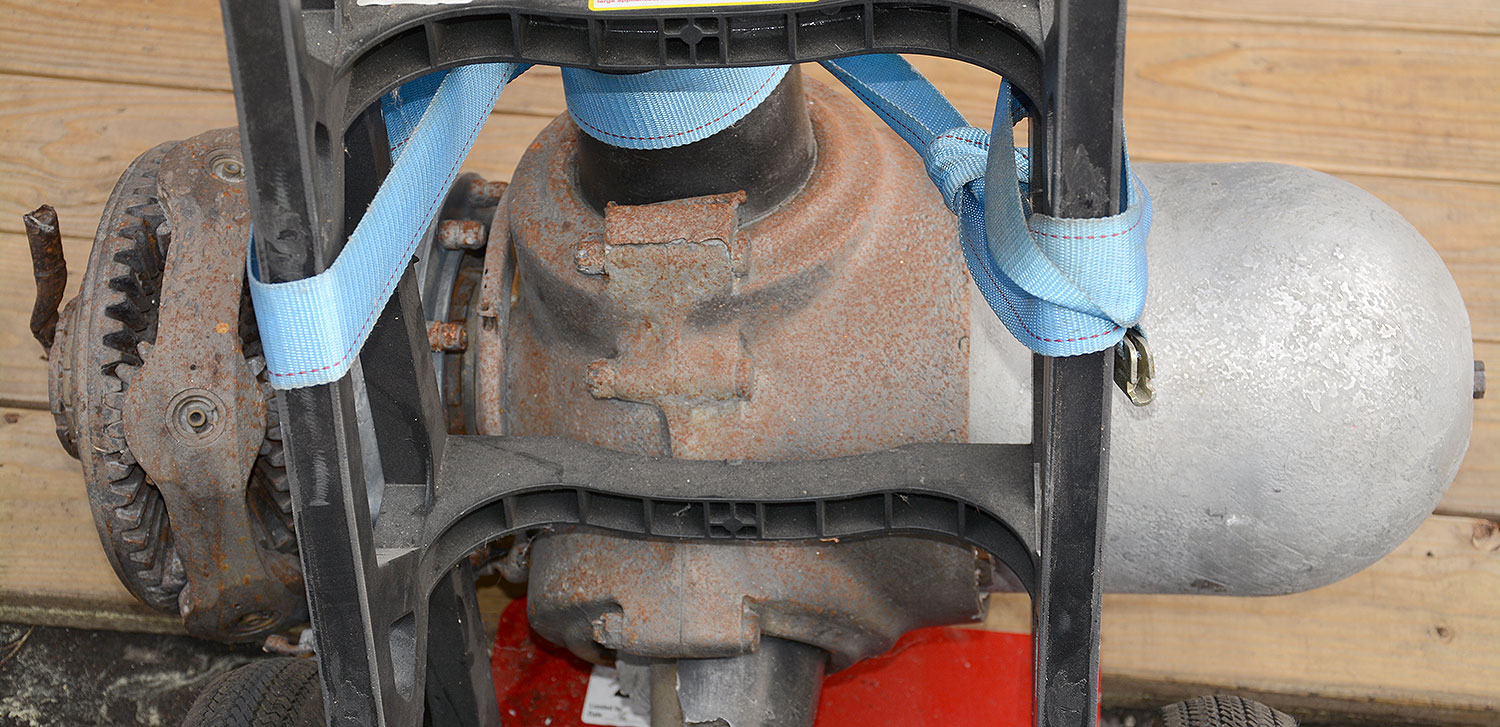
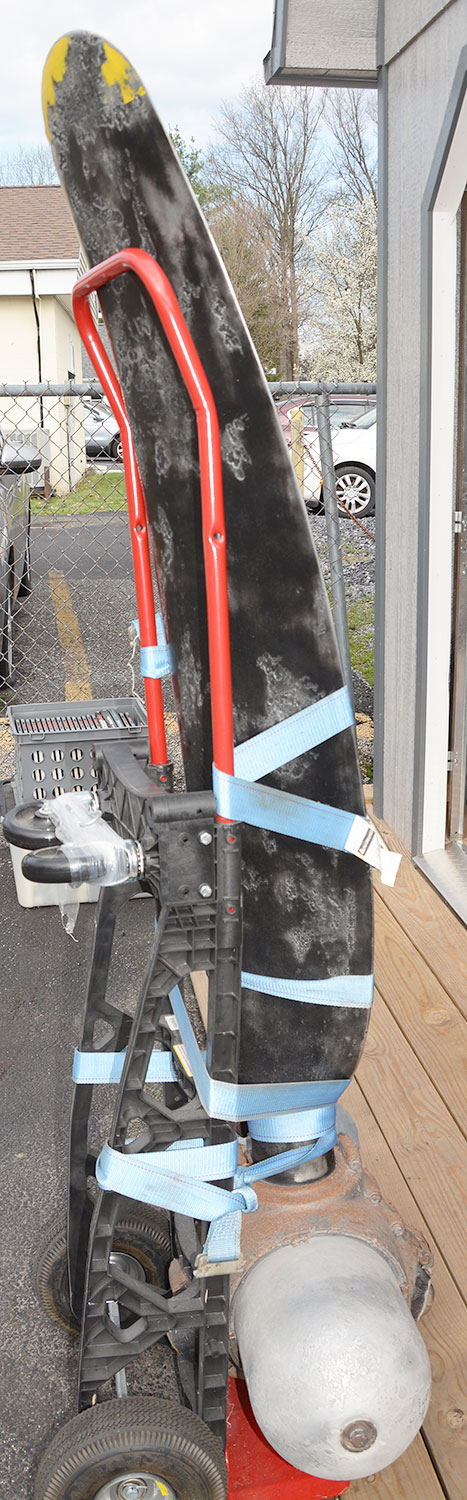
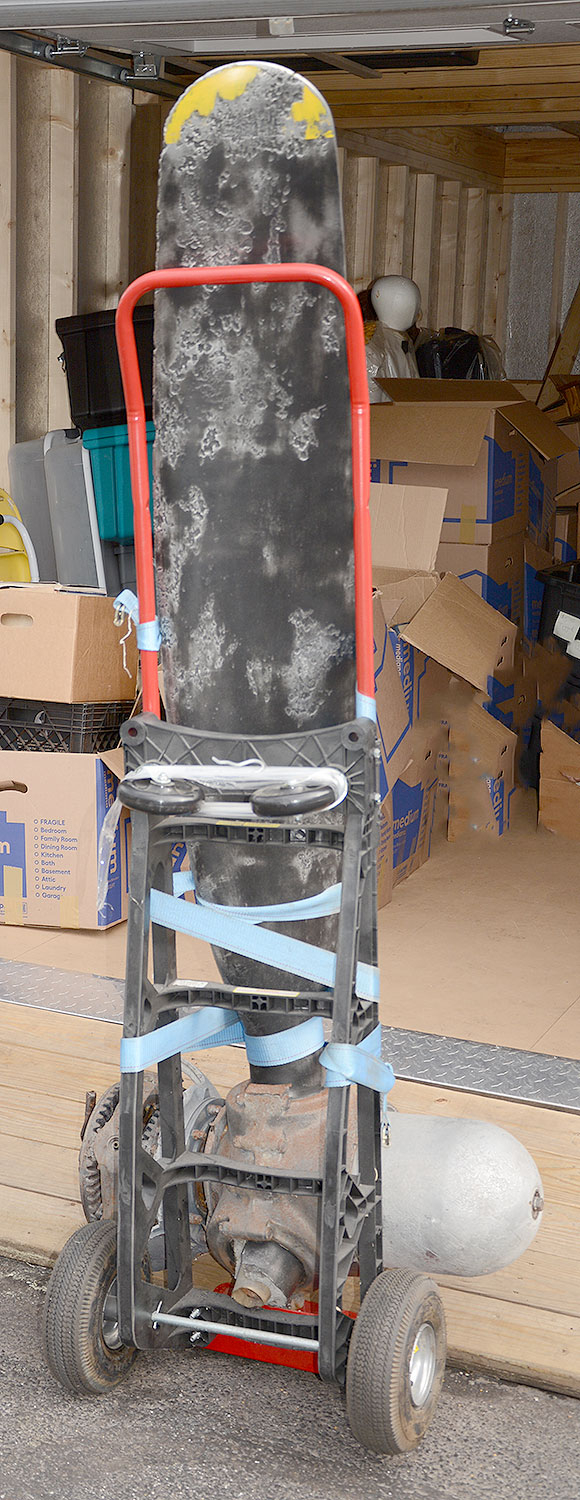
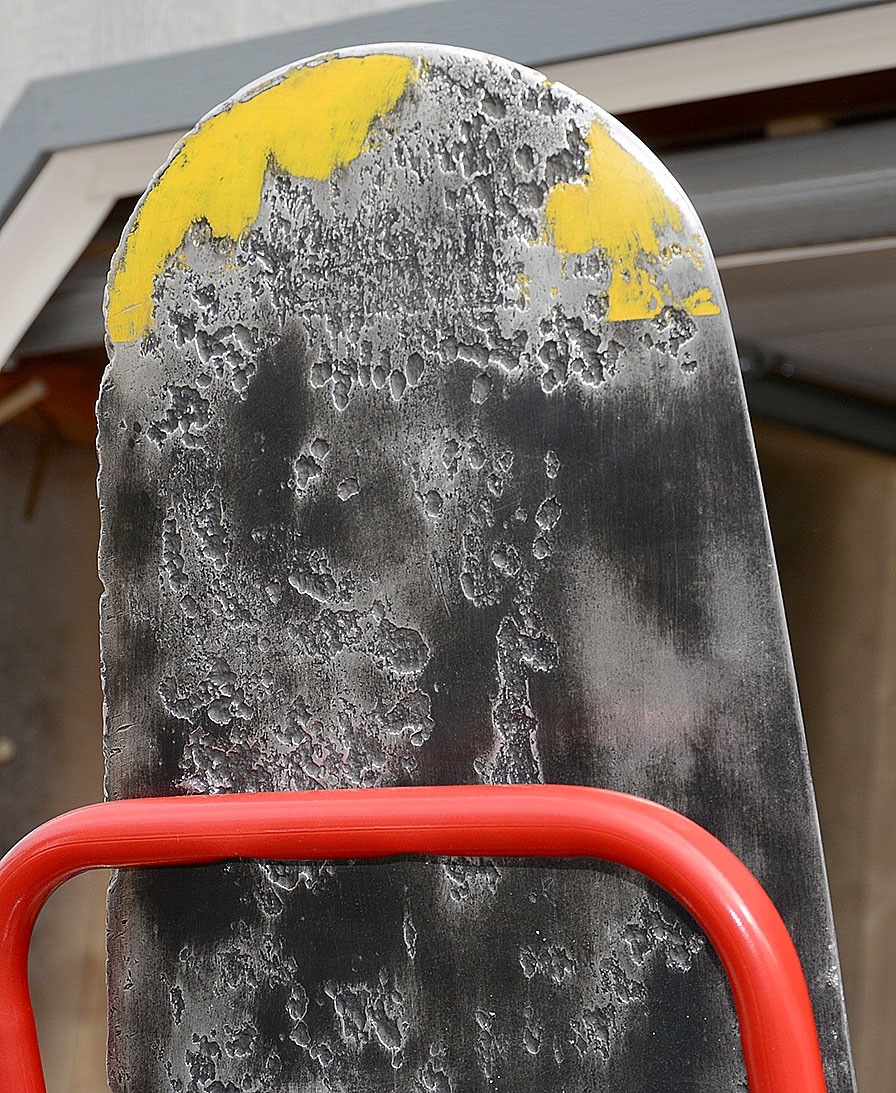
This thought-provoking relic is magnificent in its large size and weight. The aluminum propeller blade stands over five feet tall and is 13" wide. Incredibly, the blade is still attached to the dome cap, barrel halves, and gear box, which add another 10" to the height. The blade exhibits only a slight bend, which is extraordinary considering the violence of the crash. The blade exhibits patches of pitting and corrosion overall and retains some of the original yellow paint on the tip.
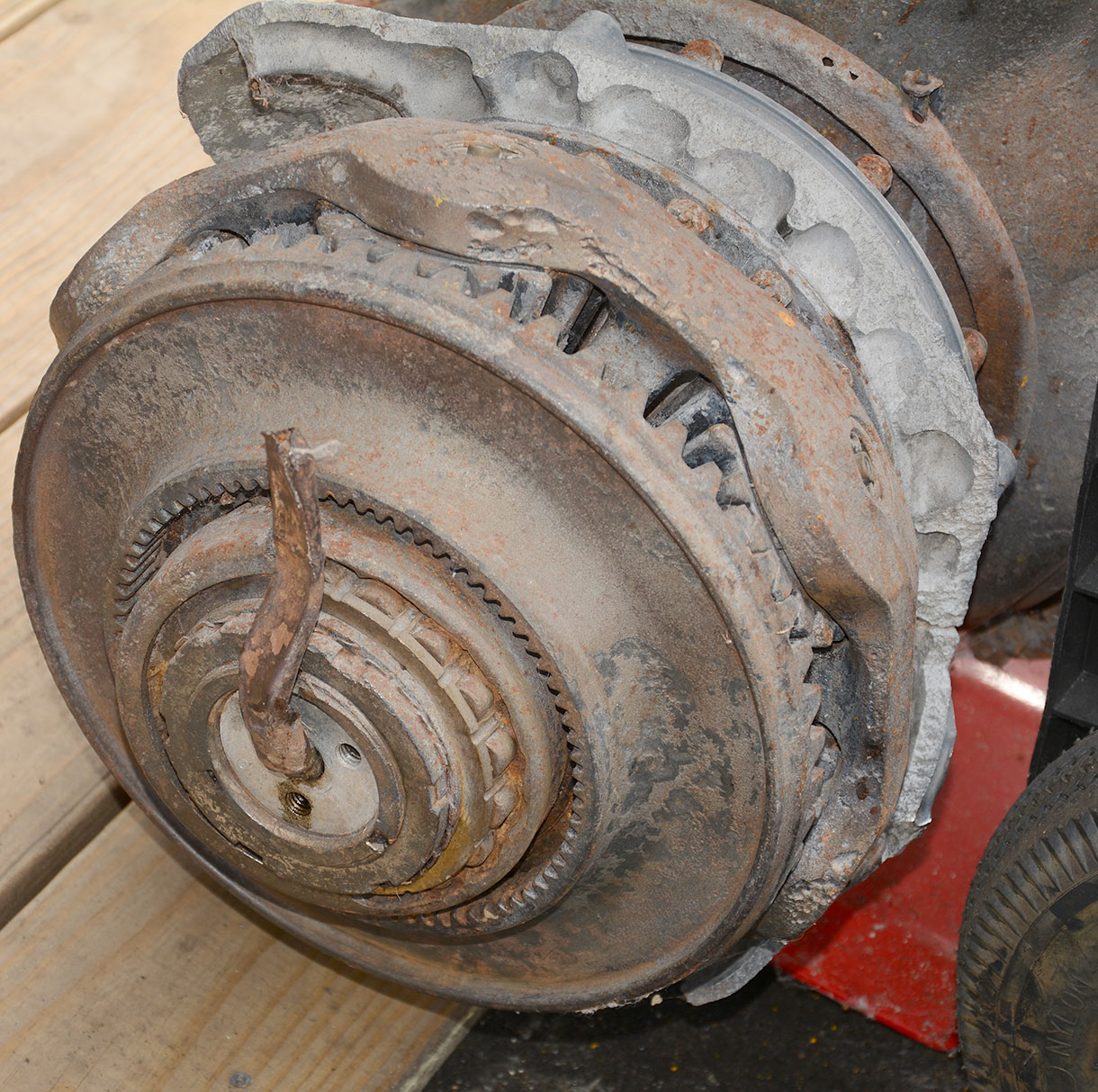
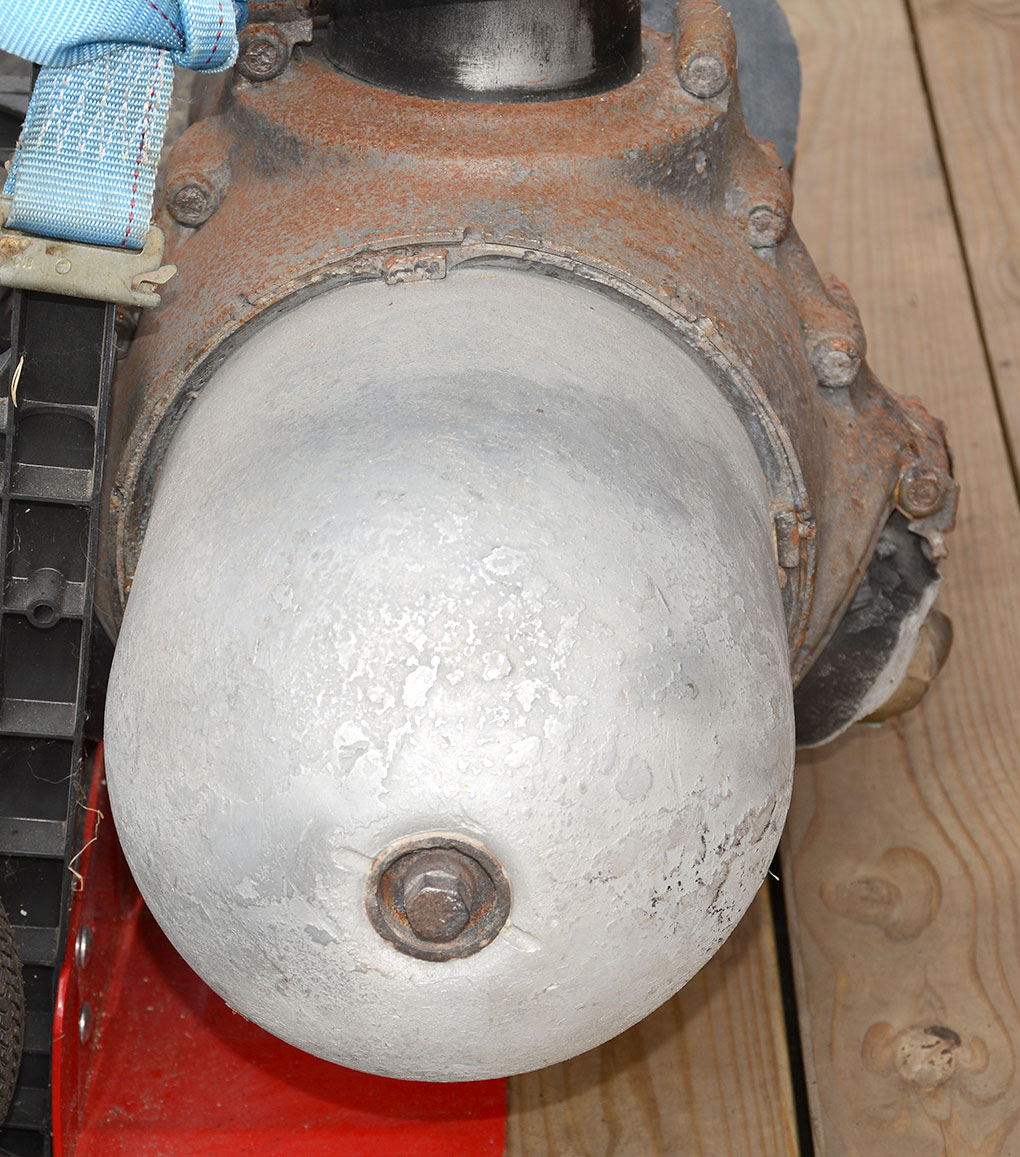
The dome is undamaged and is approximately 11" long and 9" in diameter, securely bolted in place. The collar (or barrel halves) were originally bolted together around the three blades; these remain securely in place with light surface rust. Still attached on the back side of the rear barrel half is the broken remnants of the engine nose cover and exposed are the propeller reduction gears. These also are generally rusty. This lower collection of parts is about 33" long front to back.
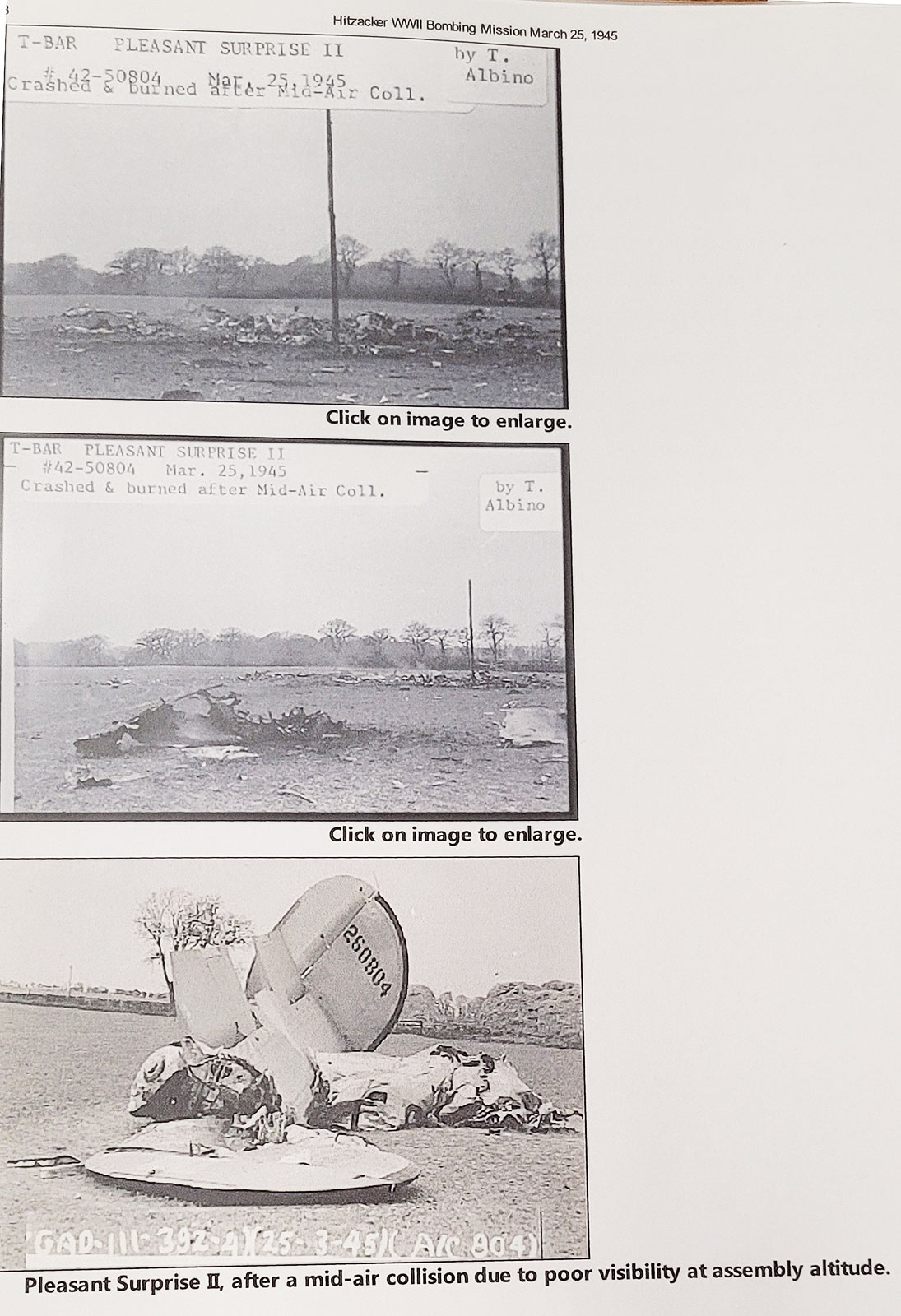
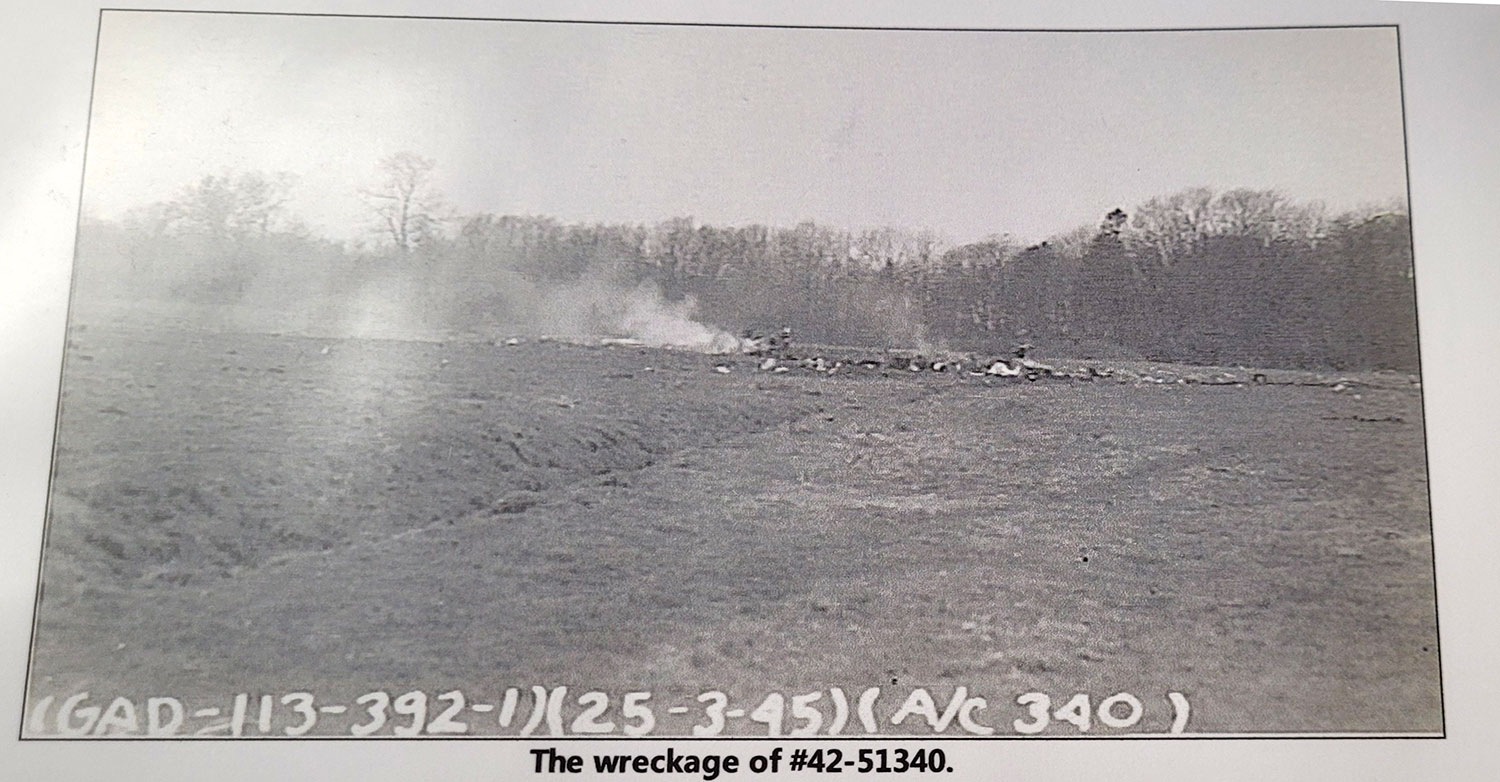
This relic is from a tragic mishap that occurred during formation assembly over England. Lt. Kaiser’s aircraft (B-24J, #42-50804, “PLEASANT SURPRISE II") from the 578th Bomb Squadron, and Lt. Markuson’s (B-24J, #42-51340, no nickname) from the 576th Bomb Squadron, came together in a mid-air collision with both ships going down. Only two crew members bailed out and survived from each bomber. Kaiser’s plane crashed at Hall Farm, Buxton Lamas, England, while Markuson’s plane crashed at Skeyton, England.
The following are accounts of the incident:
Harold Hutchcroft, co-pilot from Markuson’s crew – “On 25 March 1945, our group had been briefed at 3 a.m. for an attack on the underground oil storage depot at Hitzocker, Germany. Because of fog, it was an instrument take-off and we commenced our 34th mission at approximately 6 a.m. Using our regular flight pattern, we were to form into squadrons at a specific altitude. However, because of dense clouds, we had to change altitude on four different occasions, trying to locate a clear opening in which to form. We eventually found 579th Squadron's lead ship, but due to the lack of time available, we left our group's assembly area to join up with another bomb group and complete the mission. I glanced out of my side window and noticed a B-24 from another Squadron flying alongside, in formation, off my wing. He hadn't located his own squadron, so joined up with us, which was fine. We flew for several minutes in clear weather, but then entered another cloud bank making it difficult to see our lead ship as well as our wing man. While I was checking our instruments, I felt a thump and glanced out to see our wing man going down and that our right wing, between number three and number four engines, had been broken off. Lt. Markuson, our pilot, told me to ring the bail-out alarm for the rest of the crew to leave immediately. I had difficulty getting to the bomb bay doors to bail out because of the almost overwhelming centrifugal forces. Our engineer, T/Sgt. Paul Cain, was standing on the bomb bay cat-walk and had to struggle to get clear. He was trying to pull himself out when the 12 500-lb. bombs suddenly broke loose and he literally fell out of the diving B-24 with the bombs. My concern, as I followed him out, was whether I still had enough altitude. Fortunately, my parachute opened in time and I landed safely in a plowed field, about a mile or so from Coltishall Airfield, a British fighter base. I could see where one of the planes had crashed because of the exploding flares, ammunition, etc. I felt I should go over and see if I could help in some way. However, two local farmers emerged from a nearby house and persuaded me there was nothing I could do. They insisted that I go into their house, from where I telephoned my base. The farmers gave me a cup of tea, but still in a state of shock I couldn't drink much because of uncontrollable shaking. A jeep from Coltishall Airfield collected me from the farmer's house. On the way to the hospital at the RAF base we located a survivor, who had a cut over his eye, from the other plane involved. Later that day I was taken to my home base at Wendling.”
Charles Bird – “I was a 12-year-old schoolboy at that time. It was an overcast Sunday morning in the small village of Oxnead, about 12 miles northeast of Norwich, when at approximately 7:30 a.m. on 25 March 1945, the peaceful tranquility of the surrounding countryside was broken by the terrifying high-pitched whistling sound of bombers passing close over our isolated cottage. I rushed from my bed to the north-facing bedroom window, heard several dull thuds and loud explosions in the surrounding area. I saw palls of black smoke billowing up and slowly drifting away from where the remains of an aircraft had crashed in a field near Skeyton village. Floating through the low overcast, beyond Skeyton village church, were three or four white parachutes. My father, from his south-facing bedroom window, saw a B-24 Liberator bomber pass over a small wooded area, then turn and crash, exploding in a grass meadow beyond a small stream and near the adjoining village of Lammas. We hurriedly dressed and went out towards the two main crash sites, about 400 yards apart. It was all too distressingly obvious that the occupants, if any, of those two burning wrecks couldn't possibly have survived. Quite apart from the crushing impact, both aircraft were ablaze and the heat from burning fuel, exploding .50-caliber ammunition and flares burning and popping, was overwhelming. Crash and fire tenders from nearby airfields were very soon at the scene of the disaster. As we approached the crashed Liberator in the center of a large corn field near Skeyton, we saw an American officer, who had arrived via the main road and crossed the field, pause in an open gateway and salute in the direction of the burning wreckage in tribute to the crew members who had perished. Trucks and jeeps, packed with American airmen, also arrived very quickly and began the grim task of recovering the bodies once the fires had been extinguished and the danger of exploding ammunition from the two main crash sites was over. Someone mentioned that a tail section from one of the B-24s had landed in an adjacent field so we hurried over. It was relatively undamaged, only the jagged edges of the severed fuselage, the remainder of the tail section, including the rear gun turret, was remarkably undamaged, indicating that it must have fallen to earth with a certain amount of flotation. Bomb craters in the surrounding meadows quickly filled with water, and assorted debris from both bombers was scattered in the woods and fields. About 250 yards from the crash site of one Liberator was one of the engines, complete with twisted propeller blades, embedded in a small ditch. Several other holes in the grassy meadows indicated where some of the bombs had gone straight in without exploding. During the following two or three weeks the American Air Force salvage and bomb disposal personnel cleared away all the main wreckage from the two sites and combed the surrounding woods, fields, and streams, but I'm reasonably sure that some relics remain there to this day.”
This wonderful relic of World War 2 comes with a binder of information regarding the crew members of the two aircraft. [jet][ph:L]
PICK UP HERE AT THE SHOP IS PREFERABLE AND HIGHLY RECOMMENDED DUE TO THE SIZE AND WEIGHT OF THIS ITEM.
~~~~~~~~~~~~~~~~~~~~~~~~~~~~~~~~~~~
THIS ITEM, AS WITH ALL OTHER ITEMS AVAILABLE ON OUR WEB SITE,
MAY BE PURCHASED THROUGH OUR LAYAWAY PROGRAM.
CLICK HERE FOR OUR POLICIES AND TERMS.
THANK YOU!
Inquire About WORLD WAR 2 PROPELLER BLADE FROM B-24 "LIBERATOR" BOMBER CRASH SITE IN ENGLAND
Most Popular
Historical Firearms Stolen From The National Civil War Museum In Harrisburg, Pa »
Theft From Gravesite Of Gen. John Reynolds »
Selection Of Unframed Prints By Don Troiani »
Fine Condition Brass Infantry Bugle Insignia »
Rare Identified 65Th Ny Sergeant’s Jacket, With Manscript Material: 1St U.s. Chasseurs »
featured item
VERY ATTRACTIVE DOUBLE CASED SIXTH-PLATE AMBROTYPES OF CIVILIAN AND CONFEDERATE SOLDIER IN A RARE UNION CASE
The relationship between the two men pictured is not known but no doubt they are either brothers or the same man at different points in his life. The left side ambrotype is of a seated man sporting a closely trimmed beard and mustache wearing a dark… (1138-1975). Learn More »
site search