

site search
online catalog
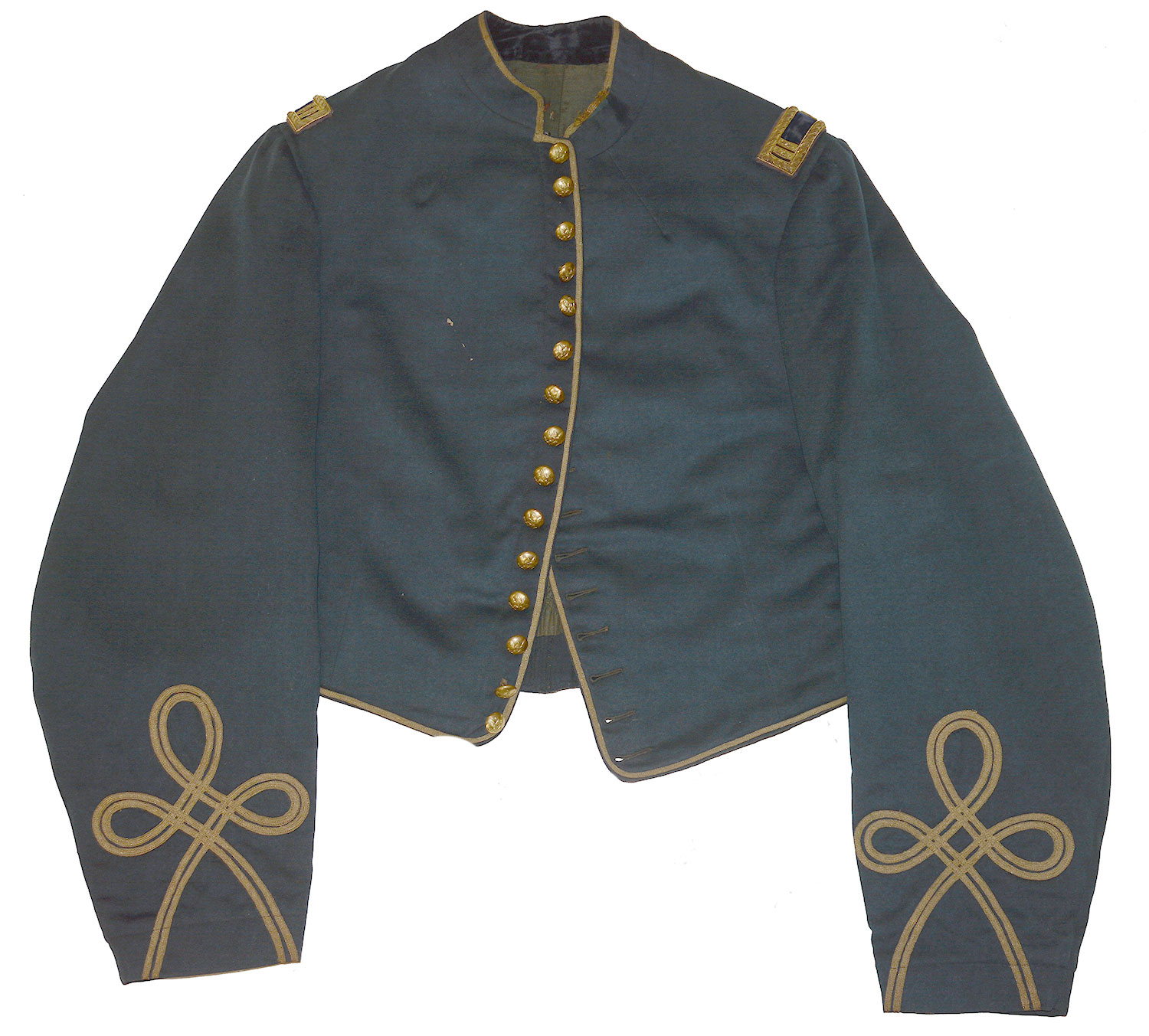
WORLD CLASS ZOUAVE OFFICER’S JACKET OF CAPT. THOMAS HICKEY – 164th NY, CORCORAN’S IRISH LEGION- MORTALLY WOUNDED AT COLD HARBOR – PHOTOGRAPHED IN THE FIELD WEARING THIS UNIFORM
Hover to zoom
$19,500.00 SOLD
Quantity Available: None
Item Code: 1314-09
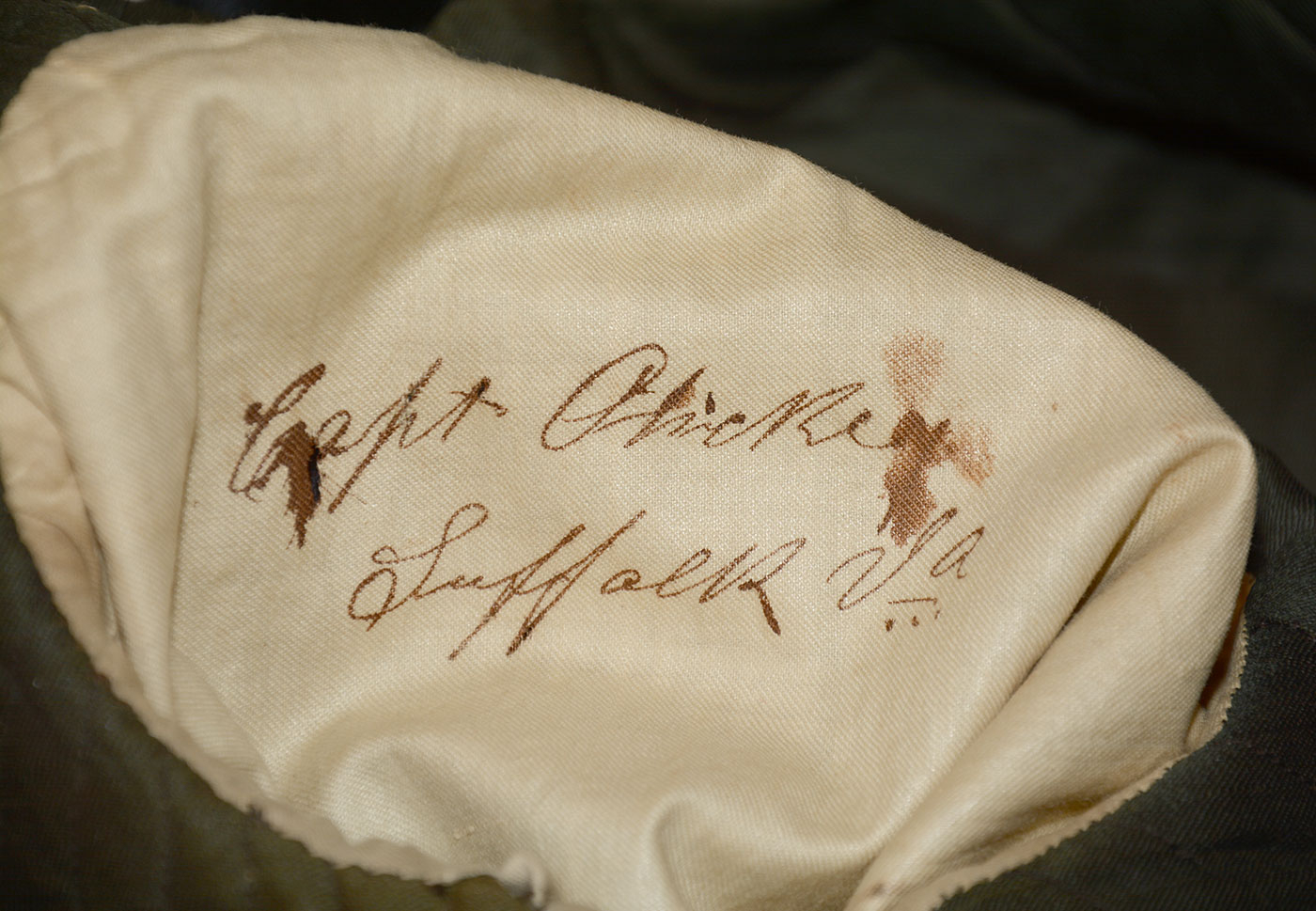
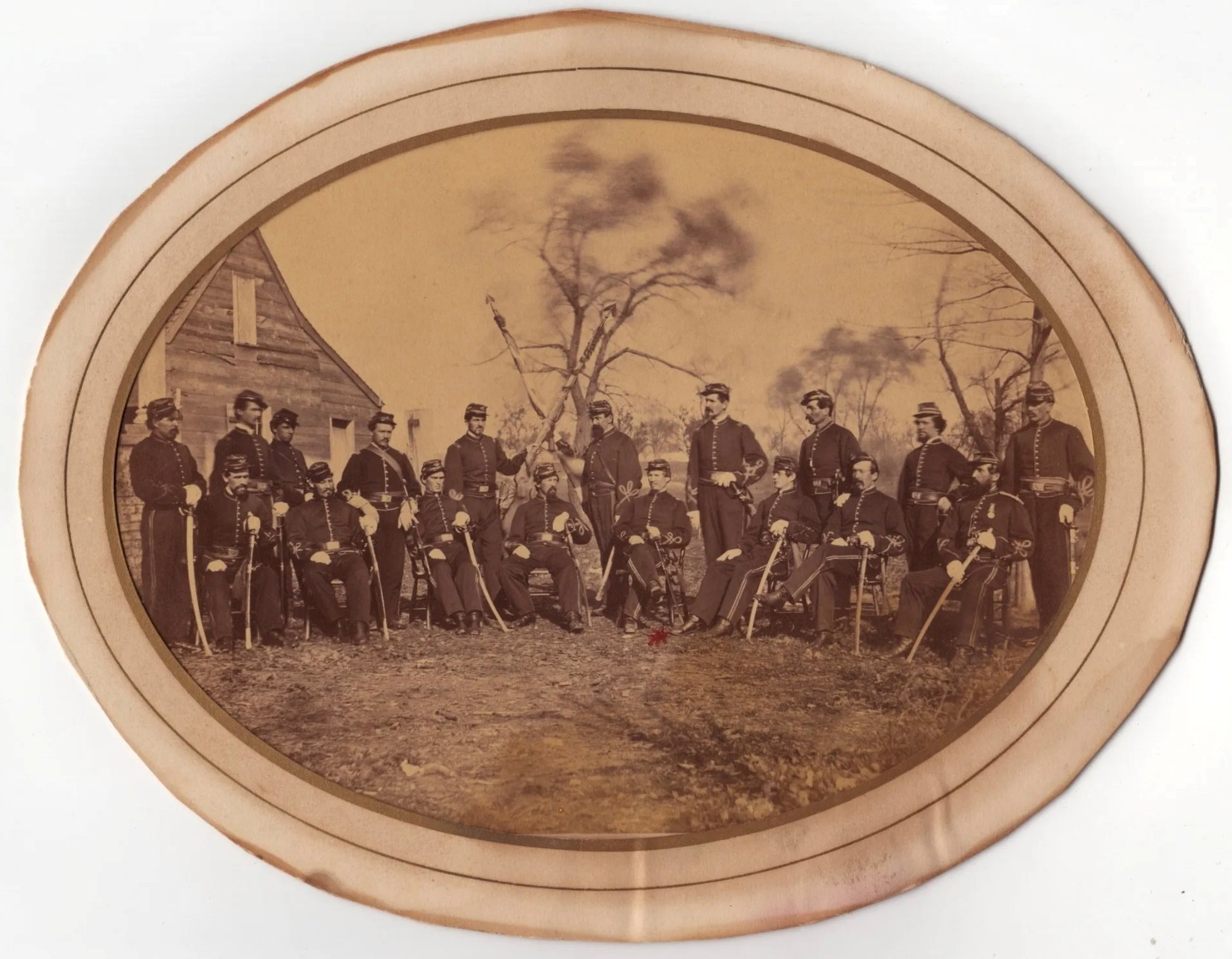
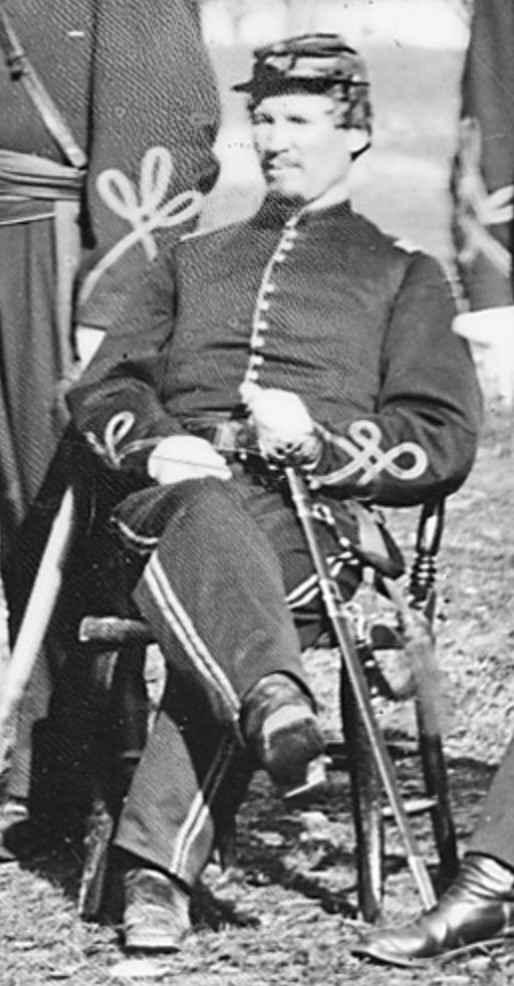
This impressive officer’s jacket has a lot going for it- strong condition, great visual appeal, an air-tight identification to Captain Thomas Hickey of the 164th New York, an officer with a good service and combat record, a rather tragic history, being mortally wounded in the slaughter of the Cold Harbor assaults of June 1864, and who was also photographed wearing this very jacket in an outdoor view of the regiment’s officers preserved both in the Library of Congress and in the Potsdam, NY, Public Museum along with his diary, many of his letters, and other artifacts donated by his eldest daughter. A research file accompanying the jacket contains copies of those images, service data, a four-page biography and ten-page article about him that includes extensive excerpts from his letters. His identification in the photo is solid, backed up by an earlier CDV view of him in a more conventional officers coat and likewise donated by his eldest daughter, and the jacket seems both to have been loaned to the museum at some point by her and bears a great ink inscription by Hickey in the sleeve.
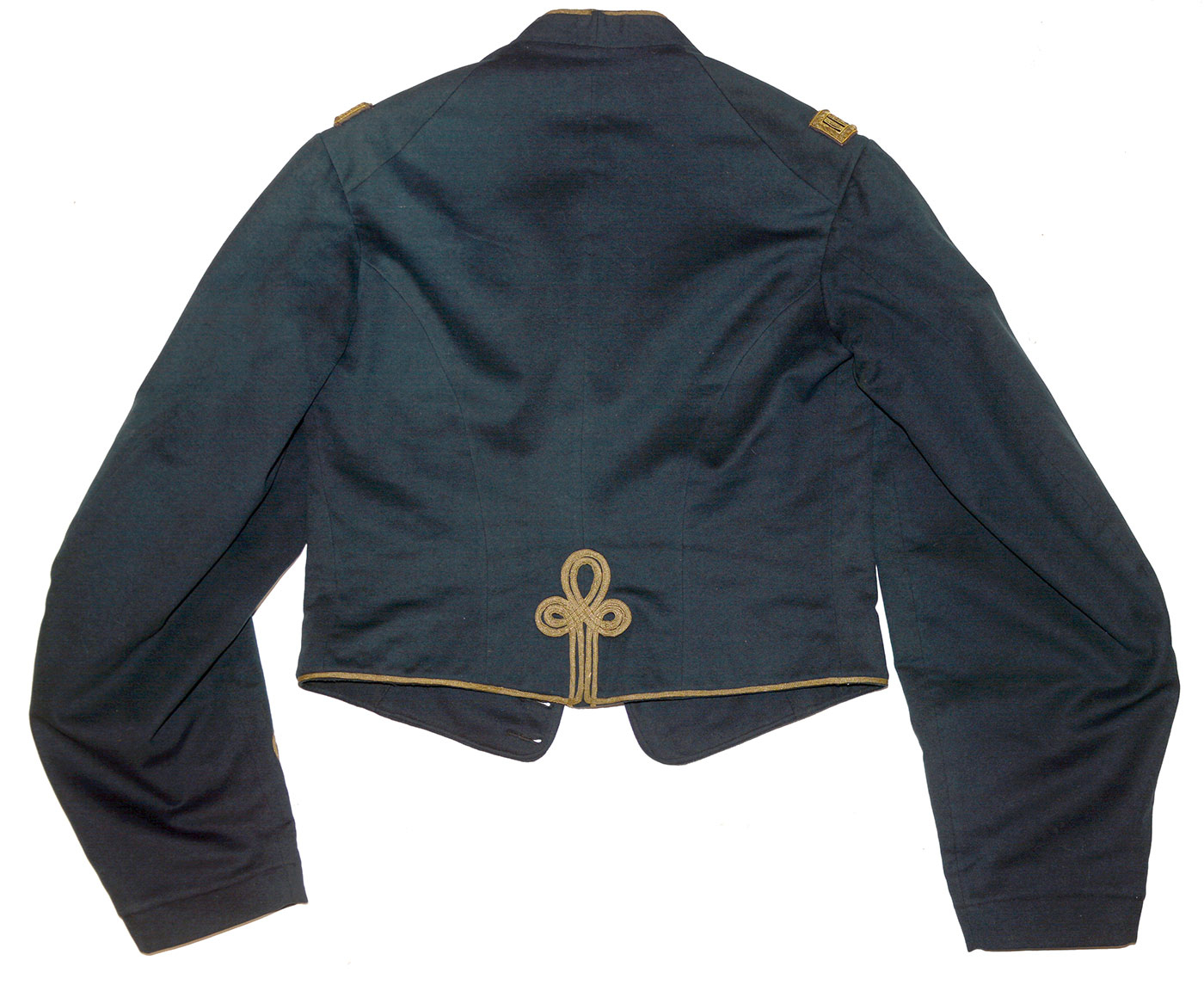
The jacket follows the common, if non-regulation, practice by officers, both foot and mounted, of wearing short jackets for comfort and style. In this case, it also reflects both Hickey’s promotion to Captain in December 1862 and the adoption of zouave uniforms by the 164th in February 1863. They had been promised “distinctive uniforms” as early as Nov. 21, 1862. As adopted, the enlisted uniforms followed the pattern worn by Hawkins Zouaves, but with blue fezzes carrying green tassels- a nod the Irish identity of the unit. Mike McAffee in Military Images (2017) noted their wear of the zouave uniforms in a series of camp scenes, along with officers in “trimmed short jackets” like this- and in fact showing this worn by Hickey, seated in the center of the regiment’s officers in two variant views, the better of which is at Potsdam.
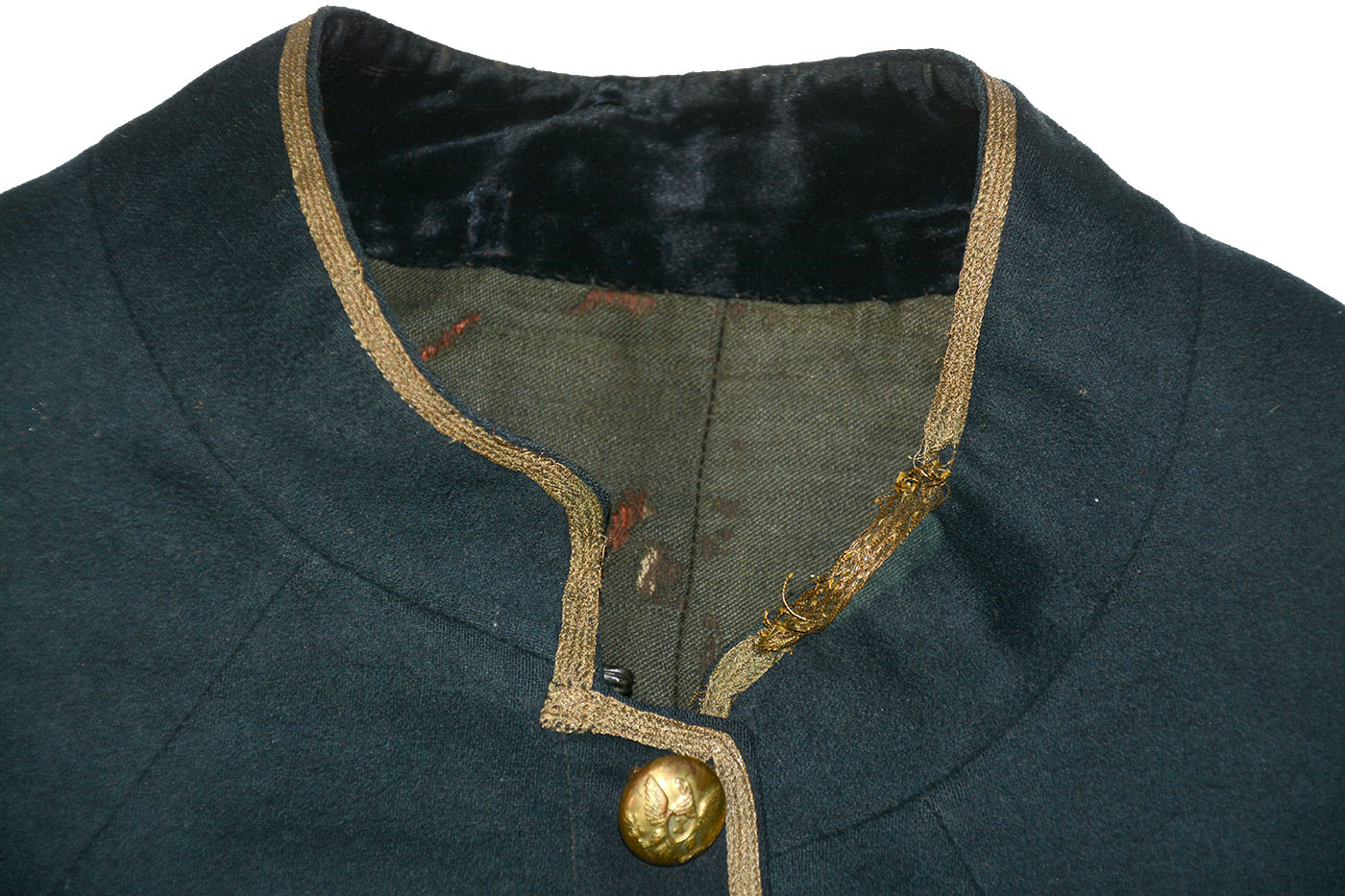
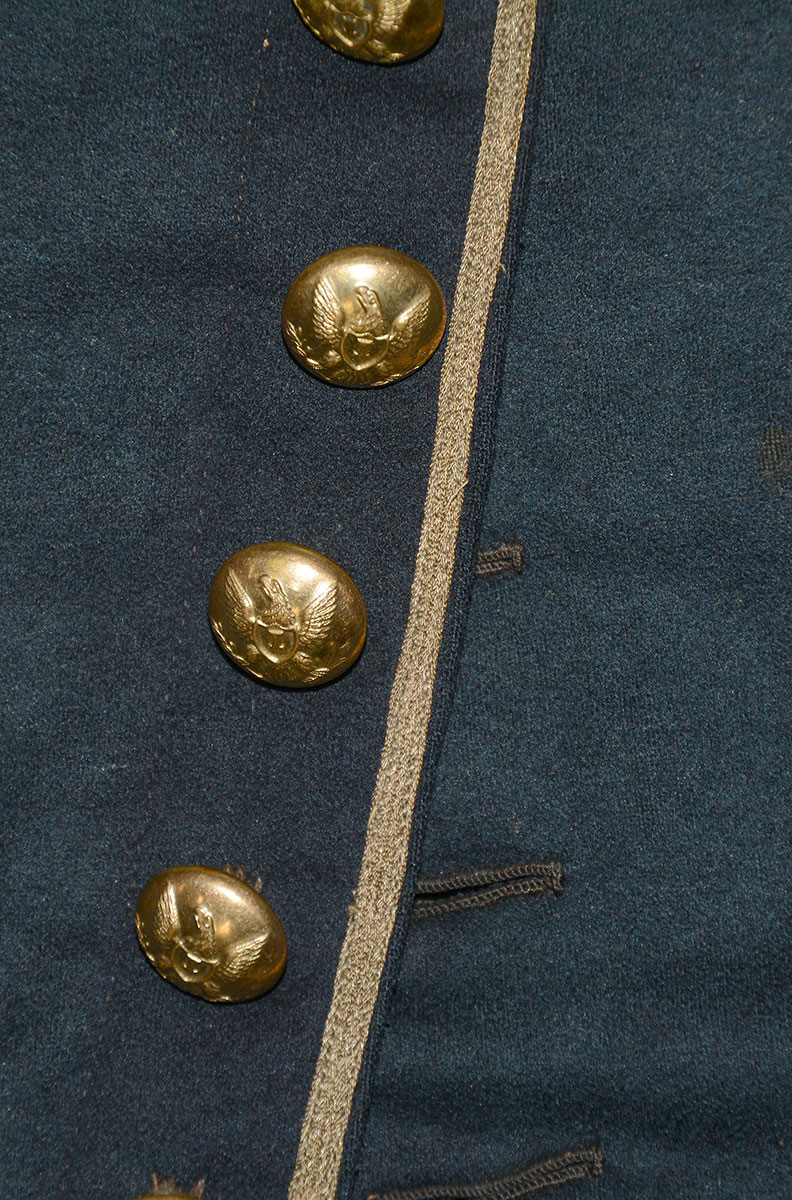
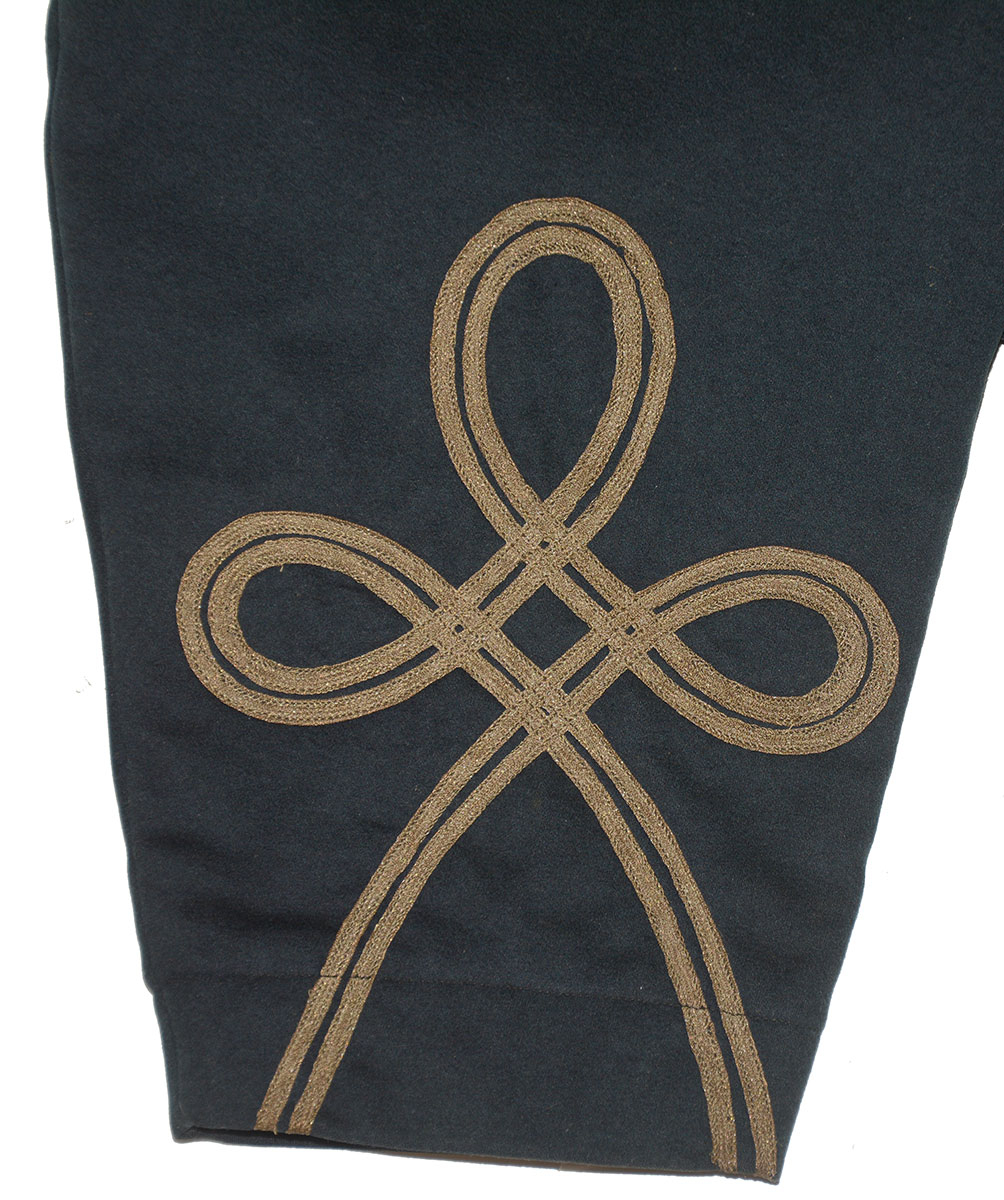
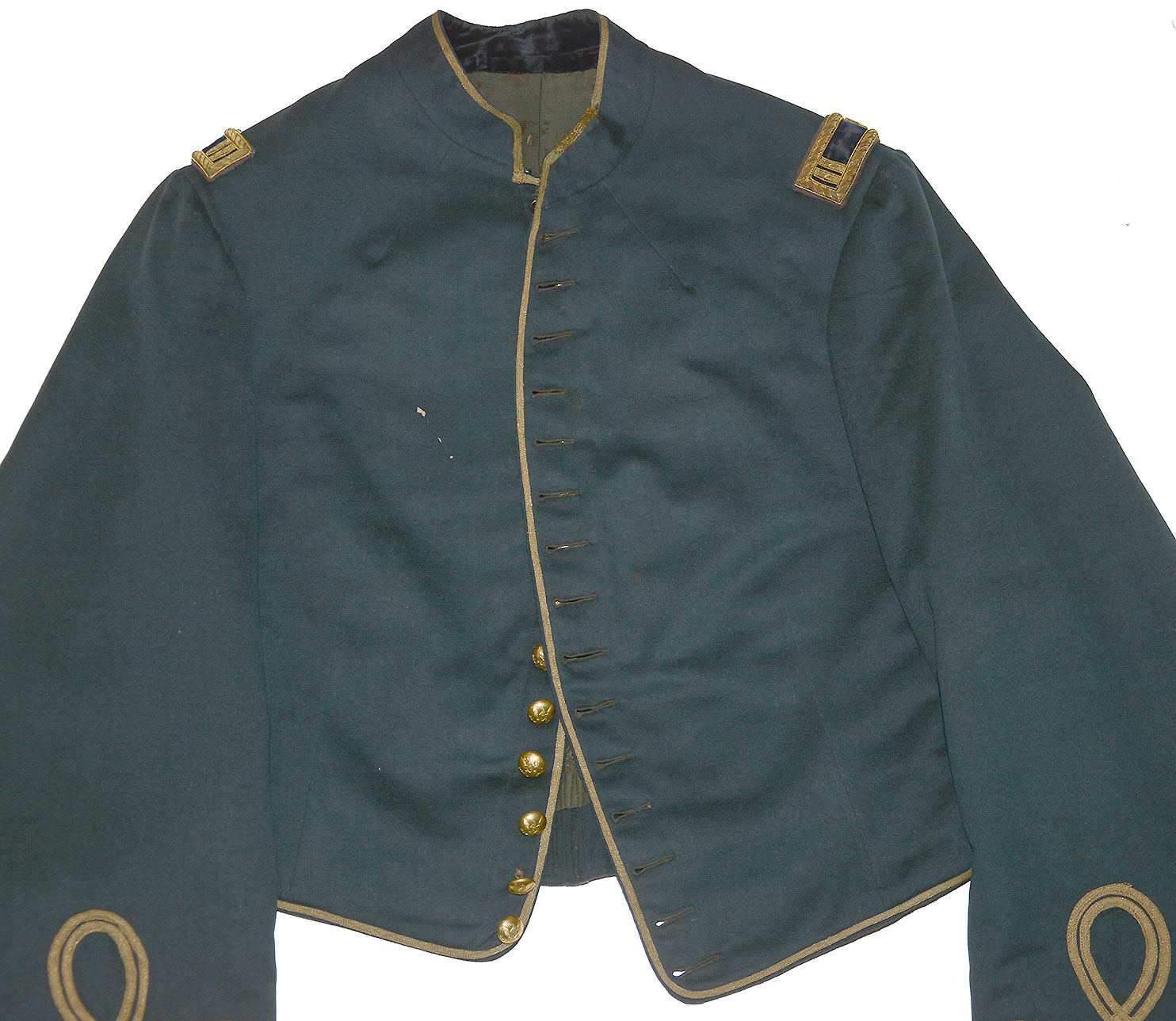
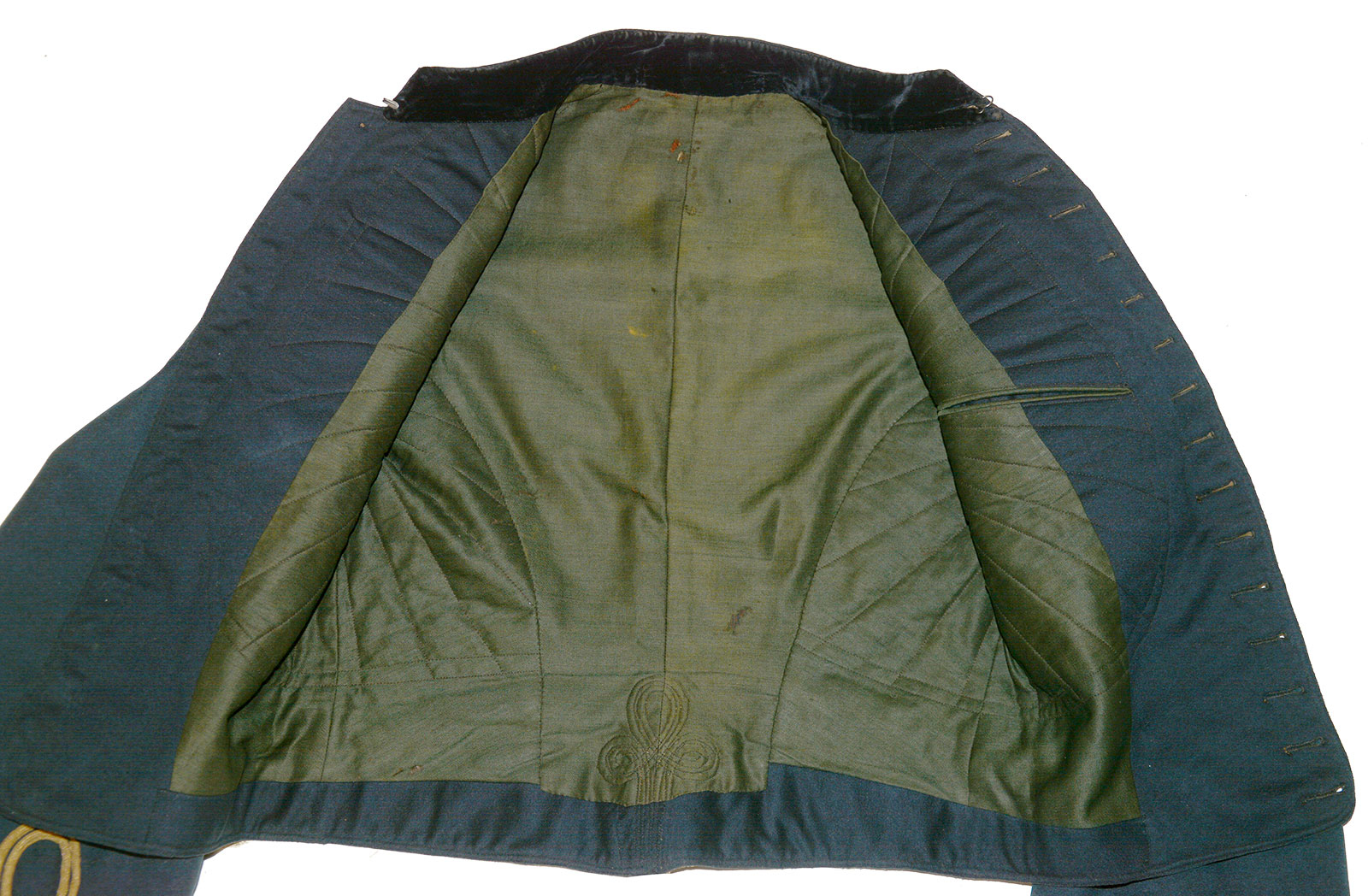
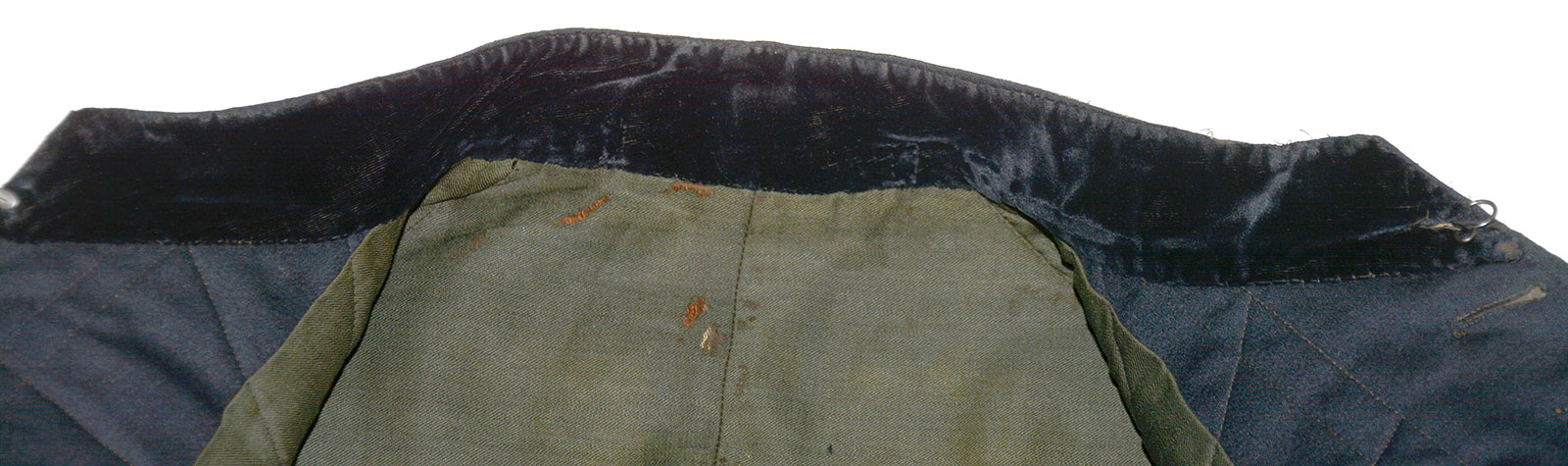
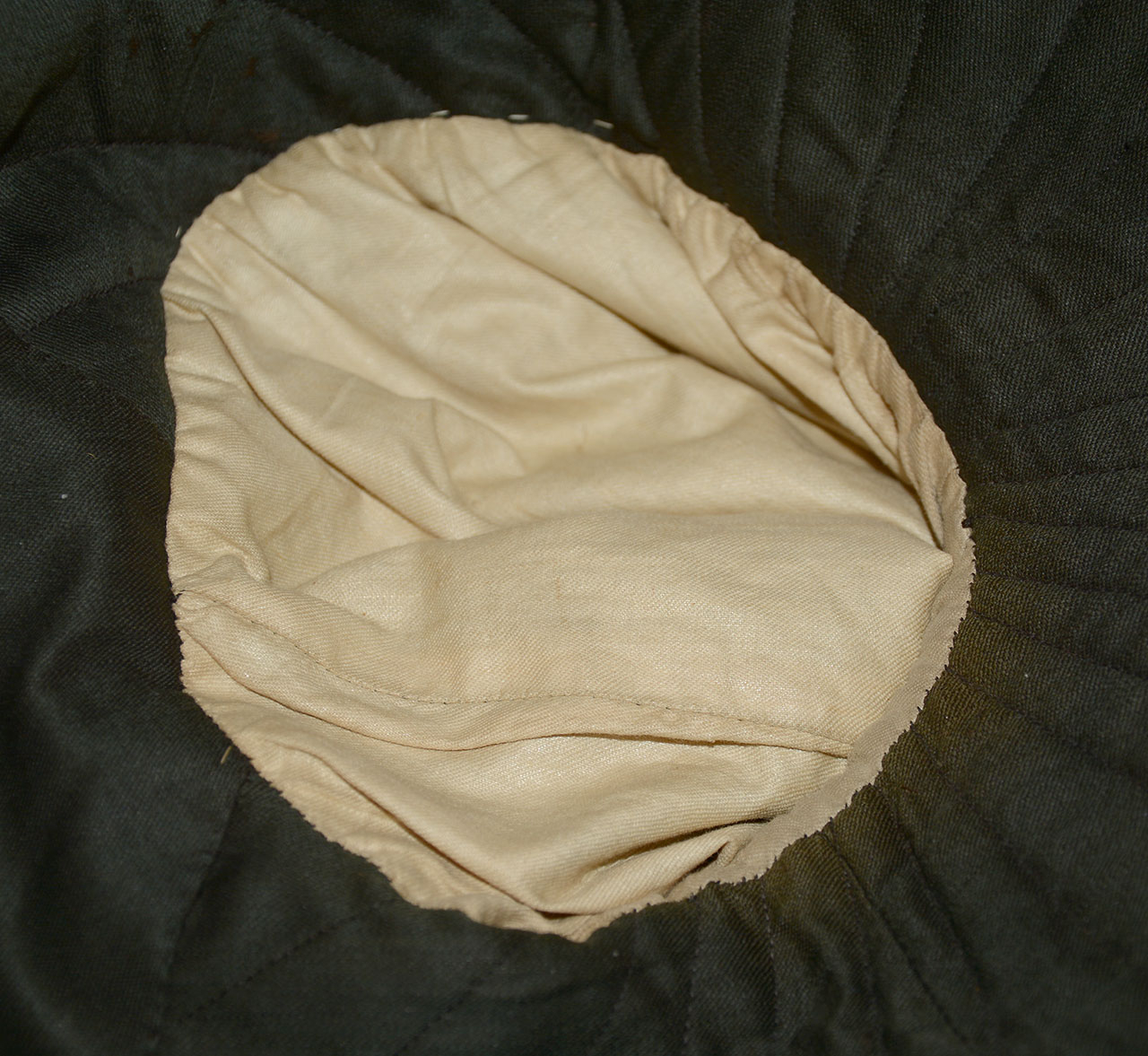
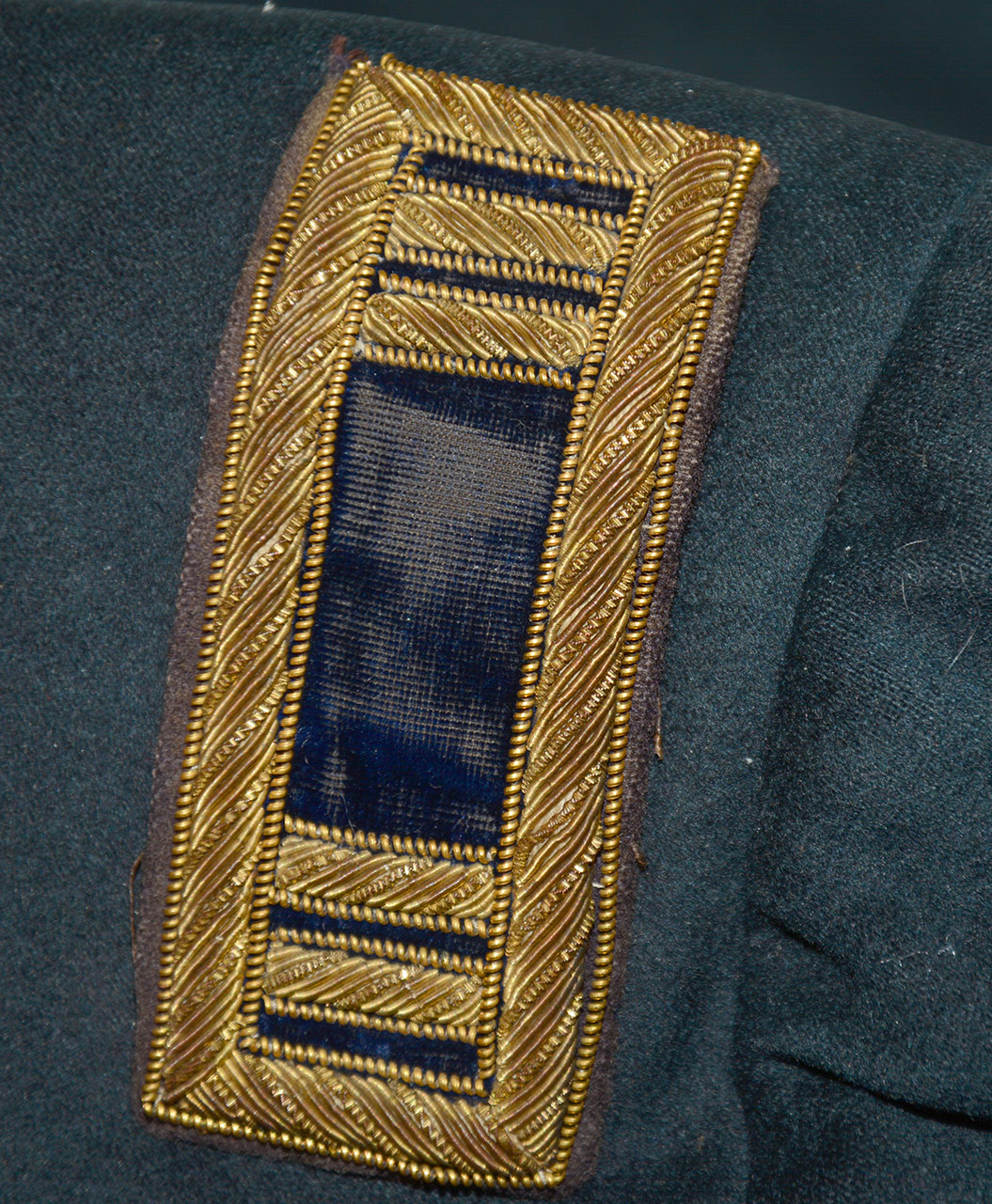
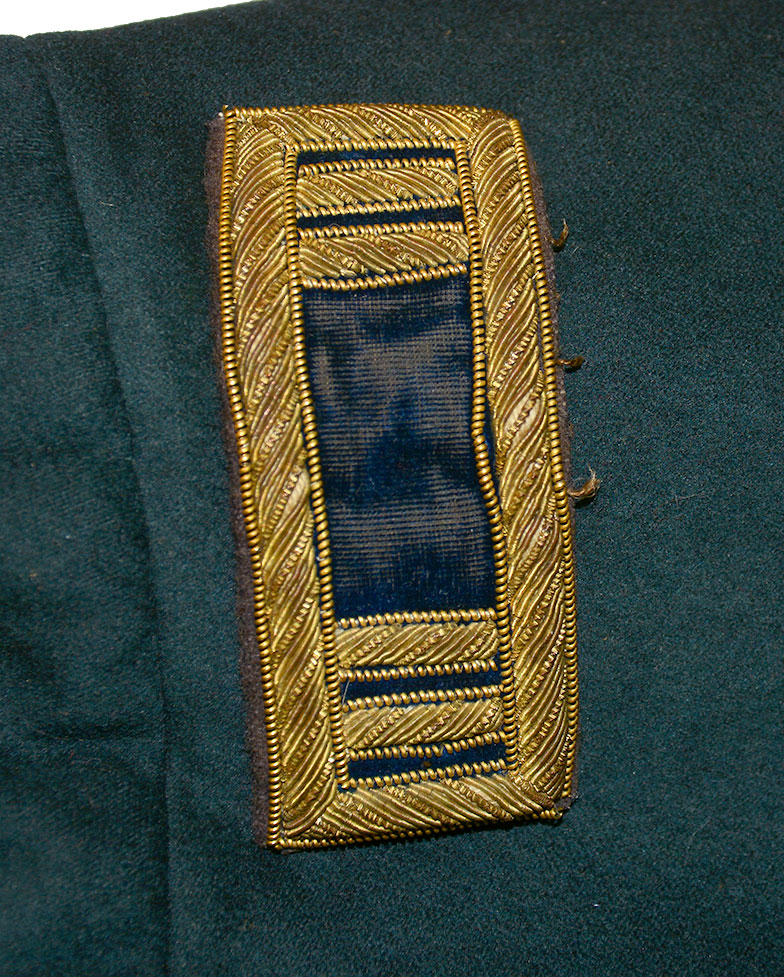
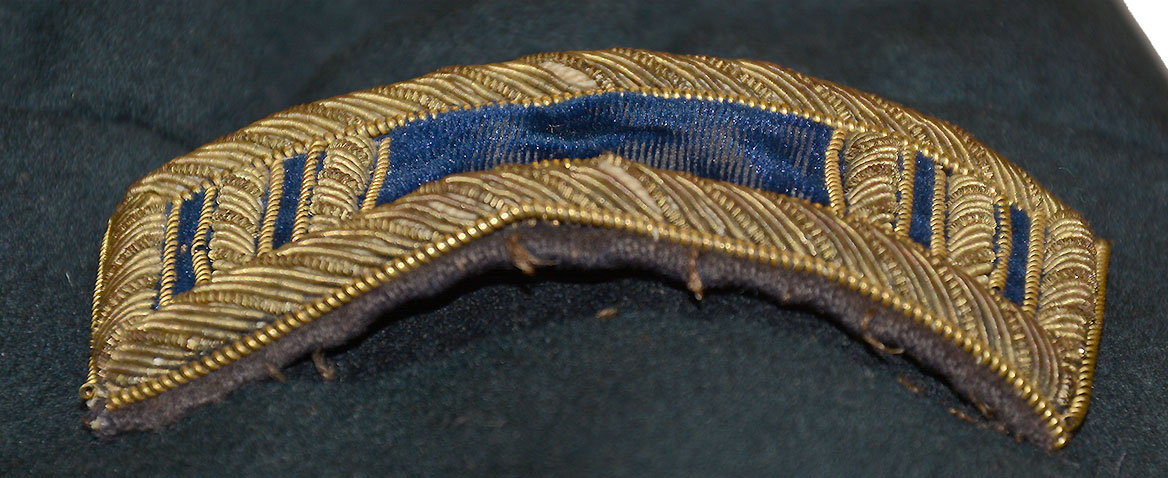
The jacket is waist-length, dark blue, with sleeves showing a fashionable 9” width at the elbow, a 1-1/4” tall standing collar fastened by a small hook and eye at the base of the collar, and fastened by 15 small, Scovill backmarked, “eagle-I” infantry officer’s buttons down the front. The jacket is trimmed with narrow 1/8” wide flat gold braid along the top and front edge of the collar, and down each lapel to the slightly rounded lower front corners of the jacket, running along the bottom of the jacket to either side and meeting at the lower back where it rises to form a 4-1/2” tall trefoil knot that is supplemented by a second row of braid to reflect the officer’s rank of Captain. The trefoil knot indicating the rank is repeated on the lower sleeves, each using two rows of slightly wider 3/16” gold braid forming knots 8” tall at the cuffs, which do not have buttons, and show no sign of ever having had them. Hickey’s rank is also indicated by the presence high-quality, single border, gold embroidered bullion shoulder straps with dark blue velvet centers and the double bars of a Captain. The body of the jacket is lined in green, quilted in the chest and sides. There is a single interior pocket in the left breast. The collar is lined in dark blue velvet. The sleeves are lined in white. The left sleeve is boldly inscribed in script in brown ink, “Capt. Hickey / Stafford Va.”
The condition of the jacket is excellent. The color is strong on all elements. Seams are tight. We see only one moth nip, 3/16” by 2/16” with two pencil point nips below it on the right breast and one small wear spot inside in the lining of the lower left back. The dead and bright bullion of the shoulder straps shows only slight oxidation and still sparkles in places. The blue velvet centers are excellent and the jaceron wire edges are in place. The gold braid trim on the jacket is slightly subdued, but nowhere near dark. The buttons are bright. The sleeve linings are excellent. The brown ink inscription in the sleeve is dark and fully legible, showing just a little blotting at the very left and right, likely from wear.
The son of Irish immigrants, Hickey was born in Canada West on Nov. 29, 1838. The family moved to St. Lawrence County, NY, sometime soon after. He married in 1860 and was working in Potsdam as a mechanic (i.e. metal worker) when the war started. Leaving behind his wife and eight-month-old daughter, he enrolled 8/26/62 at age 23 in a regiment recruited for a brigade of Irish troops to be known as “Corcoran’s Irish Legion,” among other titles. Hickey’s regiment was initially designated as the 3rd Regiment of the brigade and by the state as the “155th New York Volunteers,” with his company designated Company C. The regiment left the state November 10 for Newport News, VA, where the brigade was reorganized on Nov. 19 and the bulk of the regiment was transferred to the 7th Regiment of the brigade, which had been designated by the state as the 164th New York Volunteers, with Hickey’s company then redesignated as Company A of that regiment.
Records were corrected to a degree with Hickey’s regiment sometimes changed retroactively, with some additional confusion. In his record of the 164th Phisterer lists Hickey is listed as mustering in as a 2nd Lieutenant 11/2/62, which would be while still in the 155th and then as 1st Lieutenant on 11/19/62, the day the reorganization took place and the 164th was officially mustered into service. To further complicate things, Hickey seems never to have received official commissions from the Governor as either 2nd Lieutenant or 1st Lieutenant. He did, however, finally receive a commission as Captain of Company A of the 164th dated 2/11/63, though even then his official date of muster-in and effective rank is most often given 12/29/62, though it appears that was the date he was mustered and the actual effective date of his rank was 12/19/62, the date the previous captain was discharged.
The regiment initially served in the Department of Virginia, and as part of the 7th Army Corps until July 1863, serving in the Siege of Suffolk and Dix’s Peninsula Campaign, then joining the 22nd Corps, Dept. of Washington, under three different brigade associations, in the city’s defenses, doing provost duty, and guarding rail lines until May 1864 when it was transferred to the 2nd Army Corps, the Army of the Potomac. The “Stafford, Va.” location noted by Hickey in his jacket sleeve likely dates to their guard duty along the lines of the Orange and Alexandria Railroad during that period. The series of photographs taken of them in camp was likely taken at this time, though we do not find them dated. Attribution to Brady or his studio has been questioned, but they are great images. Hickey appears in two variants of the officers standing and seated. In the one often published, he is partially blurred, and he is likely in a group of officers standing in front of a house, though there also the clarity and resolution are not great. We show a vignette of him from the best of the views.
Phisterer lists six engagements for them up to May 1864: Deserted House, VA, with 4 killed, wounded or missing; two actions on the Edenton Road during the Siege of Suffolk, with 10 casualties; fighting at Blackwater, with no loss; Franklin, VA, with 12 casualties; and, lastly, Sangster’ Station, VA, in mid-December 1863, with no loss. Their battle experience with the 2nd Corps was then a shock: they suffered 92 casualties in the fighting at Spotslvania, followed by the North Anna and Totopomoy with slight loss, and then the shock of Cold Harbor, where they lost 157 officers and men, the vast majority in the Second Assault of June 3, where they lost at least 4 officers killed and 3 mortally wounded, including Hickey, with 27 enlisted men killed outright and another 26 mortally wounded, with another 40 some wounded who survived and 50 some who were listed simply as missing.
Published excerpts from Hickey’s letters held in the Pottsdam Public Museum detail his campaigning with the regiment in the two months before his wounding, including a six-day scout from Centreville that include a clash with Mosby, loss of 1 killed and 1 wounded, and any respect for the Union cavalry with them- “They had come over 40 miles to find the enemy, had seen them, and were ready to go home.” In May letter he refers to Spotsylvania as a “terrible fight,” costing the regiment 128 men and his own company 16… “The Rebels fight desperately… God help our killed and wounded, for the slaughter has been terrible…” and later writes of the North Anna, “The fight yesterday was terrible. I never saw anything to equal it. Our loss was very heavy…” A May 30 letter notes, “Every inch of ground has been fought for. The Rebels fight with desperation but no better than our own soldiers. We are nearly played out with constant fighting and marching.” This is followed by mention of lack of rations, the sound of heavy firing, and the loss of 400 men in the brigade within ten days. In addition, Hickey adds a PS giving his love to Minnie, their daughter, and asking, “Did you get my trunk?” The last perhaps explaining how his jacket survived.
The first of Hickey’s last two published letters to his wife was written late in the day of June 2 with knowledge of the attack ordered for the next day and the likelihood of his death- “The works are formidable and we have to cross an open field of a half mile distance. We will be exposed to a raking fire of artillery and many brave men will lose their lives . . .” The attack was one of the few Grant ever confessed regretting. The regiment reportedly took the Confederate works but was forced back by lack of support. Alfred Waud sketched the mortal wounding of their Colonel clutching their colors atop the enemy entrenchments. Hickey was wounded five times in the charge, carried from the field and conveyed to Armory Square Hospital where his right arm was amputated at the shoulder. He managed to write a letter to his wife on June 10 with his left hand, assuring her that he was on the mend and that she need not come to Washington, noting that he would never “go into the field again,” and joking, “I suppose that you are sorry for that…” Whether any friends or family did manage see him is unclear. A second operation was made necessary by an abscess, and he died several days later, on July 7. Hickey’s concern that his wife not make the journey to see him, may have come from knowing his wound was more serious than he let on- the Brooklyn Eagle reported on June 22 that he been mortally wounded. He also likely wanted to spare her the rigors of the journey- she was pregnant with their second child, another daughter, born in November, four months after his death.
This is a world-class jacket combining visual appeal, history, and tragic story. He never met his younger daughter. His older daughter, Minnie, seems to have been the one to preserve his effects. Pieces like this do not come along often. [sr][ph:L]
~~~~~~~~~~~~~~~~~~~~~~~~~~~~~~~~~~~
THIS ITEM, AS WITH ALL OTHER ITEMS AVAILABLE ON OUR WEB SITE,
MAY BE PURCHASED THROUGH OUR LAYAWAY PROGRAM.
CLICK HERE FOR OUR POLICIES AND TERMS.
THANK YOU!
Inquire About WORLD CLASS ZOUAVE OFFICER’S JACKET OF CAPT. THOMAS HICKEY – 164th NY, CORCORAN’S IRISH LEGION- MORTALLY WOUNDED AT COLD HARBOR – PHOTOGRAPHED IN THE FIELD WEARING THIS UNIFORM
Most Popular
Historical Firearms Stolen From The National Civil War Museum In Harrisburg, Pa »
Theft From Gravesite Of Gen. John Reynolds »
Selection Of Unframed Prints By Don Troiani »
Fine Condition Brass Infantry Bugle Insignia »
featured item
THE MEDALS OF A CONFEDERATE GENERAL – BRIG GEN. ALLEN THOMAS, JR.
Offered are three medals that were worn proudly by Civil War Confederate Brigadier General Allen Thomas Jr. "Born in Howard County, Maryland, he was an 1850 graduate of the College of New Jersey. He studied law in Maryland and maintained a practice… (1289-32). Learn More »
site search