


site search
online catalog
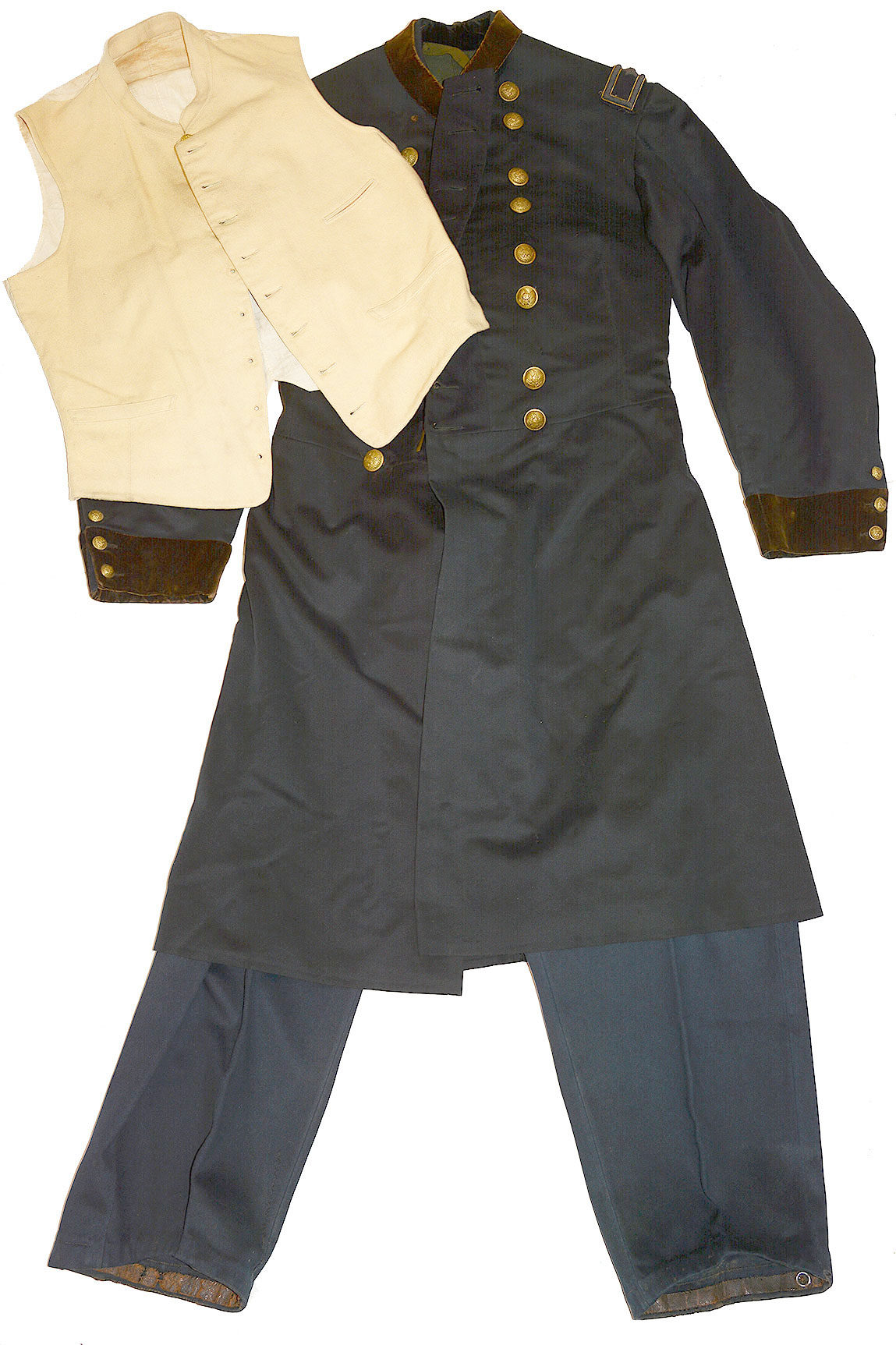
BRIGADIER GENERAL’S FROCK COAT, VEST AND TROUSERS OF BREVET BRIGADIER GENERAL JOHN FOWLER RUSLING: 5th NEW JERSEY, 2nd NJ BRIGADE, DIVISION AND CORPS STAFF DUTY IN THE EASTERN AND THE WESTERN THEATRES
Hover to zoom


$12,500.00 SOLD
Quantity Available: None
Item Code: 2024-1173
John Fowler Rusling (1834-1918) served in the 5th New Jersey Infantry and the Second New Jersey Brigade before moving up to posts at the division and higher levels in the Army of the Potomac and then in the Department of the Cumberland, rising from First Lieutenant to Brevet Brigadier General. Rusling was present at the battles of Yorktown, Williamsburg, Fair Oaks, Savage Station, Glendale, Malvern Hill, Second Manassas, Fredericksburg, Chancellorsville, Rappahannock Station, Bristoe (all Virginia); Williamsport, Md.; Chattanooga, Tenn.; Atlanta, Ga.; Nashville, Tenn.; and, lastly, at Hell Canon, Ariz., before leaving the army in 1867. He was breveted Major, Lt. Colonel, and Colonel of Volunteers to date March 13, 1865, for faithful and meritorious service during the war and then to Brigadier General of Volunteers as of Feb. 16, 1866, mustering out Sept. 17, 1867.
Rusling published several books after the war, including "Men and Things I Saw in Civil War Days" (1899,) which includes not only wartime letters, but an account of meeting Lincoln and Tad in person when they visited the wounded General Sickles in Washington immediately after Gettysburg.
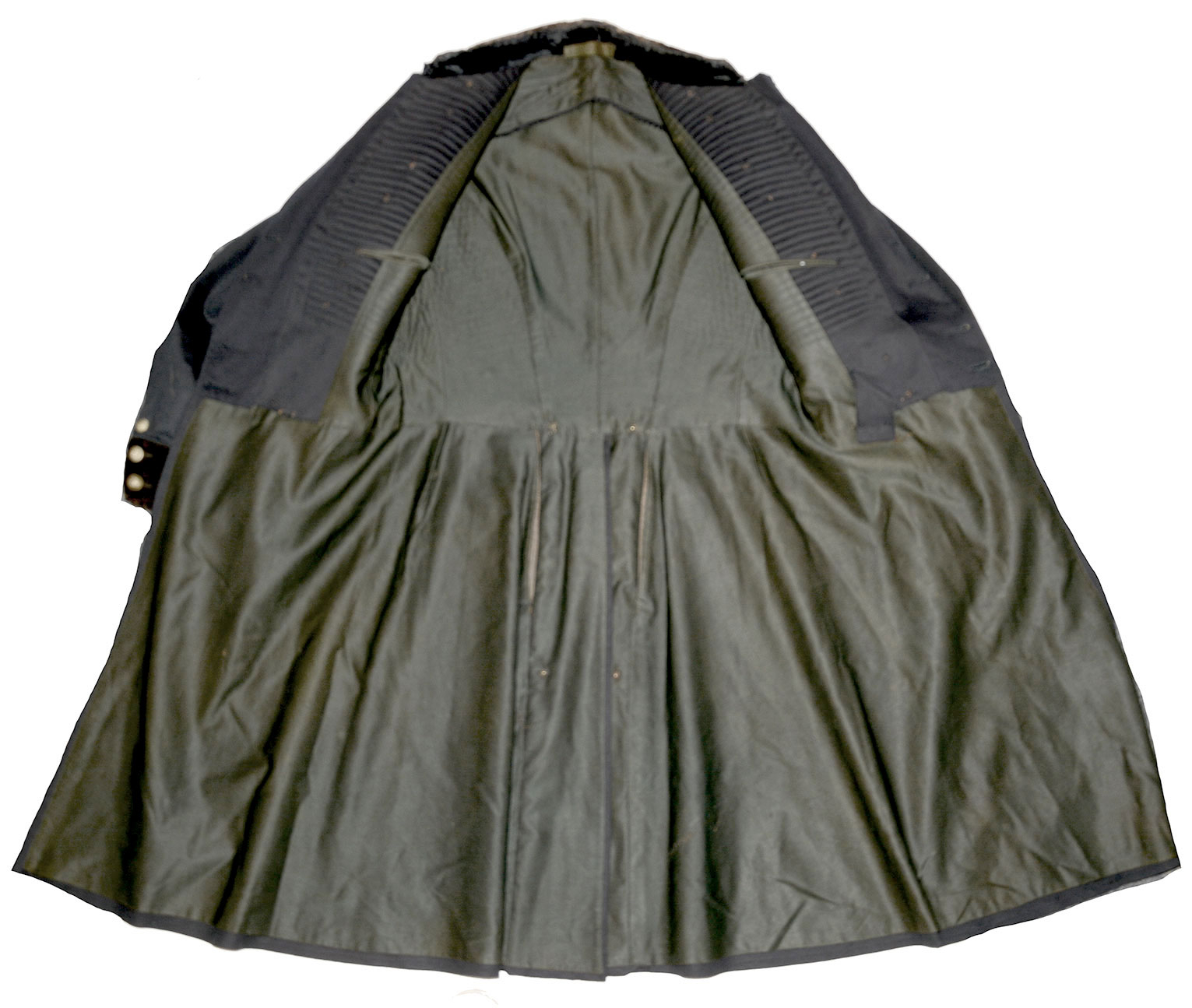
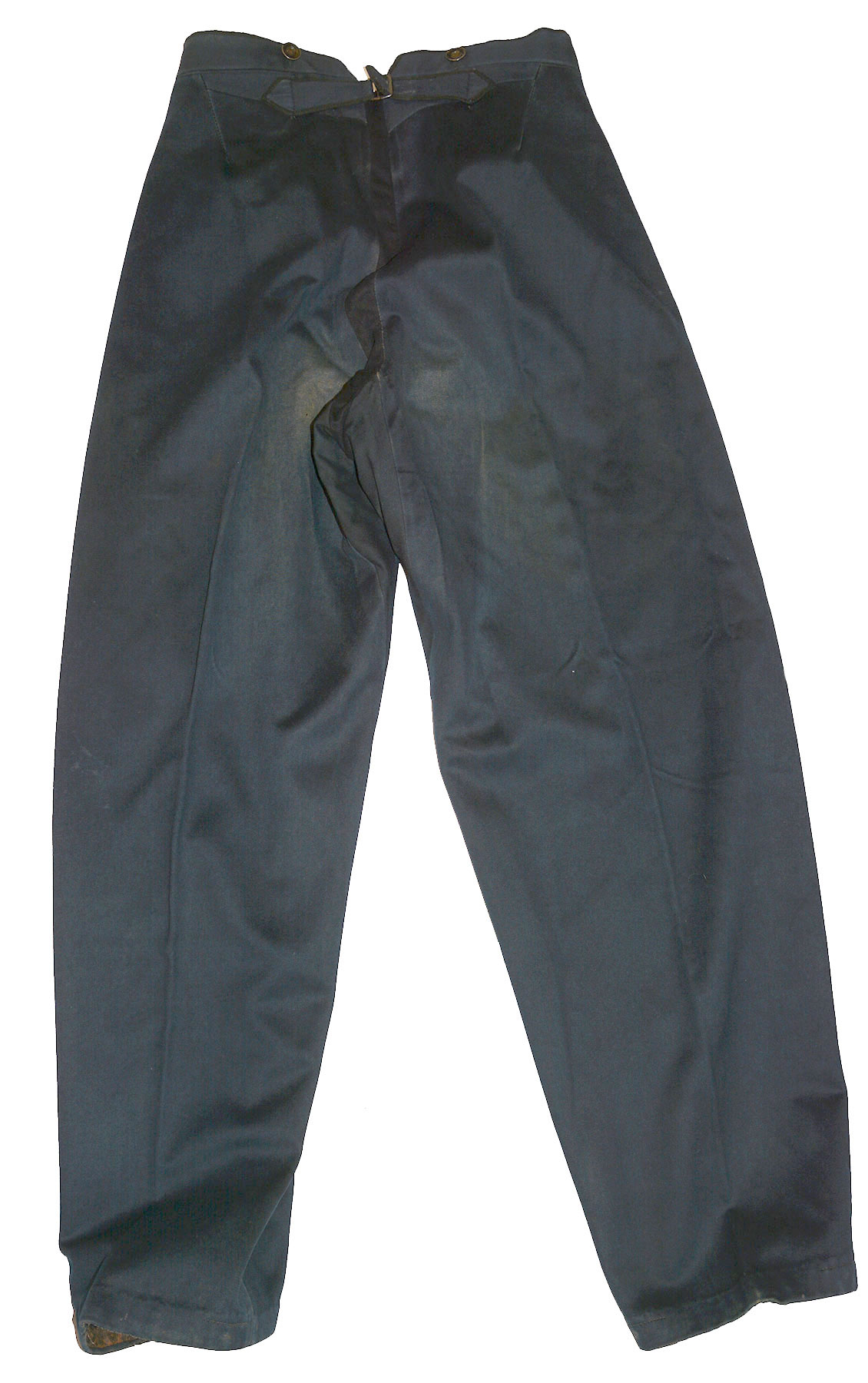
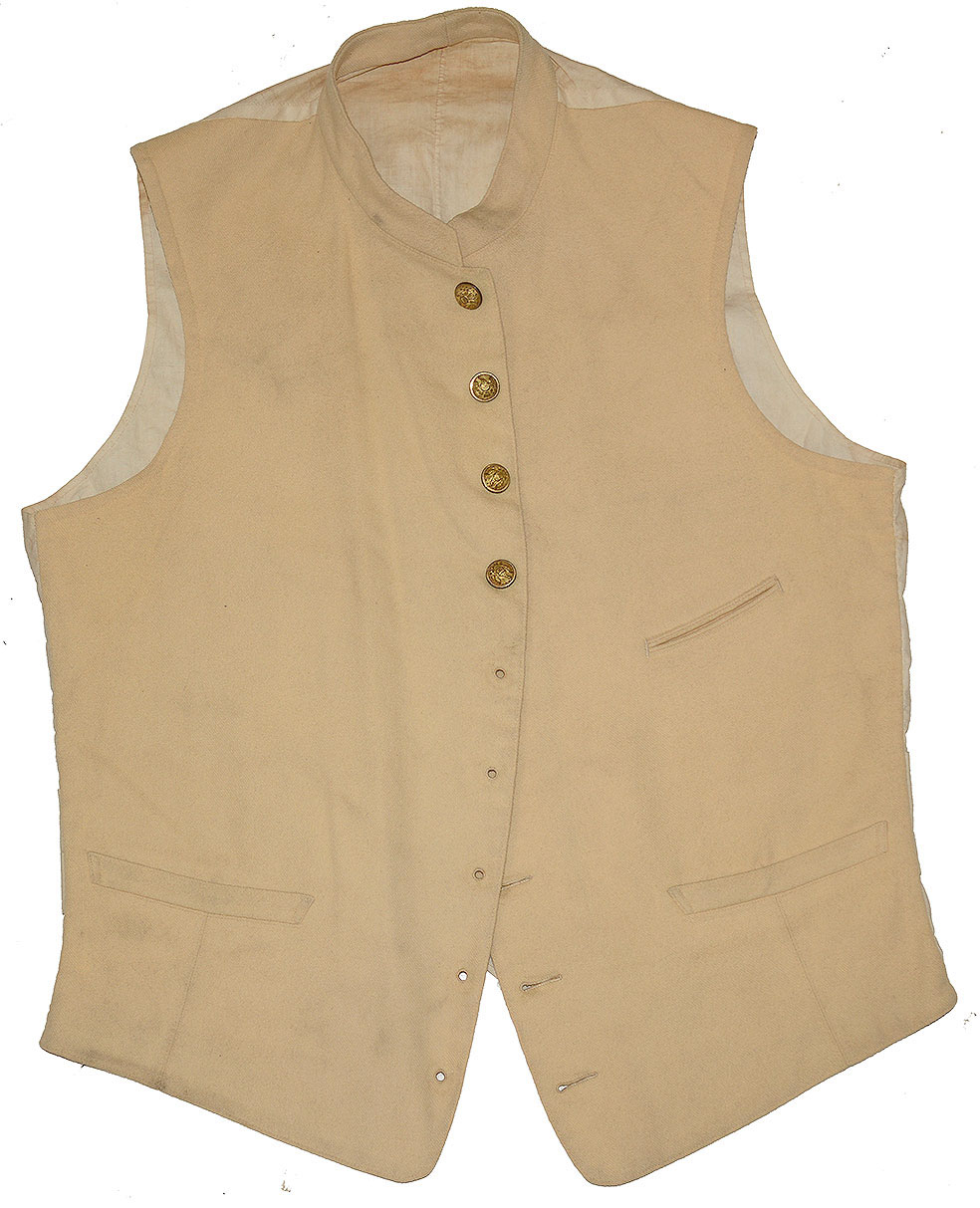
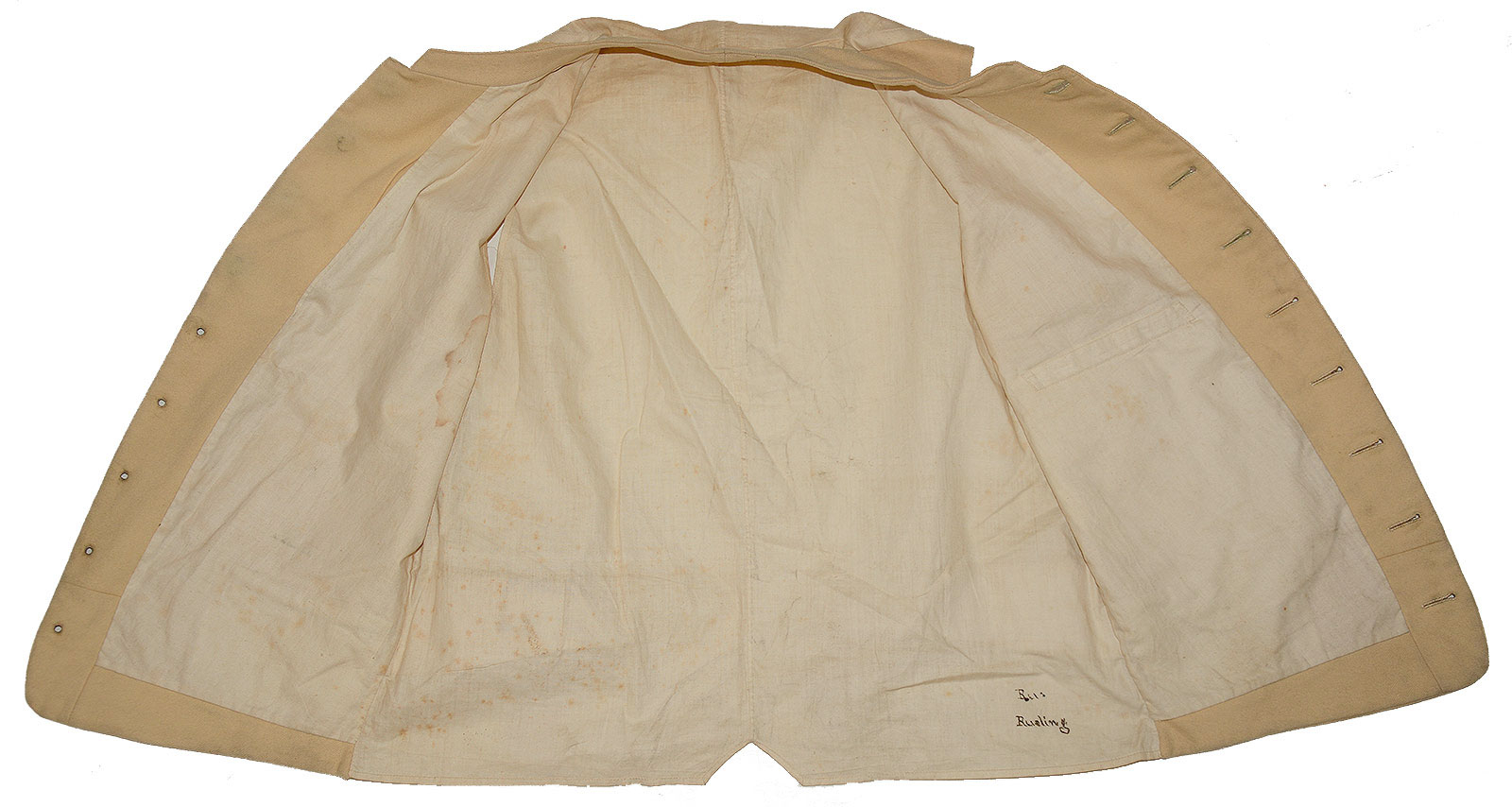
Rusling’s uniform group consists of his brigadier general’s coat, his white vest, and his dark blue trousers.
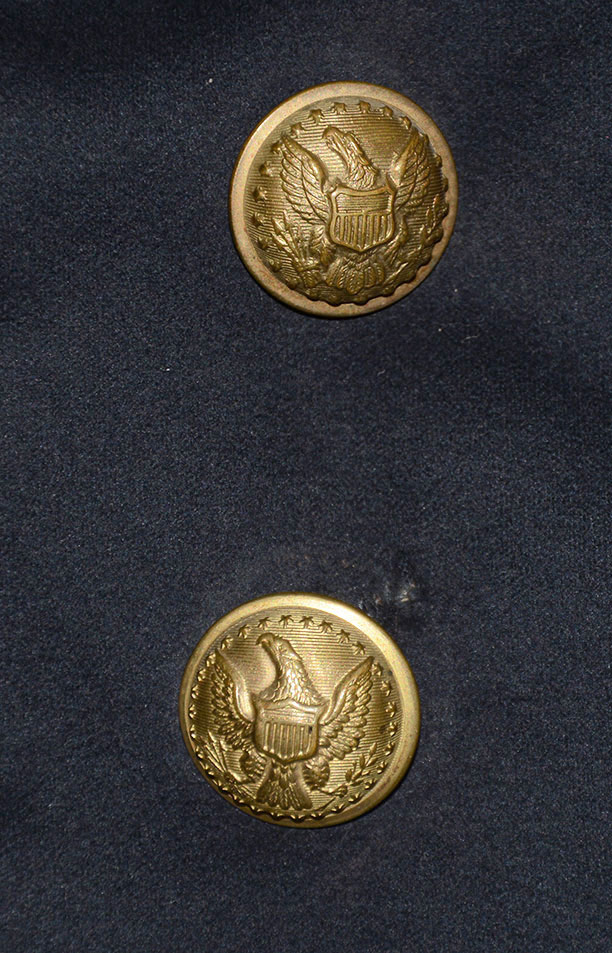
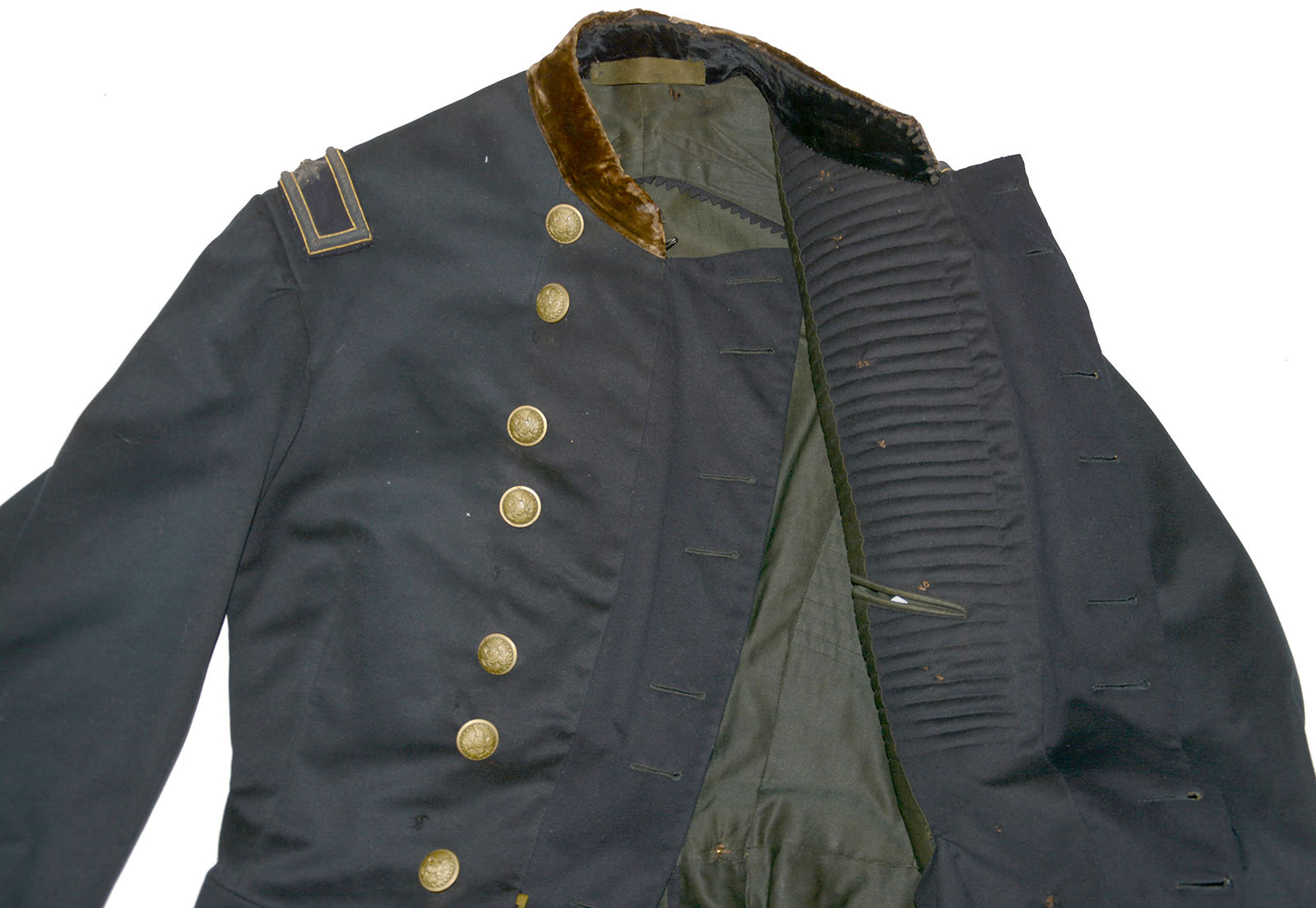
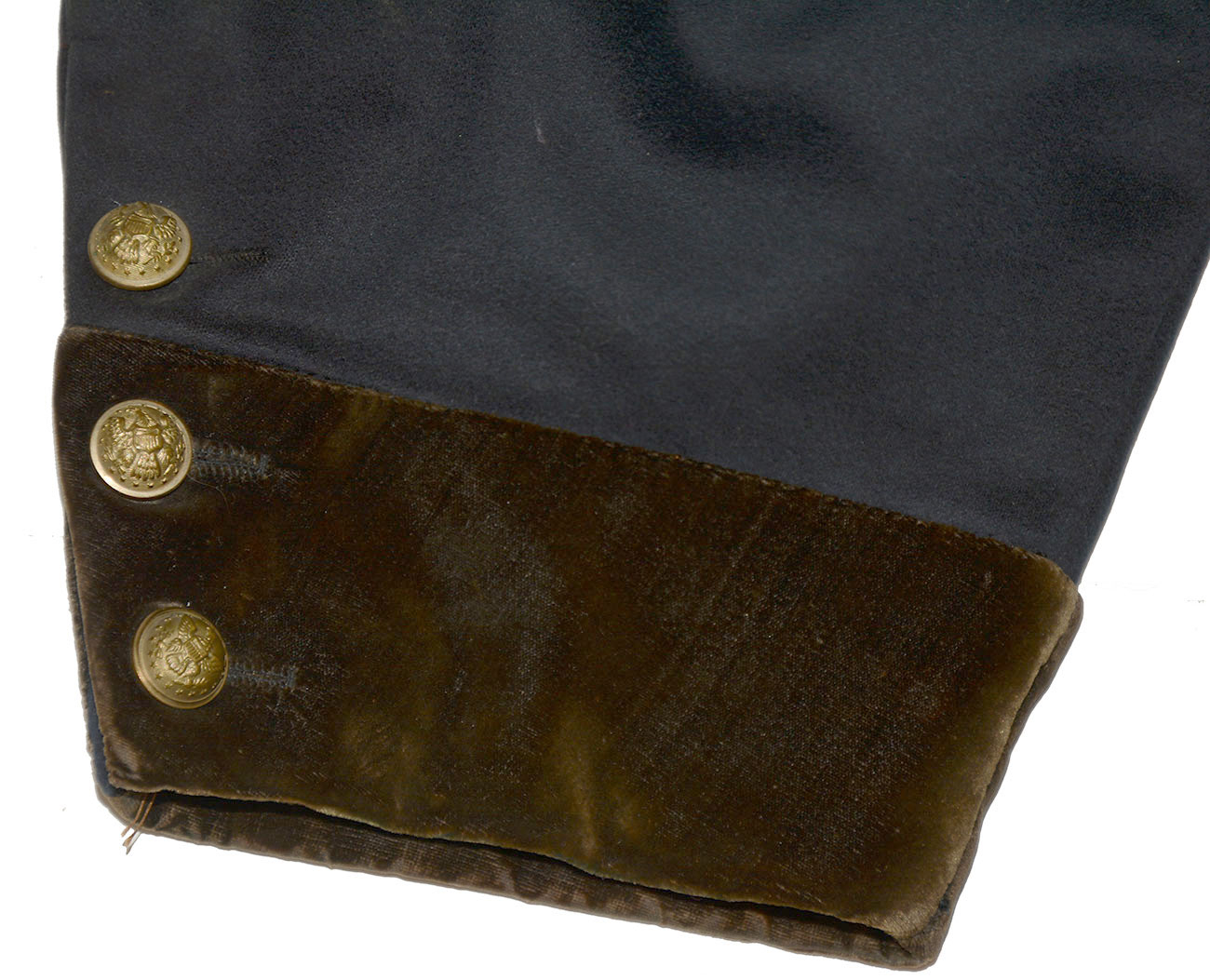
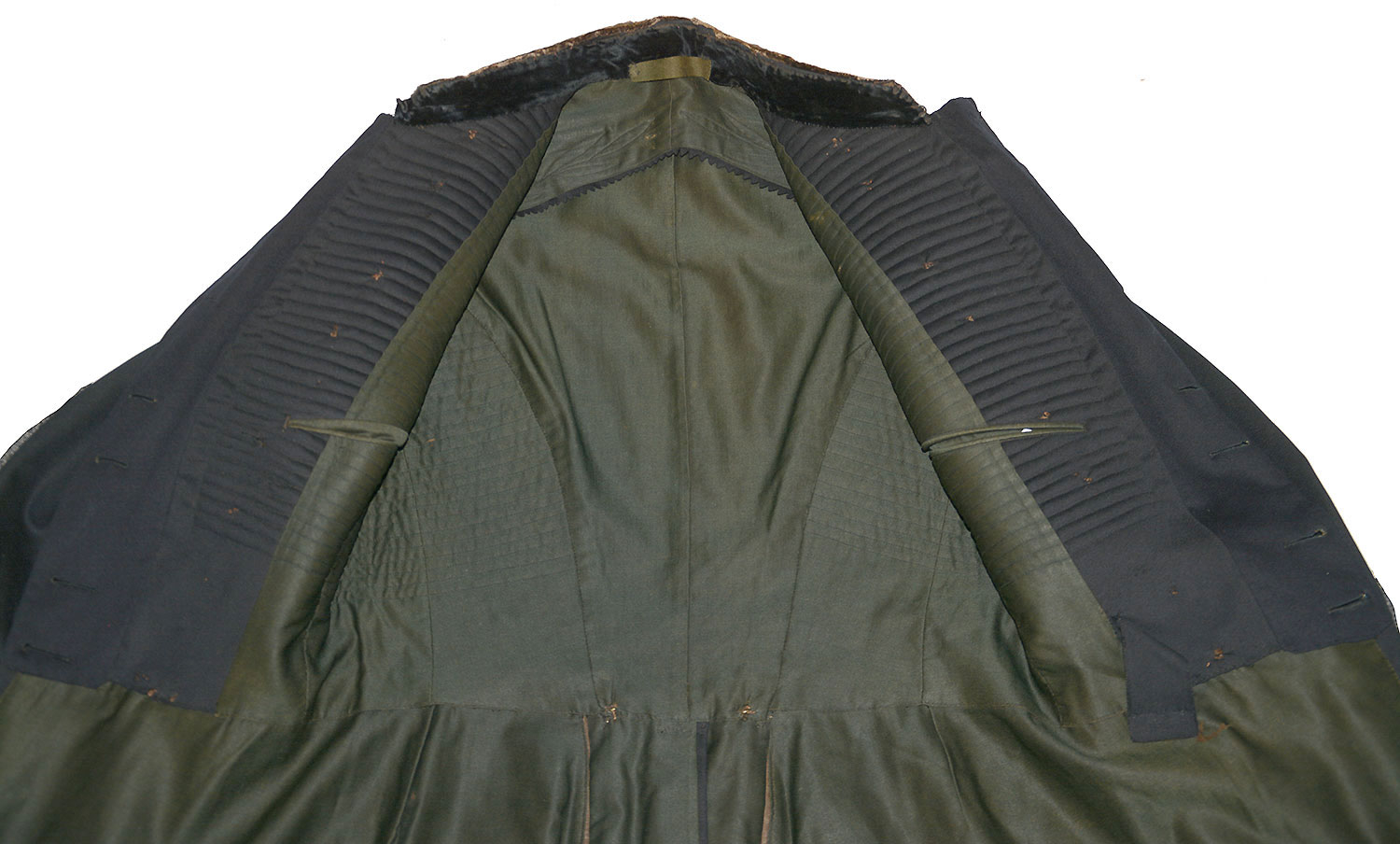
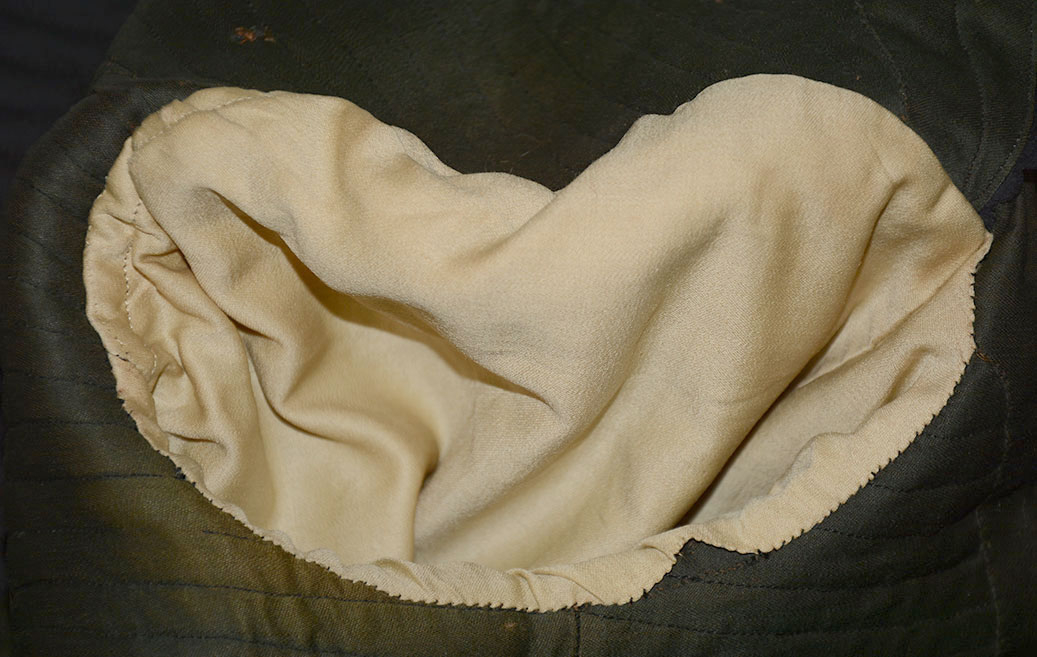
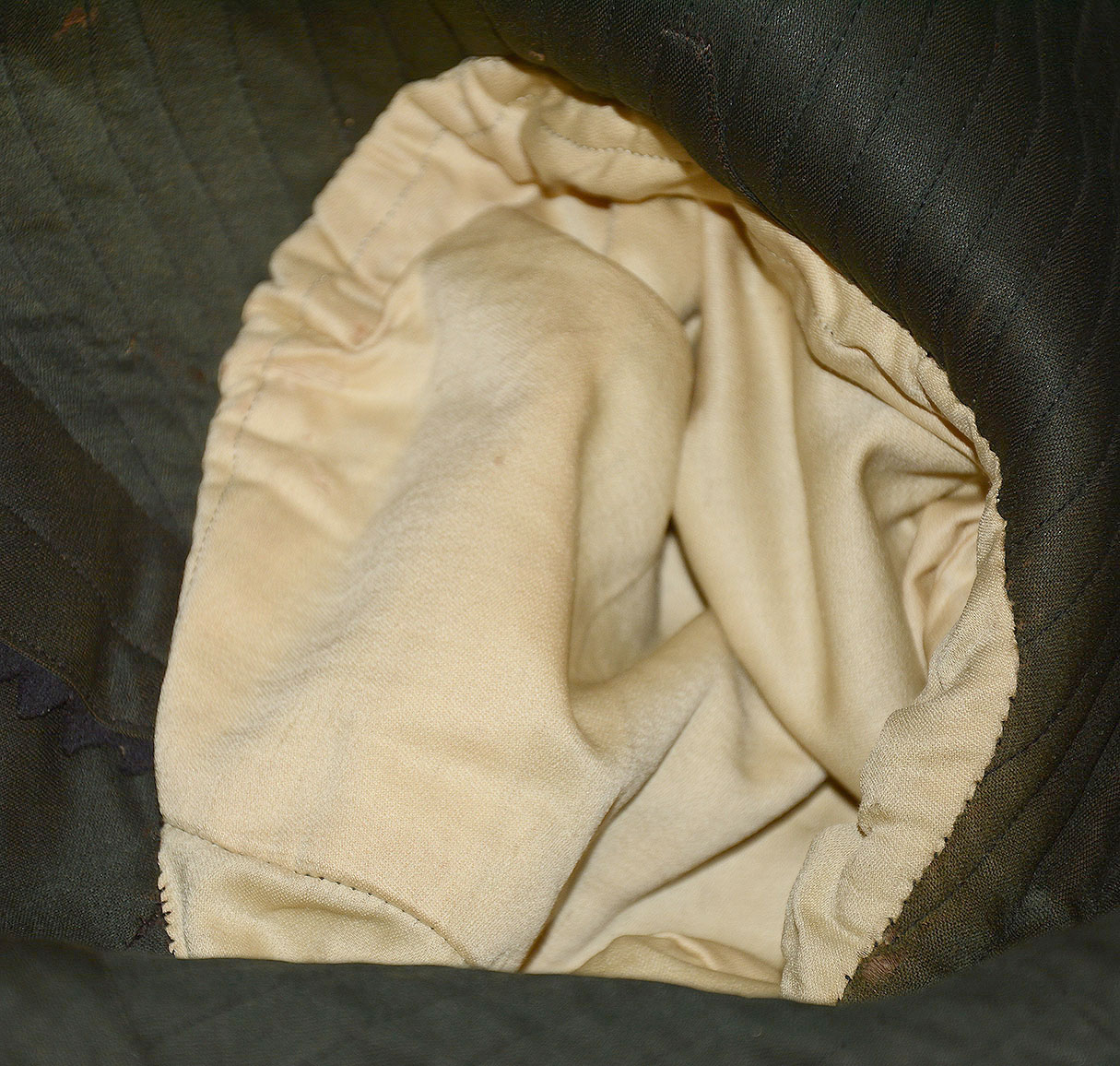
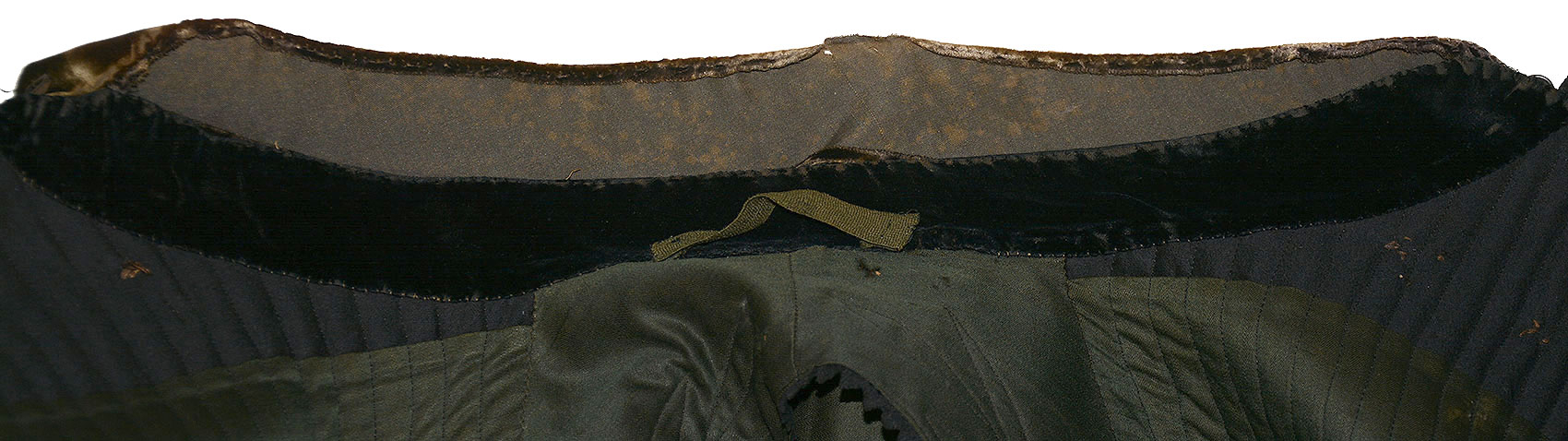
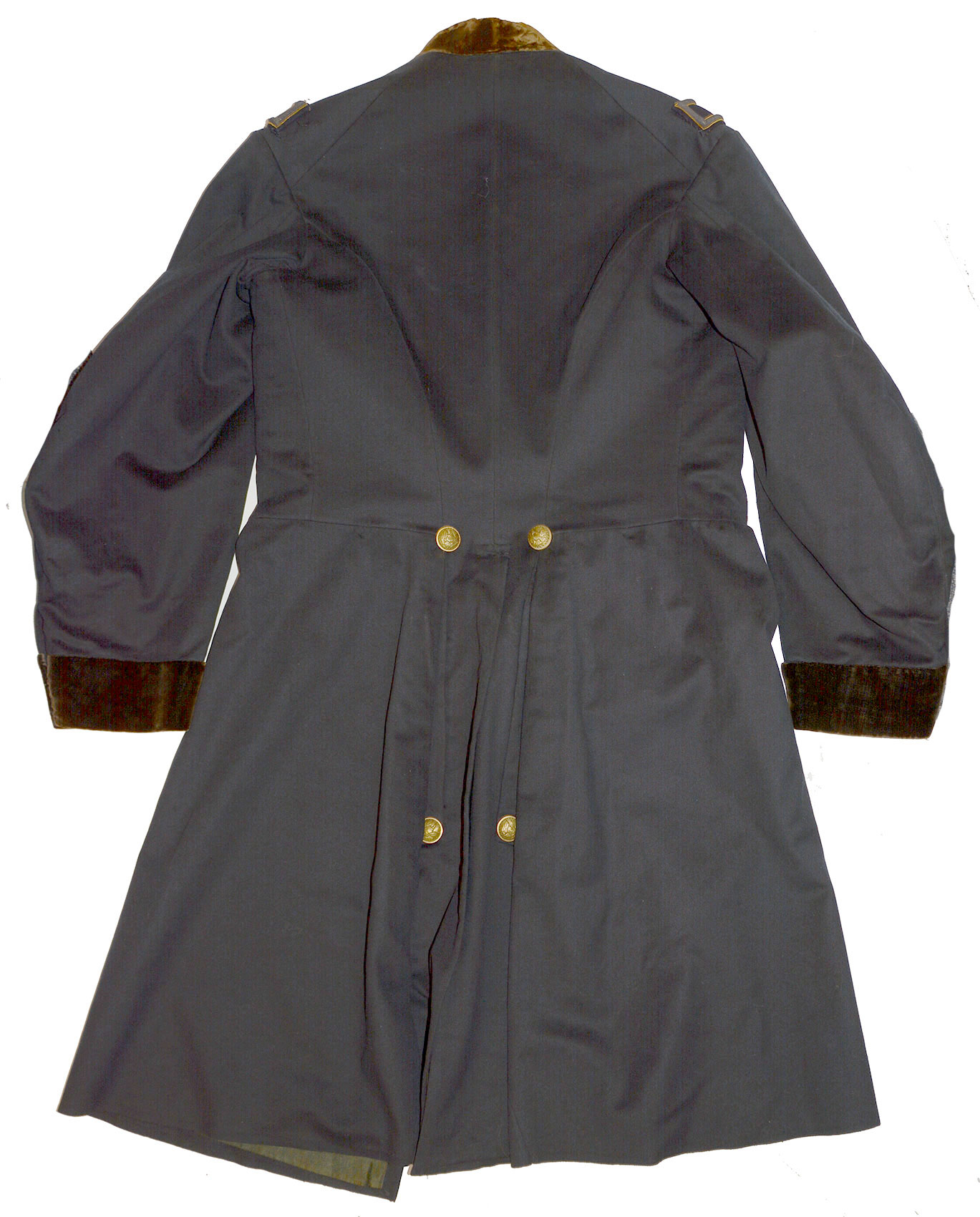
COAT-Regulation Brigadier General’s frock coat, with good color, no moth damage, and both general’s shoulder straps. The coat is double-breasted with buttons set in four pairs on either side. Eight are in place on the wearer’s left; five remain on the right. These are general staff buttons back-marked Extra Quality, though one on the lower left was likely replaced at some later date and is marked Horstmann. Buttons show signs of resewing. The cuffs are functional and each carry three small general staff buttons. Two more coat size are in place on the rear waist and at the bottom of the tail pocket openings on either side of the vent. The coat is fully lined and quilted in the chest. The sleeves are lined in white and the body in muted green (perhaps originally black.) The coat shows some extra tailoring: the upper back and shoulders have an extra layer of lining quilted in a floral pattern, likely to increase the impression of strong shoulders on the wearer. The waist is fitted with a cloth belt with wide flat metal tongue and hasp that would cinch in the wearer’s waist, completing the effect.
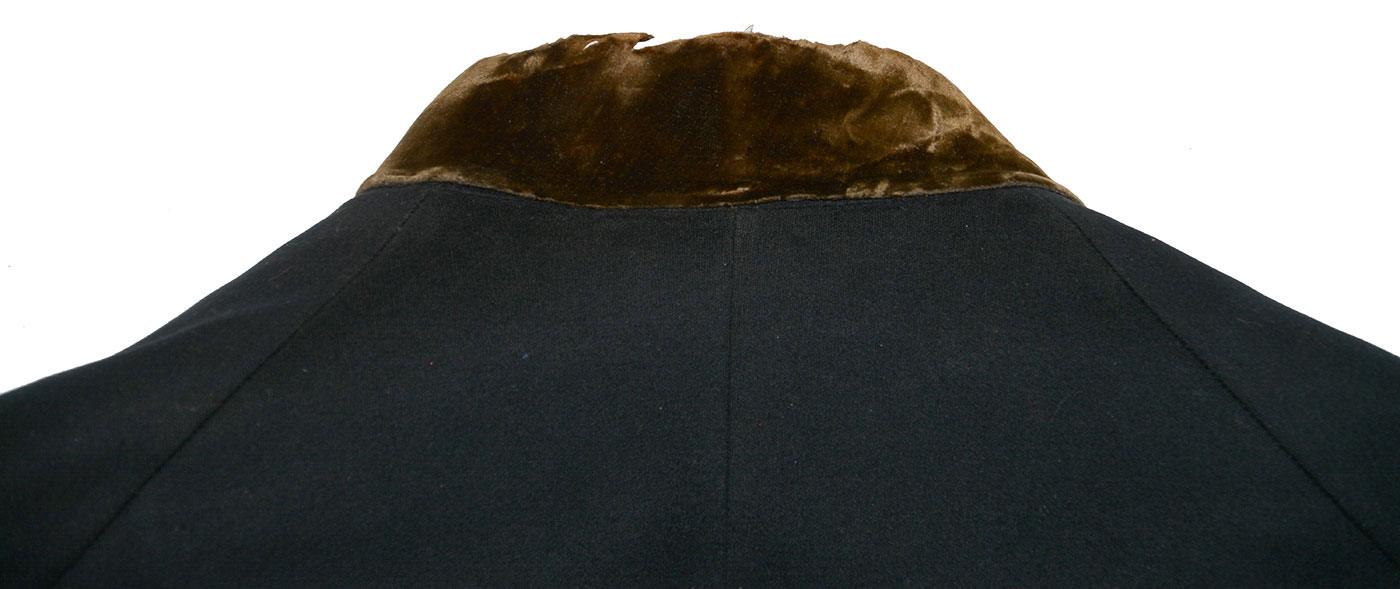
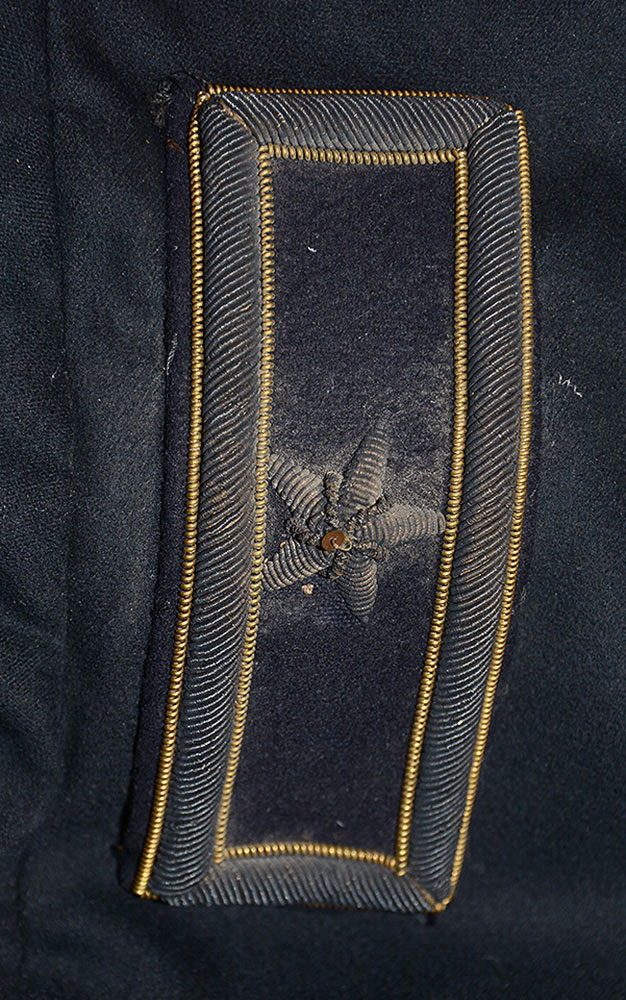
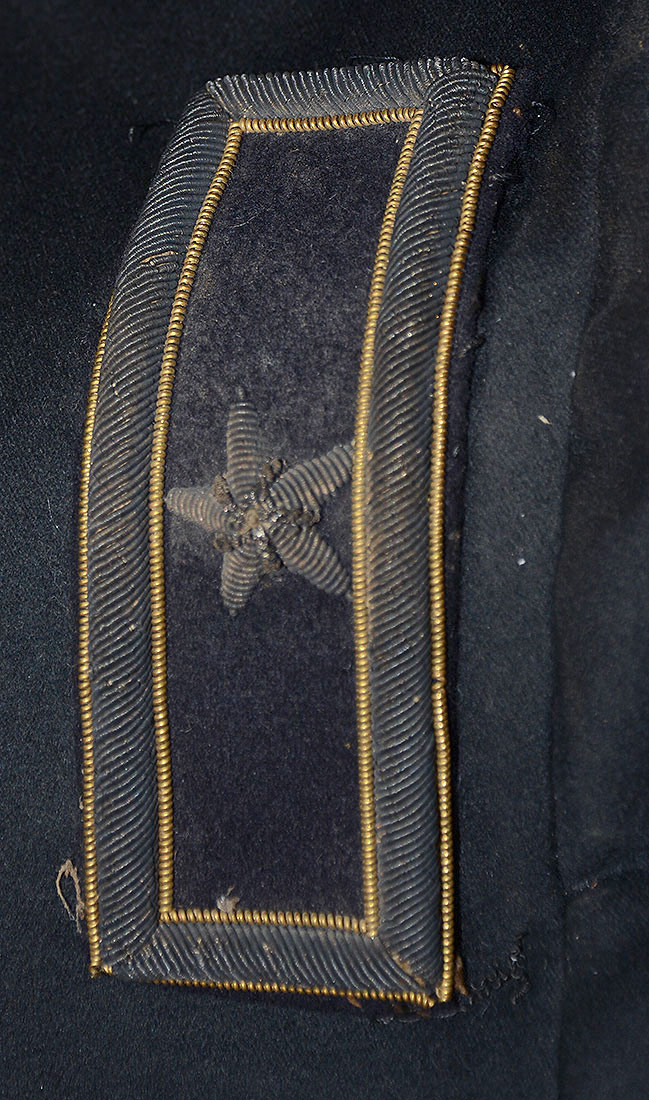
The embroidered bullion brigadier general shoulder straps are in place on either shoulder, showing a single, very high, silver star on a dark blue ground with a raised single-row bullion border and jaceron wire edging. The bullion borders have oxidized to a muted silver gray matching the stars. The jaceron wire still has strong gold color and the blue ground is equally good. The collar and cuffs are both faced with black velvet that has oxidized to brown. These were sewn onto the underlying plain cuffs and collar and loosened somewhat. This seems to be from wear by Rusling. The interior of the collar was lined in dark blue velvet, the top edges of both the inner and outer velvet show wear, loosening of the stitching, and repair, but the color still has good color. We see no moth damage to the coat, either tracking or holes. The only thing we would suggest is some stitches to better hold the collar trim in place.
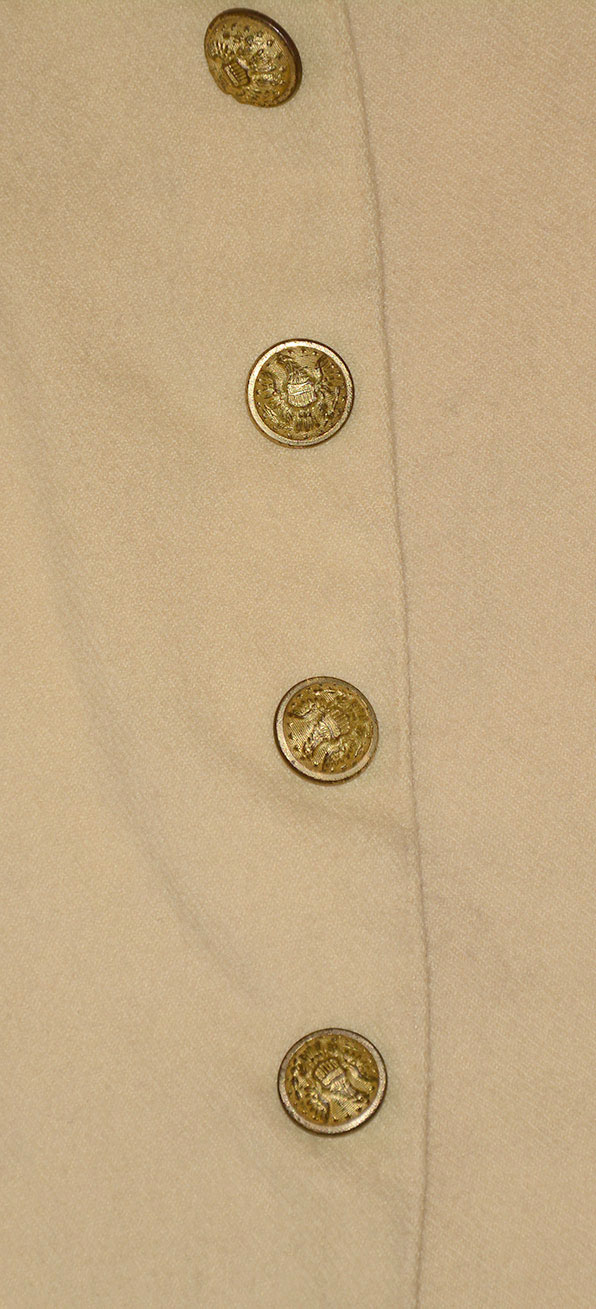
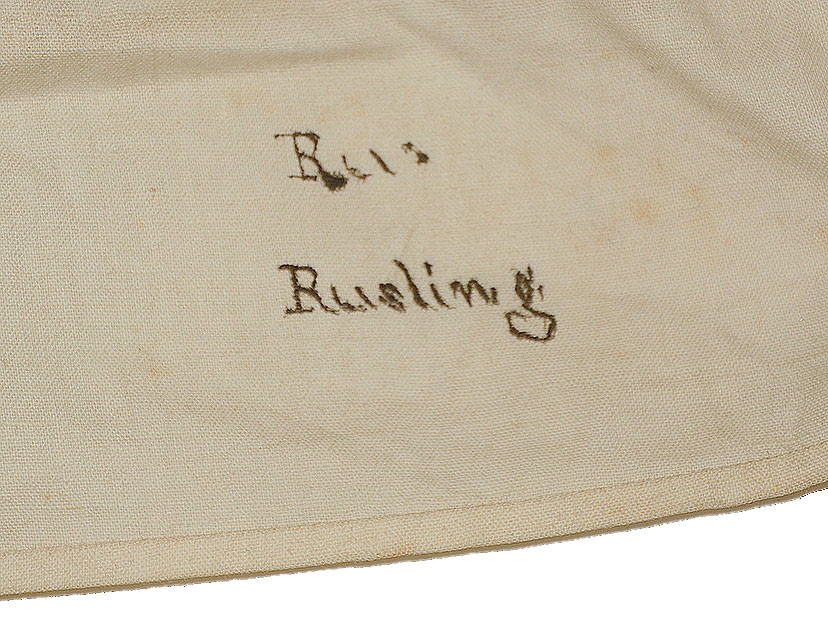
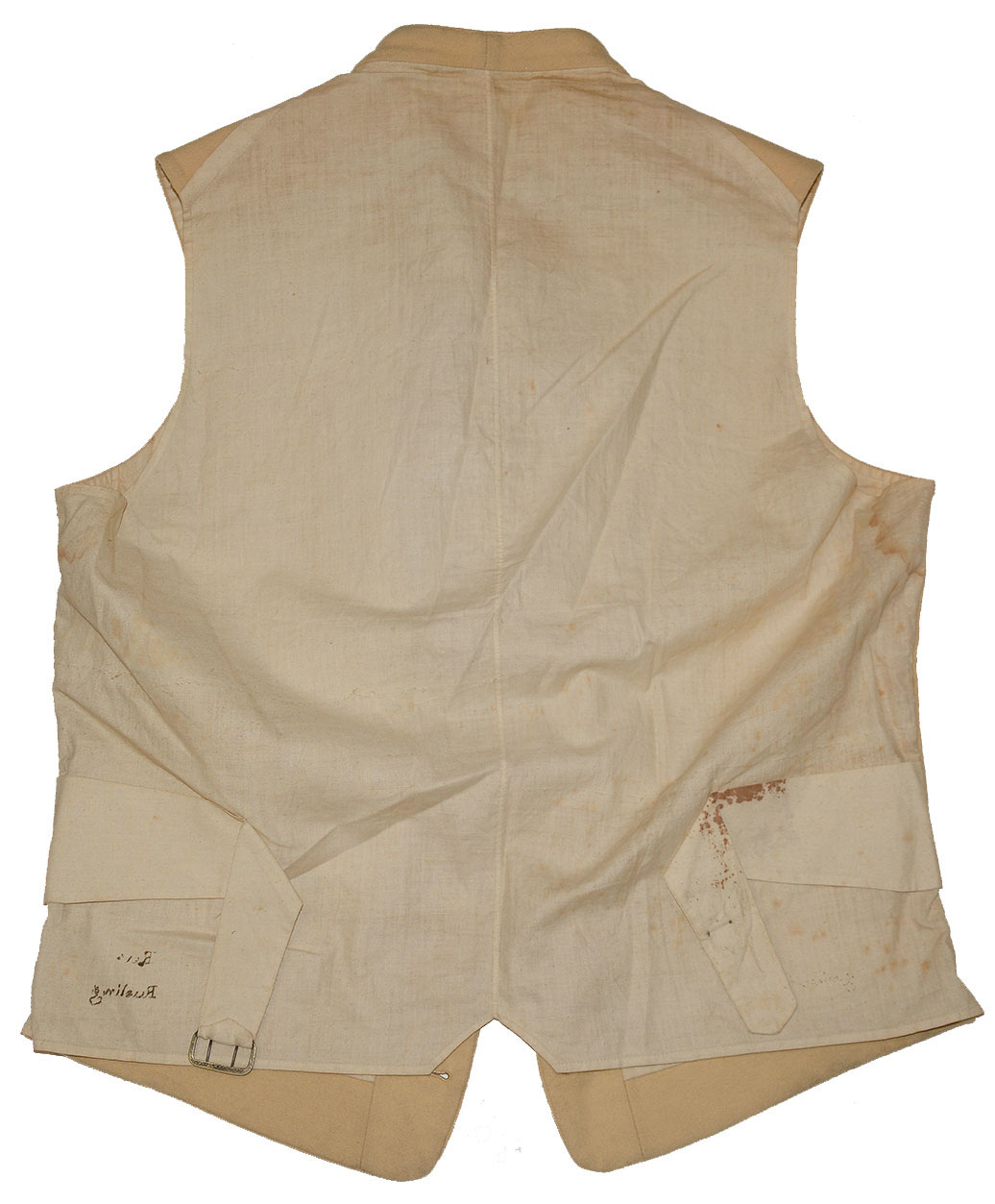
VEST-The vest is white, now showing as slightly cream colored, with wool front and collar and thin cotton back, fitted with an adjusting strap and buckle. The front was fastened by nine small buttons held by rings on the reverse. The four upper buttons are still in place, are general staff, and marked on the reverse, “fine gold plate.” The vest has a waist pocket on each side and slightly smaller pocket on the lower left breast. The collar is a stand-up collar ¾” tall. The inside, lower left back has “Rusling” written in old brown ink, with “Rus” just above it that seems to have been a false start.
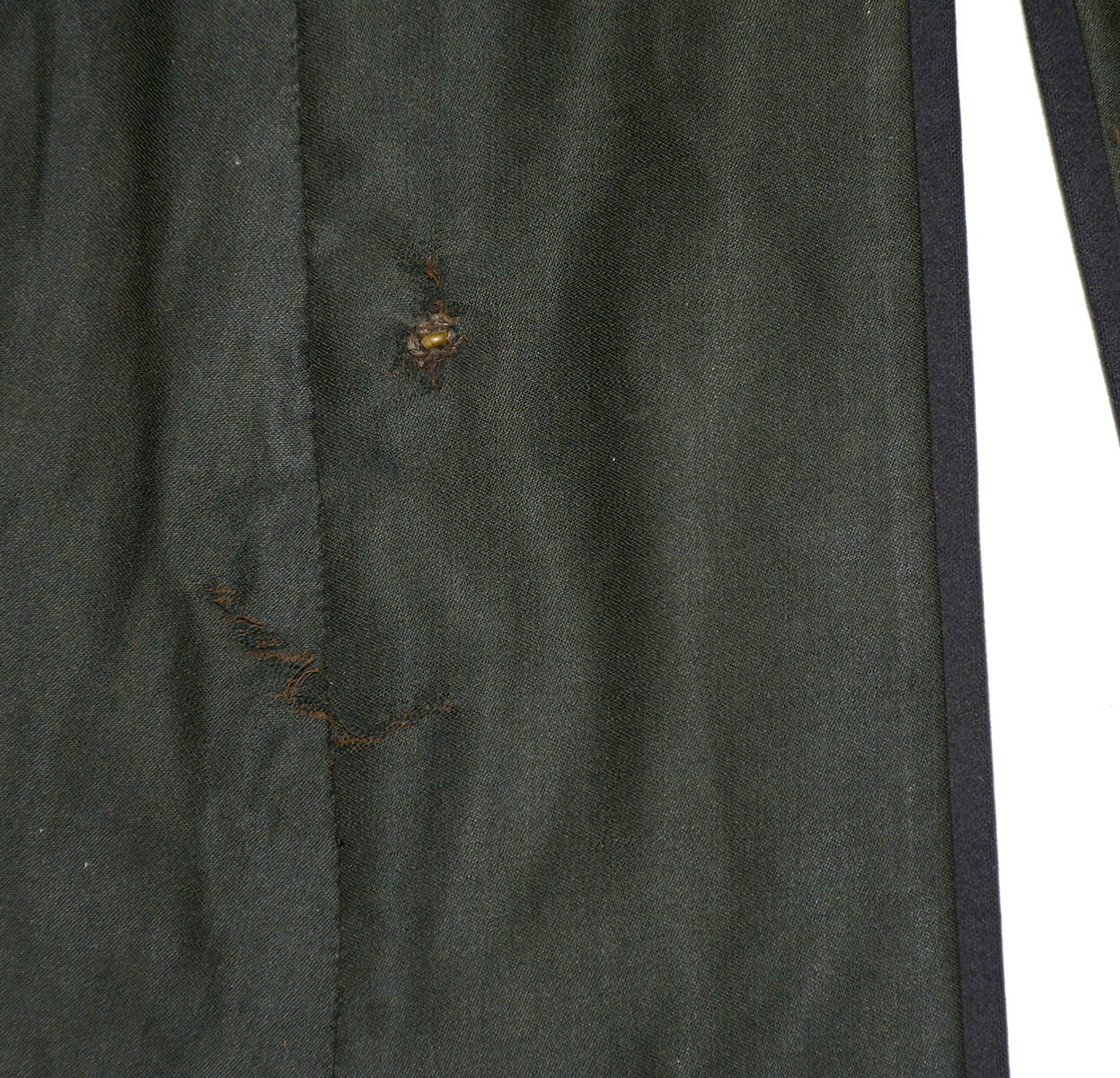
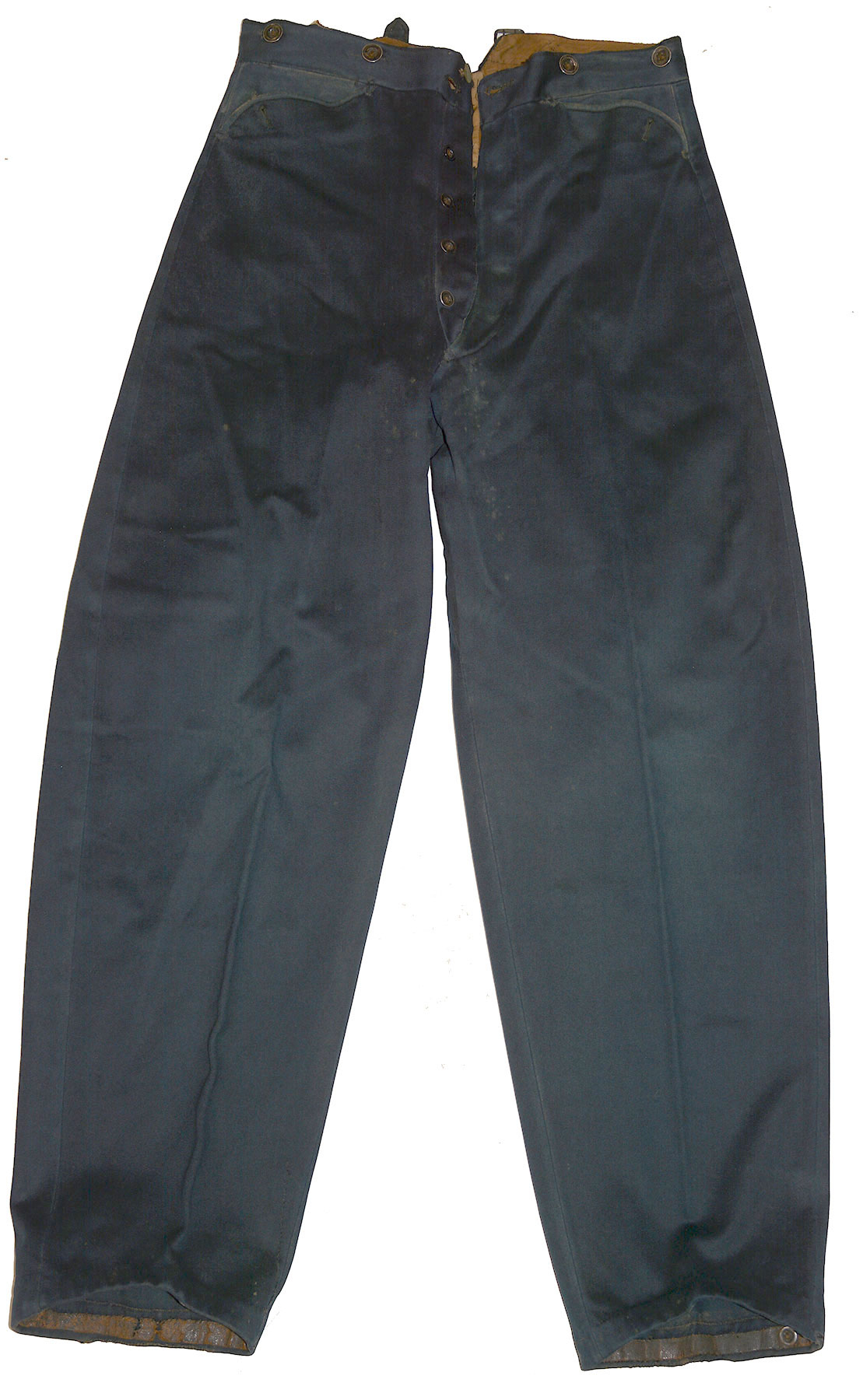
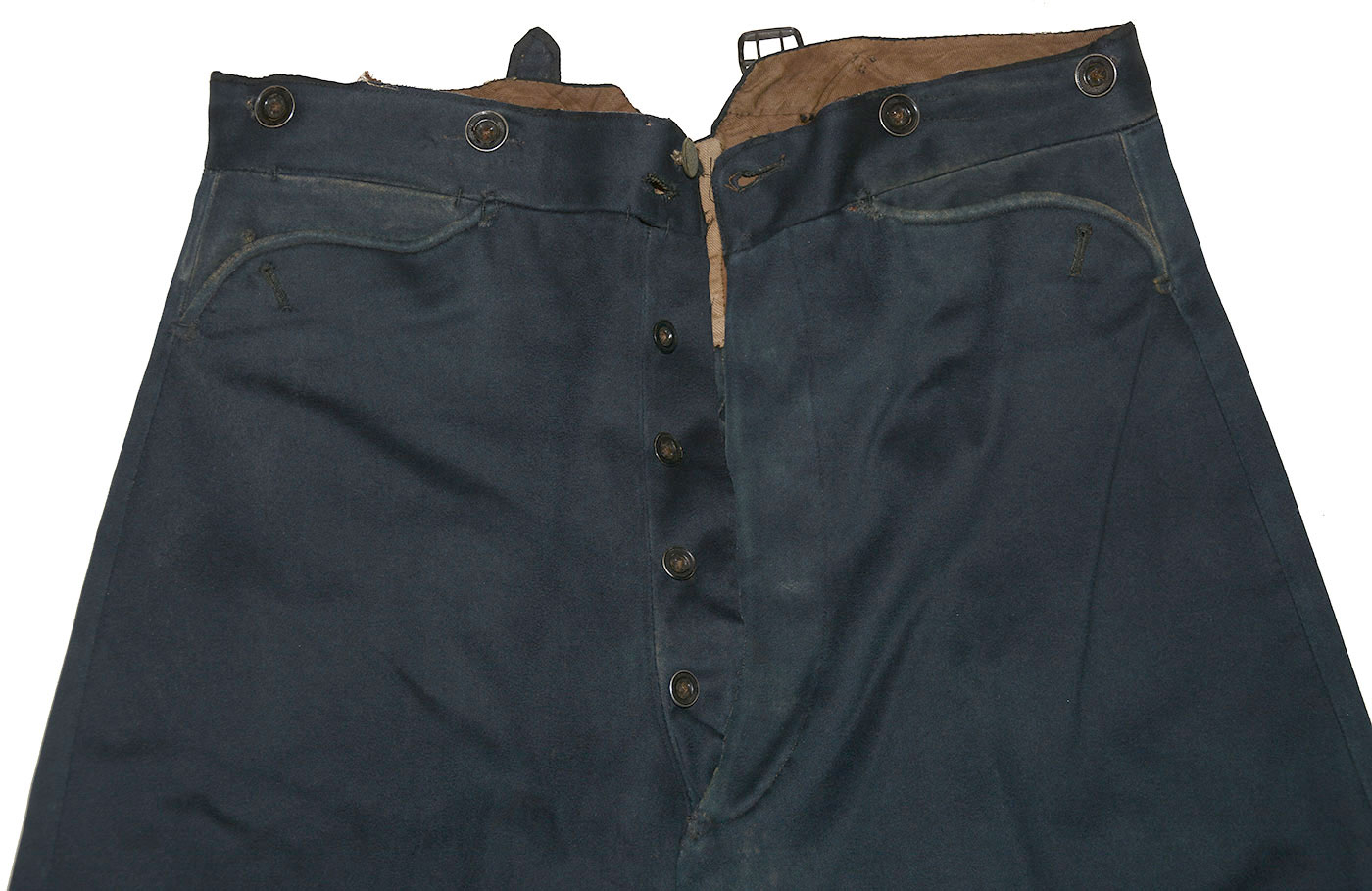
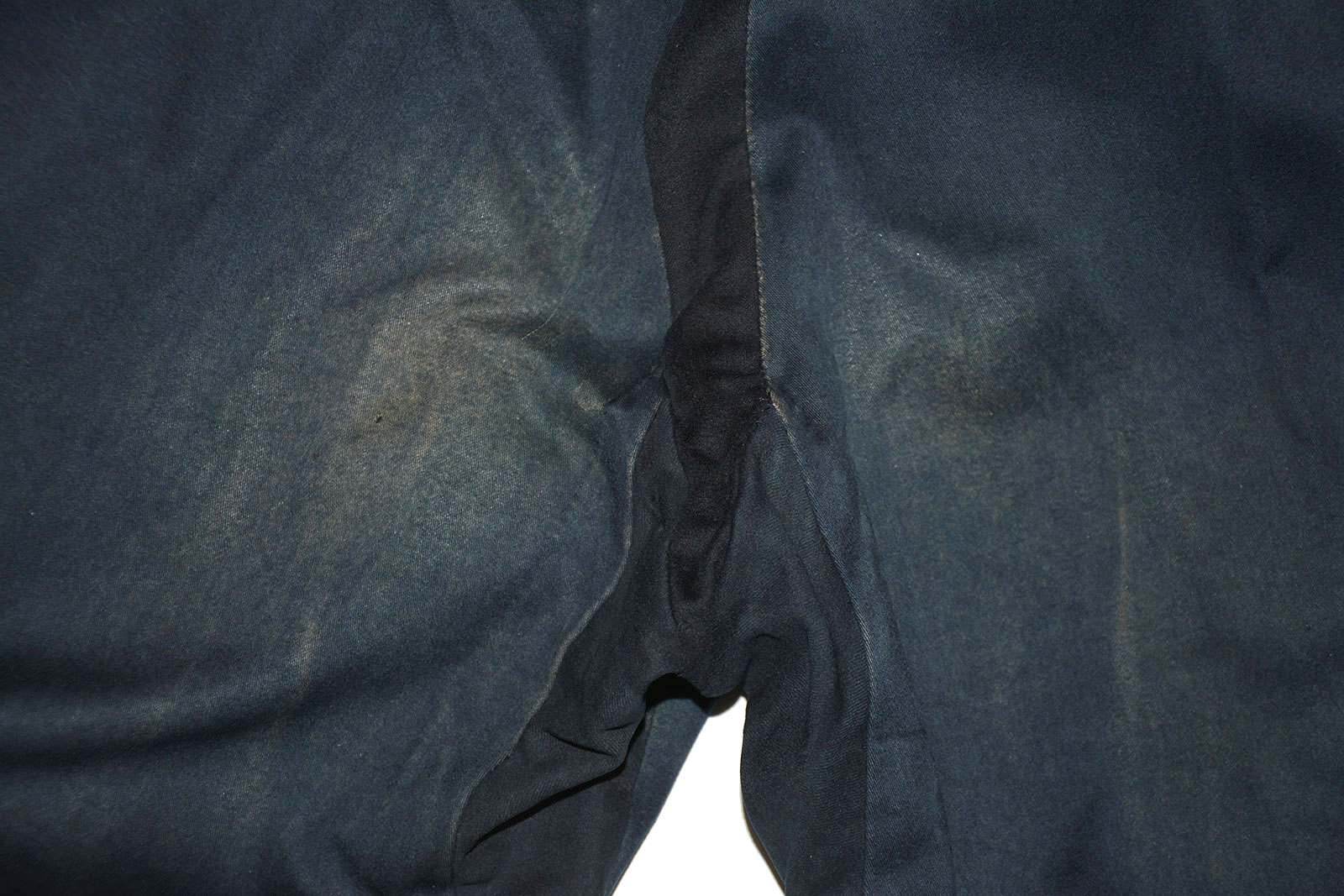
TROUSERS- The trousers are dark blue, cut full in the seat and leg, with a brown cotton lining along waistband, dropping down a bit at the seat, and running down the inside of the fly, and otherwise unlined. There are two pockets running at a slant from waist band to the side seam that have scalloped tops and button at the corner. The button on the right pocket is there. Missing on the left. A watch pocket is set into the lower edge of the waistband on the right. The six suspender buttons are present as are the buttons on the fly and waistband. The cuffs have a narrow leather band, each retaining one of what were likely two to secure an instep strap. The trousers are in very good condition, showing some saddle wear to surface of the seat, but no holes, and good color with just a couple of thin light stains at the upper inside thigh, though we note the rear seam gave way at some point and was repaired by inserting a strip of dark blue fabric ¾” wide from the bottom of the “V” at the rear waist down to the crotch. The cloth adjusting belt and buckle are in place on the rear waist.
RUSLING’S RECORD
Born in New Jersey in 1834, John Fowler Rusling graduated Dickinson College in 1854, taught at Dickinson Williamsport Seminary until 1857, when he passed the Pennsylvania bar. He passed the New Jersey bar in 1859, set up office in Trenton and was Morris County solicitor when the war began. He was commissioned 1st Lieutenant and Regimental Quartermaster in the 5th New Jersey Aug. 24, 1861, and was Acting Brigade Quartermaster for the 2nd NJ Brigade from Nov. 30 and was made Captain and Assistant Quartermaster of Volunteers on June 11, 1862, serving on the staff of Brig. Gen. Joseph Carr in the 3rd Corps.
He then moved up to Division QM on Oct. 15, and was promoted again on May 27, 1863, to Lt. Colonel and assigned to Gen. Sickles’ staff as 3rd Corps Quartermaster. He was moved up once again in the wake of Gettysburg to be Inspector of the Quartermaster Department, Army of the Potomac, on July 31, before transferring on Dec. 1, 1863, to be Chief Assistant Quartermaster in the Department of the Cumberland, with another move up to Colonel and Inspector Q.M. Dept. U.S. on April 29, 1865, with service at Washington and then tours of inspection in the south and west 1866-1867.
Rusling returned to his law practice after mustering out, rising to prominence in Trenton, New Jersey, where he engaged in both law, real estate, and was a pension agent right up until his passing in that city in 1918. He published several books, including "Men and Things I Saw in Civil War Days" (1899), and "The Great West and Pacific Coast" (1877), which detailed his experiences while making an Inspection tour of the American Western Frontiers in 1866 and 1867.
He married Mary Freeman Winner of Pennington, New Jersey in 1855 and, after her death, later married Emily W. Wood of Trenton in June 1870. He and his second wife had a son and a daughter. Rusling died at his home in Trenton on April 1, 1918, two weeks before his eighty-fourth birthday. He was buried in the Riverview Cemetery in that city.
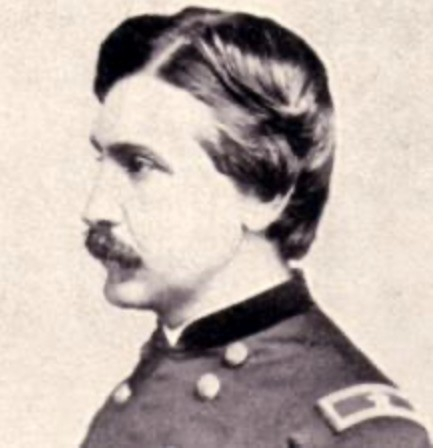
This is a great uniform group belonging to an officer with some wide-ranging service. His book on his Civil War experiences is accessible online. We show a photograph of Rusling in uniform. [sr][ph:L]
~~~~~~~~~~~~~~~~~~~~~~~~~~~~~~~~~~~
THIS ITEM, AS WITH ALL OTHER ITEMS AVAILABLE ON OUR WEB SITE,
MAY BE PURCHASED THROUGH OUR LAYAWAY PROGRAM.
CLICK HERE FOR OUR POLICIES AND TERMS.
THANK YOU!
Inquire About BRIGADIER GENERAL’S FROCK COAT, VEST AND TROUSERS OF BREVET BRIGADIER GENERAL JOHN FOWLER RUSLING: 5th NEW JERSEY, 2nd NJ BRIGADE, DIVISION AND CORPS STAFF DUTY IN THE EASTERN AND THE WESTERN THEATRES
Most Popular
Historical Firearms Stolen From The National Civil War Museum In Harrisburg, Pa »
Theft From Gravesite Of Gen. John Reynolds »
Selection Of Unframed Prints By Don Troiani »
Fine Condition Brass Infantry Bugle Insignia »
Rare Identified 65Th Ny Sergeant’s Jacket, With Manscript Material: 1St U.s. Chasseurs »
featured item
1/4 PLATE THERMOPLASTIC CASE WITH AMBROTYPE OF WOMAN & TINTYPE OF 2/LT. BAKER 20TH PA. INFANTRY – THE GREAT RAILROAD STRIKE OF 1877
Left half of this hard case houses an ambrotype of a finely dressed woman. Her cheeks and forehead are tinted. The image is matted, framed, and under glass as is typical. The right side of the case holds an 1877 tintype image of S. Charles Baker in… (1221-53). Learn More »
site search