

site search
online catalog
CIVIL WAR REGULATION ISSUE BLANKET
Hover to zoom
$3,500.00 SOLD
Quantity Available: None
Item Code: 1273-62
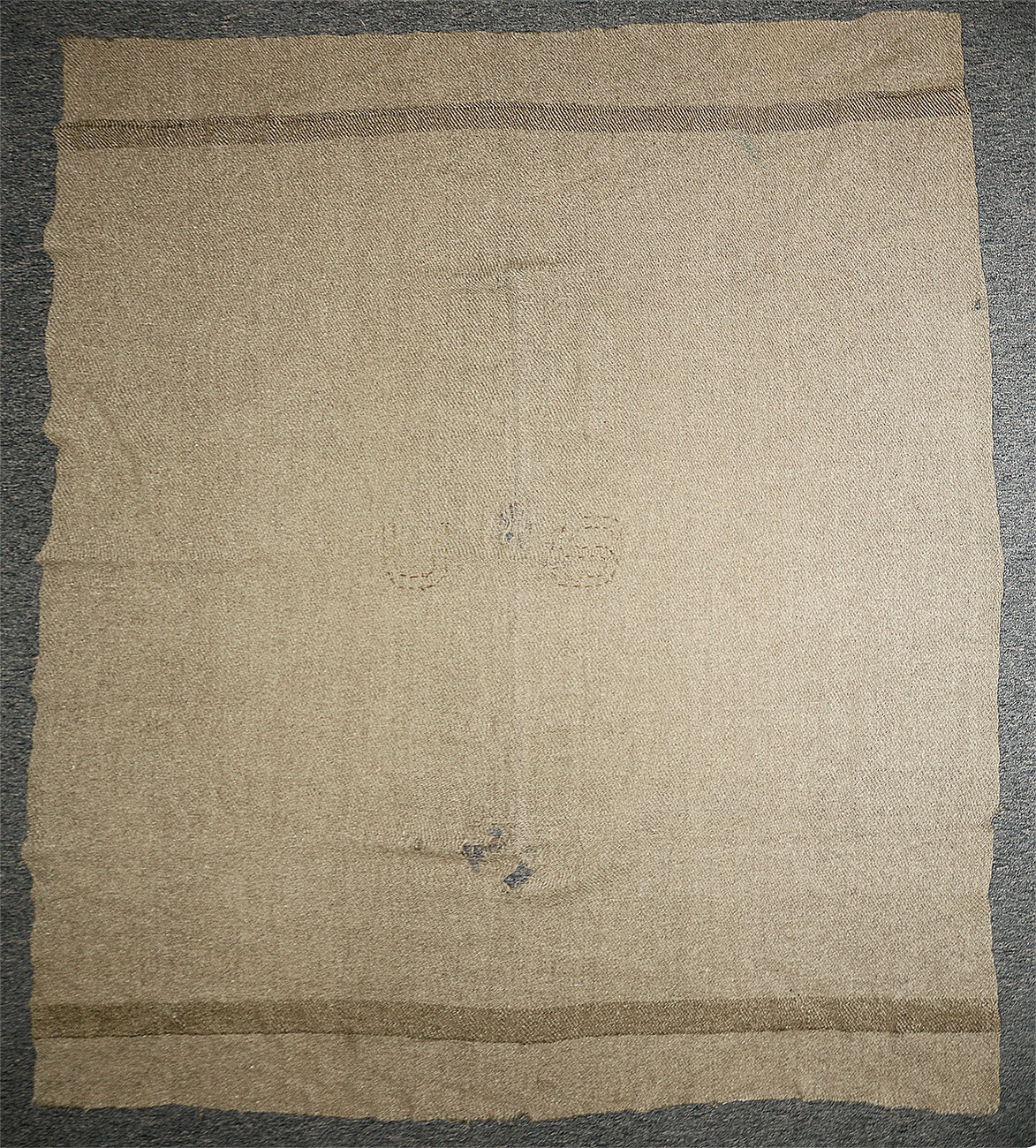
We have been lucky enough to take in several Civil War issue blankets from a Massachusetts collection. Don’t be fooled by the number. Civil War issue blankets have always been scarce. Inexpensively made, unprepossessing, and after taking rough treatment, dirt and soiling in the field, the few that were taken home were likely soon discarded, if they were allowed in the house at all, and the smaller number in good condition were largely used up in civilian life. They were hardly attractive enough make it to the status of cherished family memento.
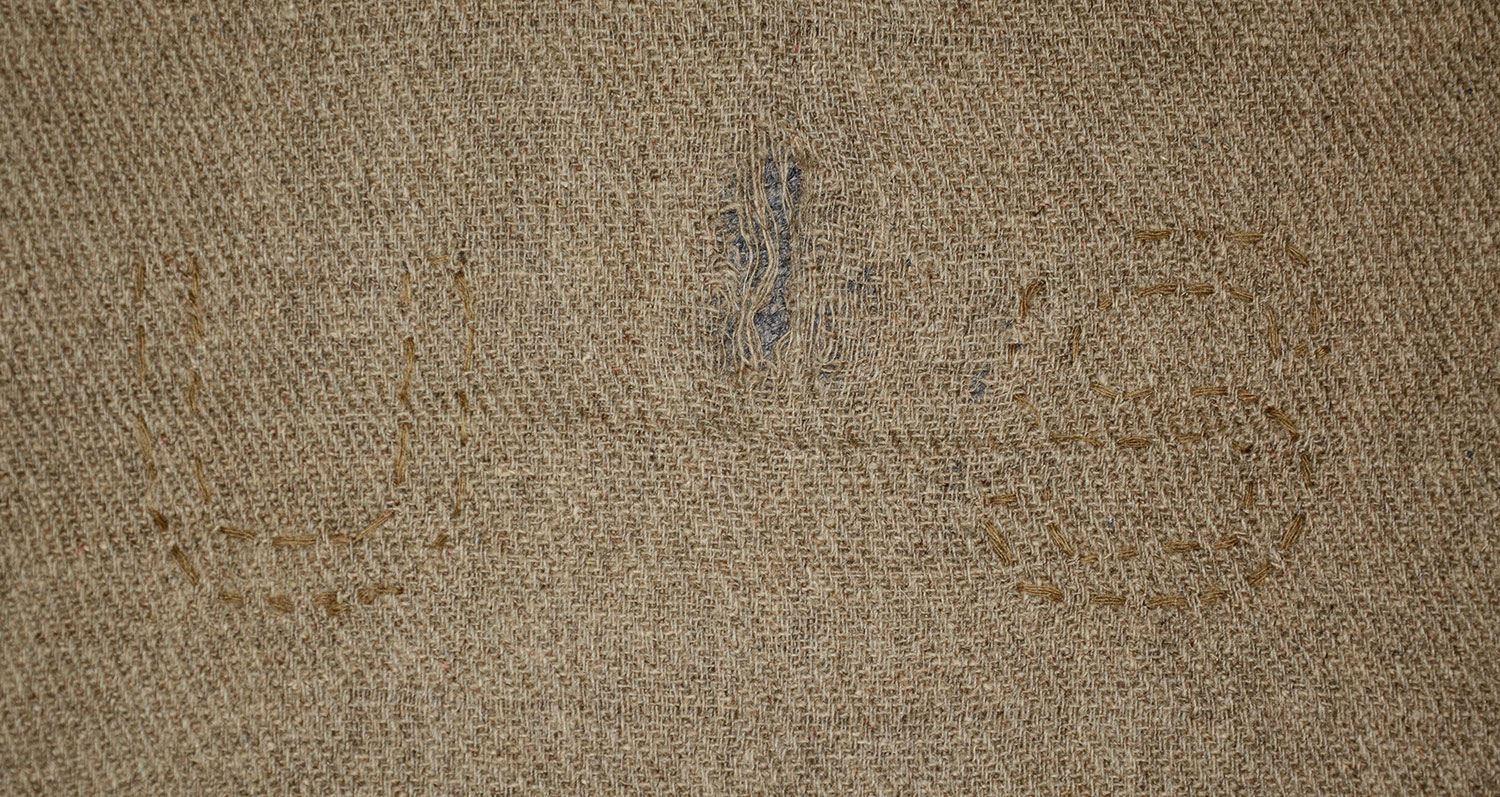
This measures approximately 82” long and 66” wide, allowing for some stretching or shrinkage, falling well within the general range of 78-82” and 66-68” recorded in sample of 12 issue blankets (admittedly a small sample) discussed in “The Army Issue Blanket,” by the redoubtable “Ed Quigley” in the Columbia Rifles Research Compendium, edited by John E. Tobey. As specified in the 1861 regulations it was made with black end stripes, 2-1/2” wide at the bottom and closer to 2” at the top, the bottom stripe about 5-1/2” from the end and the top closer to 6” though the ends are, as usual, unfinished, the blankets simply being cut from a roll, giving some variation to those latter measurements. At center is a “US” in yarn, hand applied as usual, in a loose, running stitch, forming block letters about 5” tall, with closed ends and about 1” between the lines, with 7” between the letters. This form of lettering is one of six variations illustrated in the CRRC cited above, though theirs is chain-stitched.
The blanket is the tan/brown color usually seen, the original gray color coming from logwood dye made fast by the use of iron mordants that quickly oxidized to brown- within in two to four months of field use and exposure by modern experiments (see the CRRC cited above.) The end stripes have oxidized to a light brown and the yarn used for the US, originally black as well by regulation, has shifted to an olive brown.
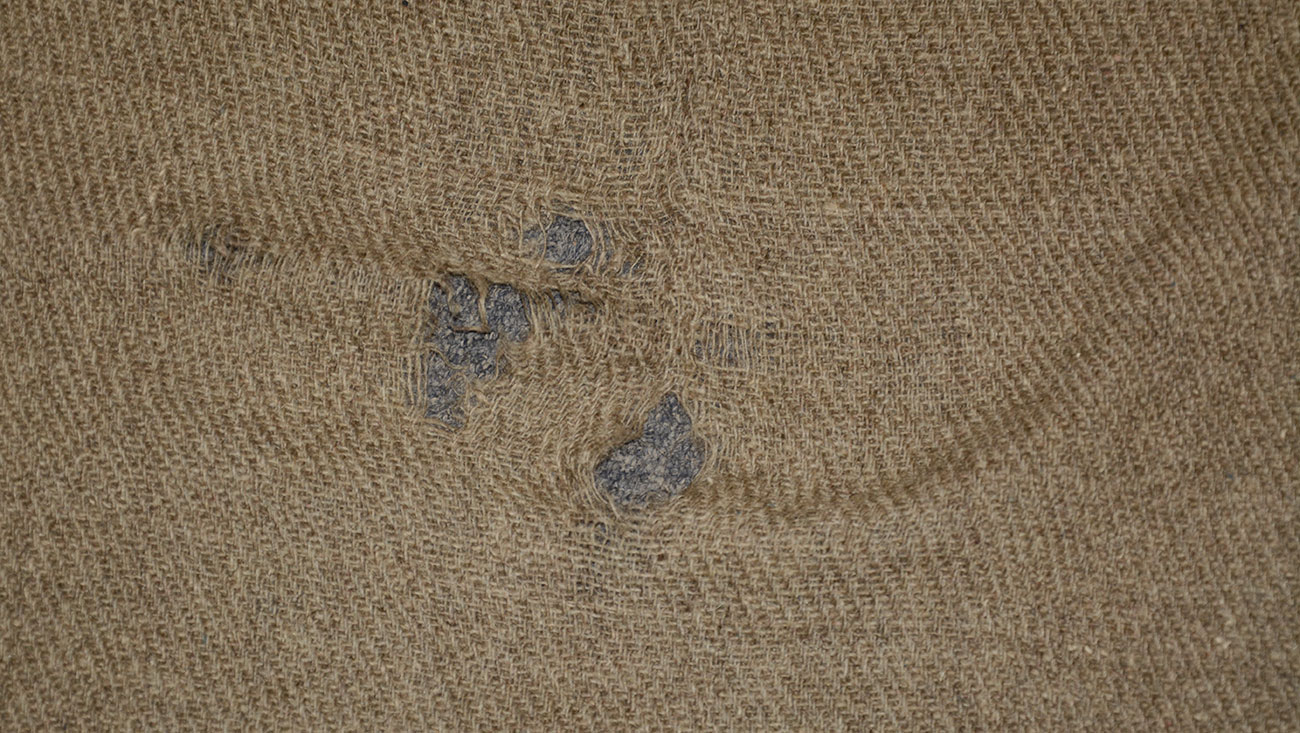
This shows the loose twill weave commonly found in these blankets, thought there is a good deal of minor variation among those produced many manufacturers, both domestic and foreign- the Superintendent of the Schuylkill Arsenal noting that. “The department has been obliged throughout the war to use a considerable proportion of army blankets of foreign manufacture.”) The ends do not show significant fraying or unravelling. There are a few wear spots, but they do not affect the structural integrity of the blanket or its overall visual appeal. We see one 1” hole on the right edge, 23” from the top, with a scattering of superficial pencil-point moth nips to the nap of the yarn to its left, but not through it and blending in well with the surface; a 1” wide, 3” tall wear spot along the vertical centerline between the upper legs of the U and S about 36” from the top; three small holes, one 1 x 1” and two 2x1” about 17” from the bottom edge also near the vertical center line. None of these are egregious, the loose weave and nap of the yarn hiding much of their outline. We see a few small touches of colored fabric including some light blue near the upper end-stripe indicating the maker’s use of some shoddy, i.e. cloth scraps in the manufacture of he yarn used to weave the blanket, a percentage of which was allowed to manufacturers.
This is a good looking US government issue Civil War blanket and an essential piece of field gear. [sr] [ph:L]
~~~~~~~~~~~~~~~~~~~~~~~~~~~~~~~~~~~
THIS ITEM, AS WITH ALL OTHER ITEMS AVAILABLE ON OUR WEB SITE,
MAY BE PURCHASED THROUGH OUR LAYAWAY PROGRAM.
CLICK HERE FOR OUR POLICIES AND TERMS.
THANK YOU!
Inquire About CIVIL WAR REGULATION ISSUE BLANKET
Most Popular
Historical Firearms Stolen From The National Civil War Museum In Harrisburg, Pa »
Theft From Gravesite Of Gen. John Reynolds »
Selection Of Unframed Prints By Don Troiani »
Fine Condition Brass Infantry Bugle Insignia »
Rare Identified 65Th Ny Sergeant’s Jacket, With Manscript Material: 1St U.s. Chasseurs »
featured item
DARK BLUE WOOL TROUSERS OF MAURICE LEYDEN, THIRD NEW YORK CAVALRY
These trousers, along with several other items, came directly from the Leyden family in 1998 and within a few months was in the Ray Richey collection. Maurice Leyden was 22 years of age when he enrolled at Syracuse in the military June 12, 1861. By… (1268-777HH). Learn More »
site search