

site search
online catalog
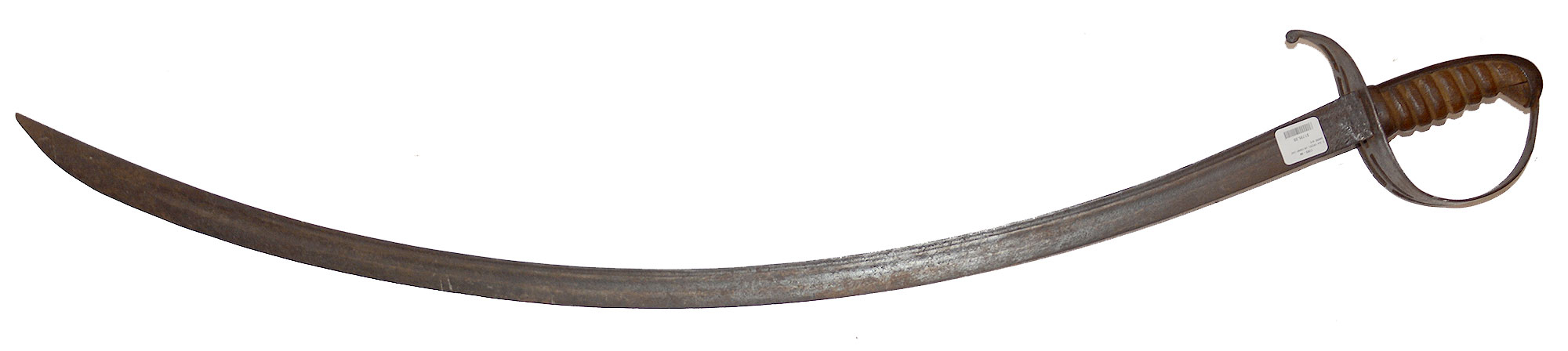
SCARCE UNALTERED SECOND MODEL VIRGINIA MANUFACTORY CAVALRY SABER

Hover to zoom
$1,795.00
Quantity Available: 1
Item Code: 1103-04
Shipping: Determined by Method & Location of buyer
To Order:
Call 717-334-0347,
Fax 717-334-5016, or E-mail
According to Giles Cromwell, the authority on the Virginia Manufactory, of approximately 3,400 First and Second Model Cavalry Sabers manufactured at that facility from 1804 through 1808, 2,600 had been altered by 1846, having their approximately 40-inch blades reduced to 36-inches, conforming to the Third Model, making any unaltered example of the First or Second Models scarce indeed.
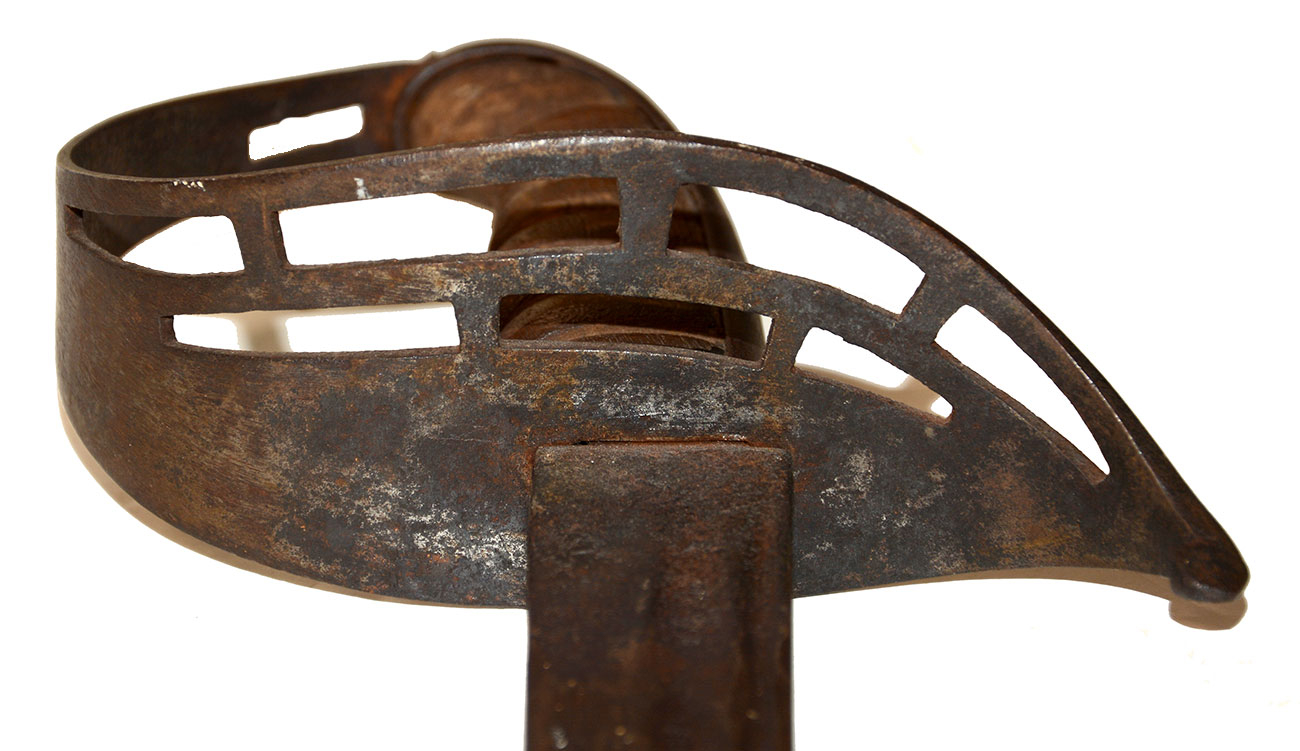
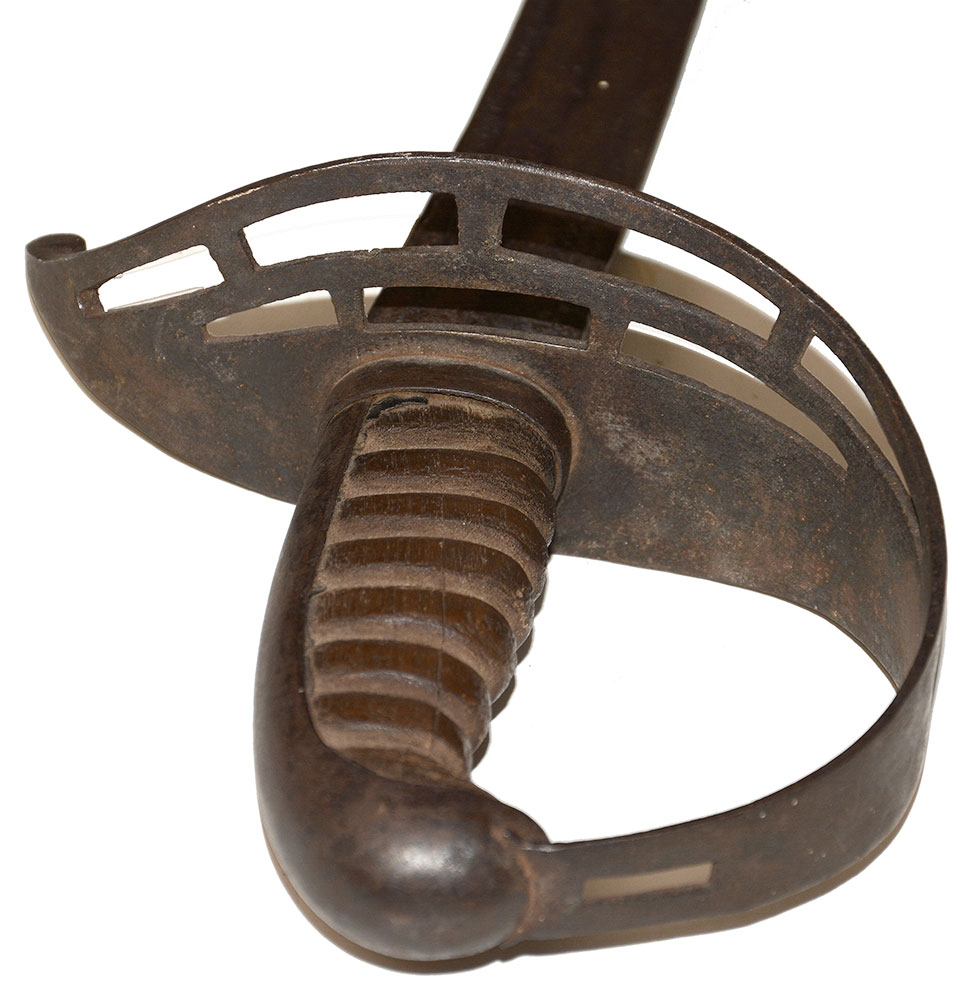
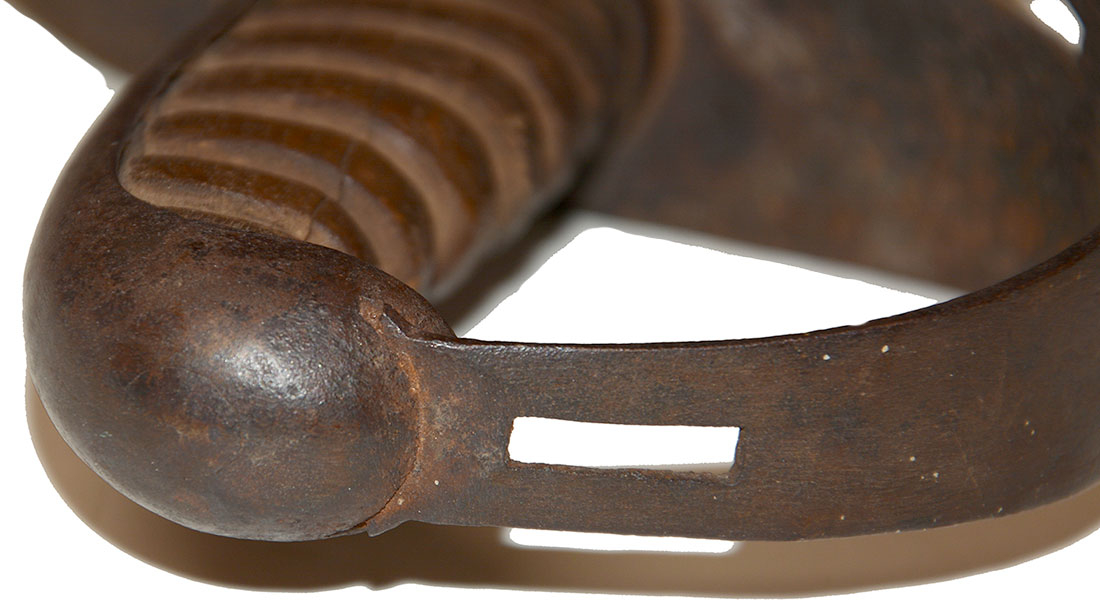
Manufactured from 1806 to 1808, the Second Model Virginia Manufactory Cavalry Saber is similar to the First Model, produced 1804-1805. Both measure approximately 45-inches overall and have approximately 40-inch blades, which are extremely curved and made with a deep narrow fuller along the back edge with a second, wider fuller beneath it. They differ, however, in the configuration of the guard, with the First Model having flat pommel cap, with a nut, and the Second Model using a rounded pommel, apparently copied from that used on the Virginia Manufactory artillery swords. And, while retaining the iron half-basket guard with seven slots of the First Model, the Second Model adds a slot for sword knot in the upper knuckle bow. The grips were similar- a grooved wood core, wrapped with horsehide, and bound with a single or double, twisted brass wire, but the Second Model grips show a very slight angle to the blade. The Second Model was succeeded, with some overlap, by the Third Model saber, whose salient characteristic is a less dramatically curved and noticeably shorter 36-inch blade, among other changes.
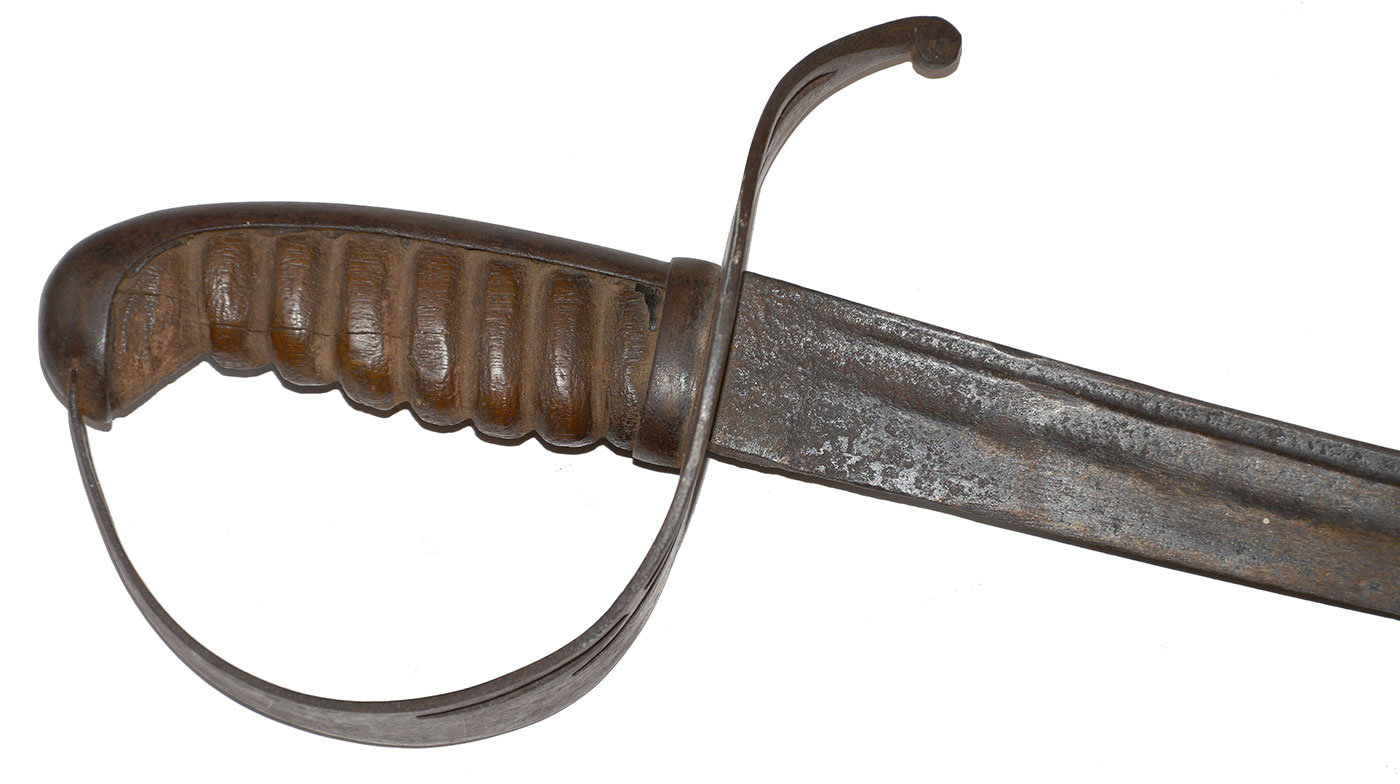
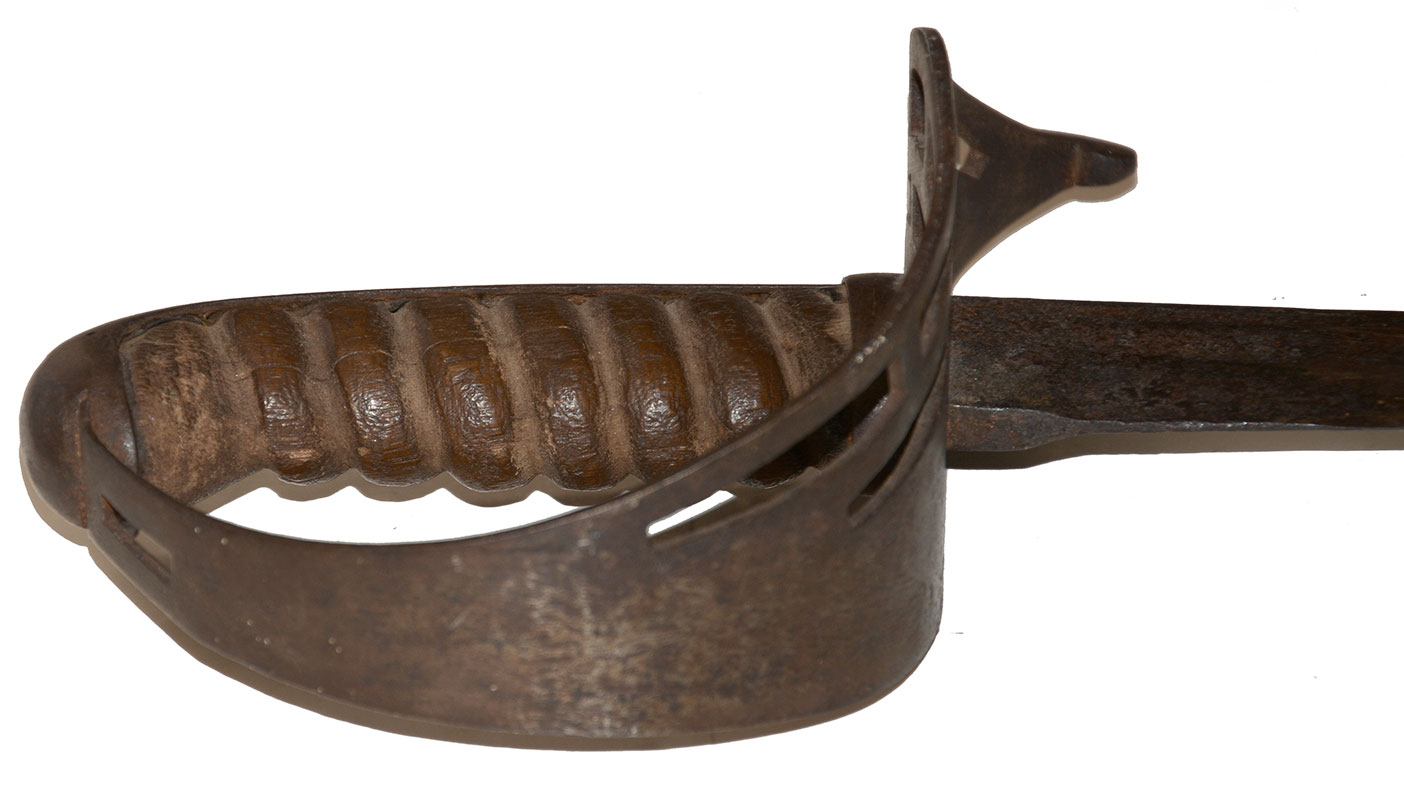
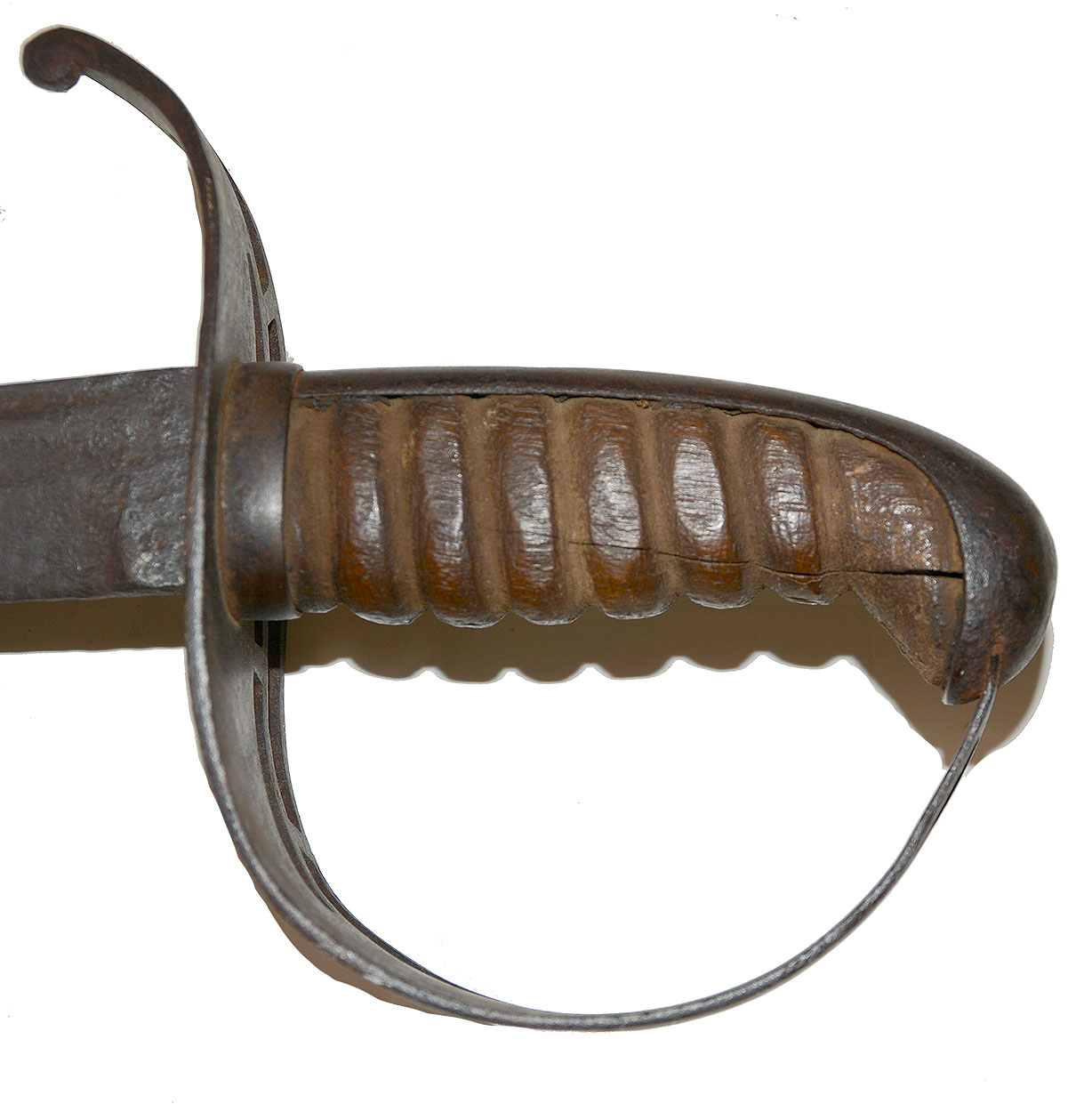
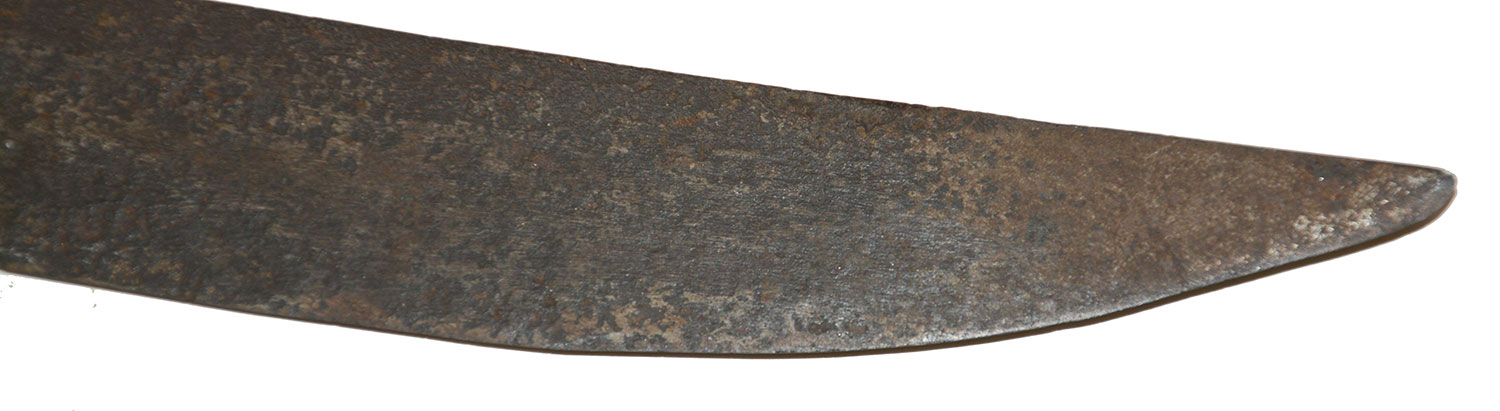
This is a very good example, full length, missing only the grip wrap and wire, with no wobble to the blade. The overall length is 44-inches and the blade about 39-1/4 inches, both well within the expected parameters of this model. The pommel is the rounded, bird’s head, form correct for the Second Model and the guard has the slot for the saber knot as well as the seven slots in the half-basket guard carried over from the First Model. The wire binding and wrap are gone from the grip, but the wood core is there. It is complete, with no chips, and stable though showing a narrow crack near the lower edge running down from the pommel to the third groove from the guard. The wood has a light brown color and smooth surface.
The iron hilt is smooth metal, shows a mix of gray and thin brown, and has no bends, cracks or breaks to pommel backstrap, ferrule, or guard. The back strap is in place, running down from the pommel to the ferrule at the guard. The quillon preserves its elegant sweep and forward curl with a small finial disk.
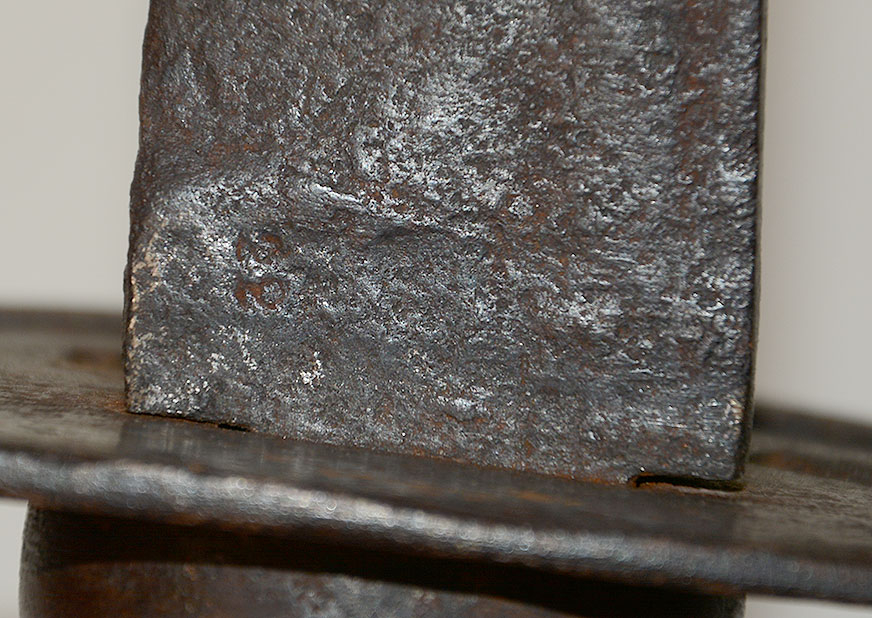
The blade is gray, showing some shallow surface corrosion, but a good edge and good point. A small number “22” is stamped near the lower edge of the blade left ricasso, likely an individual workman’s number, and differs from the small numbers occasionally found on the guards of altered sabers. We see no other marks or stamps, though some Virginia Manufactory swords show regimental markings on the spine of the blade near the guard. Virginia had ordered the stamping of all state-owned arms in 1800, but the law was not rigorously enforced and not only do some Virginia-made arms appear not to have ever been marked, there is documentary evidence also that a few arms were not stamped before they were issued. (See Craig Bell’s and Ed Flanagan’s ASAC articles on these points.)
Situated along the James River on the west side of Richmond, the Virginia Manufactory was the first state-owned armory after the Revolution, established in 1798 and from 1802-1821 produced muskets, rifles, bayonets, swords and cannon in numbers only exceeded by the national armories, with the intention of reducing the state’s reliance on the Federal government and outside contractors and suppliers, and encouraging local industry. After ceasing production, the facility continued in use as an armory for storage and repair of state arms until revived at the beginning of the Civil War.
Cromwell gives the number of finished cavalry sabers produced in 1806 as 852; in 1807 as 1,277; and in 1808 as 1,382. Some Third Model sabers, however, were included in that 1808 number- indeed, an August 1808 work records indicate that 64 longer Second Model scabbards had been finished, but were considerably outnumbered by 143 shorter ones for the new Third Models. While some overlap with the First Model is possible, total production in 1805 was just 699 sabers, so it cannot have been many, if it was not the First model intruding into the 1806 number. Whatever the precise number, these Second Models are scarce and in unaltered condition like this border on rare. [sr] [ph:L]
~~~~~~~~~~~~~~~~~~~~~~~~~~~~~~~~~~~
THIS ITEM, AS WITH ALL OTHER ITEMS AVAILABLE ON OUR WEB SITE,
MAY BE PURCHASED THROUGH OUR LAYAWAY PROGRAM.
CLICK HERE FOR OUR POLICIES AND TERMS.
THANK YOU!
Inquire About SCARCE UNALTERED SECOND MODEL VIRGINIA MANUFACTORY CAVALRY SABER
Most Popular
Historical Firearms Stolen From The National Civil War Museum In Harrisburg, Pa »
Theft From Gravesite Of Gen. John Reynolds »
Selection Of Unframed Prints By Don Troiani »
Fine Condition Brass Infantry Bugle Insignia »
featured item
BEAUTIFUL OFFICER’S SHELL JACKET OF COLONEL, LATER BREVET BRIG. GEN. WINSOR B. FRENCH 77th NEW YORK
This officer’s shell jacket was worn by Winsor B. French while Colonel of the 77th New York and carries his name in old brown ink on interior of the hanging loop inside the collar. Short jackets like this were non-regulation, but popular with both… (1314-06). Learn More »
site search