

site search
online catalog
18th CENTURY NATIVE AMERICAN SPEAR OR LANCE OF THE EASTERN WOODLANDS

Hover to zoom

$4,500.00 ON HOLD
Quantity Available: 1
Item Code: 1273-135
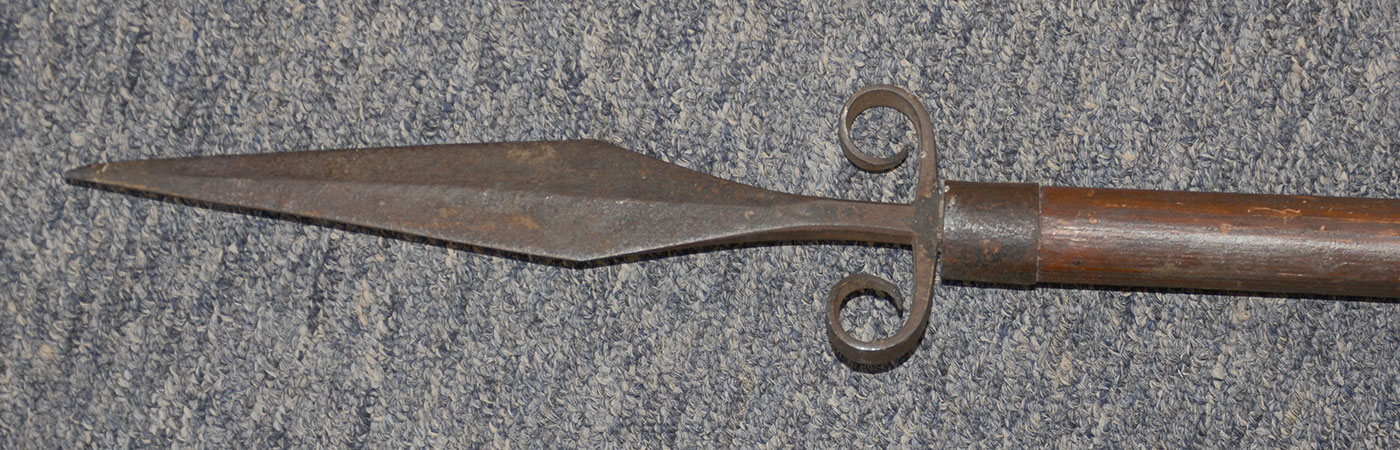
Offered is an extraordinarily rare pole arm that was certainly made in North America by a white craftsman for the Indian trade; and no later than the last quarter of the 18th century.
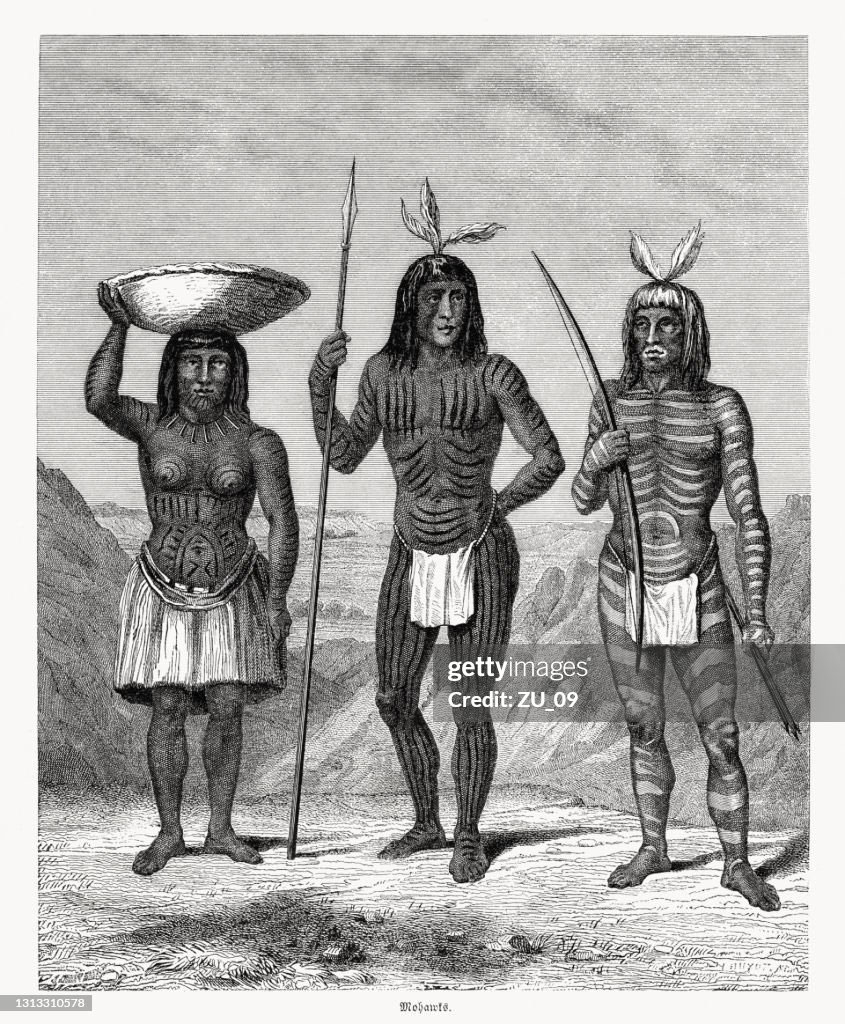
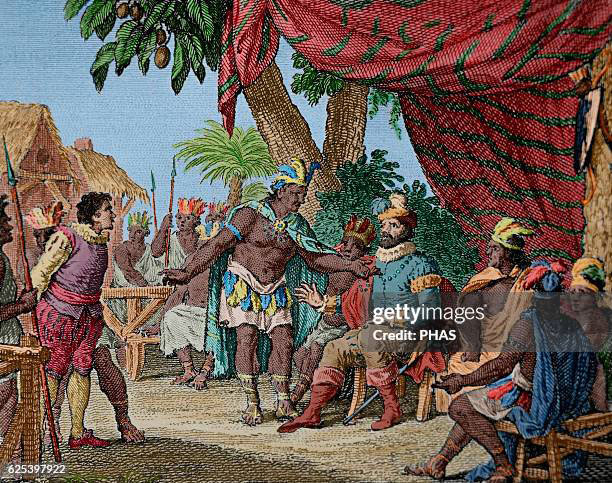
When one thinks of weaponry commonly used by tribes among the Six Nations (Mohawk, Onondaga, Oneida, Cayuga, Seneca and Tuscarora) one thinks of bows, tomahawks, knives and clubs, forgetting that the spear or lance was a common weapon used by these "First Peoples" for millennia even prior to "contact"(See select attached pictures below).
The form of the weapon reverts back centuries to a Medieval Europe form with a counter guard that stops excessively deep penetration. In this case it is an iron pig tail that sits at the base of a of a 9 1/2-inch-long hand forged diamond shaped spear head. This one-piece element, guard and spear head, is inserted into the 67-inch-long haft or pole whose diameter is 1 1/4 inches at the 1 1/4-inch iron ferrule and tapers down to 1 inch at the extreme end. As expected, as a spear and not a traditional polearm, it was made without a grounding iron. The shaft is in an amazing state of preservation with most of its red ochre paint intact on the haft. Red ochre is a natural earth pigment primarily composed of iron oxide, specifically hematite. Its characteristic reddish-brown color originates from this iron-rich composition, from oxidized iron. The geological formation of red ochre often involves the weathering of iron-rich rocks or the precipitation of iron from groundwater. This process can occur in various environments, including valley edges, cliffs, and within caves. Hematite forms through the hydrolysis and oxidation of other iron-bearing minerals. In Colonial times the color was typically derived, in white settlements, from boiling red clay in buttermilk. Not only is the haft in outstanding condition but all the iron elements have a rich dark brown smooth patina.
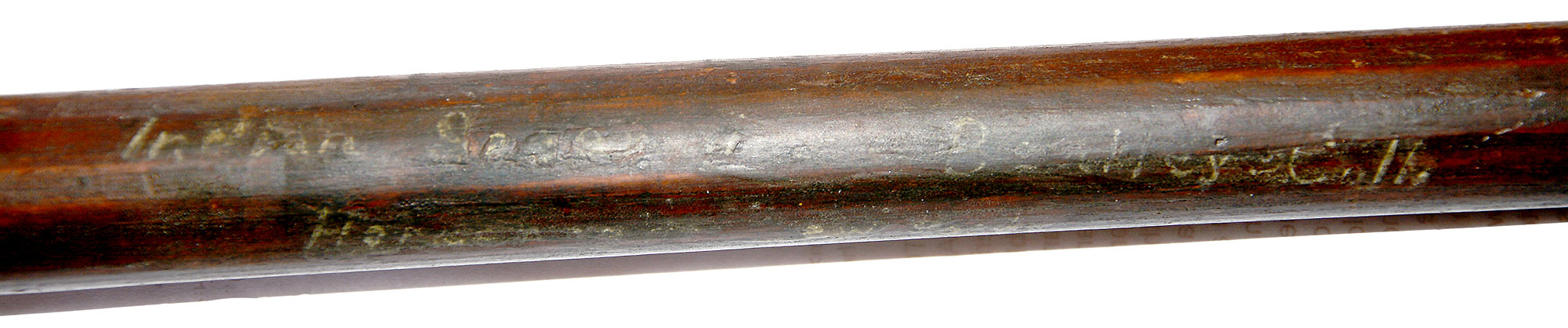
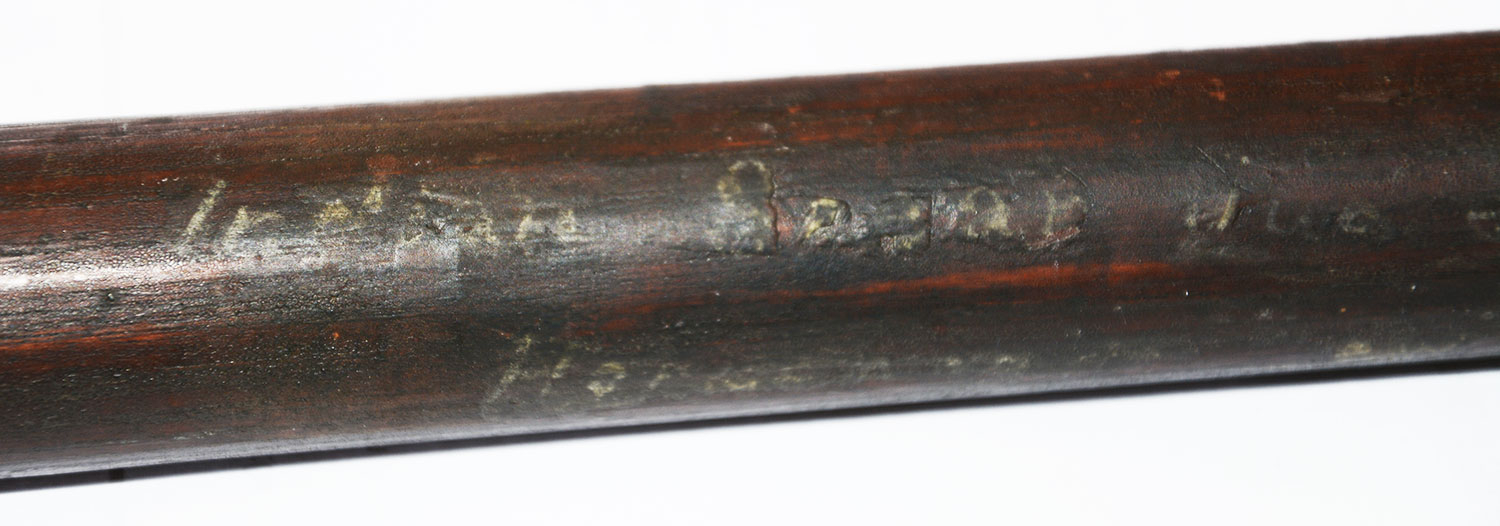
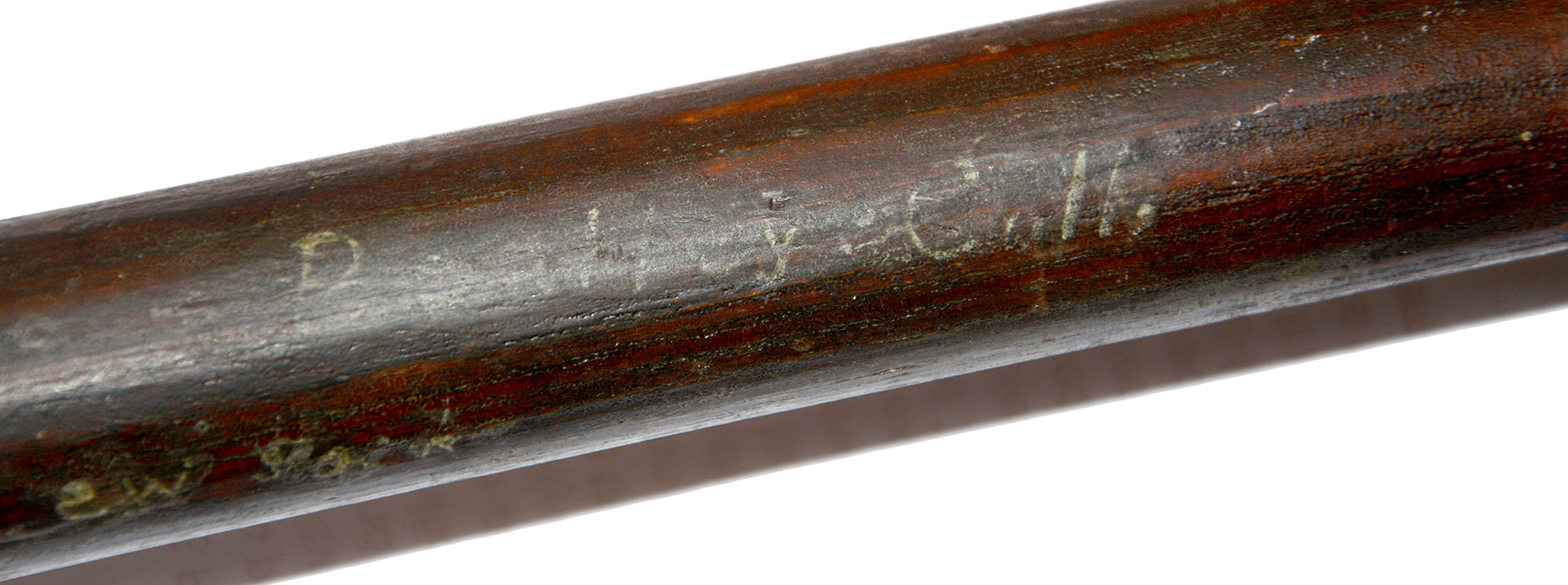
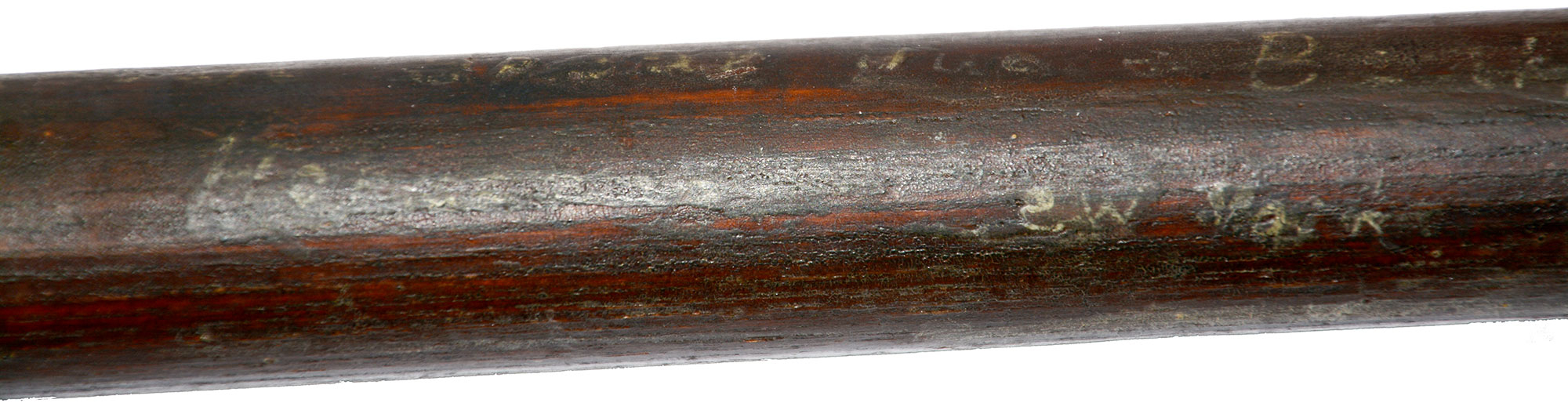
Painted in neat white letters on the upper part of the wooden haft is: "Indian Spear Joel Bentley Collection Herkimer New York". This is old and fading and done well over a century ago. The town of Herkimer New York is in the heart of the lands once totally occupied by peoples of the Six Nations. It was through here that General Sullivan came to devastate and pillage in the Revolutionary War. Please click on this link (The Clinton-Sullivan Campaign of 1779 U.S. National Park Service). It is probable that this spear was a trophy of that campaign.
This spear, particularly in this condition and with its collection record, is a great rarity that one may never have an opportunity to acquire again. [pe] [ph:L]]
Special shipping arrangements necessary.
~~~~~~~~~~~~~~~~~~~~~~~~~~~~~~~~~~~
THIS ITEM, AS WITH ALL OTHER ITEMS AVAILABLE ON OUR WEB SITE,
MAY BE PURCHASED THROUGH OUR LAYAWAY PROGRAM.
CLICK HERE FOR OUR POLICIES AND TERMS.
THANK YOU!
Inquire About 18th CENTURY NATIVE AMERICAN SPEAR OR LANCE OF THE EASTERN WOODLANDS
Most Popular
Historical Firearms Stolen From The National Civil War Museum In Harrisburg, Pa »
Theft From Gravesite Of Gen. John Reynolds »
Selection Of Unframed Prints By Don Troiani »
Fine Condition Brass Infantry Bugle Insignia »
Rare Identified 65Th Ny Sergeant’s Jacket, With Manscript Material: 1St U.s. Chasseurs »
featured item
IDENTIFIED CONFEDERATE OFFICER'S FROCK COAT WITH EXTRAORDINARILY RARE BUTTONS
Offered is the uniform coat of 2nd/1st Lieutenant John Calhoun Clemson. This fine frock coat has 20 rare "CS Palmetto Guards" overcoat and cuff buttons (SC17). John Calhoun Clemson was the grandson of statesman John C. Calhoun and the son of the… (1268-056). Learn More »
site search