

site search
online catalog
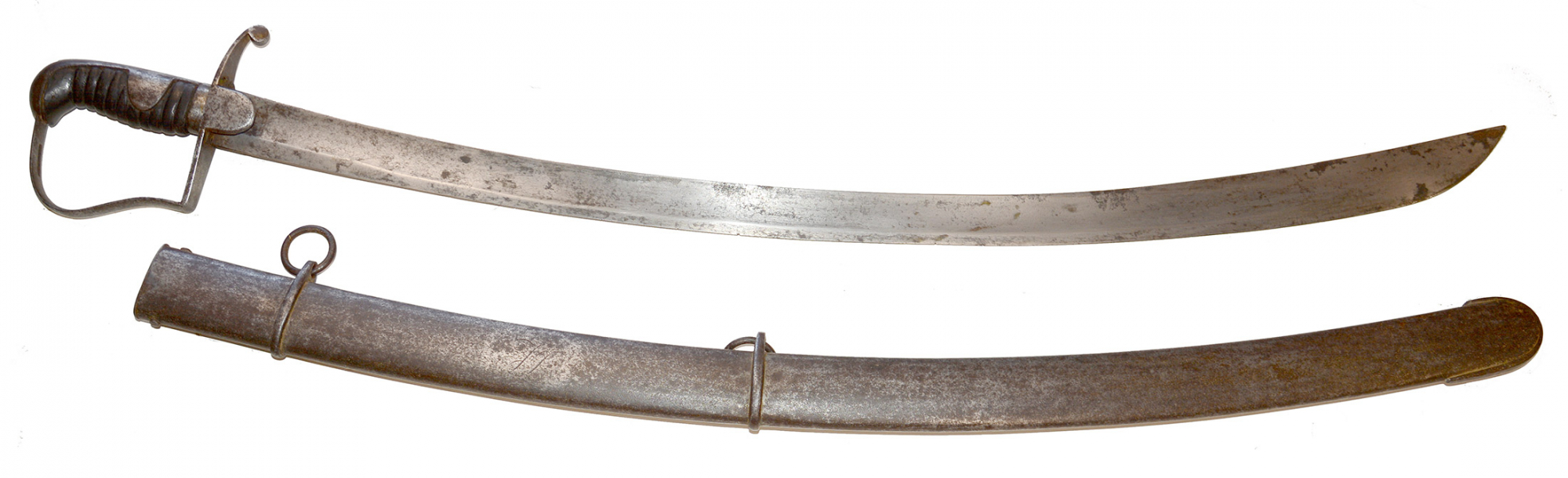
CLASSIC BRITISH PATTERN 1796 LIGHT CAVALRY SABER
Hover to zoom
$1,250.00 SOLD
Quantity Available: None
Item Code: 1284-43
This was purchased in the 1970s by this compiler from the relic hunter and collector Mr. Max Day of Fort Erie Ontario, Canada. With it also at that time the consignor also bought a rare Second US Heavy Artillery shako plate which appears in Mr. D. Troiani's book Soldiers in America.
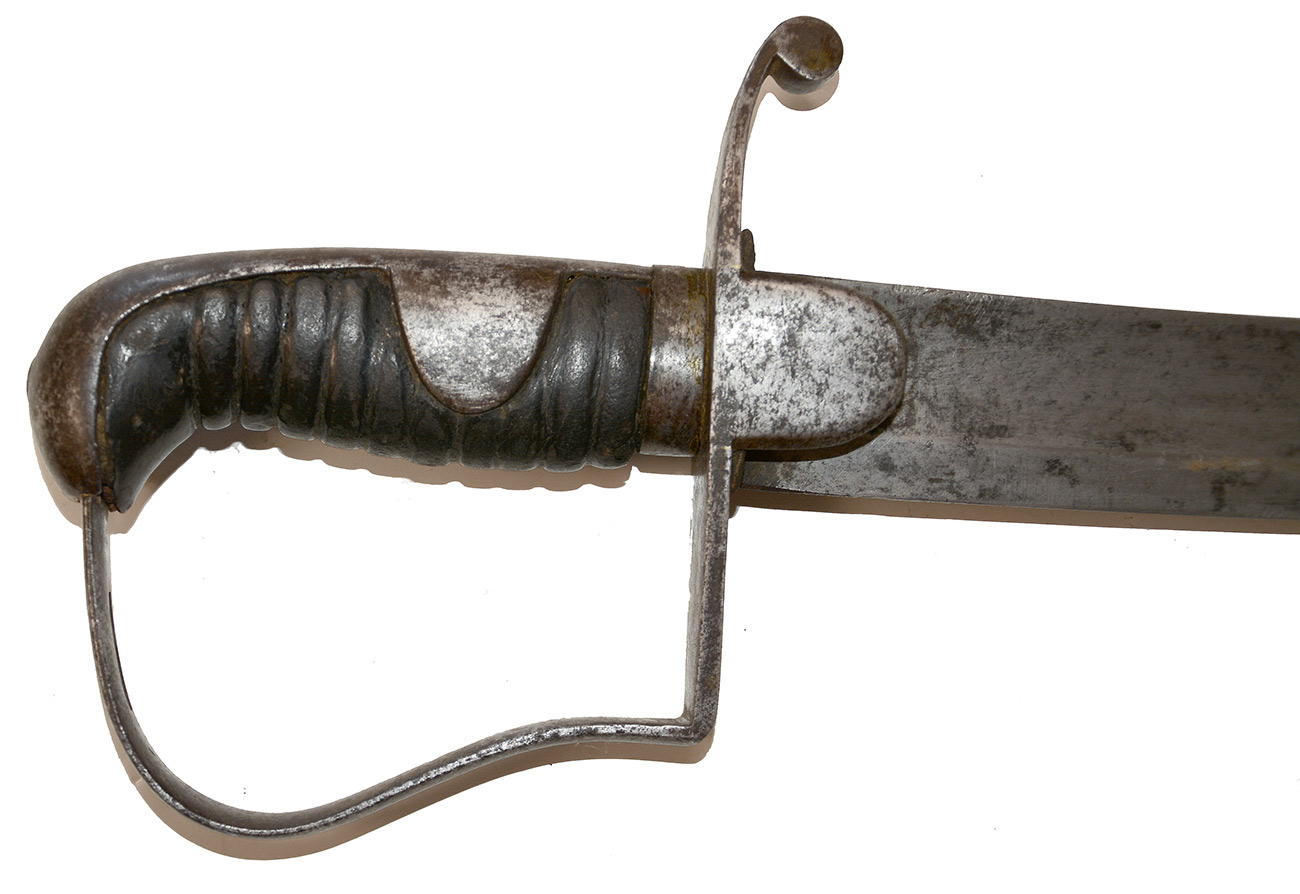
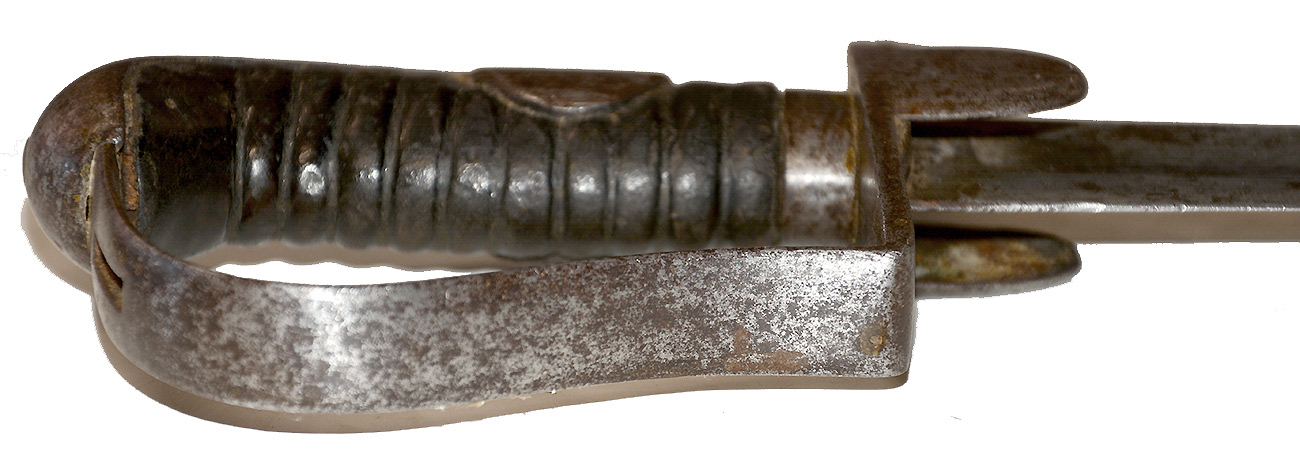
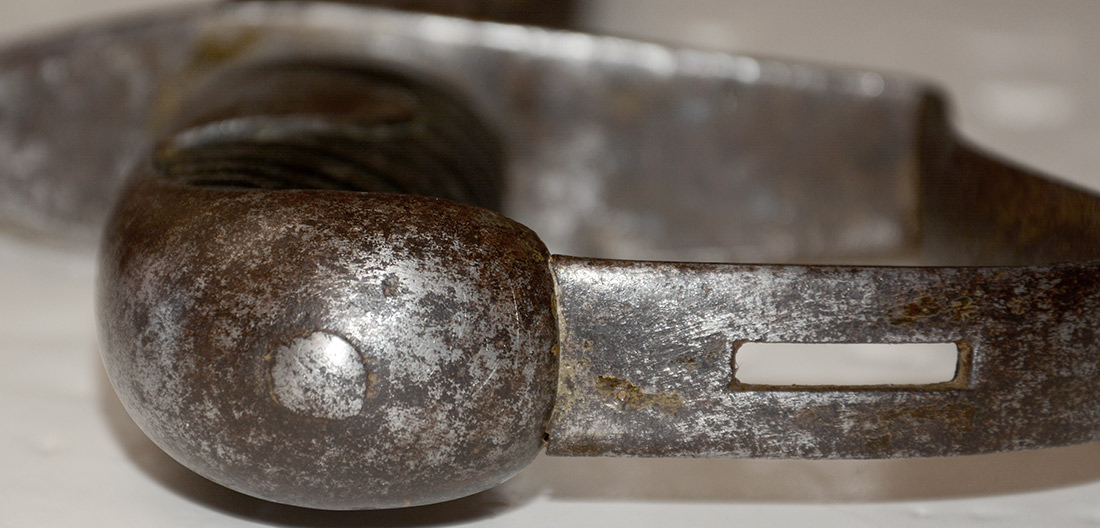
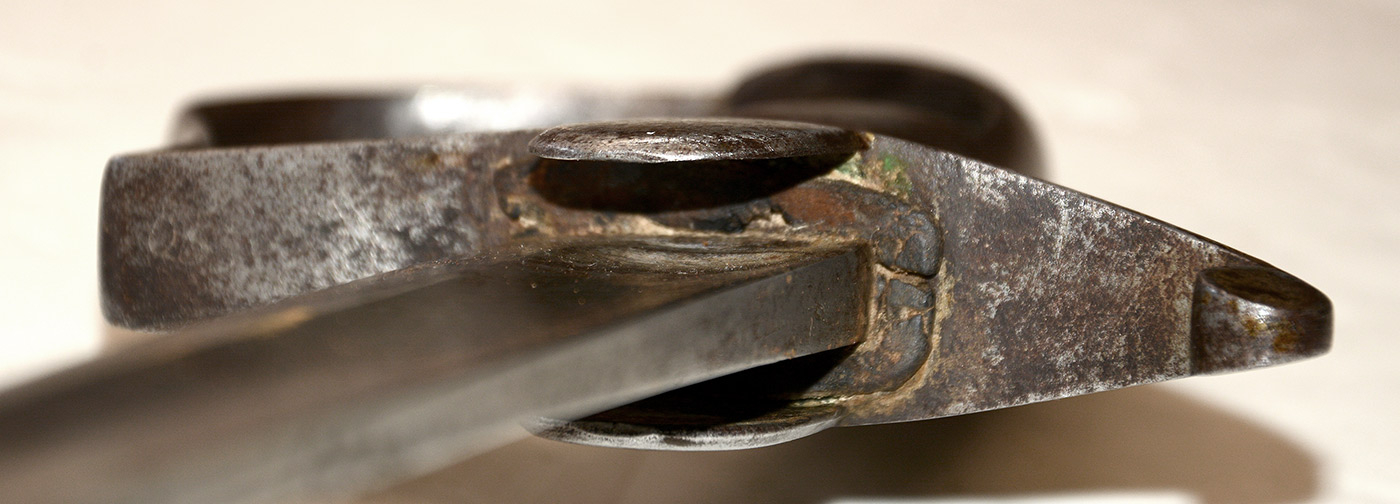
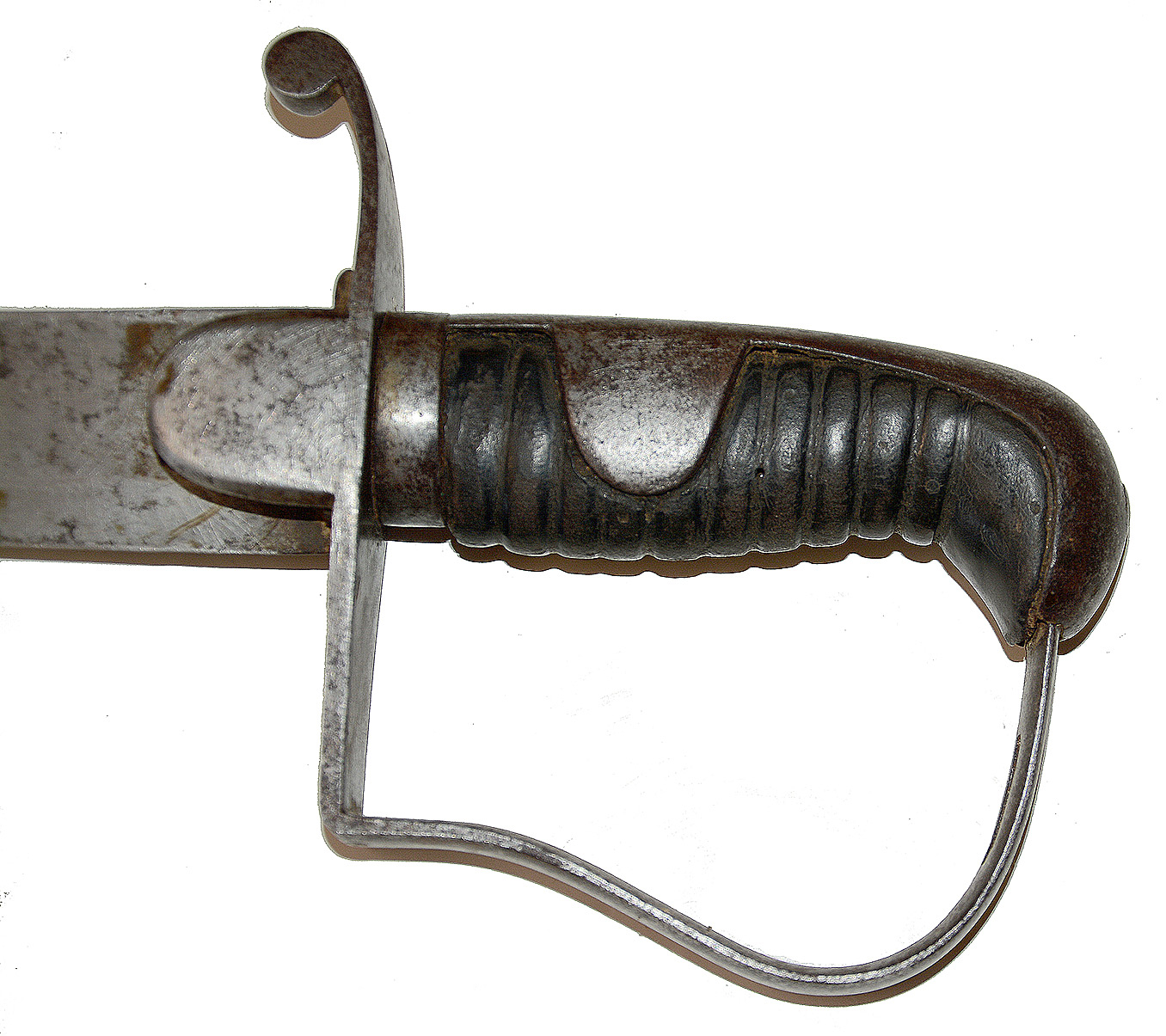
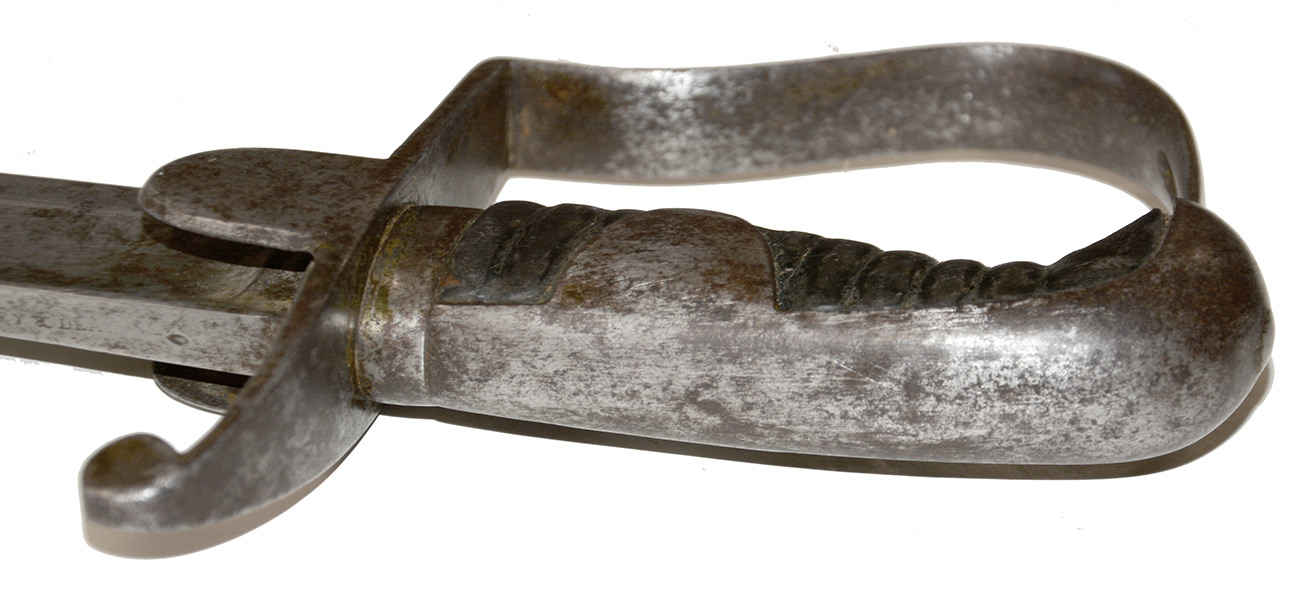
The sword is a Trooper's pattern. In 1796 the British War Department adopted a newly designed saber for use by their Light Cavalry. This included the Hussars, the Light Dragoons and the Horse Artillery. The saber had a curved blade with relatively short, slashing tip, referred to by some as a “hatchet” tip. The blade was typically between 32 inches and 33 inches long and had a simple stirrup shaped iron guard with a pair of languets on either side of the guard to ease entry into the iron scabbard. The grip had a grooved wood core, that was wrapped with braided cord and then wrapped with leather, without an exterior wrap of wire as was typical of many sabers of the era. A pair of iron “ears” extended down from the backstrap on either side of the grip’s center, and a transverse pin reinforced the grip to backstrap attachment; strengthening it and keeping the grip from wobbling or working itself loose from the hilt. As the saber was designed and balanced for hacking and slashing at an enemy, it was the last 10” or so of the blade, nearest the tip that saw the most use in combat, and that usually shows the most use on extant examples. This area was often sharpened to a near razor like edge, and period accounts often compare the effect of the 1796 Light Cavalry saber upon its enemies to meat being assaulted by a giant slicer! It is said that Napoleon himself formally protested the barbarity oy this weapon; but this tale is certainly apocryphal.
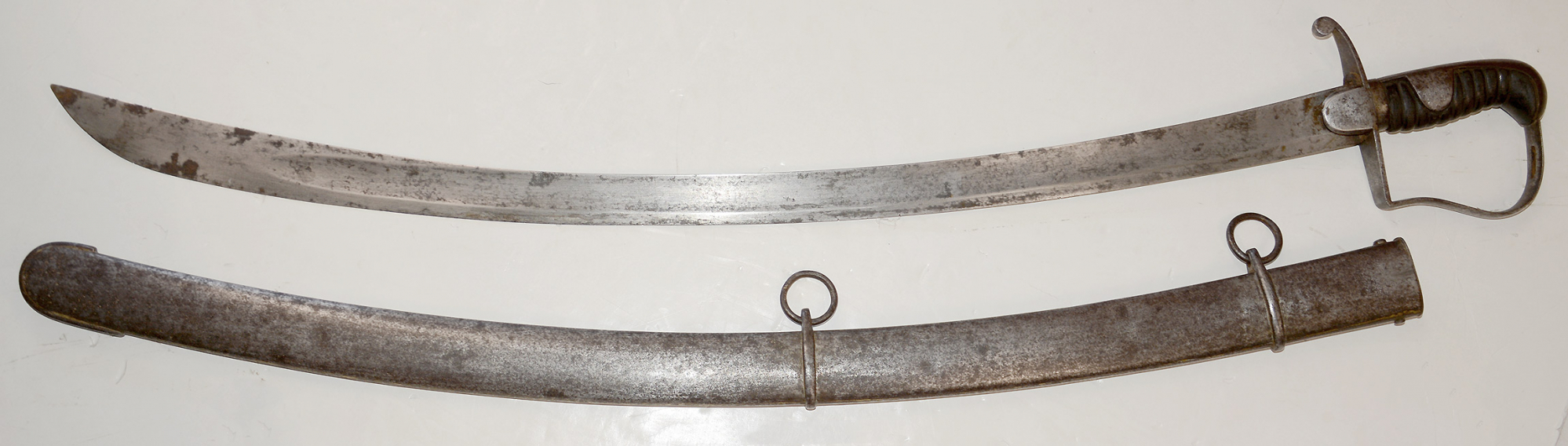
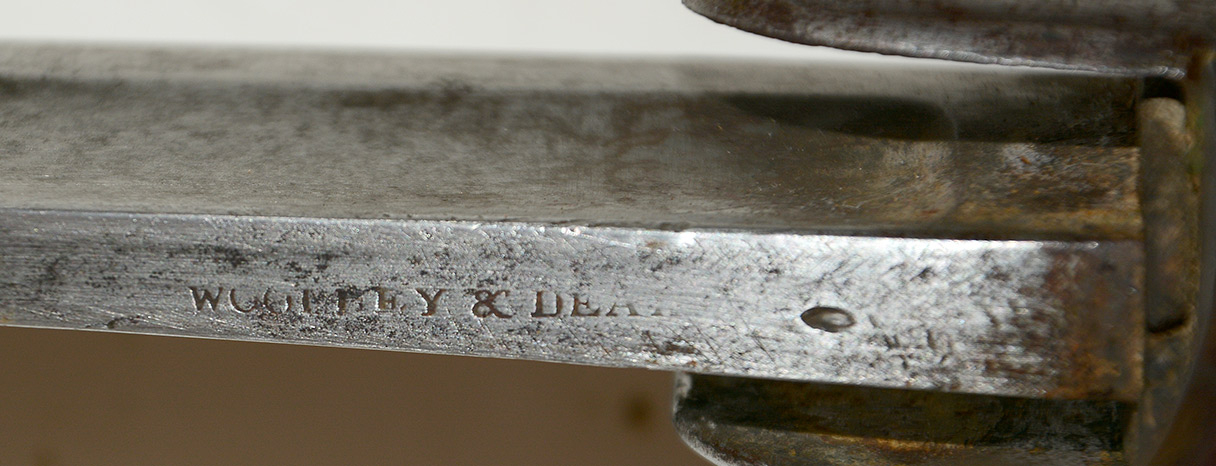
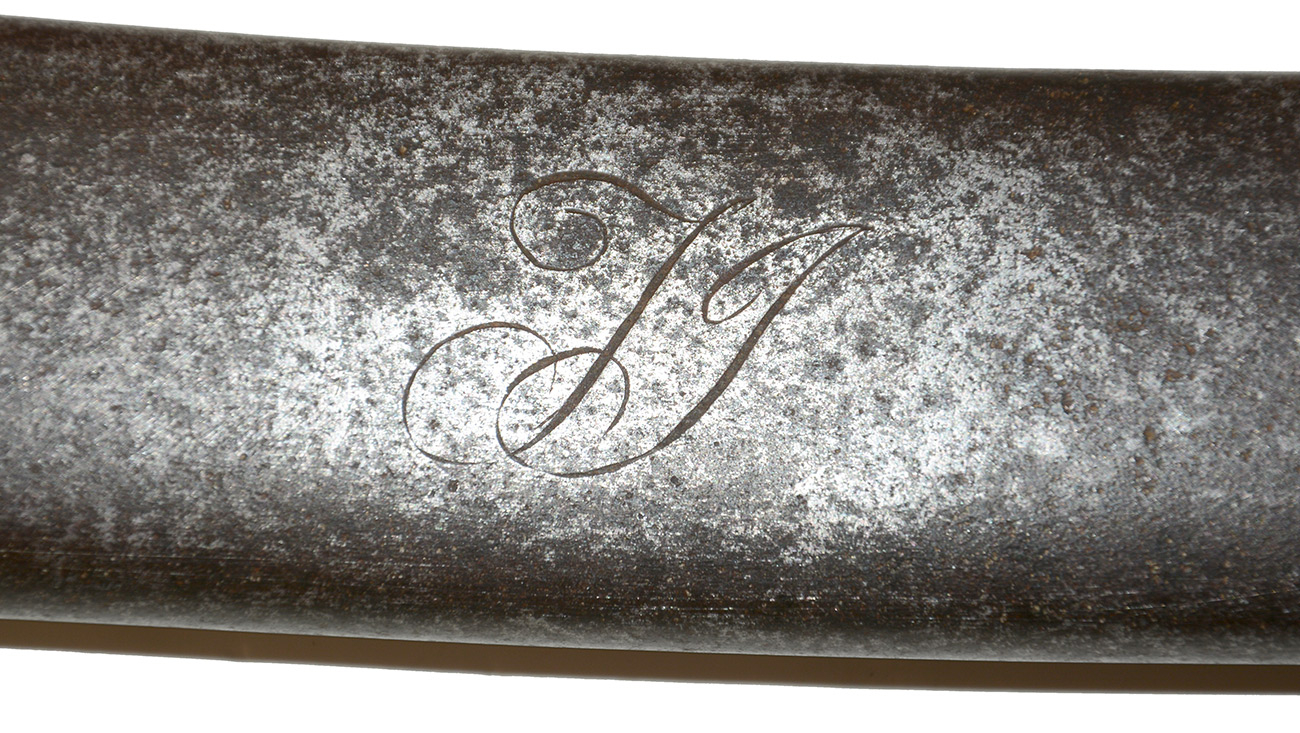
This is a very nice example complete with its correct original scabbard. The saber was made by one of the most desirable and prolific British sword making firms of the Napoleonic Era "WOOLEY & DEAKIN"; this mark is stamped on the top of the 33-inch-long blade near the hilt. The marking as it appears indicates a contract let out by the Board of Ordnance around 1800. The blade is in good but mottled polish with scattered areas of dark surface blemishing but no pitting to speak of; it would clean up even better. The iron P guard hilt is in nice polish with multiple spots of surface blemishing. The wooden grip has 99% percent of their original leather covering. The 34 inch long 1 3/4-inch-wide scabbard has a matching patina to the hilt. The scabbard is dent free. It has an intricate monogram of "IJ" engraved on it which suggests these are the initials of the US captor of this sword as this would personalization would never be tolerated by the British military on a trooper's saber; Max Day said he purchased the sword in Amherst NY from the family of an 1812 veteran. Both of the large iron carrying rings are intact. The overall length is 39 inches.
This is a great untouched example. [pe] [ph:L]
~~~~~~~~~~~~~~~~~~~~~~~~~~~~~~~~~~~
THIS ITEM, AS WITH ALL OTHER ITEMS AVAILABLE ON OUR WEB SITE,
MAY BE PURCHASED THROUGH OUR LAYAWAY PROGRAM.
CLICK HERE FOR OUR POLICIES AND TERMS.
THANK YOU!
Inquire About CLASSIC BRITISH PATTERN 1796 LIGHT CAVALRY SABER
Most Popular
Historical Firearms Stolen From The National Civil War Museum In Harrisburg, Pa »
Theft From Gravesite Of Gen. John Reynolds »
Selection Of Unframed Prints By Don Troiani »
Fine Condition Brass Infantry Bugle Insignia »
featured item
RARE BOSTON, MASSACHUSETTS DRAGOON HELMET
This item is a circa 1820 Boston Militia Dragoon Helmet, a very unique & rare tarred leather helmet (patterned after the US Regulation Dragoon Helmet of May 1833). A very finely constructed helmet, on the face is a cockade of leather with an 1820… (1273-108). Learn More »
site search