

site search
online catalog
HISTORICALLY SIGNIFICANT BROWN BESS MUSKET

Hover to zoom




$3,975.00 SOLD
Quantity Available: None
Item Code: 1309-22
Very few regimentally marked British military long arms from any period survive today. They were used extensively on campaign and on the fields of battle for up to fifteen or more years, but after a regiment's deployment and before returning to Great Britain the weapons were often ordered left in that colony or with an allied nation (Portugal for example). There were exceptions to this of course but it was "law of the land" that British soldiers, rank and file, return home, for the most part, unarmed. The long arms left behind were scrubbed of their former regimental designations and put in local military/militia stores. Long arms that survive today with regimental marks were possibly captured, lost, stolen or souvenired after a battle. Be aware that it was the rule rather than the exception that arms issued to British soldiers be regimentally marked, company marked and soldier marked. This practice began in the first quarter of the eighteenth century and continued up until the first few months of World War One. After that the practice was sporadic.
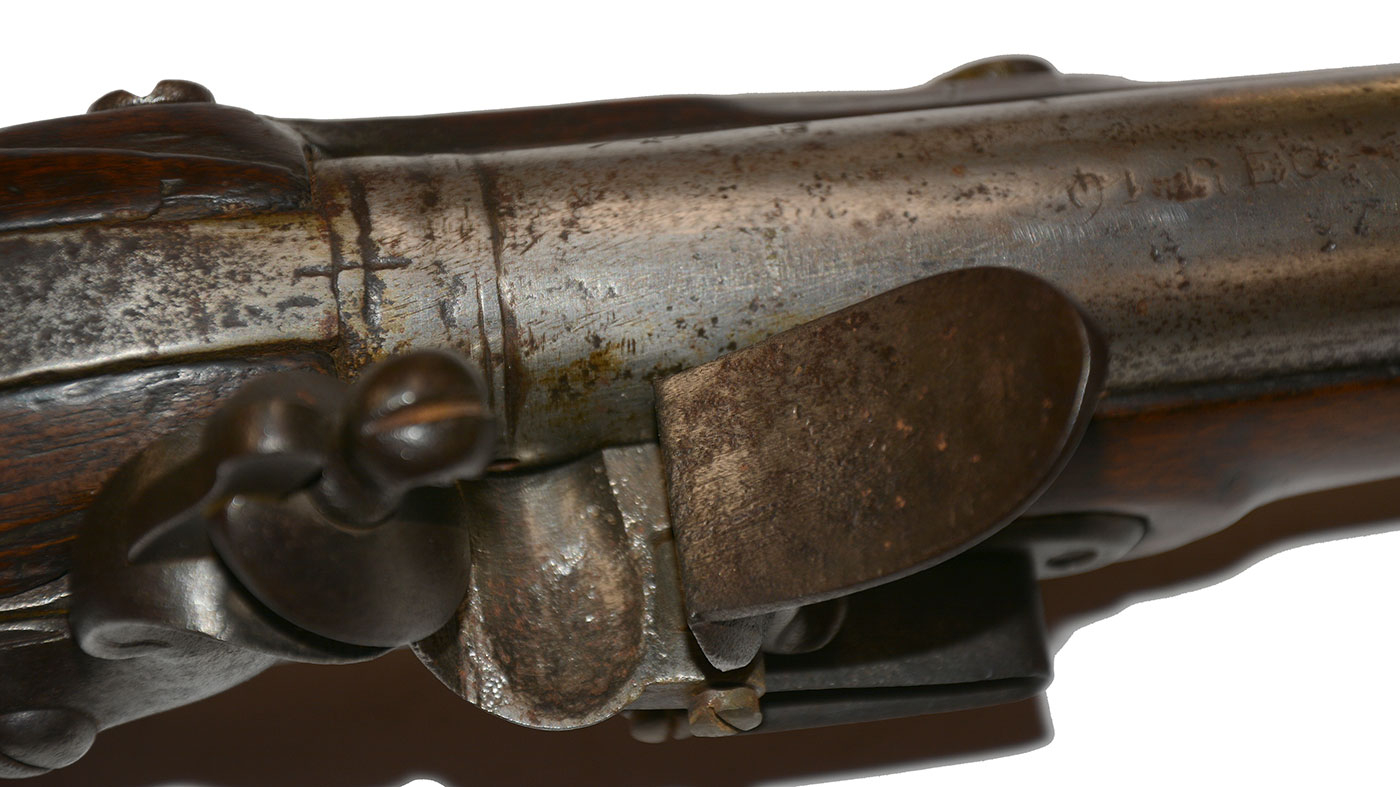
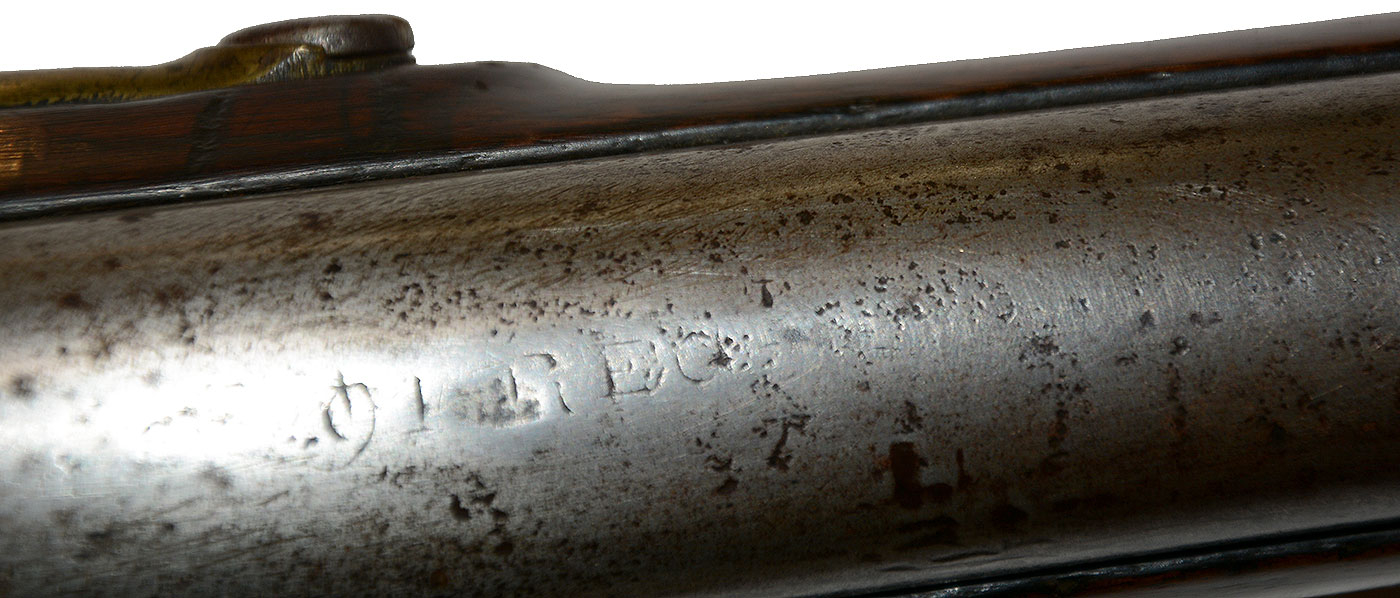
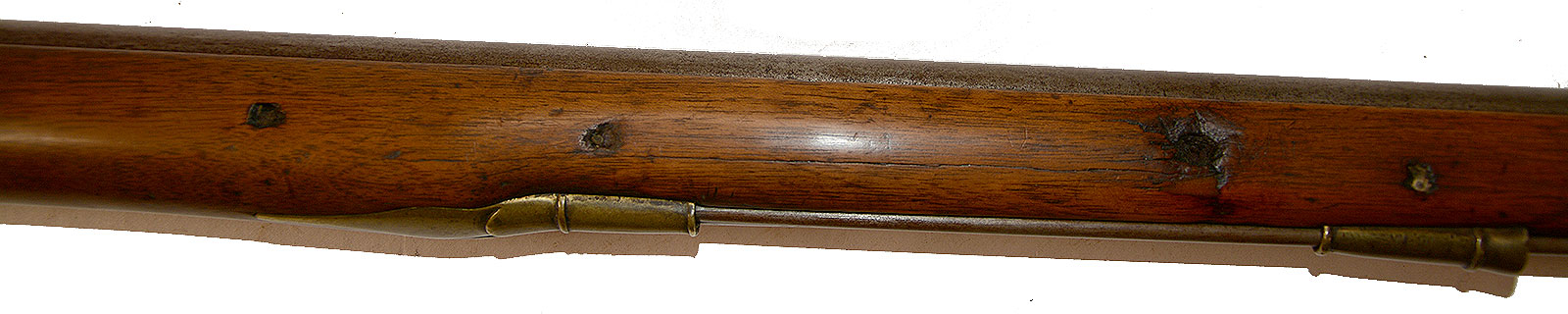
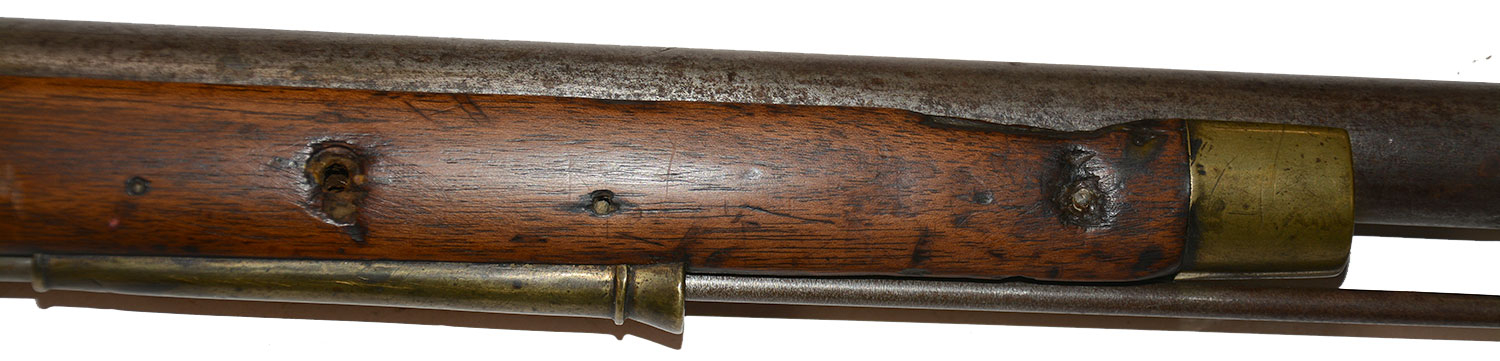
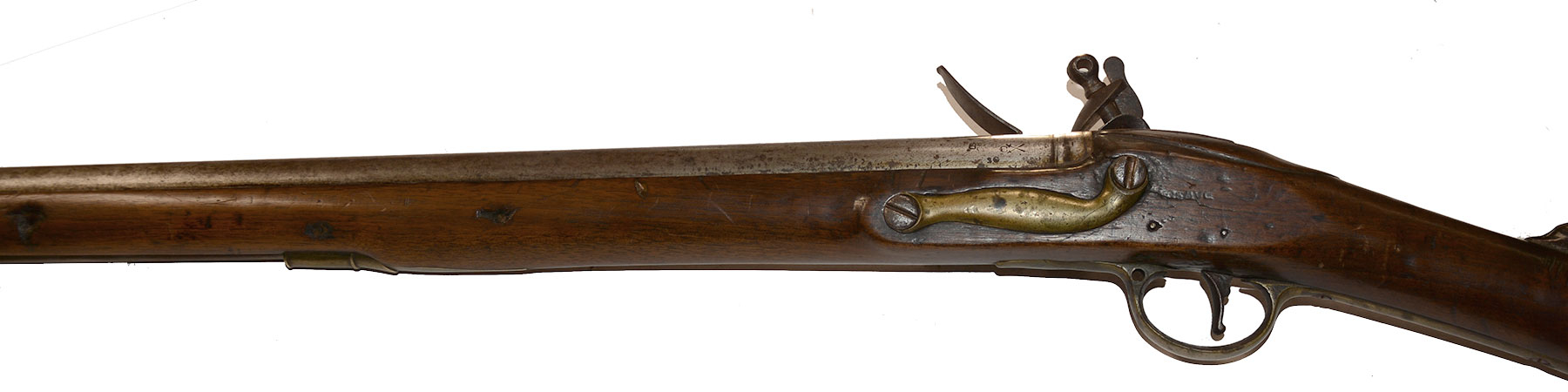
We are offering a Model 1795 Brown Bess. Also known as the "India Pattern" based on the Windus Pattern carried by infantrymen of the Venerable East India Company more than 20 years before. This Model 1795 "Land Pattern" musket has a 39-inch .75 caliber barrel. Upon the top of the barrel is engraved "91 REGT". This Highland regiment was raised by Duncan Campbell of Lochnell in western Scotland on behalf of the Duke of Argyll in 1794, during the opening stages of the French Revolutionary Wars (1793-1802). Initially numbered the 98th (Argyllshire Highlanders) Regiment of Foot, it rose to 91st two years later. By this time, it had been sent to help capture and garrison Cape Town in South Africa. The unit's next postings were back in Europe. It served at Hanover (1805), before embarking for the Peninsular War (1808-14), fighting at Rolica (1808) and Corunna (1809), from where it was evacuated. Later in 1809, it took part in the Walcheren Expedition in Holland. It then returned to the Peninsula in 1812, serving at Vitoria (1813), Nivelle (1813), Orthes (1814) and Toulouse (1814). Although stationed in Belgium in 1815, it was not engaged on the field of Waterloo. Instead, the unit was based at Halle, guarding the right flank of Wellington's army. It did, however, help capture the fortress town of Cambrai (Allied Advance on Paris - The Waterloo Association). The regiment had formed a 2nd Battalion in 1804. This embarked for Germany in July 1813 and took part in the unsuccessful attack on Bergen op Zoom (1814), before returning home and being disbanded at Perth in December 1815. It spent the post-war period garrisoning England and the West Indies. A detachment of the regiment escorted Napoleon’s body on its return to France from St Helena in 1840. After this the Brown Bess was replaced with the Pattern 1839 percussion musket.
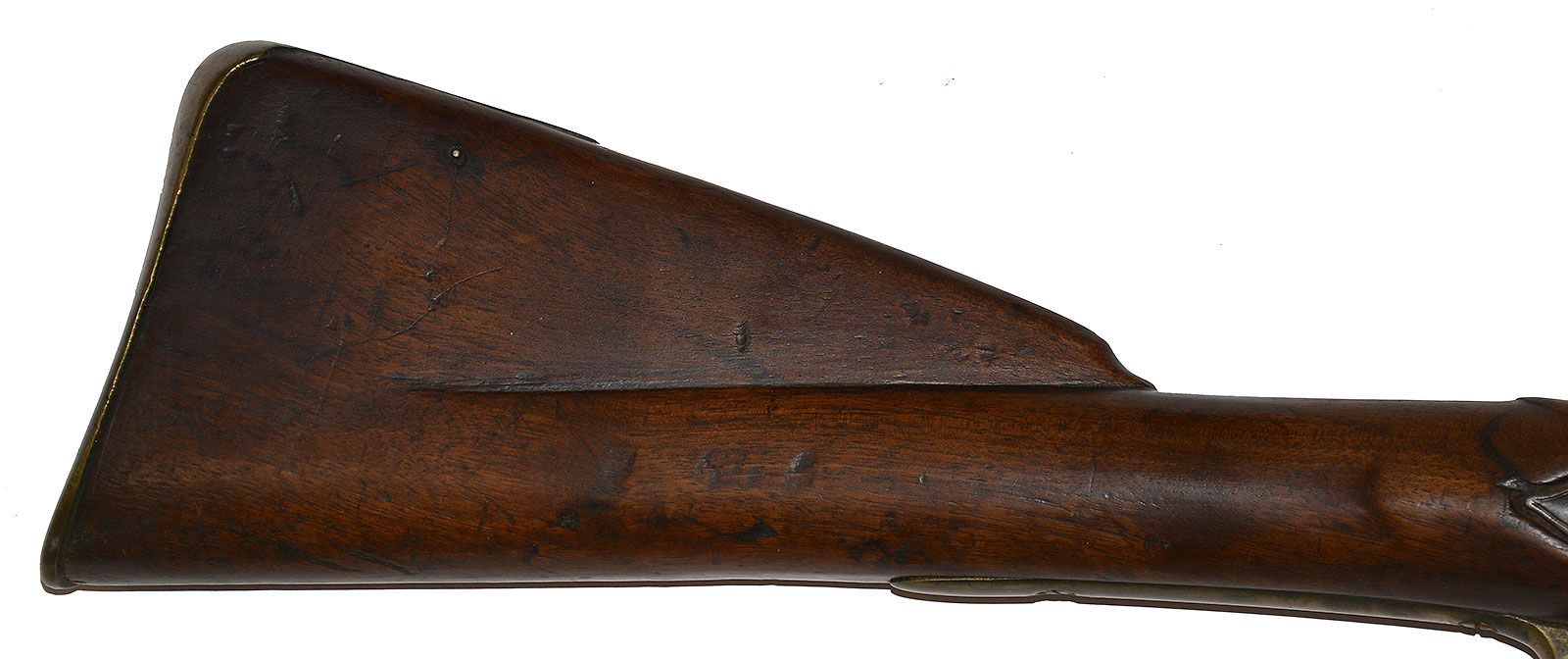
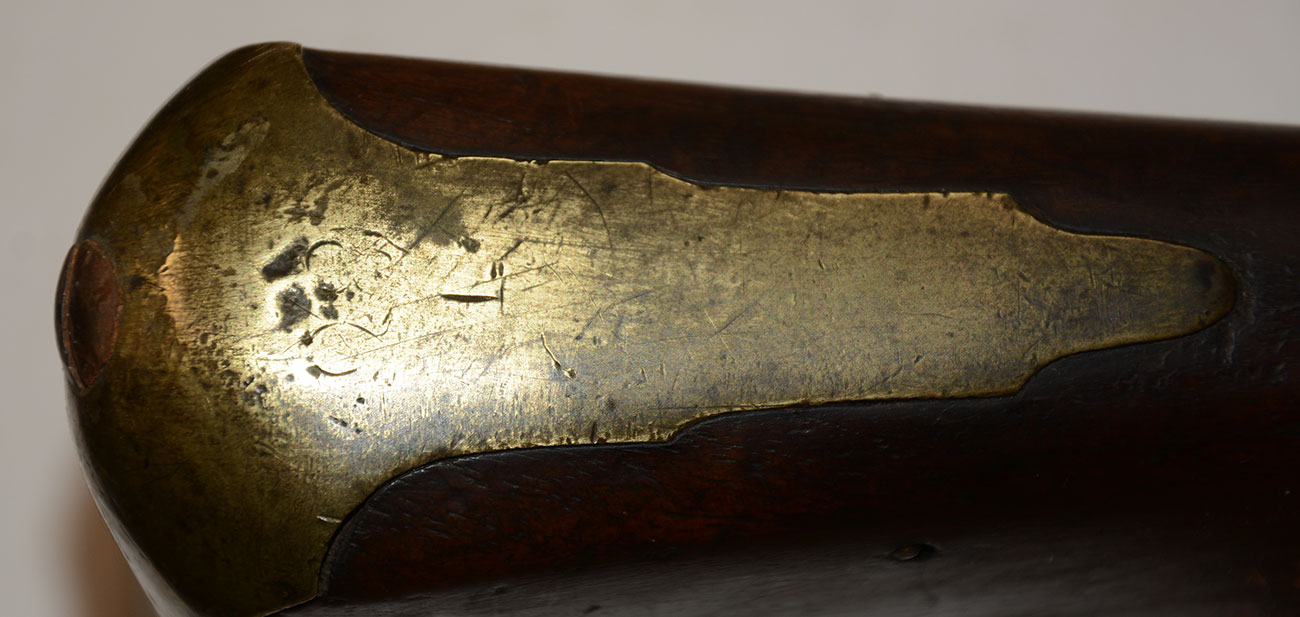
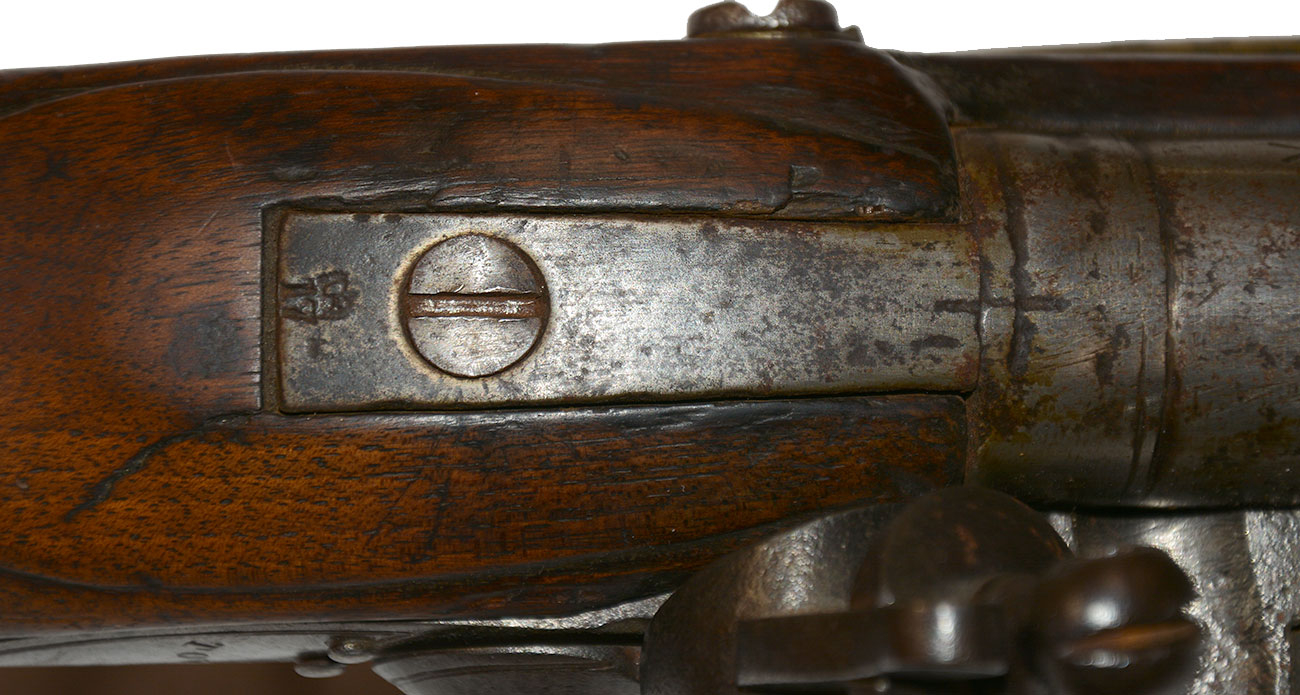
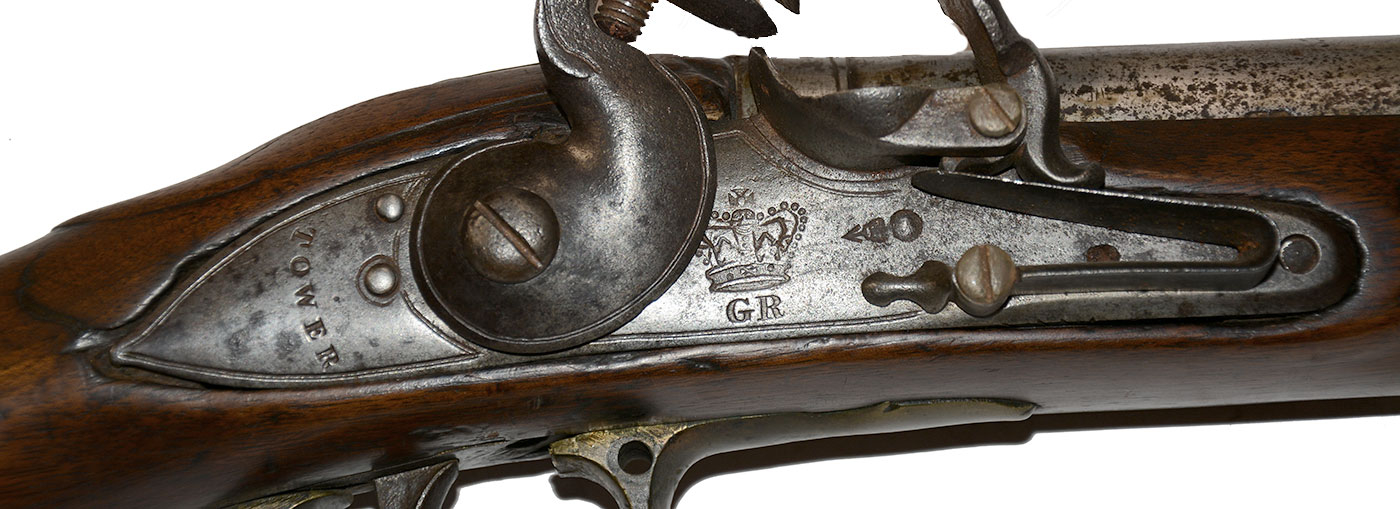
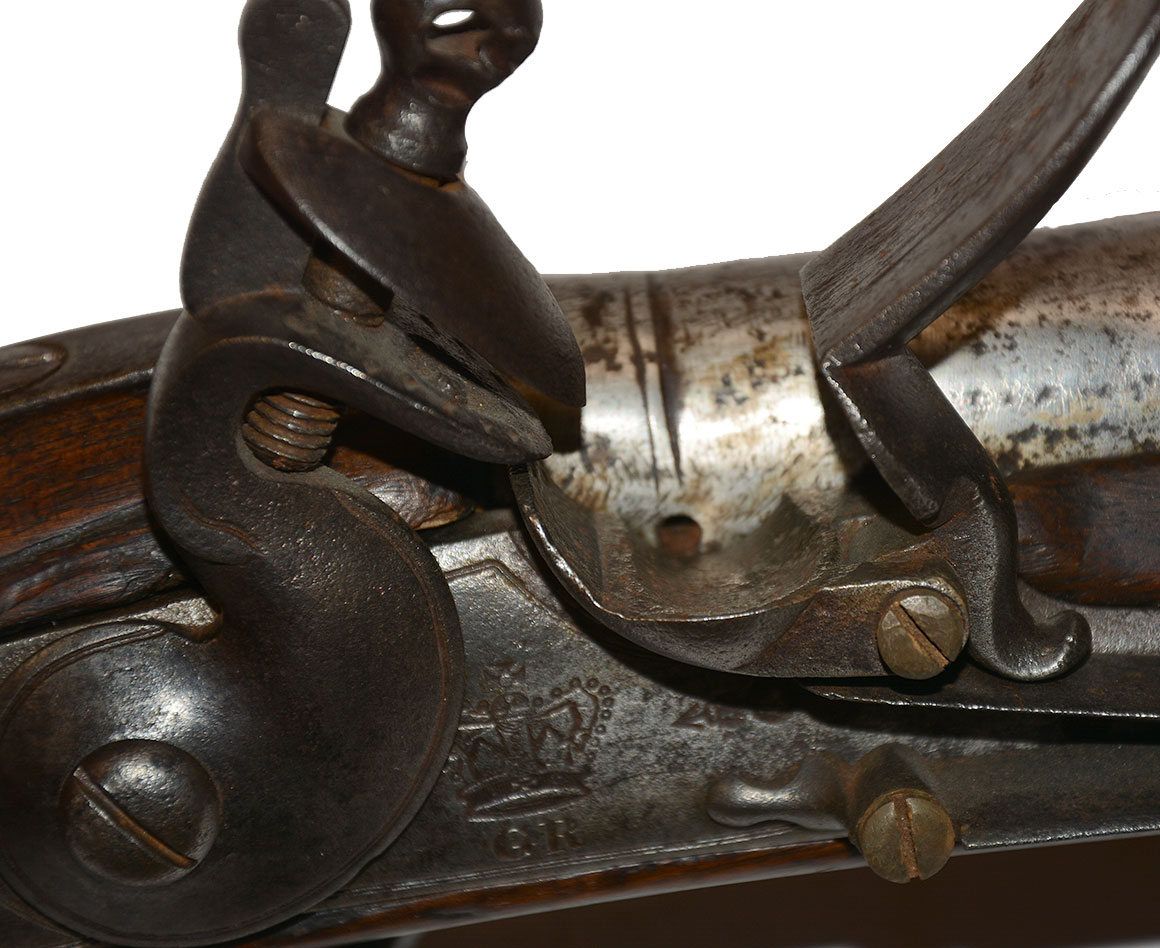
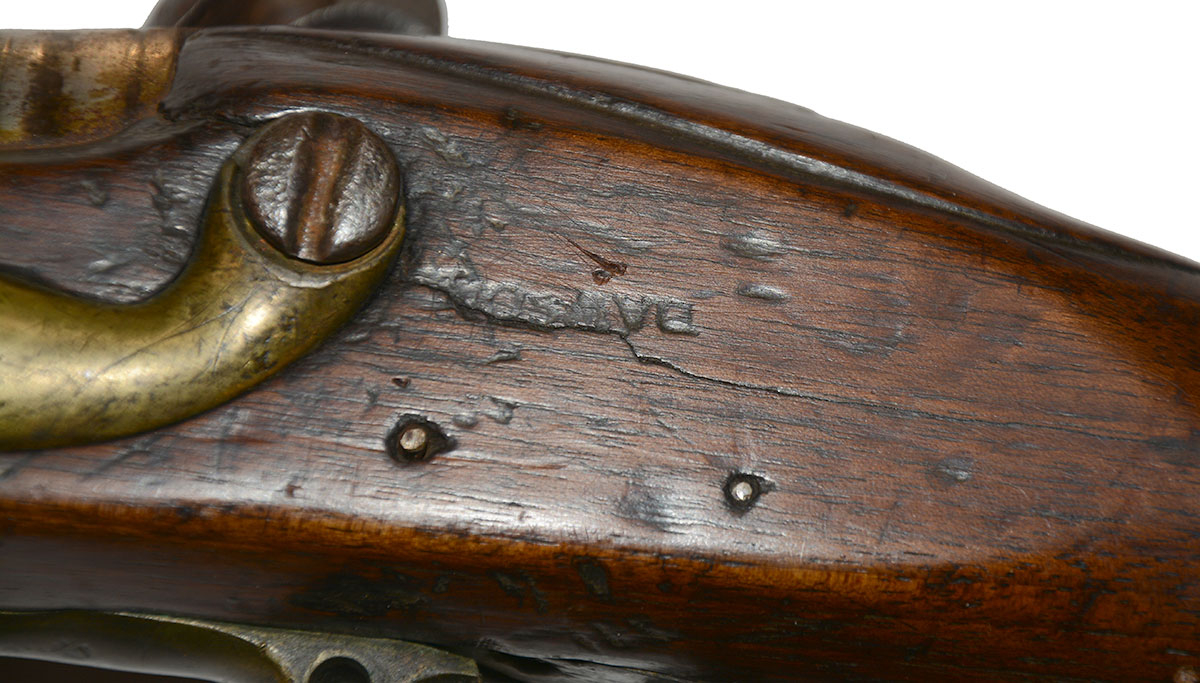
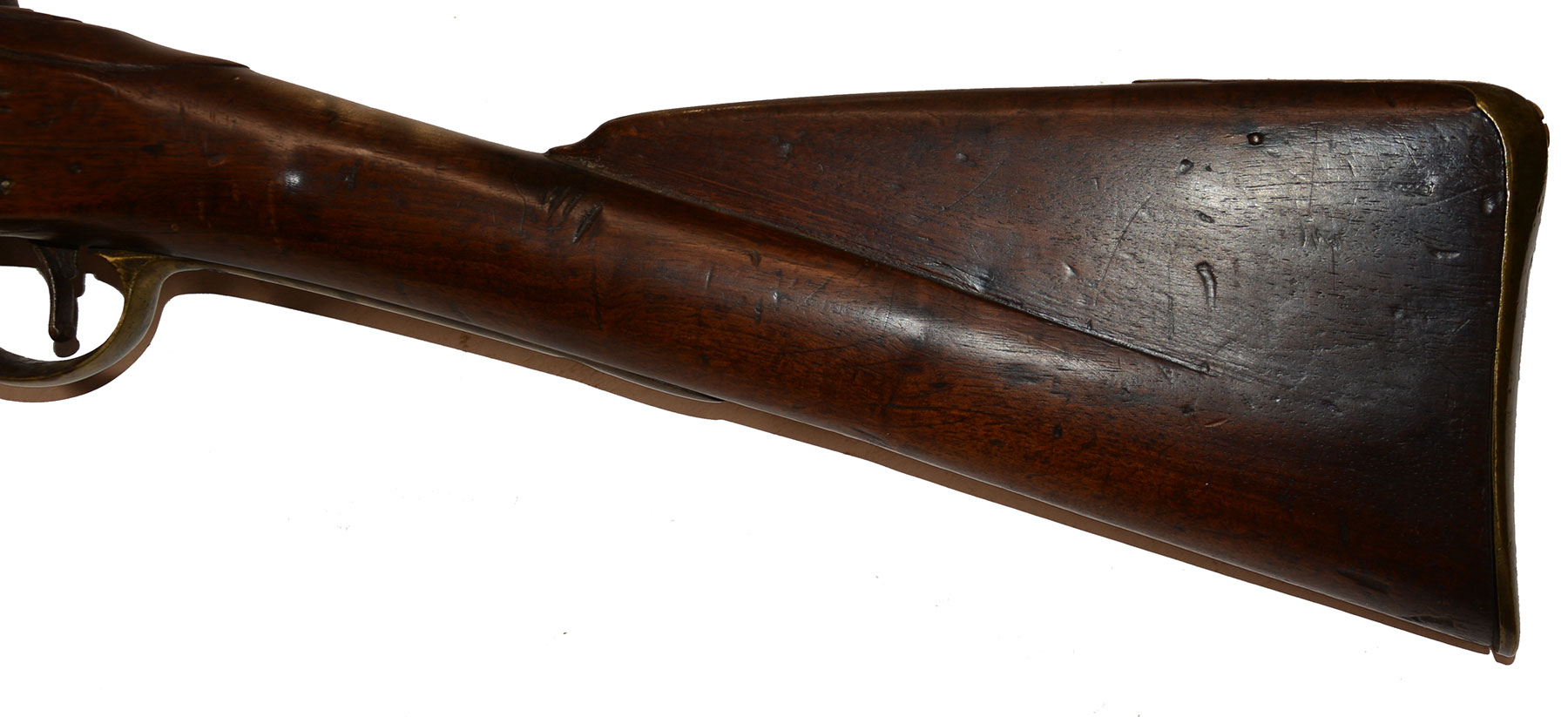
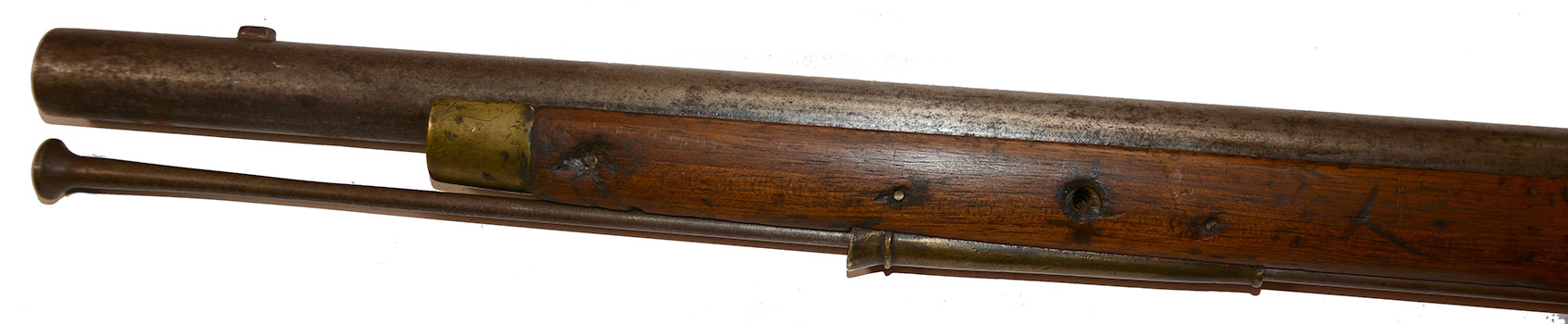
This British Ordnance weapon is in the original flint and steel configuration. The metal surfaces are smooth with minor pitting and blemishes here and there. The lock is engraved "TOWER" and CROWN over "GR". The cock is of the early "swan's neck" configuration which was universally replaced in 1810 with the more robust "throat-hole" cock. The top jaw and screw are original. The flash pan is ovoid in shape rather than the post 1810 straight sided type. The weapon was produced by Samuel Galton (whose initials "SG" are on the barrel) in the last decade of the 18th century. The storekeeper's stamp on the right comb of the walnut stock is simply a CROWN over "GR" and this was used until the new stamps which were actually date "1800" and subsequently "1805" and "1810" followed soon by the "BO" and broad arrow. The brass mounted stock is unaltered as made and shows great period use but is smooth and solid. The sling swivels are missing, and the ramrod is "older" but not period. The brass butt plate has "I" and "80" or "86" engraved on it this is Company I or the 9th company (and because it is the 9th company the musket is the hard fighting 1st Battalion 91st Regiment). The worn and difficult to read number (80?) is that of the soldier. Lock, stock and barrel this musket is exactly what it looked like when issued to a soldier of the 1st Battalion 91st Highland regiment in around 1796 not much later. It was subsequently carried through some of the hardest fought battles of the Napoleonic wars. It is probable we have in stock a bayonet which will fit this musket, please ask. [pe] [ph:L]
DISCLAIMER: All firearms are sold as collector's items only - we do not accept responsibility as to the shooting safety or reliability of any antique firearm. All firearms are described as accurately as possible, given the restraints of a catalog listing length. We want satisfied customers & often "under" describe the weapons. Any city or state regulations regarding owning antique firearms are the responsibility of the purchaser. All firearms are "mechanically perfect" unless noted, but again, are NOT warranted as safe to fire.
~~~~~~~~~~~~~~~~~~~~~~~~~~~~~~~~~~~
THIS ITEM, AS WITH ALL OTHER ITEMS AVAILABLE ON OUR WEB SITE,
MAY BE PURCHASED THROUGH OUR LAYAWAY PROGRAM.
CLICK HERE FOR OUR POLICIES AND TERMS.
THANK YOU!
Inquire About HISTORICALLY SIGNIFICANT BROWN BESS MUSKET
Most Popular
Historical Firearms Stolen From The National Civil War Museum In Harrisburg, Pa »
Theft From Gravesite Of Gen. John Reynolds »
Selection Of Unframed Prints By Don Troiani »
Fine Condition Brass Infantry Bugle Insignia »
Rare Identified 65Th Ny Sergeant’s Jacket, With Manscript Material: 1St U.s. Chasseurs »
featured item
RARE CONFEDERATE SECOND NATIONAL / NAVAL ENSIGN
This Second National pattern Confederate flag precisely fits the dimensions for a Confederate Naval Ensign laid out by CS Secretary of the Navy Stephen Mallory on May 26, 1863, which specify a width-to-length ration of 1:1.5 where the official ratio… (1268-661). Learn More »
site search