


site search
online catalog
GETTYSBURG RELIC .58 CALIBER US BULLET IN WOOD – CULP’S HILL IN FRONT OF GREENE’S LINE
Hover to zoom
$125.00 ON HOLD
Quantity Available: 1
Item Code: 2026-1897
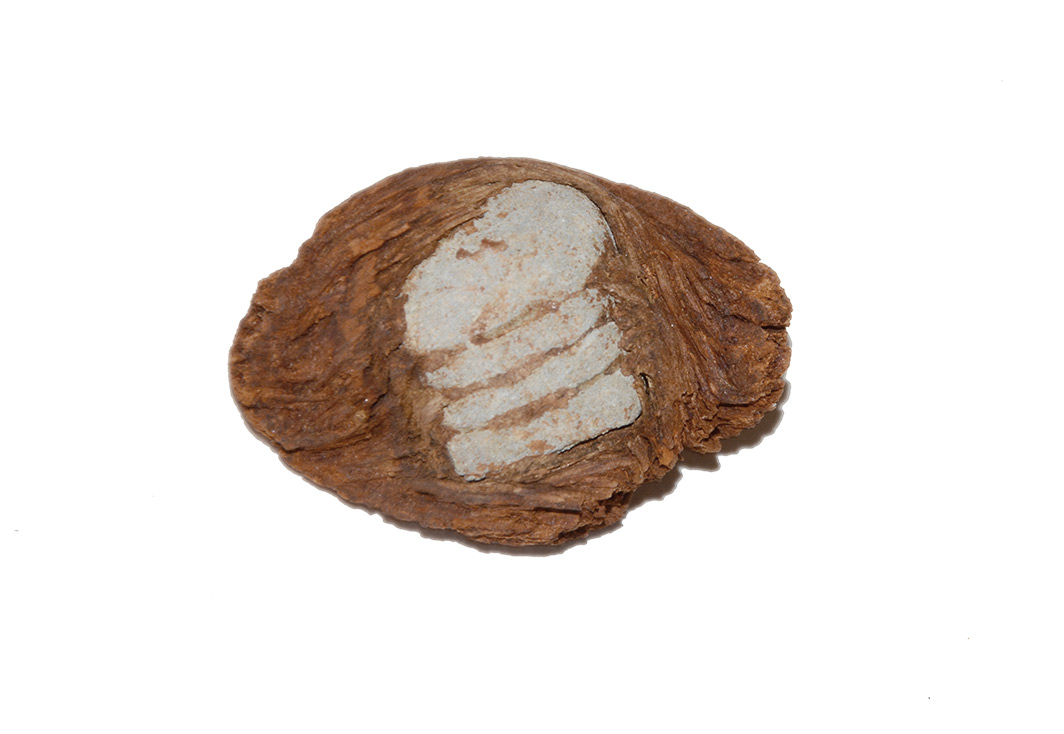
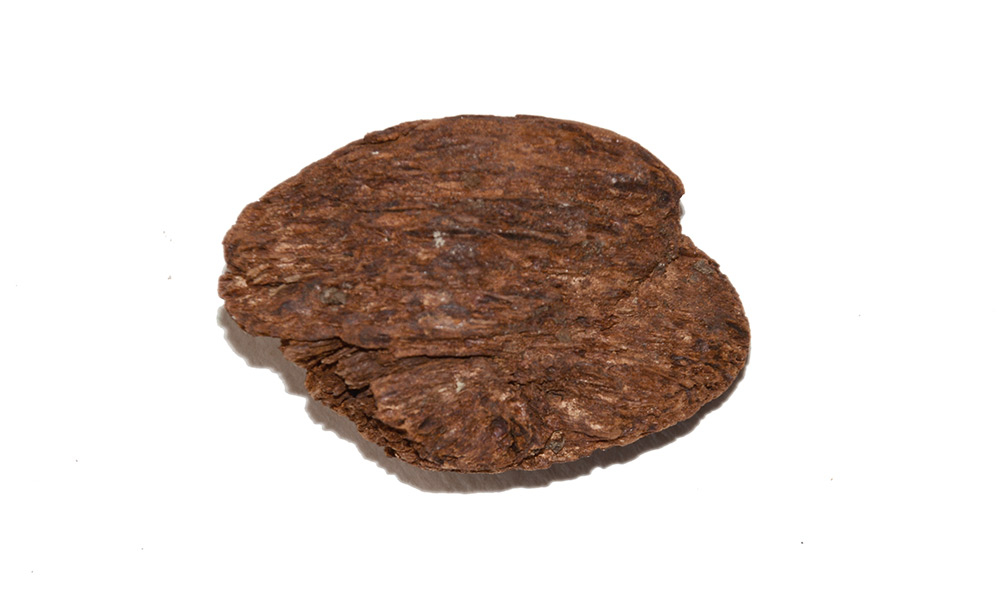
This is a .58 caliber U.S. Minié ball still embedded in a section of wood from a tree that stood in front of Greene's Breastworks on Culp's Hill. The bullet sits deep in the grain with its rings clearly visible, and the wood has grown and weathered around it.
On the night of July 2 and the morning of July 3, 1863, Brig. Gen. George S. Greene's New York brigade held its log-and-earth breastworks against repeated assaults by Confederate Maj. Gen. Edward Johnson's division. The fighting was so intense that the trees on Culp's Hill were shredded by musket fire, and many were later found packed with lead.
This piece comes with the finder's original hand-drawn index card. The card places the tree about 85 yards in front of Greene's Breastworks (the distance is noted as "eyeballed") and identifies the round as a ".58 U.S. in wood." Given the tree's position, the bullet was likely fired from the Union line toward the Confederate attackers, though both armies used .58 caliber U.S. ammunition.
The bullet is firmly embedded with its rings visible. The wood shows natural weathering and grain separation consistent with age. The wood section measures approx. 1 5/8” at its widest point.
A striking reminder of the volume of fire on this part of the Gettysburg Battlefield. [cm][ph:L]
~~~~~~~~~~~~~~~~~~~~~~~~~~~~~~~~~~~
THIS ITEM, AS WITH ALL OTHER ITEMS AVAILABLE ON OUR WEB SITE,
MAY BE PURCHASED THROUGH OUR LAYAWAY PROGRAM.
CLICK HERE FOR OUR POLICIES AND TERMS.
THANK YOU!
Inquire About GETTYSBURG RELIC .58 CALIBER US BULLET IN WOOD – CULP’S HILL IN FRONT OF GREENE’S LINE
Most Popular
Historical Firearms Stolen From The National Civil War Museum In Harrisburg, Pa »
Theft From Gravesite Of Gen. John Reynolds »
Selection Of Unframed Prints By Don Troiani »
Fine Condition Brass Infantry Bugle Insignia »
Rare Identified 65Th Ny Sergeant’s Jacket, With Manscript Material: 1St U.s. Chasseurs »
featured item
22ND NYNG CHASSEUR-STYLE JACKET, EPAULETS, AND TROUSERS
This appealing uniform jacket, epaulets, and trousers came to us from the same source as the identified gray full-dress frock coat from the 22nd NYNG that we listed previously. That coat is identified by an ink inscription in it to John H. Stallmann,… (410-913). Learn More »
site search