

site search
online catalog
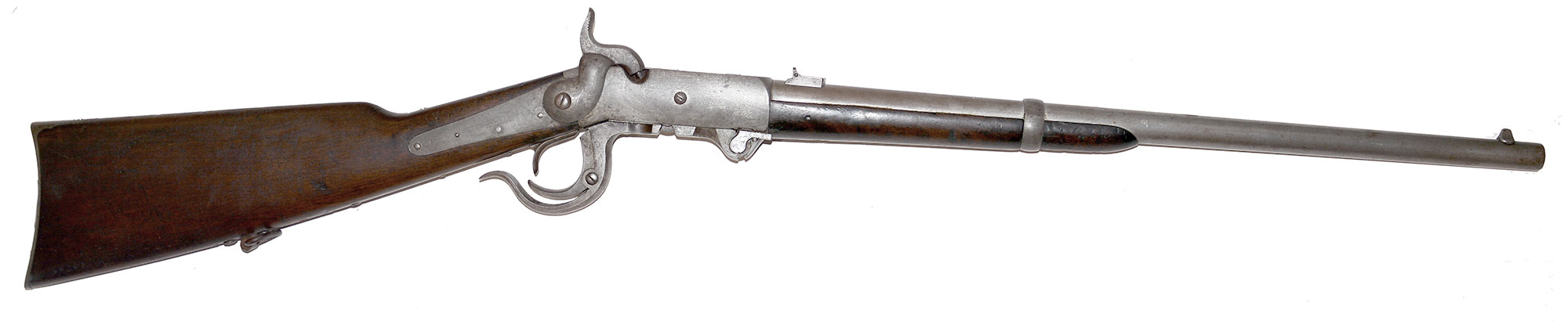
IDENTIFIED BURNSIDE FIFTH MODEL CARBINE, “MODEL OF 1864:” JAMES CAMERON SNEDAKER, CO. D 18th PA CAVALRY
Hover to zoom


$4,950.00
Quantity Available: 1
Item Code: 1311-07
Shipping: Determined by Method & Location of buyer
To Order:
Call 717-334-0347,
Fax 717-334-5016, or E-mail
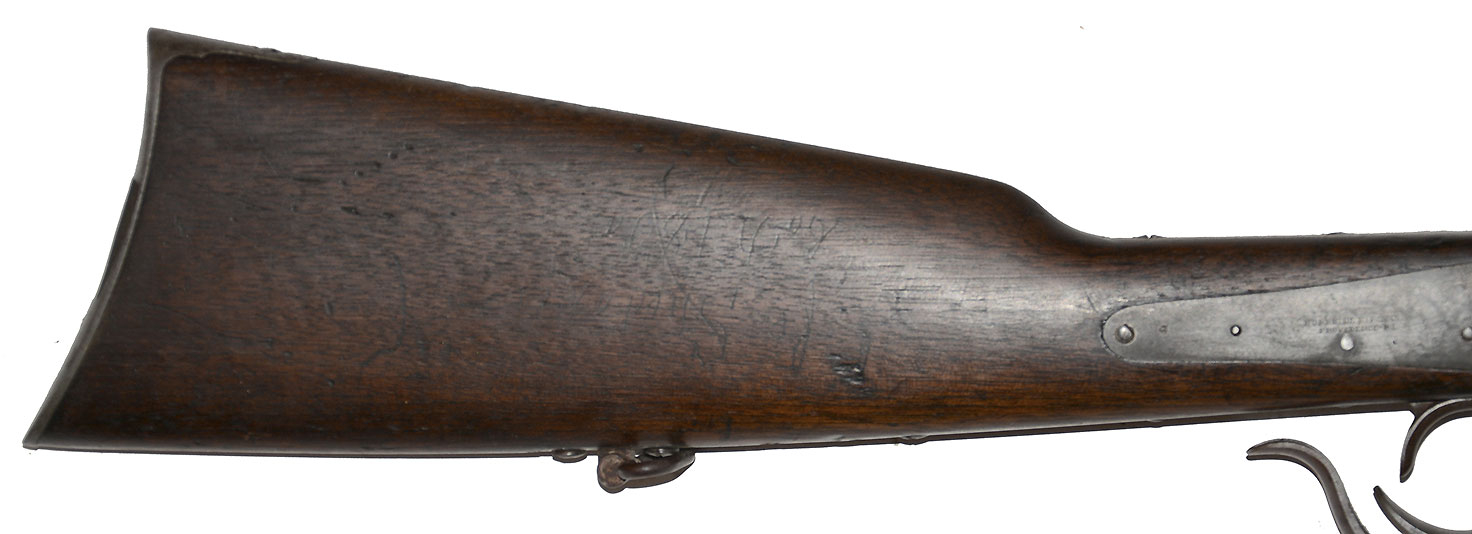
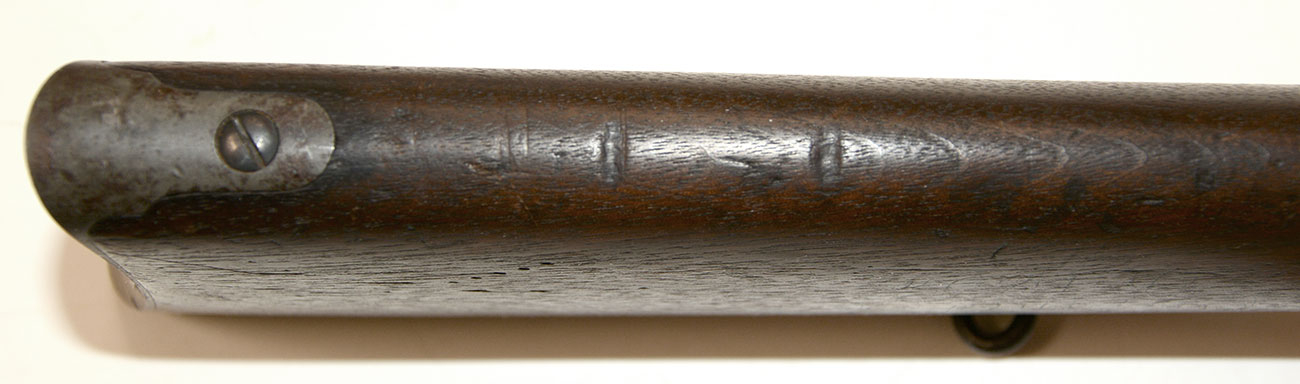
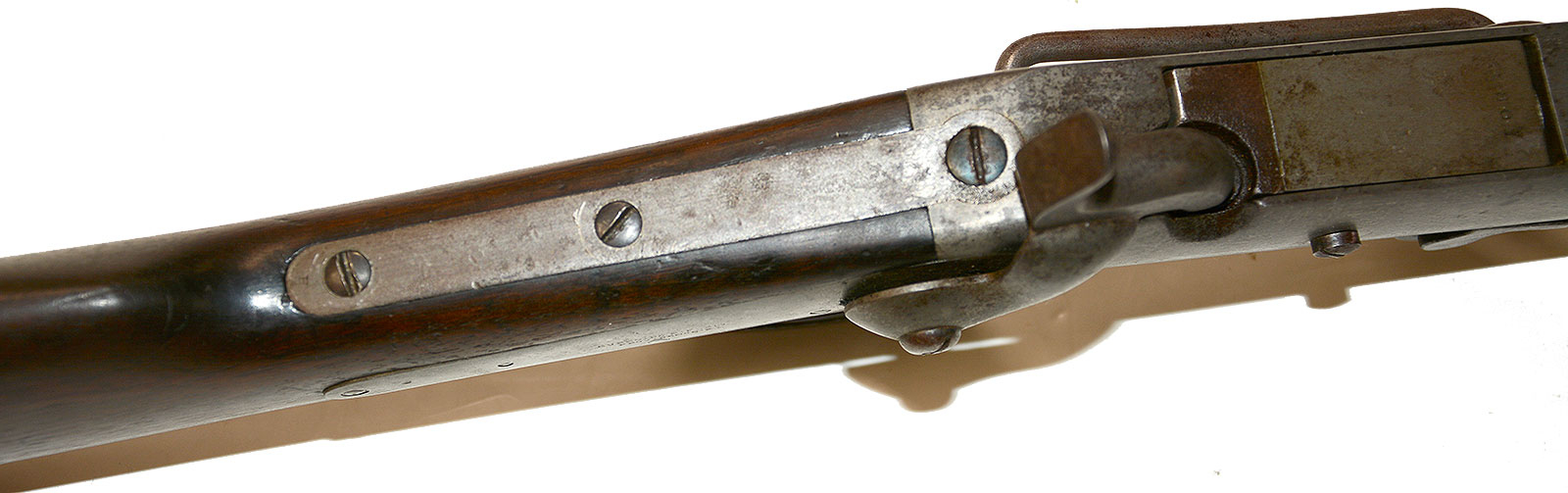
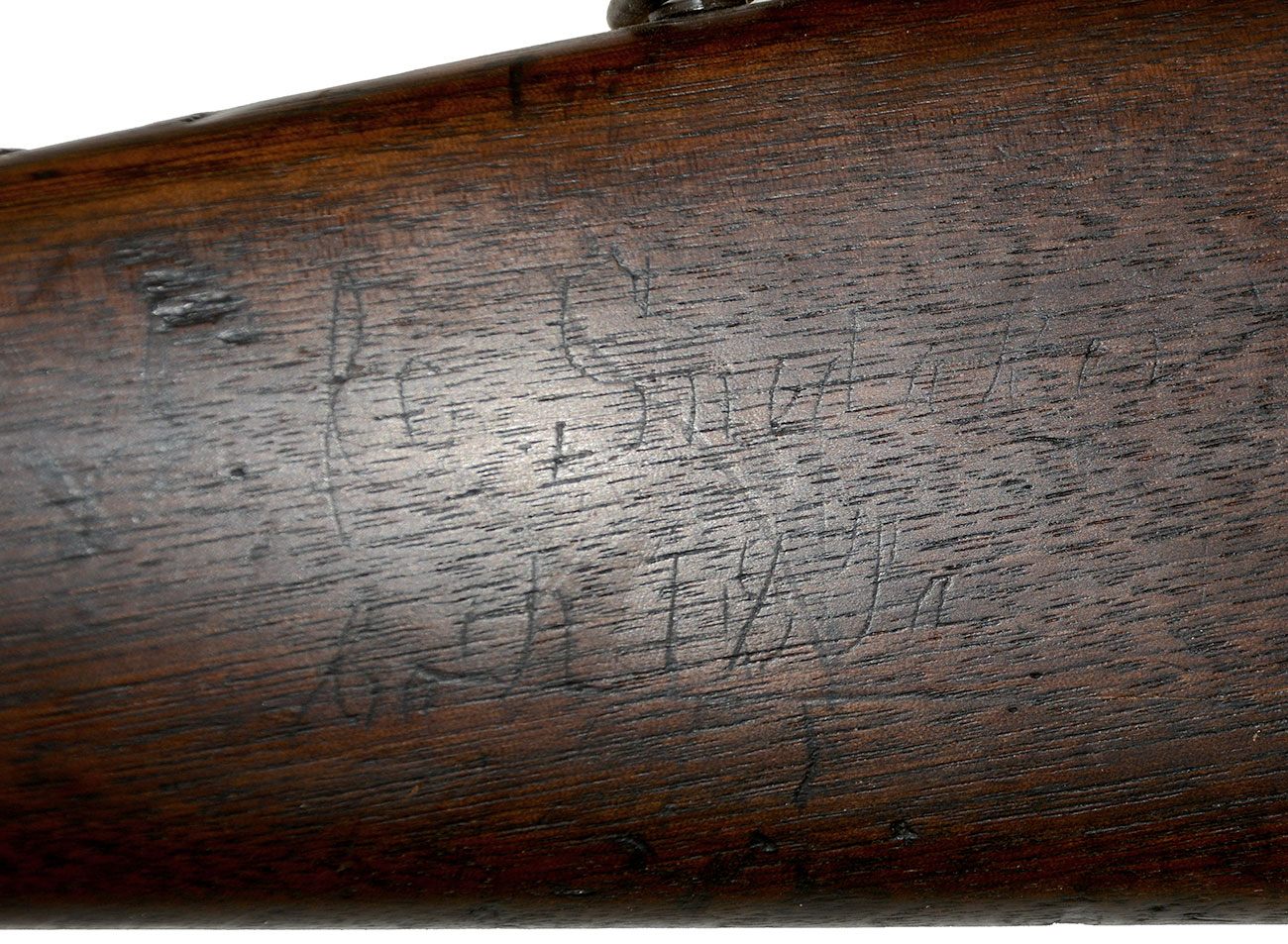
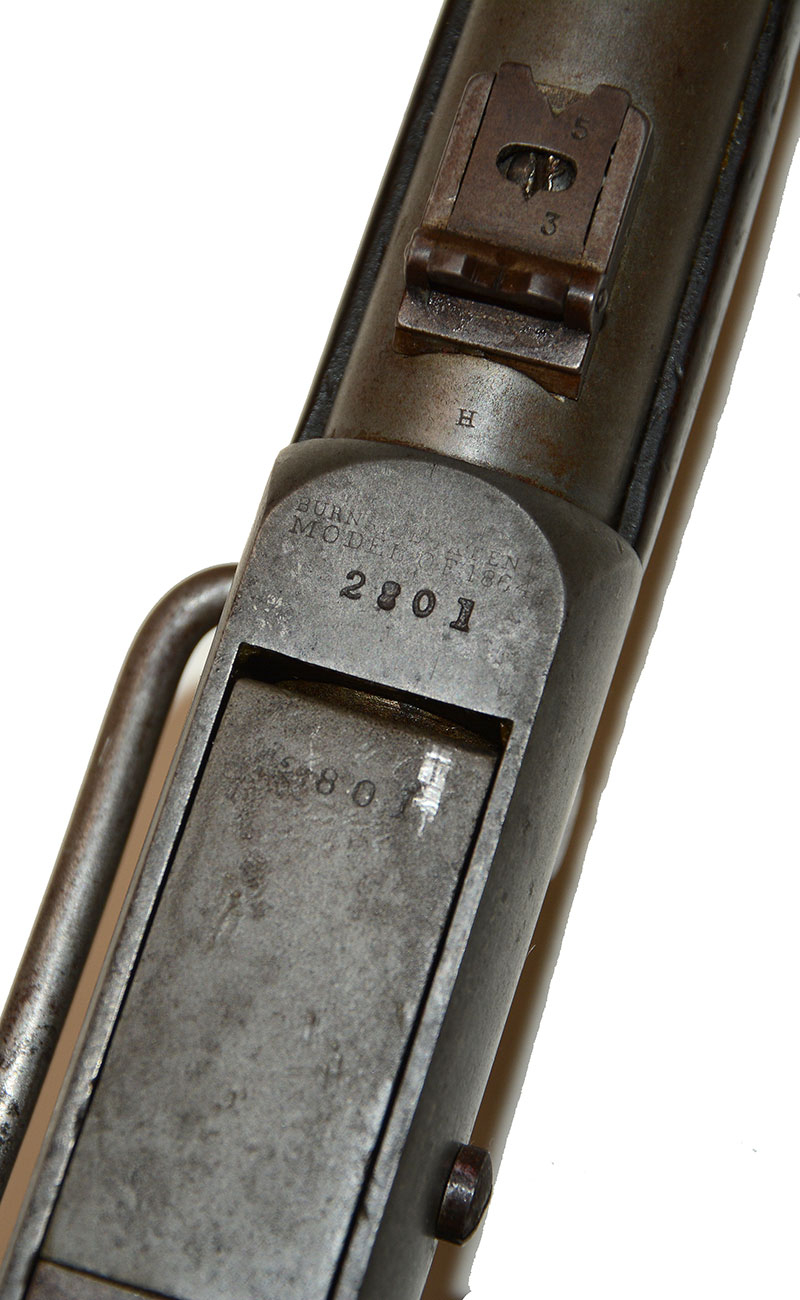
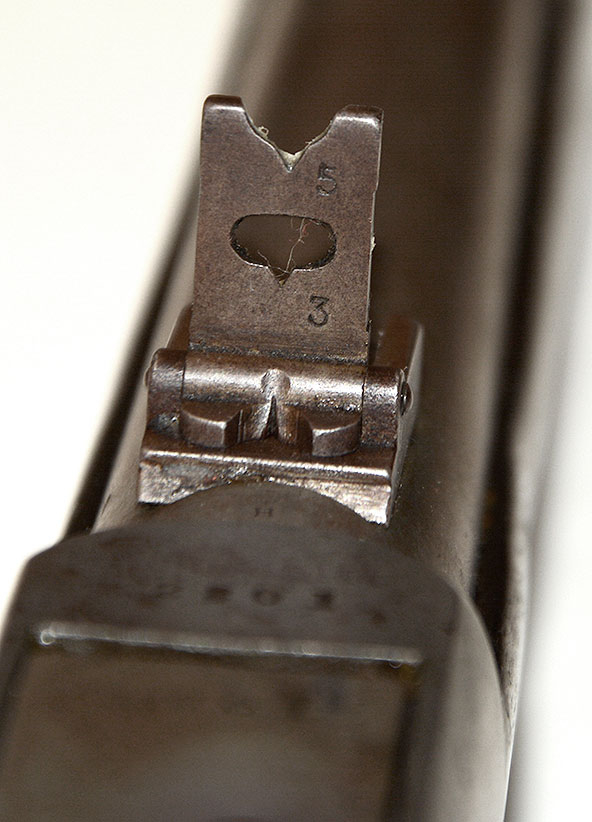
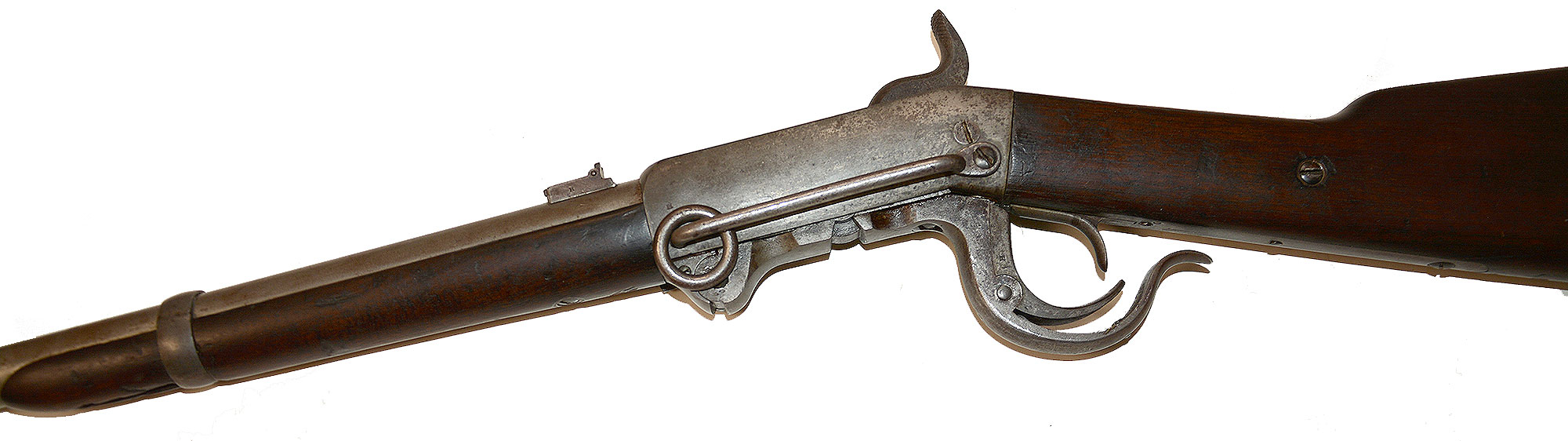
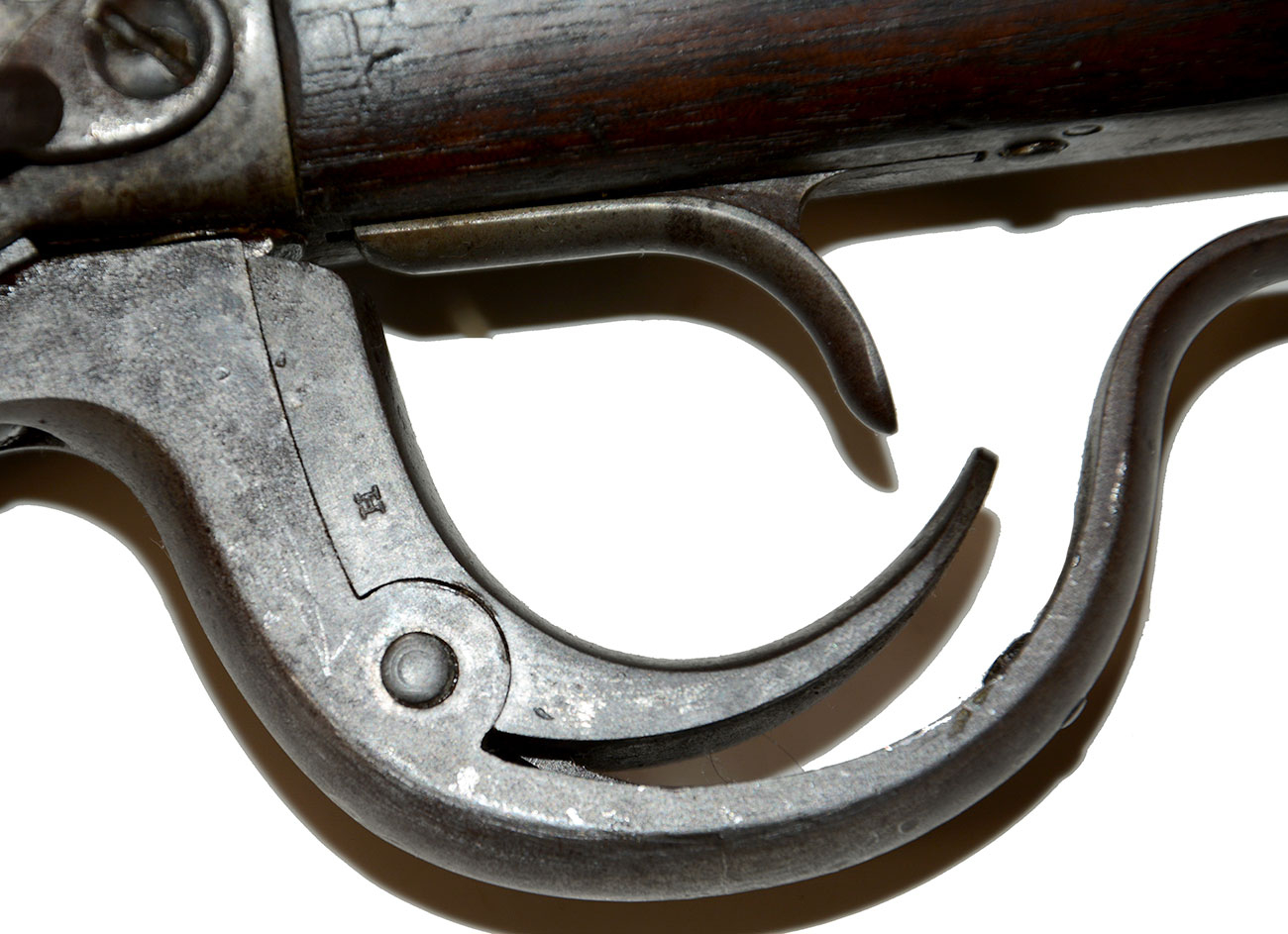
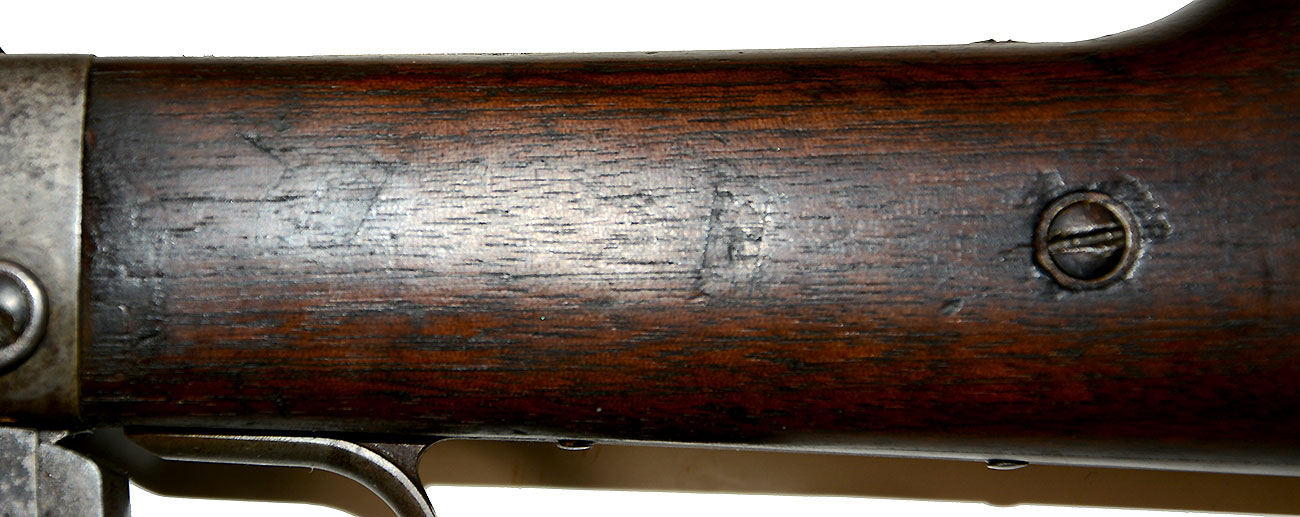
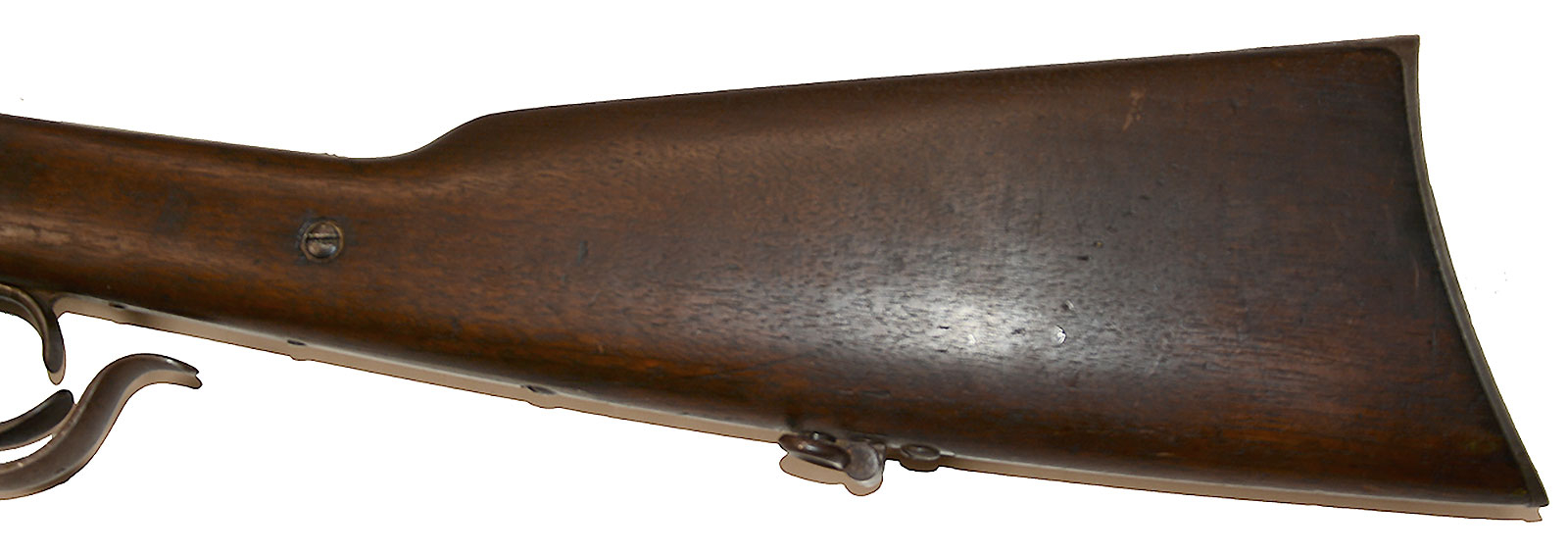
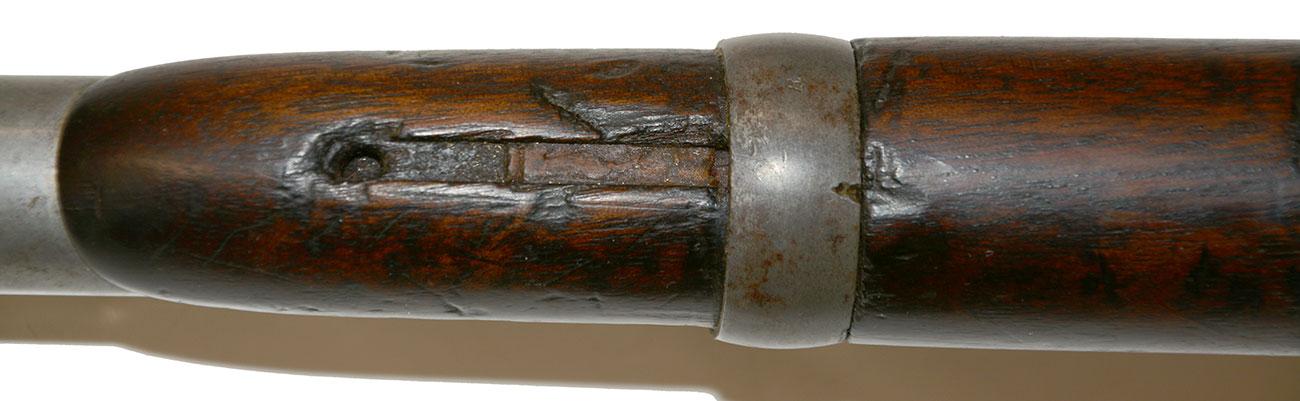
This is a very nicely identified Burnside carbine issued to a member of the 18th Pennsylvania Cavalry, certainly on his return to duty in February 1864 after returning from captivity and hospital, and carried by him until his transfer to the VRC in October 1864, period in which the regiment was extremely active. Burnside carbines were the first small arms purchased by the army to use metallic cartridges, and were widely used in the Civil War in several models, with changes sometimes introduced while production for army contracts was in progress. The general principle, however, remained the same: a tapered metallic cartridge with a small hole its base was loaded, bottom first into a lowered, pivoting breechblock which was then raised in line with the barrel and fired with a percussion cap. The so-called Fourth Model introduced a hinge to the breech block that kept the opening near the top of the frame for easier loading and removal of a spent shell. The Fifth Model introduced a screw in the side of the frame to better guide the breechblock. The “Model of 1864” is a sub-type of the Fifth Model, adding a longer trigger plate, screws and slightly different, more accurate in range, rear sight, etc. Their markings differ slightly, including “Model of 1864” on the breech, and have their own serial numbers, starting with #1. This is #2801, putting it likely in the first two deliveries of carbines, on Feb. 29 and March 19, 1864, totaling 2,860 under a contract signed Sept. 30, 1863, by which 12,001 carbines were delivered from 2/29/64 to 6/30/64 (the dates of purchase, following delivery.) This one shows legitimate field use and wear and is clearly identified to the soldier, who carved his name lightly into the right butt stock in a mix of script and cursive lettering: “J.C. Snedaker / Co. D 18th Pa.”
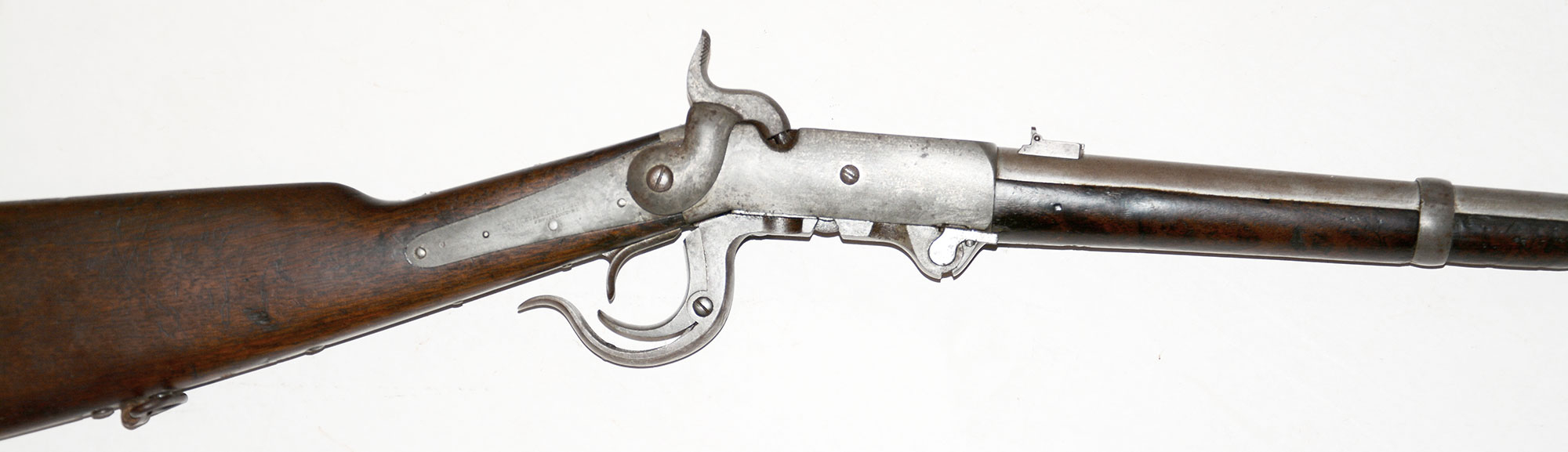
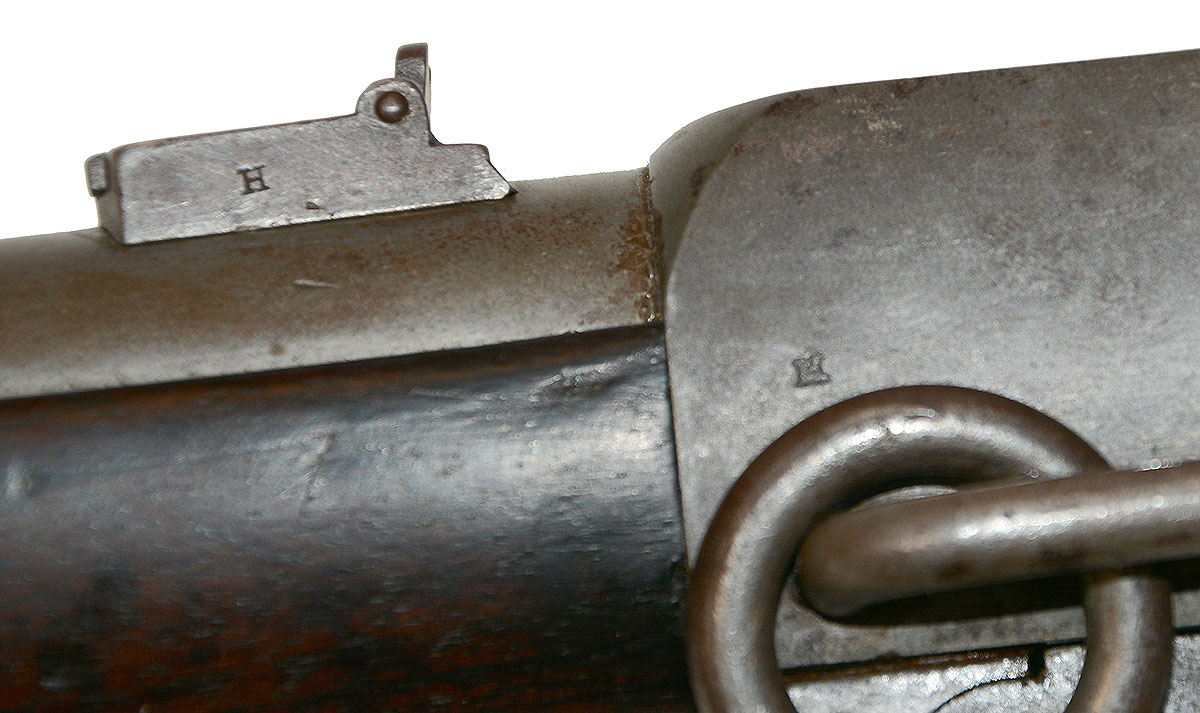
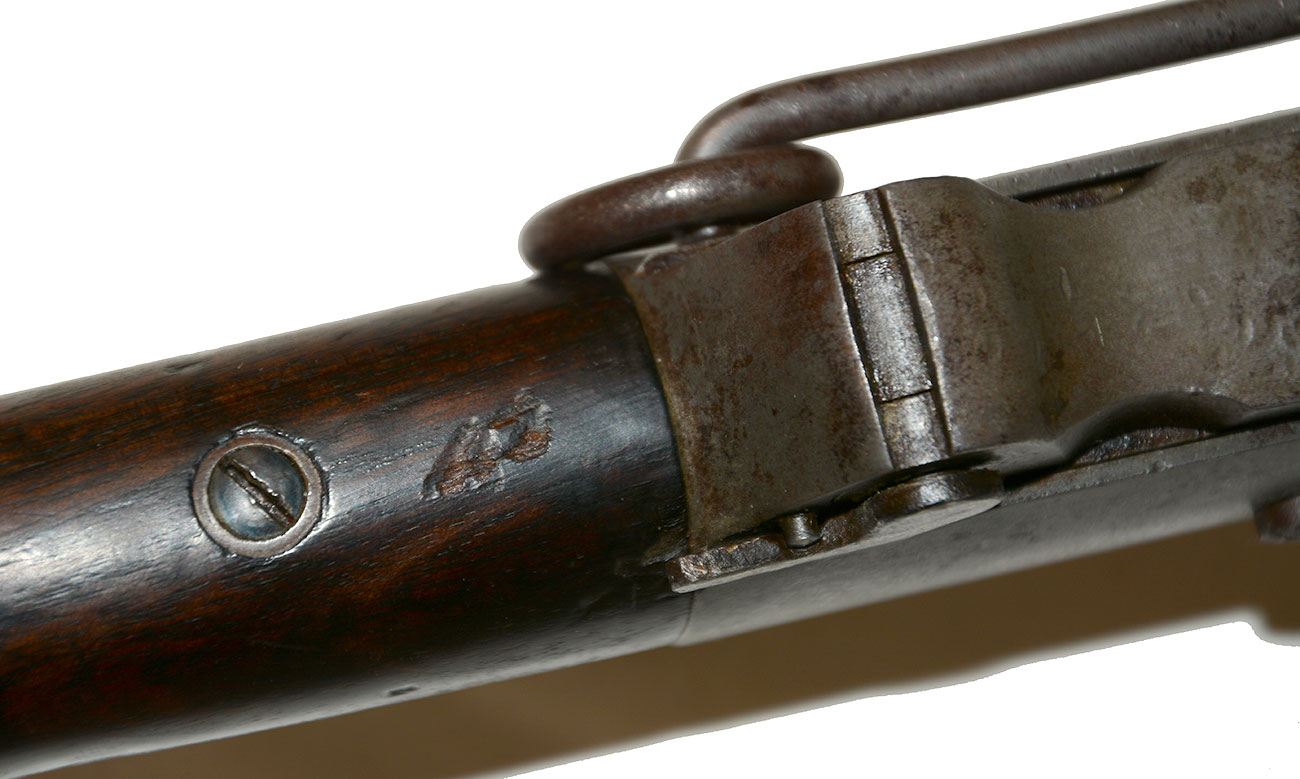
The carbine shows gray metal overall, with a mix of some darker age spots, some thin brown on the barrel. The metal is generally smooth, with just a little crusty brown on the triggerguard/lever, and some shallow pitting on the breechblock around the nipple from the corrosive effects of percussion caps. The screwheads show some thin blue. Both sights are in place. The rear sight is complete. The side bar and sling ring are present. The wood to metal fit is tight. The wood shows good edges and warm brown color. The piece missing is the barrel band spring, which took a few small chips of wood with it from the forestock.
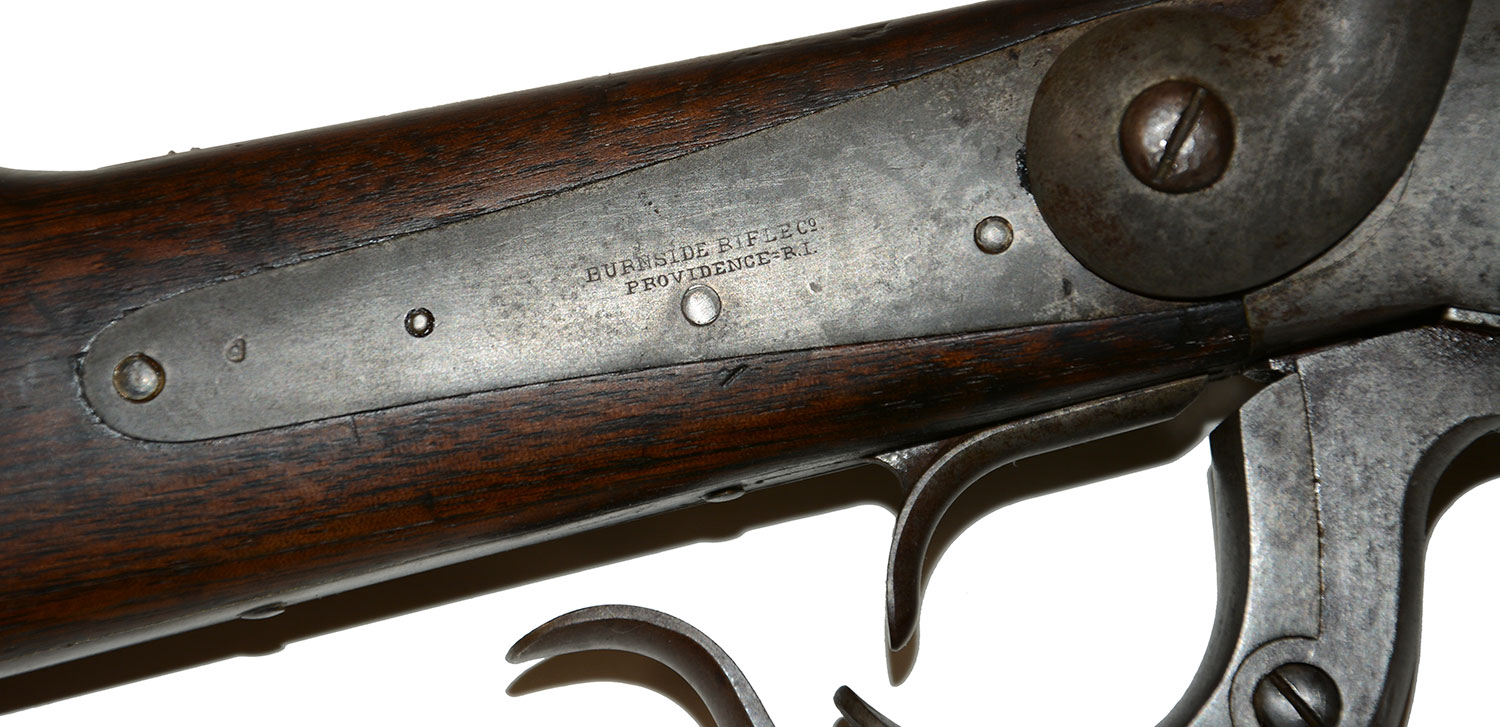
The markings in the metal are good, showing some rubbing, but fully legible: “BURNSIDE RIFLE Co./PROVIDENCE=R.I.” on the rear of the lockplate, serial number 2801 on the breechblock and on the top flat of the breech under a light, but legible, “BURNSIDE’S PATENT / MODEL OF 1864.” The inspection and acceptance stamps in the wood on the left wrist are rubbed and tough to make out, but the acceptance stamp toward the rear is obvious, set vertically, a rectangular cartouche with rounded ends, though we have not reached any consensus on the exact initials of the inspector.
James Cameron Snedaker enlisted at Titusville, PA, and mustered into Co. D of the 18th Pennsylvania Cavalry on 9/2/62. (His age at enlistment is given as 39 in some published records, though other records have him born in 1825, which would make him 37.) He served with the regiment until transferring on 10/1/64 to the Veteran Reserve Corps, from which he was finally discharged on 6/28/65. The regiment was mustered in from October 1862 to February 1863, serving in Washington’s defenses and guarding Blue Ridge mountain gaps until joining Farnsworth’s brigade in Kilpatrick’s division for the Gettysburg campaign, fighting at Hanover and on July 3 in support of Farnsworth’s ill-fated charge, losing 2 killed, 4 wounded and 8 missing. They were active in the pursuit of Lee, and in the Fall campaigns of 1863, with more action from the Wilderness to Petersburg, transferring to the Army of the Shenandoah in August 1864. Snedaker is listed in the regimental history as captured at Brandy Station, VA, on October 11, 1863, among 4 officers and 32 men captured, along with other casualties, when the regiment, after heavy mounted skirmishing, took part in the division’s charge to break through surrounding Confederate forces. His online gravesite listing provides some service data from his files, including the following bit of key information: “Later released from captivity. Admitted to Division 1 hospital date unknown. Returned to duty February 15, 1864…” This lines up very well with issue to him of a new, replacement carbine from one of those first deliveries of “Model of 1864” Burnsides- the regiment had been carrying Burnsides since June 1863, according the regimental history.
We do not have Snedakers service records from the archives, but from the earliest possible delivery date of the carbine up to Snedaker’s transfer to the VRC, Dyer’s Compendium gives the following service for the regiment, in which he may have carried the carbine: Rapidan Campaign May-June. Wilderness May 5-7. Craig's Meeting House May 5. Todd's Tavern May 5-6. Alsop's Farm May 8. Sheridan's Raid to James River May 9-24. North Anna River May 9-10. Ground Squirrel Church and Yellow Tavern May 11. Brook's Church or Richmond fortifications May 12. Strawberry Hills May 12. Line of the Pamunkey May 26-28. Demonstration on Little River May 27. Totopotomoy May 28-31. Hanover C. H. May 30. Mechump's Creek May 31. Cold Harbor May 31-June 1. Totopotomoy and Gaines' Mill June 2. Salem Church and Haw's Shop June 2. Haw's Shop June 3. Old Church June 10. Bethesda Church June 11. Long Bridge June 12. Smith's Store near St. Mary's Church June 15. Siege of Petersburg June to August. Jerusalem Plank Road June 22-23. (Co. "B" at Headquarters, 6th Corps, June 25-July 16.) White Oak Swamp July 14. Sheridan's Shenandoah Valley Campaign August 7-November 28. Winchester August 15 and 17. Near Charlestown August 21-22. Limestone Ridge September 1. Abraham's Creek near Winchester September 13. Battle of Opequan, Winchester, September 19. Near Cedarville September 20. Front Royal September 21. Milford September 22. Waynesboro September 29.
Snedaker returned to Pennsylvania after discharge from the VRC and filed for an invalid pension in 1867, which would likely provide more precise information, along with his service records. In any case, this is a very interesting Civil War cavalry carbine with a dead-real inscription. [sr][ph:L]
DISCLAIMER: All firearms are sold as collector's items only - we do not accept responsibility as to the shooting safety or reliability of any antique firearm. All firearms are described as accurately as possible, given the restraints of a catalog listing length. We want satisfied customers & often "under" describe the weapons. Any city or state regulations regarding owning antique firearms are the responsibility of the purchaser. All firearms are "mechanically perfect" unless noted, but again, are NOT warranted as safe to fire!
~~~~~~~~~~~~~~~~~~~~~~~~~~~~~~~~~~~
THIS ITEM, AS WITH ALL OTHER ITEMS AVAILABLE ON OUR WEB SITE,
MAY BE PURCHASED THROUGH OUR LAYAWAY PROGRAM.
CLICK HERE FOR OUR POLICIES AND TERMS.
THANK YOU!
Inquire About IDENTIFIED BURNSIDE FIFTH MODEL CARBINE, “MODEL OF 1864:” JAMES CAMERON SNEDAKER, CO. D 18th PA CAVALRY
Most Popular
Historical Firearms Stolen From The National Civil War Museum In Harrisburg, Pa »
Theft From Gravesite Of Gen. John Reynolds »
Selection Of Unframed Prints By Don Troiani »
Fine Condition Brass Infantry Bugle Insignia »
featured item
MARYLAND SWORD BELT PLATE
These plates follow the general configuration of the U.S. M1851, but substitute the 1854 version of the Great Seal of Maryland, simply moving the motto from a ribbon scroll at the bottom to the top of the raised oval border that separates the seal… (2025-767). Learn More »
site search