
site search
online catalog
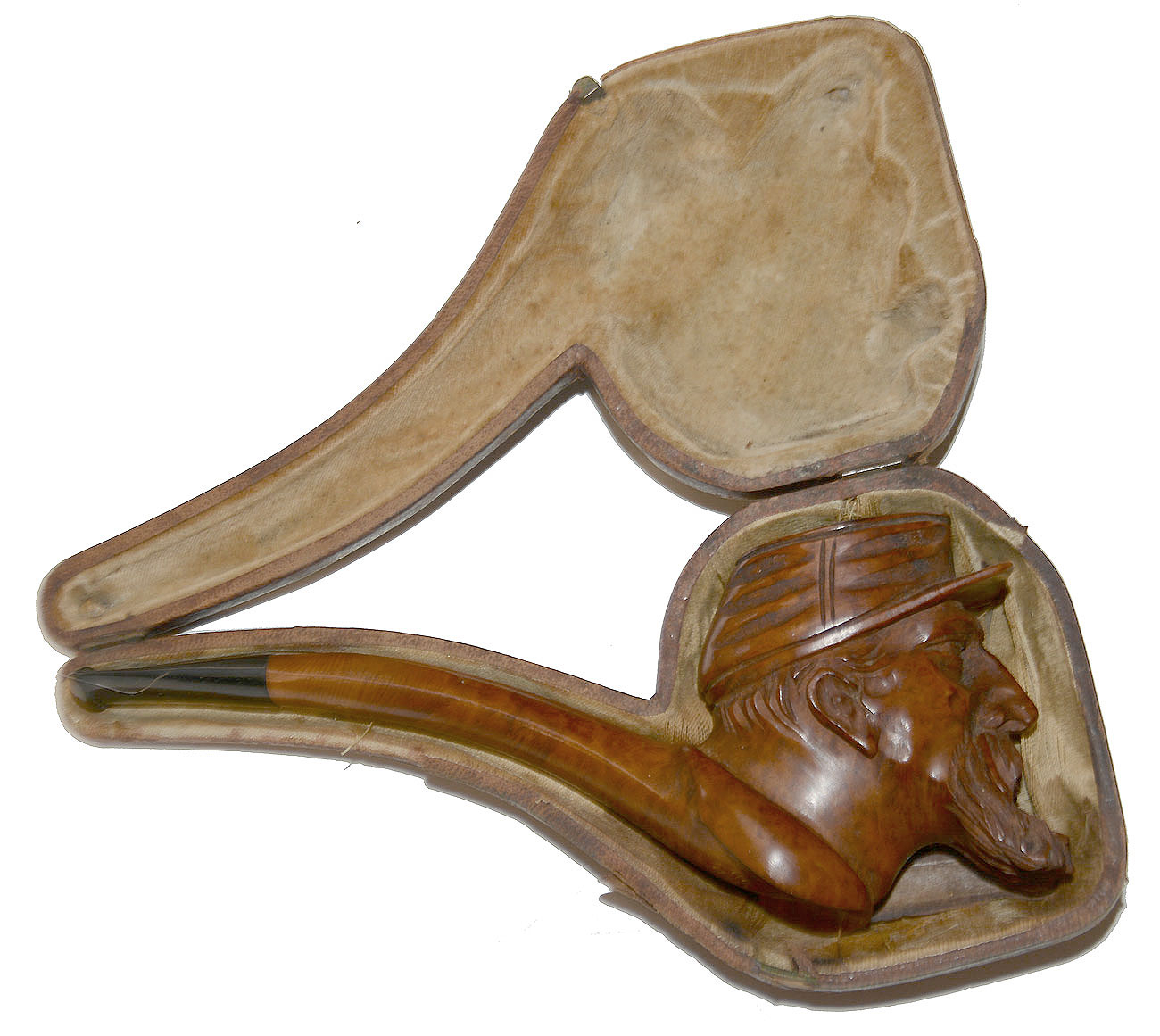
WONDERFUL ZOUAVE FIGUREHEAD CARVED PIPE, JOSIAH JONES, 6th MASS AND 6th N.H.
Hover to zoom
$1,950.00 SOLD
Quantity Available: None
Item Code: 302-119
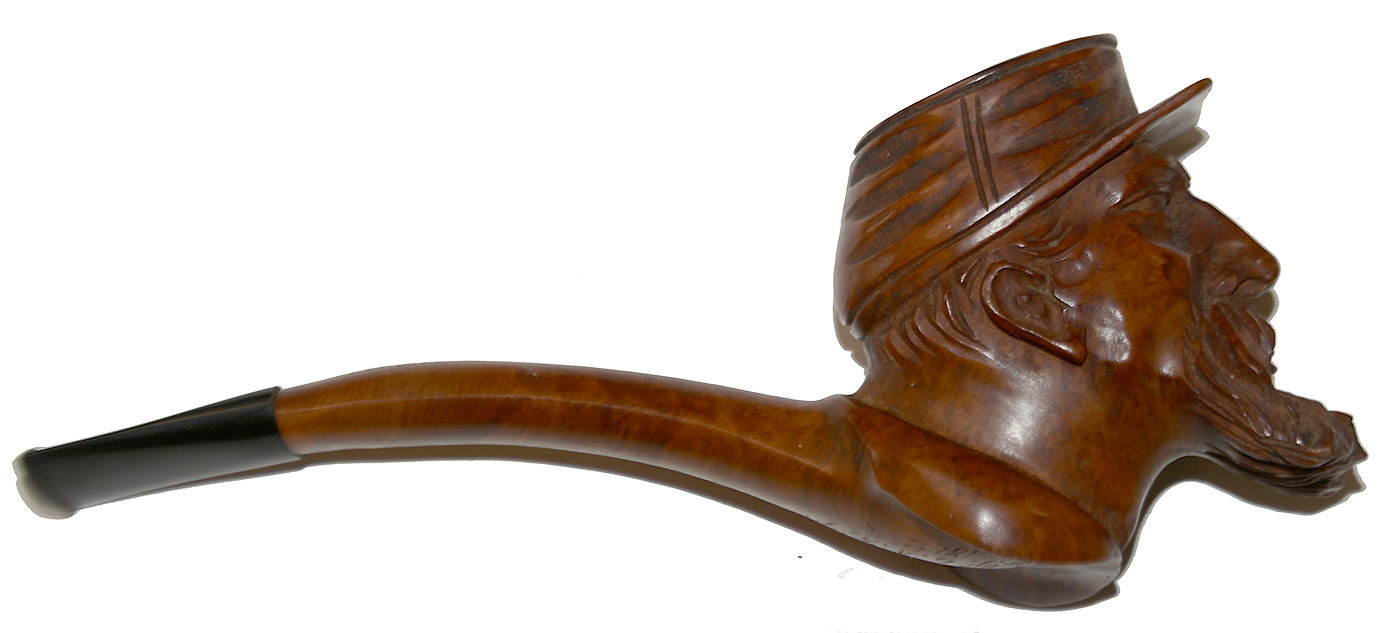
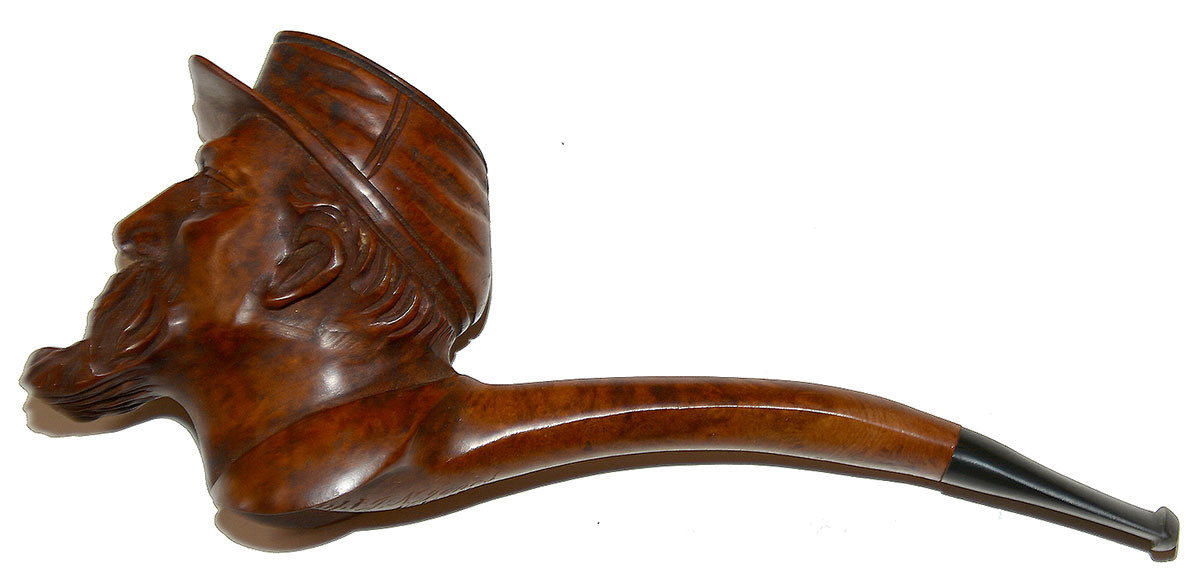
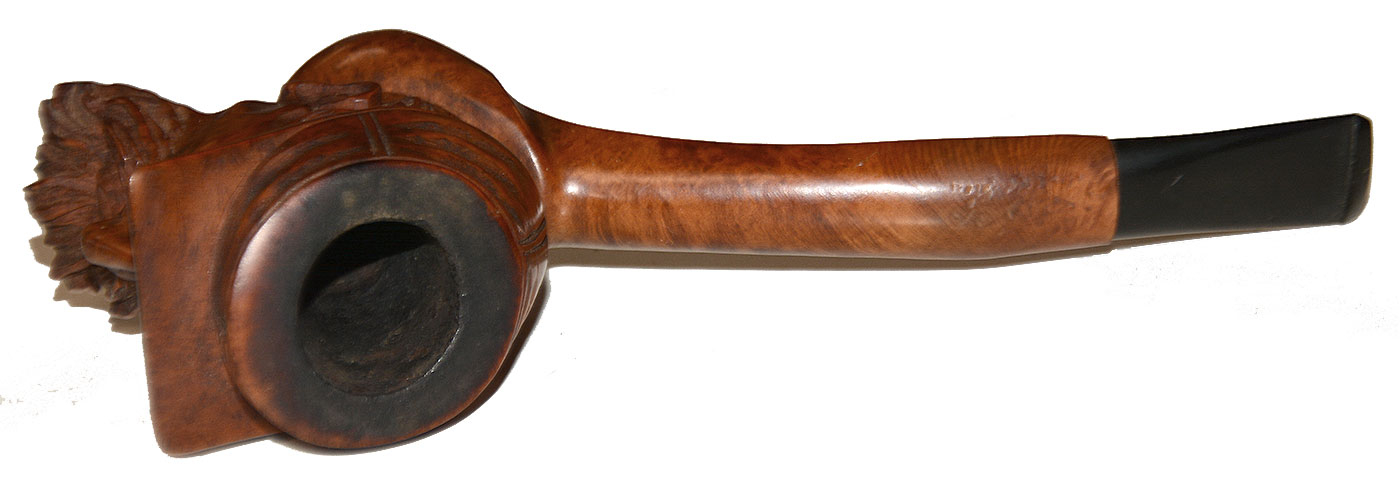
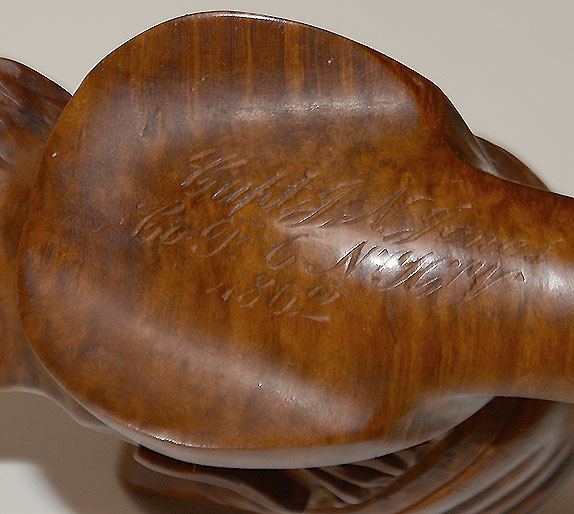
A beautiful briarwood carved pipe in the form of a zouave soldier’s or officer’s head- a fitting martial motif for Josiah N. Jones, soldier with a taste for adventure and aggressiveness in the field. He was credited by some as the first volunteer in the country to enlist after the President’s call for troops on April 15, rushing to the 6th MVM armory to throw open the doors and raise the flag, was with the regiment when attacked by a mob on its march through Baltimore, and worked on the feared, if overrated, “Winans Steam Gun” after its capture. He was later an officer in the 6th New Hampshire, quoted and mentioned several times in the regimental history, and noted both for his coolness and his zeal.
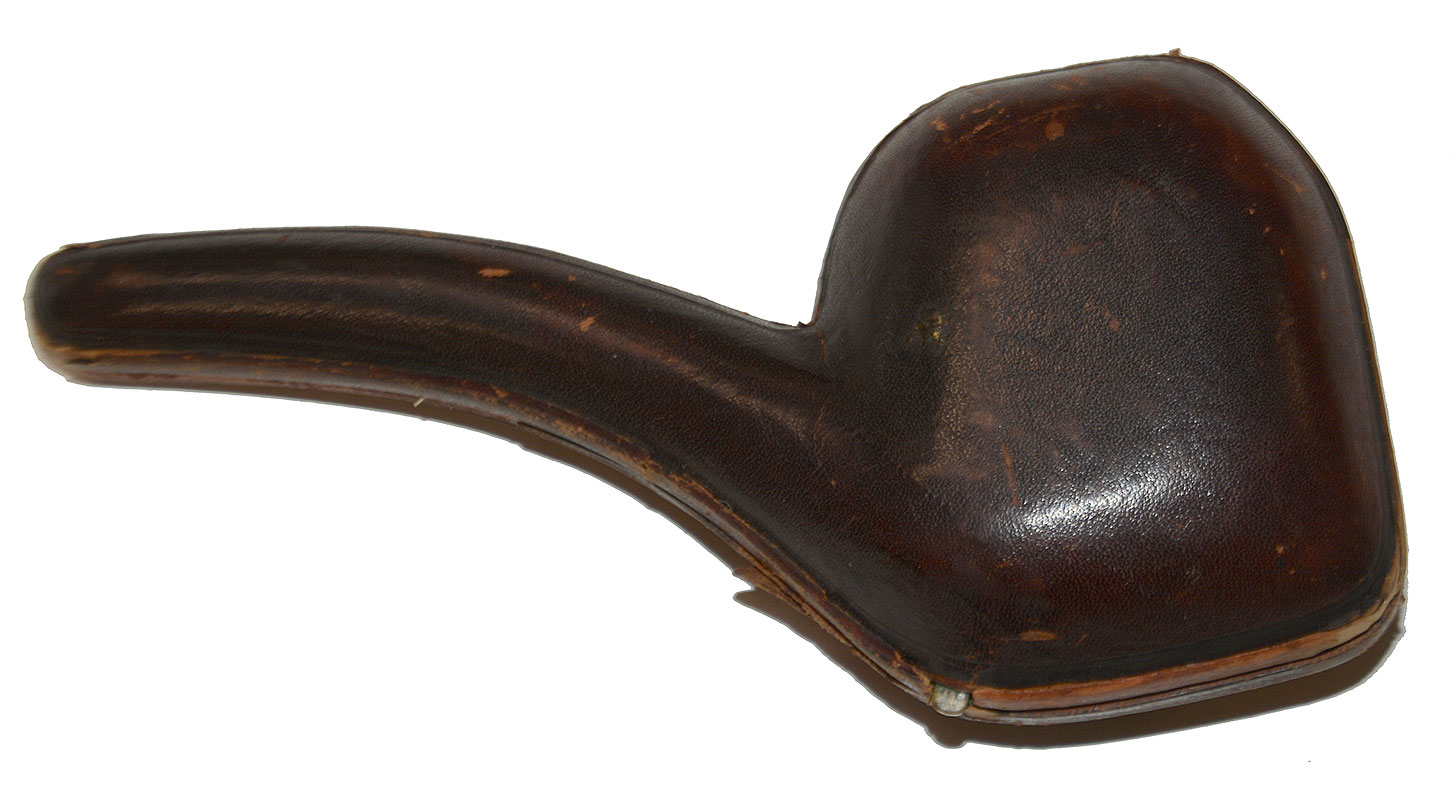
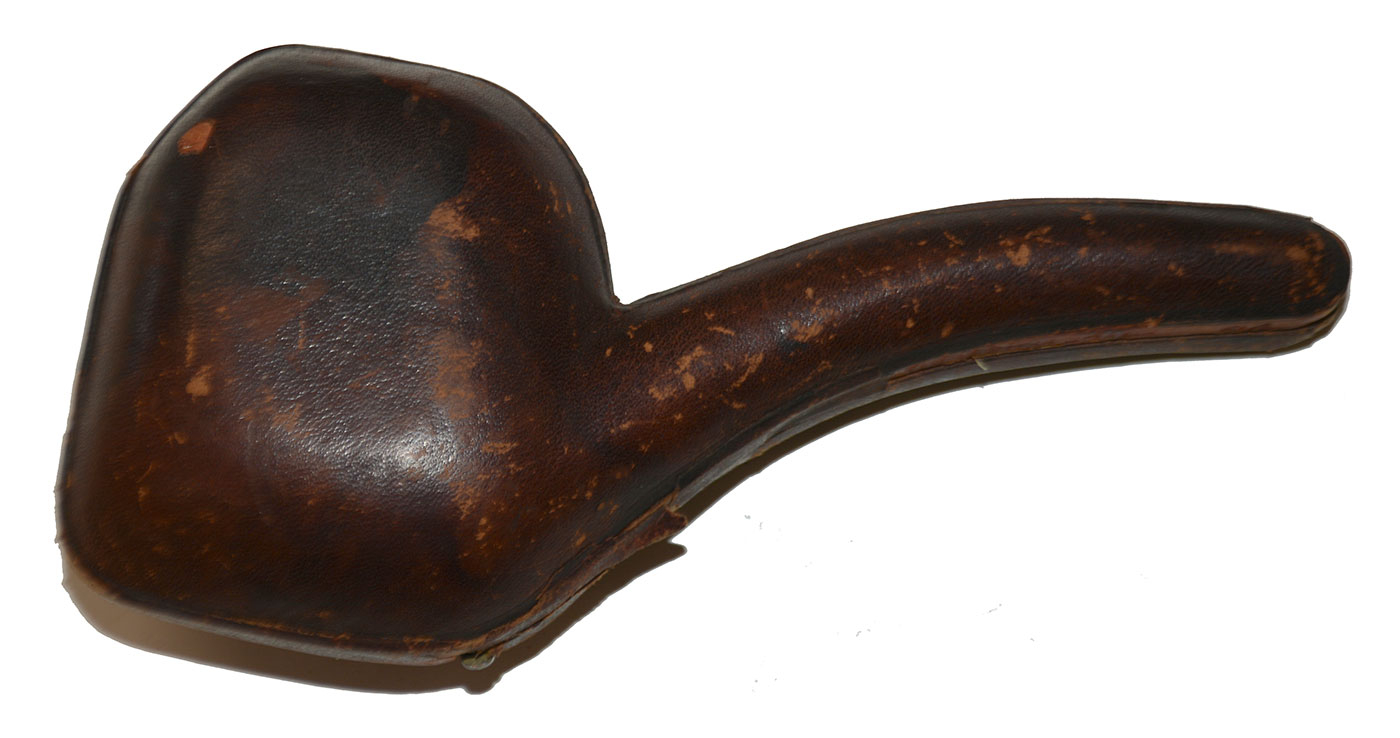
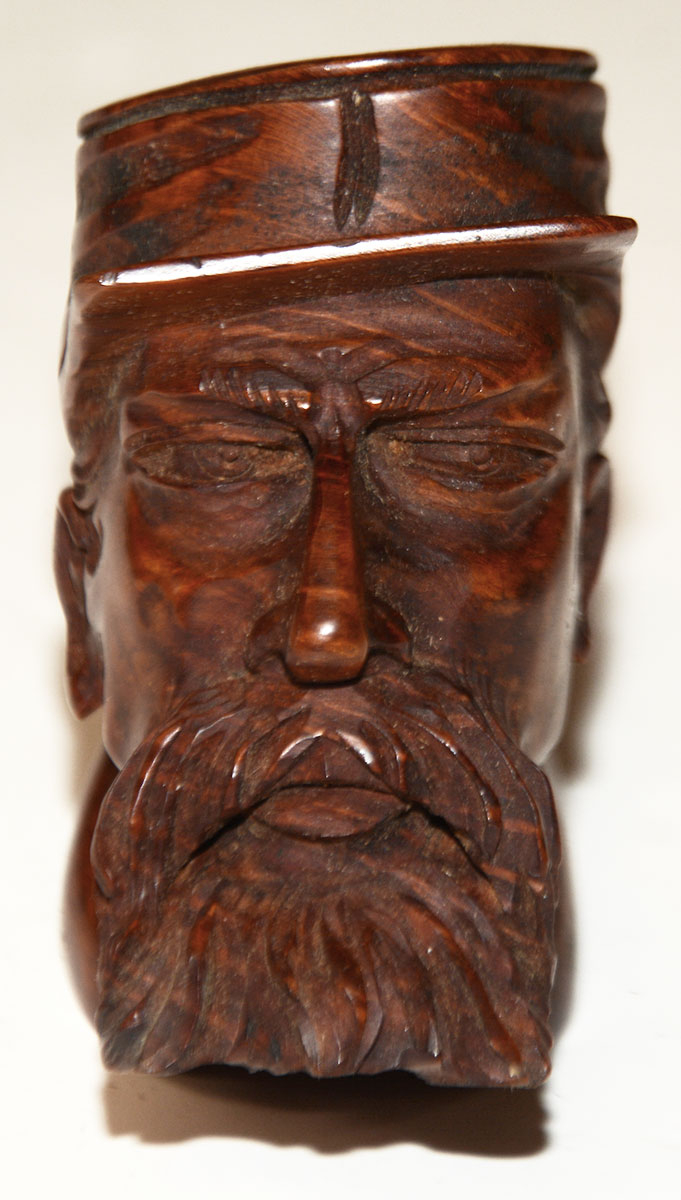
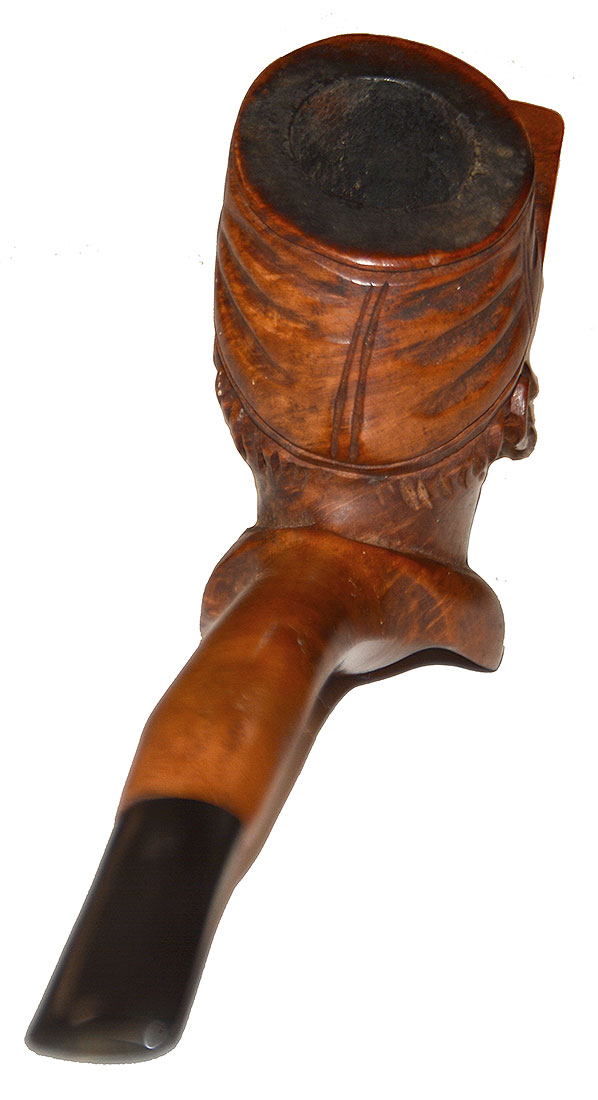
The pipe shows some darkening to the upper edge and interior of the bowl from use, but is in excellent condition. There are no rubs, cracks or chips and it retains a wonderful, smooth, warm brown exterior surface. The figural head is wonderfully detailed, a zouave officer or enlisted man wearing a kepi, with braid up the sides and front, the man with a prominent mustache and goatee, rather aquiline nose, and when viewed from the front, wearing his kepi at a slightly rakish angle, a little lower over his right eye. It comes with its original case, which shows just some minor exterior wear, and slightly more to the lined interior.
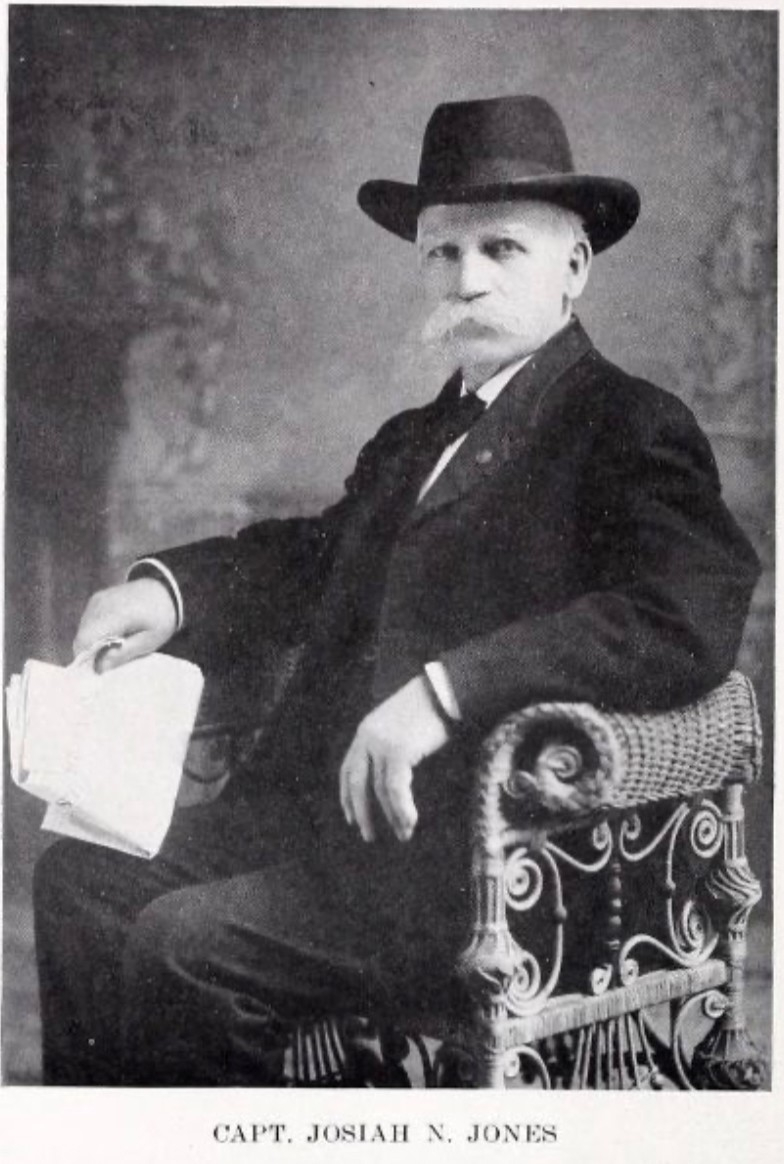
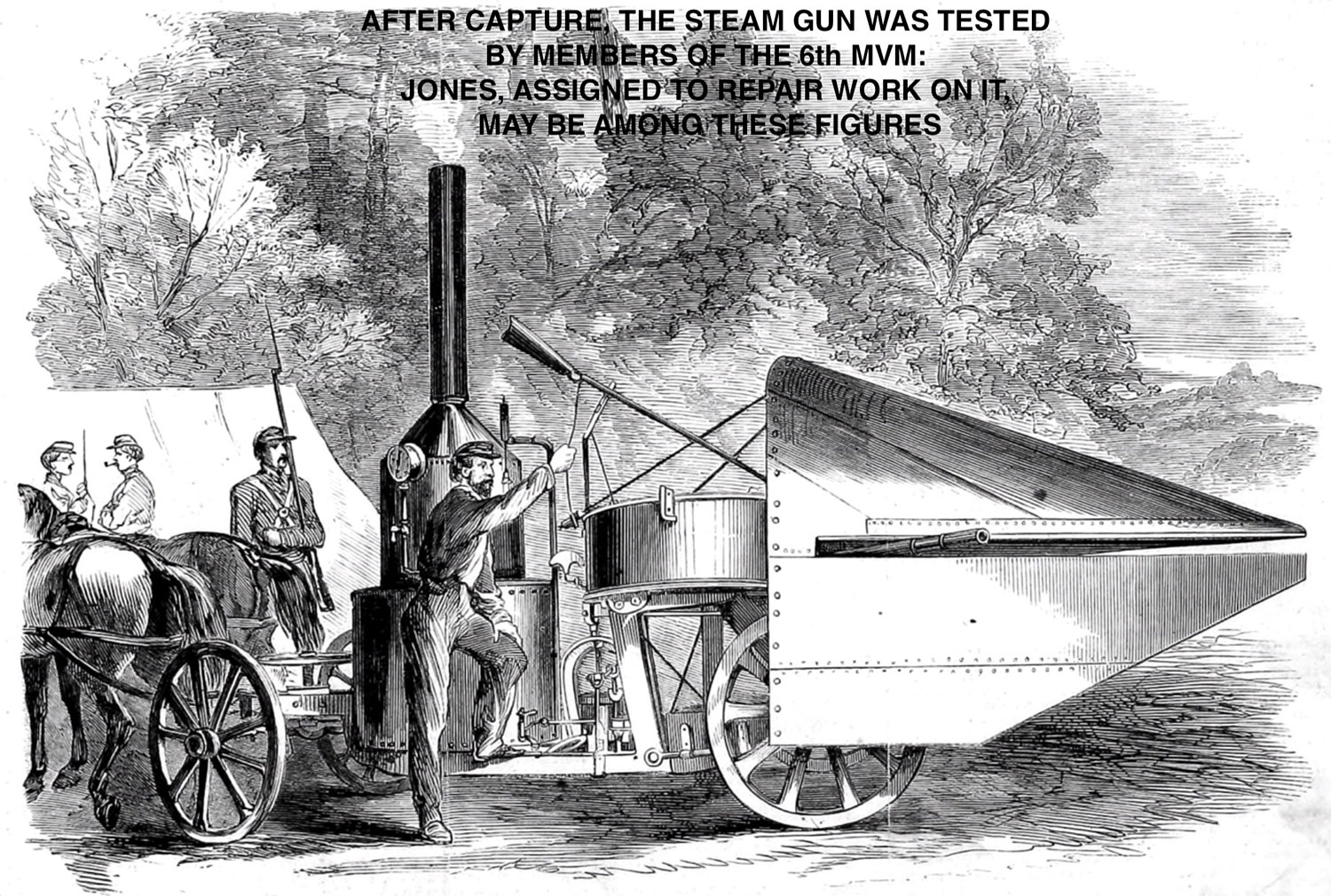
Jones (1835-1928) served in the 6th Massachusetts Volunteer Militia as an enlisted man and the 6th New Hampshire as an officer, contributing to the regimental history of the latter, in which he is often quoted or mentioned, and in which he is the subject of a 5-1/2 page biography (and at one point appointed historian to the 6th MVM as well.) Born in New Hampshire, he worked as a railroad machine blacksmith in Boston, before heading west in 1853, ending up in New Orleans where he worked on railroad lines he would help destroy during the war. He worked on a Mississippi steamboat and was in Chicago for a time, returning east in 1857 before heading west again, to Illinois and then to Kansas as a free-state settler. By 1859 he was back in Massachusetts and, with some militia experience in Illinois, became a member of Co. F 6th Mass. Volunteer Militia, rushing to the armory on April 15, 1861. Mass records list his official enlistment as 4/16/61, mustering into Co. F as private 4/22/61, but muster rolls record his enrollment on 4/15/61. This was a three-month unit and he served until muster out at Boston 8/2/61. On the muster-out roll is noted: “Worked six days on the steam gun, mechanicle [sic] work.” This was a steam-powered gun supposedly capable of discharging 200 rounds a minute by centrifugal force. Invented in Ohio, built in Boston, and taken to Baltimore in 1861, where it garnered a good deal of newspaper coverage connecting it to Baltimore successionist Ross Winans. It was later captured while on its way to Harpers Ferry, and reportedly tested by members of the 6th MVM, and later ended up donated to a “mechanics organization” in Lowell, MA. Jones’s background as a railroad machine blacksmith fits his recorded work on the gun perfectly and we can’t help but wonder if he is one of the military figures with the gun in the May 18, 1861, issue of Frank Leslie’s Illustrated Newspaper.
Jones reenlisted soon after discharge from the 6th, helping to raise a company and receiving a commission 10/18/61 as First Lieutenant, Co. d, 6th New Hampshire, being mustered in 11/27/61, the official date of the regiment’s organization. This was a fighting regiment that would eventually lose 10 officers and 177 enlisted men just in killed or mortally wounded. He was promoted to Captain, Co. H, by special order of Gen. Burnside 8/8/62 (perhaps with rank from 8/4/62.) The regiment spent most of it service in the 9th Corps, with a brief stint in the 23rd Corps when Burnside was sent west in Spring 1863. They took part in Burnside’s North Carolina Expedition, Pope’s campaign in Northern Virginia, the Antietam Campaign, and Fredericksburg, moving to Kentucky in March 1863, participating in the sieges of Vicksburg and Jackson, returning east for Grant’s 1864 Overland Campaign, fighting at Wilderness, Spottsylvania, Cold Harbor, and Petersburg. Jones mustered out 11/28/64 and was reportedly organizing another company for service when the war ended.
Jones is listed as present with his company and present at 2nd Bull Run and Chantilly until detailed to command a convalescent and parole camp from Sept. 1862 to Feb. 17, 1863. He is back with the company after that, mustering out at the expiration of his term of service 11/27/64. His biography in the 6th NH regimental history mentions assignments in October 1863 as Provost Martial of Russelville, KY, detailed duty as commander the 32nd Maine for about 4 weeks in August 1864, and command of his own regiment for about 3 months in late 1864. He was later member of two G.A.R. posts, Post Commander GAR Post 10 in Worcester, and was active in his regimental veterans’ associations.
He apparently believed in moving forward. The 6th NH regimental records that at the Wilderness, when the regiment was ordered to fall back after its supports did not keep up, “Captain Jones, in great excitement, threw his revolver on the ground, exclaiming, ‘This is the meanest thing I have seen since the war commenced. If our support had followed us up, we could have captured everything in our front, but, as it is, we have got to fall back, and fight this same ground over again before night;’ and as he spoke, tears ran down his face. Major Bixby afterwards used jocosely to compare the earnest captain with ‘Alexander the Great, who cried because there was not another world to conquer.’"
On June 18, 1864, as Brigade Officer of the Day he was ordered to advance the picket line to determine where Confederates had withdrawn after pulling out from a wood in front of them. He led his 100 men not only through the wood, but across a field on the far side to higher ground where Confederates had just set fire to some buildings. “The rebels were at work like beavers on the fort which we afterwards blew up. Finding that I could not advance any farther, I decided to hold on where I was. It was not long before the Fifth Corps came up in force on the left and rear. Soon an aide of General Griffin's came to order us back to the main body of the brigade, and wanted to know what I was doing up there, as the Fifth Corps should have done the work I had been doing. Having returned with my command, I reported to Generals Griffin and Potter, who were together. When they were almost disposed at first to reprimand me for going too far, I told them that I was ordered to advance my line, and I should have kept on to Petersburg, unless checked by the enemy or ordered to halt. The explanation seemed to have been sufficient, as I heard no more about the matter. Two men were killed in this movement, and ten wounded...”
This is a remarkable pipe and a rather remarkable officer. [sr] [ph:L]
~~~~~~~~~~~~~~~~~~~~~~~~~~~~~~~~~~~
THIS ITEM, AS WITH ALL OTHER ITEMS AVAILABLE ON OUR WEB SITE,
MAY BE PURCHASED THROUGH OUR LAYAWAY PROGRAM.
CLICK HERE FOR OUR POLICIES AND TERMS.
THANK YOU!
Inquire About WONDERFUL ZOUAVE FIGUREHEAD CARVED PIPE, JOSIAH JONES, 6th MASS AND 6th N.H.
Most Popular
Historical Firearms Stolen From The National Civil War Museum In Harrisburg, Pa »
Theft From Gravesite Of Gen. John Reynolds »
Selection Of Unframed Prints By Don Troiani »
Fine Condition Brass Infantry Bugle Insignia »
Rare Identified 65Th Ny Sergeant’s Jacket, With Manscript Material: 1St U.s. Chasseurs »
featured item
“SOFT TACK:” AERATED BREAD CRATE
This would make a nice addition to a camp, sutler, Sanitary Commission or even a hospital display. Constructed of thin, about ½” thick, unpainted, wide pine boards that are simply nailed together, this is about 18” X 13 ¾” X 12” and is… (1202-166). Learn More »
site search