

site search
online catalog
A RARE UNION SURGEON'S KEPI IDENTIFIED TO A FUTURE CONGRESSMAN – CHESTER B. DARRALL
Hover to zoom
$5,995.00 SOLD
Quantity Available: None
Item Code: 1284-38
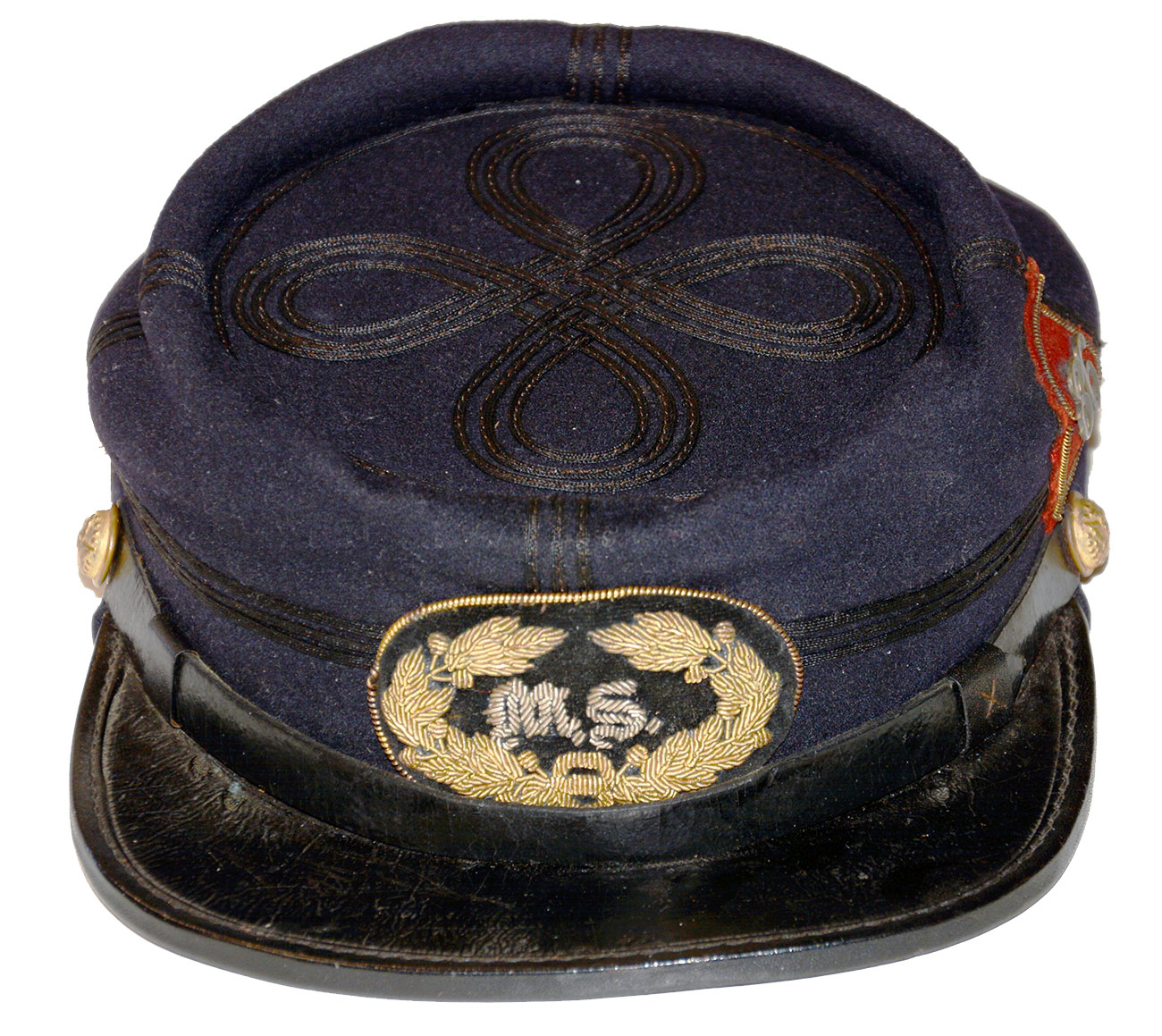
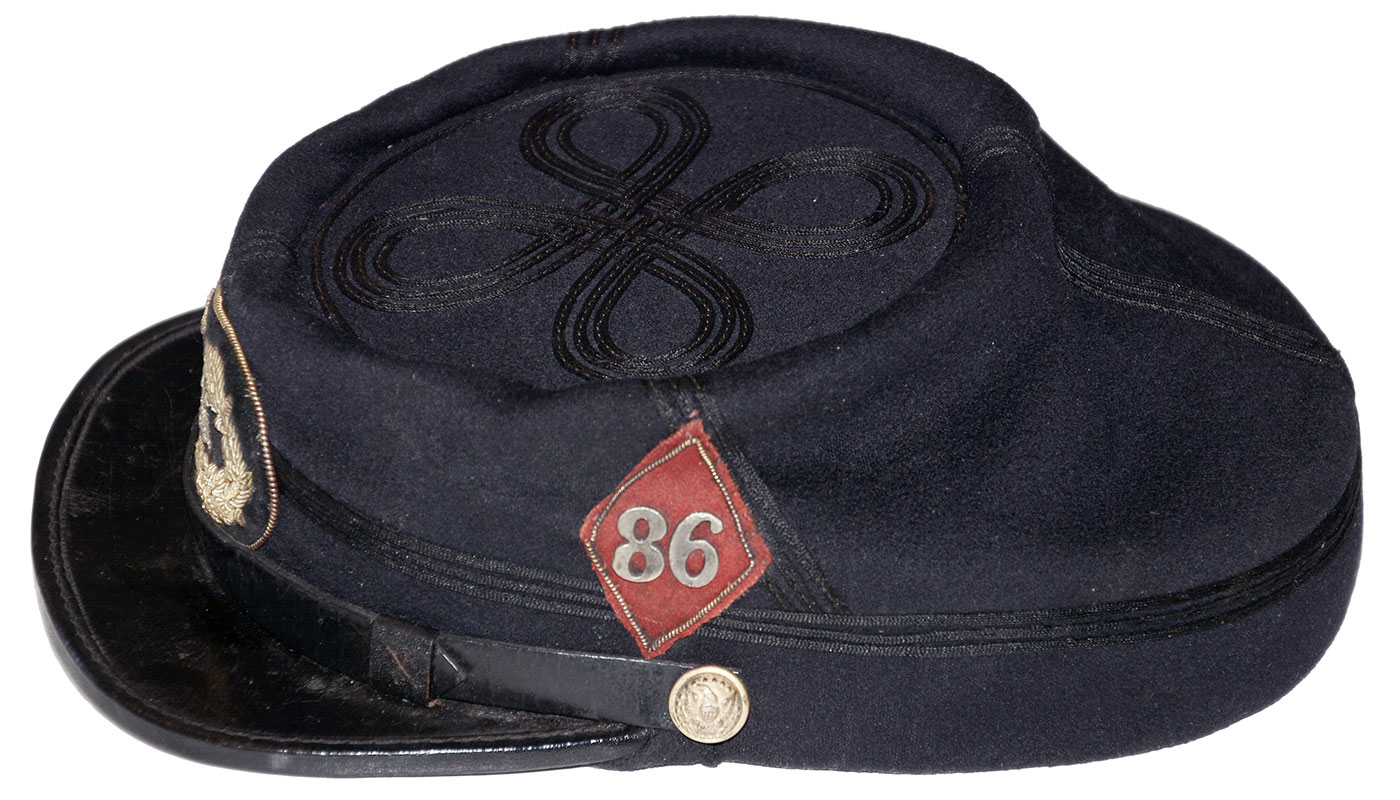
In a collection for decades comes the pristine chasseur style kepi of assistant surgeon to full surgeon Chester Bidwell Darrall. He was born on June 24, 1842, near Addison, Pennsylvania. His parents died when he was six years old and he was raised by his large, extended family. He entered Albany Medical College in New York, graduating with an M.D. at the age of 20 in 1862. He immediately enlisted as an Assistant Surgeon in the 86th New York Volunteer Regiment. He was promoted to full Surgeon and discharged on June 27, 1865.
The 86th New York Infantry, known as the Steuben Rangers, was recruited in Steuben, Chemung and Onondaga counties, mustered into the U. S. service at Elmira, Nov. 20 to 23, 1861, and left for Washington on Nov. 23. It passed the first winter in the performance of guard duty at or near Washington and was not ordered to the front until Aug. 1862, when it joined the forces under Gen. Pope and lost 118 in, killed, wounded and missing at the second Bull Run. It then moved to Fredericksburg, participated in the battle there with the 1st brigade, 3d division, 3d corps, and then went into winter quarters near Falmouth. It bore a prominent part in the battle of Chancellorsville, was engaged at Brandy Station, and in the thick of the fight at Gettysburg particularly around Devil's Den. Moving southward. via Wapping heights, Auburn and Kelly's ford, no further loss was met with until the Mine Run campaign, when the regiment lost 32 in the action at Locust Grove. At Brandy Station, where the Army of the Potomac made its winter quarters, a large number of the regiment reenlisted and received their veteran furlough in Jan. 1864, and the 86th continued in the field as a veteran regiment. Camp was broken in April for the Wilderness campaign, the regiment being assigned to the 1st brigade, 3d division, 2nd corps, with which it fought through all the battles of that memorable advance toward Richmond, meeting its heaviest loss at the Po River, where 96 were killed, wounded or captured. It accompanied its brigade and division to Petersburg, shared in the first assault, the engagements at the Weldon railroad, Deep Bottom, Strawberry Plains, Poplar Spring Church, the Boydton road, the Hicksford raid, Hatcher's run and in the Appomattox campaign, winning renown as a fighting regiment. It was commonly named "The fighting regiment of the Southern Tier. Out of a total enrollment of 1,318, the regiment lost 98 killed in action, 73 died from wounds, and 153 from other causes during service. The loss in officers was also heavy. Lieut.-Col. Chapin was killed and Maj. Higgins severely wounded at Chancellorsville, and Lieut.-Col. Stafford fell before Petersburg.
After the war Darrall set up business as a merchant and later engaging in sugar planting near Brashear (now Morgan City), Louisiana. Darrall sought and won election in April 1868 as a Republican to the Louisiana State Senate. That November, he sought election to the U.S. House of Representatives from the 3rd Louisiana congressional district. The election was marred by widespread violence and intimidation of voters by the Democrat, Adolph Bailey. Darrall contested the election, and a special committee of the House set aside the results and seated Darrall. (The Constitution gives the House the right to seat representatives, essentially giving it sole authority to determine the outcomes of disputed elections.) In a rematch in 1870, Darrall decisively defeated Bailey. He faced two challengers in 1872 and was re-elected by a wide margin. He next defeated Joseph A. Breaux in 1874. Serving on the House District Committee, and later the Committee on Education and Labor, Darrall increasingly aligned himself with the Radical Republicans who favored de-segregation and full political and civil rights for blacks. The election of 1876, however, was far different. In the presidential election, Democrat Samuel J. Tilden of New York outpolled Rutherford B. Hayes of Ohio in the popular vote, winning 184 electoral votes to Hayes's 165. But 20 election votes -- in Florida, Louisiana, South Carolina, and Oregon -- were in doubt. Facing an unprecedented constitutional crisis, Congress formed a 15-member Electoral Commission to settle the result. Five members were selected from the House, Senate, and Supreme Court. Democrats appeared to have won the vote of Justice David Davis, an Independent, by electing him a Senator from Illinois. But Davis immediately resigned from the Court and was replaced on the commission by Justice Joseph P. Bradley, a Republican. A deal, known as the Compromise of 1877, was struck: The Electoral Commission would award all 20 electoral votes to Hayes. In return, Republicans agreed to withdraw federal troops from the South, ending Reconstruction (essentially ceding power in Southern states to Democrats). In Louisiana, massive Democratic turnout was expected. Democrat Joseph H. Acklen, the challenger, was expected to handily defeat Darrall as he rode the coattails of Tilden. The Republican political machine, led by Darrall, engaged in widespread voter intimidation and fraud. Darrall "won" the election, 15,626 votes to 13,533 votes, and was seated in the House at the start of the 45th Congress. But Acklen challenged the election. The House overturned Darrall's win on February 20, 1878, and seated Acklen. Acklen was re-elected in November 1878 with 48.7 percent of the vote. Republican R. O. Herbert won 33.9 percent, and independent W. B. Merchant 17.3 percent. Darrall returned to his home in Morgan City. Acklen declined to run for re-election in 1880, and Darrall won election over Democrat J. S. Billiu 63.2 percent to 36.8 percent. Darrall was defeated for the Republican nomination in 1882 by William Pitt Kellogg.
President Chester Arthur appointed Darrall the Registrar of the United States Land Office in New Orleans in 1883. Darrall left office in March 1885 when Republican Grover Cleveland took the oath of office as President. Darrall ran for his old congressional seat again in 1886 but lost to incumbent Edward James Gay (Democrat) by 55 to 43.6 percent. Darrall moved to Galveston, Texas, and became president of the W.G. Lown Coffee Company after returning to private life. He moved to Washington, D.C., in the summer of 1900. His family was still living in Galveston when the appalling Galveston Hurricane hit -- wiping out the city and killing 12,000 people. Darrall's wife and family, however, survived. Darrall spent the last years of his life writing books about combat medicine and surgery. He died on January 1, 1908, of unspecified causes.
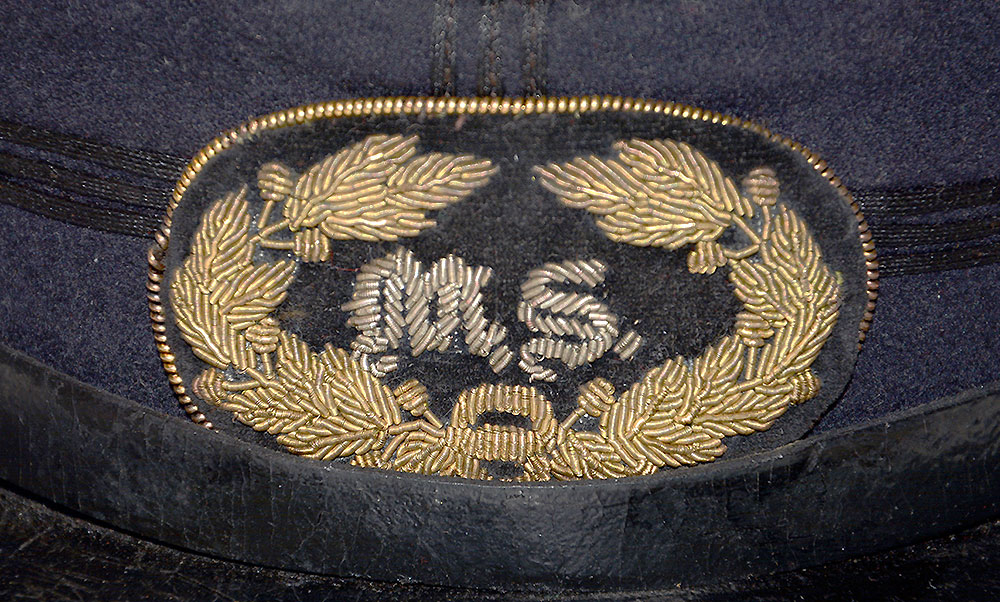
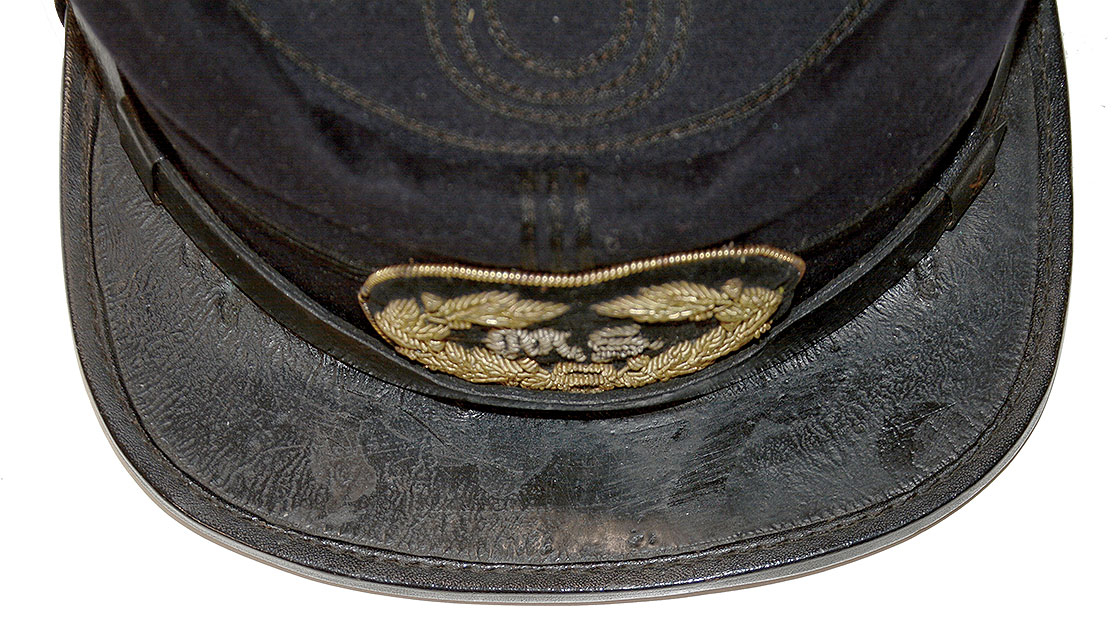
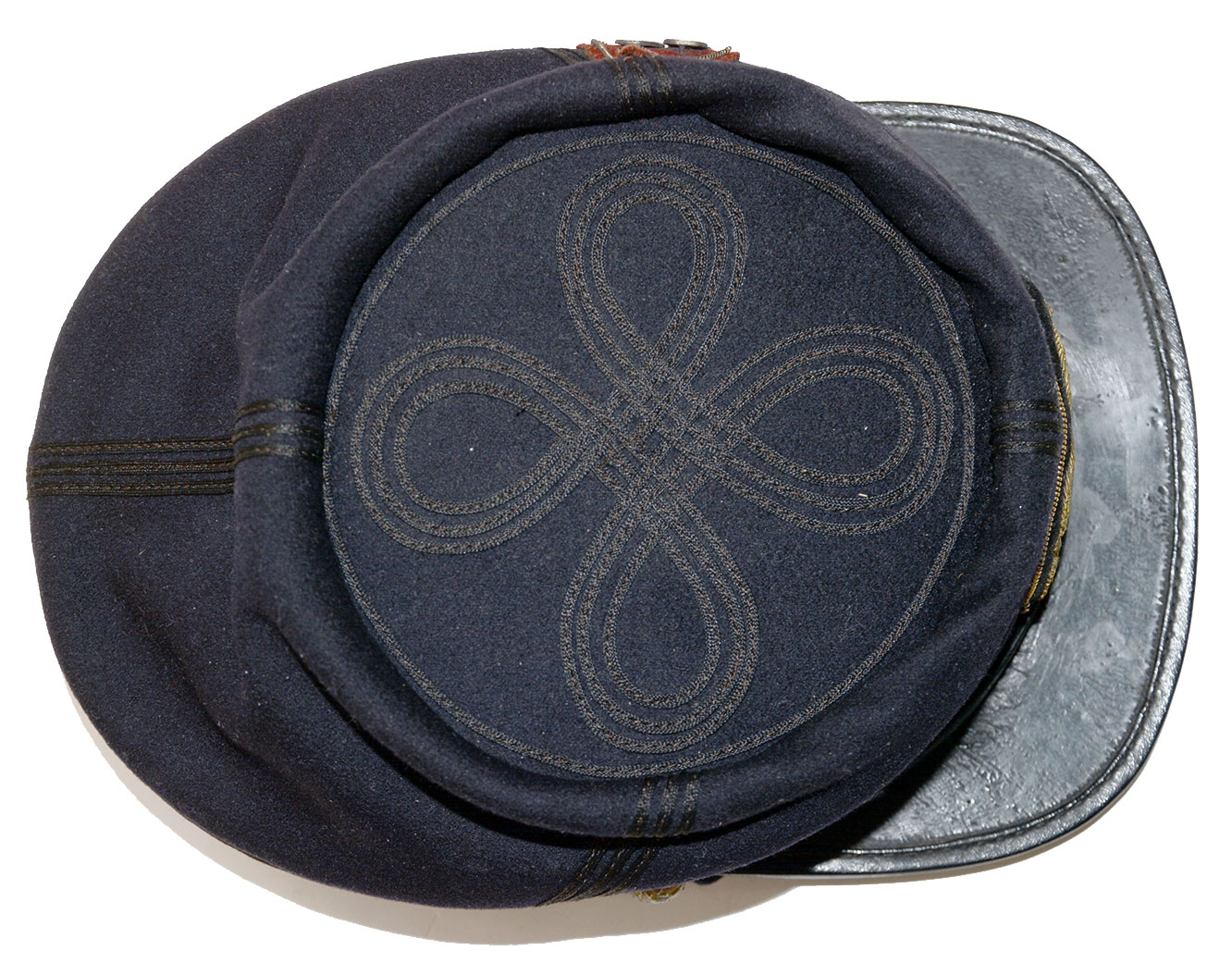
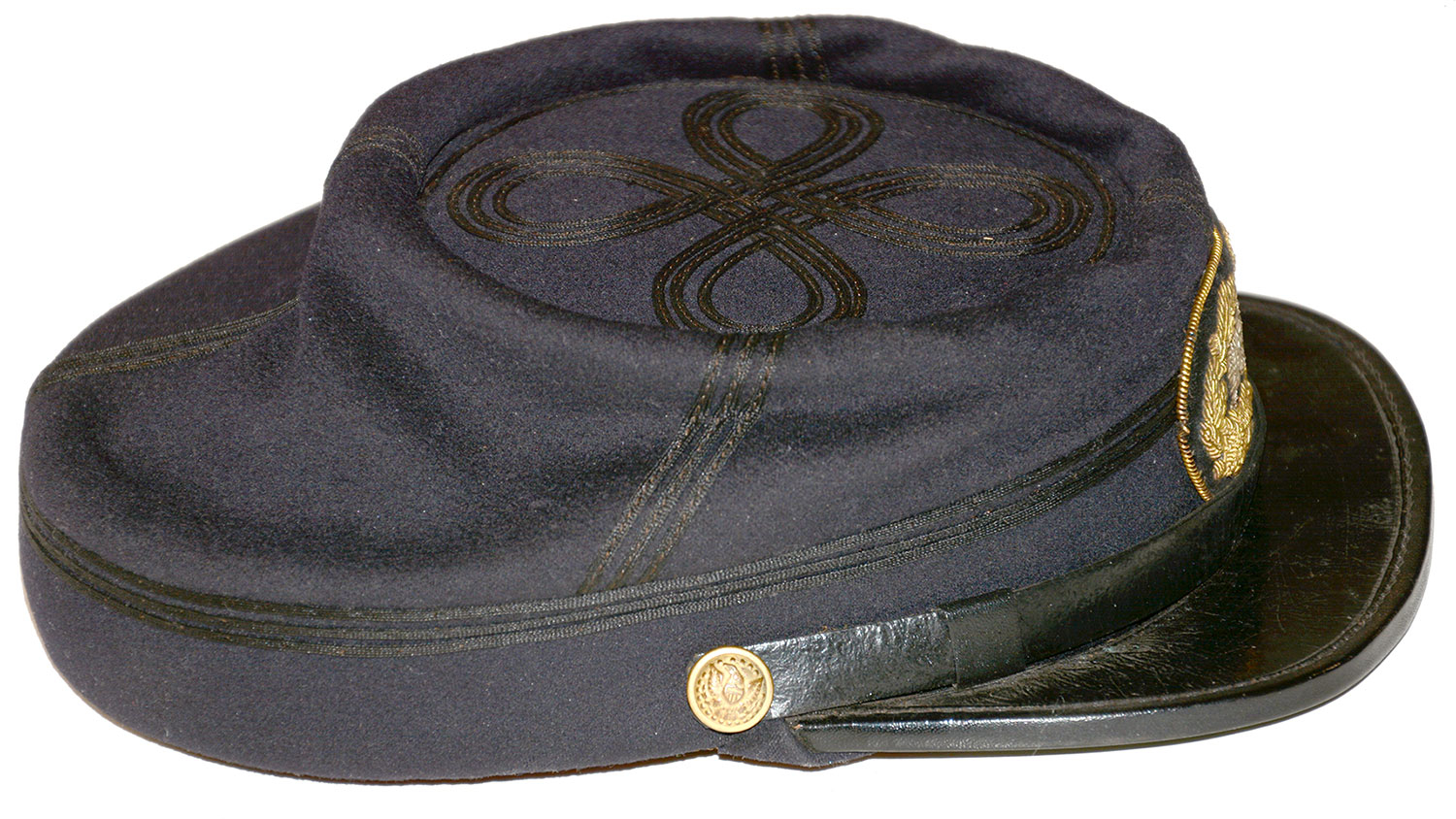
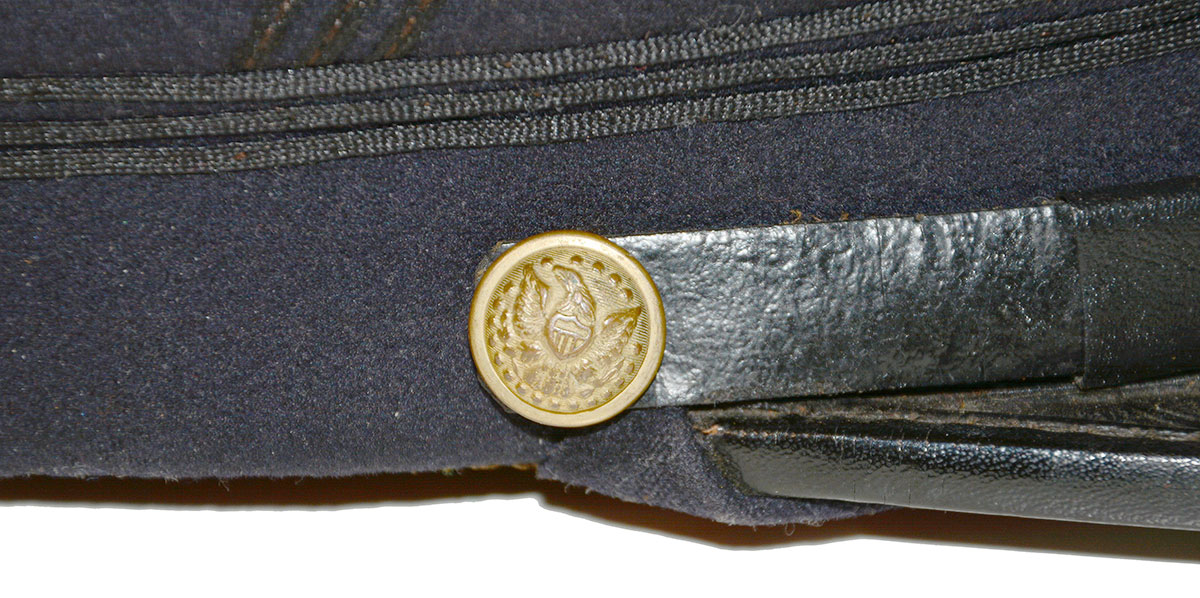
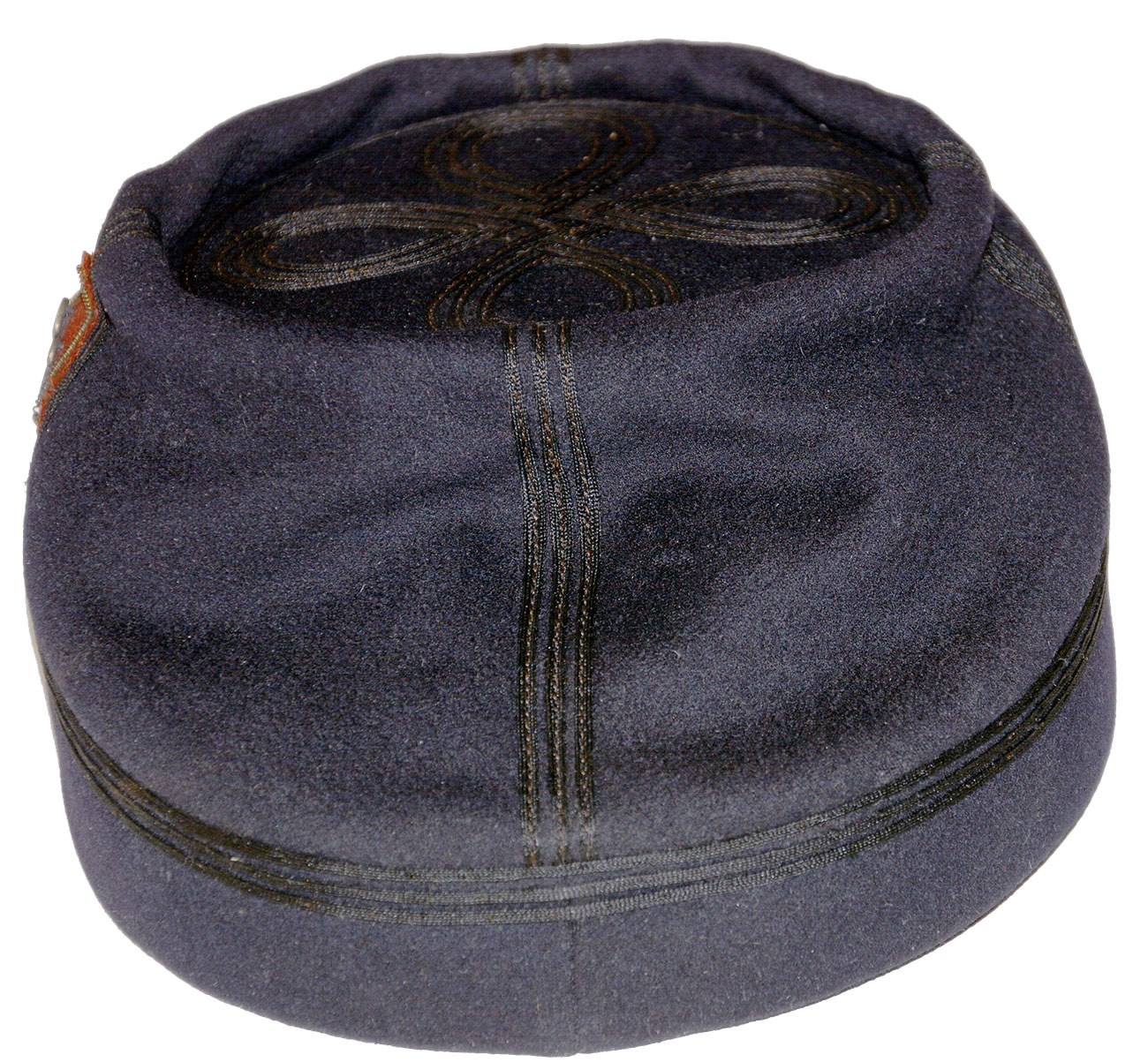
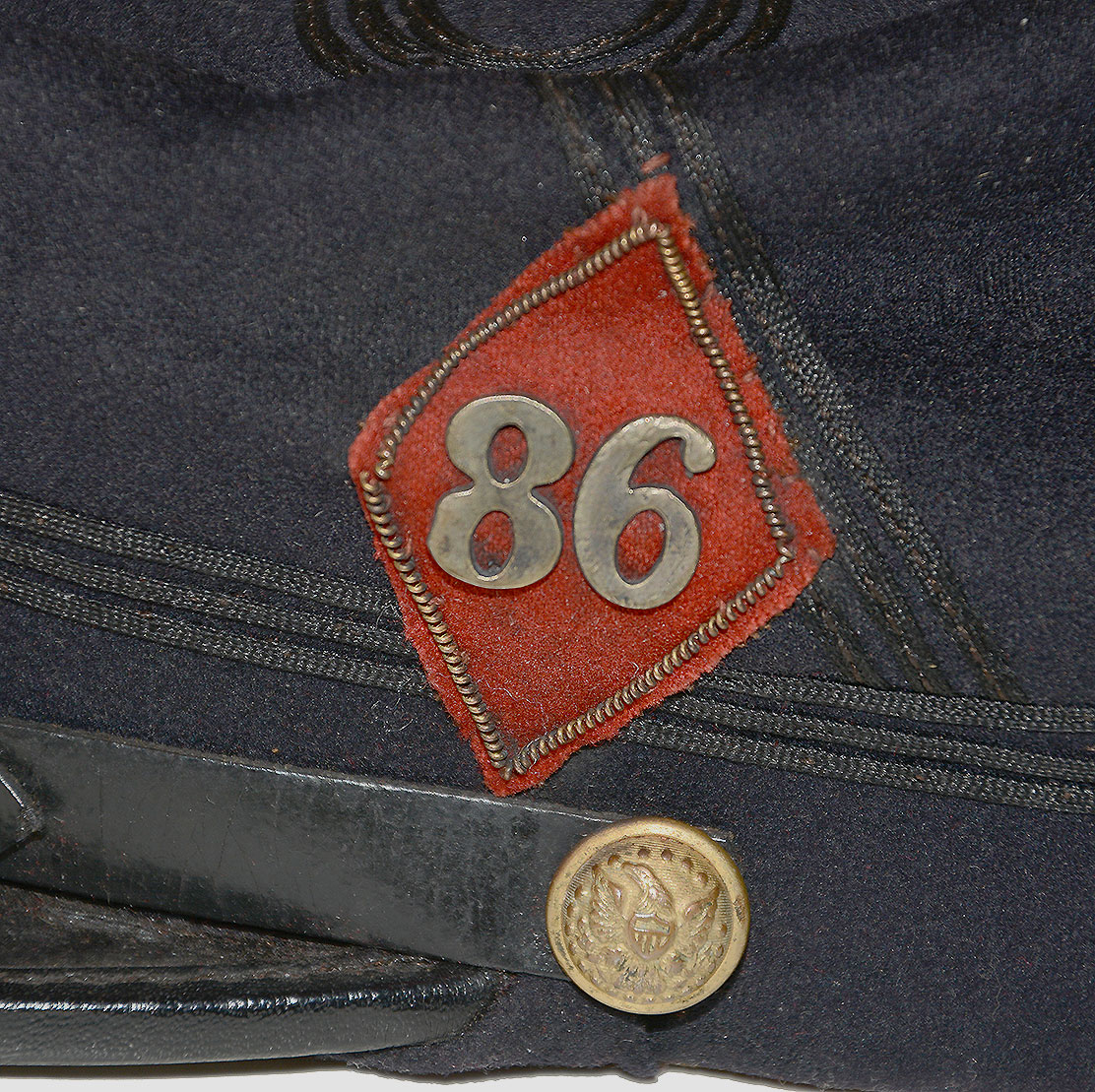
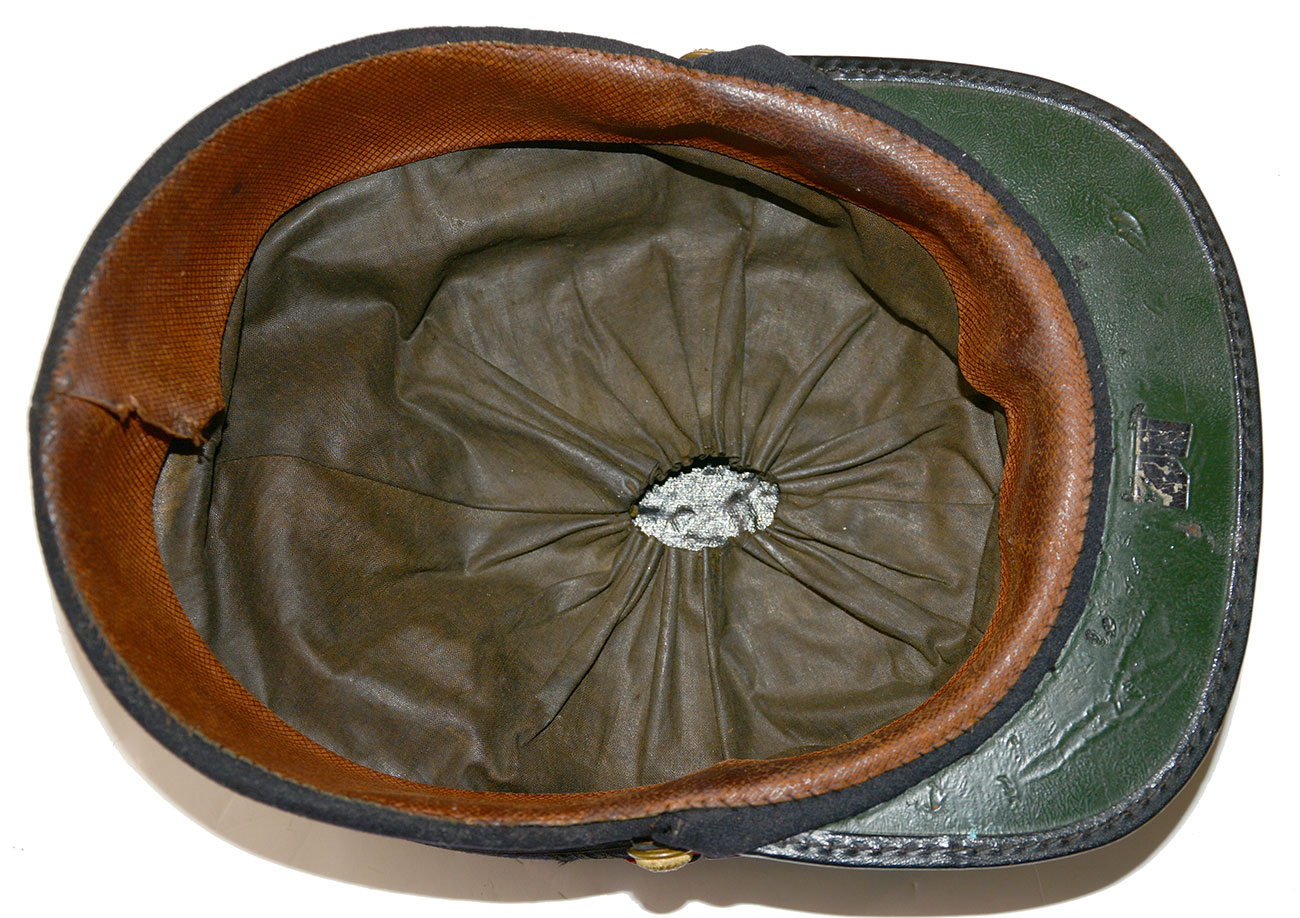
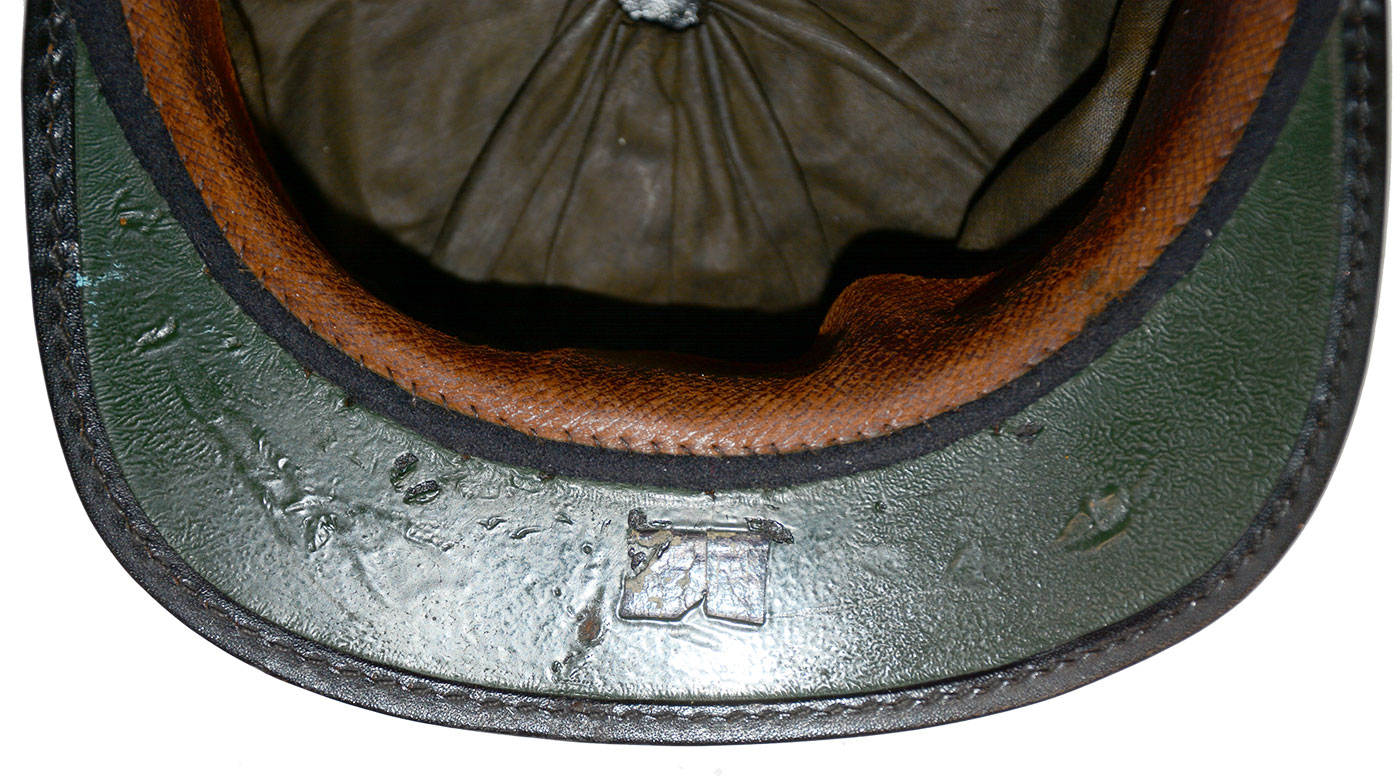
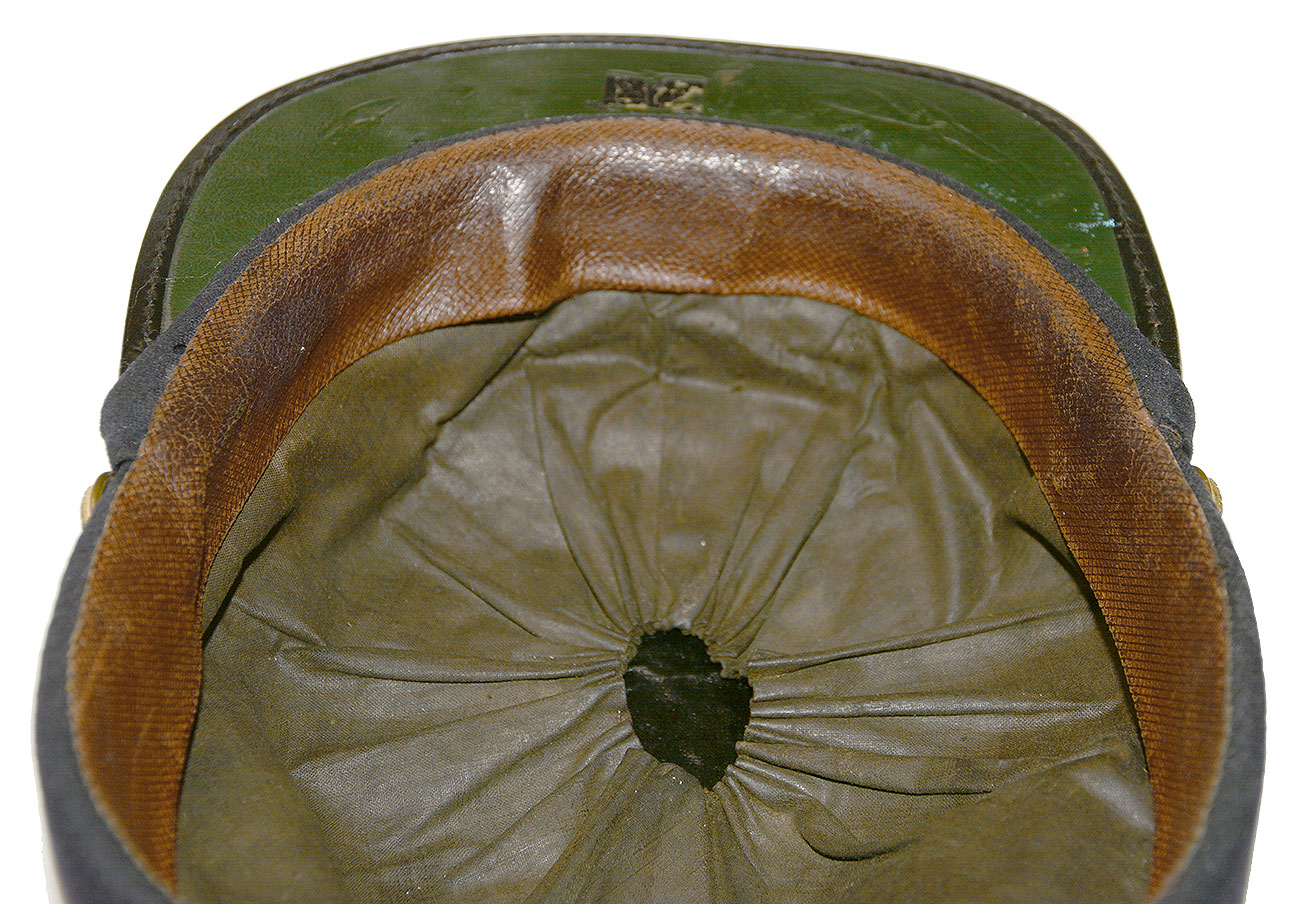
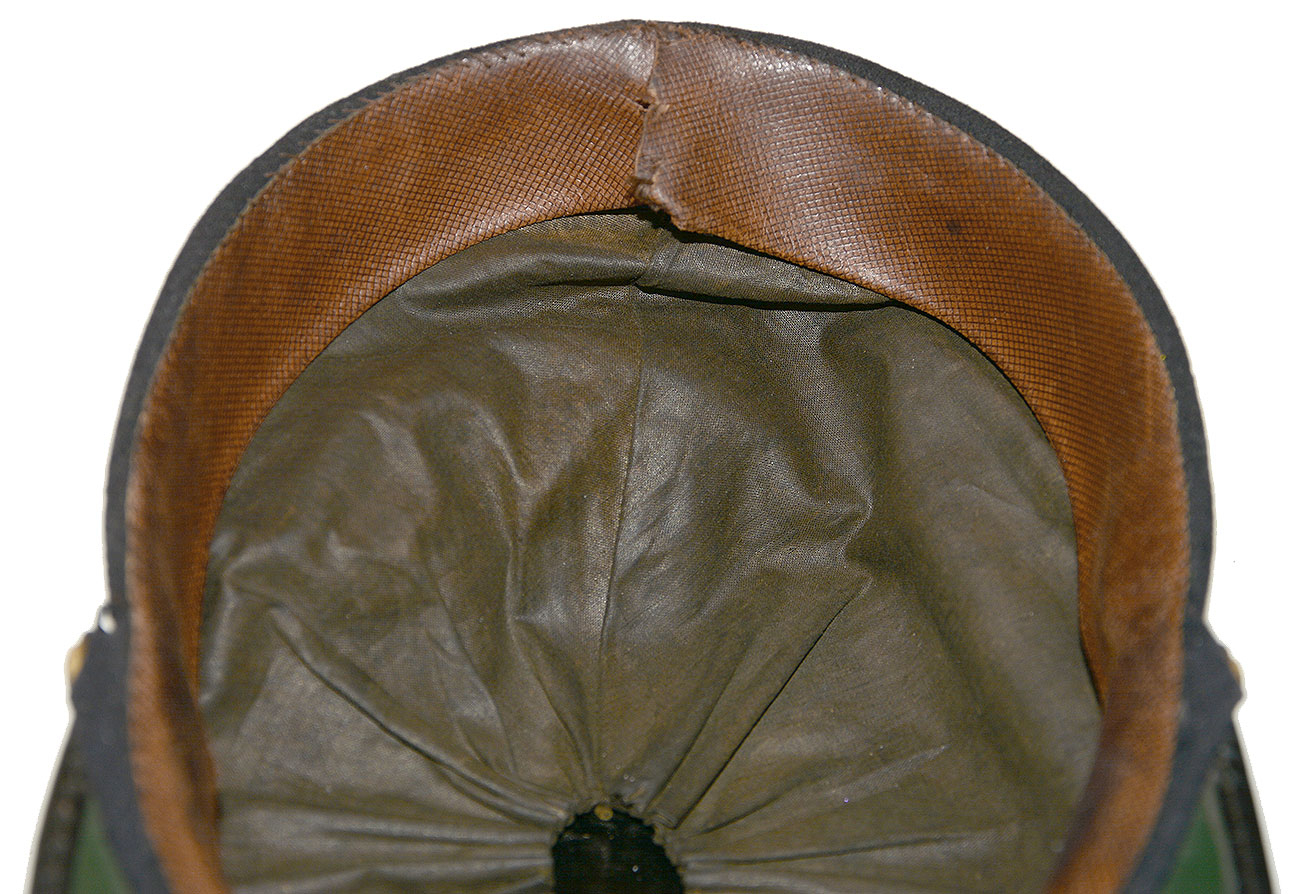
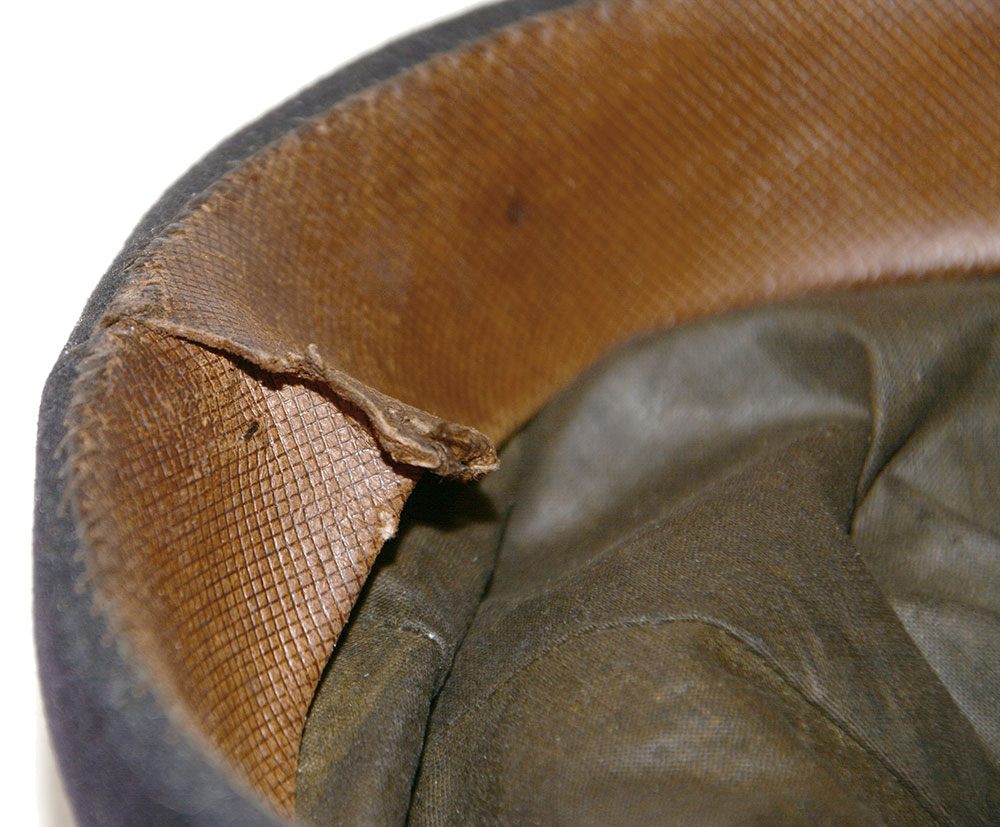
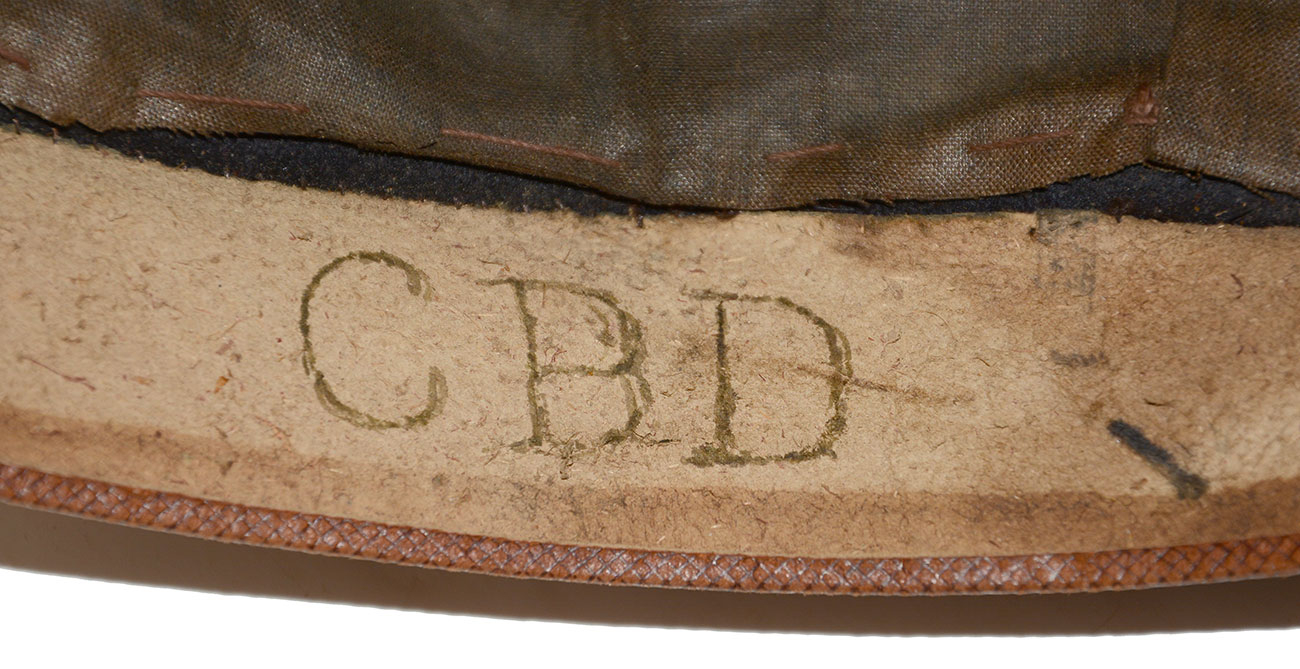
THE CHASSEUR STYLE KEPI: The 1/8 inch wide black "flat fall" braid in 3 rows running up the sides and front of the cap is characteristic of those seen used almost exclusively in New York regiments. This hat made of fine dark blue woolen broadcloth rises 5 inches in the rear and 3 inches in the front. The top inset disc has a diameter of 5 inches. The internal head size is at least a 7 1/2. There is no insect damage or any tears. On the front is sewn a quality metallic embroidered badge set on black felt bearing a gold wreath within which is a silver metallic embroidered "M.S." (MEDICAL SERVICE). This badge is bound with gold wire on its circumference and measures 3 inches by 2 inches. On the right side of the cap is a red diamond shaped cloth Corps badge bound in gold metallic wire; it measures 2 inches by 1 1/4 inch. This is the badge of the 1st brigade, 1st division, 3d corps. The 3rd corps badge was authorized late in 1862 and being worn by the spring of 1863. It was in June of 1863 just before Gettysburg that the 86th joined the 1st Division. Within this are the silver numerals "86" for the 86th New York Volunteer Infantry. The working Patent leather sweat band is held securely by 2 Union eagle officer buttons. The front bill is Patent leather and is bound; on the underside it is painted green as seen on the finer officer's caps. The interior has a tarred waterproofed internal disc. There is a completely intact brown, turned from black, adjustable polished cotton lining. The fine brown leather sweat band is 1 3/4 high and is hand tacked into place. On the inner left side are Darrall's initials in "C.B.D." in handwritten capital letters. The cap dates from June of 1863 to March of 1864 inclusive; after this the 3rd Corps was dissolved and Darrell and the 86th NY were assigned the 1st brigade, 3d division, 2nd corps; the 3rd Corps badge would have been ordered changed to a 2nd Corps badge at that time. Probably worn by Darrall at Gettysburg, the history and condition of this classic New York State style Chasseur's kepi are tremendous! [pe][ph:L]
~~~~~~~~~~~~~~~~~~~~~~~~~~~~~~~~~~~
THIS ITEM, AS WITH ALL OTHER ITEMS AVAILABLE ON OUR WEB SITE,
MAY BE PURCHASED THROUGH OUR LAYAWAY PROGRAM.
CLICK HERE FOR OUR POLICIES AND TERMS.
THANK YOU!
Inquire About A RARE UNION SURGEON'S KEPI IDENTIFIED TO A FUTURE CONGRESSMAN – CHESTER B. DARRALL
Most Popular
Historical Firearms Stolen From The National Civil War Museum In Harrisburg, Pa »
Theft From Gravesite Of Gen. John Reynolds »
Selection Of Unframed Prints By Don Troiani »
Fine Condition Brass Infantry Bugle Insignia »
featured item
AUGUST, 1862 CONFEDERATE DISCHARGE – PVT. JOHN MCCOLLUM, 3rd ARKANSAS – EX COCO-COLLECTION
This scarce subtype of document served as a record of the honorable discharge of Pvt. John McCollum of Company F, 3rd Arkansas Infantry. He enlisted on September 17th, 1861 for a term of 1 year, and his discharge is dated August 15th, 1862 and he… (1300-85). Learn More »
site search