


site search
online catalog
A VERY RARE MAINSPRING VICE FROM ANTIETAM
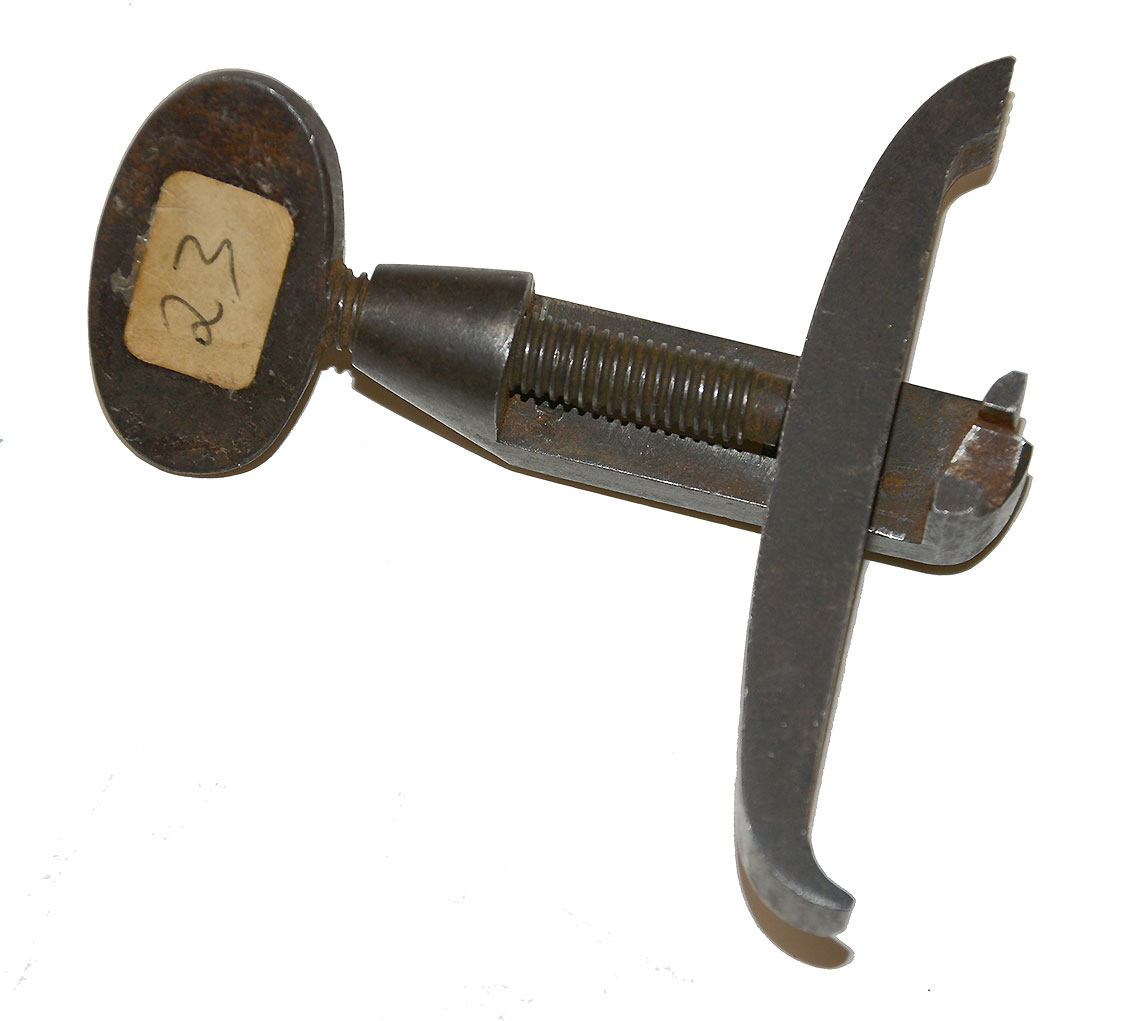
Hover to zoom
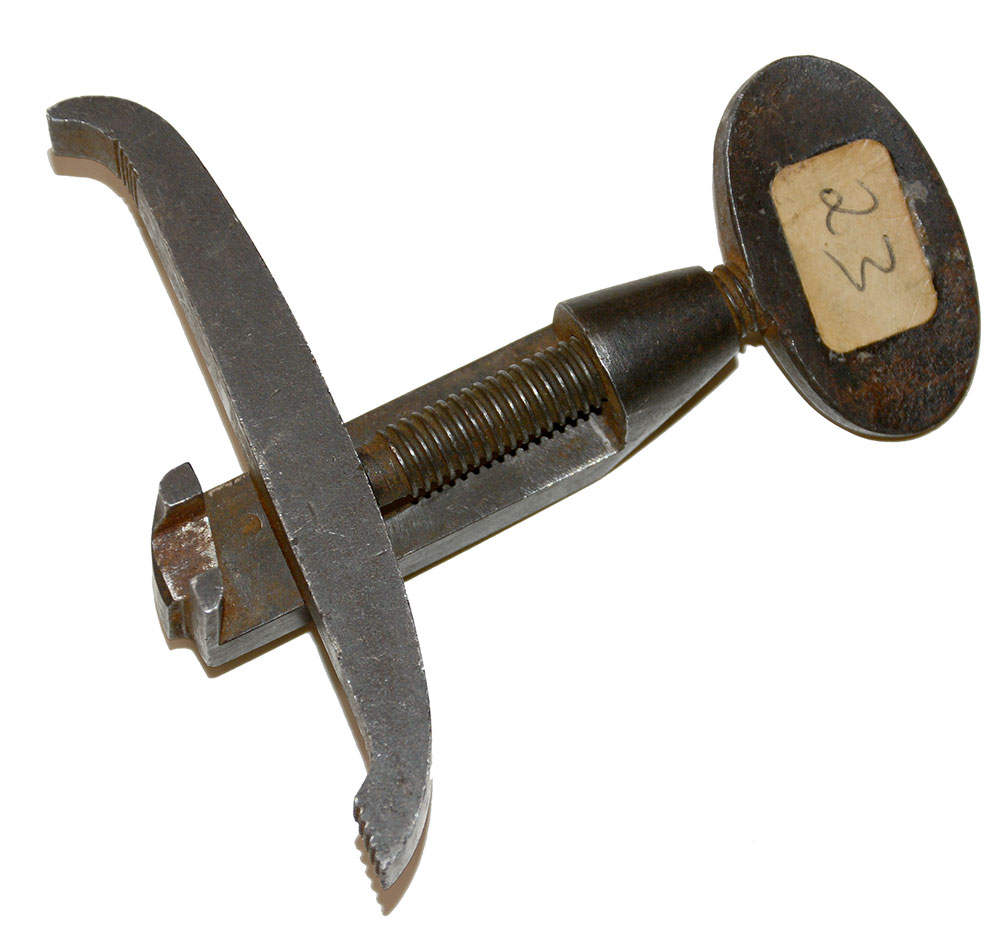
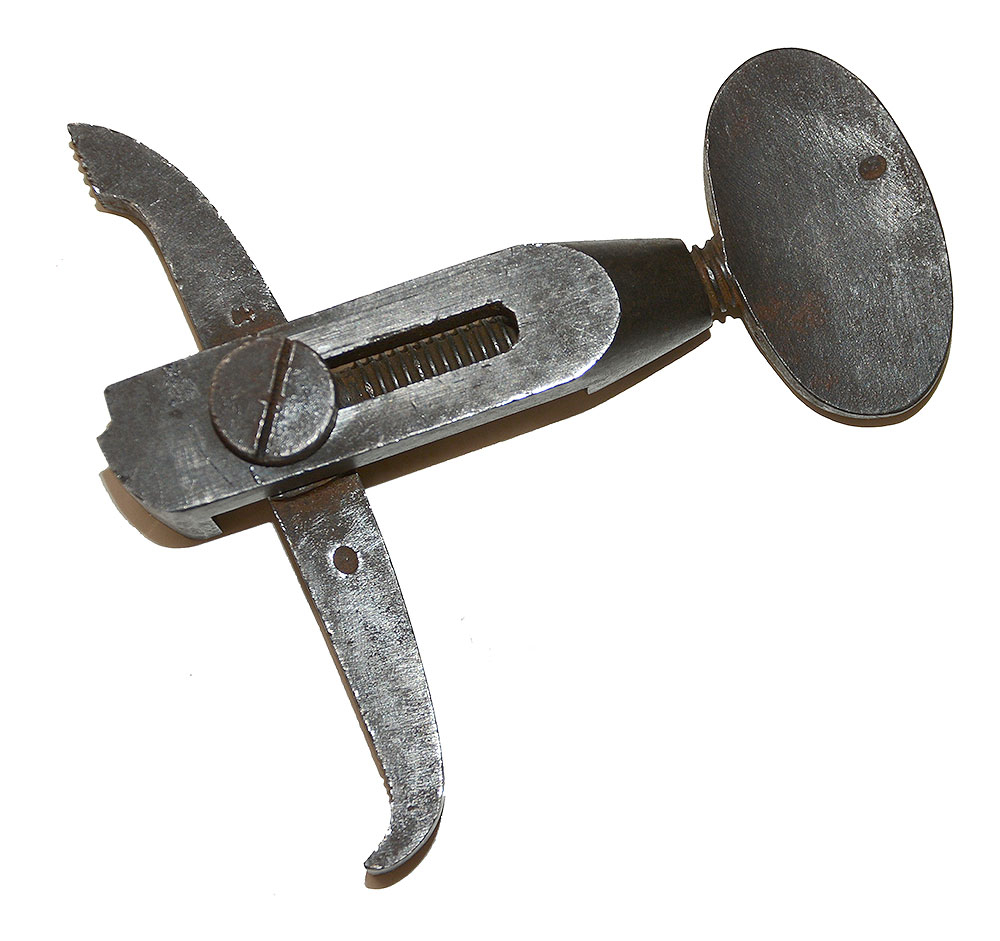
$295.00 SOLD
Quantity Available: None
Item Code: 1284-39
The vise was used to compress musket or rifle mainsprings in general and, in this case, the Saxon Model 1851 rifle in particular. Just under 29,000 Saxon or Dresden rifles were imported by the US during the war. These guns are instantly identifiable in period images due to their distinctive double-strapped middle barrel band. Interestingly, the Dresden rifle was one of the very few European imports rated as “First Class" by the Ordnance Department. The guns in .58 caliber were the product of P.J. Malherbe & Company of Liege and are all marked with this maker's name on the rear of the back action lock, behind the hammer. The Confederates acquired these arms principally through battlefield capture; one of particular significance was carved on the stock "A RELICT OF REBELDOM... ANTIETAM". This from the John Henry Kurtz collection sold for 5 figures over 15 years back.
This mainspring vice is very finely made and has 4 components; please see the photos posted. It 4 inches plus in height by 3 1/2 inches across. It is steel and the condition is excellent and it functions perfectly. This vice was found after the battle of Antietam, Sept 17th, 1862, and for years was on display in a local museum until it was acquired by legendary dealer and collector Mr. George Gorman III decades ago. This is a rare accessory. [pe][ph:L]
~~~~~~~~~~~~~~~~~~~~~~~~~~~~~~~~~~~
THIS ITEM, AS WITH ALL OTHER ITEMS AVAILABLE ON OUR WEB SITE,
MAY BE PURCHASED THROUGH OUR LAYAWAY PROGRAM.
CLICK HERE FOR OUR POLICIES AND TERMS.
THANK YOU!
Inquire About A VERY RARE MAINSPRING VICE FROM ANTIETAM
Most Popular
Historical Firearms Stolen From The National Civil War Museum In Harrisburg, Pa »
Theft From Gravesite Of Gen. John Reynolds »
Selection Of Unframed Prints By Don Troiani »
Fine Condition Brass Infantry Bugle Insignia »
Rare Identified 65Th Ny Sergeant’s Jacket, With Manscript Material: 1St U.s. Chasseurs »
featured item
MORTON’S BATTERY FLAG OF FORREST’S CAVALRY: EX-GUNTHER COLLECTION, CHICAGO HISTORICAL SOCIETY, & TEXAS CIVIL WAR MUSEUM
This is one of two wartime Confederate flags flown by Capt. John W. Morton consecutively as guidons for his battery or simultaneously with one likely as the battery flag and the other as a personal or designating flag while Morton served also as … (1286-621). Learn More »
site search