


site search
online catalog
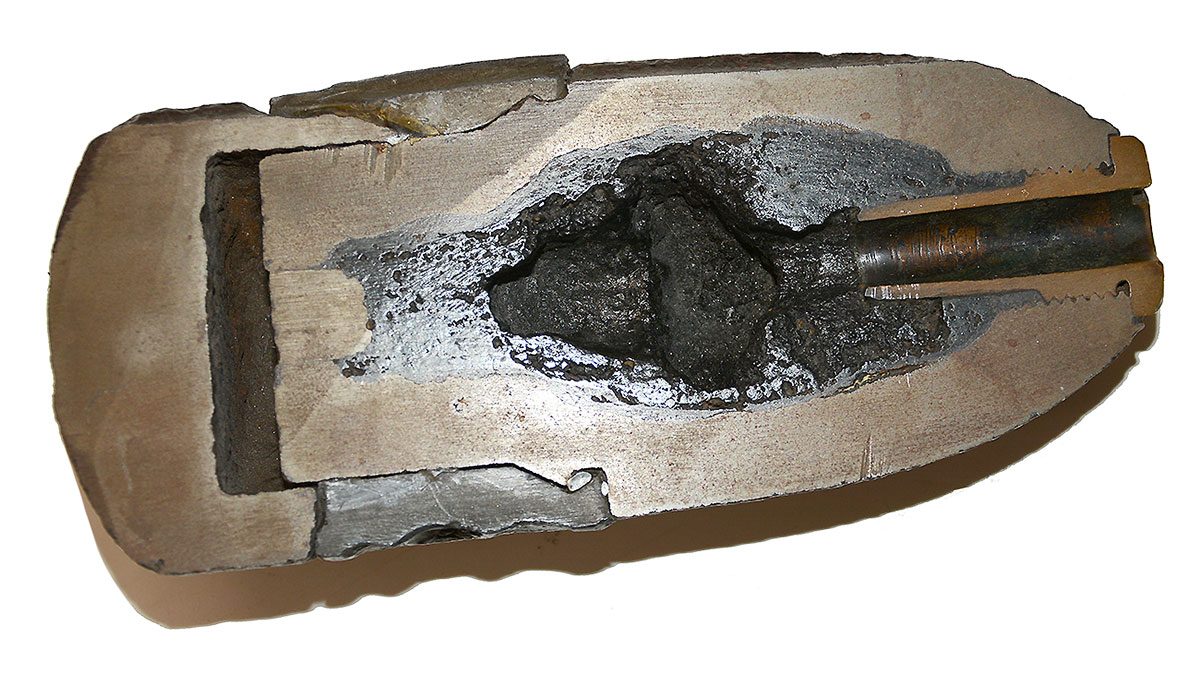
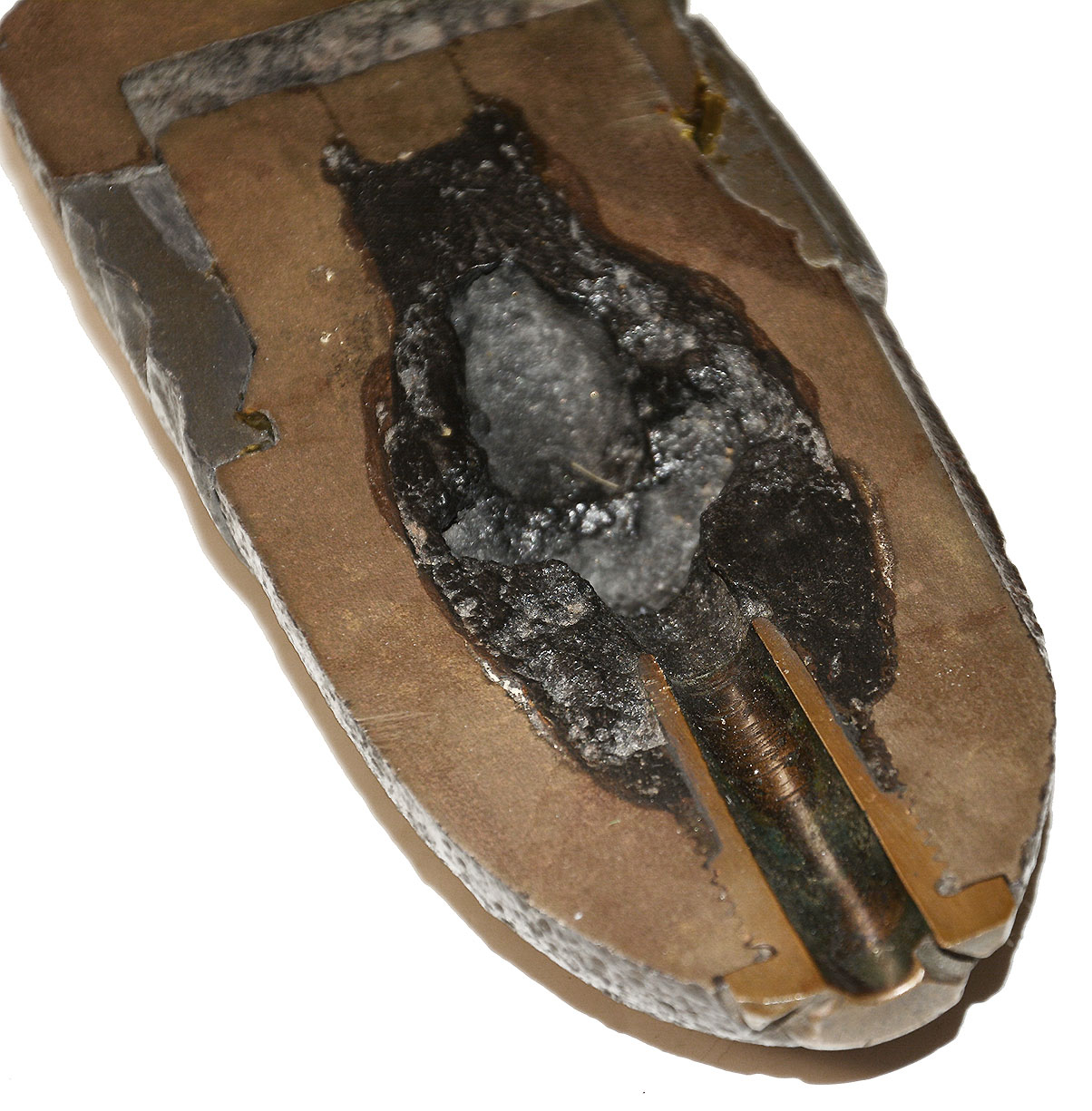
SECTIONED CIVIL WAR US 3” HOTCHKISS SHELL
Hover to zoom
$275.00 SOLD
Quantity Available: None
Item Code: 844-213
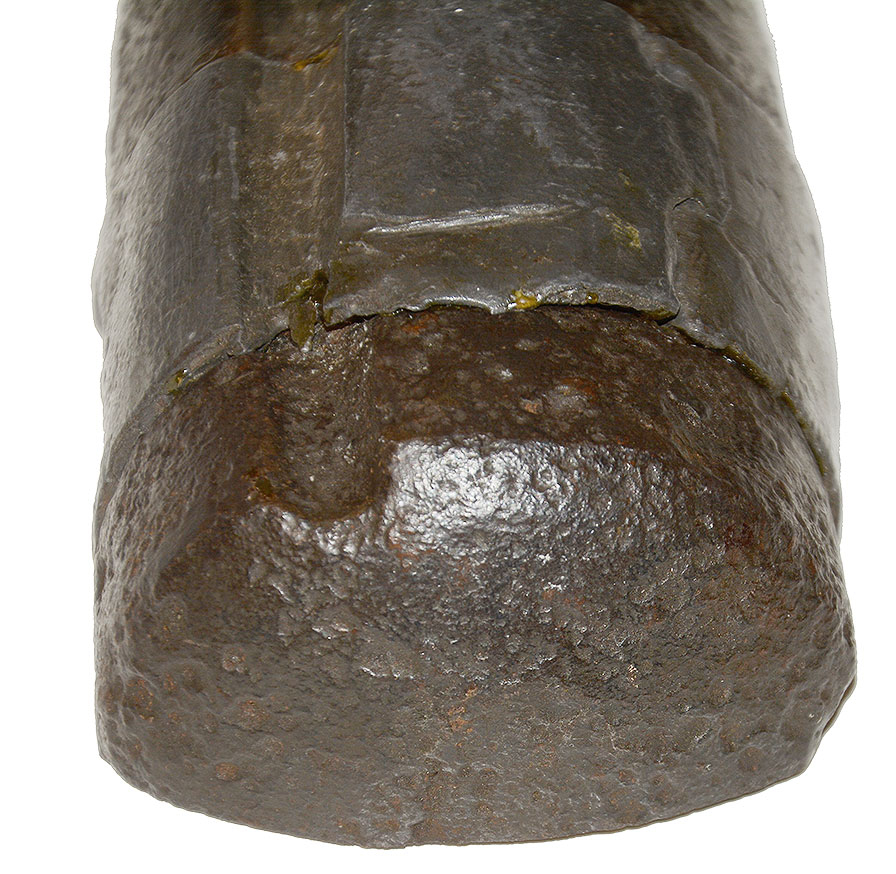
A very educational example of the standard US Hotchkiss artillery shell used in the 3-inch Ordnance Rifle field guns, a widely used artillery piece in the Civil War.
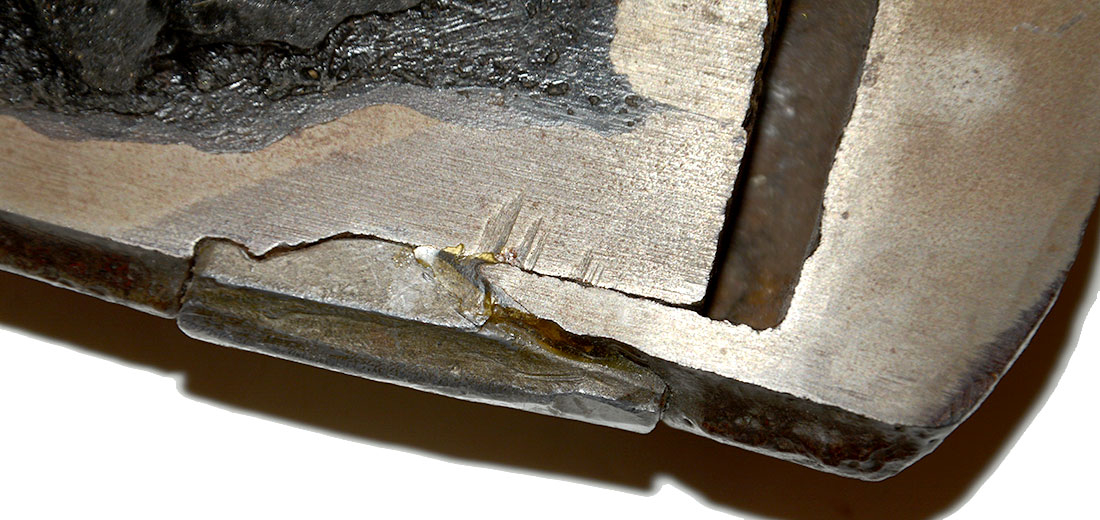
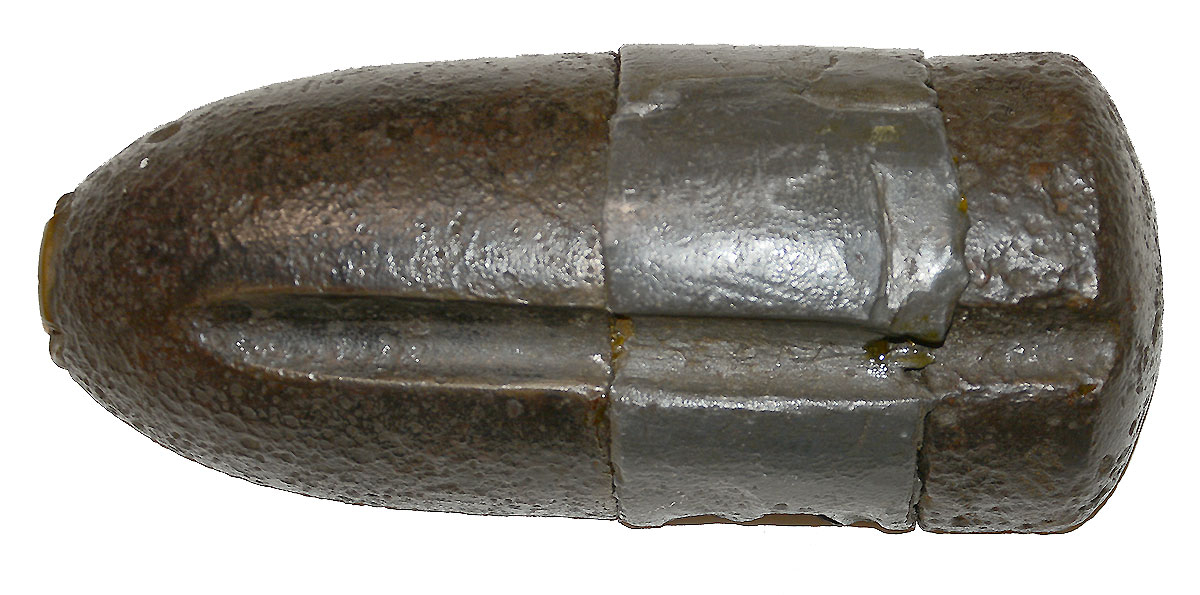
The shell was made in three pieces- the shell proper, which would fragment when its internal charge detonated, a metal base cup, and a lead “sabot band” wrapped around the narrow base of the shell in between. When fired, the propellant charge forced the base cap against a lead band, forcing it to expand and take the rifling of the cannon barrel, imparting the spin that made rifle projectiles so much more accurate. The shell itself was detonated in the conventional fashion by a time-fuze inserted in the brass adapter screwed into the nose of shell, the gunner estimating the distance to the target and cutting the fuze so as to detonate over it.
The shell was sectioned lengthwise to illustrate its internal construction, preserving half the time fuze, the shell body, lead band and cup, with some of the matrix still inside that was used to create a powder chamber for the detonating charge- which was removed of course. The exterior is just as worth studying. The shell body, lead band, and base cup all show flame grooves that were an improvement to ensure flame from the propellant charge would reach and ignite the time-fuze in fuze-adapter in the nose of the shell.
The exterior of the shell is brown in color with typical shallow corrosion to the iron and somewhat bluish-gray tone to the lead band. Completely inert and a very illustrative piece in any artillery collection. [sr][ph:L]
~~~~~~~~~~~~~~~~~~~~~~~~~~~~~~~~~~~
THIS ITEM, AS WITH ALL OTHER ITEMS AVAILABLE ON OUR WEB SITE,
MAY BE PURCHASED THROUGH OUR LAYAWAY PROGRAM.
CLICK HERE FOR OUR POLICIES AND TERMS.
THANK YOU!
Inquire About SECTIONED CIVIL WAR US 3” HOTCHKISS SHELL
Most Popular
Historical Firearms Stolen From The National Civil War Museum In Harrisburg, Pa »
Theft From Gravesite Of Gen. John Reynolds »
Selection Of Unframed Prints By Don Troiani »
Fine Condition Brass Infantry Bugle Insignia »
featured item
1/4 PLATE THERMOPLASTIC CASE WITH AMBROTYPE OF WOMAN & TINTYPE OF 2/LT. BAKER 20TH PA. INFANTRY – THE GREAT RAILROAD STRIKE OF 1877
Left half of this hard case houses an ambrotype of a finely dressed woman. Her cheeks and forehead are tinted. The image is matted, framed, and under glass as is typical. The right side of the case holds an 1877 tintype image of S. Charles Baker in… (1221-53). Learn More »
site search