


site search
online catalog
Relics
Showing 111 to 115 out of 314

SPRINGFIELD 1838 DATED M1816 PERCUSSION CONVERSION MUSKET FROM THE YORK SPRINGS, PA., G.A.R. POST, WITH MILITARY RACK MARKINGS
A good example of a classic early Civil War musket: a Model 1816 converted from flintlock to percussion in the early 1850s to bring it up to par with the new, percussion M1842 muskets. These are .69… (1202-429). Learn More »
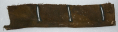
CIVIL WAR-INDIAN WAR UNIFORM LAPEL FROM FORT PEMBINA
This strip of cloth showing three buttonholes (and what seems to be part of a fourth) is the remnant of an army dress coat discarded after its useful days were done at Fort Pembina, a small frontier… (1052-610). Learn More »
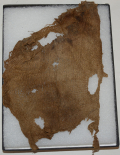
INDIAN WAR SOLDIER’S MITTEN PIECE FROM FORT PEMBINA, ND
This comes from the excavations at Fort Pembina, occupied 1870-1895, where cold weather in winter months might well be a concern. The army began issuing mittens in 1873. Before that men were left to… (1052-621). Learn More »
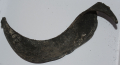
CIVIL WAR-INDIAN WAR FORAGE CAP VISOR
This is a well preserved leather visor from a forage cap recovered at Fort Pembina, ND, where it was preserved in remarkable condition by wet, anaerobic soil conditions. This is typical of the simple… (1052-485). Learn More »
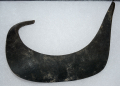
CIVIL WAR-INDIAN WAR FORAGE CAP VISOR
This is a well preserved leather visor from a forage cap recovered at Fort Pembina, ND, where it was preserved in remarkable condition by wet, anaerobic soil conditions. This is typical of the simple… (1052-482). Learn More »
Showing 111 to 115 out of 314
Most Popular
Historical Firearms Stolen From The National Civil War Museum In Harrisburg, Pa »
Theft From Gravesite Of Gen. John Reynolds »
Selection Of Unframed Prints By Don Troiani »
Fine Condition Brass Infantry Bugle Insignia »
featured item
CAVALRY OFFICER’S SABRE IDENTIFIED TO CAPTAIN MARCUS A. MOORE, 1ST MASSACHUSETTS CAVALRY
Manufactured: Newark, NJ Maker: Sauerbier, Henry Year: Early Civil War Model: Model 1840 transitional with 1860 style grip Size: 34.2 inch blade, 1.17 wide, .353 thick This sword has all true Type 1 features with the exception of the Model 1860 style… (870-159). Learn More »
site search