

site search
online catalog
Uniforms & Cloth
Showing 181 to 200 out of 231
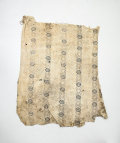
PIECE OF PRIVATE PURCHASE SOLDIER’S SHIRT FORT PEMBINA, NORTH DAKOTA
Army issue shirts had little going for them in comfort and less in style. This is a fragment of a privately purchased shirt from the excavations at Fort Pembina, ND, garrisoned from 1870 to 1895. This… (1052-606). Learn More »
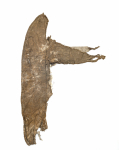
MODEL 1872 FATIGUE BLOUSE FRAGMENT: FORT PEMBINA
This appears to be the rollover collar and portion of the chest from a M1872 fatigue blouse. This was pleated nine-button blouse piped on the collar and cuff, made in lined and unlined versions, with… (1052-598). Learn More »
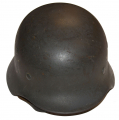
WORLD WAR TWO GERMAN DOUBLE DECAL MODEL 1940 LUFTWAFFE HELMET
Helmet is the Model 1940 with rolled edge and molded air vents. Helmet is painted a dark gray color. The left side has the Luftwaffe decal of which 98% remains with the swastika missing. The right… (1176-16). Learn More »
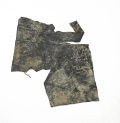
SCARCE CIVIL WAR PONCHO OR “GUM BLANKET” FRAGMENT
Civil War period ponchos and rubber blankets are extremely scarce despite being widely used and valued by troops in the field. They were so useful at home as to be used up by veterans and their… (1052-630). Learn More »
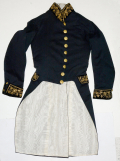
CIRCA 1835 US DIPLOMAT’S COAT
This is a colorful, elegant, and very high-grade cut-away tail coat in excellent condition with no mothing whatsoever and just one small tear under one arm. The coat is single breasted, fitted with… (622-410). Learn More »
$3,825.00
Originally $4,250.00
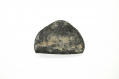
KEPI OR DRESS HAT STIFFENER FROM FORT PEMBINA
This leather disk seems to be the stiffener from inside the top of a hat, either a kepi or dress hat. It is circular and folded over on one side, black in color with gray and white stains, and comes… (1052-476). Learn More »
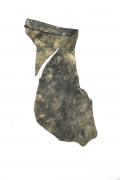
SCARCE CIVIL WAR PONCHO OR “GUM BLANKET” FRAGMENT
This scarce fragment comes from either a poncho or blanket (often referred to as “rubberized,” “gum,” or “painted” blankets.) The significant difference being the presence of slit for the… (1052-627). Learn More »
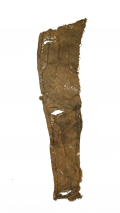
CIVIL WAR-INDIAN WAR UNIFORM COAT LAPEL FROM FORT PEMBINA
This strip of cloth shows three buttonholes indicating it is from the lapel of a coat and the spacing suggests it is from an army fatigue blouse. This comes from excavations at Fort Pembina, a small… (1052-614). Learn More »
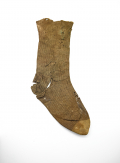
INDIAN WAR SOLDIER’S SOCK FROM FORT PEMBINA, ND
This appears to be the 1877 pattern army sock, which was medium gray in color, had white toes, and the weave of the heel running parallel with the leg and nearly at a right angle to the foot. We show… (1052-594). Learn More »
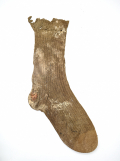
INDIAN WAR SOLDIER’S SOCK FROM FORT PEMBINA, ND
This comes from the excavations at Fort Pembina, ND, and appears to be the 1877 pattern army sock, which was medium gray in color, had white toes, and the weave of the heel running parallel with the… (1052-593). Learn More »
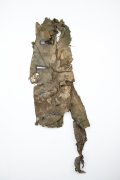
CIVIL WAR-INDIAN WAR UNIFORM COAT LAPEL FROM FORT PEMBINA
This strip of cloth with four closely spaced button holes is likely the remnant of an army dress coat discarded after its useful days were done at Fort Pembina, a small frontier garrison in North… (1052-613). Learn More »
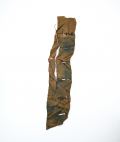
CIVIL WAR-INDIAN WAR UNIFORM LAPEL FROM FORT PEMBINA
This strip of cloth showing six buttonholes is likely the remnant of an army dress coat discarded after its useful days were done at Fort Pembina, a small frontier garrison in North Dakota, where wet,… (1052-612). Learn More »
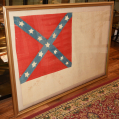
CAPTURED CONFEDERATE SECOND NATIONAL FLAG, UNUSUAL VARIATION WITH MADAUS LETTER, FROM A SOLDIER IN THE 59th NEW YORK
This 2nd National Confederate Flag was purchased in the 1980s by a well-respected Florida dealer/collector directly from descendants of the Union soldier who had kept it as a trophy. It comes with a… (1179-019). Learn More »
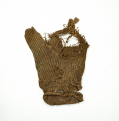
SCARCE INDIAN WAR SOLDIER’S MITTEN FROM FORT PEMBINA, ND
This comes from the excavations at Fort Pembina, occupied 1870-1895, where cold weather in winter months might well be a concern. The army began issuing mittens in 1873. Before that men were left to… (1052-585). Learn More »
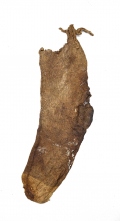
INDIAN WAR SOLDIER’S SOCK FROM FORT PEMBINA, ND
This comes from the excavations at Fort Pembina, ND, and appears to be the 1877 pattern army sock, which was medium gray in color, had white toes, and the weave of the heel running parallel with the… (1052-583). Learn More »
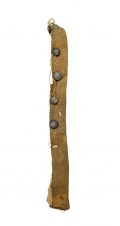
CIVIL WAR-INDIAN WAR UNIFORM COAT LAPEL FROM FORT PEMBINA
This lapel comes from a US army coat discarded by a soldier at Fort Pembina, ND, and still has five enlisted, general service eagle buttons in place. This comes from excavations in wet, anaerobic soil… (1052-565). Learn More »
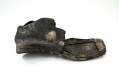
SCARCE CIVIL WAR ARMY ISSUE SHOE, A.K.A. BROGAN OR BOOTTEE
This Civil War issue shoe is missing the vamp, but shows illustrates the typical construction of an issue brogan. This comes from a U.S. Army Indian War post established in 1870, a period in which the… (1052-542). Learn More »
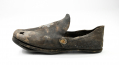
SCARCE CIVIL WAR ARMY ISSUE BROGAN ALTERED TO A BARRACKS SHOE AT FORT PEMBINA
This Civil War army-issue shoe is in very good condition though excavated and easy to take for a barn or attic find. This was recovered at Fort Pembina, ND, a US army post established in 1870, where… (1052-287). Learn More »
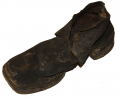
US ISSUE MODEL 1872 SHOE, MAKER MARKED, POSSIBLY BY JOHN MUNDELL OF PHILADELPHIA
This army-issue was excavated at Fort Pembina, ND, established in 1870 and in operation to 1895. It was found on private property, with the owner’s permission, and is in good condition, a result of… (1052-492). Learn More »
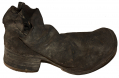
EARLY INDIAN WAR ALTERED BARRACKS OR CAMP SHOE
This is an unusual Indian War soldier’s camp or barracks shoe from Fort Pembina, ND, a small U.S. army post from 1870 to 1895. The heel portion of the quarters was cut away, either to salvage the… (1052-288). Learn More »
Showing 181 to 200 out of 231
Most Popular
Historical Firearms Stolen From The National Civil War Museum In Harrisburg, Pa »
Theft From Gravesite Of Gen. John Reynolds »
Selection Of Unframed Prints By Don Troiani »
Fine Condition Brass Infantry Bugle Insignia »
Rare Identified 65Th Ny Sergeant’s Jacket, With Manscript Material: 1St U.s. Chasseurs »
featured item
CIVIL WAR MESS CHEST, COMPANY G 6th MASSACHUSETTS VOL. MILITIA
This Civil War mess chest was stenciled twice on the underside of the lid by William Boyd Tingley, the wagoner of Company G of the 6th Mass Volunteer Militia, who was probably charged with transporting it for the company officers. This measures 24”… (1202-869). Learn More »
site search