

site search
online catalog
WWII JAPANESE OFFICER’S SWORD WITH HANDMADE BLADE
Hover to zoom

$3,500.00
Quantity Available: 1
Item Code: 2026-565
Shipping: Determined by Method & Location of buyer
To Order:
Call 717-334-0347,
Fax 717-334-5016, or E-mail
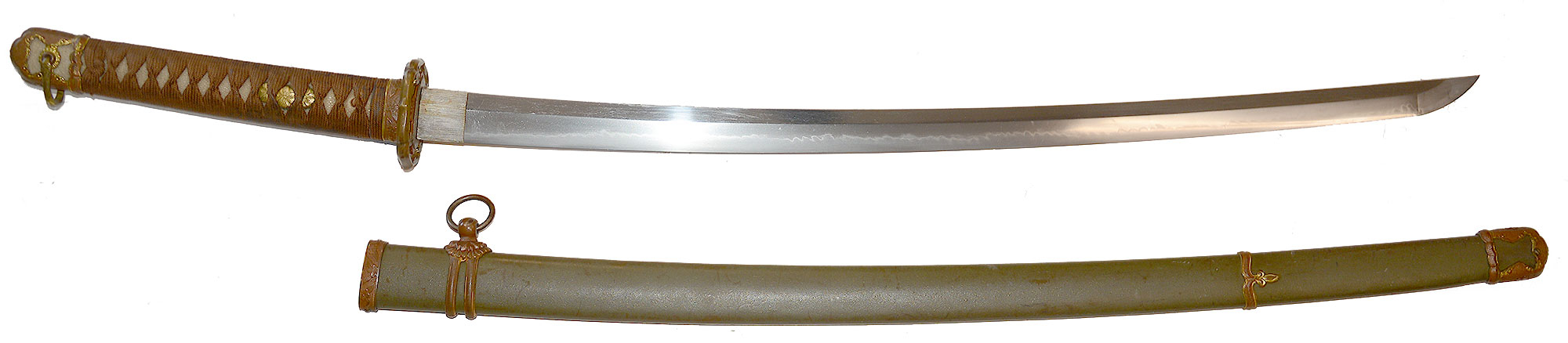
Exceptional Japanese Army Officer’s sword with a handmade traditional blade crafted by an elite swordsmith! This blade was made by Imai Ichiryūshi Tsuguyoshi (1902 – 1989) of Gunma Prefecture (near Tokyo). Most importantly, he was a member of the Rikugun Jumei Tosho (RJT), or Imperial Japanese Army certified swordsmith guild. Members of the RJT were hand-selected from the top swordsmiths in Japan to make traditionally made blades for the army during the period 1942 to 1945. RJT smiths were provided with Tamahagane steel and charcoal by the army for this purpose (handmade Japanese blades using the traditional method dating back to the 1200s can only be made from Tamahagane steel). Tsuguyoshi’s name appears on the list of RJT smiths.
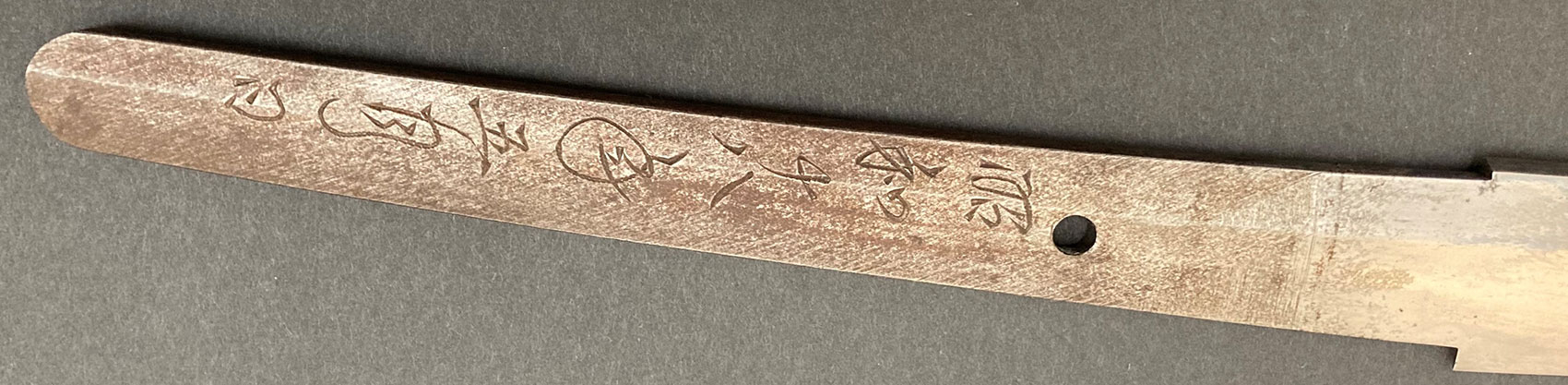
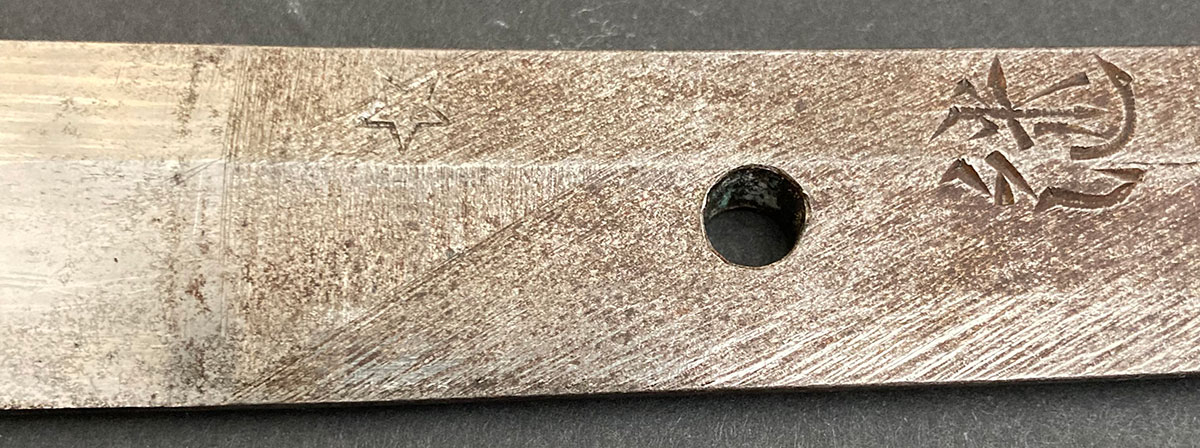
Principal markings on the blade tang include hand applied inscriptions of “Tsuguyoshi made this” and “A day in May of Showa Year 18” (May 1943). There is also a star stamp on the tang denoting that the blade is made of traditional Tamahagane steel supplied by the Imperial Japanese Army to members of the Rikugun Jumei Tosho. Older reference books (such as Kapp & Kapp’s Modern Japanese Swords published in 2015) confused these star stamps for arsenal stamps, but this interpretation has been corrected in more recent scholarship. The number “763” is also inscribed on the tang; this is not a serial number, but is the bench assembly number denoting the matching Type 98 sword furniture/fittings that go with the blade.
Tsuguyoshi’s original name was Imai Fujitarō. He was a student of Kasama Shigetsugu and began learning the sword making trade as a very young apprentice. The workmanship exhibited in this blade is exceptional with no forging flaws. The blade remains unaltered and has a cutting edge of 66 cm / 26 inches. The tempered cutting edge (hamon) design is irregular (midare). The base of the blade exhibits the mark or “signature” (nagashi) of the original polisher; these are hand burnished horizontal lines that appear similar to a modern bar code. The polisher’s mark is significant because it will only be found on traditional handmade blades (polishing Japanese sword blades with special stones is an art in itself). The blade’s overall condition is excellent with only a few minor surface abrasions from service use.
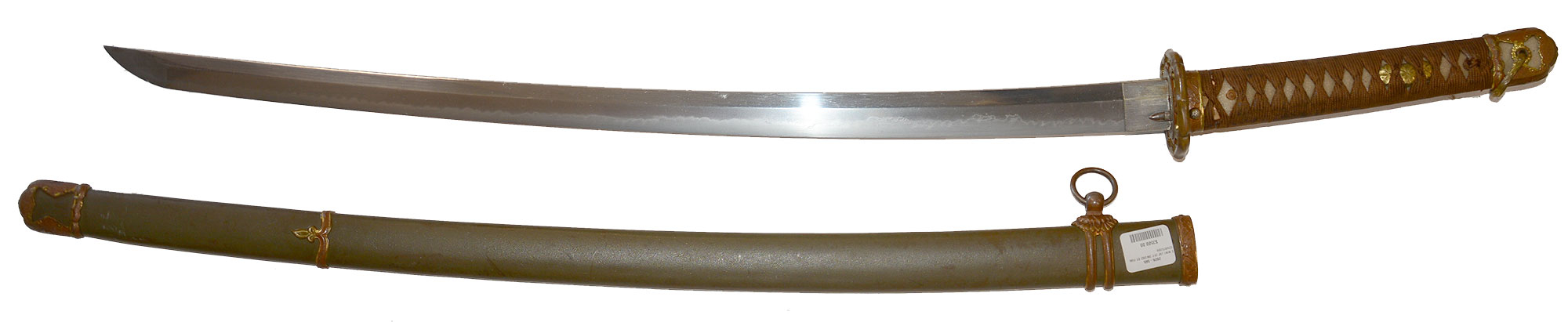
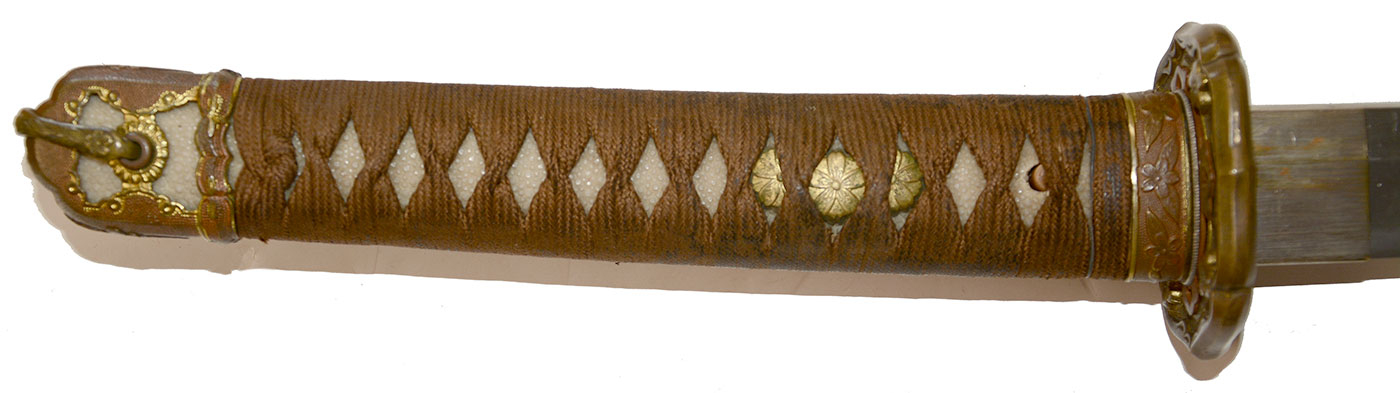
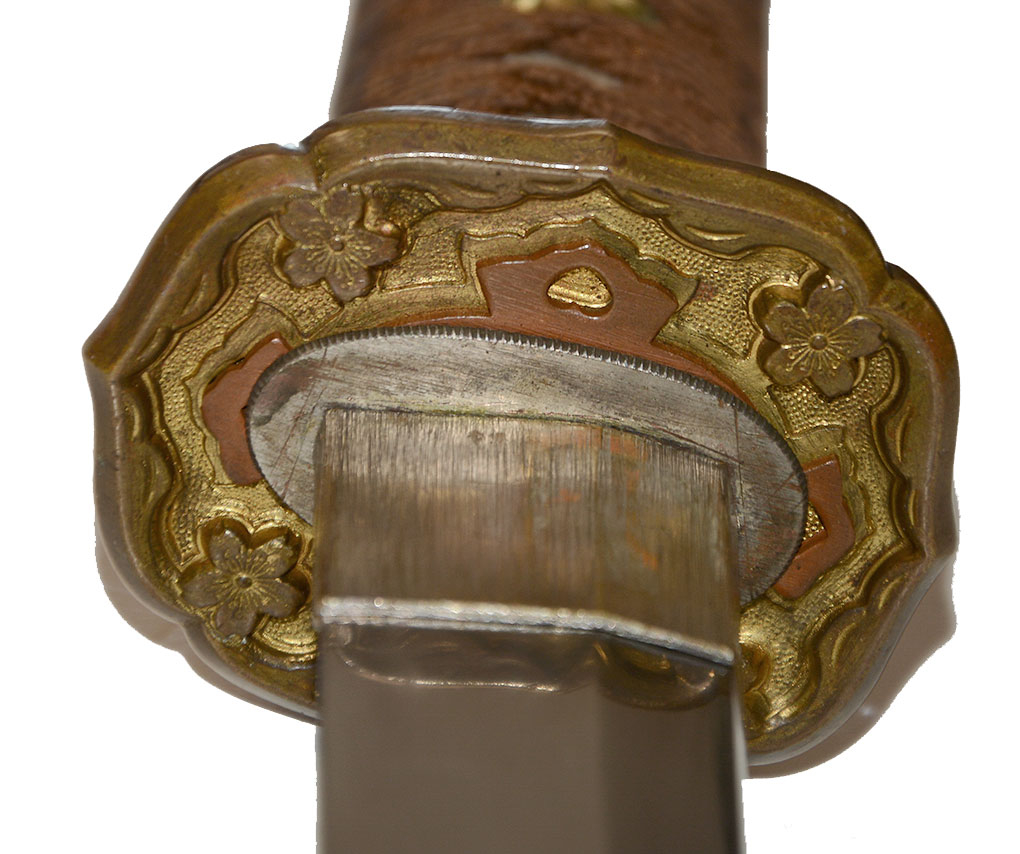
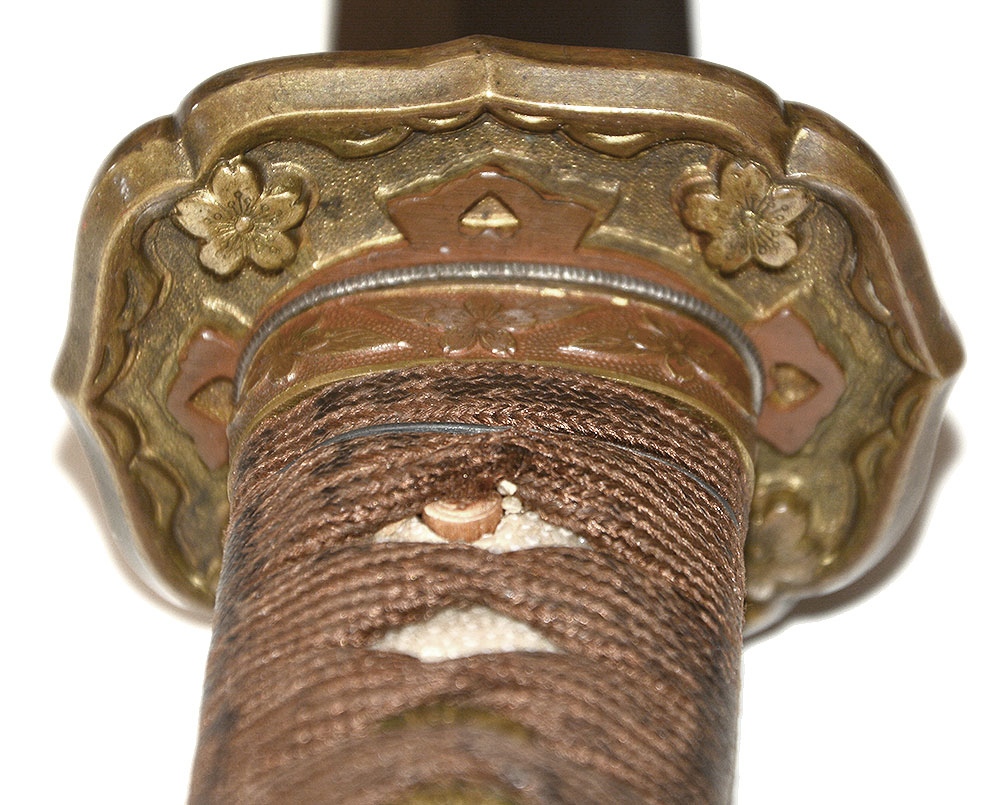
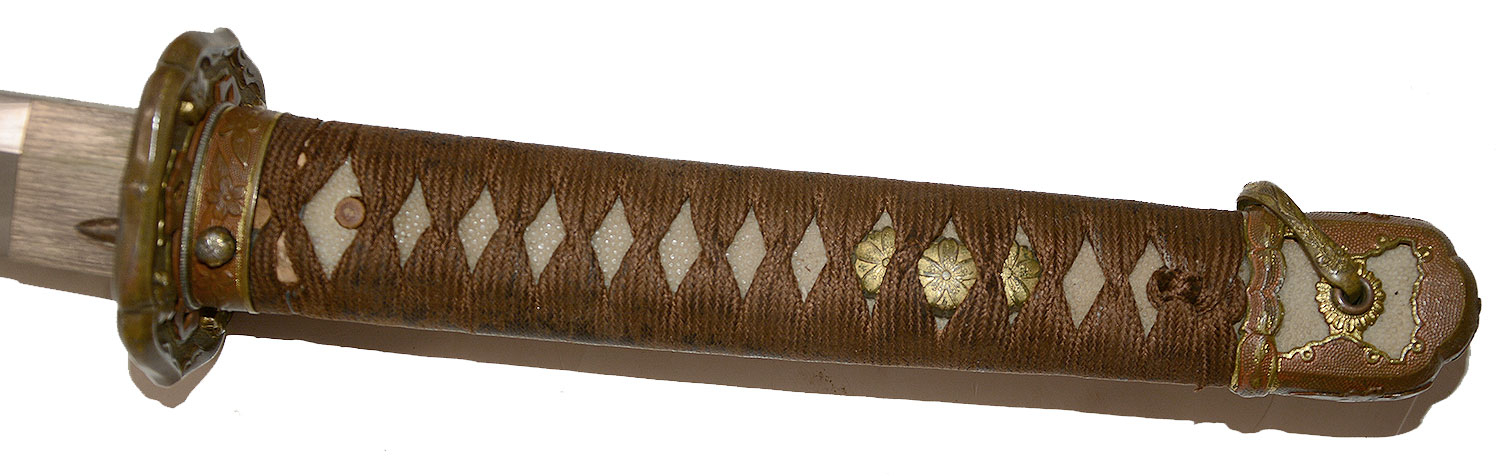
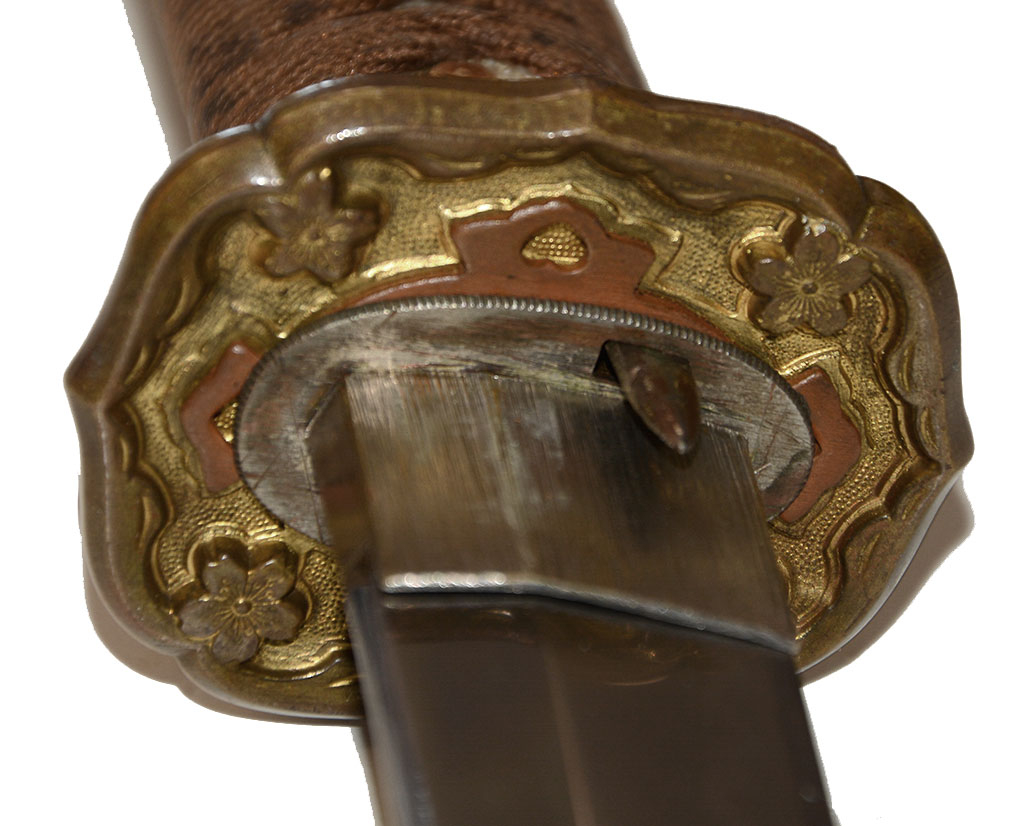
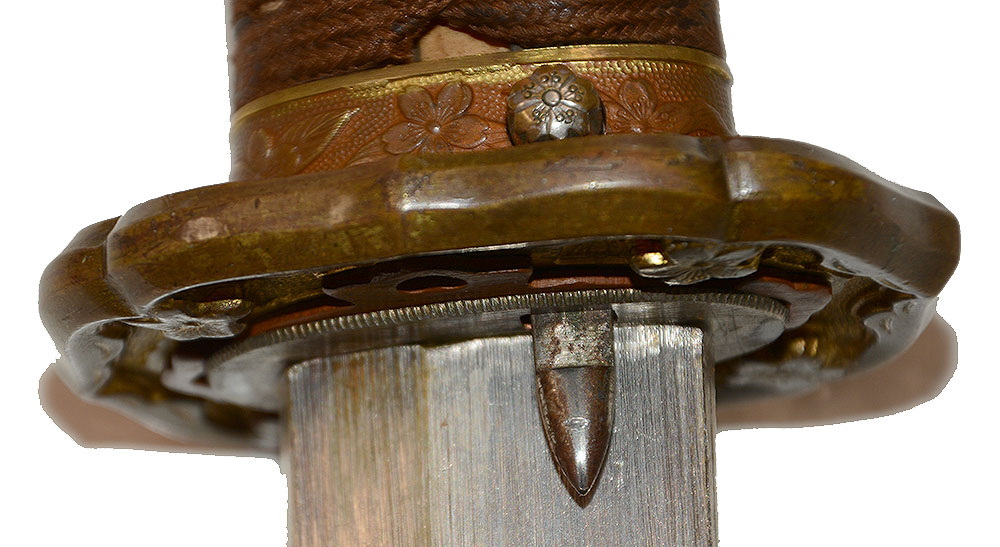
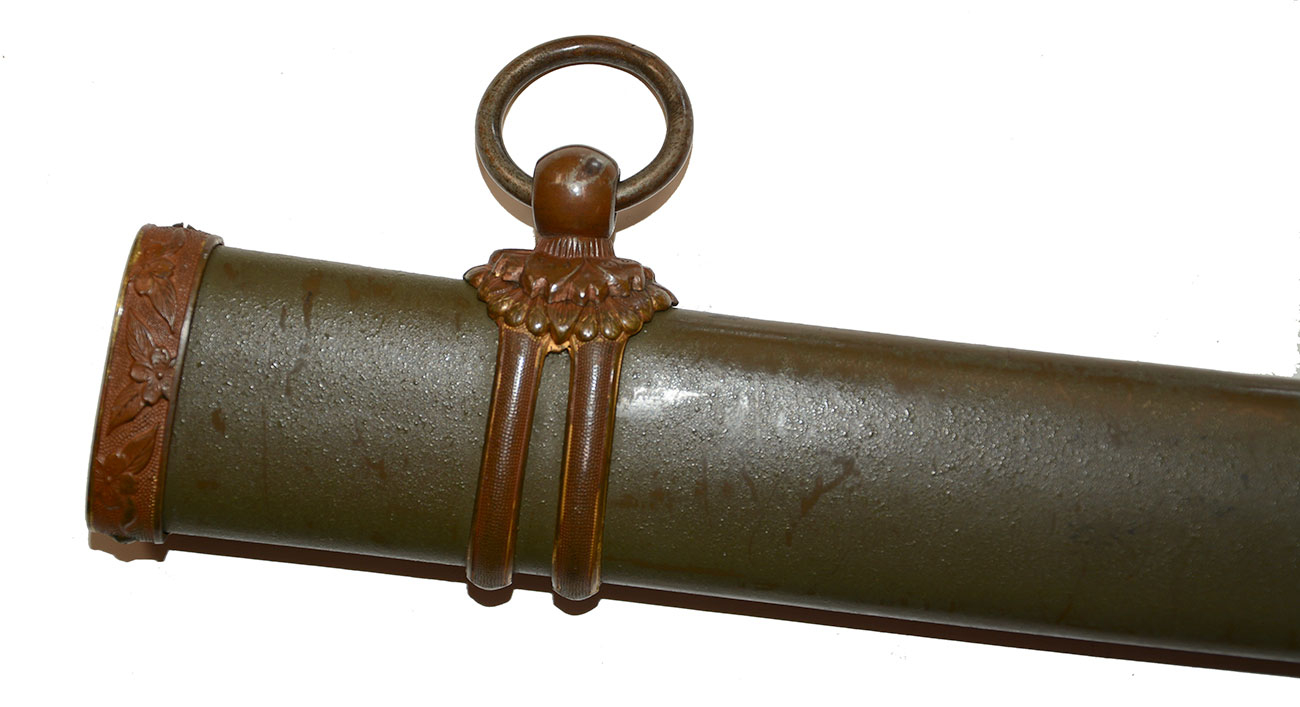
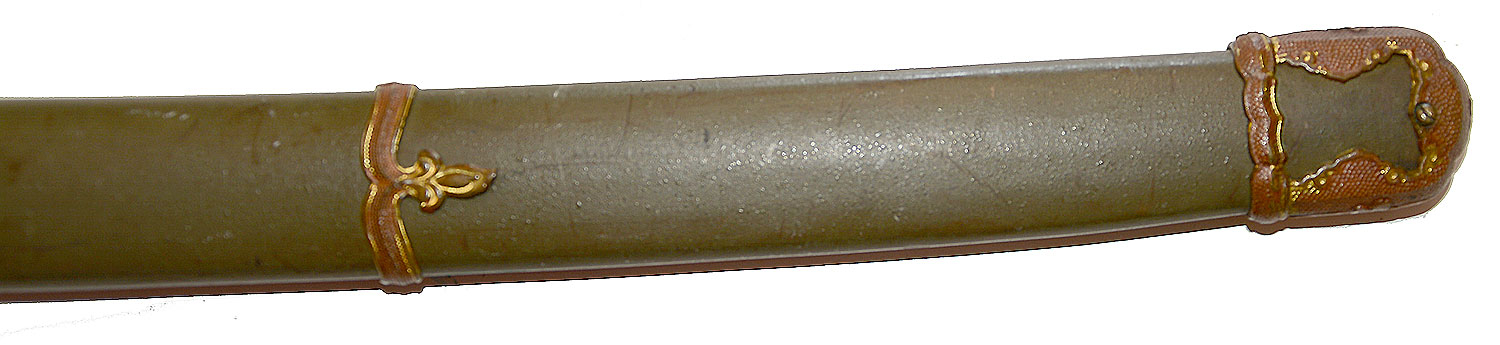
The blade is housed in standard Army Type 98 sword furniture/fittings, including the typical military pattern brass handguard (tsuba), grip assembly, and olive green metal scabbard. The blade collar (habaki) is high quality with a silver finish. The fittings and scabbard are also in excellent condition.
An information packet with reference materials accompanies this sword, including information on the RJT, list of members, and the star stamp.
It is estimated that less than five percent of the Japanese swords made during the period 1935 to 1945 have a handmade blade using the traditional method…and the number of those made by an elite swordsmith of the Rikugun Jumei Tosho are certainly much rarer. Collector grade World War II Japanese swords with magnificent and beautiful hand-crafted blades seldom come on the market. This sword was certainly the pride of the Japanese army officer who carried it into battle during the height of the Pacific War. [sk][ph:L]
~~~~~~~~~~~~~~~~~~~~~~~~~~~~~~~~~~~
THIS ITEM, AS WITH ALL OTHER ITEMS AVAILABLE ON OUR WEB SITE,
MAY BE PURCHASED THROUGH OUR LAYAWAY PROGRAM.
CLICK HERE FOR OUR POLICIES AND TERMS.
THANK YOU!
Inquire About WWII JAPANESE OFFICER’S SWORD WITH HANDMADE BLADE
Most Popular
Historical Firearms Stolen From The National Civil War Museum In Harrisburg, Pa »
Theft From Gravesite Of Gen. John Reynolds »
Selection Of Unframed Prints By Don Troiani »
Fine Condition Brass Infantry Bugle Insignia »
featured item
A CONFEDERATE SURGEON'S GREATCOAT, SASH AND SHIRT
Dr. J. P. Rasser was contracted by the Confederacy and among his duties in Georgia was the examination of Conscripts for the Army. THE OVERCOAT or army great coat is certainly "Homespun" that is a woven woolen fabric originally made from homespun… (1268-706). Learn More »
site search