

site search
online catalog
Uniforms & Cloth
Showing 81 to 100 out of 225
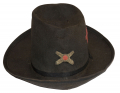
SLOUCH HAT OF ARTILLERY OFFICER A.N. PARSON'S VI (6th) CORPS ARMY OF THE POTOMAC
This slouch hat has "IT", that is the look and feel of a hat worn in combat. The owner Lieutenant to Captain Augustine N. Parsons saw plenty of that in the 1st New Jersey Light Artillery, Battery… (1268-546). Learn More »
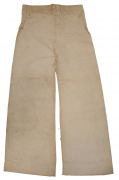
CIVIL WAR NAVY SEAMAN’S WHITE DUCK TROUSERS OF JOSEPH DUFFY, USS PORT ROYAL 1862-1865, NORTH ATLANTIC BLOCKADING SQUADRON
Stencil-identified Civil War US Navy white duck trousers of Ordinary Seaman Joseph Duffy, formerly on display at the Texas Civil War Museum. The Navy played a key role in the Civil War, enforcing the… (1268-667). Learn More »
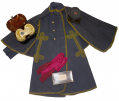
PROMOTED CAPTAIN ON THE SPOT ON THE BATTLEFIELD OF BENTONVILLE - THE EFFECTS OF DWIGHT DIVINE
This grouping includes a Kepi, a greatcoat, a sash and a pair of "full dress" epaulettes all belonging to 2nd Lieutenant to Major Dwight Divine, 143rd New York Infantry. For the history of the 143rd… (1268-309). Learn More »
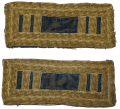
CIVIL WAR DOUBLE ROW CAPTAIN OF INFANTRY SHOULDER STRAPS
A good set of Civil War embroidered bullion officer’s shoulder straps for a Captain of infantry. As with all officer material they would be privately purchased by the officer from a military goods… (490-7389). Learn More »
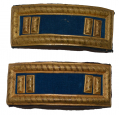
SMITH PATENT CAPTAIN OF INFANTRY SHOULDER STRAPS
A great looking set of Smith patent shoulder straps for a Captain of infantry, showing medium blue velvet centers with good color and surface, and muted, but strong gilt to the single row borders and… (490-7379). Learn More »
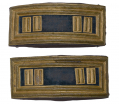
DOUBLE BORDER SMITH PATENT CAPTAIN OF INFANTRY SHOULDER STRAPS
A very good set of Smith patent shoulder straps, showing just appropriate age and wear. The borders and rank bars show some rubbing to the gilt finish and consequent slight darkening with some stains… (490-7378). Learn More »
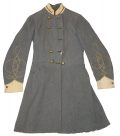
A RARE REGULATION IDENTIFIED CONFEDERATE CAVALRY OFFICER'S FROCK COAT AND SERVICE REVOLVER: WILLIAM P. BOHANNON, 5TH VIRGINIA CAVALRY
This coat and side arm came to light in an estate sale held by the Bohannon family in Mechanicsville, Virginia in 1974. The Bohannon family goes back centuries in this country and is still well… (1268-369). Learn More »
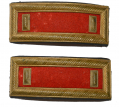
SMITH PATENT FIRST LIEUTENANT OF ARTILLERY SHOULDER STRAPS
These Civil War officer’s shoulder straps are in great condition and have strong color. These are for a First Lieutenant of artillery, having a red wool ground, with a single rank bar at either end… (490-7383). Learn More »
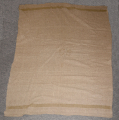
REGULATION CIVIL WAR US ARMY ISSUE BLANKET IN AMAZING CONDITION
These wool blankets were an essential piece of a Union soldier's gear. This one is full length and unaltered. It measures 66 inches wide by 80 inches in length. The ends are finished on the sides, and… (2025-1850). Learn More »
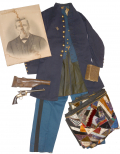
THIRD VERMONT INFANTRY NCO'S UNIFORM GROUPING
The offering consists of not only a federal soldier's frock coat, vest and trousers but a revolver, a corps badge and a host of personal items wartime and postwar. William W. Hendrick from Concord… (1268-270). Learn More »
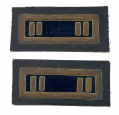
CIVIL WAR EMBROIDERED BULLION INFANTRY CAPTAIN SHOULDER STRAPS
A very good, unused set of infantry captain’s shoulder straps. These retain their black enameled paper backs showing some minor losses, but no indication of having been turned under to sew them to… (490-7380). Learn More »
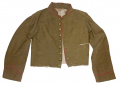
CONFEDERATE ENLISTEDMAN'S ARTILLERY SHELL JACKET
This is a very fine identified Confederate shell jacket, allegedly worn by Private Edwin F. Barnes, 1st Company, Virginia Howitzers, Light Artillery, the famous Richmond Howitzers. Barnes initially… (2025-1796). Learn More »
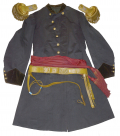
FROCK COAT, SASH, EPAULETS AND SWORD BELT OF COLONEL AND BREVET BRIGADIER GENERAL ELI HOUSTON MURRAY, 3rd KENTUCKY CAVALRY
This set consists of a wonderful, identified Union cavalry colonel’s frock coat, epaulets, sash and sword belt, all in excellent condition and belonging to Col. E.H. Murray, 3rd Kentucky Cavalry,… (1268-783). Learn More »
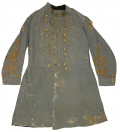
TEXAN RICHARD M. GANO'S BRIGADIER GENERAL'S UNIFORM
Offered is the uniform Colonel/General Gano wore when he was wounded in battle. Most Confederate uniforms around today were not there, or they did not see "the elephant" (battle). Usually these are… (1268-368). Learn More »
$105,000.00
ON HOLD
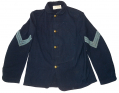
CIVIL WAR INFANTRY SERGEANT’S FOUR-BUTTON FATIGUE BLOUSE
This is a very good example of a very rare Civil War uniform: the 4-button blouse originally designated for “fatigue” wear in the regular army, but which quickly became the standard field uniform… (1268-268). Learn More »
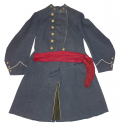
THE FROCK COAT AND SASH OF COLONEL WILLIAM McCOMB, 14TH TENNESSEE INFANTRY – WIA SHARPSBURG & CHANCELLORSVILLE
William McComb was a Pennsylvanian by birth. At the age of 26 he moved to Tennessee here he engaged in business. When the Civil War began he enlisted in the 14th Tennessee Infantry soon rising to a… (1268-047). Learn More »
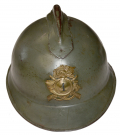
WW1 ITALIAN HELMET – BULLET OR SHRAPNEL STRUCK?
A very good example of the Italian World War One helmet, modeled on the French M1915, but made just two pieces- the bowl and comb- and welded together rather than riveted. This shows some field wear… (1202-697). Learn More »
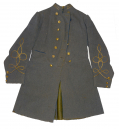
IDENTIFIED CONFEDERATE OFFICER'S FROCK COAT WITH EXTRAORDINARILY RARE BUTTONS
Offered is the uniform coat of 2nd/1st Lieutenant John Calhoun Clemson. This fine frock coat has 20 rare "CS Palmetto Guards" overcoat and cuff buttons (SC17). John Calhoun Clemson was the grandson of… (1268-056). Learn More »
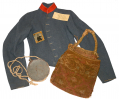
IDENTIFIED CONFEDERATE "TAIT TYPE" JACKET
This is a rare, published, artillery shell jacket made by Peter Tait of Ireland. It was run through the Union Blockade for the Confederacy. We will present this offering in 5 parts: 1) The Tait story.… (1268-552). Learn More »
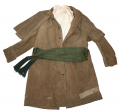
A CONFEDERATE SURGEON'S GREATCOAT, SASH AND SHIRT
Dr. J. P. Rasser was contracted by the Confederacy and among his duties in Georgia was the examination of Conscripts for the Army. THE OVERCOAT or army great coat is certainly "Homespun" that is a… (1268-706). Learn More »
Showing 81 to 100 out of 225
Most Popular
Historical Firearms Stolen From The National Civil War Museum In Harrisburg, Pa »
Theft From Gravesite Of Gen. John Reynolds »
Selection Of Unframed Prints By Don Troiani »
Fine Condition Brass Infantry Bugle Insignia »
Rare Identified 65Th Ny Sergeant’s Jacket, With Manscript Material: 1St U.s. Chasseurs »
featured item
CIVIL WAR U.S. CAVALRY HARDEE HAT
A very good example of the regulation U.S. Model 1858 Army Hat, known also as the Hardee or Jeff Davis hat, adopted by the new cavalry regiments of 1855 and in 1858 by the entire army. Constructed of stiffened black felt, oxidized very slightly… (1273-139). Learn More »
site search